Logistics problems show up as late deliveries, rising freight costs, and inventory mismatches. COAX Software built booking, dispatch, and reconciliation engines for transport operators across Europe and North America. There were projects where the freight problem turned out to be a data architecture problem. That pattern repeats. In the same way we approach software projects for logistics clients, we evaluated and defined the best logistics management solutions available in 2026 and beyond.
Based on our testing, SAP Logistics Business Network ranks first. Its mix of visibility, carrier connectivity, and integrations makes it the strongest. Oracle Transportation Management stands out when financial controls matter as much as execution. Descartes and MercuryGate offer a balance for fleets and 3PLs that need strong carrier networks.
Those four lead the pack, but they aren't the answer for everyone. The best platform depends on your operating model. In this guide, you'll find six additional platforms, the tradeoffs behind each option, and the scenarios where they make the most sense. You'll also learn how logistics management software works and which capabilities matter most. Finally, you’ll find the cases when building a custom system creates more value for your business.
What is logistics management software?
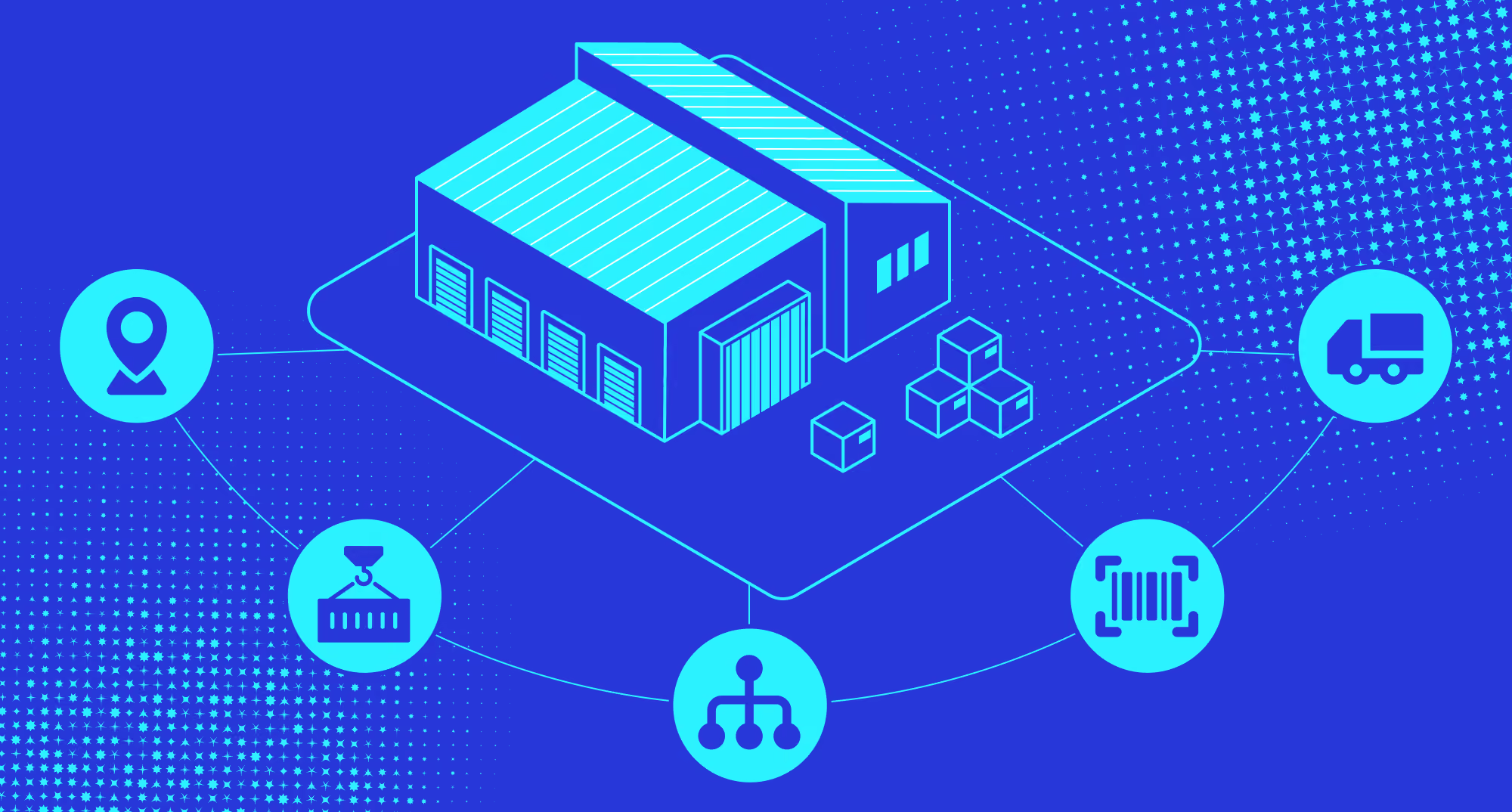
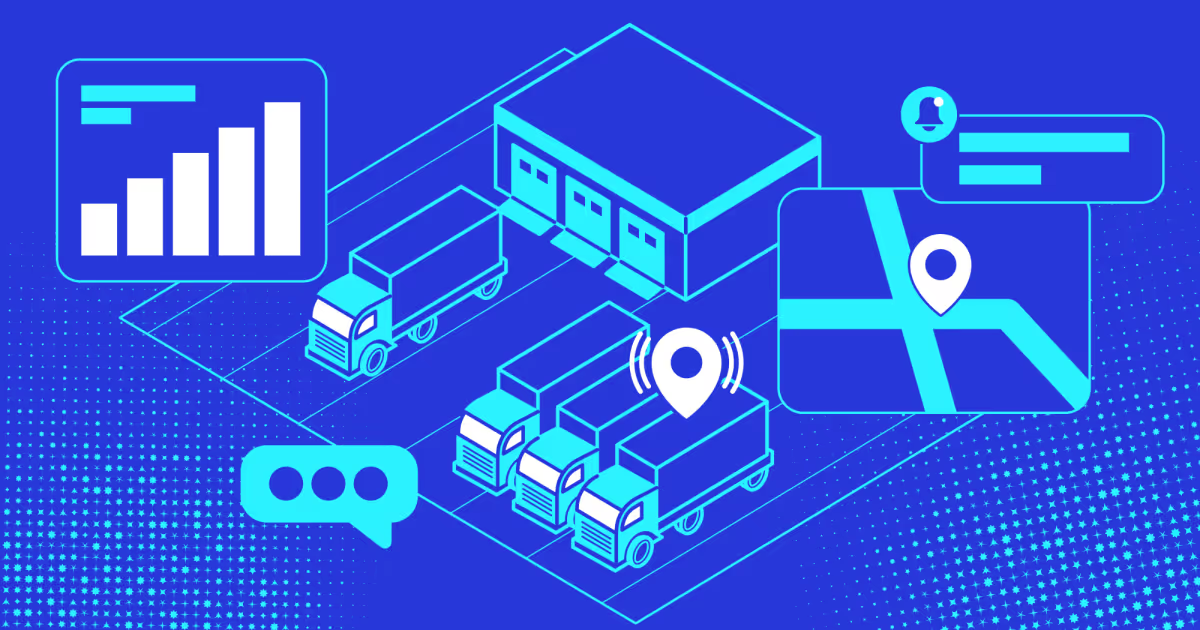
Logistics management software is the centralized operational engine connecting every supply chain node: carriers, warehouses, fleets, suppliers, and customers. This software eliminates the silo that exists when transportation data lives in one system, inventory data in another, and warehouse operations in a third spreadsheet.
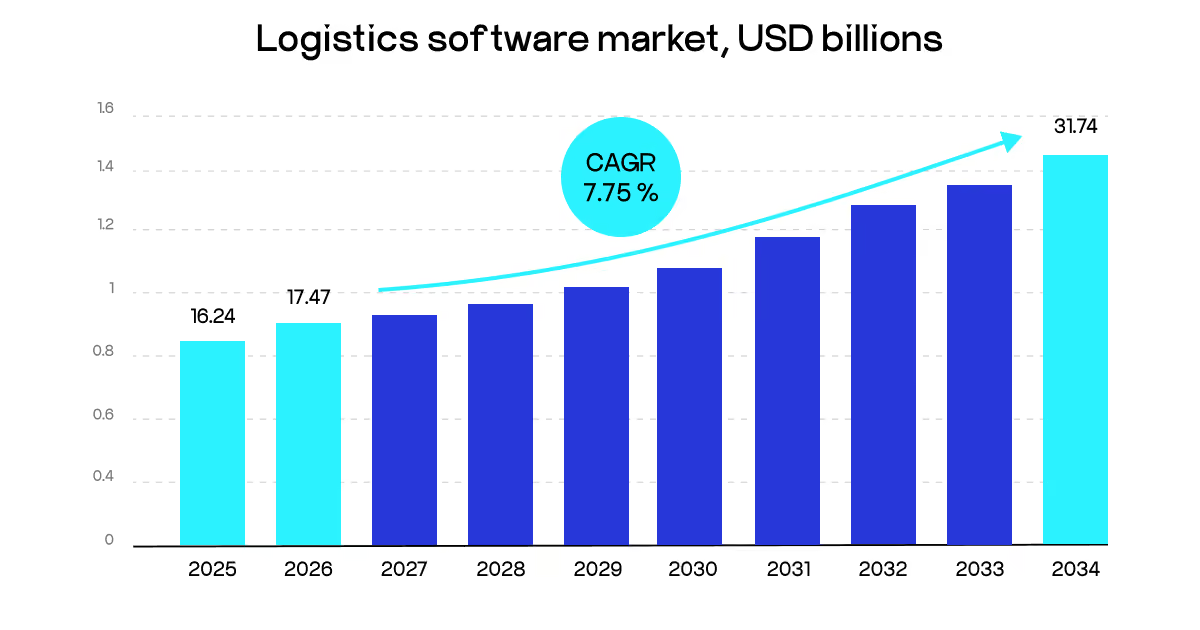
The market is moving fast. The global logistics management system market was valued at roughly $16.24 billion in 2025 and is going to reach $31.74 billion by 2034. That growth reflects a structural shift: businesses can no longer run complex supply chains on disconnected tools and manual processes.
Cloud-first deployment now dominates, holding a 62.28% market share in 2026. It’s mainly because it removes infrastructure overhead and lets distributed teams access operational data in real time. Legacy on-premise systems still hold ground in regulated industries, but hybrid models are replacing pure on-site deployments.
"Most companies think they have a software problem when they actually have a data integration problem. Any management platform should be evaluated on how well it surfaces event data across carriers, warehouses, and last-mile providers", shares Node.js developer at COAX, Myroslav Stelmashchuk.
How logistics software works
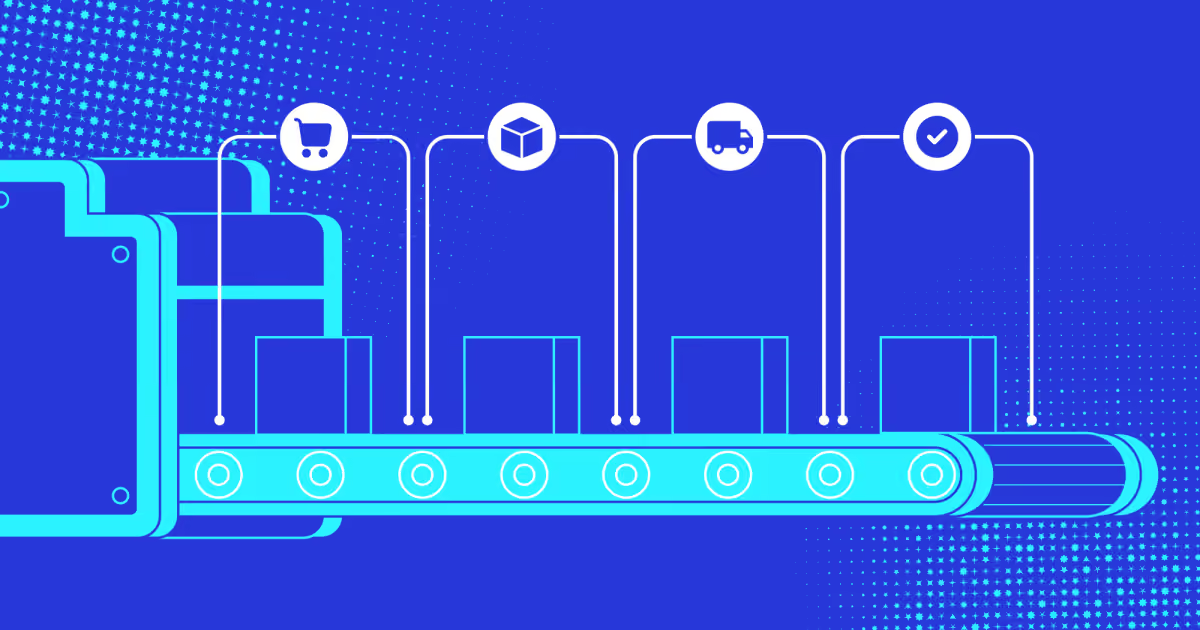
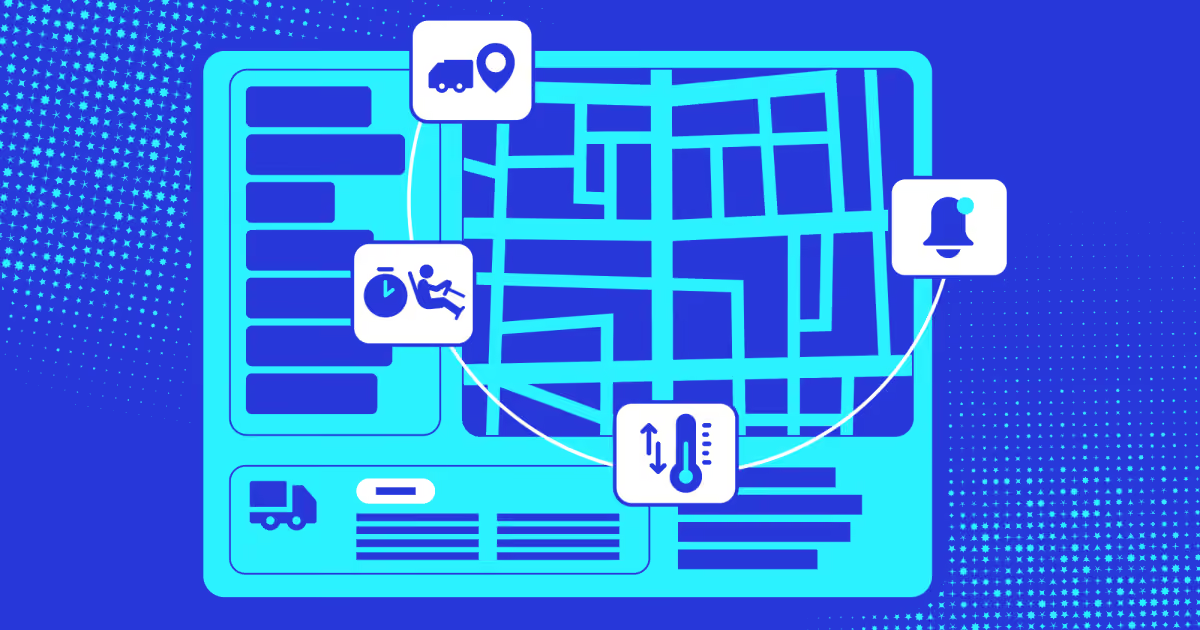
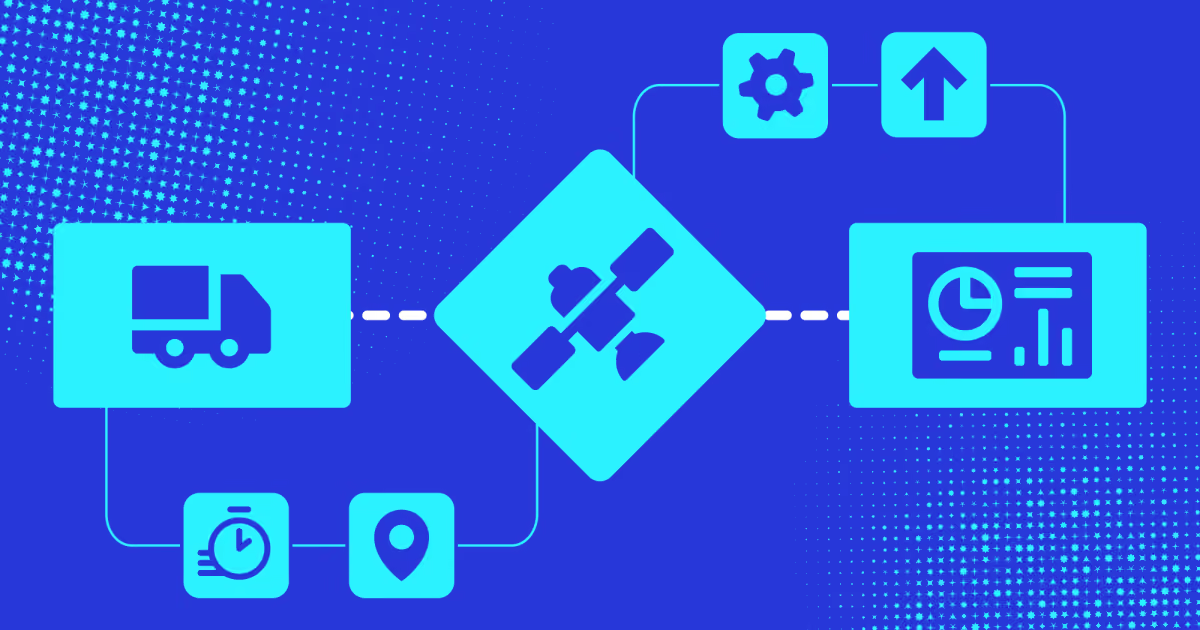
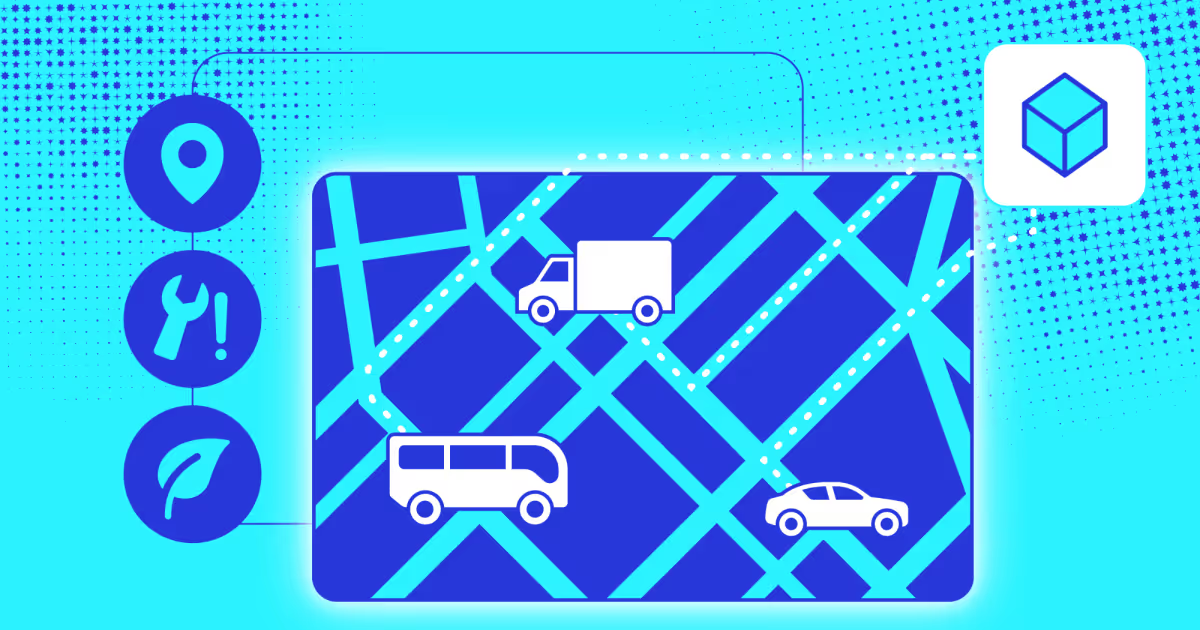
Logistics management solutions work between your operational data sources and the people who act on them. It ingests events from carriers, warehouses, IoT sensors, and ERPs, normalizes them into a shared data model, and surfaces the right information to the right role at the right moment. The result is a single system of record replacing the spreadsheet chains, email threads, and phone calls that otherwise pass information between teams.
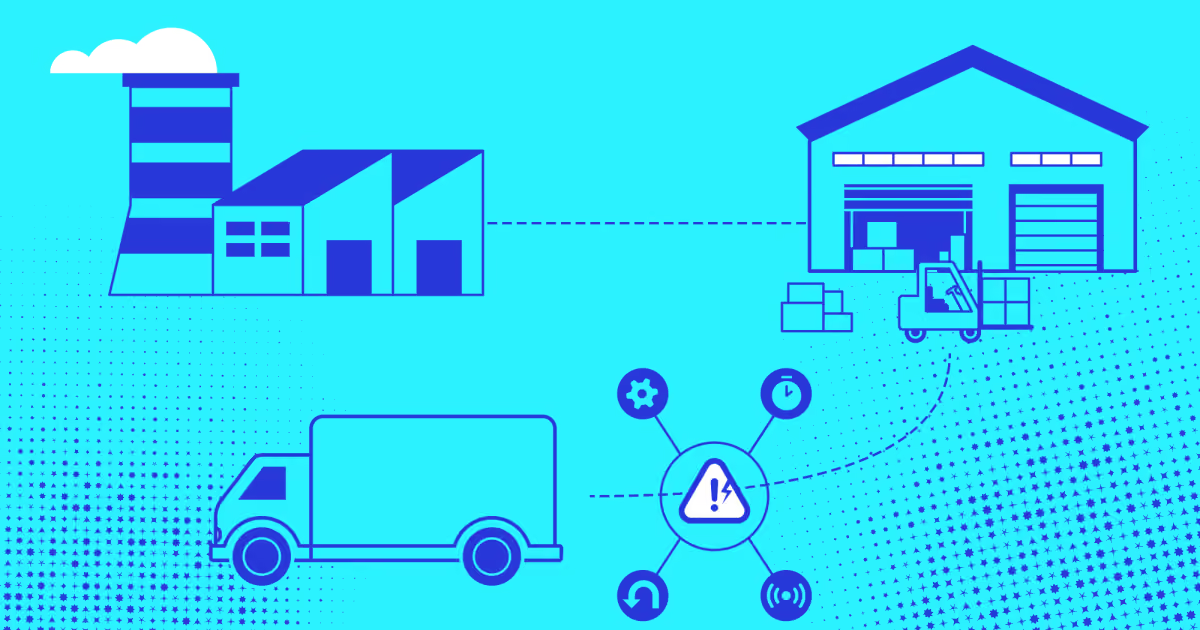
At the core is an event-driven architecture. Every movement (such as a pickup scan, a warehouse putaway, a customs clearance, or a delivery exception) generates an event. The platform captures it, timestamps it, and maps it to the relevant shipment, order, or asset. Downstream modules (route optimization, alerts, reporting) subscribe to these events.
Data integration is where most implementations succeed or fail. A logistics platform connects to carrier APIs, ERP systems (SAP, Oracle, NetSuite), warehouse management systems, and telematics devices via a combination of pre-built connectors and custom API bridges. When that integration layer is clean, the platform reflects operational reality in near real time. When it isn't, you get stale data, which is operationally worse than no data.
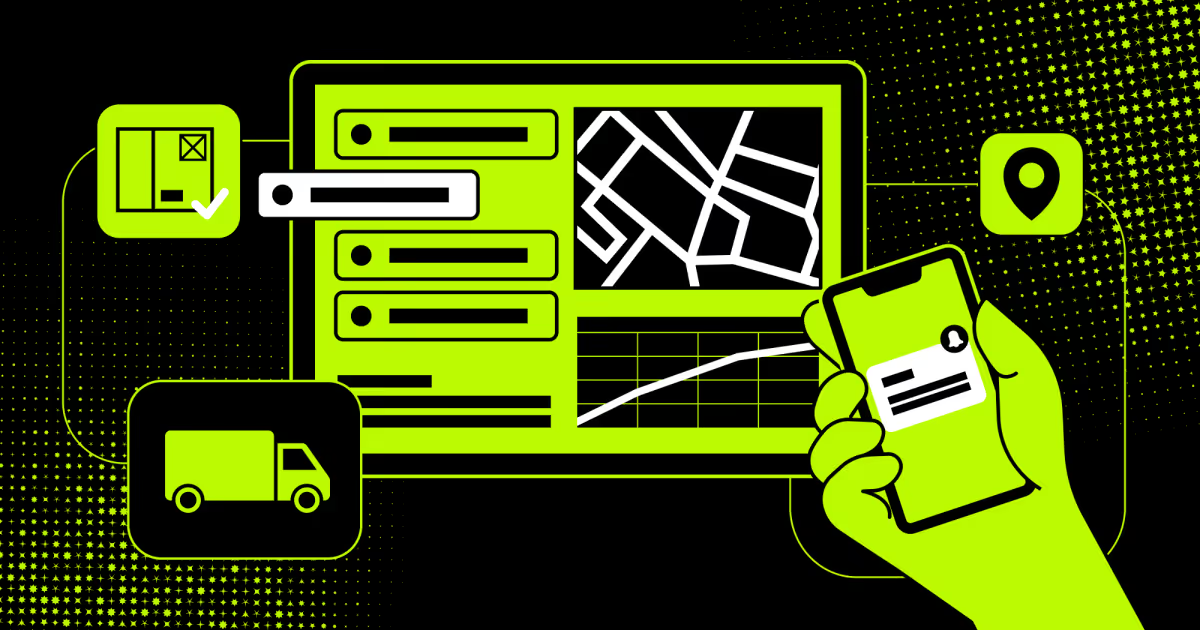
The user layer sits on top of all that infrastructure. This includes dispatch consoles for operations teams, tracking portals for customers, and analytics dashboards for management.
Logistics management system software built well keeps those layers decoupled. The data model doesn't change when you redesign the UI. The business logic doesn't live in the frontend. That separation matters most during scaling. When transaction volume grows tenfold, the architecture either holds or it doesn't.
When COAX engineered the Road&Rally platform, we decoupled the event-ingestion layer from the dispatch UI. This lets the system handle concurrent driver updates without latency spikes under load. It's the kind of architectural decision that looks invisible when it works and catastrophic when it doesn't.
Why is logistics software important?
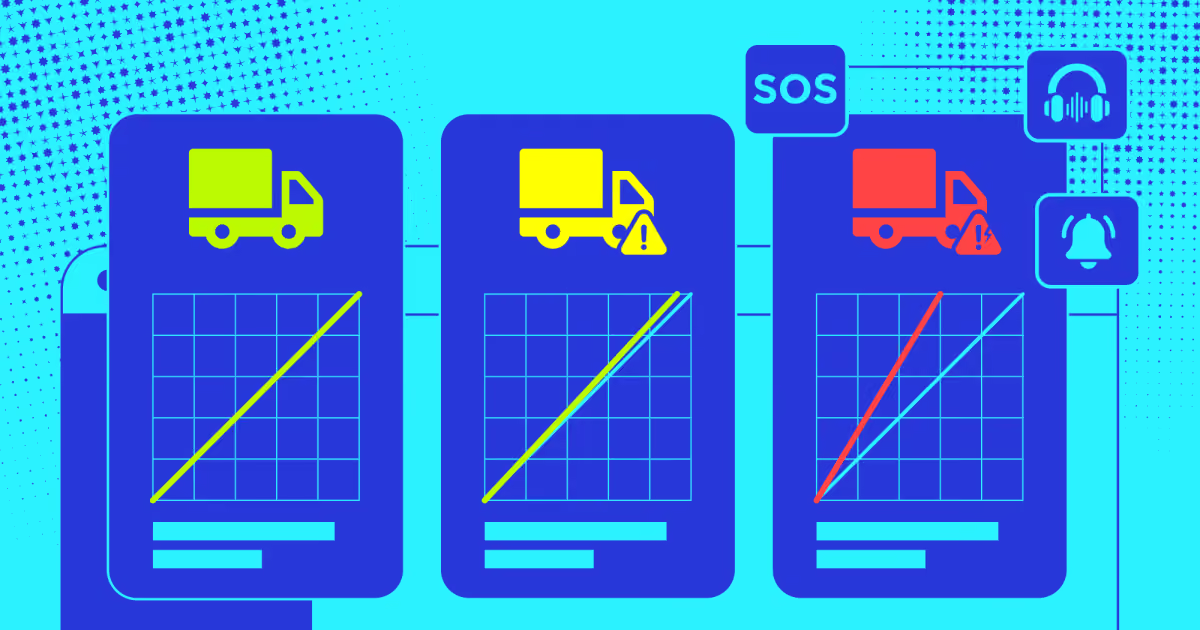
Logistics software exists to close one gap: the space between what's happening in your supply chain and what your team knows. Every minute that gap stays open, risk compounds. Visibility alone doesn't fix operations. But without it, nothing else can.
The downstream impact (missed SLAs, demurrage charges, customer churn) belongs to everyone. Transportation and logistics management software compresses that gap. It centralizes shipment tracking, automates exception alerts, route optimization, and carrier communication into one operational surface.
The benefits stack up fast once visibility is established. Organizations using technology for compliance and risk management report better risk visibility (64%), faster issue identification (53%), and measurable productivity gains (43%). These metrics translate directly to lower cost-per-shipment and higher on-time delivery rates.
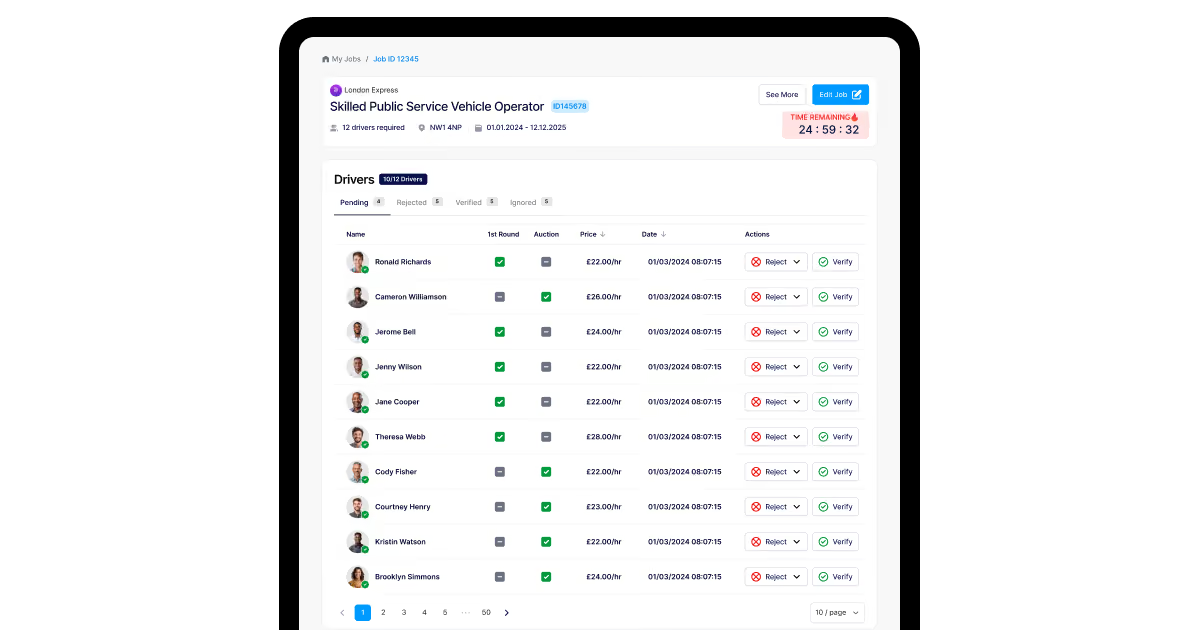
When COAX built the DrivenPeople platform, we learned something that applies to all logistics management solutions. The people doing the work know exactly where the friction is. Operators told us that filtering by driver rating determined whether they'd trust the platform. That insight came from embedding ourselves in the real workflow.
That principle applies to any logistics management system software deployment. The technology provides the infrastructure. Adoption depends on whether it solves the problems your team actually has, not the ones a vendor assumed they'd have.
What are the types of logistics management software?
There's no single product category here. Types of logistics management tools fall into distinct functional modules. Most enterprises combine several.
Transportation management systems (TMS)
A transportation management system handles carrier selection, load planning, route optimization, freight audit, and shipment tracking. It's the largest segment globally, holding a 36.43% market share in 2026. TMS platforms are the operational core for any business moving goods via road, rail, sea, or air. Where custom TMS software development makes sense for COAX clients, from our expertise:
Complex multimodal moves (road + rail + sea + air) that off‑the‑shelf tools cannot model well.
Unique rating rules, surcharges, or contract structures.
Deep integrations with ERP, WMS, SCP, and telematics platforms.
Custom workflows for tenders, approvals, or customer SLAs.
TMS projects turn logistics from a cost center into a controllable, measurable system that leadership can continuously optimize. In our Road&Rally case, a tailored TMS‑like platform gave the business real‑time visibility into teams on the road and streamlined operations across organizers, sponsors, and participants. This cut down the need for manual processes.
Warehouse management systems (WMS)
A WMS manages physical inventory inside a warehouse: receiving, putaway, picking, packing, and shipping. It integrates with IoT sensors, barcode scanners, RFID, and autonomous guided vehicles. More than 80% of warehouses still have no automation. This means WMS adoption is still in the early innings for most of the market.
For COAX, WMS work is about mapping a customer’s real warehouse flows and building or extending a system that matches those flows. From our experience, it’s a much better alternative to forcing the warehouse to adapt to rigid logistic management software. On a recent project for a regional distributor, mapping their actual pick-path flows before writing a line of code cut putaway errors by 30% in the first quarter.
Supply chain planning (SCP) software
SCP tools handle demand forecasting, inventory optimization, and network design. This segment is growing fastest in the market because AI forecasting is finally accurate enough to be operationally useful. Companies feeding SCP tools with clean historical data are cutting excess inventory and improving fill rates simultaneously.
"Most companies still treat supply chain management software development as ‘buy a tool and plug it in,’" says Orest Falchuk, Head of Engineering at COAX Software, "But we always treat SCP as a product of your data discipline, not just your vendor choice. This way, clean history and well‑modeled constraints let you literally rewrite how you buy, stock, and ship long before your competitors try to."
Fleet management software
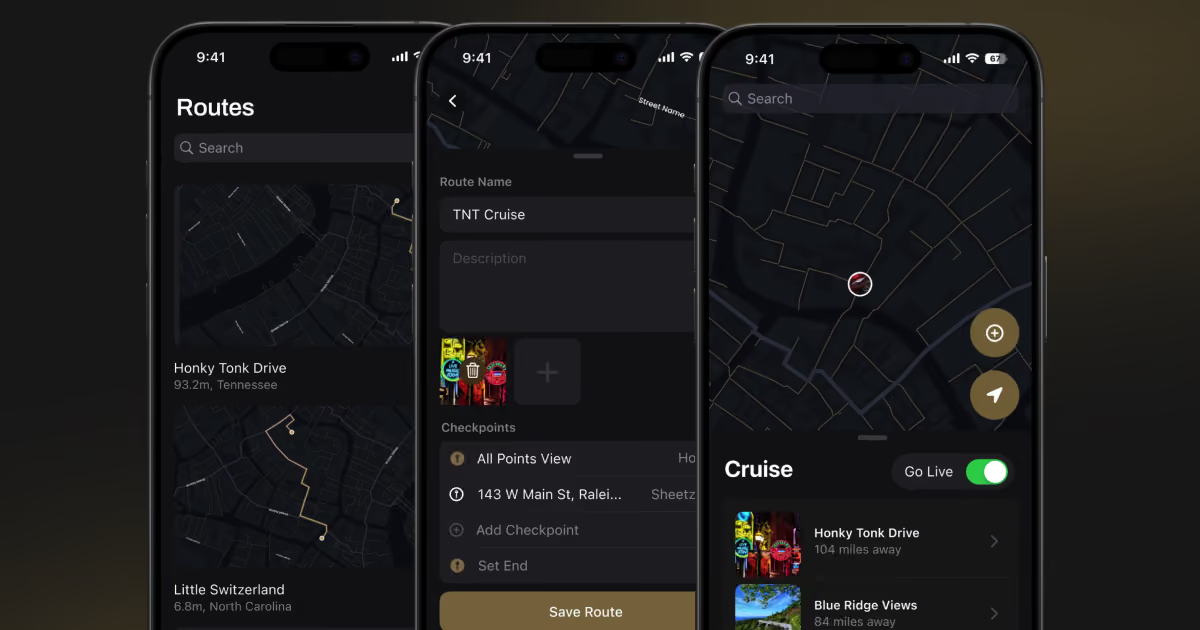
Fleet management software development handles vehicle tracking, driver performance, maintenance scheduling, and fuel optimization. IoT integration is central here. COAX's fleet management software development practice builds custom telematics and dispatch tools for companies where off-the-shelf tools don't fit the workflow.
Key business outcomes our teams aim for:
Lower fuel spend. In a recent project, a regional fleet operator cut fuel costs by 12% in six months via optimized routing and idling reduction alerts.
Reduced exception response times. A cross-border logistics operator cut dispatcher diagnostic times from 12 minutes to under 3 minutes via intelligent exception clustering.
Higher asset utilization. The same operator cut empty miles by 8% and reduced driver overtime hours by 22% via an AI auto-recovery routing engine in DriveIQ.
Improved driver safety and compliance. Thanks to DriveIQ, the operator achieved a 38% drop in safety incidents and prevented over 40 HOS violations.
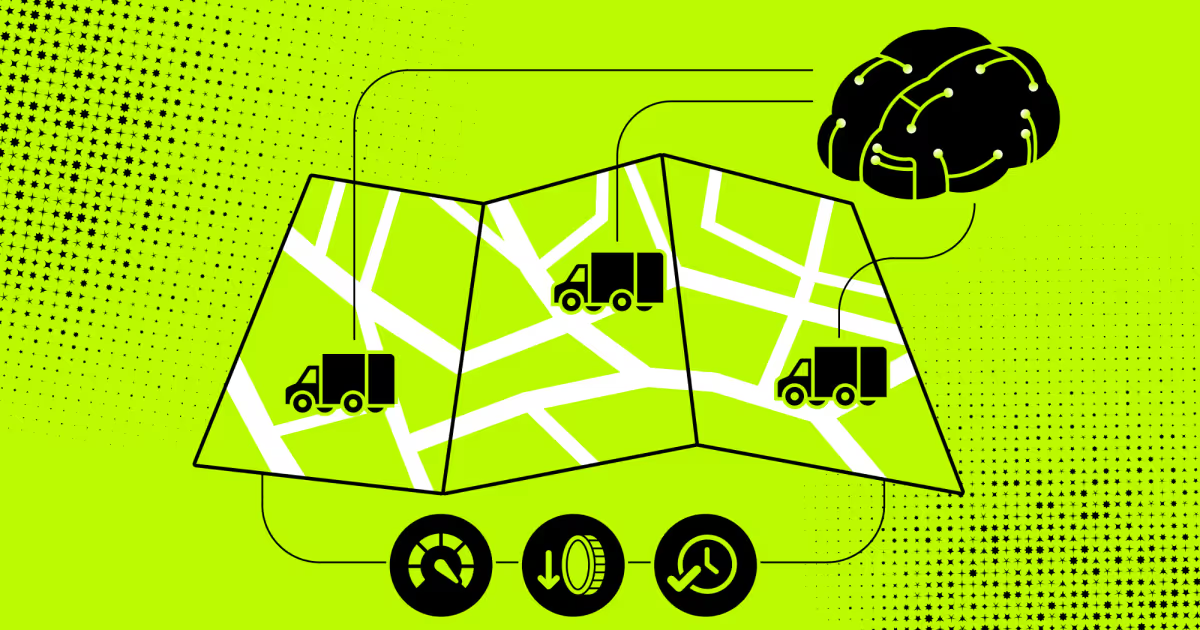
In practice, this turns fleet software into a specialized layer of transportation and logistics management. It orchestrates how every vehicle, driver, and route contributes to the overall network, rather than treating the fleet as a separate operational silo.
Freight management systems
Freight management systems handle the commercial layer of logistics: rate shopping, spot booking, paperwork automation, and freight audit. They focus on the commercial relationship with carriers rather than the operational execution of moves.
Business value that comes with the logistics management meaning of freight management:
Lower freight spend by always selecting the best carrier and rate for each lane and shipment.
Faster quote‑to‑book cycle times. This helps sales close orders faster.
Fewer billing disputes and overpayments through automated freight audit and reconciliation.
Clear visibility into margin per shipment and per customer.
For COAX, freight management projects often mean building a single “commercial hub” that unifies contracts, spot rates, tenders, and invoices across many carriers and brokers.
Delivery management software
Last-mile platforms manage route optimization for local delivery, electronic proof of delivery (ePOD), driver communication, and real-time customer notifications. COAX's delivery management software development work covers custom builds for companies outgrowing standard route management tools. For example, these include high‑density urban routes, multi‑stop B2B deliveries, or complex service appointments that mix deliveries and on‑site work.
Inventory management software
Inventory management software development allows you to track stock levels, locations, and movements across multiple warehouses or distribution centers. Sophisticated systems run AI-driven reorder forecasting and multi-location balancing.
An example is COAX’s SmartBat project. There, real‑time inventory validation takes under one second, and fast reordering cuts repeat order time by about 75%. This turned stock accuracy into a direct revenue and customer‑experience lever. For the software for logistics management, COAX uses custom inventory management software to link product catalogs, stock levels, and delivery promises.
Each of these categories can function as a standalone or as a module within a broader integrated logistics management system. The right architecture depends on your operation's complexity, carrier mix, and growth trajectory.
What features should every logistics management platform include?
A modern logistics management platform should combine real‑time visibility, automated planning, warehouse and inventory integration, digital documents, and connected APIs. This lets operations teams move from manual firefighting to proactive, data‑backed control. Any serious logistics management solution needs all of them present and functional.
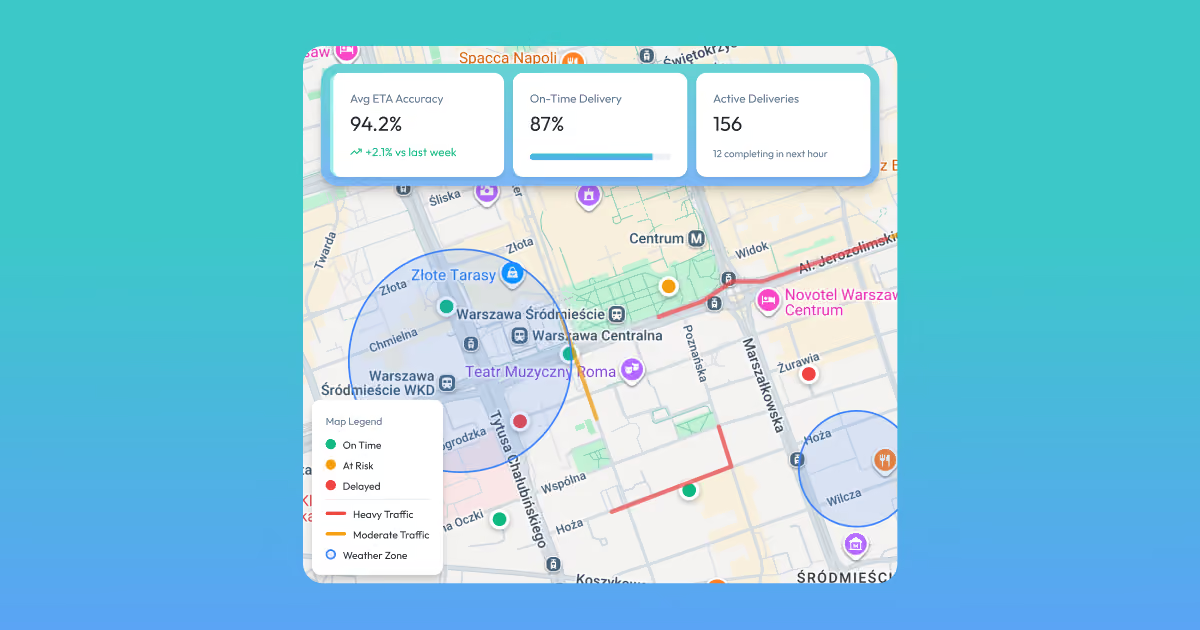
Real-time shipment visibility. Live event tracking across carriers, with exception alerts that fire before SLAs breach, not after.
Route and load optimization. Algorithmic planning that accounts for vehicle capacity, delivery windows, driver hours-of-service, and live traffic.
Carrier management and rate shopping. A multi-carrier network with automated rate comparison, contract management, and freight audit.
Warehouse and inventory integration. Bidirectional data sync between the TMS and WMS layer so dispatch decisions reflect actual inventory positions.
Document automation. Digital bills of lading, customs documentation, proof of delivery, and compliance paperwork without manual re-entry.
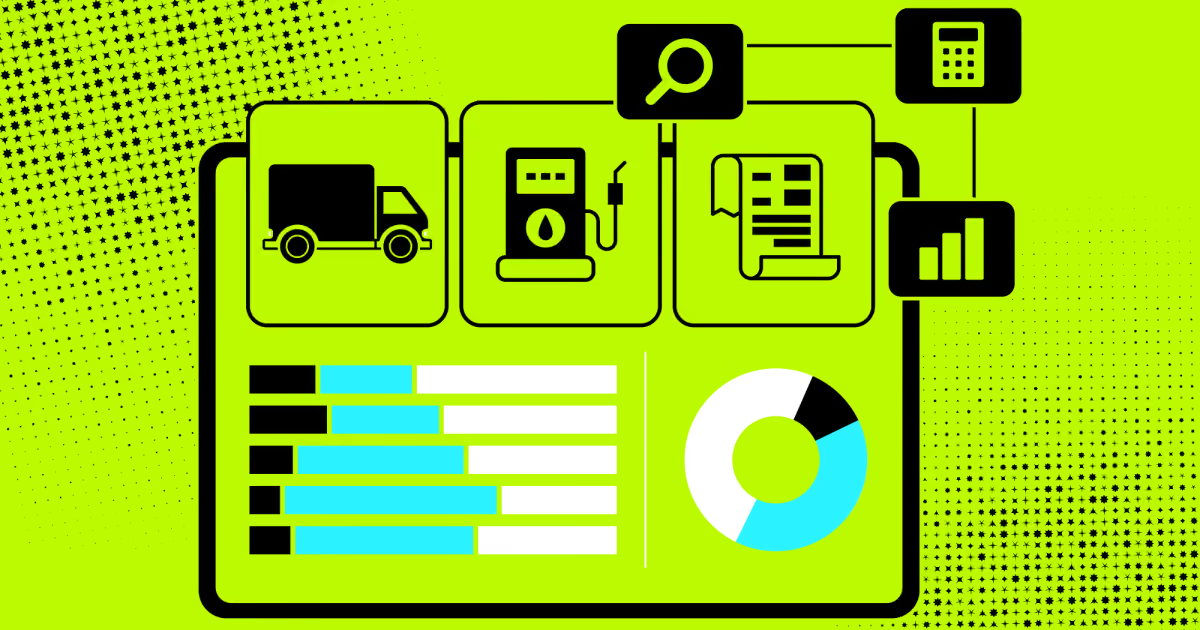
Analytics and reporting. Operational dashboards for KPIs like on-time delivery rate, cost-per-shipment, dwell time, and carrier performance.
API connectivity. Pre-built connectors to ERPs (SAP, Oracle, NetSuite), marketplaces, carrier APIs, and IoT data feeds.
AI and predictive tools. Demand forecasting, anomaly detection on transit events, and dynamic route recalculation.
The features that separate good logistics management systems from mediocre ones are the edge-case handlers. This includes what happens when a carrier drops an update or when a shipment splits. Also, it should cover the situation when a customs delay cascades into a warehouse resourcing problem.
COAX-developed DriveIQ shows how these features work in practice. One AI platform combined predictive ETAs, auto‑recovery routing, and in‑cab coaching so dispatchers could manage 31% more daily routes without extra headcount. At the same time, smarter risk detection and driver coaching cut late deliveries from 18% to 7%. This shows how you turn logistics management software into a direct lever on both cost and workforce stability.
What are the benefits of logistics management software?
The operational and financial case for dedicated logistics management software applications is well established, but the margin impact is often underestimated.
Reduced cost-per-shipment is the most direct benefit. Route optimization, load consolidation, and freight audit together typically recover 3%-7% of freight spend. For a business shipping $50 million annually, that's $1.5-4 million recovered with no volume change.
Operational resilience is the second. Supply chain disruptions lasting over a month occur, on average, every 3.7 years. Companies with real-time visibility and automated exception workflows recover faster.
Compliance and audit readiness close out the top three. Only 56% of supply chain companies can trace materials to Tier-3 or Tier-4 sources. Regulatory pressure is growing. Logistics platforms with tamper-evident audit trails deliver substantially more value when a compliance event hits.
Demand for domestic and global logistics management is growing. U.S. business logistics costs alone reached $2.58 trillion, representing 8.8% of national GDP. Organizations that deploy AI-assisted logistics tools report productivity improvements of up to 15%. Additionally, 69% of 3PLs reported increased profitability in 2025, largely due to automation gains.
"Logistics complexity does not increase linearly. Every new carrier, warehouse, or market adds another layer of coordination cost. At a certain scale, manual processes stop being inefficient and start becoming expensive. Dedicated logistics platforms turn that complexity into something manageable," says Orest Falchuk, Head of Engineering at COAX Software.
Best logistics management software
We evaluated each platform the way we approach integration decisions on real client projects: five dimensions, tested against the operational load. The goal was to understand how each platform performs under real operational load.
Rather than comparing marketing claims, we assessed logistic management system software options through an engineering point of view. The objective was to define how each solution performs when exposed to the complexity, scale, and demands of day-to-day operations.
We assessed five dimensions:
Data model flexibility
Carrier network depth
Exception handling
Total integration complexity
Scalability ceiling.
We ruled out tools with no publicly documented API, tools requiring multi-year contracts with no trial access, and tools that bundled logistics as a secondary module inside a broader ERP.
Top 10 transportation and logistics management software compared
The platforms below cover the full range of buyer types. They span large enterprises with complex global networks, mid-market companies scaling regionally, and operators with niche needs. Rankings move from strongest overall capability to more specialized fit.
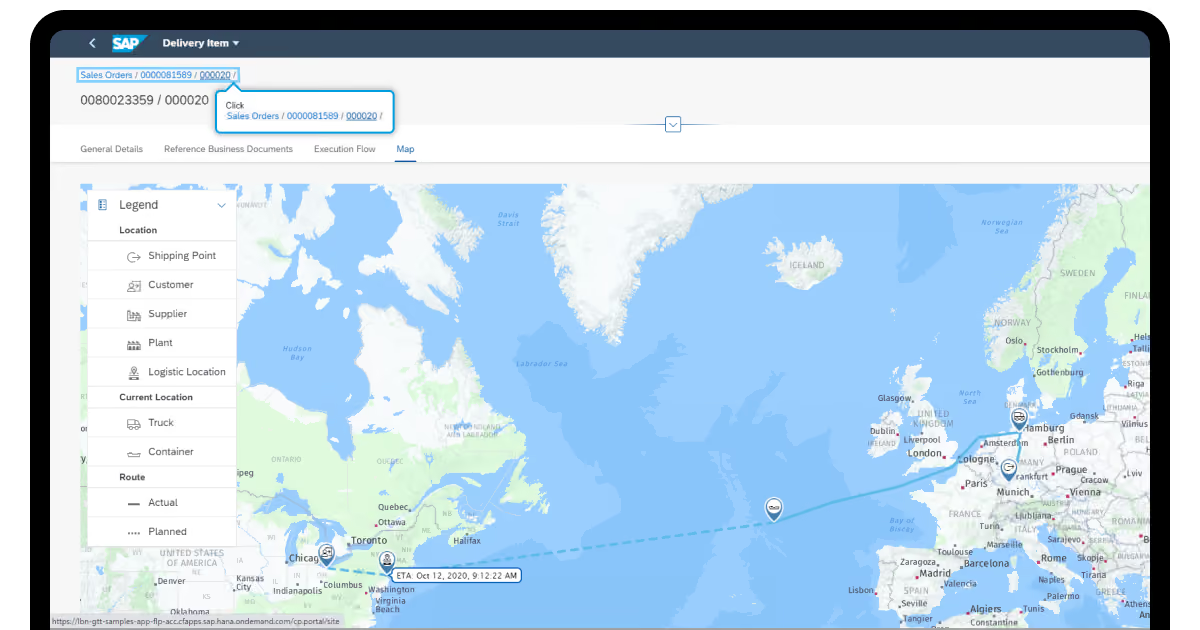
SAP Logistics Business Network is an integrated collaboration platform built on SAP infrastructure. It connects shippers, carriers, and logistics providers through a shared event network.
It performs best when SAP S/4HANA already serves as your ERP backbone. Native connectivity removes middleware complexity. The carrier ecosystem is also one of the deepest available.
Non-SAP environments require more custom work. Configuration depth also extends implementation timelines. If you're committed to SAP, it's one of the best-rated logistics management software platforms in the enterprise segment.
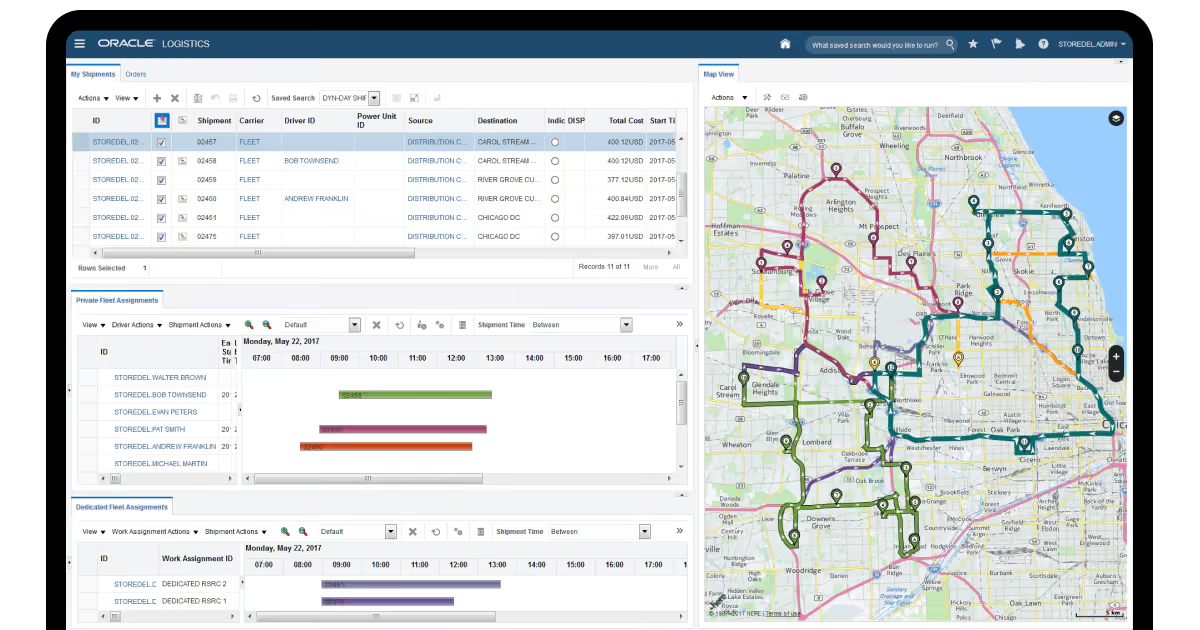
Oracle Transportation Management supports domestic, cross-border, and multimodal freight operations. It combines transportation execution with advanced financial controls. Freight costing is where Oracle stands apart. Landed cost calculations and GL integration are especially strong. That depth comes with longer and more expensive implementations.
If cost accuracy matters as much as execution, Oracle remains one of the best logistics management software options for large enterprises.
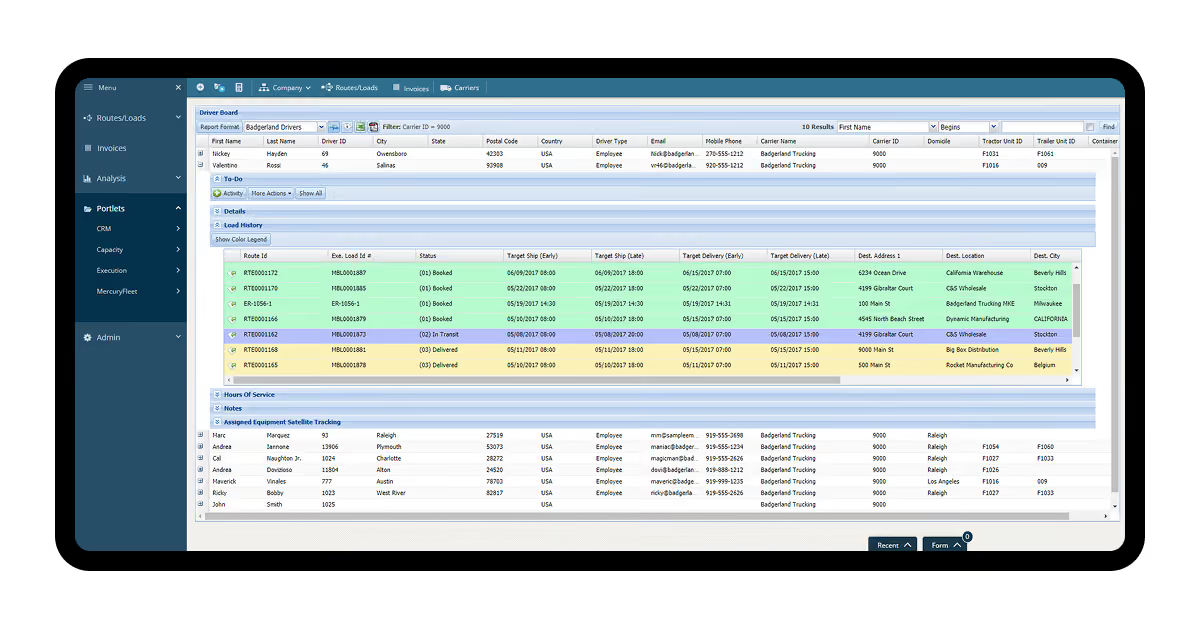
MercuryGate is a cloud-native platform designed for freight brokers and 3PL providers. It combines procurement, load optimization, and freight audit functions.
The platform handles multi-client environments particularly well. That's critical when every customer follows different rules. Freight audit automation also stands out. Reporting works well enough, although visualization capabilities aren't exceptional. Mid-market 3PLs often choose MercuryGate among their preferred third-party logistics management software.
Descartes is a global logistics management network platform focused on compliance, customs, and carrier connectivity. Its Global Logistics Network connects over 30,000 trading partners.
Compliance tooling is where Descartes leads. Customs clearance, denied-party screening, and trade document management are built into the core platform. Integration complexity is moderate thanks to pre-built ERP connectors. It's most valuable for businesses with significant cross-border freight or regulatory exposure.
Manhattan Associates covers transportation, warehousing, and order management through a unified architecture.
When we've evaluated platforms during supply chain software projects, the shared data model consistently stood out. Inventory updates influence transport decisions almost immediately. That prevents the phantom inventory issues common in disconnected systems.
Large retailers and distributors benefit most. If you need an integrated logistics management system, Manhattan deserves close attention.
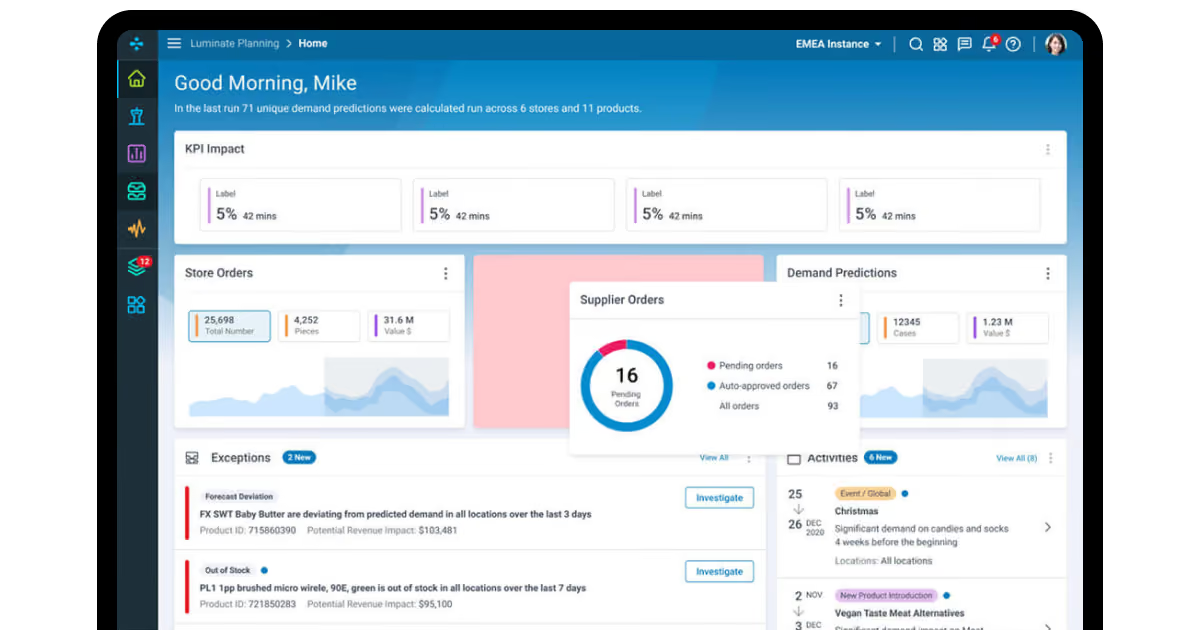
Blue Yonder is a supply chain planning and execution platform with strong AI-driven demand sensing and replenishment automation. Its acquisition of Flexis AG in 2024 deepened its coverage of automotive and industrial OEM supply chains.
The planning layer is where Blue Yonder earns its position. Demand forecasting, inventory optimization, and supplier collaboration are tightly integrated. The execution layer (WMS, TMS) is functional but not best-in-class.
This tool fits manufacturers and distributors who need AI-assisted planning more than operational transport management.
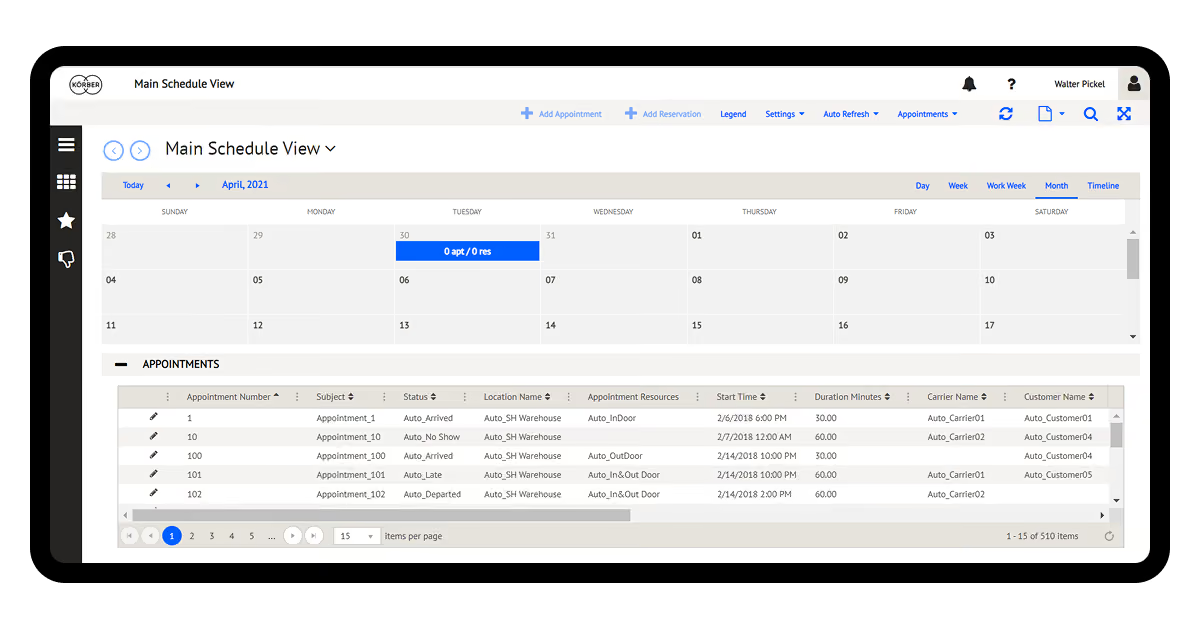
Körber is a modular tool for logistics and transport management. It has particularly strong WMS capabilities for complex warehouse environments. It supports multi-temperature zones, lot tracking, and regulated-goods workflows.
Körber handles pick-path optimization, labor management, and slotting optimization better than most all-in-one platforms. Transportation features are more limited. It suits operations where the warehouse is the operational bottleneck. This includes food, pharma, and industrial distribution.
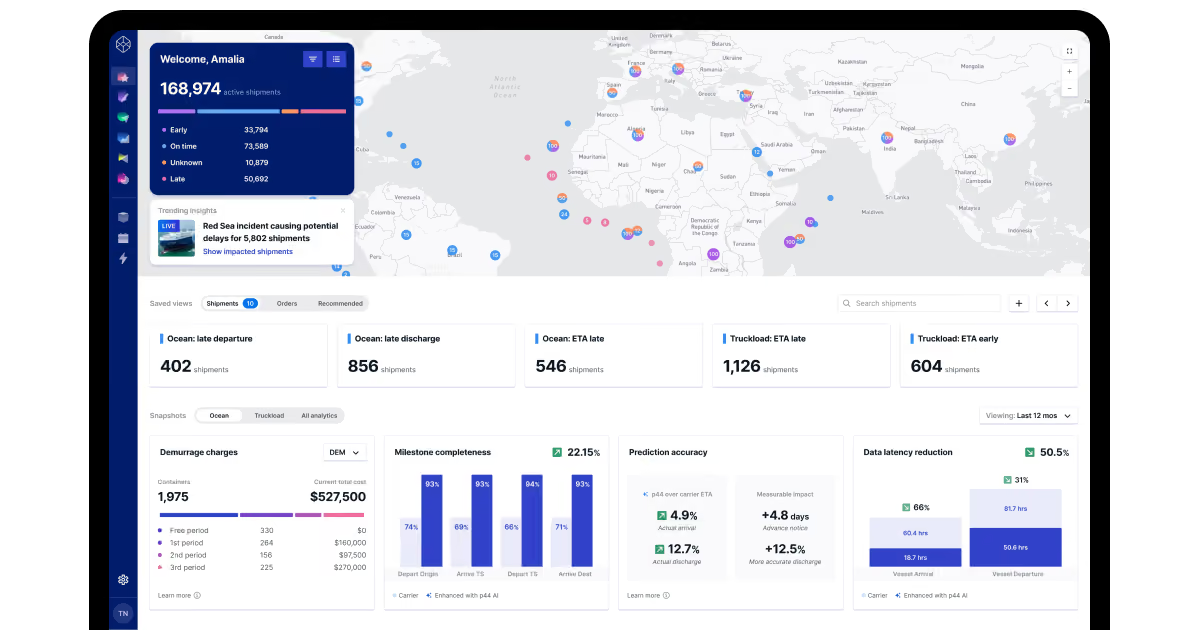
Project44 acts as a visibility layer rather than a complete TMS. However, its capabilities earn it a place in COAX’s top 10 logistics software list. It aggregates tracking data across road, rail, ocean, and air freight.
Carrier connectivity is genuinely impressive. More than 200,000 carriers contribute real-time updates. Machine learning also improves ETA accuracy.
The platform doesn't replace your transportation system. Instead, it strengthens one that already exists. Companies that lack reliable visibility often see fast returns.
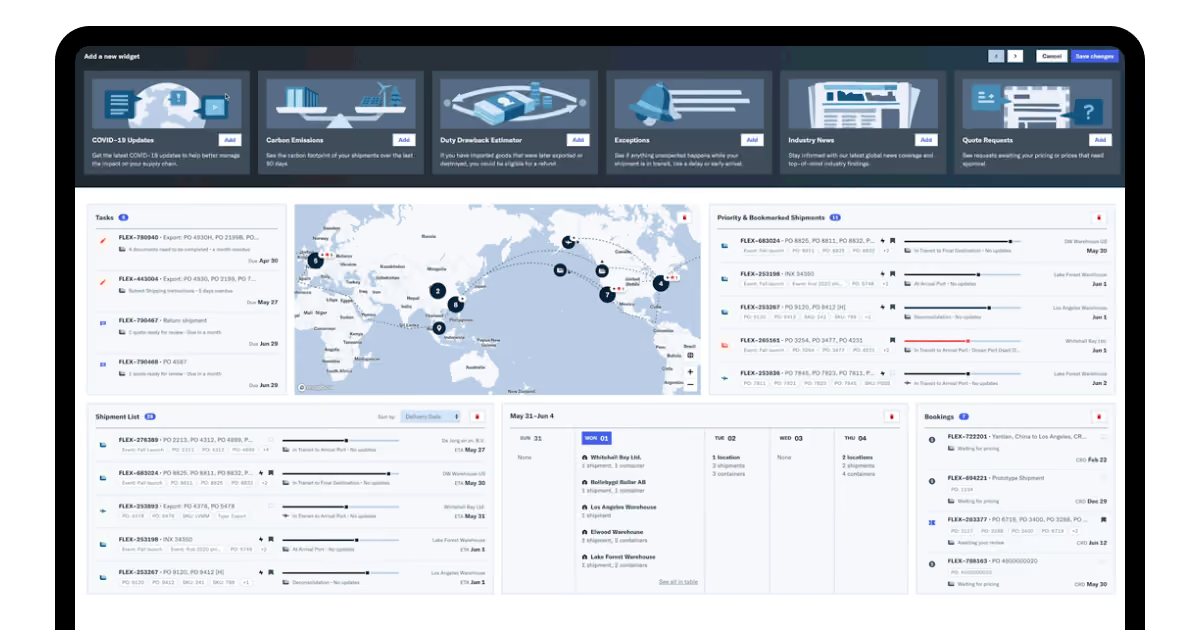
Flexport combines digital freight forwarding with a self-service platform. Users can book, manage, and track international shipments. It's built for companies that need freight forwarding capabilities without the complexity of enterprise TMS implementation.
The onboarding experience is significantly faster than that of any enterprise platform. Judging from our client projects, it takes days rather than months.
The trade-off is configurability. Flexport works best when your freight profile matches standard workflows. It suits digital-native SMBs and companies moving from manual freight forwarding.
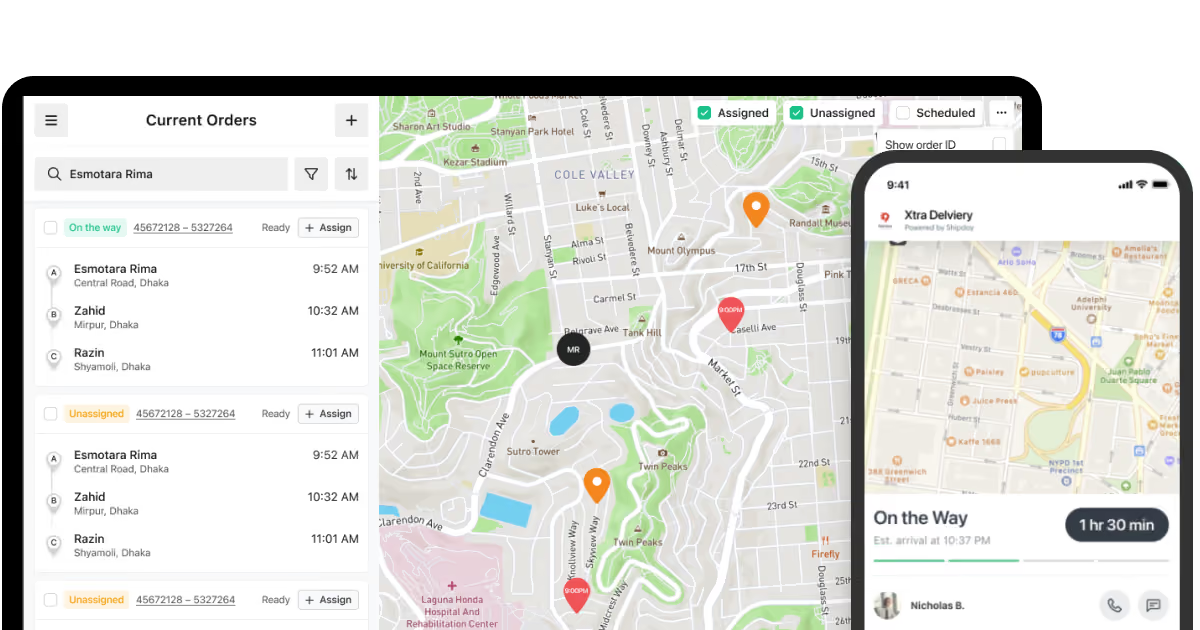
Shipsy is a cloud-native logistics management software solution built for emerging markets. It has strength across South and Southeast Asia, the Middle East, and Africa. It handles last-mile, mid-mile, and first-mile operations.
The platform's strength is regional carrier coverage in markets where global platforms have sparse integrations. AI-powered route optimization and automated delivery allocation work well for high-volume, high-density urban delivery.
The weakness is limited configurability at enterprise scale. It fits regional operators and global brands expanding into underserved markets.
How to choose the right logistics management software?
Picking the right logistics management solution software depends on operational complexity, network footprint, and growth trajectory. There's no universal answer, but there are some decision filters that have worked well for our clients.
The wrong architecture creates operational debt that compounds for years. Poor integrations fail quietly until they disrupt fulfillment. Both problems are common. Here's how to avoid them when evaluating transport and logistics management systems.
Company size and transaction volume.
Scale changes software requirements faster than most teams expect. A platform that works at 1,000 shipments can become a bottleneck at 100,000. Small businesses should prioritize fast deployment and low complexity. Flexport and Shipsy both fit that profile.
Mid-market operators with 10,000+ monthly shipments need deeper configuration. MercuryGate and Descartes usually provide a better fit. Global enterprises require broader capabilities. SAP, Oracle, and Manhattan Associates handle that complexity well. Don't pay for enterprise scale before you need it. Unused functionality creates cost without delivering value.
Network complexity and carrier mix.
Carrier relationships often determine platform requirements more than shipment volume.
A shipper with three carriers faces different challenges than a global 3PL. Managing 50 contracts across multiple regions requires deeper connectivity. Descartes and project44 stand out in that area. Their carrier ecosystems are exceptionally broad.
Regional operators can stay lean. Extra complexity becomes operational overhead when you don't need it. When we assess software logistics management projects, network structure usually matters more than company size.
Warehouse and inventory integration.
Inventory errors rarely start inside the warehouse. They start between disconnected systems. If transportation and warehousing operate together, prioritize native integration. Sync delays eventually surface as fulfillment mistakes. Manhattan Associates and Körber handle this particularly well. Their architectures reduce data fragmentation.
During distribution platform engagements, we've seen delayed inventory updates create costly stock discrepancies. Those issues rarely appear in vendor demos. If you need an integrated logistics management platform, warehouse continuity deserves close attention.
Integration with existing systems.
Features attract attention. APIs determine implementation success. Ask vendors for their API documentation before reviewing demos. Request webhook specifications and ERP migration examples.
Strong features can't compensate for weak integrations. Engineering costs quickly erase licensing savings. From our experience with logistics management solutions, API quality predicts project complexity better than feature lists.
Total cost of ownership.
License fees rarely represent the largest expense. Hidden costs accumulate after the contract is signed. Implementation services, data migration, and customization often double the original budget. Internal engineering time adds even more.
Build a five-year cost model before making a decision. Include training, support, and maintenance costs. The cheapest subscription isn't always the lowest-cost option. That's true for almost every logistics management platform. Teams that account for long-term costs usually avoid painful migrations later.
Build vs. buy for custom workflows.
Off-the-shelf products handle standard operations well. Problems appear when your workflows become the business itself. Specialized fleets, proprietary contracts, and unusual regulations often stretch SaaS products beyond their limits.
We encountered this during the Road&Rally platform. Dispatch logic and driver-matching algorithms shaped the business model. Generic workflows couldn't support them. At that point, custom development delivers more value than forcing a platform to imitate your process.
The custom versus off-the-shelf solution deserves more details. Let’s break it down aspect by aspect. This will help you make up your mind.
When custom development makes sense
Off-the-shelf platforms cover most standard logistics workflows, and for many businesses, they're the right choice. Off-the-shelf logistic management software copes with standard operations. The economics change when your workflows become the competitive advantage.
When your operation has constraints, workflows, or market requirements that a packaged SaaS can't accommodate, custom development is the more efficient path. Based on COAX’s client portfolio, let’s break down the key business size-related cases and find the best option for each.
Small businesses and growing operators.
Smaller companies usually benefit from packaged products. Fast deployment matters more than deep customization. Platforms such as Flexport, Shipsy, and MercuryGate cover most common requirements. They also reduce implementation costs. If your processes resemble everyone else's, custom development rarely pays off.
Mid-market companies with unique processes.
Growth exposes limitations that don't appear early on. Specialized fleets, custom pricing models, and unusual partner relationships often stretch SaaS platforms. Integration requirements create similar problems. This is where hybrid architectures work well. You can license commodity capabilities and build only the differentiating parts. Many successful logistics management software solutions follow that pattern.
Enterprises and multi-system environments.
Large organizations rarely operate inside a single application. ERP systems, WMS platforms, carrier portals, and customer applications all need reliable data exchange. Generic connectors don't always cover those requirements. In our experience, integration complexity causes more failures than missing features. Companies with mature engineering teams often combine commercial platforms with custom services and internal tooling.
As a conclusion based on our experience, custom development becomes attractive when one or more conditions apply:
Operating model. Your workflows don't fit standard SaaS assumptions.
Business logic. Pricing, dispatch, or allocation rules are proprietary.
System landscape. Legacy systems don't integrate cleanly.
Growth plans. Future scale would force repeated migrations.
Once those conditions appear, forcing a packaged platform often costs more than building the missing capabilities.
"The question isn't whether to build or buy. It's about the capabilities that create competitive advantage. Those are the ones worth owning," says Orest Falchuk, Head of Engineering at COAX Software.
COAX has delivered logistics software development services for 16 years. Those projects include fleet platforms, booking systems, and supply chain applications.
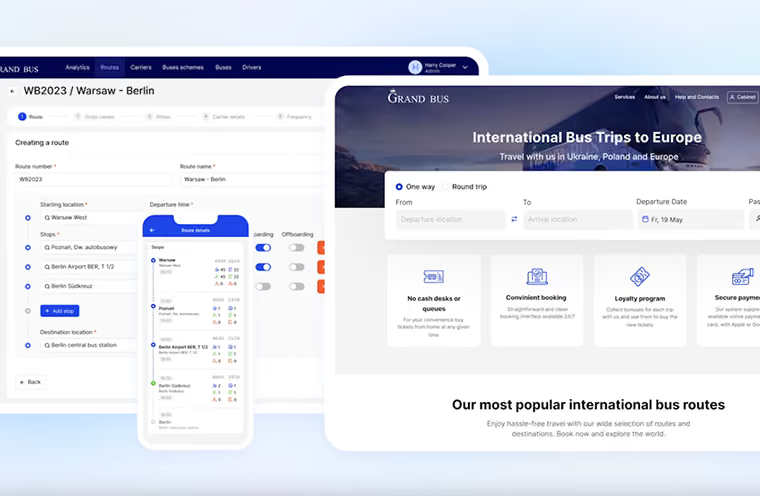
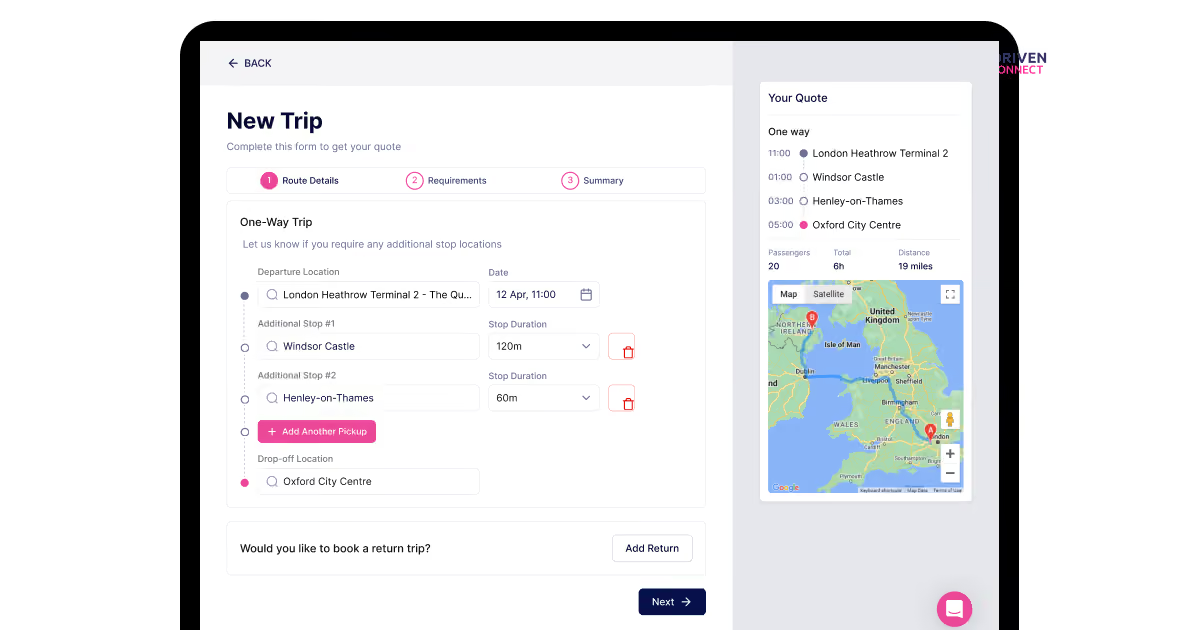
Driven Connect illustrates the pattern well. The UK platform connects buyers with coach and minibus operators through competitive bidding. The initial MVP launched in five months. User feedback later changed the business model. B2C flows, emissions tracking, route calculations, and multi-role interfaces followed afterwards.
Today, more than 400 operators use the platform. Those requirements didn't fit traditional booking products. They required custom algorithms, Google Maps integrations, Stripe payments, and infrastructure designed for continuous iteration.
Projects like this are why some companies choose logistics management outsourcing instead of building domain expertise internally.
Additionally, COAX operates under ISO 27001 and ISO 9001 frameworks. Those processes matter when shipment data and commercial contracts require strong governance.
Most logistics companies shouldn't build software from scratch. But when the business itself depends on unique workflows, custom systems often become the simpler option.
FAQ
What is logistics management software, and how does it differ from a simple shipping tool?
Logistics management software is an operational platform that coordinates the full movement of goods. This includes carrier management, route optimization, warehouse integration, freight audit, and compliance. A shipping tool handles label generation and carrier booking. The difference is architectural: logistics platforms connect multiple operational layers into a unified data model. Simple shipping tools stop at the transaction.
How long does logistics management software implementation typically take?
Implementation timelines depend heavily on integration complexity. A cloud-native platform like Flexport can be live in days for a simple freight use case. Enterprise TMS platforms like OTM or SAP LBN typically require six to 18 months for full deployment. Custom builds at COAX typically run three to nine months depending on scope, with phased go-lives that deliver operational value before full completion.
When should a company build custom logistics management solutions instead of buying them?
From our experience, the clearest signal is when your operation has workflow requirements that off-the-shelf platforms can't accommodate without significant configuration or expensive vendor customization. If you're paying a SaaS vendor to build features only you'll use, a custom build is usually more cost-effective after year two. Proprietary carrier networks, specialized vehicle types, and unique regulatory environments are common triggers.
How do I evaluate transport and logistics management software for a 3PL business?
For 3PLs, the critical evaluation dimensions are multi-client configuration, carrier network breadth, freight audit automation, and customer-facing portal quality. MercuryGate and Descartes both score well here. Also, evaluate the API quality for connecting to your customers' ERPs. That integration burden is where many 3PL platform deployments stall.
What are the most important logistic management solutions’ features for small businesses?
Small businesses should prioritize ease of onboarding, carrier network access, and real-time tracking over configurability. Flexport and Shipsy both deliver this. The risk for small operations is over-buying: enterprise platforms with deep configuration often require dedicated IT resources to maintain. Start with a platform that covers your current workflow cleanly, with a clear upgrade path as volume grows.







































































































_.avif)













%2520explained.avif)

We are interested in your opinion