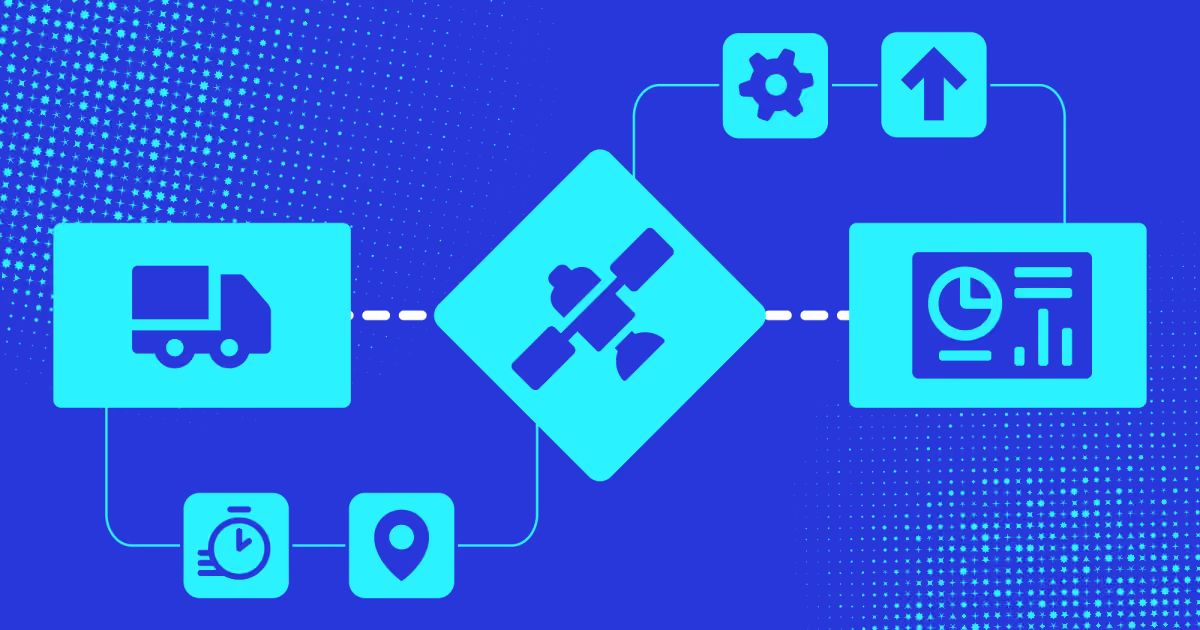
Although electronic data interchange goes back to the 1960s, APIs have been around since the 2000s, and e-AWB bills have been conveniently provided by IATA in 2008, there’s no better momentum to make the best use of all three now. Transportation connectivity is what gives you transparency and real-time instant data exchange - and the best thing is that you can get solutions that combine all of them (or two at the same time, at least). Here’s how it’s possible:
Instant updates on delivery times, route changes, and shipment status via real-time data exchange via APIs.
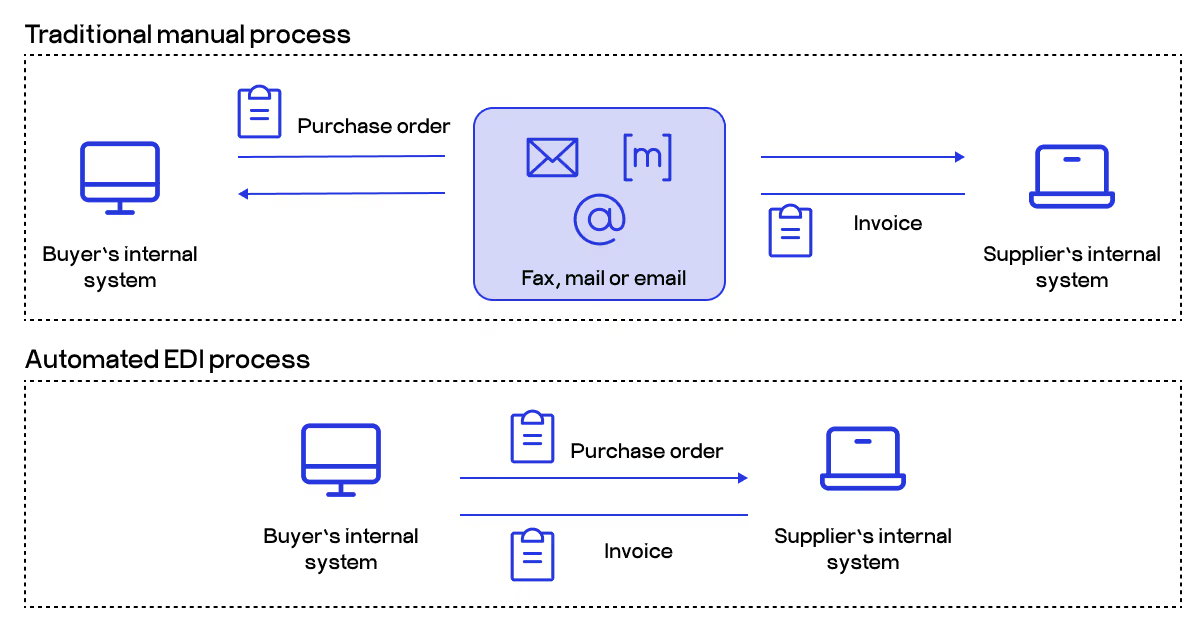
Purchase orders and invoices between trading partners are automated by standardized EDI protocols (EDIFACT, ANSI X12), cutting processing times from days to hours.
e-AWB systems save 70–80% on costs and reduce processing times by 24 hours.
Hybrid connectivity models combine the flexible, event-driven updates of APIs with the dependable batch processing of EDI for large transaction volumes.
Multimodal integration capabilities that connect FedEx, DHL, UPS, and more than 175,000 carriers via unified platforms that cover rail, trucking, air, and sea transportation.
Industry-specific solutions cut down on data silos - like Freightos marketplaces for freight forwarding, Railinc APIs for rail cargo, and TradeLens blockchain for maritime.
In this article, we will break down the three key concepts of transport connectivity and outline their functionality, purpose, and the top providers for logistics, air freight, maritime, trucking, rail, and marketplace transportation businesses.
What is connectivity?
To clarify, connectivity for transportation is a term that is used to describe how digital technologies facilitate the exchange of data between the various representatives that make the supply chain. Chinoracky and colleagues add that, through digital technology, the data flow allows real-time, inter-system connectivity.
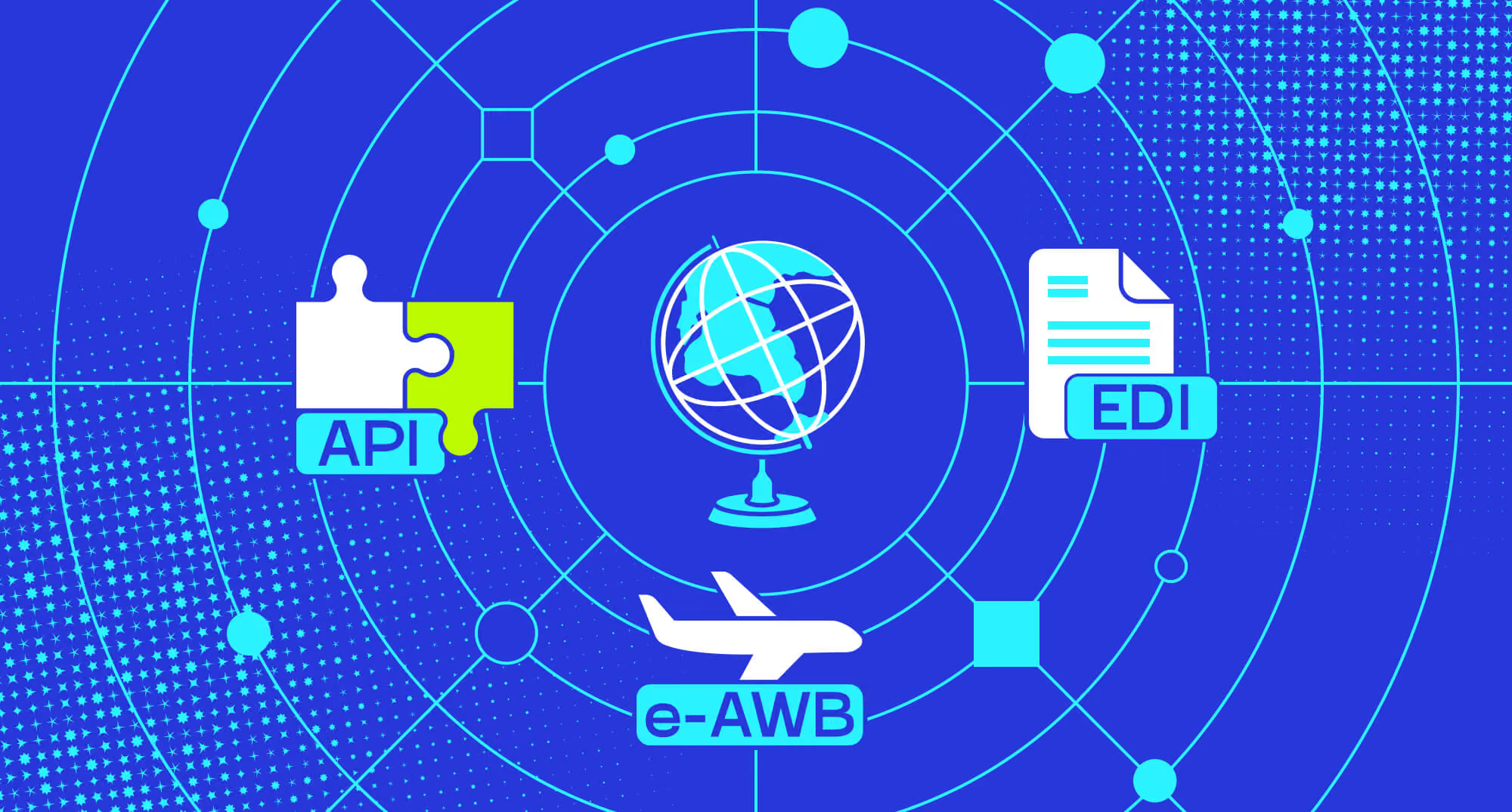
This is achieved by several main tools - electronic data interchange (EDI), which establishes a common format for data exchange, application programming interfaces (APIs), which provide channels for inter-system communication, and electronic air waybills (e-AWB), which specifically address the creation of electronic documentation for air cargo transportation. We will discuss each of these in more detail throughout the article.
A digital corridor is an example of how connectivity is employed in practice, as an electronic corridor that enables multiple transport systems to exchange cargo and other business information electronically across multiple national borders. This connectivity allows the exchange of data, as described by the United Nations Centre for Trade Facilitation and Electronic Business (UN/CEFACT), through other forms of transport along transit corridors.
Why is it important?
You get operational and financial advantages from combining transportation and connectivity. According to Ezgeta and others, digital transformation uses information and communication technologies to make transportation more economical, safe, ecologically friendly, and efficient. Real-time data exchange enables businesses to make proactive decisions and react swiftly to disruptions by providing instant updates on shipment status, route modifications, and delivery times. By automating booking, tracking, and billing procedures through integration with APIs, EDI, and e-AWB systems, you decrease human error and administrative workload.
There is a significant financial impact. For instance, the e-AWB market alone is valued at $1.52 billion in 2024, and with rising adoption rates worldwide. No wonder - the printing, handling, and archiving of paper documents, which used to require more than 7,800 tons of paper per year, or the equivalent of 80 Boeing 747 freighters, are simply cut down to null by these systems. Through precise tracking updates and smooth communication throughout the supply chain, improved connectivity also enhances the customer experience.
Key connectivity options in transportation: APIs, EDI, e-AWB
So, before we move to the solutions in separate transportation sectors, let’s focus on the main connectivity means in more detail.
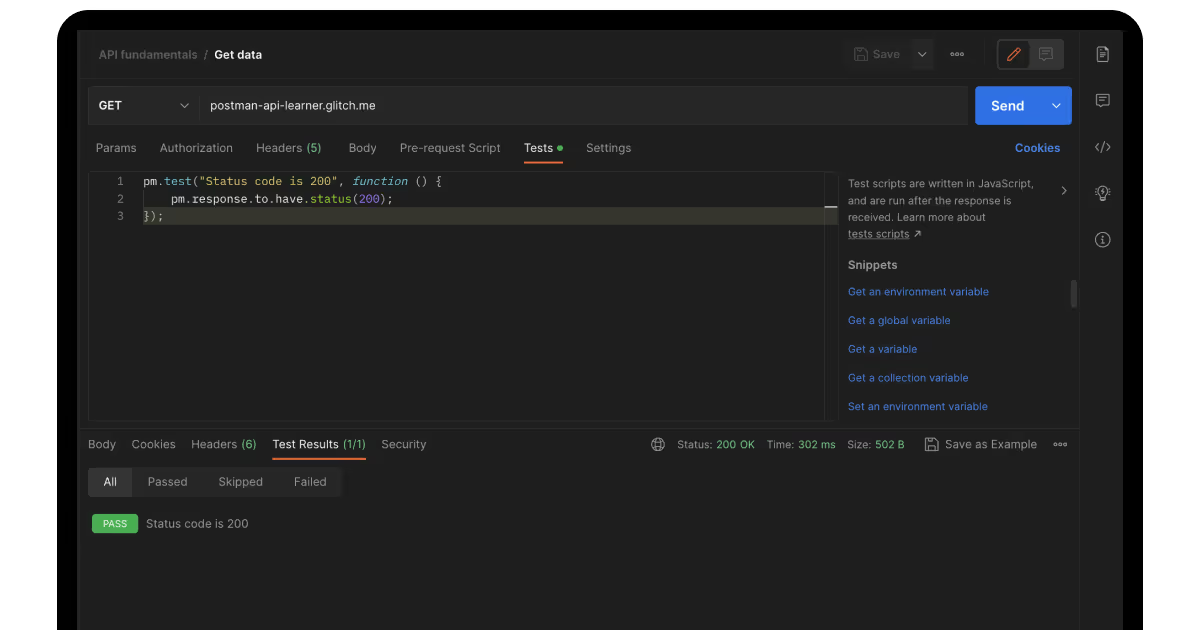
APIs enable various digital systems (like shipping and warehouse management solutions) to interact in a more integrated way by automating process flows with data exchange. APIs make it possible to exchange data immediately without requiring any additional action by the user, as they act as an autonomous bridge between third-party systems. They enable them to communicate directly with each other and function as one entity in the supply chain (as an example, you can see a warehouse management system and transportation management system work together through APIs). API improves accuracy in data collection and brings the number of times people must process documents back and forth to a minimum.
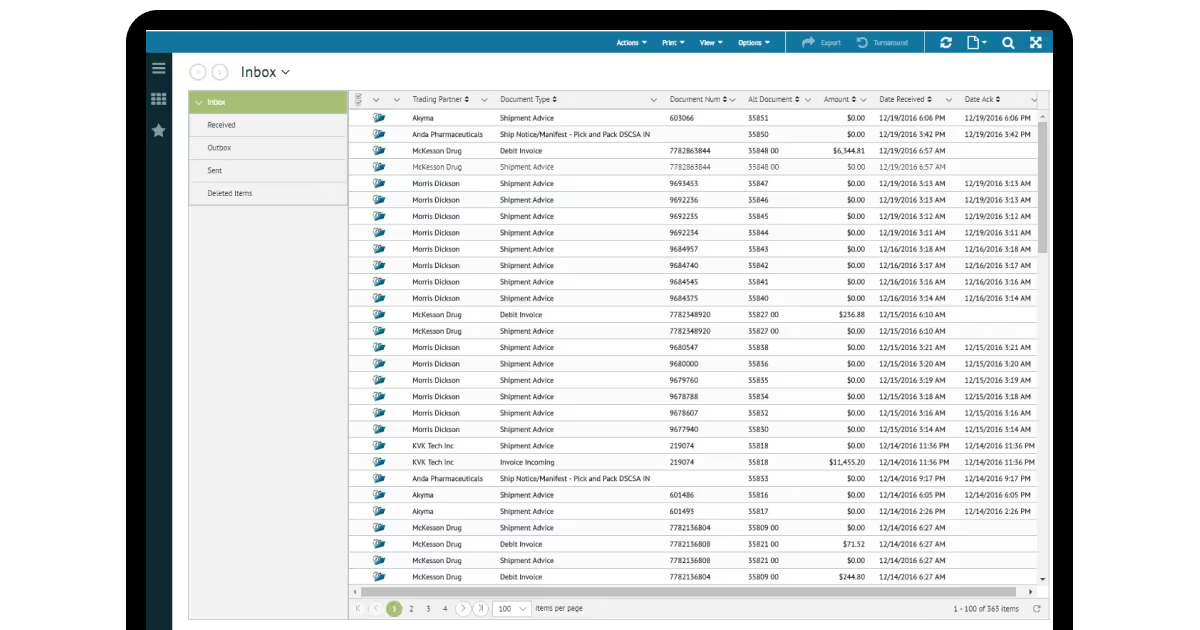
EDI is a method by which business data (purchase orders, invoices, shipping notices, and payment information) is exchanged between computers using an agreed-upon standard (such as EDIFACT) that allows both sender and receiver to communicate without having to reenter data multiple times and to automatically process the information sent. Many standard transaction sets are commonly exchanged between the various partners in a supply chain based on the EDI standard (for instance, load tenders, status messages, or freight bills).
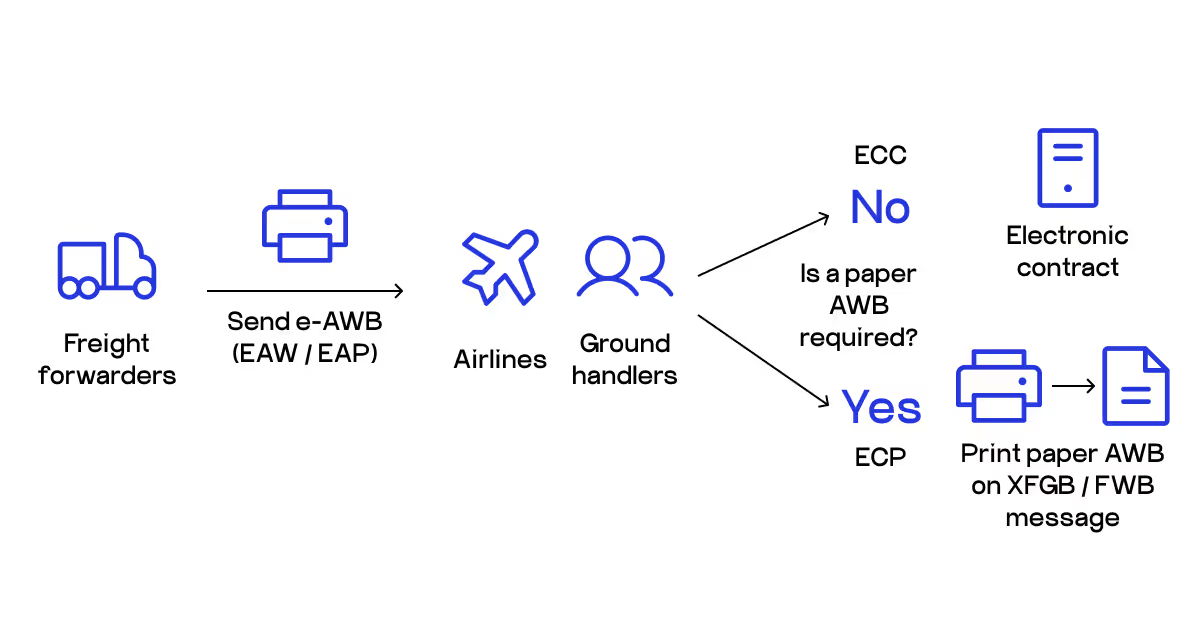
An electronic air waybill (e-AWB) is an electronic document that takes the place of paper air waybills in cargo transportation, according to Gostic. The great benefit of this system is that it cuts down on processing time by using electronic messages. IATA asserts that e-AWB can shorten processing times by up to 24 hours, and bring savings of up to 70–80% through combined electronic filing.
Logistics and parcel APIs
Large parcel and logistics firms now offer much more than just last-mile delivery services. Nowadays, businesses like FedEx, DHL, and UPS manage shipping using a variety of transportation methods. For example, despite providing services for ground transportation, international shipping, and warehousing, FedEx is currently the biggest air freight shipping company in the world. In order to facilitate smooth data exchange throughout the supply chain, such businesses put in place API platforms that let partners and customers integrate directly with their systems.
Logistics and shipping API’s primary function is to automate and facilitate shipping processes. As noted by Ezgeta, API-enabled transport connectivity solutions also allow users to receive instant updates regarding shipment status, automate booking and tracking operations, and reduce the risk of human error as a result of integrating systems.
RESTful APIs play their role in this. Kaptosv also indicates from his studies that newer practice API implementations have produced great enhancements in performance when compared to pre-RESTful systems (better response latency, request throughput, and error rates).
Top providers
Some companies lead with robust options and powerful technical infrastructure. Let’s start with FedEx, as we mentioned this connectivity solution for transportation before.
FedEx provides APIs for package tracking, label creation, and rate computation for a variety of services, such as FedEx Express, FedEx Ground, and FedEx Freight. Important features include address validation tools, a freight LTL API for shipments that are smaller than a truckload, and the Open Ship and Parcel Request APIs for managing courier pickups and creating shipments. Also, Global Trade API manages regulatory documents for international shipping. According to Spekman, FedEx spends more than $1 billion a year on IT infrastructure - so you get a reliable partner here.
Through the USPS API, customers can access shipping data and services. Although the API is free to use, it is more appropriate for seasoned users due to its limited resources and complexity of configuration. Based on the weight, size, and destination of the package, USPS also provides real-time shipping rate calculations. The API automatically validates addresses to minimize delivery errors, generates shipping labels directly, and offers a real-time freight tracking API and delivery status updates.
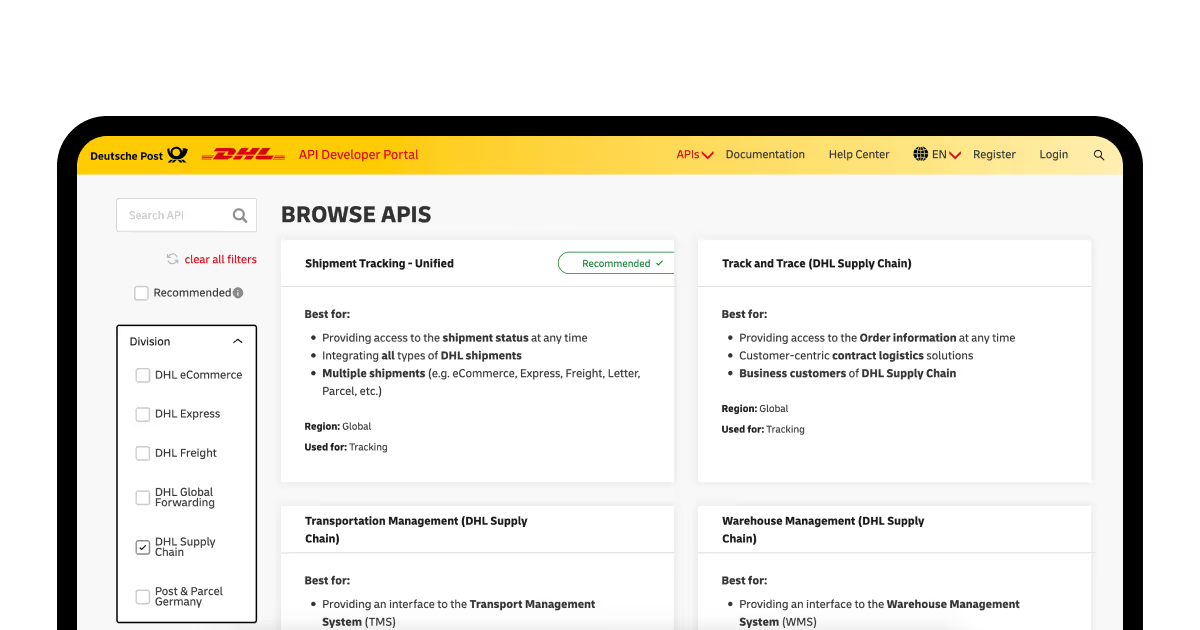
DHL, Germany's leading provider of international and domestic express mail services, also offers APIs that provide users with comprehensive documentation to assist with the integration of DHL's delivery capabilities into their website or mobile application. All DHL APIs are offered at no cost to the user. The APIs offer label creation, real-time parcel tracking (including status updates), and finding local DHL service locations to send and receive parcels. Users of the APIs will have their parcels' taxes and government fees calculated automatically before the parcels are shipped across borders; as part of the shipping process, the address will be validated before shipment, thus reducing issues within the shipping supply chain.
DHL APIs
Businesses that use the UPS API can connect to UPS delivery services and access real-time shipping rates, and create shipping labels. Businesses can track their shipments and receive the customs documentation needed to send international shipments. Spekman noted that UPS worked closely with IBM, SAP, and Lotus, among others, to develop APIs that connect to UPS delivery services from other systems. The UPS API also provides inventory management capabilities, additional international options for shipments, real-time shipping rates, and other shipping-related functionalities.
EasyPost is an international courier service that uses customizable APIs connecting to several carriers, including DHL, USPS, FedEx, and UPS. EasyPost provides shipping, tracking, and address verification. The API offers shipping insurance, data-backed optimization for every shipment, label creation and printing, multi-carrier access with discounts for top carriers, and customs declaration with carbon offset options.
API and e-AWB in air freight
Through an initiative supported by the airfreight industry, air freight transitioned from paper-based to electronic documentation. According to IATA, as of January 2019, e-AWB became the default contract of carriage for all shipments of air cargo on enabled trade lanes. Gostic states that before e-AWBs, an average shipment was associated with up to 30 separate documents. e-AWBs cut down on them, reducing the amount of time required to process air shipments.
Air cargo carriers can be categorized into three groups:
The carriers that are using the e-AWB standard (such as Emirates, Cargolux, Qatar Airways Cargo, and Singapore Airlines Cargo).
The carriers that offer their own freight management APIs in parallel with e-AWB
Major logistics providers, such as FedEx and DHL offer multiple modes of transportation and provide extensive APIs.
Air waybills generate a vast range of commercial or special cargo shipping documents in electronic format.
Top providers
Logitude deployed digital e-AWB automation for the entire process of air cargo management with an IATA-approved e-AWB solution. Its systems are designed to streamline communications with airlines and help shippers quickly submit required information to airlines electronically, reduce repeated data entries, and avoid the higher penalties imposed on shippers who do not comply with the IATA e-AWB regulations. Logitude has developed a solution for connecting freight forwarders with major airlines and offers subscription packages in multiples of 100 to 1,000 e-AWBs per month.
Lufthansa Cargo uses the e-AWB standards and provides air cargo tracking APIs for shipment routing and tracking information. In addition, the company offers rates and capacity information to shippers through the API connections to e-AWB processing. Lufthansa also teamed with Freightos, a logistics software provider that has created a SaaS-based international freight marketplace. This platform allows shippers to access the entire range of functionality related to cargo shipments.
Shipsgo’s air freight software offers an air cargo tracking API that connects tracking data and milestones from over 160 airlines to ERP, CRM, or TMS systems. This shipping API provides unlimited calls at no extra cost and delivers tracking information using AWB numbers. The platform offers real-time updates through webhooks, standardized JSON data for seamless integration, and comprehensive tracking information, including origin and destination airports, coordinates, airline details, pieces, volume, weight, departure and arrival dates, CO2 emissions, and split shipment information.
Shipsgo software
APIs and EDI for maritime transportation
For various operational requirements, maritime transportation makes use of both EDI and APIs. While APIs provide flexible, real-time, event-driven data exchange for contemporary needs like live tracking and instant updates, EDI manages standardized, batch-processed documents like bookings and invoices for established processes. For both core and dynamic functions, many businesses employ a hybrid strategy that integrates both technologies.
EDI functions as a universal translator. As an example of maritime freight EDI, you can see the EDI 300 for ocean booking confirmation, EDI 310 for ocean freight receipt and invoicing, and EDI 315 for ocean shipment status information and milestones. This brings immense value. According to research on the Alexandria seaport, ports that use EDI, like Dubai, finish the same procedures in two to four hours, while traditional procedures take seven to twenty days.
APIs provide modern, direct, web-based connections that allow real-time data sharing between software systems. They operate on an event-driven basis, offering instant updates, flexible data formats like JSON, and faster integration. Their key maritime applications include real-time container tracking, live sailing schedules, and ETA updates.
The hybrid model allows companies to modernize gradually without abandoning established processes. EDI handles structured, high-volume transactions while APIs provide dynamic, real-time data access, tracking individual containers or updating visibility dashboards.
Top providers
Mediterranean Shipping Company (MSC), one of the top ocean freight carriers, is a founding member of INTTRA, the ocean shipping industry's largest network. Currently a part of e2open, the platform uses XML EDI for direct information connectivity between MSC, other member carriers, and customers booking shipments across various trade lanes. EDI access is provided after registration with INTTRA.
Nexus by Infor delivers corporate systems across multiple industries, with GT Nexus serving as their supply chain solution that connects various carriers, including ocean shipping companies. The AppXpress maritime API enables booking, document processing, and shipment tracking capabilities for more than 94,000 businesses worldwide.
SeaRates provides a vessel tracking API designed to address missed ETAs, schedule changes, and limited movement visibility. The API offers real-time updates using maritime AIS and satellite data, historical voyage data, shipping delay alerts, vessel location tracking for global freight visibility, and ETA predictions. The platform integrates a REST API for shipping tracking and supports searches by vessel name, IMO, MMSI, and voyage number. It covers general cargo ships, bulk carriers, and container ships with predictive analytics.
SeaRates
CargoSmart specializes in supply chain management technology for ocean shipments. The platform offers multiple connection options, including traditional EDI freight tracking and newer XML and API integrations for booking, document information, and document exchange.
EDICOM is focused on providing a full range of EDI solutions specifically for the shipping and port industries, with capabilities for exchanging with all other maritime partners around the world. EDICOM's cloud-based EDI platform automates B2B transactions with minimal input from individuals, improving the efficiency of the flow of data in the global logistics environment. EDICOM also provides solutions for all industry-specific needs associated with operating in the port sector while ensuring compliance with applicable laws and regulations.
Cleo Integration Cloud is a best-in-class maritime transport connectivity EDI product that manages transactions and provides an easier way to map data for an effective supply chain. This platform assists with secure, large-volume exchanges of logistics data that are highly complex in the ocean freight market, integrating directly with ERP systems to improve visibility and compliance.
Trucking and rail shipments APIs and EDI
APIs and EDI are both used as connectivity solutions for transportation in the trucking and rail cargo industries. According to Zubkov, APIs serve as contemporary software middlemen in rail cargo, enabling real-time application communication. For railcars with telematics, they enable real-time tracking updates, shipment management, and location data through instantaneous data transfers. APIs automate shipment tracking, dispatching, and requesting spot quotes. Because they operate on universal, web-based protocols, which make them more scalable and reusable, they typically require less complicated integration than EDI.
EDI for trucking and rail serves as a connector between shippers, brokers, carriers, and their other partners by providing updated shipping data in standard formats. Shipping documents you submit through the EDI system include purchase orders (EDI 850), bills of lading (EDI 940), tracking updates (EDI 940), and invoices (EDI 410).
Many established businesses continue to use their existing EDI-based infrastructure to manage complex payload shipments, such as the Rate EDI Network (REN) in North America, which is used to facilitate rail freight rate exchanges.
Top providers
With its managed cloud solutions for ANSI EDI 204 and EDI 214, TrueCommerce is the leading provider of EDI trucking solutions. TrueCommerce connects trucking companies to thousands of carriers so that freight operations can eliminate the need for phone calls and faxes to automate the booking, tracking, and invoicing process within the trucking industry. The platform also supports high-volume transactions between brokers and shippers and includes pre-built maps for trucking workflows to reduce mistakes and speed up payment times. It is particularly known for its ability to scale for LTL, truckload logistics.
TrueCommerce EDI solution
Project44, a freight forwarding hub for shippers and third-party logistics companies with modern AI capabilities for decision support, has partnered with major trucking companies like J.B. Hunt and Old Dominion Freight Line. Project44 provides businesses with API connections and EDI communications.
Bitfreighter distinguishes itself within trucking by offering both unlimited EDI messaging and trucking API integration capabilities, as well as LiveQuote dynamic pricing capabilities. Its primary connection to more than 90% of major TMS solutions and all associated components allows for complete automation of the truck's entire lifecycle from quoting through to invoicing.
The BNSF Railway supports EDI and rail APIs directly with 404 transactions containing all shipment, status, and invoice data, thus being the premier automated provider of rail freight shipper and intermodal partner interfaces. Their infrastructure provides shippers and intermodal operating railroads with instantaneous access to car locations and ETAs (estimated time of arrival), which is extremely important for bulk and intermodal rail operations.
Leading North American trucking company YRC Freight, a division of YRC Worldwide, provides business-focused solutions to the US, Canada, and Mexico. Along with a number of API tools, the company offers shipping solutions via freight EDI and API.
Freight forwarders and marketplaces APIs and EDI
Freight advancing companies deal with many difficulties (not enough time to make decisions, higher operational costs, shipment visibility issues, excessive amounts of manual work, etc). Freight forwarders can automate processes, communicate in real-time, and close visibility gaps with APIs and EDI. Businesses can achieve quick updates by breaking down silos between carriers, TMS systems, and partners through the integration of these technologies. Freight API integration improved customer satisfaction, according to about 55% of logistics companies.
Another area similar to this category is shipment marketplaces, where freight forwarders work together with carriers. With APIs and EDI, shipment marketplaces enable real-time data exchange and eliminate the silos of information between disconnected systems like TMSs, ERPs, and carrier portals, and they simplify complicated processes by automating shipment tracking, booking, and pricing.
EDI freight forwarding software enables smooth communication in accordance with industry standards like ANSI X12 or EDIFACT. In addition to streamlining essential freight documents like purchase orders, load tenders, invoices, and delivery confirmations, it removes manual errors that result from duplication, email correspondence, and paper trails. Meanwhile, data exchange is made possible by APIs, which offer real-time updates on rates, shipment tracking, events, and capacity to assist stakeholders in preventing inconsistencies.
Top providers
Kuehne + Nagel, one of the leading freight forwarders in the world, covering 100 countries, enables transportation connectivity with standardized data exchange for freight operations by granting access to their supply chain resources through EDI integration.
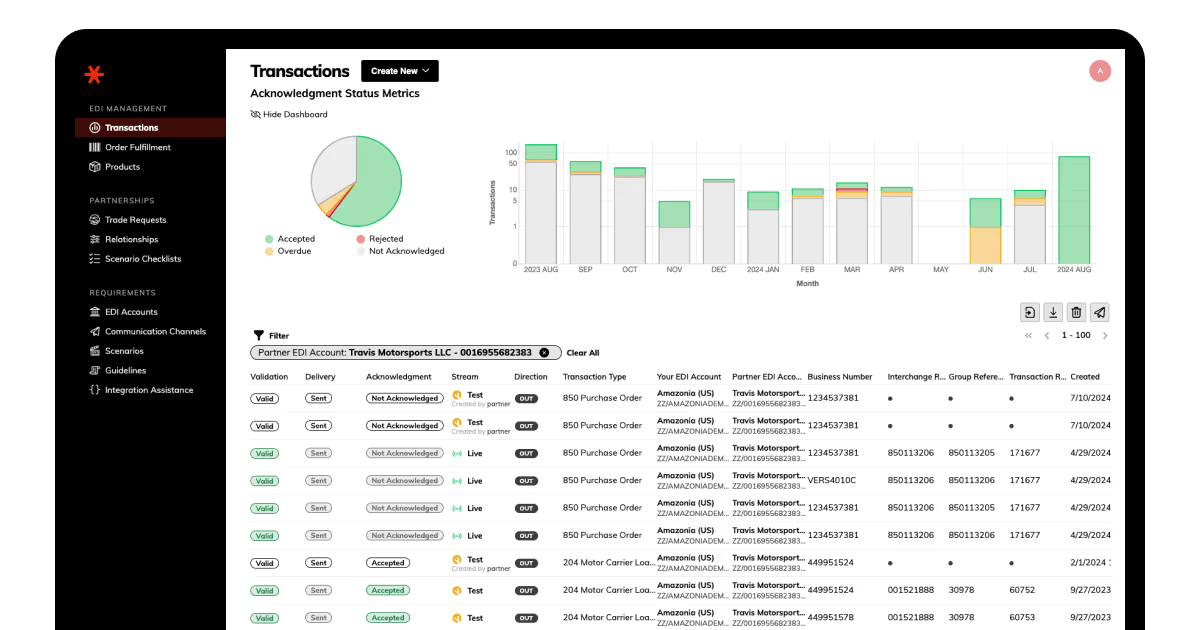
Orderful is a freight forwarder and 3PL solution that provides API-first EDI solutions. It provides a self-service onboarding process for EDI documents such as an advance shipping notice, invoice, etc. Orderful's cloud-based application allows users to connect quickly and validate in real-time, making it an ideal solution for dynamic forwarding. As Orderful has flat-rate pricing and is easy to integrate with most warehouse systems, forwarding companies benefit from this solution.
Orderful
Freightos functions as an online digital freight forwarding marketplace that links shippers in need of cargo transportation with carriers. The platform offers freight APIs for rate estimation, shipping as a service, and other pertinent data functions in addition to instant booking capabilities.
UROUTE offers APIs for freight marketplaces with load broadcasting to 1200+ asset-based carriers, electronic tendering, ELD status updates, and invoice retrieval in one call. Its API supports truckload, drayage, and final mile, as well as quick pay options, and incorporates directly into TMS for capacity sourcing. Markets use the verified network of UROUTE to provide opportunities to spot post-ocean and rail.
How to choose the best connectivity option
Among the diverse options, how do you choose the right connectivity solution for transportation? Apart from the obvious industry and shipping mode-related differentiations that we described, there are some technical aspects for you to consider.
Processing speed and data volume. EDI's batch processing capabilities and proven independence are beneficial to businesses that handle large volumes of regular transactions, while APIs provide better performance for tasks requiring dynamic data exchange, real-time tracking, and instant updates.
Current infrastructure. Before selecting connectivity options, assess your existing systems. Maintaining and growing EDI connections may be less expensive than moving to APIs if your company already has EDI-capable systems with reliable partners. On the other hand, API integration will be easier for businesses with newer tech stacks and development teams being familiar with REST and JSON.
Partner requirements and industry standards. Look at what your trade partners and carriers offer. The use of e-AWB as a default contract for air cargo carriers has been set since 2019, so it’s a requirement in that industry. In trucking, many trade partners use EDI to access rates from rail freight systems supported through networks. By knowing the standards within your industry, you reduce the chances of incompatibility.
Future growth and scalability. When looking at ways to connect your trading partners and transportation carriers, consider the long-term growth of your business. For example, most operators who are starting to implement these systems will find that by using an API, they will be able to achieve more scalability than with a more conventional method, as APIs are modular and can be integrated into existing systems easily.
Technical knowledge requirements. Realistically evaluate the capabilities of your team. For direct API and EDI integrations, you need developers who are proficient with different protocols, data formats, and carrier-specific requirements. Despite their drawbacks, companies without tech resources might find intermediary solutions feasible.
Compliance and data security. The security and compliance capabilities offered by various connectivity options vary. While APIs necessitate appropriate authentication, encryption, and rate limitation, EDI offers established security for structured data exchange. Companies that handle sensitive cargo data or work in regulated sectors must make sure the solution they select complies with all legal requirements, including international data protection laws and customs documentation standards.
With every nuance described, COAX is your go-to choice for developing suitable, secure, and robust transportation connectivity options. Our API integration services allow us to establish secure connections through RESTful APIs that link you to any compatible provider in your industry without the limitations of intermediaries or a larger-scale, fixed-priced vendor platform. Maritime data APIs, trucking or rail options, or multimodal transportation connectivity - we can handle any of these.
Apart from APIs, we can automate e-AWB exchange, connecting your air cargo software to any airline data providers, and standardize any EDI protocol to provide batch processing for any other industry your business works in.
If you need to get the best out of every transport connectivity option described above, but can’t find a provider that covers everything you need, our logistics and transportation software development is what you need to get a perfectly tailored solution that will fit your data sources, modes of transport, shipping volumes, compliance requirements, and operational needs. Sometimes, a custom way is the best way - especially, with COAX.
FAQ
What are the risks of not having proper wireless connectivity for transportation?
Wireless technology is a critical component of smart transportation systems. Wireless technology enables vehicle-to-infrastructure communication, improving safety and enhancing efficiency. If connectivity is not available, this communication will fail, resulting in unsafe conditions and decreased operating efficiency. The presence of metal shielding causes poor internet performance for passengers. Vehicle diagnostics cannot be monitored remotely, which means that breakdowns could go unnoticed until after an event, increasing operational risk by not being able to notify affected drivers and dispatchers on time.
What are the challenges of implementing transport connectivity?
According to Briso-Rodríguez, wireless communications must be specifically designed for each transportation system. Accurate propagation modeling, waveform selection, antenna design for present bands (0.5–6GHz) and future mmW bands (20–60GHz), handover schemas, relay configuration, and MIMO diversity are among the challenges. Passenger needs, unique environments, and vehicle characteristics must all be taken into account when designing the physical interface.
What are the differences between EDI freight, air freight, maritime, trucking, and rail solutions?
EDI is computer-to-computer business data transfer without human intervention, according to Janssens and Cuyvers. EDI is a digital infrastructure that automates document exchange in all modes, not just transportation. The fastest speed is provided by air freight, but it is also the most expensive. The cheapest option for large quantities is maritime. Door-to-door flexibility is maximized by trucking. For inland routes, rail provides maximum capacity and minimal emissions.
How does COAX build secure and efficient transportation connectivity solutions?
COAX is both ISO/IEC 27001:2022 certified for comprehensive security management and ISO 9001 certified for quality processes. COAX developers provide API integration and EDI standards to create a simple way for an organization to share information with other companies in a secure manner. COAX also creates e-AWB solutions, which enable secure and standard communications between transportation systems without the need for manual document processing.





























































































_.avif)












%2520explained.avif)

We are interested in your opinion