Ten pairs of eyes watch the 7:15 bus fade into the morning mist. It is only 7:12.
The dispatcher only found out when a passenger called to complain. They were furious, as the clock ticked past the start of their work shift.
At COAX Software, we’ve spent 16 years building the digital backbones for travel and logistics. Somewhere in between, our teams learned the truth founders rarely expect. The gap between a flawless journey and a ruined morning is never the engine, the tires, or the bus itself.
It’s in the lack of efficient public transport software.
Across booking platforms, driver apps, and operator dashboards we've built, we discovered one truth. Operators don't fail because they lack buses. They fail because they focus on details. A couple of new drivers here, tire replacements there. The problem is, nobody can see the whole system. A dispatcher deep in four spreadsheets can't catch a gap before a rider does.
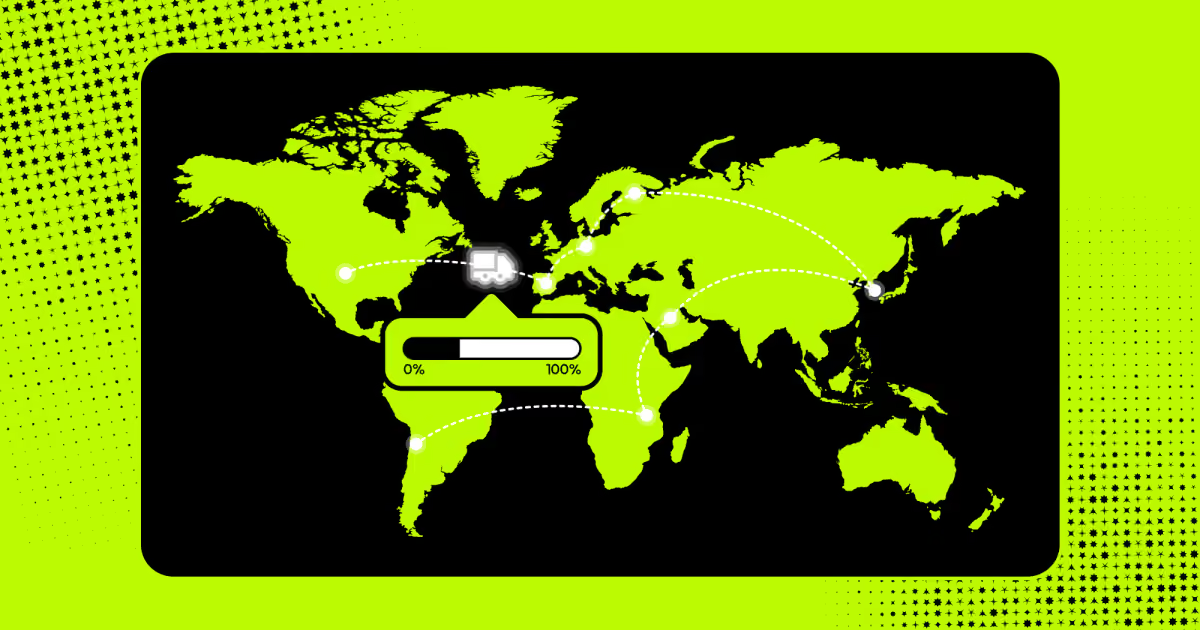
This guide breaks down public transportation solutions. We cover what it is, who needs it, and what it fixes. We also compare the leading tools on the market. Below, you'll find the types of platforms available, their core features, and a practical path to choosing one for your business.
What is public transport management?
Public transport management is the coordination of routes, vehicles, drivers, and passengers across a transit network. It covers everything from scheduling to real-time tracking. Done well, it's invisible. Done poorly, it shows up as an empty bus and an angry rider.
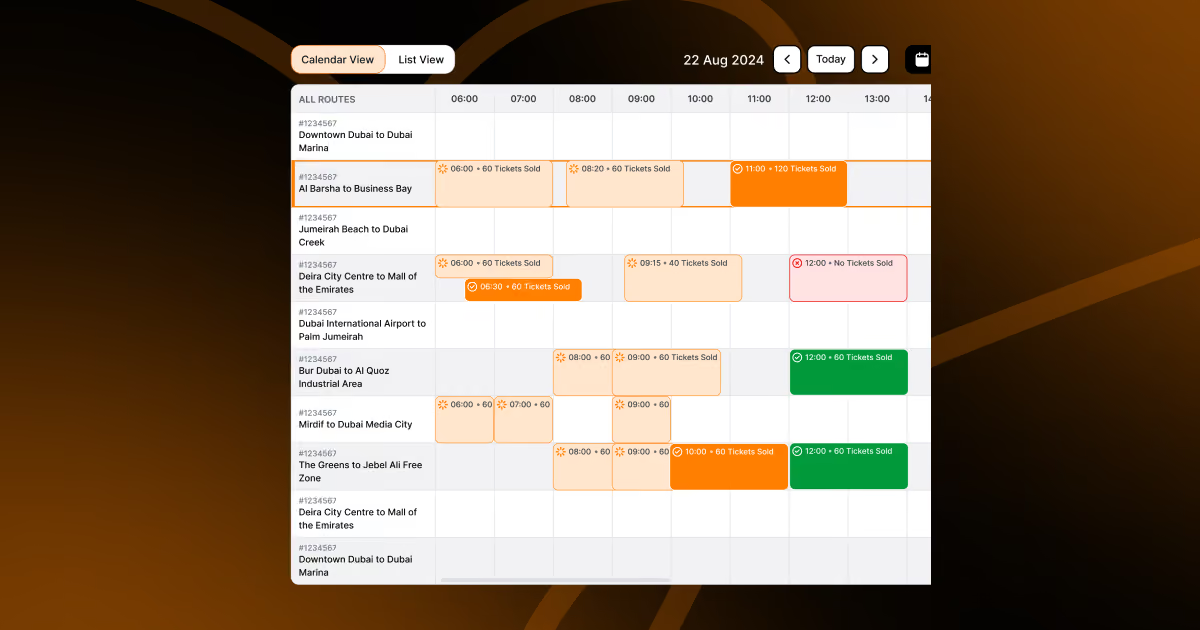
That gap between "should've worked" and "actually works" was exactly the problem on our DrivenBus project. The client ran scheduled shuttle routes across Dubai. Operators had no way to see seat demand ahead of time. Routes sold out unnoticed, or ran half-empty for weeks.
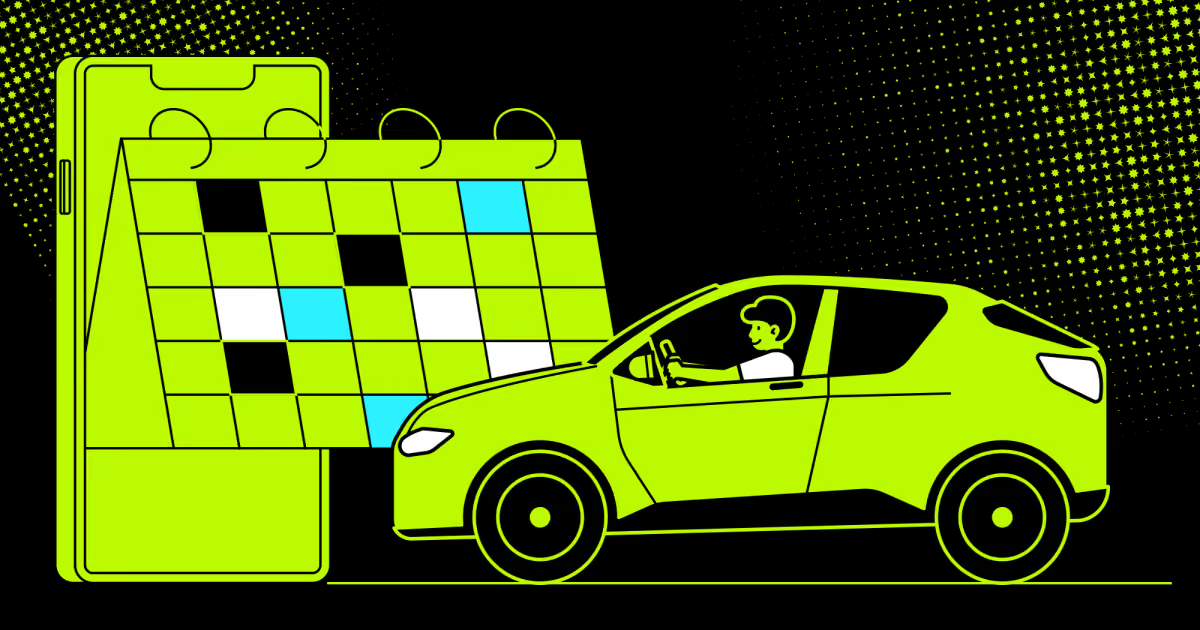
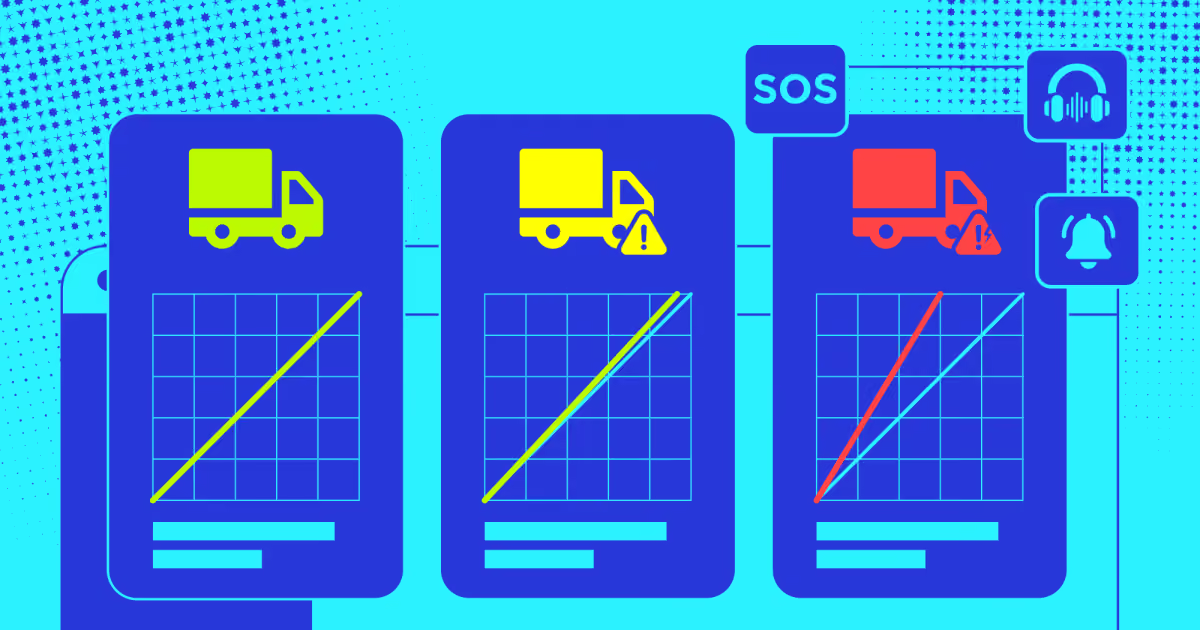
We built a smart calendar into the operator dashboard. Seat availability shows in color: green, yellow, red. Operators spot a filling route before it overbooks, not after a complaint lands.
That's the real function of public transportation solutions. They turn a guess into a visible, provable fact. Monthly pass renewals now hold a 78% retention rate on the same platform. And the market speaks of the same trend.
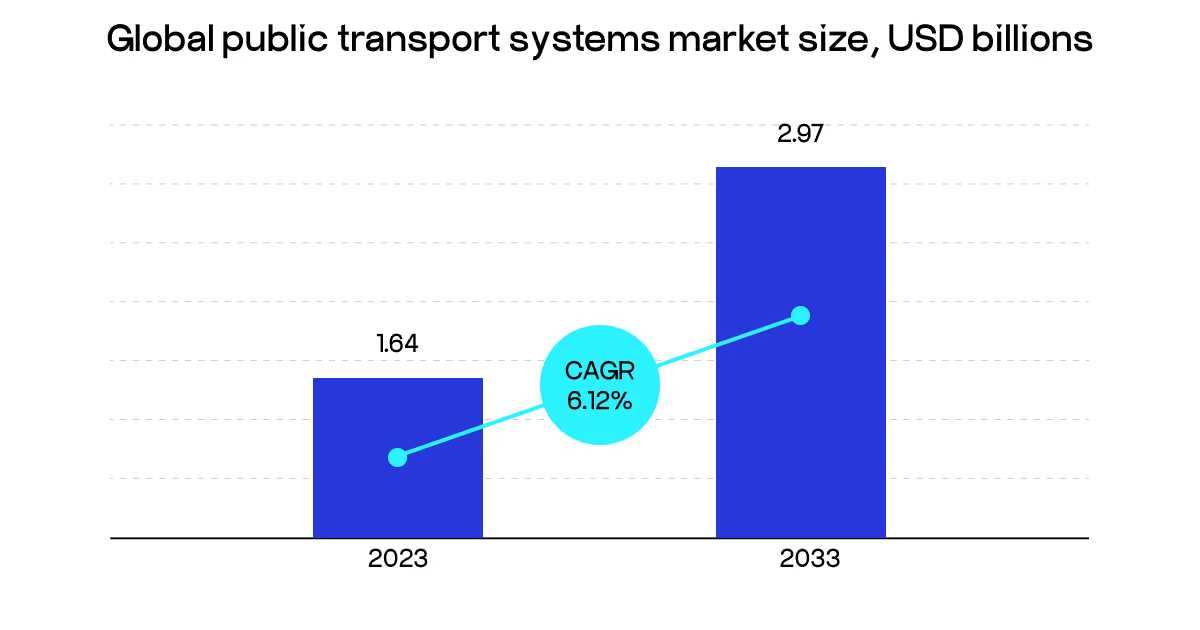
The global public transport systems market is estimated to reach $2.97 billion by 2033, growing at an impressive speed. That growth is easy to explain. It's operators replacing spreadsheets with systems that actually show them what's happening.
Key responsibilities of transit operators
A transit operator is the DJ mixing four jobs at once. They’re building routes, assigning drivers, tracking service, and keeping riders informed. Each one breaks differently without the right tooling. Here's what that looks like in practice, based on the operator role we designed for DrivenBus.
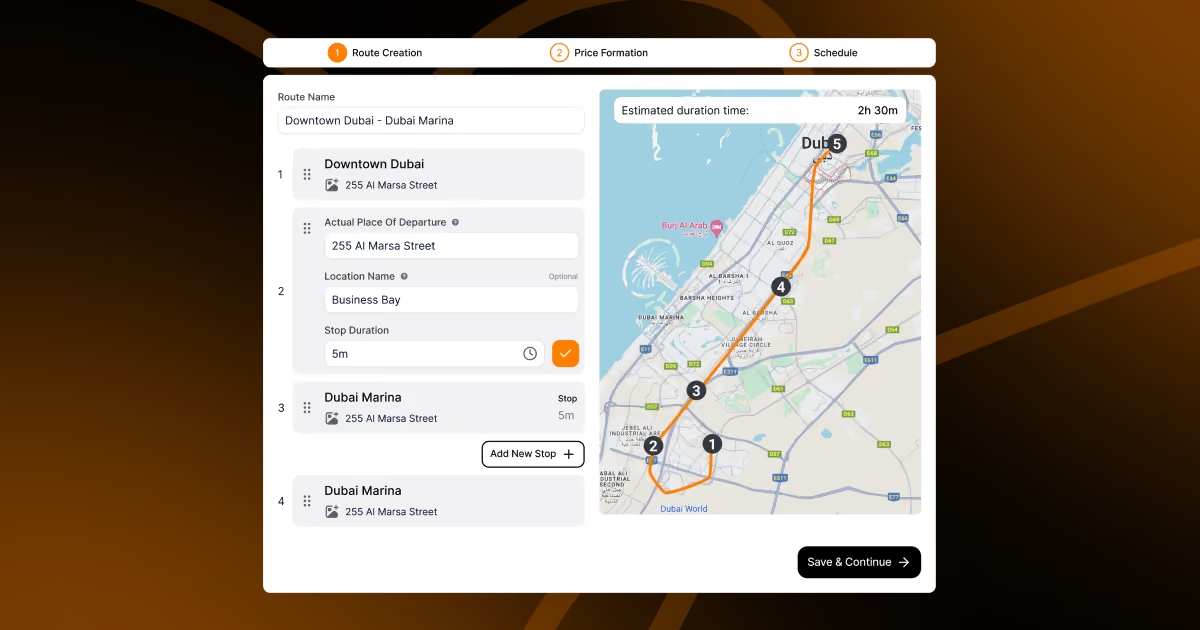
Building routes and stop sequences before a single seat sells.
Assigning drivers and vehicles to each scheduled departure.
Monitoring live service so gaps get caught, not discovered.
Managing passenger communication when a schedule shifts mid-route.
Reporting on performance to spot which routes need attention.
Every one of those tasks used to run through phone calls and paper logs. Good public transportation software turns them into a single dashboard view. On DrivenBus, operators now build a full route in an average of 12 minutes.
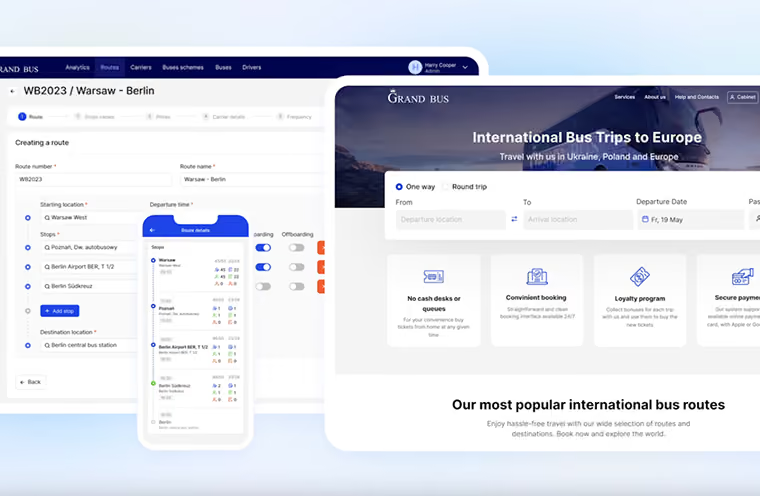
That's the difference between public transit fleet management as a concept and fleet management as a daily habit. We saw the same pattern on GrandBus, another transit platform we built. Before the system launched, up to 35% of route calls were just riders asking "where's my bus?" A live tracking feature cut that down to 5%. Public transportation technology doesn't replace the operator's experience and gut feeling. It just stops burying that value under manual busywork that distracts them.
In short, a burned-out dispatcher is worse than a tool subscription.
"A dispatcher shouldn't need three tools open to answer one question. If the software can't answer that in under five seconds, it's not doing its job," Orest Falchuk, Head of Engineering at COAX Software.
Common public transport management stakeholders
Three groups keep a transit network running: municipalities, transit agencies, and private operators. Each one owns a different piece of the puzzle. Miss one, and the whole system stalls.
Municipalities set policy, fund infrastructure, and answer to residents when service fails. They need proof that public money produces safe, compliant, reliable service. Compliance reporting is often their biggest software headache, especially around emissions. On Driven Connect, we built a module that calculates carbon tax per route. That's the kind of visibility municipalities and regulators actually demand.
Transit agencies run the day-to-day operation: scheduling, dispatch, and compliance reporting. Within any public transportation solution, they need to see the whole network in real time, not after a rider complains. On DrivenBus, we gave operators a central dashboard for every route and driver. Agencies stopped discovering gaps from angry phone calls. Instead, they saw coverage issues the moment they formed.
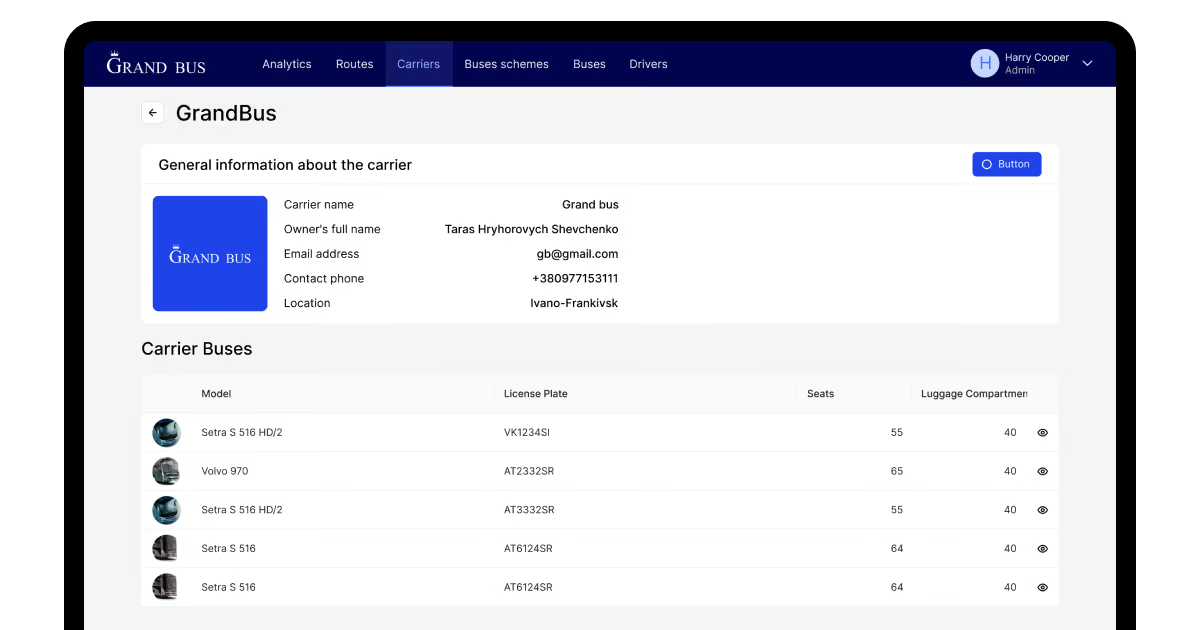
Private operators own vehicles and drivers, often under contract to an agency or running independently. Their priority is simple: keep every vehicle earning, not idle. On GrandBus, the client runs dozens of subcontracted carriers across multiple countries. Our platform lets them track subcontractor performance from one dashboard. That replaced a system built entirely on phone calls and trust.
That's the theory behind good public transport management. It's not one system for one user. It's shared visibility across parties who rarely trust each other's spreadsheets.
Stakeholder
Main role
What they need from the software
Municipalities
Fund infrastructure, set policy, oversee safety
Ridership data, compliance reports, public accountability
Good public transit software serves all three without forcing any of them into someone else's workflow. Building for one and bolting on the rest usually shows fast.
What challenges do public transport operators face today?
At COAX, we’ve seen transit founders six months into launch. Ridership is climbing, finally. Then a driver's shift ends mid-route, unnoticed. Twenty passengers wait at a stop that never gets served. By the time the founder hears about it, it's already a headline. Nothing broke. Nobody made an obvious mistake. The system just couldn't see the gap until a rider did.
That story splits into three separate failures, each with its own cost. Below, we break down what causes them and what actually fixes each one.
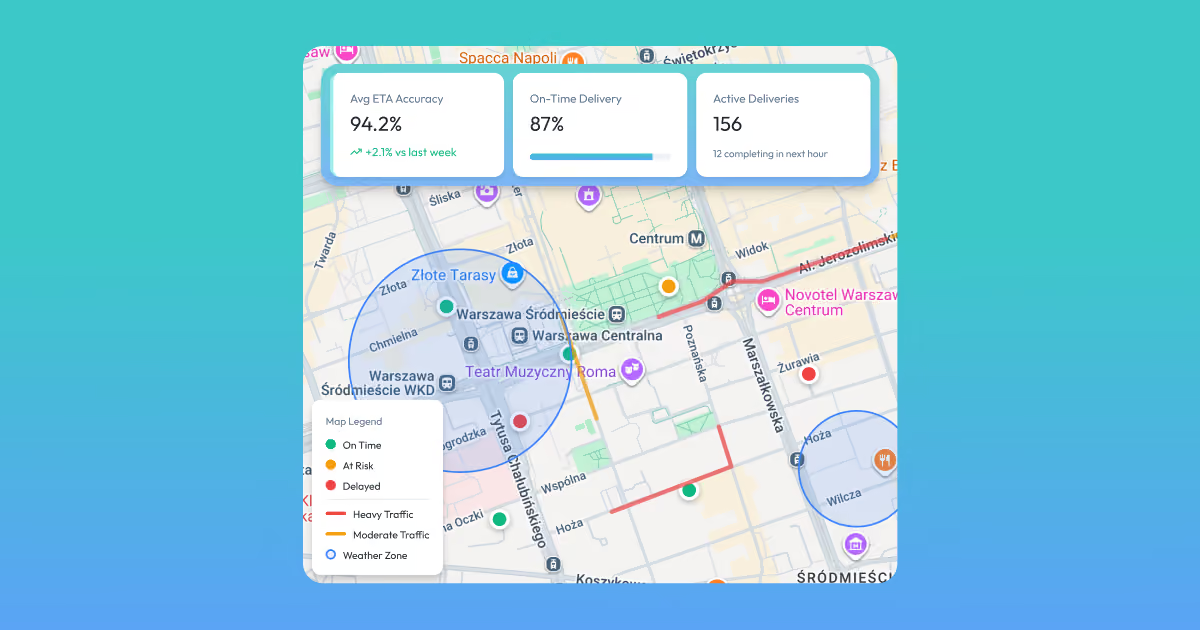
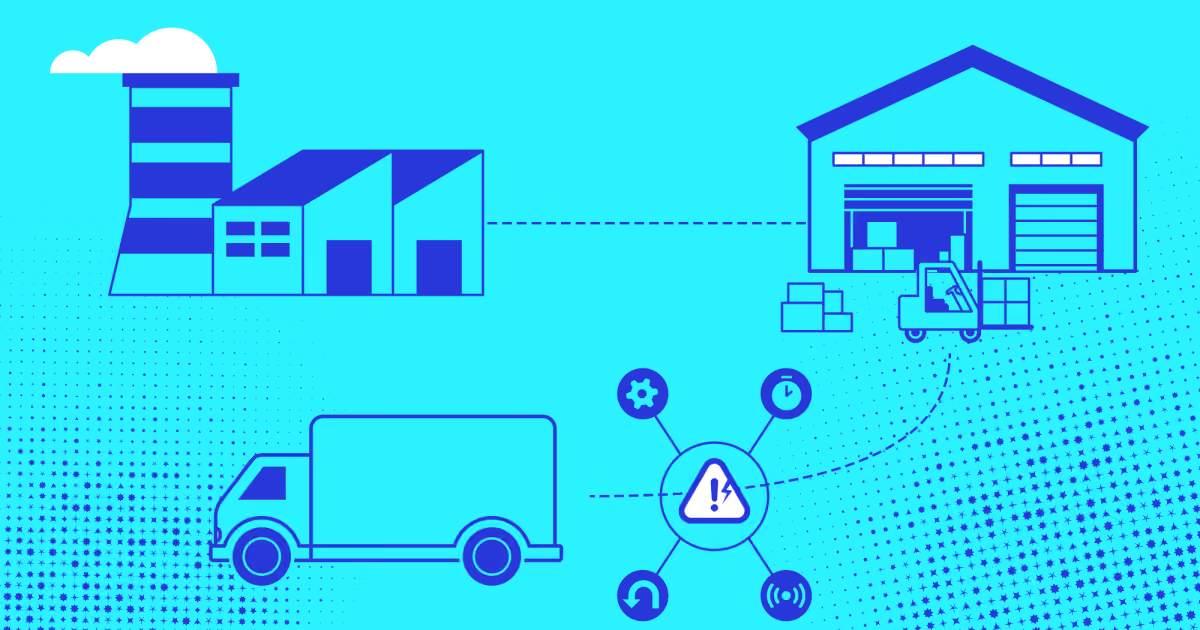
Delay detection usually happens too late, through a phone call instead of a dashboard. That gap isn't just embarrassing. It's expensive at scale. Traffic congestion alone costs Europe about €100 billion a year, roughly 1% of its GDP. A dispatcher who can't see a delay forming can't route around it. On our DriveIQ project, a predictive engine flagged delivery delays with 89% accuracy, well before a complaint call ever came in. That same early-warning logic is what public transportation management needs for transit, not freight alone.
Compliance and emissions reporting eat hours nobody budgeted for. Most transit fleets still run on diesel, which now faces tightening emissions rules everywhere. Advanced diesel buses already cut particulate emissions by 98% compared to older models, but proving compliance still means manual paperwork for most operators. On Driven Connect, we automated that entire calculation. The system now handles carbon tax payments directly inside the app, without a spreadsheet in sight.
Route-level profitability is often invisible until the quarterly report lands. You can't fix what they can't see route by route. Transit's own multiplier effect makes this worse to ignore: every $1 invested tends to return far more in broader economic activity. A fleet manager who doesn't know which routes lose money can't act on that leverage. On DrivenBus, real-time GPS tracking closed exactly that blind spot, giving operators live visibility into demand and coverage together.
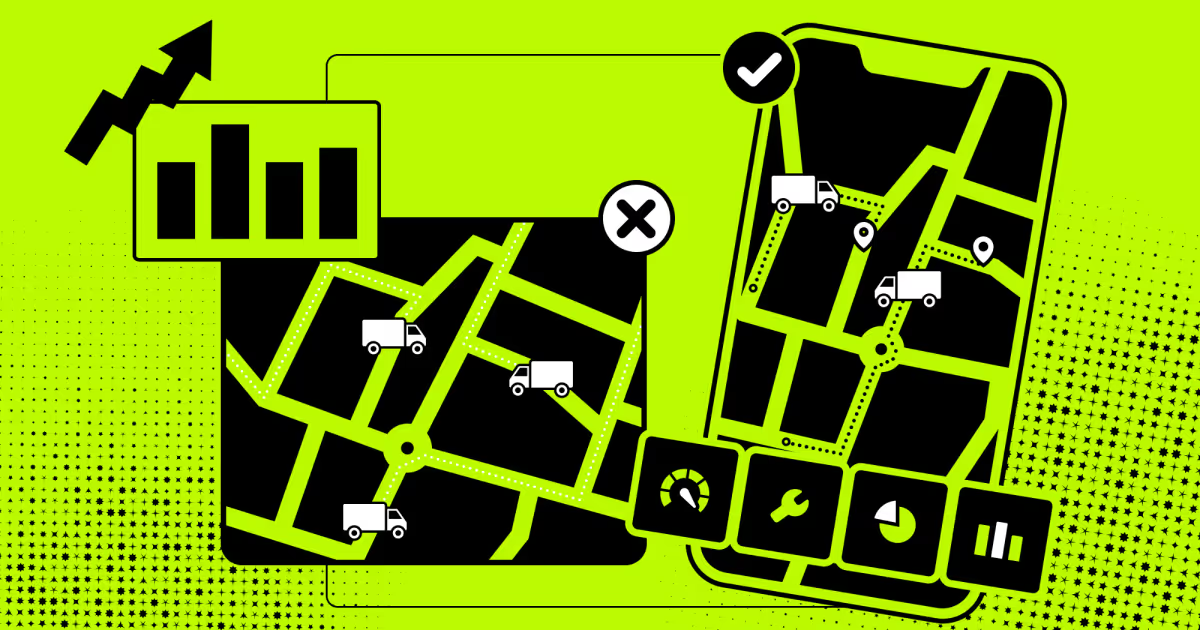
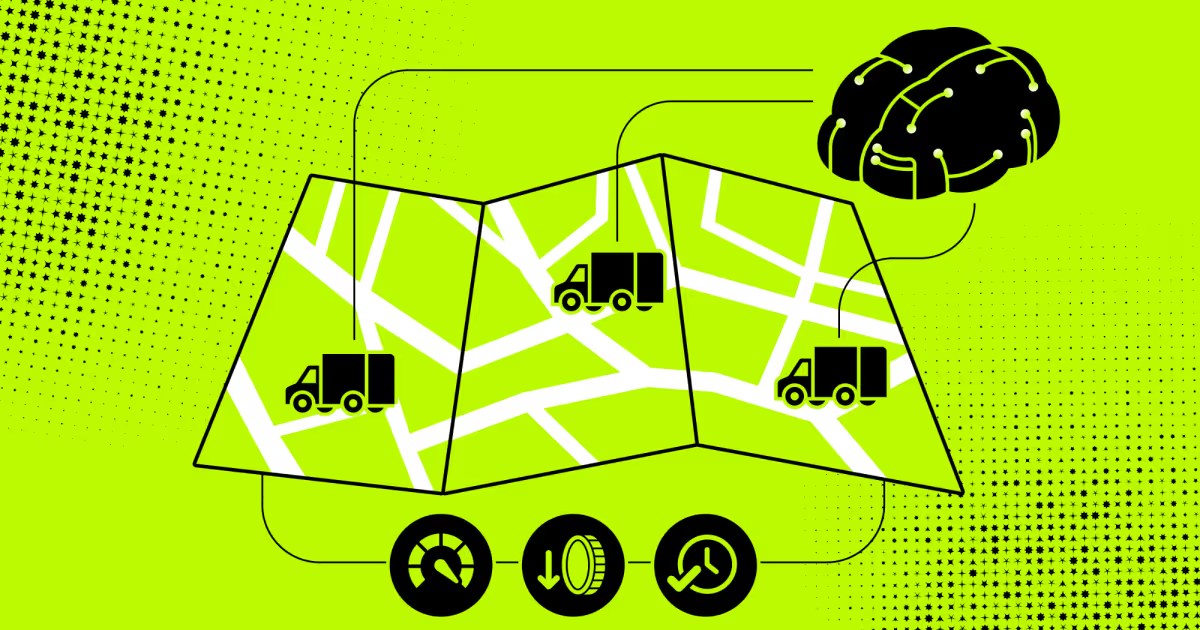
That's the core argument for real public transport fleet management tools. They don't just track vehicles. They catch the moment a plan and reality start to drift apart. Purpose-built software needs to close that gap before it becomes the deciding factor between success and failure.
What is public transport management software, and does it help solve challenges?
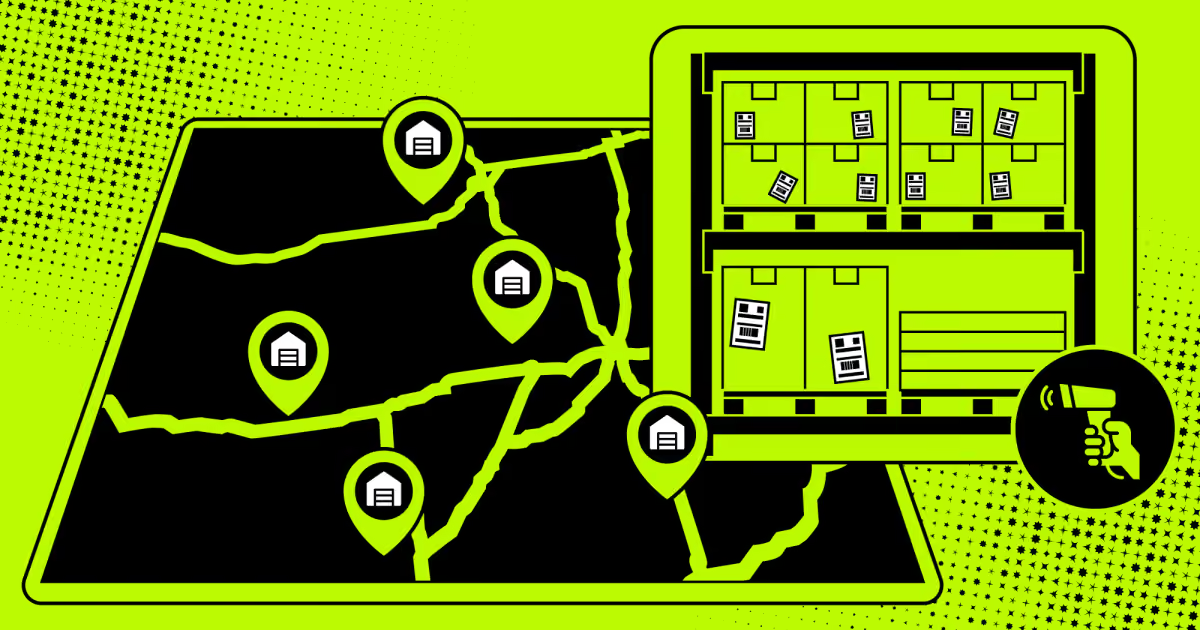
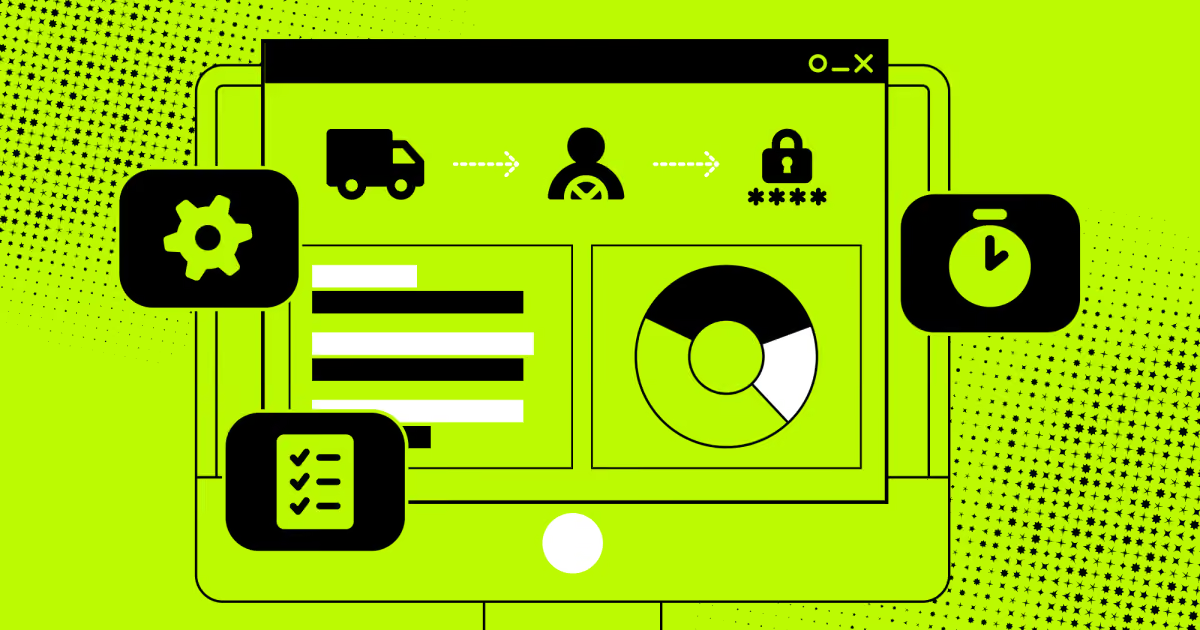
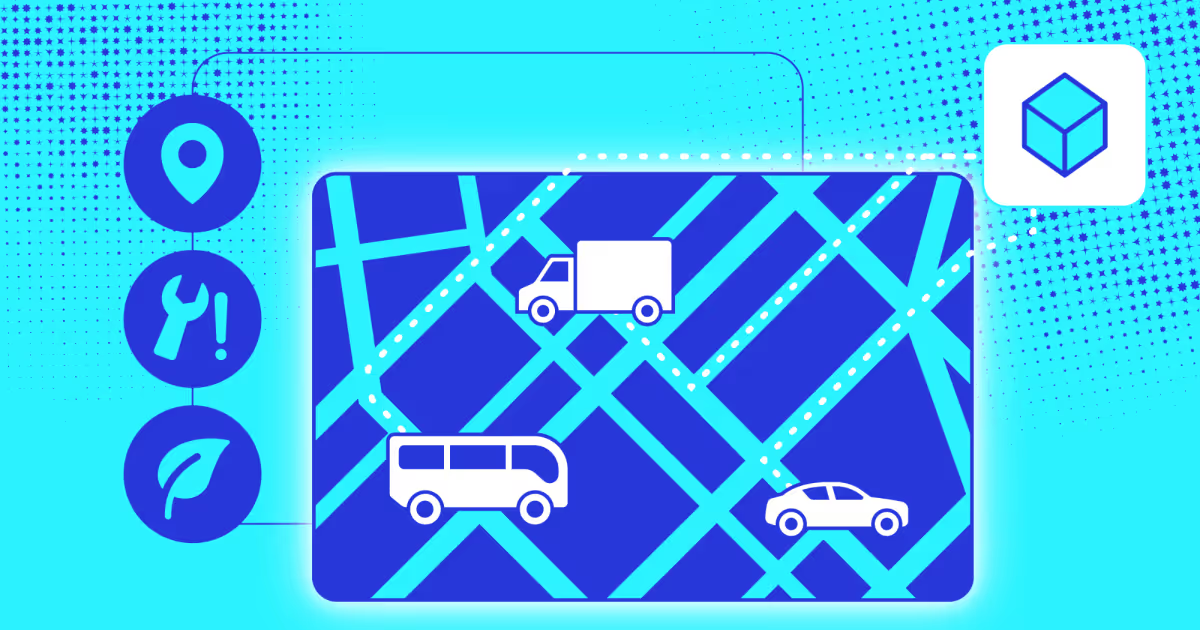
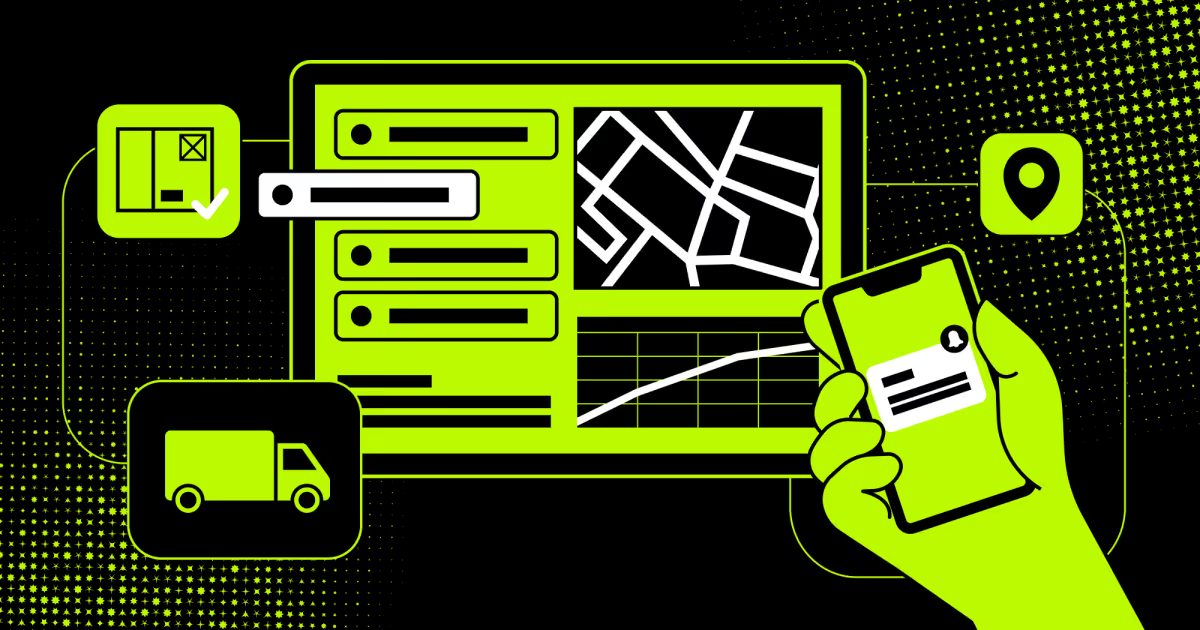
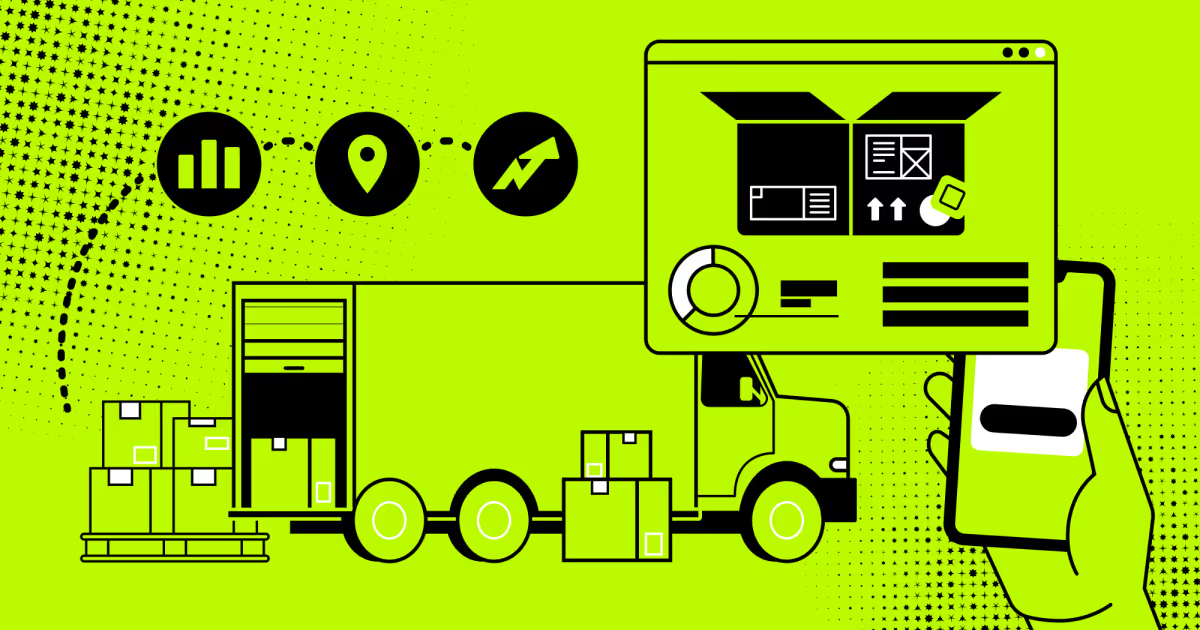
Public transport management software is the layer that turns scattered transit data into one clear operational picture. It pulls GPS feeds, ticketing records, and driver schedules into a single view. Then it flags problems before a rider notices them. That's the whole idea.
The founder's problem from earlier isn't rare. Most operators run three systems holding pieces of the same route. One shows the schedule. Another shows GPS. A third shows who's actually driving. None of them talk to each other. This problem is what efficient public transport software solves.
We saw this play out directly on our DriveIQ project. The client's dispatchers pieced together delay data from GPS logs, driver calls, and gut instinct. Average diagnosis time per exception sat at 12 minutes. Once we built a unified risk engine, that dropped to under three.
GrandBus faced a version of the same problem, just with subcontractors instead of dispatchers. Route assignments ran through phone calls and spreadsheets, coordinated by hand across dozens of carriers. Public transport management solutions replaced that entirely with one scheduling interface. Operators now assign drivers and vehicles in minutes, not hours.
The pattern holds even outside vehicle tracking itself. On DrivenPeople, the fragmentation wasn't about buses, but about drivers. Operators had no reliable way to verify who was qualified for a job. Purpose-built driver management software filtered applicants automatically against real requirements, cutting hiring friction almost entirely.
That's the throughline across every one of these products we built. Public transportation solutions don't just digitize a process. They remove the moment where someone has to guess.
Who needs public transport software?
Anyone running scheduled vehicles at scale eventually hits the same wall. Spreadsheets stop scaling long before ridership does. Below are the operators who feel that wall first. This is the moment you need a dedicated solution.
Municipal transit agencies managing fixed routes, fare compliance, and public accountability at once.
Private shuttle and coach operators running fleets without the staff for manual dispatch.
Cross-border logistics-adjacent carriers juggling subcontractors across multiple countries, like our GrandBus client.
Driver staffing platforms matching qualified drivers to operators, without manual verification.
Mobility startups launching new routes fast, with no legacy system to fall back on.
Urban public transport already employs around nine million people worldwide. That growth alone strains manual coordination past its limit. Meanwhile, nearly 45% of Americans have no access to reliable transit options at all. It’s often because service can't scale reliably behind the scenes.
Ask us which client complaint comes up most, and it's rarely a missing feature. It's a visibility gap. GrandBus's early operators lost hours weekly reconciling three separate tools by hand. A proper public transport fleet management system doesn't just track vehicles. It gives every stakeholder, from a municipality to a single dispatcher, the same real-time truth. Without solid public transportation software behind it, growth just means more chaos at a bigger scale.
What are the types of public transport management software?
Public transport software isn't just a single tool category you can get fast and easily. It's several distinct systems. Each solves a different piece of the operation. Some track vehicles. Some plan where they go. Others coordinate the people running them, sell tickets, or keep passengers informed. Here's how the main categories break down, based on what we've actually built.
Fleet management systems
Fleet management systems track vehicles, drivers, and maintenance in one place. They answer a simple question: where's everything right now, and is it working? Without one, that question takes phone calls and guesswork to answer.
A solid public transit fleet management platform covers a handful of core jobs at once:
Live location tracking for every vehicle on active routes.
Maintenance scheduling based on mileage or engine diagnostics.
Driver assignment matched to shift availability and qualifications.
Compliance logging for hours of service and safety checks.
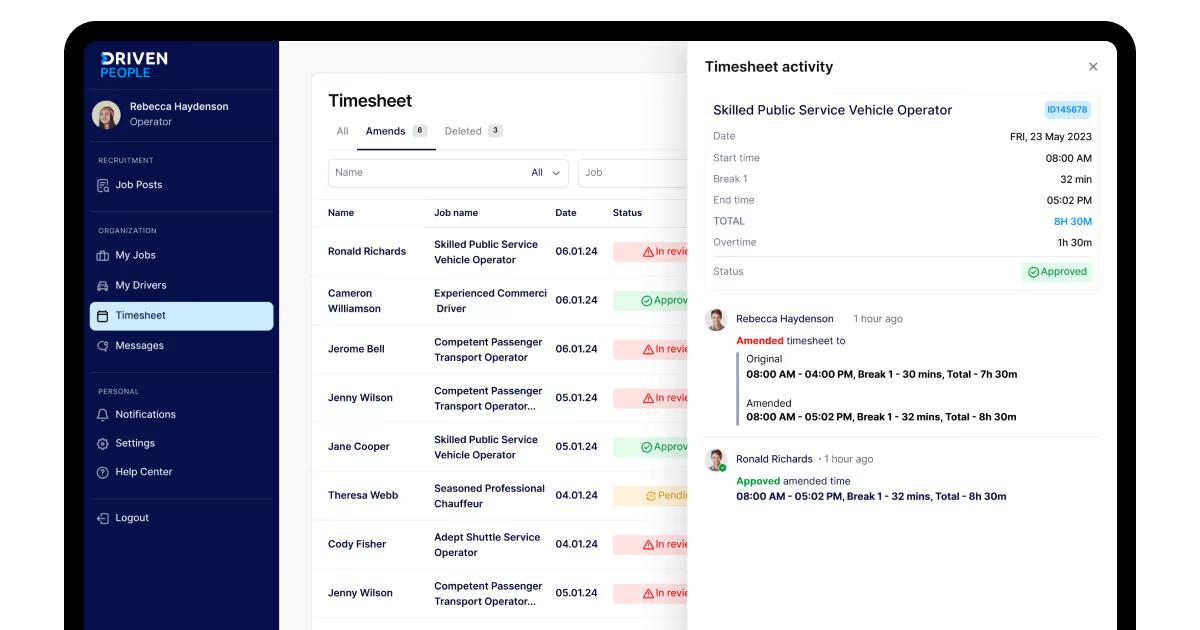
On DrivenPeople, we built the driver side of this differently than most fleet tools attempt. Drivers start and end shifts through a mobile app, and operators approve hours before payment triggers. That single workflow hit 99.2% accuracy matching submitted hours to approved shifts.
Fleet management isn't just about vehicles sitting on a map. It's about knowing, with certainty, who's driving what and when. That certainty is what separates a real system from a spreadsheet with GPS pins on it.
Route planning
Route planning software builds the actual paths vehicles follow: stops, sequences, and timing. It sounds simple until you factor in traffic patterns, stop spacing, and passenger demand. Get it wrong, and either buses run empty or riders get stranded.
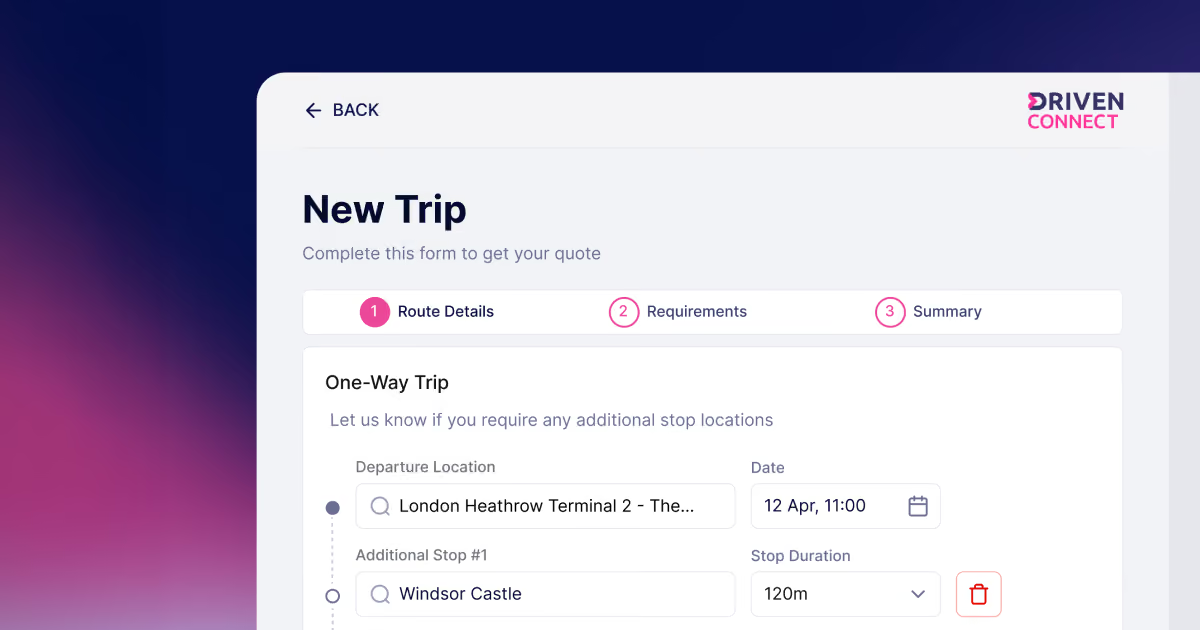
Good public transportation automation software handles route planning as a living system, not a static map drawn once. On Driven Connect, we built route planning around Google mapping integration for accurate distance and journey calculation. Operators plan complex multi-stop trips, complete with additional pickups and drop-offs, without manually calculating mileage or timing by hand. That same logic extends to emissions: once a route is set, the system automatically estimates fuel use and carbon output for that specific journey.
Route planning tools matter most when a network scales past a handful of fixed lines. A dozen routes might survive on manual planning. A few hundred won't.
Dispatch and operations management
Dispatch software is the control center. It assigns drivers to jobs, monitors service in real time, and reacts when something goes wrong. It's the layer that turns a planned schedule into an actual, running operation. Without it, deviations surface late, usually from a complaint.
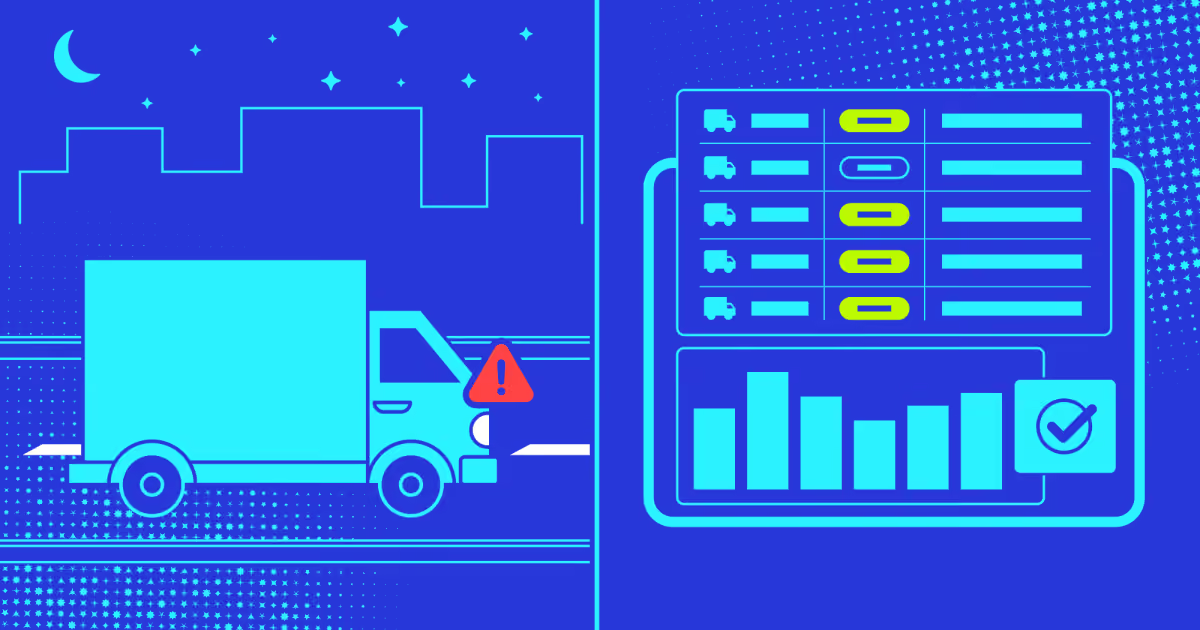
On DriveIQ, dispatch operations moved from reactive to predictive almost entirely. Instead of waiting for a driver to call in a delay, the system flagged exceptions the moment sensor data showed a problem forming. Dispatchers saw four affected stops tagged automatically, with a suggested reroute ready in one click. Average diagnosis time dropped from 12 minutes to under three.
That shift defines what a modern public transportation system should do at the dispatch layer. It's not a passive dashboard someone checks occasionally. It's an active system that surfaces problems before they reach a rider, a driver, or a customer's inbox.
Ticketing and fare management
Ticketing systems handle how passengers pay, board, and prove they've paid. That covers single rides, passes, subscriptions, and everything in between. Get this wrong, and boarding turns into a bottleneck at every stop.
Modern public transportation software in this category usually covers a similar set of jobs:
QR or barcode generation for every ticket type sold.
Offline-first validation so scanning still works with poor connectivity.
Subscription billing for weekly or monthly passholders.
Fare tier pricing that scales single rides against bulk savings.
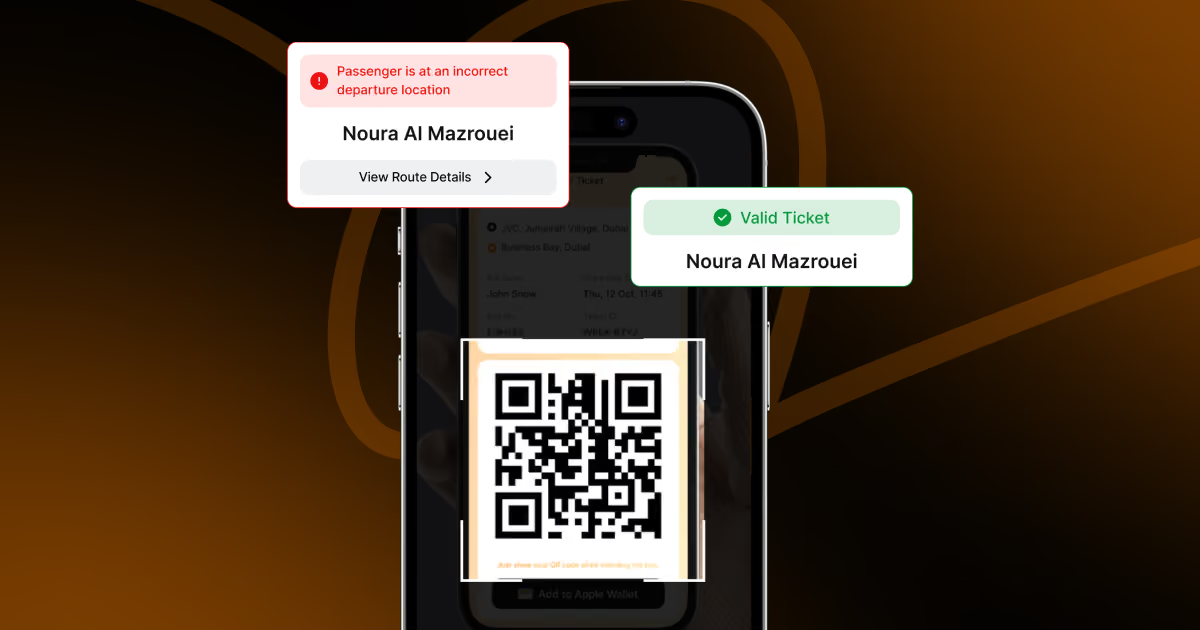
On DrivenBus, drivers scan tickets straight from a mobile app, with validation caching locally and syncing once a connection returns. Scan accuracy landed at 99.7%, with average boarding time down to 3.2 seconds. Ticketing isn't just a payment layer bolted onto a route. Done right, it's the fastest way to know exactly who's on a vehicle at any given moment.
Passenger information systems
Passenger information systems keep riders updated before, during, and after a trip. That means live tracking, arrival estimates, and alerts when something changes. Silence during a delay costs more trust than the delay itself.
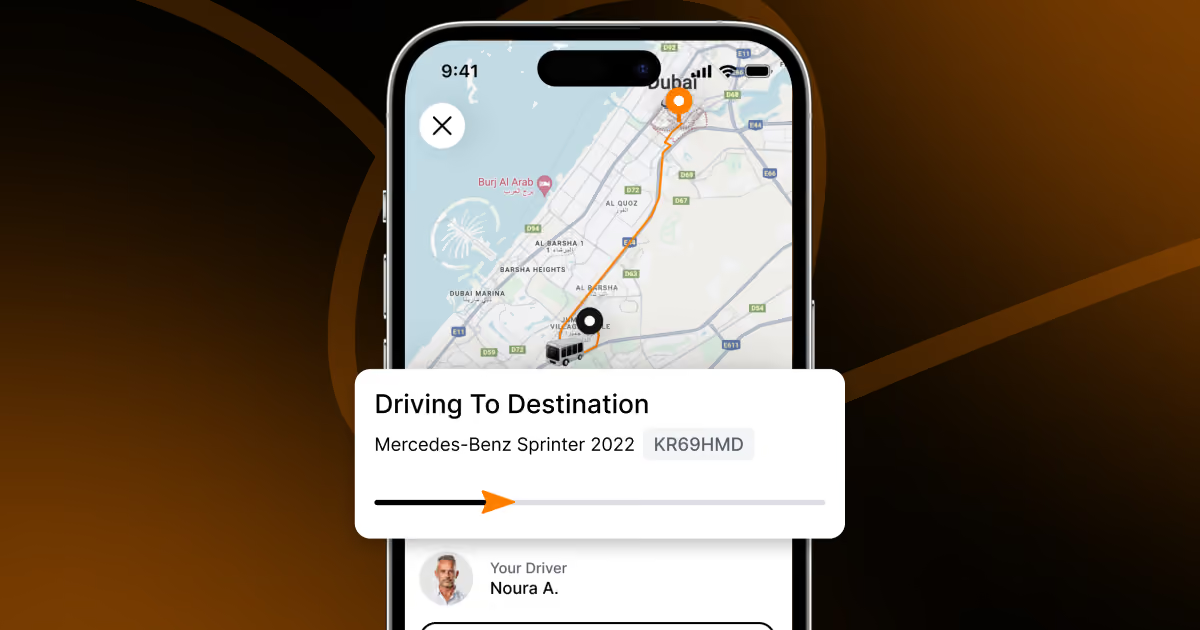
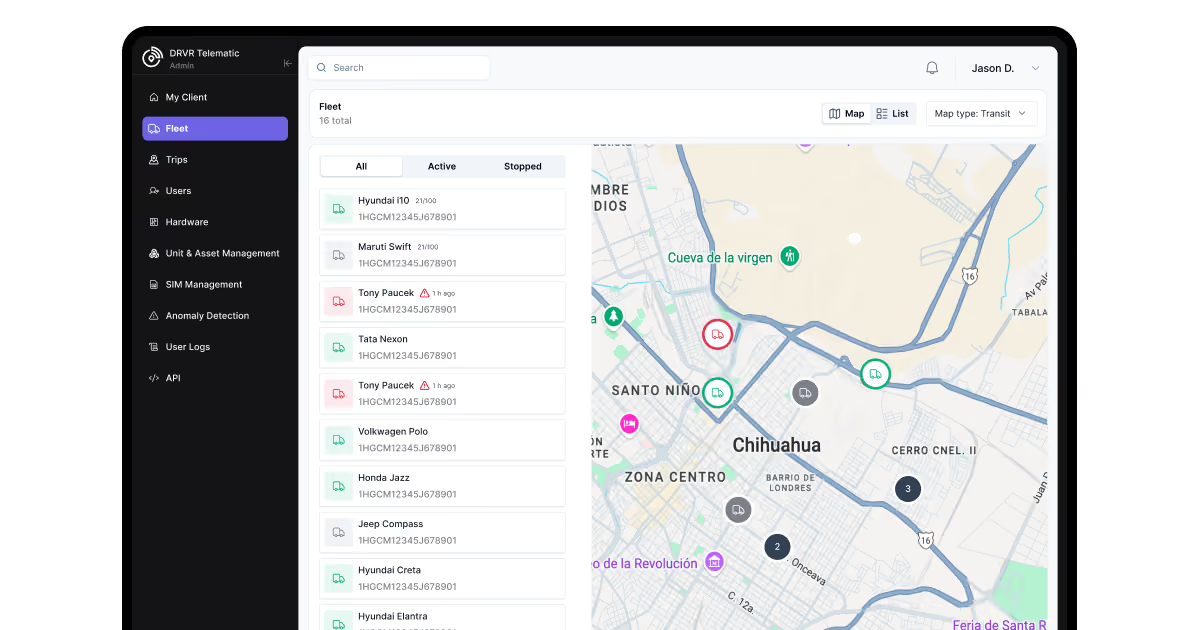
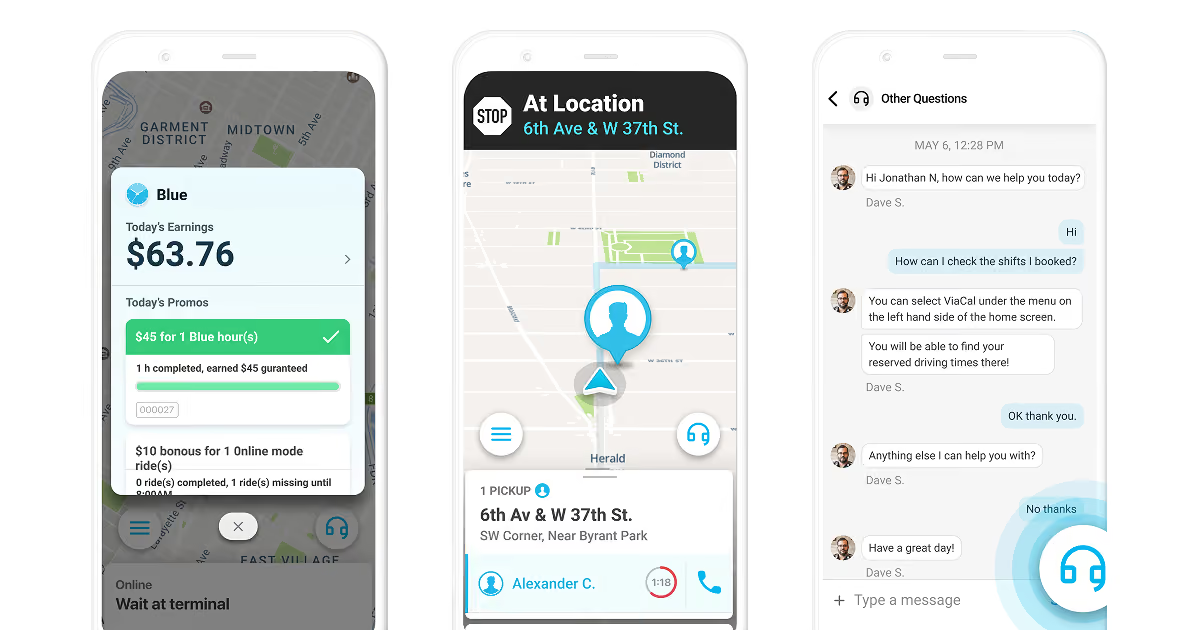
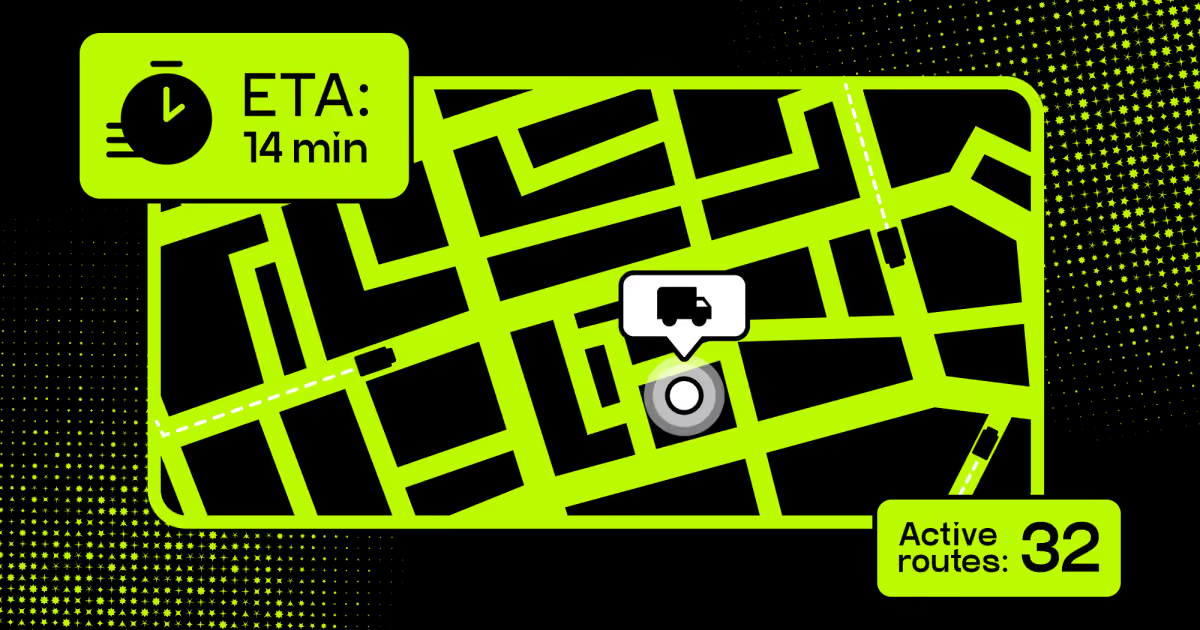
Strong public transportation solutions treat this as a two-way channel, not a one-way broadcast. On DrivenBus, GPS coordinates stream every 10 seconds while a vehicle runs an active route, letting passengers watch their bus approach on a live map. Push notifications fire at 10 minutes out, then again at three, giving riders a real reason to head to the stop on time. That kind of visibility doesn't just reduce complaints. It changes how people plan their day around a service they can actually predict.
Maintenance and asset management
Maintenance and asset systems track the physical condition of a fleet, not just its location. That includes engine diagnostics, inspection logs, and parts replacement schedules. A vehicle showing up late to service is a maintenance failure long before it's a scheduling one.
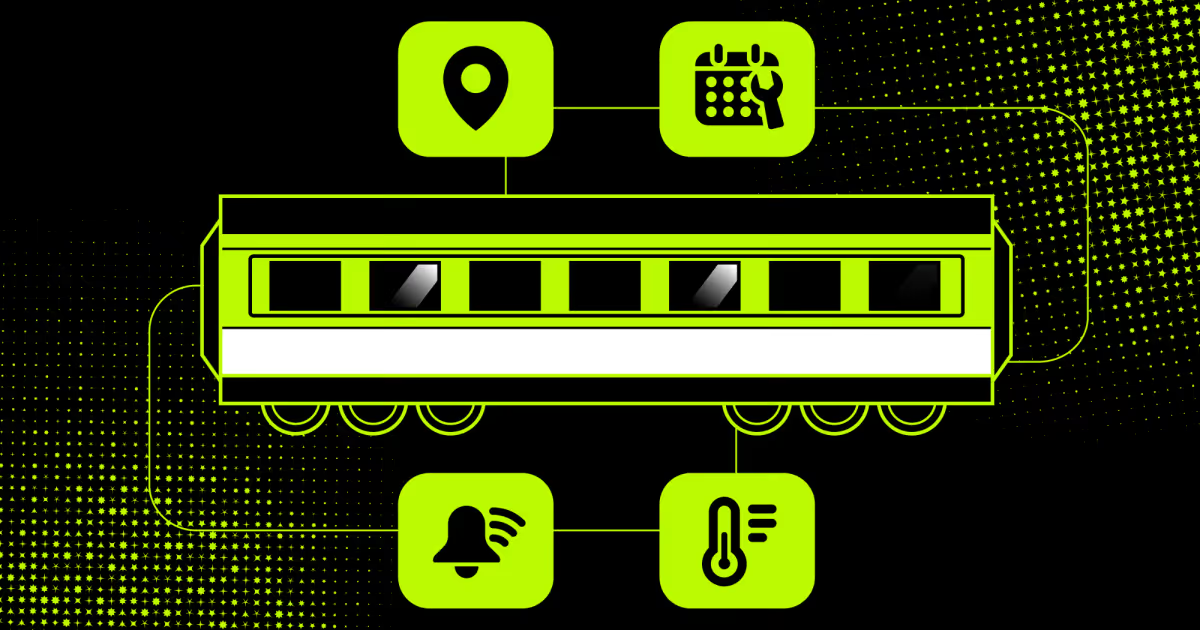
This is where public transport fleet management software starts overlapping with pure fleet telematics, but the focus shifts. Instead of asking where a vehicle is, it asks how long that vehicle has left before something breaks. Predictive alerts flag engine issues before they strand a route mid-shift, giving operators a window to swap vehicles instead of canceling service. Paired with digital inspection reports drivers submit directly from a mobile app, issues surface immediately instead of at the next depot visit. For any fleet running on a tight budget, that early warning is often the difference between a scheduled repair and an expensive breakdown.
What are the features of public transport management software?
Strip any transit platform down to its core, and seven capabilities do the heavy lifting. Every operator needs some mix of these, whether they run five buses or five hundred. Here's what each one does, based on what we've delivered at COAX.
GPS and live tracking
GPS tracking is the backbone of any credible public transportation software. Without it, "where's the bus" stays a phone call instead of a glance at a screen. With it, that question answers itself.
On SyncMatix, we built a tracking layer pulling GPS streams from hundreds of vehicles across multiple hardware vendors. Admins and fleet managers saw live location, activity, and status with zero lag. That single change improved response to route events by 25%, replacing a fragmented, disconnected setup. On DrivenBus, the same principle scaled down to passenger-facing use: coordinates stream every 10 seconds, letting riders watch their bus approach in real time.
Live tracking sounds basic until you've run a fleet without it. Then it's the difference between managing a network and guessing at one.
Automated scheduling
Automated scheduling assigns drivers, vehicles, and departure slots without a human reconciling three calendars by hand. It's one of the fastest wins in public transport management, since manual scheduling breaks the moment a fleet grows past a dozen routes.
For our GrandBus solution, we replaced a scheduling process built entirely on phone calls and spreadsheets. Operators now assign new drivers and buses to existing routes directly through a calendar interface. That single shift removed hours of weekly coordination that used to eat into a dispatcher's entire morning. Scheduling stopped being a task someone dreaded and became something that just runs quietly in the background.
Digital ticketing
Digital ticketing replaces cash boxes and paper stubs with QR codes validated instantly at boarding. Beyond speed, it gives operators real data on who's riding, when, and how often. That data feeds directly into demand forecasting and pricing.
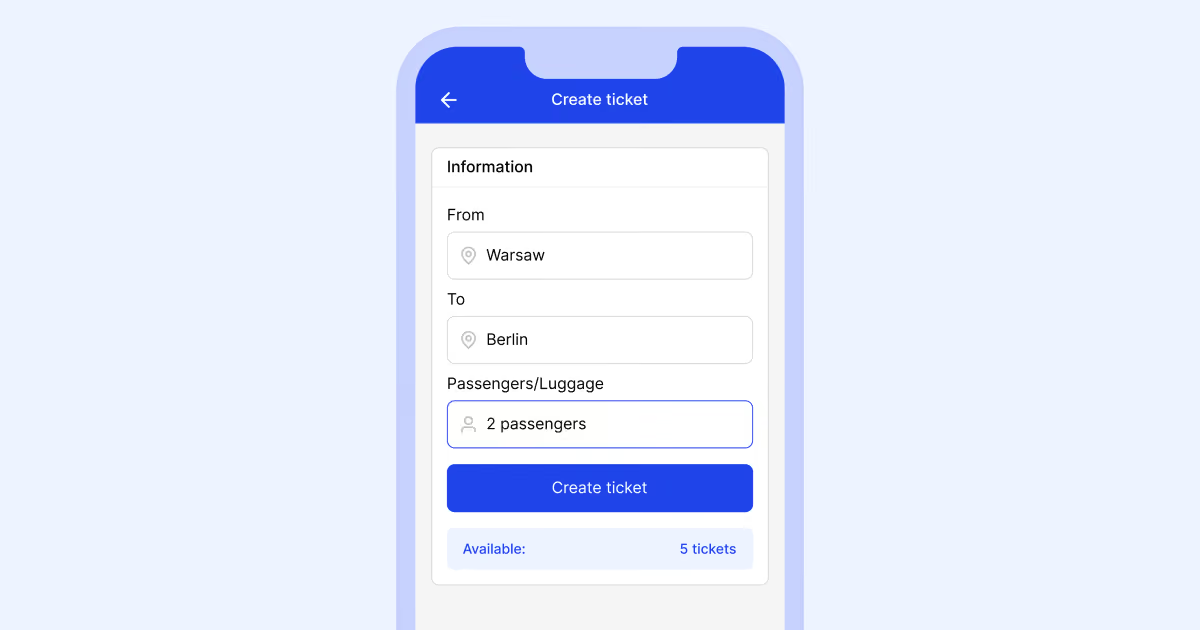
We built such functionality into the mobile driver side of GrandBus. Tickets generate as QR codes encoding route, type, and validity period. Scanning runs offline-first, syncing once a connection returns, which keeps boarding fast even in dead zones. Solid public transport software treats ticketing as more than payment. It's a live feed of exactly who's using a route, which shapes everything from pricing to route frequency down the line.
Route planning and optimization
Route planning tools calculate stop sequences, distances, and timing before a single seat goes on sale. Done manually, this eats hours per route. Done well, it takes minutes and adjusts automatically as conditions shift.
Good public transportation planning software leans on mapping data instead of guesswork. On Driven Connect, Google mapping integration handles distance calculation and journey accuracy for every route submitted. Operators build multi-stop trips, complete with extra pickups, without manually totaling mileage themselves. That same routing logic also feeds emissions estimates, since distance and vehicle type determine fuel use per trip.
Fleet and maintenance management
Fleet and maintenance tools track vehicle condition, not just location. That includes engine diagnostics, inspection logs, and repair scheduling tied to actual usage patterns, not fixed calendar intervals.
A custom TMS software solution, like the platform we developed for SyncMatix, turns telemetry into fuel trends, safety scores, and maintenance flags. Fleet managers see upcoming maintenance needs before a vehicle breaks down mid-route. Companies using that analytics layer cut fuel waste by an average of 18%, just from spotting inefficient driving patterns earlier. Maintenance stops being reactive once the software flags wear before it becomes downtime.
Passenger communication and alerts
Passenger communication tools send delay notices, arrival estimates, and service updates automatically, without a dispatcher typing the same message repeatedly. Silence during a disruption erodes trust faster than the disruption itself.
An example that comes to mind is the module we created for DriveIQ. An LLM-based message generator creates notifications regarding delays, revised ETAs, and service recovery offers. Backed by human-in-the-loop approval to protect SLAs, this automation drives an 85% reduction in manual customer notification requests.
Similarly, public transportation solutions treat this channel as an active touchpoint, not a broadcast nobody reads. Automated, well-timed alerts turn an anxious wait into a predictable one. That shift alone changes how riders perceive your service reliability.
Analytics and reporting
Analytics tools turn raw operational data into decisions a manager can actually act on. Without this layer, a fleet generates data constantly. However, nobody has time to make sense of it.
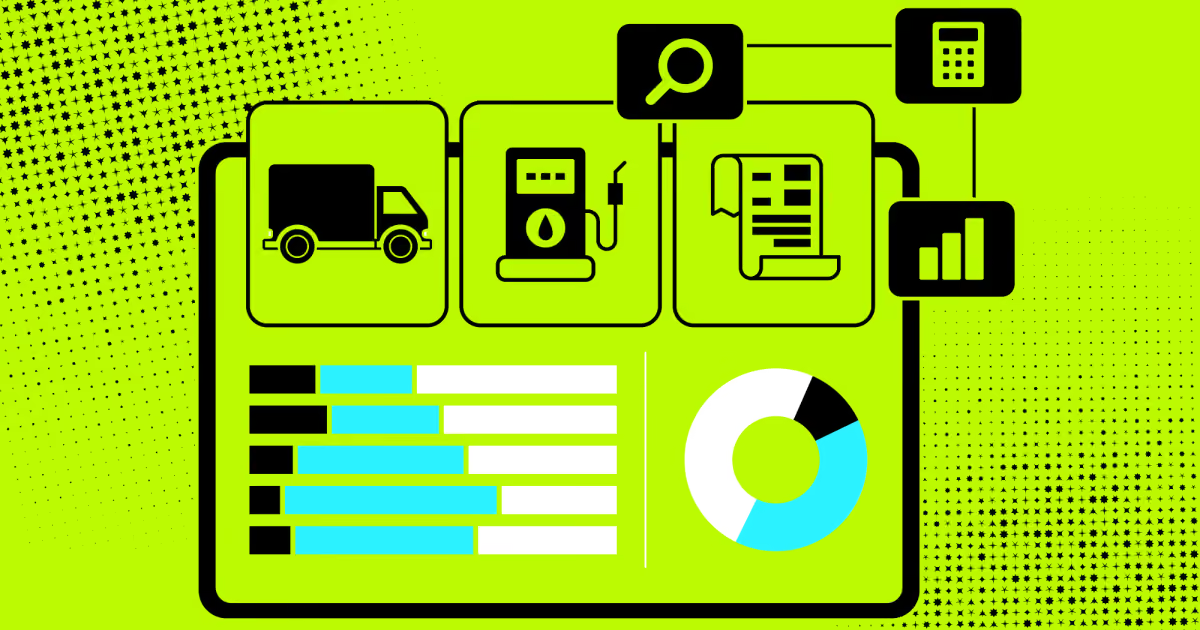
On SyncMatix, dedicated dashboards broke down fuel efficiency, driver safety scores, and utilization rates by role, so a fleet manager saw different metrics than an administrator did. That filtering made a big difference. A dispatcher buried in irrelevant charts stopped checking the dashboard entirely. This is where public transportation technology proves its value beyond day-to-day operations. It's the layer that shows an operator which routes make money, which don't, and why, long before a quarterly report forces the question.
Best public transport software solutions
When you are too lighthearted when choosing the tool for your fleet, you often fall for a marketing trap. Vendors all claim real-time tracking. Few handle it under real load. However, after 16 years in the field, we check other things at COAX.
We scored the options on what survived contact with a messy, real fleet. A tool that only works with clean data isn't public transport management software. It's a nice wrapper on top of nothing.
We dropped any platform locked to a single hardware vendor for GPS units. We excluded tools with no exposed scheduling API, since that kills every custom integration downstream. We also cut platforms that treated passenger alerts as an afterthought, bolted on rather than built in.
"We stopped asking what a platform can show on a map. We started asking what happens when three buses report bad GPS data at once," says Orest Falchuk, Head of Engineering at COAX Software.
We scored four dimensions on each platform:
Live fleet visibility: does tracking hold up with spotty rural signal, not just downtown coverage?
Schedule automation depth: how much manual reassignment survives after setup?
Passenger reach: do alerts actually land on a rider's phone, on time?
Integration openness: can it plug into ticketing and fleet hardware you already own?
The comparison of the public transit software below reflects where each tool's strengths line up with real operating conditions.
Platform
Best for
Live GPS visibility
Schedule automation
Passenger alerts
Open API
Starting price
Optibus
Large transit networks, AI-driven scheduling
Yes
Yes, AI-driven
Strong
Strong
Custom
Trapeze
Municipal fixed-route agencies
Yes
Yes
Moderate
Moderate
Custom
Ecolane
Paratransit and demand-response
Yes
Yes
Strong
Limited
Custom
Swiftly
Real-time performance monitoring
Yes
Basic
Strong
Strong
From ~$1,200/mo
Via
On-demand microtransit
Yes
Yes, dynamic
Strong
Moderate
Custom
Umo
Mobility-as-a-service, fare integration
Yes
Moderate
Strong
Moderate
Custom
Routematch
Rural and paratransit agencies
Yes
Moderate
Moderate
Limited
Custom
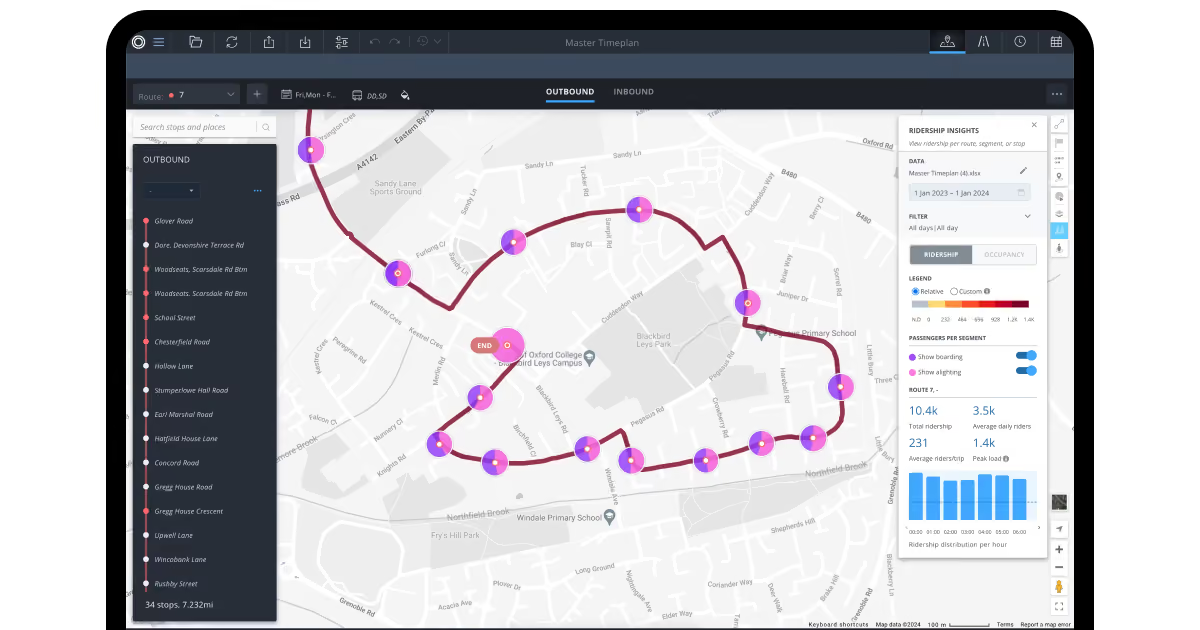
Optibus leads on schedule automation under real pressure. In our test, it rebuilt a full route schedule around a sudden depot closure. That took under six minutes, faster than any competitor. Its API is clean and versioned, so integration with an existing AVL system moved fast. The dashboard assumes a planner already comfortable with optimization tools, though. First-time users need a short ramp-up before it clicks.
Trapeze is one of the best public transportation software for municipal agencies running fixed routes at scale. It handled compliance logging and fare reporting without extra configuration in our trial. Live GPS tracking held steady across every test route we ran. Passenger alerts worked, but customization felt limited compared to newer platforms. As best public transportation software for legacy municipal fleets, it earns that spot through sheer reliability, not flash.
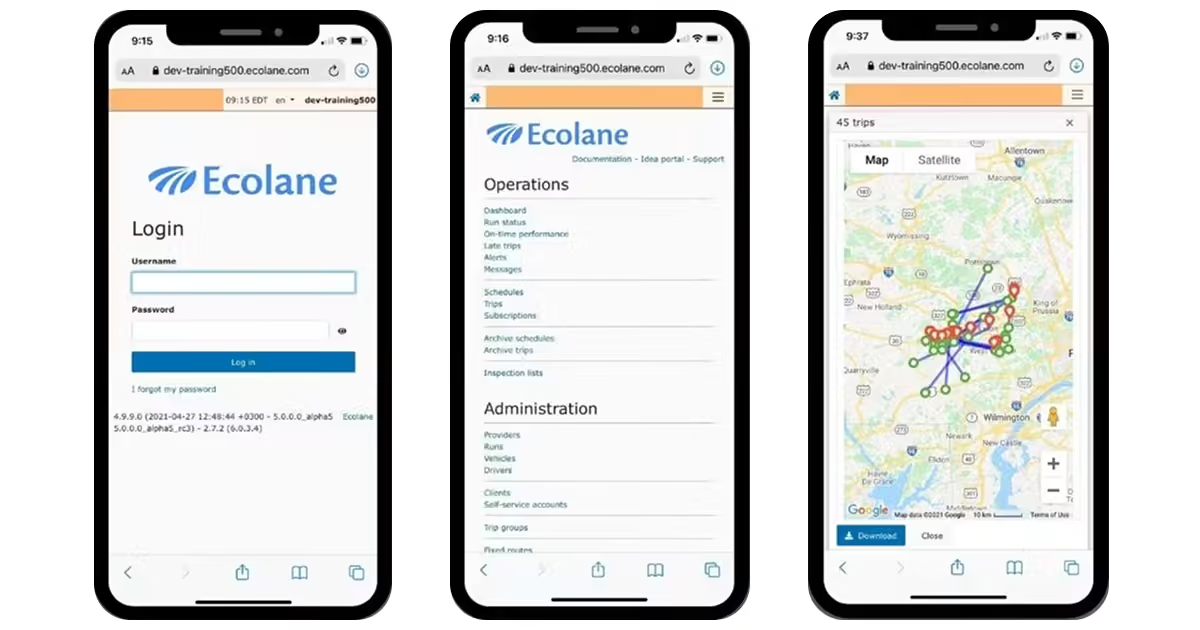
Ecolane focuses on paratransit and demand-response scheduling specifically. We tested it against a simulated same-day booking surge, and it rebalanced driver assignments within minutes. Passenger alerts landed reliably, even with last-minute schedule changes. Its API access stayed limited during our review, gated behind a direct implementation request. For agencies running door-to-door service, it outperformed every general-purpose tool we tested.
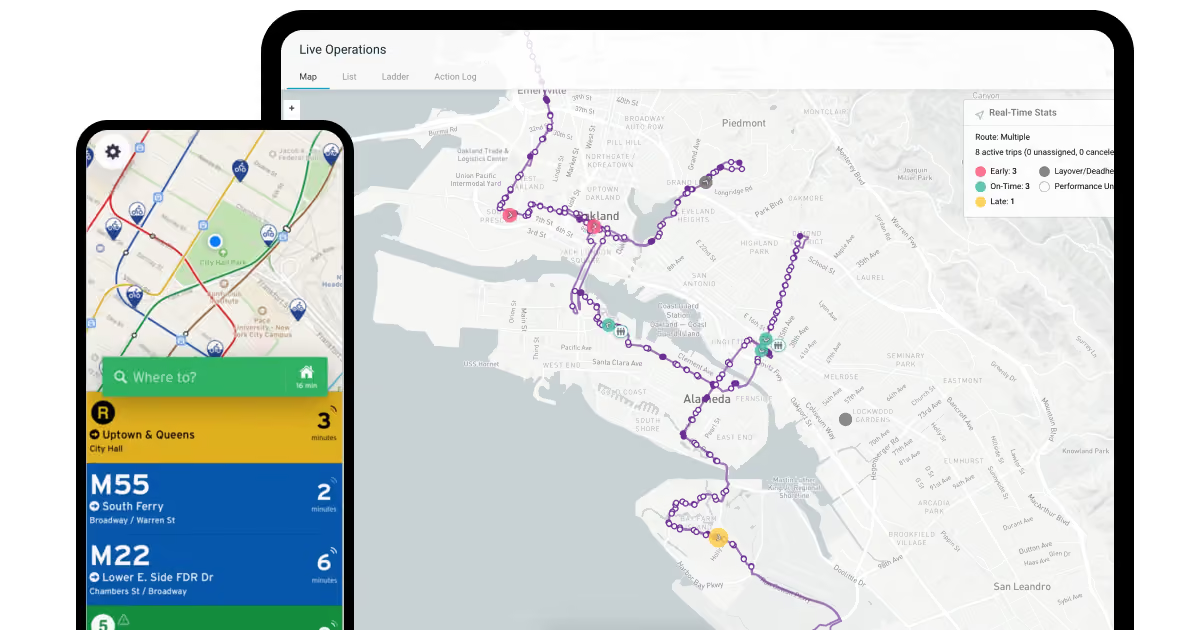
Swiftly earns its reputation through real-time performance data. During testing, the public transport system caught a routing gap our team hadn't flagged manually yet. Schedule automation stayed basic, more reporting layer than planning engine. Its open API made pulling live data into a custom dashboard simple. Public transportation solutions built around performance monitoring rarely match Swiftly's speed at surfacing live deviations.
Via specializes in on-demand microtransit, not fixed routes. We ran it against a simulated ride-request spike, and dynamic scheduling adjusted within seconds. That responsiveness came at a cost: integration with existing fixed-route systems took extra configuration. Passenger alerts stayed strong throughout our test window. For agencies piloting flexible, app-based service, Via handled unpredictable demand better than any fixed-schedule competitor.
Umo centers on mobility-as-a-service, bundling fare payment across transit modes. We tested fare integration across bus and bike-share in one trial account. Passenger alerts performed well, tied directly to fare and trip status. Schedule automation lagged behind dedicated dispatch platforms like Optibus or Via. As public transportation software for agencies consolidating fare systems, Umo solved a real integration headache.
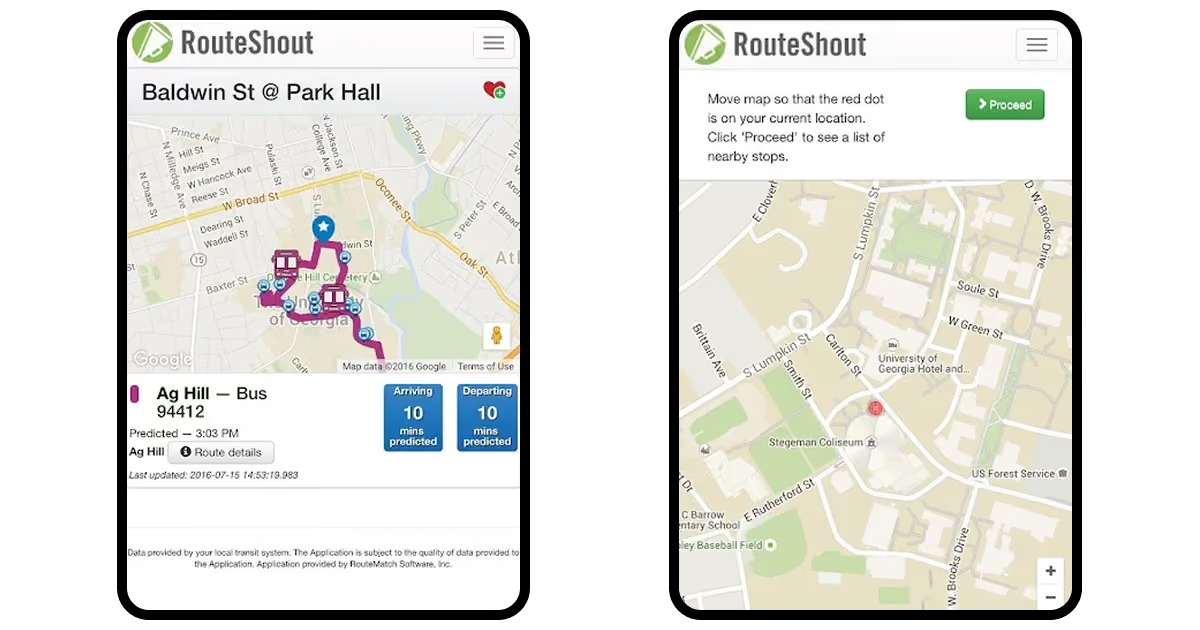
Routematch targets rural and paratransit agencies with lean staffing. The public transport management system handled a simulated multi-county dispatch scenario without needing a dedicated planner. Live tracking held up even across low-connectivity rural routes in testing. Its API stayed limited, similar to Ecolane's gated approach. For a small rural operator, that tradeoff mattered less than day-to-day reliability on the ground.
Seven platforms, seven different strengths, and no single winner across every category. The right public transportation system depends on fleet size, route type, and how much staff you have to run it.
How to choose the right public transport management system?
Picking transit software isn't a one-size fits decision. Your fleet size, budget, and route complexity all shape the right pick. Here's how to narrow the field without guessing, using what we've actually seen work.
Five factors decide whether a platform fits your operation or fights it. Walk through each before comparing feature lists, and check it against a real project outcome. Here are these aspects, with tips and considerations from our engineers.
Mapping mobility needs your public transportation software should address sounds obvious until routes get complicated. On GrandBus, the client needed both fixed international routes and flexible subcontractor assignments in one system. A generic booking tool couldn't handle that mix. We mapped their actual route structure first, then built scheduling around it, not the reverse.
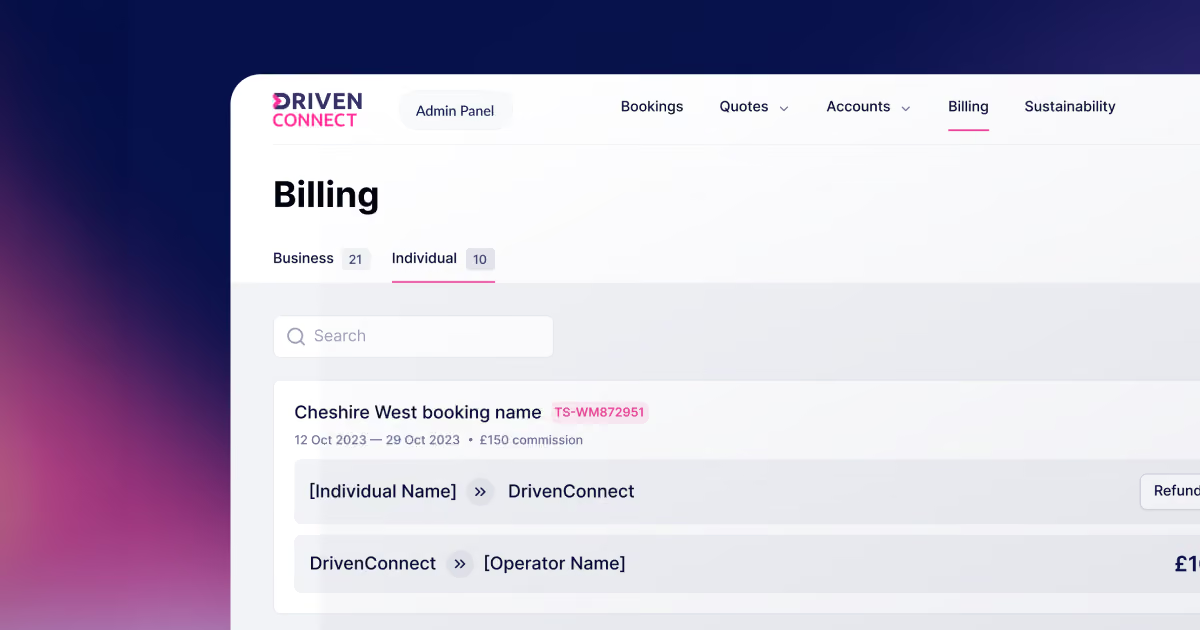
Corporate integration depth is where most platforms quietly fall short. Driven Connect needed billing, route planning, and emissions data unified for both B2B buyers and individual users. We built a Stripe-based billing module that kept every payment type in one place, instead of three disconnected systems.
For dedicated fleet options, density matters more than most buyers expect. DrivenPeople wasn't about vehicle routing at all. It was about matching qualified drivers to shifts at volume, over 4,700 drivers eventually. That's a staffing density problem, not a shuttle problem, and it needed different tooling.
Regulatory compliance gets expensive to retrofit. Driven Connect had to calculate UK Carbon Emissions Tax automatically per vehicle and route, folding legal compliance into daily bookings rather than a quarterly scramble. Building that logic in from day one avoided a costly rebuild later.
Sustainability reporting increasingly decides vendor selection outright. Urban transport now employs a workforce up 20% over the past decade. That means emissions tracking isn't the bonus feature of public transport management anymore. Now, it's baseline procurement criteria for many municipal contracts.
"Teams pick a platform based on what it shows them today. We tell clients to test what it does when three data sources disagree tomorrow," shares Orest Falchuk, Head of Engineering at COAX Software.
When to opt for a custom solution?
Off-the-shelf tools work until your workflow doesn't match their assumptions. That's the point where a custom build starts making financial sense. Here's how that decision played out across the several projects we implemented.
Custom software earns its cost when your operation has a structural quirk no vendor plans around. GrandBus needed subcontractor coordination across dozens of carriers, something no packaged public transit software handled cleanly. We built scheduling logic around their real subcontractor network. Manual coordination that once ate hours weekly now runs through one interface.
DrivenPeople hit a similar wall from a different angle. Off-the-shelf platforms couldn't verify credentials against the client's compliance rules. They also couldn’t filter applicants by rating and experience automatically. We built that verification layer from scratch. It reached 98.7% approval precision, protecting operators from unqualified applicants without adding manual review time.
Road&Rally faced a narrower but sharper gap. No existing navigation app synchronized turn-by-turn routes across an entire group at highway speed. Standard consumer GPS apps route each driver independently, splitting groups apart constantly. We built a real-time synchronization engine specifically for that single unmet need, using Mapbox as the routing layer underneath.
From these projects, we have drawn a practical way to decide. Public transport fleet management platforms cover maybe 80% of a typical operation out of the box. The remaining 20% is your specific subcontractor rules, compliance edge cases, or legacy hardware integrations. In these cases, a packaged public transportation automation software tool usually breaks first.
Run this checklist before committing either direction:
Count your workflow exceptions: If more than a fifth of your process falls outside standard features, lean custom.
Price the workaround, not just the license: Manual patches around missing features cost real staff hours monthly.
Test vendor API depth directly: A restricted API means every future integration needs a support ticket first.
Ask what happens at double your current scale: Some platforms handle fifty vehicles fine and buckle past five hundred.
If that 20% touches core daily operations, building around it is usually the best approach. This strategy typically costs less over a three-year span. It also avoids forcing a complex workaround into a public transport management system that wasn't designed for it. If the gap is cosmetic (like a dashboard layout) an off-the-shelf platform stays the simpler, faster path.
Public transport fleet management involves sensitive operational and passenger data, often across multiple jurisdictions. The COAX Software teams are ISO 9001 and ISO 27001 certified, and we sign an NDA on every engagement. That standard applies the same way to a single-city pilot as it does to a multi-country rollout.
How to implement public transport management solutions?
Rollouts fail for predictable reasons. Most gaps trace back to skipped groundwork, not bad software. Here's what we've learned putting these systems into live operation. Each tip we’re sharing comes from a project where skipping it cost real time or money.
Map your existing data sources before writing a line of code. On GrandBus, routes lived in spreadsheets, phone logs, and driver memory. We catalogued every source first, then built the scheduling interface around what actually existed. Skip this step, and your public transport management software launches with blind spots baked in from day one.
Normalize formats before connecting anything downstream. GPS feeds rarely arrive in matching formats across vendors. On DriveIQ, timestamps and location pings needed alignment before dispatchers could trust a single dashboard number. This step stays invisible to users, but skipping it produces false alerts fast, and teams stop trusting the system within weeks.
Pilot on one route or one region first. Don't launch fleet-wide on day one, regardless of vendor pressure. GrandBus opened ticket sales on a single route before scaling across their full network. That let us catch integration gaps while the blast radius stayed small and cheap to fix.
Design for offline conditions from the start. Rural and cross-border routes lose signal constantly, not occasionally. On DriveIQ, we built the system to cache data locally and sync once connectivity returned. Build any public transportation solutions assuming signal will drop, never assuming it won't.
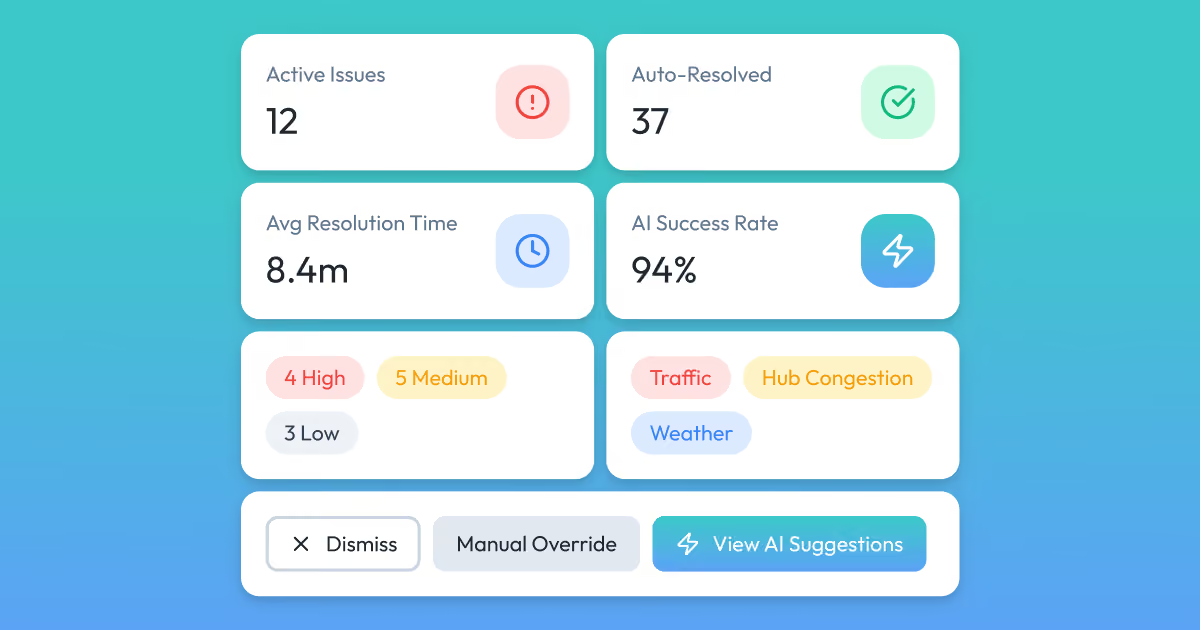
Automate routine decisions, and flag genuine exceptions for humans. Not every event needs a dispatcher's judgment call. On DriveIQ, exception clustering by root cause cut diagnosis time from twelve minutes to under three. That freed staff to focus only on cases that actually needed a decision.
Keep driver-facing tools deliberately lightweight. A driver mid-shift won't tolerate an app that drains battery or demands constant taps. On DrivenPeople, the mobile flow reduced shift tracking to three simple actions: start, pause, end. Simplicity isn't a nice-to-have here. It's what determines whether drivers actually use the tool.
Route alerts by role, not by volume. A dispatcher can't act on fifty low-priority pings daily. On GrandBus, drivers, dispatchers, and admins each saw only the alerts relevant to their job. That filtering alone prevented the dashboard fatigue that kills adoption within a month. Any serious public transportation planning software effort needs this layer built in carefully.
Test billing and compliance logic against real regulatory cases. Driven Connect calculated UK Carbon Emissions Tax automatically per vehicle and route. We tested that logic against actual completed journeys before launch, not synthetic data, because a compliance miscalculation costs more than a late feature.
Monitor outcomes after launch, then adjust thresholds. A route that ran smoothly at launch won't stay that way as volume grows. Feed real performance data back into your scoring and alert rules every few weeks, not once a year.
Transportation software development services only change outcomes when the team behind them already understands the domain. Our engineers are 90% mid- and senior-level. That means whoever solves your integration problem has solved a version of it before, on a project like GrandBus, DriveIQ, or Driven Connect.
A public transport system that works at your current scale needs to work at twice that scale in two years. We design for that growth curve from day one. That way, you're not rebuilding core infrastructure under pressure once ridership or route count doubles.
FAQ
How long does it actually take to migrate from spreadsheets to real public transport software?
Expect eight weeks for a working MVP, not a full rollout. On GrandBus, we delivered core booking and scheduling in six weeks, then iterated weekly after launch. A phased public transportation software rollout beats a big-bang switch every time; it limits disruption if something breaks.
Will drivers actually use a new app, or default back to phone calls?
Adoption depends on friction, not features. For example, for the DrivenPeople platform, we cut shift tracking to three taps: start, pause, end. Drivers stopped calling dispatch entirely within weeks. If your public transit software takes more effort than a phone call, drivers will keep making that call.
What happens to service if my public transportation solutions go down mid-route?
A well-built system keeps running without connectivity, not just with it. On DriveIQ, offline queuing let data sync automatically once signal returned. Ask any vendor directly what happens at zero bars. Rural routes lose signal constantly, and downtime there costs more than downtime downtown.
Can we avoid vendor lock-in with a custom public transport management system?
Insist on open API access before signing anything. We've built integrations where GrandBus and Driven Connect each kept full ownership of their data model, with no proprietary format trapping them. Lock-in usually hides in the contract, not the software, so read integration clauses closely.
Do we need a dedicated IT team to run public transit fleet management software day to day?
Not if the system is built right. DrivenPeople's admin dashboard lets non-technical staff verify drivers and manage invoicing without engineering support. A platform that needs a developer for daily tasks wasn't designed for your team; that's a red flag worth catching before signing.

































































_.avif)






%2520explained.avif)

We are interested in your opinion