Ask Robert, CTO of a cross-border carrier, what keeps him awake. He won’t say driver shortages or rising fuel costs. He will say, "I can’t make any decisions on time. Any data coming in, I’m always too late. Nothing shows me the whole picture in real time, when I need it."
Robert’s team had plenty of software. Yet, three separate systems disagreed on a single delivery. Their driver turnover spiked to 45%. Leadership was flying blind.
At COAX, we’ve spent 16 years building logistics tech. Robert turned to us as to experts. Not because we just code well (though we do). Because we know that connected trucks don’t mean connected data.
We built DriveIQ to bridge this gap. It combined predictive alerts, live routing, and driver coaching. That project taught us a crucial lesson. Data without context is not intelligence.
Visibility only helps when leaders can act on it fast.
This article explains supply chain intelligence and why it matters. We define it and show how it differs from analytics. You will see how it works in practice. We also cover the best software options available. Finally, we show you how to measure true ROI.
What is supply chain intelligence?
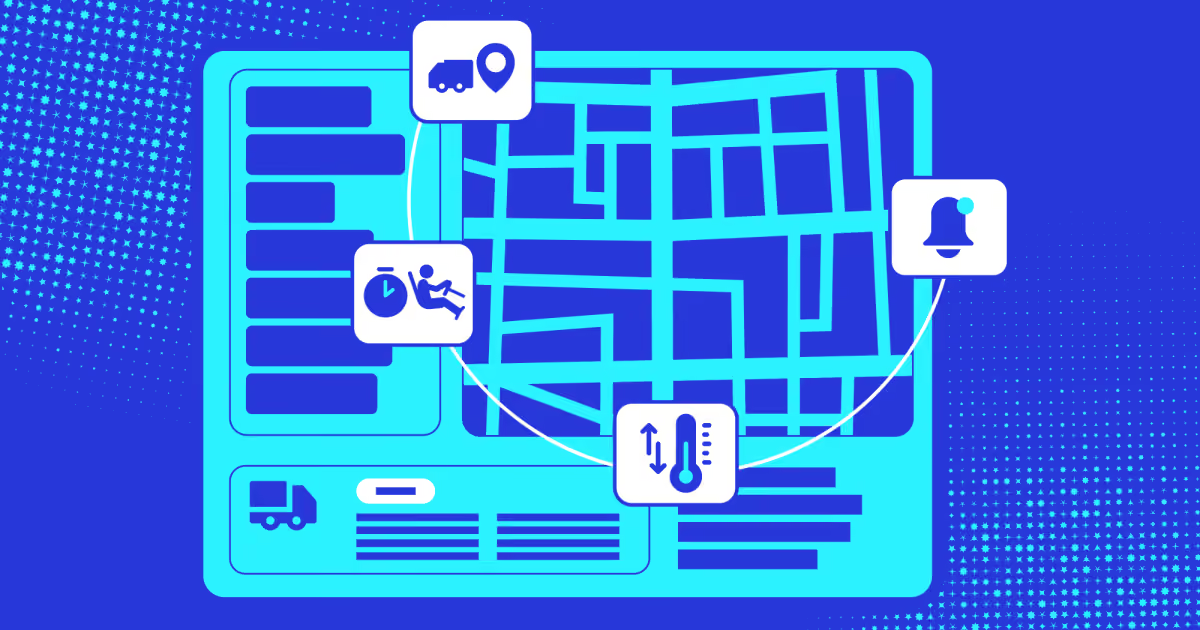
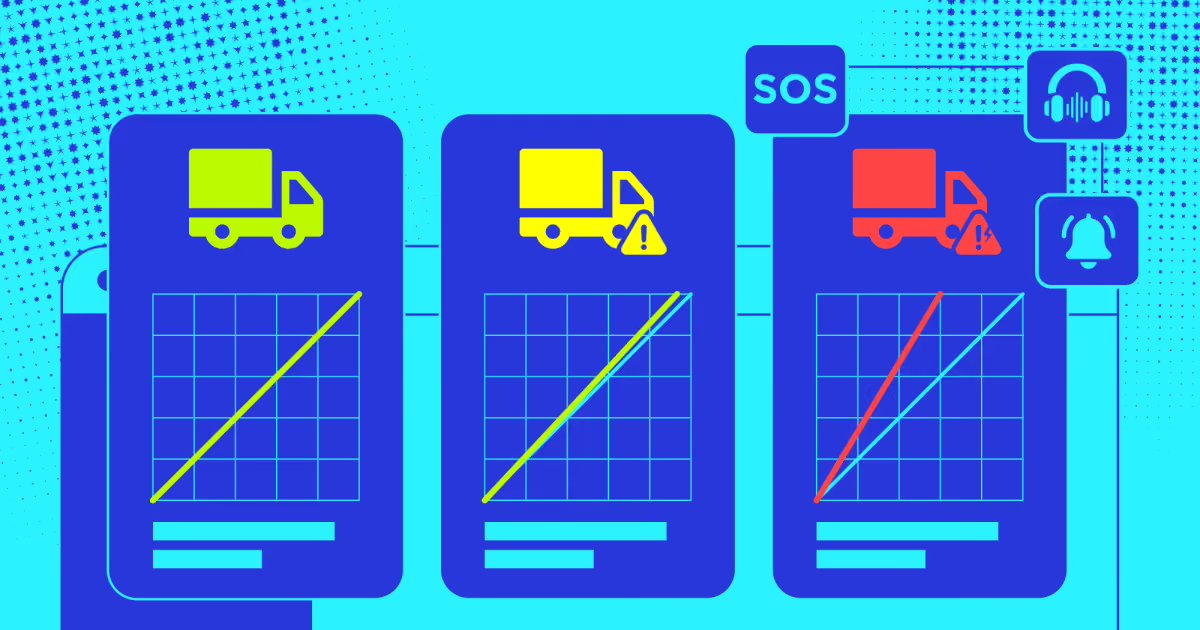
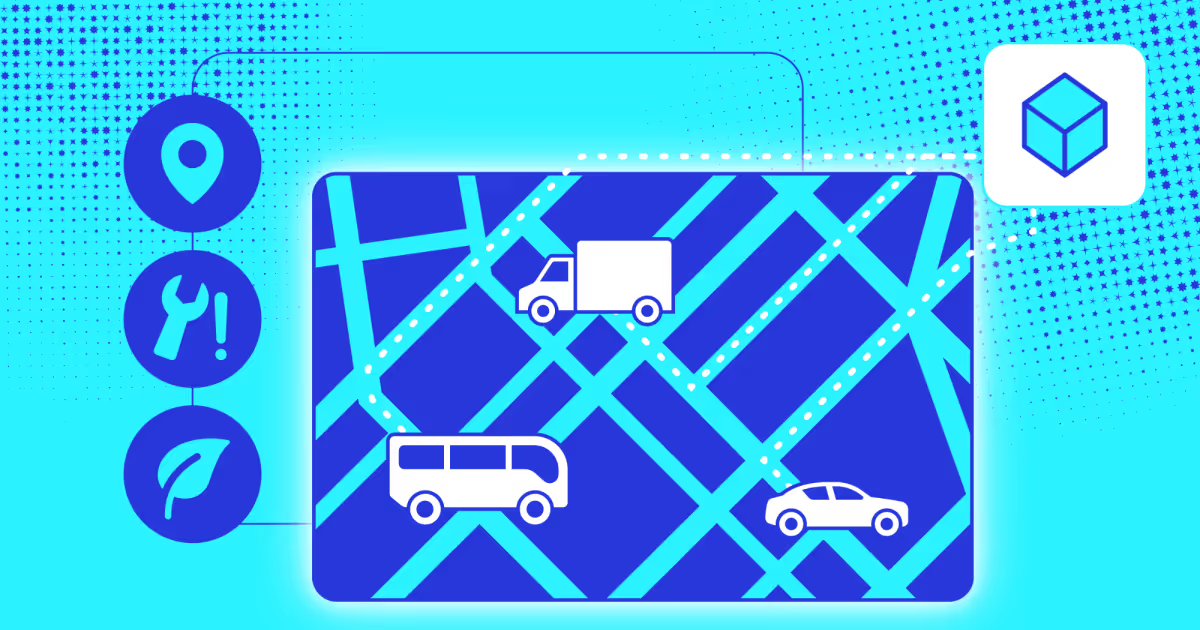
Supply chain intelligence is the practice of turning scattered logistics data into real-time, actionable decisions. It pulls GPS feeds, EDI records, and spreadsheets into one signal. Then it predicts disruption before it costs money. That's the supply chain intelligence definition stripped of vendor jargon.
Robert’s problem we started with is not unique to his company. In reality, companies in the supply chain face customs delays nobody flagged until Thursday. They have three systems holding pieces of the same shipment. That gap is exactly what you close with intelligent supply chain technology.
The global supply chain analytics market proves this truth. It already hit $11.08 billion in 2025 and is projected to reach $29.22 billion by 2034. Growth like that happens because the old model is broken.
Rising customer expectations now crush manual coordination. Data volume across transport and manufacturing keeps climbing.
At COAX, we saw this shift happening in real time throughout 16 years in the industry. Building DriveIQ meant merging GPS feeds, EDI records, and spreadsheets. That's global supply chain intelligence in miniature. Everything unified into one signal. And it’s very different from what most operators, manufacturers, and distributors are used to. Let’s figure out how exactly.
How it differs from traditional supply chain analytics
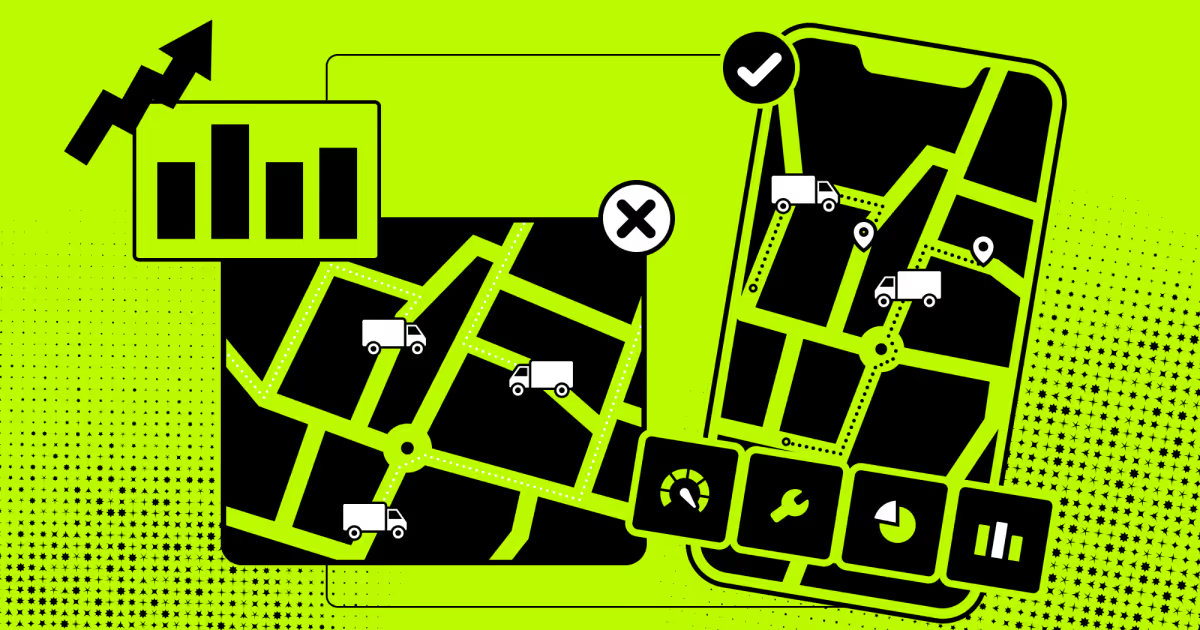
The two disciplines look similar on paper. In practice, they diverge on almost every dimension.
Timeframe: Analytics explains what already happened last quarter. Intelligent supply chain management forecasts what happens next week.
Trigger: Analytics waits for a report cycle to surface a problem. Intelligence flags the problem as data arrives.
User action: Analytics informs a meeting agenda days later. Intelligence prompts a dispatcher decision within minutes.
Output: Analytics produces dashboards and static reports. Intelligence produces alerts, recommendations, and auto-triggered workflows.
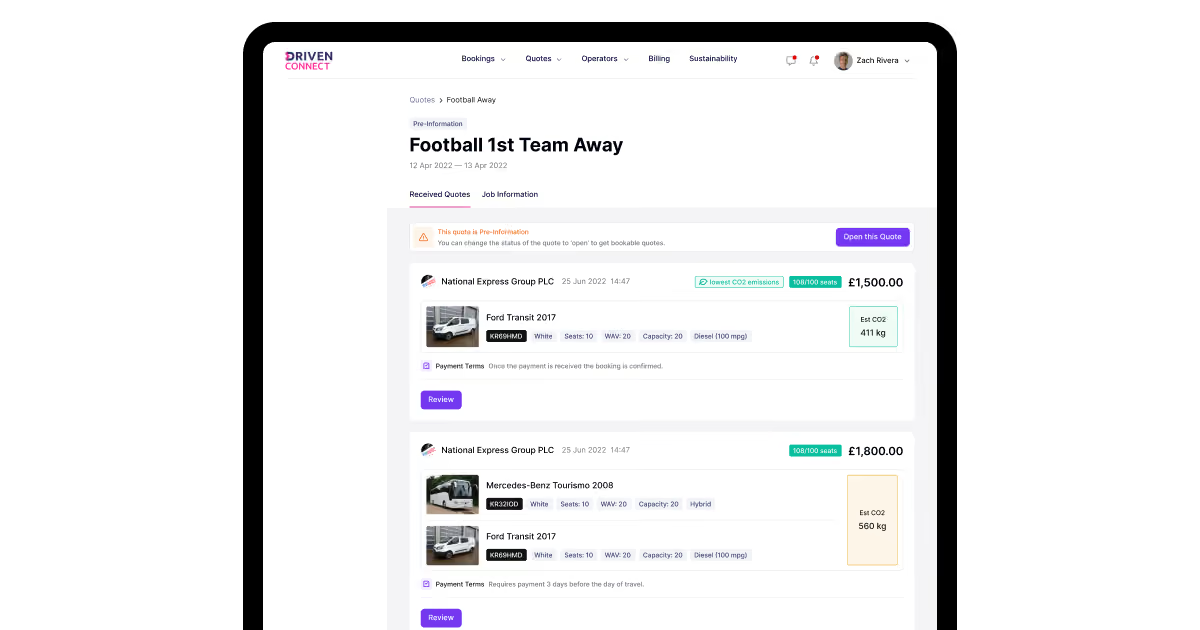
Take Driven Connect, a UK coach and minibus platform we built. Traditional analytics would report which quotes converted last month. Our quote request system works differently. It routes live operator bids in real time, so buyers act immediately, not after the fact.
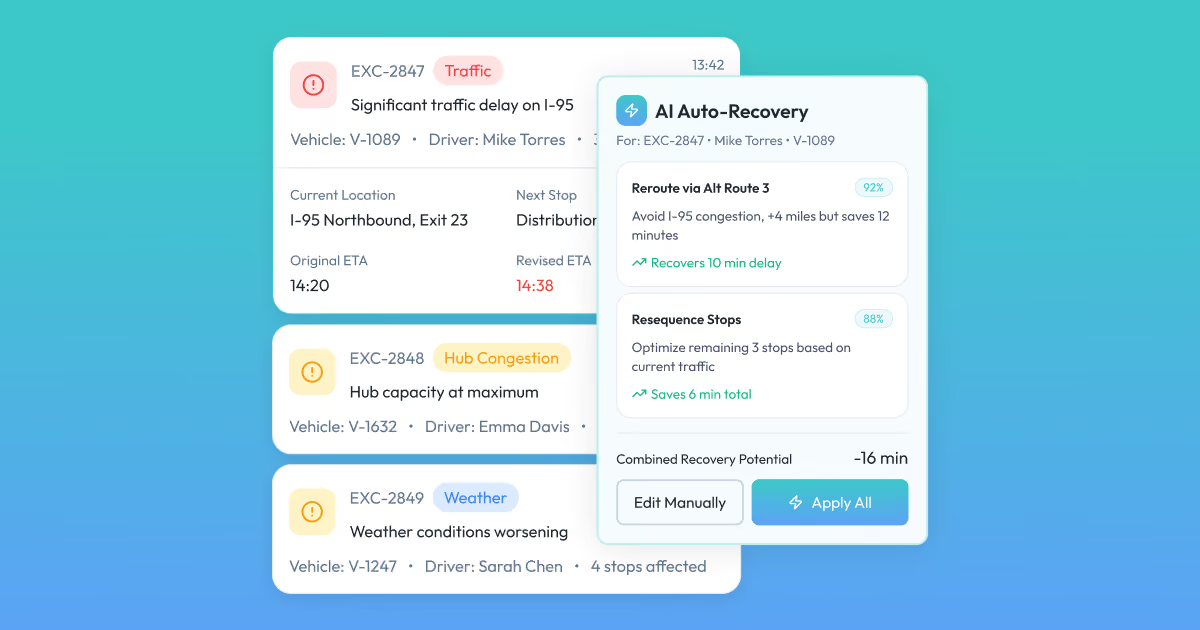
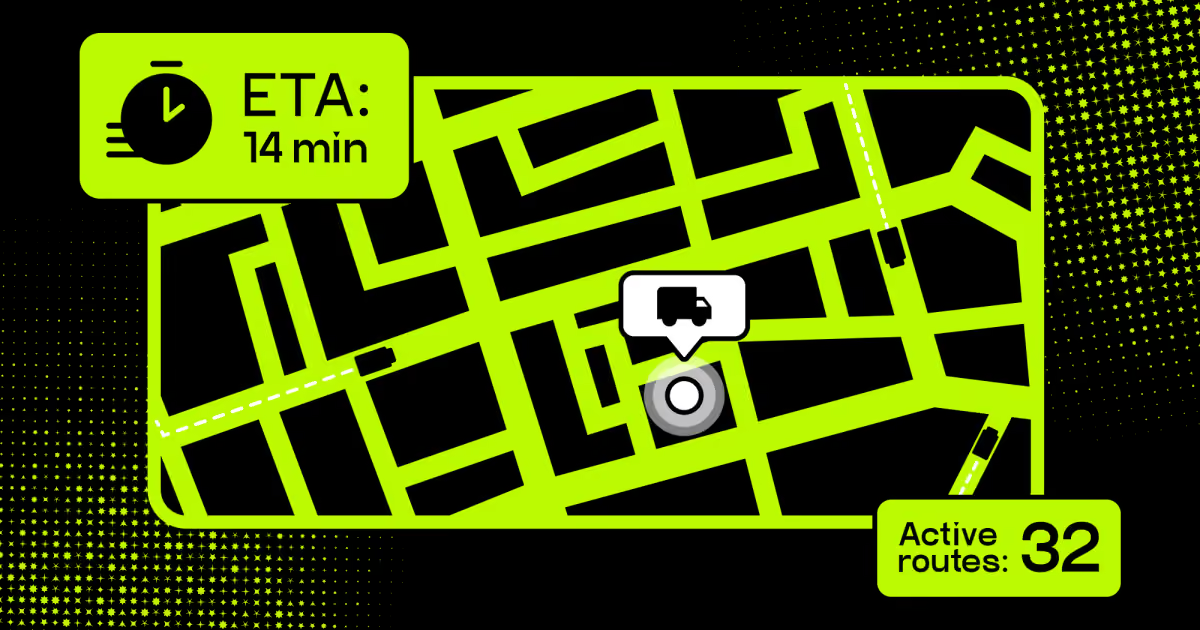
DriveIQ shows the same pattern in logistics. Analytics would report an 18% late-delivery rate after the fact. Our predictive ETA engine forecasts delays every 15 minutes. Dispatchers act before a shipment goes late, not after.
Our engineering lead has watched this gap up close.
"Data existed. Nobody could act on it fast enough," says Orest Falchuk, Head of Engineering at COAX Software.
Aspect
Traditional supply chain analytics
Supply chain intelligence
Timeframe
Backward-looking, reports on past events
Forward-looking, predicts upcoming disruption
Trigger
Surfaces issues during scheduled report cycles
Flags issues continuously, as data arrives
Data structure
Siloed sources reviewed separately
Unified feeds correlated automatically
User action
Informs meetings days after the fact
Prompts decisions within minutes
Output
Static dashboards and reports
Live alerts, recommendations, workflows
That's the line separating the two disciplines. Analytics accumulates data. Intelligence forces a decision out of it. The divide between these two is growing, and for a good reason.
Why does supply chain intelligence matter today?
You know the answer yourself, at least subconsciously. Your morning starts with an angry client tracking a missing shipment. Two internal dashboards contradict each other, and nobody knows who is right. You watch your best drivers quit because scheduling is a mess.
That everyday chaos is precisely why leaders are switching to intelligence.
Supply chains today move more freight through less slack than ever, and the data confirms it. 43% of U.S. workers sit inside supply-chain industries. Yet 57% of operators still cite disruptions and shortages as their top challenge. That's the stressful burden intelligent supply chain management exists to fix.
The numbers behind that challenge are impressive and threatening at the same time. $238 billion worth of cargo faced significant delays outside the ports of Los Angeles and Long Beach in under a year. Additionally, a single six-day blockage at the Suez Canal held up $9.6 billion in commerce daily. No wonder, since 12% of world trade passes through it.
Customer demand for speed pressures 51% of operators to shorten response windows they can't always meet.
Forecasting accuracy challenges 46% of teams working from fragmented or delayed data.
Cross-system synchronization frustrates 43% of operators juggling multiple platforms for one shipment.
Ask us what issue we hear most from clients, and it's rarely a technology gap. It's a visibility gap. Driven Connect’s early operators lost bids simply because manual quote comparison took too long. Both point to the same root cause: without an intelligent digital supply chain, disruption gets discovered instead of predicted.
How does supply chain intelligence help?
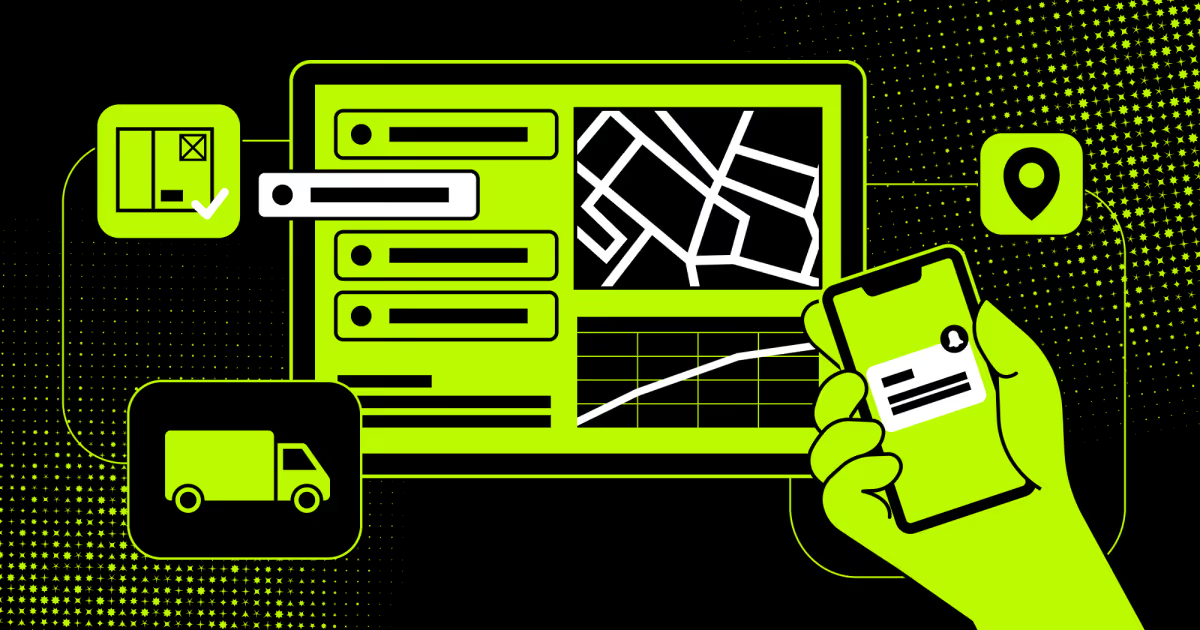
You want to know which routes are wasting the most fuel. With an intelligent platform, you don’t dig through spreadsheets or call five different managers. You type a single question and instantly get a clear dashboard. You know exactly what to do in two minutes, not two weeks.
That is how life changes when data finally works for you.
Supply chain intelligence software doesn't just centralize data; it changes what happens the moment that data arrives. Here's the mechanism behind each function.
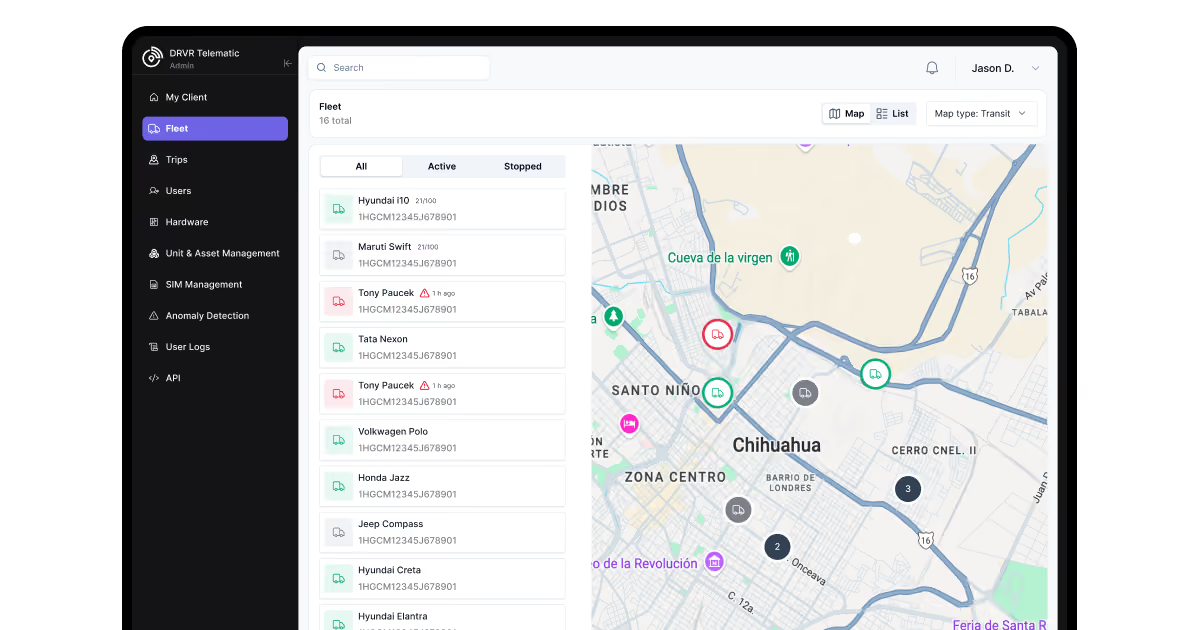
Consolidating fragmented feeds merges GPS, EDI, and manual logs into one queryable source, the way the SyncMatix platform we developed ingested pings from thousands of vehicles every few seconds and cut cross-app lookups to one dashboard.
Clustering root causes groups related alerts automatically so a dispatcher sees one flagged issue instead of ten symptoms, which is how DriveIQ's exception queue cut diagnosis time from 12 minutes to under 3.
Automating routine decisions replaces manual comparison with system-generated matching, the way Driven Connect's tender system routes buyer requests to relevant operators and lets them bid without staff intervention.
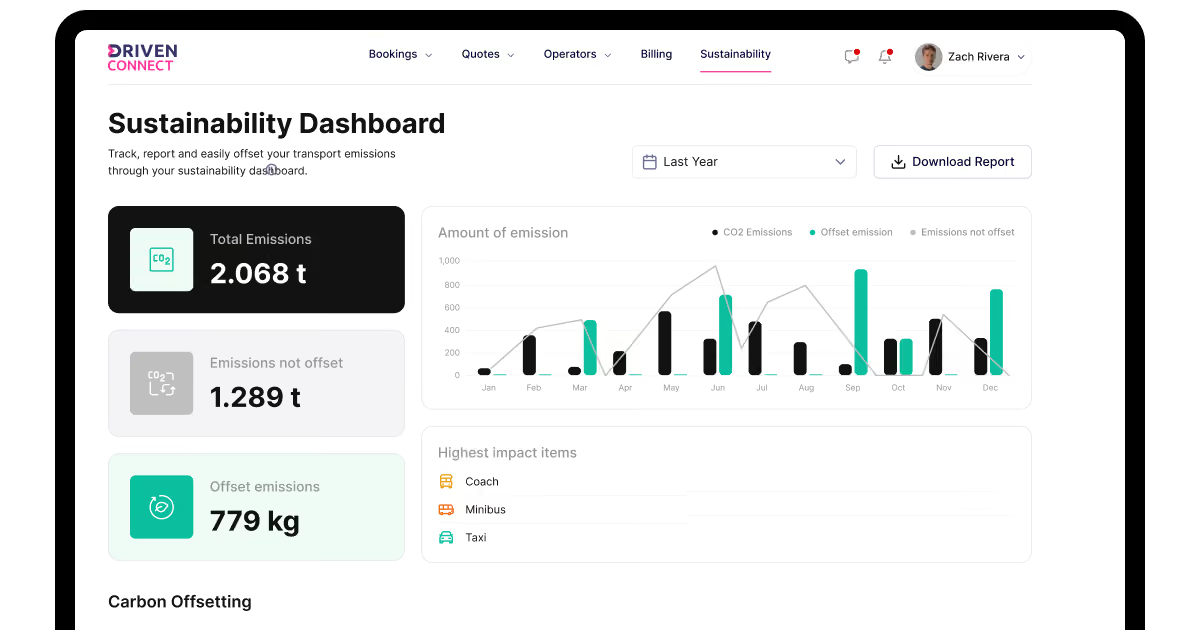
Extending intelligence past delivery applies the same real-time data to new problems, shown when Driven Connect's emissions module calculates carbon cost per route using live vehicle specifications.
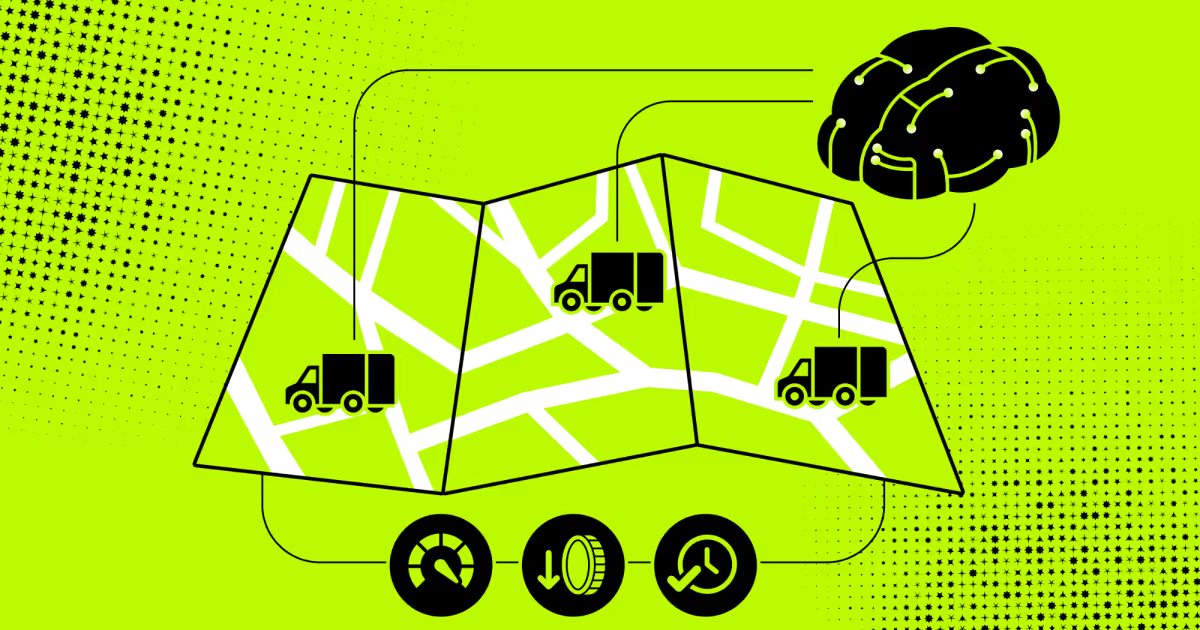
Forecasting before failure runs live traffic, weather, and historical performance through a predictive model updated on a fixed interval, similar to DriveIQ's ETA engine refreshing every 15 minutes at 89% accuracy within ±15 minutes.
That combination (consolidation, prediction, clustering, and automation) is what intelligent automation in supply chain operations looks like in production. We’ve seen it change the operations entirely.
How does supply chain intelligence work?
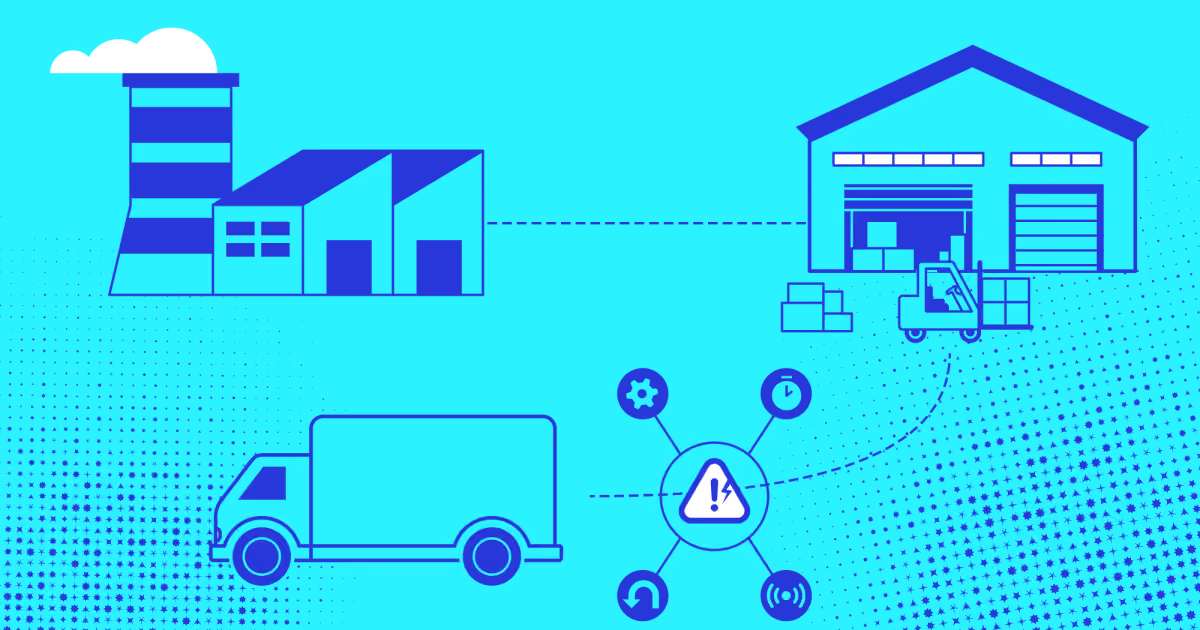
A supply chain intelligence platform rests on five connected components. Data systems capture and process information continuously. Decision, inventory, sustainability, and customer layers act on it. Together, they turn raw operations into a coordinated system.
Data processing and management systems form the core layer. This means ingesting GPS pings, EDI feeds, and warehouse scans. It also means processing that data into usable signals fast. The SyncMatix solution we built continuously processed location pings every few seconds. Without this layer, everything downstream runs on stale information.
Organizational decision-making is the second component. Raw data means nothing without a path to action. This layer converts signals into role-specific recommendations instantly. A dispatcher gets a reroute option, not a raw feed. Intelligent supply chain management depends entirely on this translation step working well.
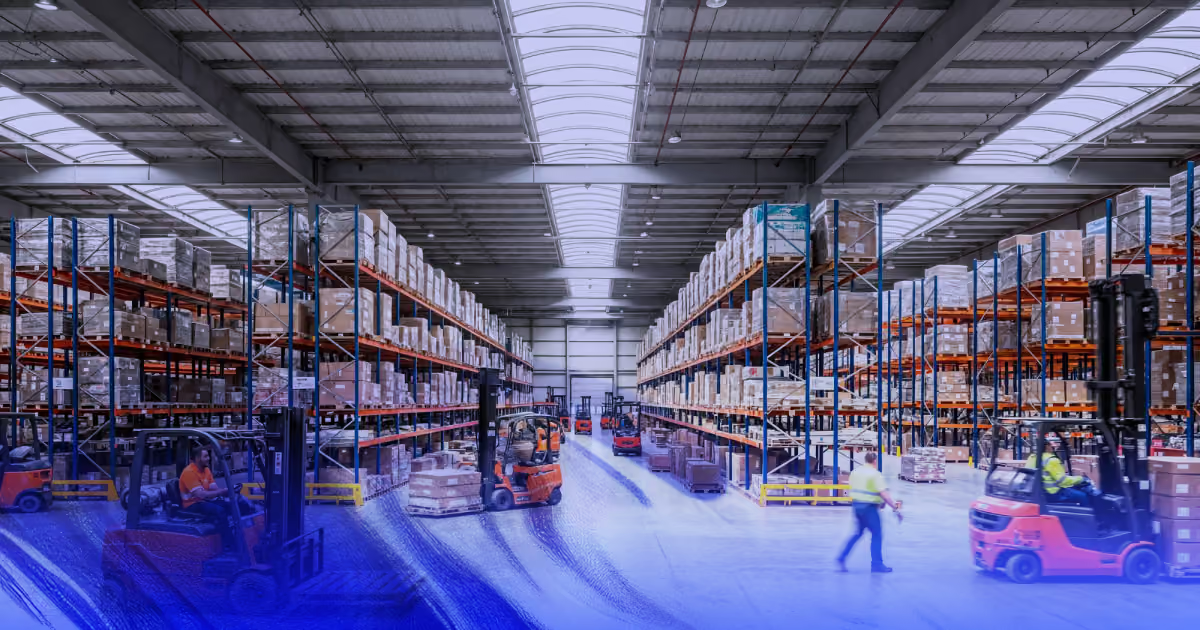
Inventory management and quality control forms the third layer. This tracks stock levels, condition, and fulfillment accuracy in real time. It overlaps directly with warehouse automation, where scans and sensors replace manual counts. Errors caught here never reach a customer's doorstep.
Customer experience and satisfaction closes the loop as the fifth layer. This surfaces delivery status, delay alerts, and service quality directly to customers. DriveIQ's proactive messaging cut manual customer service requests by 85%. A platform that predicts disruption but never informs the customer solves half the problem.
Sustainable supply chain practices make up the fourth component. This layer tracks environmental impact alongside operational metrics. Driven Connect's emissions module calculates carbon cost per route. It uses vehicle specifications, distance, and fuel type together. Regulatory pressure is making this component non-negotiable for most operators.
Here's what happens when these five layers stay disconnected. A cross-border carrier came to us managing 500 vehicles. Their data systems worked. Their decision layer didn't exist. Dispatchers learned about missed deliveries from angry phone calls. Drivers absorbed the blame for routing decisions they never made. Turnover climbed to 45% within a market already short on drivers.
We didn't add another dashboard. We connected all five components into one system. Data flowed into decisions. Decisions flowed into driver coaching and customer alerts. Late deliveries dropped from 18% to 7% within months. That's what an intelligent digital supply chain gives you: five components, one continuous loop, not five disconnected tools.
Supply chain intelligence workflow explained
Let’s suppose you’re managing operations for a mid-sized logistics fleet. Two categories of information land on your system daily.
Execution information comes first: warehouse scans, order data, ERP records, time logs, payroll. External context comes second: carrier rates, demand signals, historical cohort performance, market benchmarks.
Neither category means much alone. A scan tells you a package moved. It doesn't tell you if that pace is normal. Supply chain intelligence software merges both categories into one signal. That's the first job of the workflow: correlation, not just collection.
Once merged, the system continuously processes the combined data. It compares today's execution against historical patterns instantly. It checks current carrier rates against your negotiated benchmarks. This is where AI in supply chain systems earn their name. Pattern recognition happens faster than any manual review could match.
From there, the system produces four outputs you actually use. Trends show you where performance is drifting, up or down. Opportunities surface cost or efficiency gains you'd otherwise miss entirely. Curated recommendations turn raw patterns into specific, actionable next steps. Margin and profit alerts flag when a lane or account turns unprofitable.
You don't sift through raw data to find these. Intelligent supply chain operations deliver them directly to your dashboard. A margin alert might mean renegotiating a carrier contract. A trend alert might mean a lane needs rerouting. An opportunity alert might mean consolidating shipments to cut cost.
This is intelligent supply chain automation doing its actual job. It's not replacing your judgment. It's narrowing your attention to what matters today. Instead of reviewing six systems separately, you review one screen. Instead of reacting next week, you adjust this afternoon.
By the end of the day, you've caught a margin problem early. You've reassigned a route before it slipped. You've done it without opening a single spreadsheet.
Now, what exactly do you get with it?
What are the benefits of supply chain intelligence?
Our client Robert could have stayed with his previous tech. It worked fine on most days. But traditional software wouldn't have prepared him for the extreme, unpredictable weather of summer 2026. Without intelligence, his fleet would have rolled straight into 40°C temperatures with zero preventive maintenance scheduled. Trucks would have broken down, refrigerated cargo would have spoiled, and delayed handoffs would have triggered massive partner penalties.
Instead, DriveIQ flagged the extreme weather risks two weeks early. It automatically rerouted high-risk loads, scheduled emergency cooling checks, and alerted downstream warehouses to adjust their receiving windows.
Here is how supply chain intelligence protects your business.
Cost reduction
Supply chain intelligence protects margins by cutting waste at every level. It minimizes carrying costs across warehouses and distribution hubs. It optimizes labor allocation instead of overstaffing for peak demand. It flags inefficient processes before they drain budget quietly.
The benefit here is advanced technology. McKinsey research shows enterprises with full AI deployment cut logistics costs by 15–30%. Inventory levels drop 20–50% under the same conditions. Our own numbers echo that pattern closely. DriveIQ reduced empty miles by 8% through smarter reassignment logic. It also cut driver overtime hours by 22% fleet-wide.
Intelligent supply chain solutions don't cut cost by trimming headcount. They cut cost by removing friction from decisions. A dispatcher approving one recommendation replaces an hour of manual planning. That's where the savings actually compound over time.
Proactive risk mitigation
Disruption rarely announces itself early enough to prepare. Supply chain intelligence platform tools change that timeline entirely. They flag geopolitical risk, weather events, and supplier delays early. They do it before those risks become expensive emergencies.
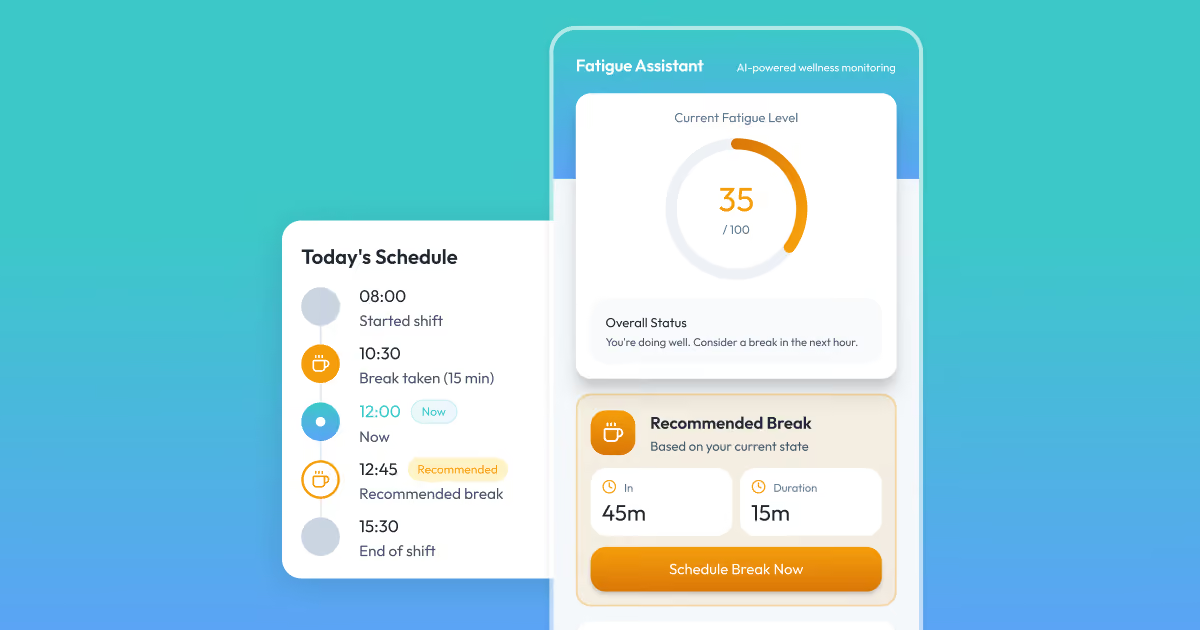
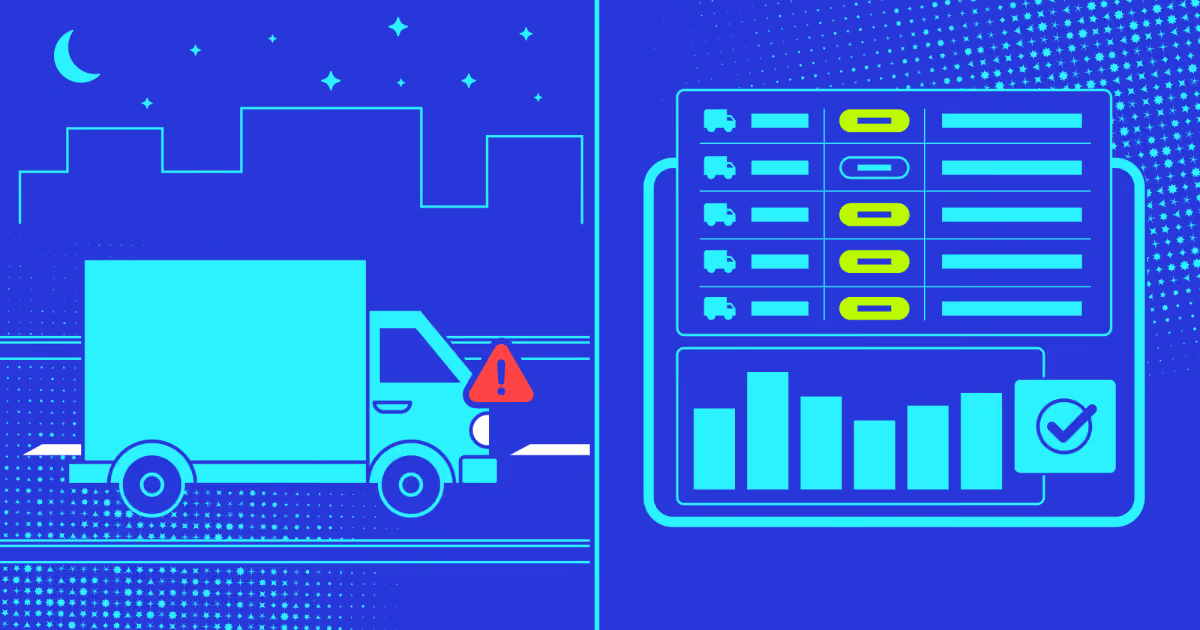
DriveIQ's fatigue model prevented over 40 HOS violations in one quarter. It flagged risk before drivers hit compliance limits. That's risk mitigation working at the operational level, not just strategic.
Weather disruption gets flagged through live routing data correlated against forecasts.
Supplier delays surface early through pattern deviation in delivery timing.
Compliance risk gets caught through predictive fatigue and safety modeling.
Route-level risk gets ranked so dispatchers act on the worst cases first.
Each of these mechanisms shares one goal: catching the problem before it costs a customer.
Precise demand forecasting
Forecasting accuracy determines almost everything downstream. Bad forecasts cause stockouts, overstocking, and wasted warehouse space. Supply chain intelligence software fixes this by analyzing far more signal.
It pulls historical sales data, market trends, and seasonal patterns together. Transformer-based forecasting models now beat traditional time series methods by 20–40%. That gap grows even wider during high-volatility periods.
DriveIQ's predictive engine reached 89% accuracy within a 15-minute delivery window. That accuracy came after 60 days of continuous model tuning. Precision like that doesn't just prevent delays. It also protects cash flow tied up in excess inventory sitting idle.
Enhanced customer experience
Customers rarely notice good logistics. They only notice when something goes wrong. Intelligent supply chain management keeps that failure invisible to the customer.
It guarantees order accuracy through continuous tracking and validation. It resolves bottlenecks before a customer ever picks up the phone. DriveIQ's proactive messaging system cut manual customer notifications by 85%. Support tickets dropped 35% once root-cause context reached dispatchers first. SyncMatix saw a nearly identical outcome, with tickets falling 45% post-launch.
DrivenBus tells the same story from the passenger side. Real-time tracking eliminated missed rides almost completely for riders. Monthly subscription retention held steady at 78% afterward. Trust, once earned through reliability, tends to compound into loyalty.
Increased agility
Markets shift fast, and rigid systems can't keep pace. An intelligent digital supply chain adjusts routes and orders autonomously, in real time. Teams don't wait for a weekly report to react anymore.
DriveIQ's auto-recovery optimizer reassigns routes the moment risk gets flagged. Dispatchers approve changes with one click, no lengthy review needed. That speed is the entire point of building for agility.
Route reallocation happens automatically when traffic or weather shifts unexpectedly.
Driver reassignment happens within minutes through calendar-based scheduling tools.
Customer communication happens instantly once a delay gets confirmed.
Pricing adjustments happen in real time through simulators like DriveIQ's SLA tool.
Agility isn't a feature. It's what happens when every layer of the system reacts together.
Supplier and partner optimization
Reliability varies wildly across vendors, carriers, and partners. Supply chain intelligence ranks that reliability instead of guessing at it. This builds a network that's transparent, not just fast.
SyncMatix's multi-tenancy architecture let the client scale to 500 customers through partners. Each partner managed their own accounts without disrupting anyone else's. That kind of structure only works when trust is measurable, not assumed.
Driven Connect's tender system applies the same logic to transport operators. Buyers see competing bids and choose based on performance history. 400-plus operators now compete for contracts through one transparent system. That transparency is what turns a vendor list into a resilient network.
"Every alert we build has to answer one question: does this help someone act faster? If it doesn't, it's just noise with better graphics", shares Orest Falchuk, Head of Engineering at COAX Software
Supply chain intelligence use cases
Supply chain intelligence doesn't stay confined to warehouses and trucks. Every industry moving goods, people, or assets applies it differently. The core principle, sensing before reacting, stays constant everywhere.
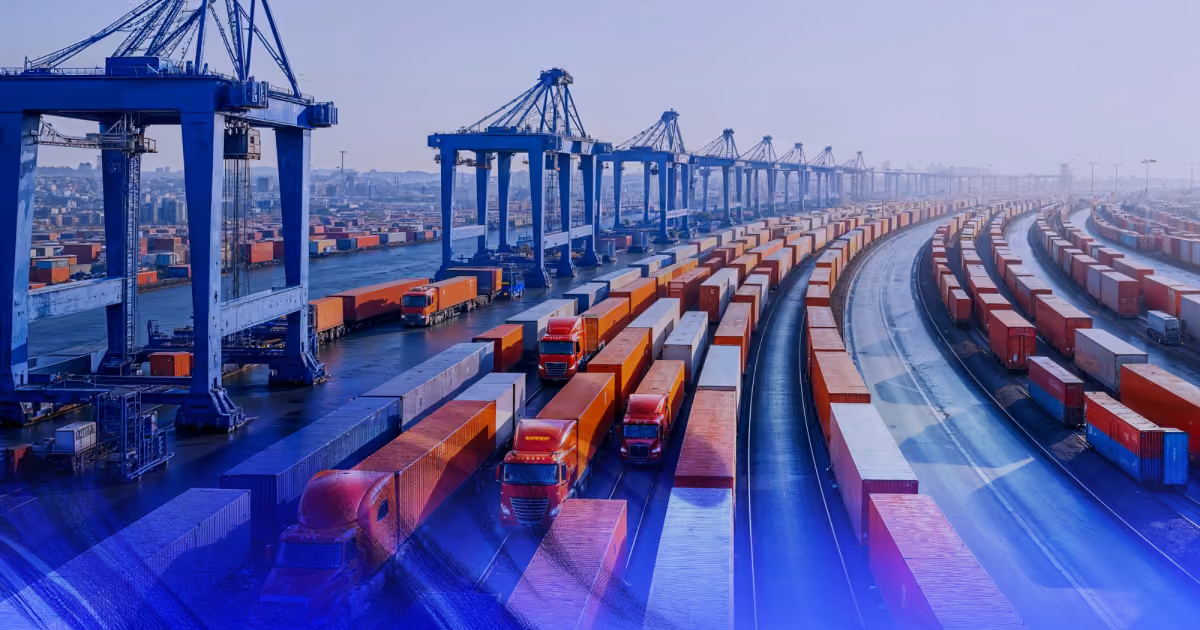
Logistics and freight show this most clearly. Route optimization, fuel tracking, and compliance now run through one system. DriveIQ's auto-recovery optimizer cut empty miles by 8% for our client. Its fatigue model flagged over 40 potential violations in one quarter. FedEx's own Future of Logistics Intelligence Report backs this pattern industry-wide. Only 22% of decision-makers currently access all the logistics data they need. That gap is exactly where intelligent supply chain operations earn their value.
Passenger transit applies the same logic to people instead of pallets. DrivenBus updates GPS positions every 10 seconds during active routes. It hit 91% on-time performance within two minutes of schedule. Riders track their bus the way freight customers track a shipment. The underlying mechanism, live sensing plus predictive alerts, doesn't change.
B2B transport booking turns intelligent supply chain management into a marketplace mechanic. Driven Connect built exactly this for UK coach and minibus hire. Buyers see competing bids from 400-plus verified operators. Its emissions module calculates carbon output and handles UK tax automatically. That's global supply chain intelligence applied to a booking platform, not a warehouse.
Field service and construction fleets use supply chain intelligence software for scattered crews. Geofencing confirms site arrival without a supervisor present. Idle equipment gets flagged and reassigned instead of sitting unused. DHL's Boston Dynamics partnership shows the industrial-scale version of this same idea. Their Stretch robot moves up to 700 boxes hourly.
Retail and e-commerce benefit just as directly, even without a fleet. SmartBat, our construction materials marketplace, needed real-time inventory validation in under one second. Reorder time dropped 75% compared to standard checkout flows. Delivery routing time fell roughly 60% through smarter scheduling logic. This is what happens when you apply intelligent supply chain solutions to retail fulfillment.
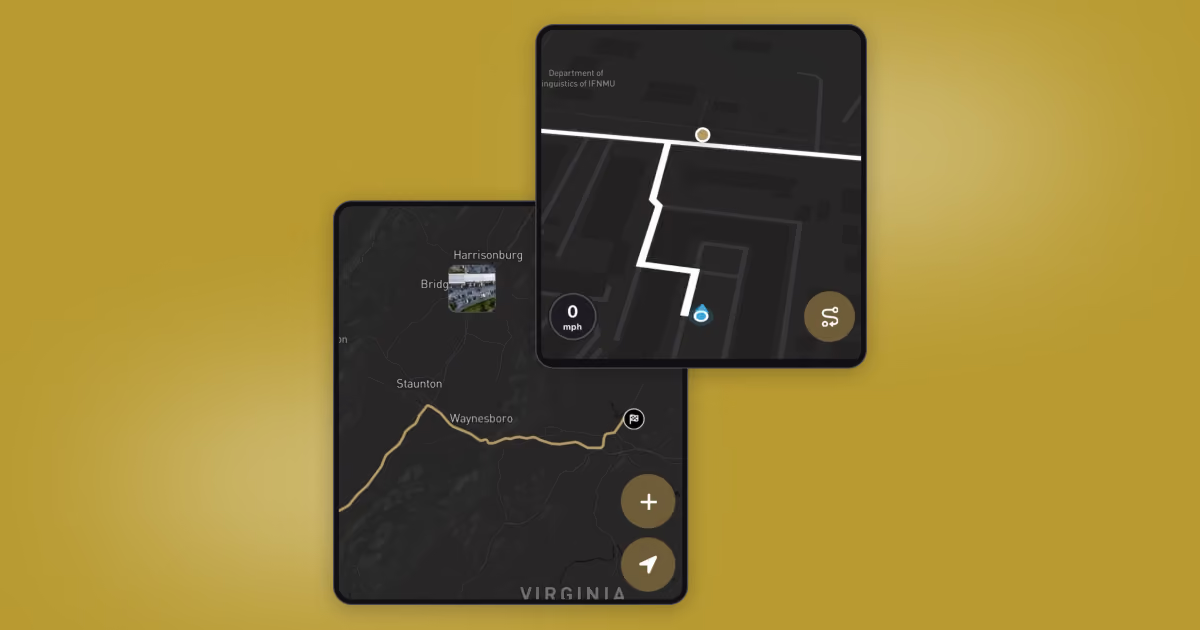
Recreational mobility stretches the concept furthest, and it still holds.Road&Rally solved synchronized navigation for car meetup convoys. Every driver in a group gets identical routing in real time. It's a lighter use case, but the sensing-and-response pattern repeats exactly.
Big players validate this pattern at massive scale. DHL's AI-powered sorting robots process over 1,000 parcels hourly at 99% accuracy. FedEx surveyed 700 logistics professionals and found data fragmentation nearly universal: 66% of organizations run three or more disconnected shipment systems. Whether it's a 500-vehicle freight fleet or a five-driver rally group, the same problem repeats. Fragmented data slows decisions. Supply chain intelligence exists to improve this.
Best supply chain intelligence software
We tested each platform the way we vet integrations on client builds. Five dimensions, evaluated under simulated operational load. The goal: separate genuine intelligent supply chain platform capability from dashboard polish.
We assessed each option from an engineering angle. The question was simple: does it function under real complexity and scale?
We tested five dimensions:
Predictive accuracy under volatile, non-historical demand patterns.
Data fusion depth across ERP, WMS, EDI, and external signals.
Decision latency from anomaly detection to actionable recommendation.
Explainability of AI-generated forecasts and risk scores.
Scalability across multi-tier, multi-region supply networks.
Because when a Tier-1 supplier goes dark on a Tuesday morning, you cannot wait six months for a custom vendor integration. You cannot have a system that flags a massive routing crisis but fails to explain why it chose the alternative path. You need answers before the afternoon shift clocks in.
Here is what survived our stress tests.
Platform
Best for
Key strength
Kinaxis
Real-time, network-wide replanning under disruption
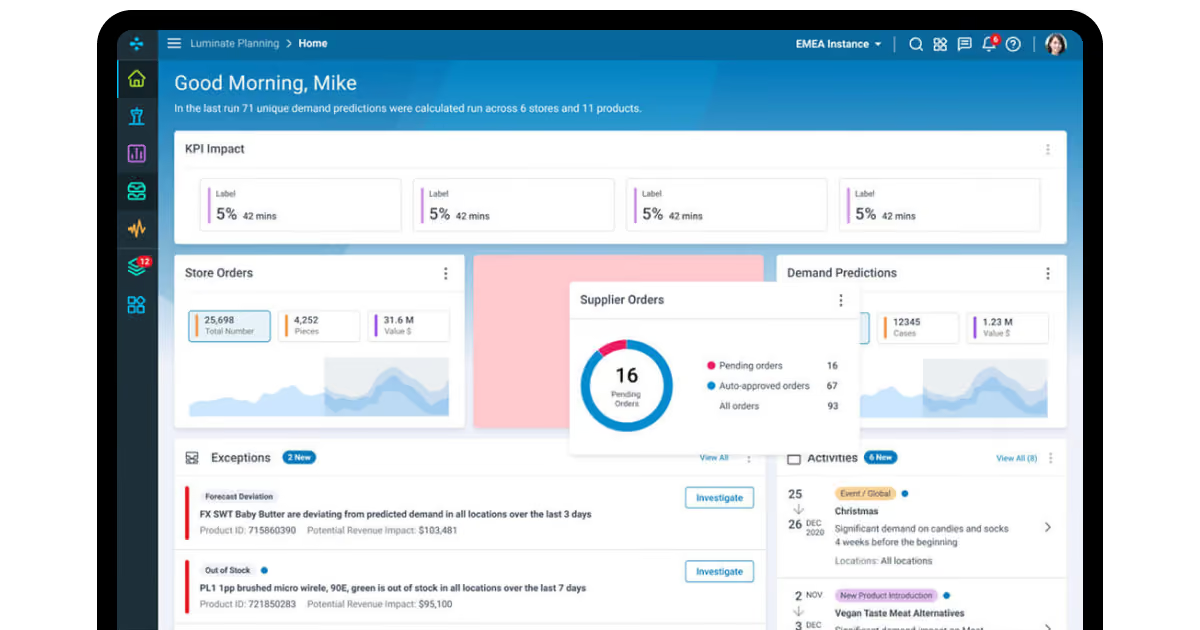
Kinaxis Maestro topped our evaluation for decision latency. Its concurrent planning engine synchronized changes across the network instantly. We ran a disruption scenario across three simulated regions. Every downstream plan updated within the same cycle. That's intelligent supply chain automation working exactly as advertised.
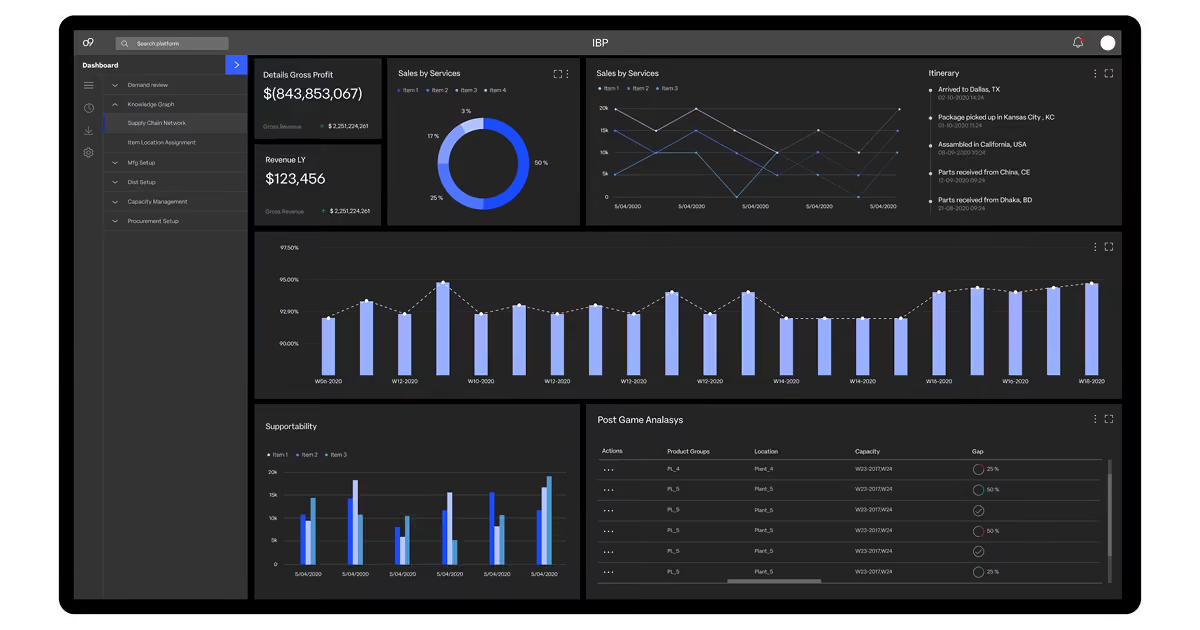
o9's Digital Brain scored highest on data fusion depth. Its Enterprise Knowledge Graph connected fragmented sources cleanly during testing. We fed this supply chain intelligence software conflicting demand signals from two systems. It reconciled them into one forecast without manual intervention.
Key features: Enterprise Knowledge Graph, digital twin modeling, demand forecasting.
Strengths: unifies fragmented data sources, strong EBITDA-linked ROI modeling.
Ideal for: large retailers needing unified demand and assortment planning.
Blue Yonder's Cognitive Platform impressed us on predictive accuracy. Its Snowflake-powered data cloud generated billions of daily predictions during our load test. Five specialized AI agents each handled a distinct decision layer.
Key features: Cognitive Platform, Snowflake data cloud, five specialized AI agents.
Everstream led our explainability tests among pure risk platforms. Its sub-tier mapping reached over 90% accuracy in our sample runs. We traced a simulated port disruption three supplier tiers deep.
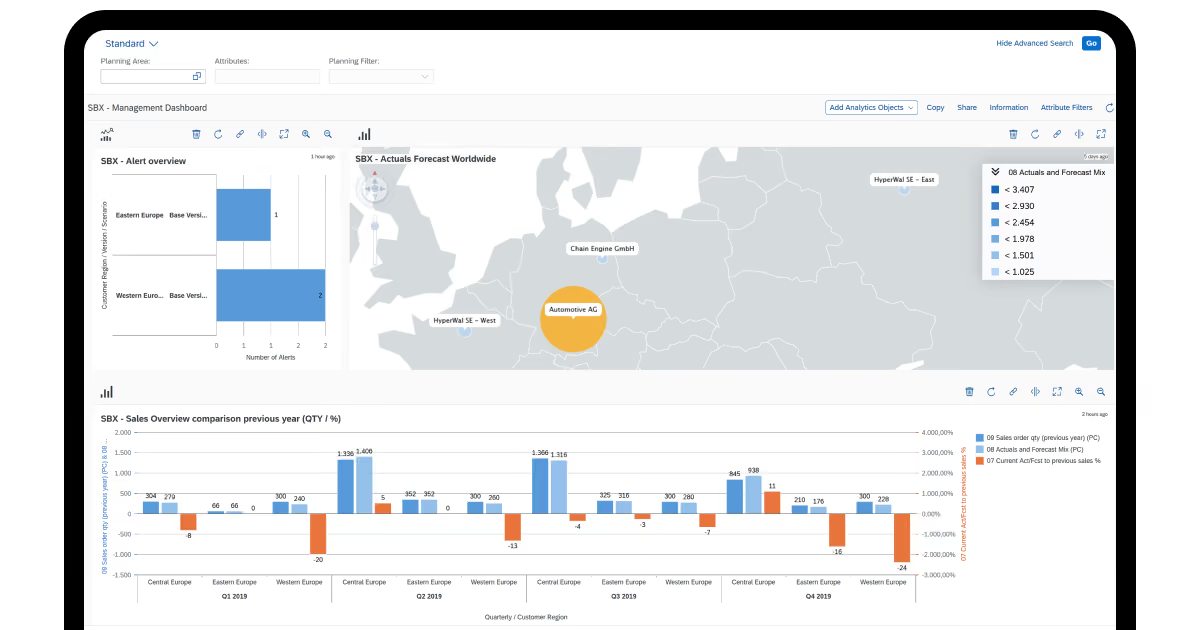
SAP scored highest on scalability during our multi-region simulation of a practical intelligent supply chain management. We connected it to a mock 40-country distribution network. IFTA-style compliance logic populated correctly without manual configuration.
Key features: ERP-native integration, IoT and AI automation, global compliance tools.
Strengths: massive scale, deep ecosystem integration for existing SAP users.
Ideal for: multinational enterprises already running SAP ERP infrastructure.
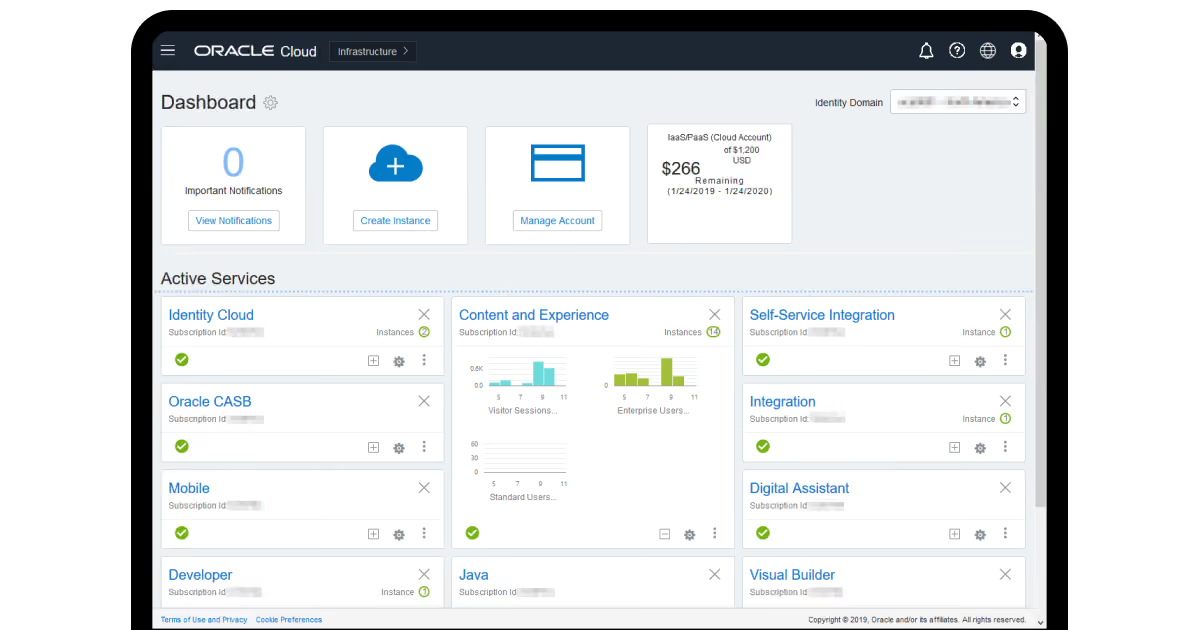
Oracle tested strongest on unified data modeling. Its single-source-of-truth approach eliminated the reconciliation errors we saw elsewhere. We ran "what-if" logistics scenarios against live inventory data.
RELEX stood out in perishable-goods forecasting during our retail simulation. We tested demand sensing against volatile, weather-driven sales patterns. Waste-reduction logic adjusted replenishment automatically without manual overrides.
Logility's Decision Intelligence Platform tested well for accessibility. Business users, not just analysts, ran scenario models successfully in our trial. Speed-to-insight was genuinely fast across demand and inventory modules.
OMP's Unison Planning tested strongest on cross-domain visibility. Its telescopic digital twin let us zoom between strategic and operational views instantly. Generative AI assistants explained forecast changes in plain language during testing.
Key features: telescopic digital twin, intelligent supply chain AI assistants, cross-domain planning.
Anaplan tested well for customization flexibility. We built a custom AI agent scenario in under a day. Its connected planning model synced financial and operational data cleanly.
Key features: custom AI agents, connected planning, financial-operational alignment.
Strengths: fast customization, strong finance-to-supply-chain integration.
Ideal for: organizations aligning financial planning with supply chain decisions.
No single platform won every dimension we tested. Kinaxis led on speed, o9 on data fusion, SAP on scale. The right choice depends on which operational gap hurts most today. That's the real lesson behind intelligent supply chain management evaluation: fit over feature count.
"The best platform is the one that matches how your team really makes decisions, not the one with the longest feature list," says Orest Falchuk, Head of Engineering at COAX Software
How to choose the right solution?
We helped Driven Connect launch its marketplace against a brutal timeline. Four hundred operators onboarded fast, cross-border routing complexity growing daily. None of that would've worked on a mismatched, off-the-shelf platform. Here's what we've learned evaluating supply chain intelligence platforms for clients like this.
Start with growth trajectory, not current headcount. A 15-vehicle operation doesn't need enterprise-grade depth yet. A 500-vehicle carrier can't run on maintenance-only tooling either. Buy for where you'll stand in 18 months. DriveIQ's client scaled from regional carrier to 500 vehicles fast. A platform sized for their original scale would've forced painful migration mid-growth.
Map your existing systems before shortlisting anything. If a TMS or ERP already runs operations, prioritize open APIs. On SyncMatix, real engineering hours went into reconciling GPS pings, EDI feeds, and mismatched TMS timestamps. That normalization work happens regardless of what a vendor advertises. Ask any supply chain intelligence platform vendor exactly how it handles conflicting data sources. Don't accept "yes, we integrate" as an answer.
Weight compliance needs against your actual regulatory exposure. A cross-border carrier faces different rules than a regional last-mile fleet. DriveIQ's client ran daily US-Canada freight, so compliance automation wasn't optional. If you cross state or national lines, test compliance modules against real routes. Don't sign anything until you've run that test yourself.
Pilot with real drivers, not a polished dispatcher demo. Developing the DriveIQ cloud supply chain software taught us this lesson, the hard way. Early scorecards used raw numbers; drivers ignored them completely. Peer benchmarking, "here's where you rank," fixed engagement almost overnight. A platform's frontline app matters as much as its dashboard. Test it on a live shift, not a sales call.
Watch exception handling, not steady-state performance. Every tool looks capable when nothing's going wrong. The real test is a stalled truck or missed delivery. DriveIQ's exception queue cut diagnosis time from 12 minutes to under three. Ask vendors to walk through exception flow live, never from slides.
Check multi-tenant scalability if you manage fleets for others. Partner architecture matters more than any single flashy feature here. SyncMatix's white-label structure scaled to 500 customers through partners alone. A platform lacking proper account isolation forces manual workarounds as partners multiply. This is where intelligent supply chain solutions either scale cleanly or quietly break.
Price the hidden costs, not just the subscription line. Hardware, integration hours, and training add real cost beyond sticker price. A cheaper rate can lose once custom integration hours get counted. Get a full cost breakdown from every finalist before comparing monthly rates.
Match onboarding speed to your business calendar. Some platforms configure in days; others take weeks. Switching systems mid-peak-season can cost more than software itself. An intelligent digital supply chain rollout timed badly still hurts the business.
Sometimes, though, no off-the-shelf solution fits your actual operating model. A carrier running unusual routes, a marketplace with non-standard tenant needs, a fleet mixing asset types no vendor anticipated. That mismatch is exactly when supply chain software development built around your specific workflow starts making financial sense. Off-the-shelf tools optimize for the average operator. Custom builds optimize for yours.
At COAX Software, our development services start with your fleet size, your data sources, and your user roles. Our team is 90% mid-and-senior engineers, so there's no junior handoff between discovery and delivery. We build across web and mobile equally, covering dispatchers, drivers, partners, and customers, so every user touches an interface built for their actual role.
Two things matter more than any vendor pitch you'll hear. First, intelligent supply chain management only works when your team's actual workflow shapes the selection criteria, not a feature checklist. Second, intelligent supply chain platforms reveal their real value under disruption, never during a calm demo. Test accordingly, and the right choice becomes obvious.
How does supply chain intelligence deliver ROI?
ROI on supply chain intelligence comes down to one comparison. Benchmark performance before implementation, then measure it after. Divide net financial gain by total investment cost. That's the entire framework, stripped of complexity.
The reality is messier than this, though.
It is hard to isolate variables in a chaotic market. Did your freight costs drop because of your new intelligent platform? Or did regional fuel prices simply dip that month? Furthermore, legacy data is often too messy to establish a clean baseline, and intangible wins (like preventing a major customer from churning) don't show up on a spreadsheet.
We've watched this play out across our own client projects. DriveIQ's client didn't guess at improvement; they measured it precisely. Late deliveries dropped from 18% to 7% of stops. That single metric alone justified the platform's cost quickly.
To cut through the noise, you need a realistic framework. These tactical insider tips from our engineering team will help you capture the true financial impact without getting lost in the data clutter.
Step 1: Establish baseline KPIs before touching anything. Track current performance across four categories carefully. Cost efficiency covers freight spend and inventory carrying costs. Working capital covers inventory days and outstanding receivables. Reliability covers on-time rates and order cycle times. Resilience covers stockout frequency and emergency expediting costs. Without this baseline, "improvement" is just a guess.
Step 2: Calculate total investment honestly, not just software cost. Include subscription fees and integration hours together. Include staff training time and onboarding labor too. Include costs from any operational disruption during rollout. SyncMatix's 14-month build involved real integration work most budgets underestimate.
Step 3: Quantify financial benefit across three buckets. Direct cost savings come from reduced overtime and buffer inventory. DriveIQ cut driver overtime by 22% through balanced workload reassignment. Revenue protection comes from fewer stockouts and lower customer churn. SyncMatix saw new sign-ups increase 40% after consolidation improved trust. Risk avoidance comes from preventing compliance penalties and supply disruptions. DriveIQ's fatigue optimizer flagged over 40 potential HOS violations early.
Step 4: Apply the formula, then interpret it honestly. ROI equals financial benefit minus investment, divided by investment. Multiply by 100 for a clean percentage. A $100,000 supply chain intelligence software investment generating $300,000 in savings returns 200%. That's the math. The harder part is measuring accurately.
Intelligent automation in supply chain operations rarely delivers ROI from one metric alone. It compounds across cost, retention, and risk simultaneously. DrivenBus shows this pattern clearly outside pure freight. Its 78% subscription retention rate reflects trust built through reliability. That retention protects recurring revenue long after launch costs settle.
Building the right intelligent supply chain solutions means knowing what matters most. Then building those properly before anything else. That's not abstract advice for us. It's practiced daily.
We've built driver-sync systems where location data is held across dozens of devices without drift. We've built IoT pipelines where sensor data reached dashboards reliably, even in low-connectivity environments.
Our AI software development work spans forecasting models, coaching algorithms, and exception-detection systems. DriveIQ's predictive engine reached 89% accuracy within a 15-minute window. That accuracy took 60 days of tuning, not a one-time deployment. Real ROI requires that kind of sustained refinement, not a launch-and-forget mindset.
ISO 9001 and ISO 27001 certification covers compliance requirements before code gets written. Regulated deployments, cross-border freight, healthcare logistics- need that groundwork upfront. If your operational model fits a platform covered earlier, use it. If it doesn't map cleanly, that's usually where custom supply chain intelligence conversations start.
FAQ
What is intelligent supply chain execution?
Intelligent supply chain execution means real-time systems act on data instantly, not after review. It covers order fulfillment, routing, and inventory decisions happening automatically as conditions change. Unlike static planning, execution responds within minutes, not weeks. On SyncMatix, this meant GPS data triggering route decisions the moment conditions shifted, without waiting for a dispatcher to notice manually first.
What are supply chain intelligence's key implementation challenges?
Data fragmentation is the biggest challenge founders underestimate early. Most companies run GPS, ERP, and manual logs that never share timestamps. On SyncMatix, real engineering time went into reconciling mismatched data formats before any prediction model could run. Organizational resistance follows close behind. Teams trained on spreadsheets often ignore automated alerts unless the rollout addresses trust directly.
What's the fastest way to fail at adopting supply chain intelligence?
Rolling out every module simultaneously, across every user role, at once. Drivers, dispatchers, and partners all need different onboarding paces. Road&Rally succeeded by launching synchronized navigation first, then adding ticketing and community features later. A phased rollout builds trust incrementally. A full-scale launch overwhelms users and kills adoption within the first few weeks.
Does supply chain intelligence make sense for e-commerce, or just freight and logistics?
It applies well beyond trucks and freight lanes. SmartBat, our construction materials marketplace, needed real-time inventory validation under one second per transaction. That's supply chain intelligence applied to retail fulfillment, not fleet routing. Any business managing inventory, delivery windows, or fulfillment accuracy benefits from the same sensing-and-response logic freight operators use daily.
What data do I need before starting a supply chain intelligence project?
At minimum, six months of historical operational data across your core metrics. Delivery times, inventory levels, or route performance, depending on your business. Thin historical data forces reliance on industry benchmarks instead of your own patterns. On DriveIQ, 60 days of live data tuning got the predictive engine to 89% accuracy before full deployment.
















































































_.avif)








%2520explained.avif)

We are interested in your opinion