Often, it’s that final leg of the supply chain that takes the most cost, drives customer dissatisfaction with delays and missed deliveries, and causes operational breakdowns. Here’s where you get all the benefits of using AI in last mile delivery services:
Dynamic route optimization that cuts delivery times and reduces fuel costs.
Predictive demand forecasting that positions inventory closer to customers.
AI-powered address validation that reduces failed deliveries.
Autonomous delivery execution that navigates urban environments independently.
Smart micro-fulfillment centers powered by AI that reduce last-mile costs.
Computer vision vehicle inspection that detects defects and cuts inspection time.
AI chatbots and real-time tracking that provide 24/7 customer support.
Predictive vehicle maintenance that cuts down on daily downtime costs.
Load optimization algorithms that decrease mid-route rearrangement waste.
Mixed fleet orchestration that coordinates humans, robots, and drones simultaneously.
This comprehensive guide breaks down the applications, use cases, and best practices, and tools for last mile AI, and gives you a full overview and implementation workflow that makes integration of this advanced technology simple.
Why does last-mile delivery need AI?
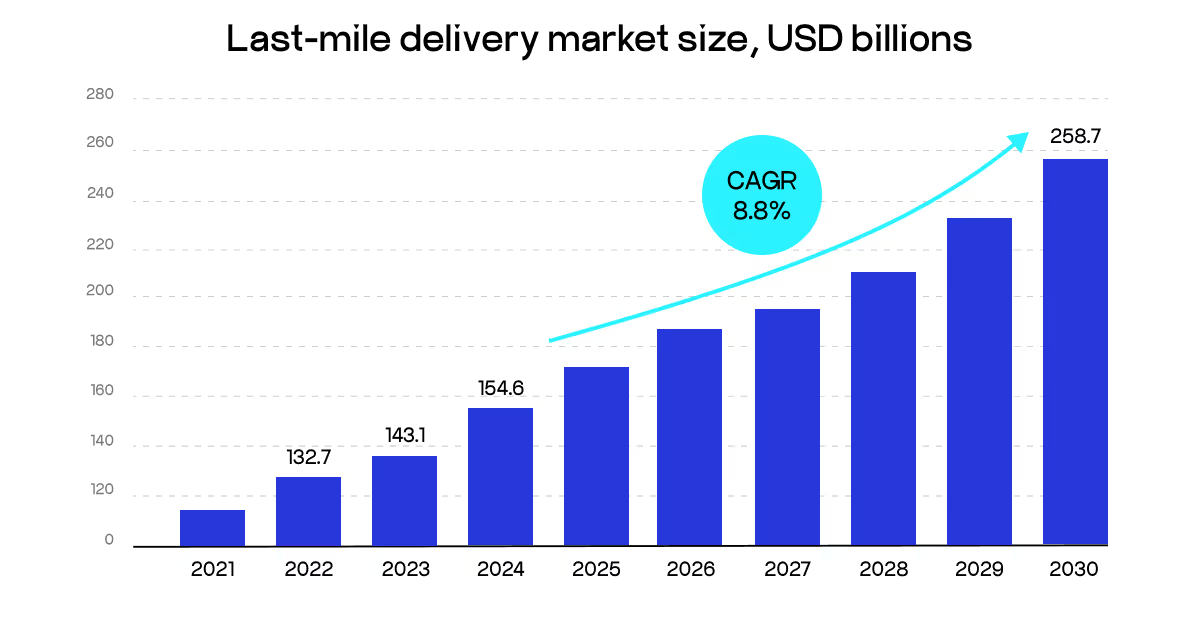
The last-mile delivery market went up to $132.71 billion globally in 2022 and then kept expanding at an annual rate of 8.8%. According to the World Economic Forum, urban deliveries alone will increase by 78% by 2030.
This is what causes the system to malfunction: incorrect addresses account for 25% of delivery failures. Another 74% of companies attribute delivery issues to inaccurate address data. These failures directly harm businesses, since 68% of American consumers prioritize short delivery windows and 80% of consumers want quick, convenient service.
What manual planning cannot, last-mile AI can. Unexpected order spikes, weather disruptions, and traffic changes are all missed by traditional route planning. On inefficient routes, drivers squander fuel. Instead of estimating delivery times, dispatchers make educated guesses. Customer care representatives rush to respond to "where's my package" inquiries.
The technology cuts through these issues with predictive analytics, dynamic routing, and autonomous decision-making. For instance, Northern Express Logistics boosted daily deliveries threefold after implementing AI-powered route planning.
This shift is only gaining traction. With e-commerce revenue projected to reach $6,478 billion by 2029, growing 9.49% annually, last-mile delivery needs intelligence that scales with demand.
Challenges and how AI can solve them
Last-mile delivery eats up 53% of total shipping costs, according to research from Statista. That jump from 41% in 2018 shows why companies can't ignore this problem anymore.
Apart from the costs, the last-mile delivery industry is facing some other serious obstacles - and here’s how AI can solve them.
High costs destroy profits. Traditional routing wastes fuel, time, and driver hours on inefficient paths. AI cuts these costs by 20% to 40% through dynamic route optimization that responds to real-time traffic, weather, and delivery windows. DHL's Greenplan algorithm saved the company 20% on delivery costs by continuously adjusting routes based on current conditions.
Failed deliveries waste resources. Wrong addresses cause 25% of failed deliveries, with 74% of businesses blaming poor address data. Each failed attempt costs money and damages customer trust. AI-powered last-mile delivery tracking solves this through automatic address validation and correction before drivers leave the warehouse. Systems can verify addresses against databases, flag potential issues, and suggest corrections, pushing accuracy rates.
Chaos results from unpredictable demand. Order volumes fluctuate erratically during promotions, holidays, and weather-related events. Conventional planning is unable to adjust quickly enough, which results in capacity waste. To forecast changes in volume, AI demand forecasting examines patterns, seasonal trends, and outside variables. According to Al-Khatib and colleagues' study, this enables businesses to place inventory in micro-fulfillment centers closer to anticipated demand.
Schedules are destroyed by traffic and delays. Delivery delays and higher fuel consumption are caused by urban congestion. By the afternoon, morning-planned static routes are no longer relevant. Dynamic routing, which adapts in real time to changing conditions, is made possible by AI. The system instantly reroutes drivers through more direct routes when traffic builds up on one route. This increases on-time rates and cuts delivery delays by up to 30%.
The impact on the environment increases. Urban emissions are largely caused by delivery vehicles. More trips with fewer packages per stop are frequently the result of the pressure to deliver more quickly. By optimizing routes to cut fuel consumption by up to 25%, AI tackles sustainability. Additionally, it allows for improved load planning, which reduces total miles driven by allowing cars to carry more packages each trip.
Expectations from customers exceed capabilities. Customers today want instant updates, accurate delivery windows, and real-time tracking. At scale, it becomes impossible to manually meet these expectations. Predictive delivery times based on current conditions, as opposed to static estimates, are powered by AI. Customers receive precise ETAs from AI in last mile delivery that automatically updates as routes change, fostering transparency and trust.
The potential for improvement is huge - now let’s see how you can apply it with specific technologies and use cases.
Intelligent routing, scheduling, and load optimization
Let’s start our immersion into last-mile delivery AI by covering one of the most important pain points - ensuring your routes are optimal and on schedule, and the load distribution isn’t eating your capacity or endangering your vehicle health.
Dynamic route optimization
Intelligent algorithms take static routes and rewrite them into living systems that adapt every second. AI-powered last mile tracking adjusts routes continuously as traffic builds, weather shifts, or new orders arrive.
For example, DHL operates AI route optimization in more than 50 countries, achieving 10% savings in logistics costs and improving on-time deliveries by 15%. The system processes real-time traffic data, road closures, and delivery priorities to reroute drivers around problems before they cause delays.
Also, companies like Nowports implement AI solutions for real-time tracking and supply chain visibility across the region. These platforms help smaller logistics operations compete by providing enterprise-level routing intelligence at accessible prices.
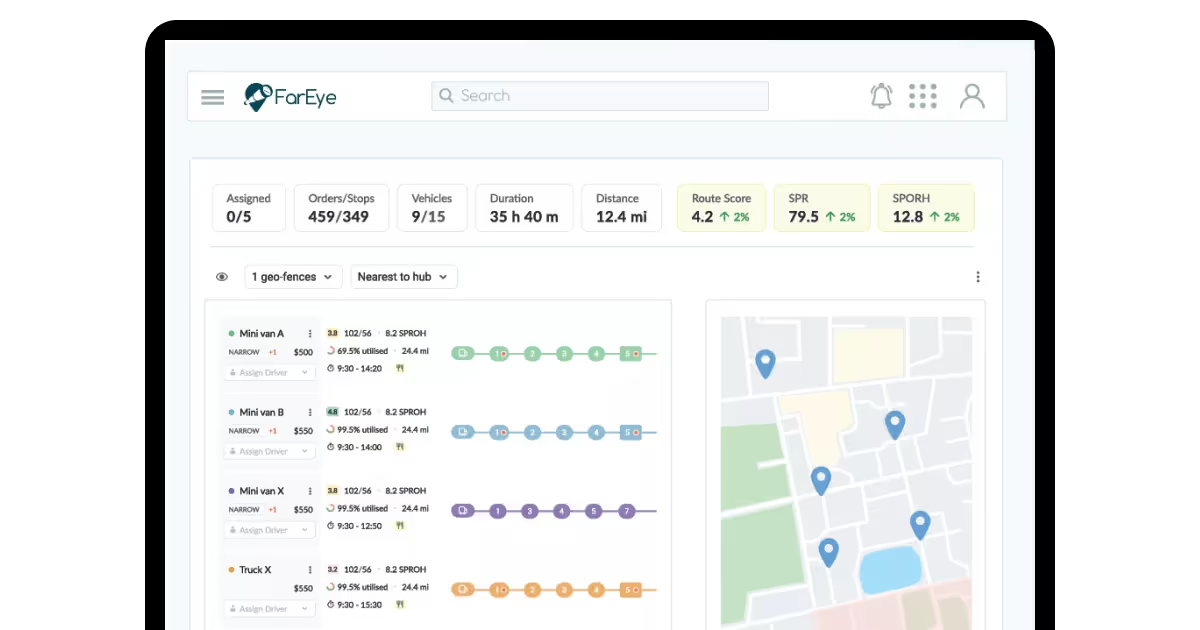
Among the best tools, FarEye specializes in last-mile optimization with a focus on delivery accuracy and customer experience. Their platform manages mixed fleet coordination while improving the delivery and returns experience. Also, in order to keep drivers on course, Track-POD offers final mile tracking that continuously looks for ways to improve predetermined routes. As routes change throughout the day, their system modifies loading recommendations.
FarEye
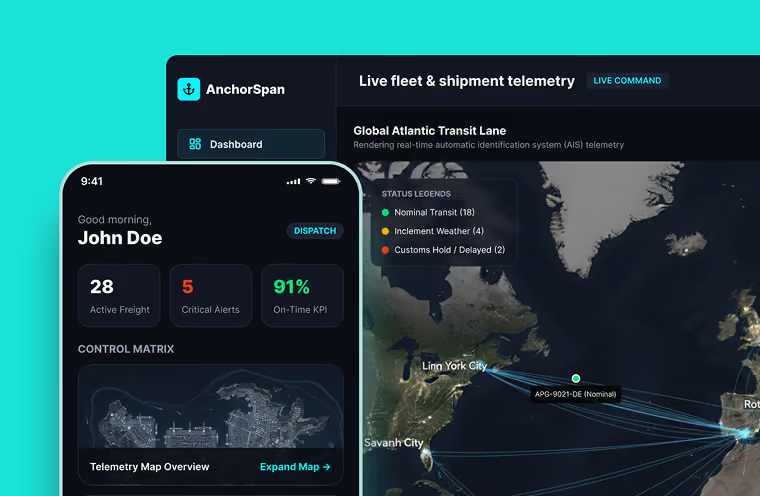
The technology cuts delivery times by up to 30% while reducing fuel consumption. When a driver encounters unexpected congestion, the system immediately calculates alternate paths and pushes updates to their mobile device. This keeps packages moving efficiently even when conditions change.
Smart assignment of drivers and vehicles using AI-driven matching
Analyzing dozens of variables at once is necessary to match the right driver to the right delivery. In milliseconds, last mile AI systems determine the best assignments based on driver location, vehicle capacity, delivery windows, traffic conditions, and past performance.
Also, through multi-carrier management, Bringg links retailers to more than 250 carriers across more than 70 countries. Based on cost, speed, and reliability metrics, their AI evaluates each delivery requirement and matches it to the most suitable carrier.
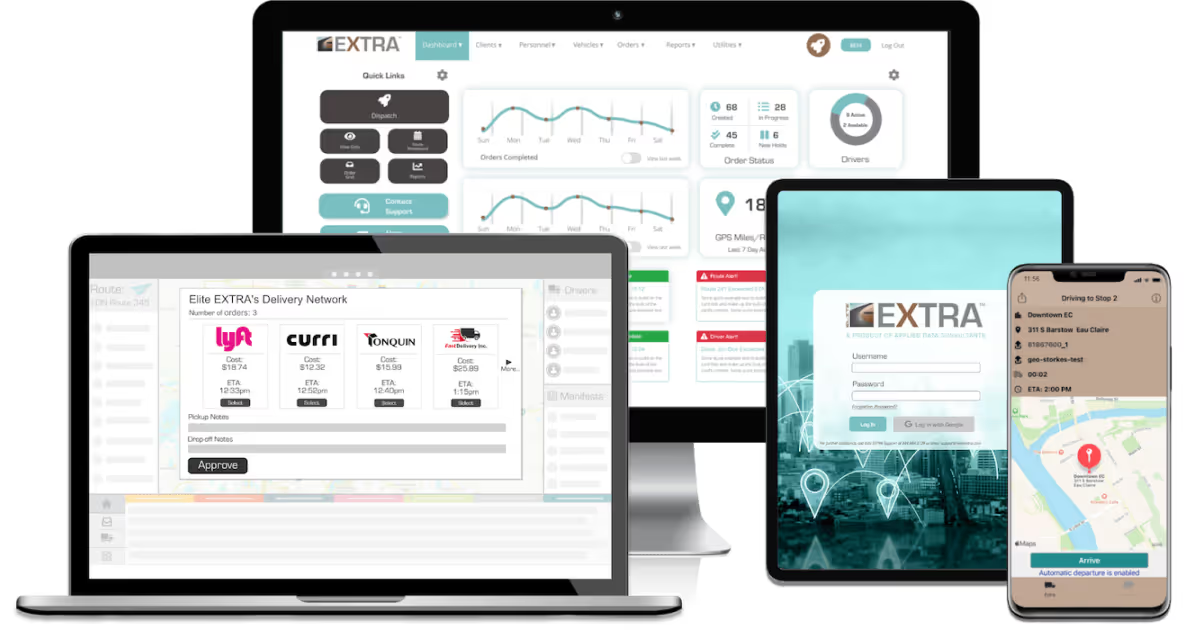
Elite EXTRA automates driver assignments through their mobile app, giving constant visibility on each package in real time. The platform adjusts assignments dynamically when drivers complete deliveries ahead of schedule or encounter delays.
Elite EXTRA
This intelligent matching increases fleet utilization while reducing empty miles. Drivers spend less time waiting and more time delivering, which improves both productivity and job satisfaction.
Scheduling and capacity planning
AI forecasting lets companies position resources before demand hits. By analyzing order patterns, seasonal trends, and external factors like weather or local events, systems predict volume spikes days in advance.
As an example, Amazon can reduce delivery times by up to 30% by using AI-powered last mile software to predict package locations even before customers place orders. In order to pre-position inventory in fulfillment centers closest to potential customers, the system examines browsing habits and past purchases.
Additionally, after taking traffic, delays, and weather into account, Blinkit modifies delivery times during rain from 10 to 20 minutes. In order to maintain reasonable customer expectations, the system automatically extends delivery windows and imposes surge fees when circumstances worsen.
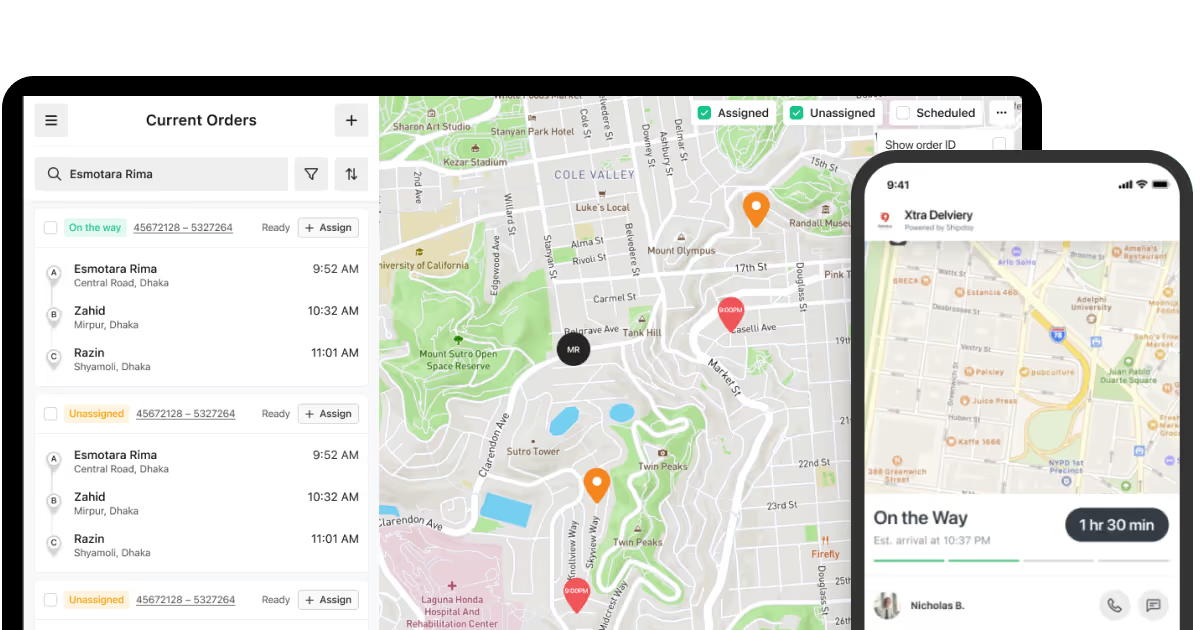
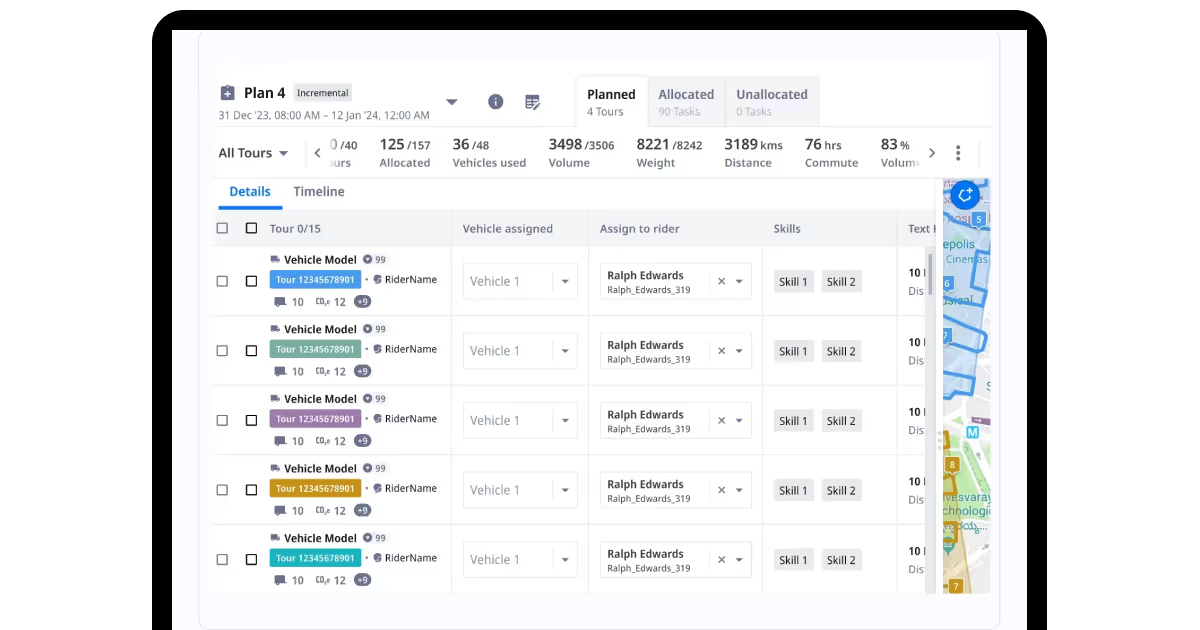
What about the tools you can use? A hub operations dashboard with real-time KPI, performance metrics, and alert monitoring is offered by Shipsy. The platform helps dispatchers manage capacity across multiple locations while increasing productivity through gamification features.
Shipsy
This predictive approach prevents the chaos of reactive scheduling. Companies staff appropriately for busy periods without wasting resources during slow times, balancing service quality with operational efficiency.
Load optimization
AI analyzes package dimensions, weights, delivery sequences, and vehicle capacity to create optimal loading configurations. This goes beyond simple volume calculations to consider delivery order, preventing drivers from digging through packed vehicles to find the next package.
The technology determines which items load first based on their delivery sequence, ensuring packages needed earliest sit closest to the door. Research by Akdogan and Özceylan shows that optimizing load distribution reduces fuel consumption and emissions while minimizing the need for mid-route rearrangement.
Metrobi provides one-stop delivery as well as multi-stop route optimization that integrates stops while maximizing profit margins, delivery costs, and fuel efficiency. Also, OptimoRoute lastmile AI imports route sets, creates the best loading sequences, and manages automated planning for companies with numerous stops. For optimal efficiency, the platform loads packages in reverse delivery order while taking vehicle capacity limitations into account.
Metrobi
Smart loading cuts handling time at each stop by up to 40%. Drivers locate packages instantly rather than searching, which speeds deliveries and reduces vehicle idle time. This efficiency compounds across dozens of daily stops, significantly improving overall productivity.
Location intelligence
Address data can be confusing, but with AI, it can be converted from basic coordinates to useful delivery intelligence. Based on past data, the technology determines access limitations, verifies addresses prior to dispatch, and learns the best delivery strategies for every location.
By creating a database of delivery preferences, access codes, and unique instructions for frequently visited addresses, SmartRoutes offers customer mapping for routine deliveries. The system remembers when customers are usually available, where to leave packages, and which entrance to use. Also, Onfleet provides visibility tracking and predictive updates that take location complexity into account. The system takes into account elevator wait times and security protocols, recognizing that delivering to a 20-story office building necessitates different planning than a residential address.
SmartRoutes
Last mile AI route optimization systems define locations that have historically caused issues, flag incomplete addresses, and recommend corrections. This keeps delivery success rates above 95% and avoids unnecessary travel.
Predictive analytics for demand, time, and operations
Another great application of AI in last mile delivery is predictive analytics. It allows for varied use cases and improvements - let’s break them down one by one.
For delivery volumes
To predict order volumes before they spike, AI examines patterns, seasonal trends, and outside variables. This enables businesses to properly position employees and inventory.
According to Amosu and others, AI demand forecasting determines the best time to replenish stock based on population density, purchasing power, and past demand, as well as which warehouses to prioritize and how much inventory to distribute across various locations.
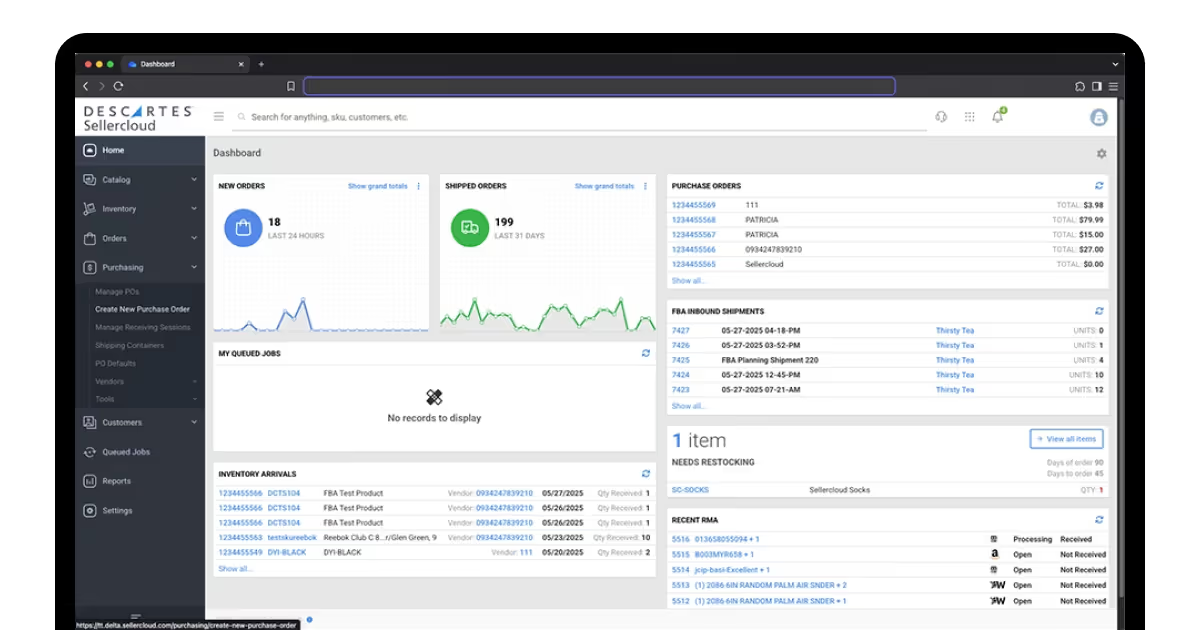
To try this type of AI last-mile delivery optimization, you can try Descartes. It helps manufacturers and retailers avoid stockouts and overstock situations by offering supply chain solutions that forecast demand across multiple locations.
Descartes
This proactive strategy reduces fulfillment times from days to hours by placing products closer to anticipated demand. Businesses steer clear of the chaos of reactive planning, where capacity is wasted during slow periods or surges catch them off guard.
Ultra-precise delivery time forecasting (AI-based ETAs)
Static delivery windows frustrate customers. AI generates dynamic ETAs that update as conditions change, providing better accuracy rates. For instance, Domino's uses AI to provide accurate delivery time estimates by analyzing traffic, weather, and kitchen load in real time. The system adjusts predictions continuously, so customers see realistic times at any moment.
Research by Pal shows how predictive analytics transforms last-mile delivery time estimation through advanced algorithms that process vast data sets. The technology considers route complexity, driver behavior, historical performance, and current conditions to calculate precise arrival times.
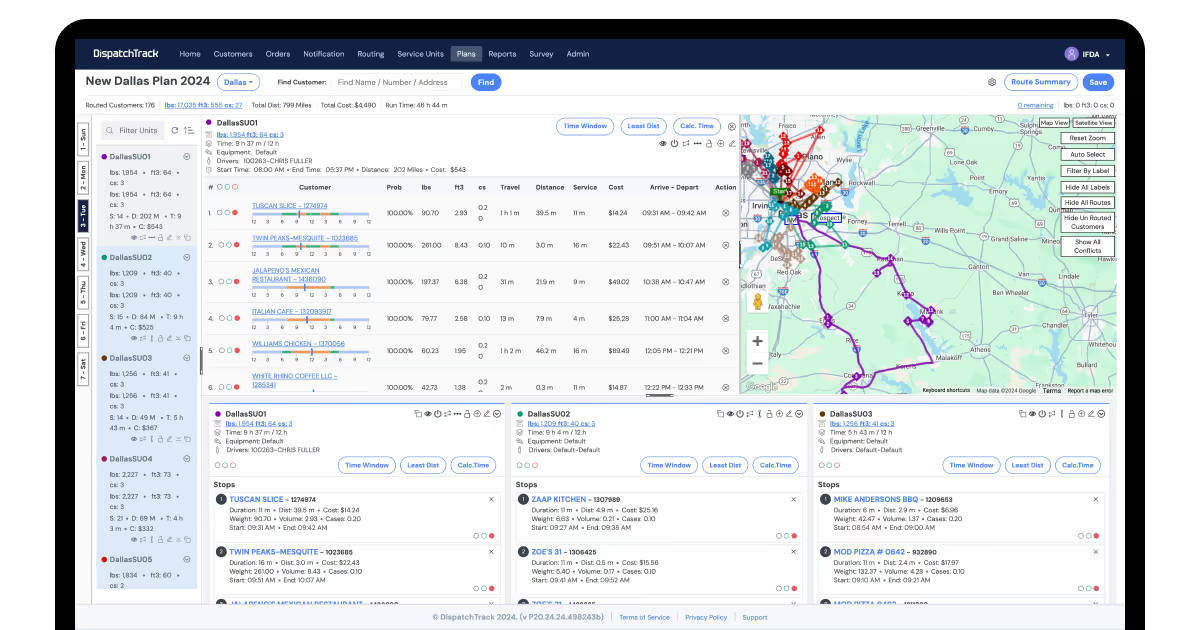
Routific promises to boost efficiency enough that cost per delivery drops 25%, partly through accurate ETAs that reduce customer inquiries and failed deliveries. When customers know exactly when packages arrive, they make themselves available, which eliminates costly redelivery attempts. Apart from this last mile AI tool, by examining location-specific elements like building access, parking availability, and past delivery times, DispatchTrack guarantees 98% ETA accuracy. Their AI adjusts time estimates after learning that suburban homes take less time than downtown apartments.
DispatchTrack
This precision builds trust. Customers plan their day around accurate windows rather than waiting indefinitely for vague delivery ranges.
Anticipating organizational and operational changes
AI recognizes patterns that indicate impending changes in operations. The technology predicts when systems need to be adjusted by analyzing workflow data, order trends, and external factors.
What do you get as a result? Fleet managers can maintain asset health, optimize schedules, and make sure drivers have everything they need to meet delivery goals with the aid of predictive analytics. Early alerts regarding capacity limitations or efficiency declines are provided by the technology.
The AI-powered last-mile delivery solution from Shipsy continuously evaluates performance indicators and makes recommendations for enhancements. Before issues worsen, the system predicts capacity requirements, finds bottlenecks, and suggests changing resources.
Shipsy AI solution
This is how you avoid crises. Businesses smoothly modify operations based on AI predictions about impending challenges rather than scrambling when systems malfunction.
Predictive vehicle maintenance
To find possible problems, AI-driven predictive maintenance examines telematics, battery performance, and component behavior. This increases the mean time between failures while decreasing lifecycle costs and downtime.
According to studies, the daily cost of fleet downtime ranges from $480 to $760. Through predictive insights that plan maintenance during warehouse time rather than mid-route when vehicles carry inventory, tools like Project44 assist teams in proactively resolving issues.
In addition to dozens of other metrics, AI-powered last-mile delivery solutions monitor trends in tire condition, brake wear, and engine performance. The system automatically plans preventive maintenance when data shows an impending failure. In addition to keeping cars running, this avoids the cascading delays that occur when drivers break down while carrying heavy loads.
Autonomous and AI-driven delivery execution
Now, let’s get to one of the most futuristic trends - automating delivery workflows and totally replacing human drivers with AI technology.
Robot and drone deliveries
Autonomous robots and drones operate without human drivers, using AI for navigation, obstacle detection, and package handling. These systems deliver faster in congested areas where traditional vehicles struggle.
Wing (Alphabet) has completed over 450,000 deliveries of food and pharmacy products in the US, Australia, and Finland. Their drones use last mile AI to navigate urban environments and lower packages via tether, with a major partnership expanding service to Walmart stores nationwide.
As another example, Amazon Prime Air delivers packages under five pounds within 30 minutes using MK30 drones equipped with advanced machine learning for perception and obstacle avoidance. The service operates in select US locations, with UK test flights beginning.
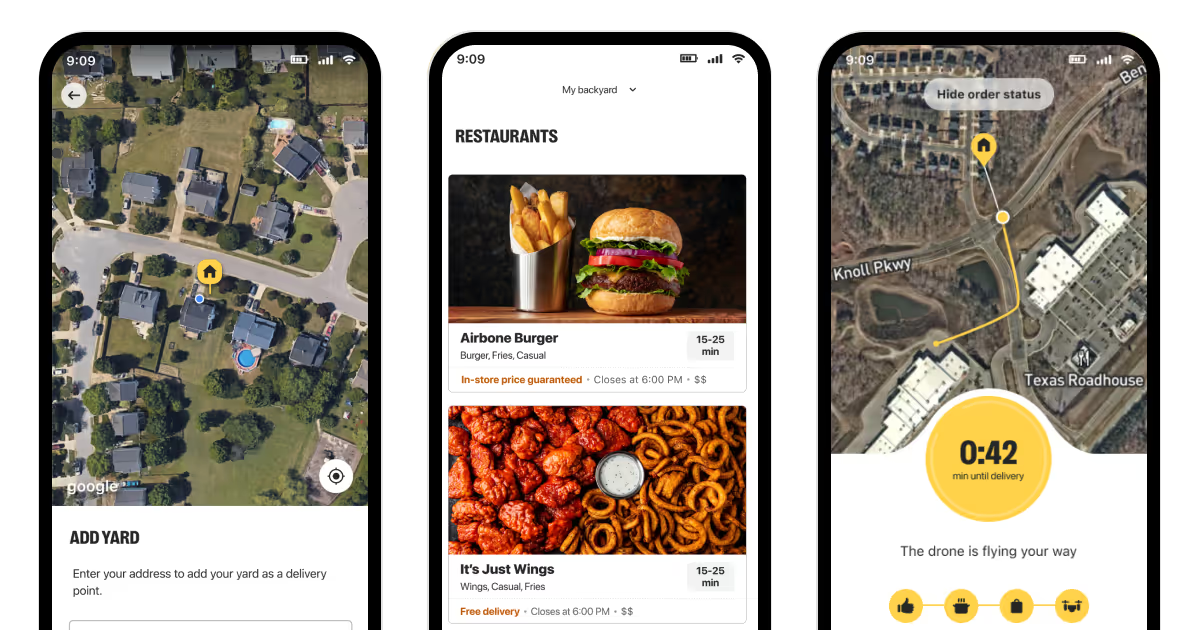
So, what’s the AI-powered last-mile delivery software that you can use for this purpose? Flytrex specializes in suburban on-demand deliveries across North Carolina and Texas, partnering with Uber Eats and DoorDash. Their drones handle food and retail orders efficiently in areas where ground delivery takes longer. Additionally, UPS Flight Forward holds FAA Part 135 Air Carrier certification, focusing on medical sample deliveries between hospitals and labs through partnerships like WakeMed Hospital in North Carolina.
Flytrex
Research by Ansari and team shows AI-driven navigation using deep learning, reinforcement learning, and computer vision enables route optimization and obstacle avoidance, greatly enhancing delivery speed and accuracy versus conventional approaches.
Parcel shipping with agentic AI
Without constant human supervision, AI agents for last mile delivery solutions make complex decisions on their own throughout the delivery lifecycle, from route selection to payment processing.
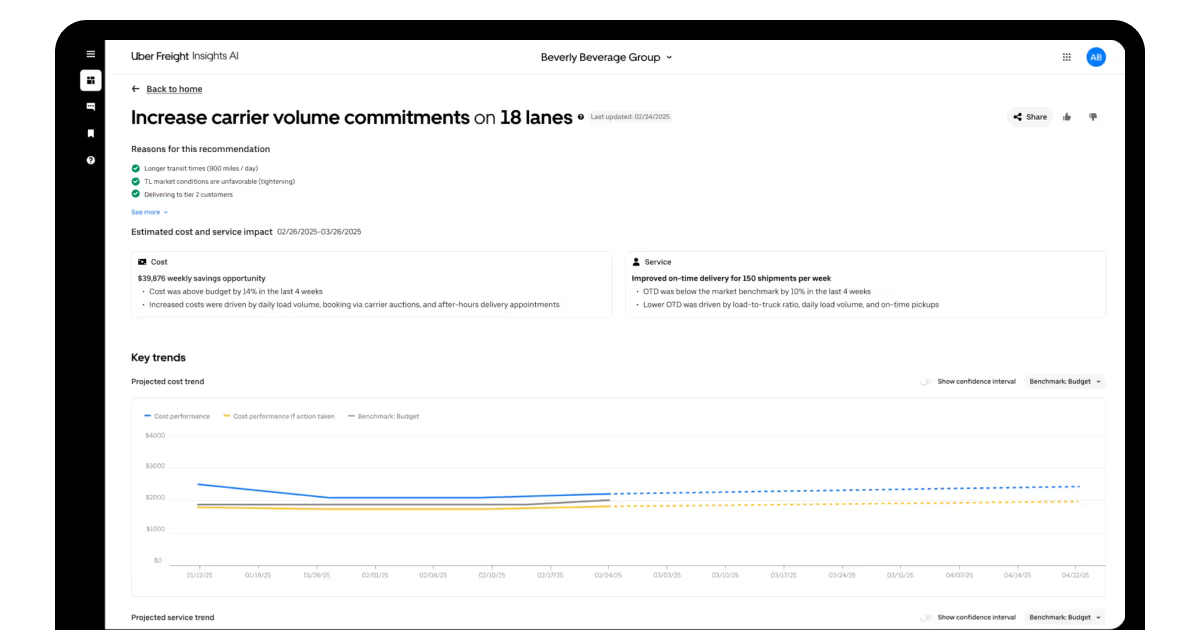
Through intelligent decision-making, UPS's ORION (On-Road Integrated Optimization and Navigation) AI agent system finds the best routes for drivers, lowering fuel consumption and operating expenses. Also, Uber Freight automates the entire orchestration lifecycle, including tracking, payment, and procurement, by integrating more than thirty AI agents into its platform. This enables logistics specialists to concentrate on strategic work rather than repetitive duties.
Uber Freight
How can you repeat this success? For customer service, FAN Courier employs an AI agent that provides information on package tracking, delivery schedules, and return policies around-the-clock without the need for human intervention. Additionally, Evri employs an agentic AI-powered HR assistant called "Hey! Charli" for automated driver recruitment processes, demonstrating how AI supports internal operations that enable better parcel delivery.
These systems learn from each interaction, continuously improving their decision-making capabilities and adapting to changing conditions without reprogramming.
Orchestrating last-mile delivery across mixed fleets (human, robot, drone)
Managing diverse delivery methods requires AI that coordinates humans, robots, and drones simultaneously, assigning tasks based on package type, urgency, location, and resource availability.
Locus provides comprehensive automation with intelligent routing, real-time tracking, and automated decision-making across mixed fleets. The platform excels at large-scale retail, ecommerce, and third-party logistics operations requiring complex coordination. Also, Bringg offers configuration-led AI capabilities for managing delivery across different vehicle types and carrier networks. Their platform handles medium to high complexity dispatch and routing, making it suitable for businesses orchestrating multiple delivery modes.
Locus
As another option for an AI last-mile delivery solution, LogiNext automates and optimizes delivery processes across various supply chain stages, providing analytics-heavy logistics teams the tools to coordinate human drivers, autonomous vehicles, and drone fleets efficiently.
The challenge lies in real-time allocation. When an urgent medical delivery arrives, the system must instantly decide whether a drone can reach the destination faster than a driver, considering weather, airspace restrictions, vehicle availability, and package requirements. AI handles these split-second decisions across hundreds of simultaneous deliveries.
Smart infrastructure: Micros, hubs, and address intelligence
There’s one more area that AI can optimize: accuracy. Beyond speed and cost efficiency, AI ensures every delivery starts with correct data and precise location intelligence. Let’s outline how it can be achieved.
Smart micro-fulfillment centers and urban hubs powered by AI
With AI, static warehouses can become dynamic, responsive nodes that position inventory where demand will emerge rather than where it currently exists. These facilities adapt continuously to changing patterns.
This last mile AI technology analyzes purchasing trends, local events, weather forecasts, and historical data to predict demand at neighborhood levels. AI directs inventory placement across multiple micro-fulfillment centers, ensuring products sit closest to likely buyers. The Council of Procurement & Supply Chain Professionals states AI-optimized urban micro-hubs reduce last-mile delivery costs by 40% to 55% compared to traditional distribution models.
Studies by Montero-Vega and Estrada demonstrate that moving micro-hubs reduces delivery costs while minimizing urban space occupation. Their research on autonomous hub vehicles and AI agents for last-mile delivery tracking systems working with delivery robots proves the concept scales efficiently across different demand patterns and city layouts.
Smart hubs operate 24/7, automatically adjusting staffing, routing, and inventory based on real-time conditions. During severe weather, it shifts priorities to essential items and adjusts delivery windows. Each delivery provides data that refines future predictions, creating increasingly accurate models of neighborhood demand patterns. This precision eliminates waste from overstocking slow-moving items while preventing stockouts of popular products.
Location intelligence
Beyond basic GPS coordinates, AI-powered last-mile delivery builds comprehensive knowledge about each delivery location through accumulated experience. The technology remembers access patterns, optimal delivery times, and location-specific challenges.
Moving micro-hub research shows AI location intelligence accounts for building access complexity, parking availability, and historical delivery times to generate accurate time estimates. The system notices that certain neighborhoods accept deliveries more reliably during specific hours, that particular buildings require special access procedures, or that some areas experience predictable congestion at certain times.
This knowledge compounds across millions of deliveries. When a driver approaches a new address, the system already understands the area's characteristics and adjusts accordingly. Another benefit is that the infrastructure learns negative patterns. Locations with high theft rates, frequent access problems, or consistent delivery failures get flagged automatically. The system routes these addresses to experienced drivers or implements additional verification steps.
Automatic address validation and correction
Wrong addresses cause 25% of failed deliveries, wasting fuel, time, and failing customers. AI in last mile delivery catches these errors before drivers leave facilities. The technology compares entered addresses against verified databases, postal records, and delivery history. When discrepancies appear, it suggests corrections instantly. A missing apartment number triggers an automated customer contact. A nonexistent street number gets flagged for clarification.
Research by Facey at DHL shows address verification systems reduce delivery errors by up to 90%, dramatically improving first-attempt success rates. The system handles common entry errors automatically. Transposed numbers, misspelled street names, and incorrect zip codes get corrected without human intervention. More complex issues escalate to customer service with suggested fixes already prepared.
Validation happens in real-time during order entry. Customers receive immediate feedback about address problems, allowing fixes before items ship. This front-loading of quality control prevents problems rather than discovering them during delivery attempts.
AI-based address matching
Customers describe locations differently from official postal records. However, AI-powered last-mile delivery software bridges this gap by matching informal descriptions to verified addresses. The technology understands that "the blue house on Oak Street" might correspond to 123 Oak Street, or that "next to the coffee shop downtown" indicates a specific building. It cross-references landmarks, business names, and descriptive details against a database.
Address matching proves especially valuable in areas with inconsistent addressing systems or recent development. New subdivisions, renumbered streets, and informal addressing in rural areas all benefit from AI interpretation that connects customer intent to actual locations.
The system also handles alternative addressing schemes. What3words coordinates, plus codes, and GPS coordinates all get translated to standard delivery addresses automatically.
This flexibility accommodates customer preferences while maintaining internal consistency. Machine learning improves matching accuracy continuously. Each successful delivery where the system correctly interpreted a non-standard address trains the model, and vice versa.
Customer experience, visibility, and quality control
Last but not least, AI improves important aspects of last-mile delivery - how satisfied your clients are, how transparent your processes, locations, and ETAs are, and surely, the condition of the packages that arrive.
Advanced personalization
AI creates customized experiences that feel handcrafted by analyzing customer behavior, preferences, and delivery history. The technology keeps in mind that some clients have preferences for contactless drop-offs, weekend deliveries, or particular delivery windows. The system automatically recommends home delivery when patterns change, such as when a regular office delivery customer orders on Saturday.
According to research, companies that use AI-driven personalization report greater customer engagement with delivery notifications and higher first-time delivery success rates. The technology makes use of natural language processing to create messages that resonate, machine learning to spot trends, and predictive analytics to forecast needs based on local events, weather, or seasonal patterns.
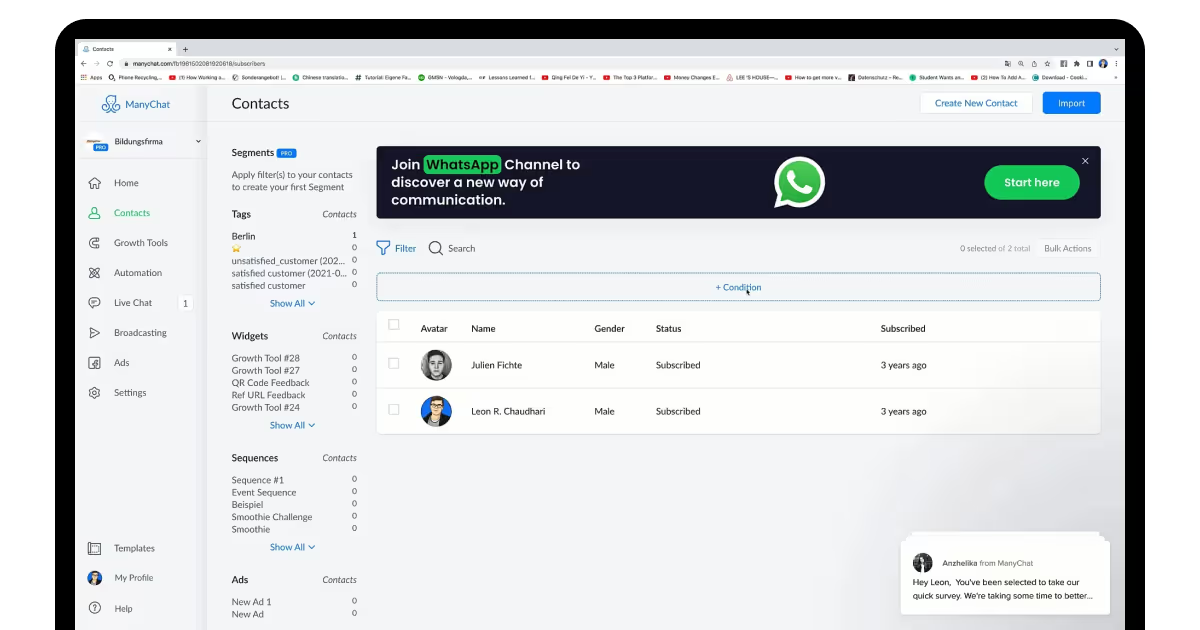
Apart from the best AI routing software for last mile delivery that we described above, you can use some tools that ensure autonomous communication. For instance, ManyChat provides AI-powered messaging automation, enabling businesses to send personalized delivery notifications and collect customer preferences through conversational interfaces.
ManyChat
Alternatively, Tidio offers chatbot solutions tailored for small and medium businesses, delivering customized delivery updates and allowing customers to modify preferences through simple chat interactions.
Real-time tracking and AI-driven delivery updates
Consumers want information about package locations and arrival times to be as clear as day to know exactly when and where to expect them. AI can help you with it. According to research, using IoT sensors, real-time visibility, and predictive analytics, last mile delivery solutions reduce delivery delays by 30% and transportation costs by 15%. Smart shipping tracking systems recognize issues and automatically fix them.
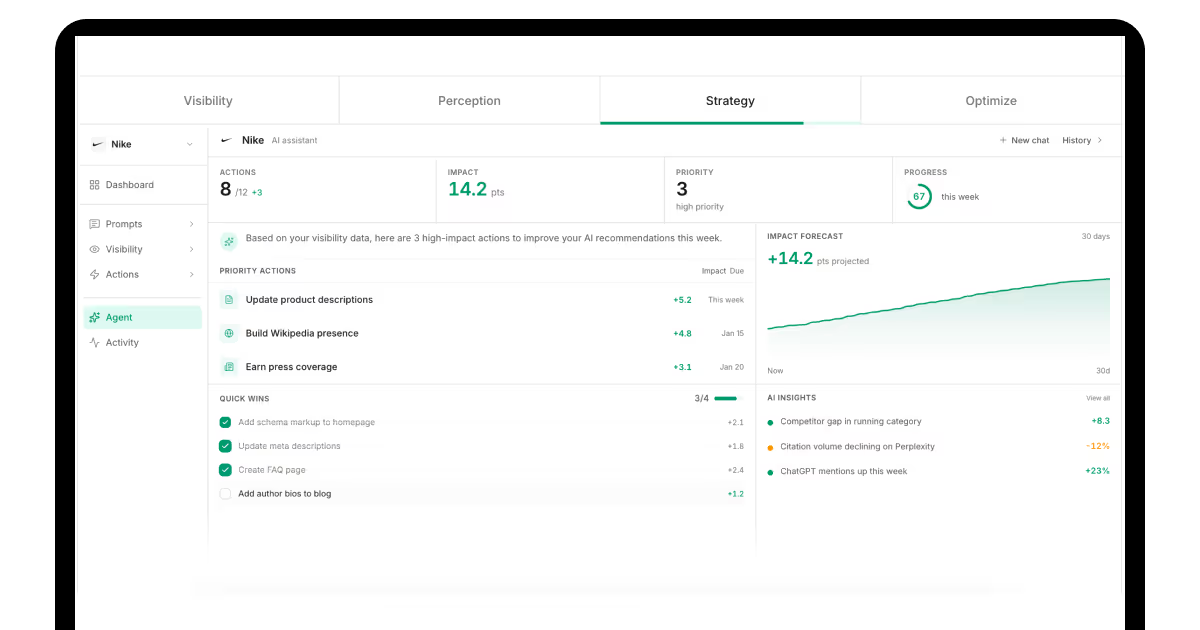
For AI last-mile delivery optimization, Trakkr.ai evaluates the performance of various logistics-focused chatbot solutions on delivery platforms to determine which offer the most precise real-time tracking and customer communication features.
Trakkr.ai
The technology monitors vehicle locations continuously, calculating dynamic ETAs that adjust for traffic, weather, and route changes. When delays occur, systems notify customers immediately with revised times and explanations rather than leaving them wondering. Solutions like Parcel Tracker extend this visibility beyond transit by enabling teams to log inbound deliveries, track parcel status in real time, and automate final handoff workflows using OCR and AI.
Predictive analytics forecasts potential issues before they impact deliveries, allowing companies to reroute packages or adjust schedules preemptively rather than reactively fixing problems after customers complain.
Car inspection using computer vision
Service reliability and safety depend greatly on the state of the delivery vehicle. Inspection procedures that previously required human judgment and manual checks are now automated by computer vision.
According to research, computer vision algorithms that use deep learning models and convolutional neural networks can identify car flaws with over 91% accuracy. The technology automatically detects component damage, tire wear, dents, and scratches.
When vehicles are returned to facilities, systems scan them in a matter of seconds and take high-resolution pictures to record the condition. The AI detects new damage and measures its severity by comparing the current condition to earlier inspections. This resolves disagreements over who is responsible and when the damage occurred.
UVeye provides fleet operators with automated inspections that detect issues invisible to human inspectors, reducing policy claims by 70% and cutting inspection time by 10 minutes per vehicle. Their systems scan exteriors, undercarriages, and tires simultaneously.
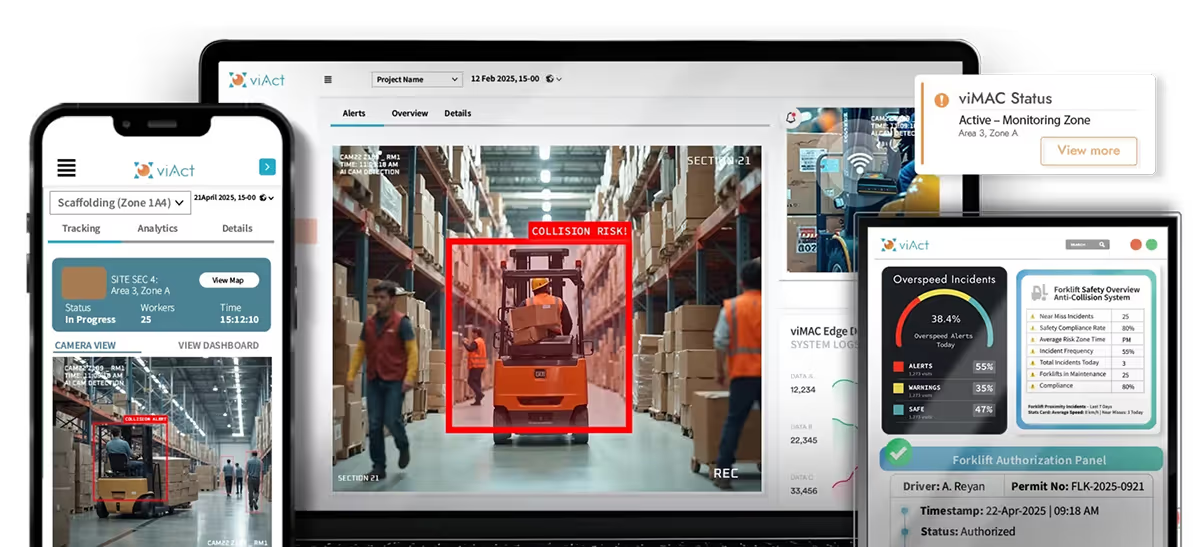
Alternatively, viAct Vehicle Control Inspection Software uses computer vision and Edge AI to capture detailed operational data, detecting control inconsistencies and maintenance issues in real-time. The system reduces accident risks by 90% through continuous monitoring.
viAct
The AI-powered last-mile software also enables predictive maintenance by tracking component degradation over time, scheduling service before failures occur rather than after vehicles break down mid-route.
AI-powered chatbots
Customers want instant answers about deliveries without waiting in phone queues or navigating complex websites. For this purpose, AI chatbots provide 24/7 support that understands natural language and resolves issues autonomously.
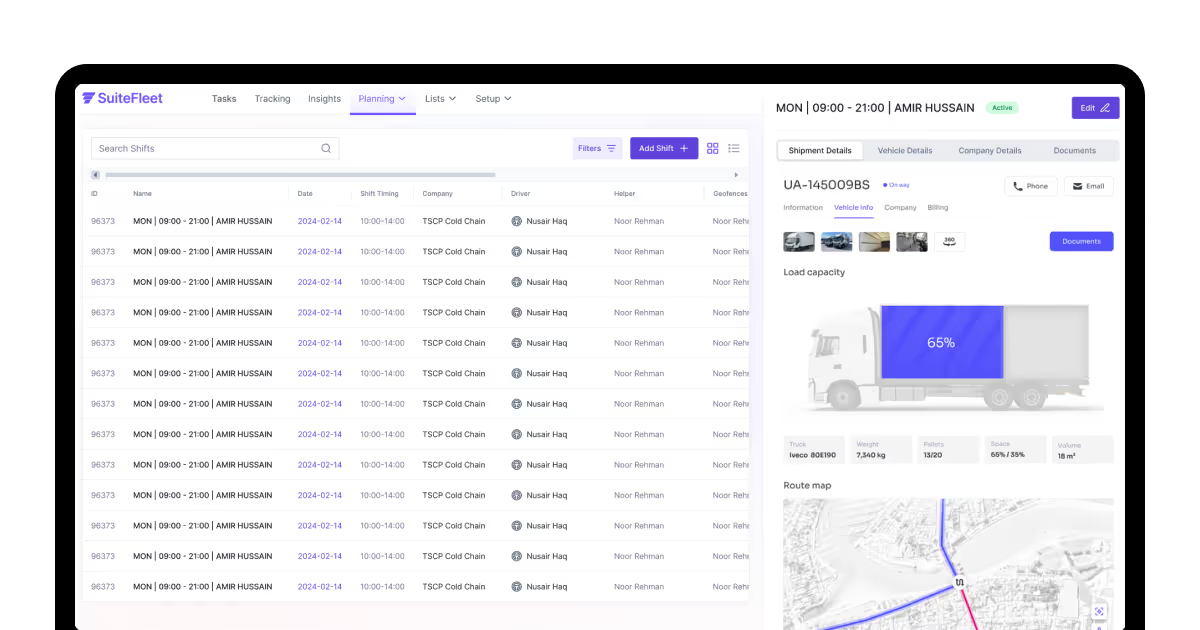
Package.AI offers unified platforms with integrated chatbots for self-scheduling, customer care, and route optimization, handling common queries without human intervention. Also, SuiteFleet provides comprehensive last-mile delivery software trusted by international brands in the Middle East. Their system includes order management, intelligent route optimization, live GPS tracking, and analytics, all accessible through conversational interfaces.
SuiteFleet
Last mile AI is used by Omnic in parcel locker software to improve customer interaction and location placement. Chatbot interfaces are used to assist users with pickup and drop-off procedures.
Chatbots instantly respond to requests for rescheduling, address modifications, updates to delivery preferences, and status queries. They smoothly escalate to human agents with complete conversation context when complexity surpasses AI capabilities, removing the need for clients to repeat information.
By learning from every interaction, the systems increase the accuracy of their responses and broaden their capacity to handle problems on their own. Through quicker resolution times, this lowers support costs while preserving or raising customer satisfaction.
Now that we have outlined every technology used in last-mile delivery, let’s define your implementation roadmap for delivery management software development or off-the-shelf solution implementation.
Best practices for adopting AI in last-mile logistics
As a company with 15 years of experience in creating solutions for logistics, delivery services, transportation, and travel, COAX experts have built some muscle in understanding the unique needs of businesses in this sphere. Based on this proven expertise, we have compiled some tips on implementing the best AI routing software for last mile delivery.
Start with pain points that have a big impact. Instead of attempting system-wide transformation right away, concentrate AI implementation on areas that are causing the most friction. By focusing on particular issues like unsuccessful deliveries, erroneous ETAs, or ineffective routing, businesses see a quicker return on investment. Also, KPIs like cost per delivery, which tracks operational expense reductions per route, and on-time delivery rate, which tracks the percentage of successful on-time deliveries, can be used to achieve success.
Ensure data quality and integration. Last mile AI systems perform only as well as the data they receive. Establish clean, standardized data flows from all sources, including TMS, GPS trackers, customer databases, and carrier systems. Poor data quality undermines even sophisticated algorithms, leading to incorrect predictions and routing errors. Track data accuracy metrics alongside delivery performance to ensure the foundation supports decision-making. Integration complexity often delays adoption more than technology limitations.
Select platforms that are flexible and scalable. Choose AI tools that expand with your business instead of needing to be replaced as volume rises. Cloud-based solutions that offer scalability without requiring a significant upfront infrastructure investment include Google Vertex AI, AWS Machine Learning, and Microsoft Azure AI. TensorFlow and PyTorch are examples of open-source frameworks that can be customized to meet specific business needs. Without necessitating a total reimplementation, the technology should be able to adjust to shifting customer expectations, new delivery models, and seasonal variations in demand.
Make meaningful differentiations for customers. Use AI capabilities that customers see, value, and build trust with to create differentiation in the marketplace through the use of real-time tracking, providing accurate delivery windows, proactively informing customers when delays occur, and giving customers the ability to reschedule their delivery when possible. These services are directly associated with improving customer satisfaction levels. You can use the Net Promoter Score to measure how the delivery experience affects consumers' overall brand perception.
Train with people using technology. Technology doesn’t create business value unless people learn how to apply it effectively. It is important to invest in training for all dispatchers, drivers, and customer service staff, helping them learn to interpret AI recommendations, manually adjust them when necessary, and provide the AI systems with real-world feedback for improving the accuracy of its suggested recommendations. The combination of human knowledge and expertise with AI-based capabilities will yield a better outcome than either one independently.
Calculate the impact on the environment. Monitor sustainability metrics in addition to operational KPIs to show how AI-powered last mile software can lower carbon emissions. Keep an eye on CO2 reduction metrics that demonstrate the environmental advantages of consolidating shipments, fuel savings from optimized routes, and emissions reductions from fewer unsuccessful delivery attempts. These metrics lower expenses while supporting corporate sustainability commitments.
Build a basis for continuous improvement. The data and the inputs of AI systems allow for ML algorithms to develop better performance over time and improve as new input and performance data are developed. Therefore, establish processes that include collecting outcomes from deliveries, receiving input from customers, and recording & maintaining operational data that feeds back into the development cycles in refining the algorithms.
Even with a thorough, structured approach, you may find these steps difficult to perform. Here’s where dedicated development of tailored solutions beats ready-made software - you don’t rely on rigid plans, basic support, or limited or excessive features.
That’s exactly what logistics software solutions development gives you - AI-powered last mile delivery tools that solve real operational problems. We work with companies that need custom platforms, route optimization tools, or features that existing solutions don't provide. Whether you need a complete system from scratch or want to add specific capabilities to what you already use, we handle the technical side. Our team develops custom integrations that connect your TMS, WMS, carrier APIs, and customer-facing applications into unified workflows.
We’re highly trained in AI, too. Our AI development services start with understanding your data and what decisions you need to improve. We build custom machine learning models for demand forecasting, route optimization, delivery time prediction, and other logistics-specific challenges. Rather than forcing generic AI tools into your operation, we create solutions trained on your delivery patterns, customer behavior, and constraints. The infrastructure scales as your volume grows, and the models keep learning from new data. We also develop the interfaces and integrations that turn AI predictions into actions your teams can actually use, whether that's automated route adjustments, proactive customer notifications, or intelligent resource allocation.
FAQ
What is last-mile optimization using AI?
AI-powered last-mile optimization uses machine learning algorithms to solve routing issues while reducing expenses and delivery times. Ieva's research indicates that AI systems dynamically modify routes by analyzing real-time traffic data, delivery constraints, and vehicle capacity. By using automated decision-making and predictive analytics, the technology turns static routes into adaptive systems and lowers delivery costs by 20–40%.
What are the key elements of an AI agent for last-mile delivery software?
It consists of several integrated elements:
Perception and data integration ingest real-time GPS, traffic, and order data.
The reasoning and decision-making engine assesses actions and optimizes routes.
Tool access and integrations connect with WMS, OMS, and CRM via APIs.
Dynamic route optimization uses machine learning (ML) to reduce fuel and time.
Predictive analytics forecasts demand and delays.
Continuous learning loops adapt to feedback.
Governance frameworks elevate complex issues to humans.
What are the challenges of using AI in last-mile delivery?
Ensuring high-quality, clean data from various sources, managing integration complexity with legacy systems, striking a balance between computational efficiency and model complexity, addressing "black box" decision-making for regulatory compliance, managing dynamic urban environments with unpredictable variables, training AI models on large-scale datasets, protecting sensitive logistics data security and privacy, and establishing suitable human-AI collaboration frameworks for exception handling are some of the major challenges.
How does COAX implement secure and efficient last mile AI solutions?
COAX adheres to industry best practices, which include monitoring operational and sustainability KPIs, implementing continuous improvement cycles, ensuring data quality through standardized integration, and creating custom machine learning models trained on client-specific delivery patterns. COAX has verified ISO 9001 certification, guaranteeing the best quality procedures, and ISO/IEC 27001:2022 certification for thorough security management and risk monitoring.





















































_.avif)




%2520explained.avif)

We are interested in your opinion