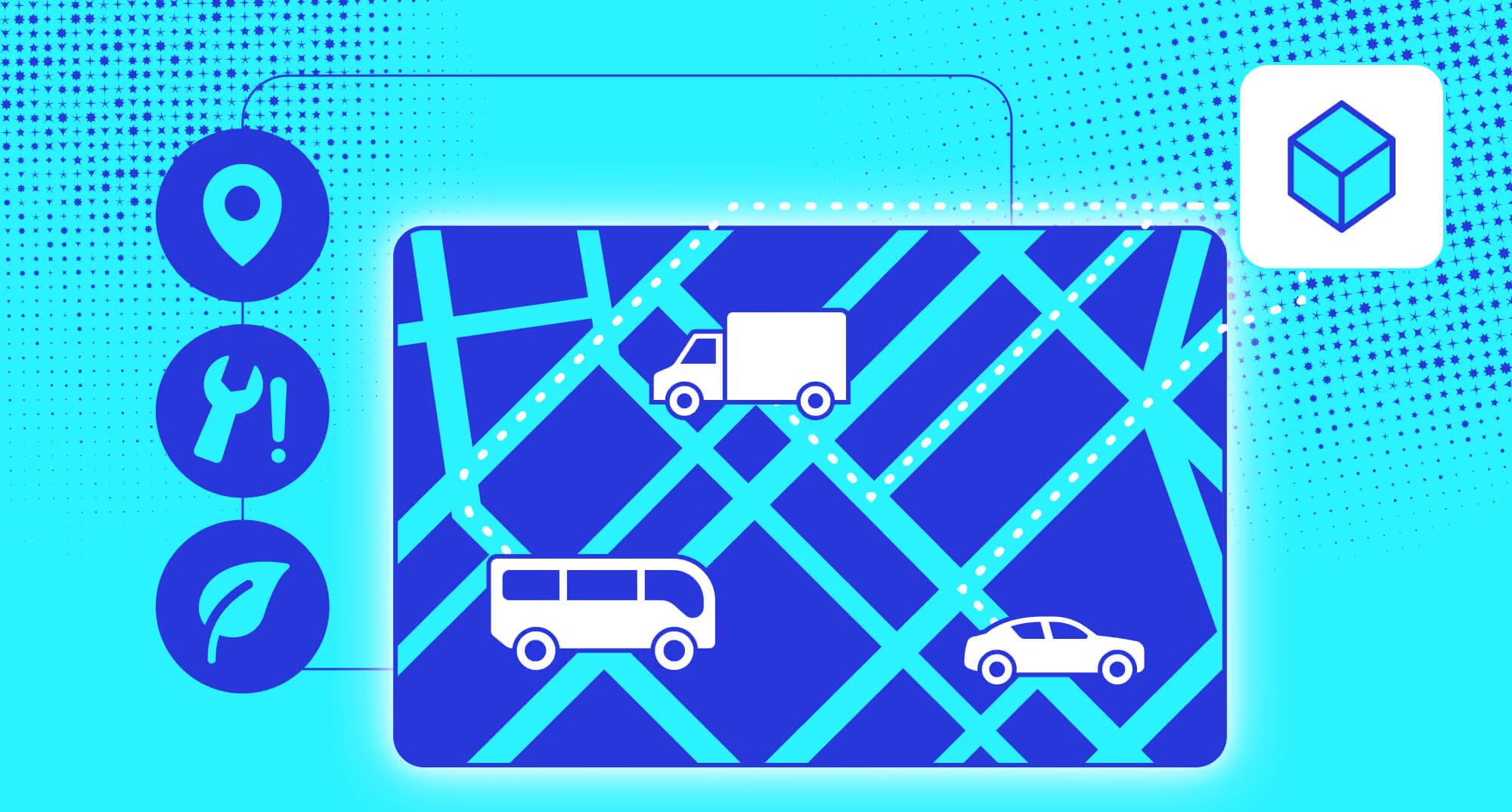
Smart city mobility solutions deliver real value across logistics, freight shipments, transportation, and e-commerce delivery. These solutions help you cut costs, boost revenues without expanding your fleet, and achieve your sustainability goals. You'll also keep clients satisfied while ensuring full regulatory compliance. Here’s how smart mobility achieves it at a glance:
IoT sensors and telematics track vehicle location, performance, and operational data.
AI algorithms predict maintenance needs, optimize routes, and prevent breakdowns.
V2X communication protocols enable vehicles to share hazard warnings and traffic information with infrastructure and pedestrians.
GPS systems combined with traffic analytics calculate optimal routes.
Electric vehicle integration cuts emissions and operational costs.
Autonomous vehicle systems improve traffic flow through consistent safe distances.
Smart traffic management platforms coordinate signal timing.
Data infrastructure and cloud platforms aggregate information from multiple sources to enable evidence-based planning and real-time operational decisions.
In this article, we unveil the main principles and strategies for implementing a modern smart mobility technology. We’ll break down its workflows, overview the key solutions and underlying tech, and help you build your own infrastructure and roadmap.
What is smart mobility?
Let’s start with the very smart mobility definition, as it might be new for many logistics business owners, even established ones.
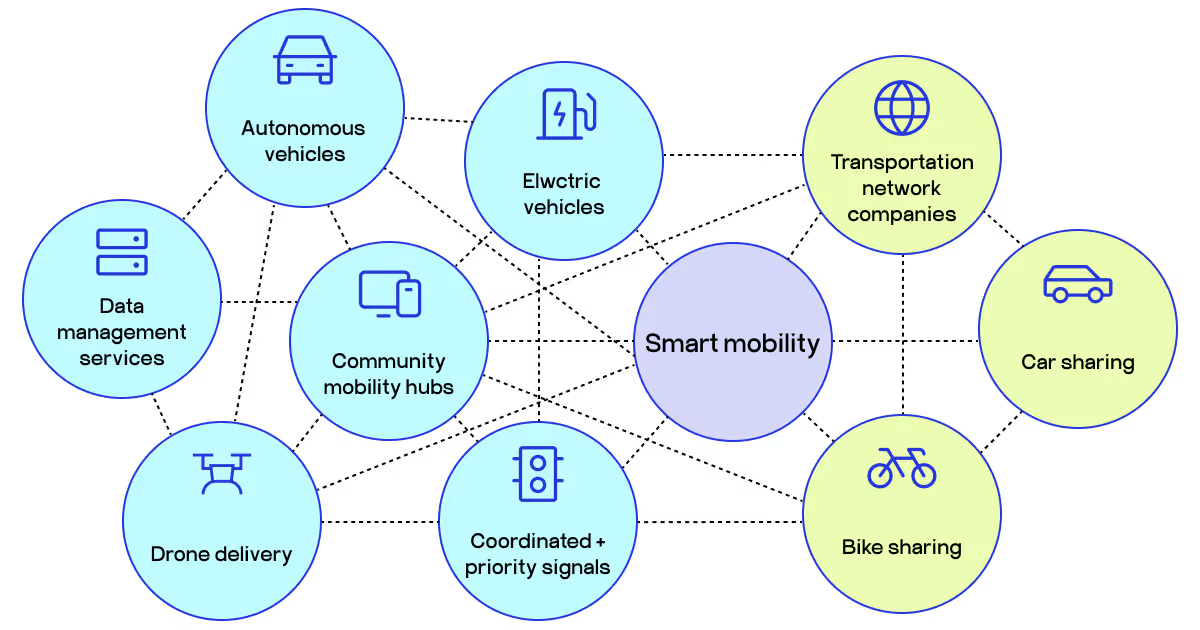
Smart mobility is the use of technology to make transportation systems more efficient, sustainable, and accessible. It combines different modes of transport with digital tools to reduce congestion, cut emissions, and improve how people and goods move through cities.
The concept emerged because our roads can't handle the traffic anymore. Cities face pollution, wasted time, and health problems from vehicles stuck in gridlock. Smart mobility tackles these issues by integrating public transit, commercial fleets, bicycles, scooters, and electric vehicles into a connected network that shares real-time data.
According to Mirzabeiki, smart mobility uses information and communication technology to optimize transportation operations. His research shows that smart mobility technology relies on several core systems:
Telematics devices track vehicle location and performance
IoT sensors collect and transmit operational data
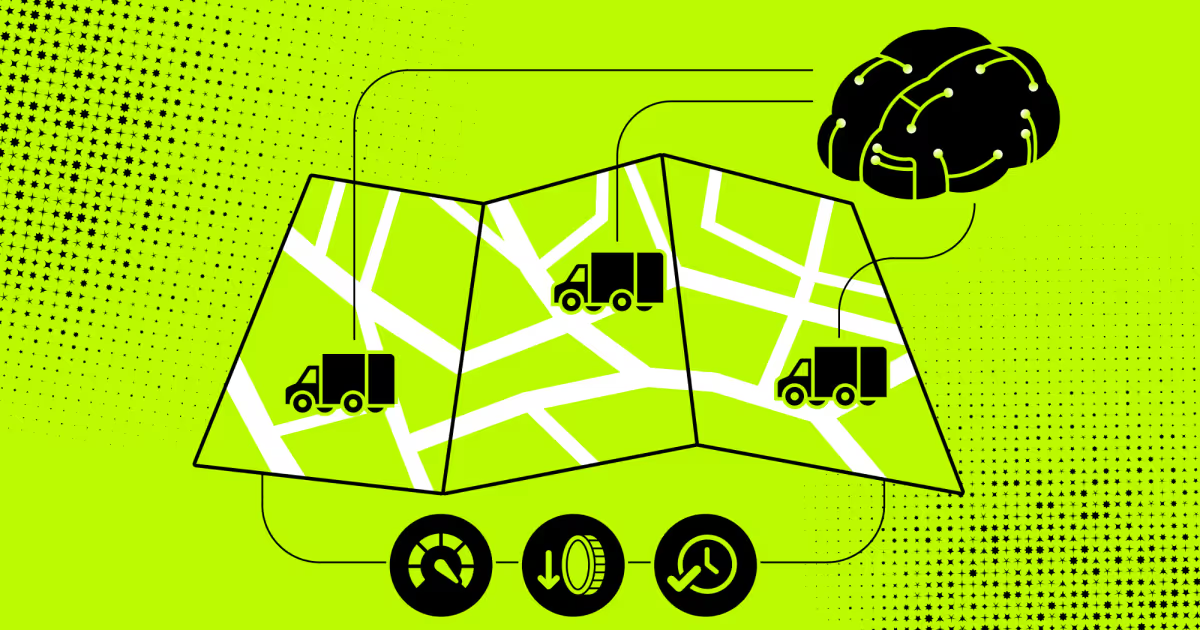
AI algorithms analyze patterns to predict maintenance needs and optimize routes.
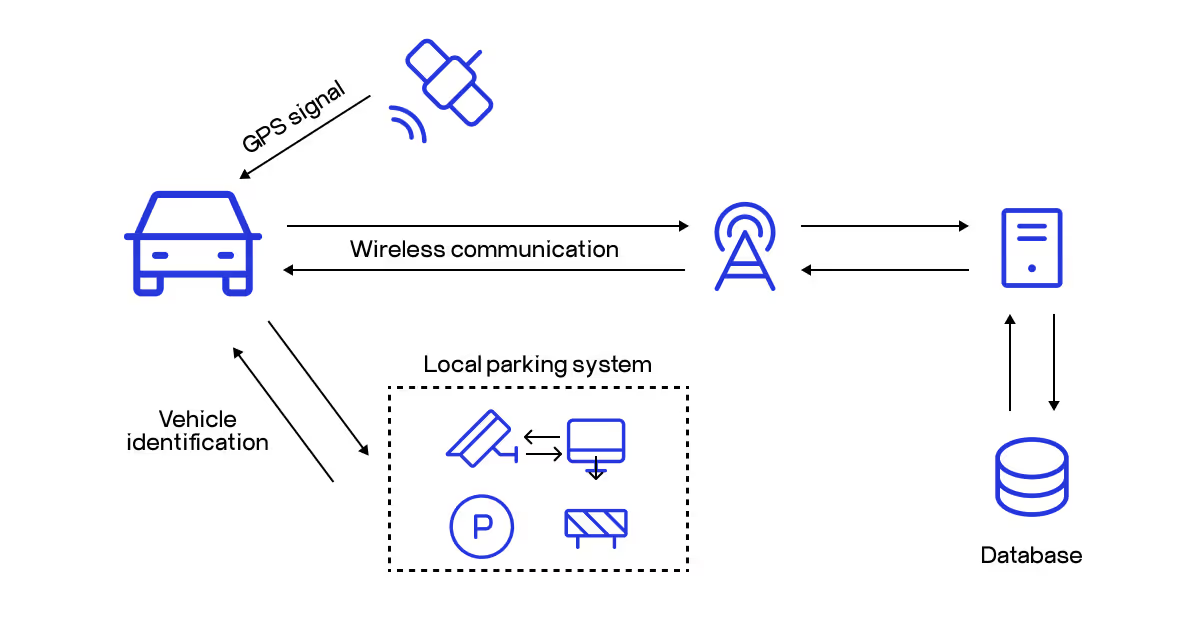
The technology works through continuous data exchange. Sensors on vehicles monitor everything from fuel consumption to brake wear. GPS systems track locations in real time. Communication networks share traffic conditions across the entire system. This creates a feedback loop where each vehicle contributes information that helps the whole network.
How does smart mobility apply to fleet management?
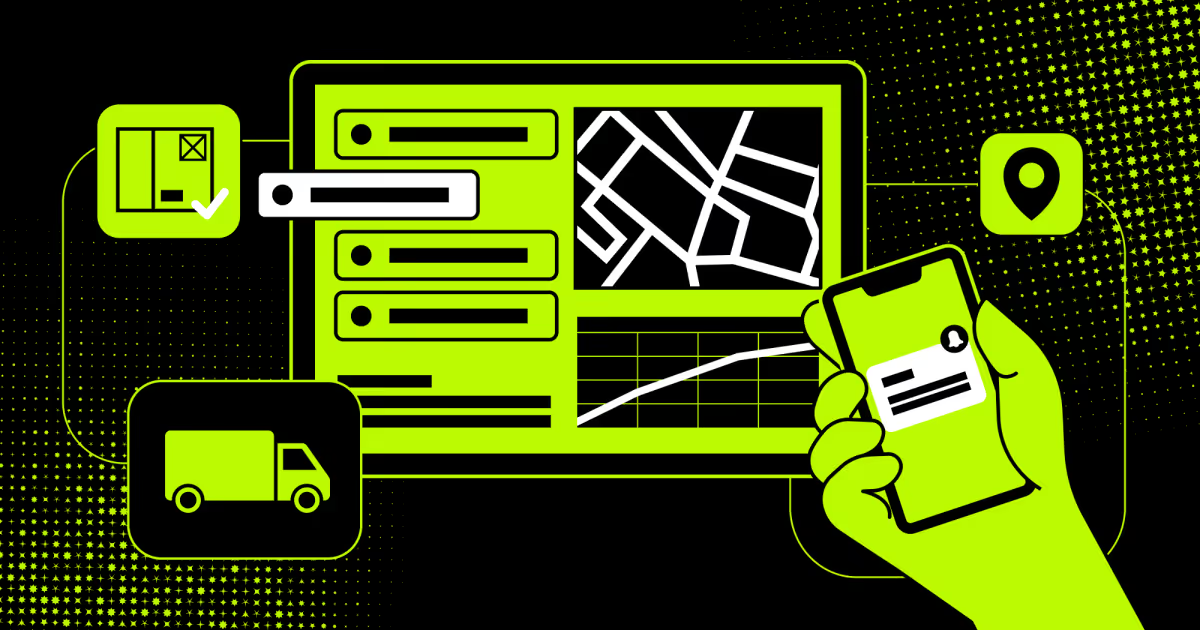
Fleet managers use smart mobility solutions to solve operational problems that cost them money every day. You can now track every vehicle in your fleet, monitor driver behavior, predict when parts will fail, and adjust routes based on current traffic conditions.
The technology gives you three main capabilities. First, telematics systems collect data on vehicle health, location, and driver performance. Second, IoT devices transmit this information to cloud platforms where you can access it instantly. Third, AI tools analyze the data to find patterns and recommend actions.
Here's what this means in practice. Your system alerts you when a truck needs maintenance before it breaks down on the highway. It shows you which drivers speed or brake hard so you can provide training. It calculates the fastest route considering current traffic and road conditions. It even helps you transition to electric vehicles by analyzing charging patterns and infrastructure needs.
Each system generates specific types of transportation data that you can use to make better decisions.
The result? You spend less on fuel because vehicles take optimal routes. Insurance costs drop because safer driving means fewer accidents. Maintenance expenses shrink because you fix problems before they cause breakdowns. Your customers get accurate delivery times because you can see exactly where vehicles are and adjust for delays.
Transportation challenges and the traffic problem
Traffic congestion is a growing problem for urban transportation, impeding economic productivity, mobility, and environmental health. By 2030, almost 60% of the world's population is predicted to reside in cities. This makes traditional systems vulnerable to growing vehicle numbers, antiquated infrastructure, and consumer preferences for private cars.
An imbalance between road capacity and demand is the root cause of traffic congestion, which is brought on by accidents, bad weather, or construction, as well as recurring factors like peak-hour commutes. Faheem emphasizes how this is made worse by urban sprawl, population growth, and poor public transportation: cities' constrained parking spaces and winding streets are unable to accommodate the influx of delivery trucks and private automobiles.
Economic cost. Congestion reduces productivity by consuming time and resources. According to INRIX, drivers in the US lose 5.7 billion hours annually due to traffic jams, costing $869 per driver and $81 billion in additional time. Drivers are idle for more than 40 hours a year, or a workweek, in one-third of US cities. Europe is no better: households spend 13.2% of their budgets on transportation, and inefficient urban mobility costs €110 billion annually, showing the importance of smart mobility.
Idling cars increase emissions. Transportation accounts for 25% of greenhouse gas emissions in the EU and is the main source of urban air pollution. Each rush-hour commuter in the US wastes 375 liters of gas annually; a 10% shift to public transportation would result in a 40% reduction in the use of foreign oil. According to Manisalidis, noise, stress, and particulates are detrimental to health. Congestion has been linked to early mortality, and time and fuel losses outweigh any economic benefits.
Traffic congestion breeds accidents from close spacing and frustration. Poor infrastructure limits multimodal options. Despite €1.5 trillion in EU road investments (1995-2018) versus railways, networks remain mismatched for bikes, buses, or pedestrians.
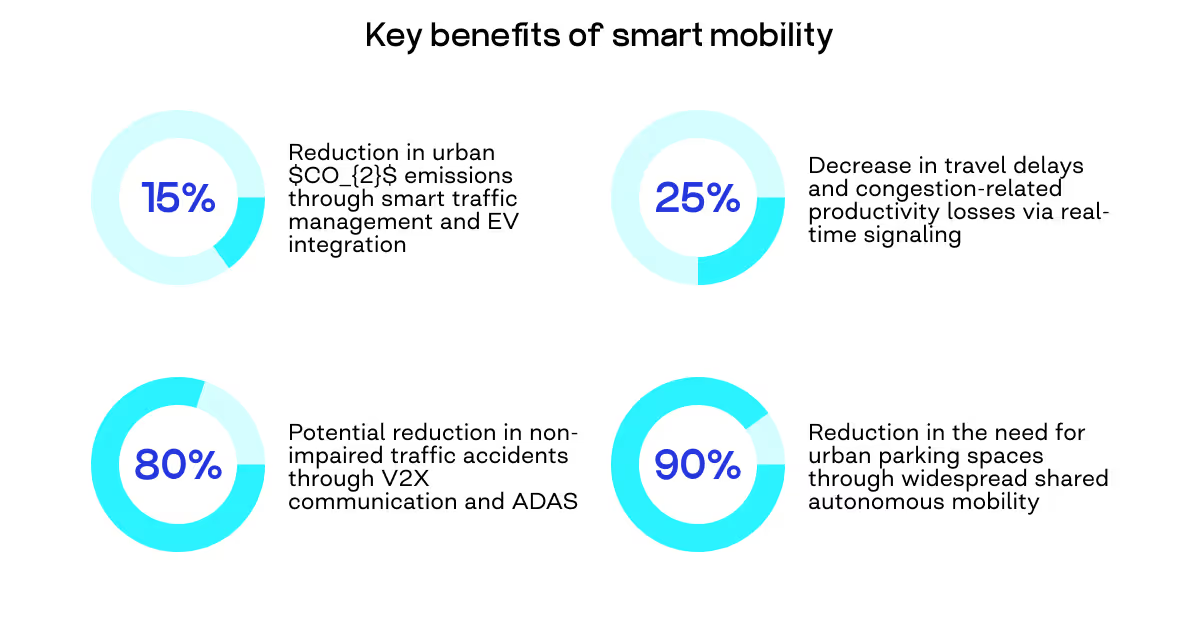
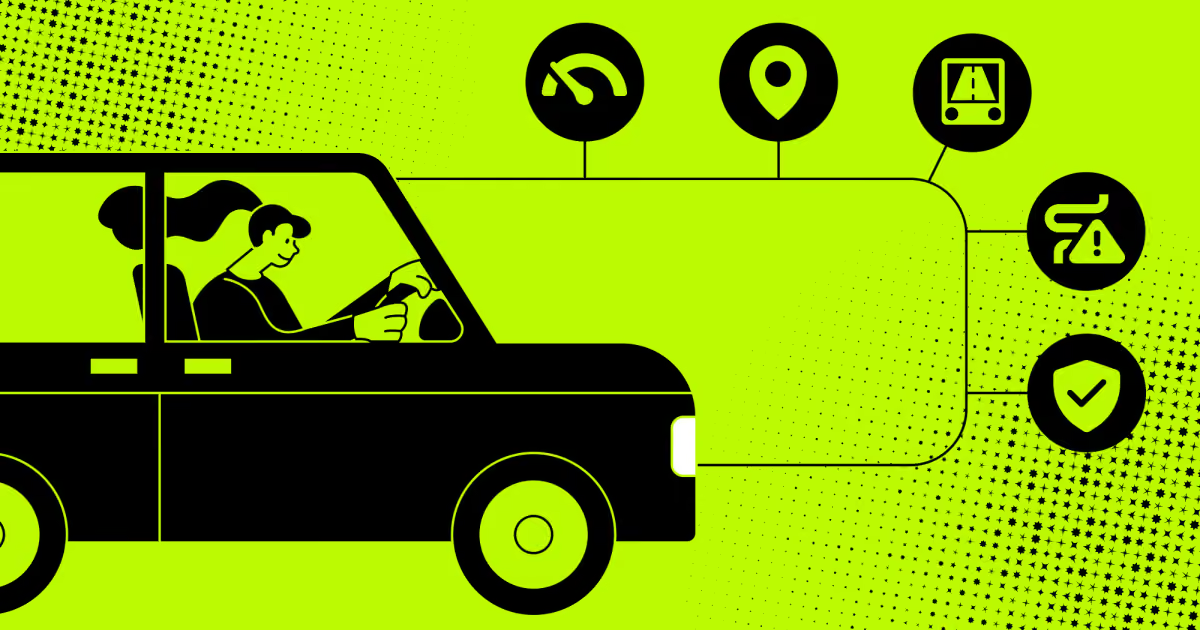
As stated by Faheem and team, smart mobility solutions could reduce CO2 by 80%. With the use of ITS, AI predictive analytics, MaaS, and connected vehicles, they target root causes:
All these factors stress the importance of momentum for implementing smart mobility solutions to drive efficiency and compliance. There are also mechanisms these tools use to solve the traffic challenges.
The importance of smart mobility in solving challenges
According to the 2025 State of Fleet Management report, 87% of fleet managers now oversee maintenance compliance, yet only 5% achieve near-perfect compliance rates. Additionally, efficiency remains complicated - 18% of fleet professionals spend over 8 hours weekly on manual data entry, time that could go toward strategic planning. Meanwhile, 38% of fleets replace vehicles only when rising costs force the decision, and 21% wait until assets fail completely. This reactive approach wastes money and creates unpredictable disruptions.
Smart mobility in smart city environments addresses these issues through connected systems that share data across the entire transportation network. When your fleet management platform communicates with traffic systems, parking infrastructure, and other vehicles, you gain visibility. Helsinki demonstrated this with their Whim app, which integrated buses, trams, taxis, bikes, and car rentals into one platform, resulting in a 12% increase in public transport use and a 9% decrease in private car ownership.
The financial impact is substantial. Businesses without proper fleet management face fuel expenses that grow without tracking, maintenance costs from unexpected breakdowns, and compliance penalties from missed inspections. Their research shows that fleet downtime can reduce logistics productivity by 15 to 20% annually. These losses compound over time.
Smart city mobility solutions prevent these problems through continuous monitoring and predictive analytics. Your system alerts you when a vehicle needs attention before it breaks down on the highway. It calculates fuel efficiency across your entire fleet and identifies vehicles that consume more than they should.
The technology also helps you meet sustainability goals. Companies tracking fuel consumption and emissions can reduce carbon footprint by up to 25%. This matters because 63% of fleet managers cite charging access and range anxiety as barriers to electric vehicle adoption, yet 81% of fleets still have no EVs in operation despite clear environmental benefits.
Compliance also becomes manageable. A report found that 30% of fleets operate below 75% maintenance compliance, at risk for penalties and accidents. Smart mobility automates inspection schedules, maintains records, and ensures your vehicles stay road legal.
The competitive gap is widening fast. Fleets using integrated systems, data-driven planning, and workforce investment gain advantages that reactive competitors cannot match. And the competition is growing naturally with the market - the global fleet management industry is projected to grow to $55.6 billion by 2028, with a compound annual growth rate of 14.2%. This growth reflects the increasing importance of these solutions in maintaining competitiveness.
Key principles of smart mobility
To ensure you fully understand what smart mobility actually means without loud phrases and metaphors, let’s break it down into the main principles used collectively to achieve it.
Accessibility. Transportation must be accessible to everyone, regardless of income, physical ability, or location. Smart mobility removes barriers by offering multiple transport options that work together seamlessly. When you can access shared bikes, public transit, ride-hailing, and parking information through one app, mobility becomes truly democratic rather than limited to those who own cars.
Safety. Smart mobility technology reduces accidents through real-time monitoring and automated safety features. According to Mirovic, these systems collect and process data continuously to identify hazards before they cause crashes. Your vehicles get alerts about dangerous conditions, drivers receive warnings about risky behavior, and traffic management systems adjust signals to prevent collisions at intersections.
Efficiency. The system must move people and goods quickly without wasting time or resources. Smart mobility and transportation achieve this through route optimization that considers current traffic, weather, and road conditions. You spend less time stuck in traffic because the network actively manages flow, redirects vehicles around congestion, and coordinates timing across all transport modes.
Sustainability. Environmental impact matters as much as operational performance. Wolniak's research emphasizes that smart mobility leads to reduced traffic congestion and emissions of harmful gases through better resource utilization. Electric vehicles, optimized routes, and shared transportation options cut carbon footprints while maintaining the mobility people need for daily life.
Flexibility. Multiple transport modes give you choices for each trip based on distance, timing, cost, and convenience. Intelligent mobility includes e-mobility, sharing mobility, intermodal options, and micro-mobility solutions that work together. You might bike to the train station, take transit downtown, then use a shared scooter for the last mile to your destination.
Intermodality. Different transport modes must connect smoothly, so switching between them takes minimal effort. Smart urban mobility solutions integrate buses, trains, bikes, cars, and walking into coordinated networks where transfers happen efficiently. When your bus arrives at the station exactly when your train departs, and bike racks wait at both ends of the journey, the system works as intended.
Affordability. Services must cost less than owning and maintaining a private vehicle. Smart transport needs to be safe, efficient, and priced within everyone's reach. Your monthly mobility expenses drop when you pay only for trips you actually take rather than car payments, insurance, parking, and maintenance, whether you drive or not.
Data infrastructure. Information and communication technologies form the foundation that makes everything else possible. Smart mobility infrastructure management relies on sensors, GPS systems, mobile networks, and cloud platforms that gather and share data continuously. These ICT systems simplify how you access transport services by showing real-time availability, pricing, and routing through apps on your phone.
Sharing economy integration. The principle of shared use reduces the total number of vehicles needed while increasing accessibility. Smart mobility embraces sharing principles where multiple users access the same vehicles, bikes, or scooters throughout the day. You benefit from lower costs, and cities benefit from less congestion and pollution when 10 people share two cars instead of each owning one.
Social benefits. The ultimate goal is improvingthe quality of life at the individual and community levels. Mirovic's research confirms that intelligent mobility aims to create a balance between increased mobility needs, economic progress, and environmental protection in cities. When your commute becomes less stressful, your neighborhood has cleaner air, and local businesses thrive because customers can reach them easily, the system delivers value beyond just transportation.
Each of these principles is closely linked to the others. You can’t get social benefits without providing accessibility for everyone, and you can’t ensure a shared economy without flexibility and diversion. Additionally, you can’t make transportation efficient without establishing a working, scalable data infrastructure and safety.
How smart mobility works
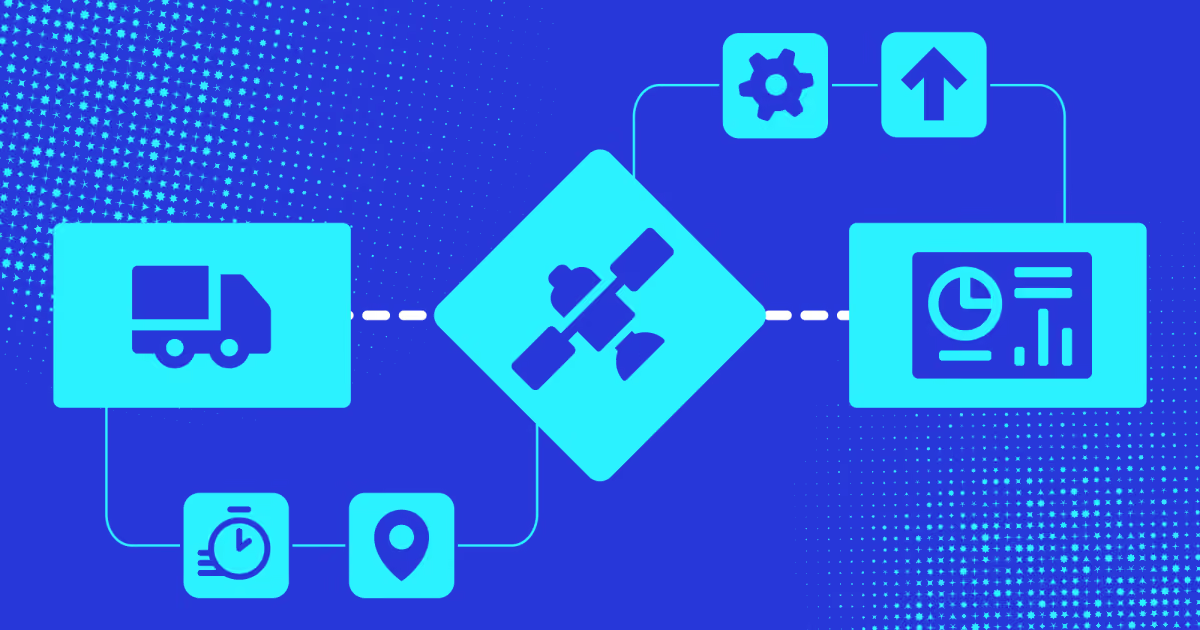
Smart mobility management relies on interconnected hardware that constantly gathers and transmits information about vehicles, infrastructure, and traffic conditions. According to research by Lee and team, modern vehicles function as mobile data centers. They are equipped with cameras, LiDAR sensors, radar units, GPS trackers to ensure transportation connectivity, and inertial measurement units. Such data centers work together to create a comprehensive picture of road environments.
The data collection workflow operates continuously:
Sensors capture raw information about vehicle position, speed, surrounding objects, and road conditions
Onboard processors filter and package this data into standardized formats
Communication networks transmit information to cloud platforms and other vehicles
Central systems aggregate data from thousands of sources across the transportation network
Processed insights flow back to vehicles, traffic management centers, and user applications
This constant exchange happens in milliseconds. Your vehicle sends its location and speed to the network while simultaneously receiving updates about traffic ahead, weather conditions, and optimal routes. Infrastructure sensors at intersections detect approaching vehicles and adjust signal timing accordingly. The entire system functions as a digital nervous system where each component both contributes information and benefits from the collective intelligence.
Role of predictive analytics and AI
Artificial intelligence transforms raw data into actionable decisions that improve safety and efficiency. Lee and his research team explain how ML algorithms analyze patterns in traffic flow, driver behavior, and environmental conditions to forecast problems before they occur. This capability supports a sustainable and smart mobility strategy by preventing accidents, reducing fuel consumption, and minimizing congestion through proactive management.
The technology works by training neural networks on historical data to recognize patterns that precede specific events. An AI model might learn that when traffic density reaches certain thresholds on a particular road segment during rush hour, congestion spreads predictably to adjacent routes within 15 minutes. The system then alerts drivers to take alternate paths before the backup forms. Similarly, predictive maintenance algorithms monitor vehicle sensor data to identify components showing early signs of failure, scheduling repairs before breakdowns occur on the road.
Deep learning models also enable real-time object detection and classification. Cameras equipped with computer vision can distinguish pedestrians from cyclists, identify traffic signs, and detect road hazards with accuracy that exceeds human perception in many scenarios. These capabilities form the foundation of autonomous driving systems and advanced driver assistance features that prevent collisions.
Fleet and logistics management
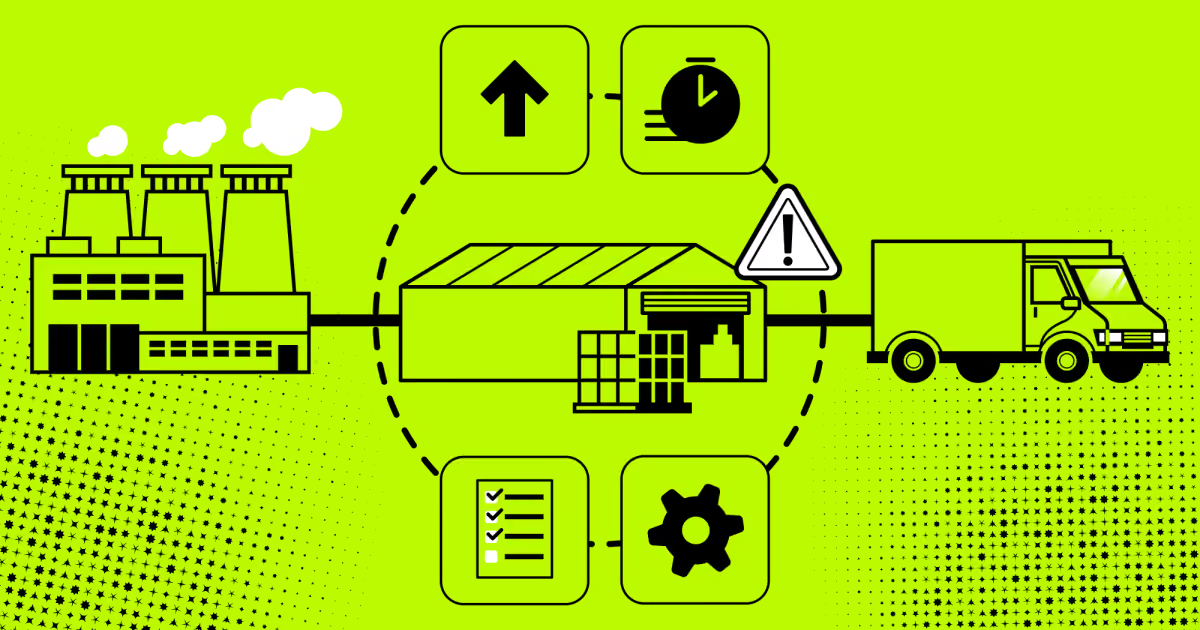
Smart mobility systems organize commercial transport operations through structured frameworks that address every aspect of fleet performance. The Association for Fleet Professionals identifies five core pillars that define comprehensive fleet management.
People represent the human element, covering driver recruitment, training programs, performance monitoring, and safety culture development. Organizations track driver behavior through telematics to identify training needs and recognize top performers.
Vehicle acquisition and disposal involves data-driven decisions about when to purchase, lease, or retire assets based on total cost of ownership analysis rather than intuition.
Funding selection examines financing options, including outright purchase, operating leases, and fleet management agreements, to optimize cash flow and tax positions.
Operational administration handles day-to-day activities like fuel management, maintenance scheduling, route planning, and accident response through integrated software platforms that automate routine tasks.
Compliance and legislation ensure adherence to safety regulations, environmental standards, driver hours rules, and vehicle inspection requirements. Smart systems automatically track compliance deadlines, generate required reports, and alert managers to potential violations before they result in penalties.
This structured approach makes it much easier for you to implement smart mobility technology, reduce costs and compliance risks, and ensure both economic and operational advantages.
Key technologies driving smart mobility
Smart mobility runs on three core tech layers. IoT sensors track vehicles in real time. AI predicts traffic jams before they happen. Cloud platforms turn raw data into decisions that keep cities moving.
IoT devices, telematics, GPS, and vehicle-to-everything (V2X) communication
Smart mobility solutions depend on constant data flow between vehicles, infrastructure, and devices. IoT sensors embedded in roads, traffic lights, and vehicles collect information on speed, location, and road conditions. Telematics systems process this data to monitor fleet performance, fuel consumption, and driver behavior. GPS provides precise positioning that enables route optimization and asset tracking.
V2X communication takes this further by letting vehicles talk to everything around them. According to Yusuf and others, V2X includes vehicle-to-vehicle (V2V), vehicle-to-infrastructure (V2I), and vehicle-to-pedestrian (V2P) protocols. These systems share real-time information about hazards, traffic signals, and nearby pedestrians. The researchers found that C-V2X protocols combined with LiDAR, radar, and camera sensors significantly improve the detection of vulnerable road users like cyclists and pedestrians.
V2X operates on 5.9 GHz spectrum with ranges up to 300 meters. The technology also eliminates server delays through direct communication and works in areas with poor cellular coverage.
Yusuf's team demonstrated that infrastructure-mounted sensors at intersections reduce blind spots and improve collision avoidance. Their research showed that combining vehicle sensors with roadside units creates better coverage than either system alone.
Electric vehicles, autonomous transport, and smart traffic management systems
Electric vehicles form the foundation of intelligent mobility by cutting emissions and fuel costs. Battery prices dropped 89% between 2010 and 2023, making EVs competitive with gas cars. Olaverri-Monreal notes that plug-in electric vehicles represented just 0.1% of global cars in 2015, but Bloomberg predicts they'll reach 35% of new car sales by 2040.
Autonomous vehicles change how cities function. Human error causes 90% of road accidents, so automation reduces crashes. Self-driving cars use sensors to maintain safe distances and create smoother traffic flow. The researcher tested pedestrian warning systems that notify people via smartphone when autonomous vehicles approach. Participants reported that the app helped them trust the technology as safe as conventional vehicles.
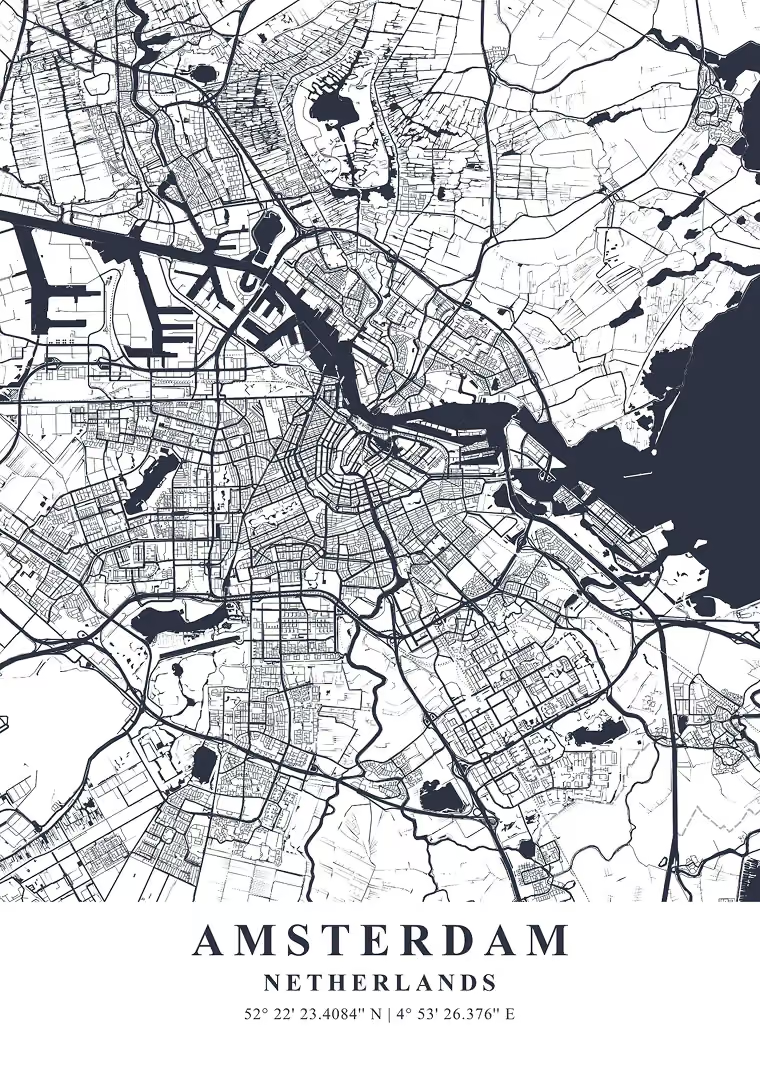
Smart traffic management ties these elements together. Amsterdam's system guides trucks to loading zones, controls traffic lights, and provides personalized travel advice. Olaverri-Monreal found that Singapore achieves 27 km/hour average speeds compared to London's 16 km/hour through better traffic optimization. The technology reduces congestion by coordinating signal timing with real-time traffic data. Cities implementing these systems see lower emissions and faster commutes without building new roads.
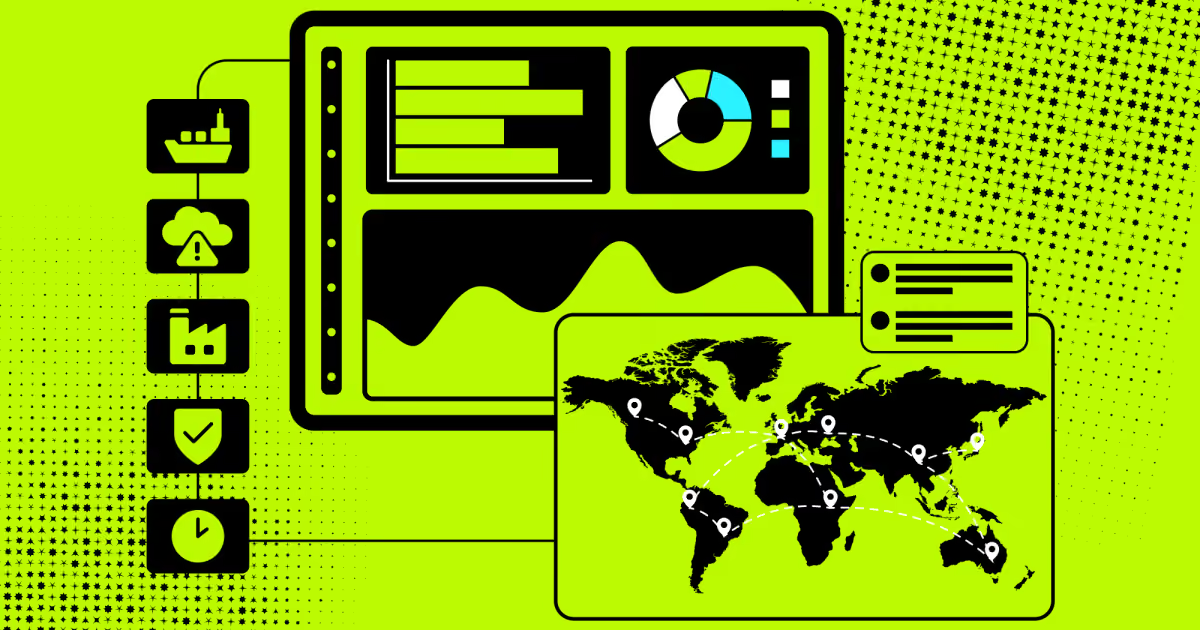
Data platforms for monitoring, forecasting, and operational decision-making
Smart mobility for smart city operations needs platforms that turn sensor data into action. These systems aggregate information from IoT devices, telematics, traffic cameras, and mobile apps.
They create digital twins of cities that help operators reduce congestion and improve sustainability.
Urban data platforms like SICE's SIMUSET centralize traffic, parking, and environmental monitoring. Also, SMOC by Zenmov collects and predicts traffic patterns for vehicle optimization. EIT Urban Mobility's UMF tool visualizes passenger movements across multiple transport modes. Finally, Siemens Mobility integrates real-time data from various providers to support mobility as a service apps.
Real time monitoring platforms track assets and manage congestion instantly. For example, Targa Telematics provides IoT based systems for fleet management and operational efficiency. CrateDB enables rapid data driven rerouting through traffic analytics, and TomTom Traffic APIs use historical and live data to optimize routes for fleets and public services.
Forecasting tools simulate future scenarios to guide long-term planning. For instance, Bentley Mobility Simulation models vehicle traffic, pedestrian flow, and public transport. Meep analyzes supply and demand to predict passenger patterns, while Triply examines commuting behaviors and emissions to calculate return on investment. Additionally, Future Mobility Sensing combines smartphone data with machine learning to analyze verified travel behavior.
These platforms help cities make evidence-based decisions about infrastructure investments and service improvements.
Helpful tools
Smart mobility needs specialized platforms that handle real operations. These smart mobility solutions manage fleets, optimize routes, and keep passengers moving. Here's what works for different mobility services. Let’s break down the best tools by use case and application.
Freight and logistics management
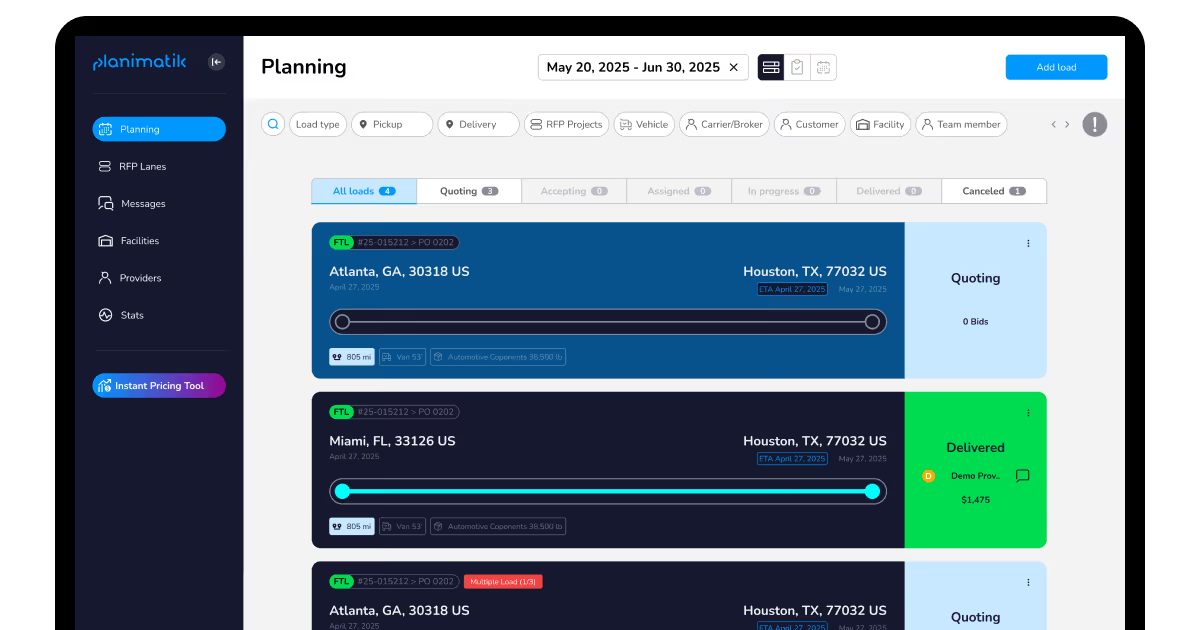
Among the best smart mobility software for managing freight and logistics, Planimatik consolidates freight chaos into one shipper-focused platform that goes live in as little as two hours, not months. AI-powered optimization drives cost savings from day one through:
The platform charges transparent pricing with no hidden fees and includes native mobile apps, ERP integrations, and comprehensive analytics dashboards.
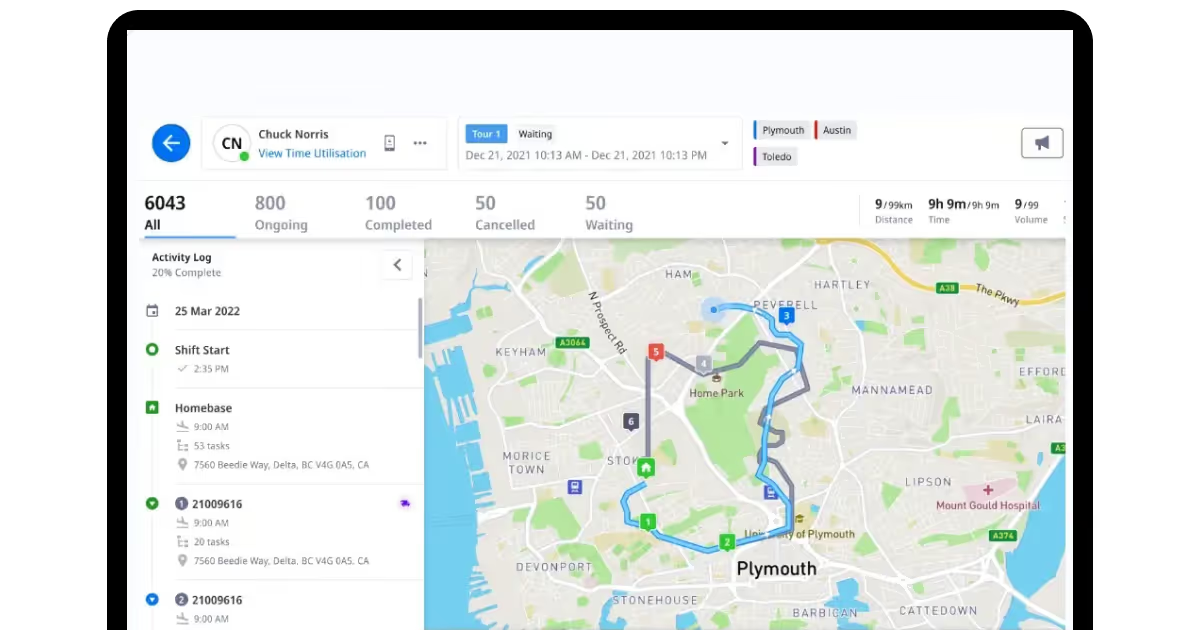
Locus orchestrates high-density deliveries across complex regions with auto-dispatch that allocates tasks using configurable business logic and real-time fleet capacity. The Control Tower monitors active shipments with dynamic alerts for exceptions, while smart rider reassignment handles failed deliveries and last-minute changes automatically. The platform integrates with SAP, Oracle, and legacy systems while tracking carbon emissions per route for ESG compliance reporting.
Ride-hailing and taxi services
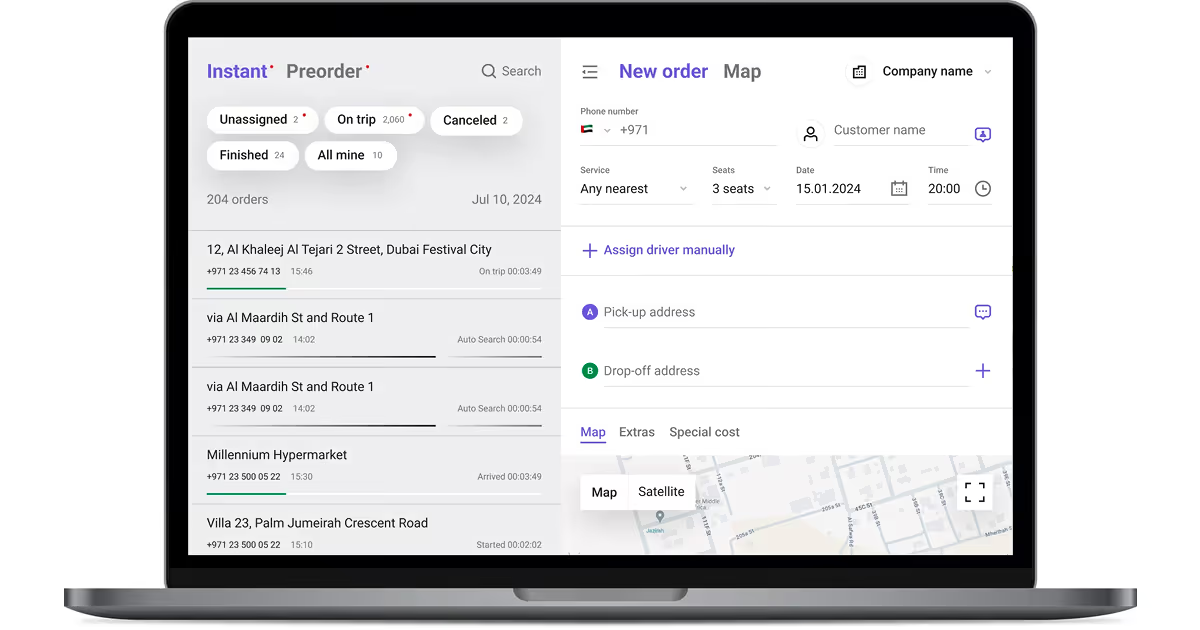
This type of business often requires their own smart mobility solution that caters to its unique needs. For these purposes, Onde delivers white-label apps for iOS and Android with 99.98% uptime that handles over 2 million orders daily. The platform includes smart dispatch, real-time route optimization, and safety features like SOS buttons and ride tracking. Onde launches your branded apps in stores with free app store optimization, making it ideal for taxi companies expanding without technical staff.
Jugnoo provides basic ride-hailing functionality with driver and customer apps for multiple vehicle types including bikes, cars, and airport transfers. The platform offers dispatcher dashboards with live analytics and dynamic pricing but requires separate fees for white-labeling and international maps. Reviews indicate the interface needs modernization and stability improvements for high-volume operations.
Medical transport and NEMT
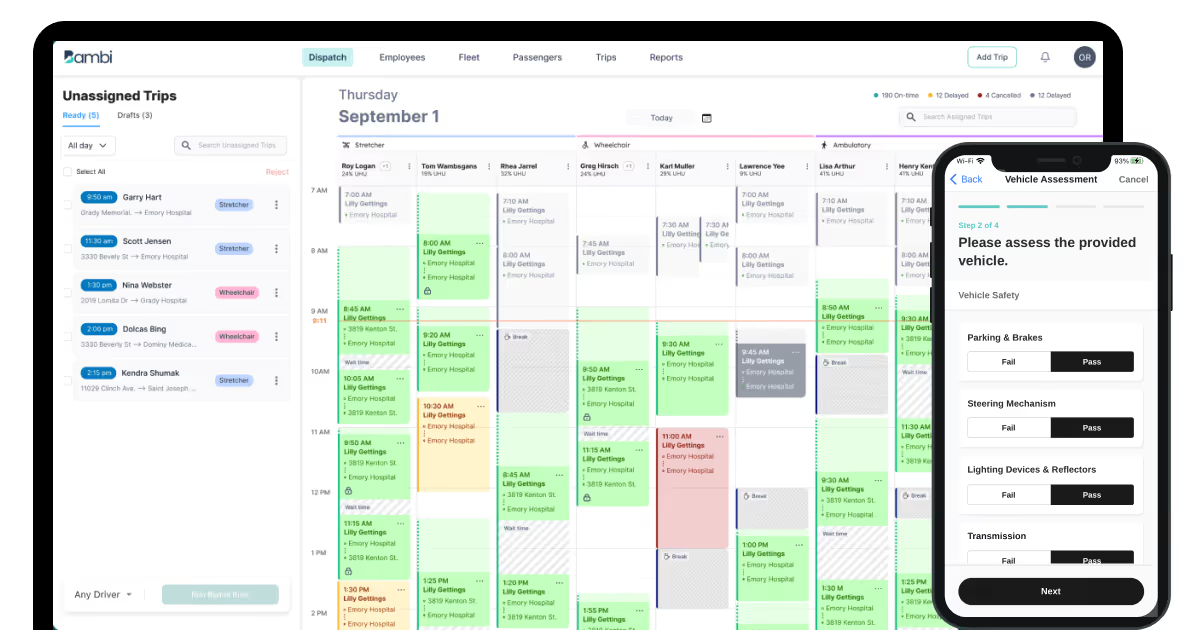
For the businesses that need to transport sensitive goods that require specific temperature and compliance conditions, there should be specific smart mobility platforms. For example, Bambi uses AI to auto-assign and reassign medical trips in real time, cutting manual scheduling work for paratransit operators. The platform includes route analysis, performance dashboards, and billing tools built specifically for healthcare compliance. Pricing starts at $69 monthly and scales with trip volume, making it accessible for small to mid-sized NEMT providers.
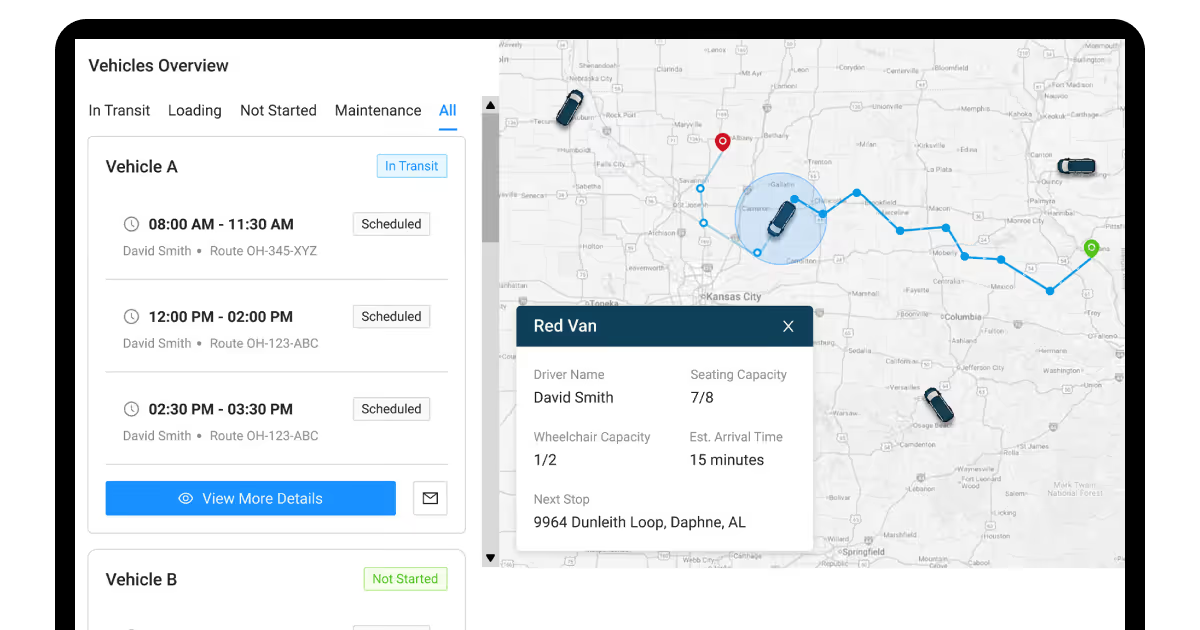
As another option, SHARE Mobility handles recurring healthcare appointments and workforce commutes with dynamic routing that prioritizes patient punctuality. The platform provides centralized dispatch with compliance tracking, white-label rider and driver apps, and detailed service quality metrics. It scales to fleets of any size but focuses exclusively on NEMT and employee transport, not general ride-hailing.
Multi-service platforms
Some tools serve as end-to-end smart city mobility solutions that cater to the needs of varied businesses and can be used to cover them in one place.
For instance, MoveX covers ride-hailing, delivery, grocery, shuttle, and NEMT services from one SaaS platform with customizable add-ons. The system provides dynamic dispatch, fleet management, delivery modules, and proof-of-delivery features for enterprise scalability. Pricing requires custom quotes based on deployment size, and public case studies remain limited compared to established competitors.
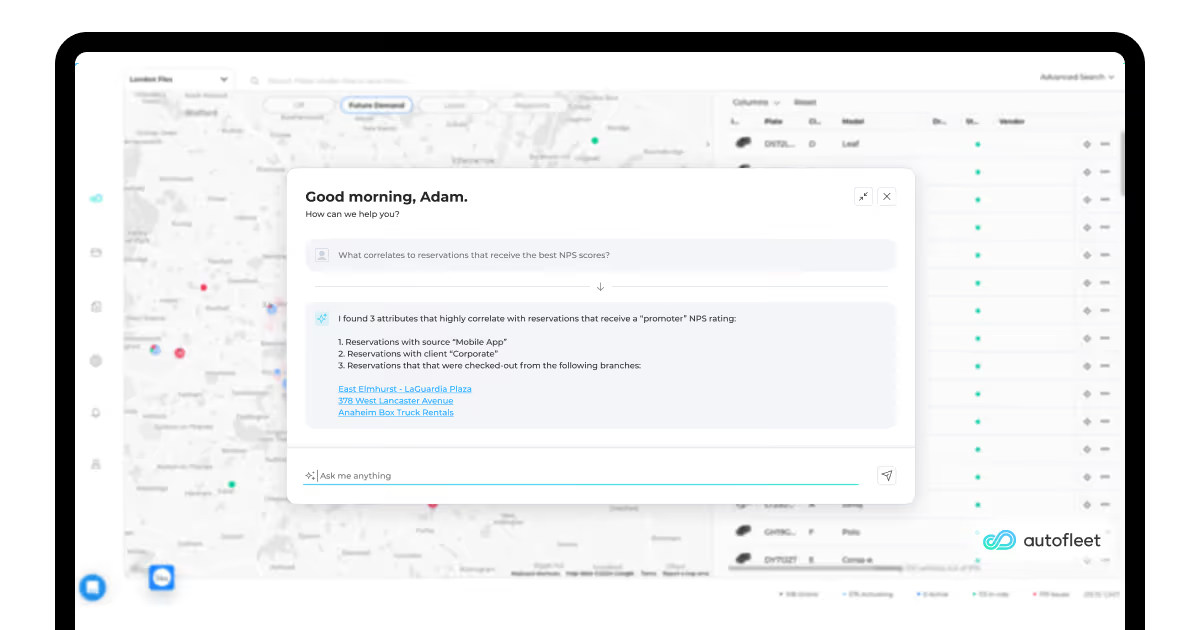
Autofleet optimizes mixed fleets running both passenger and delivery services using AI-powered demand forecasting and route planning. The platform orchestrates vehicle usage across multiple service types to maximize asset utilization and reduce empty miles. It targets medium to large operators launching shared mobility or sustainable delivery networks, though public adoption details and pricing remain undisclosed.
Although there are numerous solutions for varied use cases, custom tracking software development helps you create a perfect tool to fit your needs like a glove. If any solution lacks all the features you need or puts functionality, vehicle capacity, or some advanced third-party integrations, building a tailored smart mobility tool that helps you reach your objectives as fast and efficiently as possible.
Implementation strategies
Implementing smart mobility requires tried-and-true tactics that address equity, funding, and integration. These various strategies, which are derived from world leaders, offer distinct routes ahead. Let's outline each using thorough instructions and practical examples.
Rollout of predictive maintenance
Install IoT sensors in cars to get real-time data on components like brakes and engines. Use AI/ML to integrate with cloud platforms in order to identify trends, anticipate malfunctions, and automatically schedule repairs. Connect to smart city data (air quality, for example) to improve accuracy and use dashboards to train operators for proactive alerts.
As an example of a strategy for mobility in smart cities, IDS architecture is used by Stratio's FIWARE-based system in Málaga (buses) and Porto (waste trucks) to predict breakdowns and monetize data for cities. This reduces shop visits, increases fleet uptime, and provides manufacturers with insights.
Route optimization deployment
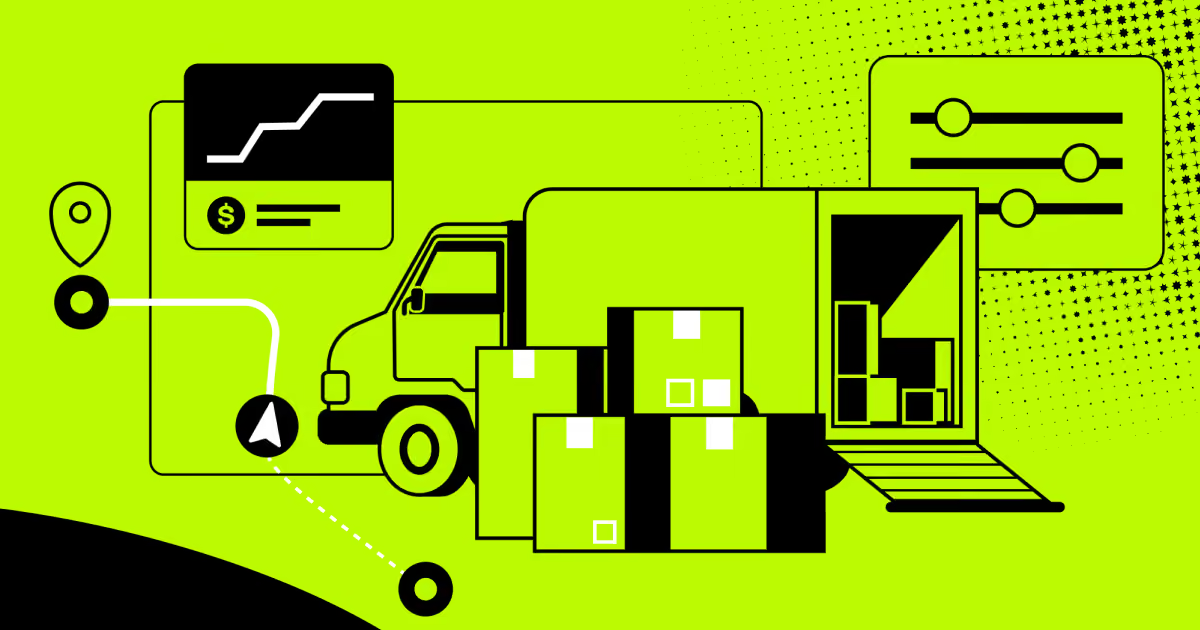
Deploy GPS or telematics with AI algorithms factoring traffic, weather, EV range, and warehouse sync. Automate dynamic rerouting to slash empty miles, integrate with ERP for load matching, and monitor via control towers for exceptions.
As one of smart mobility examples, Uber Freight's AI matches loads to trucks, reducing U.S. empty miles by 10-15% for 200+ Fortune 500 clients. This saves fuel, cuts costs, and drops service waits from 5 minutes to 30 seconds.
Monitoring of cargo and assets
Install temperature and humidity sensors on loads and connect them to real-time tracking systems. Use the cloud for end-to-end visibility from sender to recipient, automate alerts for deviations, and synchronize with dispatch for warehouse preparation.
For instance, with cargo sensors and approach detection, Wezom's systems enable accurate food and medical transport, removing loading lines and guaranteeing schedule compliance.
Stakeholder engagement
To promote efficient smart mobility technology adoption, establish technical steering committees in conjunction with workshops, mobile surveys, and inclusive GESI-focused groups. Provide capacity building from the start, using brief, targeted meetings to establish ownership among agencies, communities, and operators and guarantee agreement on objectives such as reducing traffic.
You can see the success of these efforts through Helsinki’s example. Through the Whim app, Helsinki, Finland introduced Mobility-as-a-Service (MaaS), bringing together users, transportation providers, and city officials. The use of public transportation increased by 12% and private car ownership decreased by 9% as a result of the integration of buses, trams, taxis, bikes, and rentals.
Integration of data and workflows
You can make smart mobility infrastructure management easier through real-time dashboards, Smart GIS for fast queries, and catalog datasets with standardized attributes. To break down silos and facilitate evidence-based planning, create Memorandums of Understanding with explicit output demos, give priority to government data, and incorporate national privacy regulations.
How is it used in real life? By using machine learning (ML) for fleet benchmarks and predictive maintenance, Penske Truck Leasing's Catalyst AI consumes 300 million telematics points every day from 430,000 trucks. This reduced downtime, increased fuel efficiency, and converted data into customer benefits like Honeyville's quicker deliveries.
Iteration and pilot testing
Choose pilots, such as ITS hardware or traffic modeling, then develop specifications, integrate systems, conduct thorough testing, and commission with roadmaps. For quick insights and to scale successes to entire networks, use mesoscopic models.
Among successful smart mobility examples, Mozee used LiDAR-free vision AI with safety stewards to deploy electric autonomous shuttles on campuses and in urban areas in Dallas. This on-demand last-mile solution reduces emissions, closes transit gaps, and prepares for demand during the 2026 FIFA World Cup.
Funding and financial sustainability
Create governance, procurement, and business models up front when paving the way for smart mobility solutions. Establish self-sustaining operations through cost analyses and partnerships, collaborate with cities for knowledge, and concurrently syndicate local and international funds.
For instance, the PCT Cartuja tech hub in Seville, Spain, combined IoT, renewable energy, and industry-academia connections for sustainable transportation. Without requiring significant public investment, this model promoted innovation by optimizing energy and mobility.
All these strategies require more than careful planning - they require scalable, compliant, modern software to achieve success. Smart mobility companies can help you achieve them through off-the-shelf solutions and ready-to-use platforms, but they don’t always give you enough freedom and capacity for growth. Here’s where logistics and transportation software development from COAX makes a difference.
In our work, we focus on your specific needs, objectives and pain points. We understand your complex multi-region compliance, a need for potential user growth and feature improvement, as well as the data sensitivity we need to protect at all cost. We equip you with just the right functionality - from GPS tracking technology to AI models that monitor emissions and calculate the most optimal routes. Our developers also establish analytics that considers your unique KPIs and custom reporting options and jurisdiction management to ensure your business is truly future-proofed.
FAQ
What are the challenges of implementing smart mobility services?
According to Pasupuleti, implementing smart mobility presents regulatory challenges that differ by nation and state and require precise guidelines for testing, liability, and data privacy. Due to concerns about safety and dependability as well as job losses from AVs, public acceptance lags. With connected data, cybersecurity risks increase, necessitating strong defenses. Traffic is optimized by ITS integration, but real-time safety improvements necessitate cohesive V2X.
How can my business financially benefit from smart city mobility solutions?
In line with Papa and Lauwers' theory that smart approaches optimize networks beyond traditional planning, smart city mobility reduces costs through effective infrastructure. Businesses benefit from lower emissions, less traffic (up to 10% better flow), and more cohesive locations inspired by New Urbanism. Logistics ROI is increased by technologically advanced tools like Antwerp's ITC controller, which reduces jam times by 64%.
Are smart mobility and transportation solutions for large corporations only?
No, smart mobility scales universally. SMEs deploy affordable telematics for fuel savings, and cities pilot Velo bike-sharing for multimodal access. Additionally, consumer apps like Smart5 track behaviors via GPS/CAN data. Open V2X/ITS enables startups to optimize fleets efficiently, proving viability beyond corporates per integrated smart paradigms.
How does COAX create efficient smart mobility technology?
COAX uses ISO 9001 procedures along with risk controls and monitoring certified by ISO/IEC 27001:2022 to establish security. For predictive fleet operations, we fine-tune scalable AI models to your datasets and exact needs. We also use secure dashboards to orchestrate data and enable real-time, sustainable logistics efficiency by seamlessly integrating V2X, telematics, your legacy platforms, and any third-party providers.





























































_.avif)









%2520explained.avif)

We are interested in your opinion