If you’re still delivering your delicious meals to customers by using phone calls, spreadsheets, and a gut feeling for when the orders will get to the right addresses, you’re falling behind your competitors that already earn new users and grow revenues all thanks to food delivery app development. Having an app for your business gives you unmatched benefits:
Delivery optimization that matches 29-minute consumer patience thresholds.
Mobile-first tech is powering 80% of transactions with seamless apps, digital payments, and personalizations.
Ghost kitchens and aggregators are slashing overheads while capturing 50% of the takeaway market share.
Sustainability integrations are appealing to Gen Z/millennials who pay 27% more for green brands.
AI-driven personalization, including recommendations, loyalty programs, and demand forecasting to lift revenues.
Hybrid business models blending commissions, subscriptions, and owned logistics.
Three-sided tech stacks with secure payments, inventory sync, and analytics for data-driven decisions.
In this guide, we break down how to build a food delivery app, define its key workflows, features, types, and business models, help you build a solid implementation roadmap, or choose from the ready-made solutions.
Food delivery market overview
So, what’s the food delivery industry preparing for you in 2026 and beyond (pun intended)?
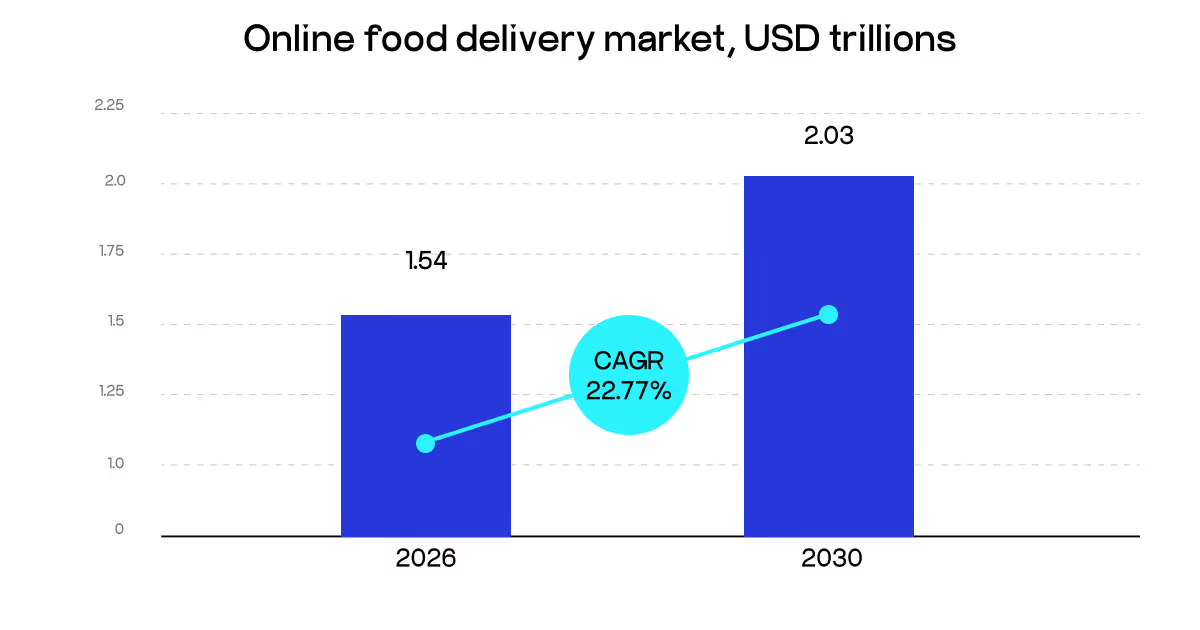
The market for online meal delivery is expected to grow from $1.54 trillion in 2026 to $2.03 trillion by 2030, according to Statista. This indicates a 7.20% yearly growth rate that is not expected to slow down even a bit. With a user penetration of 29.2% in 2026, the meal delivery industry alone will serve 2.5 billion people globally by 2030.
What drivers and trends influence the biggest market shifts?
Speed becomes non-negotiable. Consumer patience has shortened - research shows customers lose patience after just 29 minutes of waiting for delivery within a 10-mile radius. This matches the time they expect to spend preparing a meal at home. So, to sum up, the delivery speed directly impacts customer retention.
Mobile-first purchasing is a must. With 4.69 billion smartphones in use worldwide, mobile food delivery app solutions now control the ordering process. 80% of transactions are platform-to-customer delivery models, with digital payments taking the place of cash in the majority of markets.
Ghost kitchens are a new key form of restaurant management. It’s anticipated that ghost kitchens and virtual restaurants will account for half of the takeaway market. These delivery-only businesses satisfy consumer demand for convenience and cut conventional overhead expenses. Compared to dine-in service, online ordering is already growing 300% faster, as stated by Forbes.
Purchase decisions are driven by sustainability. The core demographic consists of younger consumers (Gen Z and millennials), who are 27% more likely to purchase products from companies that are environmentally conscious. This change encourages companies to use carbon-neutral delivery systems and environmentally friendly packaging.
Grocery delivery grows quickly. The grocery delivery market reached $1.06 trillion in 2026. Strong monetization potential beyond restaurant meals is demonstrated by the average revenue per user of $569.57.
With DoorDash controlling 67% of the U.S. market, Uber Eats at 23%, and regional leaders like GrabFood controlling Southeast Asia, the market is still consolidating around major players. Achieving success necessitates striking a balance between mobile experiences, sustainability, and speed.
Why does your business need to create a food delivery app?
During COVID-19, there was an increase in food delivery - and in fact, it never went down after that (and very much kept growing). Consumer behavior in the industry has permanently changed, making mobile apps crucial to the survival of restaurants.
This is why food ordering mobile app development is really important for you now:
Revenue growth you can't ignore. By 2032, the online meal delivery market is expected to have grown to $317.7 billion. While rivals gain market share, companies without apps lose out on this growing source of income.
Retaining customers with loyalty initiatives. Through loyalty points and customized promotions, apps facilitate direct customer relationships. Order frequency and customer lifetime value are higher in restaurants that use loyalty programs. Push alerts encourage repeat business during busy mealtimes by keeping your brand visible when customers are hungry.
Lower operational costs. Mobile apps reduce dependency on third-party platforms that charge 15-30% commission per order. Real-time order tracking, automated payment processing, and GPS-based delivery management cut customer support costs while improving service quality.
Data-driven decision making. Food delivery app development solutions provide analytics on customer preferences, peak ordering times, and popular menu items. You can adjust pricing, optimize inventory, and target promotions based on real behavior patterns.
Better positioning for competition through sustainability. Believe us, your rivals already offer their own apps, and not just for speed and convenience. 55% of consumers are willing to pay more for brands that show a commitment to the environment, according to research. Using apps, you can showcase carbon-neutral delivery, eco-friendly packaging, and other programs that appeal to younger audiences.
Speed and personalization fulfill expectations. Apps allow for quicker order processing than phone calls or web browsers. Besides, friction can get much lower at every stage with features like order history, payment options, and saved addresses. And finally, with an app, you can manage every aspect of the customer experience, from browsing to delivery confirmation, with your own app.
Now that you understand the importance of food delivery mobile app development, let’s outline how such solutions operate.
How do food delivery apps work?
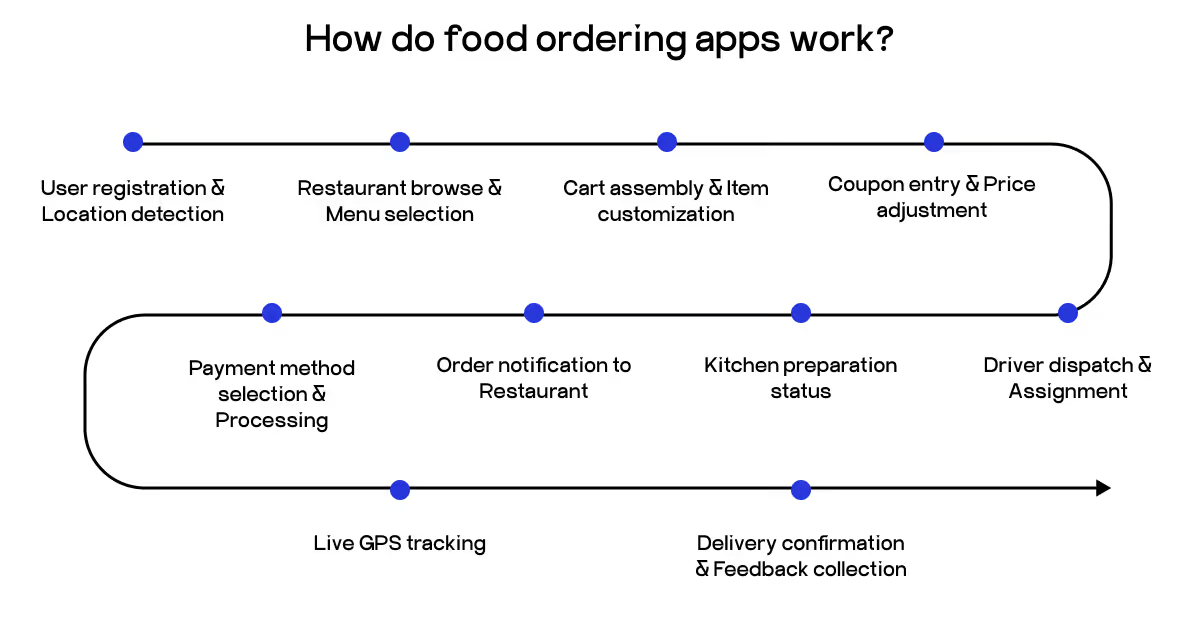
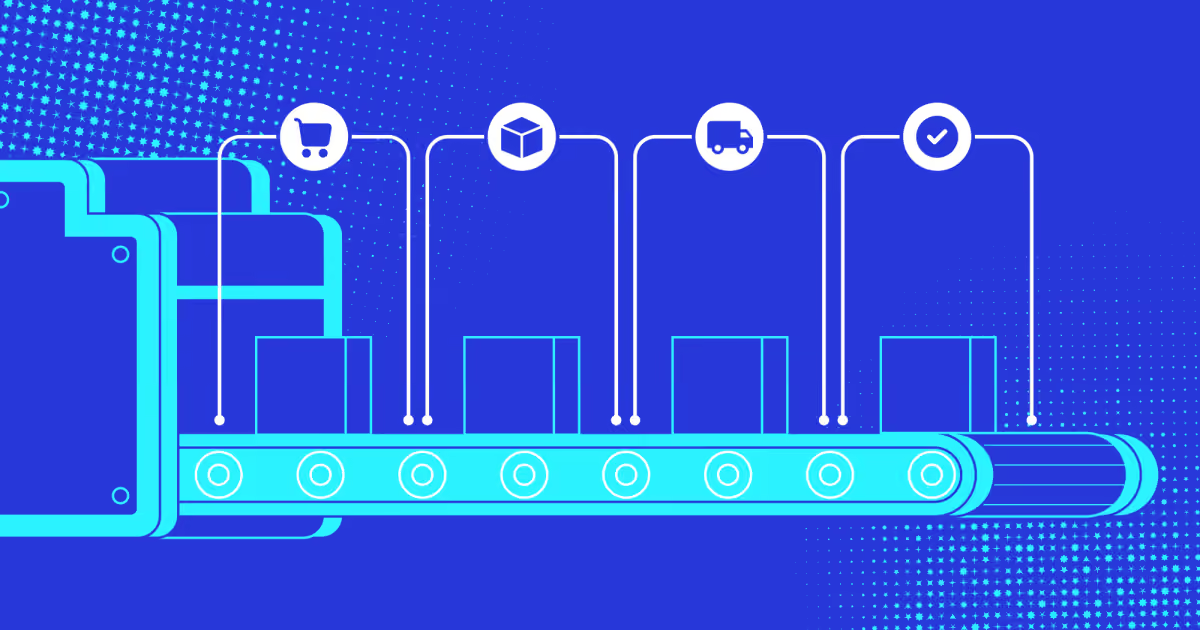
Through a digital platform, food delivery apps link three parties: customers, restaurants, and delivery drivers. Real-time order placement, payment processing, food preparation, and delivery tracking are all coordinated by the system. Every transaction goes through a number of technical phases to guarantee precise order fulfillment and prompt delivery.
To understand how to create a food ordering app, let’s break down the key components of their workflow.
Creating an account and finding restaurants. After downloading the app, users create profiles by providing their delivery address, phone number, and email address. The app typically filters options based on cuisine type, ratings, and estimated delivery time. It does this by using geolocation APIs to find nearby restaurants within the delivery radius. Restaurant listings with pictures, menus, prices, and client testimonials taken from the database are shown on the interface.
Menu navigation and cart building. Customers browse digital menus organized by categories like appetizers, main courses, and desserts. Each item includes descriptions, ingredient lists, pricing, and customization options stored in the restaurant's database. Users tap items to add them to their cart, with the app calculating subtotals, taxes, and delivery fees in real time using backend pricing algorithms.
Discounts application and price calculation. Before checkout, customers can enter promotional codes or select available deals from the app's offers section. The system validates these codes against the database, checking expiration dates, usage limits, and eligibility criteria. Once applied, the app recalculates the final amount, displaying itemized costs including discounts, service fees, and delivery charges.
Integration of payment gatewaysis critical for food delivery app development. Credit cards, digital wallets, cash on delivery, and stored payment profiles are just a few of the payment options available to users. After encrypting payment information, the app transmits it via secure payment gateways, which handle transactions and provide confirmation tokens. The platform also conceals sensitive card information.
Transmission of orders to restaurants. The system creates a distinct order ID and notifies the restaurant's tablet or dashboard after the customer confirms payment. Detailed order information, including items, quantities, special instructions, and customer contact information, is sent to the restaurant staff.
Food preparation tracking. Once accepted, the restaurant updates order status as they prepare each item. The app displays preparation time to customers based on historical data and kitchen capacity. Backend algorithms monitor preparation progress and adjust driver assignment timing to ensure pickup occurs when food is ready.
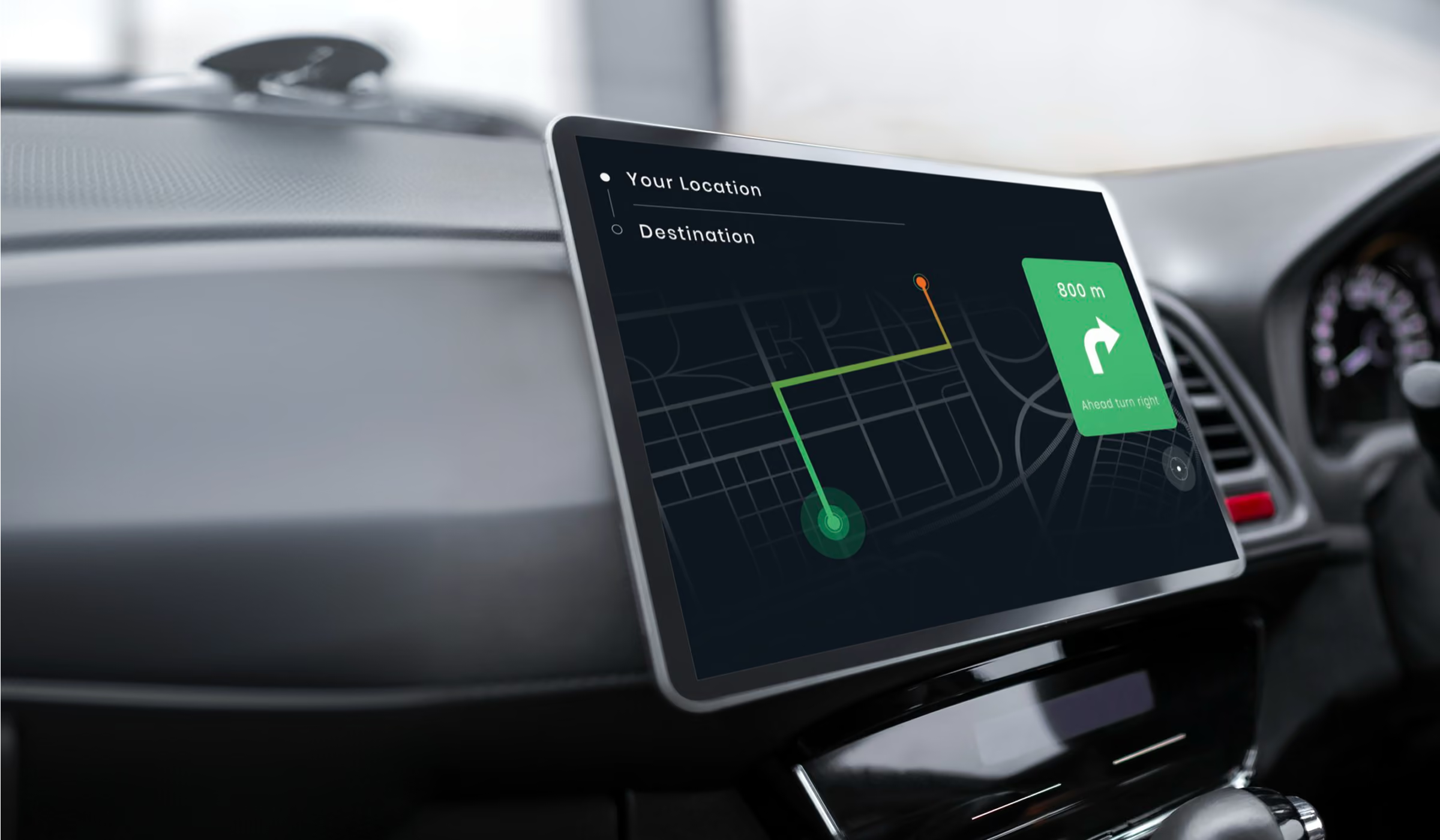
Driver assignment and route optimization. The platform identifies available delivery drivers using GPS location data and assigns the closest driver to the restaurant. Assignment algorithms consider factors like driver ratings, current workload, and proximity to optimize delivery efficiency. The driver receives pickup instructions, restaurant address, and navigation support through integrated mapping services.
Monitoring delivery in real time. GPS tracking gives customers and restaurants real-time location updates once the driver retrieves the order. The app uses distance, average driver speed, and traffic data to estimate arrival times. Customers are notified via push notifications when food is picked up or when a driver is approaching.
Order completion and rating framework. Customers are prompted by the app to rate their experience in a number of areas, including food quality, delivery speed, and driver service, after the delivery is confirmed. For business intelligence and quality enhancement, the finished transaction data is entered into analytics databases.
Whether you decide to stick to an off-the-shelf solution or build a custom food delivery app, you also need to understand the key types to choose from for your business.
Types of food delivery apps
There are several app categories in the food delivery ecosystem, each catering to different user bases and market demands. Knowing these kinds enables you to choose the model that best suits your target market and business objectives. The four primary categories that currently dominate the market are broken down below.
Aggregator platforms
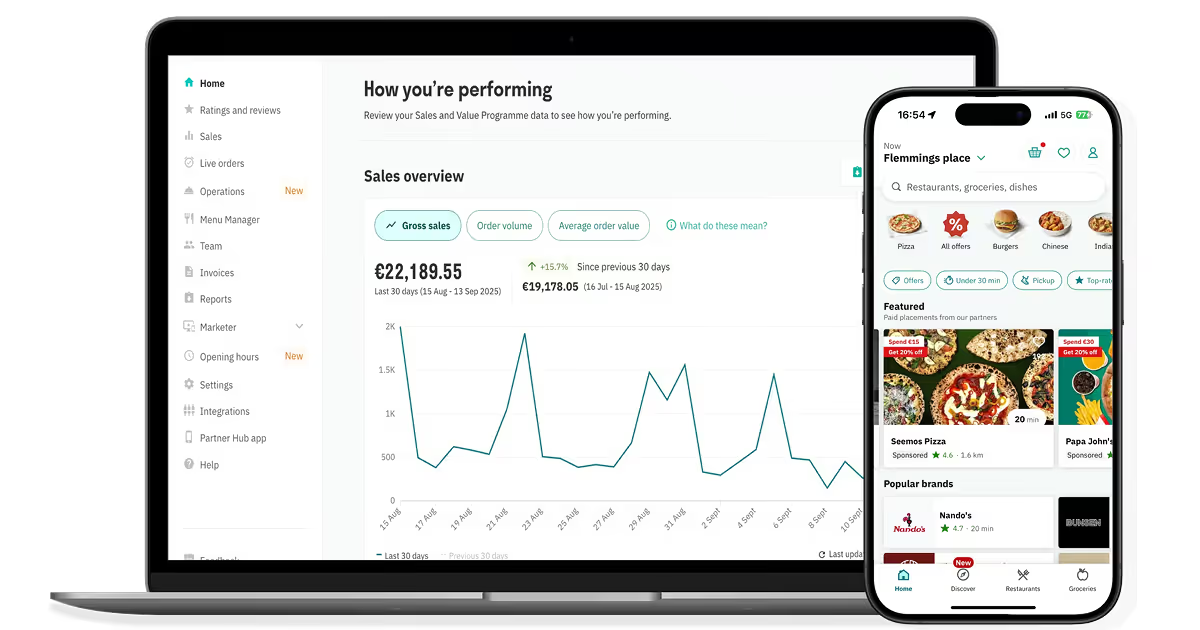
Aggregator platforms are online marketplaces that link customers with several restaurants through a single interface. Users can browse menus, compare prices, and place orders from multiple restaurants at once with the help of apps that list hundreds of nearby restaurants. To guarantee constant service quality, your restaurant delivery app development of this type should consider managing its own delivery fleet, processing payments, and routing orders.
Example: Deliveroo
For restaurant owners, aggregators offer instant access to a large customer base without building proprietary technology. You list your menu, receive orders through the platform's interface, and let the aggregator handle logistics. Customers benefit from the convenience of exploring diverse cuisines, reading verified reviews, and tracking deliveries in real time. The aggregator takes a commission from each transaction, which covers technology infrastructure, marketing, and delivery operations. Sharma and colleagues note that analyzing competitors and identifying service gaps can help succeed despite competition in the aggregator space.
Restaurant-to-customer delivery apps
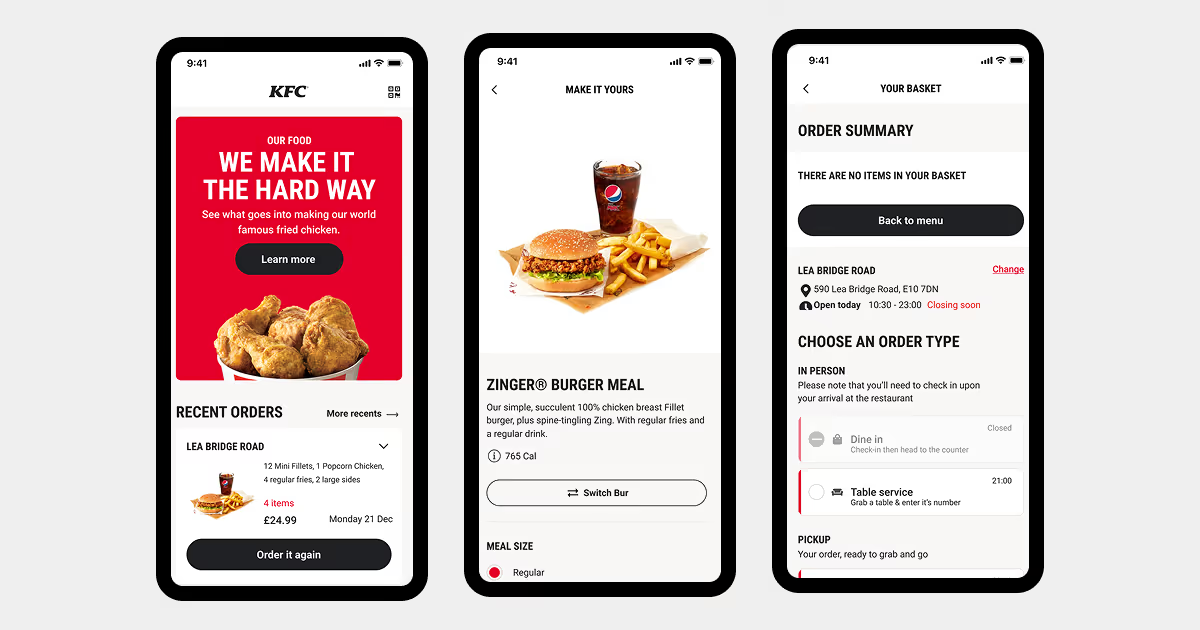
Restaurant to customer apps serve individual food chains or independent restaurants that prefer direct customer relationships. These apps display a single restaurant's menu, process orders internally, and coordinate delivery through the restaurant's own drivers or contracted couriers. This approach works best for established brands with high order volumes that justify development and maintenance costs. Key advantages of this model of food app development include:
Complete control over customer data and ordering experience
No commission fees paid to external platforms
Ability to offer exclusive deals and loyalty programs
Direct communication channels with customers
Example: KFC app
Building a dedicated app strengthens brand identity and customer retention. Restaurants can customize features, adjust pricing freely, and collect valuable analytics about ordering patterns. However, the trade-off is higher upfront investment and responsibility for all technical operations.
Grocery and multi-vertical food delivery
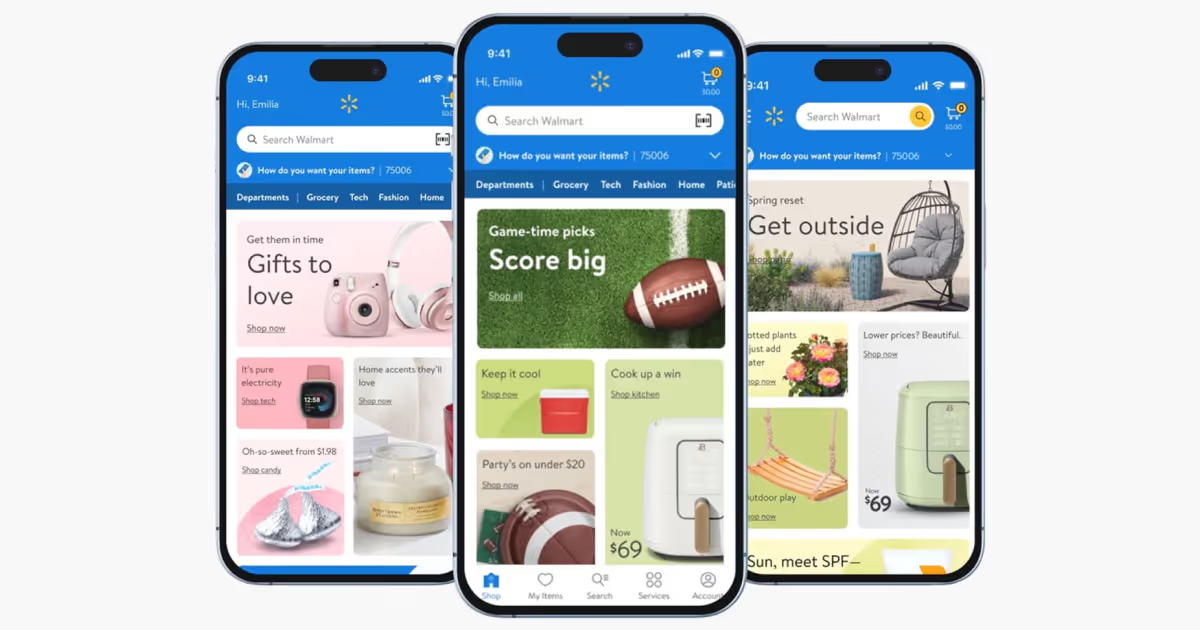
Similar to the aggregator model, grocery delivery apps target supermarkets, convenience stores, and specialty food retailers instead of eateries. They facilitate same-day delivery of fresh produce, packaged goods, and household items by connecting consumers with several grocery stores. Shoppers choose items, handle substitutions when products are not available, and the system handles the delivery of the orders to customers' doorsteps.
Example: Walmart Grocery
Order frequency and customer lifetime value both rise as a result of this diversification. Owners of businesses can create store-specific solutions or collaborate with already-existing platforms. Real-time inventory management, barcode scanning for precise item selection, and communication tools that let customers verify product substitutions while shopping are the key examples of the technical requirements for this type of food ordering app development.
B2B food delivery
B2B food delivery apps serve commercial clients instead of individual consumers. They connect suppliers with restaurants, catering companies, hotels, and institutional kitchens. These platforms handle bulk ingredient orders, equipment purchases, and recurring supply contracts. A restaurant manager can order fresh produce, meat, dairy products, and dry goods from multiple vendors through one centralized system.
Example: Faire app
Features also differ from consumer apps. Most often, they include invoice management, purchase order tracking, minimum order quantities, and wholesale pricing tiers.
The B2B food delivery app development model reduces procurement complexity for food service businesses while giving suppliers access to consistent, high volume buyers. Orders often follow predictable schedules, enabling better inventory planning and logistics optimization, calling for logistic app development to be a part of creating a successful app for food delivery.
Food delivery app business models
Selecting the right business model determines how you generate revenue, manage operations, and scale your food delivery platform. Each model addresses different market needs and requires distinct operational capabilities. Below, we examine the four main approaches.
Order-based marketplace model
The marketplace model positions your platform as a digital intermediary connecting customers with restaurants. You aggregate multiple dining establishments under one interface, allowing users to browse menus, compare prices, and place orders without leaving your app. Restaurants pay commission fees per transaction for access to your customer base.
Food delivery app development solutions in this model work particularly well for startups because the initial investment remains low. You don't need to own kitchen facilities, employ chefs, or maintain delivery fleets. Your primary expenses cover technology development, marketing, and customer support. Scalability potential is also high since adding new restaurants requires minimal infrastructure changes.
The challenge lies in balancing restaurant satisfaction with profitability. High commission rates can alienate partners, while low rates may not cover operational costs. You also face limited control over food quality and delivery timing when restaurants handle their own logistics. According to Sharma, analyzing competitors and identifying service gaps helps new marketplace platforms succeed despite fierce competition in metropolitan markets.
Logistics-focused delivery platforms
This model extends the marketplace concept by owning the entire delivery infrastructure. You connect customers with restaurants while managing your own courier fleet to handle last-mile logistics. Revenue streams in this model include restaurant commissions plus delivery fees charged to customers. Some platforms add service fees and surge pricing during peak demand.
The logistics focus provides several advantages that you should consider in your food delivery application development:
Consistent delivery quality across all restaurant partners
Real-time tracking and estimated arrival times
Direct communication between customers and couriers
Ability to optimize routes and reduce delivery times
However, operational complexity increases compared to order-only marketplaces. You must recruit, train, and manage delivery drivers, maintain vehicle fleets or partner with gig economy workers, and develop sophisticated routing algorithms. The technology extends to GPS tracking, driver assignment systems, and demand forecasting. The model requires medium to large scales effectively in dense urban areas where order volume justifies courier costs.
Subscription-based food delivery services
Subscription models charge customers recurring fees (monthly or annually) in exchange for delivery benefits like reduced fees, exclusive discounts, or priority service. Users who pay upfront for subscriptions order more frequently to maximize their investment value. Customer lifetime value greatly increases when users commit to ongoing subscriptions rather than transactional relationships. You can offer premium tiers with enhanced benefits, creating multiple revenue streams from the same user base.
Note that implementation requires a careful pricing strategy. The subscription fee must feel valuable enough to justify the cost while covering reduced per-order revenue from discounted deliveries.
Regarding food delivery mobile app development in this particular sector, you need sufficient order volume in your market to make unlimited or heavily discounted delivery economically viable. Customer acquisition becomes critical since you're essentially pre-selling future orders. The model works best in markets with high population density and strong delivery habits where users order multiple times per week.
Hybrid models combining multiple approaches
Hybrid models blend elements from marketplace, logistics, and subscription approaches. You might operate as a marketplace for some restaurant partners while providing full logistics support for others. Subscription tiers can coexist with pay-per-order options.
This approach maximizes adaptability as you respond to different market conditions, customer preferences, and competitive pressures. Research by Kushniruk and Ivanyshyn, for instance, confirms that hybrid models help businesses survive during crises by diversifying revenue streams and operational capabilities.
Staff training is more demanding in this model as team members handle diverse operational procedures. Also, financial tracking requires sophisticated systems to monitor profitability across different revenue channels. Despite these, hybrid models offer the most resilience against market disruptions and competitive threats, allowing you to pivot quickly when conditions change.
After we have covered the basic types and business models, let’s get to the most important part: discovering the key features of online food ordering app development that you need to consider.
Key features of a successful food delivery app
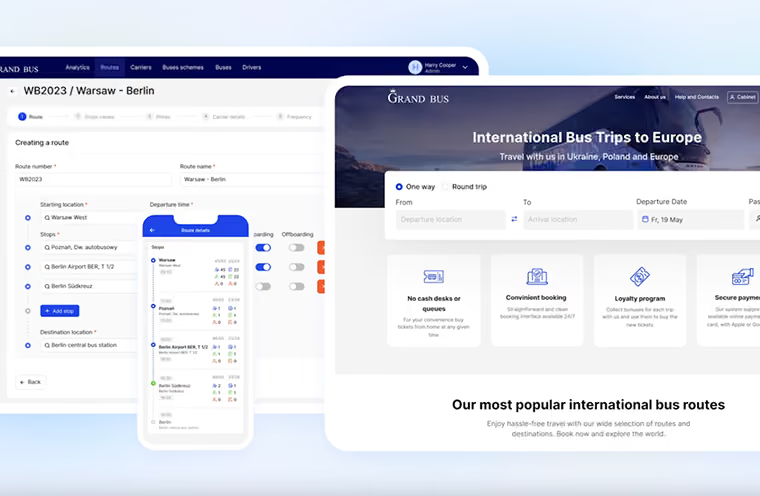
Three separate apps (one for customers, one for restaurants, and one for couriers) typically compose the basics of online food delivery app development. All three must function together on any food delivery platform. With customized features, each caters to a particular user group.
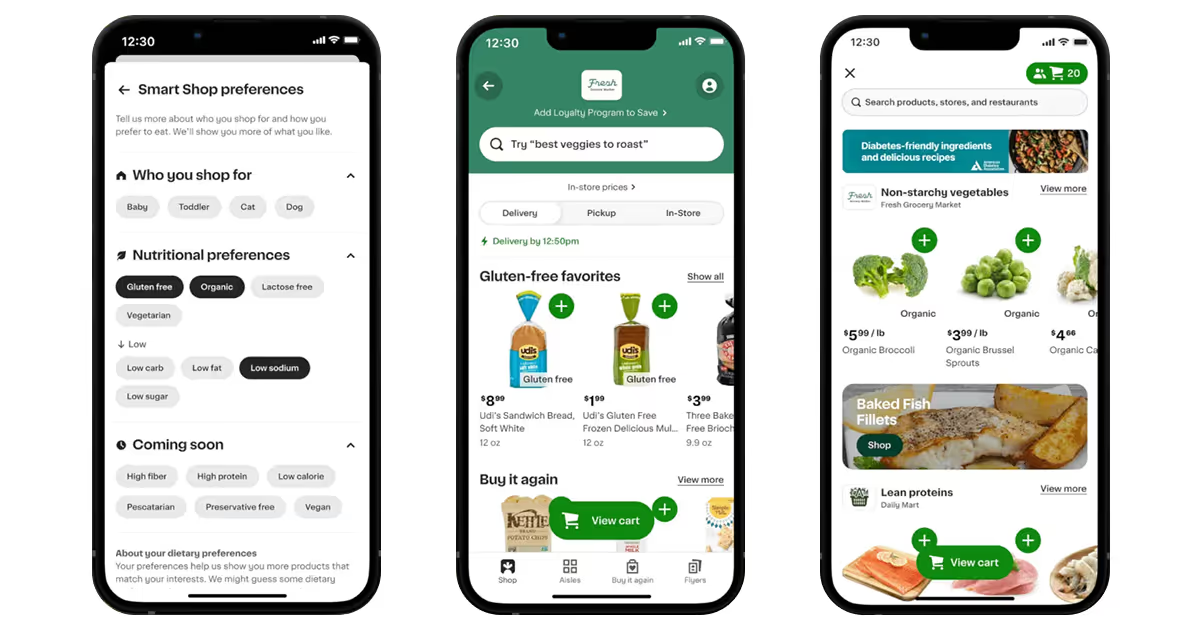
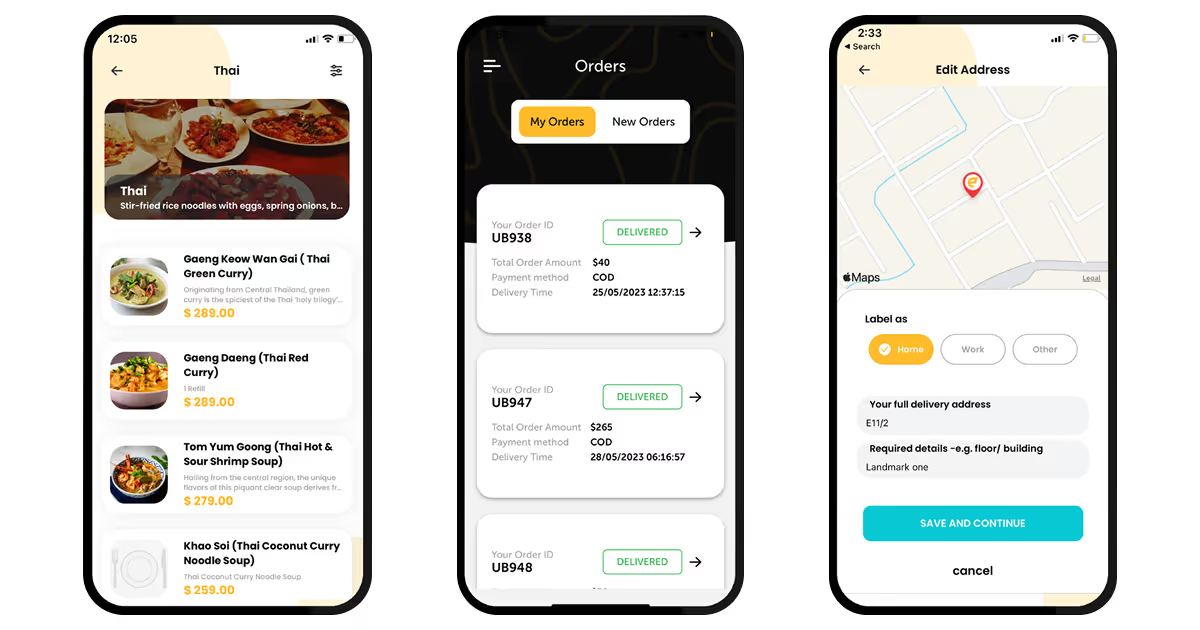
The core features of customer apps include automated user profiles that remember addresses and payment information, streamlined checkout with real-time order tracking, push notifications for promotions and status updates, and search capabilities with filters and map integration. Multiple payment options reduce checkout friction, and reviews allow users to browse and share other people's experiences.
Food businesses can manage their online presence with the help of restaurant app functionality. Quick updates to items, prices, and availability should be possible with intuitive menu management. Order management lets restaurants accept or decline incoming requests, assign preparation statuses, and balance kitchen workload. Automated invoice generation handles payments efficiently, while the ability to view and respond to customer reviews builds trust and engagement.
Courier app basics streamline the delivery process. User profiles with social media login speed up registration. GPS integration through Google Maps Platform (Android) or Location Framework (iOS) ensures optimal routing. Additionally, order management displays available deliveries with full details (customer location, desired delivery time, or any special instructions). Earnings tracking shows payment breakdowns and completed deliveries, giving couriers full visibility into their income.
Advanced features
Beyond the basics, successful platforms differentiate themselves through sophisticated capabilities.
For customers, this means AI-powered restaurant recommendations based on order history, scheduled delivery for future times, group ordering features that split bills automatically, and loyalty programs with points and exclusive deals.
Dietary preference filters help users find suitable options quickly, improving personalization and user experience.
Analytics dashboards that display popular items, peak hours, and customer demographics are beneficial to restaurants. Integrations for inventory management stop overselling unavailable goods.
Businesses can target particular customer segments and create limited-time offers with promotional tools.
Heat maps that highlight high-demand locations, shift scheduling programs, and performance indicators that improve their work schedules are all beneficial to couriers.
Route optimization algorithms that group adjacent deliveries or notifications of surge pricing during peak times are examples of premium features.
The secret of how you can build food delivery apps successfully is to begin with dependable core functionality and then add more sophisticated features in response to user input and market demands.
How to create a food delivery app: development process
Customized food delivery app development is a structured journey from research to launch, with each stage building on the last. Here's how the process goes in practice.
The basis is established by market research. You must understand what is already in place and identify any gaps. Examine rivals to identify what irritates their customers rather than to imitate them. Speak with prospective clients, such as delivery drivers, restaurant owners, and app users. You take advantage of their problems. Additionally, this research helps you identify your target market and develop a USP that will make your app stand out in a crowded market.
Early on, decide on your monetization plan. Everything else is shaped by how you intend to make money. Subscription services require different features than commission-based models. Your KPIs, anticipated income, and development priorities are determined by this choice. Instead of adding the business model after the fact, incorporate it into the architecture from the start.
Find the right food delivery app development company. Unless you have a seasoned in-house team, partner with an experienced IT provider. Outsourcing typically costs less than building internally and delivers better results than juggling freelancers. Review portfolios carefully and ask about similar projects they've completed. The right partner understands food delivery's unique challenges: real-time tracking, payment security, and managing three-sided marketplaces.
Select your platform and tech stack. Decide whether you're building native mobile apps, a web platform, or going cross-platform. As the research paper by Patil highlights, architectural choices directly impact functionality and long-term maintainability. Your feature list drives technology selection.
Develop and design in a closed loop. The interface must feel intuitive for all three user groups at once (customers browsing menus, restaurants managing orders, and couriers optimizing routes). Prioritize security from the start with secure coding practices and continuous testing throughout development, not just at the end.
Test before you launch, and very thoroughly. QA engineers examine performance under load, usability across devices, security vulnerabilities, and edge cases like poor network connectivity or payment failures. Real users behave unpredictably, so test scenarios beyond the "happy path" where everything works perfectly.
Launch and maintain actively. Releasing to app stores isn't the finish line. Monitor performance closely in those first weeks. Real-world conditions reveal issues that testing environments miss. And surely, dedicate resources to ongoing maintenance.
We mentioned technology selection as one of the most important steps here - so let’s break down your stack options more closely.
Tech stack
After we outlined how to create a food delivery app, let’s examine the technical background you can build it. A solid stack balances performance, scalability, and development speed.
Cross-platform frameworks like Flutter or React Native let you build for iOS and Android simultaneously, cutting development time significantly.
For the backend, Node.js with Express handles concurrent connections well, which is a lifesaver when hundreds of orders flow in during dinner rush. Python with Django offers robust security features and clean architecture.
Database selection depends on your data structure. PostgreSQL works well for structured data like user profiles and order histories. MongoDB provides flexibility for menu items that vary wildly between restaurants. Firebase enables real-time updates that keep everyone synchronized.
Integrations make or break the experience. Google Maps Platform or Mapbox powers the geolocation features customers expect. Stripe or PayPal handles payments securely without you building a complex financial infrastructure. Firebase Cloud Messaging pushes notifications that keep users informed without draining their batteries.
Cloud hosting through AWS, Google Cloud, or Azure provides smooth scalability. Start small and expand as order volume grows. These platforms handle traffic spikes well.
Now, let’s talk about the question that naturally arises next - how much it will cost to create a custom food delivery app.
Food delivery app development cost
Development costs vary a lot based on the decisions you make early. The reason for it is that the feature complexity drives the biggest cost differences. For instance, an MVP with basic ordering and tracking might cost a fraction of a platform with AI recommendations, loyalty programs, and advanced analytics.
Platform choice matters too. Building native apps for iOS and Android separately costs more than cross-platform development, though native apps can offer better performance. Your development team's location significantly impacts the budget.
Design investment scales with ambition. Simple, clean interfaces cost less than elaborate custom animations and interactions. But remember: good design directly affects user retention, so don't cut corners that hurt usability.
Backend infrastructure represents roughly a quarter to a third of total costs. Choosing managed services like Firebase reduces development time but adds ongoing subscription costs. Building a custom backend takes longer upfront but gives you more control.
Third-party services add both initial integration costs and recurring fees. Payment processors charge per transaction. Map APIs bill based on usage. SMS notifications cost per message. These operational costs persist as long as the app runs.
Plan for maintenance at 15-20% of initial development costs annually. Apps need regular updates for new OS versions, security patches, bug fixes, and feature improvements. The latter are non-negotiable - your app needs to evolve to stay competitive.
The thing with on-demand food delivery app development is that it might cause a higher initial investment, but it pays off over time. You save on annual subscription renewals, no longer get stuck in feature and user limitations, and save on patching security issues since you have a dedicated team managing your tool’s health and performance. At least, quality teams do so - teams like COAX.
With our logistics app development services, we handle everything from initial concept to post-launch optimization. Need seamless integrations with payment gateways, mapping APIs, or restaurant POS systems? We connect the dots so everything works together smoothly. Whether you're starting lean with an MVP to test the market or building a full-featured platform with AI-powered recommendations and advanced analytics, we adapt to your timeline and budget.
We build custom features tailored to your specific market or enhance existing platforms with new functionality. And of course, post-launch, we stick around. Performance monitoring, feature updates, security patches, and scaling infrastructure as you expand into new cities, we cover all parts of keeping your platform competitive.
Top food delivery apps
As an alternative to a custom food delivery app, you can try out an off-the-shelf solution from among the many existing ones in the market. Let’s break down the most popular and noteworthy options.
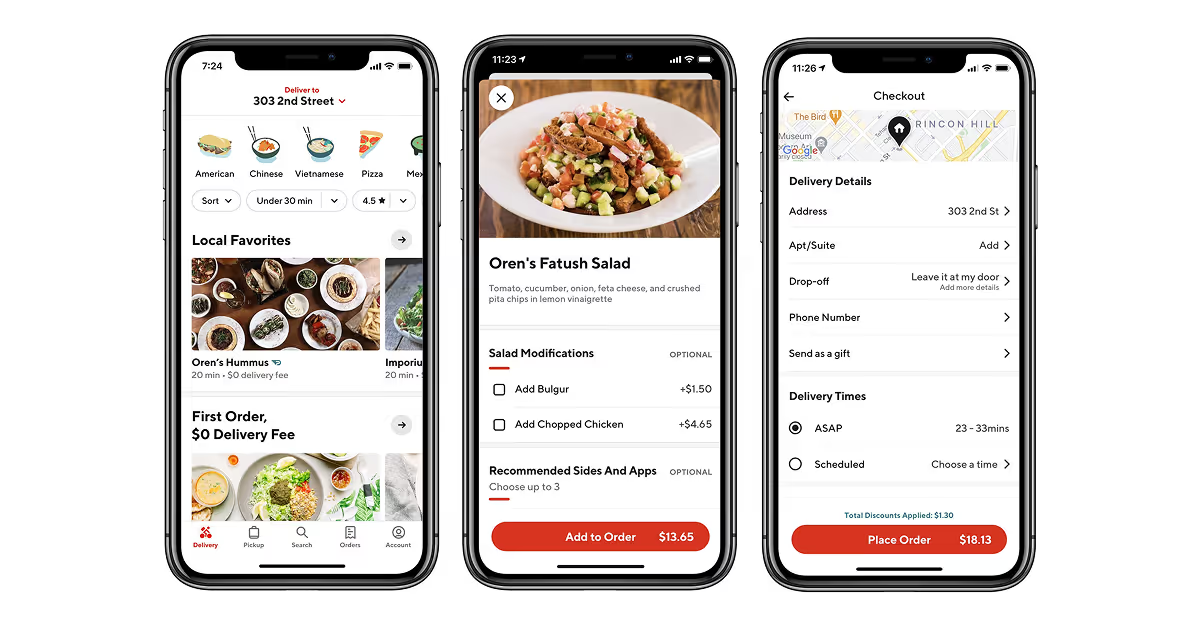
With more than half of the delivery market in the United States, DoorDash is a true market leader. Also, to capture upscale dining, it acquired Caviar. Depending on your plan, commission fees range from 15% to 30% per order, with additional costs for promotional boosts. In suburban and midsize markets where rivals are less prevalent, the platform performs exceptionally well. Restaurants have a large customer base but little access to data and must adhere to stringent menu accuracy regulations. Delivery mobile app development teams often study DoorDash's interface for its streamlined checkout flow. This option is best for restaurants prioritizing volume over customer insights, especially outside major metros.
DoorDash
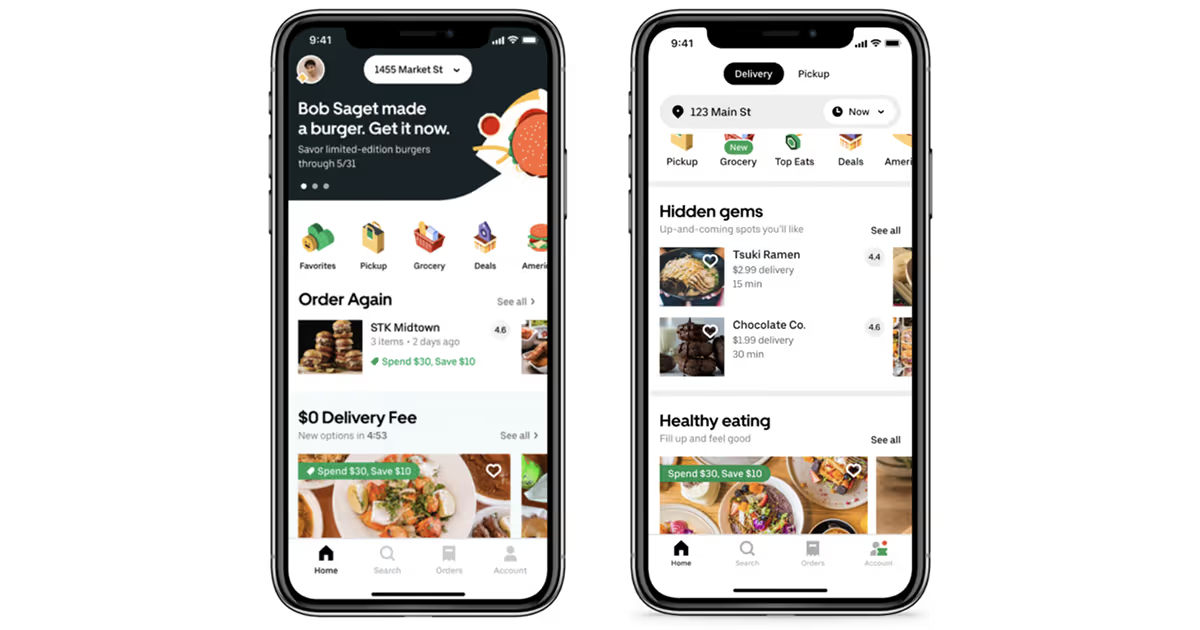
Postmates, acquired by Uber, has largely merged into Uber Eats while maintaining a standalone presence in select areas. Commission mirrors Uber's 15–30% structure, with orders fulfilled through the same courier network. Its independent footprint has shrunk considerably, making it more of an Uber Eats extension than a distinct platform. Some markets still show Postmates brand recognition, generating incremental orders without separate operational overhead. This solution will suit restaurants already on Uber Eats looking to capture residual Postmates users without extra integration work.
Uber Eats
Grubhub owns Seamless and charges a 15–25% base commission, along with optional priority placement fees. Among younger users who already have faith in the Uber brand, it performs best in big cities. The platform can increase visibility by providing aggressive promotional tools and data-driven marketing options. Customer data sharing is restricted, much like DoorDash, necessitating close performance monitoring. When you create a food ordering app strategy, Grubhub works best as one channel in a multi-platform approach. This app is great for established restaurants in legacy markets focused on building direct customer relationships.
Grubhub
Instacart’s focus is on grocery and retail delivery – it partners with only select restaurants that sell meal kits or prepared foods. Although the precise terms aren't public, the commission ranges from 15% to 25% per order plus delivery fees. The platform is great at facilitating cross-category purchases by linking food businesses with consumers who are grocery shopping. Delivery options are flexible, and customer service support is robust. This option fits restaurants that offer retail goods in addition to ready-to-eat items, prepared meal companies, and specialty food stores.
Instacart
Enatega offers fully customizable white-label software for businesses wanting their own branded platform instead of a third-party dependency or a fully on-demand food delivery app development. It includes separate apps for customers, restaurants, riders, and an admin dashboard. The upfront payment model eliminates ongoing commissions, making costs predictable. Demos are available, and the platform serves clients globally across all business sizes. Unlike marketplace apps, marketing isn't included, meaning you handle customer acquisition independently. This app is excellent for established restaurants ready to control their entire customer experience without sharing revenue.
Enatega
One thing that hinders the success of all the ready-made apps is the limitations they put on you. Let’s break them down, define their benefits too, and decide if you need an off-the-shelf solution or a tailored one, once and for all.
How to make the right choice between a custom and a ready-made solution
Your company's stage, budget, and long-term goals all have a massive impact on whether you need to choose end to end food delivery app development or an already-existing marketplace like DoorDash or Uber Eats. Both methods address different issues, so neither is always superior. Let’s just see which option will balance the pros and cons for you the best.
If you need to get at least some income right away, start with the ready-made marketplace. Millions of active users who are looking for food are what you get with third-party platforms at once. You begin accepting orders in days, avoiding the costly customer acquisition stage. According to Madhuritha research, platform-to-consumer delivery models are dominant in the market because they manage customer service, payments, and logistics, freeing up restaurants to concentrate on cooking. This low-friction entry makes sense for new or small operations testing delivery viability.
But marketplace convenience comes at a steep price. Commission fees eat up 15–30% of every order, and you surrender customer data that could fuel retention strategies. As your volume grows, those percentage points add up fast. For example, a restaurant doing $50,000 monthly in delivery sales through third-party apps pays $7,500–$15,000 in commissions alone. Scale that over a year, and the math becomes uncomfortable.
Pay close attention to exclusivity trade-offs. Reduced commissions for exclusive partnerships is what you get with some platforms, but this restricts your reach and puts you at risk in the event of platform outages or policy changes. Managing inventory syncing, price consistency, and distinct support channels for each platform puts a strain on small teams. However, operating across multiple marketplaces increases exposure but increases operational complexity.
White-label solutions like Enatega offer a middle ground (fully customizable platforms with upfront costs but no recurring commissions). You control branding, features, and customer data while avoiding ground-up development expenses. However, the tradeoff is that you handle all marketing and customer acquisition yourself, which requires different skills and budgets than restaurant operations.
When you have some capital and volume, custom food app development is the best option. Once you're up and running, you take full control of the customer relationship and stop continuing commission bleeding. Direct access to ordering data, purchasing patterns, and contact information enables targeted marketing that marketplace platforms jealously guard.
Often, hybrid approaches are the most effective. While developing their own ordering systems, many prosperous restaurants use marketplaces for discovery. Consumers discover you on DoorDash, become loyal customers, and then switch to your direct channel, where you provide superior loyalty benefits free of commission. This strategy combines owned customer relationships with marketplace reach, but it necessitates advanced inventory management to avoid cross-channel overselling.
Honestly assess your operational capability. Technical upkeep, security updates, payment processing compliance, and customer support infrastructure are all required for custom platforms. Calculate your delivery volume, multiply by average commission rates, and project that cost over three to five years. Compare that figure against custom food delivery app development costs plus maintenance. The numbers will clarify which path makes financial sense for your specific situation.
FAQ
How to start a food delivery app if I have a small business and limited technical knowledge?
Collaborate with seasoned food delivery app development companies that manage the technical challenges. Start with an MVP that covers the most important features, such as basic tracking, restaurant management, and customer ordering. Successful apps prioritize multiple payment options and user-friendly interfaces, as demonstrated by Prasad's research. As revenue increases and your understanding of operational requirements improves, gradually increase internal capability after initially outsourcing development.
How to make a food delivery app if I'm worried about cybersecurity?
Take these measures seriously:
Implement end-to-end encryption for payment data
Use PCI DSS compliant payment gateways (Stripe, PayPal)
Enable two-factor authentication for user accounts
Conduct regular security audits and penetration testing
Apply SSL certificates for all data transmission
Store minimal user data and anonymize where possible
Implement secure coding practices throughout development
Regular updates and patches for vulnerabilities
Role-based access controls for admin panels
Compliance with GDPR/local data protection regulations.
What are the business challenges of on demand delivery app development?
Rapid margin erosion is caused by high commission fees (15–30%). Operational complexity arises from managing inventory across multiple platforms. Building direct relationships is also hindered by limited access to customer data. Gender variations in usage patterns necessitate sophisticated marketing tactics, as noted by Natesan. Additionally, capacity can be strained by delivery logistics during peak hours. Finally, it is challenging to strike a balance between profitability and competitive pricing when platforms manage customer acquisition expenses.
How does COAX differ from other online food delivery app development companies?
COAX prioritizes security-first architecture with continuous monitoring. We build scalable systems handling peak loads without degradation. Our post-launch support includes performance optimization and feature evolution. COAX is also ISO/IEC 27001:2022 certified for comprehensive management of security, risk assessment, and monitoring security risks. We also have confirmed ISO 9001 certification, ensuring optimal processes for quality.




























_.avif)



%2520explained.avif)

We are interested in your opinion