Let's imagine the following case. Monday starts with two versions of Friday’s profit. The TMS shows a gain, while the ledger shows a loss. Finance can’t confirm the actual margin until operations finishes updating all loads. This is a weekly problem faced by the regional third-party logistics provider. The staff continues to process information manually. Management determines the correct profit margin after finalizing the decision-making process.
This is where logistics accounting software earns its place. It aligns operational events with finance. That connection turns delayed reports into usable financial context. At COAX Software, we’ve spent 16+ years building logistics technology. We’ve learned that accounting problems often begin outside finance. Issues are often caused by fragmented data and undefined system ownership.
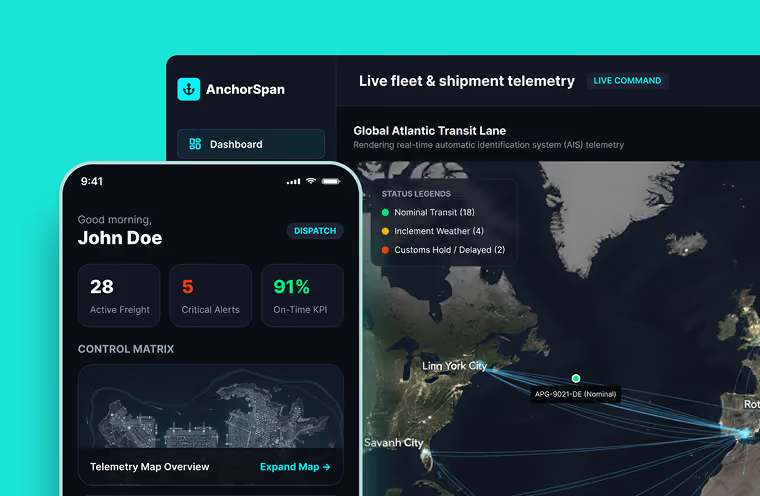
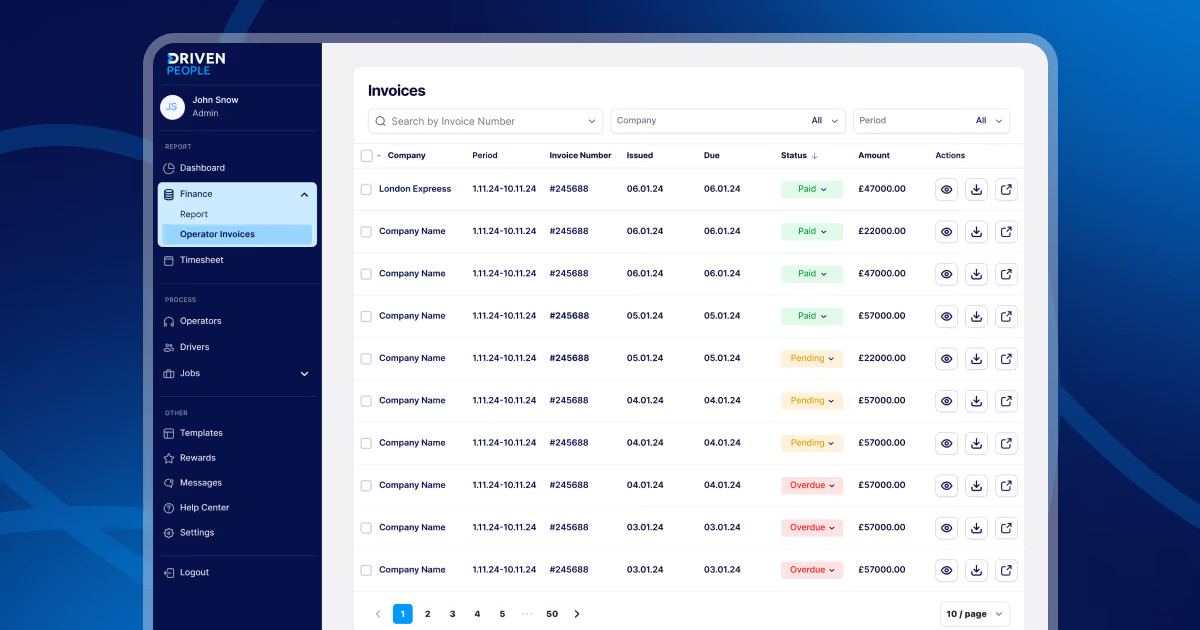
We have an excellent example of that with our DrivenPeople project. DrivenPeople is a staffing and transport system for logistics providers. COAX Software connected approved shifts with customer invoices and driver payouts. Another example confirming the same principle is the SyncMatix system, developed by COAX Software. It is a fleet telematics system that connects real-time vehicle operations to fuel, maintenance, and route expenses.
The conclusion drawn by both projects was the same. The availability of timely, traceable data defines the level of financial transparency.
In this article, you will learn what transportation accounting software is and who needs it. Also, we’ll consider what logistics accounting systems are worth consideration. And finally, how to choose between a packaged solution and a customized one.
What is logistics accounting software?
Logistics accounting software connects operational events with financial records. It links shipments, routes, vehicles, customers, and warehouses. It also records invoices, payments, taxes, and costs. This removes gaps between dispatch and finance. For example, a fuel charge stays linked to its shipment. Finance can immediately identify the load that reduced the margin.
Generic accounting software records financial transactions. It rarely preserves shipment context. Specialized logistics accounting software closes that gap.
Different logistics businesses need different operational controls. Carriers manage driver settlements and fuel costs. Brokers handle carrier payments and customer billing. Freight forwarders track currencies, duties, and customs costs. Third-party logistics providers allocate storage, handling, and transport charges. Warehouse operators connect inventory movements with billable services.
Most platforms support receivables, payables, reconciliation, and general ledgers. Logistics platforms add freight audit, shipment billing, accessorial management, and profitability analysis. Better systems also preserve every rate, approval, and adjustment.
At COAX Software, we saw this pattern while building DrivenPeople. This transport staffing platform managed shifts, invoices, and driver payments. Previously, each financial action depended on separate operational records. We connected approved shifts directly with Xero and payment workflows. Billing errors fell close to zero after launch. Every invoice and payout retained its original shift reference.
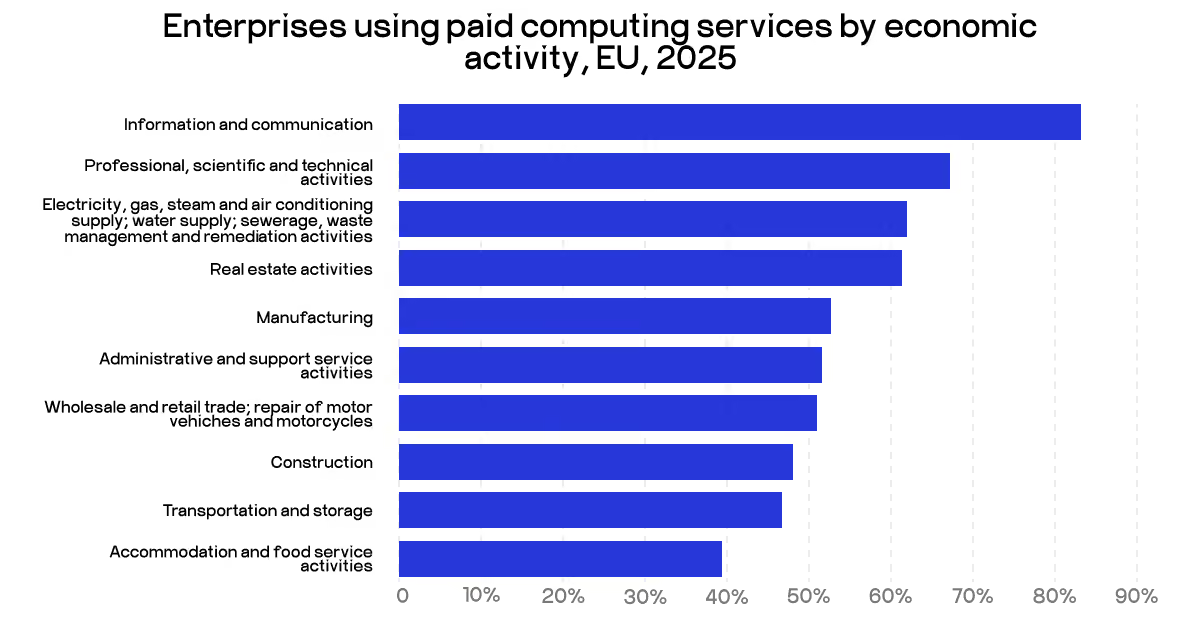
The market is changing because logistics data moves faster. More companies now depend on cloud platforms. According to Eurostat, 52.7% of EU enterprises purchased cloud services in 2025. Cloud adoption increases transaction volumes across branches and partners. Accounting systems must synchronize financial data continuously, not through batch imports.
Digitalization also increases financial complexity. The World Bank reported that digital trade and border processes reduced port delays by up to 70%. Faster freight movement creates invoices, settlements, and reconciliations much sooner. Accounting systems must process those events without losing shipment traceability.
Regulation adds another implementation challenge. The OECD reports that mandatory B2B electronic invoicing is expanding across jurisdictions. Accounting platforms must adapt quickly to new compliance rules. Simultaneously, they should preserve historical financial records.
API-first architectures simplify data exchange. They cannot correct inconsistent identifiers. Shipment numbers must remain consistent across every connected system. Otherwise, automation only spreads incorrect data faster. Modern transportation accounting software succeeds by preserving both financial accuracy and operational context.
What are the types of logistics accounting software?
Logistics companies usually choose three main software models. Each affects cost, flexibility, and migration scope.
Standalone software adds logistics functions to an existing ledger. It may handle billing, settlements, or shipment costing. This model preserves familiar accounting processes. However, reliable integrations remain essential.
Integrated platforms combine dispatch, billing, and accounting. All teams work with the same operational records. This reduces data handoffs and reconciliation work. However, implementation often requires broader process changes.
Custom layers connect existing tools through tailored services. They support unique pricing, settlements, approvals, and reporting rules. This model preserves current systems. However, it requires ongoing engineering support.
Model
Best fit
Main advantage
Main limitation
Standalone software
Smaller logistics operators
Preserves the existing ledger
Depends on integration quality
Integrated platform
Carriers, brokers, and forwarders
Keeps operations and finance together
Requires broader migration
Custom layer
Companies with unique workflows
Supports proprietary business rules
Requires engineering ownership
Hybrid architecture
Growing logistics companies
Balances stability and flexibility
Needs clear system boundaries
The choice determines how much transport accounting software you replace, integrate, or build. For example, in the DrivenPeople project, COAX Software kept Xero as the financial ledger while a custom operational platform managed shifts, approvals, invoicing, and driver payouts through API integrations. This hybrid architecture reduced migration risk, preserved familiar accounting processes, and allowed logistics-specific workflows to evolve independently.
What challenges do logistics companies face without specialized accounting software?
Generic accounting tools struggle when financial events depend on operational evidence. A ledger records what happened financially. But it rarely explains which shipment caused each entry. Each mismatch creates another manual check, delaying billing and weakening cash forecasting.
Late invoicing creates a wider financial problem. Allianz Trade reported a global 59-day average DSO in 2023. One in five companies waited over 90 days. Global working capital requirements reached 76 days of turnover. Yet logistics companies face additional pressure. They often pay drivers, carriers, and fuel providers first. Customer payments arrive later, so every billing delay expands that cash gap.
Errors also multiply with transaction volume. APQC’s benchmarking database includes 2,479 participating organizations. The median first-time error-free disbursement rate is 95%. That means one payment in 20 needs correction or follow-up. This is why logistics introduces more variables than standard procurement. Charges depend on distance, weight, service level, and waiting time. They may also include detention, tolls, fuel surcharges, or storage. Generic transportation accounting software stores these amounts after someone calculates them elsewhere.
That separation creates the following operational risks:
Unrecorded accessorials disappear from customer invoices.
Finance must investigate unresolved shipment transactions.
Teams can't identify the source of each adjustment.
Invoice exceptions have become a major AP concern. According to Ardent Partners, 53% of AP teams named exceptions their biggest challenge. Its best-performing teams reported 59% fewer invoice exceptions. They also processed invoices 82% faster than other organizations.
Specialized accounting systems address the exception before posting. They match charges against shipment records and agreed rates. They also flag missing documents and conflicting identifiers. Finance reviews unusual cases rather than every transaction. COAX saw this pattern while building DrivenPeople. The platform supports staffing and transport operations. COAX linked approved shifts with invoices and payouts. That workflow reduced billing errors almost to zero. It also preserved each transaction's operational source.
The difference becomes clearer during growth. Adding customers increases invoices and payment terms. Adding routes introduces currencies, taxes, and regional charges. Adding carriers creates more formats and settlement rules. Manual controls rarely scale at the same pace.
Which features should you look for in logistics accounting software?
The right features in transportation accounting software shorten billing cycles, prevent duplicate payments, and expose shipment margins before month-end. These seven capabilities determine whether the software can deliver those results in production. So, what features should you be looking for in logistics accounting?
1. Automated invoicing: event-driven billing
This module converts validated events into customer invoices. It accelerates billing but depends on reliable status mapping. Those events include delivery, storage, mileage, handling, or approved time. Production systems need idempotent invoice creation. Replayed events can't create duplicate charges. Rate versions must also remain attached to every invoice line.
When COAX Software built DrivenPeople's billing workflow, an approved shift became the billing trigger. The backend calculated fees and exported validated invoices to Xero. Billing errors fell close to zero.
2. Cost allocation: shipment-level margin control
Cost allocation assigns expenses across shipments, customers, routes, or vehicles. It reveals margins but needs stable references. This is the basis for operational profitability. High-volume transport accounting software needs flexible dimensions. Fuel, tolls, maintenance, labor, and accessorials require different allocation rules. Some costs remain direct; others need mileage, weight, time, or volume drivers.
This module breaks when source records lack stable shipment or load identifiers. Accounting systems must preserve those references throughout every allocation and settlement workflow. In the SyncMatix project, COAX Software connected vehicle telemetry with cost-per-mile reporting. This enabled comparing route costs, fuel consumption, and vehicle performance. That level of traceability revealed route-level cost differences.
3. Freight audit and payment: exception-led validation
Freight audit compares invoices against contracts and shipment evidence. It reduces leakage but needs normalized carrier data. It flags mismatched rates, quantities, surcharges, or duplicate bills. Production workflows should prioritize exceptions. Clean invoices pass automatically. Suspicious records require human review and clear reasons for variance.
Integration complexity comes from inconsistent carrier formats. EDI, PDFs, portals, and emails use different references. Our logistics projects repeatedly confirm one rule. Exceptions need their own workflow, and hiding them inside reports delays payment.
4. Multi-currency and tax: controlled financial translation
Uncontrolled exchange-rate updates can distort historical margins, creating inaccurate financial reports. To prevent this, accounting systems should store exchange-rate snapshots, tax rules, and conversion results as versioned records. Historical invoices never change, and foreign exchange gains or losses remain separately visible.
Tax engines and customs systems add further complexity because jurisdiction rules evolve. In DrivenPeople, COAX Software froze exchange rates before posting invoices and driver payouts. The objective was to preserve historical values after later market-rate changes.
5. Driver and carrier settlements: approved payout logic
Settlement modules in logistics accounting software calculate payments from approved operational records. They speed payouts but demand reversible calculations. Inputs may include mileage, hours, bonuses, fuel, and deductions. At DrivenPeople, COAX Software implemented an approval workflow. Validated shifts automatically generated driver payouts and invoices.
A complete audit trail was preserved for corrections. Accounting for transportation business payouts should never overwrite the original calculation. Instead, late corrections should create traceable balancing entries. They should preserve financial history and simplify settlement reconciliation.
Profitability modules reshape ledger data around operational questions. They expose margins but depend on the timing of costs. They show margin by lane, customer, route, vehicle, or service. Strong logistics analytics modules use separate read models. Complex dashboards shouldn't slow transactional posting. Incremental updates also keep reports current under heavy loads. Using these analytics, managers can compare expected and actual margin by lane. That view reveals which routes need repricing before another contract renewal.
COAX Software applied this principle in SyncMatix, a fleet telematics platform. Its analytics engine converted vehicle data into fuel, maintenance, and utilization metrics. Finance dashboards then tracked cost per mile across the fleet. Operators used these insights to identify average fuel-waste savings of 18%. Route optimization produced fuel savings of up to 22%.
7. System integrations: resilient financial data exchange
Integration connects accounting with TMS, WMS, CRM, banks, and telematics. It turns operational events into controlled financial records. Reliable accounting automation for transportation needs retries and dead-letter queues. Webhooks fail. APIs throttle. Batch files arrive late. Every connector needs retries, monitoring, and replay controls. Finance should know which records failed, why they failed, and who owns the resolution.
Best logistics accounting software
No single platform leads every logistics segment. Carriers, brokers, 3PLs, and forwarders need different financial controls. Therefore, we assessed each product against its strongest operating model. We traced customer billing from delivery through payment. We also traced carrier costs through the approval and settlement processes.
The evaluation covered seven production concerns:
Connect: Link financial entries with exact shipment records.
Allocate: Distribute costs across loads, routes, vehicles, and customers.
Validate: Detect duplicate invoices and unsupported charges.
Consolidate: Combine branches, entities, currencies, and intercompany transactions.
Integrate: Exchange reliable data with TMS, WMS, and banking systems.
Control: Preserve approvals, permissions, adjustments, and audit histories.
Scale: Process growing transaction volumes without spreadsheet workarounds.
We also compared the findings with independent research on transport accounting software. The CFO Club’s 2026 review includes Xero, Sage Intacct, and Shipthis. Its analysis considers functionality, integrations, usability, and business fit. TechRadar’s 2026 accounting review also examines usability, flexibility, compatibility, and value.
Our assessment combines official product documentation, publicly available product demonstrations, and COAX Software's experience in finance software development. We did not rely on vendor ratings alone because operational fit depends on how each platform handles real shipments, settlement, and financial workflows.
According to Orest Falchuk, Head of Engineering at COAX Software, “We evaluate what breaks when the data gets messy.”
The table below summarizes our engineering assessment.
Platform
Best fit
Logistics depth
Financial capabilities
Multi-entity and currency support
Integration approach
Implementation effort
Main limitation
CargoWise
International freight forwarders and customs brokers
Asset carriers, freight brokers, and established 3PLs
High
General ledger, AP, AR, billing, settlements, factoring
Multi-company support and multicurrency features
Native modules and 100+ partner solutions
High
Demands structured onboarding and ownership
Oracle NetSuite
Multi-entity 3PLs and diversified logistics groups
Medium
Full ERP financials, reconciliation, tax, revenue, and close
Strong global consolidation support
REST, SOAP, CSV, custom endpoints, and connectors
High
Freight workflows require configuration
Sage Intacct
Multi-entity 3PL finance teams
Low to medium
Core financials, dimensions, consolidation, and reporting
Strong multi-entity and multi-currency support
REST API and third-party connectors
Medium to high
Requires a separate operational platform
Shipthis
Small and mid-sized freight forwarders
High
Invoicing, payables, credit control, currencies, and profitability
Multicurrency support
Freight ERP modules and external integrations
Medium
Enterprise consolidation needs careful validation
QuickBooks Online Advanced
Small carriers, brokers, and local logistics businesses
Low
Invoicing, AP, reconciliation, workflows, and custom reporting
Basic entity support with multicurrency options
QuickBooks App Store and third-party connectors
Low to medium
Lacks native shipment and settlement objects
Xero
Small cross-border logistics operators
Low
Invoicing, bills, bank feeds, purchase orders, and reporting
Over 160 currencies with separate organizations
Accounting API and app marketplace
Low to medium
Group reporting often needs another layer
Implementation effort and logistics-depth ratings reflect COAX Software's engineering assessment based on typical implementation scope, integration complexity, and operational fit rather than vendor claims.
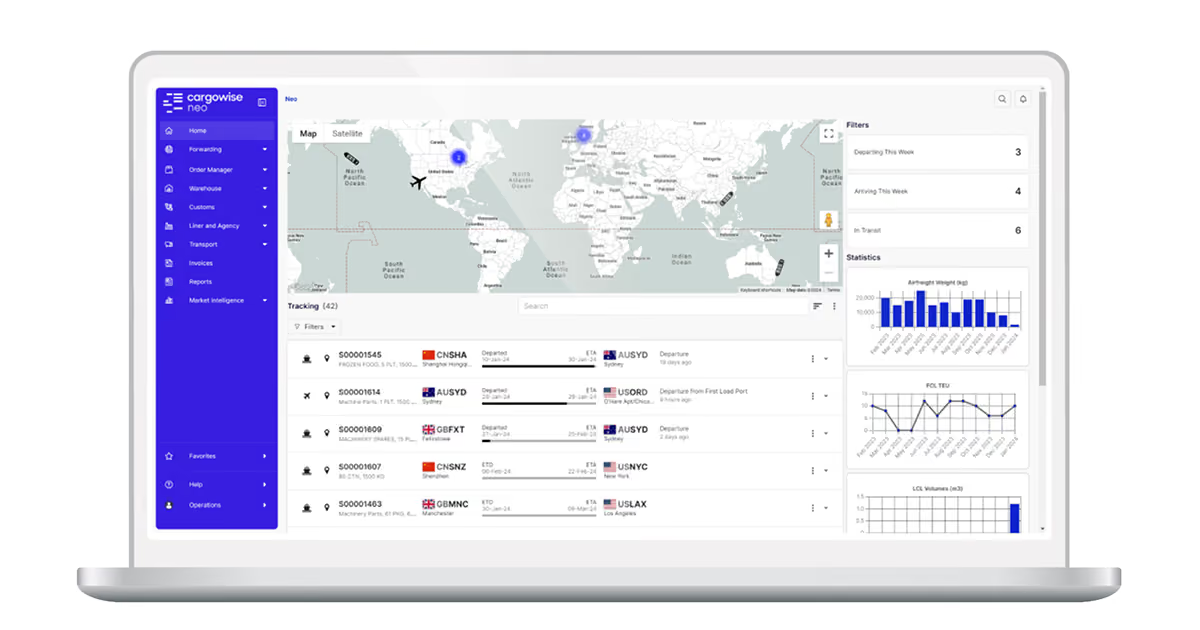
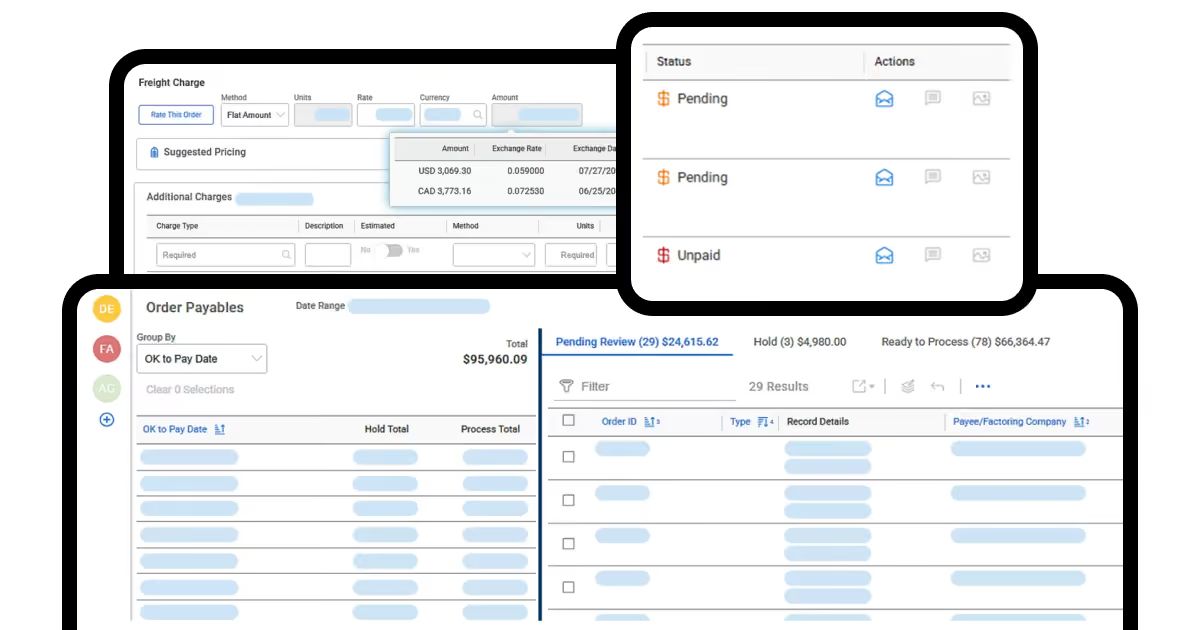
CargoWise combines forwarding jobs, accruals, billing, and agency settlements within one platform. Our engineering review found job-level accruals especially valuable. They expose provisional margins before supplier invoices arrive. However, inconsistent branch rules still create reporting disputes. We recommend testing late costs across several legal entities. Smaller forwarders should also assess configuration ownership carefully.
McLeod Software keeps dispatch, billing, factoring, and settlements together. We found its trucking workflow depth unusually strong. Load records remain close to every financial action. That reduces reference loss during billing and settlement. However, messy carrier records still require disciplined normalization. We recommend importing duplicate invoices during the pilot. Also test partial settlements and factoring reversals. These cases reveal administrator workload better than demos.
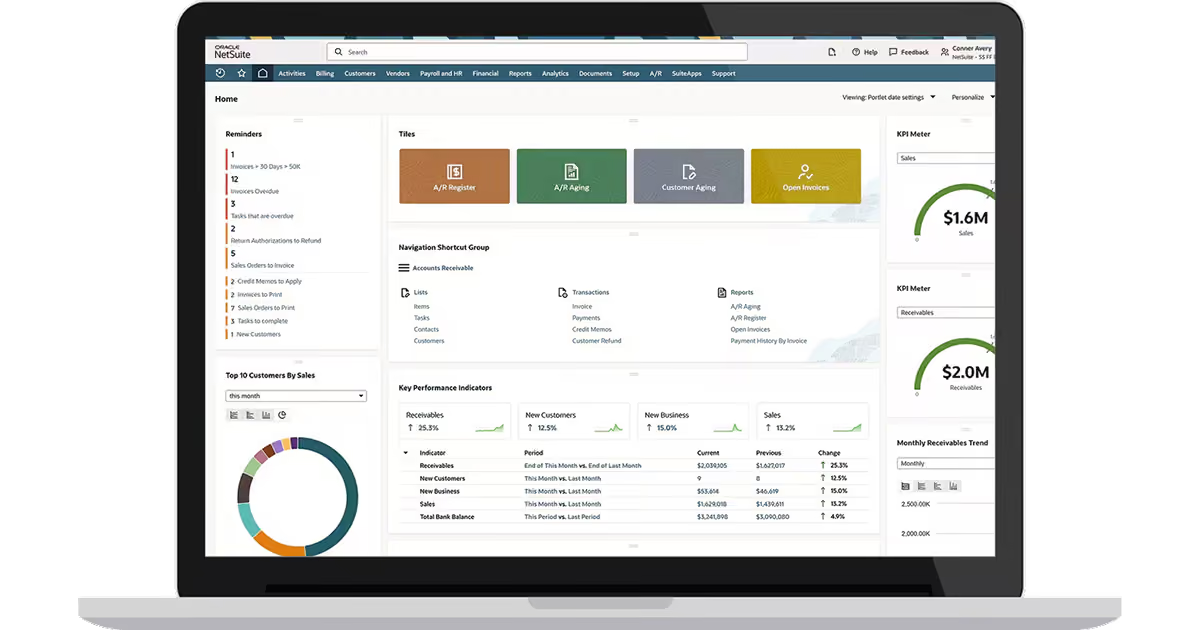
Oracle NetSuite offers strong multi-entity financial control. The review showed that custom records are useful for shipment matching. SuiteFlow routes unmatched invoices before financial posting. However, every customization increases governance and testing needs. NetSuite still needs a connected TMS for execution. We recommend testing one shipment across several subsidiaries. Include intercompany charges, credits, and late carrier bills. This exposes consolidation gaps before implementation expands.
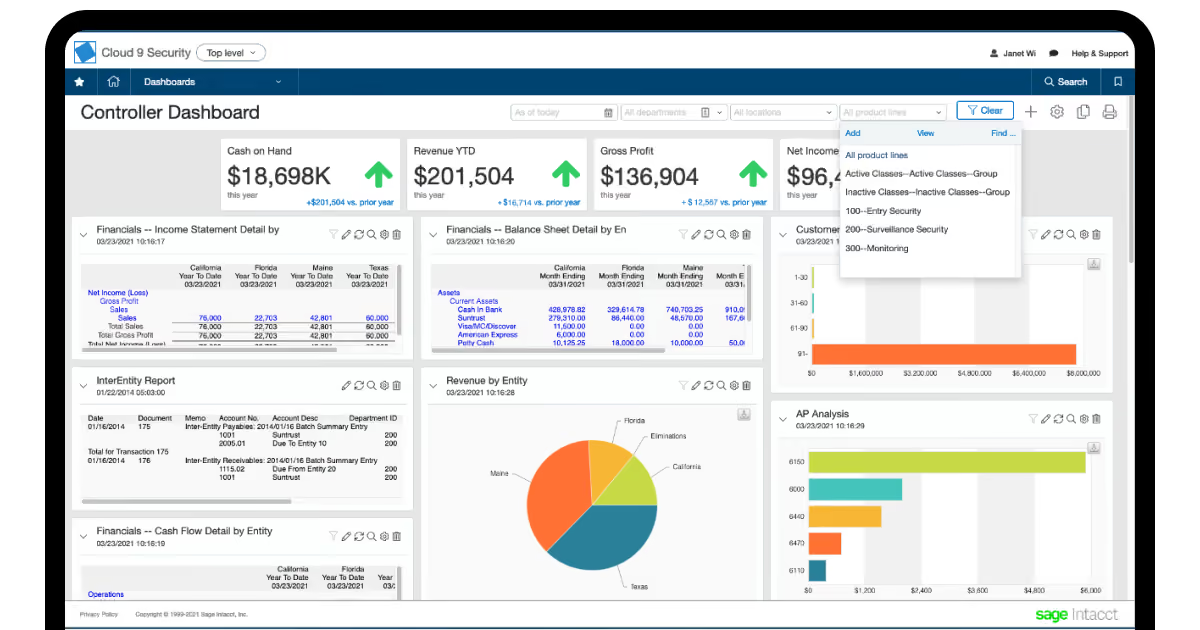
Sage Intacct works best when your TMS already manages shipments reliably. The TMS must send shipment IDs, customer and carrier records, charges. Intacct can then handle consolidation, intercompany transactions, and finance reporting. Our assessment highlighted its dimensional reporting capabilities. Sage currently promotes over 350 integrations. However, it doesn’t replace a TMS or WMS.
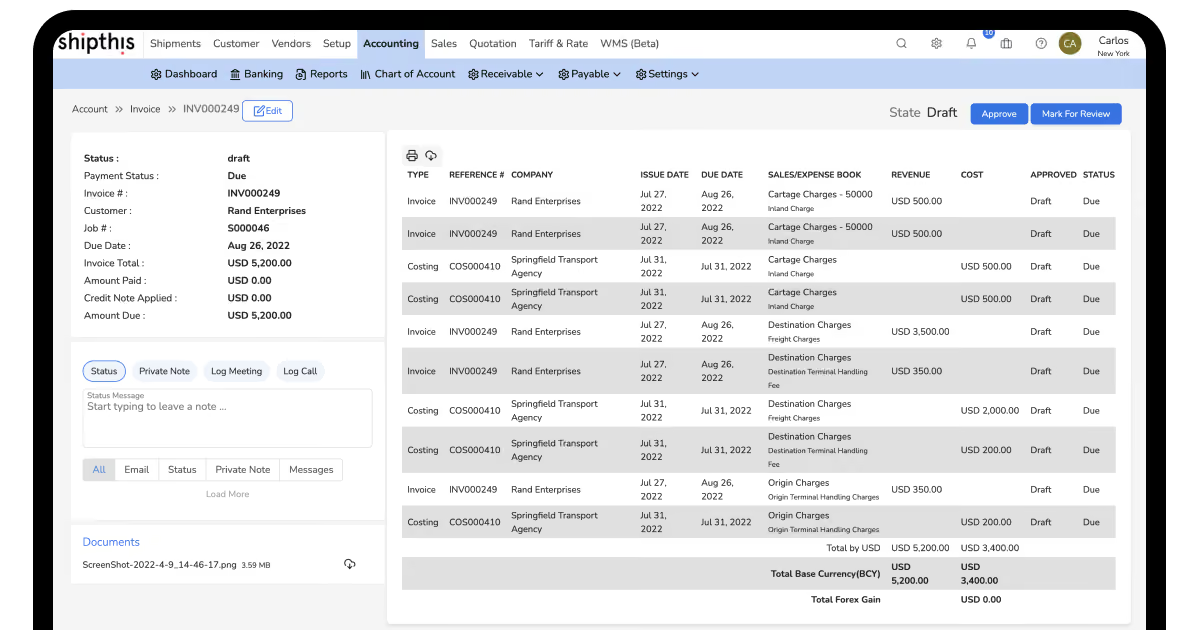
Shipthis keeps quotations, bookings, invoices, payables, and credit control within a freight-forwarding workflow. Our review found that it performed best for growing freight-forwarding operations. Growing forwarders should test multi-entity consolidation, reporting latency, and integration volume. Those areas determine whether the platform can support expansion without another financial layer.
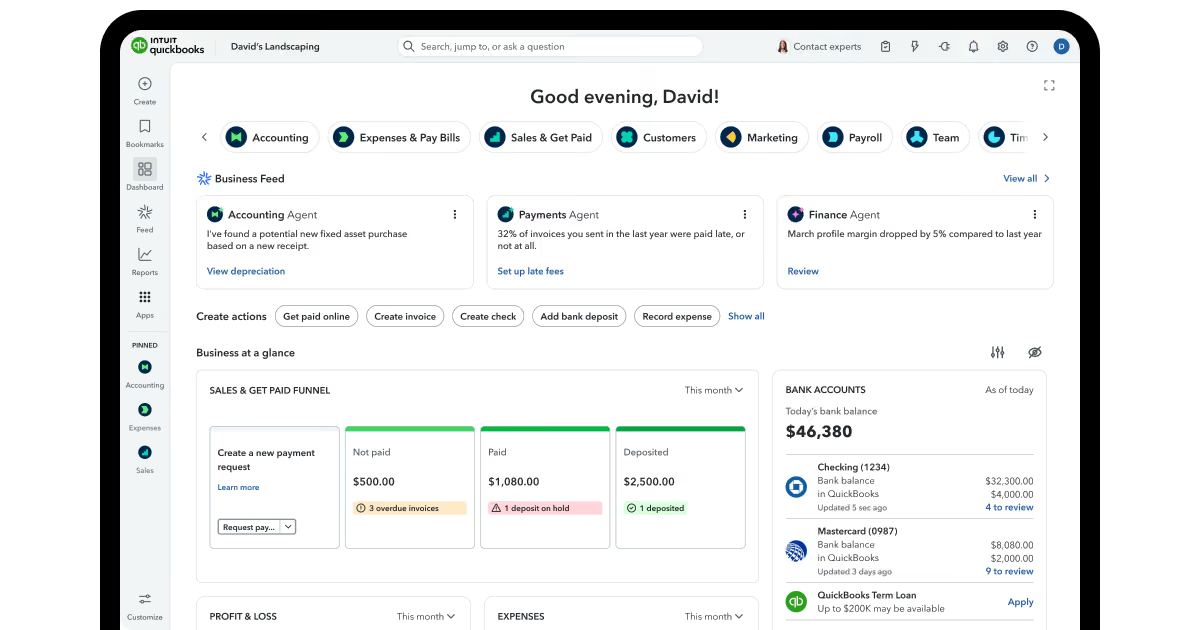
QuickBooks Online Advanced works behind a connected TMS. In our comparison, it offered the easiest financial setup. Teams can use classes or custom fields to track terminals, customers, or service categories. Automated workflows support invoice approvals and reminders. However, QuickBooks does not create native shipment objects. So the TMS should handle load-level costing, IFTA, and complex settlements.
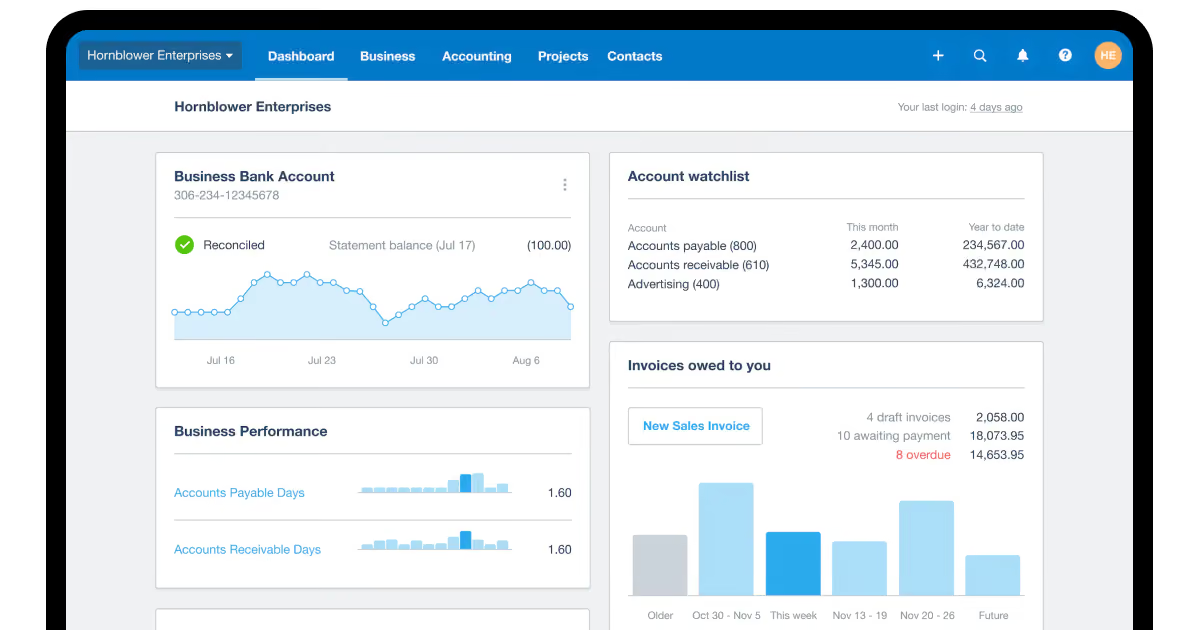
Xero gave us the clearest real-world proof. COAX tested this architecture within DrivenPeople. Approved shifts triggered invoices and driver payments automatically. Xero received validated records from the operational platform. That nearly eliminated billing errors and manual entry. Our conclusion is straightforward. Xero works best as a connected accounting layer. It doesn't replace freight execution or load costing. Integration quality therefore remains decisive.
That architecture shows Xero’s strongest logistics role. It works well as a connected accounting layer. It doesn’t replace freight execution or fleet management software. CargoWise or McLeod suits operations requiring native logistics depth. NetSuite and Sage Intacct suit complex corporate finance structures. Shipthis offers a focused option for growing freight forwarders. QuickBooks and Xero suit smaller businesses with connected operational systems. When none of the seven products is sufficient, custom logistics accounting software becomes a more reliable option.
How to choose the right logistics accounting software?
The right product is the one that matches your operations, data flows, and growth plans. A Capterra survey found 60% of buyers regretted a recent purchase. Another 96% started with an initial vendor list. That approach often favors familiarity over operational fit. Let's consider a six-step process that will help you choose the best fit.
1. Start with your logistics model
Document ten routine transactions before contacting vendors. Then identify five costly exceptions. These might include rejected invoices, late surcharges, or split payments. COAX Software discovery sessions start with these workflows. Feature lists come later. This approach prevents teams from buying impressive but irrelevant functionality.
2. Assign ownership before mapping integrations
List every TMS, WMS, CRM, bank, and telematics source. Record its owner, identifier, update frequency, and failure path. Then assign one platform to each financial trigger. Two systems shouldn't create the same invoice or payable. Likewise, one shipment shouldn't use different identifiers across connected platforms.
Myroslav Stelmashchuk, Node.js Developer at COAX Software, identifies ownership as the core issue. “They actually have a data integration problem.”
In COAX Software projects, ownership gaps cause more failures than API syntax. SyncMatix illustrated this problem at fleet scale. The platform normalized data from thousands of vehicles and different devices. That shared model supported accurate alerts, reports, and downstream calculations.
Ask each vendor four practical integration questions. Who retries failed transactions? Where do rejected records appear? How are duplicates prevented? Which system keeps the master identifier? Clear answers matter more than an impressive connector count.
3. Model current volume and future peaks
Test month-end volume, not an average Tuesday. A transport accounting software may handle daily posting but fall behind when late charges and adjustments arrive together. SyncMatix handled data from thousands of connected fleet vehicles. That scale required reliable processing during sudden activity spikes. Add peak days, month-end closing, and seasonal surges. Include projected growth over the next three years. Ask vendors for API limits and evidence of batch processing. Also, test report updates after late charges arrive.
4. Test controls, security, and auditability
Review roles, approvals, encryption, retention, and audit histories. Test reversals, deleted attachments, failed exports, and permission changes. Happy-path transactions reveal very little about financial control. NIST’s financial-sector guidance emphasizes timely, role-based access to resources. Drivers, dispatchers, accountants, and managers need different permissions. Security also affects financial risk. IBM reported an average global breach cost of $4.44 million in 2025. Financial integrations expose bank, employee, customer, and carrier information.
5. Calculate the full ownership cost
License fees represent only one ownership expense. Add configuration, migration, integrations, training, support, and internal administration. Include future customizations and spreadsheet workarounds. Implementation risk deserves equal attention. Capterra’s 2026 research found that 92% of UK buyers who regretted their purchase experienced implementation disruption. Only 27% reported no disruption or regret.
So, compare each option across at least three years. A low subscription price may hide high integration costs. A costly implementation may reduce years of manual work.
The table below compares three common strategies for transport accounting software.
Dimension
Ready-made platform
Custom solution
Hybrid approach
Best fit
Standard logistics processes
Proprietary financial logic
Standard finance with unique operations
Initial launch
Usually faster
Requires discovery and development
Supports phased implementation
Workflow fit
Defined by vendor capabilities
Matches exact business rules
Customizes differentiating workflows
Integration model
Depends on the available connectors
Uses purpose-built data contracts
Combines connectors with custom orchestration
Data ownership
Governed partly by vendor policies
Controlled directly by your company
Divided across selected components
Scalability
Limited by plans and product architecture
Defined by technical architecture
Extends around proven core systems
Security ownership
Shared with the software vendor
Primarily owned by your company
Shared across vendors and internal teams
Upgrade control
Vendor controls timing and changes
Your roadmap controls releases
Responsibilities depend on each component
Maintenance
Core updates included
Requires ongoing engineering support
Splits work between vendors and developers
Initial cost
Usually lower
Usually higher
Moderate and distributed across phases
Long-term cost
May rise with users and add-ons
Depends on maintenance requirements
Limits unnecessary custom development
Vendor dependence
Usually higher
Lower with documented architecture
Reduced through replaceable components
Process flexibility
Limited to available configuration
High
High for selected workflows
Best long-term use
Stable and common processes
Unique and changing operations
Complex businesses protecting core investments
Ready-made products suit stable workflows and limited integration complexity. Custom systems suit proprietary pricing, settlement, or compliance rules. Hybrid architecture combines both advantages.
6. Run a transaction-level pilot
Don't base the final decision on demonstrations or sample data. Use actual invoices, bills, credits, settlements, and adjustments. Include confidential information only within a controlled testing environment. Add one duplicate event and one failed integration. Include a surcharge that arrives after customer billing. Then reverse a transaction after the accounting period closes.
Measure posting accuracy, exception resolution, and reconciliation time. Track every manual intervention. Also record which errors users couldn't resolve independently. Don't judge the pilot by the dashboard appearance. Compare source records against every posted financial entry. Confirm that each adjustment retains its history and approver.
When custom logistics accounting software makes more sense
Ready-made platforms work well when your financial processes follow standard rules. They become restrictive when your operating model depends on unique calculations, approvals, or data sources. The problem with such transport accounting software usually appears through workarounds. Teams export transactions into spreadsheets. Finance adjusts rates outside the main platform. Operations maintains separate records for settlements or surcharges.
Custom development makes sense when these workarounds affect revenue, cash flow, or reporting accuracy. It also becomes relevant when no single platform covers the full workflow. For example:
Your rates depend on complex contractual conditions.
Driver or carrier payments require custom calculations.
Financial data comes from several disconnected platforms.
Transactions need reviews beyond standard accounting controls.
Management needs metrics unavailable in packaged products.
Existing connectors lose data or require manual reconciliation.
In these cases, replacing every system creates unnecessary risk. A custom layer often provides a better path. It connects existing products and manages the rules they don't support. COAX Software helps logistics companies design this architecture. Our custom logistics software development work covers fleet systems, booking platforms, payment flows, and operational portals.
We don't start by recommending a complete rebuild. First, we identify the processes creating the highest financial risk. Then, we determine which existing components of transport accounting software should remain. A custom solution may include several focused modules. One service may calculate shipment charges. Another may validate carrier bills. A reporting layer may combine operational and financial data. This modular approach supports gradual implementation.
Our experience in finance software development also shapes each decision. Accounting logic requires stronger controls than ordinary workflow automation. Every calculation needs a clear source. Every adjustment needs a history. Every sensitive action needs controlled access.
COAX Software supports the full delivery process. Product managers define requirements with your stakeholders. Designers map practical user flows. Engineers build the platform and integrations. QA specialists test normal and exceptional transactions. DevOps engineers prepare secure deployment and monitoring.
Around 90% of our engineers are mid-level or senior specialists. Our teams work across the US and European time zones. You may engage a complete product team or add targeted expertise. We also prepare the architecture for future capabilities. Reliable financial data supports logistics analytics and practical AI in logistics. However, those tools only deliver value after the underlying records become consistent.
COAX Software is ISO 9001- and ISO 27001-certified. We apply structured quality and security practices throughout the delivery process. Our clients also rate us 4.9 out of five on Clutch. Your accounting workflow shouldn't depend on hidden spreadsheets or repeated manual checks. We’ll help you identify the gaps, define the right architecture, and build the missing financial layer.
Can accounting software for transportation companies support freight factoring?
Yes, but support varies greatly. Some systems export approved invoices to factoring providers. Others manage advances, reserves, fees, and collections directly. Check whether the platform maintains clear ownership of invoices. Also test partial payments and chargebacks. Our COAX Software developers recommend mapping factoring events before integration. You can see this in detail in our SyncMatix project. Otherwise, finance teams may record the same receivable twice. Confirm export timing and recourse status during testing.
Does accounting for logistics include IFTA fuel tax reporting?
Generic accounting suites rarely handle IFTA natively. Trucking platforms often capture jurisdiction miles and fuel purchases. They then calculate taxable differences by state. Verify how telematics data is entered into the system. Also review correction workflows. We saw how small mileage gaps create major reconciliation work. Those gaps become costly during quarterly filings. Run one quarter before launch.
How long does transportation accounting software migration take?
A focused migration may take several weeks. Complex programs may require several months. Timing depends on entities, history, data quality, and integrations. Don't migrate every legacy field automatically. Preserve records needed for reporting and audits. Our COAX Software team first tests opening balances, unpaid items, and recent transactions. Older archives should move after financial validation. This exact sequence limits rollback risk.
Can accounting software for the transport business process offline driver receipts?
Yes, when mobile capture supports offline queues. The application stores receipt images and metadata locally. It syncs after connectivity returns. The harder issue is duplicate prevention. Each upload needs a stable identifier and timestamp. For example, in our custom logistics software development, we use retry-safe mobile patterns. They protect records when drivers cross low-connectivity areas. Test airplane mode before deployment.
What does an accounting implementation for a transportation company usually cost?
Costs vary by product, users, integrations, and migration scope. Subscription pricing covers only the platform. For example:
CargoWise: Forwarding fees range from $2.63 to $19.95 per shipment. Land transport costs $1.45 per consignment. Container transactions cost $1.95 each.
McLeod Software: McLeod requires direct contact with its sales team. Pricing depends on selected products, modules, and integrations.
Oracle NetSuite: NetSuite provides tailored pricing through its sales team. Costs vary by users, modules, entities, and contract terms.
Sage Intacct: UK plans start at £1,000 monthly. US pricing depends on modules and organizational requirements.
Shipthis: Its 2026 guide lists $89 per user monthly. Its main pricing page now requests customized pricing.
QuickBooks Online Advanced: The standard US price is $275 monthly. Temporary discounts may reduce the initial subscription cost.
Xero: Growing costs $55 monthly in the United States. Established costs $90 monthly and includes multi-currency tools.
You should budget for configuration, data cleanup, training, and support. Custom integrations often become the largest variable. COAX Software estimates implementation after workflow and exception analysis. That approach prevents misleading quotes based only on user counts. Request separate estimates for each integration.
Can logistics accounting connect fuel cards and toll providers?
Most modern platforms connect these providers through APIs or files. COAX Software used an API integration in DrivenPeople. The platform sent approved invoices and driver payouts to Xero. COAX Software used the same API pattern in DrivenPeople and SyncMatix. Although neither case involved a fuel-card provider.
The integration should preserve vehicle, driver, date, and merchant references. It should also flag missing matches. Our developers recommend reconciling provider totals against imported transactions daily. This catches delayed files and duplicate charges. It protects route margins and driver settlements. Test provider outages before production launch.
Who owns the data inside accounting software for logistics company operations?
Ownership of transportation accounting software depends on your contract and deployment model. Review export rights, retention, backups, and termination terms. Confirm whether complete exports include attachments and audit logs. Also check usable formats. COAX Software prefers systems with documented APIs and complete exports. Vendor access shouldn't become permanent lock-in for your financial history. Test a complete export before contract renewal.



























































































_.avif)











%2520explained.avif)

We are interested in your opinion