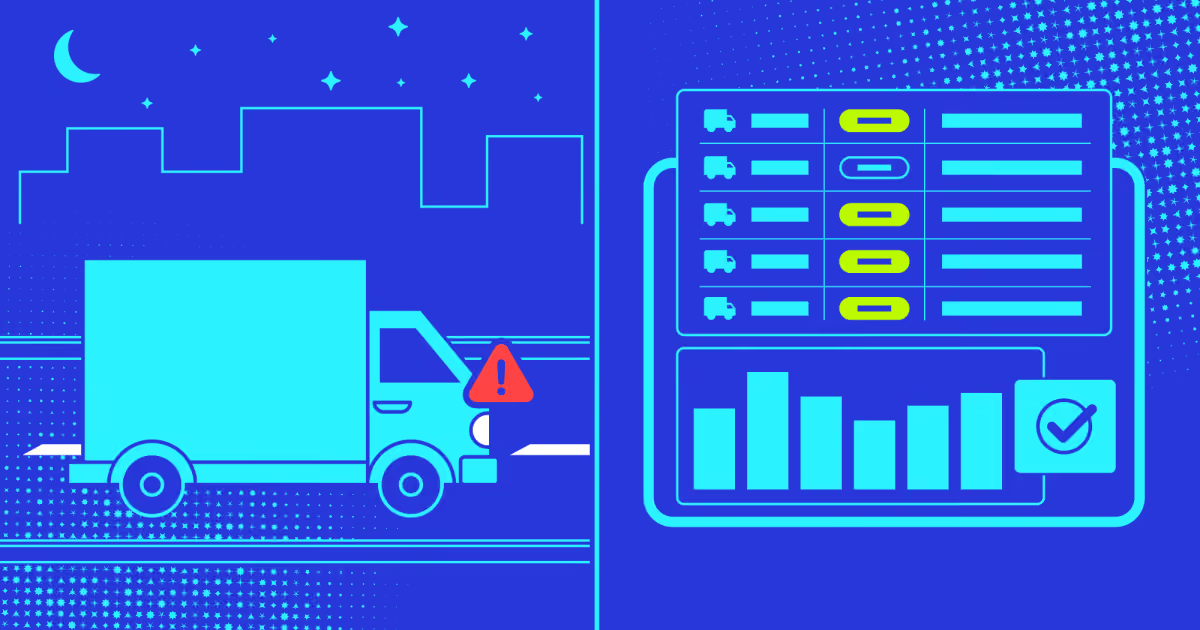
At 6:50 AM, driver 118 went dark near Buffalo. No check-in call arrived. Dispatch had 500 vehicles running cross-border that week. One truck disappearing off the map shouldn't matter this much. Our client's answer was more staff. They hired three extra dispatchers to keep pace. Call volume dropped for two weeks. Then a customer canceled over one missed pickup. Turnover climbed to 45% within the year.
More phones don't fix blind spots. Visibility does. COAX rebuilt their operations around remote fleet management. The build combined live GPS, predictive alerts, and driver coaching. Late deliveries dropped from 18% to 7% of stops. Turnover fell 22% within a year.
The lesson goes beyond one carrier's challenge. Any fleet running blind faces the same ceiling. Remote fleet management breaks through it, whether you run five trucks or five hundred.
We've spent 16 years building logistics tech at COAX. Fleets that see everything in real time recover fast. Fleets that don't lose customers. We’re breaking down the difference here.
This guide explains how this technology works. We cover core technologies, real benefits, and common use cases. You'll also see a full platform comparison and the best practices for remote operations.
What is remote fleet management?
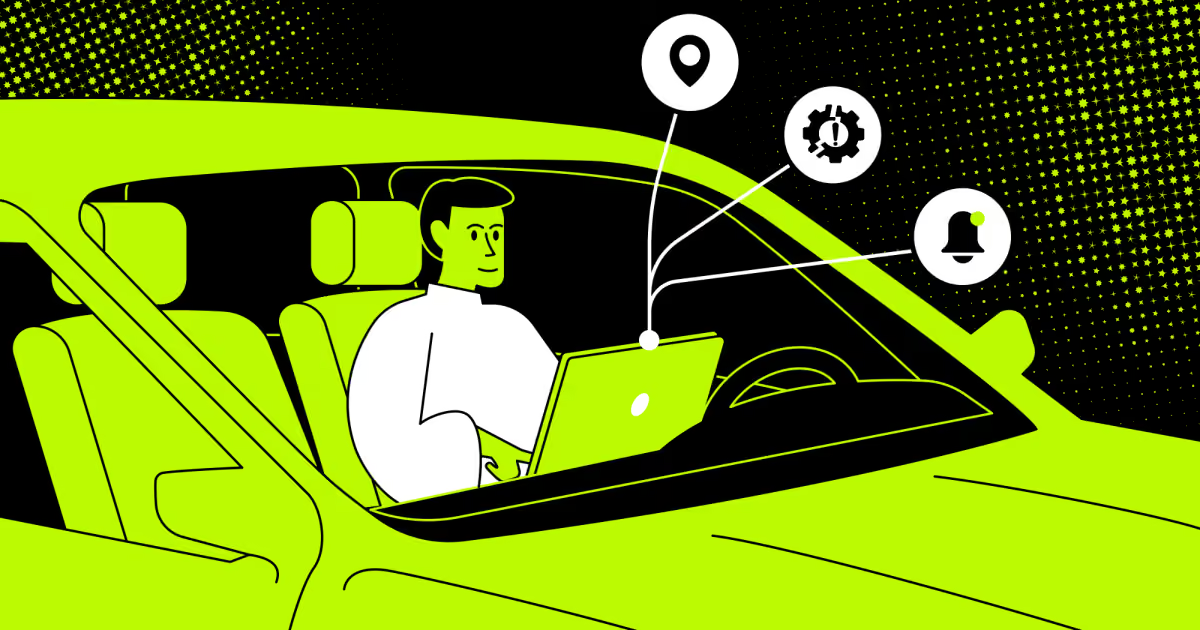
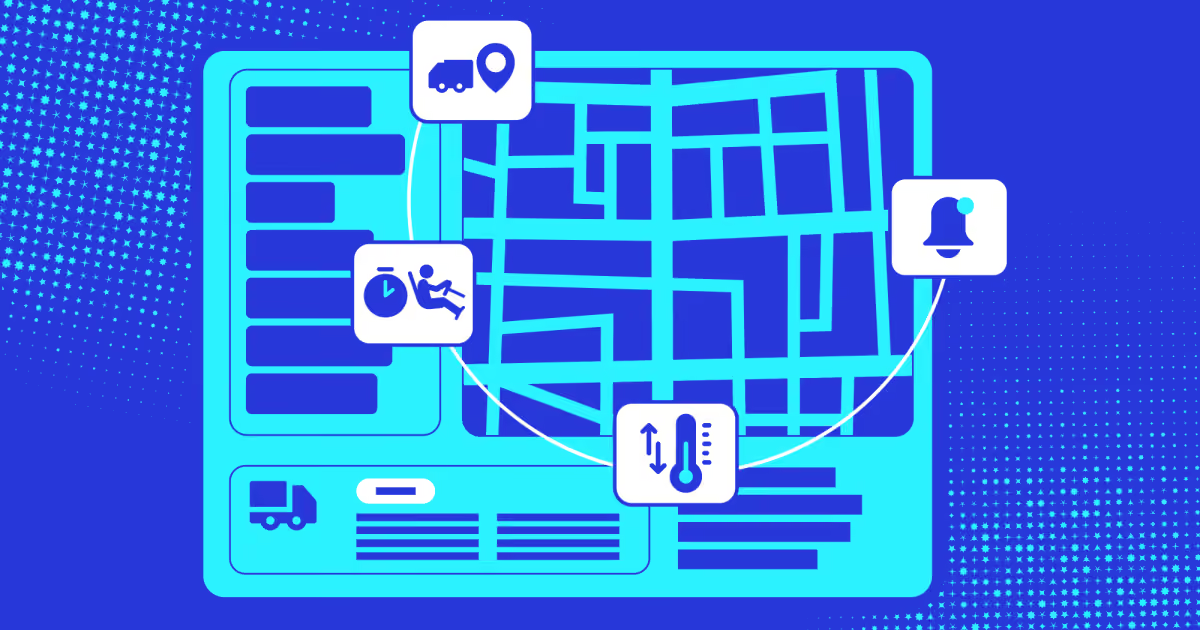
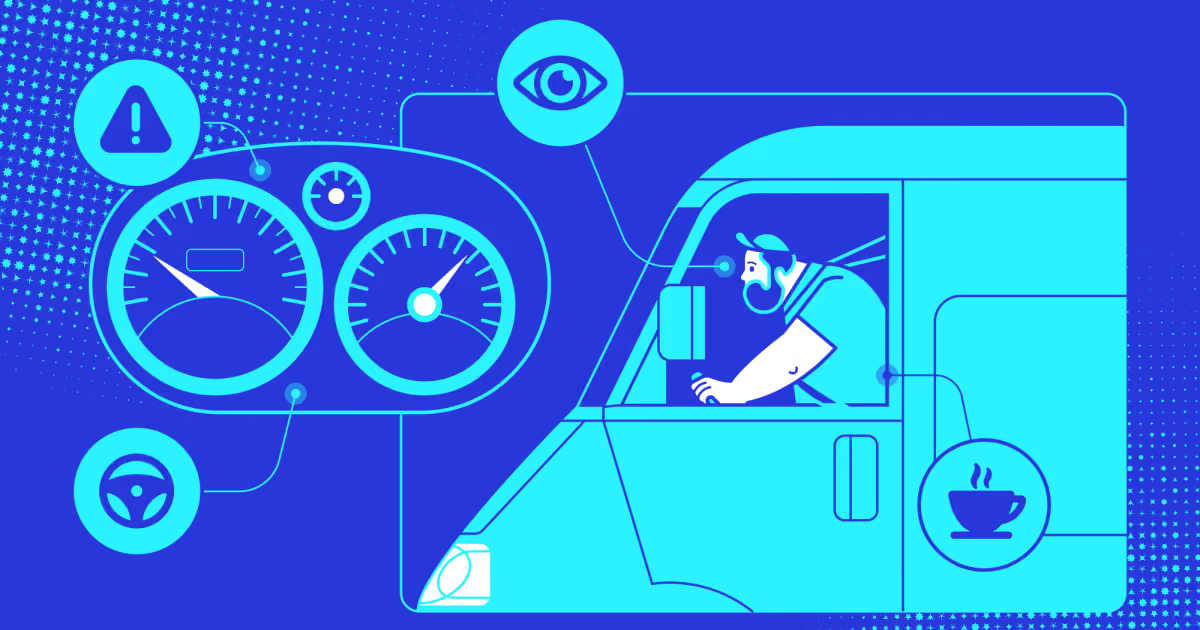
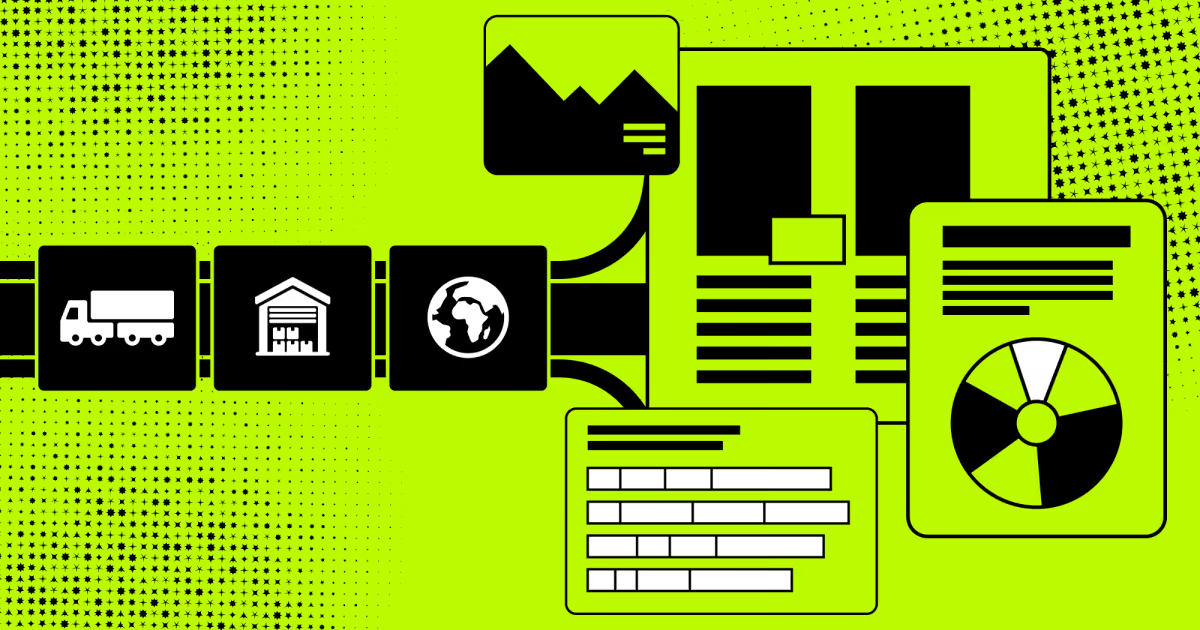
Remote fleet managementis the process of overseeing vehicles from anywhere, in real time, using technology. No onsite presence is required. It relies on GPS, telematics, and cloud dashboards. These track location, driver behavior, fuel use, and maintenance live.
It's the remote layer over traditional fleet management. Connected devices replace physical presence for tracking and action. A manager checks routes from a laptop, not a lot. A dispatcher reroutes trucks from a phone, not a radio.
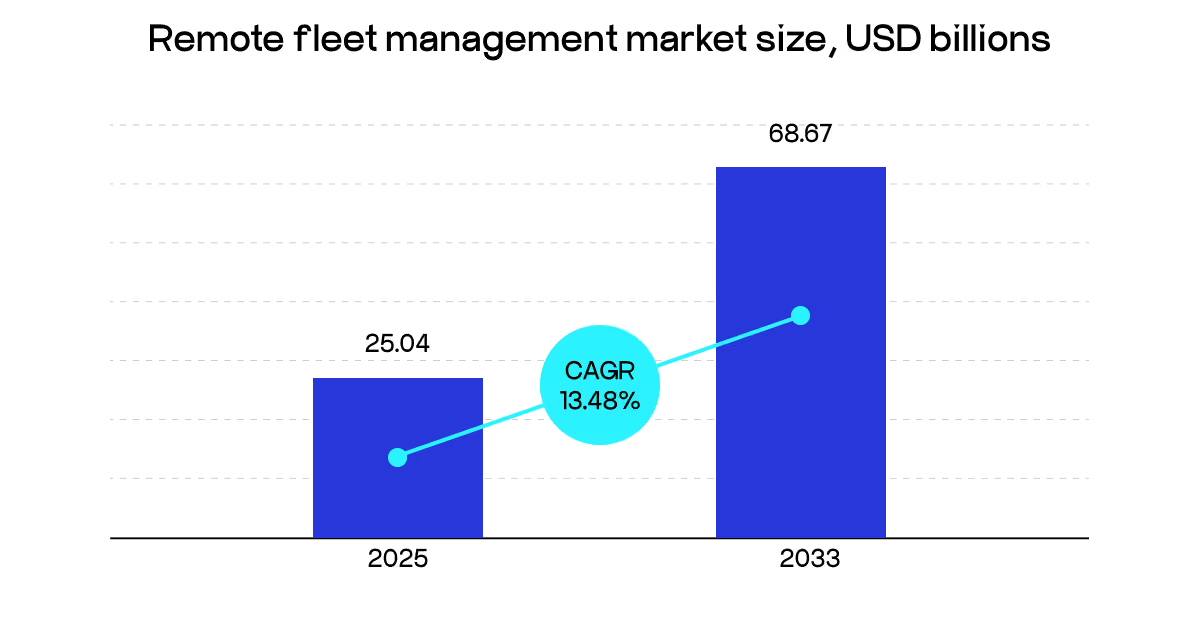
The remote fleet management market backs this shift with real numbers. Projections put it at $23.46 billion by 2033. That's an 18.5% compound annual growth rate. Growth like that doesn't happen without a real gap closing.
Deploying smart telematics fixes this by cutting fuel use by 10% to 15%. Because these savings accumulate daily, most fleets completely recoup their initial setup costs within 6 to 12 months. This quick payback window makes waiting much more expensive than switching.
These numbers point to one conclusion: waiting costs more than switching.
"We had a client running hundreds of vehicles with solid GPS coverage. Their customers still logged into three different apps just to see one truck. Data existed. Nobody could act on it fast enough," Orest Falchuk, Head of Engineering at COAX Software
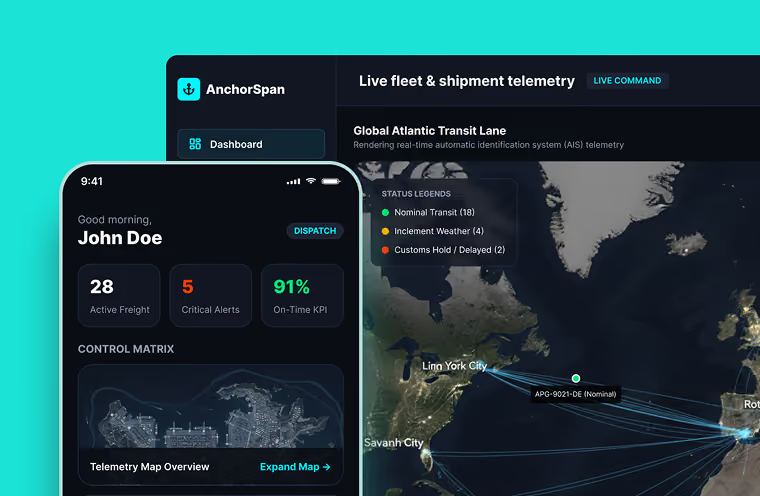
The platform we built for this client, SyncMatix, replaced three apps. Real-time updates improved route-event response by 25%. The company scaled to 500 customers through partners. That's the practical shape of remote fleet management: fragmented data becomes one clear, actionable view.
How does remote fleet management differ from traditional fleet management?
Traditional fleet management runs on manual logs and delayed reports. Remote fleet vehicle tracking replaces that gap with live data and instant response.
Feature
Traditional Fleet Management
Remote Fleet Management
Data collection
Relies on manual paper logs, radio calls, and end-of-day summaries.
Pulls real-time GPS, engine, and driver diagnostics continuously.
Response time
Reactive; problems are addressed after a failure or customer complaint occurs.
Proactive; predictive engines update forecasts every 15 minutes to prevent delays.
Management style
Anchored to a physical desk, using phone calls and paper files.
Location-independent; mobile dashboards feature role-specific access controls.
Scalability
Struggles to cope with complex cross-border compliance as fleet size grows.
Highly scalable; manages large, 500+ vehicle fleets by adding data feeds over headcount.
Cost structure
High hidden costs via excessive labor, delay penalties, and churn.
Shifts expenses to predictable software infrastructure to eliminate waste.
Data collection changes first. Traditional operations rely on paper logs, radio calls, and end-of-day summaries. A dispatcher learns about a breakdown hours later. A remote fleet management system pulls GPS, engine, and driver data continuously. SyncMatix processes location pings from thousands of vehicles every few seconds. Nothing waits for a phone call or a spreadsheet update.
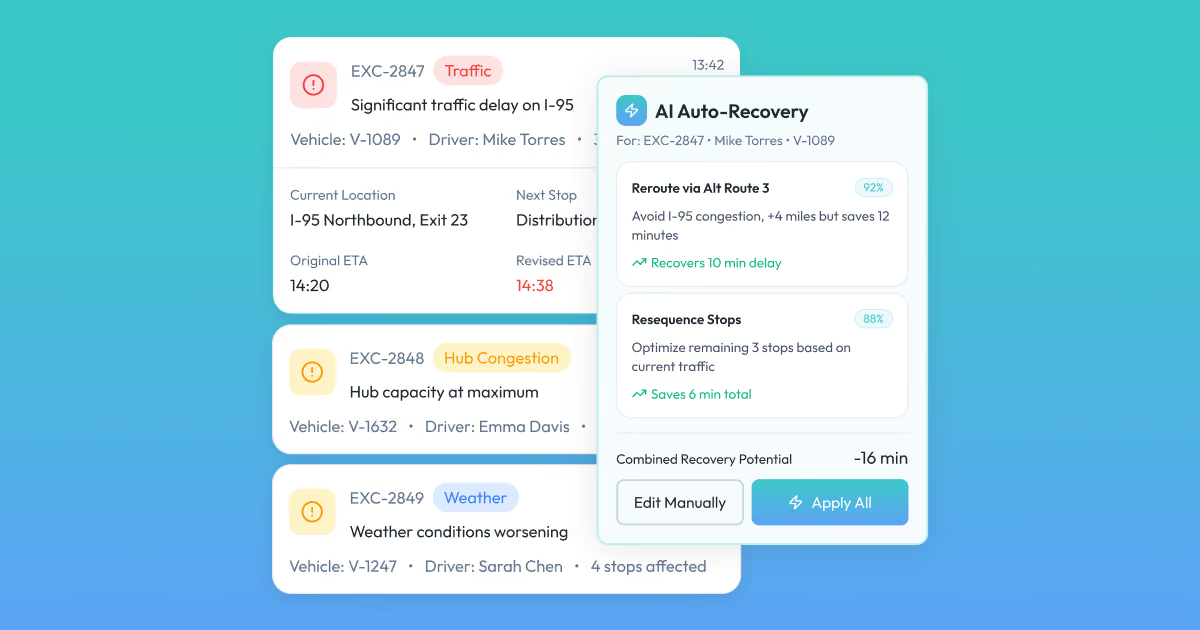
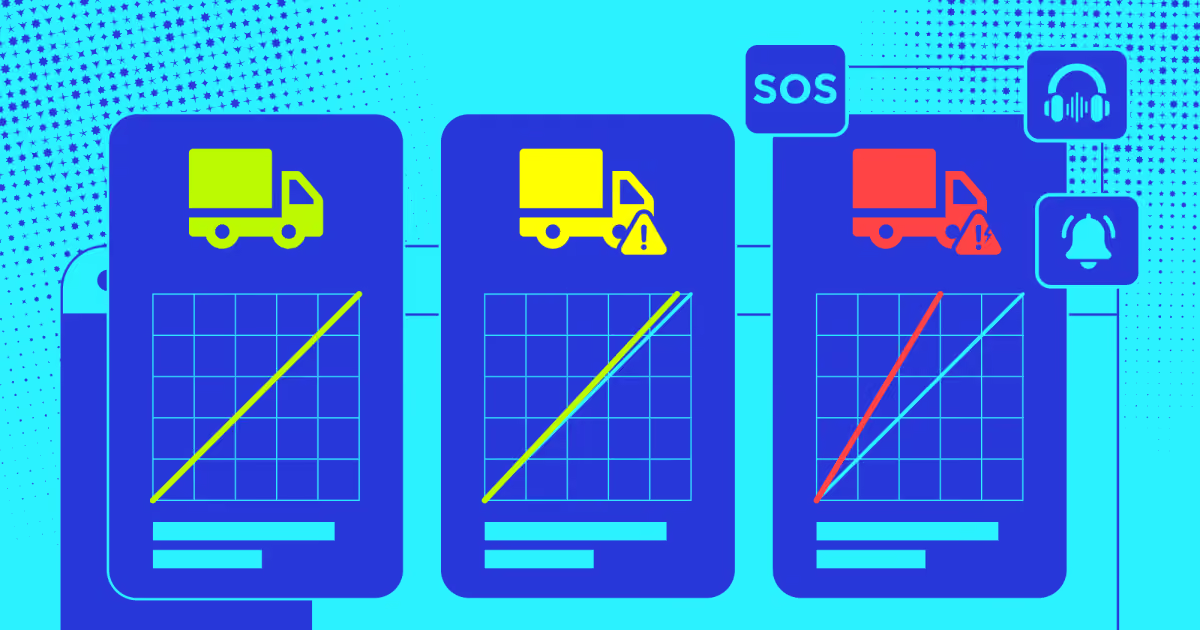
Response time shifts from reactive to proactive. Traditional fleets fix problems after they happen. A missed delivery gets discovered when a customer calls to complain. Remote systems flag risk before it turns into a loss. The DriveIQ platform COAX developed has a predictive engine that updates delivery forecasts every 15 minutes. It cut late deliveries from 18% to 7% of total stops for one client. That's the difference between damage control and damage prevention.
The manager's role changes too. A traditional fleet manager works from a desk, phone, and paper files. A remote fleet manager works from dashboards, wherever they happen to be. They approve routes, override alerts, and configure thresholds from any device. SyncMatix built separate views for administrators, fleet managers, drivers, and partners. Each role gets exactly the access it needs, nothing more.
Scale and complexity separate the two models further. Traditional processes buckle once a fleet crosses a few dozen vehicles. Cross-border operators running freight forwarding software face even tighter margins for error. DriveIQ's client managed 500 vehicles across the US and Canada. Manual coordination couldn't keep pace with that volume or the customs complexity. Remote systems scale by adding data feeds, not headcount.
Cost structure flips as a result. Traditional fleet management hides its costs in labor, delay penalties, and churn. Remote systems trade some of that labor cost for software spend. SyncMatix's client saw support tickets fall 45% after consolidation. Fewer tickets meant fewer staff hours spent chasing basic status updates.
Mixing up these two models creates real risk. A company that buys remote software but keeps traditional habits wastes the investment. Dispatchers who still call for updates ignore the live data in front of them. Fleet managers who wait for end-of-day reports miss the point of real-time alerts. The technology only pays off when the workflow around it changes too. Half-adopted remote systems often cost more than the traditional process they replaced.
How does remote fleet management work?
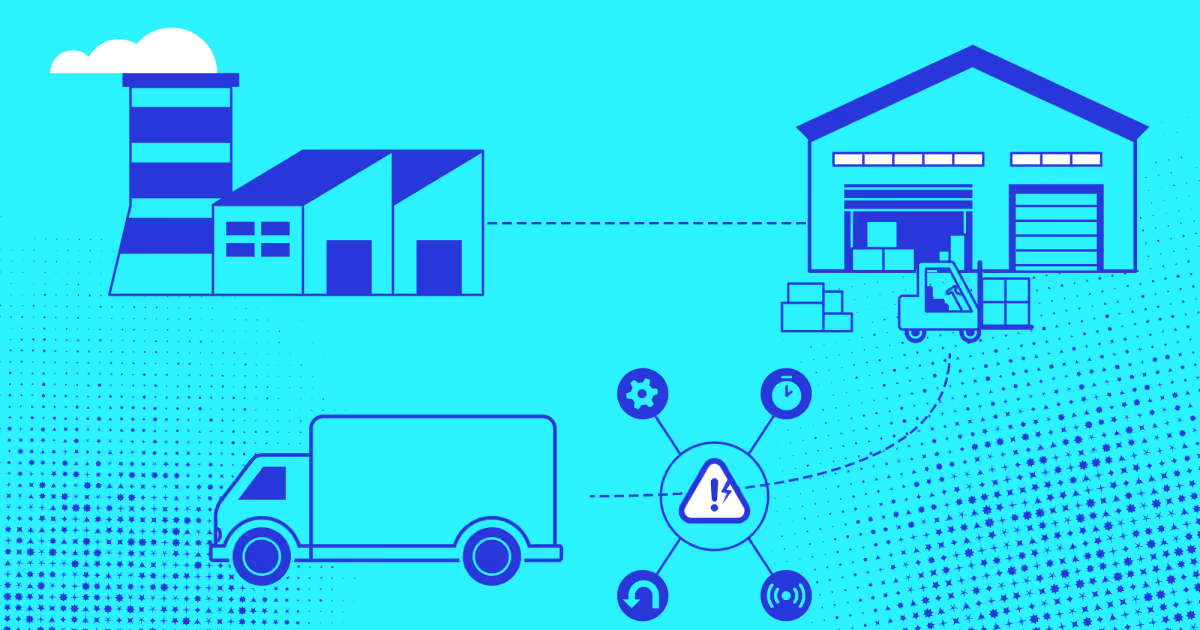
Remote fleet management runs on five connected layers. Sensors capture data, networks move it, software processes it, and dispatchers act on it.
Core technologies that enable remote fleet management
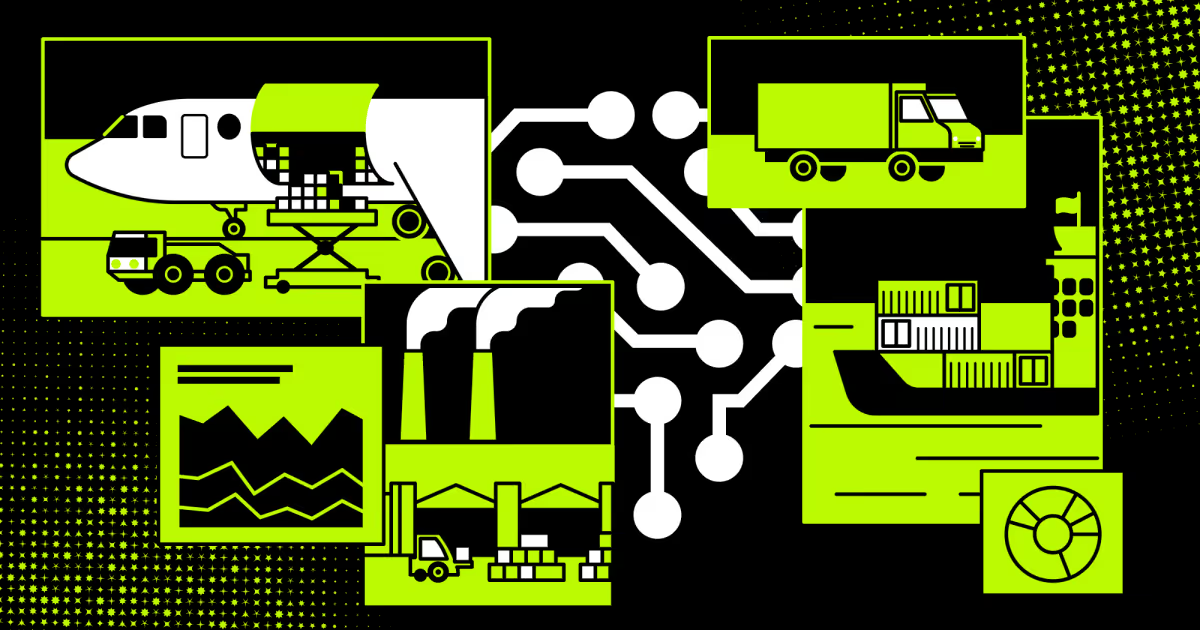
Five technology layers work together to make remote fleet management possible. Each layer feeds the next, from raw sensor data to a dispatcher's screen.
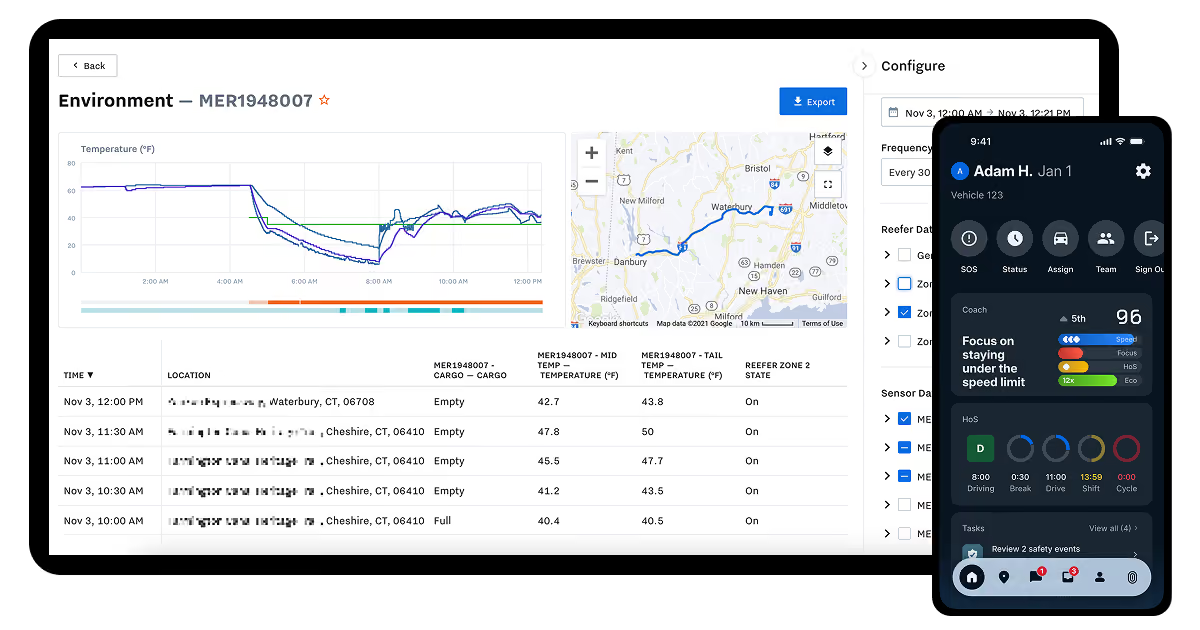
Telematics and IoT form the foundation. OBD-II dongles and hardwired units pull data straight from the engine. GPS pinpoints location, speed, and heading in real time. This is remote fleet diagnostics in its purest form: continuous reporting on fuel use, battery voltage, and fault codes. We built this exact layer for DriveIQ, ingesting GPS pings from 500 vehicles at once.
Connectivity carries that data instantly. Cellular and satellite networks transmit readings around the clock. eSIMs switch networks automatically at border crossings. Cross-border carriers can't afford dead zones mid-route. DriveIQ's client ran cross-border freight between the US and Canada daily. Reliable data flow across that border was non-negotiable from day one.
Cloud computing turns raw signals into usable dashboards. Fleet software consolidates every stream into one view. APIs push that data into accounting, CRM, and logistics systems. SyncMatix unified data from multiple hardware vendors into one dashboard. Before that, fleet managers logged into three separate apps daily.
AI and video telematics add a predictive layer. Dashcams flag distracted or drowsy driving instantly. Machine learning predicts part failures before they happen. Our Agritech platform used similar modeling for a different problem: predicting crop and supply risk from weather and yield data. The underlying logic carries over directly to vehicle maintenance forecasting.
Automated compliance closes the loop. Electronic logging devices record Hours of Service automatically. No more paper logs, no more manual entry errors. Together, these five layers turn a fleet into a live, queryable system.
"True efficiency happens when you secure your telemetry baseline first. Then you perfect one routing workflow, and keep dispatchers in control of exceptions. That is how you transform a fleet's operation instead of just adding another dashboard," says Orest Falchuk, Head of Engineering at COAX Software.
Common remote fleet management workflow
A remote fleet management system follows one continuous loop: collect, monitor, maintain, and analyze. Data never stops moving through these four stages.
Data collection starts everything. GPS tracks location and route execution live. OBD-II sensors monitor engine health and fuel efficiency. Video telematics records harsh braking and fatigue events. DriveIQ ingested exactly this mix: GPS streams, EDI feeds, and driver logs from day one. Normalizing those mismatched formats became the project's first real technical hurdle.
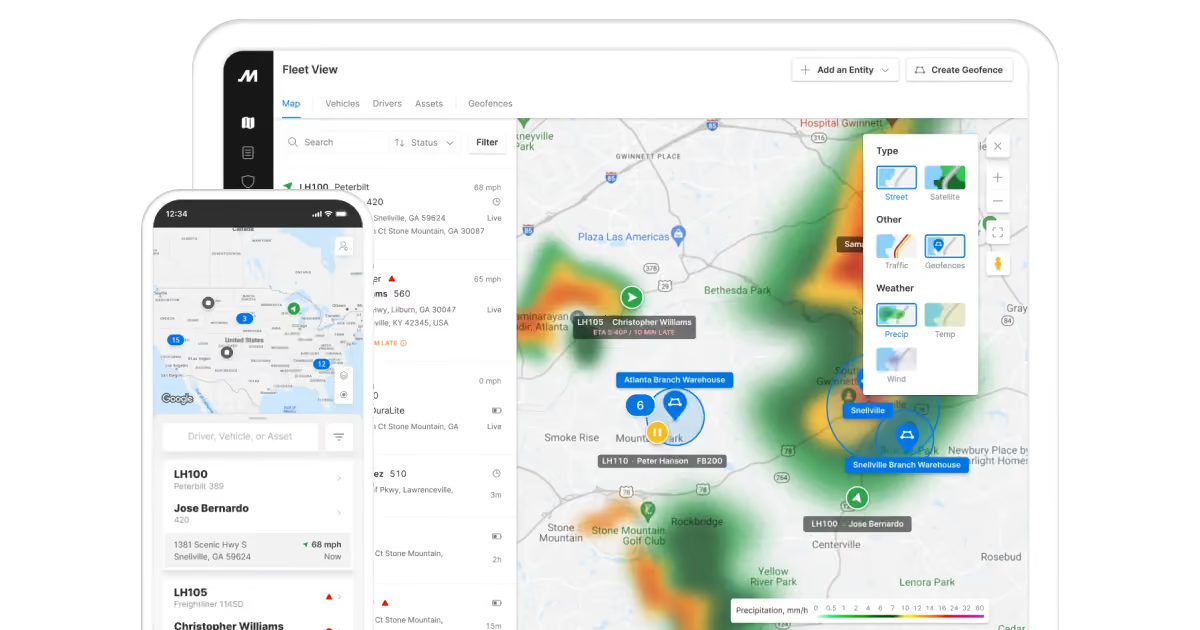
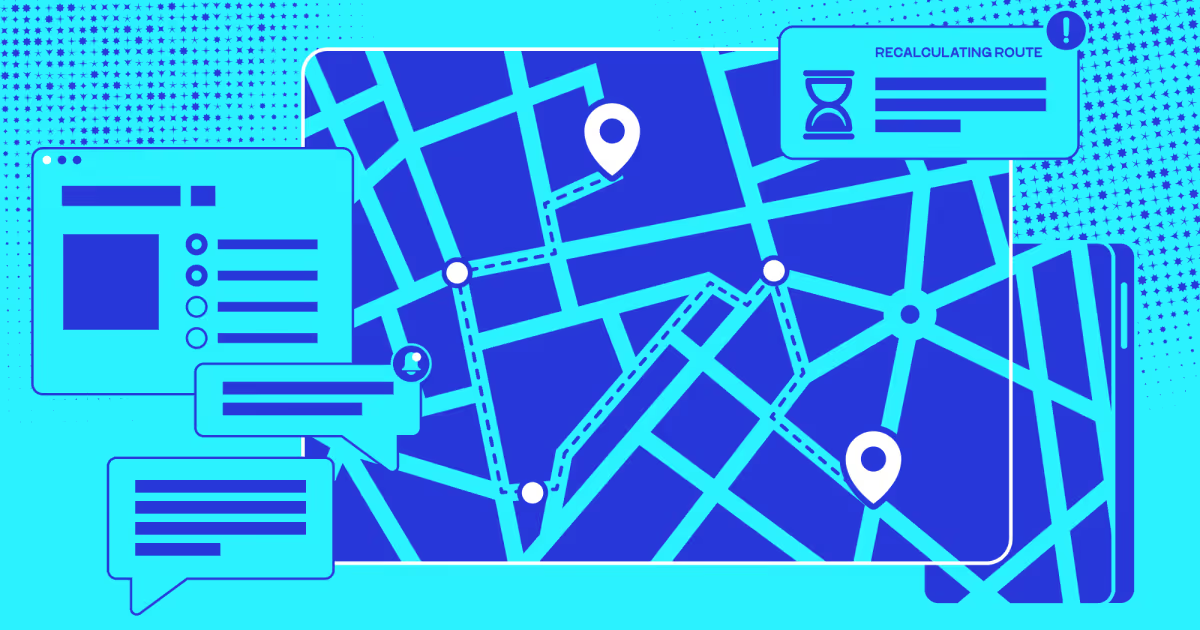
Monitoring and dispatch keep operations running without a physical office. A remote fleet manager adjusts routes from live traffic and weather data. In-cab messaging replaces slow phone calls entirely. Geofencing triggers alerts the moment a vehicle leaves a job site. SyncMatix built role-based alert routing for exactly this reason. Utilization alerts went to managers; task alerts went straight to drivers.
Preventative maintenance replaces reactive repair work. Drivers submit digital inspection reports with photos attached. Automated diagnostics trigger work orders before a breakdown happens. Managers order parts and schedule repairs while trucks stay on the road. This shift from reactive to predictive maintenance defines most successful remote fleet management tracking builds we've delivered.
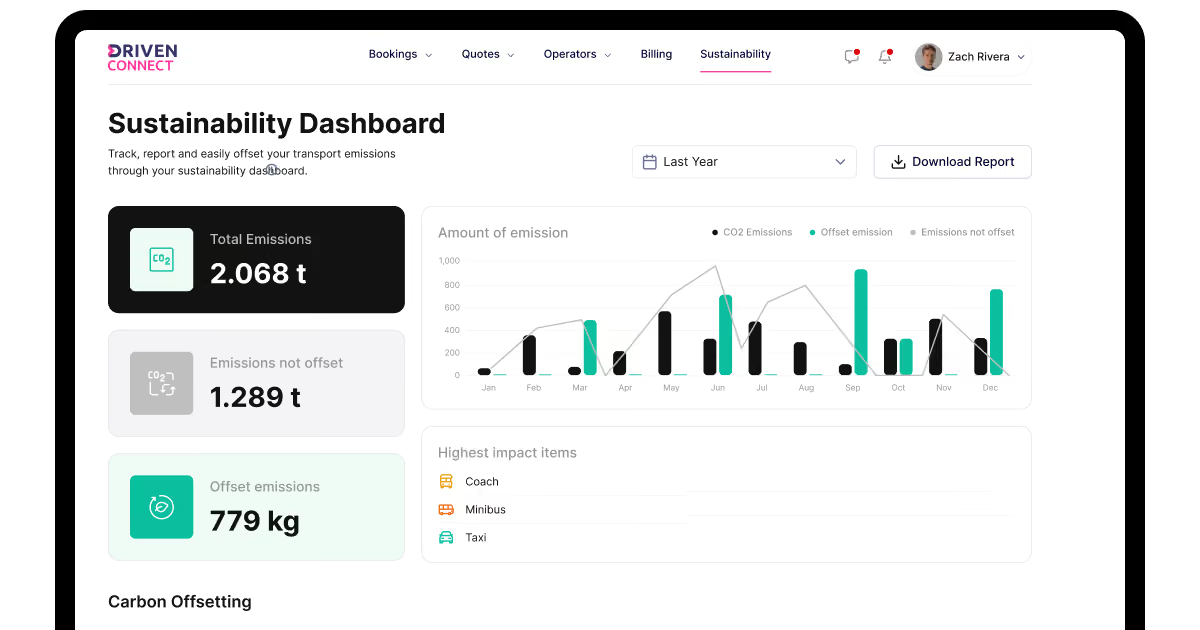
Compliance and analytics close the workflow. ELD systems log Hours of Service and generate tax reports automatically. Managers review idling time, fuel use, and driver scores weekly. For the Driven Connect system we delivered, an emissions module tracks distances, engine types, and fuel metrics. Then it calculates the UK carbon tax compliance seamlessly. This centralized reporting feeds directly into the tender dashboard. This lets buyers optimize their costs and minimize environmental impact.
An important element in this workflow is driver adoption. It’s a challenging task to implement. For example, DriveIQ's driver scorecards combined safety, efficiency, and service into one weekly view. That single change lifted voluntary coaching engagement significantly. Every stage in this loop feeds the next one directly.
What are the benefits of remote fleet management?
A Dubai transit operator once ran routes on guesswork alone. Dispatchers assigned drivers by phone. Passengers waited at stops with no ETA.
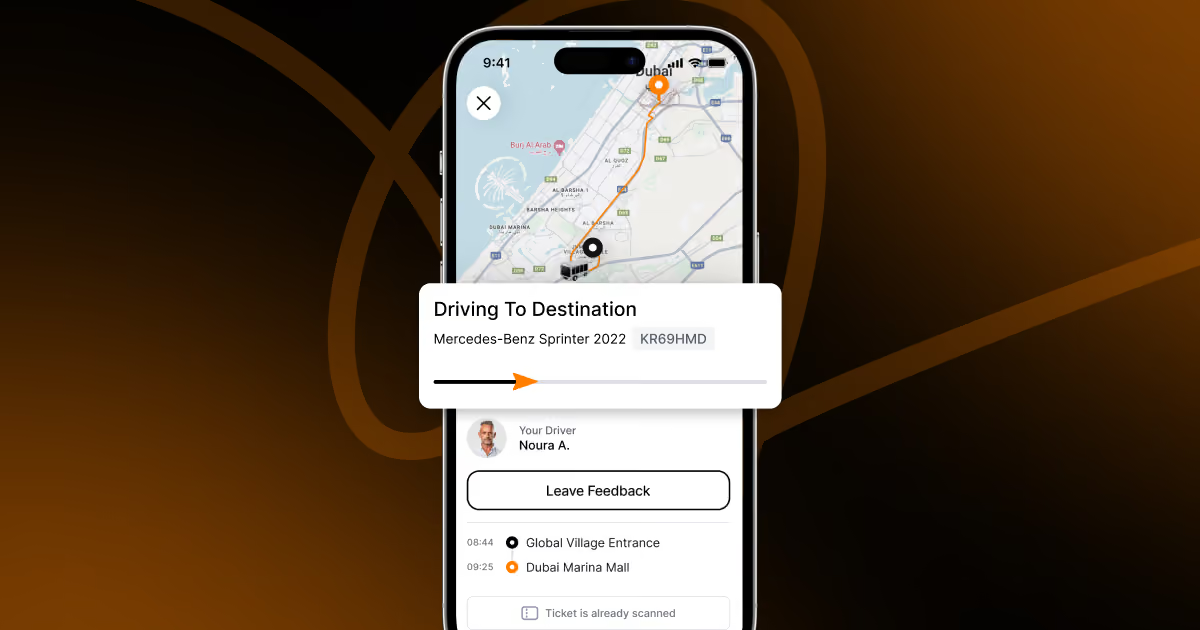
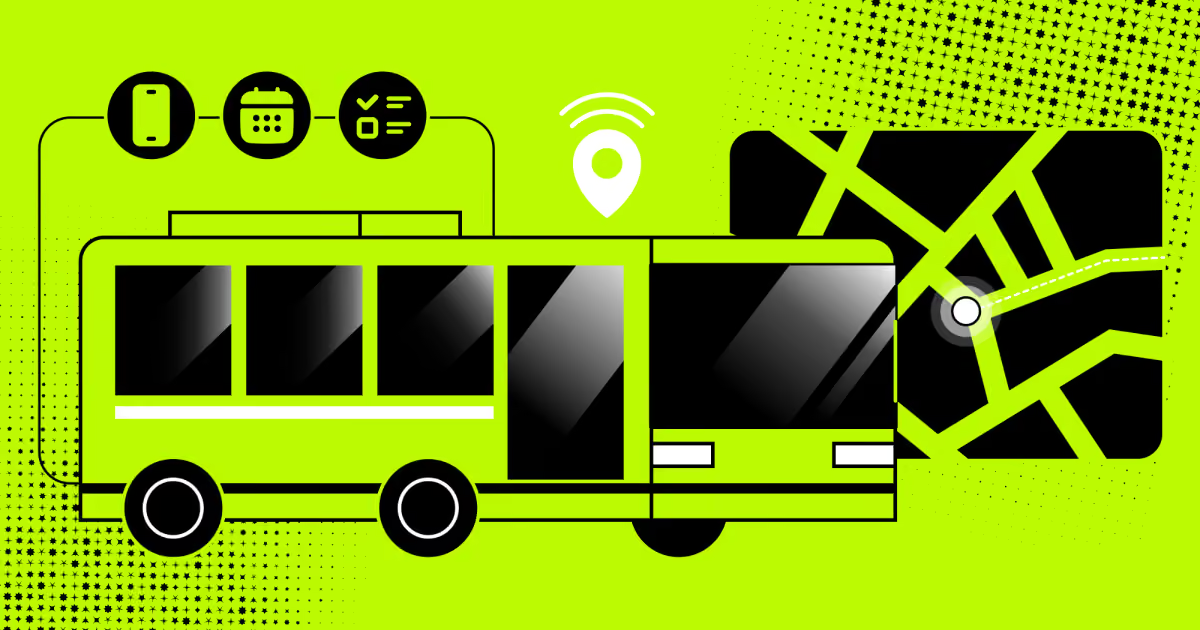
That's the gap our DrivenBus platform was built to close. Real-time tracking replaced the guesswork entirely. Schedule adherence now hits 91%, with buses departing within two minutes of plan.
That single fix reveals what remote fleet management delivers. It's not abstract efficiency sold on a slide deck. It's specific, measurable outcomes that show up in your operating numbers.
The stress behind that need is real. 74% of fleet managers call their role moderately to extremely stressful. Rising costs top the list of concerns for 77% of them. 60% still run fleets on spreadsheets, with no live visibility at all. Remote fleet management replaces that guesswork with structure:
Earlier disruption detection. Risk signals surface before they become missed stops. DriveIQ's predictive engine flagged delays 60 to 90 minutes ahead. Dispatchers rerouted before a customer noticed anything wrong.
Fewer costly errors.44% of fleets struggle to know when repairs are needed. A remote fleet monitoring system flags issues before they become breakdowns. DriveIQ's risk detection cut exception diagnosis time from 12 minutes to three.
Lower operational cost. DriveIQ's in-cab coaching cut fuel consumption by 12%. The auto-recovery optimizer also reduced empty miles by 8%. Savings showed up within the first reporting cycle after launch.
Higher adoption without resistance. 37% of drivers resist vehicle monitoring on principle alone. DriveIQ solved this with transparent scorecards, not surveillance framing. Drivers responded to peer benchmarking better than to raw scores.
Stronger safety outcomes.72% of fleets see fewer crashes when telematics pairs with training. DriveIQ's coaching approach contributed to a 38% drop in safety incidents. Fewer incidents mean lower insurance costs and fewer claims disputes.
Better workforce retention. Burnout among dispatchers and drivers is expensive to replace. DriveIQ's fair KPI visibility lowered driver turnover by 22% within a year. A remote fleet management system that treats drivers fairly keeps them longer.
Consolidated visibility across roles. 57% of managers say employees waste half their day on manual tasks. SyncMatix replaced three disconnected apps with one login. Support tickets fell 45% simply because the interface finally made sense.
These gains rarely arrive all at once. Most fleet management apps show measurable returns after 60 to 90 days.
"Fleet managers don't resist technology. They resist tools that add another screen without removing a headache," says Orest Falchuk, Head of Engineering at COAX Software. "On DriveIQ, we watched dispatchers ignore every alert until we cut the noise down to what actually mattered. Once we did that, they started trusting the system enough to act on it without checking twice."
That trust is the real benefit behind the numbers. Technology only works once people stop working around it.
Common use cases across industries
Remote fleet management adapts to any industry moving vehicles or people. Logistics, transit, field service, and shared mobility all rely on it differently.
Logistics, freight, and delivery
Freight operators use remote fleet management to cut delays and fuel waste. Route optimization, maintenance, and compliance all run through one system.
Route optimization and dispatching: Algorithms find the fastest path around traffic. DriveIQ's auto-recovery optimizer cut empty miles by 8%.
Fuel management: Sensors track idling, speed, and consumption in real time. DriveIQ's coaching layer reduced fuel use by 12% fleet-wide.
Preventive maintenance: A remote fleet diagnostics layer flags engine issues early. Predictive alerts stop breakdowns before cargo gets stuck roadside.
Driver and cargo safety: Harsh-braking sensors and cargo monitors protect freight in transit. DriveIQ's safety scoring cut incidents by 38%.
Regulatory compliance: Automated HOS logs and IFTA tracking prevent costly fines. DriveIQ's fatigue optimizer flagged over 40 potential HOS violations in one quarter.
Together, these five functions turn freight from reactive to predictable.
Passenger transit and bus operations
Bus and shuttle operators use remote fleet management tracking systems to hit schedules reliably. Passengers get live ETAs; operators get full route visibility.
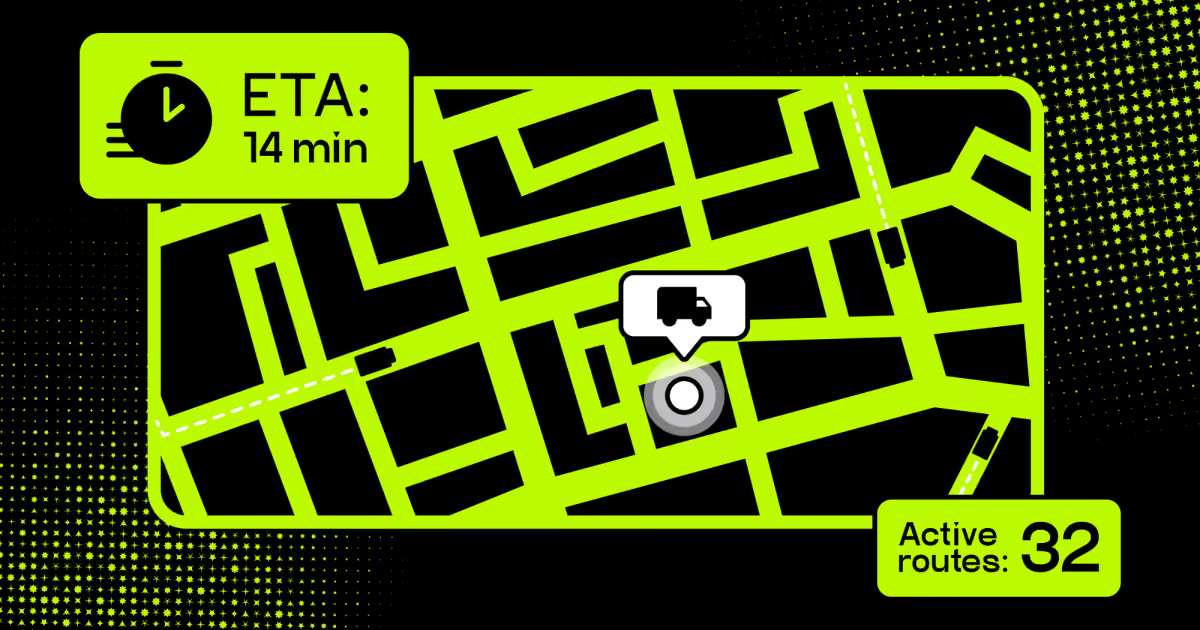
Live passenger tracking: Riders see their bus approach on a map in real time. DrivenBus updates GPS positions every 10 seconds during active routes.
Schedule adherence monitoring: Dashboards flag late departures before they cascade. DrivenBus hit 91% on-time performance within two minutes of plan.
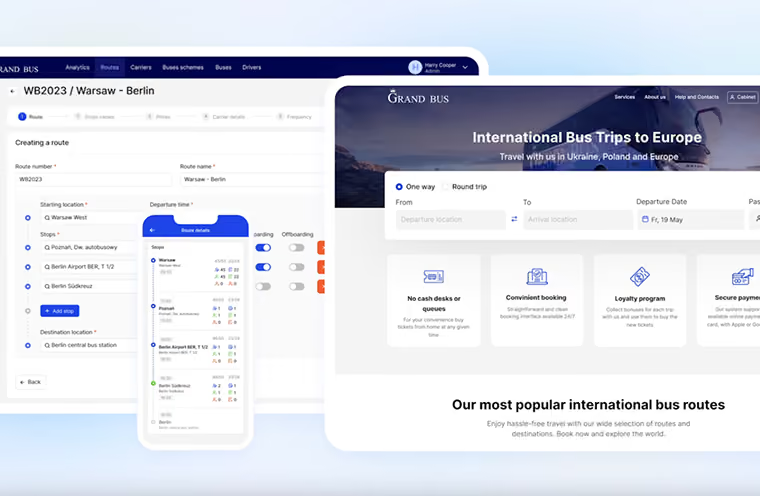
Route and stop management: Operators build and adjust routes on interactive maps. GrandBus cut manual scheduling calls by removing spreadsheet coordination entirely.
Digital ticketing and boarding: QR validation replaces manual ticket checks at the door. GrandBus's scan system hit 99% accuracy in route reporting.
Driver communication: In-app status updates replace radio calls between drivers and dispatch. GrandBus drivers save 45 minutes per route on manual reporting.
That combination keeps passengers informed and operators accountable at once.
Field service and construction fleets
Field service companies use remote fleet vehicle tracking to manage crews across scattered job sites. Dispatchers see every vehicle without visiting a single one.
Geofencing and site tracking: Virtual perimeters alert managers when a truck arrives or leaves. This confirms crew presence without a supervisor on-site.
Asset utilization tracking: Dashboards show which vehicles or equipment sit idle. Idle assets get reassigned instead of sitting unused for weeks.
Digital inspection reporting: Drivers photograph defects and submit reports from mobile apps. Issues surface immediately instead of at the next depot visit.
Job-site dispatch coordination: Managers assign the nearest available vehicle to new jobs. This cuts response time and reduces unnecessary mileage.
These functions matter most when crews work across dozens of scattered locations.
Corporate and B2B transport booking
B2B transport platforms use a remote fleet management system to connect buyers with verified carriers. Tender-based booking replaces relationship-based guesswork.
Transparent carrier bidding: Buyers see competing quotes from vetted operators in real time. Driven Connect grew this model to 400-plus active carriers.
Emissions and compliance tracking: Platforms calculate carbon output per route and vehicle type. Driven Connect's emissions module handles UK carbon tax payments automatically.
Centralized billing and documents: One dashboard holds contracts, invoices, and booking history. This removes the need for scattered email trails and spreadsheets.
Vehicle and supplier management: Operators track fleet specs and supplier relationships in one view. This data feeds directly into emissions and cost calculations.
Regulatory pressure makes emissions tracking the fastest-growing feature in this category.
Car-sharing and recreational fleets
Recreational and shared-mobility platforms use remote fleet management tracking devices to sync groups in motion. Every participant needs identical, real-time positioning.
Synchronized group navigation: All drivers in a convoy get identical turn-by-turn routes. Road&Rally solved the classic split-group GPS problem this way.
High-speed offline caching: Preloaded maps keep navigation working in dead zones. This matters most on rural drives with no cellular coverage.
Event and ticketing management: Organizers sell access to group rides through in-app payments. Road&Rally now runs two paid events monthly with 25-plus drivers each.
Together, these features turn a simple driving app into a coordinated fleet tool.
What are the features of remote fleet management systems?
At 4:00 AM, a grain silo hit 98% capacity unnoticed. The harvest truck queue backed up for hours. Nobody had flagged the bottleneck in advance.
The farm's team assumed more trucks would solve it. Instead, three extra trucks sat idle at the gate. The real problem wasn't capacity. It was visibility into the whole chain at once.
That's the challenge the COAX team created Agritech to mitigate. Crop yield data, weather risk, and equipment status now feed one model. A silo nearing capacity triggers a reroute before a single truck arrives.
That same logic defines every strong remote fleet management system. Below, we cover the features that separate a basic tracker from a full operational layer.
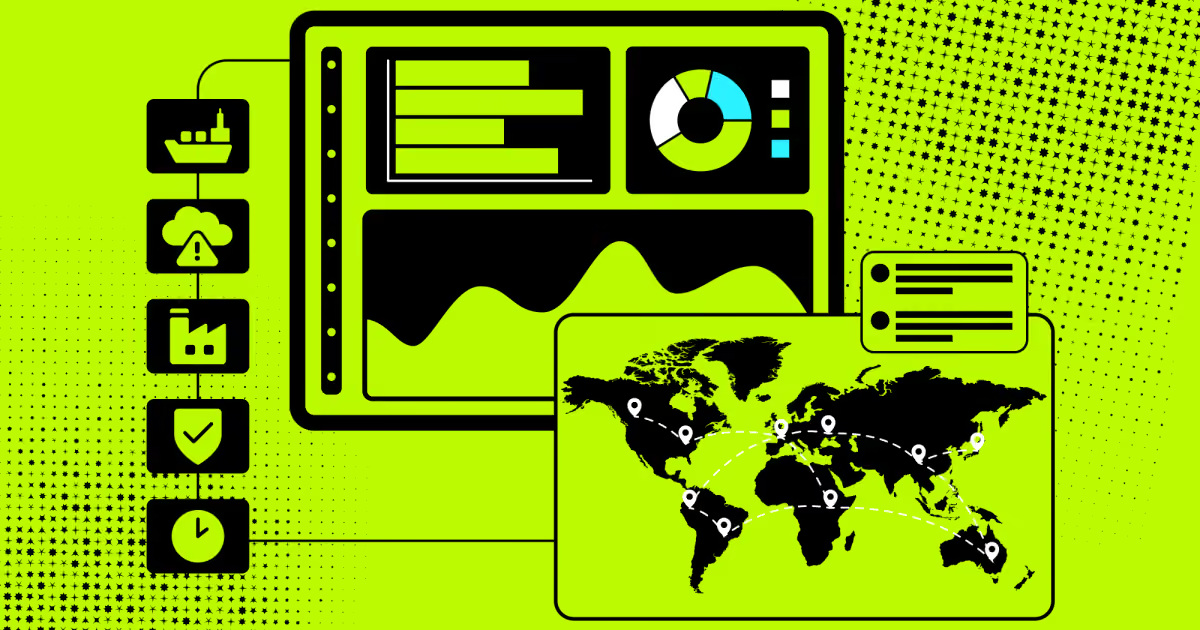
Custom analytics dashboards turn raw telemetry into numbers a manager can act on.
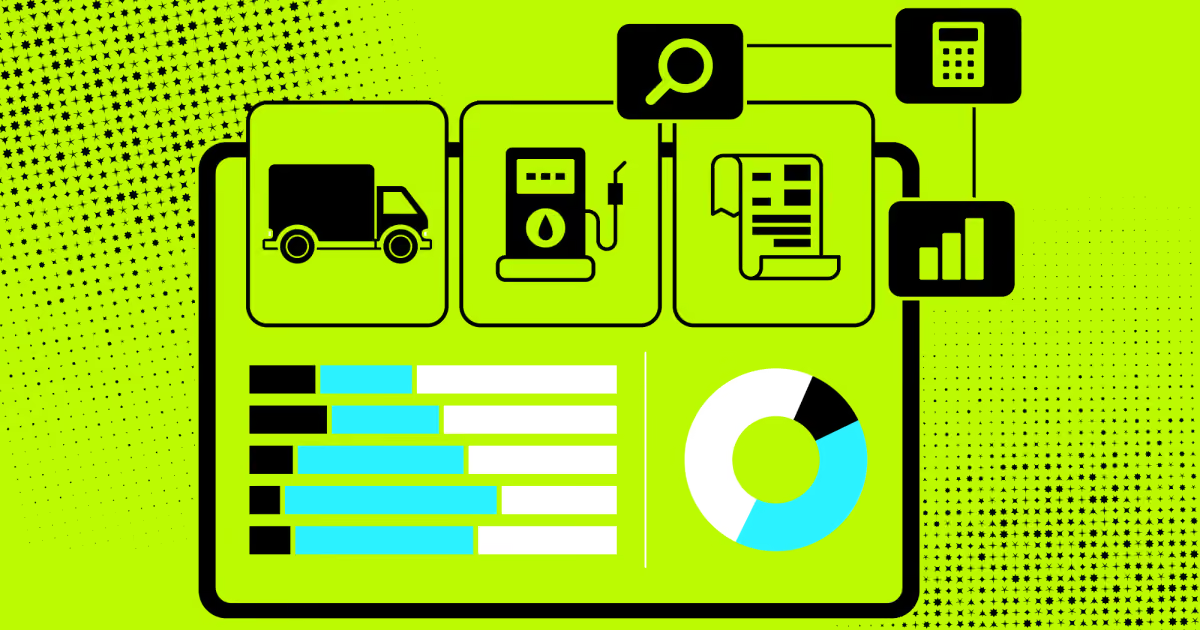
Raw GPS pings and engine codes mean nothing without context around them. A good dashboard converts that stream into fuel trends, safety scores, and utilization rates. SyncMatix built separate dashboard views for administrators, fleet managers, and partners. Each role saw only the metrics relevant to their decisions, nothing more. That filtering matters: a dispatcher drowning in irrelevant charts stops checking the dashboard altogether. Configurable date ranges and export options let managers build custom reports for finance or compliance teams without manual spreadsheet work.
Multi-tenant partner access lets one platform serve many operators under separate branding.
Without it, every partner needs a fully separate system built and maintained. SyncMatix's architecture isolated each partner's data, users, and configuration completely. Partners managed their own fleets and invited their own users independently. That structure let the company scale to 500 customers through third-party partners. None of it required the core team to expand support staff or build custom instances per client.
Emissions and carbon reporting calculates environmental output per route and vehicle.
Regulatory pressure makes this feature increasingly non-negotiable for cross-border operators. Driven Connect built emissions tracking directly into the quote and booking flow. When a buyer requests a quote, the system factors in vehicle type and fuel efficiency. It then estimates carbon output and calculates any applicable carbon tax automatically. That data feeds compliance reports without a separate manual calculation step afterward.
Asset and equipment tracking extends visibility beyond the vehicles themselves.
Trailers, containers, generators, and heavy machinery all need live status too. A truck can show as on-route while its trailer sits disconnected at a depot. Good tracking catches that mismatch immediately, not at delivery. On Agritech, this meant tracking harvesters, storage silos, and transport trucks as one connected system. A remote fleet manager could see crop volume, storage capacity, and truck availability together. That combined view is what let dispatchers reroute before the silo overflowed.
Offline-first data sync keeps critical functions running when connectivity drops.
Rural routes, remote job sites, and border crossings often lose signal for stretches. A system that fails there defeats its own purpose immediately. Road&Rally cached full routes locally before drivers lost cellular coverage. Navigation and group positioning kept working through dead zones without interruption. Once signal returned, the app synced all cached data automatically in the background.
Document and contract management centralizes agreements, renewals, and service tiers in one place.
Without it, contract details live scattered across email threads and shared drives. SyncMatix admins track every partner contract, renewal date, and service tier centrally. This cut the administrative overhead that came from managing clients across separate systems. Onboarding a new partner became a matter of minutes, not days of paperwork.
Digital check-in and validation tools replace manual paperwork at pickup, boarding, or delivery.
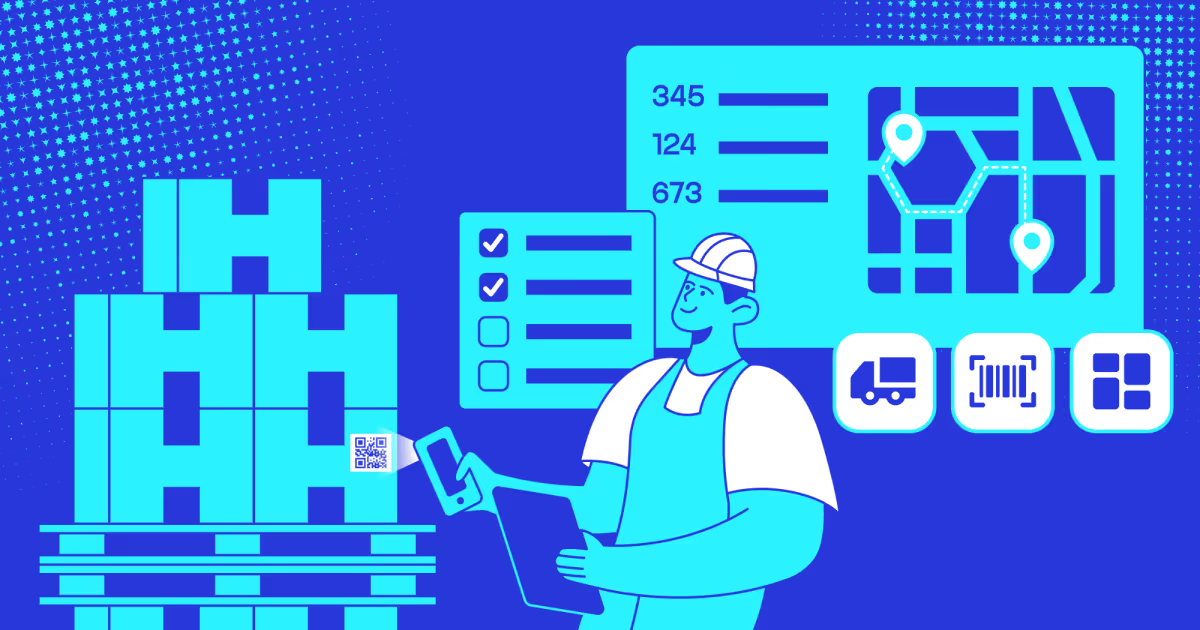
Paper logs and verbal confirmations create gaps where errors and disputes happen. GrandBus drivers scan QR tickets with a built-in camera scanner. The system validates each ticket and marks passengers as boarded instantly. Average boarding time dropped to 3.2 seconds, with 99.7% scan accuracy. That speed matters most at high-volume stops where delays cascade down the schedule.
Together, these features turn a remote fleet monitoring system into something closer to a full operations platform.
As part of our logistics software development services, COAX integrates any of these features into existing transport operations. We handle complex API integrations and build custom analytics layers on top of standard telematics feeds. We also extend a remote fleet management tracking system where the off-the-shelf option falls short. Whether you need a full logistics management software rebuild or a targeted upgrade, that integration work is where the real operational value gets unlocked.
Best remote fleet management systems
Whatever you read on any tracking tool’s marketing materials won’t tell you about Tuesday in real traffic. Vehicles drop signal. Drivers skip alerts they don't trust. Hardware fails at the worst possible moment. That's exactly where most remote fleet management system claims stop matching reality.
We built our test criteria around that failure point. Sixteen years across logistics, transport, and telematics projects shaped what we looked at first.
We checked how each platform handled messy data: mismatched timestamps, dropped GPS pings, and multiple hardware vendors feeding one dashboard.
We checked alert usefulness: did it route the right signal to the right role, or dump everything on one screen?
We checked driver-side adoption: would a driver actually open the app on shift three, not just shift one?
Last, we checked integration friction: how much custom work it takes to connect a platform to an existing TMS or ERP.
Here’s what we can say after this evaluation.
Platform
Best for
Real-time tracking
Predictive maintenance
Driver coaching
Open API
Starting price
Samsara
Overall best, mixed fleets
Yes
Yes, AI-driven
Yes, video-based
Strong
Custom
Verizon Connect
Enterprise, deep integrations
Yes
Yes
Basic
Moderate
Custom
Motive
Mid-market, cost-conscious
Yes
Yes
Yes
Strong
Custom
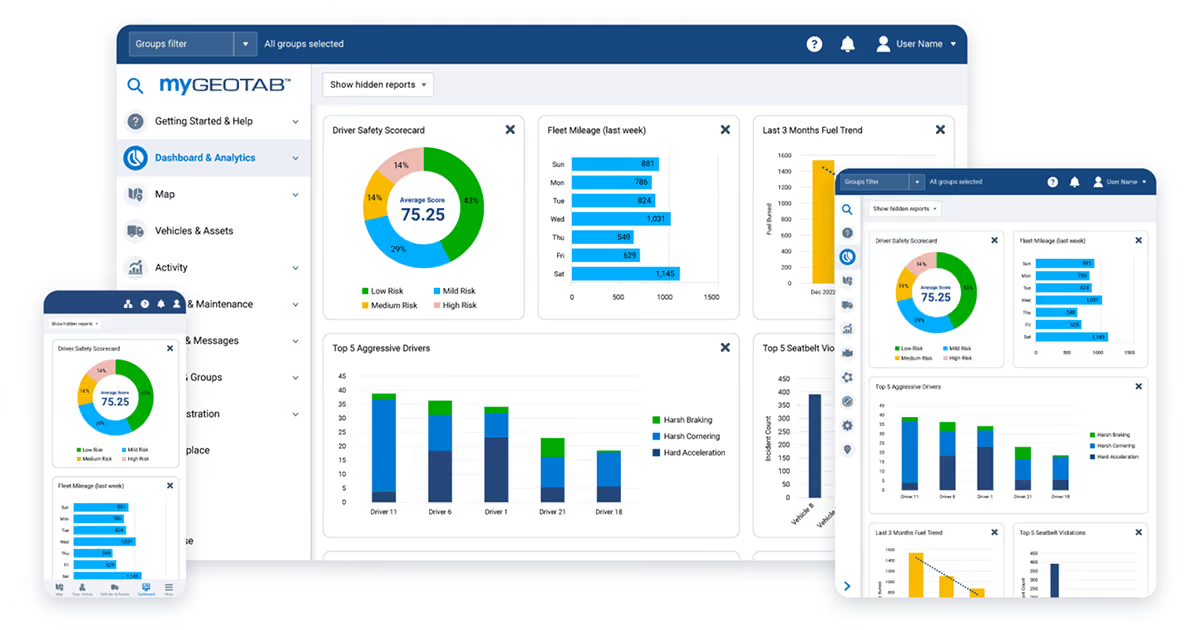
Geotab
Data-heavy, custom analytics
Yes
Yes, extensive
Basic
Strong
Custom
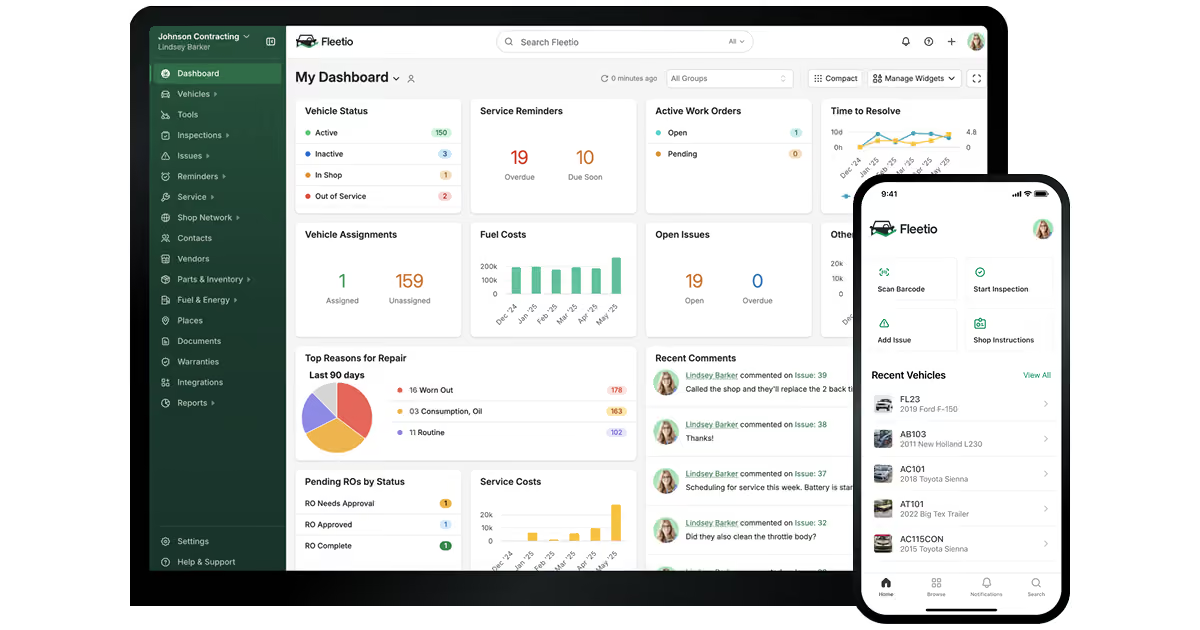
Fleetio
Maintenance-first operations
Yes
Basic
Yes
No
From ~$4/vehicle/mo
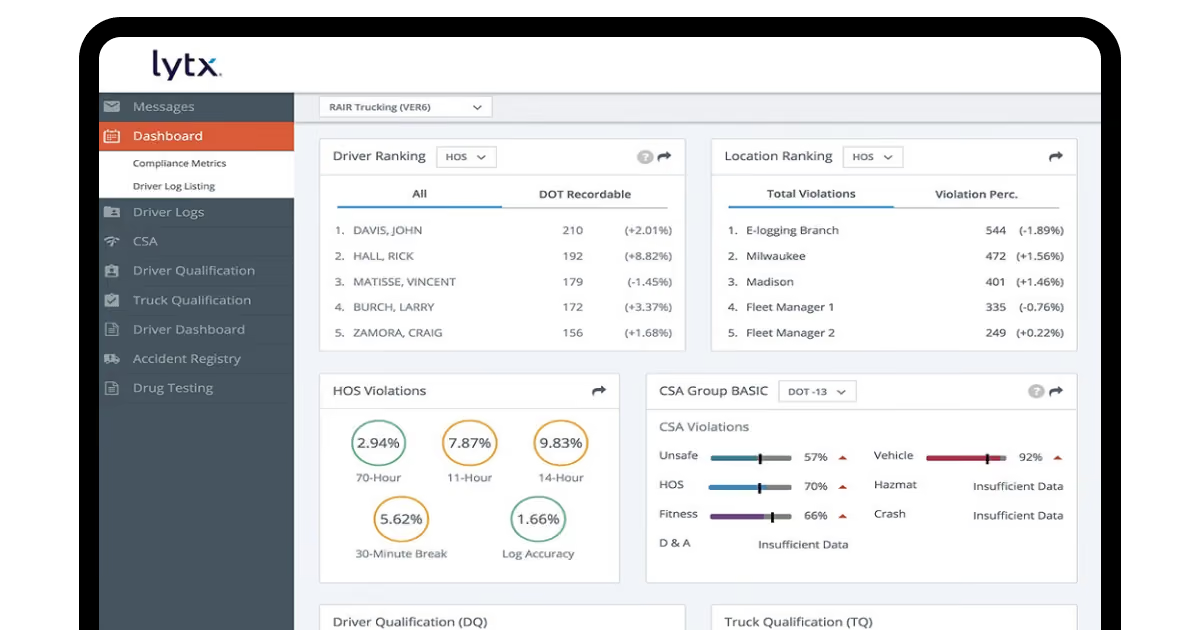
Lytx
Video safety and coaching
Yes
Moderate
Yes, video-based
Moderate
Custom
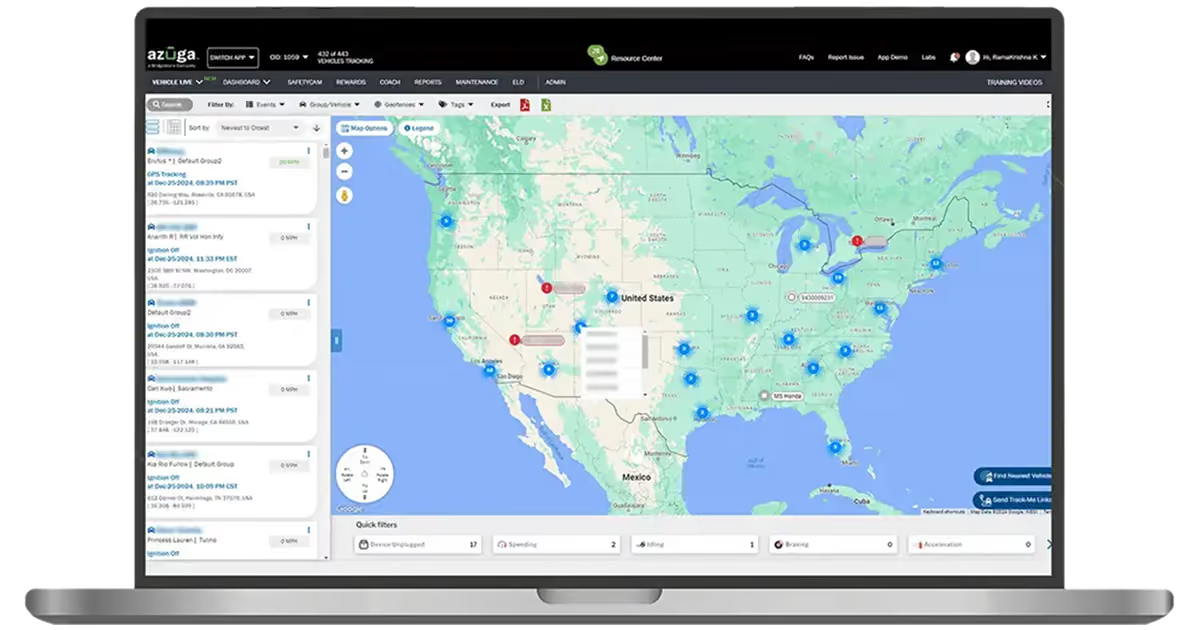
Azuga
Small fleets, safety focus
Yes
Basic
Yes
Limited
Custom
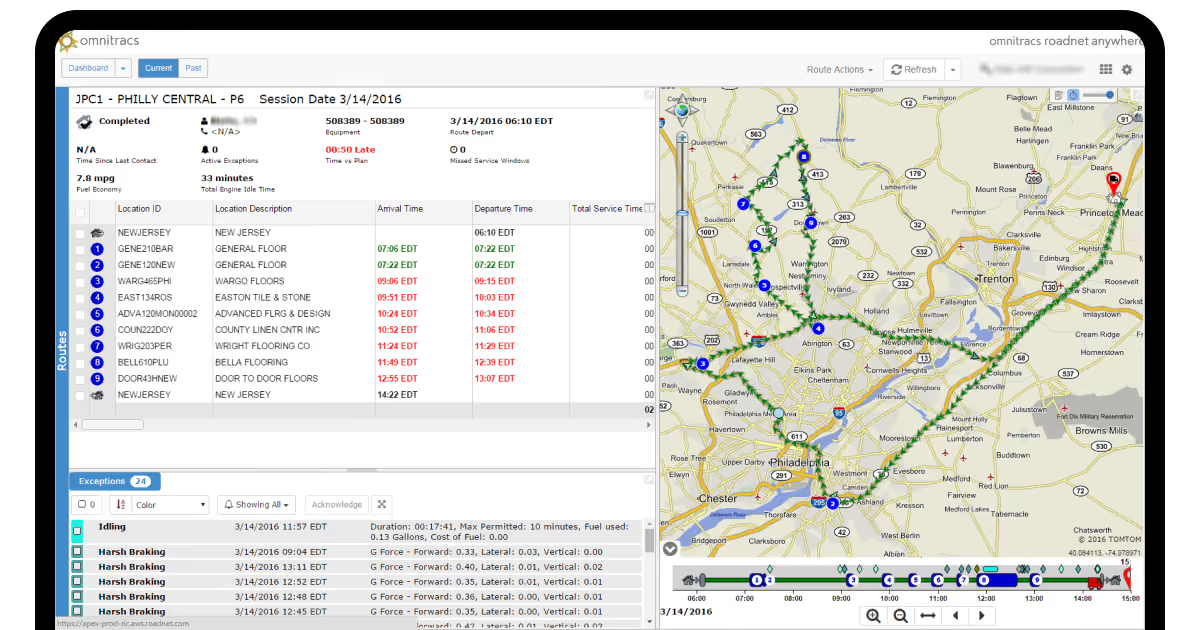
Omnitracs
Regulated fleets, routing
Yes
Yes
Basic
Moderate
Custom
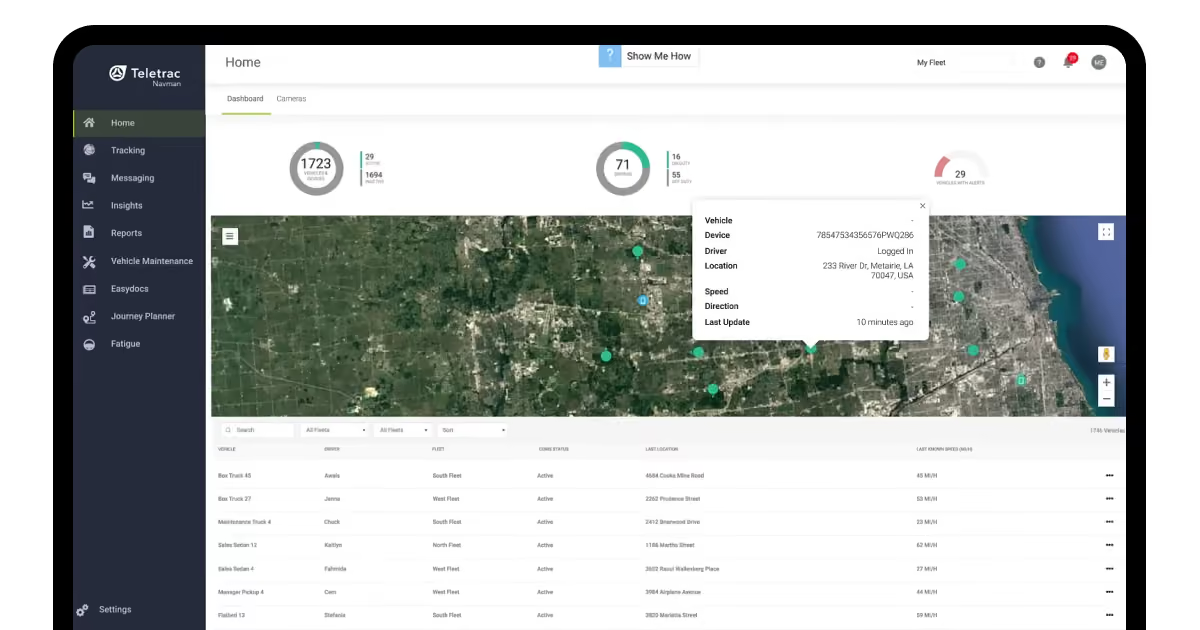
Teletrac Navman
Mixed fleets, job sites
Yes
Basic
Basic
Moderate
Custom
Samsara ranked highest across our full test set. Its AI dashcams flagged distracted driving accurately in every trial run we tried. The open API connected to a test TMS without extra middleware. Predictive maintenance alerts fired days ahead of simulated part failures. Pricing runs high for smaller fleets, and that's the main tradeoff.
Verizon Connect performed best in our enterprise-scale simulation. Dispatch stayed stable across multiple depots without noticeable lag. Configuration took longer than any other platform we tested, closer to two weeks. Once live, though, its carrier-grade reliability held up under heavy load.
Motive impressed us most on speed of deployment. We had live tracking and driver coaching running within a single afternoon. Coaching alerts felt less intrusive than Samsara's, and drivers in our test group engaged with them faster. It's a strong remote fleet management pick for fleets under 500 vehicles.
Geotab stood out for raw data depth and customization. Its open API and add-in marketplace let us build custom reports without vendor support tickets. Driver coaching felt like an afterthought next to Samsara or Motive, though. Teams wanting deep analytics over polished driver UX will find this the right fit.
Fleetio is one of the best tools for remote fleet diagnostics on the maintenance side specifically. Preventive maintenance scheduling caught service windows accurately in our simulated fleet history. Real-time tracking felt thinner than the dispatch-focused platforms above. It's a strong pick if maintenance is your primary pain point, not live routing.
Lytx led every safety-focused test we ran. Its video AI flagged harsh braking and tailgating faster than any competitor's dashcam system. Coaching workflows felt structured, built for a safety manager reviewing footage weekly. Dispatch and routing depth trailed the platforms built around execution control.
Azuga worked best in our small-fleet simulation. Setup finished in under a day, the fastest of any platform tested. Gamified driver scoring drove real engagement in our trial group, more than raw scorecards did elsewhere. Its API access felt the most limited of any tool we tried.
Omnitracs handled regulated, large-fleet routing well in our compliance tests. ELD and HOS automation ran cleanly against a simulated audit scenario. Dispatch automation matched loads to drivers faster than we expected. Its interface felt dense, built more for a compliance team than a small dispatcher pool.
Teletrac Navman performed reliably across mixed vehicle and equipment types. Geofencing and job-site alerts triggered accurately in our field-service simulation. It handled asset tracking for trailers and non-powered equipment well. Predictive maintenance depth lagged behind Samsara and Geotab in our direct comparison.
Sixteen years building fleet and logistics software taught us one lesson above the rest. The right remote fleet management tracking systems match your actual operation, not a spec sheet.
How to choose the right solution?
The UK coach hire market demands rapid, frictionless scalability. We helped Driven Connect launch its digital marketplace to bridge the gap between regional transport providers and large-scale organization buyers. By rapidly onboarding over 400 operators, the platform shifted from a basic B2B setup to a high-velocity ecosystem with complex cross-border passenger routing.
None of these would have happened if they had decided to stick with an off-the-shelf remote fleet monitoring system that didn’t match their needs. To any client choosing between platforms to integrate with, we have a list of aspects to look at.
Start with fleet size and growth trajectory, not current headcount. A 15-vehicle service fleet doesn't need Verizon Connect's enterprise depth. A 500-vehicle carrier can't run on Fleetio's maintenance-first tools alone. Buy for where you'll be in 18 months, not where you sit today. DriveIQ's client grew from a regional carrier to 500 vehicles within a few years. A platform built for their original size would've forced a painful mid-growth migration.
Map your existing systems before you shortlist anything. If a TMS or ERP already runs your operation, prioritize open APIs over flashy dashboards. On SyncMatix, we spent real engineering time reconciling GPS pings, EDI feeds, and TMS records that never shared a timestamp format. That normalization work happens whether your remote fleet management vendor advertises it or not. Ask any shortlisted platform exactly how it handles mismatched data sources, not just whether it "integrates."
Weight compliance needs by your specific regulatory exposure. A cross-border carrier faces different HOS and customs rules than a regional last-mile fleet. DriveIQ's client ran cross-border freight between the US and Canada daily, so automated compliance logging wasn't optional. If you operate across state or national lines, test a platform's compliance module against your actual routes before signing anything.
Pilot it with real drivers, not just a dispatcher demo. DriveIQ taught us this the hard way. Early driver scorecards used raw safety and efficiency numbers. Drivers ignored them completely. The fix was anonymized peer benchmarking: "here's where you rank," not a bare score. That single UX change lifted scorecard engagement significantly. A platform's driver-facing app matters as much as its dispatcher dashboard. Test it on a real shift, in a real vehicle, with a driver who has no reason to be polite about the experience.
Watch how a platform handles exceptions, not just normal operation. Any tool looks fine when nothing's going wrong. The real test is a missed delivery, a stalled truck, or a weather delay. DriveIQ's exception queue clustered related alerts by root cause and cut diagnosis time from 12 minutes to under three. Ask a vendor to walk through their exception-handling flow live, not from a slide.
Check whether the remote fleet management tracking platform scales its multi-tenant structure, if you need it. If you manage fleets on behalf of clients or franchisees, partner architecture matters more than any single feature. SyncMatix's white-label, multi-tenant structure let the platform grow to 500 customers through partners, without adding core support staff. A platform without proper account isolation will force manual workarounds as partners multiply.
Finally, price the hidden costs, not just the subscription line. Hardware, integration work, and training all add real cost beyond the sticker price. A cheaper per-vehicle rate can lose to a pricier platform once custom integration hours get factored in. Ask any finalist for a full cost breakdown, including implementation, before comparing monthly rates side by side.
Don't underweight onboarding time against your operational calendar. Some platforms took two to three weeks to configure properly in our testing; others ran live within a day. If you're switching systems mid-peak-season, a slow rollout can cost more than the software itself. Match onboarding speed to your business calendar, not just your budget.
How to manage your fleet remotely?
"The best remote fleet management setups aren't the ones with the most dashboards. They're the ones where the data actually reaches the person who needs to act on it, before the problem gets expensive," says Orest Falchuk, Head of Engineering at COAX Software.
Running a fleet remotely takes more than good software. It takes the right habits layered on top of it. Below are the practices we've seen actually move the numbers.
Standardize your data before you scale your fleet. Mismatched timestamps and inconsistent vendor formats break every downstream feature. On SyncMatix, we normalized GPS pings, engine data, and driver logs before building a single dashboard. Skip this step and your analytics inherit every inconsistency in the raw feed.
Route alerts by role, not by broadcast. A remote fleet diagnostics and tracking tool that pings everyone about everything trains people to ignore it. SyncMatix routed utilization alerts to fleet managers, task updates to drivers, and system issues to admins. Each role saw only what it could act on.
Design for the interrupted state, not just the happy path. Connectivity drops. Sessions time out. Devices lose signal mid-route. Road&Rally’s navigation engine cached routes locally and adjusted polling by speed. When cellular dropped on rural drives, the app kept working without missing a beat.
Give drivers a reason to open the app, not just a reason to be tracked. DriveIQ's early scorecards used raw safety numbers, and drivers ignored them. Peer benchmarking changed that: "here's where you rank" outperformed a bare score every time. A remote fleet management system only works if the people using it actually engage with it.
Build exception handling around root cause, not raw alerts. DriveIQ clustered delivery exceptions by traffic, weather, or hub congestion instead of listing them flat. That single change cut dispatcher diagnosis time from 12 minutes to under three.
Test schedule adherence against real-world variance, not ideal conditions. DrivenBus tracked live GPS positions every 10 seconds and pushed proactive arrival alerts. That level of granularity is what got schedule adherence to 91%, not a static timetable published once a week.
Treat compliance as infrastructure, not an afterthought. Automated HOS logging and IFTA reporting belong in the core architecture, not bolted on after launch. Retrofitting compliance into a remote fleet management tracking system after regulators ask for records is the expensive way to learn this lesson.
Plan for twice your current scale from day one. SyncMatix's multi-tenant architecture lets the platform grow to 500 customers through partners without a rebuild. A system that only works at your current fleet size will force a painful migration later.
At COAX, we build the whole stack. Our developers create web dashboards, driver and admin mobile apps, or a standalone admin app layered on top of a tool you already use. Some clients need a full custom fleet management software development build from zero. Others need one missing piece integrated into an existing system. Either way, we've usually already solved the specific nuance that's slowing you down, because we've hit it before on someone else's fleet.
Building the right remote fleet management solution is about knowing exactly which three matter for your operation, and building those properly first. The practices above aren't abstract for COAX Software. We've built driver-sync systems where real-time location had to hold across dozens of devices without drift. We've built IoT pipelines where sensor data had to reach a dashboard reliably in low-connectivity environments.
ISO 9001 and ISO 27001 certification covers the compliance requirements regulated deployments need before a single line of code gets written. If your operational model maps cleanly to a platform we covered above, use it. If it doesn't, we should probably discuss it.
Building remote fleet management software that changes outcomes requires engineers who understand the domain well. Our team is 90% mid and senior-level. That means the person solving your integration problem has solved a version of it before. A solution that works at your current scale needs to work at twice the scale two years from now. COAX experts design with that growth curve in mind from day one.
FAQ
What's the highest hidden cost when adopting a remote fleet management system?
Hardware installation is the cost teams underestimate most. OBD dongles, dashcams, and eSIM units all carry per-vehicle costs beyond the software subscription. On SyncMatix, we saw clients budget for the platform but forget installation labor across hundreds of vehicles. Add hardware, training, and installation time to your budget upfront, not as a surprise after signing the contract.
How does a remote fleet manager handle driver pushback during rollout?
Driver resistance usually stems from surveillance framing, not the technology itself. DriveIQ's early alerts felt intrusive until we switched to peer benchmarking instead of raw scores. A remote fleet manager should introduce coaching as support, not monitoring. Frame the rollout around driver benefit: fewer violations, safer routes, and clear bonus criteria tied to performance, not punishment.
What are the best tools for remote fleet diagnostics on a tight budget?
Budget doesn't have to mean weak diagnostics. Fleetio and Azuga both offer solid engine and battery monitoring at lower per-vehicle rates than enterprise platforms. The best tools for remote fleet diagnostics on a small fleet favor simplicity over depth. Start with core alerts: fault codes, battery voltage, and idle time. Add predictive modeling only once your data history justifies it.
How do remote fleet management tracking systems handle cross-border compliance?
Cross-border fleets face different HOS, tax, and customs rules per country. Remote fleet management tracking systems need configurable compliance modules, not one hardcoded rule set. DriveIQ's client ran freight between the US and Canada daily, so automated Hours of Service tracking had to switch rulesets automatically by route. Ask any vendor how their system handles jurisdiction changes before you commit.
Can a small operator switch from spreadsheets to a remote fleet management system overnight?
No, and rushing it usually backfires. A phased rollout works better: track one metric first, like live location, before adding maintenance or compliance modules. GrandBus moved off manual logs gradually, starting with driver status updates before full route automation. A remote fleet management system adopted in stages gets real buy-in. One adopted all at once gets ignored within weeks.
What happens to fleet data if I switch vendors later?
Data portability depends entirely on the platform's export capabilities and API access. Vendors with closed schemas make migration expensive and slow. We build with open data structures specifically so clients aren't locked in permanently. Before signing with any remote fleet management provider, ask for a full data export sample. If they can't produce one quickly, treat that as a warning sign.





















































_.avif)




%2520explained.avif)

We are interested in your opinion