Are you still using your basic intuition to predict vehicle breakdown and back-and-forth calls to coordinate your fleet drivers? Then you need this guide on fleet management application development to grow your business, win over more clients, and outpace competitors. Having this technology on board will change everything due to some factors:
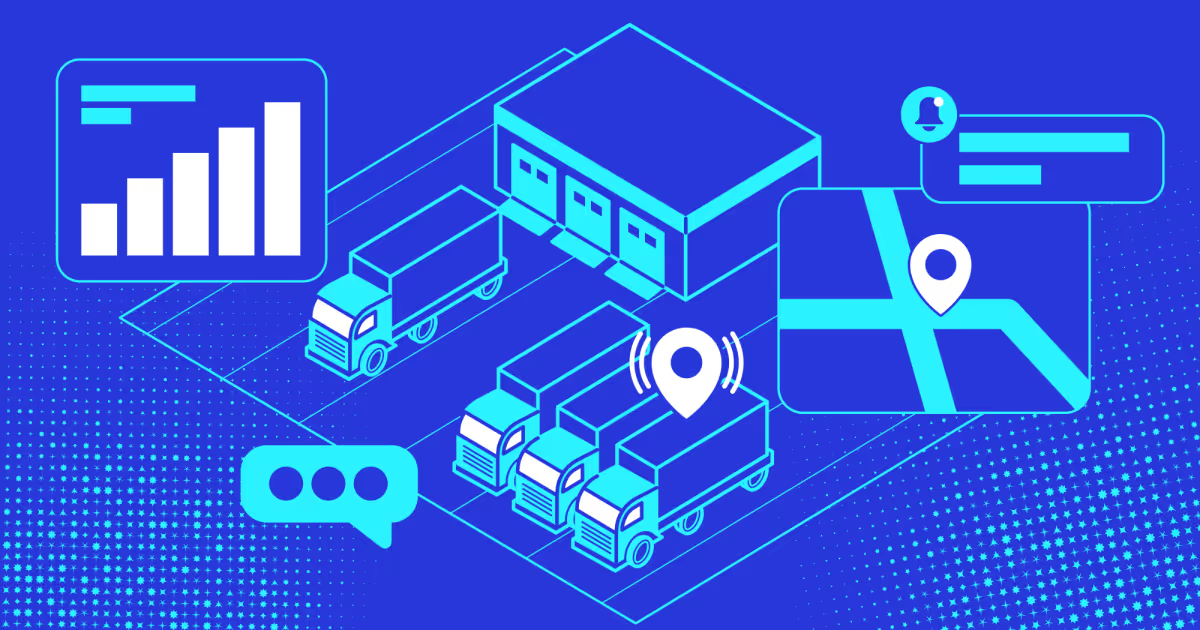
Real-time visibility that brings full clarity about vehicle locations, cargo status, and delivery timing.
Route optimization that cuts fuel waste and unnecessary miles through intelligent planning.
Predictive maintenance that catches problems before breakdowns occur.
Driver behavior monitoring that reduces accidents, lowers insurance costs, and extends vehicle lifespan.
Automated compliance tracking that handles inspections and emissions reporting.
Scalable operations that grow from small teams to large fleets without increases in management overhead.
Data-driven decisions that give actionable insights on costs, efficiency, and performance trends.
In this article, we provide a full overview of the key features, costs, and end-to-end steps to develop a fleet management app. This guide also helps you choose from the market-ready options or make a smart decision between them and the tailored ones.
Challenges fleet business owners face today
Fleet operations are under pressure from all sides in 2026. According to MBIE, fuel prices in New Zealand have increased by 30 cents per liter since last year. In Australia, freight rates rise by 0.25 percent for every cent increase in diesel prices. Similar pressure is felt in the United States, where diesel prices are about $3.46 per gallon.
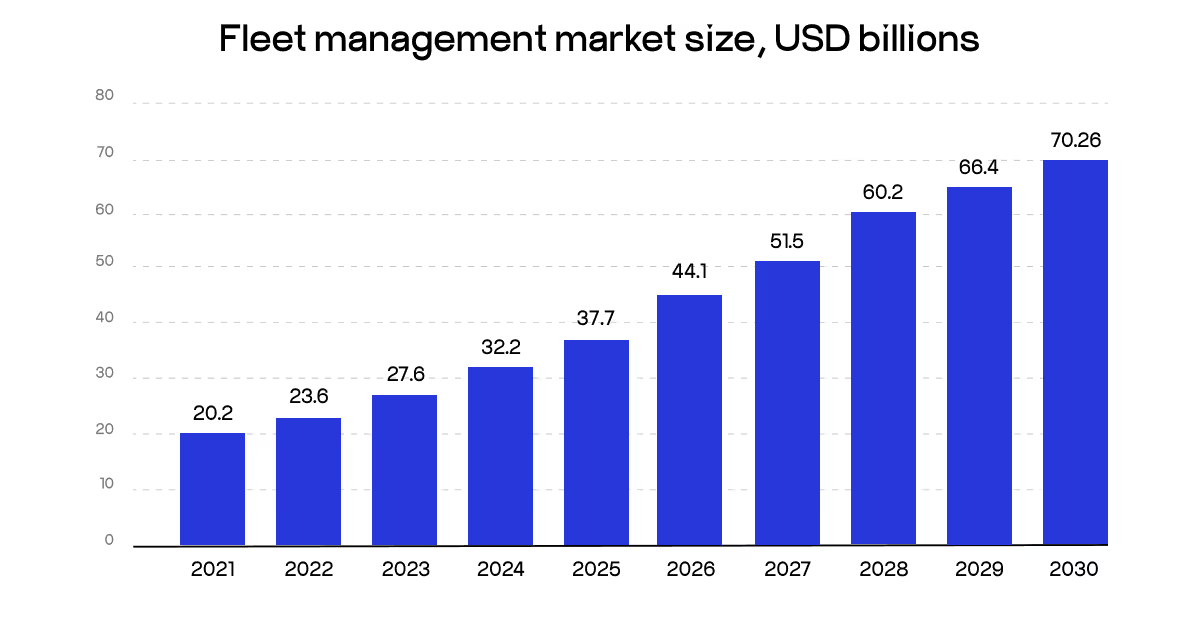
However, fuel is only one component. By 2030, the global fleet management market is projected to have grown from $37.71 billion in 2025 to $70.26 billion. This growth is fueled by the expansion of commercial vehicle operations in field services, construction, and logistics.
Customer expectations have changed, too. Same-day delivery used to be a premium service. Now it's the bare minimum customers expect. Underuse of your valuable resources is still an issue, too. Modern connected vehicles generate massive amounts of data, with some, particularly in testing, creating up to 44 terabytes (TB) per day.
Regulatory pressure keeps building. The SEC is finalizing corporate emissions disclosures in the U.S. that will make non-reporters look outdated by 2027. Additionally, New Zealand's Emissions Trading Scheme is tightening carbon credits, while Australia is adding Scope 3 reporting requirements.
The gap between what customers expect and what managing your fleet currently is keeps getting wider and wider. So, let’s break down exactly why a fleet monitoring app is something you can’t go without anymore.
Why modern fleets need management apps
We have hinted at the key reasons why, in outlining the key market trends. First, you need full transparency and speed for your clients. Also, the cost drivers are high as ever (and you can’t go with idle vehicles or frequent repairs anymore), and compliance needs are growing as well. Here’s a close in on all these factors:
Visibility in real time is practically vital. You must be aware of each vehicle's location, its cargo, and its anticipated arrival time when operating fifty vehicles across several cities. You're speculating without that visibility. Instantaneous updates, live tracking, and the ability to react when something goes wrong are all made possible by fleet management apps.
Profits get lower because of fuel costs. As stated by MBIE, between 35 and 40% of trucking operating costs are related to fuel. Route-optimization apps reduce fuel consumption and cut down on unnecessary miles. Simply by employing more intelligent routing, some fleets report savings of up to 20%.
Maintenance is impatient. Both the cost and downtime of reactive maintenance are higher. Predictive analytics apps can predict car breakdowns up to 14 days ahead of time. This entails resolving issues before they cause a driver to become stranded - something a fleet maintenance app can track continuously and put vehicle health checks and preventive repairs on autopilot.
Everything is impacted by driver behavior. Aggressive acceleration, excessive idling, and hard braking all burn fuel and raise the risk of an accident. Apps track driving habits and offer comments. According to fleets that use these systems, accident rates have decreased by 35%.
Compliance is constantly evolving. Vehicle inspections, driver hour laws, and carbon reporting. Compliance tracking is automated by apps, saving you time during audits.
Another important nuance is that no matter how hard you try, manual procedures are not scalable. Applications are. A management app allows you to maintain operations without hiring a dozen dispatchers when your fleet expands from 10 to 100 vehicles.
Fleet management app features
The features of fleet management tracking applications are separated into two tiers. Core features handle daily operations. Advanced features push optimization further and unlock data that most competitors miss. Let’s list both so you can understand what you need.
Core features
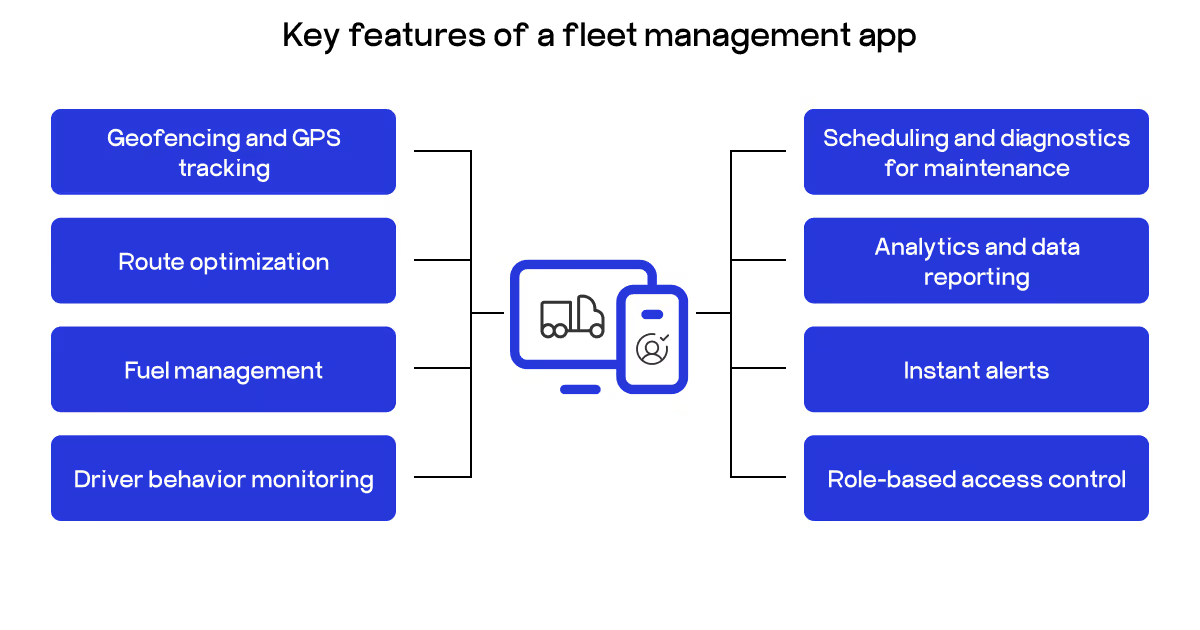
The key functionality of fleet apps allows you to perform the most important tasks - see where your vehicles are, get better routes, manage your fuel expenses, look closely at how the drivers behave, and have basic analytics to predict maintenance and make timely improvements.
Geofencing and GPS tracking. Live location data is provided by fleet GPS tracking apps that update the information every few seconds. Geofencing creates virtual barriers around locations such as depots, customer sites, and restricted areas. The system promptly notifies you when a car crosses a boundary. This detects unapproved detours, verifies deliveries, and aids in the recovery of pilfered equipment.
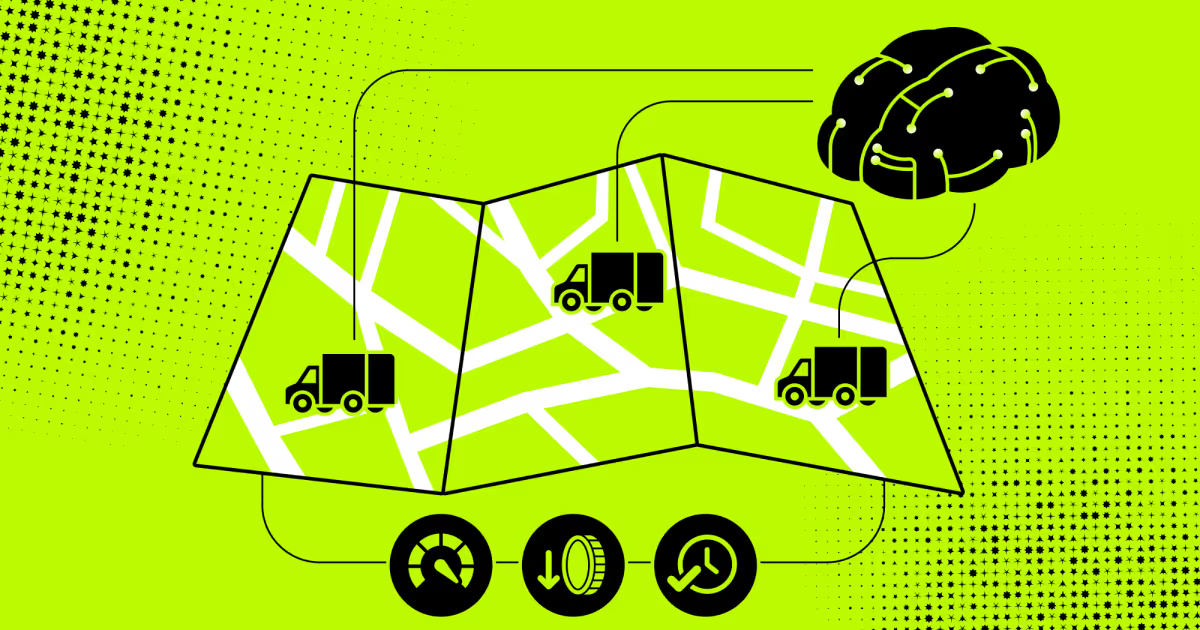
Route optimization. With fleet management software for route optimization, you determine the quickest, most fuel-efficient routes by analyzing delivery schedules, traffic patterns, and road conditions. When compared to manual planning, AI-powered route optimization can reduce fuel consumption by up to 25% and delivery times by 30%. When accidents or road closures occur, the system instantly recalculates routes.
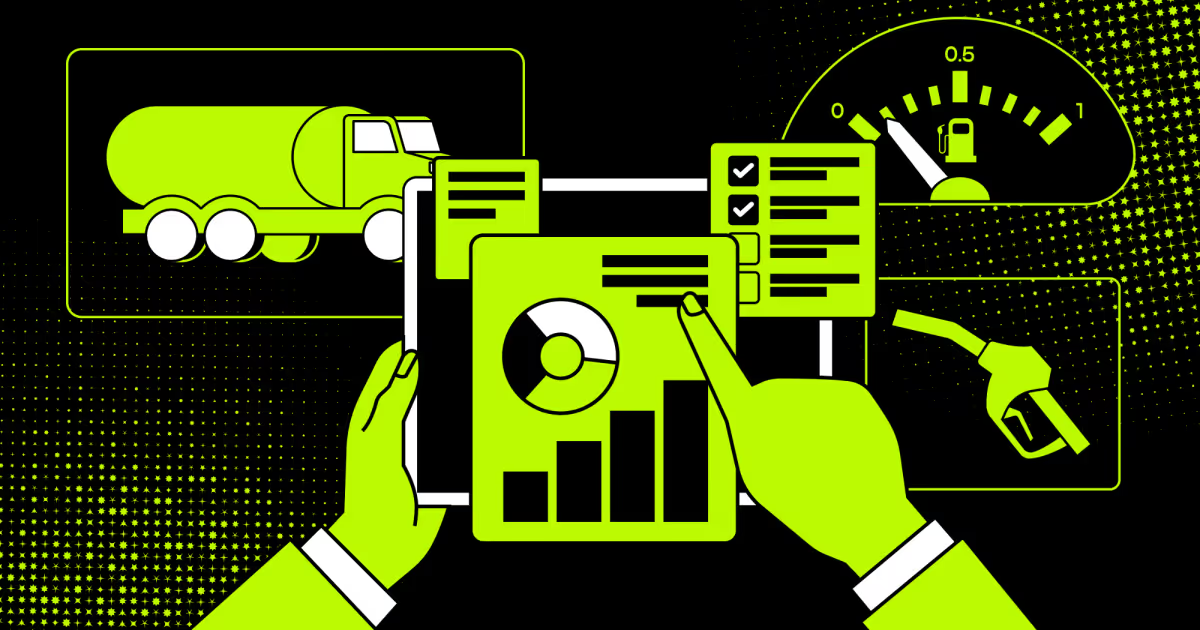
Fuel management. Apps track fuel consumption per vehicle, per route, per driver. Sudden spikes flag potential theft or mechanical problems. You see exactly which drivers burn fuel efficiently and which ones don't. Fleets using AI-driven fuel efficiency systems save an average of 20% on fuel costs, translating to roughly $2,800 per vehicle annually.
Driver behavior monitoring. As part of your solution, the fleet driver app logs every harsh brake, rapid acceleration, sharp turn, and idle period. This data converts into safety scores for each driver. Continuous monitoring reduces harsh driving events by 38% and cuts unnecessary idling by 28%. Better driving means fewer accidents, lower insurance premiums, and longer vehicle life.
Scheduling and diagnostics for maintenance. Early warning indicators such as abnormal vibrations, engine temperature spikes, or brake wear are detected by sensors inside cars. The app plans maintenance of malfunctions. According to research by Bnouachir, predictive maintenance systems can predict possible failures ahead of time with 85% accuracy. Businesses that use these systems report a 32% decrease in total maintenance costs and a 35% decrease in unplanned malfunctions.
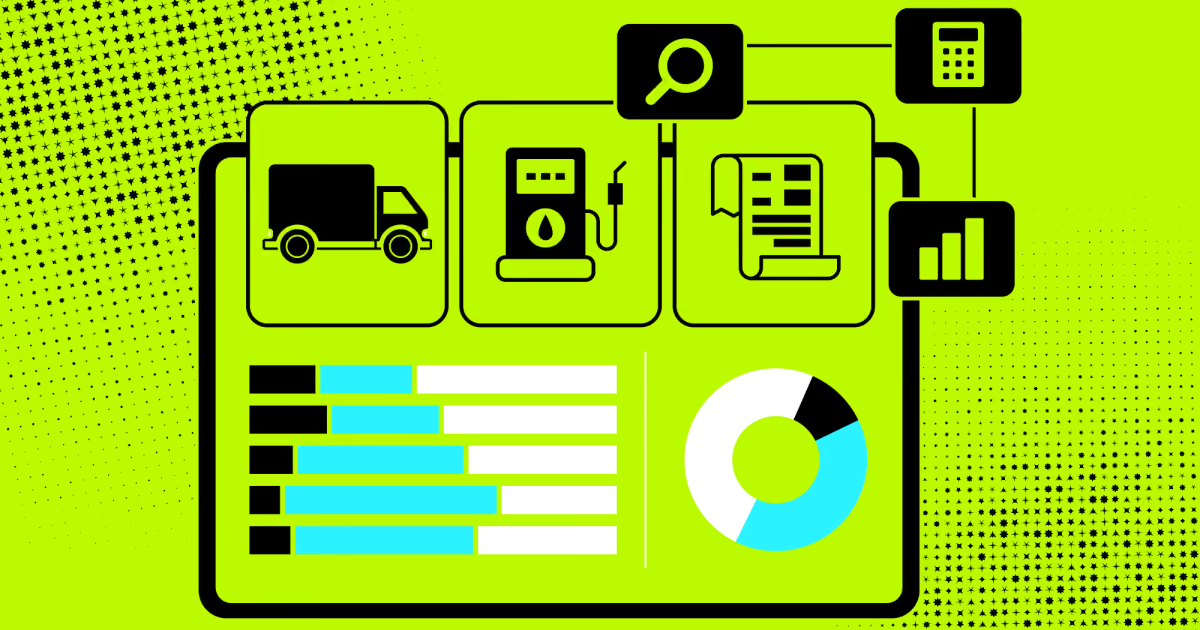
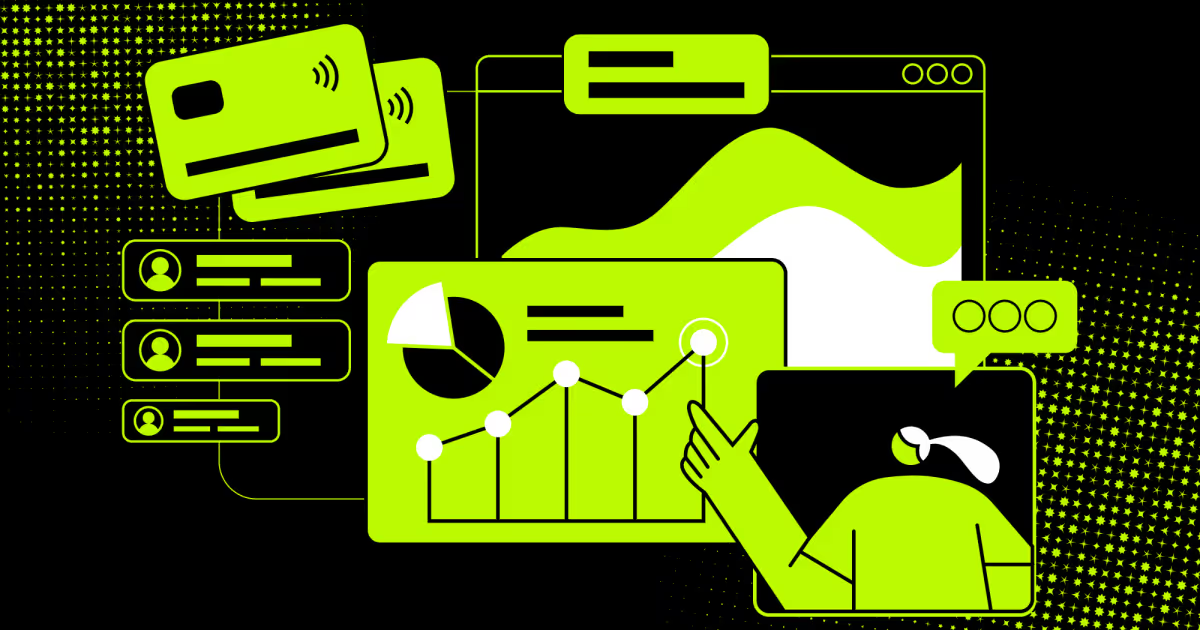
Analytics and data reporting. Fleet management app development allows you to create dashboards that display performance metrics, cost trends, and efficiency patterns in place of any spreadsheets and manual records. For instance, in the research on such a system implementation, the system updates every eight seconds, processing more than 130 different metrics per vehicle. You can compare driver performance, spot issues, and determine which routes use the most resources.
Instant alerts. When something goes wrong, you know immediately. This can be anything - accidents, unauthorized route changes, speeding violations, or maintenance needs. Alerts can reach managers within 5 seconds of the event. Fast response times prevent small problems from becoming disasters.
Role-based access control. Different users see different information. Drivers access their schedules and performance scores. Dispatchers view real-time fleet positions and can reassign routes. Mechanics see maintenance histories and upcoming service needs. Executives review cost reports and efficiency metrics. This keeps sensitive data secure and prevents information overload.
All these features alone give you endless possibilities. You can improve your fleet operations and prevent costly mistakes and overspending (or underutilization). With this functionality on board, you can also bring back some profits and ensure compliance. Now, let’s see something even more amazing - the sophisticated features of fleet tracking apps that truly distinguish you from the competition.
Advanced features
Among the more high-value features you can get with fleet management application development are the ones ensured by AI, IoT and telematics technologies, and some more complex integrations. Let’s outline what each of these brings to you.
Machine learning and artificial intelligence. AI determines risk scores based on past data, anticipates which cars will require repairs in the near future, and detects driver fatigue prior to collisions. As machine learning models handle more data, they get better over time. Businesses that use AI-powered fleet solutions see improvements in vehicle utilization of 38%, a 29% reduction in maintenance costs, and a 24% reduction in fuel consumption.
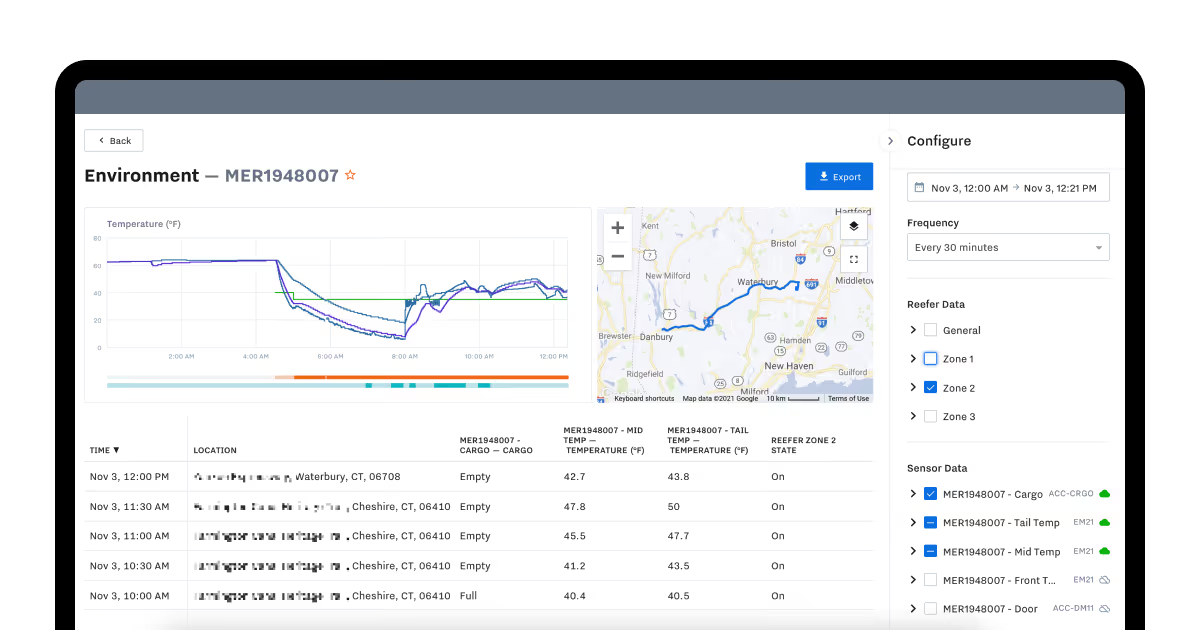
IoT devices and sensors. Tire pressure, cargo temperature, load weight, door status, and refrigeration unit performance are all tracked by IoT sensors. Every hour, each car produces 20–25 GB of sensor data. Also, predictive systems use this data to identify issues before they cause operational disruptions.
Advanced telematics. Telematics goes deeper than location tracking that most basic GPS fleet management apps provide. It reads engine diagnostics, measures emissions, monitors transmission health, and analyzes fuel efficiency against cargo weight. The system processes data at 3 second intervals, offering immediate optimization suggestions. Implementation studies show telematics systems can handle up to 400,000 data points per second across large fleets while maintaining response times under 150 milliseconds.
Video telematics. AI enables dashcams to record what happens inside and outside the vehicle. They detect distracted driving, reconstruct accident sequences, and provide evidence for insurance claims. The footage becomes training material for improving driver performance. Video analytics identify patterns like frequent lane departures or close following distances that increase accident risk.
Integrations with third-party providers. Fuel card systems, accounting software, ERP platforms, and customer management tools can all be connected to your fleet management software app. Data is automatically transferred between systems - there’s no manual entry involved in invoicing, expense reports and fuel purchases are synchronized, and maintenance costs feed directly into budget tracking. Bnouachir and colleagues' research indicates that seamless integration facilitates long-term technological advancement, streamlines operations, and centers fleet data on a single platform.
What do you get with all these features? You can start knowing instead of speculating, all thanks to these features. The information lets you know what's going on, what's going to happen, and what you should do.
Key steps in the fleet management app development process
Now that you know what functionality a good car fleet management app should have, let’s break down the end-to-end steps to build one. We’ll focus on how to create a solution that corresponds with your goals, solves your problems, and brings immediate ROI and long-term value.
Organizing and evaluating the needs.
Determine who will use the app. A mining operation with 200 dump trucks that needs a commercial fleet management app has different requirements than a delivery company with 20 vans. Every subsequent decision is shaped by your target audience and fleet type, according to Saghaei. Ask drivers, maintenance teams, and fleet managers about what issues do they deal with daily. According to Bnouachir, users' baseline needs include performance reports, proof of delivery, and real-time vehicle tracking. Before any programming, record these requirements.
Study existing solutions and prioritize features.
Test competitor apps, read reviews, and identify what users complain about. Look for gaps where current tools fail. Maybe routing algorithms ignore real-time traffic, or maintenance alerts arrive too late. These gaps become your opportunity. Then, prioritize features based on impact and complexity. Build a roadmap that starts with core functionality and adds advanced features later. Trying to launch with everything at once guarantees delays and budget overruns.
Development and design.
The interface for a fleet vehicle tracking app should probably be simpler than you think. Simple, distraction-free screens that drivers can look at while stopped are essential. Dashboards that show dozens of cars without being overloaded with data are essential for fleet managers. One of the most important factors influencing adoption rates is user-friendliness at any location.
Make thoughtful selections for your technology stack.
Massive data loads must be managed by the backend - all this must be processed by your infrastructure without collapsing. With response times under 150 milliseconds, cloud platforms such as Azure have proven to be able to handle up to 400,000 data points per second across large fleets.
Build APIs that connect with existing systems.
The app needs to pull data from GPS trackers, fuel card providers, maintenance software, and accounting platforms. Clean data flow prevents the chaos of manual entry and duplicate records. Bnouachir's team emphasizes that seamless third party integration centralizes fleet data and simplifies operations.
Deployment and testing.
Before launching, test each feature. Note that a proper fleet management application development requires you to mimic conditions found in the real world. For instance, when a GPS signal fails in a tunnel, what happens? How does the app manage fifty driver logins at once? Conduct pilot studies with a limited number of users and make adjustments based on what they report. And surely, resolve small-scale problems before implementing them throughout the entire organization. Provide users with appropriate training, offering direct assistance, video tutorials, and documentation.
Maintenance and improvement.
Monitor performance continuously after launch. Track response times, error rates, user complaints, and feature usage. Remember to only add new features based on feedback and changing needs. Fleet technology evolves constantly, so apps that stop improving become obsolete.
Keep up with the latest developments in technology.
Accuracy is improved by new GPS chipsets. Better AI models anticipate maintenance requirements sooner. Improved compression algorithms lower the cost of data transmission. Continuous technological updates allow fleet systems to achieve 99.95 percent uptime.
The process of development never really comes to an end. Effective fleet apps change, advance, and expand in tandem with the companies they support. Businesses that view their app as a final product rather than a tool that is constantly evolving lose ground to rivals who continue to advance.
This constant development is what we support and effectively help with at COAX. With our fleet management software development services, we cover any step of this process - from the initial requirements gathering and user research to design, development, testing, and deployment. Unlike other fleet management app development companies, we don’t just hand off the solution for you and leave. Our experts ensure constant monitoring of user acceptance rates, the system’s health, tracking accuracy, and AI algorithms' efficiency.
Cost of fleet management app development
The cost of developing a fleet management app ranges from $7,000 to $250,000. Because your choices determine the price, there is a wide range. For about $7,000, you can get a basic MVP with GPS tracking and a dispatcher dashboard. At $35,000, you enter mid-tier territory when you include driver scorecards, analytics, and fuel monitoring. Do you want ERP integration, compliance automation, and AI predictions? Budgets can reach $250,000 when you reach the enterprise level.
Factors affecting cost
The most important factor is feature complexity. GPS tracking is simple. Predictive maintenance with machine learning and sensor data? It takes a lot of engineering hours. Development time increases with each feature you add.
Selecting a platform affects everything. Compared to simultaneously supporting iOS, Android, and the web, building for iOS only is less expensive. Although they can lower costs, cross-platform frameworks may restrict the performance of complex features.
Team location affects hourly rates. US developers charge $60 to $200 per hour. Australian teams run $60 to $120. Eastern European developers often charge $40 to $70. Quality varies, but geography creates real price differences.
Integration depth drives technical complexity. Connecting your vehicle fleet management app to existing ERP systems, telematics hardware, or compliance databases requires custom API work. Third-party integrations often need ongoing maintenance as external systems update.
Compliance requirements add hidden costs. If you operate in regulated environments, your app needs specific workflows for ELD mandates, FMCSA rules, or regional safety standards. Building these correctly takes specialized knowledge.
Infrastructure scales with fleet size. A 50-vehicle operation runs on basic cloud hosting. A 5,000-vehicle fleet needs autoscaling servers, load balancing, and robust databases. Monthly hosting costs grow accordingly.
Development is just the start. Budget 15-20% of your initial cost annually for maintenance. Security patches, OS updates, and bug fixes never stop. Add another $10,000 to $25,000 yearly for feature improvements based on user feedback.
Cost category
Estimated range
Key notes
Basic MVP
$7,000 - $25,000
GPS tracking + dispatcher dashboard. Quick build (4-8 weeks) using cross-platform tools like Flutter.
ERP integration, AI predictions, compliance automation. 6-12+ months with custom features.
US developer rates
$60 - $200 / hour
High-end expertise; ideal for complex AI/ML integrations.
Australian rates
$60 - $120 / hour
Balanced quality and cost; strong in logistics apps.
Eastern European rates
$40 - $70 / hour
Cost-effective for mid-tier; popular for travel/hospitality fleets (e.g., Ukraine/Poland teams).
Annual maintenance
15-20% of initial cost
Security, updates, bug fixes.
Yearly improvements
$10,000 - $25,000
User feedback-driven features like enhanced CRO analytics.
Cloud infrastructure (Monthly)
$100 - $5,000+
Basic for 50 vehicles ($100-500); scales to $2K+ for 5,000 vehicles with AWS/GCP autoscaling.
Custom platforms remove license fees but require upfront investment. Off-the-shelf solutions charge $10 to $30 per vehicle monthly. For custom fleet management app development, your per-vehicle cost drops to $5 to $10 monthly once you amortize development over two years.
ROI of fleet management apps
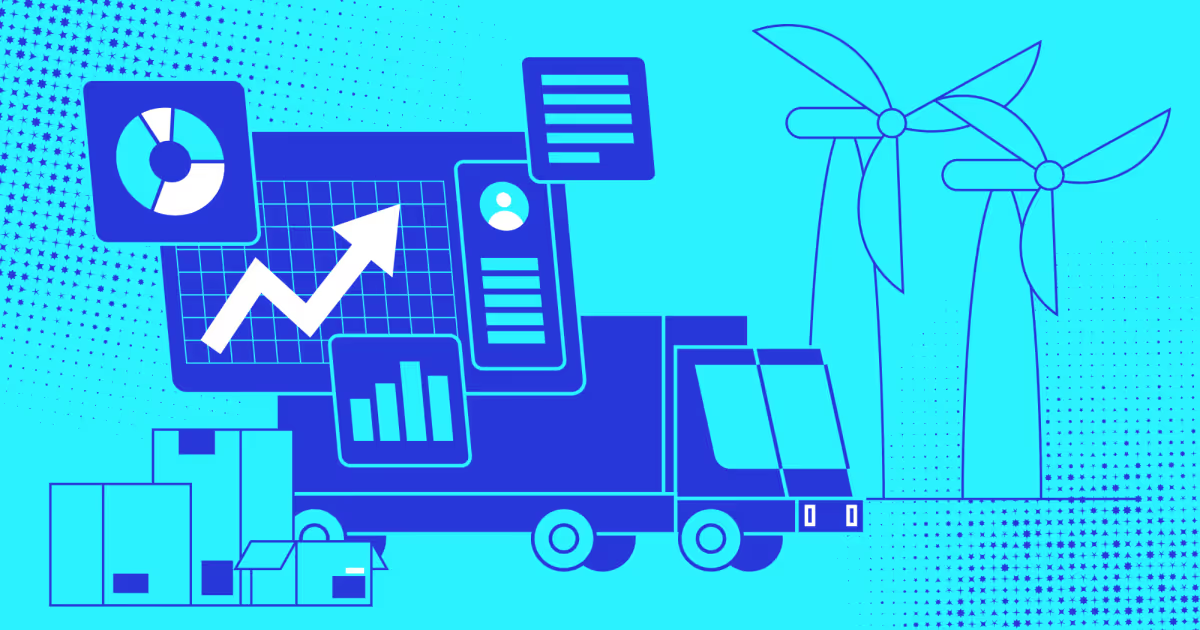
Custom fleet tracking mobile apps pay back through operational gains. Fuel monitoring typically cuts consumption 10-15% by catching inefficient routes and aggressive driving. Route optimization reduces miles driven by 20-30%, directly lowering fuel and maintenance costs.
Predictive maintenance prevents breakdowns. Catching issues before vehicles fail reduces emergency repairs and keeps trucks earning revenue. Automated compliance tracking eliminates manual paperwork and reduces violation risks.
The math works when you remove vendor lock-in and build exactly what your operation needs. At COAX, we cover all the options. We can help you with custom mobile application development from scratch, or redesign and develop features to fit your updated workflows, vehicle types, or location expansion. Finally, we can integrate with the providers you need, not the ones forced by any vendors.
Top off-the-shelf fleet management apps
Sometimes, you can skip custom development entirely. Dozens of ready-made fleet management apps work out of the box, often launching within days instead of months. Off-the-shelf solutions charge monthly fees per vehicle - so let’s find the perfect balance between the best app for fleet management, comfortable pricing, and robust features.
Samsara focuses on real-time telematics with AI dashcams and driver scorecards. Popular among fleets prioritizing safety and behavior monitoring. Pricing runs custom quotes, usually landing between $40 to $60 per vehicle monthly. Works on iOS, Android, and web. Strong mobile apps make it easy for drivers to log hours and communicate incidents, and ELD compliance comes standard.
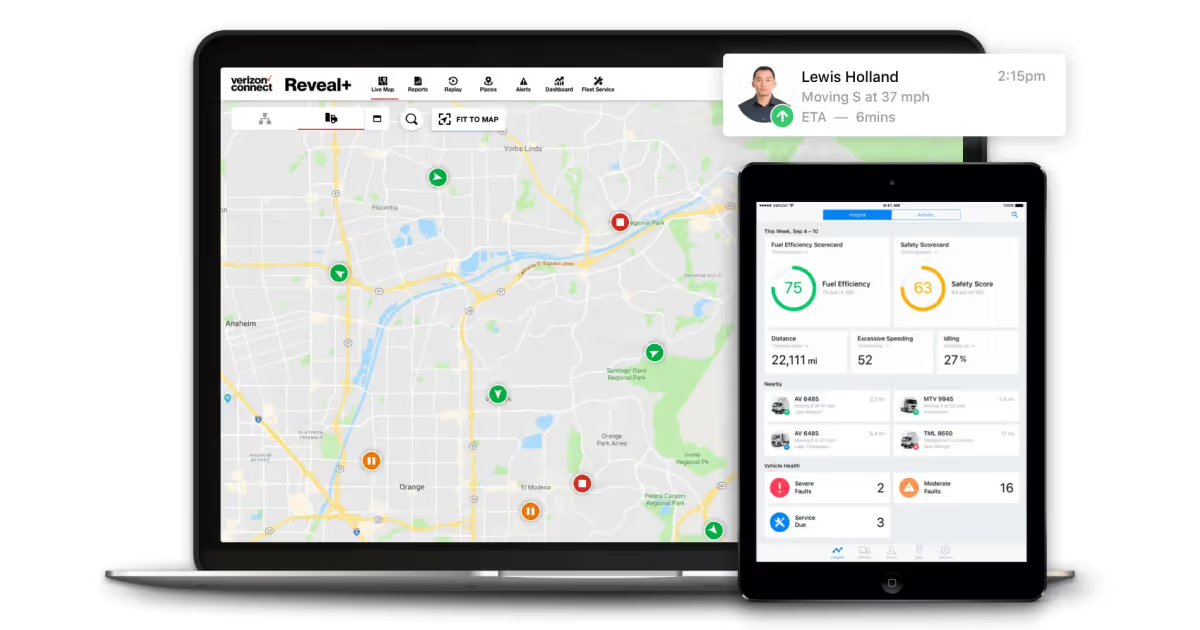
Verizon Connect provides a great fleet management mobile app for enterprise operations needing robust compliance and route optimization. GPS tracking pairs with driver safety monitoring and asset tracking. Custom pricing starts around $45 per vehicle monthly. Integrates with Verizon IoT devices for deeper connectivity. This tool is best for logistics companies managing large delivery networks where route efficiency directly impacts profitability.
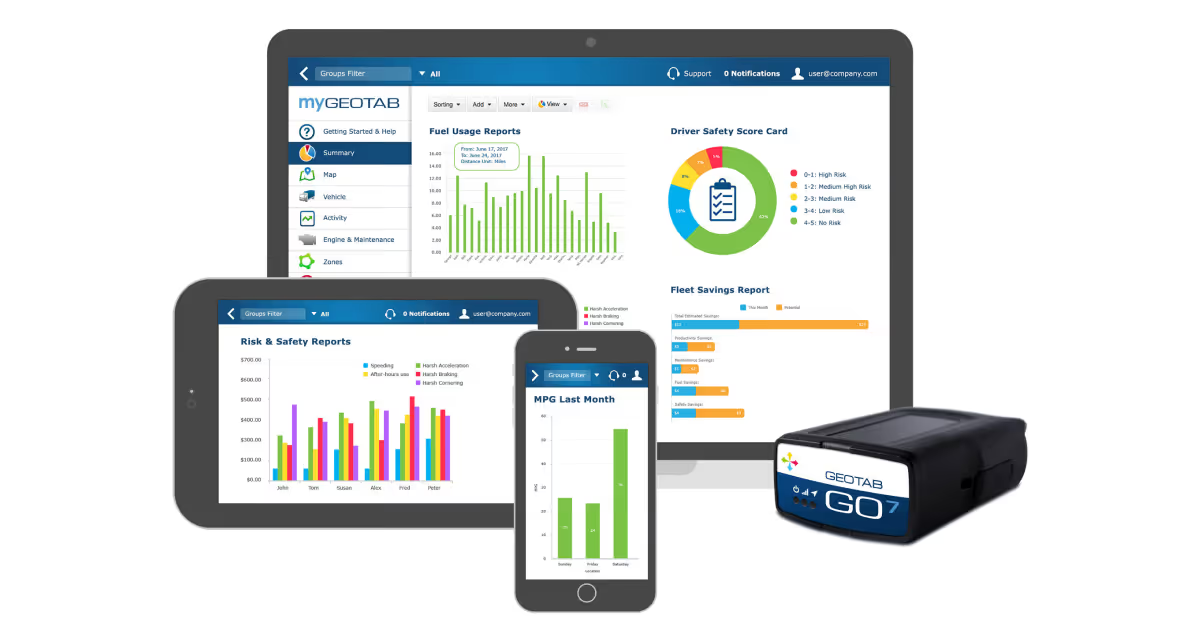
Geotab delivers powerful analytics through open APIs. Fleets wanting custom integrations choose Geotab for its flexible platform. Vehicle diagnostics, driver safety tracking, and sustainability reporting are included. Pricing ranges $20 to $30 per vehicle monthly, making it one of the more affordable enterprise options. Platform supports iOS, Android, and web dashboards. Requires technical knowledge to maximize customization potential.
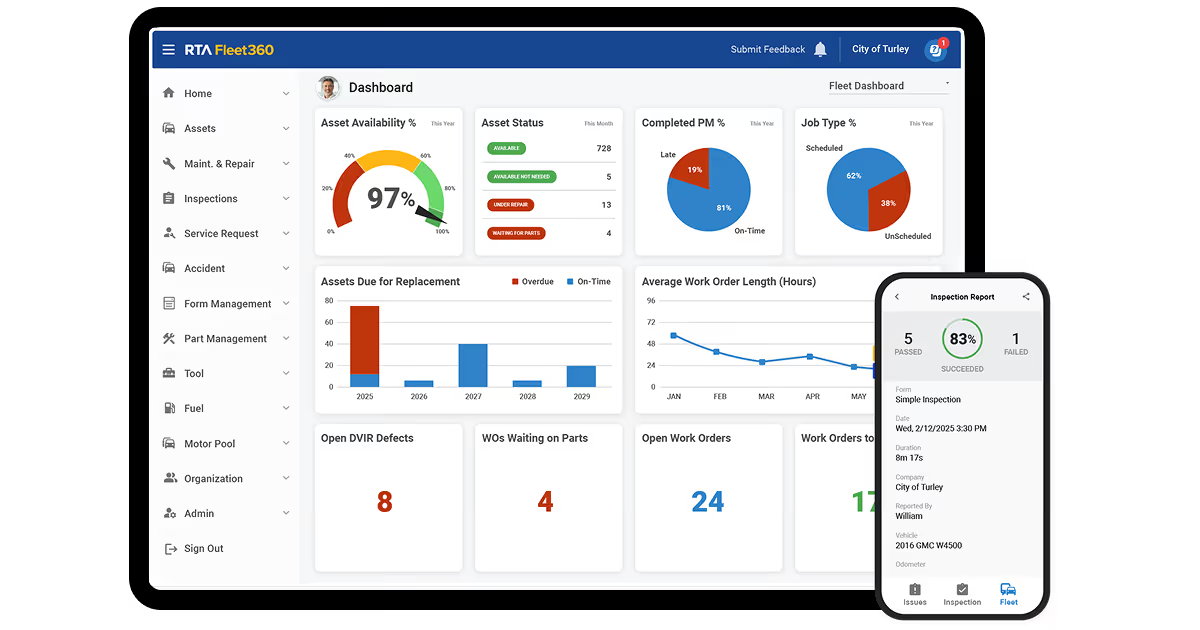
RTA Fleet360 specializes in maintenance management over pure GPS tracking. Preventive maintenance scheduling, work order management, and parts inventory control give municipal fleets and transit agencies the depth they need. Starts at $5 per asset monthly. Configurable dashboards let you track exactly what matters for your operation. Best when uptime and maintenance precision drive your success.
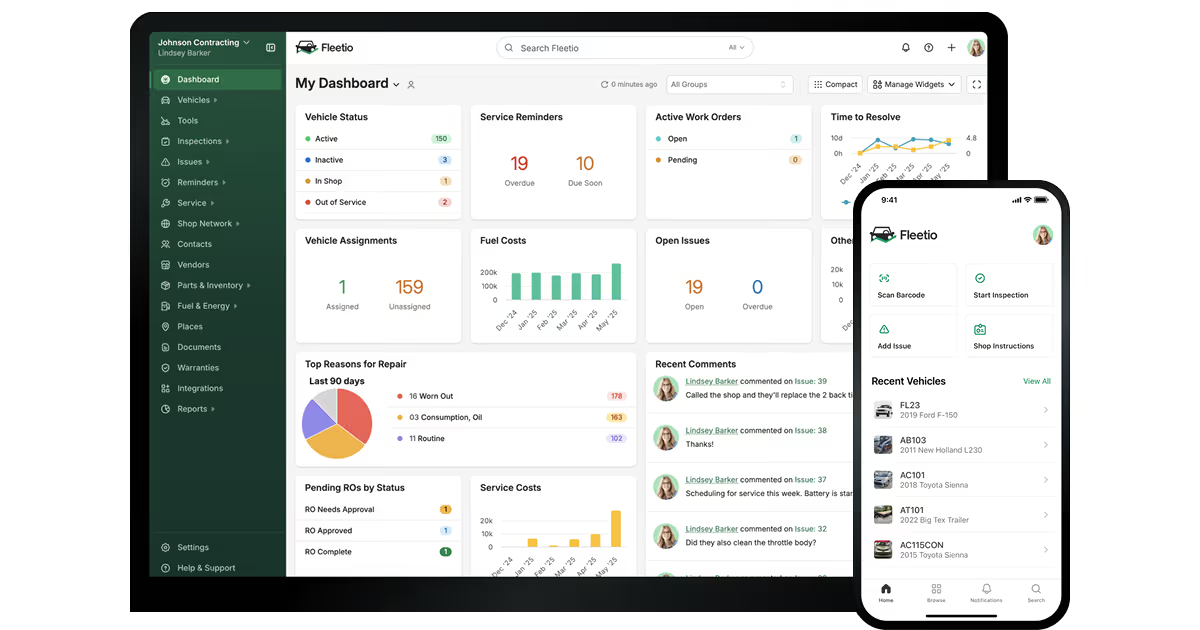
Fleetio is one of the best fleet management apps for contractors, serving small to mid-sized fleets wanting simplicity. Intuitive dashboards make maintenance tracking, vehicle inspections, and reporting straightforward. Mobile tools let technicians log work from anywhere. Pricing begins at $5 per vehicle monthly. Integrates with fuel cards and telematics providers. This solution is perfect when you need basic fleet management without enterprise complexity.
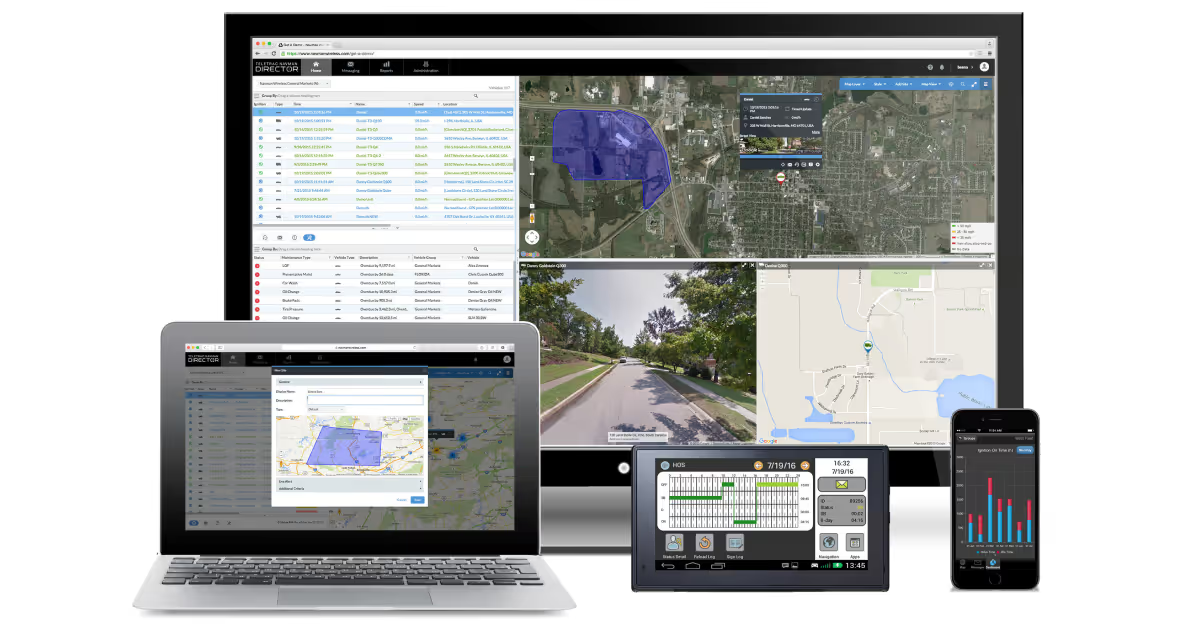
Teletrac Navman handles global compliance and sustainability tracking. Video telematics, dispatch optimization, and multi-region fleet management suit international operations. Custom pricing reflects enterprise scope. GPS and asset tracking work across countries with varying regulations. Choose this when your fleet crosses borders, and compliance requirements multiply.
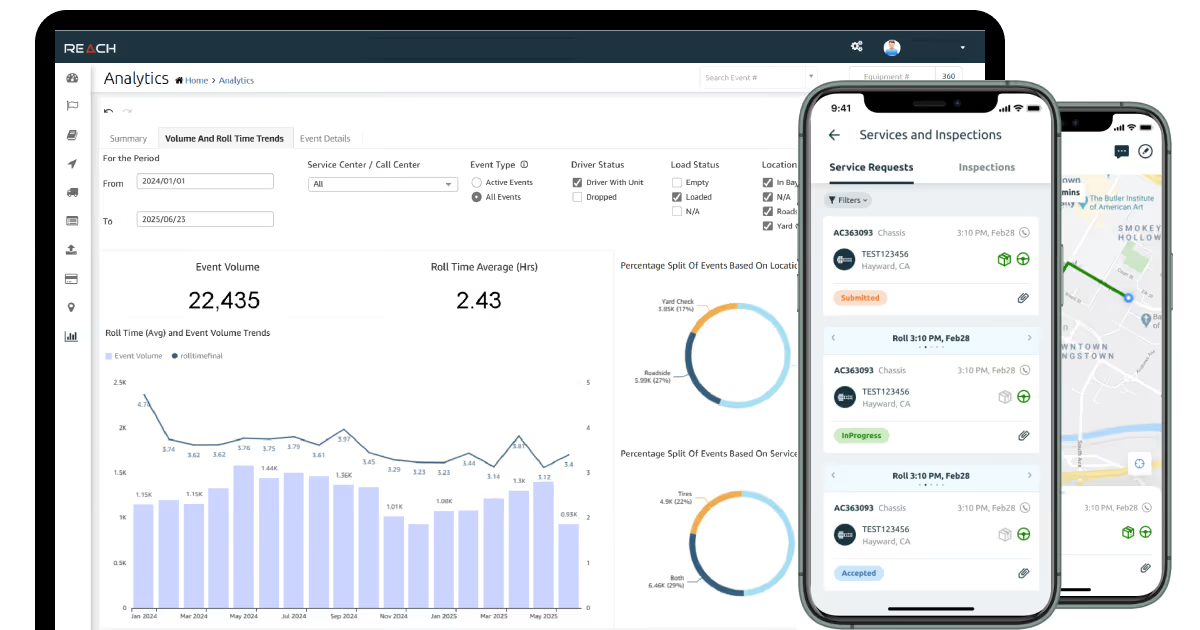
REACH solves a different problem. Instead of tracking everything, it focuses on roadside incidents. When trucks break down, REACH connects you to a pre-vetted vendor network 24/7. Real-time repair tracking shows progress from dispatch to completion. Not a full telematics platform, but unmatched for cutting breakdown downtime. Works nationwide with live vendor coordination.
With these platforms, you avoid upfront development costs but accept vendor lock-in and feature limitations. The trade works for many fleets, especially when standard workflows fit your operation.
Choosing the app based on your priority
There are many fleet management tracking apps in the market, so how to choose the right one? We prepared a simple checklist on that solution to pick based on your immediate needs and priorities.
Pick Samsara when driver safety and behavior matter most. The AI dashcam integration catches incidents and coaching opportunities in real time.
Choose Verizon Connect for route optimization across large delivery operations. Compliance tools handle DOT requirements without manual tracking.
Go with Geotab when you need analytics depth and custom integrations. The open platform lets you build exactly what your data team requires.
RTA Fleet360 can be the best fleet management app for you if preventive maintenance drives your operation. Municipal fleets and transit agencies get the detailed work order tracking they need.
Pick Fleetio for straightforward maintenance management in smaller fleets. The mobile experience makes technician workflows simple.
Use Teletrac Navman when managing vehicles across multiple countries. Global compliance and video telematics keep international operations smooth.
Deploy REACH when breakdown response time matters more than tracking metrics. The vendor network reduces roadside delays dramatically.
Each platform delivers specific value. Match your biggest operational pain to the tool built to solve it.
Build a custom fleet management app: When and why
Often, you face a massive limitation when your operation requires features no vendor offers, when compliance demands exceed standard templates, or when integration with legacy systems becomes impossible. Custom fleet management apps solve problems that generic platforms cannot cope with.
Benefits of custom solutions
With custom fleet management app development, you get some advantages that beat any market-ready tools - here are the most prominent ones:
You control every feature. Generic platforms force you into their workflow. Custom apps bend to your needs. If your operation runs mixed fleets with construction equipment, delivery vans, and service trucks, you need different tracking parameters for each asset type. Custom fleet apps using Vehicle Routing Problem algorithms can analyze historical data and real-time traffic to create routes impossible with standard tools. The result? Operations that actually match how your business works.
Fuel and maintenance costs drop significantly.Studies show that AI-driven fleet analytics in custom systems achieve a 24% reduction in fuel consumption and a 29% decrease in maintenance costs. These aren't minor improvements. For a 100-vehicle fleet spending $500,000 annually on fuel, that 24% cut saves $120,000 every year. Custom predictive maintenance tracking prevents breakdowns before they happen by monitoring vehicle-specific diagnostics and usage patterns your operation creates.
Integration eliminates data silos. Your accounting system, dispatch software, and customer portal already exist. Custom GPS fleet tracking apps connect them through APIs designed specifically for your tech stack. Gomathy and colleagues found that custom fleet systems enable efficient information exchange between vehicles and central management without the data bottlenecks common in third-party integrations.
Real-time monitoring fits your exact needs. Standard dashboards show generic metrics. Custom apps display the KPIs that actually matter to your operation. If you run refrigerated transport, you track temperature fluctuations alongside location. Construction fleets monitor equipment hours and hydraulic pressure. The telematics data you collect drives decisions specific to your business model.
Compliance becomes automated for your regions. Operating across state lines or international borders creates regulatory complexity. Custom solutions embed region-specific Hours of Service rules, emissions standards, and safety reporting directly into your workflow. The system knows which regulations apply to each route and vehicle type automatically.
Despite all these clear benefits, you don’t always need a tailor-made system. Let’s break down specific instances when this will be the best for you.
Use cases when you need custom fleet management app development
There are situations when you can go with an off-the-shelf tool, but in many others, a custom solution will be much better for your operations and returns. Here are the most typical reasons for you to build a closely-fit fleet management app:
Your fleet mixes vehicle types with different monitoring needs. A logistics company running box trucks, flatbeds, and passenger shuttles cannot use one-size-fits-all tracking. Each asset type needs different data points. Custom apps handle this complexity without forcing compromises.
Existing workflows require deep system integration. If your dispatch process connects job scheduling, customer notifications, invoicing, and vehicle assignment in a specific sequence, generic software breaks that flow. Custom apps maintain your proven processes while adding fleet intelligence.
Compliance spans multiple jurisdictions with conflicting rules. International operators face this constantly. A custom solution applies the correct regulatory framework based on vehicle location and load type automatically, something standard platforms struggle to manage.
Your data volume exceeds standard platform capacity. Custom fleet vehicle tracking apps handle high telemetry volumes across thousands of vehicles without performance degradation. If you operate 500+ vehicles generating continuous sensor data, generic platforms start lagging.
Vendor lock-in threatens your business model. When your operation depends entirely on one software vendor, price increases and feature changes happen on their timeline, not yours. Custom ownership means you control updates, costs, and capabilities permanently.
You need predictive capabilities beyond basic alerts. Standard apps send low fuel warnings. Custom AI-driven systems predict maintenance needs three weeks ahead based on your specific usage patterns, as documented by fleet management researchers. That advance notice prevents service disruptions during peak demand periods.
Customer-facing features require white-label integration. If clients need to track their shipments through your branded portal, generic fleet software rarely offers the customization depth required. Custom apps embed tracking seamlessly into your existing customer experience.
All these use cases are what we skillfully cover at COAX. Our engineering teams can develop logistics mobile apps with complex integrations that no ready-made tools offer, predictive analytics systems that consider your unique variables, and Machine Learning algorithms that calculate complex KPIs beyond basic analytics.
Additionally, we have experience in multi-region licensing and jurisdiction tracking and provide you with full, uncompromising ownership of your data. Competitive intelligence and a clear advantage over your competitors, flexibility to make any changes, freedom to expand to different regions, bullet-proof security - this is just the beginning of what you get with our fleet management app development company.
FAQ
How does an enterprise fleet management app differ from one for a small business?
Enterprise apps handle thousands of vehicles with complex compliance across multiple regions. For example, Dai and others demonstrated multi-robot coordination requiring deep reinforcement learning algorithms for dynamic task allocation. Small business apps focus on basic GPS tracking and maintenance reminders. Enterprise solutions demand advanced integration with ERP systems, predictive analytics, and scalable cloud infrastructure that small fleets don't require.
What are the challenges of fleet management app development?
Data access remains the primary challenge. Sterk and team found OEMs exclusively control vehicle data, forcing developers toward expensive retrofit solutions or emerging data marketplaces. Additional hurdles include:
Real-time processing of high-volume telemetry
Multi-brand integration complexity
Maintaining performance across poor connectivity zones
Building robust collision avoidance algorithms for coordinated fleet movements.
What are the key security measures for developing fleet management applications?
Use the following measures:
Implement end-to-end encryption for all vehicle telemetry transmission.
Use OAuth 2.0 for API authentication and role-based access control.
Deploy intrusion detection systems to monitor unusual data access patterns.
Ensure GDPR compliance for driver data collection.
Maintain encrypted databases with automated backup protocols.
How does COAX develop efficient application fleet management solutions?
COAX implements a modular architecture enabling rapid feature deployment without system disruption. We prioritize API-first design for seamless third-party integration. Our development follows agile methodologies with continuous testing in simulated environments before production. COAX is ISO/IEC 27001:2022 certified for comprehensive security management, risk assessment, and monitoring. We hold ISO 9001 certification, ensuring optimal quality processes throughout development.























































_.avif)





%2520explained.avif)

We are interested in your opinion