Rail transportation has long passed the time of manual railcar tracking and disconnected communication. Without modern rail fleet management, you’re almost sure to be left in the past.
New, advanced technology gives you immense opportunities:
Trackside detectors and onboard sensors that catch wheel defects before they cause derailments.
GPS and RFID systems that cut manual tracking across multiple railroad networks.
Predictive maintenance algorithms that analyze millions of daily measurements.
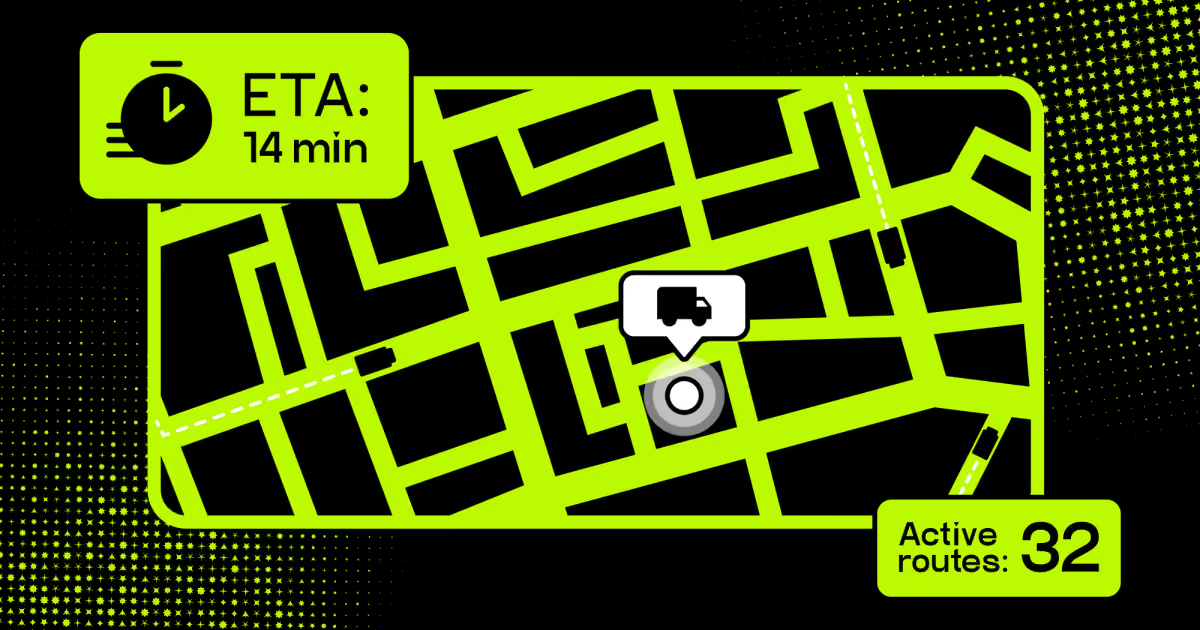
Dynamic ETA forecasting that recalculates arrival times when delays occur.
IoT infrastructure with edge computing that processes sensor data even in tunnels and remote areas.
Maintenance scheduling tools that align technicians, parts, and equipment availability.
Performance analytics that reveal utilization patterns and optimize fleet sizing.
Integrated data systems that combine health monitoring, location tracking, and maintenance for faster decision-making.
In this end-to-end guide to rail fleet management software, we break down the key components and technologies that collectively give you a new, more efficient way to lead your business. We also outline the best ready-made solutions and outline the basics of choosing between them and custom rail fleet solutions development.
What is rail fleet management?
Rail fleet management is the continuous process that controls and optimizes railway assets to maximize their value and operational efficiency. It involves varied operations:
Monitoring rolling stock performance
Coordinating maintenance activities
Tracking equipment across networks to ensure assets deliver strong returns while minimizing idle time.
This process is important for every business that manages freight cars. These businesses include railway operators, shipping companies, equipment lessors, and logistics providers. While many focus mostly on tracking locations and repairs, effective management extends far beyond these functions. Let’s define what this process generally involves.
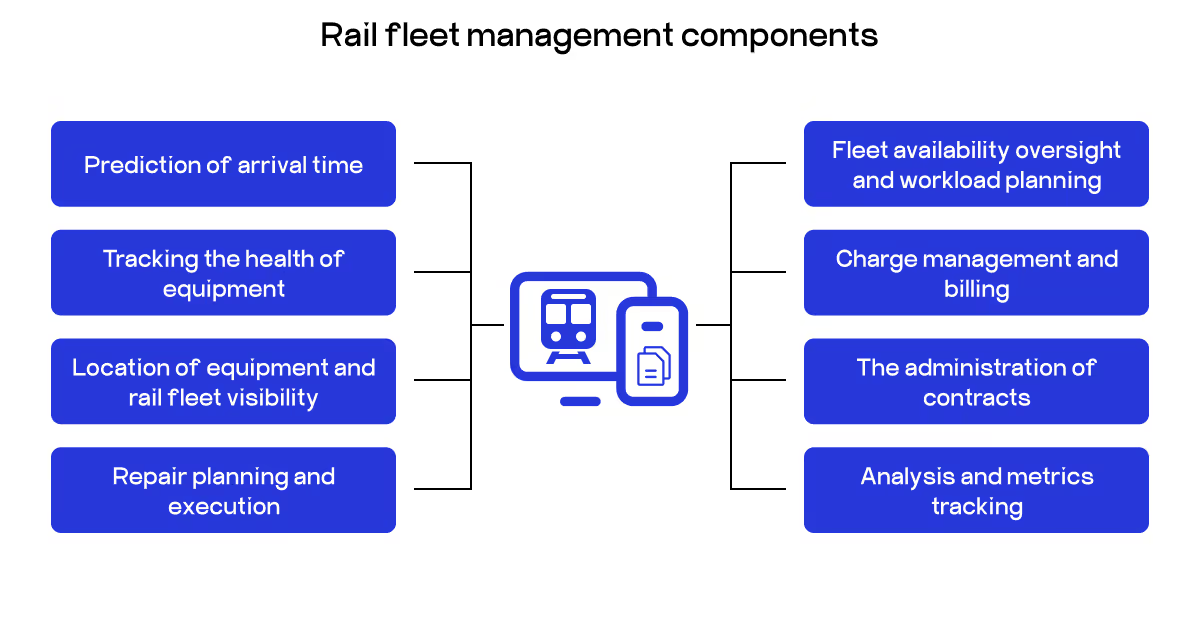
What rail fleet management includes
Efficient management of rail freight operations covers many aspects, from maintenance to ensuring real-time visibility, and defining the exact times of arrival and departure, to managing staff and scheduling. Let’s break down these nuances.
Prediction of arrival time. For shippers and supply chain partners, knowing when trains will arrive at their destination helps with planning. Precision scheduled railroading is now used by major railroads to maintain consistent schedules, which is beneficial. However, interruptions still occur. Fleet managers must compute anticipated arrivals daily for smaller railroads without set schedules.
Tracking the health of equipment. Every year, railroads install more trackside detectors, and the number of onboard sensors on rolling stock rises. To identify issues early, managers need to keep a close eye on these data streams.
Location of equipment and rail fleet visibility. Stakeholders must always be aware of the location of their railcars and cargo. A lot of people use railroad portals for manual checks. You are forced to piece together data from different systems when your freight travels across several rail networks.
Repair planning and execution. Preventive maintenance with regular servicing is standard practice now. But it demands careful scheduling to balance needed repairs against equipment downtime. According to Hrušovský and others, coordinating maintenance activities involves:
Task assignments
Parts inventory control
Crew scheduling
Documentation management.
Fleet availability oversight and workload planning. Managers must track which railcars are ready for use and plan upcoming assignments. Shander and team note that maintaining the right fleet size meets demand without excess capacity that generates storage fees and other costs.
Charge management and billing. Whether you're a railroad calculating demurrage fees or a shipper verifying charges, accurate records prevent disputes and support financial analysis. Precise tracking data makes this possible.
The administration of contracts. Organization and oversight are necessary for lease agreements. Throughout your portfolio, you must keep track of contract terms, renewal requirements, and expiration dates.
Analysis and metrics tracking. Data-driven strategic decisions are the most effective. Regular performance monitoring as part of railcar management identifies operational flaws and areas for improvement.
Each of these processes connects - it’s impossible to predict and schedule maintenance without asset health tracking, and the latter influences the analytics that come as a result of monitoring these processes over time to help you with decision support.
Key components of a rail fleet management system
To successfully monitor equipment, optimize operations, and prevent failures, modern rail fleet management depends on interconnected technological systems. These elements take unprocessed data and convert it into insights that maintain the smooth operation of railcars.
Infrastructure for gathering data. Railcar health data is continuously gathered by trackside detectors and onboard sensors. Visual inspection tools identify load shifts or structural damage, laser systems measure wheel profiles, and acoustic sensors listen for bearing issues. According to Shander, this continuous observation makes it possible to identify problems early on. Algorithms in central systems use the data to find patterns that indicate emerging issues.
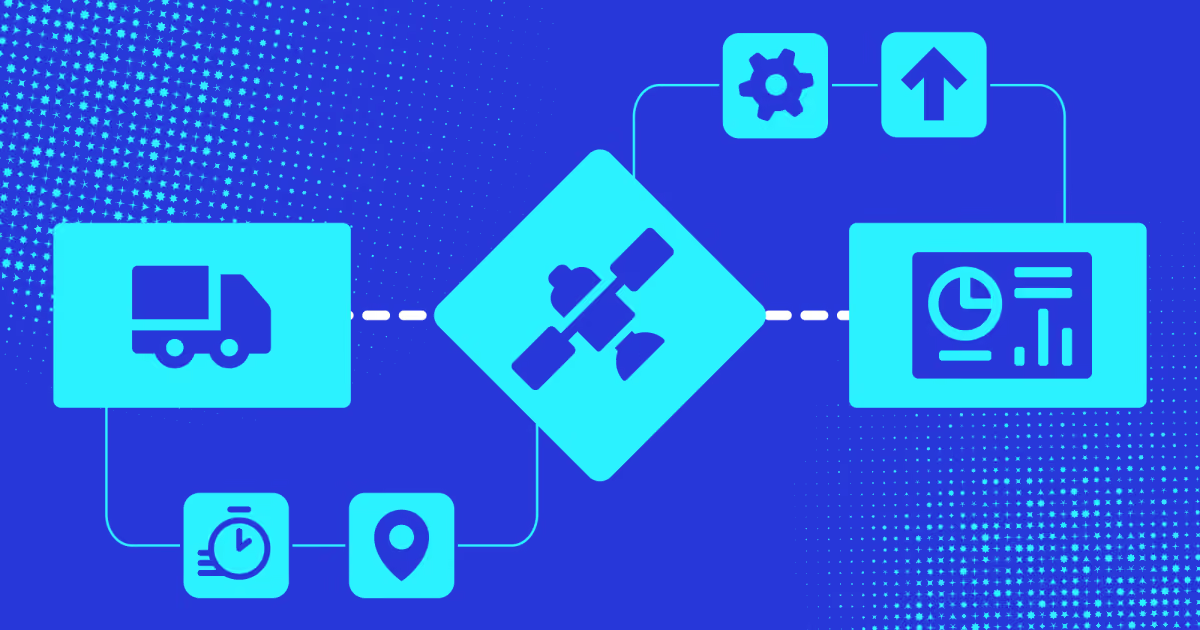
Systems for tracking movement and location. Each railcar's location is determined by GPS receivers and telecommunications devices, which then transmit this data in real time. More than just location is recorded by these systems. They record energy consumption, acceleration rates, braking patterns, and speed fluctuations. This information is used by fleet managers to confirm that railcars are adhering to designated routes and fulfilling performance requirements.
Maintenance coordination tools. Digital platforms replace paper logbooks and manual scheduling. The system tracks every repair, logs identified faults, and generates alerts when maintenance windows approach. As noted by Shander and team, automated scheduling reduces downtime by ensuring technicians, parts, and equipment align when railcars need service. The platform maintains complete maintenance histories for each asset, which supports warranty claims and regulatory compliance.
Modules for operational planning. The most effective routes across the network are identified by route optimization software within rail fleet solutions. To meet the demand for transportation, resource management tools assign crews and locomotives. The railcars that are loaded, empty, being repaired, or available for assignment are all tracked by the system. Features for formation planning aid in the construction of trains that optimize capacity while adhering to coupling and weight distribution specifications.
Monitoring of crew performance. Harsh braking incidents, speed limit infractions, and idle time are all recorded by digital systems. Features for task logging record the work that crews complete during shifts. Pre-departure inspection checklists are transferred from clipboards to tablets, resulting in searchable documents that demonstrate adherence to safety regulations.
Now that we understand the key elements of connected, efficient rail management, let’s outline the main technologies completing the basics for this complex set of functionality.
Technologies used in rail fleets
You can’t just look at any end-to-end rail fleet management software system as one simple mechanism. It presents a diverse set of tech achievements that help ensure the safety, efficiency, and cost-savings that help modern rail freight companies achieve and exceed competitive advantage.
Onboard sensors
Operational data that cannot be detected by external monitoring is captured by sensors installed on railcars and locomotives. Under real-world service conditions, these devices measure forces, vibrations, temperatures, and movements inside the train. Kostrzewski claims that by combining various sensor types, onboard systems establish safety frameworks.
Temperature sensors keep an eye on cargo conditions, brake temperatures, and bearing heat.
Unusual vibration patterns that indicate impending mechanical issues are monitored by accelerometers.
Wheel-rail interaction forces that may be a sign of faulty tracks or incorrect loading are measured by force transducers.
Intelligent software that sets baseline performance parameters is combined with these hardware sensors in rail fleet modernization. Real-time readings are constantly compared to safe operating thresholds by the systems. Additionally, automated alerts notify operators or initiate safety procedures when measurements surpass acceptable ranges.
The sophistication extends beyond just the monitoring threshold. Advanced onboard systems can detect subtle changes in track geometry during normal operations. They identify rail profile variations, gauge width shifts, and surface irregularities that manual inspections might miss. Environmental sensors add another layer by monitoring external conditions like weather that affect rail operations.
Condition-monitoring devices
Trackside equipment complements onboard sensors by scanning passing trains for faults and defects. Shander describes how these wayside systems use diverse sensing technologies, including infrared beams, lasers, and acoustic analysis, to inspect rolling stock.
Hot bearing detectors identify overheating axle bearings before they fail.
Wheel profile systems measure tread wear and detect dangerous flat spots.
Acoustic bearing detectors listen for abnormal sounds indicating internal damage.
Dragging equipment sensors catch loose parts that could snag infrastructure or derail trains.
Weight measurement systems verify proper loading and detect dangerous imbalances in freight cars.
High car detectors prevent trains from striking bridges and tunnels.
Also, advanced implementations like Machine Vision systems use high-speed cameras to capture thousands of images per second, which algorithms analyze instantly to spot anomalies.
In order to promptly notify train crews, these devices automatically report findings over radio networks. Additionally, data is sent to rail fleet maintenance systems, which monitor deteriorating parts and plan repairs before they break.
GPS, telematics, and connectivity solutions
In contemporary rail operations, location tracking is an absolute must. According to Behrends, real-time rail fleet tracking is made possible by GPS-based telematics systems, which were previously unattainable with infrastructure-based tracking alone.
How does it happen? As trains pass trackside readers, RFID-based automatic equipment identification systems generate digital records. Thousands of readers positioned along routes communicate with millions of tags on railcars and locomotives. Moving equipment's GPS receivers provide constant position updates with enough precision for operational planning.
Telematics platforms combine location data with diagnostic information from vehicle systems. These integrated solutions monitor engine performance, fuel consumption, and maintenance needs while simultaneously tracking where assets are and where they're headed. The systems support better dispatching decisions, improved schedule reliability, and faster response to disruptions.
Connectivity challenges arise in tunnels and urban canyons where satellite signals fade. Bluetooth Low Energy beacons and ultra-wideband readers fill these gaps by providing location data when GPS becomes unavailable. The combination ensures uninterrupted tracking across entire networks.
IoT infrastructure
Massive amounts of data come from the connected sensors, necessitating cloud-based processing and storage infrastructure for railcar management software. Railway IoT systems need to use a variety of sensor technologies to gather various parameter types in real time. They work in challenging environments with severe vibration, temperature swings, and restricted physical access. Different technical approaches within the same platform are required for high-density data collection in stations and long-distance monitoring across tracks.
Years of independent operation without mains power is what you get with battery-powered wireless devices that use long-range, low-power protocols. Without the need for costly infrastructure installations, data loggers, sensors, and gateways can communicate over great distances, so you can cut down on frequent site visits that interfere with operations.
Integration with existing railway systems creates comprehensive monitoring solutions. Track geometry sensors feed data to the same platform that receives information from structural health monitors on bridges and landslide detectors on embankments. The unified view enables better risk assessment and resource allocation across complex rail networks.
With COAX, you can get the best technology infrastructure possible without being torn between different ready-made systems and third-party providers. We can integrate GPS vehicle tracking, route optimization, advanced onboard sensors, telematics, and IoT connectivity so your rail fleet management is uninterrupted, efficient, and frees you from constantly worrying about your railcars' location, timing, equipment breakdown and wear, and the unexpected weather conditions.
In short, nothing is unexpected with us - we can cover a secure, stable infrastructure that grows with your needs and scaling ambitions.
Tracking and ETA forecasting in the railway
Knowing where equipment is and when it will arrive is essential to modern rail operations. In order to improve resource allocation and schedule coordination, tracking systems have developed beyond basic location monitoring to offer comprehensive fleet status visibility.
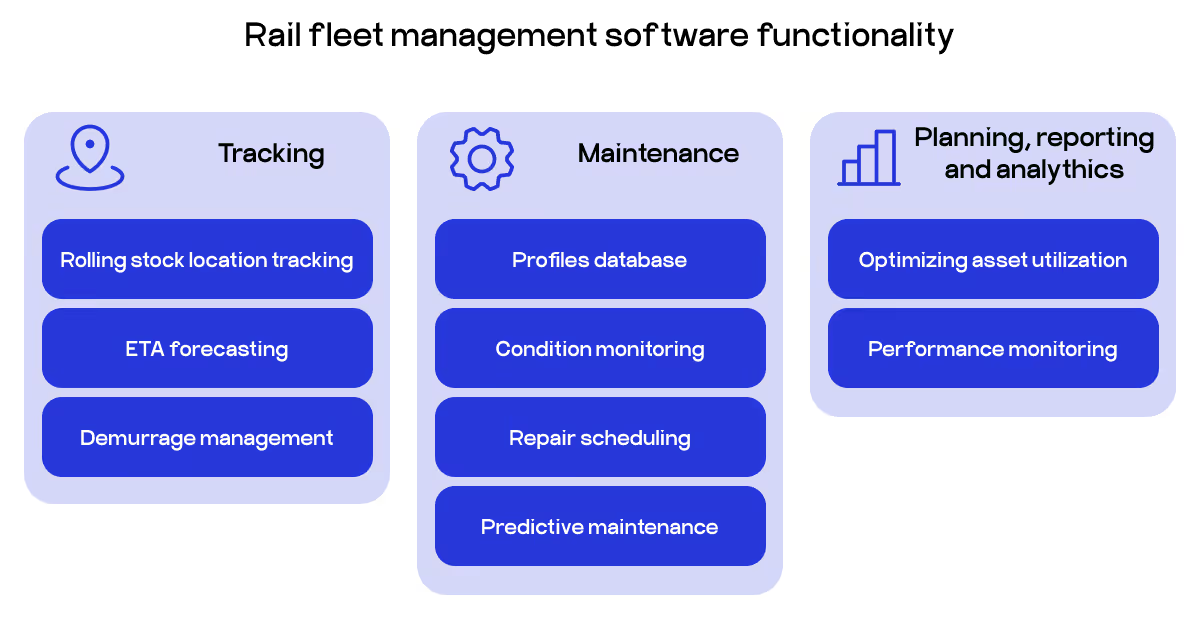
Railcar and shipment tracking
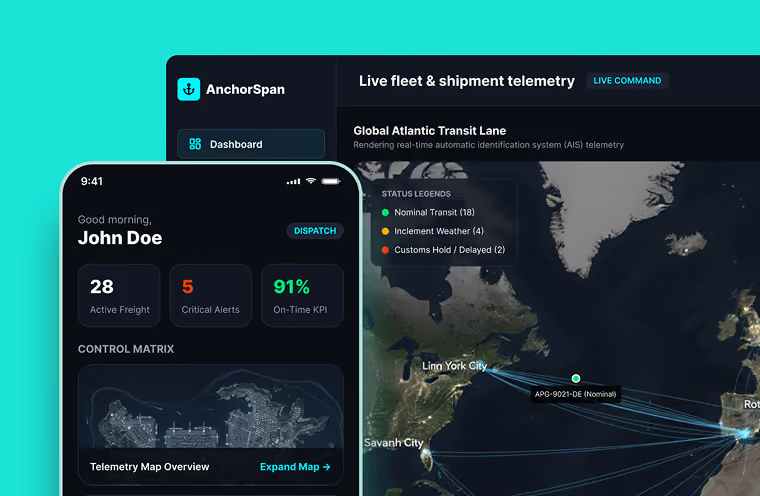
Software platforms, which are usually shown on interactive maps, provide fleet managers with real-time visibility into the location of equipment. Tracking systems, according to Prokhorchenko, tackle the basic problem of forecasting transportation stages in rail networks where freight trains run without set schedules.
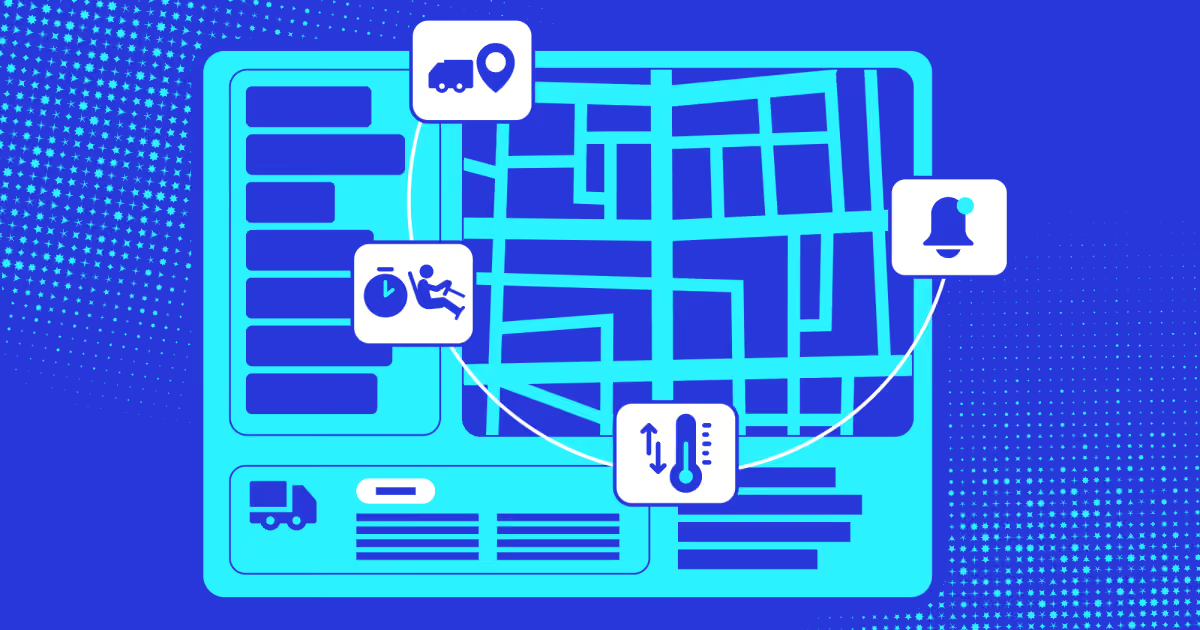
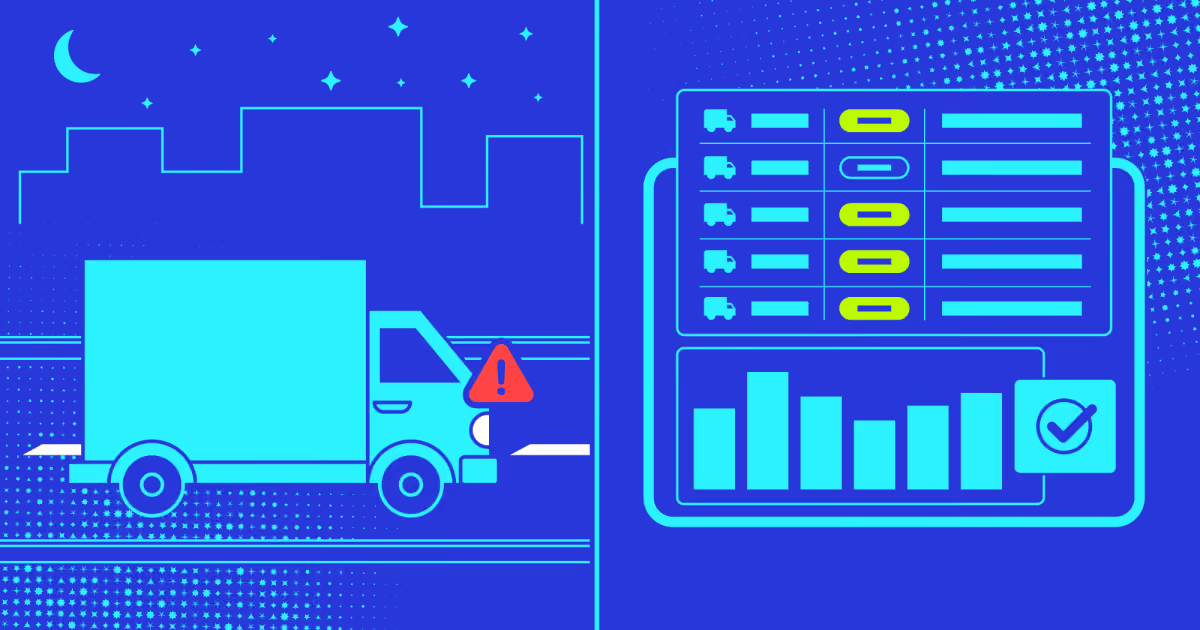
Dashboards and customizable data tables are used by modern tracking interfaces to display important information. Railcar fleet management experts keep an eye on a number of important metrics:
Current geographic position of each railcar
Accumulated mileage since last maintenance
Equipment availability status
Delay notifications and duration
Arrival and departure timestamps at major nodes
Connection status and next scheduled movements
The systems aggregate data from multiple sources - wayside readers, GPS devices, and yard management systems. This consolidated view eliminates the need to check multiple railroad websites or make phone calls to determine asset locations. Historical tracking records support analysis of fleet utilization patterns and identification of bottlenecks in transportation networks.
ETA forecasting
When planned movements are disrupted, it becomes difficult to calculate expected arrival times. For example, Prokhorchenko used correlation analysis to determine how train flow characteristics and specific train parameters affect travel duration in order to develop prediction methods for rail systems where trains do not adhere to departure schedules.
Forecasting algorithms that produce dynamic ETA predictions are fed real-time tracking data. Instead of depending only on past averages, these systems take current conditions into account. To increase accuracy, advanced implementations employ models that were trained on operational data.
Weather, the percentage of passenger trains vying for track capacity, train composition and weight, and traffic intensity on particular sections are all taken into account in the forecast. Such a rail fleet management software notifies stakeholders and recalculates ETAs for shipments impacted by delays. This lowers costs and helps modify operations timely.
Delay detection and route visibility
Identifying delays early allows faster response and mitigation. Behrends and team describe how telematics-based information services enable real-time wagon tracking and support improved dispatching decisions when disturbances occur.
Detection systems compare actual progress against planned schedules, flagging deviations that exceed acceptable thresholds. The platforms categorize delays by cause when possible: infrastructure issues, mechanical failures, crew availability, traffic congestion, or weather events. This classification helps prioritize response efforts and identify systemic problems requiring long-term solutions.
Rail fleet visibility shows the complete path a shipment takes through the network. Managers see which yards the train passes through, where it stops for crew changes or inspections, and which track segments it traverses. This supports better coordination with connecting carriers in intermodal movements and helps customers plan their receiving operations.
Real-time location monitoring
Continuous position integrates GPS-based telematics platforms with RFID-based automatic equipment identification. Car identification information is sent to central systems by thousands of trackside readers that scan passing trains. Position coordinates are updated by GPS devices every few minutes. Additionally, railcar management Bluetooth beacons and ultra-wideband readers ensure tracking continuity in urban areas and tunnels where satellite signals deteriorate.
These location streams are processed by fleet management platforms, which then display the current positions on network maps. The systems keep thorough historical records of all movements, producing intricate trails that pinpoint the precise times and locations of each asset's travels. Customer service questions, billing disputes, and performance analysis all benefit from this.
Real-time alerts support automated workflows for yard operations and customer notifications by informing managers when equipment enters or leaves specific geographic zones.
Rail fleet maintenance
Trains are kept safe and on schedule with fleet optimization rail solutions - specifically, the ones for maintenance. These modules monitor equipment health, plan repairs, record failure history, and handle spare parts. This type of software centralizes maintenance data so you can take appropriate action.
Preventive and predictive maintenance strategies
There’s one key thing to determine one from another - the timing and goal. There is generally a schedule for preventive maintenance. Depending on usage, mileage, or time, you conduct routine inspections and service intervals. By identifying wear before it leads to failure, this method lowers the likelihood of unplanned malfunctions. You can schedule these tasks around shipping operations with the aid of fleet management software, which also notifies you when maintenance is due.
This approach requires a custom IoT setup that collects measurements from sensors and analyzes them for patterns. Rail fleet maintenance systems pull in multiple data sources to build predictions:
Historic maintenance records from CMMS databases
Real-time sensor readings from equipment
Weather conditions and temperature fluctuations
Geographic factors like terrain and track conditions
Usage cycles and operational load data
To show this in practice, Union Pacific used 5,000 sensors along its tracks to record 16 million railcar bearing temperatures, 7 million wheel temperatures, 250,000 wheel impact measurements, and 100,000 bearing acoustic measurements every day. Machine learning algorithms scan this data for patterns that signal future failures, even when nothing looks immediately wrong.
Monitoring wear, failures, and usage cycles
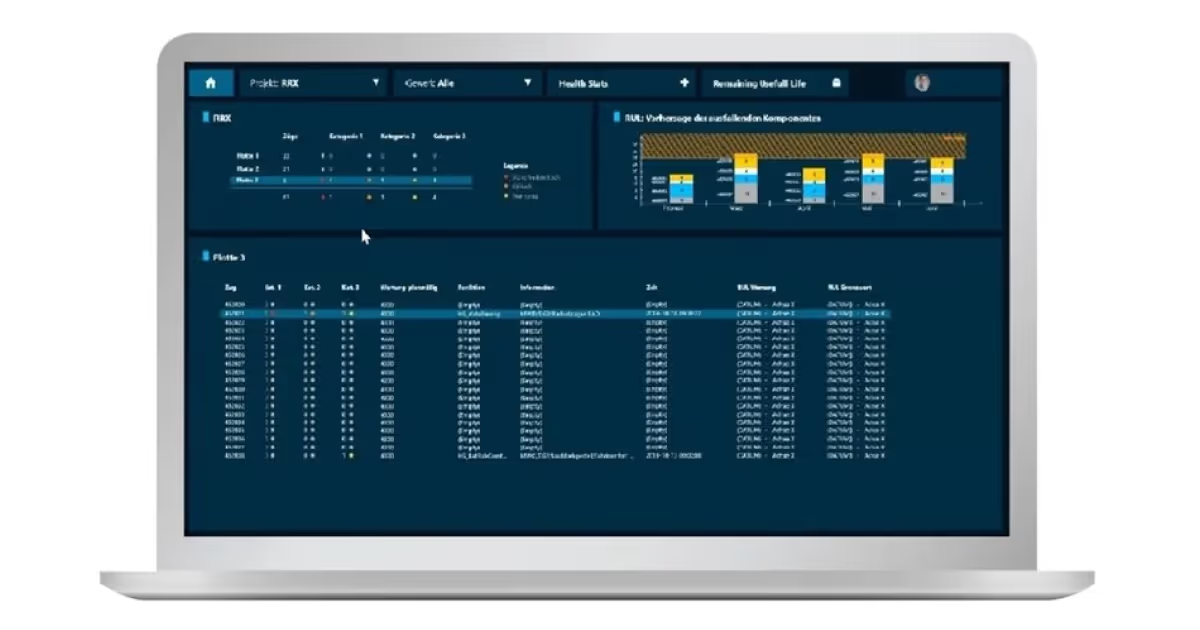
Sensors and detectors already exist on major railroads and rolling stock. They measure bearing temperatures, wheel impacts, acoustic signatures, and other indicators of equipment health. rail Freight fleet management software centralizes this data so you can monitor your assets from a single dashboard.
In order to comprehend how equipment deteriorates over time, the system monitors usage cycles. Wear on wheels, bearings, and brake systems is accelerated by heavy use. Additionally, geography is important. Compared to flat, straight sections, routes with steep grades or tight curves place greater strain on components. Mario and associates observe that increased vibrations from faulty wheels result in increased wear on axle bogie components and rails. The catenary system may be harmed by worn current collector strips. You can prevent other parts from deteriorating more quickly by keeping an eye on these components.
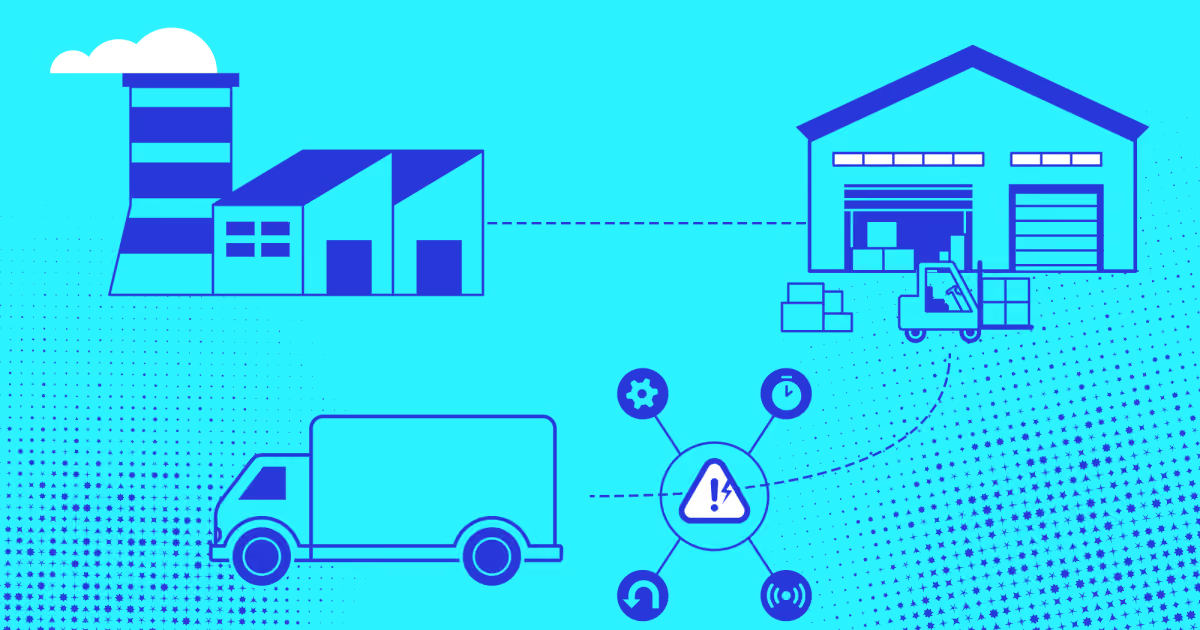
The system issues alerts when it finds anomalies or measurements that deviate from typical ranges. Notifications are sent to you before minor issues become serious malfunctions. This allows you to plan repairs without interfering with business as usual.
Reducing downtime and extending asset lifespan
Unplanned malfunctions are more expensive than planned repairs. The reason is that you have to deal with idle assets, emergency repairs, and delayed shipments when equipment malfunctions while in use. Predictive maintenance, in turn, solves this by switching from reactive to proactive methods. Mario discovered that by planning repairs according to actual condition rather than predetermined intervals, predictive maintenance reduces downtime. This prolongs the useful life of assets and minimizes waste from replacing parts still in good working order.
There are also massive economic benefits. Businesses that implement predictive maintenance-focused rail fleet management solutions see lower costs related to traffic interruptions and improved network availability. Building a predictive system takes investment and careful planning.
Maintenance teams work with data scientists to define which failure modes to predict, which sensors can detect them, and how to train algorithms to spot warning signs. But the payoff is great: fewer surprise failures, better resource allocation, and assets that stay productive longer.
Planning, reporting, and analytics
To optimize rail operations, you need complete visibility into every aspect of your business. Having the right information at your fingertips lets you plan activities effectively and spot opportunities for improvement. Rail fleet management software centralizes this data and turns it into actionable insights.
Fleet utilization and performance analysis
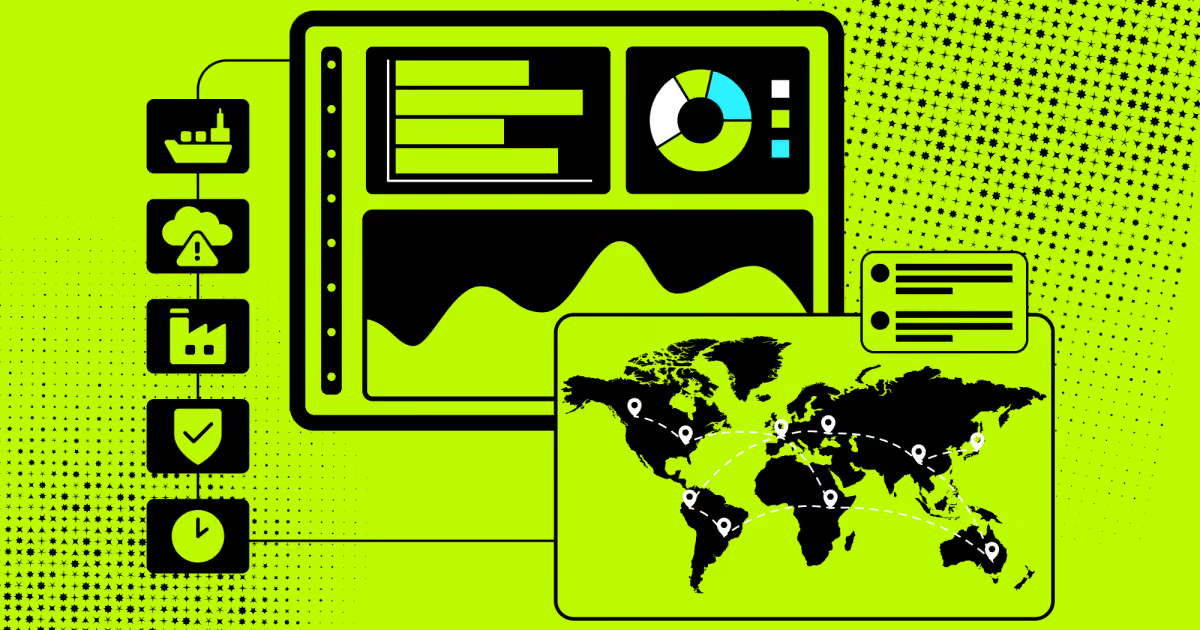
Software shows you how your rolling stock is used. You can monitor the availability of every piece of equipment through dashboards and customized tables. The system tracks which assets are in service, which are idle, and which are undergoing maintenance.
Scheduling functionality automates planning and improves asset utilization. The system creates optimal assignment schedules by considering multiple factors:
Actual transit times between origins and destinations
Current and forecasted shipping volumes
Planned maintenance windows and service intervals
Seasonal demand fluctuations and peak periods
Equipment type requirements for specific cargo
This planning keeps your equipment productive and helps you control fleet size. You avoid situations where assets keep being unused while others are, in turn, overworked.
Performance monitoring reveals how your fleet operates and where weaknesses exist. According to Ghofrani, big data analytics in railway transportation has been widely applied to maintenance, operations, and safety. Their survey found that analytics helps railway operators reduce costs and delays while maintaining high standards of reliability and customer satisfaction. Maintenance studies account for nearly half of big data applications in rail systems, showing the importance of understanding equipment performance and preventing failures.
Rail-specific reports track KPIs that demonstrate fleet performance, cycle times, sizing requirements, and utilization capacity. You see which routes take longer than expected, which equipment types perform better, and where bottlenecks occur. This visibility helps you make targeted improvements rather than guessing at solutions.
Cost tracking and operational reporting
Every operation has costs that need tracking. Fleet management systems break down expenses by equipment, route, maintenance activity, and time period. You see exactly where money goes and which areas consume the most resources.
Operational reporting covers the full range of activities. Railcar management systems generates reports on fuel consumption, maintenance spending, delay incidents, utilization rates, and revenue per asset. Ghofrani and colleagues state that big data analytics supports decision-making processes by revealing underexploited values in operational data. Their framework shows that analytics operates at three levels:
Descriptive (what happened)
Predictive (what will happen)
Prescriptive (what actions to take).
Custom reports let you focus on metrics that matter to your business. You can compare performance across different time periods, identify trends, and benchmark against industry standards. This makes it easier to justify investments, negotiate contracts, and plan budgets.
Data-driven decision-making
Business intelligence tools built into railcar management software help you discover improvement opportunities that aren't obvious from surface-level reporting. You can test scenarios, model changes, and predict outcomes before committing resources.
Ghofrani and team underline that railways benefit from advanced technologies in collecting, storing, processing, analyzing, and visualizing large amounts of data. Machine learning and artificial intelligence methods recognize patterns and retrieve useful information that supports better decisions. Their survey identifies that big data techniques applied to railway operations include optimization algorithms, simulation models, and predictive analytics.
When you need to decide whether to expand your fleet, retire aging equipment, or change maintenance strategies, you have concrete evidence to support your choice. You can quantify the expected impact of different options and select the one that delivers the best results.
The challenge is with systems that handle the volume and variety of data that railways generate. Modern platforms process structured data from databases, semi-structured data from logs and reports, and unstructured data from inspection notes and incident reports. Bringing these sources together gives you the complete picture you need to make informed decisions.
Best rail fleet management software
We have made a comprehensive review of the technologies and features that make up efficient rail fleet mangement solutions. Now that we understand what to look at, let’s focus on the best software in the market that you can use on the spot, without custom builds, to see the benefits and downsides of each.
Tool
Key features
Best use case
Pricing
Siemens Railigent X
3 tiers (Foundation APIs, Insights AI/predictive maintenance, Workflow apps); train and signaling data integration
Large rail operations: asset management and reliability
Custom / quote-based (scalable tiers)
Railnova
Fleet management/CMMS, Railster IoT, Railgenius predictive diagnostics and rule engine
European fleets needing integrated IoT and analytics
Not publicly listed; contact sales
RailSmart IFM
Incident recording, timelines, notifications, action tracking and reporting
Safety-focused incident and fleet maintenance
Quote-based
TransmetriQ
RMS transport management, RailSight tracking, CarLogix maintenance and billing, BI analytics
North American railroads: tracking and maintenance
Usage or subscription; quote required
ZEDAS
Cargo shunting and port operations, Asset CMMS (work orders, planning, leasing)
Large enterprises modernizing infrastructure and fleets
Starts at ~\$100/user/month; enterprise quotes
Siemens Railigent X delivers scalable offerings organized into three tiers: Foundation for standardized asset data delivery via APIs, Insights for AI-driven decision support and predictive maintenance, and Workflow for end-to-end digital applications. The platform integrates data from trains and signaling systems to optimize maintenance and service reliability. The solution fits large rail operators. It supports both rolling stock and rail infrastructure management with proven implementations across Europe, including Deutsche Bahn, TransPennine Trains, and Israel Railways.
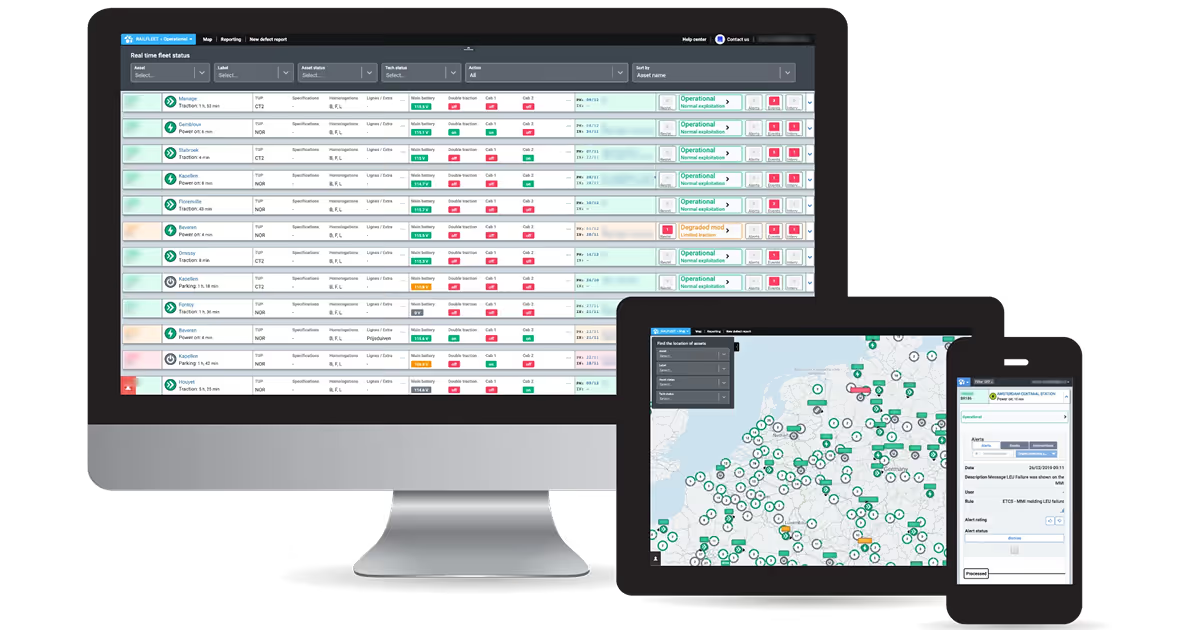
Railnova provides a complete suite of three integrated rail fleet and freight management systems designed for European rail operators, lessors, maintainers, and manufacturers. It serves as the digital fleet management platform and CMMS and provides Railster - an IoT device for remote monitoring and edge computing. Railgenius offers monitoring and predictive diagnostics with a customizable rule engine and alert configuration. The platform works well for companies operating in Europe that want an integrated approach combining fleet management, IoT hardware, and predictive analytics. Eurotunnel, Alstom, Lineas, SNCF, and DB Cargo are among its clients.
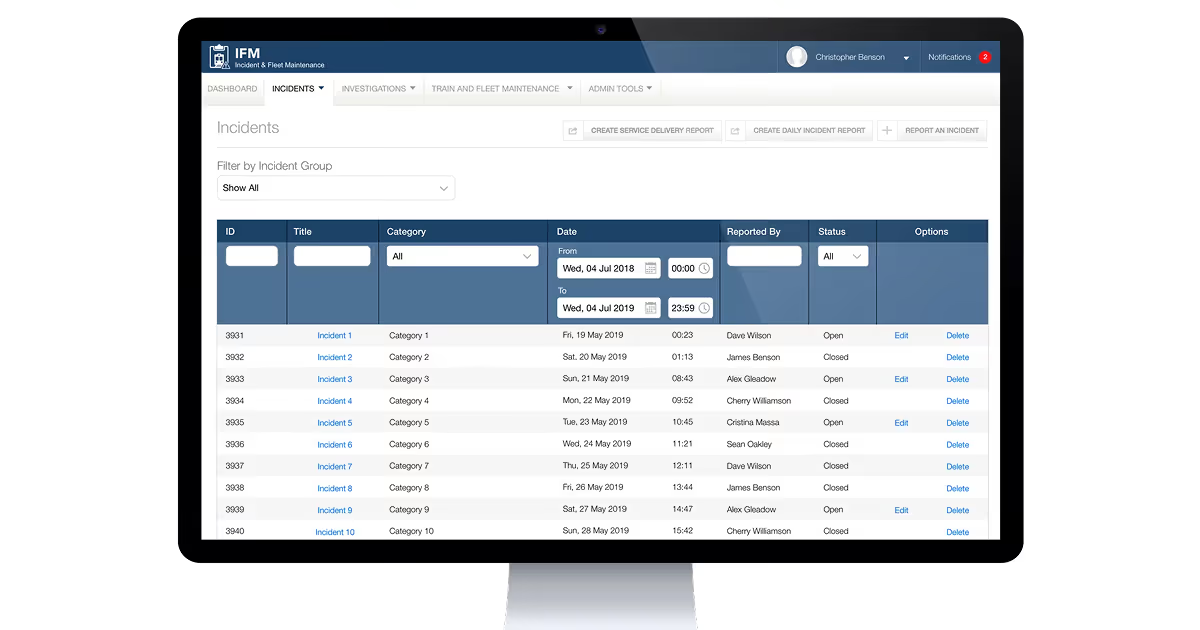
RailSmart IFM by Velociti Solutions focuses on incident management and fleet maintenance with versatile incident recording, dynamic timelines, and intelligent notifications. The platform provides action tracking, collaboration tools, and reporting. It integrates with the broader RailSmart suite of solutions that covers everything from employee rostering to remote condition monitoring and operational insights. This solution works best for operators who prioritize safety-critical communication. The company has over 30 years of experience and a strong presence in the UK.
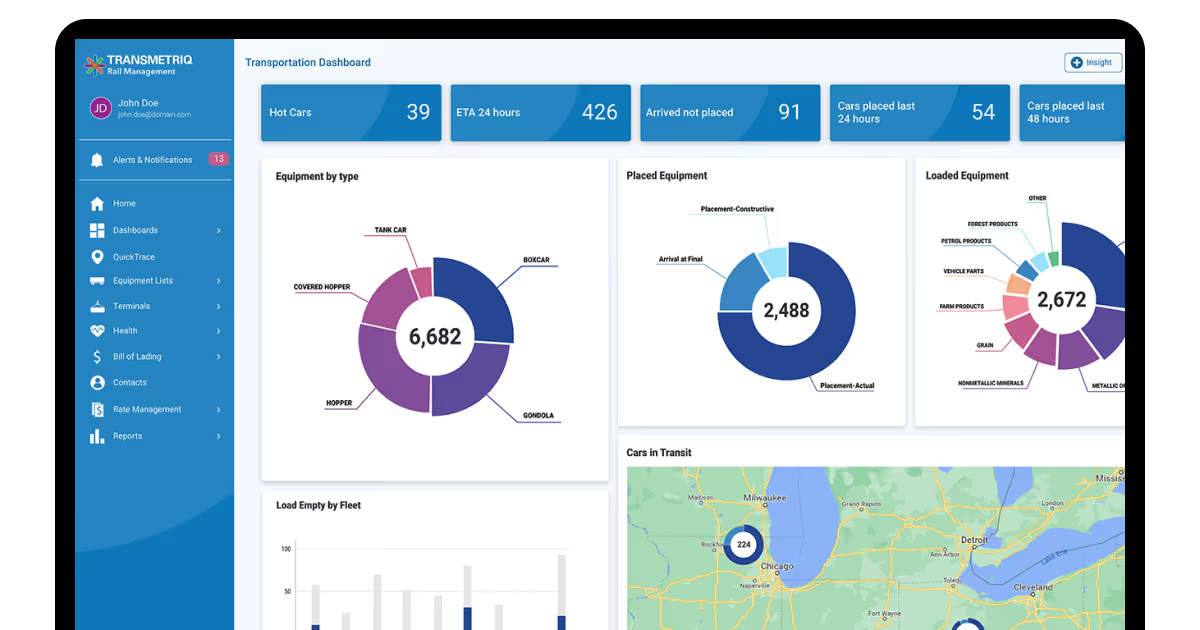
TransmetriQ uses its backing by Railinc and access to data from over 600 North American railroads. The suite includes TransmetriQ RMS for transportation management, RailSight for tracking, CarLogix for maintenance management with repair billing optimization and auditing, and Analytics & Insights for great BI. All products integrate easily with each other and some offer open APIs for third-party connections. It suits North American operators who need tracking, maintenance, and analytics.
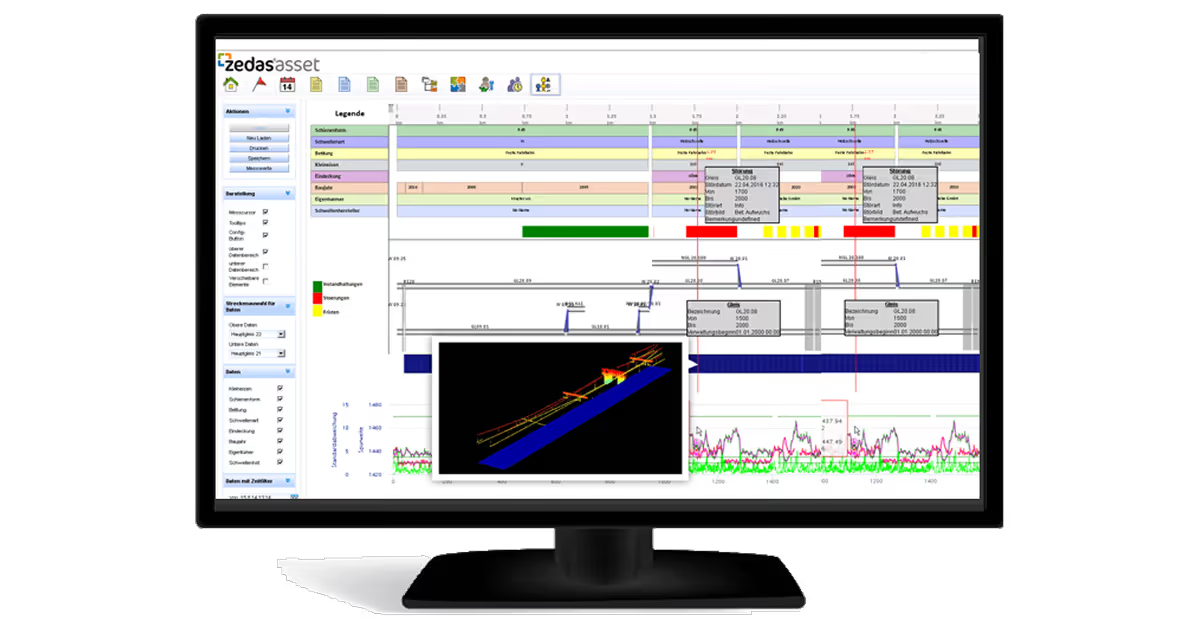
ZEDAS offers two products for European rail and industrial companies: ZEDAS Cargo for digitizing shunting services, long-haul traffic, and port railway operations, and ZEDAS Asset as a railway-specific CMMS with work order management, documentation generation, personnel and material planning, and leasing contract handling. The solutions serve rail businesses and industrial companies in sectors like mining, oil, gas, chemicals, and renewable energy.
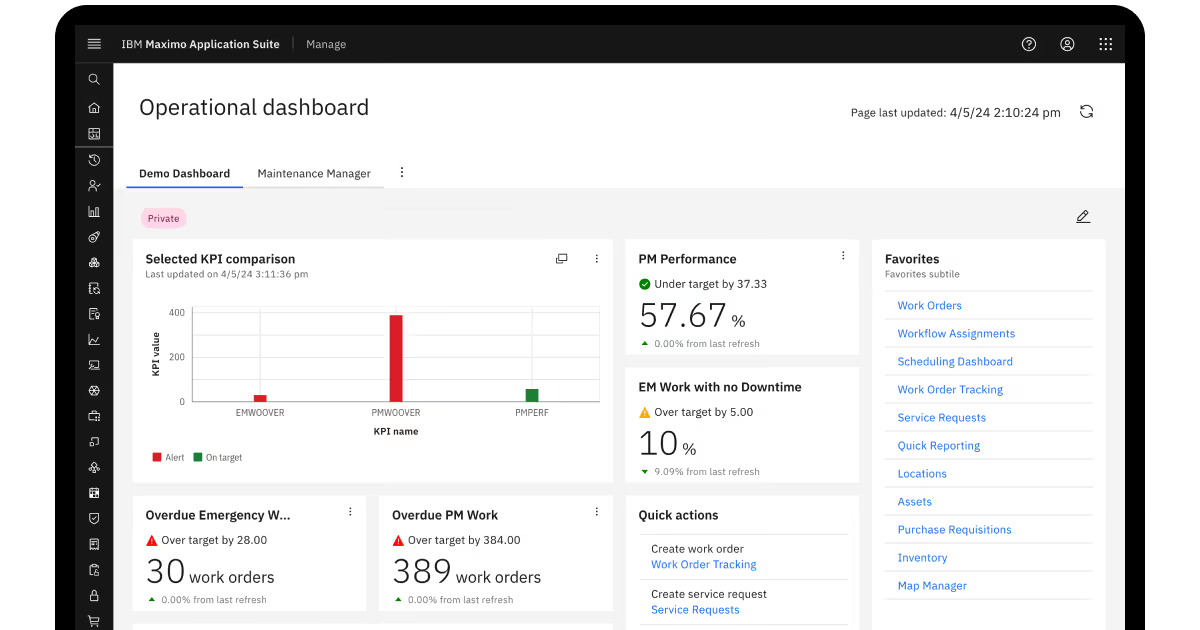
IBM Maximo applies AI, IoT, and cloud computing to deliver enterprise asset management with predictive maintenance, real-time monitoring, and optimized asset lifecycle management. The system enables rail operators to digitize infrastructure, improve safety, and reduce downtime. IBM partners with rail operators and provides scalable rail fleet modernization solutions that handle complex asset portfolios across different geographies and operational contexts. Maximo suits large enterprises that need a proven EAM platform.
Each of these solutions is a good option to enhance your rail fleet operations without custom builds. However, they don’t always fulfill your needs and can put you into a severe vendor lock-in that’s hard to overcome over time.
When you should consider opting for a custom solution
Off-the-shelf platforms work well for standard operations, but some situations demand custom development.
You might need a tailored solution when your fleet has unique equipment types that standard systems don't support, when you operate across multiple regions with different regulatory requirements, or when your business model requires specific workflows that packaged software can't accommodate.
Custom solutions also make sense when you need deep integration with legacy systems that your organization has invested heavily in over the years. If your operations depend on proprietary equipment with specialized monitoring needs, or if you're handling sensitive data that requires custom security protocols, building your own platform gives you the control you need.
Companies with complex reporting requirements that go beyond what standard platforms offer also benefit from custom rail fleet management software development.
To cover any of these use cases successfully, COAX provides fleet management development services for rail operators who need more than what off-the-shelf solutions deliver. We handle the full development cycle from discovery and requirements analysis through design, development, testing, deployment, and post-launch maintenance.
Our team has 15 years of experience in transportation, travel, and logistics, so we understand the challenges rail operators face. We build custom integrations with existing systems, develop specialized features for unique operational needs, and create platforms that scale with your business. Whether you need a complete fleet management system from the ground up or custom rail fleet modules that extend your current platform, we work with you to build solutions that fit your operations exactly.
How to choose the right railcar management software
Whether building your own solution or adopting an off-the-shelf tool for rail management, you need a structured, well-planned approach. Let’s build one for you to follow:
For starters, outline your current operations and identify what you actually need. List the problems you're trying to solve, the workflows you want to improve, and the data you need to track. Talk to drivers, maintenance teams, dispatchers, and managers to understand their pain points and requirements.
Consider your geographic footprint and regulatory environment. For example, if you operate in North America, platforms like TransmetriQ with access to data from 600+ railroads might serve you better than European-focused solutions. Companies working across multiple continents need systems that handle different standards and compliance requirements.
Evaluate your technical capabilities and IT infrastructure. Some rail fleet management software requires significant IT resources for implementation and ongoing management, while others offer managed services that reduce the burden on your team. If you have strong in-house technical expertise, you might prefer solutions with open APIs that let you build custom integrations. Companies with limited IT staff often do better with turnkey solutions that include comprehensive support.
Think about scalability and future needs. Your fleet might grow, your operations might expand to new regions, or regulations might change. Choose a platform that can adapt without requiring a complete replacement.
Budget matters, but look at the total cost of ownership rather than just upfront licensing fees. Consider implementation costs, training requirements, ongoing support, hardware investments for sensors and connectivity, and the time your team will spend managing the system. Custom development requires a higher initial investment but can deliver better long-term value if your needs are truly unique.
Test before you commit. Most fleet optimization rail solution vendors offer demos or trials. Run pilot programs with a subset of your fleet to see how the system performs in real conditions. Involve end users in the evaluation process and listen to their feedback.
Theory might sound perfect, but actually trying out new solutions with your actual equipment, routes, and workflows might be surprisingly different. Pay close attention to reviews, implementation stories similar to yours, or trust a company like COAX to bring a perfectly tailored option to life - a shortcut to what you need now and will be happy with in the future.
FAQ
What risks is my business facing without modern rail freight fleet management?
You risk significant capacity underestimation and expensive operational inefficiencies in the absence of contemporary fleet management. Kienzle discovered that the necessary capacity is significantly underestimated when railcar fleet management or container loading restrictions are disregarded. Longer turnaround times, inefficient use of assets, inaccurate arrival prediction, and higher demurrage costs will all be experienced.
What are the challenges of implementing railcar fleet management solutions?
You may face several serious obstacles:
High initial technology investment costs
Integration with existing legacy systems
Training staff on new platforms
Ensuring data accuracy across networks
Managing change resistance from employees
Coordinating multiple stakeholders
Maintaining system reliability
Securing sensitive operational data
Scaling solutions across large fleets
Meeting regulatory compliance requirements
How do I create a secure infrastructure for rail fleet tracking?
Apply network-wide layered security. Kienzle suggests creating four-layer systems with controlled inter-layer communication that divide train services, blocks, railcars, and containers. Make use of secure APIs for third-party integrations, role-based access controls, encrypted data transmission, and frequent security audits. If primary networks fail, deploy backup systems to ensure tracking continuity.
How does COAX create safe and efficient rail fleet management software?
We implement multi-layered architectures, encrypted communications, and rigorous testing protocols. COAX also develops solutions following ISO/IEC 27001:2022 standards for comprehensive security management, risk assessment, and threat monitoring. Additionally, our ISO 9001 certification ensures optimized quality processes throughout development. We ensure that every solution undergoes security audits and compliance verification before deployment, protecting your operational data.











































_.avif)



%2520explained.avif)

We are interested in your opinion