A safer fleet isn't built on dash cams tracking every eye twitch or fancy AI models running analytics in the background. Technology helps, but it's only half the equation. The real secret is catching the invisible bad habits before they turn into wreckage.
A driver glances at a text at 55 miles per hour. Three seconds pass. That's enough distance to cross a football field blind. It's not a crash yet. But it's the moment every fleet manager fears. It happens across hundreds of drivers daily.
Phone use behind the wheel doesn't always end badly. Most times, nothing happens. That's exactly why it's hard to catch. It costs fleets more than anyone tracks. Driver behavior monitoring can help you close that gap. It turns invisible risk into a number you can act on.
We built DriveIQ to target this exact vulnerability. Instant in-cab alerts flag hard braking, aggressive cornering, and speeding the second they happen. Fleets using DriveIQ see a 38% drop in safety incidents.
Here is how driver behavior tracking works, why it protects your bottom line, and how to pick the right system for your fleet.
What is driver behavior monitoring?
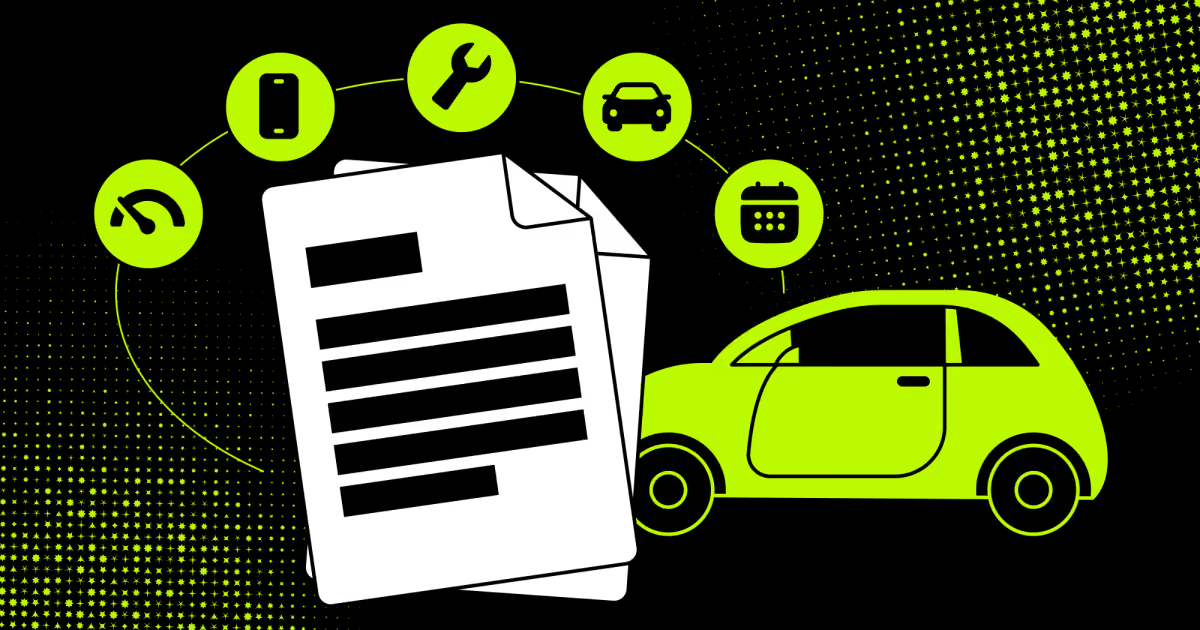
Driver behavior monitoring tracks what happens behind the wheel in real time. It measures braking force, speed, phone use, and lane discipline. Sensors and software turn raw driving into clear, actionable safety data.
Picture a delivery driver on a Tuesday afternoon. She takes a corner too fast near a school zone. The system flags it instantly, before anyone reviews footage.
Driver behavior tracking works the same way at scale. Apply that to every truck in your fleet, every single day.
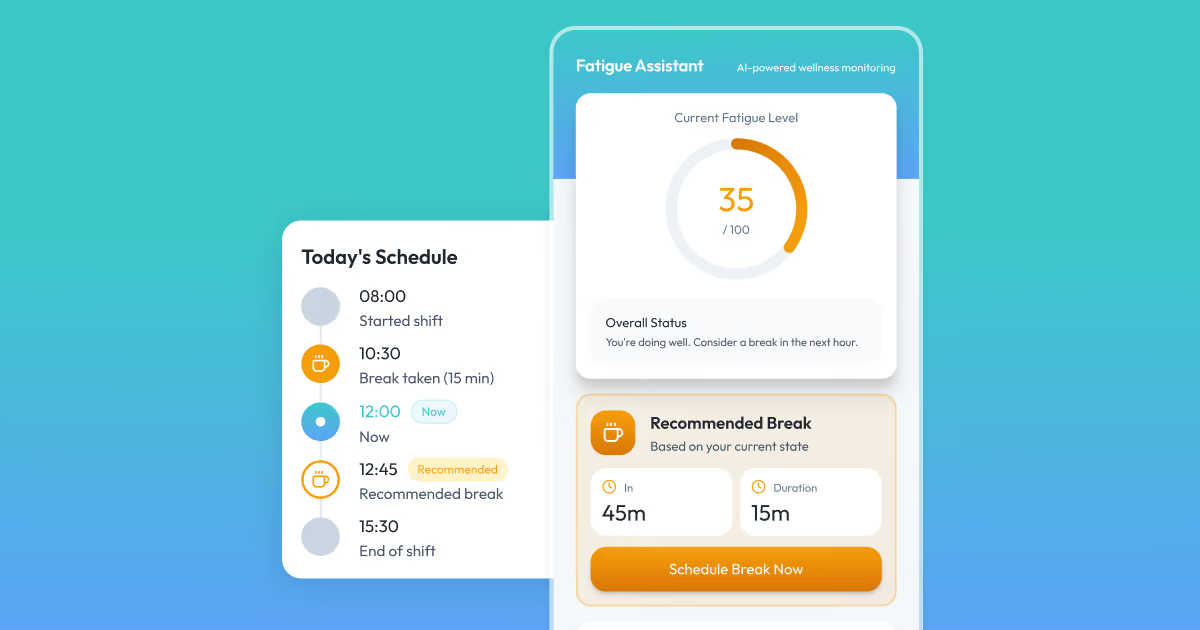
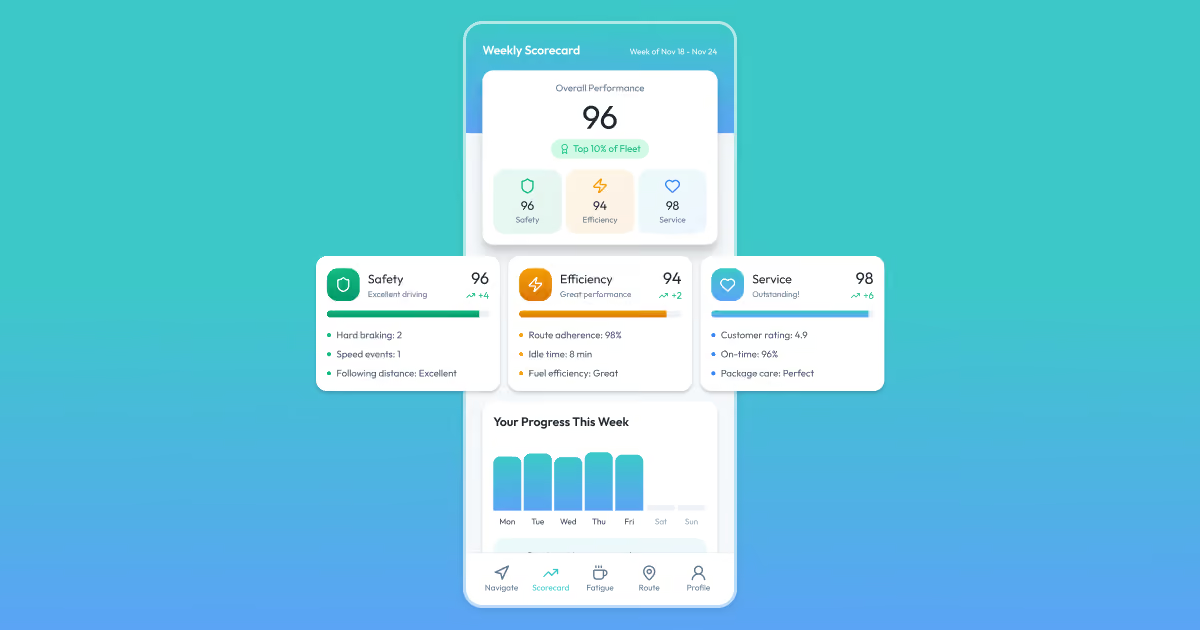
We engineered DriveIQ's LSTM neural net to predict fatigue and Hours of Service (HOS) risks in real time, alerting drivers before a violation occurs. Managers track weekly scorecards scaled to harsh events per 100 miles. For one logistics client, DriveIQ caught over 40 HOS violations in its first 90 days. Within a year, driver turnover dropped 22%. That means fewer costly recruiting cycles, lower downtime, and zero regulatory fines eating into profit margins.
The market agrees with what we've seen personally. Analysts value the global fleet driver behavior monitoring market at $2.8 billion. And there’s more to it. They expect it to reach $8.3 billion by 2033. That's a growth rate near 13% a year. Driving mistakes still cause close to three out of four traffic accidents. That single number explains why fleets keep investing.
What is driver behavior data?
Driver behavior data captures how someone actually drives, second by second. It comes from phone sensors, GPS units, and in-cab hardware. Together, these feeds build a picture no odometer ever could.
Most of it starts as raw signals. Accelerometers detect sudden jolts, hard braking, and aggressive swerves. Orientation sensors spot the moment a driver picks up a phone. GPS engines cross-reference live vehicle speed against actual posted speed limits in real time. Combined, these raw signals create the backbone of any effective driver behavior monitoring system.
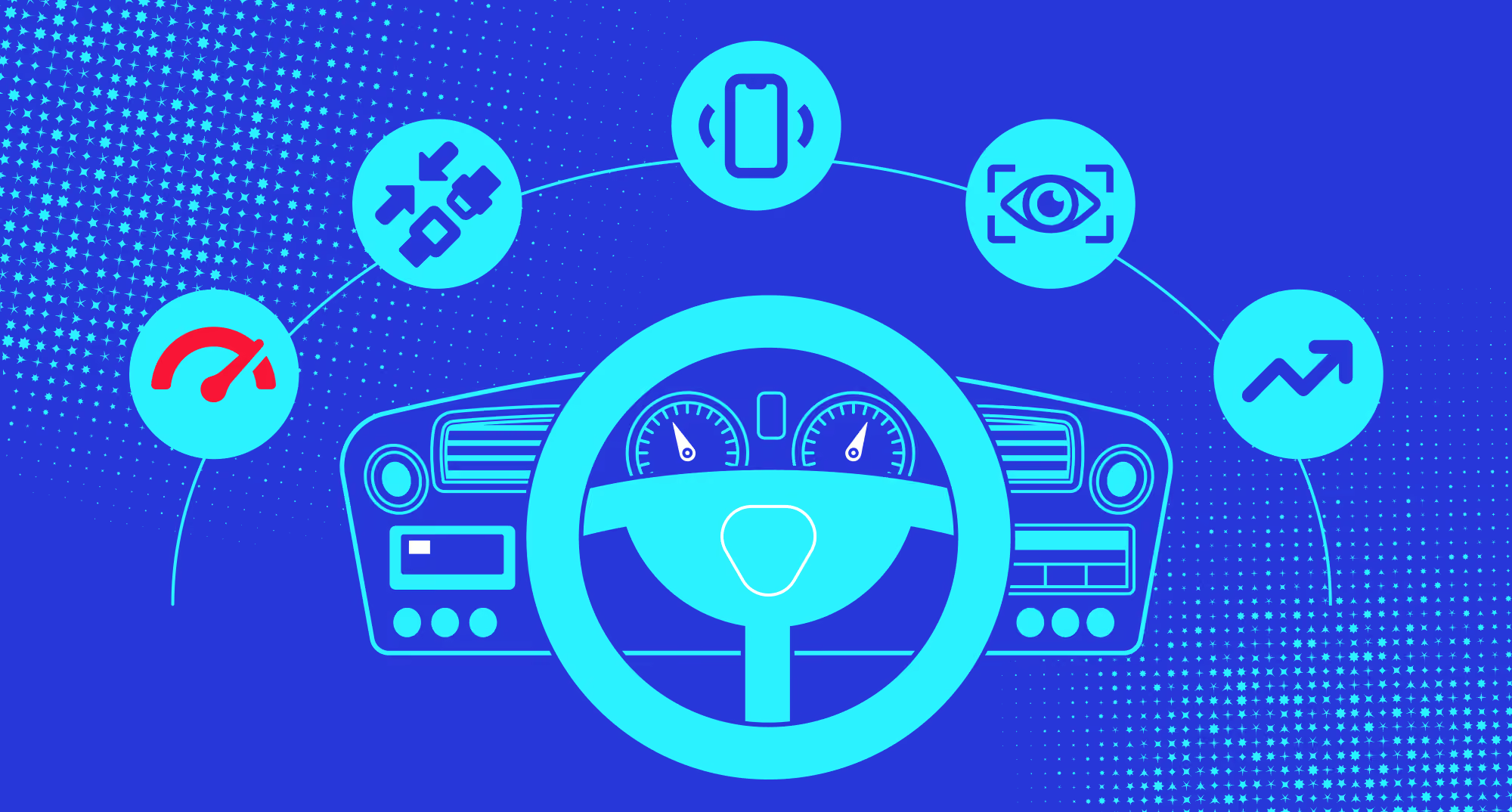
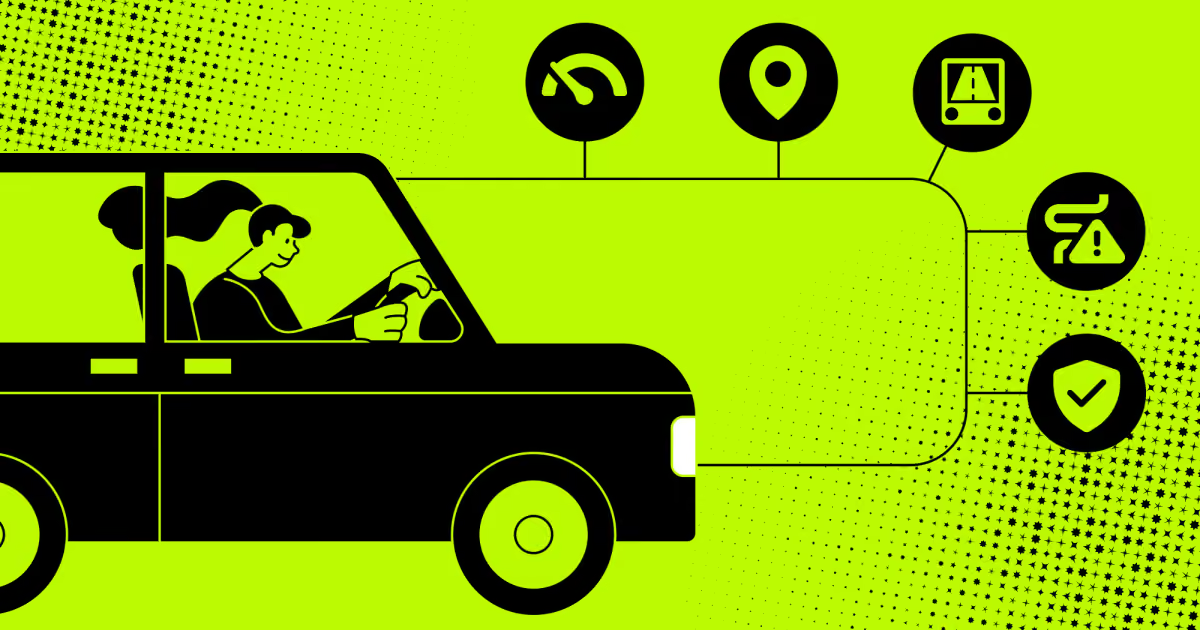
Five event types make up the core of it:
Hard braking happens when deceleration crosses a set threshold per second.
Rapid acceleration gets flagged the same way, just in reverse.
Excessive speeding triggers at fixed limits, like 80 mph, or relative ones, like 20 over.
Distracted driving shows up as phone movement mid-trip, sensor-detected.
Suspected collisions register as a sharp spike, then a hard stop.
Each event feeds into a broader pattern once aggregated across trips and drivers.
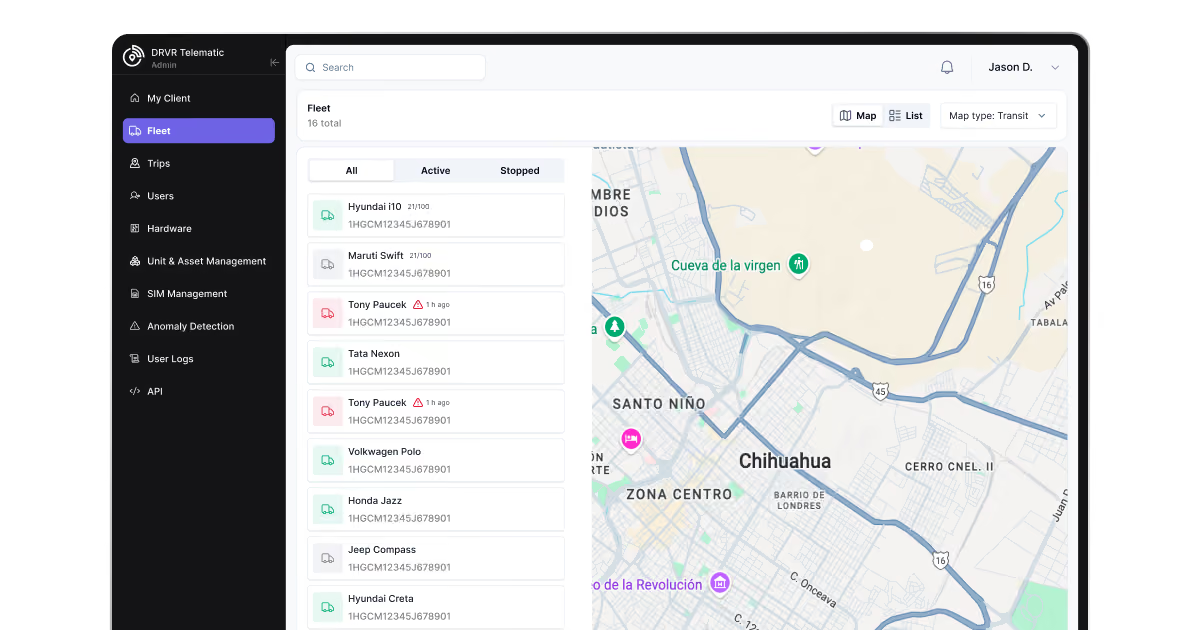
Our DriveIQ solution works from this same foundation, built for cross-border freight. Our system pulls live GPS vehicle tracking data from 500 vehicles at once. It layers in weather, traffic, and historical route data too. The fatigue model reads shift length and time of day. It flags fatigue risk before a driver hits an HOS limit. Weekly scorecards then translate that raw driver behavior data into something a fleet manager reads in seconds.
That's the difference between a sensor feed and something a business can act on.
Why invest in behavior monitoring technologies?
Driver behavior monitoring pays for itself fast, and the numbers back that up. AI-driven systems cut accident claims by up to 40% within six months. Fuel usage drops around 15%. Real-time coaching drives both gains simultaneously.
Here's how that plays out on an actual fleet.
A driver takes a corner too hard.
The system flags it in-cab, instantly, before a pattern forms.
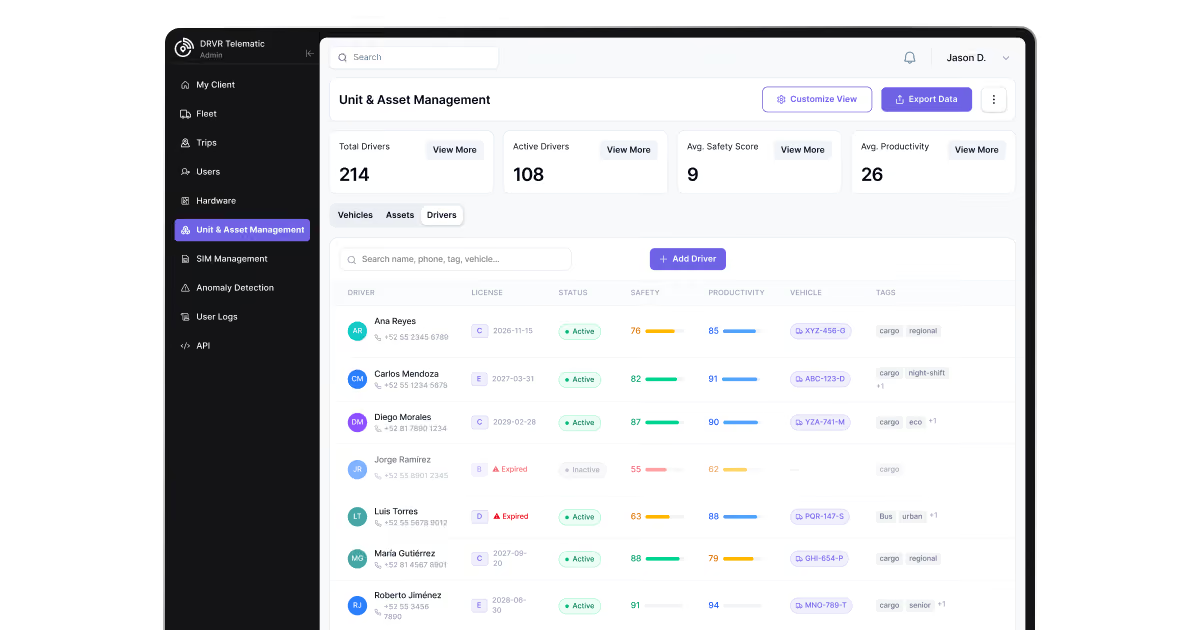
That single alert feeds into a weekly scorecard.
The scorecard becomes driver behavior insights a fleet manager can act on.
Over weeks, harsh events per 100 miles start dropping.
Fuel costs follow the same curve downward.
Distraction detection catches what basic telematics misses entirely. Micro-nods, lane weaving, phone handling; these surface faster with AI layered in. Speed correction works contextually too. It weighs road conditions against posted limits, not just raw numbers.
We've seen this work with SyncMatix, our telematics platform. It scores drivers across three dimensions: safety, fuel efficiency, and behavioral risk. Geofencing and speed-violation alerts run alongside that scoring. New sign-ups grew 40% in the first quarter alone. It leans more toward fleet analytics than DriveIQ's coaching focus. Still, it proves the same point: good driver behavior monitoring software changes outcomes fast.
How does a driver behavior monitoring system work?
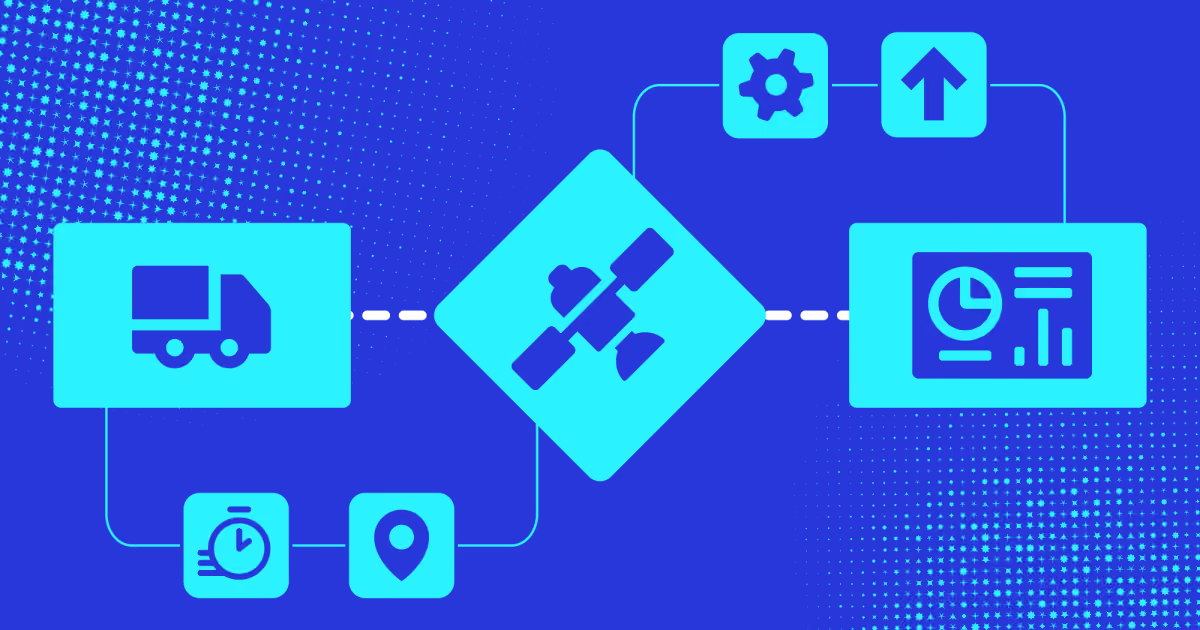
A driver behavior monitoring system is layered technology, not one device. It combines cameras, sensors, and processors into one feedback loop. Together, they turn raw driving into a measurable, actionable signal.
Under the hood, it's simpler than it sounds. Cameras watch the driver's face and eyes. Sensors track the vehicle's speed, G-force, and steering angle. A small onboard computer runs AI models on that data live. It doesn't send raw video to the cloud first. It flags risky patterns right there, in the cab.
That's what separates a modern driver behavior monitoring solution from a basic tracker. Older systems logged data for someone to review later. Newer ones act in the moment, then log it anyway. Most fleet management solutions now build on this same real-time architecture.
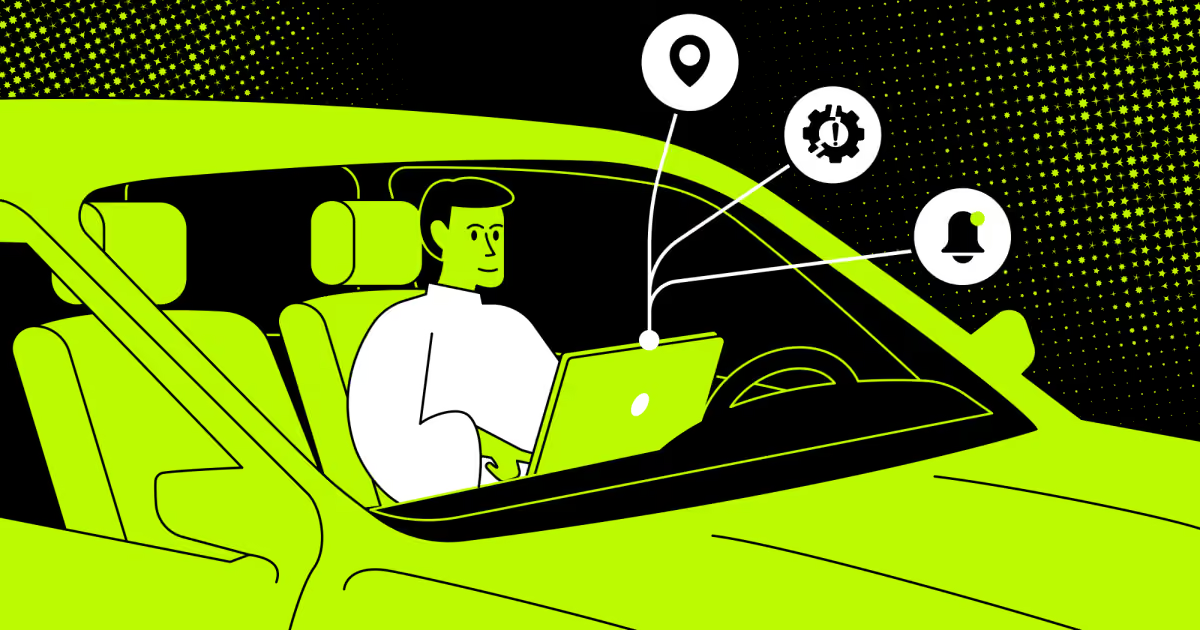
A typical workflow of a driver behaviour management solution
Instead of dumping hours of video into the cloud for a manager to sift through on Friday, onboard processors analyze raw sensor data right in the cab. Visual feeds track driver gaze and head position. When those inputs cross a threshold, the onboard computer flags the pattern. Then, it triggers an immediate in-cab alert before a minor distraction becomes a jackknife.
Older telematics logged mistakes so you could handle the insurance claims later. Modern fleet architectures act in the moment to prevent the crash entirely, recording the data afterward to refine driver habits.
Here is how that split-second safety loop operates on the road.
Stage
What happens
Example signal
Data collection
Cameras and sensors capture driving in real time
Eye gaze, G-force, CAN bus speed
Real-time intervention
The system flags and alerts on risky events
Two seconds of distraction, hard braking
Cloud transmission
Event data and clips upload for context
Metadata, short video, vehicle health
Scoring and review
Events roll up into scores managers use
Weekly scorecard, coaching flag
Data collection starts everything, and it runs on three layers working together. In-cabin cameras read facial orientation, eye gaze, and head position. Telematics and CAN bus sensors track speed, G-forces, and sharp turns. Onboard AI processors spot phone use or yawning without sending footage anywhere first.
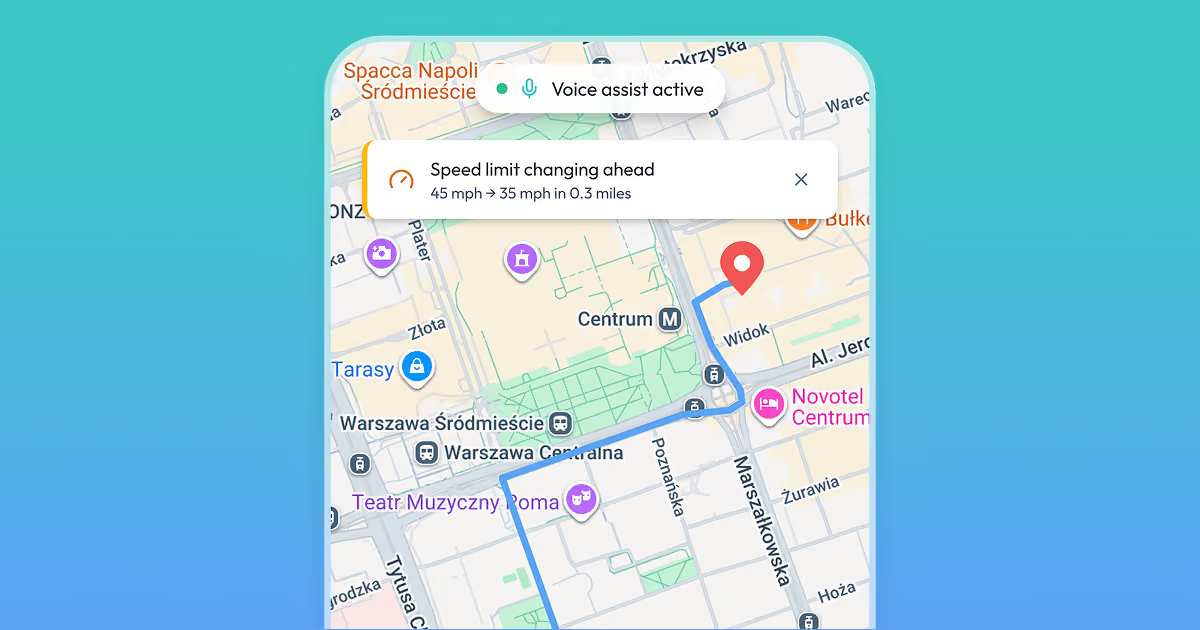
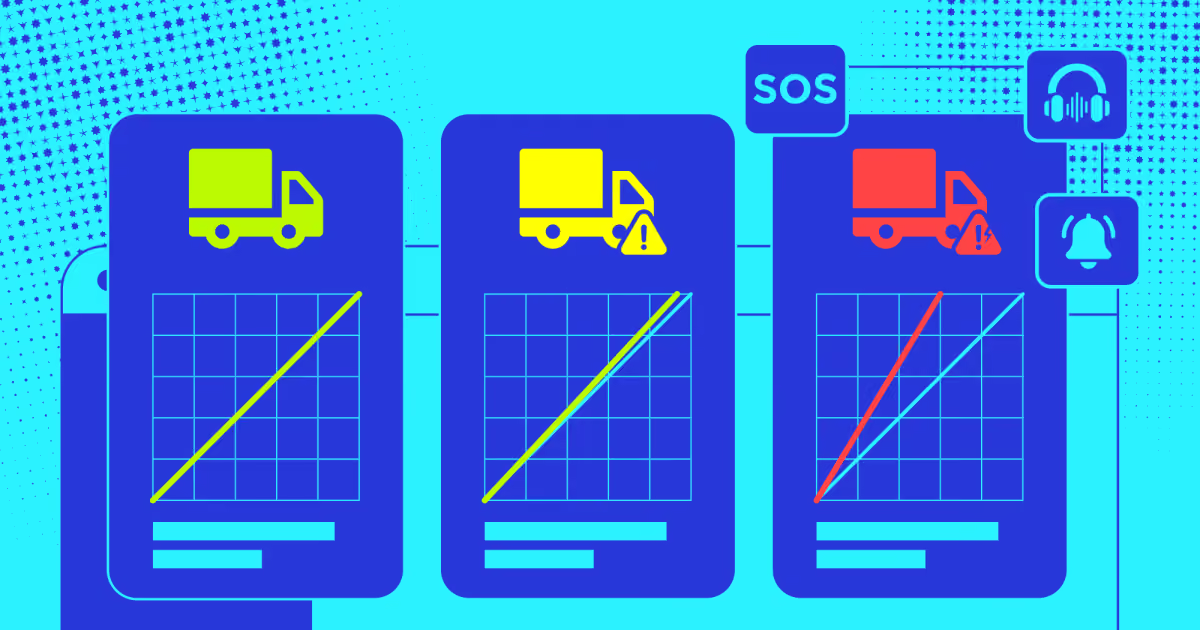
Real-time intervention happens the instant a threshold gets crossed. The system detects the infraction as it occurs, not after. An in-cab alert, a beep or a voice prompt, follows within seconds. That's monitoring driver behaviour in its most direct form: correction before consequence.
Cloud transmission picks up once the moment passes. Event data and short clips upload over cellular networks. Some platforms cross-reference driver alerts against vehicle health data too. That correlation step filters out false positives before a manager ever sees them.
Scoring and review closes the loop for good. Incidents become safety scores and rank drivers by risk. Fleet managers pull up trip logs and clips to plan coaching. This is where raw events turn into something a team actually uses.
SyncMatix runs this loop for a mid-market telematics client. Geofencing and speed-violation alerts feed straight into the same dashboard. That single-pipeline design is why driver behaviour tracking software works at scale. Fragmented tools force a manager to check three screens. One unified loop means they check one.
Good driver behaviour monitoring doesn't just watch. It intervenes, then it teaches. That's the whole point of the workflow.
What business benefits can driver behavior monitoring deliver?
If your fleet strategy relies on hope and an air freshener hanging from the rearview mirror, you’re playing a very expensive game of roulette.
Driver behavior monitoring isn't some shiny corporate gadget meant to impress board members with pretty graphs. It catches excessive speed, violent braking, and heavy eyelids right as they happen. Beyond keeping your trucks out of ditch banks, it yields cold, hard leverage with underwriters and reins in runaway operating costs.
Fatigue and drowsiness detection
Long-haul routes wear drivers down fast, often unnoticed. Driver behavior monitoring cameras catch yawning, head tilts, and slow eye closure. They flag drowsiness before a driver feels it coming. The goal is simple: catch it early, intervene gently. Fleets running this catch risk before it becomes a claim.
Distracted driving alerts
A phone glance at highway speed covers real distance blind. Driver behaviour analysis flags that moment, instantly. The system watches for cell phone handling, dashboard fiddling, or a driver's gaze drifting off-road. It doesn't wait for a crash report to catch the pattern.
DriveIQ delivers over 4,000 coaching alerts monthly across our clients' fleet. Those alerts come from two million daily GPS events processed in real time. That volume only works because the system flags, not just records. Framing matters here too. Drivers respond better to coaching than to surveillance. A system built around correction, not punishment, gets used. One built purely to catch drivers gets ignored or resented instead.
Aggressive maneuver identification
Harsh braking and sharp cornering aren't just uncomfortable rides. They're leading indicators of a collision waiting to happen. Driver behavior monitoring system technology flags these events the moment they occur. Rapid acceleration gets logged alongside braking force and turn angle.
Patterns emerge fast once a fleet reviews a week of data. A driver who brakes hard daily are at risk. Fleet managers use this data to intervene before a serious incident. It's cheaper and faster than waiting for an accident report. Driver behaviour in fleet management increasingly means catching aggression early, not after. That shift alone has measurably lowered collision severity across large commercial fleets.
Compliance checks
Seatbelt use and speed limit adherence sound basic. They're still where most violations quietly happen. Driver management systems now verify these automatically, without a manual check. No dispatcher has to review footage for every trip manually. The system flags noncompliance the moment it occurs, every time.
Human spot-checks miss patterns; automated systems don't. For regulated fleets, this data doubles as an audit trail too. Insurance auditors and safety regulators both want documented compliance history. A system that logs everything automatically removes that burden.
Fuel waste reduction
Idling and heavy acceleration burn fuel nobody budgets for. Driver behaviour monitoring software flags excessive idling and aggressive throttle use directly. Coaching alerts correct the behavior before it becomes habitual across a route.
DriveIQ's in-cab coaching cut fuel consumption by 12% for one client. That's not a one-time fix either. It holds as drivers adjust. Small corrections, repeated daily across hundreds of vehicles, add up fast. Fuel savings alone often justify the platform's cost within months. It's one of the fastest, most measurable returns any fleet manager will see from this kind of system.
Maintenance savings
Rough driving wears down brakes, tires, and suspension faster than mileage alone suggests. A driver who brakes hard daily accelerates part replacement significantly. Driver behavior monitoring data shows fleet managers exactly which drivers cause it. That visibility turns a vague maintenance budget into a targeted coaching opportunity. Fix the behavior, and the wear rate drops with it. Coaching the top five aggressive drivers often moves the fleet-wide number. Over a full fiscal year, this quiter benefit adds up to real, recoverable money.
Insurance premium lowering
Insurers price risk on assumptions when they lack real driving data. A fleet with documented safety scores changes that conversation entirely. Objective scorecards prove a lower risk profile, backed by actual events. That data gives fleet managers real leverage during premium negotiations. Insurers increasingly ask for telematics data before quoting renewal rates anyway.
Fleets without it negotiate from a weaker position every single year. Driver behavior monitoring system data turns that from guesswork into evidence. Some insurers now offer direct discounts tied to verified safety scores. That's a direct line from monitoring investment to bottom-line savings. It's one of the clearest ROI arguments a fleet manager can bring to leadership.
What are the types of driver behavior monitoring systems?
No single tool catches every hazard on the highway. Driver monitoring is a lot like building a house. GPS gives you the foundation, telematics frames the walls, AI dashcams put up the security cameras, and record checks audit the deed. Modern fleets rarely choose just one. Instead, they layer them.
GPS-based monitoring systems.
These systems answer one question: where's the vehicle, and how fast? GPS pinpoints location every few seconds, then compares speed against posted limits. It's the simplest layer in driver behaviour telematics, and the most common starting point. SyncMatix relies on this layer to run geofencing alerts the second a rig drifts off its approved route. This gives managers precise visibility over every asset.
Telematics platforms.
Telematics taps straight into the truck's diagnostic port. Built-in accelerometers and gyroscopes track braking force, acceleration spikes, and engine idle times. This is where truck driver behavior monitoring is especially vital on long-haul routes. DriveIQ layers this same data with weather and traffic feeds. That combination is what let one client cut fuel use by 12%. All in all, telematics is the vehicle's fitness tracker, reporting constantly.
AI dashcam solutions.
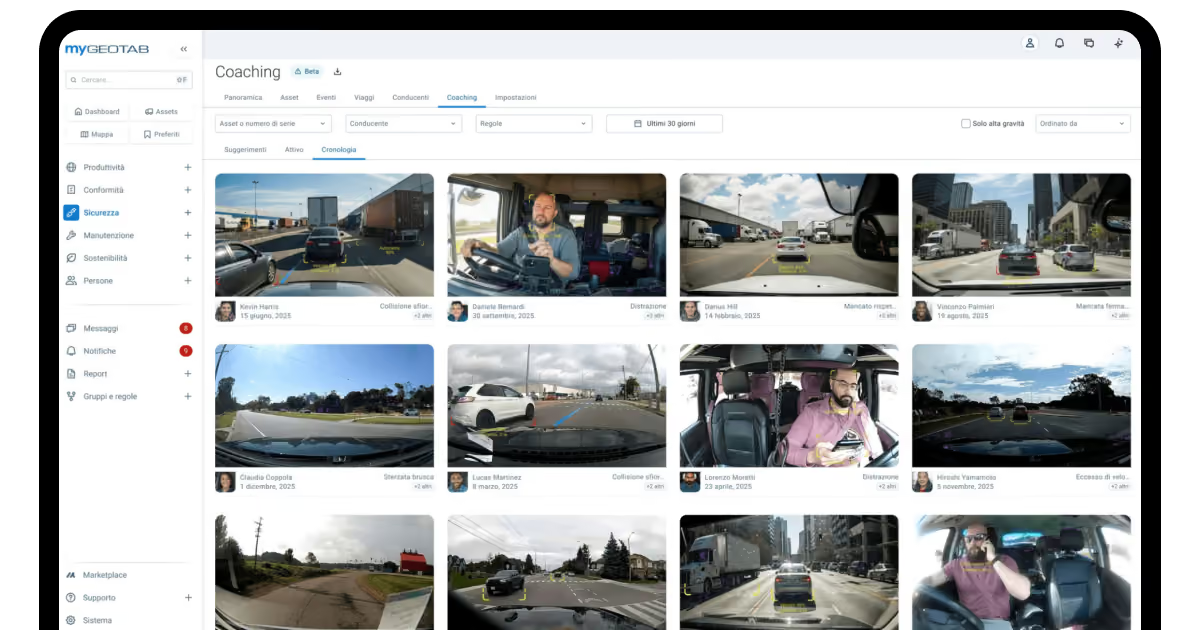
While telematics measures what the vehicle does, cabin cameras watch what the driver does. Infrared sensors track eye movement, head angles, and blink rates to catch fatigue before a driver realizes their eyelids are heavy. Driver behavior monitoring software built on this layer flags phone use and distraction directly. DriveIQ's in-cab coaching draws on this exact kind of signal. A voice alert fires the moment a driver's attention drifts. For a fleet manager, it's an extra set of eyes that never blinks.
External and record-based systems.
In-cab sensors don't catch everything. Forward-facing ADAS radar scans the road for tailgating and sudden lane drift, while background checks monitor state Motor Vehicle Records (MVR) for off-duty speeding tickets or license suspensions. Fleet management driver behaviour programs increasingly pull both data streams into one dashboard. A driver with a clean in-cab record but a rising violation count still needs attention. This layer catches exactly that kind of blind spot.
Mobile app-based monitoring.
Not every fleet can afford hardware installs across hundreds of vehicles. Mobile-based systems solve that by running on a driver's phone. Built-in sensors read acceleration, braking, and phone handling during a trip. No dongle, no dashcam, just an app running in the background. This fits smaller fleets or gig-style drivers best. It's also how usage-based insurance programs collect most of their scoring data. For a business, it means faster rollout with no hardware budget line.
Wearable and biometric monitoring
This layer watches the driver's body, not the vehicle or the phone. Smartwatches and wristbands track heart rate, movement, and skin temperature in real time. A spike in heart rate paired with erratic steering can flag stress or fatigue early. It's newer than telematics or dashcams, and adoption still lags behind both. Long-haul carriers and high-risk operations are the ones testing it first. DriveIQ's fatigue model could layer this data in as a future signal source. For now, it's a smaller piece of the picture, but a growing one.
Having half a dozen monitoring tools won't help if your systems don't talk to each other. At COAX Software, we don't build proprietary telematics hardware from scratch. We engineer the connective tissue that turns scattered fleet data into an operational dashboard. When legacy tools refuse to share data, we don't rely on fragile direct API-to-API links. We build custom middleware.
We start every integration project with a clear gap-and-readiness assessment. We map every single integration point, flag its technical complexity upfront, and resolve open items before writing a line of code for your driver behavior monitoring system.
What are the features of a driver monitoring system?
A monitoring system reads the driver, not just the road. Optical sensors, infrared light, and AI track head position and gaze. Together, they catch fatigue and distraction. Below are the core capabilities behind driver behavior management systems.
Gaze and attention tracking.
This feature watches where a driver's eyes actually point. Cameras track eye movements and head angles continuously throughout a trip. If attention drifts off-road too long, the system flags it immediately. That's driver behavior monitoring working at its most literal level. A driver glancing at a phone triggers the same detection logic. For a fleet manager, it means catching distraction before it becomes a habit.
Fatigue and drowsiness detection.
Tired drivers rarely notice their own decline in real time. This feature tracks blink rate and how deeply eyelids close. Yawning frequency feeds into the same fatigue model too. Together, these signals predict a microsleep before it happens. DriveIQ pairs this exact approach with shift-length and time-of-day data. That combination prevented over 40 HOS violations in one quarter. It's driver behavior analysis doing genuinely preventive work, not just logging incidents.
Distraction identification.
Distraction covers more than phone use alone. This feature spots smoking, turning around, or reaching into the back seat. Any behavior that pulls focus off the road gets flagged. Driver behavior monitoring software built on this layer works continuously. SyncMatix's behavioral risk scoring captures a version of this same pattern. It rolls distraction events into a single risk dimension per driver. That scoring gave the client a clear, ranked view of fleet-wide risk.
Posture and presence scanning.
This feature checks whether a driver is actually positioned to drive safely. It verifies seatbelt use and confirms proper seating posture. A slouched or unbelted driver gets flagged before the trip starts. This feature is a real compliance layer. Insurance auditors increasingly ask for this kind of documented check. A driver behaviour monitoring solution with this built in removes a manual inspection step. It's a small feature that closes a real liability gap.
Infrared night vision.
Cameras alone fail in the dark or through polarized sunglasses. Infrared LEDs solve that by lighting the cabin invisibly. The system keeps reading eye position and head angle regardless of light. Night shifts and early-morning routes benefit most from this layer. Without it, fatigue detection would simply stop working after sunset. This feature is what makes round-the-clock monitoring realistic for commercial fleets. DriveIQ's cross-border client runs overnight freight routes where this matters most.
Escalating alerts.
Not every warning should feel the same. This feature starts with a quiet chime or dashboard light. If the driver doesn't correct course, the alert escalates further. Seat vibration often follows as a stronger, harder-to-ignore signal. That graduated approach avoids alert fatigue while still catching genuine risk. DriveIQ's in-cab system already suppresses alerts a driver repeatedly ignores. It adjusts sensitivity per driver instead of blasting the same warning endlessly.
Autonomous intervention.
This is the last line of defense. If a driver stays unresponsive, the system coordinates with ADAS controls. It can slow the vehicle, guide it to pull over, or stop safely. Few fleets need this layer daily, but it matters when they do. It's a bigger technical lift than alerts alone, and rarer in commercial deployments. Most driver behavior management systems stop short of full vehicle intervention today. Where it exists, it's reserved for the most safety-critical routes and vehicles.
Driver customization.
Not every feature here is about risk. Facial recognition can identify an individual driver at ignition. From there, it adjusts seat position, mirrors, and infotainment. It's a comfort feature layered onto the same camera hardware. For fleets with rotating drivers, it saves a few minutes per shift. It's a smaller win, but it shows how one sensor set serves multiple purposes. A single driver behaviour management solution ends up doing more than just catching risk.
Engineering complex fleet tech requires deep industry context. For nearly two decades, COAX Software has specialized in transportation, logistics, and mobility software. Because we've repeatedly solved these architecture and integration hurdles, our teams don't start from scratch.
For vehicle monitoring system development, our experts deploy proven domain patterns, pre-built accelerators, and an AI-assisted development workflow. This way, we deliver production-ready fleet platforms 50–60% faster than generalist software development agencies.
What driver behavior metrics should you track?
Not every data point deserves a dashboard slot. A good driver behaviour monitoring system tracks what actually predicts risk. Here's what matters, split into safety and operational buckets.
Core safety and risk metrics
Tracking raw driving metrics is mainly about turning split-second road decisions into practical business decisions. A single hard-brake alert might look like a minor incident on a spreadsheet. However, on your balance sheet, it represents wasted fuel, premature tire wear, and an uncalculated crash risk. Here are the most common metrics that make the real difference:
Speeding gets measured against the actual road, not one flat number. Ninety on a highway isn't the same risk as forty in a school zone.
Harsh braking usually means something else went wrong first. Tailgating, distraction, a missed light; the brake pedal just tells you it happened.
Harsh acceleration flags impatience more than danger, most of the time. Still, it burns fuel fast and wears brakes faster than smooth driving ever will.
Cornering forces catch the turn nobody else notices. A sharp bend taken too fast rarely ends well on a wet road.
Distraction events are the hardest to see and the most dangerous to miss. Phone pickups and fatigue signals both land here, and both deserve immediate attention.
Track these five well, and you've covered most of what actually causes crashes. Still, risk monitoring is only half the financial effort. In driver behaviour management, safety metrics keep your trucks out of the ditch, but operational metrics keep your business in the black.
Efficiency and operational metrics
To get the full return on your telematics investment, expand your tracking to include these core efficiency and operational metrics:
Idle time. Running the engine while parked burns roughly half a gallon of fuel per hour per truck. Tracking idle trends across your fleet directly protects fuel budgets and maintenance schedules.
Fuel consumption & MPG spikes. Sudden drops in fuel efficiency pinpoint poor driving habits, routes with severe congestion, or impending mechanical failures.
Route adherence & off-route mileage. Deviating from optimized routes adds unnecessary wear, wastes billable hours, and increases fuel burn. Real-time route tracking ensures drivers stick to the most efficient corridors.
Vehicle utilization & engine hours. Knowing exactly how many hours a rig operates helps you balance mileage across your fleet, avoid over-servicing underused assets, and right-size your vehicle count.
Composite safety score rolls everything above into one number, usually zero to 100. That single figure is what most driver behavior tracking dashboards lead with, and for good reason.
A tool to monitor driver behaviour is only as good as the team building it. At COAX, we don't treat software development as a revolving door of contractors. Our dedicated engineering teams stay together, preserving deep domain context across every phase of your product lifecycle.
We integrate complex telematics analytics, cloud-native pipelines, and targeted AI models into your existing operational workflows. Having backed startups that grew into industry leaders, we align our engineering success with your bottom line. Our teams have a habit of measuring success by long-term client outcomes, not billable hours.
Best driver behavior monitoring systems out there
Picking a driver behavior monitoring software option comes down to separating proven performance on the road from fancy marketing decks. Below, we break down ten platforms worth testing, matching each tool to the specific fleet size, hardware architecture, and operational priorities it serves best.
To compare these tools objectively, we analyzed each solution across five core criteria:
Video capture: Continuous HD feeds vs. event-triggered clips vs. no-camera sensor data.
Coaching approach: Real-time AI in-cab alerts, gamified rewards, or post-trip training modules.
Hardware footprint: Zero-hardware phone apps vs. native plugins vs. dual-camera installs.
Primary value: Insurance defense, driver retention, compliance, or live crash prevention.
Ideal fit: High-risk long-haul, mixed local routes, gig networks, or data-only fleets.
And here’s how we evaluated the solutions we have reviewed in this deep dive.
Tool
Video capture
Coaching approach
Integration
Best for
FleetCam Essential
Event-triggered
Analytics-driven alerts
Geotab-native
Fleets starting with video
GoAnalytics
None (data only)
Trend-based benchmarking
Geotab-native
Data-heavy fleet managers
Geotab Vitality
None
Gamified rewards
Geotab-native
Driver engagement programs
FleetCam Pro
HD, event-triggered
Real-time alerts
Geotab-native
Fleets needing detailed footage
DV6 AI-Powered Recording
Dual-camera, continuous
AI in-cab alerts
Geotab GO devices
High-risk route fleets
Mentor TSP
None
FICO-scored risk coaching
Smartphone sensors
Mixed-fleet risk scoring
ZenduONE Camera
Event-triggered
Interactive coaching
Geotab-native
Face-matching and identity checks
Predictive Coach
None
Automated training modules
Geotab-native
Targeted skill-gap coaching
SpeedGauge Safety Center
None
Scorecard-driven
Geotab-native
Centralized safety oversight
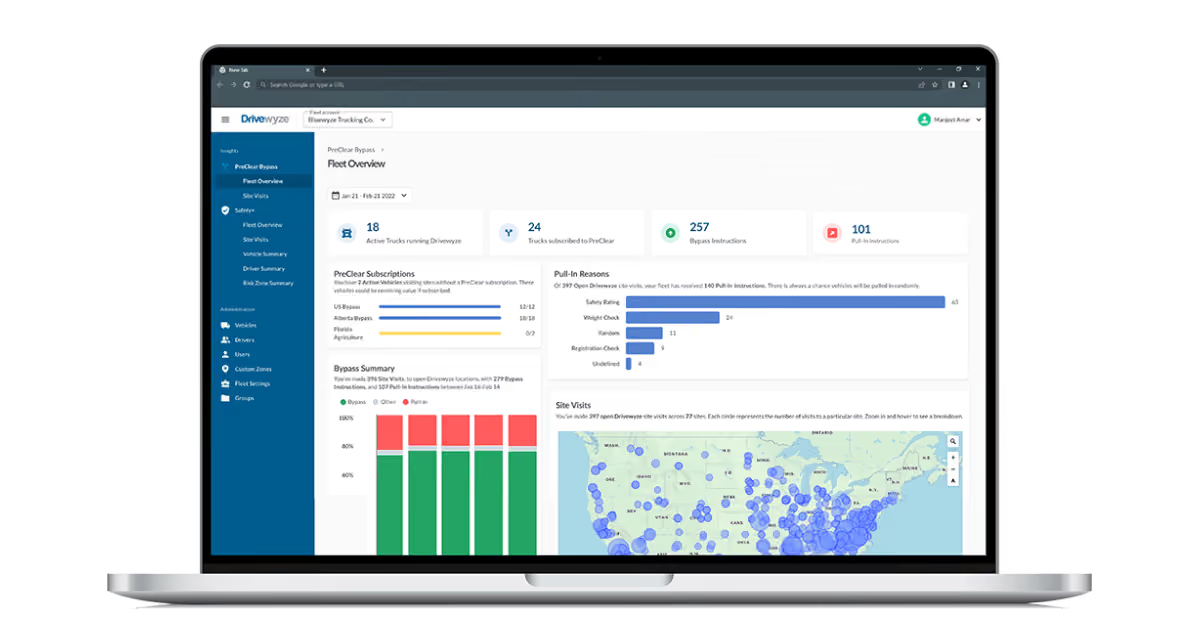
Drivewyze Safety+
None
Automated recommendations
Geotab-native
Fast incident response
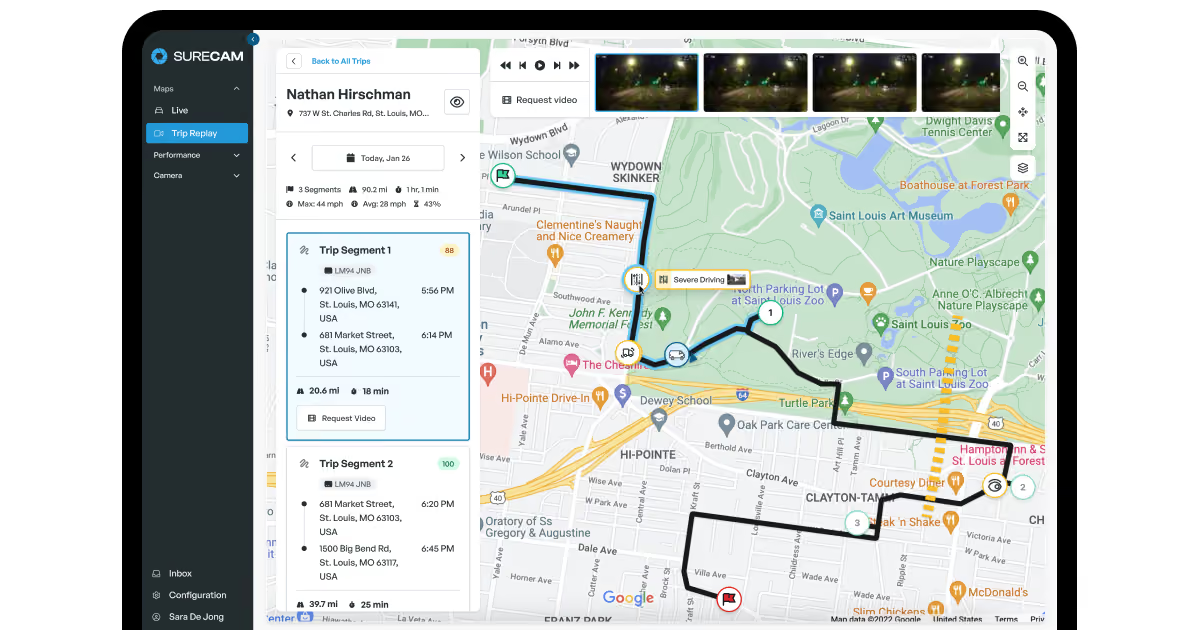
SureCam
HD, event-triggered
Incident-based review
Geotab-native
Cloud storage and retrieval
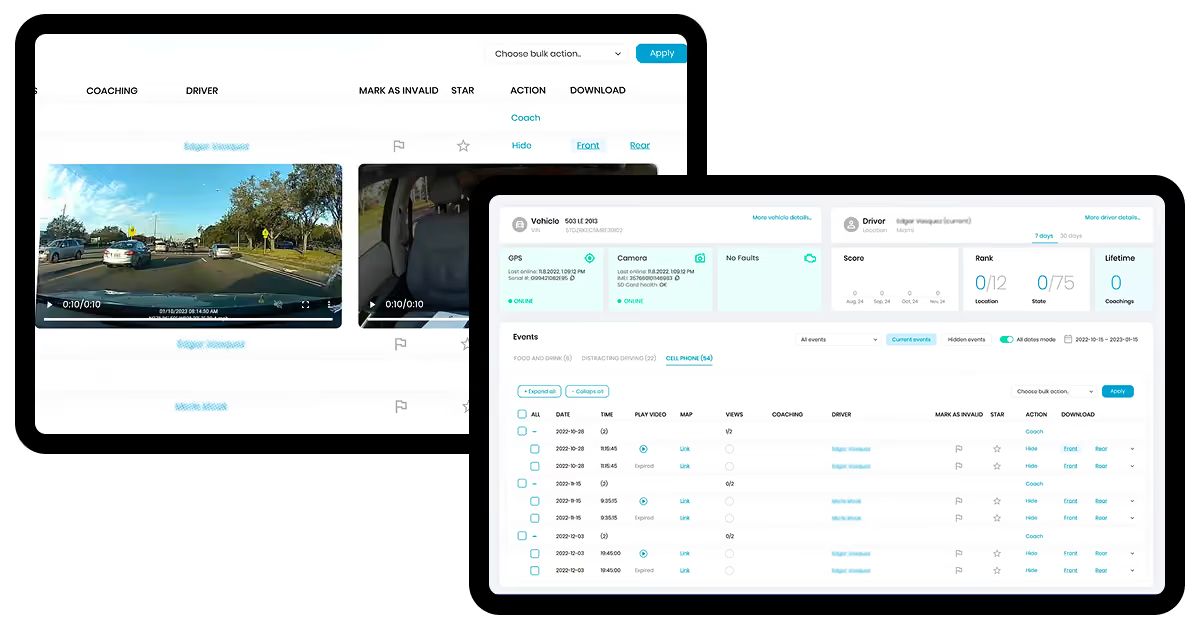
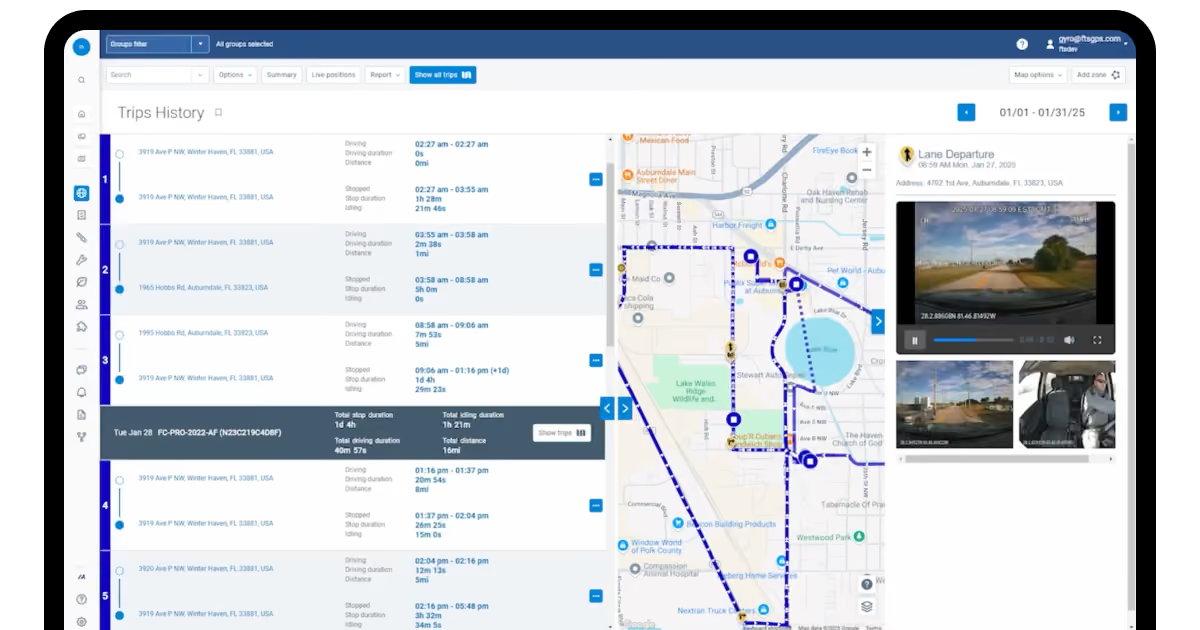
FleetCam Essential Road & Driver is a dashcam built into Geotab's ecosystem. It records in-cab and road footage the moment a risky event triggers. Alerts land quickly enough for same-day coaching conversations. Configuration stays simple, but it lacks deeper predictive modeling. Fleets new to video-based fleet driver behavior monitoring fit best here.
GoAnalytics skips video entirely and focuses on trend data. It aggregates idling, braking, and fuel inefficiencies across an entire fleet. Historical reporting runs deep, letting managers spot slow-building patterns. It won't show you footage of an actual event, though. Fleets that already trust their telematics feed will get the most value.
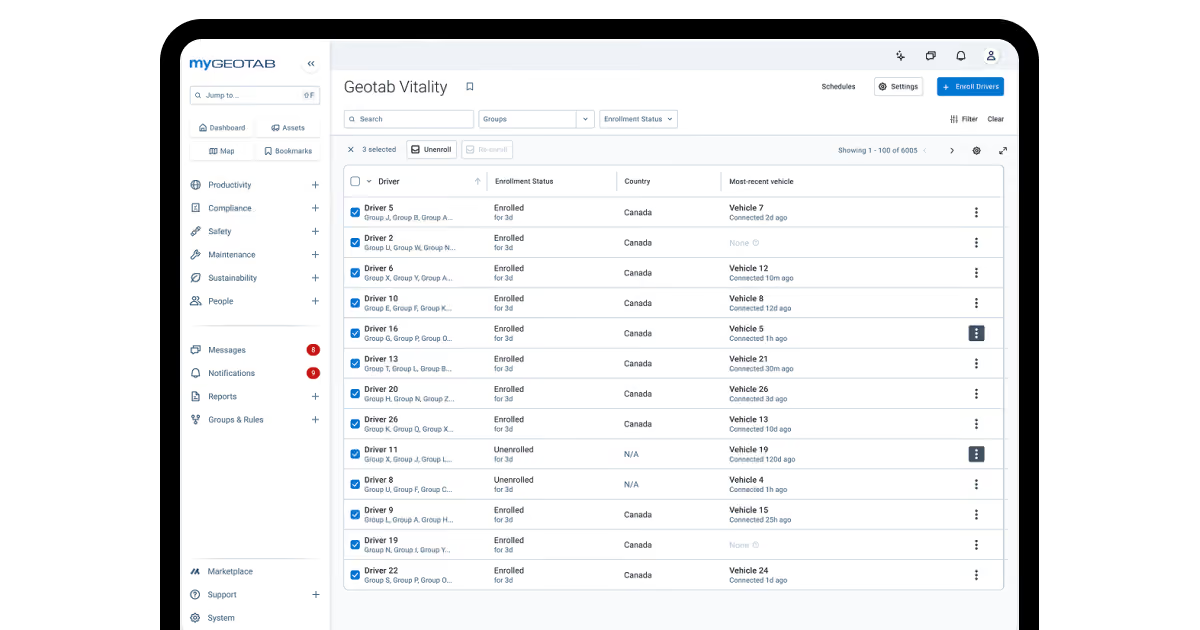
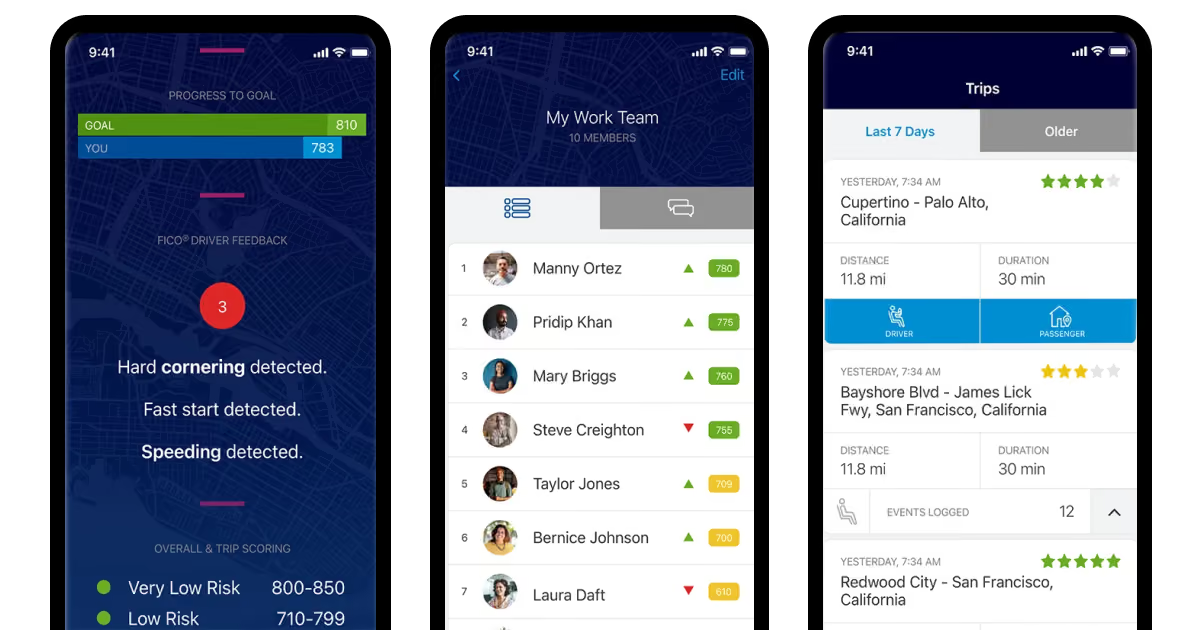
Geotab Vitality takes a different angle: motivation instead of enforcement. It converts safety scores into rewards drivers can actually redeem. That gamification layer helps with buy-in on fleets resistant to monitoring. It doesn't detect new behaviors; it just reframes existing scores. Pair it with a data source; don't use it alone.
FleetCam Pro Road & Driver steps up the video quality from the Essential tier. HD footage and smarter event detection catch more nuance per incident. Cloud storage keeps evidence available for insurance disputes months later. Driver behavior monitoring setup takes longer than Essential, and it costs more per vehicle. Fleets facing frequent liability claims justify the upgrade fastest.
DV6 AI-Powered Recording runs dual cameras continuously, not just on trigger. AI processes footage in real time and clips the twenty seconds that matter. It catches drowsiness and distraction as they happen, not after. The always-on recording demands more storage management than event-triggered tools. High-risk long-haul routes benefit most from this constant coverage.
Mentor TSP works without any hardware install at all. It reads smartphone sensors and layers in license and collision history. The FICO-based score gives fleets a standardized, insurer-recognized number. It won't catch in-cab distraction the way a camera does. Mixed fleets wanting one unified risk number should look here first.
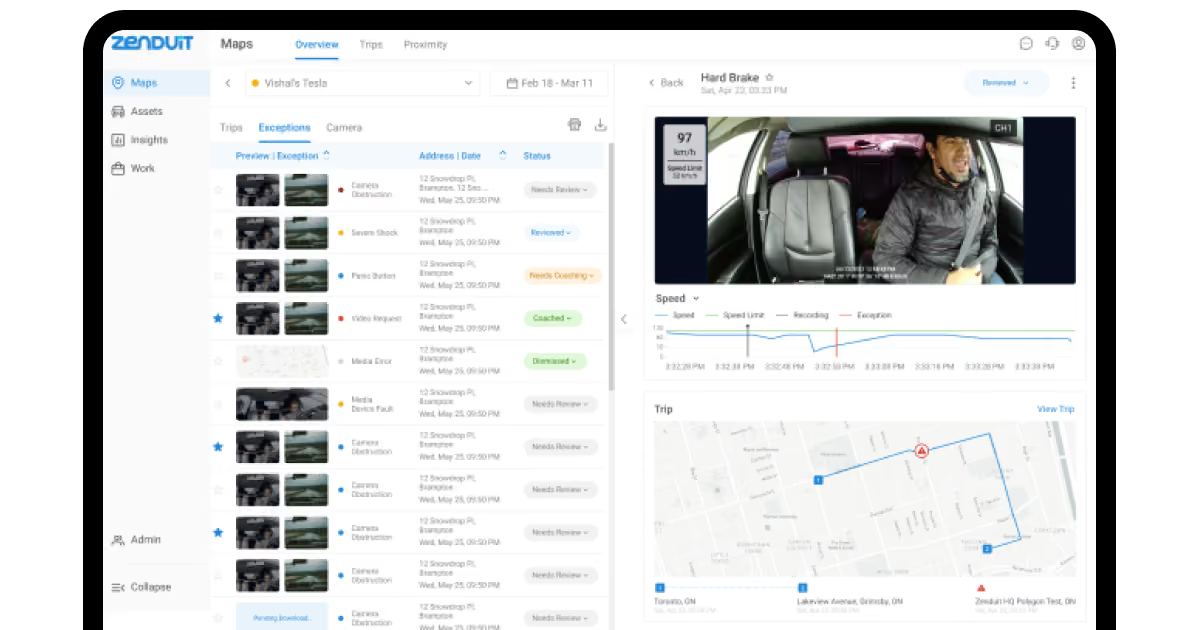
ZenduONE Camera adds facial recognition on top of standard event capture. That identity layer confirms who's actually behind the wheel each shift. Live streaming gives dispatchers a real-time view during active incidents. Coaching workflows are solid but shallower than dedicated training platforms. Fleets juggling multiple drivers per vehicle get the clearest value.
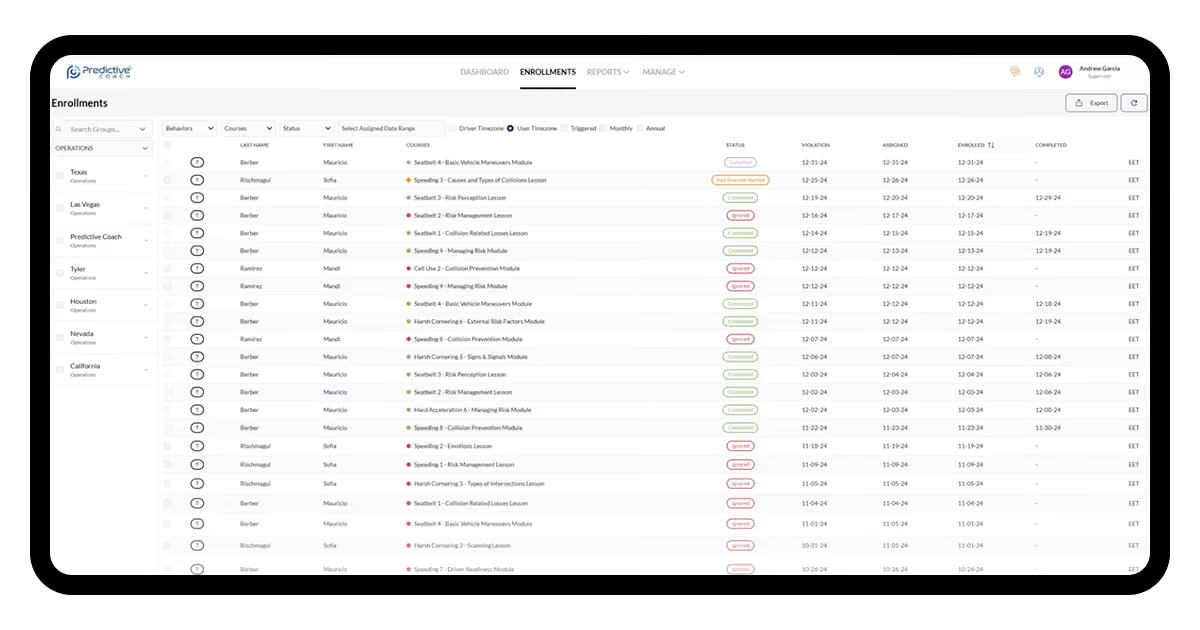
Predictive Coach treats coaching as its entire product, not an add-on to standard driver behavior tracking. It assigns training modules automatically based on each driver's flagged behavior. That targeting beats generic safety videos most fleets already ignore. It depends on another tool feeding it the underlying event data. Pair it with a detection layer for the full loop.
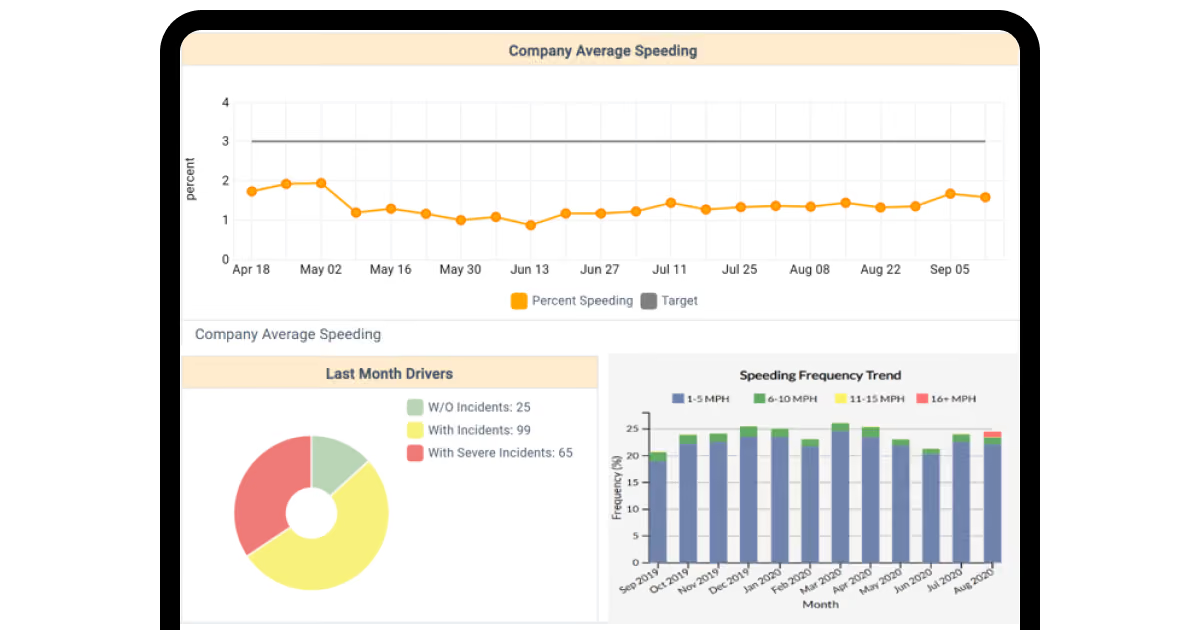
SpeedGauge Safety Center centralizes scorecards across an entire operation in one view. Real-time alerts flag risk the moment it crosses a threshold. Dashboards stay customizable enough for different management styles. It leans on Geotab's existing data rather than adding new sensors. Fleets wanting one screen for oversight will appreciate the simplicity.
Drivewyze Safety+ prioritizes speed of response over depth of analysis. Incident detection triggers automated coaching recommendations almost immediately. That immediacy matters when a pattern needs correcting fast. Its scope stays narrower than platforms combining video and scoring. Fleets that value quick turnaround over deep forensics fit well.
SureCam pairs HD event capture with straightforward cloud retrieval. Correlating footage with telematics data speeds up incident review significantly. Storage and search work well when an insurer requests specific footage. It doesn't push predictive alerts the way AI-native tools do. Fleets prioritizing clean evidence trails over live coaching should consider it.
Off-the-shelf driver behavior monitoring systems cover a lot of ground, but they don't fit every operational workflow. Especially if you're dealing with sensitive driver data, custom hardware feeds, or complex legacy infrastructure.
That's where COAX Software comes in. With 90% mid-and-senior developers, we build custom fleet architectures engineered around your data privacy and operational requirements. ISO 9001 and ISO 27001 certified, we bring enterprise-grade security and deep domain experience.
Whether you need to bridge proprietary telematics with legacy ERPs or build a custom safety platform from the ground up, we're ready to make it happen. But if you decide to stick with a ready-made solution, read on.
How to choose the right driver behavior monitoring system?
Most buying guides list generic criteria: price, features, support. Those matter, but they miss what actually matters when you start integrating a solution into your daily workflows. Here's what we test instead, drawn from building driver behavior monitoring software ourselves.
The alert fatigue test. A system that flags everything gets ignored within a week. Test how each tool prioritizes which alerts reach a driver. For instance, DriveIQ suppresses alert types a specific driver repeatedly ignores. That single design choice kept coaching engagement high instead of tuning out.
The offline resilience check. Rural routes and remote job sites lose signal constantly. Ask whether a driver behavior monitoring solution keeps working through dead zones. This can be solved by offline catching in many solutions, just like we did for Road&Rally.
The false-positive tax. Every flagged event costs a manager review time. Run a week of real driving through the tool before committing. Count how many "risky" flags turn out to be nothing. Systems with weak context correlation waste hours on noise.
The driver buy-in factor. A tool drivers resent gets worked around, not used. Look for peer benchmarking or coaching framing over raw scoring. SyncMatix's scorecards showed drivers respond better to ranking than bare numbers. That single format choice lifted voluntary engagement measurably.
The integration question. Every vendor claims plug-and-play compatibility with existing systems. Ask specifically what middleware their driver behavior systems actually require. The honest answer, in weeks of engineering time, tells you more than any feature list.
The scale-down test. A platform built for 500 vehicles can feel bloated at twenty. Check whether pricing and complexity actually shrink for smaller fleets. Not every fleet needs enterprise-grade video infrastructure from day one.
Run any shortlisted driver behavior monitoring tool through these six filters. The one that survives messy data, driver pushback, and dead zones wins. Everything else is a polished demo, not a production fit.
Even if you already use a ready-made platform, we can tailor it to your exact needs. Our team integrates new data sources, expands legacy tools, and builds custom feature modules. We also develop dedicated mobile driver apps to seamlessly extend your web interface.
Tell us what your current stack lacks. We'll build, bridge, and customize the exact solution you need.
FAQ
How much does driver behavior monitoring cost per vehicle, monthly?
Pricing varies by hardware and scope. Camera-based systems typically run $25 to $60 per vehicle monthly. Software-only telematics costs less, often $10 to $30. Enterprise AI dashcams with predictive coaching push higher. Budget separately for installation labor across your fleet. On DriveIQ, clients underestimated hardware rollout time more than the subscription cost itself. Ask vendors for a full cost breakdown before signing anything.
Is driver behavior monitoring legal without employee consent?
Rules vary by state and country, so check local law first. Most jurisdictions allow monitoring on company-owned vehicles during work hours. Transparency still matters legally and practically. Drivers who know why they're monitored resist less. We've seen fleets frame it as coaching, not surveillance, and get faster buy-in. Consult an employment attorney before rollout, especially for personal-device or biometric data collection across state lines.
How do dash cams improve driver behavior without feeling like surveillance?
Framing changes everything here. How dash cams improve driver behavior comes down to feedback speed, not just recording. Instant in-cab alerts correct behavior before it becomes habit. Peer benchmarking, not raw scores, drove real engagement on our DriveIQ scorecards. Drivers who see footage used for coaching, not punishment, adopt the system faster. Punitive framing backfires almost every time.
How do companies monitor driver behavior effectively without overwhelming dispatchers?
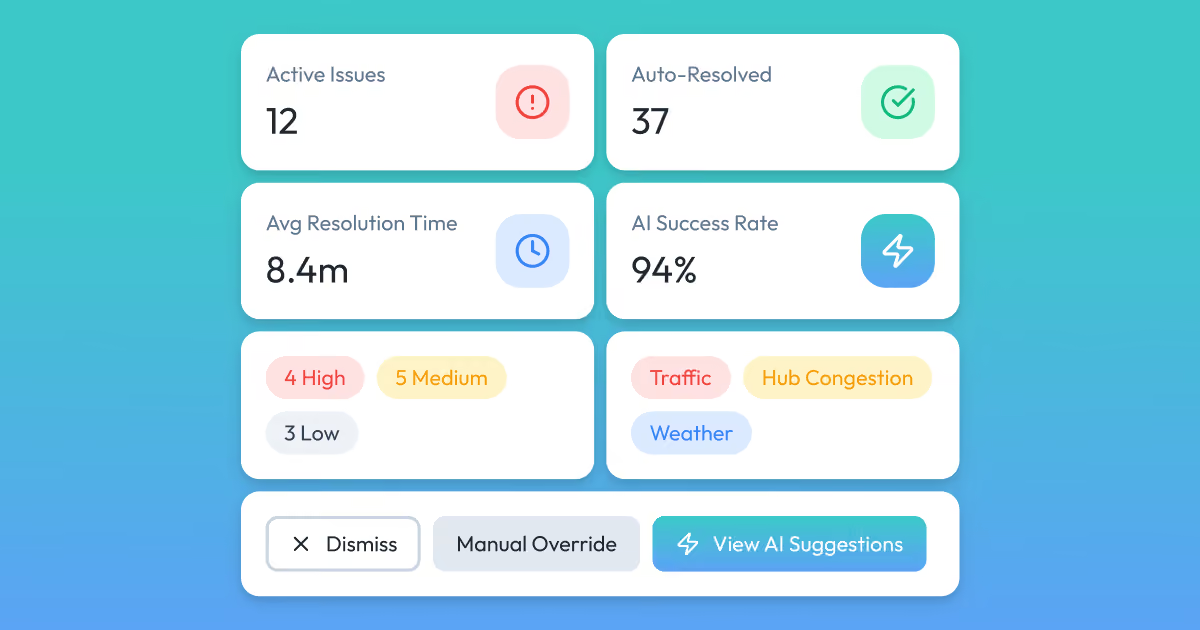
Efficient driver behavior monitoring starts with alert filtering, not raw data volume. Dumping every event on one screen guarantees dispatchers ignore most of it. Cluster alerts by root cause instead. On DriveIQ, that single change cut diagnosis time from twelve minutes to under three. Route each alert type to the role that can actually act on it.
What happens to driver behavior data if I switch vendors later?
Data portability depends on the platform's export options and API access. Closed systems make migration slow and costly. Ask any vendor for a sample data export before signing. We build fleet management driver behaviour platforms on open schemas specifically to avoid lock-in. If a vendor can't produce a clean export quickly, treat that as a real warning sign.










































































_.avif)








%2520explained.avif)

We are interested in your opinion