A painfully frequent situation. A cylinder misfires on a highway outside Chicago. The driver misses the warning light. A $40 sensor failure becomes a $9,000 engine replacement. This disconnect costs you missed deliveries, customer trust, and schedule breakdowns, too. At COAX Software, we built telematics engines like SyncMatix for global transit, and know the problem in the flesh. We saw how easily data blindness causes a 14% fleet idle rate.
After creating custom dispatch, maintenance, and diagnostics solutions, we learned one golden rule. Running fleets can only be as smooth as the connection between every moving part. And more than anything, it concerns fleet maintenance.
This guide simplifies that challenge. We have evaluated the top fleet maintenance solutions on the market so you don’t have to. Based on our analysis, Fleetio stands out for tracking asset depreciation across mixed vehicle pools. Samsara follows close for active tracking. Its real-time GPS and sensor integrations are unmatched.
Still, your ideal choice depends on your specific business model. Below, we review ten top software solutions and their limitations. We also show how to implement them successfully.
Why is fleet maintenance software a safeboat for modern operations?
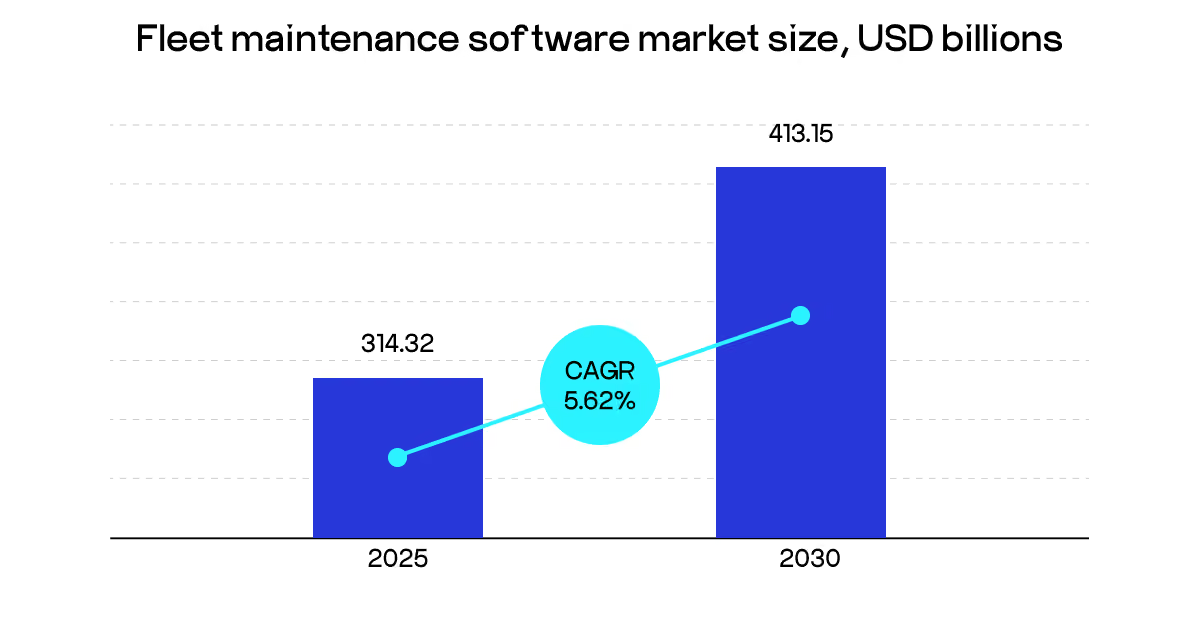
The fleet maintenance software market keeps growing inevitably. Global spend is estimated to reach $413.15 billion by 2030. Fleets no longer treat maintenance as overhead. They treat it as a cost lever tied to margin, and there are good reasons for that.
Repair and maintenance cost hit $0.2 per mile. Meanwhile, well-maintained Class 8 fleets run $0.12 per mile instead. Intelligent preventive maintenance planning cuts your repair bills by 30%. It also slashes vehicle downtime by half.
Aging fleets add to the problem. Older trucks need closer tracking, not less. Ironically, they also cause more inspection risks and regulatory pressure, too. That’s simply because they are less fuel efficient. And emissions rules and inspection standards keep tightening.
Outsourced providers hold 41.32% of the market today. Mobile repair services will grow fastest, at 8.31% CAGR. That means more vendors touch each vehicle, not fewer. Vendor coordination without vehicle fleet maintenance softwarecreates blind spots.
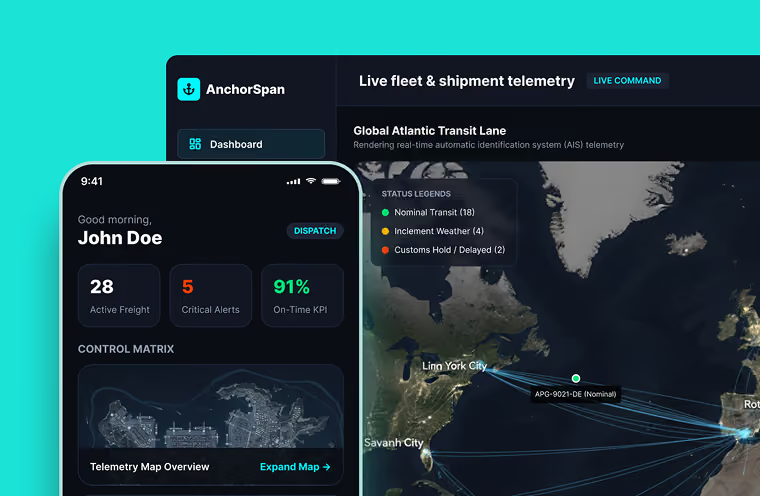
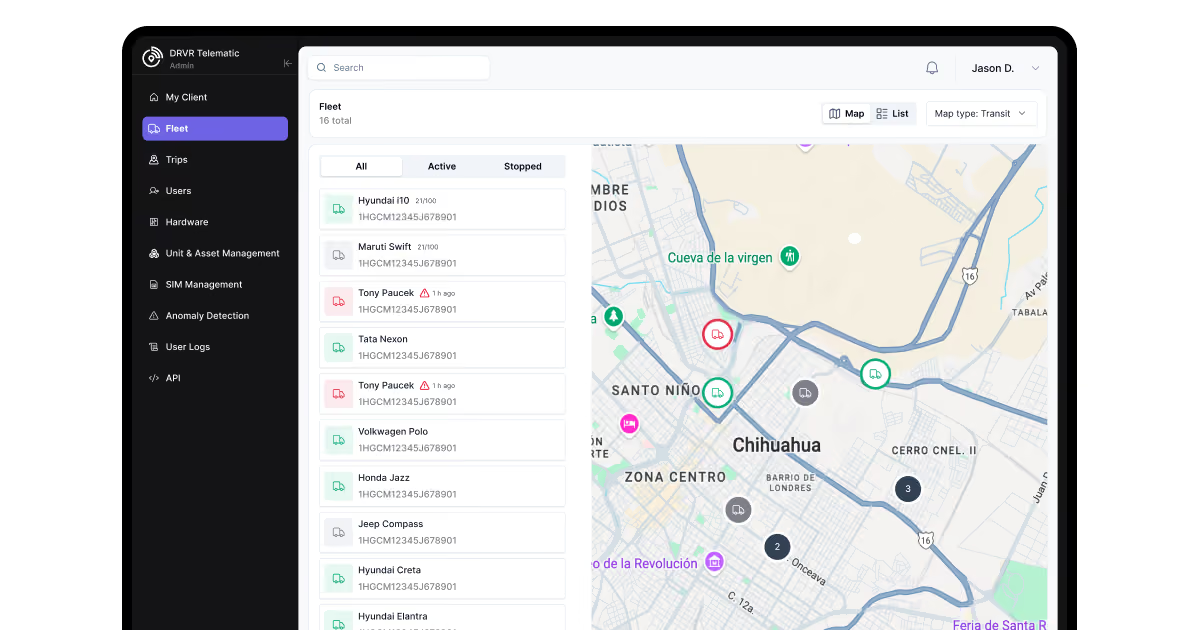
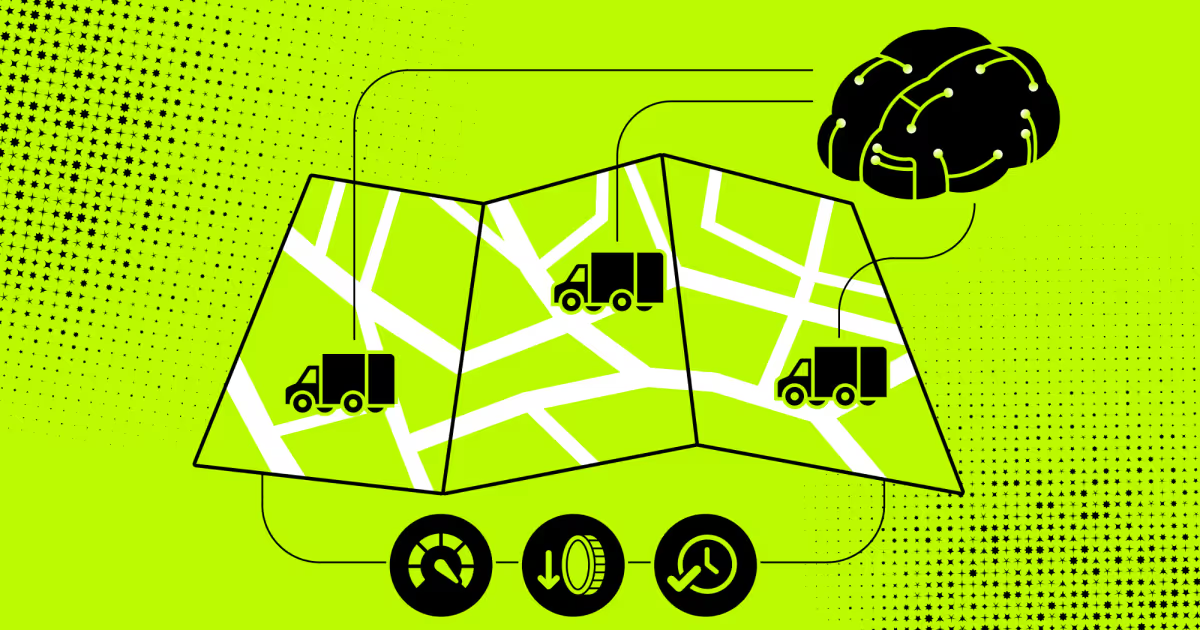
We saw this pattern on the SyncMatix project we mentioned. The client tracked vehicles through separate GPS, reporting, and driver-log tools. Fleet managers pieced data together by hand. To fix it, we unified the frontend into one platform. As a result, fuel waste dropped 18%.
That's the business case in one line. Fleet preventive maintenance software doesn't just cut repair bills. It turns scattered data into decisions fleet managers can act on early. And manual tracking can't scale with fleet growth - here’s why.
Why you keep stumbling with manual maintenance tracking
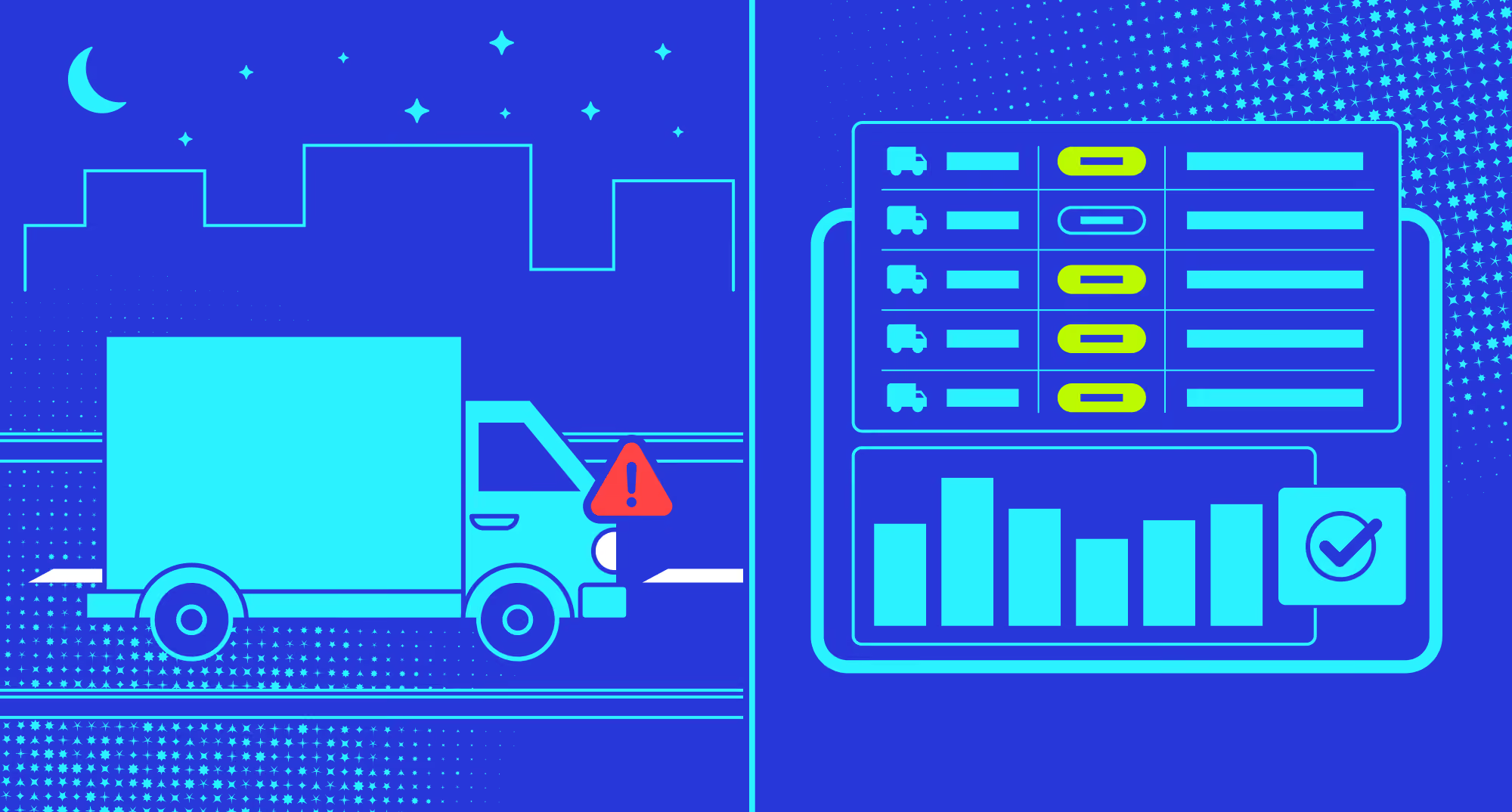
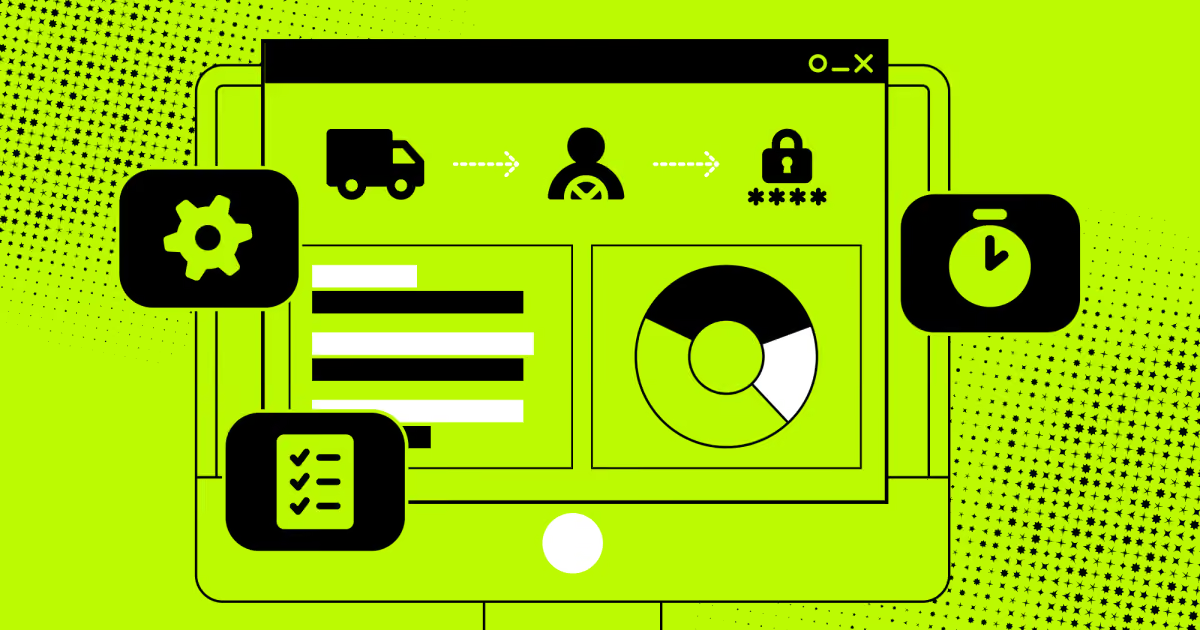
Manual tracking breaks down the same way for every fleet, just at different scale. Paper logs, scattered spreadsheets, and dashboard lights that appear too late all point to one root problem. You find out something's wrong after it already costs you.
We've seen this practically. On SyncMatix, our client ran GPS tracking in one app, reporting in another, and driver logs somewhere else entirely. Fleet managers pieced data together by hand, vehicle by vehicle. Nobody could answer a simple question fast: where's this truck right now, and is it due for service? That gap splits into four distinct problems. Each one costs money in a different way.
Preventable downtime and reactive repairs turn a five-minute fix into a roadside emergency.
A truck runs until a dashboard light flashes, or until it fails inspection on the shoulder of a highway. By then, the brake job that would've cost a few hundred dollars during a scheduled visit now needs a tow truck, overtime labor, and a driver stuck for hours. Industry data backs this up. Shifting just 10% of work from reactive to planned cuts total fleet maintenance and repair costs by 6% to 8%. On SyncMatix, real-time alerts on maintenance indicators closed that exact gap, cutting response time to route events by 25%.
Administrative overload and human error eat entire afternoons that should go toward dispatch or planning.
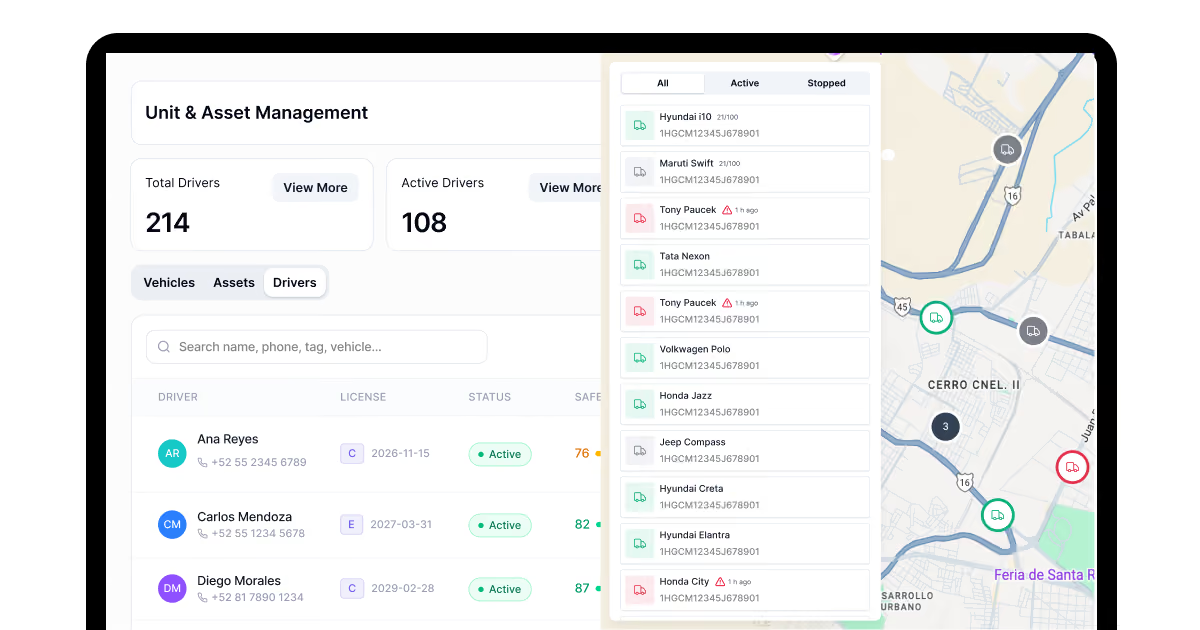
A commercial fleet maintenance team tracking 50 vehicles through paper DVIRs loses inspection reports, misfiles service dates, and re-enters the same mileage numbers twice. On Driven Connect, we replaced that entirely. Every vehicle now lives in one table: plate number, make, model, engine type, seat count, all searchable by depot in seconds.
Compliance and audit risks build quietly until an inspector asks for records you can't find.
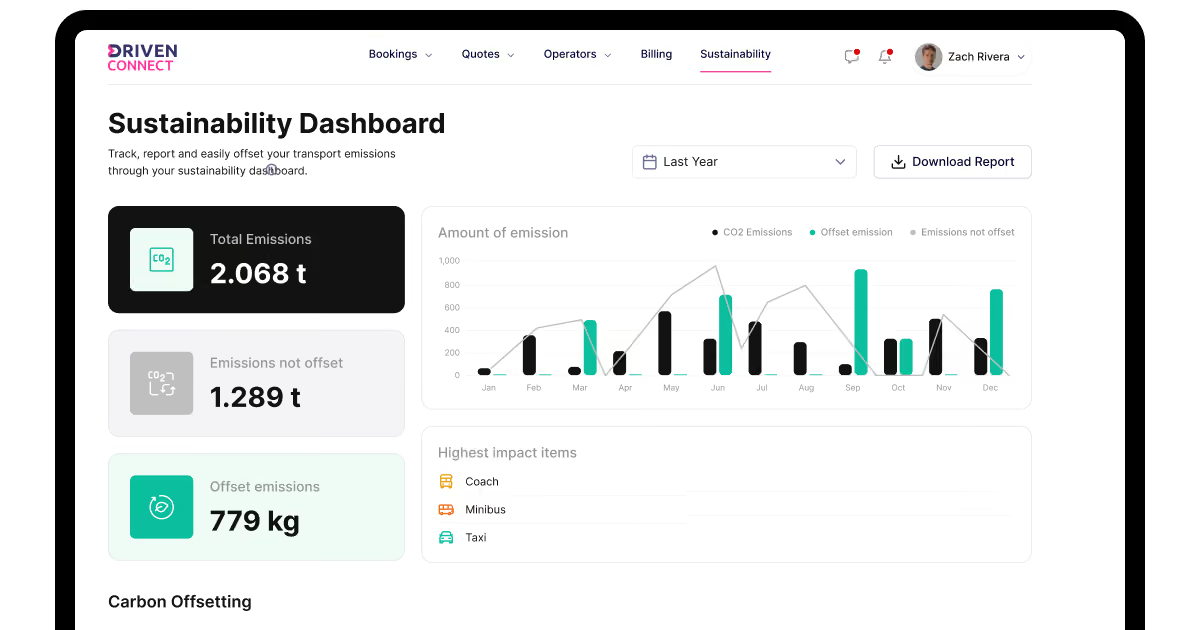
A fleet maintenance manager always deep in the documentation can't always prove a brake service happened on schedule. That gap shows up as CSA Vehicle Maintenance BASIC points that stick around for 24 months. On Driven Connect, we automated emissions and carbon tax reporting inside the app itself. No spreadsheet, no missing file, no scramble before an audit.
Difficulty scaling operations shows up the moment a fleet adds its 51st vehicle.
Paper tracking can't produce one consolidated view of fleet health. A manager can't tell which trucks are dragging the budget up and which ones justify a retirement plan. Purpose-built fleet maintenance solutions solve this by design, not by adding more spreadsheet tabs. On SyncMatix, that consolidated view drove a 40% jump in new signups within one quarter, once fleets could finally see their own data clearly.
None of these problems are separate. They're one problem wearing four faces. A system that can't show you what's happening until it's already a cost. That's the exact gap fleet maintenance software helps you overcome.
10 best fleet maintenance software solutions
We all know how this goes. A truck idles at a dock in Memphis because a routine service slipped through the cracks of a broken Excel formula. Three days later, a belt snaps on the interstate.
And out of a sudden, that gap between "logged" and "actually done" isn't just an administrative headache anymore. It's now a massive cash drain.
We know this because we build the technology that stops it. The COAX Software team doesn't just analyze logistics platforms from a distance. We've spent years building custom maintenance modules directly into our clients' software. We've seen where the integrations break, and how the data gets lost. That gives us a practitioner's view most reviews don't have.
With this knowledge, we tested and evaluated the top fleet maintenance software on the market. We'll break down our full evaluation criteria later, but here’s the quick version.
If you need real-time engine diagnostics and hyper-deep sensor data, get Samsara. If you run a maintenance-first shop with complex, staggered service intervals, Fleetio is your best bet. Go with Whip Around if your biggest headache is getting drivers to do their pre-trip inspections and log defects accurately. And if you're torn between dead-simple shop-floor usability and heavy-duty enterprise asset tracking, look at UpKeep or Fiix.
Platform
Best for
PM scheduling
Work order management
Parts inventory
Mobile inspection
Pricing
Fleetio
Maintenance-first fleets
Automated, mileage-based
Full lifecycle tracking
Yes, with reorder alerts
Yes, custom forms
From $4/vehicle/mo
Samsara
Real-time diagnostics
Sensor-triggered alerts
Yes, linked to faults
Basic
Yes, via app
From $27-33/vehicle/mo
Whip Around
Driver-led inspections
Yes, checklist-driven
Defect-to-work-order flow
Not available
Best-in-class
From $10/vehicle/mo
UpKeep
Mixed asset shops
Yes, calendar and meter
Full CMMS workflow
Yes, barcode-based
Yes
From $45/user/mo
Fiix
Mid-size shop teams
Yes, usage-based
Full CMMS workflow
Yes, with forecasting
Yes
From $45/user/mo
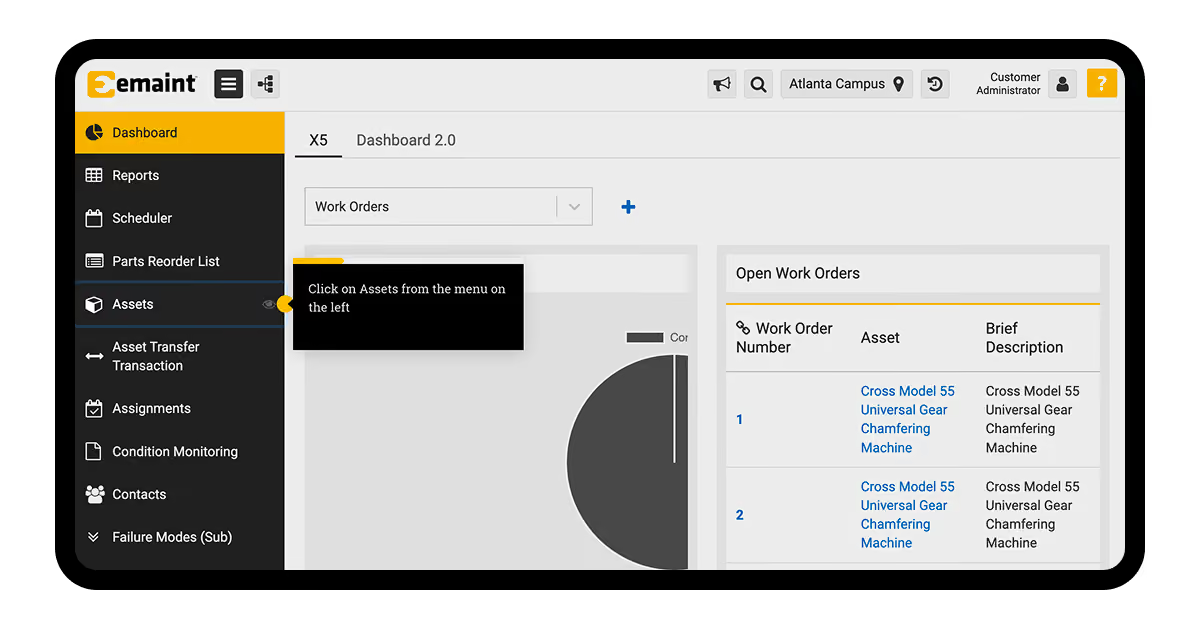
eMaint
Complex compliance needs
Yes, condition-based
Full CMMS workflow
Yes, detailed tracking
Yes
Custom quotes
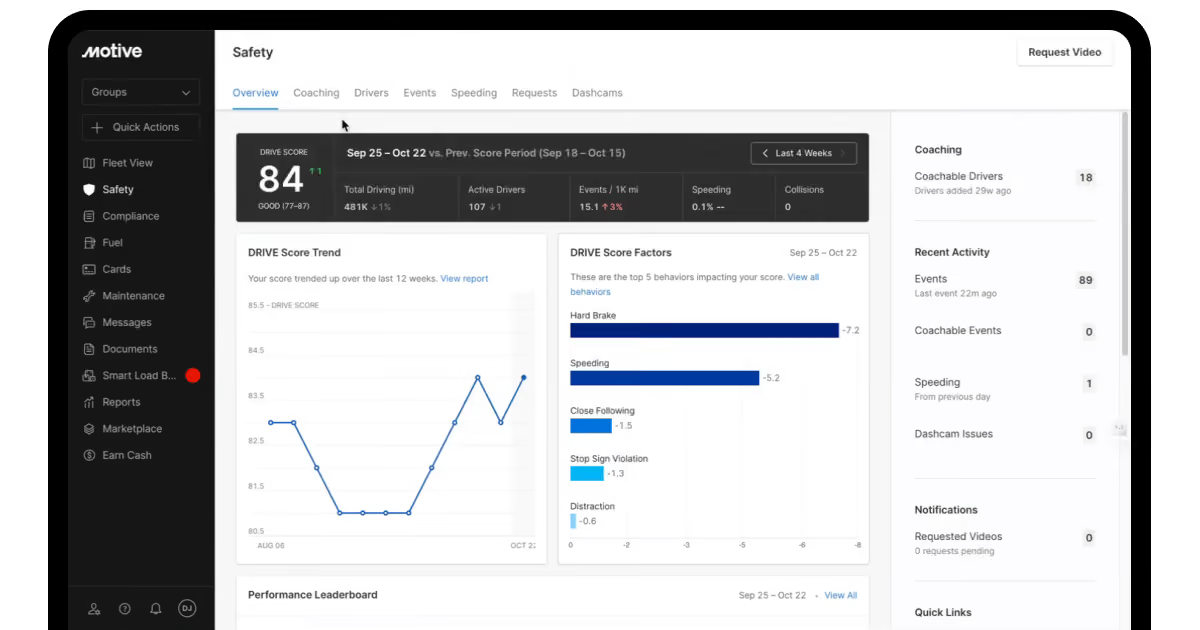
Motive
Owner-operators, ELD-first
Basic reminders
Limited
Not available
Yes
From $20-35/vehicle/mo
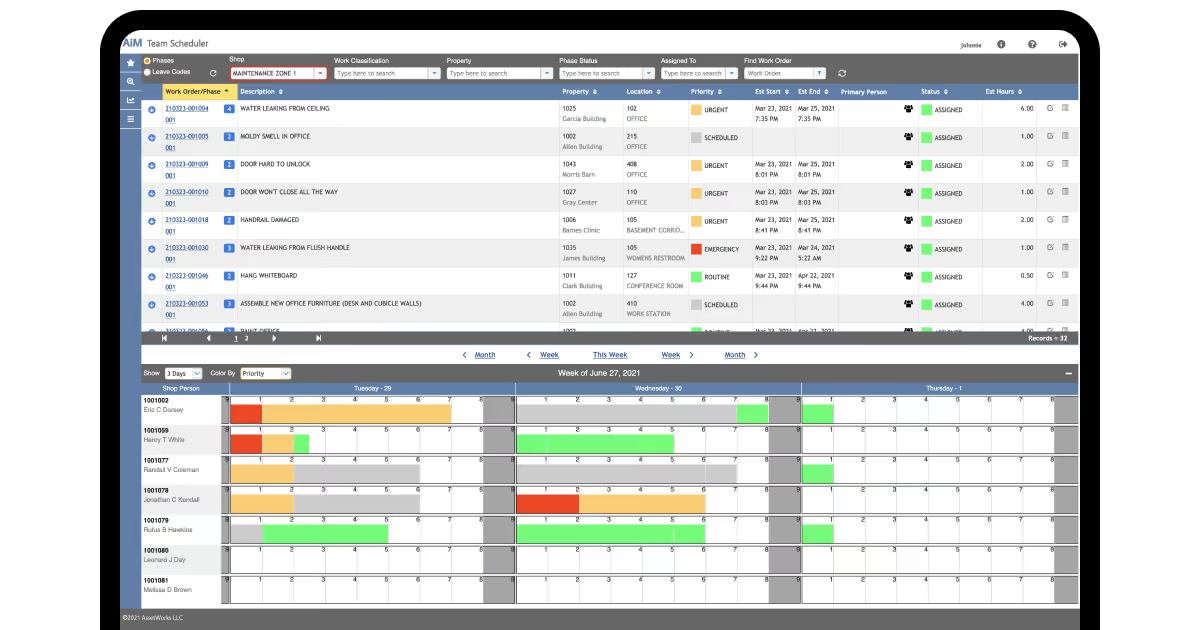
AssetWorks
Government and large fleets
Yes, deep customization
Full lifecycle tracking
Yes, enterprise-grade
Yes
Custom, project-based
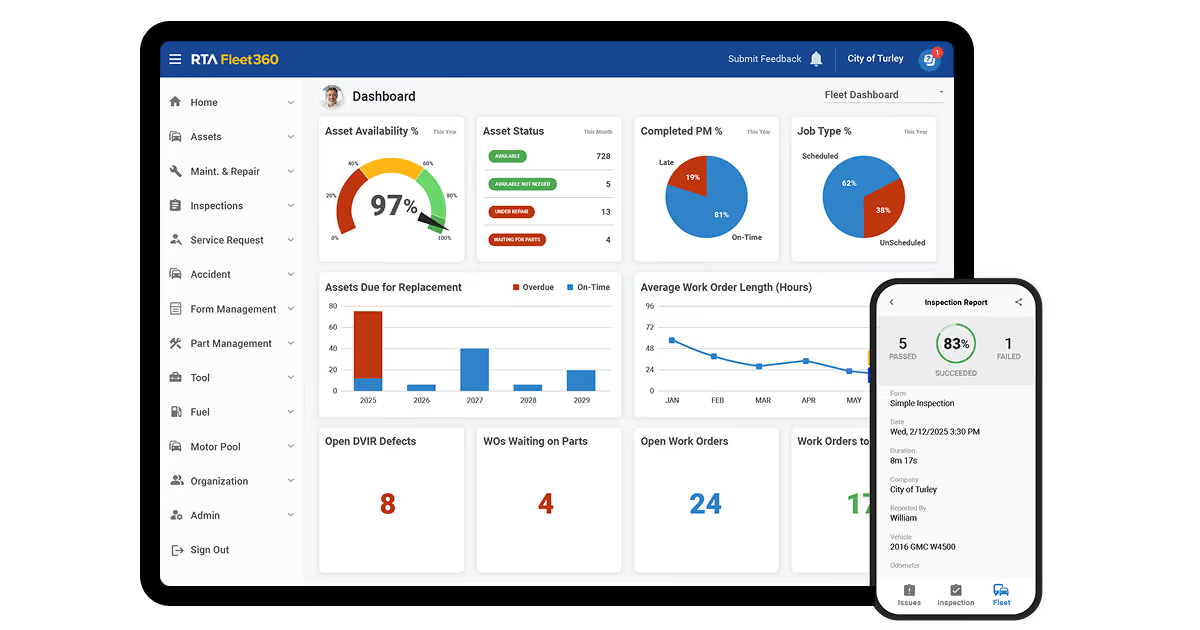
RTA Fleet Management
Municipal and utility fleets
Yes, meter and calendar
Full lifecycle tracking
Yes, detailed costing
Limited
Custom quotes
Auto Integrate
Multi-depot commercial fleets
Yes, workshop-integrated
Full lifecycle tracking
Yes, parts procurement
Yes
Custom quotes
A note before the deep dive: pricing shifts fast, and these figures reflect our latest testing.
Samsara pairs online fleet maintenance software with dashcam and sensor data. We ran it across a 40-vehicle simulation with mixed assets. A fault code triggered a work order within the same minute. No manual step connected the two systems.
We pulled Samsara's API documentation during testing. It's public, versioned, and includes working webhook examples. That openness matters for teams building custom maintenance dashboards. Pricing climbs fast past 100 vehicles, though.
Best for: fleets wanting diagnostics tied directly to dispatch.
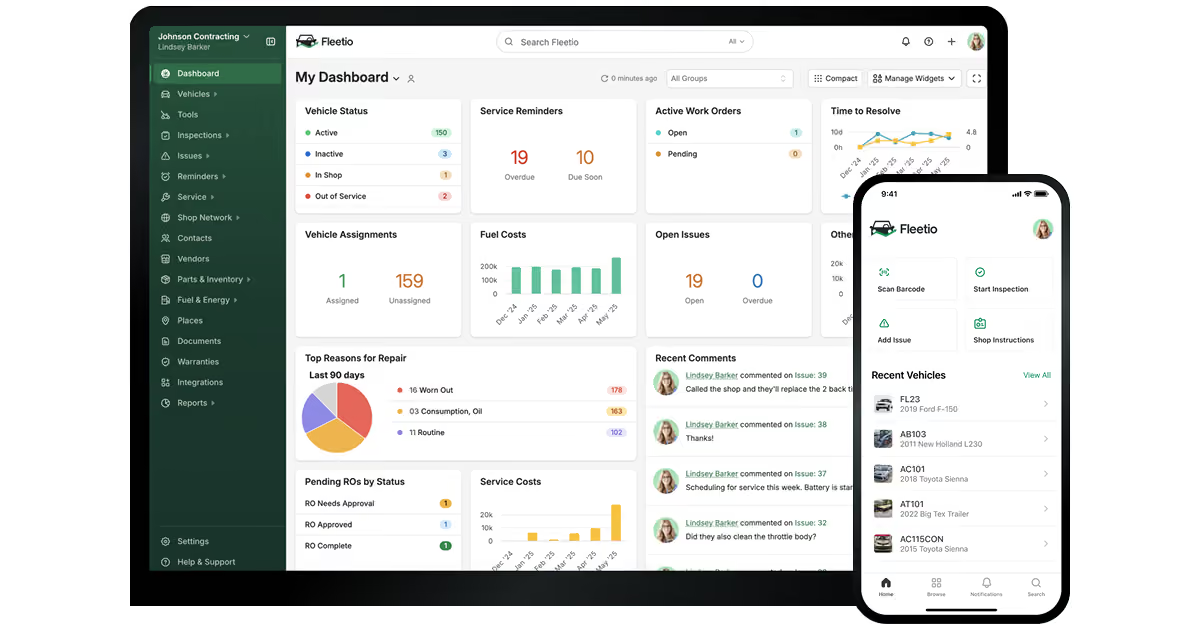
Fleetio is the best fleet maintenance software for shops tracking staggered intervals. We tested it against 15 vehicles with mixed service schedules. It flagged two upcoming services three days early. That's before either truck went offline unexpectedly.
Fleetio doesn't run its own GPS hardware, though. We connected a third-party telematics feed for testing. Tracking accuracy then depended on that vendor's signal, not Fleetio. Budget for a separate provider alongside this platform.
Best for: fleets where uptime and repair cost matter most.
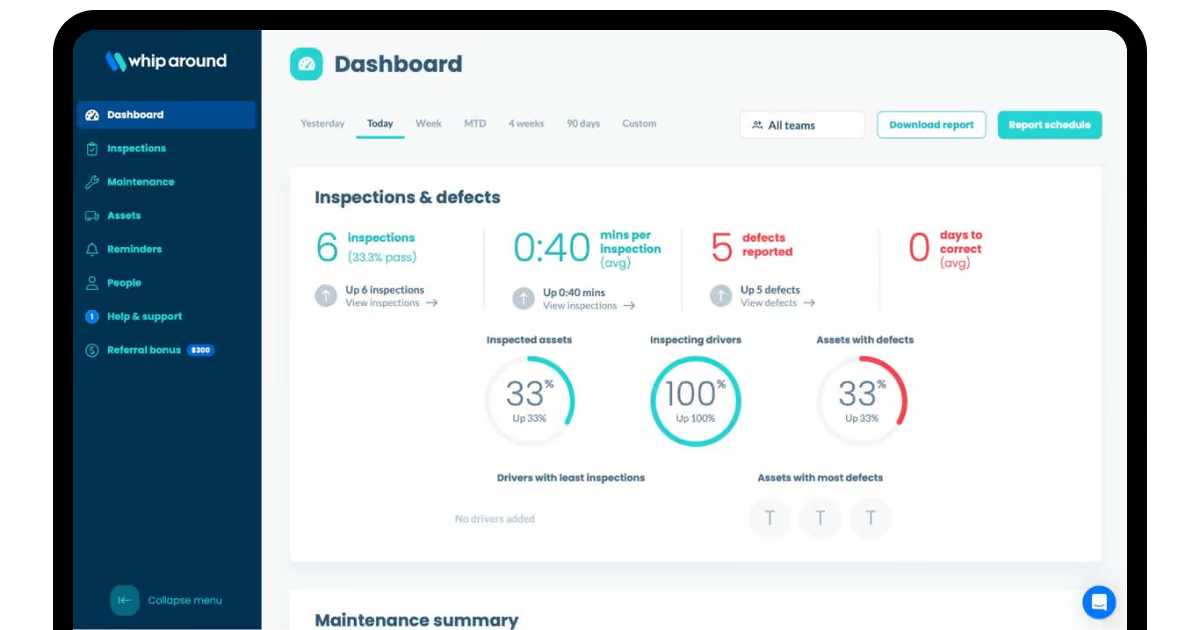
Whip Around treats inspections as the front door to maintenance. We tested its driver-facing app across a two-week pilot. Defects logged on a phone became work orders instantly. No paperwork sat in a glove box overnight.
The catch: Whip Around isn't a full CMMS on its own. Complex parts inventory and forecasting need a separate module. For fleets whose main gap is inspection compliance, that trade works fine.
Best for: fleets prioritizing DVIR compliance and defect capture.
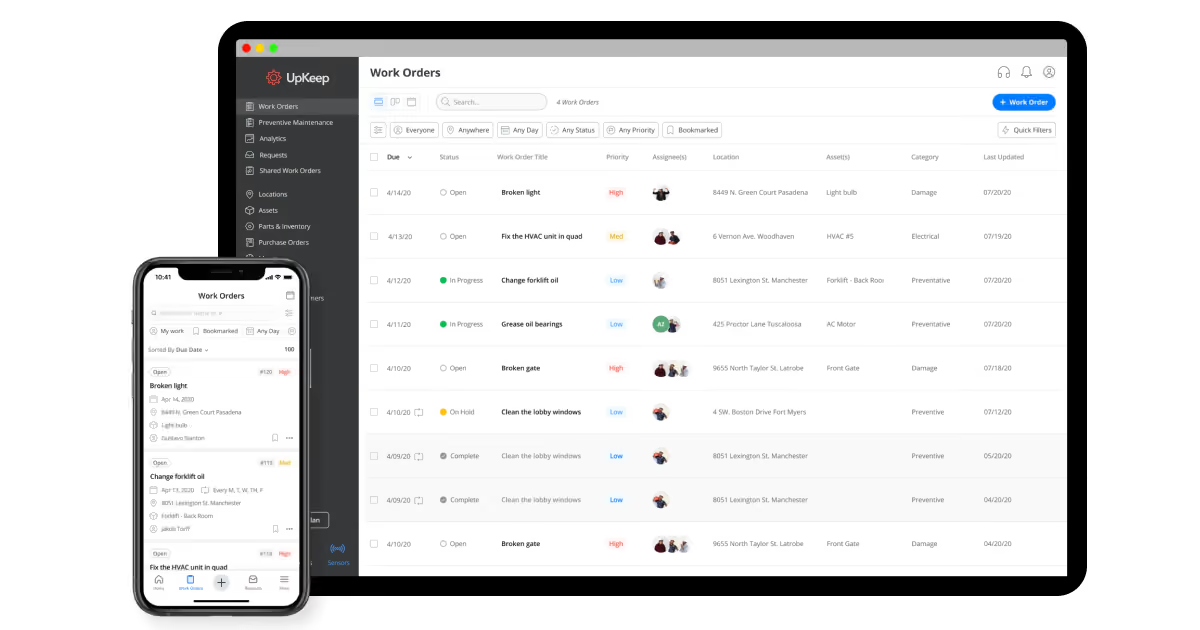
UpKeep brings factory-floor CMMS logic into fleet contexts. We tested how it works for fleet vehicle maintenance tracking with the order flow against a mixed shop and yard. Barcode scanning cut parts lookup time noticeably during our trial. Technicians moved between tasks without leaving the app.
UpKeep wasn't built fleet-first, though. Some workflows still feel borrowed from facilities maintenance. Fleets with dedicated shop staff will adapt fastest.
Best for: mixed-asset operations with an in-house maintenance team.
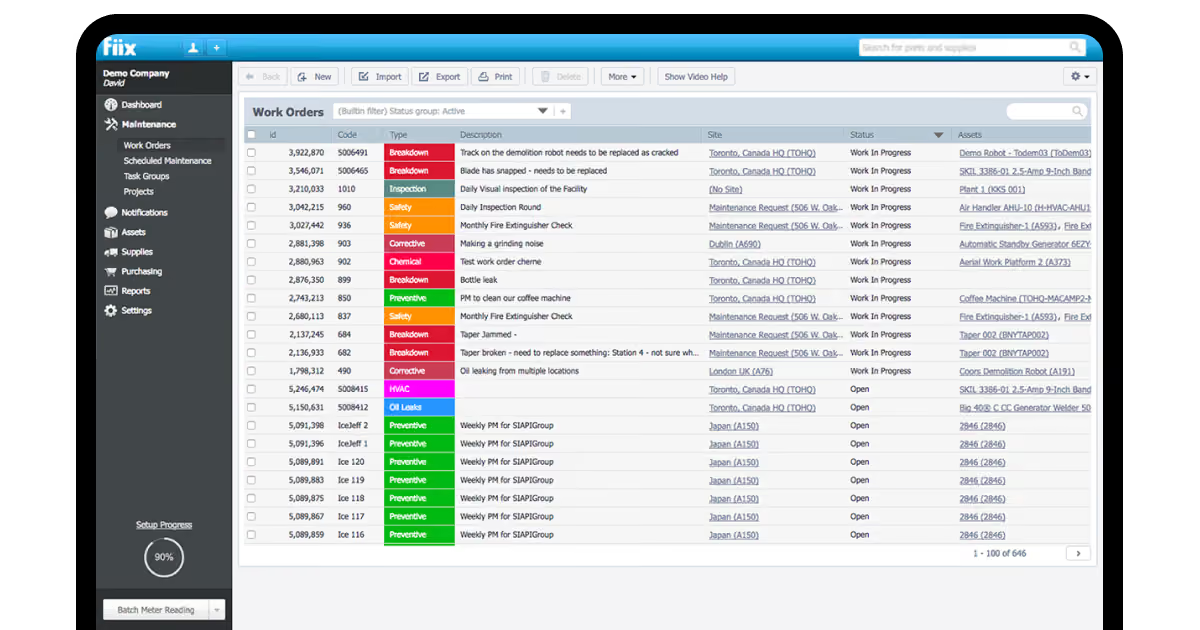
Fiix competes directly with UpKeep on software for fleet vehicle maintenance depth. We tested its usage-based scheduling against seasonal equipment cycles. Forecasting flagged a parts shortage two weeks ahead of need. That's real lead time for procurement teams.
Setup took longer than Whip Around's during our onboarding test. Fiix rewards fleets willing to invest configuration time upfront. Quick, no-frills rollouts fit better elsewhere on this list.
Best for: mid-size shops running structured preventive programs.
eMaint targets fleets under heavy compliance pressure. We tested condition-based triggers against simulated inspection thresholds. Alerts fired correctly before a compliance window closed. Audit trails stayed intact throughout our review.
Pricing requires a custom quote, with no public tier shown. That opacity makes budget planning harder upfront. Enterprises with dedicated procurement teams will handle that better.
Best for: regulated fleets needing detailed audit documentation.
Motive keeps maintenance secondary to its ELD-first design. We tested basic service reminders against a small delivery fleet. Reminders worked, but lacked forecasting or parts tracking depth. This fits fleets that just need a reliable baseline.
We hit API rate limits building a custom integration. Samsara didn't impose the same limits at similar volume. That's the tradeoff for Motive's lower price point. And a solid one - vehicle fleet maintenance is way too often the process with an unexpected amount of tokens needed.
Best for: owner-operators wanting simple, low-cost reminders.
AssetWorks anchors the enterprise end of fleet maintenance providers. We tested its configuration depth against a large mixed-agency fleet. Custom workflows matched government procurement rules without workarounds. That flexibility took longer to configure than smaller platforms.
Implementation runs on a project basis, not a quick signup. Expect months, not days, before full rollout. Large fleets with dedicated IT will justify that timeline.
Best for: government and enterprise fleets needing deep customization.
RTA focuses on municipal and utility fleet operations specifically. We tested its costing module against mixed vehicle and equipment types. Cost-per-unit reporting stayed accurate across different asset categories. That granularity helped justify budget requests in our review.
Mobile inspection features lagged behind Whip Around's polish, though. Field crews may need a supplementary tool for defect capture.
Best for: public works and utility fleets tracking detailed costs.
Auto Integrate, built on Chevin's FleetWave platform, suits multi-depot commercial fleets. We tested its workshop integration against a simulated parts procurement scenario. Purchase orders generated automatically once stock hit a threshold. That closed a gap we saw firsthand on Driven Connect's vehicle management module.
Configuration demands real setup time, similar to the AssetWorks fleet maintenance tracker. Fleets without dedicated admin staff may find that heavy.
Best for: commercial fleets running multiple depots and procurement chains.
Chasing a "best overall" label is a losing game. If you're a heavy-duty freight haul with 500 reefers, you need a completely different tool than a local plumbing franchise with 15 sprinter vans. Success comes down to how a tool actually fits your daily workflow, not how many checkboxes it ticks on the functionality side.
How we chose the top vehicle maintenance software for this list
Sixteen years of building transport tech taught us one non-negotiable truth. The best vehicle fleet maintenance software is the one technicians actually trust at midnight, mid-repair. Your best option is simply the tool a tired mechanic uses at 2:00 AM while staring at a broken axle.
We didn't just copy-paste feature checklists from sales brochures to make this list. Instead, we graded these platforms against real pressure points. The ones like those that stress-tested our client systems in real-world conditions. Below, we break down each criterion, with a tip for testing it yourself.
1. Data fragmentation tolerance. Fleets rarely run one clean data source. Odometer readings, sensor faults, and paper logs rarely match up cleanly. Feed the tool mismatched formats before you trust its dashboard.
Tip: test with a vehicle that has three overlapping service histories.
2. Integration cost with existing systems. A fleet maintenance company already runs a TMS, an ERP, maybe a telematics feed. Ask exactly how many weeks of middleware a new tool needs. Vague answers here predict a rollout that stalls.
Tip: get that number in writing before signing anything.
3. Technician-level usability. A tool a developer must configure daily won't survive real shop floors. The best fleet maintenance software for trucking puts control in a technician's hands.
Tip: watch someone with zero technical background try to close a work order.
4. Scalability without added headcount. A fleet management process built for ten vehicles often breaks at 200. We tested whether each tool held its logic steady as fleet size grew.
Tip: ask for a reference client at double your current fleet size.
5. Compliance depth out of the box. Regulated fleets can't bolt on audit trails later. We checked whether each tool tracked inspection history natively, or needed a workaround.
Tip: request a sample compliance report before your trial ends, not after.
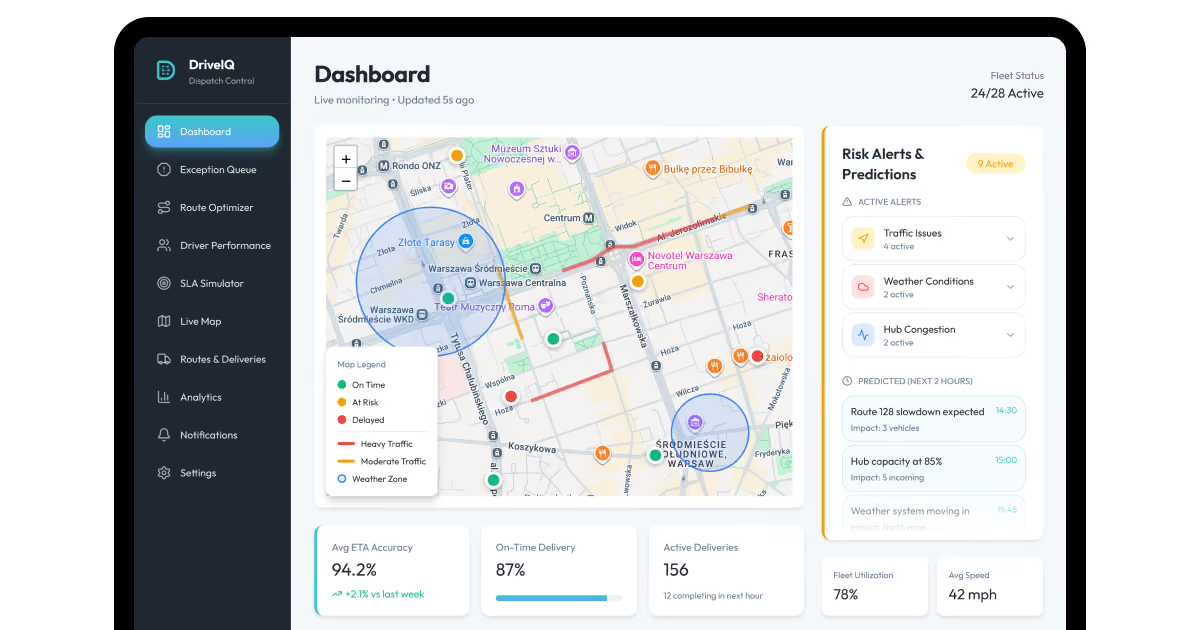
6. Alert-to-action speed. A fault code means nothing if it sits in a queue. We measured how fast an alert became an assigned work order. On DriveIQ, clustering cut diagnosis time from twelve minutes to under three. That same principle applies directly to maintenance alert triage.
Run any candidate through these six filters before you commit. The fleet maintenance tool that survives fragmented data, cheap integration, technician adoption, fast triage, real scale, and native compliance is worth the budget. Everything else just looks complete in a demo.
We saw this exact pattern play out on our DriveIQ project. Dispatchers there needed alerts that clustered by root cause, not raw noise. That same filter, applied to maintenance software, separates a tool that gets used from one that gets ignored by week two.
What should you know about fleet maintenance software?
Now that we mapped the top vehicle fleet maintenance management tools for you to choose from, let’s map the playing field. From COAX Software’s practical experience, let’s look at what this software does, where it falls short, and how it fits into a real, grease-stained garage. Let's start with the absolute basics.
What is fleet maintenance software?
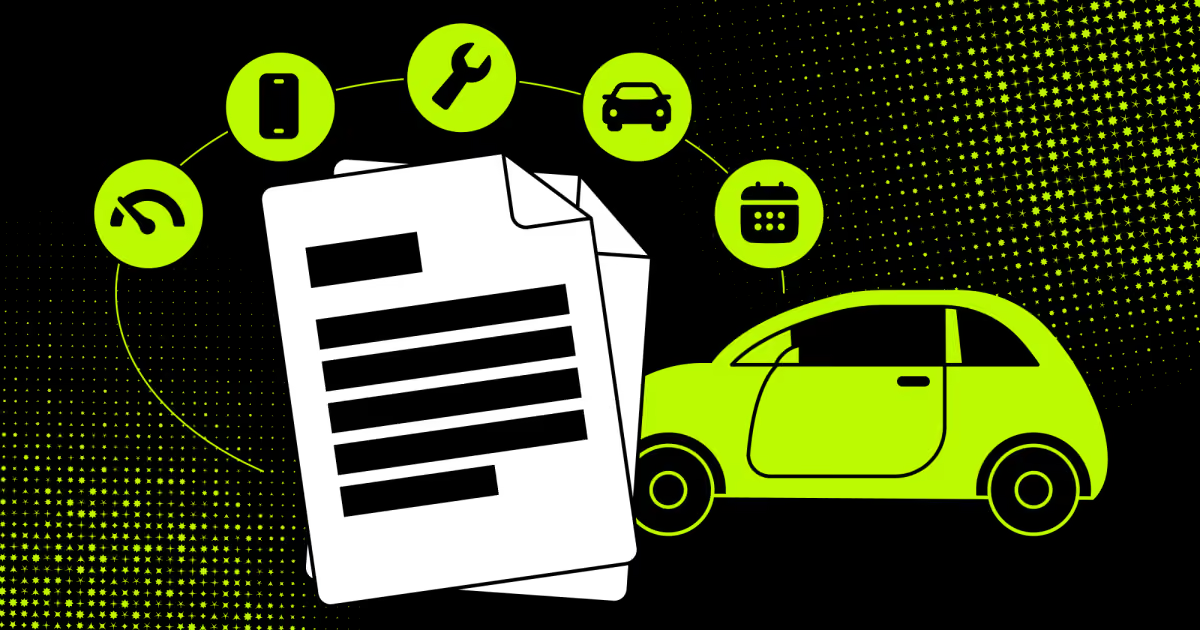
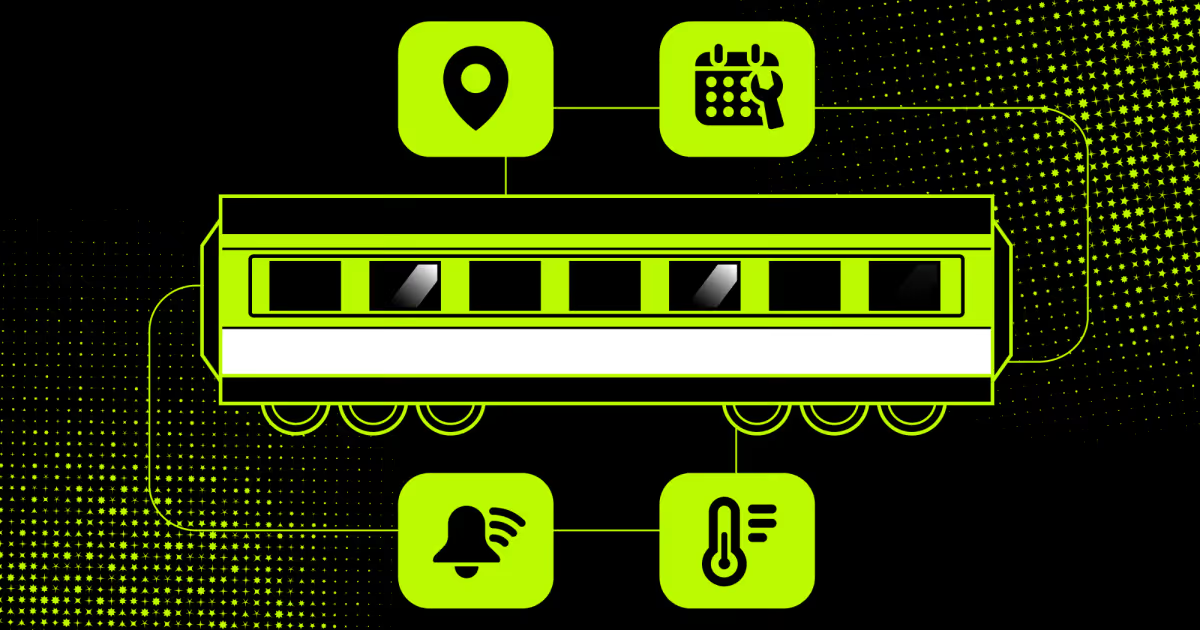
Fleet vehicle maintenance software tracks every vehicle's service life in one system. It replaces paper logs and scattered spreadsheets entirely. The platform stores service history, upcoming tasks, and compliance records together.
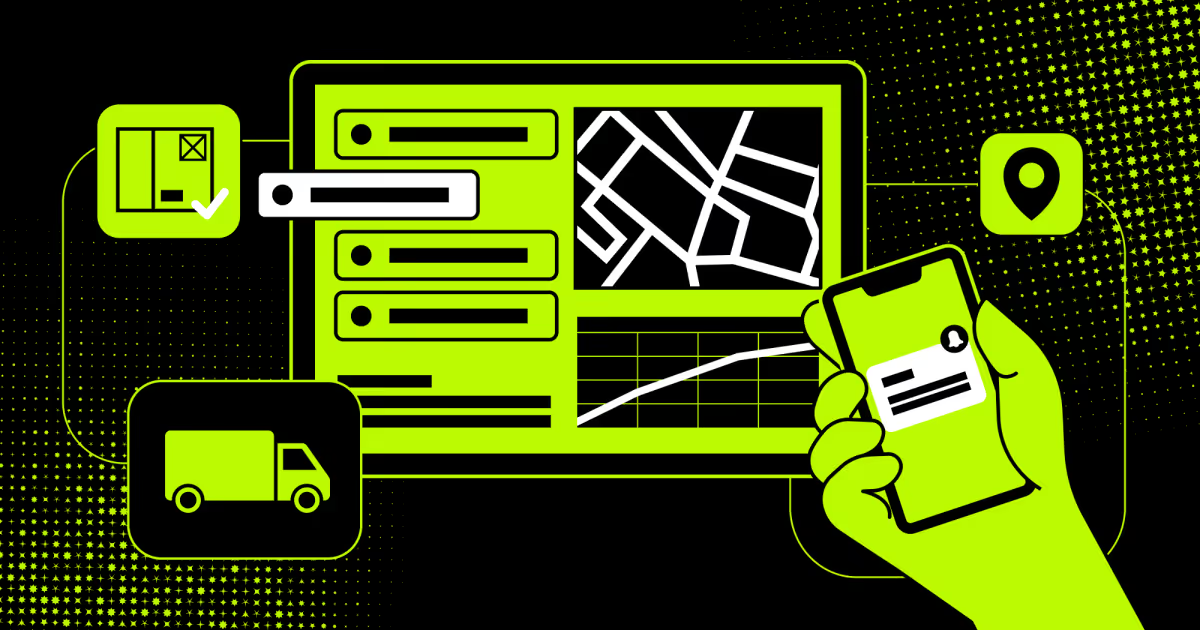
At its core, this software is your digital control tower. It pulls everything (DVIRs, oil change histories, parts inventory, and warranty claims) out of gloveboxes and dusty filing cabinets. It drops them into one dashboard.
No more chasing drivers for paper logs. No more guessing if Truck 4 is actually safe to haul. You get a single, honest view of your entire fleet's health, in real time. That's the whole point.
How does fleet maintenance software work?
The fleet management process runs through five connected stages. Each stage feeds data into the next one. Skip one, and the whole chain weakens.
Vehicle data intake.
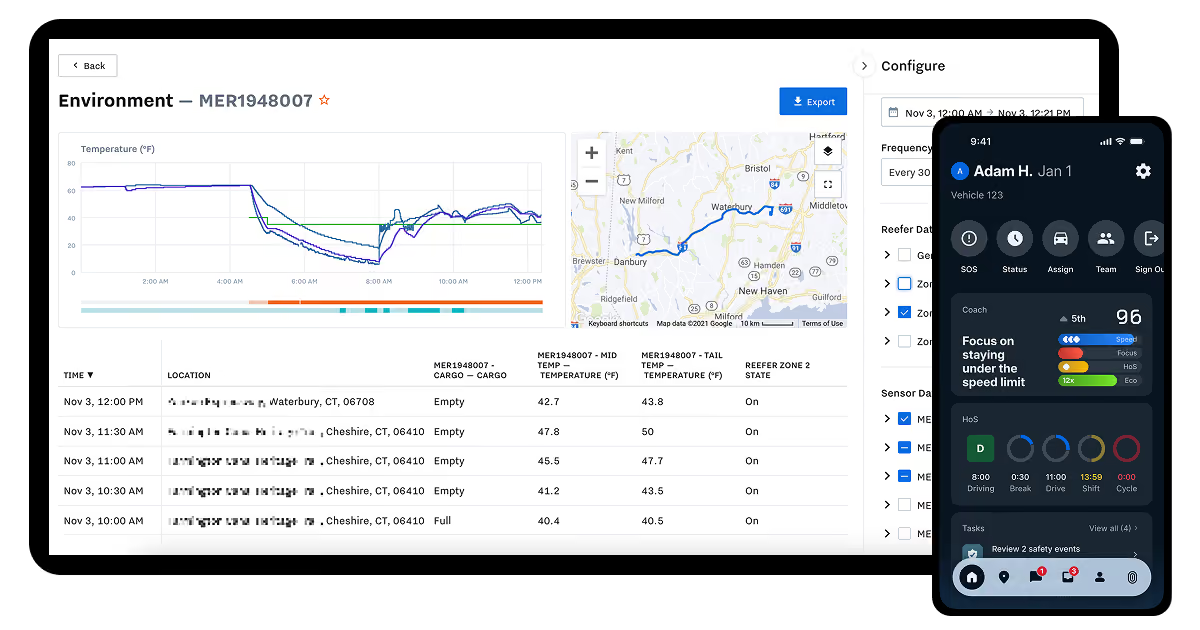
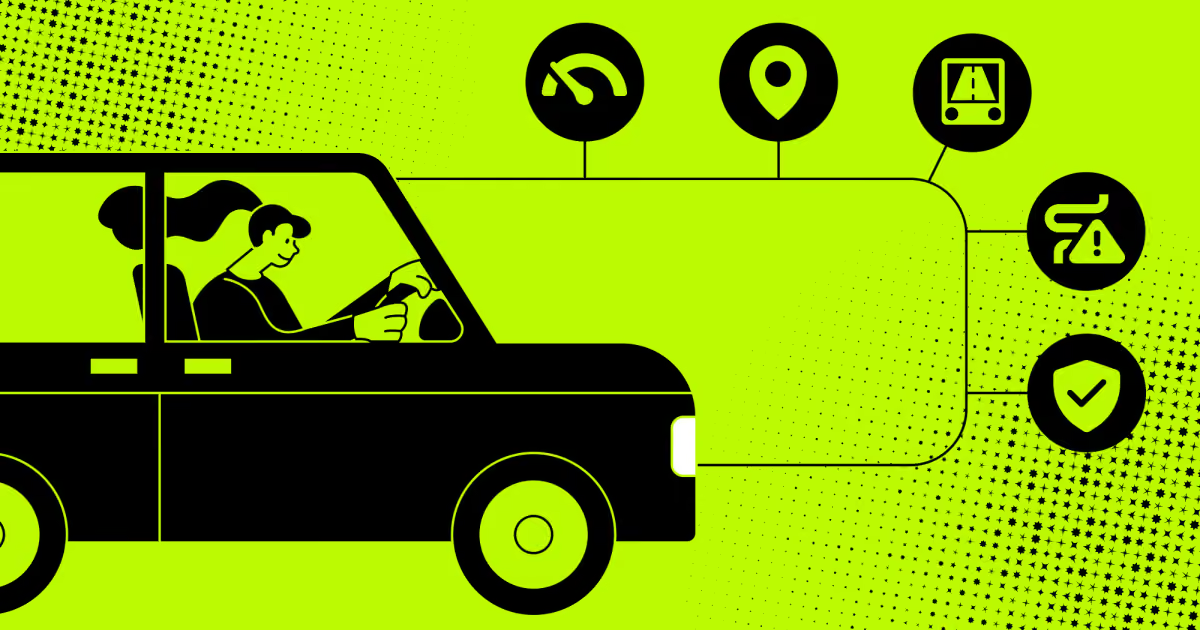
Sensors or manual entry capture mileage, engine hours, and fault codes. A telematics module plugged into the diagnostic port streams this automatically. It reads engine temperature, brake wear, and battery voltage too. No technician has to walk the yard with a clipboard. Data arrives whether the truck is parked or moving.
Schedule generation.
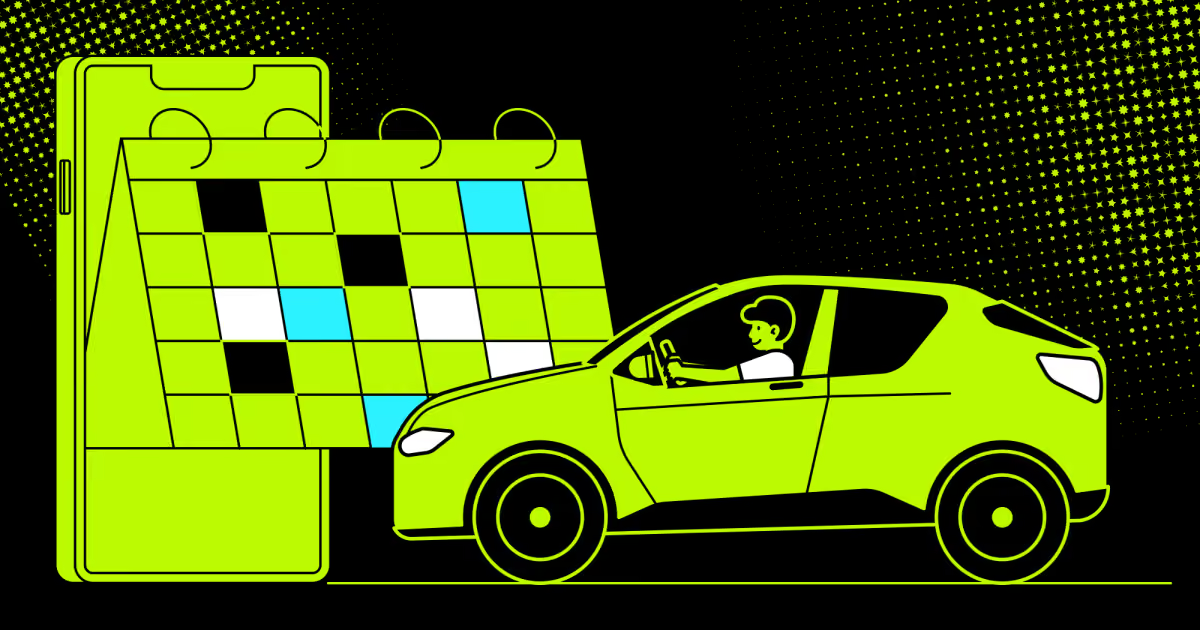
The system builds service dates from manufacturer specs and real usage. This is where fleet preventive maintenance software earns its name. It triggers a service before a part fails, not after. A truck driven hard in summer heat gets flagged sooner than one sitting idle. The schedule adjusts to actual wear, not a fixed calendar.
Field inspections.
Drivers complete digital checklists from a phone or tablet. A failed item creates an issue instantly, no paper form involved. Picture a driver at a loading dock, tapping through a pre-trip check. A worn tire gets flagged before the truck leaves the lot. That flag routes straight to dispatch, not a folder nobody opens.
Task assignment.
Flagged issues and scheduled services become work orders. Each order tracks parts, labor hours, and total cost. A shop manager sees exactly which technician holds which repair. Parts get reserved automatically, so nobody discovers a missing part mid-job. The whole repair timeline stays visible from assignment to sign-off.
Compliance logging.
Every service and inspection gets stored permanently. That record becomes proof during an audit, not a scramble. An inspector asking for last quarter's brake service gets an answer in seconds. No searching through file cabinets or emailing a shop for old invoices. The record simply exists within your vehicle maintenance software, timestamped and complete.
We saw this exact data loop transform DriveIQ. Risk detection clustered root causes automatically there. Diagnosis time dropped from twelve minutes to under three. Dispatchers stopped chasing scattered alerts across separate screens. The same logic applies here. A critical fault code, a failed inspection item, and a mileage trigger all need to funnel into one clean, actionable alert.
What can fleet maintenance solutions do?
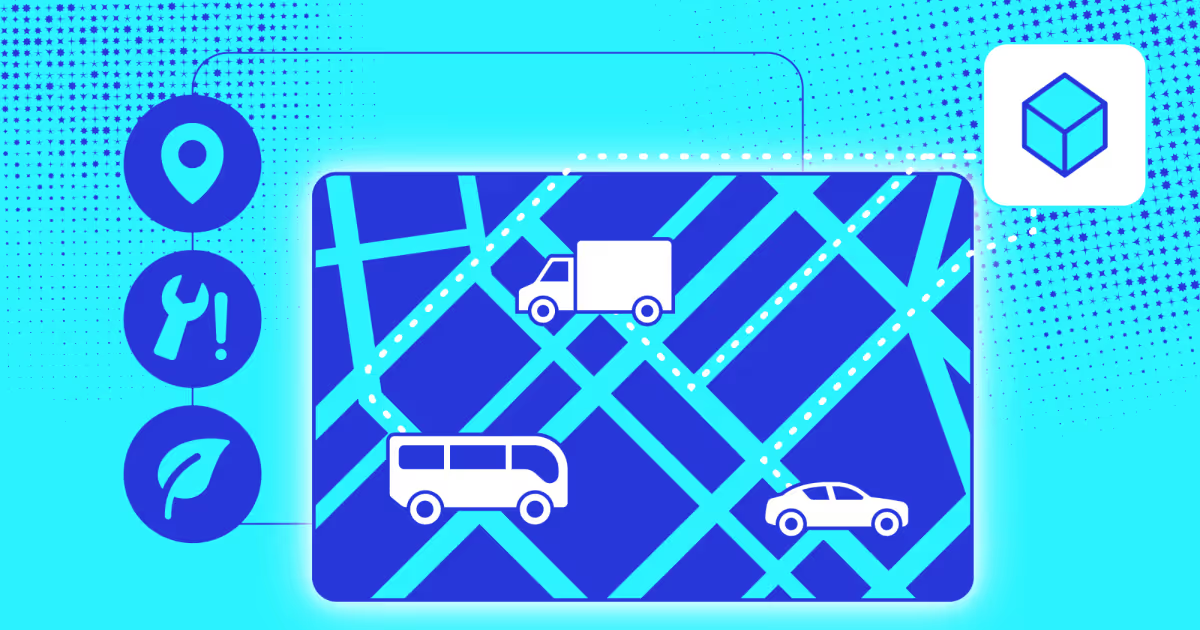
Good vehicle maintenance systems do more than log repairs. It predicts failures before they cost real money. It assigns work orders without a phone call. It tracks parts inventory so a shop never stalls waiting on stock. It builds compliance records automatically, without a filing cabinet.
You can understand it better when you picture a mechanic staring at a glowing check-engine light.
Without software, that amber icon is just an expensive guessing game. An hour of billable time burned just trying to pinpoint the fault. But with the right system, the code instantly pulls up the truck's entire repair history and known failure patterns. The wrench hits the bolt immediately because they already know what to look for.
Do that once, you save an afternoon. Multiply it across fifty trucks, and you've bought back your entire week.
The importance of fleet maintenance shows up clearest in downtime numbers. A truck sidelined
by a preventable failure costs far more than the repair itself. A blown gasket on the highway means a tow bill, a missed delivery, and an angry customer waiting at the dock. None of that shows up in the repair invoice itself. The real cost lives in what didn't happen on schedule.
On SyncMatix, real-time maintenance alerts cut response time to route events by 25%. Fleet managers stopped hearing about problems secondhand, through a phone call from a stranded driver. They saw the alert the moment a sensor flagged it. That's the direct value of catching a problem early, not late. The gap between "logged" and "fixed" shrinks from days to minutes.
What features to look for in fleet maintenance software?
A strong fleet maintenance system covers five core capabilities well. From our experience, bloated feature lists and flashy add-ons only add extra complexity. But miss one of these, and the rest lose their value fast.
Automated PM scheduling triggers service based on mileage or engine hours. The system watches usage in the background, constantly. A truck running double shifts gets flagged sooner than one parked most days. Nobody has to remember a service date manually. The schedule adjusts itself as driving patterns change.
Digital DVIR forms let drivers flag issues instantly from a phone. A cracked mirror or a soft tire gets logged at the curb, not after the shift ends. The form takes seconds, not the ten minutes a paper checklist used to cost. That speed matters most on a cold morning, with a route waiting.
Work order tracking connects flagged problems to assigned technicians and parts. A shop manager sees who's handling what, in real time. No two technicians duplicate the same repair by accident. Labor hours and part costs sit on one ticket, not three separate systems.
Parts inventory management prevents a shop from stalling on a missing component. A technician mid-repair shouldn't discover an empty parts bin. The system reserves stock the moment a work order opens. That single step avoids a truck sitting idle for a part that should've been ordered days earlier.
Route optimization reduces wear from inefficient routing, not just reactive repairs. A truck running unnecessary miles wears brakes and tires faster than one on an efficient path. Cutting those miles cuts maintenance frequency too, not just fuel spend.
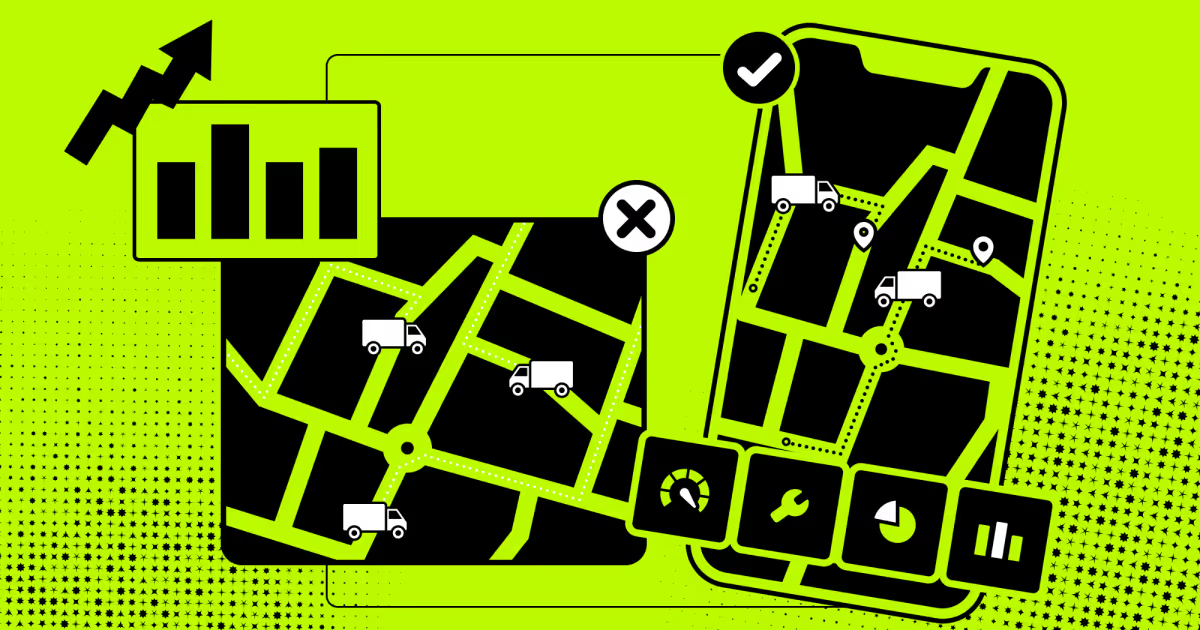
A solid fleet maintenance management system ties all five together in one interface. On SyncMatix, we built exactly that kind of unified dashboard. Once managers could see fuel, routing, and maintenance data side-by-side, fuel waste dropped by 18%. Fragmented tools never would've caught that pattern. A fuel spike on one route, paired with rising brake wear on the same trucks, only makes sense side by side.
What are the challenges of vehicle maintenance tracking software?
Vehicle maintenance log software often hits real friction during rollout, from what we’ve implemented. Getting a new system up and running is rarely a smooth ride. No matter which vendor’s logo is on the contract, almost every rollout hits the same five roadblocks.
Data fragmentation breaks more rollouts than any other issue. Data from multiple vendors rarely arrives in one clean format. One telematics provider timestamps in UTC, another in local time. A system that can't reconcile that gap reports numbers nobody trusts.
Scale mismatch punishes fleets on both ends. A fleet maintenance platform built for 500 vehicles can overwhelm a 20-vehicle shop. Too many fields, too many settings, too much unused complexity. The reverse happens too: a tool built for small fleets buckles once volume triples.
Regulatory variance complicates anything crossing state or country lines. Remote fleet management across states adds compliance rules that shift by region. A brake inspection interval in one state doesn't match another. Software built around a single ruleset breaks the moment a fleet expands.
Workflow mismatch shows up quietly, then compounds. Most off-the-shelf tools assume a workflow that doesn't match yours exactly. A shop that assigns technicians by specialty, not availability, fights the software daily. Small mismatches like this pile into real resistance from staff.
Integration debt hits teams who already run a TMS or ERP. A new maintenance tool that can't talk to existing systems creates double entry. Someone ends up re-typing the same data twice, which defeats the entire purpose.
That gap is where custom software for fleet maintenance earns its cost. Picture a dispatcher at 2 a.m., watching three vendors' timestamps disagree on one truck's location. No off-the-shelf dashboard resolves that instantly. It takes a system built around your actual data, not a generic template.
At COAX Software, we've spent sixteen years closing exactly that gap, one client platform at a time. We cover the full cycle, from a single missing feature to a complete platform. Need an API integration with your existing TMS? We build it. Need a feature no vendor offers yet? We develop it from scratch.
Our team holds ISO 9001 and ISO 27001 certification, so security isn't a bonus we sell but the non-negotiable basis. Whether your fleet needs one new module or an entire vehicle fleet maintenance management software built from zero, we've done both, and we've done it under audit-grade security standards from day one.
Bonus: fleet maintenance checklist
"Every fleet we've built for treats maintenance as data, not paperwork. The moment a shop tracks parts, labor, and inspections in one place, patterns show up that spreadsheets hide completely. We saw that shift firsthand building SyncMatix's alert routing," says Orest Falchuk, Head of Engineering at COAX Software.
We didn't write this fleet vehicle maintenance checklist from theory. It comes from real client rollouts, real failures, and real fixes. Sixteen years of building transport platforms taught us where the cycle actually breaks. Below, each stage covers what to do and what tech makes it work.
Vehicle data intake.
Connect every asset to a live data feed first. Use telematics devices plugged into the OBD port directly. GPS modules stream mileage, engine hours, and fault codes automatically. For instance, oin SyncMatix, we unified three separate hardware vendors into one feed. That single step ended manual mileage logging once and for all.
Preventive schedule setup.
Build service intervals from manufacturer specs and real usage data. Don't default to fixed calendar dates alone. A truck running double shifts needs shorter intervals than one parked most days. With the right vehicle maintenance management, you get usage-based triggers, not blanket schedules with no unnecessary shop visits.
Digital inspection rollout.
Replace paper DVIRs with mobile checklist forms immediately. Drivers complete these from a phone before every shift. A failed brake check should generate a work order instantly, not after a shift ends. That single change removes hours of lost paperwork weekly.
Work order automation.
Route flagged issues straight to assigned technicians, not a shared inbox. Track parts, labor hours, and total cost on one ticket. This is where fleet maintenance costs become visible instead of buried across invoices. A shop manager should see every open repair on one screen.
Parts inventory sync.
Tie inventory levels to work order creation directly. Reserve parts the moment a repair opens, automatically. A technician mid-job should never discover an empty bin. That single sync prevents the most common cause of shop delays.
Real-time alert routing.
Route fault codes and inspection flags by severity and role. A critical brake alert should reach a fleet manager immediately. A routine oil reminder can wait for the next shift review. Clustering alerts by root cause, not raw volume, cuts diagnosis time sharply.
Compliance record automation.
Store every service, inspection, and part replacement permanently. Build this into daily workflow, not a quarterly cleanup task. An auditor asking for last month's brake service should get an answer in seconds. Fleet maintenance tracking exists exactly for this moment.
Cost and TCO reporting.
Track cost per mile at the individual vehicle level, not fleet-wide averages. A fleet average can hide two trucks driving costs up. Dashboards should flag a rising CPM trend before it becomes a pattern. This is core fleet maintenance tips territory: catch drift early, not quarterly.
Route and utilization review.
Pair maintenance data with route and fuel data side by side. A truck running inefficient routes wears parts faster than one on optimized paths. On SyncMatix, that pairing cut fuel waste by 18% once managers saw both together.
Scalable rollout planning.
Start with the module solving your current bottleneck, not the full suite. Fleet maintenance software for small business rarely needs enterprise-scale complexity on day one. Add inventory forecasting or advanced analytics only once the basics run smoothly. This is where good fleet management solutions avoid overbuilding early.
This cycle covers the operational core of any online vehicle maintenance software. You don't need every stage running perfectly on day one. You need the bottleneck solved first, built so the next stage plugs in cleanly.
Plenty of vendors sell a maintenance platform off the shelf. Fewer can adapt it to a fleet that doesn't match the demo. Fleet management software development that actually changes outcomes takes engineers who've solved your exact integration problem before.
At COAX, we build in AI-driven diagnostics, predictive analytics, and automated alert routing directly into the platform core. We deliver web dashboards for fleet managers and mobile apps for drivers and technicians alike. Every stakeholder gets the interface built for their actual job, not a generic view. That's the difference between vehicle maintenance tracking software that gets adopted and one that gets ignored by week two.
FAQ
What is fleet maintenance management supposed to look like once a fleet passes 50 vehicles?
Past 50 vehicles, spreadsheets stop working entirely. You need one system tracking every service, part, and inspection together. On SyncMatix, we consolidated five disconnected tools into a single dashboard once the client scaled past that threshold. Manual coordination simply can't keep pace at that size. The system has to carry the memory, not a person.
What is fleet maintenance, in practice, versus what most software marketing implies?
Marketing implies a dashboard fixes everything alone. In practice, it's a cycle: inspect, schedule, repair, log, repeat. Software only works if drivers actually complete inspections daily. On Driven Connect, adoption came from making the process faster than paper, not from features alone. The software supports the cycle. It doesn't replace the discipline driving it forward.
How do fleet maintenance programs actually reduce breakdown rates, not just paperwork?
Programs work by shifting reactive repairs into planned ones. Each 10% shift from reactive to planned maintenance cuts costs 6-8%, per ATRI data. On DriveIQ, predictive alerts flagged delivery risks with 89% accuracy before failures occurred. That same early-warning logic applies directly to breakdowns. A program only reduces failures when alerts arrive before the part actually fails.
What separates fleet maintenance management software that works from software that gets abandoned?
Abandoned software usually demanded too much manual setup upfront. Adopted software fits the workflow technicians already use. On maintenance rollouts we've reviewed, barcode scanning cut parts lookup time without retraining staff. If technicians resist logging in daily, the tool isn't solving their actual problem. Adoption, not feature count, is the real signal worth tracking closely.
How specific should a fleet maintenance plan get before it actually prevents downtime?
Vague plans fail the moment usage varies across vehicles. A working plan sets intervals by mileage and engine hours, not a fixed calendar. On SyncMatix, usage-based scheduling caught wear patterns generic calendars missed entirely. The plan needs vehicle-level granularity, not fleet-wide averages. Averages hide the two trucks quietly driving your repair costs upward.
Can fleet maintenance repair costs be predicted before a part actually breaks?
Yes, if the system tracks usage trends, not just service dates. Rising cost-per-mile on a specific truck usually signals developing mechanical issues early. On DriveIQ, predictive models flagged fatigue and mechanical risk before violations occurred. The same logic applies to repair costs directly. Track individual vehicles, not fleet averages, and the pattern shows up weeks ahead.
















































































_.avif)








%2520explained.avif)

We are interested in your opinion