



















































Travel software discovery phase
Most over-budget travel projects show warning signs in week one: an unstable supplier API, an unwritten refund policy, or a forgotten payment plan. The discovery phase of a travel software project is where those surprises surface on a whiteboard, while changing course still costs an afternoon. COAX helps you find them, settle them, and walk away with a plan you can build from.
Industry leaders we work with



Components of our travel software discovery phase services
Interviews and workflow shadowing
We talk to owners, sales staff, operations teams, and a few travelers, then watch how work actually gets done today. Paper notebooks, shared spreadsheets, and late-night WhatsApp threads all count as requirements.
Supplier and payment API checks
Before anyone promises a feature, we make test calls against the APIs you’ll depend on, such as Nezasa, Katanox, HyperGuest, or Stripe. Holds, cancellations, rate limits, and data gaps show up in sandbox, long before they can delay a launch.
A catalog of business rules
Pricing tiers, refund windows, deposits, installments, commissions, and taxes get written down in plain language. Engineers, finance, and sales all agree on the same rules before a line of code depends on them.
Roles and permissions map
Travelers, advisors, suppliers, drivers, and admins each need different screens and rights. We map who can see, change, and approve what, so access questions don’t come up halfway through the build.
Clickable prototype and style guide
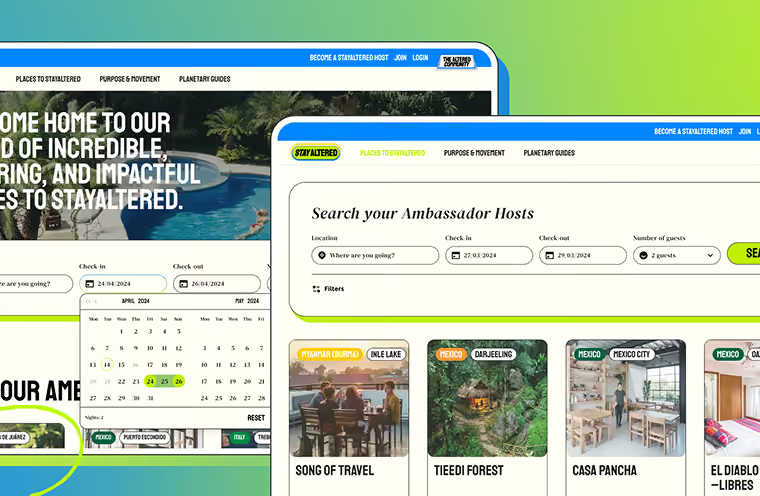
The main journeys become a Figma prototype you can click through and put in front of real users. A starter style guide with colors, type, and spacing gives designers and developers a shared base.
Architecture blueprint
Data model, integration diagram, and hosting approach are drawn out and explained. Your future team knows how the pieces fit before the first sprint.
Backlog and specification
Every feature turns into user stories with acceptance criteria, organized in Jira and documented in Confluence. Development can start the day after discovery ends.
Review of an existing codebase
If you already have a product, we inspect its code, database, and integrations. You learn what’s worth keeping, what needs fixing, and what a takeover would involve.
Agree on the goal
We start with what success looks like for your business.
Target users, revenue model, and hard deadlines get pinned down.
Everyone involved knows what discovery has to answer.
Deliverable: goals brief, stakeholder list
Watch the work
Interviews and site visits show how things run today.
Manual steps, workarounds, and recurring complaints are recorded.
Patterns turn into the first feature ideas.
Deliverable: current-state workflow map
Test the hard parts
Supplier and payment APIs get real test calls.
Risky rules, like refunds and installments, are worked through on paper.
Open questions are answered or flagged with a plan.
Deliverable: feasibility notes, risk list
Sketch and click
Key journeys become a clickable prototype.
Real users and your team try it and react.
Confusing steps get redesigned on the spot.
Deliverable: Figma prototype, user feedback summary
Draw the blueprint
Architecture, data model, and integrations are documented.
Features become user stories with clear acceptance criteria.
Priorities are set together with you.
Deliverable: architecture blueprint, prioritized backlog
Price it and plan the build
Each phase gets an estimate, a timeline, and a team shape.
A fixed-price option is offered when scope is clear enough.
You decide how and when to start.
Deliverable: estimate, phased roadmap, proposal
What our careful scoping did for our clients
€30,000+
Saved every year after GrandBus moved ticket sales off OTAs
~99%
Route reporting accuracy once GrandBus replaced paper and Excel
40%
Profit growth at MICRM after its trip builder launched
20
Suppliers added to MICRM’s network
400+
Operators onboarded to Driven Connect’s marketplace








Why our discovery findings bring success
Why founders choose us for discovery phase in travel software development
We study how the work happens today
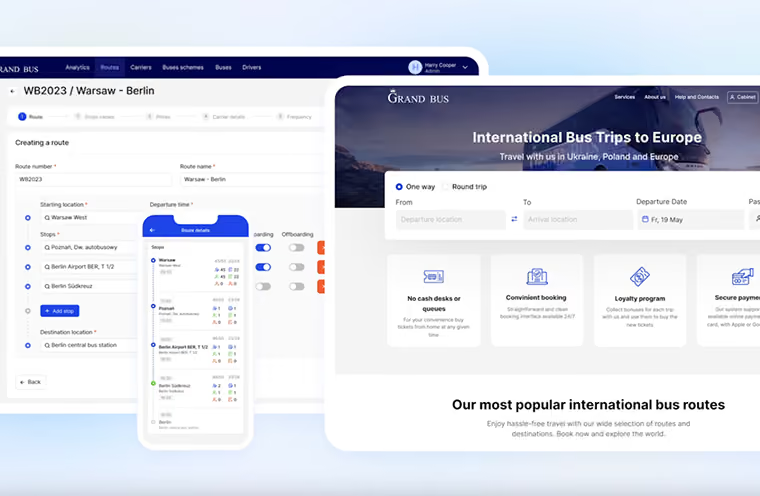
Real requirements hide in daily routines. GrandBus ran routes from paper and Excel before its platform, and route reporting now runs at about 99% accuracy.
Supplier APIs tested before anything is promised
Sandbox calls show what each API really supports. Your roadmap is built on what suppliers can deliver, with no guesses.
Tricky rules settled on paper
Hunting trips paid off over years, coach hires priced by quote, and route-level emissions and tax calculations are the kind of logic we’ve worked out with clients like Krytter and Driven Connect.
Blueprints any team can build from
Specs, diagrams, and backlogs are written for engineers who weren’t in the room. Use them with us, your in-house team, or another partner.
FAQ
COAX Software does. Our travel software discovery phase turns an idea or a messy set of requirements into a clickable prototype, a tested integration plan, a prioritized backlog, and a phased estimate. It’s run by business analysts, designers, and architects who build travel platforms.
COAX Software provides them for startups, operators, and established travel companies. We’ve run the discovery phase in travel software development for bus operators, outfitters, travel CRMs, and resale marketplaces. Every engagement ends with documents your team can build from.
COAX Software can. Our business analysts interview your team, watch current workflows, and write the business rules and user stories that development needs. Pricing, refunds, installments, roles, and supplier limits are all covered.
COAX Software does. Startups leave discovery with a clickable prototype to show investors and early users, a realistic budget, and a lean first release plan. When scope is clear enough, we can offer a fixed price for the build.
COAX Software can. We test the supplier and payment APIs your platform will need, map every role and booking rule, and break the work into estimated phases. You’ll know what the first release includes and what it costs before development starts.
Yes. The prototype, specification, architecture, and backlog are yours, and they’re written so any qualified team can pick them up. Many clients continue with us, but there’s no obligation to.
Then discovery has done its job early and cheaply. We’ll explain what blocks the original plan, whether that’s a supplier limit, a cost issue, or a missing piece, and suggest alternatives. Sometimes a smaller first version or a different supplier solves it.









What we’ll do next?
1
Contact you within 24 hours
2
Clarify your expectations, business objectives, and project requirements
3
Develop and accept a proposal
4
After that, we can start our partnership