




















































DevOps services for travel platforms
Releasing software shouldn't require blocking off an evening to watch booking dashboards or waiting for a quiet week that never comes. Our DevOps services for travel platforms turn releases into something your team barely notices. Automated tests catch problems early, infrastructure scales when a trip sells out in minutes, and alerts reach an engineer before travelers feel a thing.
Industry leaders we work with



What our DevOps services for travel platforms take off your plate
Pipelines that ship small and often
Every code change builds, tests, and deploys through GitHub Actions and Docker. New features reach a small share of travelers first, then everyone, with a one-click way back if something looks wrong.
Test gates on every build
Cypress, WebDriverIO, and Appium check web and mobile flows, Postman checks APIs, and JMeter checks load. Search, checkout, and supplier calls get tested on each commit, long before a release date.
Environments written as code
Our approach to infrastructure as code for travel systems uses Terraform or CloudFormation to define servers, networks, and permissions in files your team owns. Staging matches production, so what passes testing behaves the same way live.
Capacity that follows demand
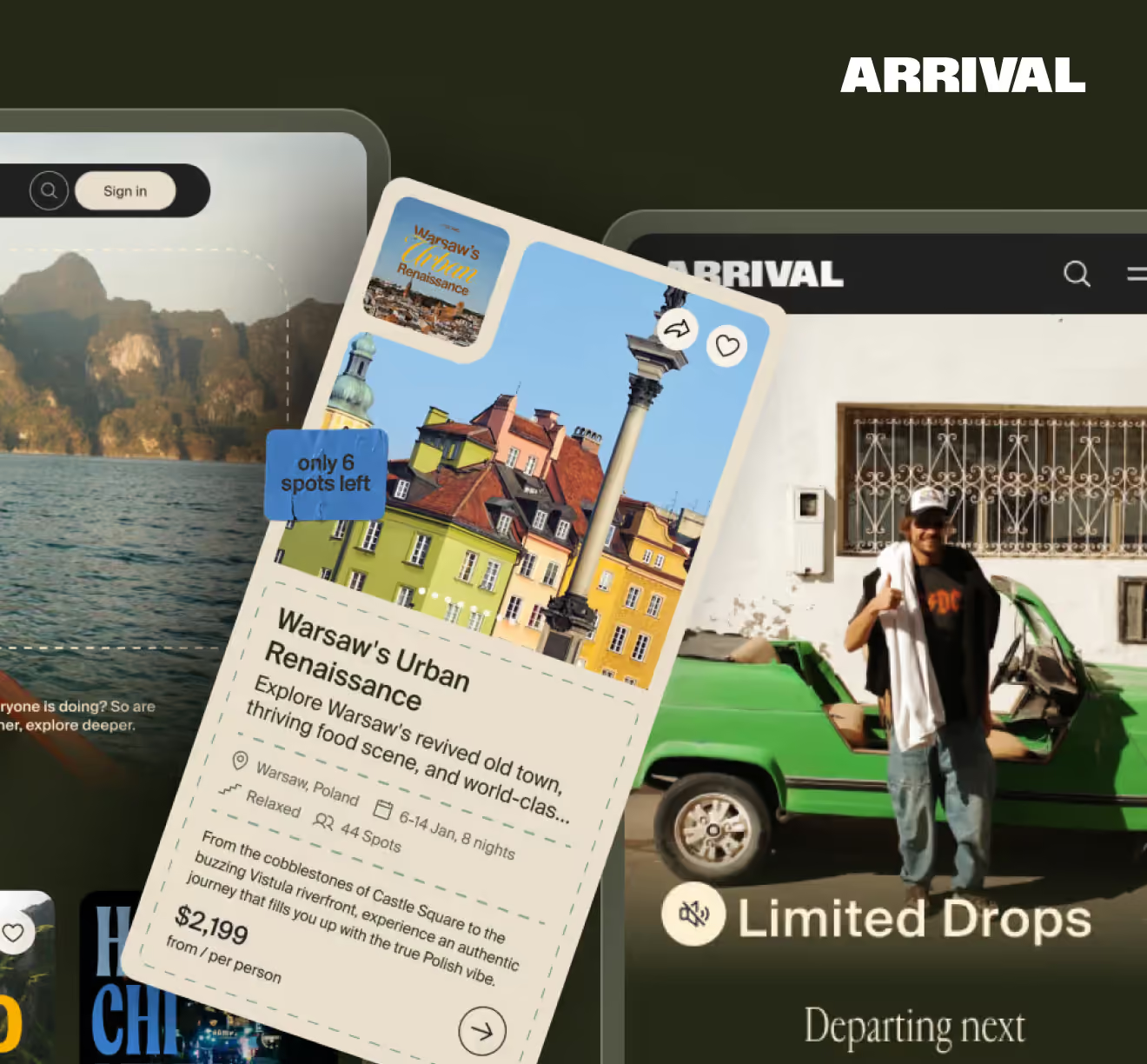
A limited trip drop or a creator post can bring a crowd within minutes. AWS ECS and Lambda add capacity as traffic climbs and release it afterward, and load tests confirm the limits before the big day.
Monitoring with a clear owner
CloudWatch dashboards, centralized logs, and alerts track response times, error rates, and supplier API health. Each alert goes to a named engineer with a runbook for what to do next.
Offline sync for field apps
Drivers and staff often work where the signal drops. We build apps that cache data locally and sync once a connection returns. DrivenBus drivers validate tickets offline with 99.7% scan accuracy.
Security patching as a routine
Dependency scans, OS patches, access reviews, and secret rotation run on a schedule. Card data stays tokenized and personal data follows GDPR, under our ISO/IEC 27001 processes.
Containers for older systems
Legacy platforms can move into Docker containers piece by piece. Each part gets its own deployments and scaling, and the rest of the system keeps running as before.
Watch a release happen
We sit in on a real deployment from start to finish.
Manual steps, waiting time, and risky moments get noted.
Nothing changes yet; we just watch closely.
Deliverable: release walkthrough, pain point list
Score the pipeline
Four numbers show where you stand.
Deploy frequency, lead time, failure rate, and recovery time are measured.
These become the baseline for everything that follows.
Deliverable: delivery metrics baseline
Codify the environments
Servers and settings move from people’s memory into code.
Staging and production are rebuilt from the same files.
Access rules and secrets get proper homes.
Deliverable: infrastructure code, environment docs
Add the safety nets
Automated tests, feature flags, and rollbacks go in.
Each release now has a way forward and a way back.
The first fully automated deploy goes out.
Deliverable: CI/CD pipeline, test suites
Rehearse the worst day
We simulate peak traffic and supplier outages on purpose.
Scaling rules and alerts are tuned against what we learn.
Your team practices the response with us.
Deliverable: load test report, incident runbooks
Keep watch and hand over
Monitoring and patching continue on a set schedule.
Your engineers get training and full access to everything.
Metrics are reviewed against the baseline each month.
Deliverable: monitoring setup, monthly delivery report
Numbers from platforms we build and run
What runs our pipelines















What backs our cloud development travel pipelines
Why travel teams trust COAX Software as their travel cloud migration company
Ready before the crowd arrives
Our AWS-certified architects size infrastructure around your busiest moments, like a trip drop, a flash sale, or the first morning of peak season. ECS and Lambda scaling rules get load-tested against those scenarios, so capacity is waiting when travelers show up.
Supplier APIs watched as closely as your own code
A booking platform is only as healthy as the connections behind it. We monitor live integrations with Nezasa, Katanox, HyperGuest, Stripe, and HubSpot, and alerts flag slow or failing supplier calls before they turn into failed bookings.
Bugs meet our tests before travelers do
Cypress, WebDriverIO, Appium, Postman, and JMeter run on every build across web, mobile, APIs, and load. Problems surface in the pipeline, where they take minutes to fix.
One certified team from setup to upkeep
The engineers who write your Terraform and GitHub Actions pipelines also run monitoring, patching, and incident response afterward.
FAQ
COAX Software does. Our DevOps services for travel platforms cover release pipelines, automated testing, auto-scaling, monitoring, and security patching. We’ve supported platforms such as ARRIVAL, Re:Plan, and DrivenBus.
We track four numbers from the first week: how often you deploy, how long a change takes to go live, how often a release fails, and how quickly you recover. You’ll see them improve against the baseline in a monthly report.
COAX Software can, from first setup to everyday operations. We use infrastructure as code for travel systems, so every server, network rule, and permission lives in files your team owns and can rebuild. Monitoring and patching continue after launch on an agreed schedule.
Look for certified cloud engineers, live travel platforms that handle real traffic peaks, and audited security processes. COAX Software brings all three: AWS and Google Cloud certifications, platforms like ARRIVAL with 500,000 visitors since launch, and ISO/IEC 27001 and ISO 9001 certification.
COAX Software does. Most of our DevOps services for travel platforms run on AWS, using ECS, Lambda, RDS, S3, and CloudWatch. Our certified Solutions Architects and SysOps Administrators design and run each setup.
Yes. We start with read-only access, map what’s running, and document it before changing anything. Risky gaps get fixed first, and the rest moves into code step by step.
Yes. Monitoring, alert response, patching, and cost reviews continue on an agreed schedule, handled by named engineers who know your system. Support hours and response times are set in the contract to match your booking peaks.








What we’ll do next?
1
Contact you within 24 hours
2
Clarify your expectations, business objectives, and project requirements
3
Develop and accept a proposal
4
After that, we can start our partnership