











































































































Predictive maintenance software development
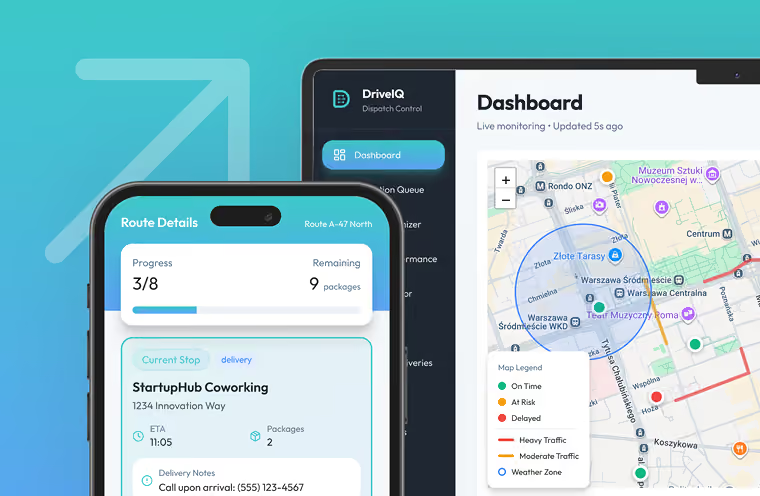
The truck that broke down on Tuesday left clues for weeks: a fault code that kept coming back, a coolant temperature creeping up, fuel use slowly drifting. Nobody connected them because the data sat in a portal, and the service plan only counted miles. COAX Software develops predictive maintenance software that reads those signals and books repairs before a breakdown. Our DriveIQ models run on 2 million GPS events a day and reached 89% accuracy after 60 days of tuning.
Industry leaders we work with



What our fleet predictive maintenance software covers
Engine and sensor data in one stream
Fault codes, temperatures, pressures, battery voltage, engine hours, and fuel use from telematics and sensors are combined into one history per vehicle or machine, including mixed-brand equipment via ISO 15143-3 where available.
A health score for every vehicle
Our vehicle predictive maintenance solution rates each vehicle and key component, such as batteries, brakes, cooling, and exhaust treatment, so managers see at a glance which units need attention.
Failure-risk models trained on your history
Models learn from your own repair records and the signals that came before each failure, then estimate which vehicles are likely to need repairs soon.
Clear rules before complex models
Known warning patterns are captured as rules first, so value starts early. Machine learning is added where patterns are too complex for rules, as on CareZapp, where ML now automates rule checking on sensor data.
Work orders created automatically
High-risk warnings become work orders with suggested parts and timing, matched to technician and bay availability.
Downtime planned around routes
Repairs are scheduled when vehicles are least needed, and dispatch sees in advance which units will be unavailable.
Technician feedback that improves predictions
Technicians confirm or reject each warning after inspection, and that feedback is used to retrain the models.
Cost and reliability reporting
Repair costs, avoided breakdowns, and failure rates per vehicle type are tracked, with costs sent to QuickBooks, Xero, or your ERP.
Gather repair history and vehicle data
Work orders, breakdown reports, and parts records are collected.
Telematics and sensor data sources are connected.
Gaps in history are identified.
Deliverable: data inventory
Link repairs to the signals before them
Each past repair is matched with the data recorded beforehand.
Records are cleaned and labeled.
The most frequent and costly failures are ranked.
Deliverable: labeled failure dataset
Start with rules and baselines
Known warning patterns become rules.
Current breakdown rates are measured as a baseline.
First alerts go to a small team for review.
Deliverable: rules engine and baseline report
Train and test models in the background
Models predict failures without triggering work orders yet.
Predictions are compared with what actually happened.
Thresholds are tuned to limit false alarms.
Deliverable: validated models
Connect to the workshop and dispatch
Accepted predictions create work orders automatically.
Planned downtime appears in dispatch.
Technician feedback is captured in the app.
Deliverable: live predictive workflows
Monitor and retrain
Accuracy, avoided breakdowns, and false alarms are tracked.
Models retrain as new repairs are logged.
New components and vehicle types are added.
Deliverable: monitoring dashboard and retraining plan
Prediction and field results from platforms we built
2 million
GPS events processed every day on DriveIQ’s data pipeline
89%
DriveIQ prediction accuracy within ±15 minutes after 60 days of tuning
18% → 7%
Late stops on DriveIQ once predictions reached dispatchers
38%
Fewer safety incidents on DriveIQ after data-based coaching
1.5 h → 42 min
Time per inspection with our Site Survey app










Safeguards around your predictions
Why fleets choose COAX Software for predictive maintenance software development
Predictions proven on a real fleet
DriveIQ’s models reached 89% accuracy after 60 days of tuning and helped cut late stops from 18% to 7%. The same discipline applies to failure prediction.
Sensor data and rules engines already built
For CareZapp, we moved a monolith to microservices, connected ambient sensors and devices, and used machine learning to automate rule checking.
Inspections that feed the models
Our Site Survey app cut inspections from 1.5 hours to 42 minutes. Fast, offline inspections give predictive models the ground truth they need.
Warnings sent to the right person
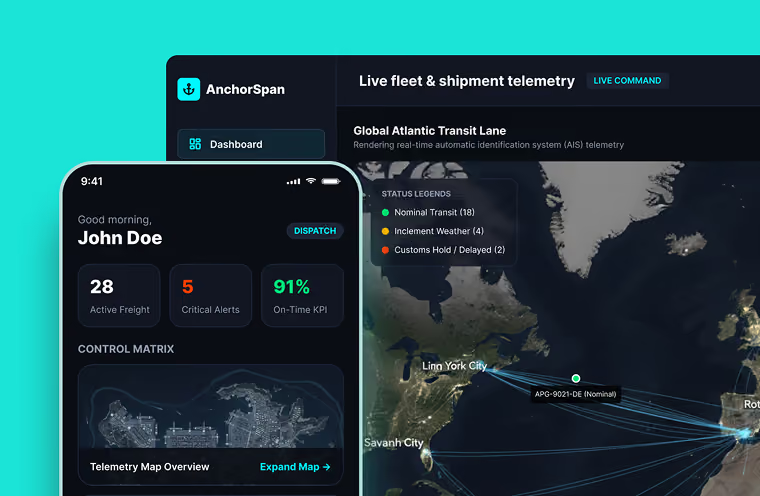
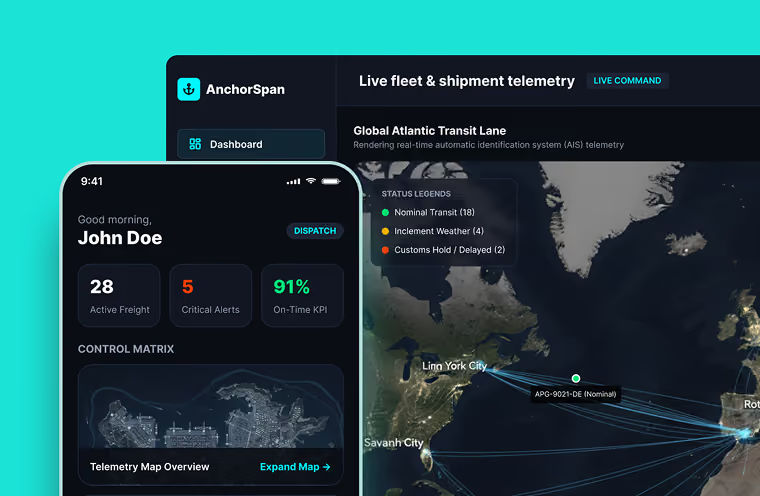
On AnchorSpan, routing alerts to the right role cut late-notice complaints by 40%. Maintenance warnings reach the right technician or manager the same way.
Frequently asked questions and answers
COAX Software does. Our predictive maintenance software development combines engine and sensor data, health scores, failure-risk models, automatic work orders, and downtime planning, built on the same data foundations as DriveIQ.
Start with failures that happen often, cost the most, and show clear warning signs, such as batteries, brakes, cooling systems, and exhaust treatment. Predictive maintenance for fleets pays back fastest when it targets problems you already fix repeatedly.
Look for a team that has run prediction models on real operations, handles telematics and sensor data reliably, and connects predictions to the workshop rather than just a dashboard. COAX Software brings DriveIQ’s prediction work and CareZapp’s sensor and rules experience, and is rated 4.9/5 on Clutch.
Usually, at least a year of repairs linked to vehicle data gives models enough examples for common failures. Rules for known warning signs can deliver value from day one. Good predictive maintenance software development starts with what you have and improves as new repairs are recorded.
COAX can. Our predictive maintenance system development starts with your repair history and telematics, adds rules for known warning signs, then introduces models, work orders, and dispatch planning step by step.
COAX Software can. Repeating fault codes, rising temperatures, voltage drops, and changes in fuel use are compared with your past failures to estimate risk per vehicle. Predictions are tested in the background first, and no model catches every failure, so alerts are tuned to balance early warnings against false alarms.
COAX Software has built transport, logistics, and data-driven software for 16 years. Relevant work includes DriveIQ’s predictive models, CareZapp’s sensor platform and rules engine, Site Survey’s inspection app, and AnchorSpan’s alert routing.
COAX Software has published closely related cases: DriveIQ’s models reached 89% accuracy and helped cut late stops from 18% to 7%, and Site Survey cut inspections from 1.5 hours to 42 minutes. We haven’t yet published a predictive maintenance case specifically, and we’d rather say so openly.











What’s Next?
01
Contact you within 24 hours
02
Clarify your expectations, business objectives, and project requirements