















































Booking engine replatforming company
Legacy booking engines are a hotel lobby that needs a full renovation while guests keep arriving. You can't just close the doors. The system is still taking payments, holding future bookings, and relying on outdated integrations. As a booking engine replatforming company, COAX Software rebuilds your booking engine while it stays live. Search, checkout, payments, and supplier links migrate to a modern stack piece by piece, with every live booking verified as you go.
Industry leaders we work with



What booking engine replatforming with COAX covers
An honest look at the old engine
We read the code, database, integrations, and hosting setup, then sort everything into keep, fix, and replace. You find out what’s genuinely broken and what’s just old.
Steady the system before moving it
If the current engine crashes or behaves unpredictably, we stabilize it first with urgent fixes, monitoring, and basic tests. Replatforming starts from solid ground.
Module-by-module replacement
A routing layer sits in front of the old engine. New search, checkout, or payment modules take over their part of the traffic one at a time, while the rest keeps running untouched.
Reservation and guest data migration
Future-dated bookings, open payment schedules, guest histories, and supplier references move across with automated reconciliation. Counts and balances must match before anything is switched off.
Payment provider changes without downtime
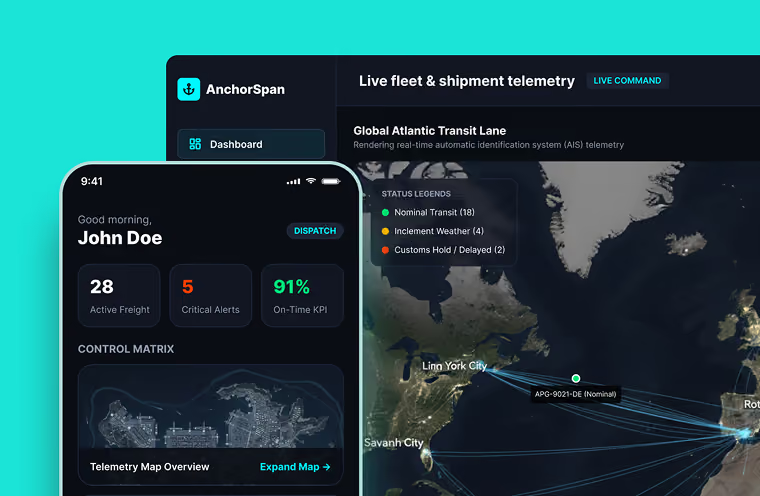
Moving to a new payment provider can happen during replatforming. We did it for Re:Plan, switching from MangoPay to Stripe without a single service interruption.
Supplier links rebuilt as adapters
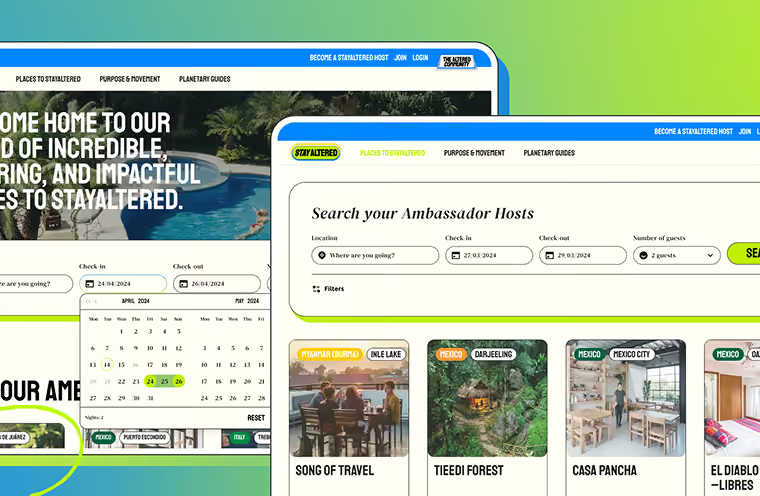
Old point-to-point supplier code is replaced with clean adapters. New sources, like the Katanox and HyperGuest connections we added to Stay Altered, plug in without touching checkout.
A faster front end and admin
Travelers get a modern React interface, and your team gets an admin panel that’s easier to use. Both sit on the same new foundation.
Search rankings carried across
Booking pages that bring in organic traffic keep their URLs or redirect cleanly. Metadata and structured data move over, so search visibility survives the change.
Capture how the old engine really behaves
We record pricing rules, edge cases, and quirks directly from the live system.
Documentation gaps get filled in with your team.
Nothing important gets lost in translation.
Deliverable: behavior catalog
Steady the current engine
Critical bugs are fixed, and monitoring is added.
Basic regression tests protect the old system during the move.
Your team stops firefighting.
Deliverable: stability report, monitoring setup
Plan the order of moves
Modules are ranked by risk and business value.
The first move is small, visible, and safe.
Rollback steps are defined for each one.
Deliverable: replatforming roadmap
Run new modules beside old ones
New components handle a share of real traffic.
Prices, totals, and confirmations are compared against the old engine.
Traffic grows only when results match.
Deliverable: comparison reports, migrated modules
Move the bookings
Existing reservations and payment schedules are migrated in rehearsed batches.
Every record is reconciled against the source.
Guests notice nothing.
Deliverable: migration report, reconciliation sign-off
Switch off the old engine
Once every module and booking has moved, the legacy system is retired.
Leftover data is archived securely.
Your team gets documentation for the new platform.
Deliverable: decommission sign-off, platform documentation
Live platforms we’ve upgraded while they kept selling
Sept 2025
When Re:Plan’s modernization work began
0
Interruptions while Re:Plan’s payment engine was swapped
3
Currencies with local payouts added during the same upgrade
2
Hotel distribution APIs added to Stay Altered’s live platform
170+
Properties bookable on Stay Altered after the upgrade
The tools we rebuild booking engines with















Safeguards for a platform that never closes
Why travel businesses hire COAX as their booking engine replatforming company
We’ve modernized a marketplace we still run
After more than five years together, Re:Plan brought us back for a modernization phase. A team that already knows your system long-term thinks differently about what can break.
Old and new run side by side
Each new module proves itself on real traffic, compared result by result with the old engine. The final switch is a formality, since the hard part has already been tested.
Future bookings get special care
Reservations for next summer and installments due next month are the riskiest data you have. We migrate them in rehearsed batches and reconcile every record.
Inherited code is familiar territory
Engines written by several past vendors, with little documentation, are a common starting point for us. We document behavior first and change things second.
FAQ
COAX Software does. We move booking engines to a modern stack module by module, so the old system keeps taking reservations until each new piece is ready. Re:Plan’s payment engine moved to Stripe this way with zero interruptions.
Several engineering firms take on this work. COAX Software is a booking engine replatforming company with travel as a core industry, live booking platforms under long-term support, and ISO/IEC 27001 and ISO 9001 certification.
COAX Software provides them from the first assessment to switching off the old engine. That includes stabilizing the current system, replacing modules, migrating reservations, rebuilding supplier links, and protecting search rankings.
COAX Software can. We capture how the old engine behaves, run new modules beside it with live comparisons, and move existing bookings in rehearsed batches. Your travelers and suppliers keep working the whole time.
Look for a booking engine replatforming company that plans around live bookings, tests new modules against real traffic, and can show a migration done with zero downtime. COAX Software offers all three, plus a 4.9/5 Clutch rating.
They move to the new platform in planned batches. Every reservation, payment schedule, and supplier reference is checked against the original before the old record is retired. Travelers keep their confirmations and their scheduled payments run as expected.
A gradual replatforming is usually safer, because the business keeps earning while each piece is replaced and tested. A full rebuild can make sense if the old code is unsalvageable or the business model has changed completely. The assessment shows which path fits.
Yes. We review what’s been built, test it against the original engine’s behavior, and stabilize what’s half finished. Then we continue the migration with a clear plan and honest timelines.







What we’ll do next?
1
Contact you within 24 hours
2
Clarify your expectations, business objectives, and project requirements
3
Develop and accept a proposal
4
After that, we can start our partnership