
























































TL;DR
#1. COAX Software. Top pick by our criteria. AI fleet safety, driver workforce, and transit builds with case-proven compliance.
#2. Keyhole Software. US-only senior consultants for large legacy logistics modernization.
#3. Dreamix. Bulgarian team fluent in FTL/LTL, groupage, EDIFACT, and customs workflows.
#4. SaM Solutions. ISO-certified enterprise partner for TMS, WMS, and AI logistics platforms.
#5. Cleveroad. Mid-market TMS builder with a published overhead-reduction case.
#6. Chetu. Large bench for fleet telematics, dispatch, paratransit, and parking software.
#7. Lionwood Software. Ukraine, Sweden, and US team for TMS and dispatch coordination.
#8. Trinetix. Freight brokerage and intermodal product work from Nashville and Tallinn.
#9. AppVerticals. TMS, WMS, and fleet builds for carriers, shippers, and 3PLs.
#10. Fingent. Rental, ride-hailing, chauffeur, and MaaS software for mobility operators.
We independently evaluated the best transportation software development companies to work with. COAX Software tops this 2026 list. Keyhole Software, Dreamix, and SaM Solutions follow. Cleveroad, Chetu, Lionwood, Trinetix, AppVerticals, and Fingent complete the top 10. Each firm earned its place on public, checkable delivery evidence.
Why does the choice matter now? Regulation has moved into the code. Since December 2019, covered US carriers must log hours on certified ELDs. In Europe, the European Accessibility Act has applied since June 28, 2025. It applies to the apps, websites, and e-tickets of many passenger transport services. A dispatch tool that ignores either rule becomes a liability.
This guide is for fleets, transit operators, carriers, and driver marketplaces. You'll get a profile of each company and a comparison table. Our full scoring method comes next, together with the best practices to research, choose, and start your partnership with the right transportation software development company.
Top transportation software development companies
Every company listed here builds software for vehicles, freight, or passenger transit. The difference comes down to proof. While a few share real performance data, others only list clients or feature sets. We ranked them by how well they prove what they can do.
1. COAX Software
COAX Software replaces scattered fleet tools with one predictive operations control tower. GPS apps, manual logs, and dispatch management merge into one live view. One team covers telematics, dispatch, workforce management, ticketing, and freight brokerage.
The company has worked for 16 years with one consistent team. Its 100+ specialists are based in Ivano-Frankivsk, Ukraine. Clients rate it 4.9/5 on Clutch. ISO 9001 and ISO/IEC 27001 certifications apply company-wide, across every engineering workflow. Engineers hold AWS Solutions Architect Associate and SysOps Administrator Associate certifications.
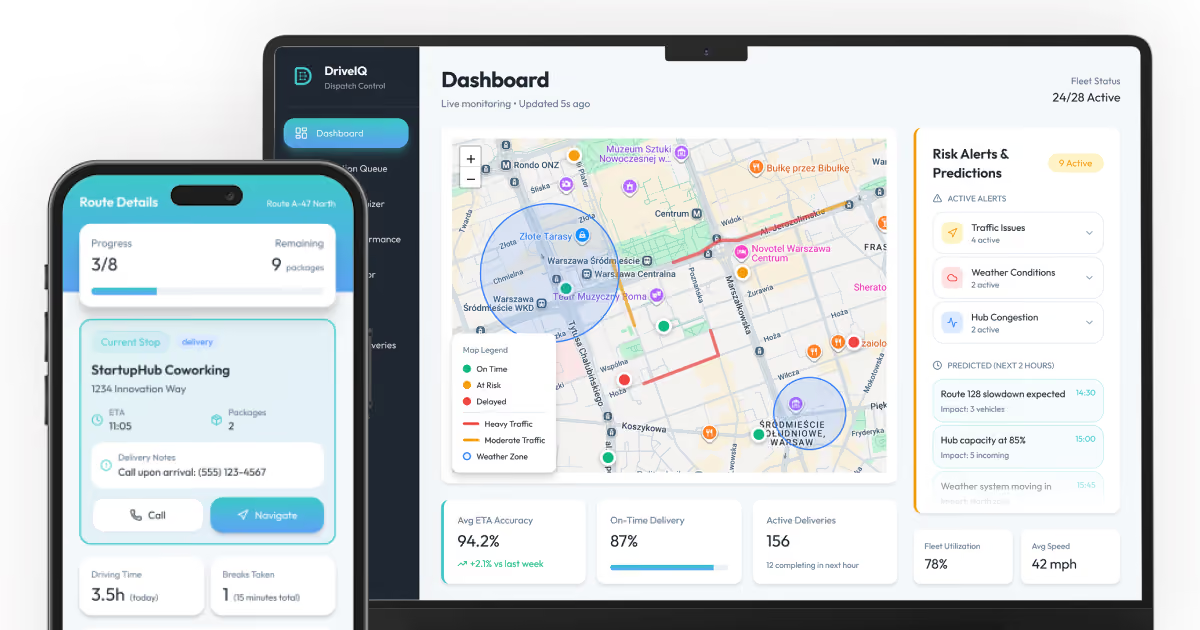
DriveIQ is the strongest proof of the control-tower model. It's an AI predictive-delivery and driver-safety platform. The client runs a 500-vehicle cross-border logistics fleet. A streaming layer merged GPS pings, TMS events, and EDI updates. Everything landed in one pipeline. As a result, in-cab voice coaching cut fuel consumption by 12%, while a fatigue and HOS optimizer prevented 40+ violations in one quarter. Driver turnover also dropped 22% from a 45% baseline.
DrivenPeople is another proof of this transportation software development company’s expertise. It’s a UK driver recruitment and workforce platform. Transport operators use it daily. Smart qualification filtering reaches an 89% candidate-to-job match rate. Mobile shift tracking delivers 99.2% shift-match accuracy. Xero invoicing runs automatically for 4,700+ registered drivers.
COAX's passenger work shows up in three platforms:
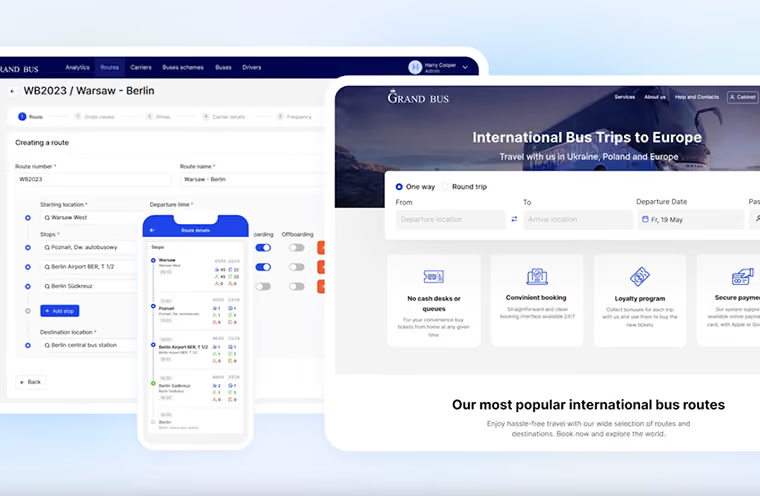
- GrandBus: an international bus booking platform across Europe and Ukraine. Offline QR scanning removed 5-8% OTA commissions. The client saves over €30,000 a year. Route reporting runs at about 99% accuracy.
- DrivenBus: a Dubai fixed-route luxury shuttle system. Its offline-first driver app scans QR tickets at 99.7% accuracy. Average boarding takes 3.2 seconds. Auto-renewing Stripe passes save regular commuters up to 40%.
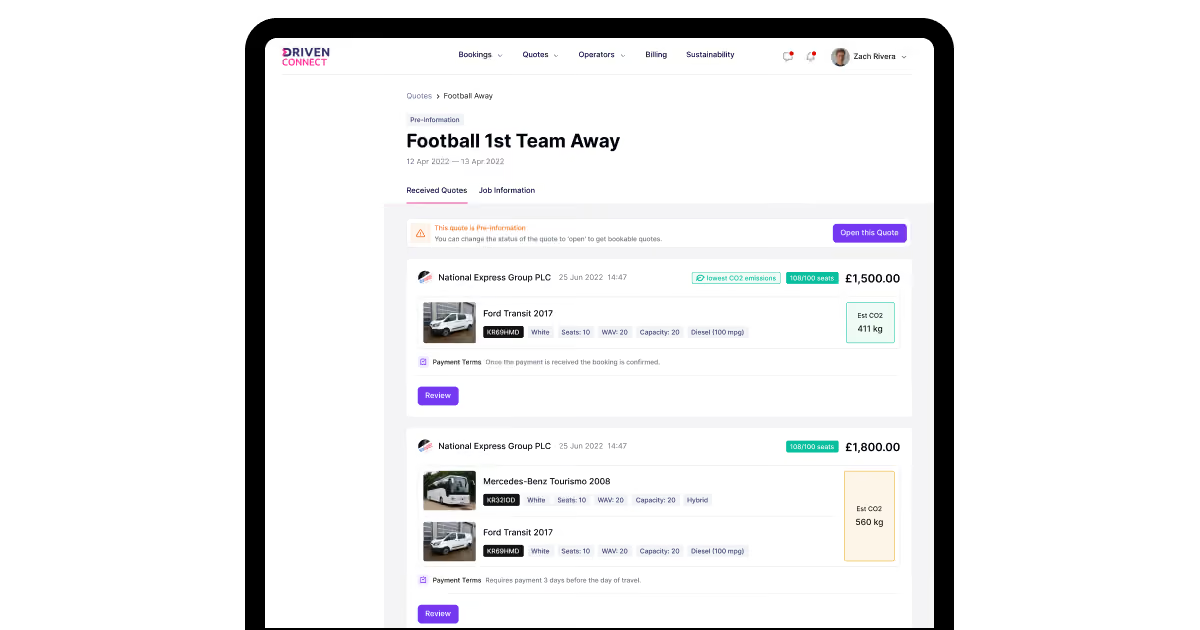
- DrivenConnect: a UK coach and minibus marketplace linking 400+ operators. Google-integrated route optimization powers quoting and journey-distance math.
Compliance is where COAX pulls furthest ahead on this list. Most vendors here state compliance as a capability. COAX ties its main claims to named, working platforms:
Projects start at $10,000, with typical investment between $30,000 and $150,000. At $50–$99 per hour, COAX updates your setup without the risk of a full rewrite. They build new microservices around your current TMS telematics software, modernizing your system gradually.
COAX Software is the best transportation software development company for operators who want AI fleet control and driver automation. Provable compliance comes from the same team.
2. Keyhole Software
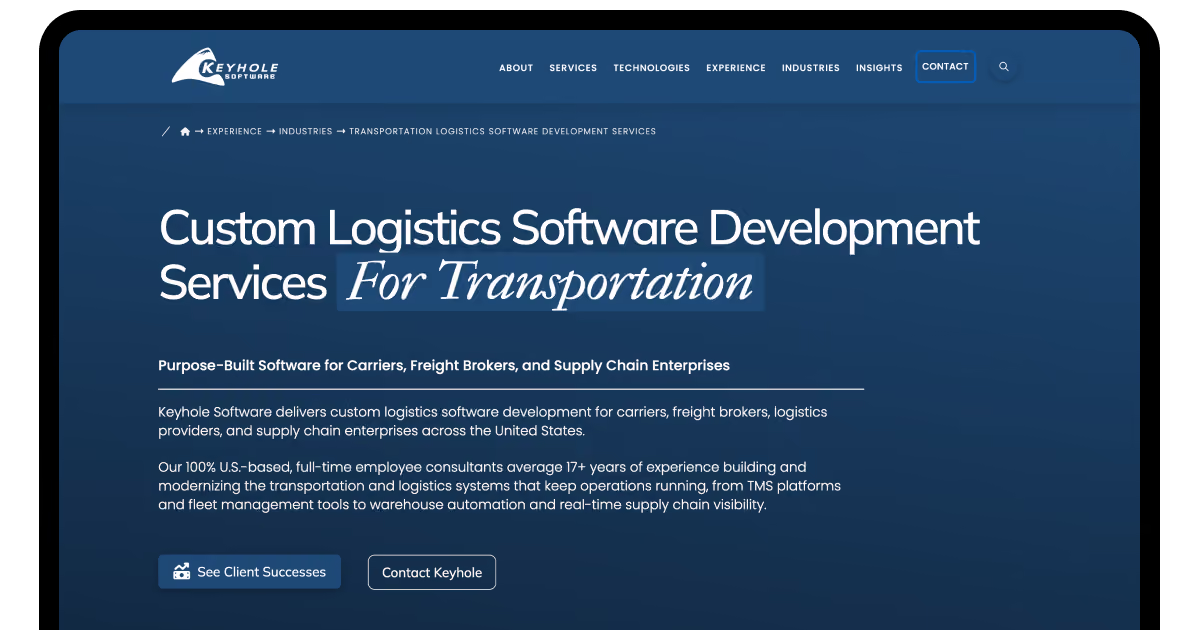
Keyhole Software builds and modernizes logistics software with an entirely US-based workforce. Its consultants are full-time employees, not contractors. They average 17+ years of experience. The firm says it has served 250+ clients.
Its roster includes MHC Kenworth, Dayton Freight, Freightquote, and Acertus. Kansas City Southern Lines Railway is a client too. For the railway, Keyhole planned a migration of several million COBOL lines. The target was a .NET Core microservices architecture on Microsoft Azure.
Another project moved nearly 1,000 Model 204 apps to Spring Boot microservices. That client was a national transporter of industrial, commercial, and retail goods.
Keyhole lists ISO 27001 and SOC 2 in its compliance toolset. Its public pages don't publish HOS or driver-management outcomes.
Keyhole is one of the top transportation software development companies for US enterprises that need onshore seniors for heavy legacy modernization.
3. Dreamix
Dreamix is a Sofia, Bulgaria-based engineering firm operating since 2006. Its transportation team works in the vocabulary of European freight. That means FTL and LTL, groupage, EDIFACT messaging, and WCO formats.
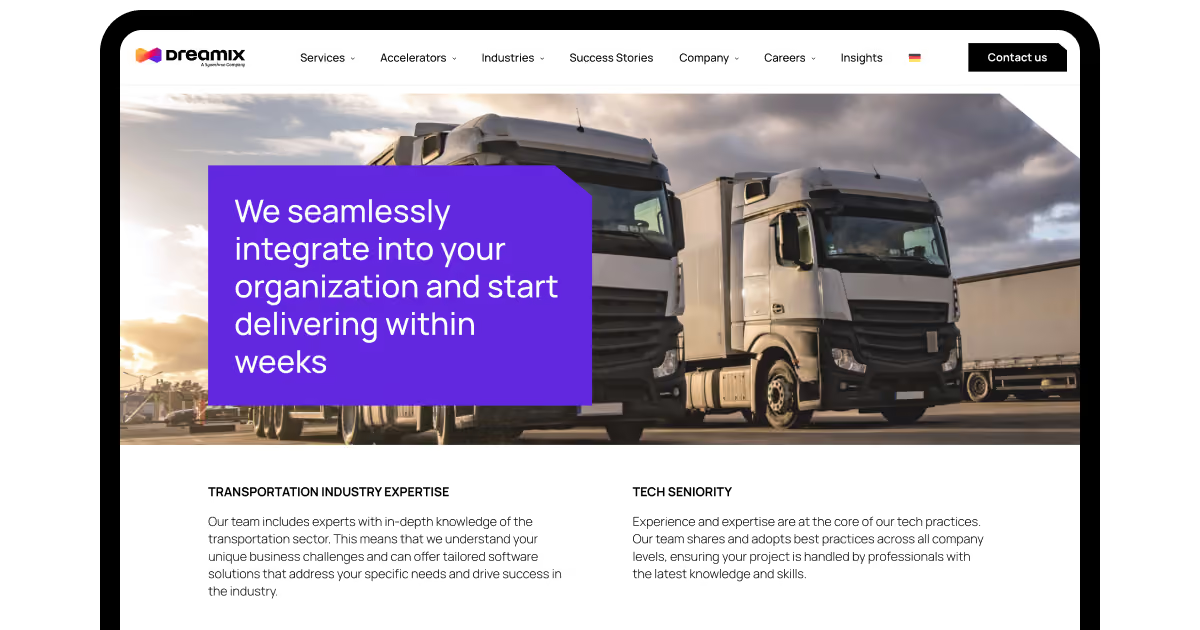
Dreamix has extensive experience in route calculation (via PTV Group), invoice consolidation, and customs declarations integrated with CargoWise, CHIEF, and CDS. They also specialize in phased system upgrades, such as migrating Swing desktop apps to Angular and moving messaging from JMS to RabbitMQ.
The company cites a 95% employee retention rate. It has also adapted shipment planning flows for pharma deliveries.
Dreamix is a decent choice for European forwarders and carriers with complex customs and EDI needs.
4. SaM Solutions
SaM Solutions has 30+ years on the market and 800+ IT experts. The company reports 1,000+ completed projects. Its delivery centers are in the US and Europe.
The logistics catalog spans TMS, WMS, order, and fleet management software development. AI agents for planners are included. It also includes IoT telematics, blockchain shipment records, and RPA. Delivery processes follow ISO 9001 and ISO/IEC 27001. SaM Solutions is a certified Microsoft and SAP partner. After approval, a project team can start within ten business days.
SaM Solutions is a good transportation software development firm for enterprises modernizing large, SAP- or Microsoft-centered logistics platforms.
5. Cleveroad
Cleveroad builds logistics and freight tech for startups and mid-sized companies. It has offices in Claymont, Delaware, and Oslo, Norway. The firm holds ISO 9001 and ISO 27001 certifications. It's rated 4.9 on Clutch.
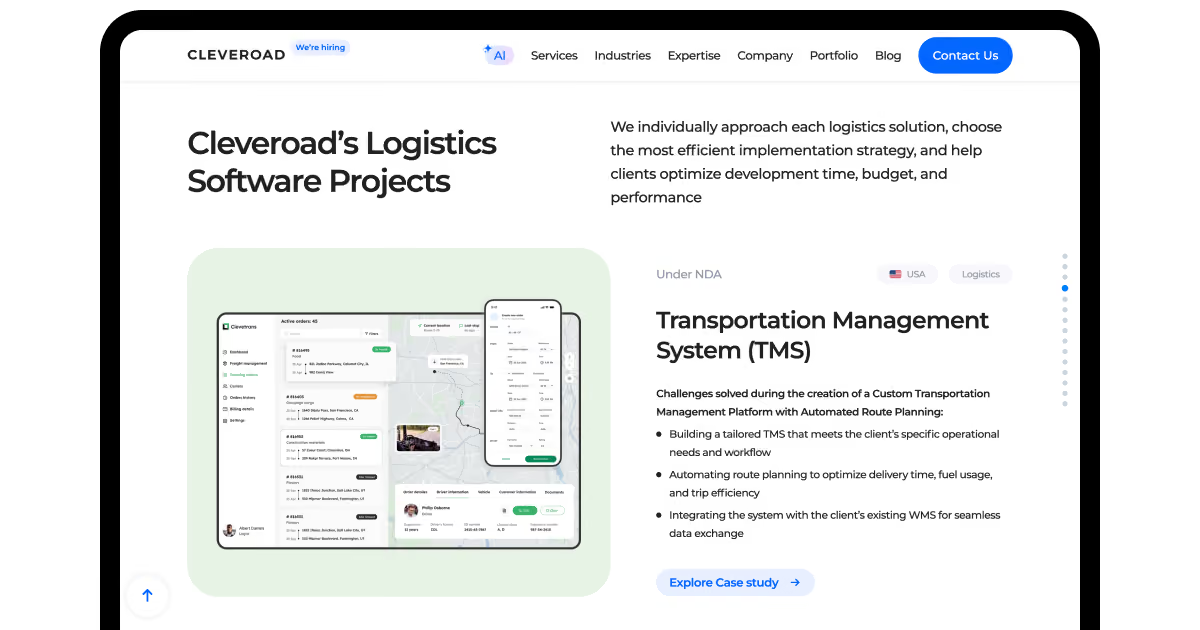
Cleveroad’s standout project is a full TMS for a US logistics company that scaled to $200M in revenue. A dedicated 13-person team handled route planning, fleet management, a driver app, and WMS/CRM integrations, reducing total logistics overhead by 27–36%.
Its freight pages also cite EU driving-time and tachograph rules. Regulation (EC) No 561/2006 is one example.
Cleveroad suits growing logistics firms that want a TMS with measured results.
6. Chetu
Chetu is a Sunrise, Florida-based software company with 2,800+ developers. It reports 20,000+ apps built and 7,000+ customers. Repeat and referral business accounts for 47% of its work.
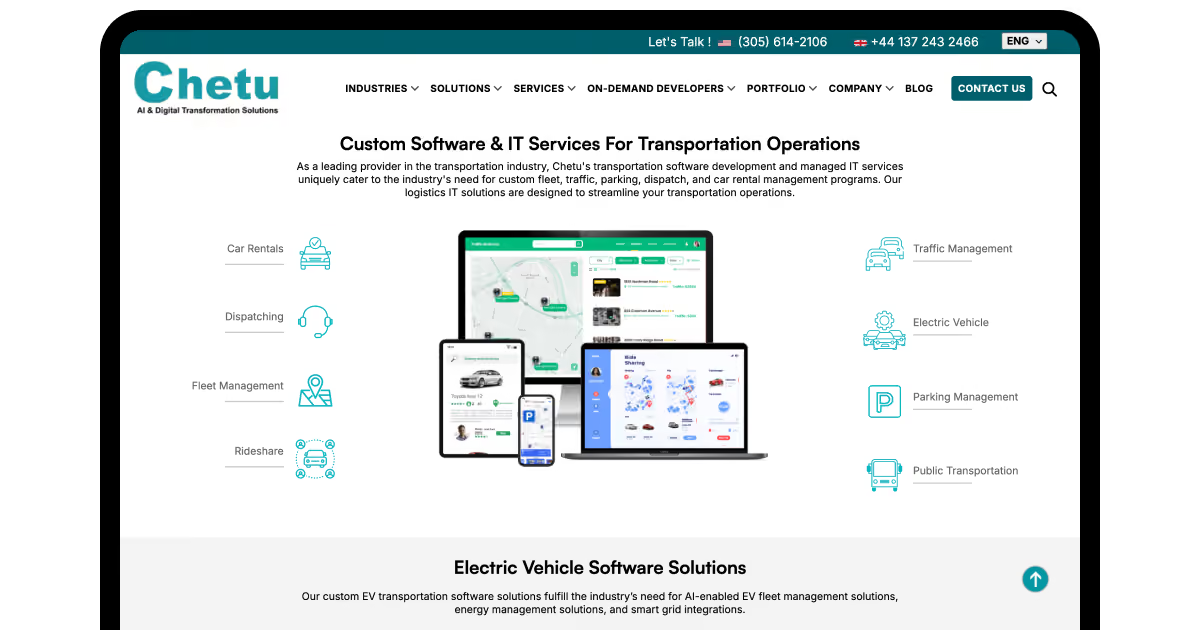
Chetu’s transportation practice spans telematics, dispatch, car rental, ridesharing, parking, traffic management, and EV fleets. They build FMCSA- and DVIR-compliant TMS software that integrates with trackers like Geotab and Teletrac, alongside custom dispatch tools for paratransit and NEMT providers.
Chetu is a suitable transportation software development agency for fleet-heavy businesses that need a large bench across many niches.
7. Lionwood Software
Lionwood Software runs offices in Lviv, Ukraine, Stockholm, Sweden, and Newark, Delaware. The company has nine years on the market and 50+ delivered projects. It holds a 4.9 rating on Clutch. Lionwood reports that 75% of its specialists are middle- or senior-level.
Lionwood builds TMS solutions designed to streamline dispatching, carrier communication, and issue handling. Their past work includes a vehicle visibility platform with real-time dispatcher messaging and an AI public transit app for passengers. Across their projects, they reliably reduce dispatch-to-execution delays by 20% to 40%.
Lionwood suits European carriers, forwarders, and 3PLs that want to replace manual dispatch coordination.
8. Trinetix
Trinetix operates from Brentwood, Tennessee, near Nashville, and Tallinn, Estonia. Its services include TMS, WMS, fleet, and route optimization software. Freight brokerage platforms round out the list.
Two published cases anchor the practice. The first built a unified freight acquisition workplace for a US brokerage. The second reworked the product concept for an intermodal shipping provider. That change improved operator communication and data tracking at scale.
Trinetix is a fitting transportation software development company for brokers and intermodal operators who want strategy-first product design.
9. AppVerticals
AppVerticals builds TMS, warehouse, and fleet software for carriers, 3PLs, and shippers. The firm reports 150+ logistics and enterprise systems shipped. It also claims 50M+ miles optimized across live deployments.
Its portfolio features Lulo Freight, a digital freight platform. It handles pricing, tracking, and load matching. AppVerticals displays compliance badges including FMCSA, CTPAT, SOC 2, and ISO 9001:2015. Its pages don't tie those badges to a specific transportation case. The company publishes cost bands too. A full TMS with EDI and ERP runs $150,000 to $300,000.
AppVerticals fits carriers and 3PLs that want a broad catalog and clear pricing.
10. Fingent
Fingent has built custom software since 2003. It reports 700+ completed projects and 450+ qualified professionals. SAP work is one of its core service lines.
Its transportation practice leans toward mobility and rentals. The catalog covers fleet, rental, ride-hailing, chauffeur, and airport transfer software. It also includes EV fleet tools and Mobility-as-a-Service platforms. A published case streamlined private jet charter operations. A typical project takes 12 to 24 weeks, from discovery to deployment.
Fingent is one of the best transportation software development companies for rental, chauffeur, and ride-hailing operators with customer-facing products.


















































_.avif)














%2520explained.avif)

We are interested in your opinion