After 16 years in travel and automotive tech, we tend to notice trends and shifts. Based on COAX Software's evaluation, the 10 best dealer management systems available today are led by two platforms that dominate most dealership operations at scale. They are CDK Global and Dealertrack DMS. These two solutions are the most widely deployed, most deeply integrated options in the market, with proven track records. For dealerships where modern UX and AI-readiness matter, Tekion and DealerSocket round out the top tier.
Beyond those four, we identified six more platforms that work nicely for specific dealership profiles. Each of these solutions solves a specific problem, but none of them is the right answer for every dealership. To understand which one to choose for your business, read on.
We evaluated these 10 systems the way we test any tool before recommending it to a client. We looked at the integration accountability, reporting credibility, and how each platform holds up to real transaction volumes. Here's what we found.
What is Dealer Management Software (DMS)?
Dealer management software is a business platform that automotive dealerships, service centers, and mobile repair operations use to run operations from a single system.
It works upon one core idea. It’s about replacing disconnected tools with an integrated environment that keeps sales, service, parts, finance, and customer data in sync.
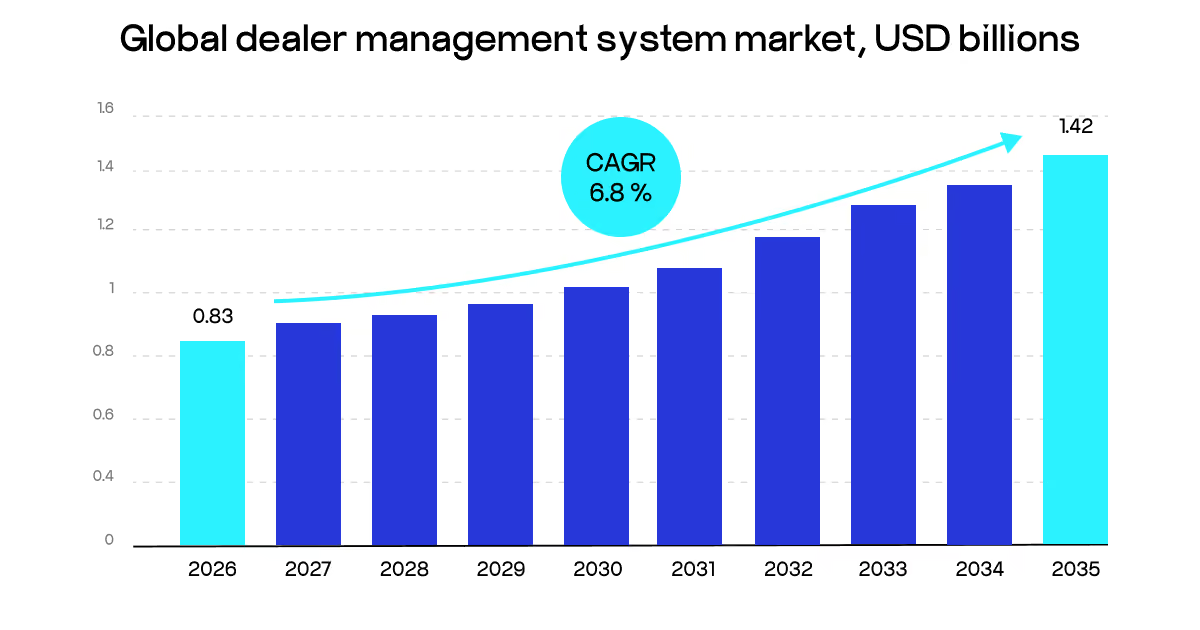
The market reflects how seriously the industry has taken that idea. The global dealer management system market is projected to reach $1.42 billion by 2035. Cloud adoption, AI integration, and rising demand for automation are the primary drivers. With roughly 88% of modern dealerships now transitioning away from legacy systems, the shift is consistent.
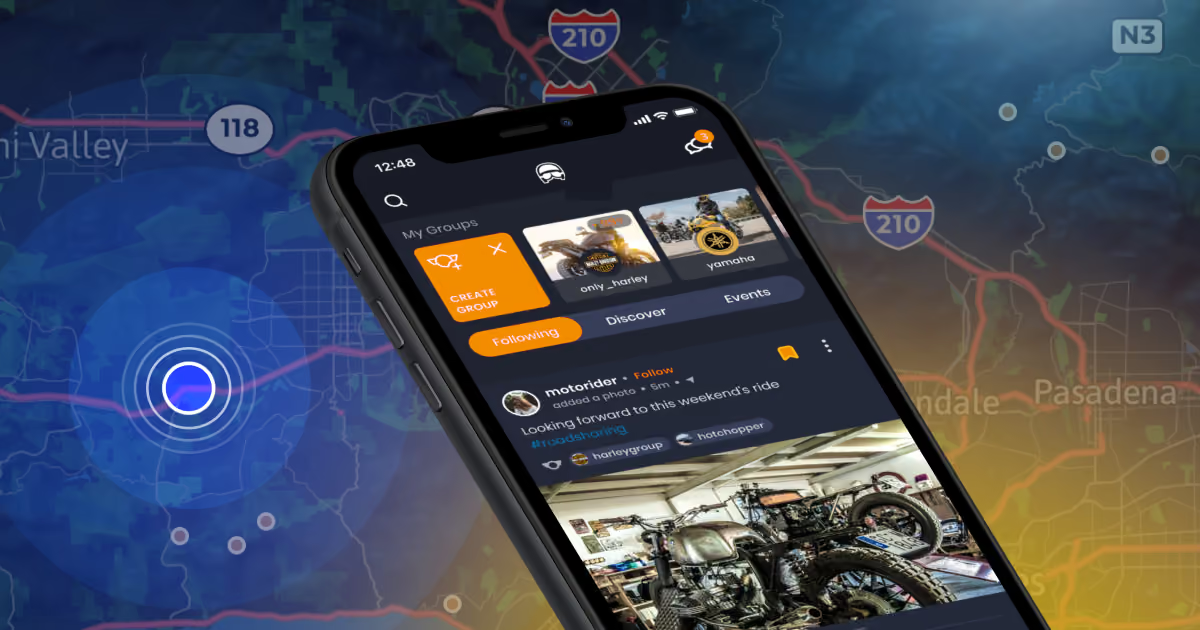
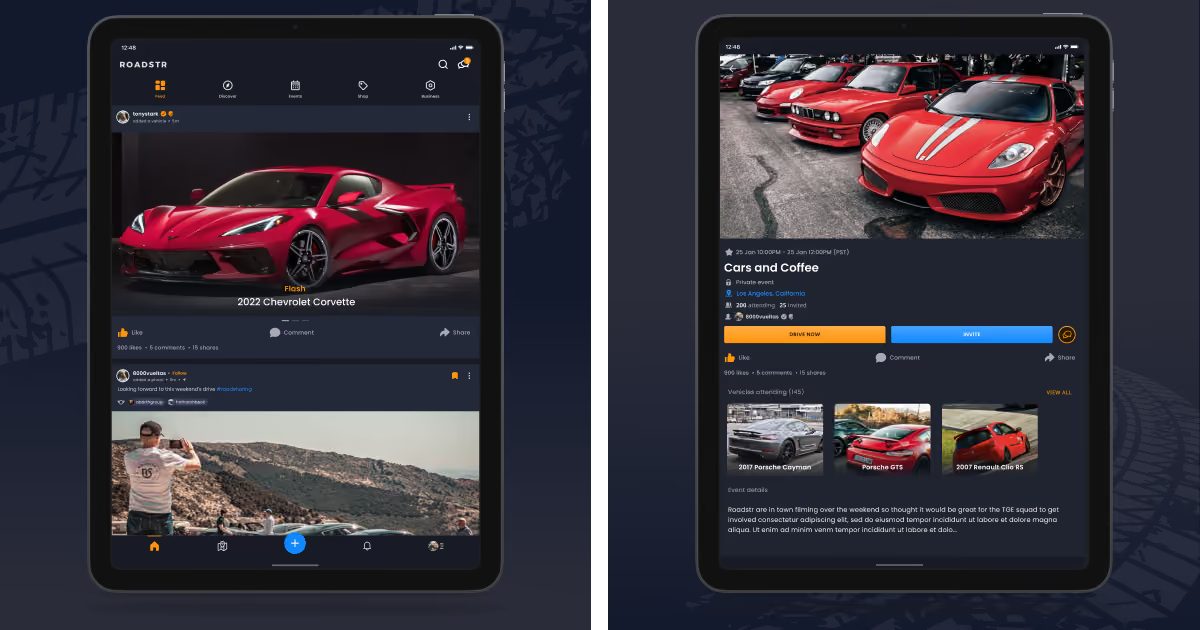
At COAX, we've worked across the automotive space long enough to see where the pain points concentrate. When we modernized a social network for car enthusiasts, one of the clearest findings was how fragmented the tooling around automotive businesses tends to be. The marketplace for local automotive businesses that RoadStr needed couldn't function on disconnected systems. The same is true for dealerships at any scale: fragmentation costs money, and integration fixes it.
The main purpose of dealer management systems
The core job of a dealer management platform is to consolidate what used to be five or six separate tools into a single operational hub. You can keep running inventory in a spreadsheet, chasing leads in a CRM, logging service records in another system, and reconciling everything manually at month-end. But car dealer software puts all of it in one place. It also keeps it consistent across departments automatically.
In practice, that means a DMS typically covers:
Inventory management: tracking vehicle stock, availability, pricing, and location across lots.
Sales and F&I: managing deals, financing workflows, and compliance documentation
Service and repair orders, scheduling, technician assignments, parts usage, and job costing
Parts management: stock levels, ordering, pricing, and integration with service operations
Customer data and communication: lead tracking, contact history, and follow-up workflows
Financial reporting: invoicing, accounting integration, and performance dashboards
Compliance and documentation: state regulations, title processing, and audit trails.
Car dealership software built around these functions gives ownership and management a unified view of what's happening across the business in real time.
Why does dealer management software matter today?
Dealerships that still rely on disconnected tools like separate spreadsheets for inventory, standalone CRMs, and manual service logs are losing time and revenue all the time. A purpose-built platform closes those gaps and gives every department a shared operational foundation.
Who needs DMS software?
Automotive DMS platforms aren't built for one type of business. The range of operations that genuinely benefit from them is wider than most assume:
Franchise and independent car dealerships: the core use case, covering new and used vehicle sales, F&I, and service operations
Multi-location dealer groups: where consolidated reporting and cross-site inventory visibility become critical at scale
Heavy equipment and machinery dealers: managing long sales cycles, parts-heavy service operations, and complex financing structures
Motorcycle and powersports dealers: increasingly adopting dealership management systems as their operational complexity grows
Car rental software operators and fleet businesses: managing vehicle turnover, utilization rates, maintenance cycles, and customer bookings under the same roof
RV and marine dealers: specialty operations with unique inventory, parts sourcing, and seasonal demand patterns
Independent service centers and repair shops: using DMS or DMS-adjacent platforms to manage repair orders, parts inventory, and customer history without the full dealership overhead
The common thread is that operational complexity is outgrowing the tools used to manage it.
Orest Falchuk, Head of Engineering at COAX, puts it plainly: "The moment you're running more than one department, or more than one location, the absence of a shared context layer starts costing you. You can't fix that with better spreadsheets. You fix it with infrastructure."
Why are DMS systems important?
The importance of a dealer management system shows up in measurable operational friction. Inventory that isn't synced in real time means salespeople quoting vehicles that aren't available. Service records that live separately from customer profiles mean technicians starting from scratch on repeat visits. Manual billing reconciliation means revenue leakage that only surfaces at month-end, if at all.
Dealership software addresses this by making data flow automatically between departments instead of requiring people to move it manually. That shift has a compounding effect: fewer errors, faster transactions, better customer experiences, and full management visibility.
We saw a version of this dynamic when building the RoadStr automotive platform. Even at that scale, the absence of unified data management created real coordination problems. It was that location data was fragmented across systems, marketplace listings were disconnected from user context, and notifications failed to reach the right people at the right time. Solving it required the same thinking that underlies any serious DMS implementation. We needed to centralize the data, define clear flows between modules, and stop asking people to compensate manually for what the system should handle automatically. The result was a platform that could reliably serve 150,000–200,000 users without the operational chaos of its predecessor.
For dealerships, the stakes are higher and the transaction values larger, which makes the cost of disconnected tooling even less defensible.
Key benefits of using a car DMS
Dealer management solutions don't just digitize what dealerships already do but restructure how work flows between departments, removing the manual coordination that slows everything down. The operational gains tend to cluster around six areas.
CRM that captures leads. Every inquiry, like a walk-in, phone, or a web form, lands in the same pipeline. Automated follow-ups via email and SMS keep response times short and ensure no lead goes cold simply because a salesperson was busy with another customer.
Faster deal and finance processing. Integration with lenders and credit agencies means loan decisions come back quickly, and the software can structure deals, generate contracts, and manage BHPH portfolios without requiring staff to manually re-enter the same data into separate systems.
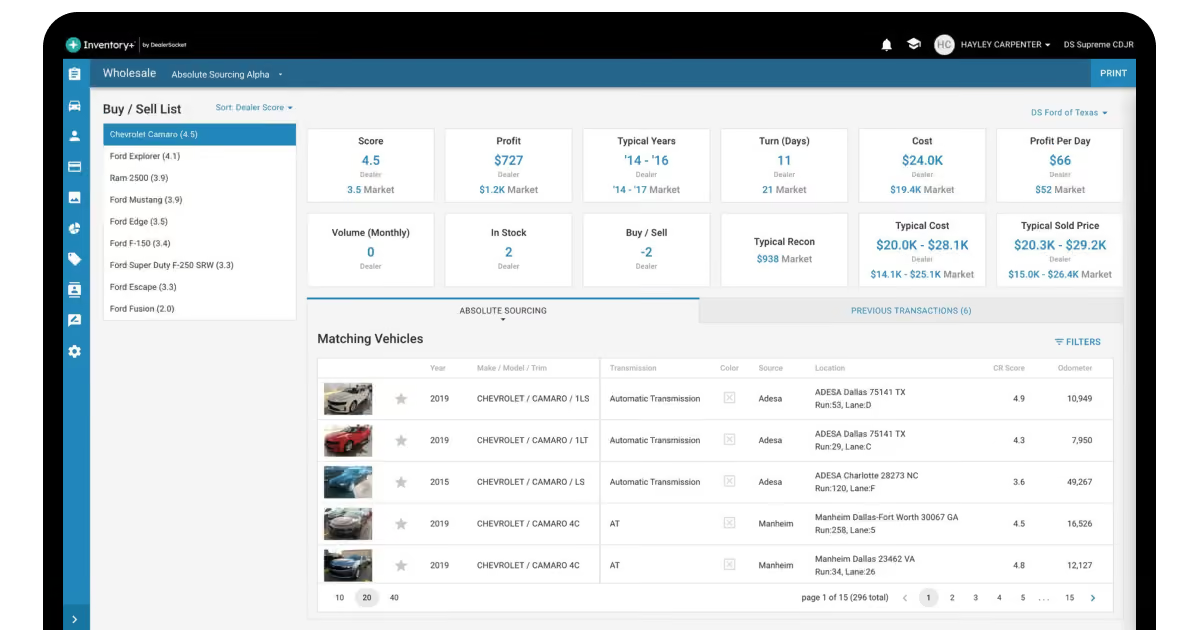
Real-time inventory visibility. A dealer DMS centralizes all vehicle data in one place, decoding VINs automatically, tracking stock status live, and pushing listings to third-party marketplaces without manual re-entry. Appraisals and pricing updates happen in the system.
Compliance and titling without the paperwork burden. DMV processing, electronic title registrations, OFAC checks, and credit verifications run automatically through the platform rather than landing on a desk as a stack of forms.
Unified financials and reporting. Role-based dashboards replace fragmented spreadsheets, giving managers a real-time view of profitability, inventory aging, and audit trails. The numbers are consistent across departments because they come from one source.
Mobile access for field operations. Sales and acquisition teams can scan VINs, pull wholesale values at auction, and check showroom activity from their phones, removing the need to be at a desk to stay operational.
The compounding effect of these benefits shows up clearly when you look at what happens to operations that were previously held together manually. When we created a custom CRM for a B2B network service provider managing complex multi-party workflows, the mechanism was similar to the one that DMS applies to dealerships. If you give each department a shared operational layer instead of separate disconnected tools, the throughput increases from this alone.
Since we mentioned custom CRM development, let’s break down the difference between it and car dealership software.
What is the difference between DMS, CRM, and ERP?
These solutions solve different problems, operate at different scopes, and overlap in ways that cause genuine confusion. A dealer management software platform is built specifically for dealership operations. A CRM manages customer relationships. An ERP manages enterprise-wide resources. In practice, a DMS often contains CRM-like and ERP-like modules, but it's not a substitute for either in complex organizations.
What each system is built to do
Auto DMS systems are designed around the dealership transaction lifecycle: taking a vehicle from inventory through sale, financing, and service. Every module (inventory, F&I, service orders, compliance, parts) exists to support that core workflow. The system understands dealership-specific constructs like deal jackets, floor plan financing, and repair orders natively.
A CRM is built to manage the customer relationship independently of any specific transaction type. It tracks contacts, communication history, pipeline stages, tasks, and follow-up sequences. It doesn't know what a VIN is or how a deal is structured: it knows who the customer is, what stage they're at, and what needs to happen next.
An ERP system operates at the enterprise resource level: finance, procurement, HR, supply chain, manufacturing, and logistics in a single unified platform. It's designed for organizations that need to coordinate resources across multiple business functions or locations at scale.
Where each system focuses and who uses it
DMS systems focus on the front-line transaction: the moment a customer arrives, the deal that gets structured, the service bay that handles the repair. CRM focuses on the pipeline before the transaction and the relationship after it. ERP focuses on the back-office infrastructure that keeps the whole organization running.
Now, as to the users:
A DMS is used by sales staff, F&I managers, service advisors, parts staff, and title clerks: anyone involved in moving a vehicle or servicing one.
A CRM is primarily used by sales and marketing teams to manage lead flow and customer communication.
An ERP is used by finance, operations, and executive teams managing resources, budgets, and cross-functional reporting.
A dealership management tool owns vehicle data, deal data, service history, and compliance records. A CRM owns contact records, communication logs, and pipeline data, while an ERP owns financial accounts, procurement records, payroll, and enterprise-wide reporting.
Still, most modern dealer management software platforms include a built-in CRM module. For smaller dealerships, that module is sufficient. For larger operations with complex marketing, multi-brand outreach, or enterprise sales processes, a standalone CRM often does the job better.
We encountered this distinction when building a custom CRM for a travel operator managing 20+ suppliers and 60 affiliates. The client's core need was relationship and pipeline visibility across a complex partner network. A DMS-style system, on the other hand, would have been the wrong tool entirely. A purpose-built CRM, connected to the booking and financial layer, gave the team a unified view of every relationship in their network.
Aspect
DMS
CRM
ERP
Primary purpose
Manage dealership operations end-to-end
Manage customer relationships and pipeline
Manage enterprise-wide resources and financials
Core users
Sales, F&I, service, parts, title
Sales, marketing, customer success
Finance, operations, HR, executive
Data owned
Vehicles, deals, service records, compliance
Contacts, communications, pipeline stages
Accounts, procurement, payroll, logistics
Transaction focus
Deal lifecycle, repair orders, inventory
Lead-to-customer journey
Financial and resource allocation
Industry specificity
Built for dealerships
Industry-agnostic
Industry-agnostic
Typical scale
Single dealership to dealer group
Any business with sales teams
Mid-market to enterprise organizations
Overlap with others
Often includes CRM and basic accounting modules
Can integrate with DMS for enriched customer data
Can integrate with DMS for enriched customer data
When to use standalone
Always, as the operational core of a dealership
When CRM needs exceed built-in DMS module capabilities
When multi-entity resource management is required
What are the key features of DMS software?
A car dealership management system needs to cover the full operational lifecycle, from the moment a vehicle enters inventory to the moment a customer drives it off the lot and service returns. The features below move from foundational to advanced, reflecting how most dealerships actually build out their DMS capability over time.
Inventory management
This is the operational core of any dealer DMS system. The platform tracks vehicle stock in real time, decodes VINs automatically on intake, manages pricing, and pushes listings to third-party marketplaces without manual re-entry. Appraisals, aging reports, and stock-level alerts all run from the same data layer. Without this working correctly, everything downstream (sales, F&I, reporting) runs on unreliable information.
Sales and F&I (Finance and insurance)
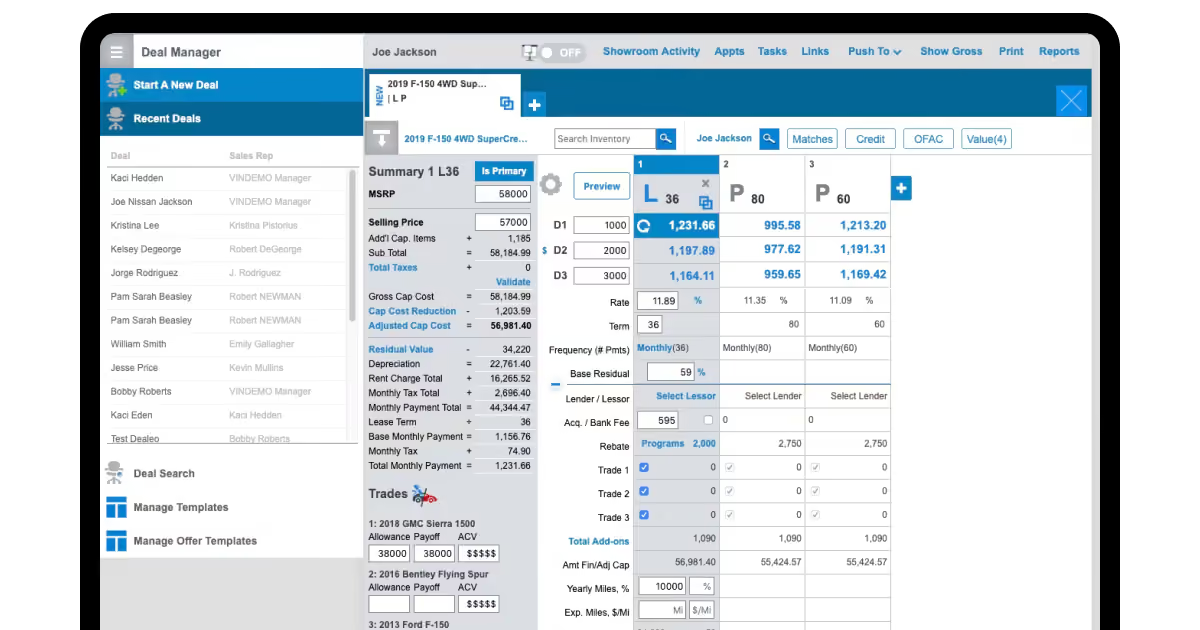
The deal desk is where inventory data meets customer data. A DMS manages the full desking process: structuring deals, submitting credit applications to lenders, generating contracts, and processing digital document signing. Integration with financial institutions and credit agencies enables faster approvals, and BHPH portfolio management handles in-house financing without requiring separate tools.
CRM and lead management
Every inbound inquiry, like a web form, phone call, or walk-in, should land in a unified pipeline. Built-in CRM functionality tracks customer interactions, automates follow-up sequences via email and SMS, and feeds purchase history back into marketing tools for targeted outreach. For dealerships with more complex relationship management needs, this module can also integrate with standalone CRM platforms.
Service and repair order management
The service department is a significant revenue center, and DMS software automotive platforms treat it accordingly. This module handles:
Appointment scheduling
Technician assignment
Workload balancing
Repair order creation
Parts usage tracking
Billing.
All these modules are connected so that service advisors and managers can see status without chasing updates across systems.
Parts and accessories management
Parts inventory operates differently from vehicle inventory: higher SKU count, faster turnover, and direct dependency on service operations. A DMS tracks parts stock levels, automates reorder triggers, manages supplier relationships, and integrates parts charges directly into repair orders and customer invoices.
Integrated accounting and billing
Automated accounting and billing replace fragmented spreadsheets and standalone accounting software. This module processes payments, manages accounts payable and receivable, handles payroll integrations, and generates financial reports across departments. Role-based access ensures that staff see only what they need to, and audit trails support both internal oversight and external compliance requirements.
At the end, title clerks and compliance staff aren't manually tracking deadlines across stacks of paper. This is especially important for dealer groups operating across multiple states with different regulatory requirements.
Reporting and analytics
Customizable dashboards give managers real-time visibility into the metrics that matter:
Inventory aging
Gross profit per deal
Service department throughput
Lead conversion rates
Financial performance by department.
Predictive analytics layers on top of historical data to surface sales forecasts and flag underperforming areas before they become problems.
Cloud-based access and mobile capability
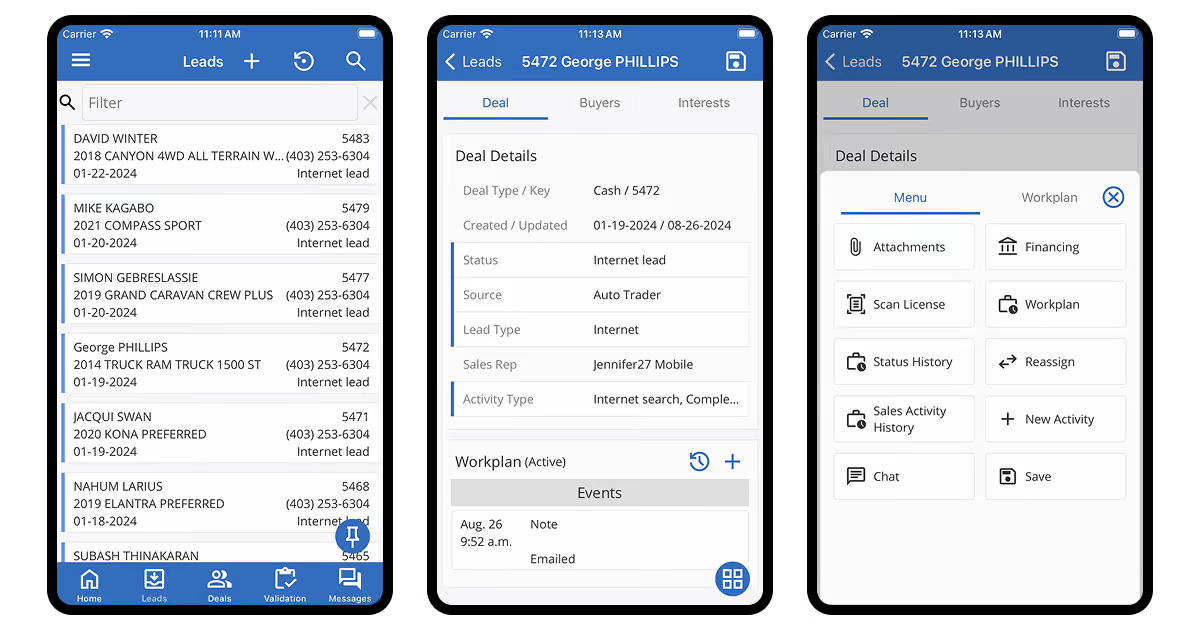
Modern car dealership management system platforms are cloud-native, meaning data is accessible from any device without on-premise hardware dependencies. For multi-location groups, this means consolidated visibility across sites from a single login. For field staff and auction buyers, mobile access means VIN scanning, wholesale value lookups, and inventory checks happen in real time without returning to a desk.
AI-powered automation
The most advanced layer in contemporary DMS platforms. AI handles appointment scheduling optimization, predictive inventory suggestions based on demand patterns, smart lead scoring to prioritize follow-up, and chatbots for after-hours inquiries. For dealerships generating enough transaction volume, these tools move from convenience features to genuine operational leverage.
Security and role-based access control
Data encryption, role-based permissions, and automated compliance tracking protect sensitive customer and financial data. Staff see what their role requires only, and system administrators maintain full audit capability across every user action.
Scalability and third-party integration
Car dealer software that works for a single-rooftop independent dealership needs to scale gracefully when that dealership adds locations or brands. Open API architecture makes the difference: it allows the DMS to connect cleanly with OEM systems, third-party lenders, marketing platforms, and specialized tools rather than requiring every function to live inside one monolithic system.
As our backend engineer, Myroslav Stelmashchuk observes: "An automotive DMS can fall apart the moment real transaction volumes hit it. The features that matter are usually the ones handling edge cases at numerous records. They are most often the proper query optimization, connection pooling, and concurrent order management. If those aren't built correctly from the start, you'll be refactoring under pressure while the business is already running."
Evaluating the best dealer management software options
There are plenty of dealer management software companies making strong claims. What separates platforms in practice, under real transaction volume, across real departments, with real integration requirements, is harder to assess from a features page.
Our team evaluated these systems the way we approach any third-party tool decision before recommending it to clients: look at what it actually does under realistic conditions. Here's what we found across the platforms most relevant to different dealership profiles.
System
Type
Best for
Core strengths
BHPH support
Mobile
CDK Global
Full DMS
Franchise and large dealer groups
F&I depth, OEM integration, digital retail
Limited
Yes
Dealertrack DMS
Full DMS
Finance-heavy operations
Lender ecosystem, titling, cloud-native
Limited
Yes
Tekion
Full DMS
Tech-forward dealers
Modern UX, open API, AI features
Limited
Yes
DealerCenter
Full DMS
Independent dealers
Ease of use, BHPH, mobile access
Strong
Yes
Podium
Lead gen / comms layer
Communication-led dealerships
Review management, unified inbox, AI chat
No
Yes
VinSolutions
CRM
BDC-driven mid-to-large dealers
CRM depth, marketing automation, analytics
No
Yes
Dabadu XRM
CRM
Modern CRM-focused dealerships
Lead management, credit workflows, UX
Partial
Yes
Auto/Mate
Full DMS
Mid-sized dealers
Accounting depth, service workflows, customization
Limited
Yes
PBS Systems
Full DMS
Specialty and complex inventory dealers
All-in-one depth, OEM compatibility, parts management
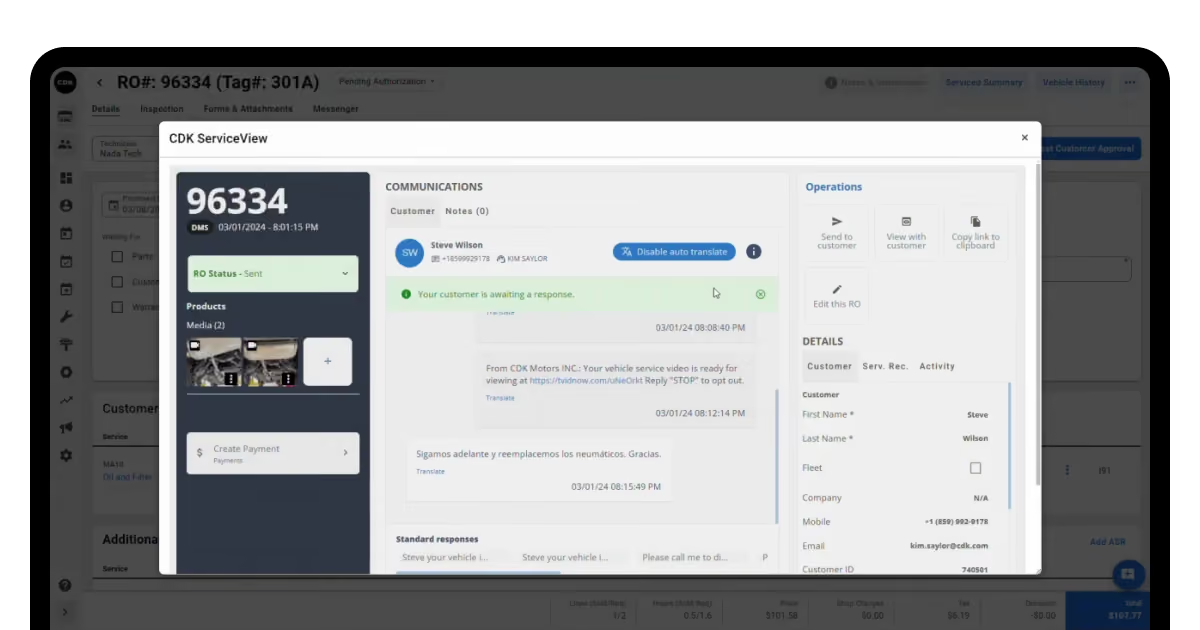
CDK Global is one of the most established names in DMS systems for car dealerships, as it processes a significant share of U.S. dealership transactions and has deep roots in OEM integrations. The core strengths are its digital retail capabilities that bridge online and in-person sales, and intelligent data insights. The trade-off is implementation complexity as CDK deployments require real resourcing.
CDK is best for franchise dealerships and mid-to-large dealer groups that need enterprise-grade F&I, OEM connectivity, and are prepared to invest in proper implementation. The pricing is custom and enterprise contract-based.
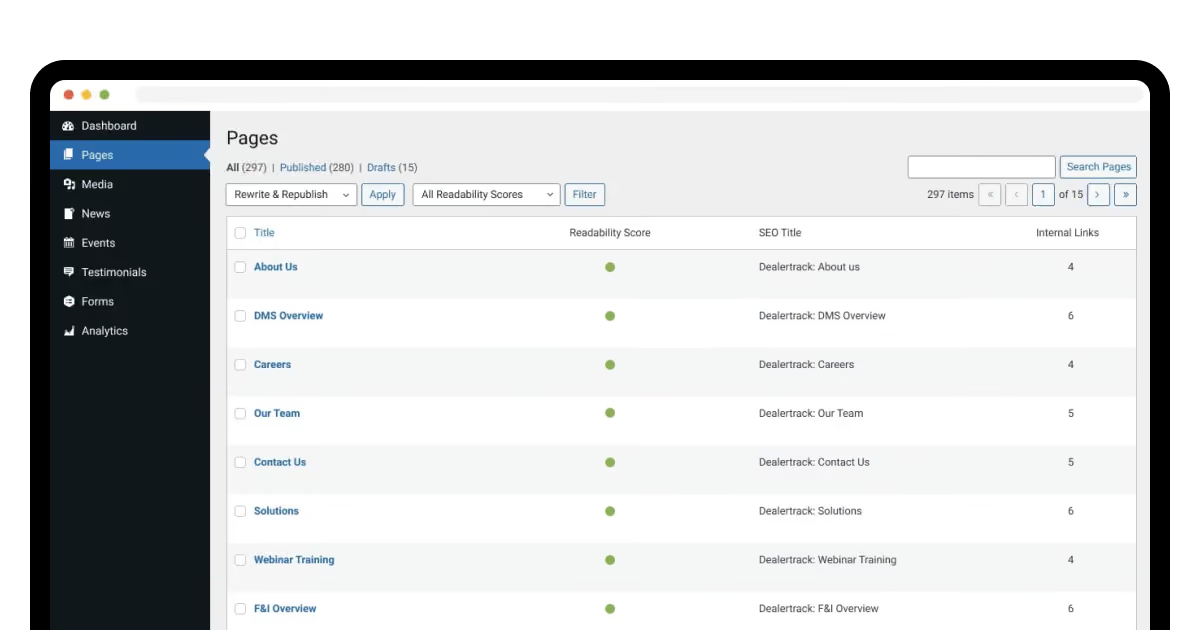
Dealertrack DMS is an option among the top dealer management systems for dealerships where financing workflow is the operational core. Funding packages, loan applications, registration, titling, and rental agreements all run cleanly through the platform, and its lender ecosystem connectivity is among the broadest available. Cloud deployment means no on-premise hardware dependency and real-time data access across locations. Where Dealertrack shows its limits is in CRM depth.
Dealertrack is best for dealerships with high financing volume, multi-lender relationships, and title-heavy operations that want a cloud-native platform. Pricing is custom; contact the vendor.
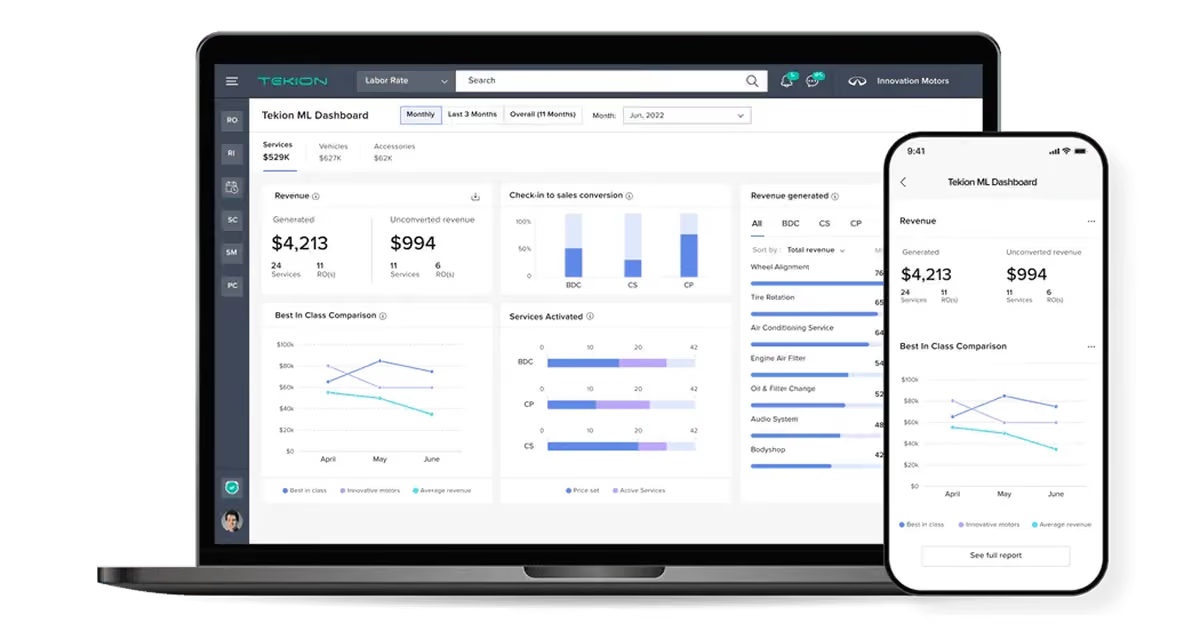
Tekion is the most technically modern platform among best dealer management software options. Cloud-native from the ground up, open API architecture, AI-powered selling features, and a SOC 2 Type II security designation make it a strong fit for dealerships that want a platform that evolves. The UX is cleaner than legacy systems, reducing training friction for new staff. The challenge is accounting and month-end processes, as Tekion rewards mature operations and is less forgiving for teams still establishing foundational workflows.
Tekion is best for tech-forward franchise dealers that prioritize modern UX, open integrations, and an AI-forward roadmap. Pricing is custom for this tool, as well.
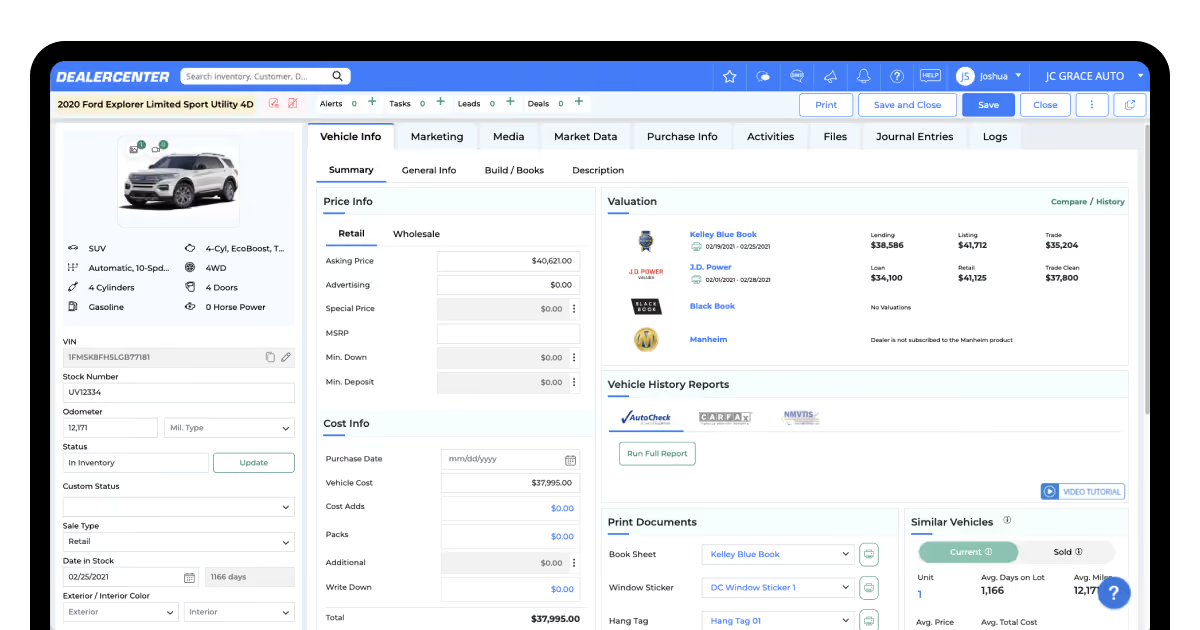
DealerCenter is consistently one of the best DMS for independent dealers. It covers the core modules like inventory acquisition and merchandising, CRM, BHPH workflows, and mobile app access, without the implementation overhead. The mobile tooling is useful for operators who aren't desk-bound, and the BHPH functionality makes it a practical fit for used-car-focused independent operations. The ceiling is real, though: DealerCenter isn't built to scale into multi-rooftop enterprise operations, and integration depth lags behind CDK or Tekion.
DealerCenter is best for independent and used-car dealers, BHPH operations, and small-to-mid-sized dealerships that need core functionality without enterprise complexity. Pricing is custom, typically more accessible than enterprise platforms.
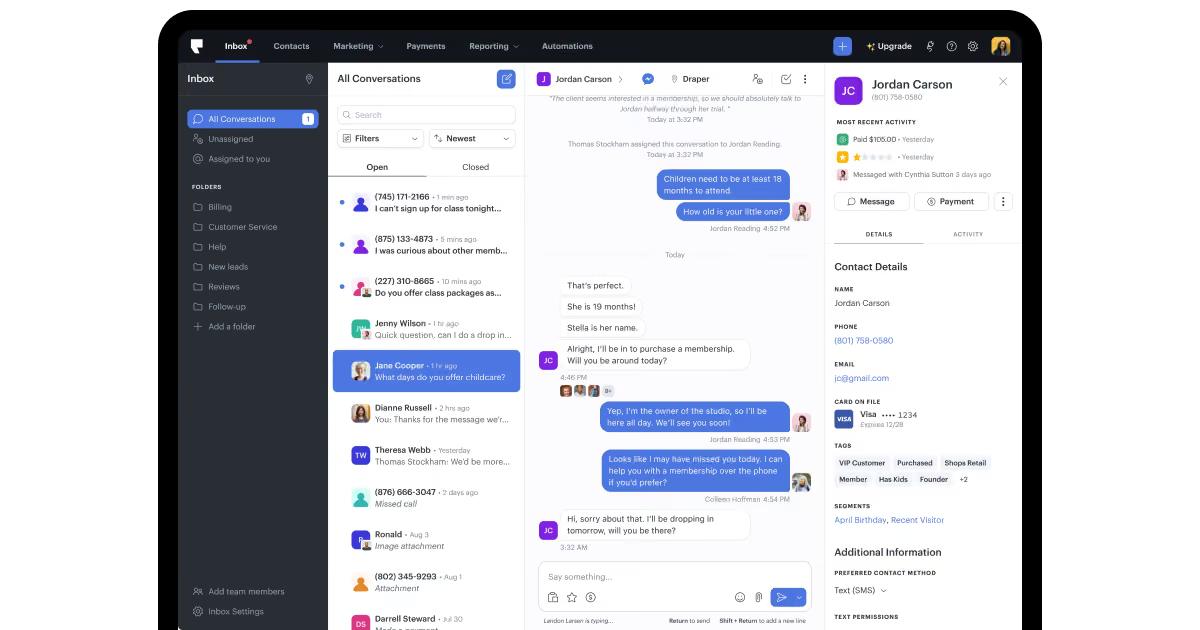
Podium is an AI-powered lead generation and customer communication platform rather than a full-stack dealer management system software. Its value is in consolidating the customer-facing layer: online reviews, text marketing, webchat, integrated payments, and a unified inbox tracking conversations across channels. OEM integrations connect it to the broader dealership stack. For dealerships already satisfied with their core DMS but losing leads in the communication layer, Podium addresses that gap entirely.
Podium is best for dealerships with an existing DMS that need to strengthen lead response, reputation management, and customer communication. Pricing is custom, contact vendor.
VinSolutions is widely regarded as one of the best dealer management system options when the priority is CRM and marketing. Customizable relationship management, performance tracking, data-driven targeting, and campaign tools point to a platform built for managing the customer lifecycle. It integrates with most major DMS platforms, meaning it's typically deployed alongside rather than instead of a core DMS. For high-volume dealerships with structured BDC operations, it's a genuine upgrade over built-in DMS CRM modules.
VinSolutions is best for mid-to-large dealerships with active BDC operations and CRM needs that outgrow what a built-in DMS module can handle. Pricing is custom.
Dabadu XRM is a newer pick among dealership management solution companies, positioning itself around secure, modern CRM with strength in lead management, customer communication, inventory integration, and credit application workflows. Compared to CDK or Dealertrack, it tends to feel more responsive in UX but carries a shallower track record in complex enterprise deployments. The credit application management functionality works for dealerships where financing origination is a significant part of the customer journey.
Dabadu is best for forward-looking dealerships seeking a modern CRM with strong credit workflow support and a clean UX. Pricing is custom.
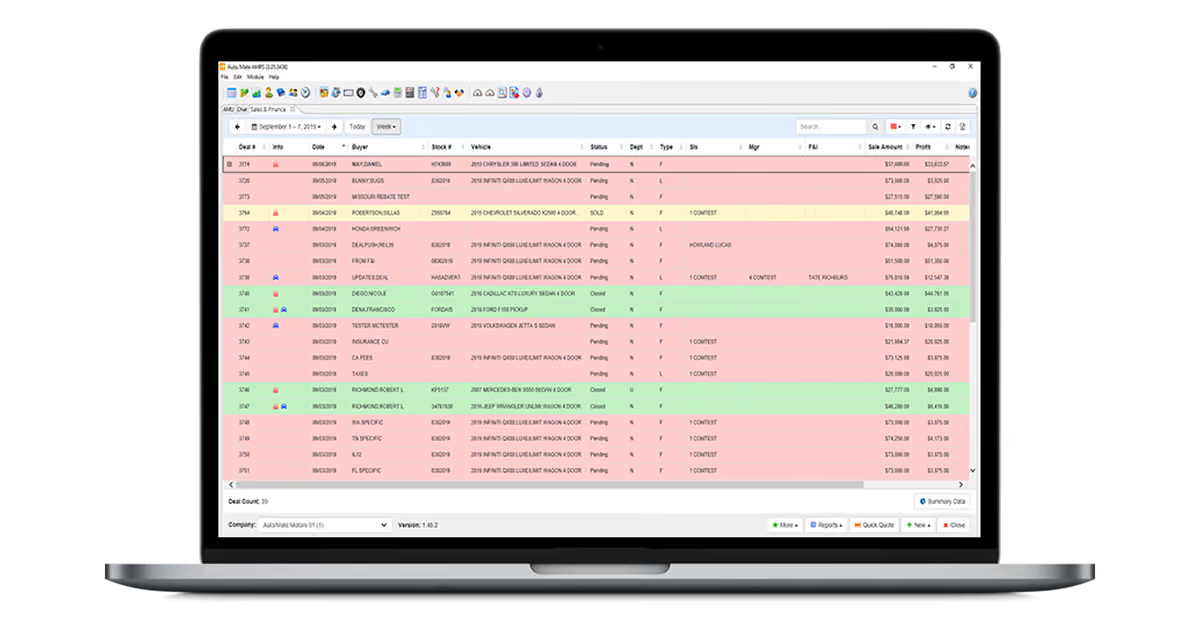
Auto/Mate is a DMS dealer management system that many teams find intuitive in daily use, particularly in accounting and service workflows. The customization options give operations teams flexibility to adapt workflows without requiring vendor involvement at every step. Where Auto/Mate shows its age is in UX modernity compared to cloud-native competitors like Tekion.
Auto/Mate is best for mid-sized dealerships seeking a reliable, customizable best dealer management software option with strong accounting and service department support. Pricing is custom; contact the vendor.
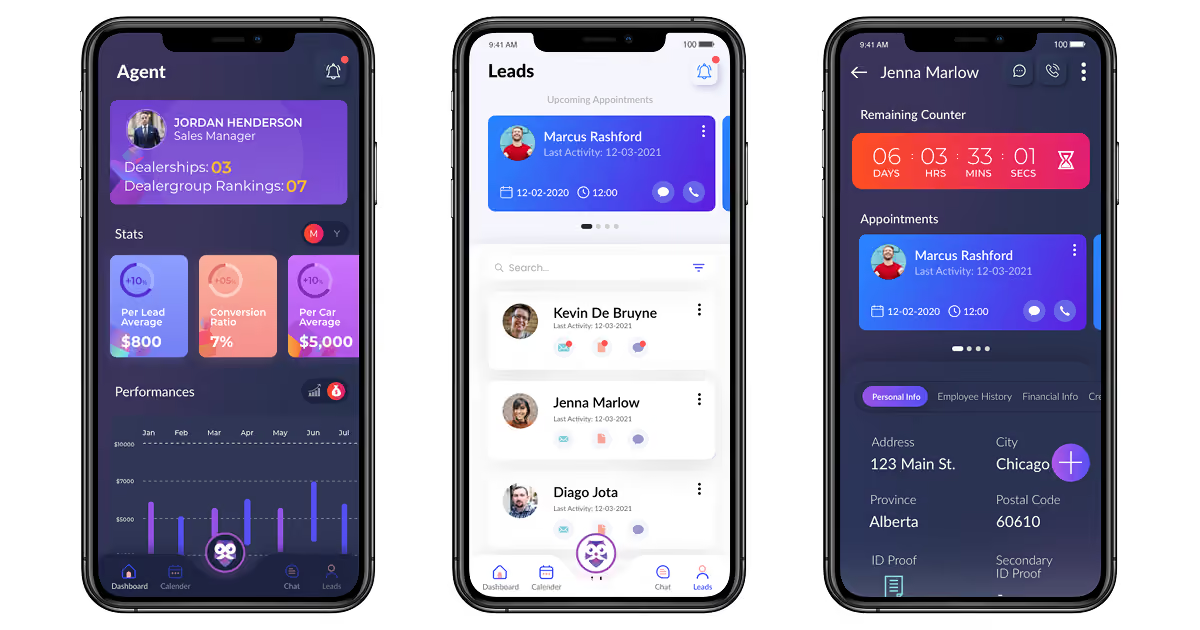
PBS Systems is a software with depth in heavy-duty, truck, RV, and powersports verticals, though it adapts well to standard auto operations that need genuine platform breadth. Its fully integrated suite spans accounting, sales, service, parts, and CRM. OEM compatibility and feature completeness are the recurring reasons dealerships evaluate it seriously, especially operations with complex inventory and high parts volume.
PBS Systems is best for dealerships with complex inventories, specialty vehicle types, and strong OEM compatibility requirements. Pricing is custom for this tool as well.
DealerSocket is among the top dealer management systems for teams focused on improving sales process consistency alongside core operations management. Automated marketing tools, equity mining, and dealership website management give it a stronger customer acquisition layer than most pure-DMS platforms. Its practical advantage shows up in pipeline standardization, as it helps enforce consistent follow-up behavior across sales teams and locations, reducing lead leakage that typically happens between CRM touchpoints.
DealerSocket is best for growth-oriented dealerships that want CRM strength, marketing automation, and sales process support in one connected platform. Pricing is tailored.
Choosing among these platforms ultimately comes down to where your operational friction is highest. If transactions are the bottleneck, a full DMS like CDK or Dealertrack addresses it directly. If you're an independent operation that needs to get functional quickly without enterprise overhead, DealerCenter is the pragmatic answer.
How to choose the right dealer management software
The right DMS decision should be made by understanding where your operation breaks down today, what that costs you in real terms, and whether a given platform can fix that without creating three new problems in the process. The criteria below reflect what we've seen matter in practice.
Workflow fit by department.
The most common mistake is assessing a DMS as a whole rather than stress-testing it department by department. A system that handles F&I can have a service management module that technicians find unusable, which means your service lane, which is often your highest-margin operation, runs on workarounds. Evaluate automotive dealer management systems with each department head present, against their actual daily workflows.
Integration depth and who owns the outcome.
A DMS that doesn't connect cleanly to your lenders, OEM feeds, marketing platforms, and accounting tools creates more manual work than it eliminates. The right question is who owns the outcome when an integration breaks, how quickly it gets resolved, and whether the connection is production-grade or demo-grade. When we built the PWRnet platform, we connected legacy SOAP services, unpredictable REST endpoints, and multiple third-party provider APIs simultaneously. The integration accountability question was the most expensive one to answer after the fact. Getting it defined upfront would have saved significant rework.
Data model and reporting credibility.
If your DMS produces numbers that require manual reconciliation before anyone trusts them, it's functioning as a data entry system. Role-based dashboards, audit trails, and consistent financial reporting across departments are baseline requirements, not premium features. Ask any vendor to show you the month-end reconciliation under realistic conditions before committing.
Pricing structure and total cost of ownership.
Dealer management system pricing is rarely what it appears at the contract stage. Implementation costs, training overhead, integration fees, and the cost of staff hours spent compensating for platform gaps all contribute to real TCO. Enterprise platforms like CDK or Tekion carry significant implementation investment. Smaller groups may not recover quickly enough to justify it. Independent dealerships often find that a more accessible platform, configured well, delivers better value than an enterprise system configured poorly.
Security posture and compliance coverage.
Role-based access control, data encryption, audit logging, and compliance with state-specific titling and DMV requirements aren't negotiable. For multi-state operations, confirm that the platform handles regulatory variation automatically without manual process adjustments per jurisdiction.
Scalability and extensibility.
A platform that works for one rooftop should have a credible path to ten. Open API architecture is the relevant differentiator here: it determines whether you can add specialized tools, connect new OEM relationships, or extend the system without rebuilding it. Evaluate dealer management system providers on their API maturity, not just their current feature set.
As our Head of Engineering, Orest Falchuk, observes: "The question we ask before recommending any platform to a client is whether it was built to be infrastructure or built to be a product. Infrastructure-grade systems fail nicely, recover automatically, and give you visibility when something goes wrong. Product-grade systems look great in a walkthrough and fall apart under load. The difference only shows up when it's expensive to discover."
When is custom DMS development the right answer?
Often, none of the off-the-shelf options fit cleanly. It might be because your workflows are non-standard, your integrations are complex, or you're building something that needs to behave like operational infrastructure. In this case, custom DMS development is worth evaluating.
Let’s review the cases when you need a custom tool the most. It’s often when you have unusual financing structures, non-automotive inventory types, or complex multi-party integrations. Alternatively, it’s sometimes the workflow logic that no packaged platform was designed to support.
There are a few signs that you should choose a tailored solution instead.
If your team is spending significant time working around platform limitations like manual exports, duplicate data entry, and spreadsheets running in parallel, the platform is already costing you more than its license fee.
When the systems you need to connect don't have clean APIs, require custom protocol handling, or involve legacy infrastructure that off-the-shelf vendors won't support, custom development is often faster and cheaper than trying to force an integration that was never designed to exist.
When the way you operate is genuinely different from how your competitors operate, and that difference is a source of advantage, standardizing on a platform that was also designed for your competitors limits what you can build.
We've spent 16+ years building transportation software development solutions across automotive, travel, logistics, and fleet management. It’s long enough to know what breaks in production and how to prevent it. Our team is 90% mid- and senior-level engineers, which means the person solving your integration problem has solved a version of it before.
When we built an AI-powered fleet platform, the route optimization system we delivered reduced empty miles by 8% and overtime hours by 22%. That outcome came from engineers who understood fleet operations deeply enough to build for production conditions. The same approach can be applied to car dealership software. We understand when exactly the real transaction volumes hit the system, and work our way to a truly bulletproof solution.
Our security posture is strong by default. We are ISO 9001 and ISO 27001 certified, sign an NDA on every project, and apply the same data protection standards to a single-dealership engagement that we apply to enterprise clients.
Whether you need a dedicated team or a fixed-scope delivery with clear milestones, our dealership management system development process revolves around your specific use case. Project managers, developers, designers, QA, and DevOps all sit under one roof, so you get one team accountable for the full lifecycle.
A single-rooftop dealer with standard workflows will nearly always find an off-the-shelf solution more cost-effective. A dealer group with multi-brand operations or integration requirements that no packaged platform supports fully should have the conversation with a partner who can assess the gap. This covers whether the gap is wide enough to justify a custom build or narrow enough to solve with targeted integration work on top of an existing platform.
That's the conversation we're set up to have.
FAQ
Can dealership management solution companies migrate data from my current system?
Most established vendors support data migration, but quality varies. Structured data like customer records, inventory, and transaction history typically migrates cleanly. Unstructured data and legacy formats often require manual cleanup. Clarify migration accountability and validate a sample dataset before signing any contract. With custom development, however, you can always be sure the migration goes the way you planned in the first place. With COAX Software, you can be sure about its results and reliability.
Does a DMS dealer management system work for multi-location dealer groups?
Yes, most modern platforms support multi-rooftop operations with consolidated reporting and cross-location inventory visibility. Cloud-native systems handle this best. The key evaluation point is whether the reporting layer gives leadership a consistent view across sites without requiring manual reconciliation at month-end.
Is cloud-based or on-premise car dealer software better for automotive dealerships?
Cloud-based wins for most operations. It offers no hardware overhead, automatic updates, remote access, and easier multi-location scaling. On-premise still suits dealerships with strict data compliance requirements or unreliable connectivity. Hybrid deployments split the difference but add integration complexity that needs dedicated IT management.
What integrations should dealer management system software support as a minimum?
At a minimum, based on our experience, we recommend:
OEM data feeds
Lender and F&I platforms
Titling and DMV systems
Accounting software’
At least one major marketing or CRM tool.
Any gap in these core connections creates manual work that compounds daily across every department touching that data.




























































































_.avif)












%2520explained.avif)

We are interested in your opinion