Supply chain breakdowns always start in the data layer, long before a truck ever leaves the yard. At COAX Software, we've spent 15+ years building logistics and transport platforms. We kept seeing the same root issue. Teams had data from GPS devices, separate reporting tools, and a driver app. None of it reconciled automatically.
That pattern isn't unique to fleet tracking. It's the same gap that separates supply chain execution from supply chain planning. A plan can be flawless on paper. But if the warehouse, the carrier, and the yard aren't talking to each other, the plan falls apart on contact with reality.
This guide breaks down what supply chain execution software does and why it matters more in 2026 than it did five years ago. We'll cover the core processes, the technologies behind them, and the systems leading the market right now. You'll also find practical tips and the KPIs that tell you whether your execution layer is working.
What is supply chain execution?
Supply chain execution is the set of systems and processes that turn a logistics plan into physical movement. It covers warehousing, transportation, labor, and yard activity in real time. Unlike planning, which forecasts what should happen, execution handles what's actually happening right now.
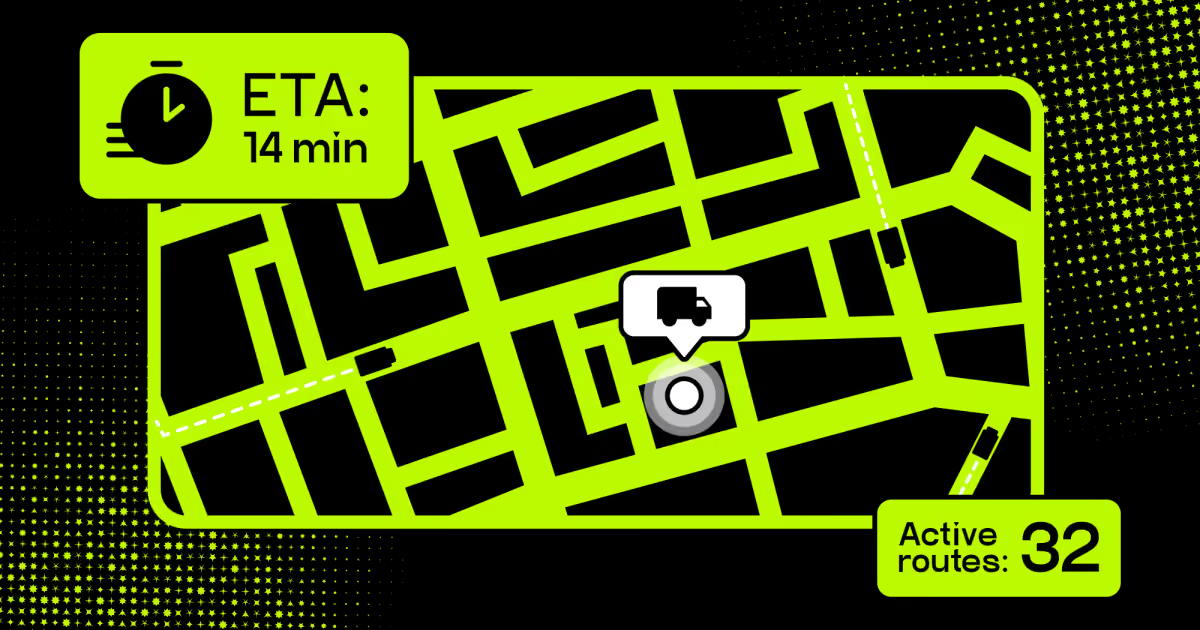
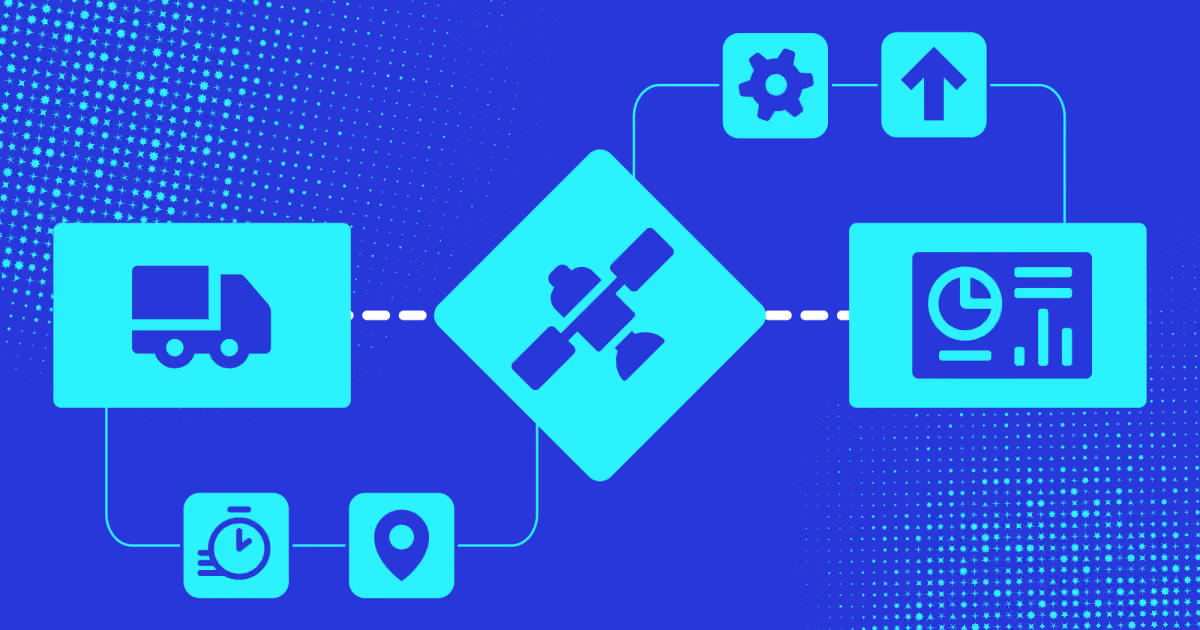
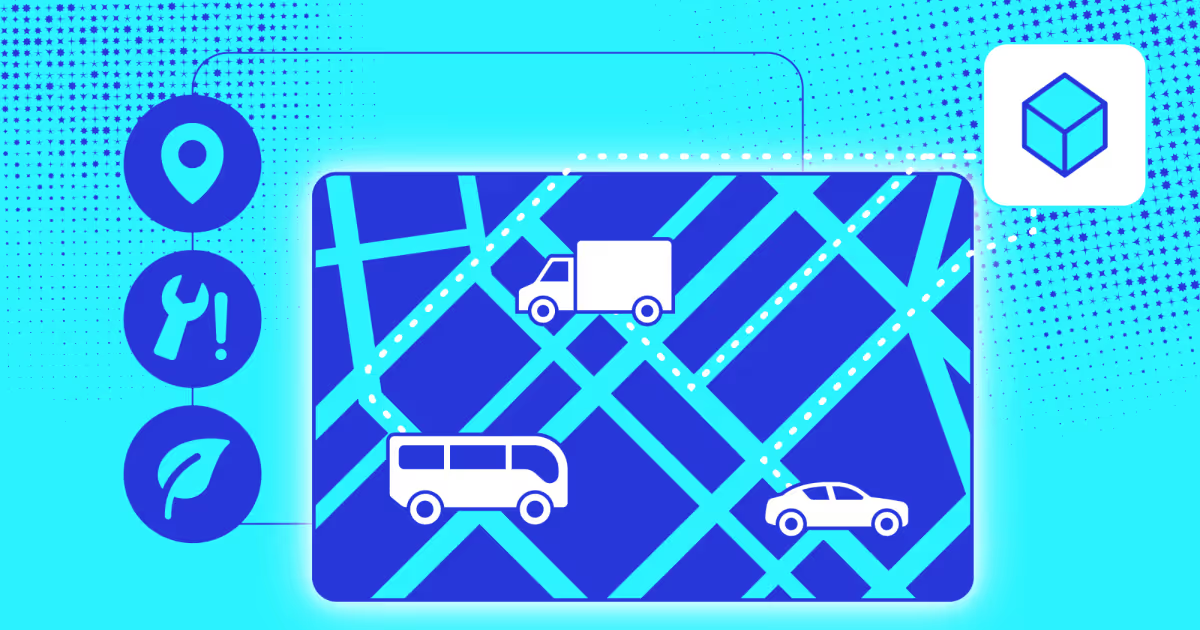
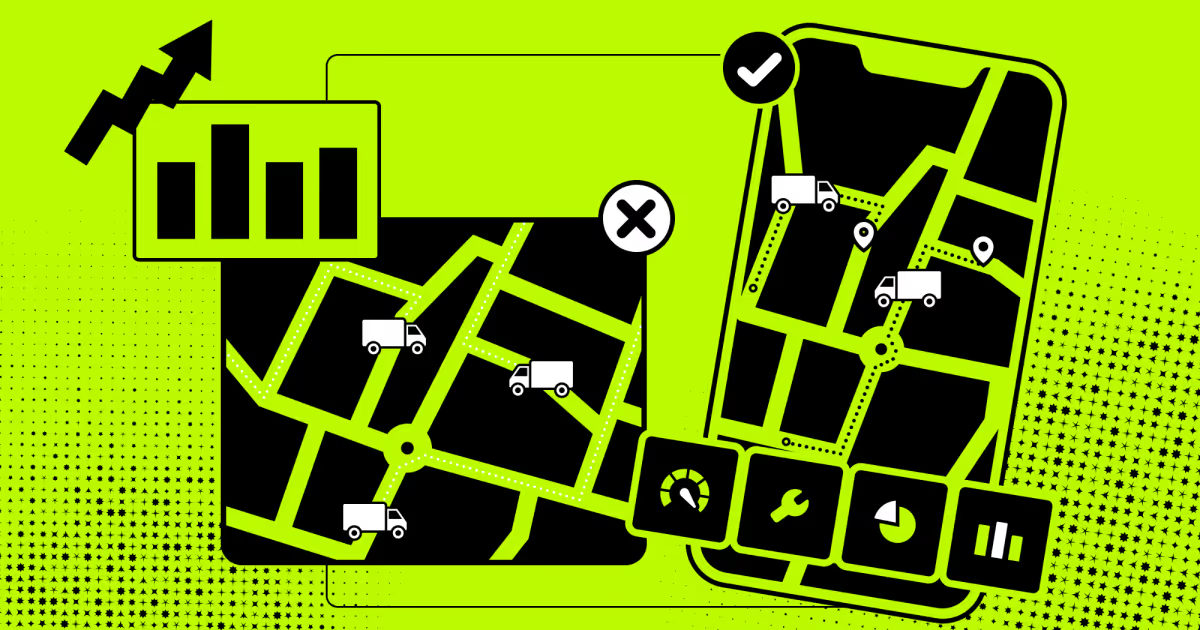
We've built that distinction into real platforms. On our telematics system for fleet operators, the original setup split tracking, reporting, and driver data across separate vendor tools. Each piece worked in isolation. None of them gave fleet managers one accurate picture of execution as it unfolded. Once we unified the frontend layer, the response time to route events improved by 25%. That's the practical difference a proper supply chain execution system makes. Not better planning, but faster, more coordinated action when plans meet reality.
The market is catching up to what operations teams already know. The global supply chain management market is projected to grow to $58.42 billion by 2030. The growth isn't coming from companies buying better forecasting tools. It's coming from companies finally funding the execution layer.
Rising e-commerce complexity, cross-border transportation, and real-time order processing are exposing the gaps we kept seeing on the floor. These were plans that looked fine on paper, systems that couldn't talk to each other, and revenue bleeding out in the space between them.
Supply chain planning vs. supply chain execution
Supply chain execution and planning solve different problems, even though teams often lump them together. Planning answers "what should we do." Execution answers "what's happening, and what do we do about it?" Confusing the two is where most operational pain starts.
Think of planning as drawing the map before a road trip, and execution as gripping the steering wheel when it starts to pour rain.
Timeframe. Planning looks ahead across weeks or months so you can prepare. Execution looks at the next minutes or hours to get things out the door.
Data. Planning relies on history and forecasts based on past trends. Execution needs live, real-time data (where is the truck exactly right now?).
Tools. Planners use software for forecasting and big-picture strategy. Execution uses hands-on tools like WMSs or TMSs to track moving boxes and trucks.
Stakeholders. Planning is handled by the analysts and strategy teams sitting at desks. Execution is run by the operations crew, dispatchers, and warehouse workers on the floor.
Your systems force your floor workers to rely on planning forecasts during a live delivery disruption? This means your execution layer breaks down and directly bleeds revenue.
Supply chain and execution decisions ultimately live in this second column. That's where forecasts either hold up or collapse under real conditions. Get this distinction wrong and you'll staff execution roles with planners' instincts. You’ll get people who optimize for the forecast instead of the truck that's stuck at the dock right now.
Aspect
Supply Chain Planning
Supply Chain Execution
Core Question
What should happen
What's happening now
Time Horizon
Weeks to months
Minutes to hours
Primary Data
Historical, forecasted
Live, real-time
Typical Tools
Demand planning, S&OP
WMS, TMS, YMS
Failure Mode
Inaccurate forecast
Missed delivery, stockout
Owner
Planning or analytics team
Operations, dispatch, warehouse
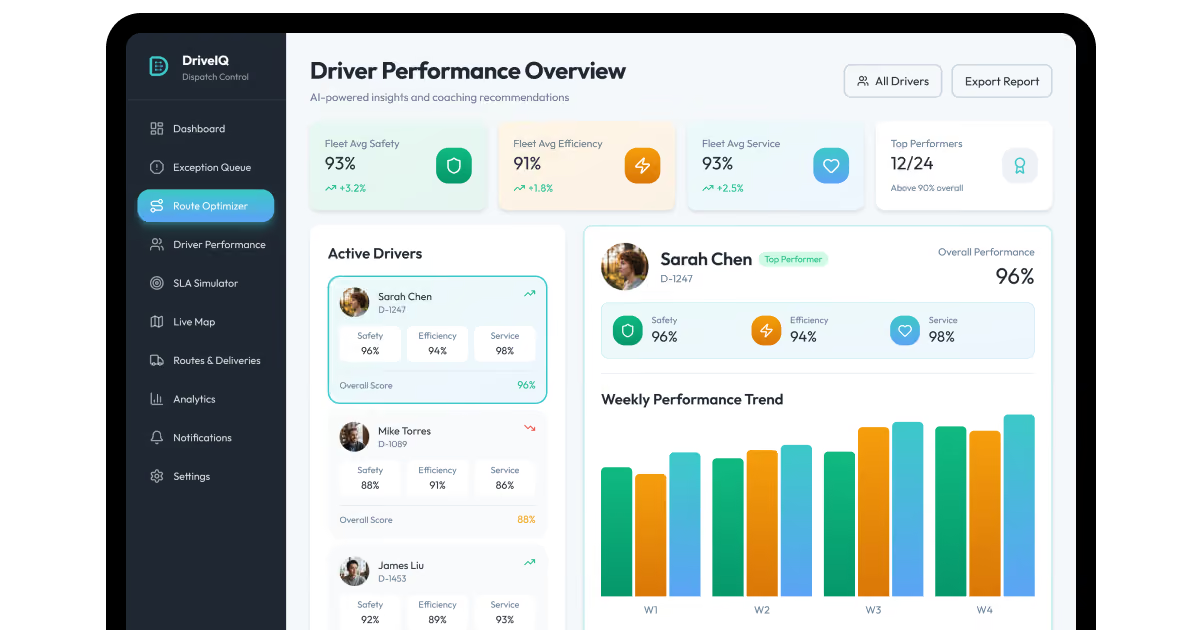
On DriveIQ, a predictive logistics platform we built, this split was the core. The planning side forecasted delivery windows using traffic, weather, and historical patterns. The execution side had to act the moment those forecasts broke down, rerouting drivers. It alerted dispatchers and customers in real time. Supply chain planning and execution can't be treated as one system wearing two hats. They need different data refresh rates, user workflows, and failure tolerances.
Common types of supply chain execution software
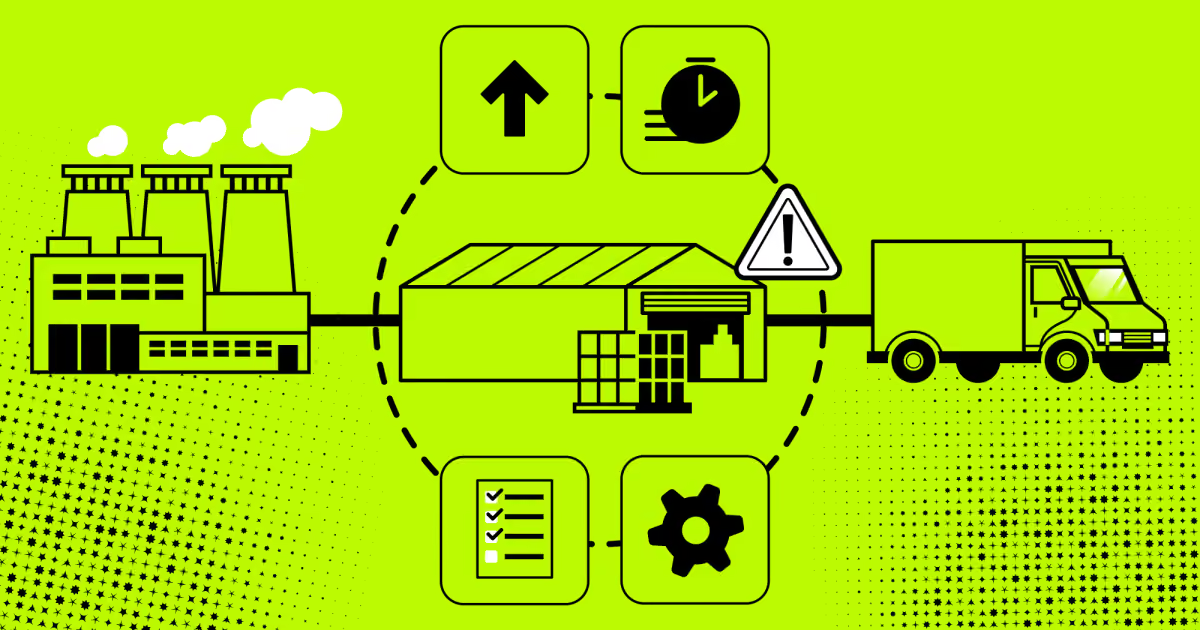
Supply chain execution software isn't usually one specific product. It's a category built from several specialized systems, each handling a different physical layer of the operation. Most companies run more than one of these at once, often without realizing how poorly they talk to each other.
The core execution layer usually starts with two systems:
Warehouse management systems handle inventory tracking, picking, packing, shipping, and returns inside the four walls.
Transportation management systems take over the moment goods leave the dock. This covers route optimization, carrier selection, freight auditing, and shipment tracking.
Beyond those two, several specialized tools fill in the gaps that planning software can't reach:
Yard management systems coordinate trailer movement and dock scheduling. Skip this layer, and a fully optimized warehouse still bottlenecks at the gate. Trucks idle. Demurrage fees climb. Nobody notices until the invoice arrives.
Labor management systems track worker productivity against engineered standards. Without this data, you're blind to capacity. You either overstaff on a quiet week or watch people burn out when volume spikes without warning.
Warehouse control systems connect software to automation — directing conveyors, robotics, and automated storage. When this coordination layer breaks, it doesn't slow things down. It stops them. Millions of dollars in automated hardware sit idle because your main system can't talk to the floor.
Manufacturing execution systems manage production activity: resource allocation, work-in-progress tracking, build quality. Miss this link, and you don't see a production delay until a late shipment is already derailing your delivery schedule.
Each of these systems generates its own data stream, often in its own format. This is where supply chain execution has the same fragmentation problem we ran into on SyncMatix.
"Most execution failures aren't software bugs. They're three systems that were never designed to share data, suddenly being asked to," says Orest Falchuk, Head of Engineering at COAX Software.
Wiring those systems together is what makes execution software actually work. Without that integration, your tech stack doesn't reduce overhead. It becomes overhead.
What are the core processes of supply chain execution?
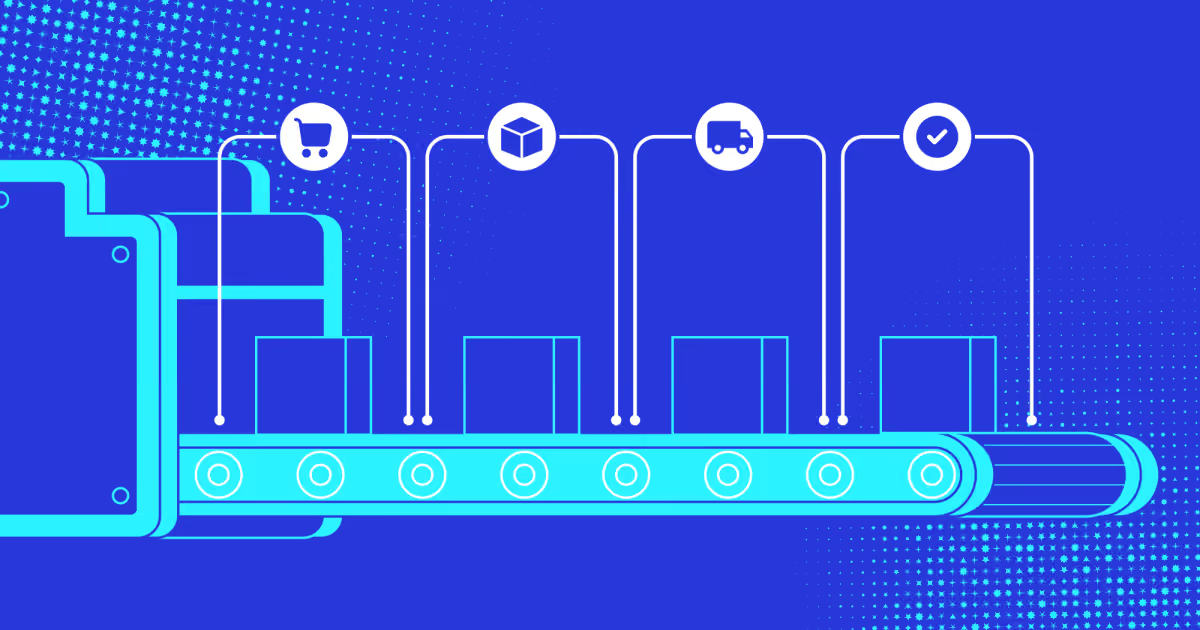
Supply chain execution turns a plan into physical action. It covers order processing, warehouse fulfillment, manufacturing coordination, transportation, and returns, each stage feeding the next. Think of it as the muscle that moves once planning signals it.
The cycle starts with order receipt and processing.
An order comes in through e-commerce, EDI, or manual entry, then lands in an order management system. The system checks stock, validates payment, and reserves inventory before anything happens.
Warehouse operations come next.
Inbound goods get checked against purchase orders, scanned, and routed to storage. From there, picking and packing follow optimized routes that cut travel time across the floor. A two-hour delay in receiving doesn't stay contained. On one platform we audited, it pushed back picking by four hours and missed three carrier pickup windows the same day.
For manufacturers, production execution adds another layer.
Components move from storage to the assembly floor, and work orders track labor, machine use, and build quality. This step keeps output aligned with the original demand plan.
Transportation closes the physical loop.
A transportation management system selects carriers based on cost, destination, and service-level agreements. Freight gets consolidated, documentation gets generated, and shipments move under real-time tracking. A single routing system error can break tracking. Drivers then miss scheduled arrivals. On one project, this error forced overnight layovers. The carrier fees spiked by 40% immediately.
Returns complete the cycle through reverse logistics.
A return request triggers an authorization. Then, the item is inspected and routed for restocking, refurbishing, or disposal. Credits or replacements close the loop financially. Slow return processing traps valuable inventory. Stock sits idle in the warehouse instead of reselling. We saw one client lose 15% of product value. This loss happened simply due to holiday processing delays.
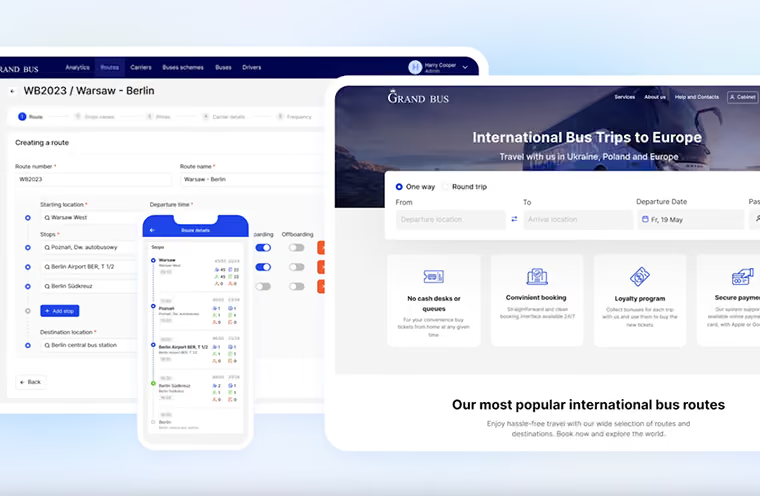
These five stages repeat constantly, often overlapping across different orders at once. On Driven Connect, a transport booking platform COAX built, we saw a related pattern play out. Buyers request quotes while operators bid. Then, the system distributes orders to over four hundred carriers based on fit and price. That same logic, matching demand to the right execution path in real time, applies just as directly to supply chain execution stages we outlined.
Getting B2B supply chain management right means each of these stages needs visibility into the others. A delay in receiving shifts affects everything downstream, from picking schedules to carrier dispatch. That's why supply chain strategy execution depends less on any single stage performing well. Instead, it relies heavily on how cleanly they hand off to each other.
A reliable supply chain execution system doesn't just automate these five stages. It keeps them synchronized, so a problem in one doesn't silently break the next.
Technologies and tools used in supply chain execution
When we integrated RFID scanning and IoT sensors for a regional operator, the hardware went in without much friction. That wasn't the hard part. The hard part was that each device spoke to a different system, in a different format, on a different refresh cycle. Automation on the floor was generating data nobody could act on, because nothing reconciled it fast enough to matter.
That gap between raw signal and usable decision is where execution technology stacks fall apart. Here's how the layers of the supply chain execution software fit together when they work.
On the floor, automation handles the physical throughput. Autonomous mobile robots move pallets and bins without a forklift operator involved. Automated storage and retrieval systems place and pull inventory faster than any manual process. Robotic arm sorters route items by destination before they reach a truck. All of it produces data. None of it is useful until something upstream can read it.
Tracking technology generates that data at every handoff point of supply chain execution. RFID tags confirm hundreds of items in a single scan. Barcode scanners log movement from receiving to final pick. IoT sensors monitor temperature and shock on goods that can't tolerate rough handling. On the regional operator project, a reefer unit ran two degrees above threshold for forty minutes before an alert fired. We caught it, rerouted the load, and documented the deviation. Without the sensor feed, the problem would have surfaced as a spoilage claim or a gap in the audit trail. An unflagged temperature spike costs a relationship and the paper trail you'll need to deal with.
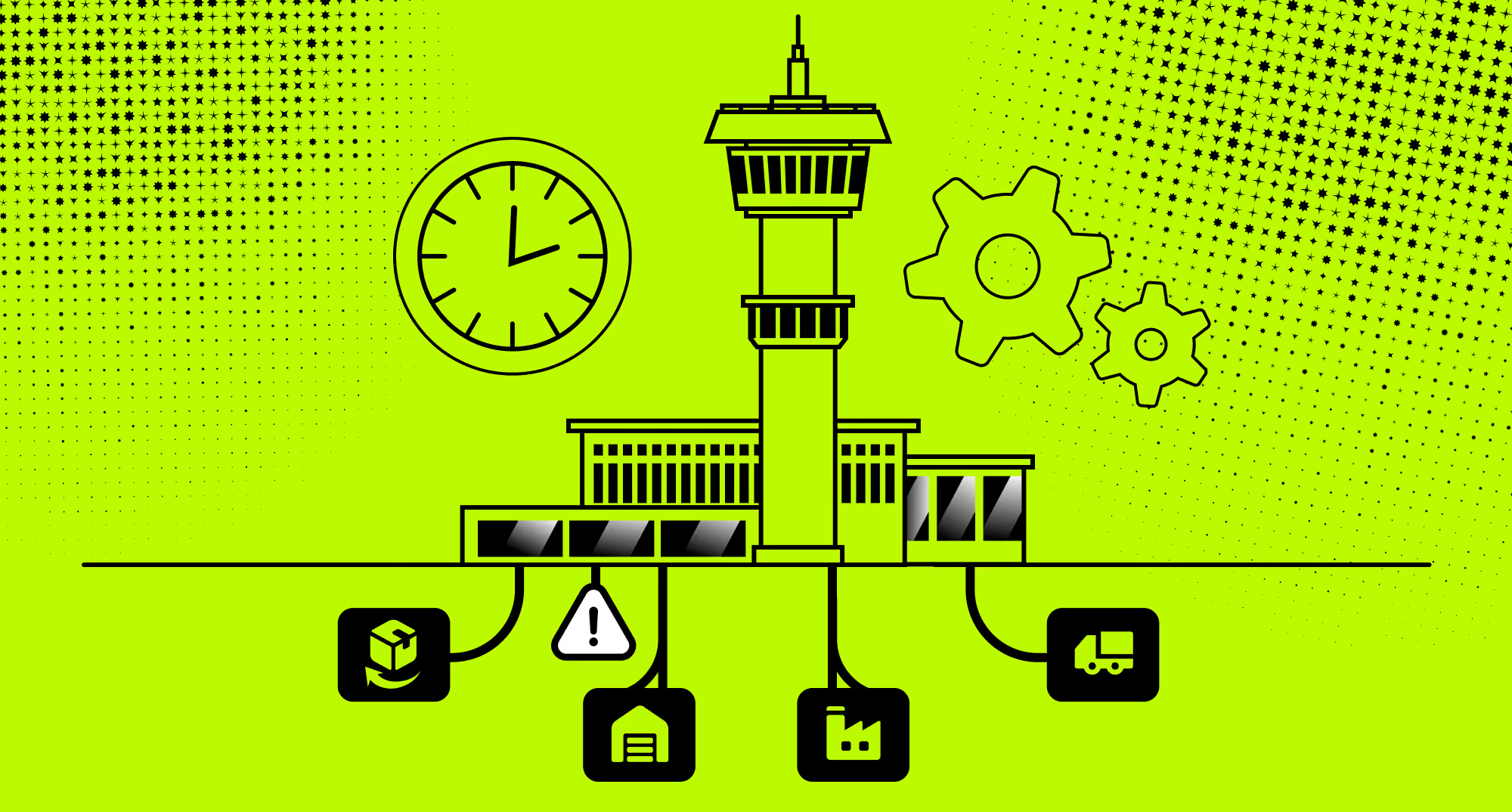
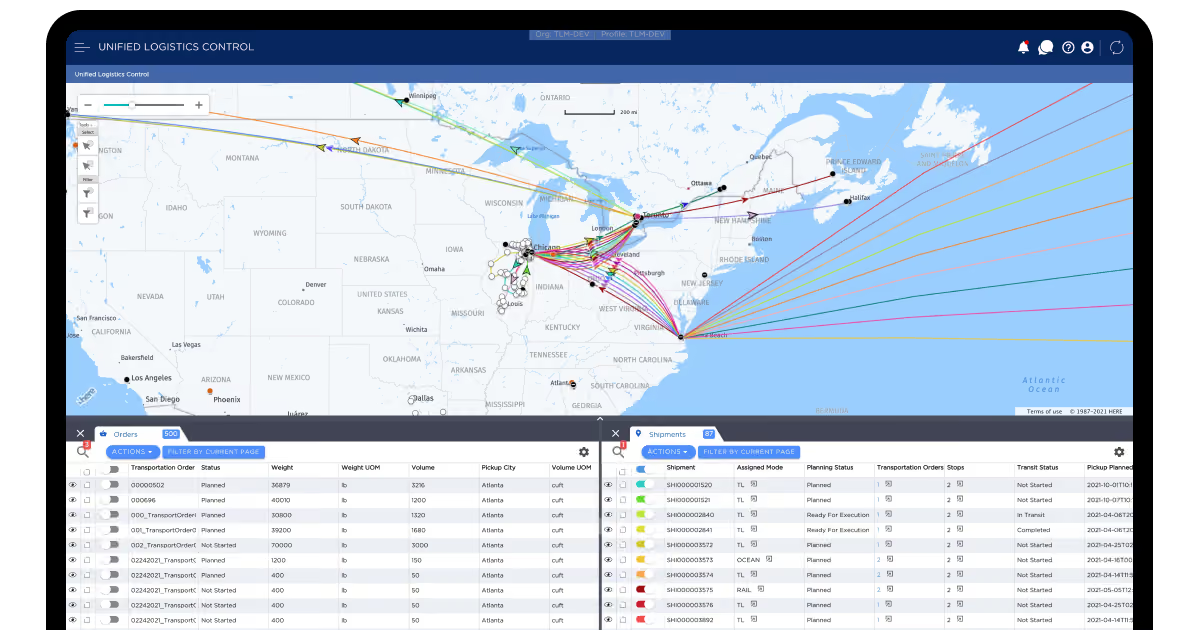
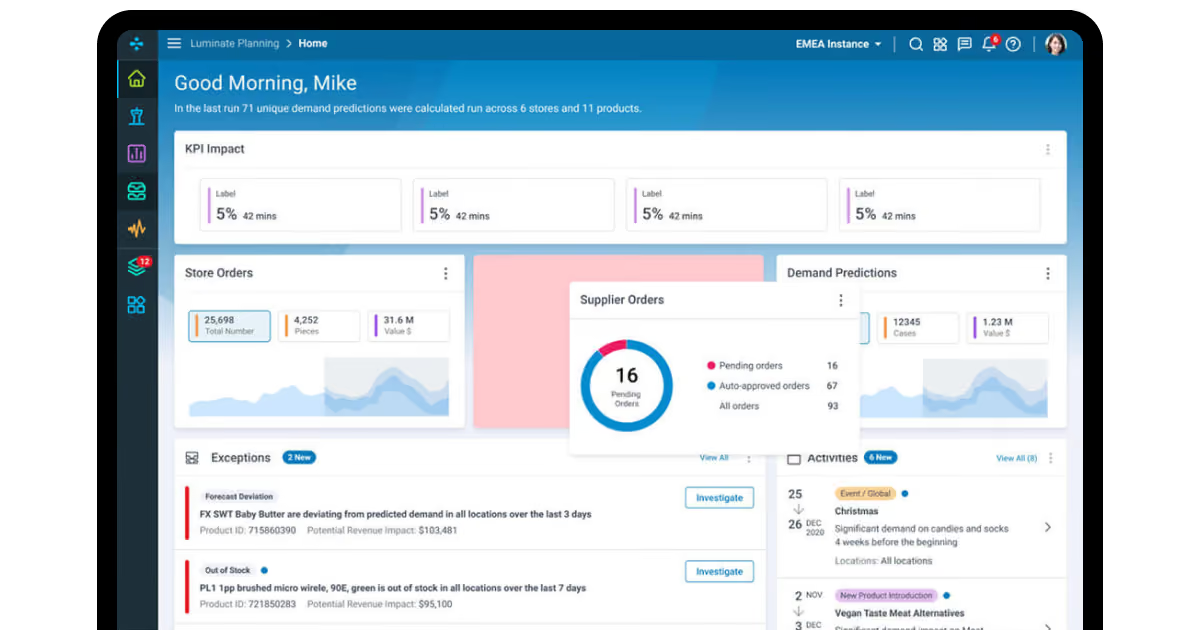
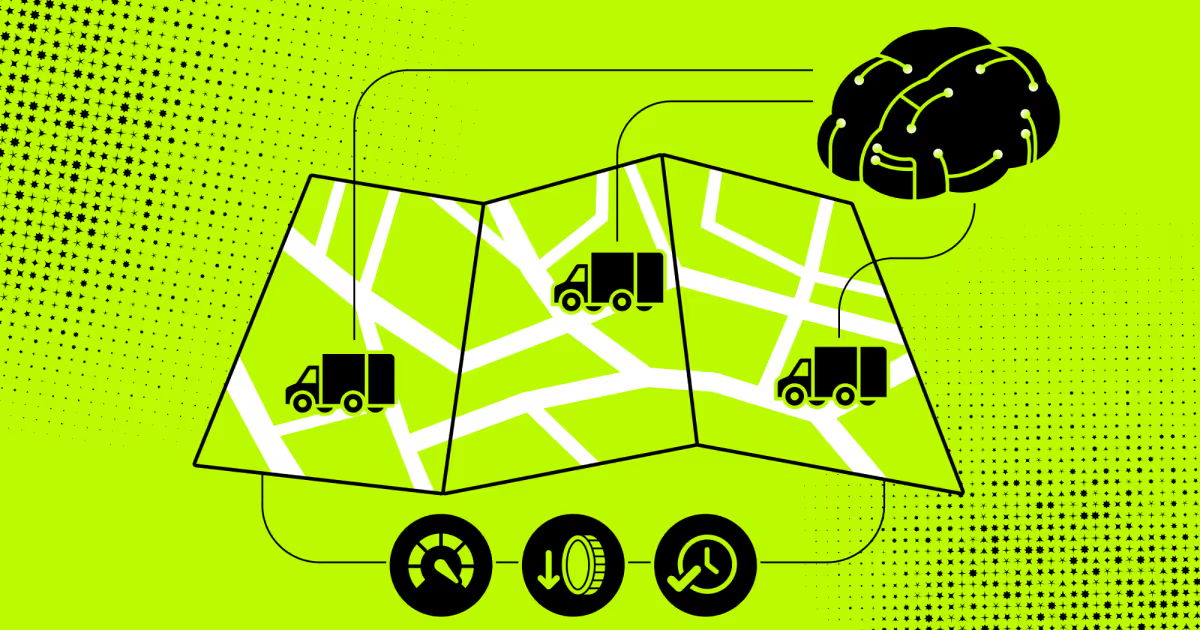
None of that tracking means much without something to reconcile it. This is where the build got interesting. We designed a control tower layer that pulled signals from the yard and the carrier network into a single operational view. Not a dashboard that reported on what had already happened. An intelligence layer that caught a deviation in receiving and surfaced the downstream impact immediately, before it had time to push back picking windows or miss a carrier cut.
Using AI in the supply chain is increasingly common at that reconciliation layer. It flags anomalies during disruptions and adjusts routing before a human has assembled enough context to notice the pattern. Cloud infrastructure underpins all of it. This lets carrier partners and warehouse operators see the same state without waiting on a batch sync.
"Most execution failures aren't software bugs. They're three systems that were never designed to share data, suddenly being asked to," says Orest Falchuk, Head of Engineering at COAX Software.
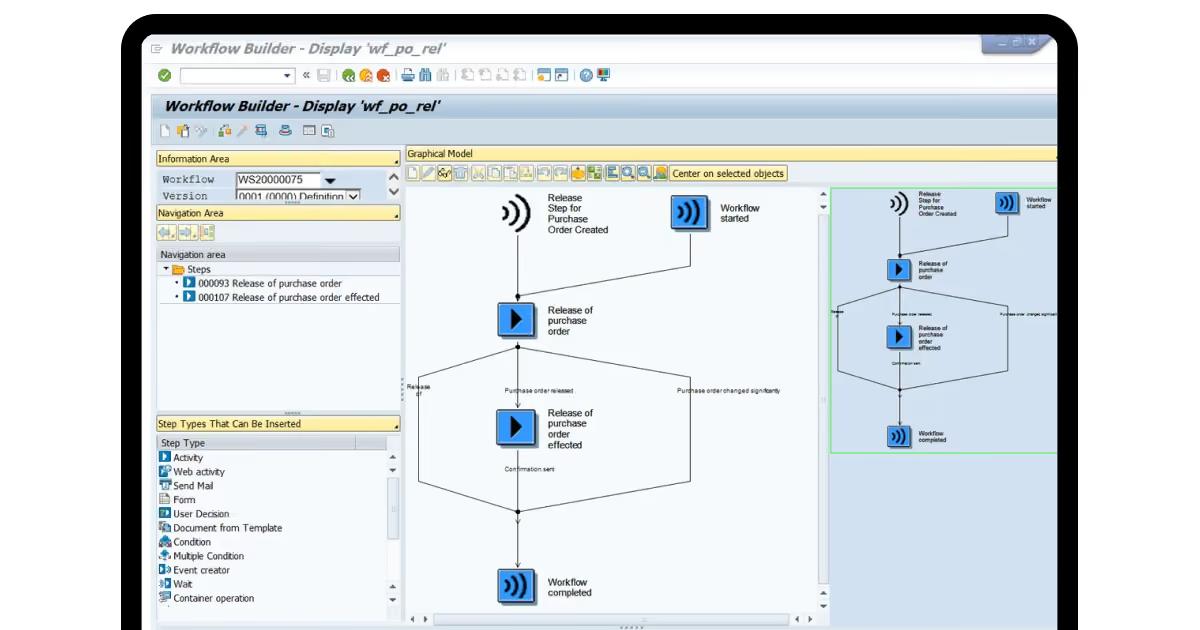
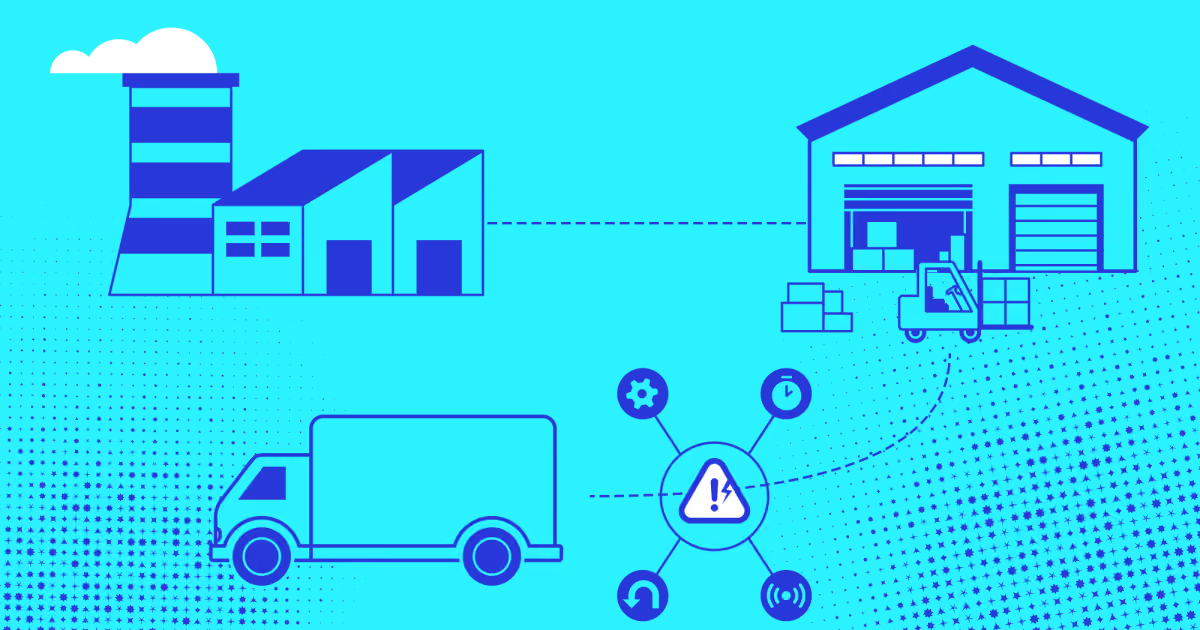
Supply chain change management rarely starts with replacing hardware or swapping platforms. It usually starts with making the systems already in place talk to each other reliably. Once that reconciliation works, automation and tracking tools stop being isolated gadgets generating isolated data streams. They start functioning as a single coordinated execution layer. One where a temperature alert at 2 a.m. triggers a reroute before the driver even knows there's a problem.
What are the benefits of supply chain execution?
From what we’ve seen throughout the decades of our work, most leaders already know execution matters more than planning. New research backs that up, too. According to it, 79% of supply chain leaders now see execution as their main competitive edge. 59% plan to increase execution spending this year. Yet most still lack basic execution capabilities. Only 20% have real-time visibility across operations. That gap between intent and capability is exactly what good supply chain execution software closes.
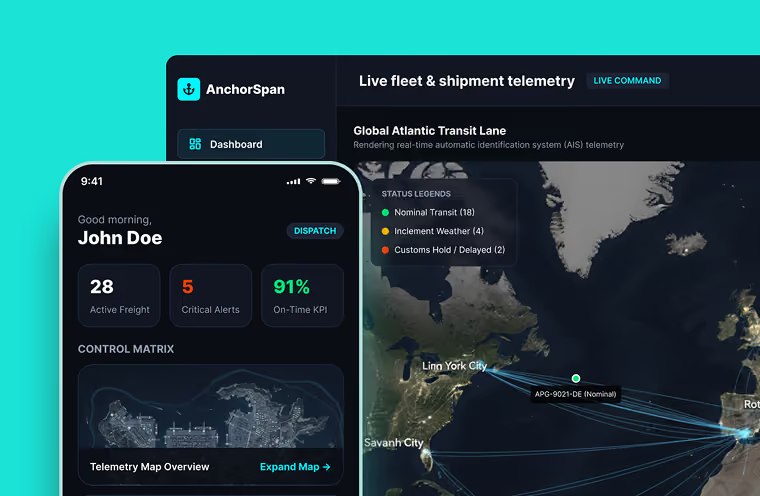
Real-time visibility replaces guesswork. Most teams still react to problems after they happen. Only 6% use automated, prescriptive responses to disruptions. On SyncMatix, a telematics platform we built for fleet operators, unified tracking cut response time to route events by 25%. That's visibility doing real work, not sitting in a dashboard unused.
Automation removes manual bottlenecks. 46% of companies still lack automation for daily tasks. Manual handoffs between systems create delay after delay. Automated workflows handle routine decisions without waiting on a person. That frees staff to focus on actual exceptions, not data entry.
Compliance gets built into daily operations. Regulatory requirements rarely shrink; they keep expanding. On Driven Connect, a UK transport platform we built, emissions tracking and carbon tax payments run automatically per route. That's supply chain execution handling compliance as a byproduct, not a separate project.
Coordinated execution prevents small delays from cascading. A single late shipment can disrupt five other commitments fast. Connected execution catches that delay before it spreads. This is the core promise behind the growing supply chain execution software market.
Strategic decisions get faster and more confident. When execution data is reliable, leaders trust it immediately. Forecasts stop being guesses and start being commitments. That shift is what supply chain strategy execution actually means in practice.
These benefits compound once they work together, not in isolation. A company with visibility but no automation still moves too slowly. One with automation but no compliance tracking still carries regulatory risk. The real advantage comes from combining all five.
What are the key features of supply chain execution software?
We've built pieces of this system more than once. Some solutions we created needed real-time fleet visibility. DriveIQ, an AI logistics platform, needed predictive recovery and live coaching. Across all similar cases, the same feature patterns kept showing up. Here's what a serious supply chain execution system includes.
Real-time tracking
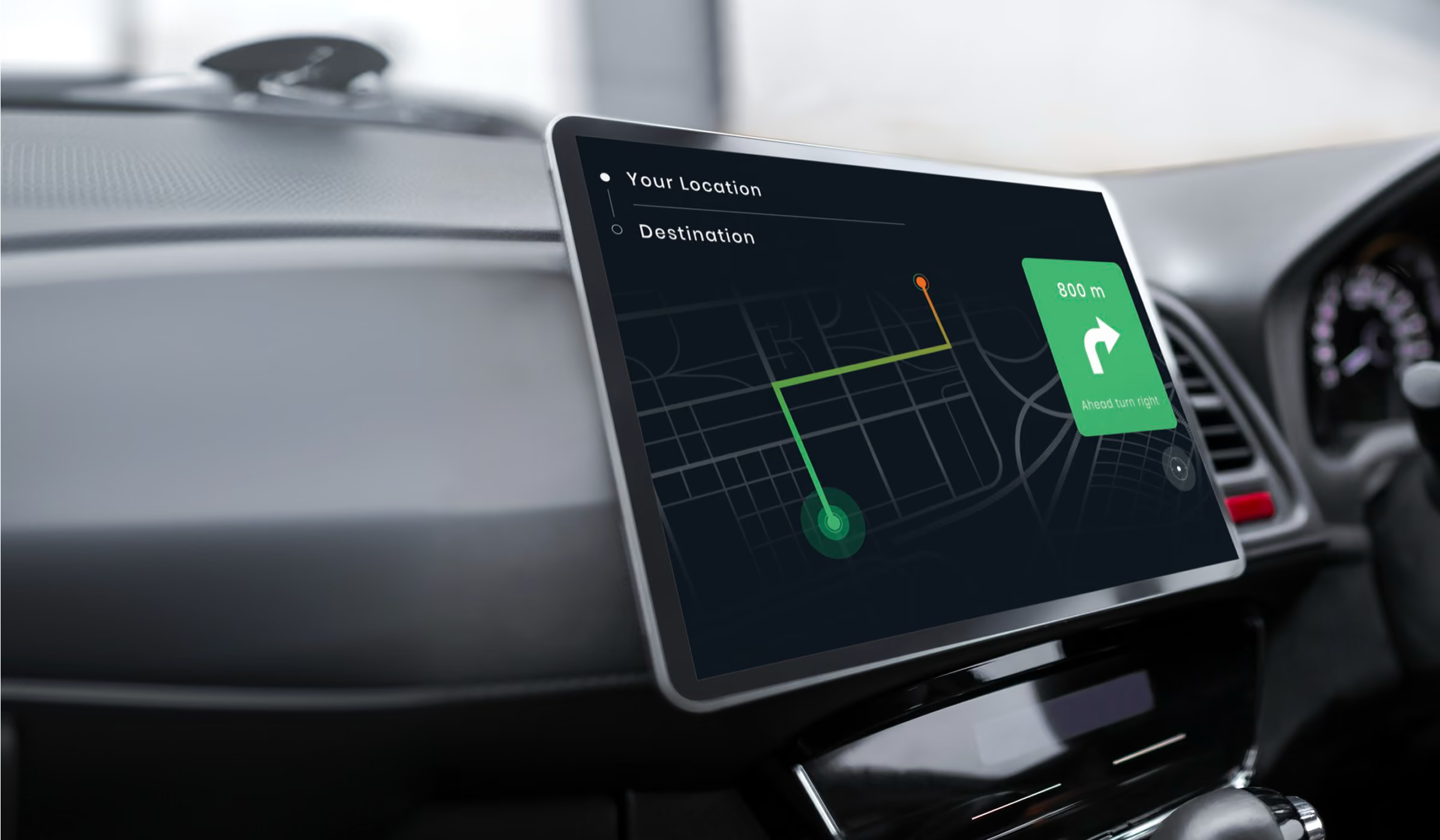
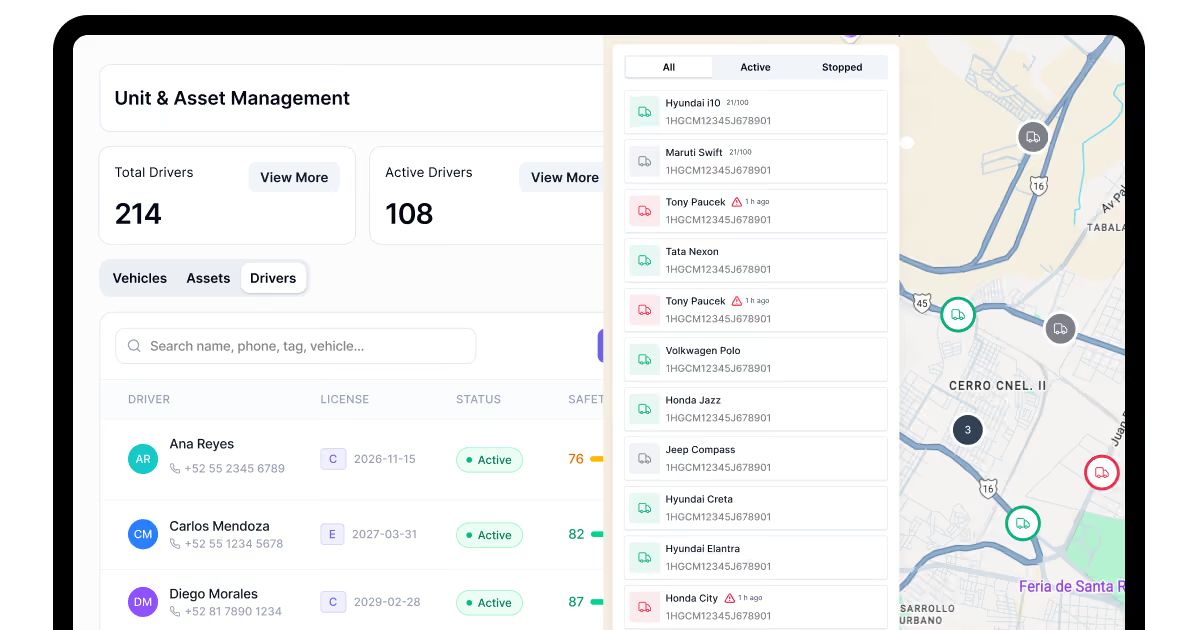
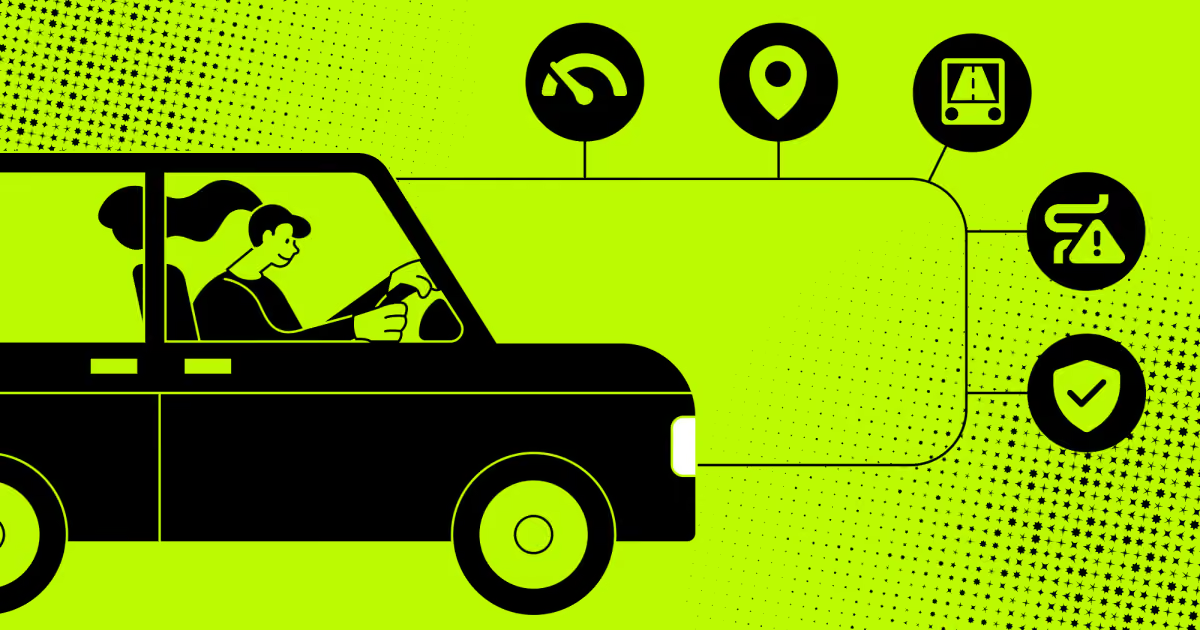
Real-time tracking shows the exact location of every shipment or vehicle. For example, on SyncMatix, the logistics system, GPS and OBD data are streamed continuously from each truck. Fleet managers saw status updates without any lag. Good tracking covers a few specific data points:
Location updates every few seconds, not every few minutes.
Speed and idle time flag inefficient driving patterns early.
Status changes confirm pickups, drop-offs, and route deviations instantly.
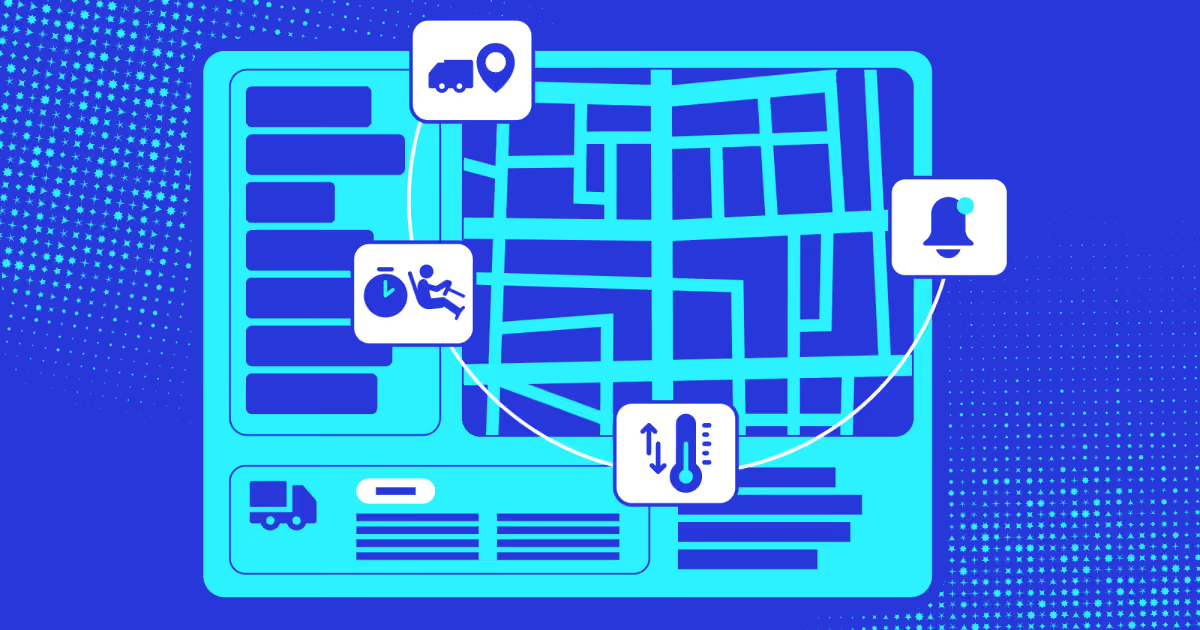
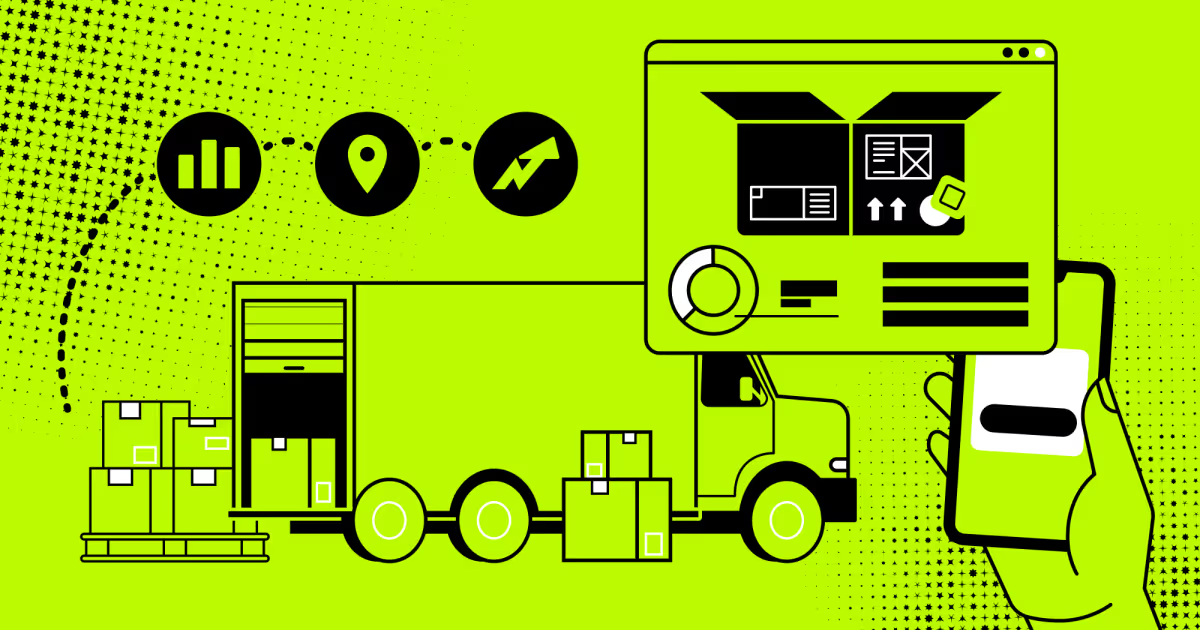
In practice, onboard telematics devices channel this raw data through cellular networks directly to cloud servers. From there, it’s instantly processed into dashboard visuals. This ensures that a temperature spike in a reefer or an unscheduled detour triggers an alert before it becomes a problem.
Automated alerts
Automated alerts catch problems the moment they happen, not hours later. By integrating these streams directly into modern supply chain execution solutions, the system bypasses manual triage entirely.
On SyncMatix, alerts route by relevance. Utilization issues go to fleet managers, task updates go to drivers, system problems go to admins. That filtering cut noise enough that managers stopped ignoring the alert feed.
Route optimization
Route optimization calculates the most efficient path for every active load. It weighs traffic, weather, and delivery windows together. Dynamic algorithms process real-time data instead of static maps. They constantly evaluate hundreds of routing variables simultaneously. It also ensures predictable arrival times to protect tight margins.
On the DriveIQ platform that COAX Software built, route analytics also matched toll costs against true trip expense. Fleet managers used that data to compare similar trips for efficiency gaps. Fuel savings reached 22% once optimization was fully adopted.
Predictive recovery
Predictive recovery is where AI in the supply chain earns its place in the efficient supply chain execution software. Machine learning models analyze historical lane data and live traffic. They continuously scan for early signs of transit delays. The AI calculates the exact downstream impact immediately. It then simulates alternative routes to find the lowest-cost fix.
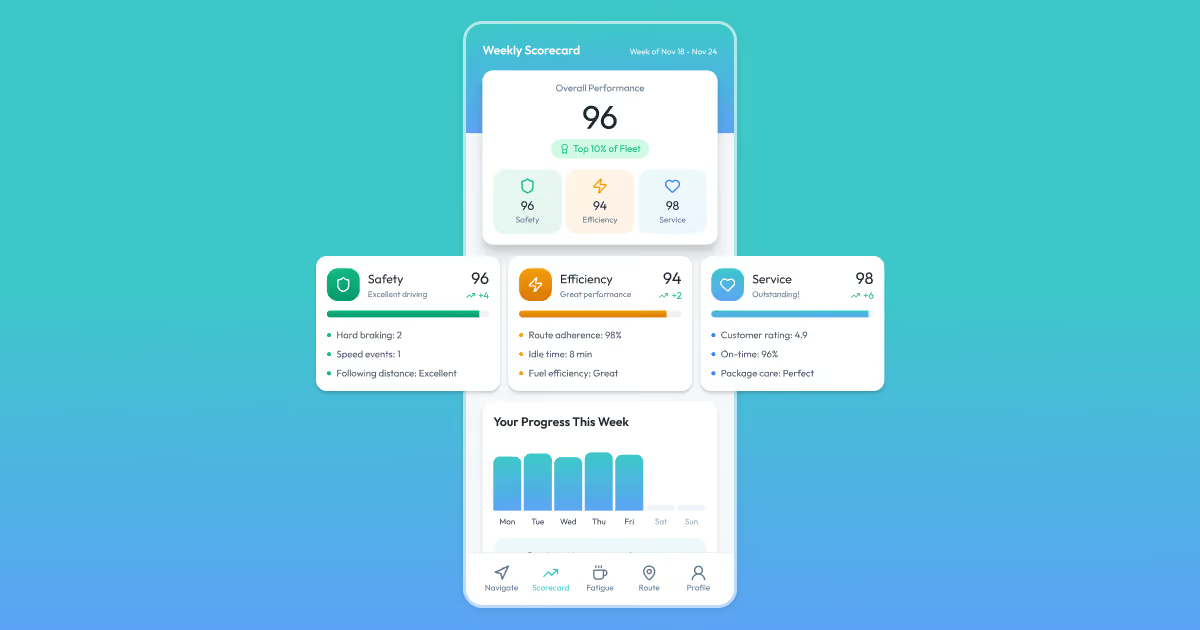
On DriveIQ, the auto-recovery optimizer flagged delays before they became missed deliveries. Dispatchers got one specific reroute suggestion, not five vague options. Accepting it took a single click. That single feature cut empty miles by 8%, and overtime hours dropped 22% from better workload balancing.
"The goal wasn't to replace the dispatcher's judgment. It was to remove the fifteen minutes it took to reach the same decision," says Orest Falchuk, Head of Engineering at COAX Software.
Analytics
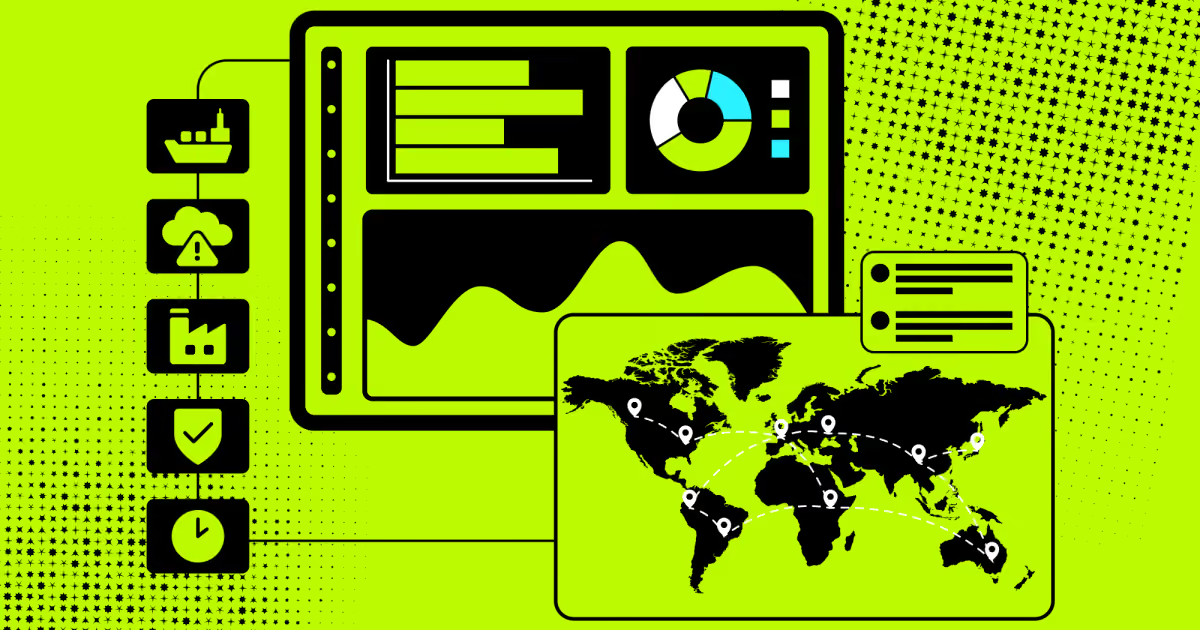
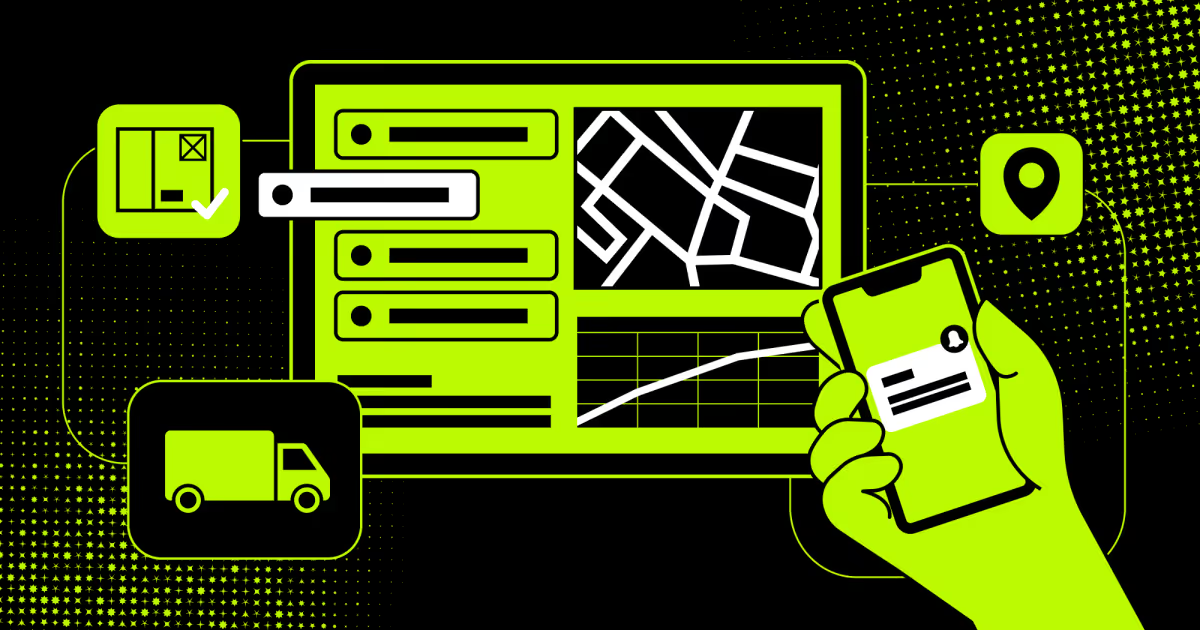
Analytics dashboards turn scattered operational data into usable metrics. The system ingests raw telemetry via GPS and OBD hardware. A centralized ingestion pipeline processes these concurrent pings every few seconds. An analytical engine aggregates this stream to calculate the necessary KPIs and metrics.
For example, on SyncMatix, the advanced analytics engine combines the data points fleet managers need to control costs:
Compares asset performance and flags fuel-consumption outliers. On SyncMatix, this surfaced trucks burning 15% more fuel than peers running identical routes, before a manager ever pulled a report.
Tracks speeding, harsh braking, and driving habits to generate clear safety scores.
Monitors real-time OBD diagnostic trouble codes to predict and prevent breakdowns.
When you bring these insights into a unified interface, you spot trends instantly. This layout drives the business intelligence to lower fuel expenses and optimize fleet size.
Compliance management
Compliance management keeps documentation and regulatory reporting automatic. Modern compliance frameworks link regulatory logic straight to core supply chain planning and execution systems. Built-in calculation engines process live transactional data. The software converts raw route, load, and fuel metrics into audit-ready filings instantly.
On Driven Connect, carriers paid carbon emissions tax directly inside the platform. The system calculated fuel use and emissions per specific route. Nobody had to assemble that data manually before a filing deadline. As a result, filing prep dropped from days of manual reconciliation to same-day submission.
These six features rarely work well in isolation from each other. Tracking feeds alerts, alerts feed recovery, and recovery feeds the dashboards. That's the actual difference between disconnected tools and real supply chain execution solutions. Once the data flows between features, supply chain execution software stops being a checklist and starts being infrastructure.
Best supply chain execution systems
To give you the best options, we ruled out tools that only handle planning. We also dropped old, fragmented tracking apps. We disqualified any tool that forced users to jump between separate apps. The tool had to integrate natively into a supply chain planning and execution ecosystem.
Warehouse and production execution, picking, put-away
Microsoft ecosystem, Power Platform
Per-user subscription, custom quote
Oracle SCM Cloud
Logistics execution, inventory, order management
Oracle Fusion, third-party APIs
Custom enterprise pricing
Körber Supply Chain
Modular WMS, TMS, voice logistics
Open API, ERP systems
Custom modular pricing
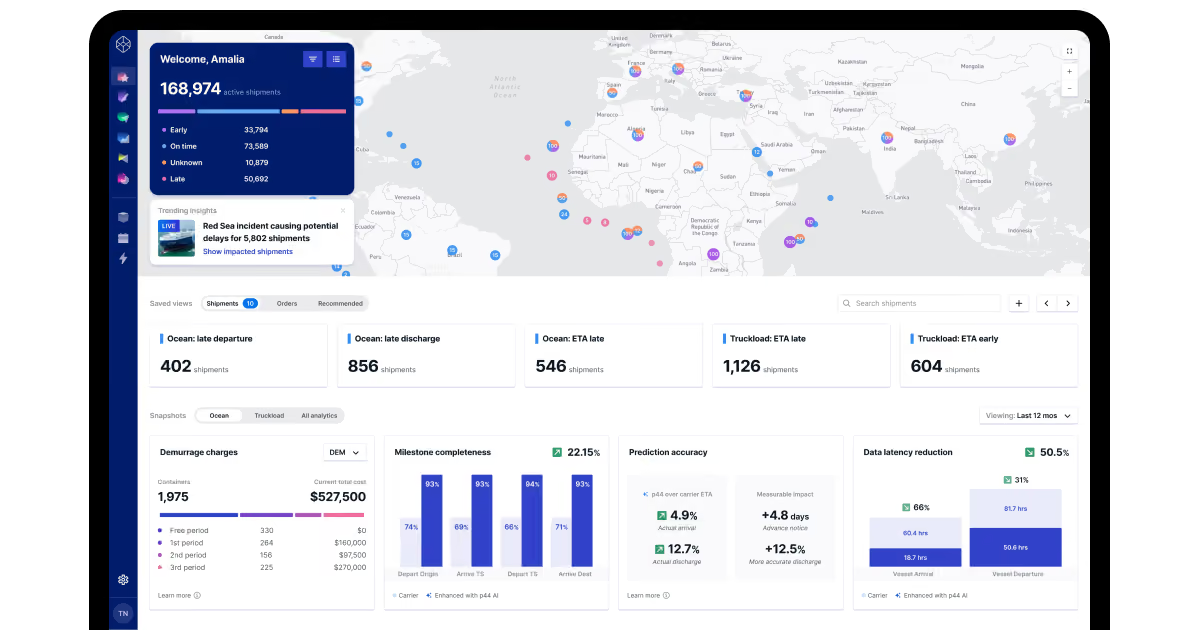
Project44
Control-tower execution, shipment monitoring
TMS, ERP, carrier networks
Custom quote, usage-based options
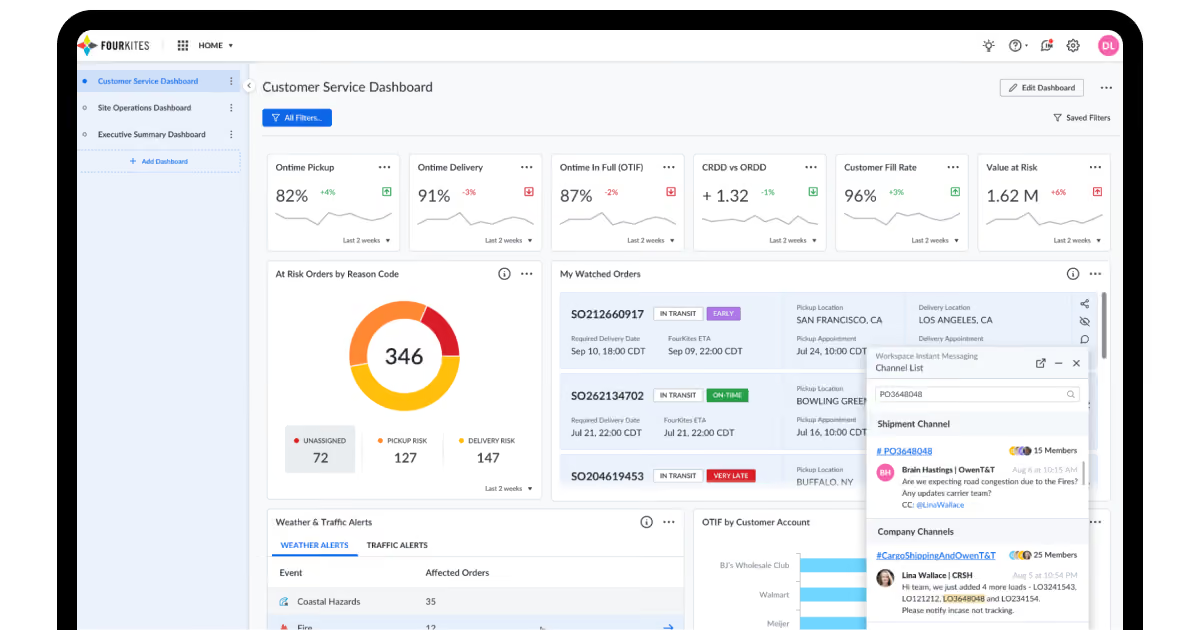
FourKites
Visibility-to-execution, milestone coordination
TMS, WMS, carrier systems
Custom quote, usage-based options
Manhattan Associates runs warehouse, transportation, and labor management on one cloud-native platform. Implementation partners report throughput gains of 10% to 25% across large distribution centers, though most quotes for mid-size deployments start near $200,000. It takes six to nine months before go-live. It is built for enterprise distribution centers where a 1% drop in picker efficiency means missing thousands of delivery windows.
Blue Yonder takes a demand-driven approach to fulfillment. Its supply chain execution system adjusts warehouse priorities automatically when demand signals shift. Reporting tools have drawn some criticism for being hard to customize. This tool is built for high-volume grocery chains. There, a single forecast error can rot thousands of dollars in fresh produce before it ever reaches the shelves.
SAP S/4HANA Logistics Execution links warehouse and goods movement directly to the same data model used for planning and billing. That tight integration reduces reconciliation work between systems significantly. From clients who came to us after using this system, the trade-off was a steep learning curve. Deploy this when you need your financial ledger to update the exact second a forklift operator scans a barcode.
Microsoft Dynamics 365 Supply Chain Management supports configurable warehouse and production workflows. It costs less to implement than the four platforms above, often four to nine months. From our integration experience, the depth in advanced execution scenarios doesn't match Manhattan or Blue Yonder. It fits mid-market companies that want to lower complexity but keep the core execution features.
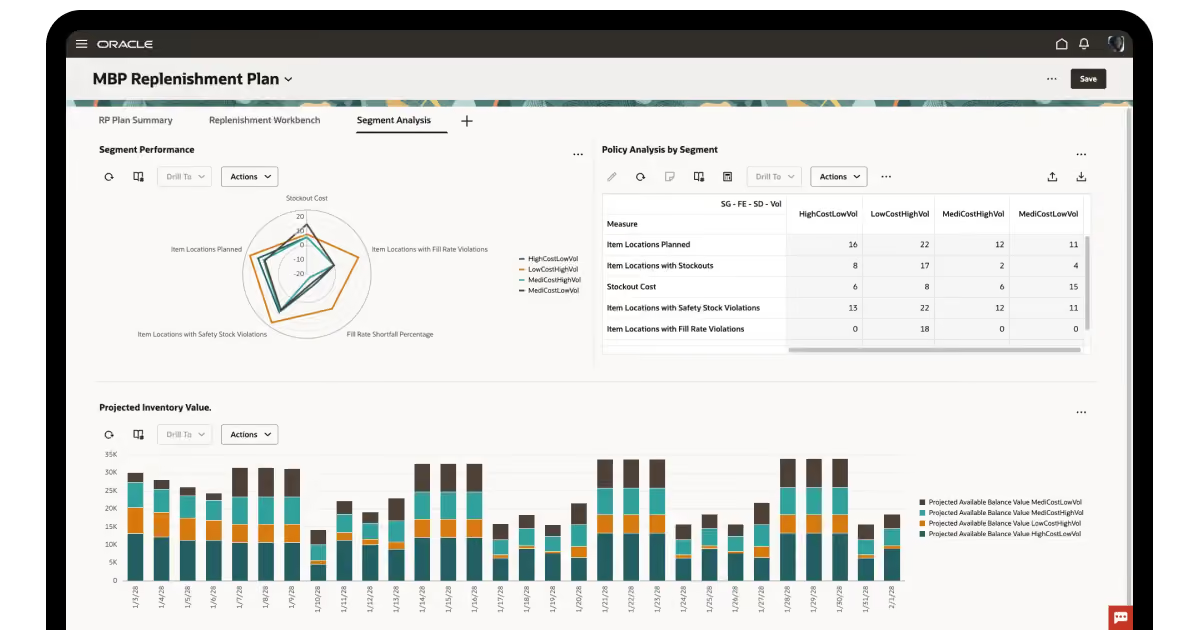
Oracle SCM Cloud spans procurement, manufacturing, and logistics in one modular suite. It's often cited among the best end-to-end supply chain execution platforms, since one vendor covers planning through fulfillment. Companies already running Oracle Fusion get the smoothest integration experience here. Outside that ecosystem, configuration complexity rises quickly. Choose this if you want to eliminate the data lag between your factory floor and your global delivery fleet using a single database.
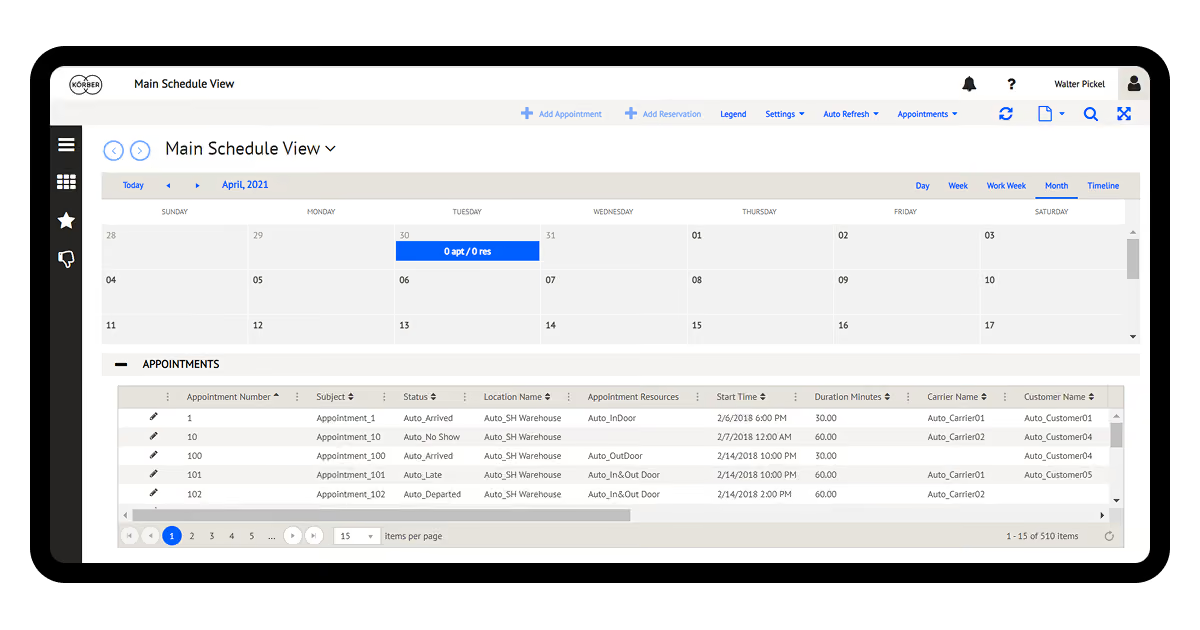
Körber Supply Chain offers WMS, TMS, and voice logistics as separate modules you can mix. That modularity keeps initial costs lower than a full enterprise suite. Cross-module integration sometimes needs extra configuration work, as we’ve seen with the first discovery with a cross-border logistics client. It suits multi-site mid-market operations that want to start small and expand.
Project44 focuses on control-tower execution. It turns shipment events into operational alerts and tasks. We've worked with comparable integration patterns on Driven Connect. Within it, Google mapping services fed real-time route data into the booking platform. That same principle, turning live signals into one coordinated action, drives Project44's appeal for logistics teams managing constant disruptions. Consider that it's less suited to companies that want a deeper warehouse functionality.
FourKites turns shipment visibility into execution tasks across milestone events. It's strong for shippers and 3PLs who need appointment coordination without buying a full TMS. The platform leans more toward visibility than deep warehouse or labor control. It solves the specific crisis where dispatchers waste hours calling drivers to find missing containers. From our experience, this helps cut yard wait times by up to 20%.
"When we look at any platform our clients are considering, the first question is always the same. What happens when one upstream system sends bad data?" says Orest Falchuk, Head of Engineering at COAX Software.
That question shaped every ranking above. A platform that handles clean data well but collapses under messy real-world inputs isn't ready for production. The eight platforms here held up reasonably well against that standard, each within its own scale and budget tier.
How to choose the right supply chain execution system?
Choosing among supply chain execution systems comes down to six practical factors. For example, when evaluating the solutions we outlined in the previous block, three dimensions mattered most to us. These were integration depth, real-world implementation timelines, and how each platform behaves under disruption. A feature list means little if it takes eighteen months to go live or breaks the moment one data source changes format.
We've built systems handling order volumes from a few hundred to fifty thousand daily orders. Here's what actually changes your decision, beyond the feature list.
Your order volume and complexity.
Order volume changes, which tier of platform makes sense immediately. Enterprise platforms like Manhattan and Blue Yonder target 50,000+ daily orders. Mid-market tools like Körber or Dynamics 365 fit far lower volumes comfortably. On the SyncMatix telemetrics system we built, we saw the same scaling pattern. A platform built for hundreds of vehicles needed a different architecture than one built for thousands.
Your existing tech ecosystem.
A platform tied to SAP or Oracle integrates fastest if you're already in that ecosystem. Stepping outside your existing stack adds custom integration work almost every time. That's not a reason to avoid it, but it changes your timeline and budget significantly.
Implementation timeline and internal capacity.
Enterprise suites commonly take twelve to twenty-four months to go live. Mid-market platforms often launch in four to nine months instead. Be honest about whether your team has bandwidth for a year-long rollout right now. A platform you can't properly staff during implementation rarely performs well after launch either.
How the system handles disruption.
This is the criterion that many buyers skip during evaluation. Ask any vendor exactly what happens when one data source goes down. The strongest supply chain execution definition in practice is a system that keeps functioning when one piece breaks.
Total cost beyond the license.
License cost rarely tells the full story here. Implementation services, custom integrations, and ongoing maintenance can double the first-year budget. Mid-market WMS projects alone often run 25% to 40% over initial estimates. Build that buffer into your budget from the start.
Whether off-the-shelf actually fits.
Some operations don't map cleanly onto any of the eight platforms above. A logistics company with an unusual workflow or cross-border carrier coordination hits the limits of generic software fast. This is especially true for teams managing multi-currency tendering or non-standard fleet mixes. That's where supply chain software development built around your process outperforms a forced-fit vendor license.
We've watched clients try to bend Manhattan or Dynamics 365 around a process those platforms were never designed for. At that point, a custom build usually costs less over three years than fighting a rigid system every quarter.
At COAX, over fifteen years of building logistics and transport platforms taught us one thing. That work taught us where generic WMS and TMS platforms actually break under real operating conditions. We don't theorize about edge cases - we've built around them directly.
We design for growth from the first sprint, not as a later rewrite. On the Driven Connect transportation system, AWS infrastructure scaled the platform from an MVP to over four hundred active operators. The same approach applies whether you're handling five thousand orders a day or fifty thousand.
You get one team from strategy through launch, not a relay race between vendors. Product managers, developers, designers, and QA engineers work under one roof, with DevOps handling infrastructure from day one. That continuity matters most exactly when requirements for your supply chain execution software shift mid-project. They often do, and at COAX, we treat it as a challenge worth taking.
Tips for successful supply chain execution
Most advice on this topic sounds great in a deck and falls apart on a Tuesday afternoon. We've built systems where shift hours got disputed, GPS routes split mid-drive, and invoices needed to balance to the cent. Here's what held up in production.
Verify before you automate anything downstream. Bad data at the entry point poisons every stage after it. On DrivenPeople, a driver hiring platform we built for UK transport operators, credential verification ran at 98.7% approval precision before drivers could even apply. Skipping that step would have broken every supply chain execution stage that followed.
Build approval gates into time-sensitive workflows. Letting one side self-report hours or status invites constant disputes later. DrivenPeople required operator approval before any shift was finalized. This hit 99.2% accuracy, matching submitted hours to approved ones. That single gate prevented far more cleanup work than it added friction.
Design for recalculation, not just initial planning. A route or schedule that can't adjust mid-execution becomes useless the moment reality shifts. On Road&Rally, a group navigation app we built, the system recalculated routes automatically the moment one driver took a detour. That same logic applies directly to components of supply chain execution like rerouting and re-slotting.
Automate the math, not the judgment calls. Invoice generation, fee calculation, and payment timing are perfect automation targets. DrivenPeople automated invoicing entirely, cutting billing errors to nearly zero. Judgment calls, like approving an unusual shift, still need a human in the loop.
Plan for degraded connectivity, not just ideal conditions. Systems that only work with a perfect signal fail exactly when you need them most. Road&Rally's offline mode kept navigation functioning when cellular service dropped during rural drives. Supply chain execution in the field needs that same tolerance for spotty connections.
Match filtering criteria to real qualification standards, not vague ones. Vague requirements produce a flood of unqualified applications or orders. DrivenPeople's smart filtering pushed the match rate to 89% of applications meeting minimum requirements. Specific, enforced criteria save more time than any amount of manual review.
These tips share one pattern: build for the messy case, not the clean demo. A system that only works when everything goes right isn't ready for real operations.
How to measure the success of supply chain execution
KPIs are how you know whether supply chain execution is actually going as planned. They split into logistics and transportation, warehousing and fulfillment, and inventory and financials. Each metric answers a specific operational question.
Logistics and transportation metrics
Logistics and transportation metrics track what happens once goods leave the warehouse. By capturing data points in real time, you isolate shipping bottlenecks before they impact customer relationships.
On-time and in-full (OTIF) measures whether a delivery arrived by the requested date with every item included.
Perfect order rate counts an order as successful only if it's on time, complete, undamaged, and correctly documented.
Freight cost per unit tracks the actual cost to move goods, often measured per ton or per pallet.
Lead time captures the full elapsed time between order placement and final delivery.
These four numbers together show whether your transportation layer of supply chain strategy execution is reliable. Consistently monitoring this matrix allows managers to shift from reactive firefighting to proactive carrier optimization. On the cross-border transport platform we built, adding real-time tracking to isolate these bottlenecks helped the team catch delayed border handoffs early, improving their baseline OTIF score by 12% in the first quarter.
Warehousing and fulfillment metrics
Warehousing and fulfillment metrics track what happens inside the four walls. A unified software platform monitors these storage environments. Supply chain execution software does it by centralizing performance analytics, equipment utilization, and driver performance.
Order cycle time measures how long it takes to pick, pack, and dispatch a single order.
Order accuracy rate tracks the percentage of orders fulfilled without item or quantity errors.
Warehouse cost per order is the total operational cost divided by the number of orders fulfilled.
Inventory shrinkage captures loss from damage, theft, or administrative error between purchase and sale. On one warehouse deployment we audited, unflagged shrinkage was quietly eating 2% of inventory value a year, invisible until the year-end count forced the question.
A warehouse can look efficient on cycle time alone and still bleed money through shrinkage.
Inventory and financial metrics track how efficiently capital moves through stock. Consolidating these data streams into one system helps businesses scale their expansion. It directly translates vehicle data into fuel, cost, and fleet size savings.
Inventory and financial metrics
Inventory and financial metrics track how efficiently capital moves through stock. For telematics providers, this visibility forms the core business intelligence that proves real financial savings.
The inventory turnover ratio shows how many times stock gets sold and replaced in a given period.
Days sales of inventory (DSI) measures the average time to convert inventory into a sale.
Carrying cost of inventory captures storage, insurance, and depreciation relative to total inventory value.
High turnover with low carrying cost usually signals a well-tuned supply chain execution system. Unifying these data streams helps fleet managers control costs and optimize fleet size instantly. For example, when we consolidated asset tracking for a large regional fleet, matching real-time vehicle utilization against holding costs revealed ten underused support vehicles, allowing the client to cut unnecessary lease overhead within 30 days.
"KPIs only matter if the data feeding them is trustworthy. We've seen dashboards report perfect accuracy while the underlying systems were quietly out of sync," concludes Orest Falchuk, Head of Engineering at COAX Software.
Tracking these numbers manually across spreadsheets defeats the purpose fairly quickly. That's where COAX's work in AI, analytics, and complex system integrations comes in directly. We've built dashboards that pull live data into one view. They combine warehouse, transportation, and financial systems seamlessly. This solves the same reconciliation challenge found in the best end-to-end platforms on the market today.
FAQ
What is supply chain execution, exactly, versus fulfillment software?
This confuses people because execution overlaps with fulfillment tools. Fulfillment usually means picking and shipping one order. Execution covers the entire physical chain:
Warehousing
Transportation
Labor
Returns.
It's broader by design. The COAX developers saw this pattern when building Syncmatix. There, the client's existing software couldn't sync high-volume order drops with real-time warehouse floor capacity. In our experience, founders ask this when their fulfillment tool stops scaling. That's usually the real signal you need execution software, not another point solution.
How much does a supply chain execution system cost to build from scratch?
A custom supply chain execution system typically costs more upfront than licensing software. Expect a wider range depending on the scope and integrations needed. Warehouse-only builds cost less than full multi-module platforms. Timeline matters as much as price here. We've seen founders underestimate integration work specifically, not the core features. That's usually where budgets actually slip, not in the visible parts of the build.
Can small businesses benefit from supply chain and execution software, or is it overkill?
Small businesses often assume supply chain and execution tools are built only for enterprises. That's not accurate anymore. Cloud-based, modular platforms now scale down comfortably. The real question isn't company size. It's order complexity and how many disconnected systems you're juggling daily. If you're already losing hours reconciling spreadsheets, you're past the point where this becomes overkill.
Do I need supply chain execution software if I already use an ERP system?
Many founders assume their ERP already covers this. Supply chain execution software handles real-time physical operations; ERPs mostly handle financial and planning data. The two serve different purposes entirely. Most companies run both together, not one instead of the other. On one client migration we handled, the ERP tracked the purchase order fine. Still, it had no idea a pallet was sitting in the wrong yard slot for six hours. That's the gap execution software closes. We typically see the gap appear once order volume grows past what manual warehouse processes can handle reliably.
Is AI actually useful in supply chain execution, or is it overhyped right now?
AI earns its place in supply chain execution when it acts, not just predicts. Predictive alerts without automated response don't solve much by themselves. The real value shows up in automated rerouting, exception handling, and anomaly detection during disruptions. We proved this when developing DriveIQ, an AI-based platform for a cross-border logistics company. We built a Predictive ETA engine and an Auto-recovery optimizer that gave dispatchers a clear reliability confidence score and a one-click rerouting path. This dropped late deliveries from 18% to 7% and reduced empty miles by 8%.












































































_.avif)





%2520explained.avif)

We are interested in your opinion