We spent 16 years in the logistics and transportation industry at COAX Software. Our team learned that supply chain change management separates a successful transition from one that quietly reverts within six months.
Across fleet management, cross-border logistics, and driver platforms we’ve built, we see a pattern. Success in change management comes down to five things. The main ones are how clearly the change is defined and how early the right people are involved. Surely, it’s important how well the process is documented. The other two things, and every technical and organizational detail around it, you can find in this guide.
We cover the process and the frameworks that hold up under real operating conditions. Then, we outline the tools worth your time and when a custom-built solution serves you better.
What is supply chain change management?
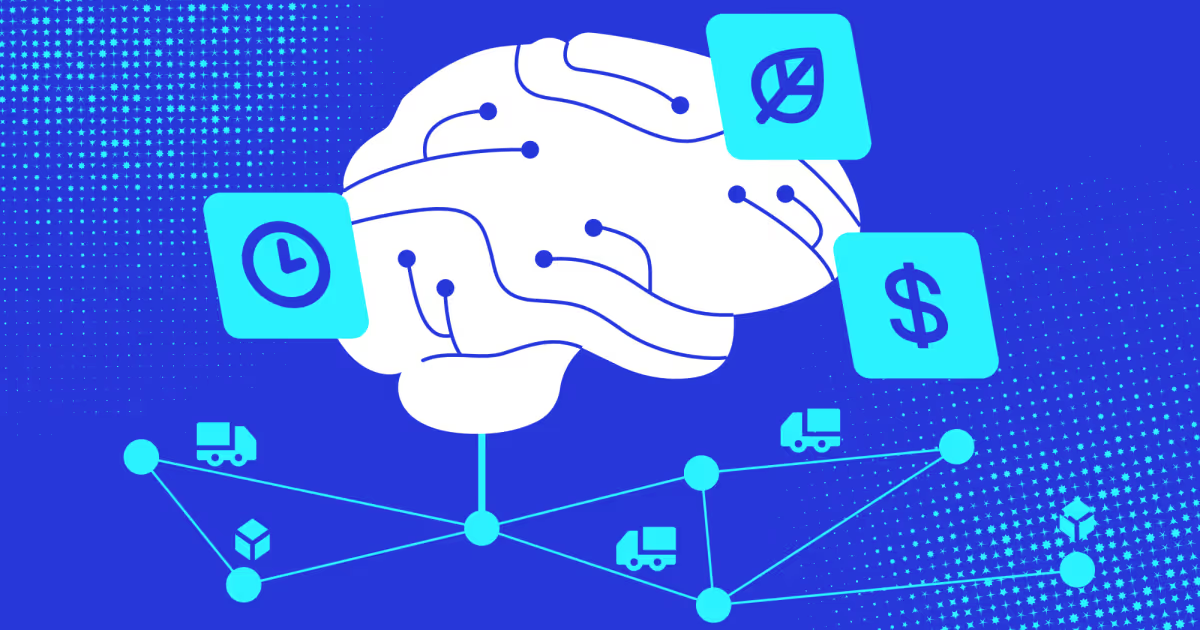
Supply chain change management is the structured process of planning, executing, and stabilizing changes to how goods, information, and resources move through your business. It covers everything from switching a software platform to overhauling your entire sourcing strategy.
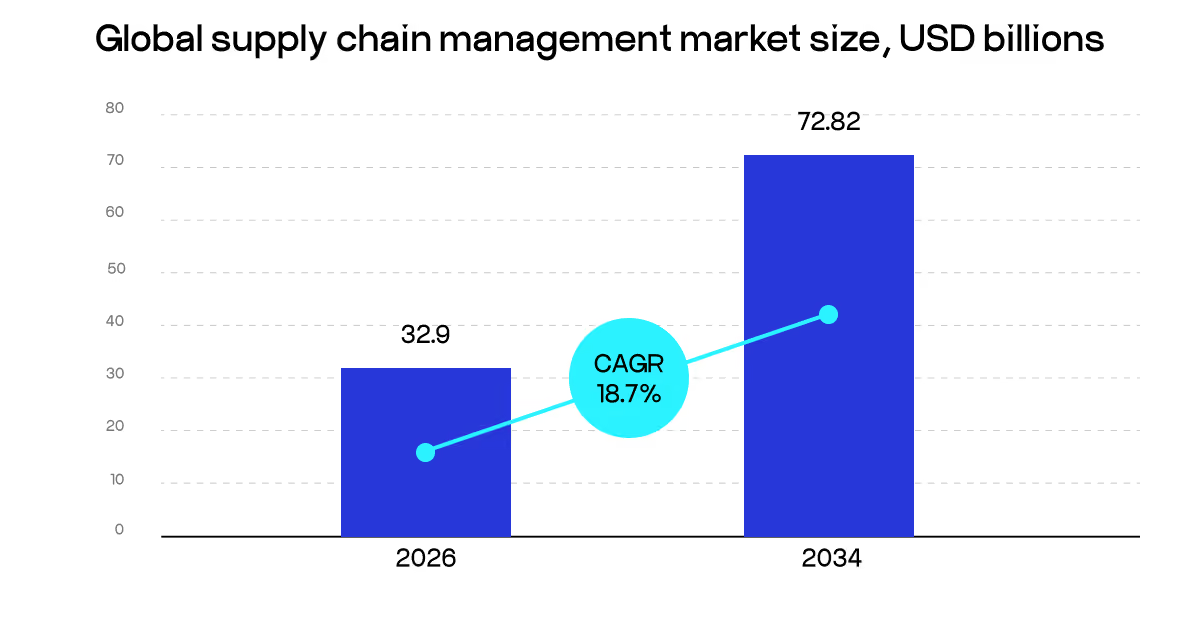
The market context makes this urgent. The global supply chain management market is projected to grow from USD 32.9 billion in 2026 to USD 72.82 billion by 2034. That’s not a coincidence. The Global Supply Chain Pressure Index saw an 18.7% increase from the prior month. Companies are not choosing to change. They are being forced to.
At COAX Software, we have built this kind of infrastructure. Built it not once - across cross-border logistics carriers, driver hiring platforms, luxury shuttle services, and AI-powered fleet management systems. We have seen what happens when change is treated as a launch event. We have also seen what happens when it is done right. Dispatchers manage 31% more daily routes without added headcount. Driver turnover drops by 22%, and late deliveries fall from 18% to 7%.
Supply chain change management processes make that forced motion purposeful rather than chaotic. When a tariff shifts your sourcing economics overnight, when a weather event knocks out a key supplier, or when you decide to replace a legacy TMS with an AI-powered platform, a structured process is what separates a controlled transition from an operational crisis.
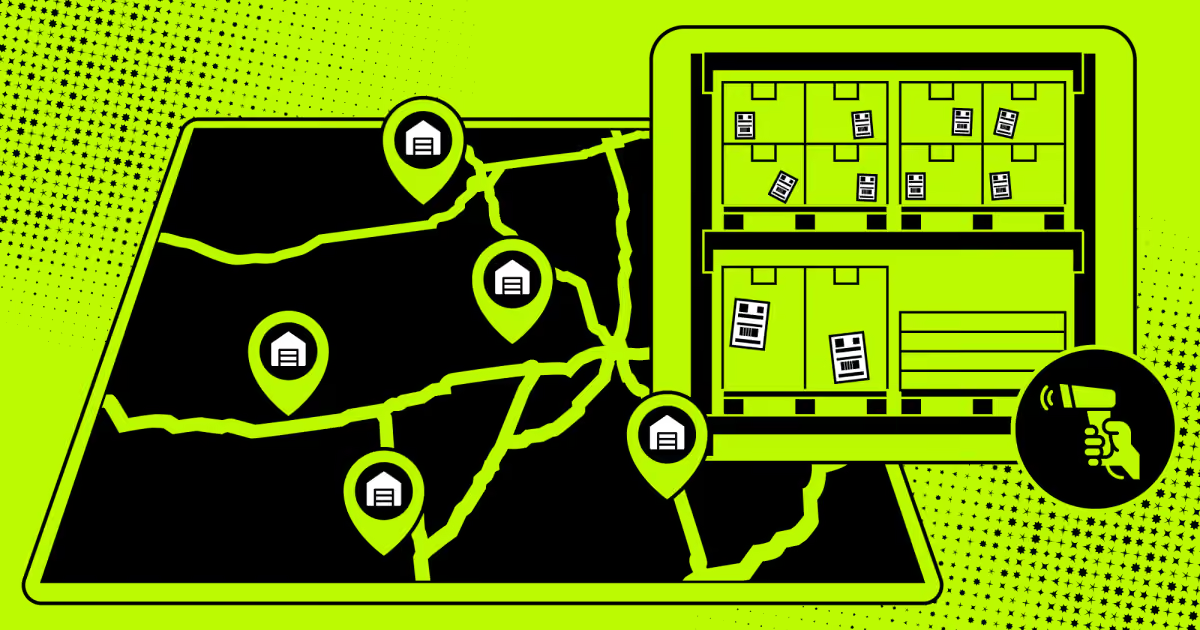
We saw this when building an AI-based logistics platform for a cross-border carrier managing 500 vehicles. The company had GPS data, TMS records, EDI feeds, and manual truck logs across multiple systems. None of them talked to each other. Managing that transition as a structured process was the best path to take.
Common types of supply chain changes
Not all supply chain changes carry the same weight or require the same approach. They generally fall into two buckets: operational model shifts and structural transformations.
The first category to mention is operational model changes. These are the strategic choices companies make about how to respond to demand. Each reflects a different tradeoff.
Agile models are built for volatile markets. You sacrifice cost efficiency for speed and adaptability. Fast fashion works this way because a trend can appear and die in weeks.
Lean models go the opposite direction. Waste reduction and process consistency matter more than flexibility. High-volume manufacturing often runs on lean principles because the math of eliminating small inefficiencies compounds across millions of units.
Efficient models suit stable, predictable demand. The goal is maximum throughput at minimum cost, which works well when you are not dealing with surprises.
Continuous Flow keeps production uninterrupted. It is most effective when demand variation is minimal and production rates stay constant over time.
Flexible or custom-configured models are hybrid approaches. They accommodate seasonal spikes or hold off on final product configuration until actual customer orders come in.
Switching between these is itself a major change management challenge. Moving from efficient to agile, for example, is not a settings adjustment. It requires rethinking supplier contracts, inventory buffers, fulfillment workflows, and staff expectations.
The other category is structural and strategic transformations. These are the bigger, harder shifts. They reshape how a business operates at a systemic level, not just at the process level.
Digitization is the most common trigger for change management in supply chain work right now. Only 27% of companies have successfully introduced AI into their procurement or supply chain functions. Meanwhile, 14% of organizations still lack any digital roadmap. Replacing legacy systems with cloud-based platforms, adding AI-driven demand forecasting, or building digital twin capabilities all require managing the human and organizational side of the change, not just the technical side.
Sustainability transformations involve integrating circular economy principles, reducing emissions, and building ethical sourcing into procurement decisions. This is increasingly a compliance requirement.
Supplier change management is one of the most overlooked categories here. Diversifying your supplier network away from single-source dependencies sounds straightforward on paper. In practice, it means qualifying new vendors, renegotiating terms, updating systems, and retraining procurement teams. This also demands keeping existing operations running. Supply chain disruptions lasting longer than one month happen on average every 3.7 years. In 2025, extreme weather became the single largest cause of disruption for the first time in nearly a decade.
The DriveIQ project COAX Software developed is a useful reference point here, too. The client had reached a 45% annual driver turnover rate, partly because operational chaos was pushing drivers out. Fixing that required changes to how routes were assigned, how performance was measured, and how the company communicated with drivers. That is about changing the human and operational infrastructure, not just the technology.
"The moment you are running more than one department, or more than one location, the absence of a shared context layer starts costing you. You cannot fix that with better spreadsheets. You fix it with infrastructure," says Orest Falchuk, Head of Engineering at COAX Software.
The pattern across all of these change types is the same. The technical part is usually the easier part. The harder part is making sure the people, processes, and systems on the other side of the change are actually ready to absorb it.
Why does supply chain change management matter now more than ever?
What causes the urgency now is the speed, scale, and compounding nature of what triggers the supply chain changes. A tariff announcement, a weather event, a geopolitical shift, a software migration. Any one of these used to be a discrete event. Today they arrive in clusters, and they arrive fast.
Challenges caused by economic uncertainty and disruptions
73% of supply chain leaders expect to hit their tariff absorption wall by the end of 2026, the point at which costs must shift from corporate balance sheets to consumer invoices. Meanwhile, 49% identify escalating transportation expenses as the most significant external pressure facing their operations. And in 2025, extreme weather became the single largest cause of supply chain disruption for the first time in nearly a decade, surpassing even cyber-related outages.
These are the new operating environments we need to adapt to.
What this means practically is that the gap between companies with a functioning change management process and those without one is widening every year. That gap shows up in cost, in customer trust, and in how long recovery actually takes.
The challenge is not just the disruption itself. It is that disruptions now overlap. US-China trade fell by approximately 30% in 2025. Additionally, US tariff rates reached their highest levels since World War II. Companies reshoring supplier relationships are simultaneously managing rising logistics costs, workforce shortages, and technology transitions.
A change management strategy that treats these as a separate project will fall apart under that load. What works is treating supply chain change management as an ongoing organizational capability. The companies that do this well have defined how change gets decided, communicated, implemented, and measured and don’t reinvent that process every time.
The role of automation, AI, and real-time data
Technology, including automation, AI, and real-time data exchange, is now central to how supply chain change management works, not just what it manages. 48.7% of surveyed businesses have transitioned away from manual data management. They then adopted AI-powered predictive analytics for their daily workflows. As you see, the gap between knowing this and executing on it is where most organizations get stuck.
The problem is fragmentation. 67% of enterprises increased their financial commitment to visibility tools, but the ROI didn’t increase because of the fragmented legacy systems. You can invest in change management software and still see no measurable improvement. Only if the data layer is inconsistent across systems does this change. The fix is the right data architecture.
This is something we dealt with directly when building the platform for a UK-based coach and minibus booking service. The client needed route planning, emissions tracking, and real-time quote management across hundreds of operators. The challenge was defining a data model that could support all of those functions consistently. When something changed on one end, it propagated correctly everywhere else.
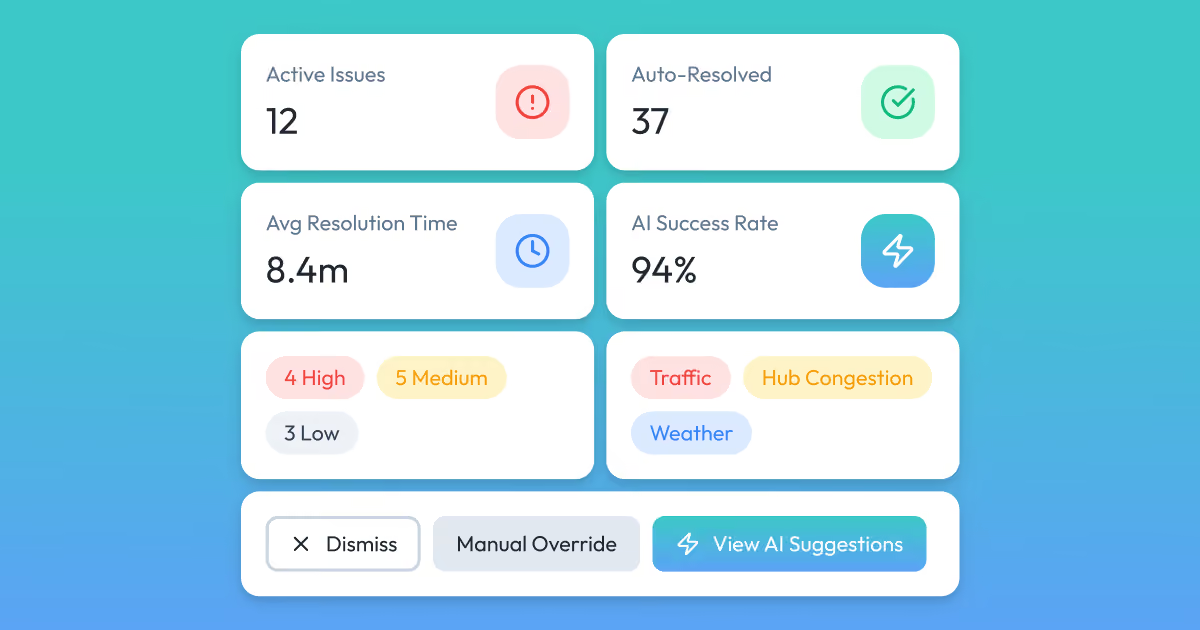
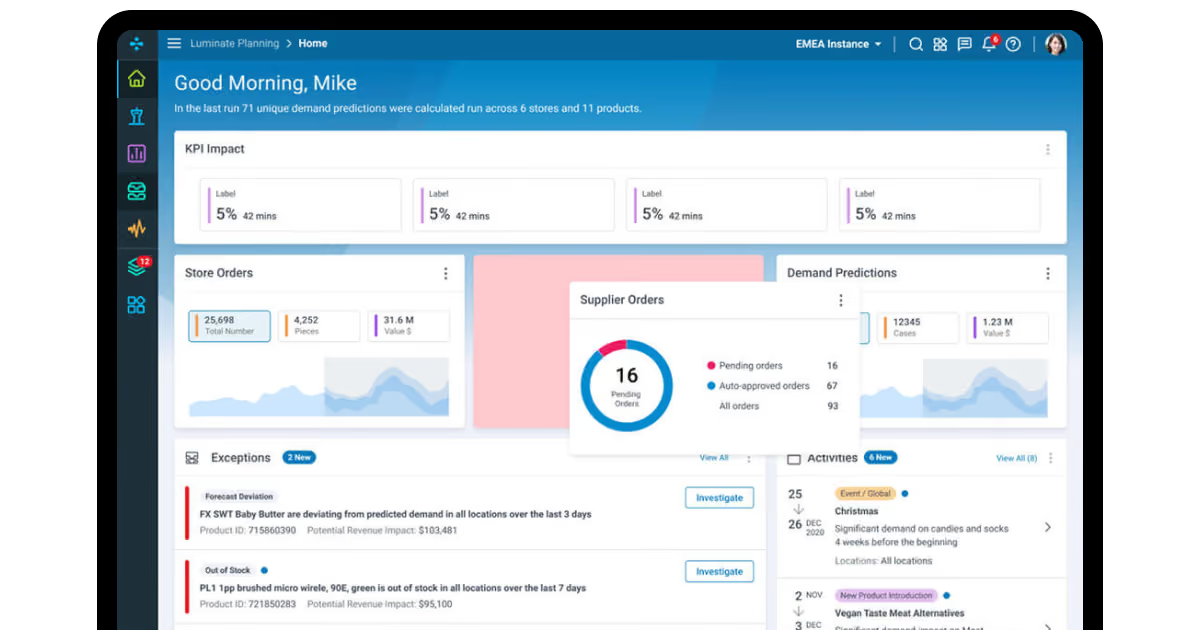
What should logistics analytics software do? They give every decision-maker the same version of the truth at the same time. When it works, a dispatcher can see a problem forming before it becomes a missed delivery. When it does not work, you spend long hours each week on manual data translation.
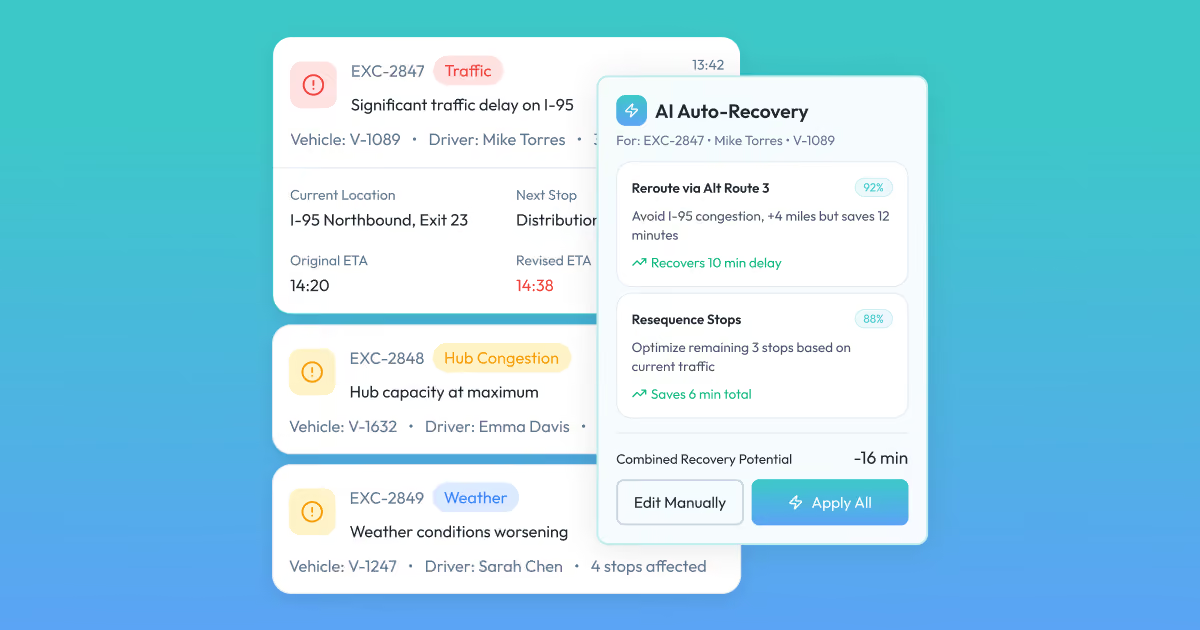
AI change management adds a layer on top of this. AI can surface patterns in demand data, flag supplier risk before it materializes, and recommend recovery routes when a disruption hits. But AI does not replace a change process but only accelerates it. If your organization does not have a clear process for acting on what the system surfaces, faster information just worsens it.
Cloud supply chain management is the infrastructure that makes real-time visibility possible across locations, partners, and time zones without requiring every party to be on the same legacy system. The shift toward the cloud is consistent across industries. The alternative, on-premise systems that require manual syncing simply cannot keep up with the pace.
Key benefits of change management in the supply chain
When supply change management is done well, the benefits are operational and financial, and they compound.
The most immediate benefit is speed of response. Organizations with good change processes identify a disruption, assess its impact, and begin recovery faster. Companies using technology for compliance report better risk visibility (64%), faster issue identification and response (53%), and increased productivity and cost savings (43%).
The second benefit is cost control. Unmanaged change is expensive. Rework, duplicate processes, missed deadlines, and emergency decisions all carry a direct cost. Change management in logistics reduces the frequency of those events by building transition planning into how operations evolve rather than treating change as an interruption to normal operations.
The third benefit is workforce stability. This one gets underestimated. Change that is poorly communicated or chaotically executed drives turnover, particularly in logistics, where frontline staff have clear alternatives.
The fourth benefit is compounding resilience. Each change that gets managed well builds organizational capacity to handle the next one. Teams develop shared language for how change works. Processes get refined. Data quality improves. The organizations that handle disruption best in 2026 are not the ones that got lucky with timing. They are the ones who have been building this capability systematically for years.
"An automotive or logistics platform can fall apart the moment real transaction volumes hit it. The features that matter are usually the ones handling edge cases at scale. If those are not built from the start, you will be refactoring under pressure." Myroslav Stelmashchuk, Backend Engineer at COAX Software.
Supply chain change management process
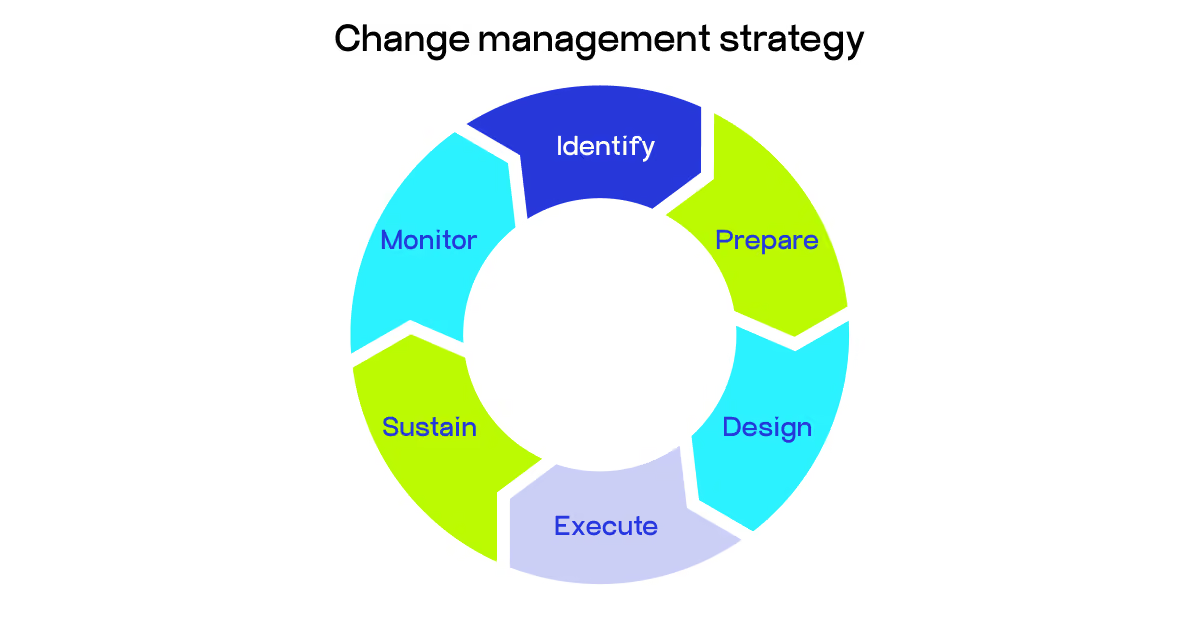
Change management in supply chains is a sequence of connected steps, each one making the next one possible. The core cycle follows the algorithm: Identify, Prepare, Design, Execute, Sustain, and Monitor. Let’s break down how that cycle works in practice.
Identify.
This stage is about naming the problem precisely. Is the issue a supplier becoming unreliable? A system that cannot handle current transaction volumes? A regulatory requirement landing in six months? The framing here determines everything downstream. A specific formulation gives you something you can actually design against. In B2B supply chain management, this stage often surfaces faster than expected because the pain is already visible across multiple departments. What takes time is reaching alignment on which problem to actually solve first.
Prepare.
Once you know what needs to change, you need to assess your readiness to change it. This is where most organizations underinvest. Preparation in a change management supply chain context means mapping specific things. This includes who is affected, what systems are involved, what data needs to migrate, and what dependencies exist. It also means being honest about organizational appetite. A team already running at capacity will absorb a major platform migration differently than one with dedicated transition bandwidth.
Design.
Design is where the change management framework takes shape. You are making concrete decisions. They are what the new process looks like, which tools support it, how data flows between systems, and the rollout sequence. In a software change management process, this stage includes architecture decisions, integration mapping, and user experience design. These are not just technical choices. Every design decision either reduces friction for the people using the system or adds to it.
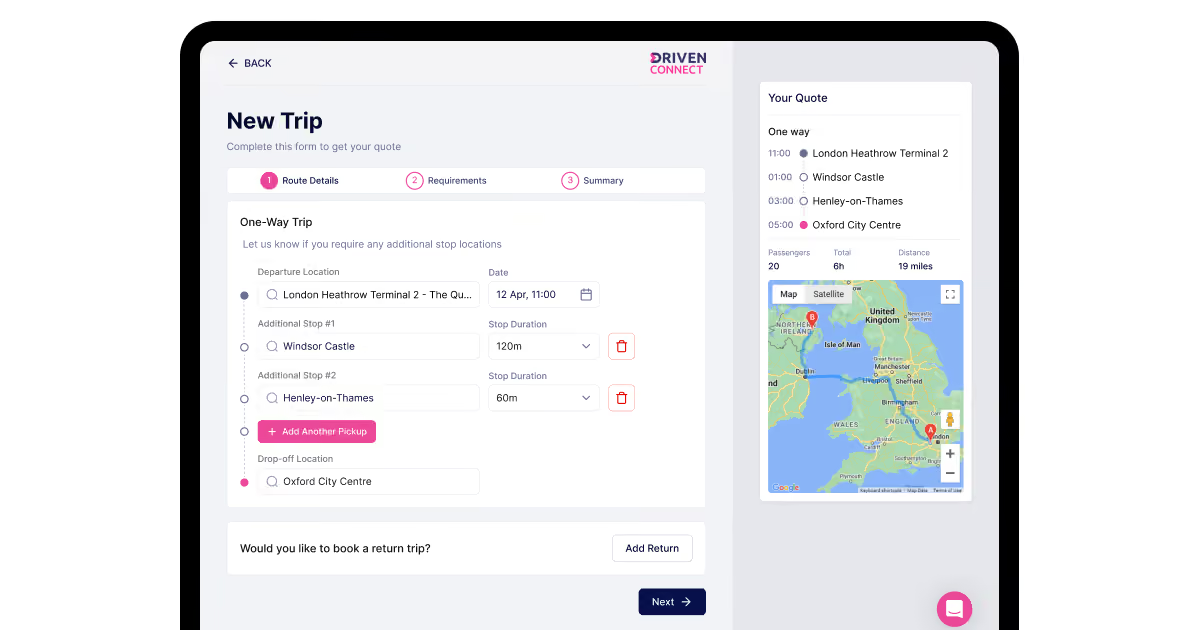
When we built the DrivenConnect platform, the design stage required us to resolve a genuine tension. The client needed a system complex enough to handle multi-operator quote management, route planning, and emissions tracking. It had to be simple enough that buyers with no technical background could use it without training. The way you resolve that tension is in design, not in execution. Getting it wrong at this stage means expensive rework after launch.
Execute.
Execution is where plans meet reality. In logistics environments, that reality includes legacy systems that behave unexpectedly or integrations that break in production. The most common failure in this stage is trying to execute too much at once. Phased rollouts let you validate assumptions in a controlled environment before committing to a new process.
Sustain.
A change that works on day one but degrades by month three was not successfully implemented. Sustaining change management in the supply chain means embedding the new process into how the organization actually operates. This includes training, documentation, updated workflows, revised KPIs, and clear ownership. It also means removing the old process so people cannot quietly revert to it. If the new process adds friction at that level, people will find workarounds. Sustaining a change means making the new way easier than the old way.
Monitor.
Monitoring closes the loop and feeds the next cycle. You are tracking if the change delivered its promises, where friction remains, and what new issues have emerged. It is about creating a feedback channel from the people doing the work back to the people who designed it. The most useful signal often comes from a dispatcher who found a workaround nobody designed for. Or a driver who stopped using a feature because the interface cost them thirty seconds per stop.
Good monitoring turns those signals into inputs for the next Identify stage. Supply chains do not stop changing, which means the process of managing change cannot stop either.
Change management models for supply chains
Most supply chain transformations fail not because of bad technology choices, but because of poor people management. The right change management models give you a structure for both sides of that equation: the operational and the human. Here is an overview of the frameworks that get used in practice.
Overview of supply chain change management frameworks
Change management methodologies for supply chains fall into three broad categories: individual-focused models, leadership-driven models, and process improvement models. Each solves a different problem.
The ADKAR model
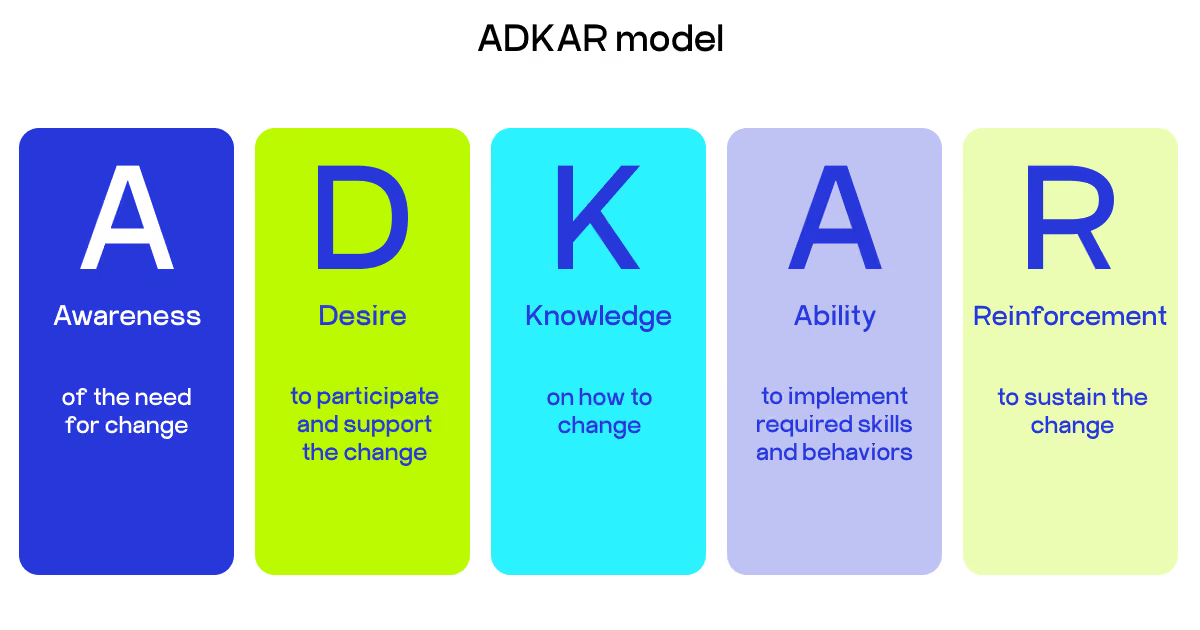
ADKAR works from the individual outward. The core insight is that organizational change only happens when enough individuals change. And individuals only change when they move through five sequential stages.
Awareness comes first. People need to understand why the change is happening before they can support it. In a supply chain context, that means explaining why a new forecasting system is being introduced, not just announcing that it is. You are dealing with concerns about job security, workload, and disruption to routines that work fine from where the person doing them sits.
Knowledge and Ability are where training lives, but they are not the same thing. Knowledge is understanding how the new system works. Ability is being able to use it under real operating conditions, under time pressure, with incomplete information. Reinforcement closes the loop. Without metrics, feedback, and visible consequences for reverting to old habits, changes erode. The supply chain environment is particularly vulnerable here. Workarounds are often invisible to management until the data diverges.
Kotter's 8-step process
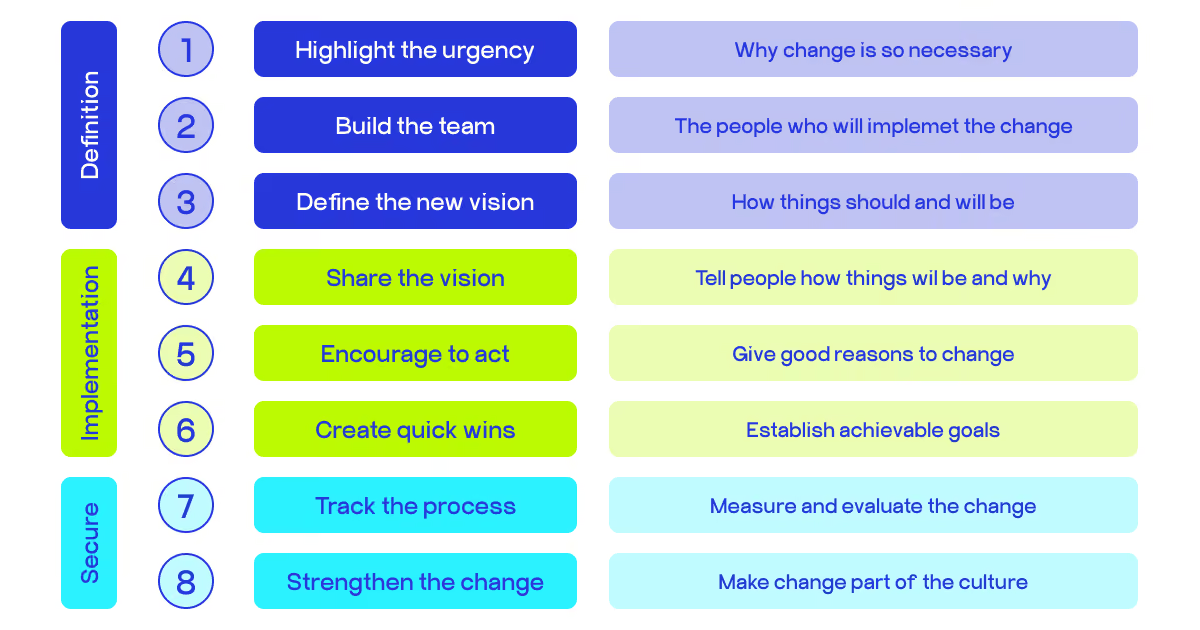
Kotter's model operates at the organizational level. It is a top-down leadership framework designed for large-scale transformations. Here, the challenge is building enough momentum to overcome institutional inertia.
The first step, creating urgency, is the one most organizations rush or skip. Without genuine urgency, every other step fights uphill. Building a guiding coalition means assembling cross-functional ownership early. For supply chains, alignment must happen before rollout, not after issues emerge. Get IT, procurement, operations, and floor management into the same room on day one. The steps that follow, forming a vision, enlisting buy-in, removing barriers, generating early wins, and embedding the culture change, are a controlled sequence.
Kotter is the right model for global supply chain management and change initiatives. They can be multi-site migrations, enterprise system replacements, or structural overhauls.
Lean management and value stream mapping
For technical, process-level improvements in supply chain change management, lean models work differently from ADKAR or Kotter.
Value stream mapping is the core technique. Teams map the entire supply chain lifecycle visually, from supplier to end customer, with the explicit goal of finding bottlenecks, redundancies, and steps that consume resources without adding value.
The power of VSM is that it is a collaborative diagnostic tool, not just a reporting one. Mapping processes with the actual workers' surfaces critical, hidden problems. A top-down audit will never find these issues. It also builds buy-in for the solution because the team identified the problem themselves.
Lean models work best for warehouse automation, route optimization, and fulfillment process redesign. They are less effective as standalone frameworks for large-scale organizational transformation. The reason is that they focus on process efficiency rather than human adoption.
How to choose the right framework?
The right change management methodology choice depends on the scope of the change, who is most affected, and how much organizational resistance you are likely to encounter.
Use ADKAR when the primary challenge is individual adoption. A new TMS, a new routing tool, a new compliance workflow. Anything where the success metric is whether specific people are actually using the new system correctly.
Use Kotter when the primary challenge is organizational momentum. Enterprise-wide migrations, structural overhauls, or initiatives that require sustained leadership commitment over twelve months or more.
Use Lean and VSM when the primary challenge is process inefficiency. Technical improvements with a defined scope where the team doing the work can map and redesign the process together.
The change management tools you use to support any of these frameworks should match the complexity of the initiative. A single-site process change can be managed with clear documentation and structured training. A multi-location platform migration needs dedicated project tracking, stakeholder communication infrastructure, and real-time adoption monitoring.
Change management principles that hold across all frameworks come down to a few constants:
Define the problem precisely before designing the solution
Involve the people doing the work before the solution is finalized
Communicate more than feels necessary
Measure from the start rather than at the end.
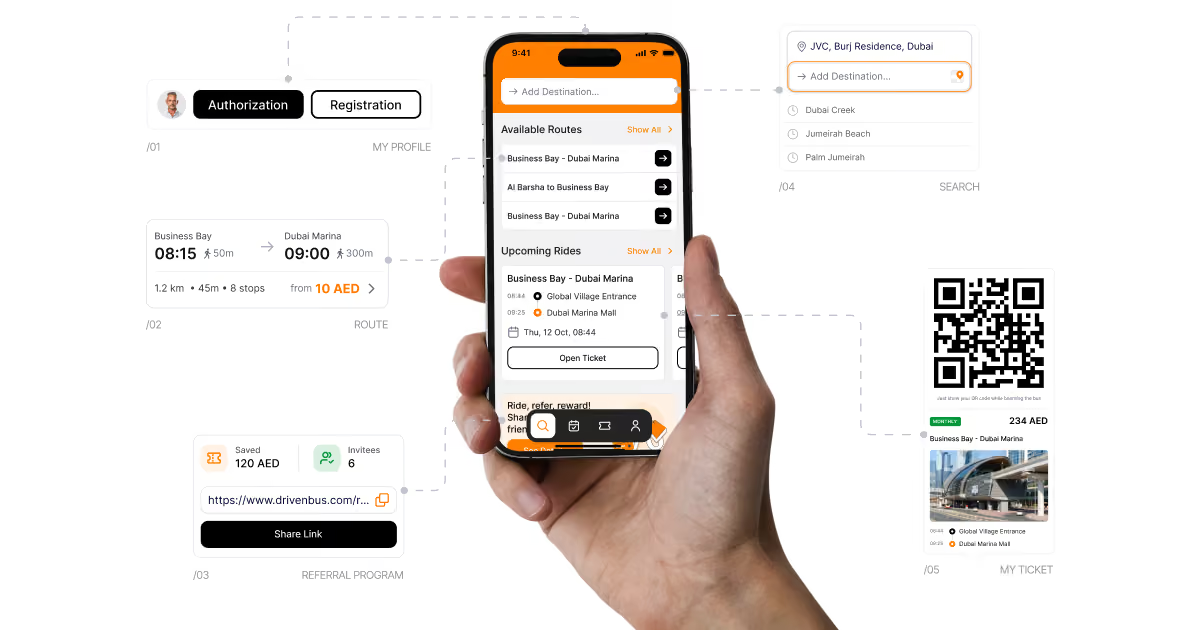
We applied this thinking when building the DrivenBus platform. The client needed operators, drivers, and passengers to each adopt a fundamentally different way of interacting with transit, on a fixed timeline, in a new market. The framework we worked within was essentially ADKAR applied operationally. We designed the operator dashboard, driver app, and passenger experience as separate adoption problems, each with its own friction points and success metrics. It required a different design response than training alone would have provided.
The model you choose shapes how you see the problem. Choose based on where the hardest work actually lives.
Strategies for successful supply chain change management
Most supply chain change management initiatives fail because the rollout was treated as an IT project rather than an organizational one. The strategies below address both sides.
Establish a compelling vision before anything else.
You need a clear answer to one question: why is this happening, and what does it mean for the people doing the work? That answer needs to be specific. "We are implementing a new TMS to improve efficiency" tells people nothing they can act on. "We are replacing the current routing process because it requires four manual handoffs and produces late deliveries on 18% of stops, and here is what changes for your role," gives people something to orient around.
The vision needs to connect organizational goals to individual impact. When those two things are aligned, adoption accelerates. When they are disconnected, you get compliance without commitment, which looks fine in week one and falls apart by month three.
Engage stakeholders before the design is finished.
The most expensive mistake in change management strategies is finalizing the solution before involving the people who will use it. Involving cross-functional teams, suppliers, and frontline workers in the planning stage does two things. It surfaces operational realities that would otherwise only appear after launch. It also builds genuine ownership.
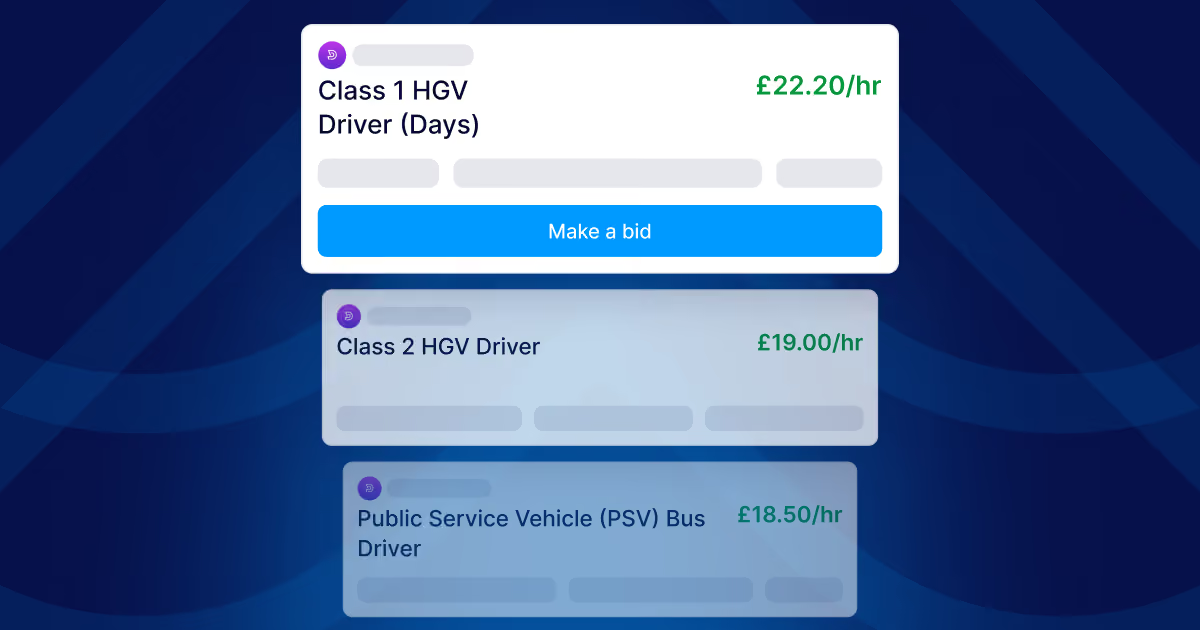
An example is the DrivenPeople platform that COAX Software built for a UK transportation hiring company. Getting operators and drivers into the design conversation brought results early. It revealed that filtering by driver rating and experience determined whether operators trusted the platform. That insight did not come from a requirements document. It came from talking to the people with the problem.
Appoint change champions at every level.
No matter how well-designed your change management plan is, it will encounter resistance at the team level. Change champions are people within each department or location who understand the change, believe in it, and can answer questions from colleagues. They make the rollout feel supported. In multi-location logistics environments, this matters even more. A dispatcher will take cues from a trusted peer in the same role before they take cues from a project manager they have never met.
Build training around ability.
There is a difference between knowing how a system works and being able to use it correctly. Most training programs stop at knowledge. And yet, effective training in a supply chain means practicing the new process under conditions that approximate real ones. They are time pressure, incomplete information, and the temptation to revert to the old workflow.
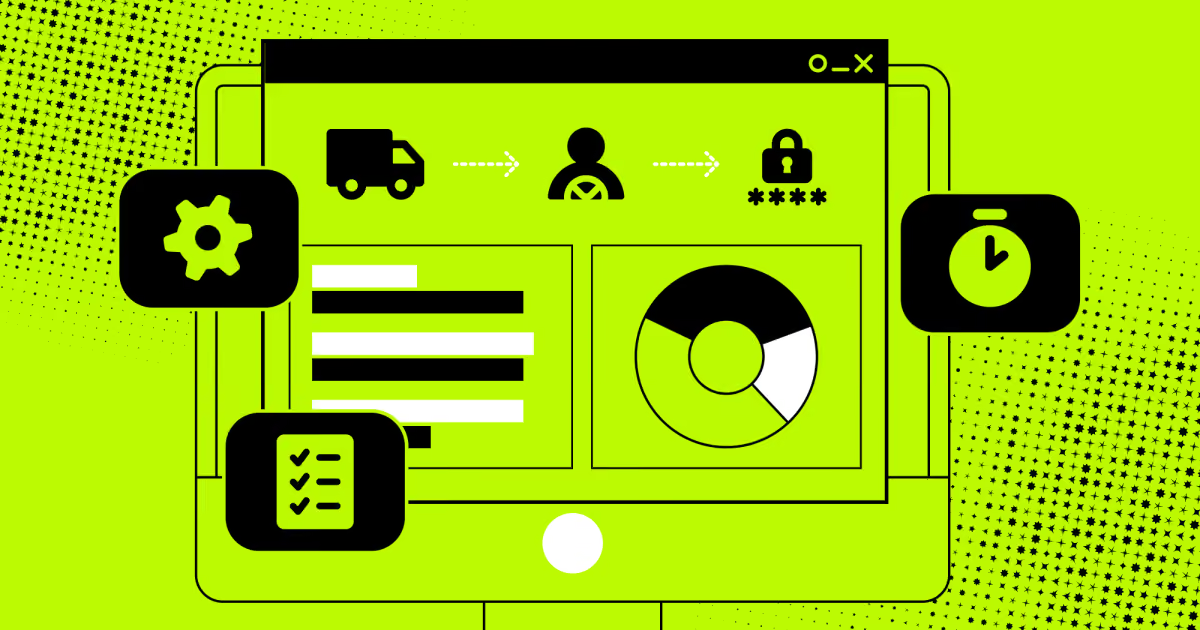
Change management software can support this by providing guided workflows, in-context help, and usage analytics that show where people are getting stuck after training ends. The analytics matter because post-training friction is often invisible to management until it shows up in performance data weeks later.
Keep communication open in both directions.
Communication in most change initiatives flows from leadership outward. That is necessary. But the signal you need most is the one coming back from the people using the new system. Build structured feedback channels into your supply chain change management process, regular check-ins, short-form surveys, and direct lines to the implementation team. It will mean you hear about problems before they become entrenched habits.
Don’t treat go-live as the finish line.
The two to three months after a system or process goes live are when new habits either form or revert. We saw this clearly in the logistics work we have done across transportation and fleet management projects. The technical delivery is one milestone. The operational embedding is a separate one, and it requires dedicated resourcing after the launch date, not just before it.
Post-go-live support means active coaching, rapid response to friction reports, and visible leadership engagement with the new process.
Define KPIs before you start and measure throughout.
In supply chain change management, the relevant metrics depend on what you are changing. A platform migration might track adoption rates, error rates, and processing time. A process redesign might track cycle time, exception frequency, and manual intervention rates. A supplier diversification initiative might track lead time variance and single-source dependency ratios.
You cannot demonstrate improvement without knowing where you started. Celebrating early wins matters here too. This gives evidence that the change is working.
Best change management software
The right change management software tools do not replace a change process. They make an existing process visible, trackable, and repeatable. The tools below are the ones we have evaluated and worked alongside across logistics, transportation, and supply chain projects. Each has a clear use case and a clear ceiling.
Tool
Best For
Key strength
AI capability
Ceiling
Jira Service Management
IT and process change tracking
Workflow and approval management
Limited
Not built for supply chain logic
Prosci ADKAR Tools
Individual adoption tracking
Human side of change
No
Requires trained practitioner
SAP IBP
Enterprise supply chain planning change
Scenario modeling, S&OP
Strong
High implementation cost and complexity
Kinaxis Maestro
Complex supply chain impact modeling
Concurrent planning, real-time impact
Strong
Overkill for simpler operations
Monday.com / Asana
Project coordination and collaboration
Task and milestone tracking
Limited
No supply chain domain knowledge
Blue Yonder
Large-scale logistics and fulfillment change
End-to-end planning and ESG
Strong
Too complex for mid-market
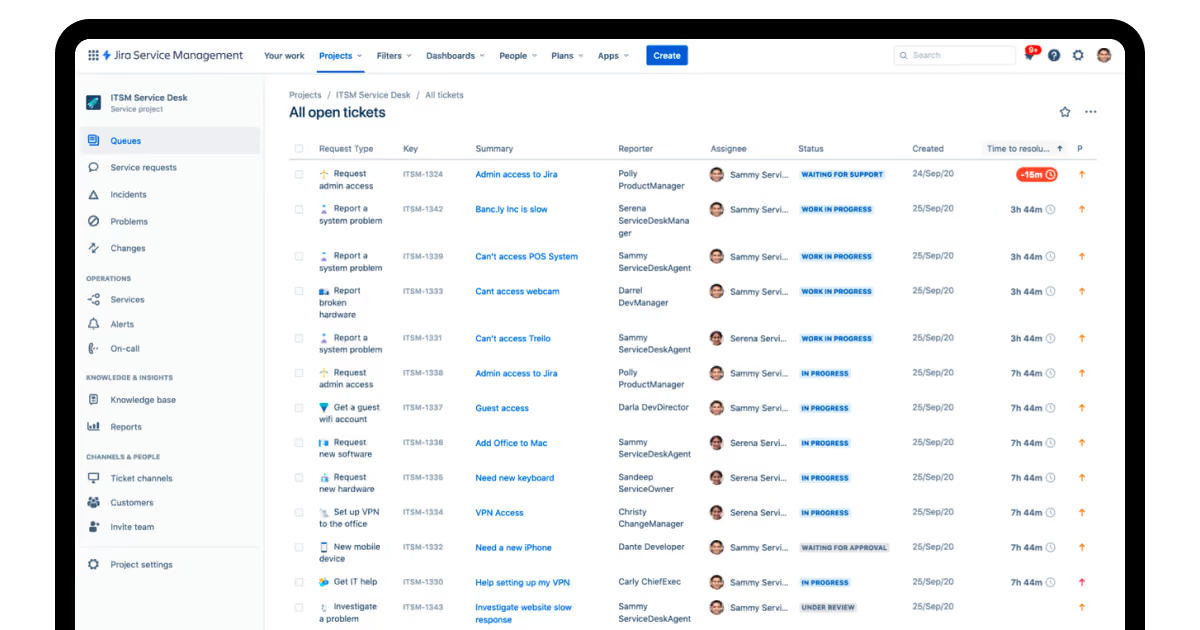
Jira Service Management
Jira Service Management is the option for teams that need to track change requests, approvals, and implementation status. Its ITSM workflows secure change control via structured approvals, mandatory documentation, and built-in rollbacks. For technology migrations or platform rollouts, it gives teams and IT a shared operational layer.
The limitation is that Jira is built for IT change management, not operational supply chain change. It tracks tasks and tickets well. It does not give you visibility into adoption rates, workflow drift, or the human side of a transition.
Pricing starts at around $17.65 per agent per month for the Standard plan. Enterprise pricing is custom. Best for technology-driven change initiatives where IT and operations teams need shared workflow tracking.
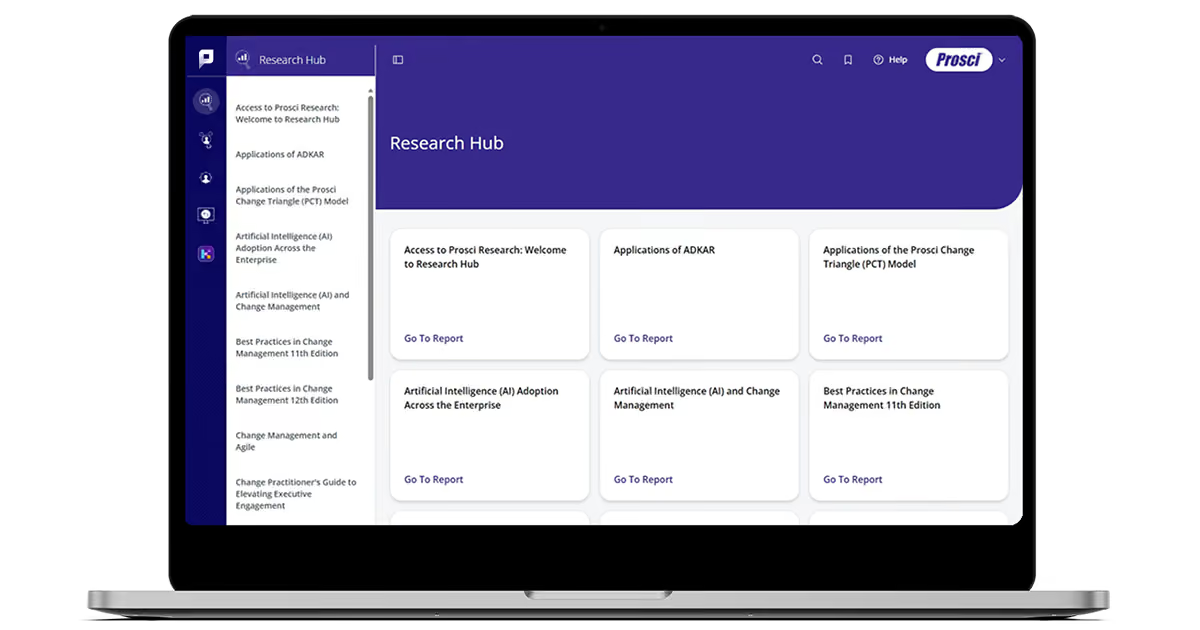
Prosci methodology tools (ADKAR-based platforms)
Prosci's tools are built around the ADKAR model and focus on the individual adoption side of change. They provide structured assessments, coaching guides, and progress tracking across the five stages of individual change. For change management software for logistics industry, tracking individual adoption is far more valuable than standard project tracking.
The trade-off is that Prosci tools are methodology-heavy. They require someone who understands the framework to run them effectively. Dropped into a team without that context, they become forms rather than instruments.
Pricing is certification and license-based. Access to their practitioner tools typically comes bundled with Prosci training programs. Best for organizations with a dedicated change management function or a trained change lead running a structured program.
SAP Integrated Business Planning (IBP)
SAP IBP sits at the enterprise end of change management software for the supply chain specifically. It integrates sales and operations planning, demand management, inventory optimization, and supply planning. This makes it relevant when the change you are managing is a shift in how the entire planning function operates.
Where it earns its place is in scenario modeling. IBP lets you test new supply planning logic against historical data before implementation. The implementation cost and complexity are significant. This is not a tool for a single-site operator or a team without dedicated IT support.
Pricing is enterprise contract-based. Best for mid-to-large supply chain operations already in the SAP ecosystem that need AI-driven planning with built-in scenario analysis.
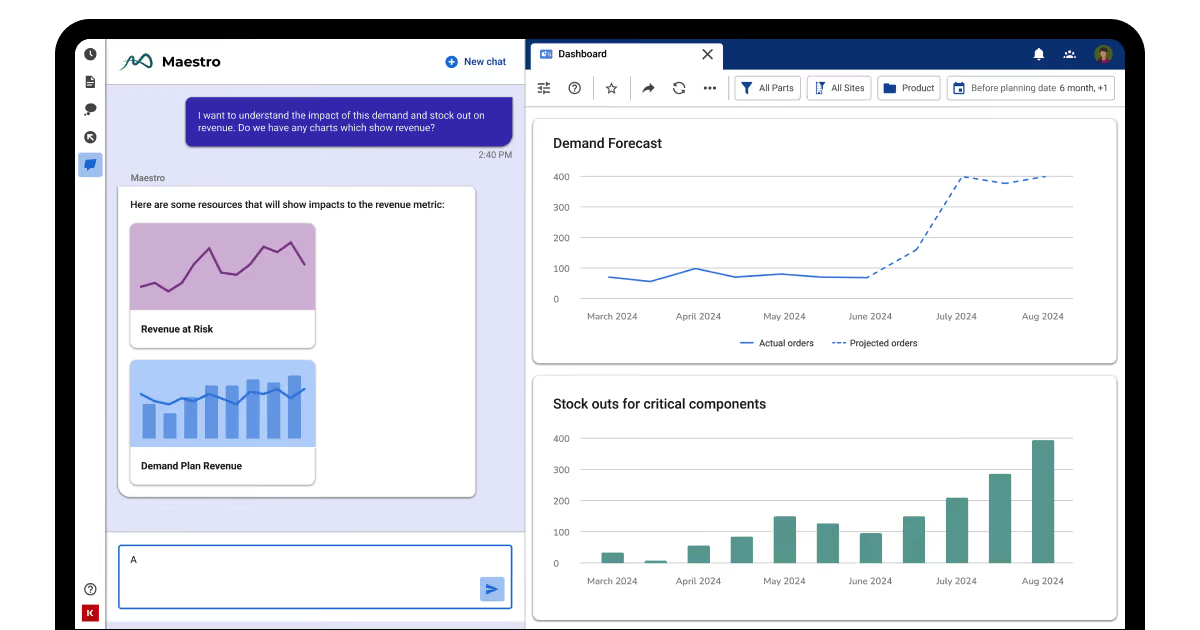
Kinaxis Maestro
Kinaxis is the strongest option on this list for AI change management in supply chain contexts. When you change an assumption in one area, the ripple effects across the supply chain are immediately visible. That makes it useful for scenarios where you need to model the downstream impact. It might be the sourcing shift, a supplier change, or a fulfillment restructure.
The patented Cognitive Network Graph and always-on algorithms give supply chain leaders a real-time view of how proposed changes affect the network end to end. For organizations managing complex, multi-tier supply chains where change decisions carry significant financial risk, this kind of impact visibility changes how decisions get made.
Pricing is enterprise and custom. Best for large, complex supply chains where scenario modeling and impact assessment are central to how change decisions are evaluated.
Process tracking and collaboration tools
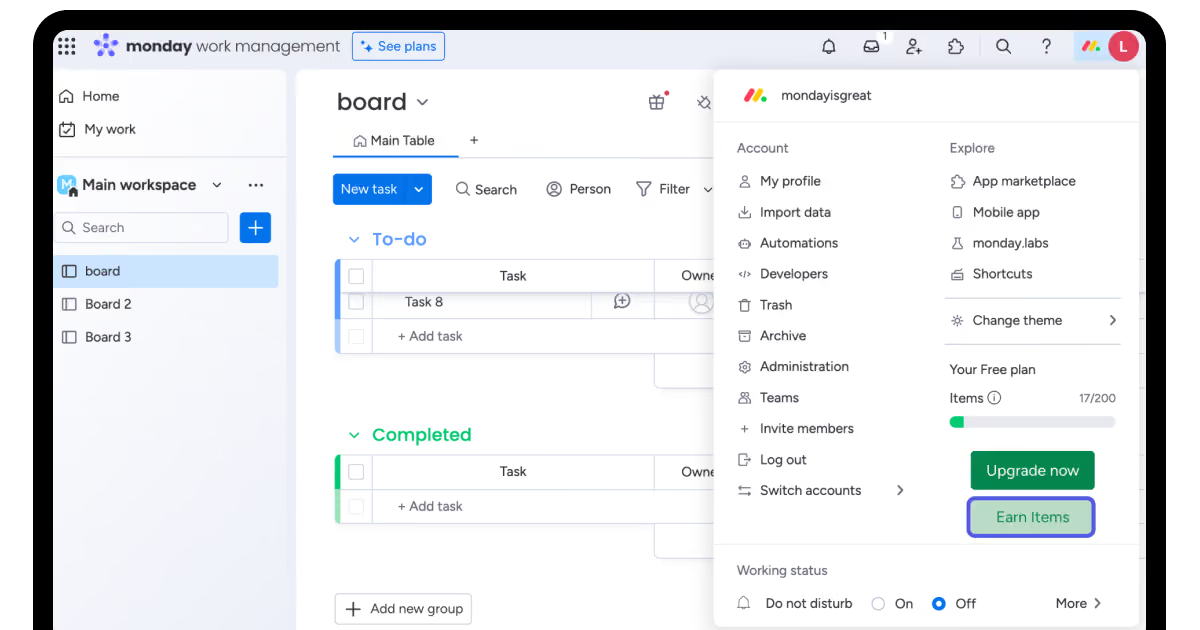
Monday.com and Asana both serve the coordination layer of a change initiative well. They work for teams that need collaboration infrastructure rather than supply chain-specific modeling. Task assignment, milestone tracking, stakeholder communication threads, and progress dashboards are all handled cleanly. Neither tool understands supply chain logic. Still, both make it easier to manage the human and project side of a rollout across distributed teams.
Monday.com
Monday.com pricing starts at around $9 per user per month for basic plans. Asana starts at $10.99 per user per month. Best for change initiative coordination where the primary need is visibility into who is doing what and by when, not supply chain analytics.
Blue Yonder
Blue Yonder is an AI-driven platform that covers supply chain planning, transportation management, and warehouse management. It’s great for supply chain software development environments. In these scenarios, the change involves restructuring fulfillment or logistics execution. Its command center provides centralized orchestration and real-time scenario planning. Its ESG and sustainability focus also makes it relevant for organizations managing compliance-driven supply chain changes.
The complexity and cost make it best suited for large, global enterprises. Smaller operations will find more value at lower cost elsewhere. Pricing is enterprise and custom. Best for large logistics and retail operations managing multi-tier network changes with sustainability compliance requirements.
None of these tools will fit cleanly if your workflows are non-standard. Also, they won’t be a perfect fit if your integrations are complex or your operation does not map neatly onto what any of these platforms were designed for.
Why should you invest in the custom change management software?
Off-the-shelf change management software covers the common case well. It covers your case well only if your case is common.
For 16 years, we’ve been building platforms for travel, transport, and logistics. We have worked with enough clients who tried the packaged route first to know what the failure pattern looks like. The tool gets implemented, the integration with legacy systems requires workarounds. Then, the reporting does not reflect how the operation actually measures performance. Within six months, the team has rebuilt the missing logic in spreadsheets alongside the platform they paid to build.
Change management software development built around your specific operation does not have that problem, because the logic is yours from the start. This is where COAX knows our thing.
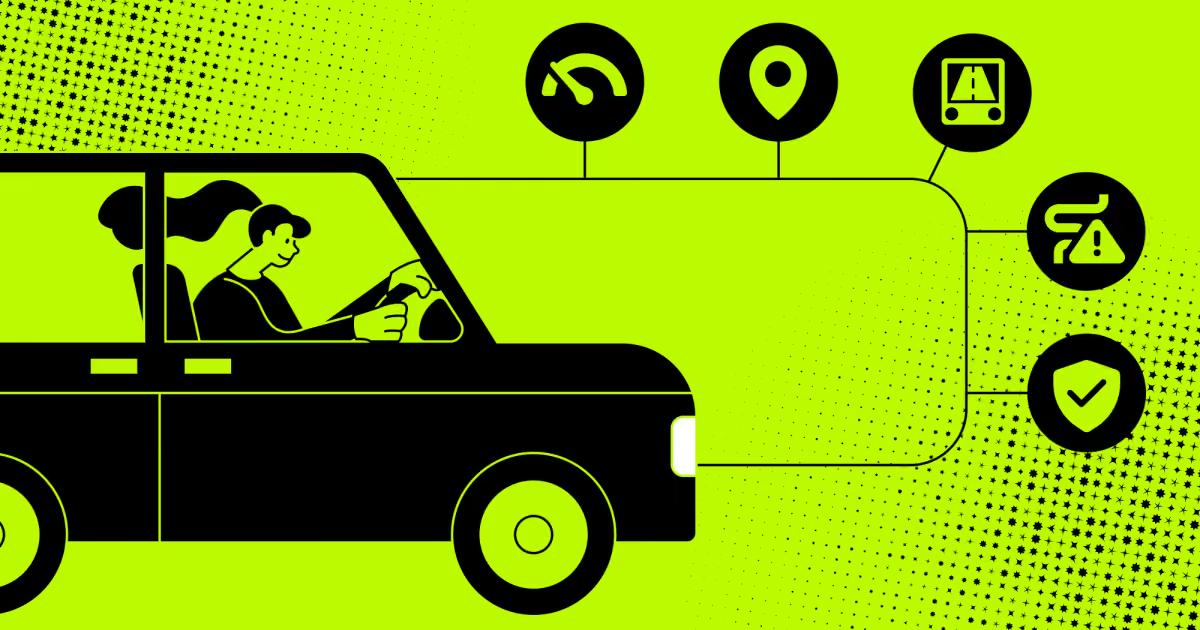
We had this situation with the DriveIQ AI platform. No off-the-shelf tool could handle the real-time GPS ingestion, ETA modeling, driver coaching, and dispatcher workflow. The client had evaluated existing platforms. Connecting multiple telematics providers and manual truck logs would have required more custom development on top. We decided that building the right solution from scratch was a better way. The outcome was an 89% predictive accuracy rate within 15 minutes and a 22% reduction in driver turnover.
"Teams get the best results when they begin with one narrow workflow. Then, they connect their tools to reliable data sources, and keep a human in the loop for validation. That is how a platform improves something instead of adding a layer on top of the problem," says Orest Falchuk, Head of Engineering at COAX.
Software development for logistics at the level where it actually changes outcomes requires engineers who understand the domain well. Our team is 90% mid and senior-level. This means the person solving your integration problem has solved a version of it before.
Supply chain change management involves sensitive operational and customer data. We are ISO 9001 and ISO 27001 certified, sign an NDA on every project, and apply the same data protection standards to a single-site engagement that we apply to enterprise clients.
A solution that works for your operation at the current scale needs to work at twice the scale two years from now. COAX experts design with that growth curve in mind from day one, so you are not rebuilding core infrastructure under pressure when volume increases.
FAQ
What is change management’s main difference from project management?
Project management focuses on delivering a specific outcome on time and within budget. What change management addresses is different. It handles the human, process, and organizational side of that delivery. A project can finish on schedule and still fail if the people it affects never actually adopt what was built. Both disciplines are needed, but they solve different problems.
What is the minimum viable change management process for a small logistics operation?
You do not need a formal program. A functional change management process for a smaller operation needs four things:
A clear written explanation of what is changing and why
One person who owns the transition
A training touchpoint before go-live
A feedback channel for the first 30 days.
Complexity scales with organization size. The fundamentals do not.
Which change management tools are actually used versus just purchased?
The ones that reduce friction rather than add it. Change management tools with high adoption tend to be visual, fast to update, and integrated into the workflows people use. Standalone platforms that require separate logins and manual data entry get abandoned within weeks. The best tool is often the one your team will actually open every morning.
When does change management in a supply chain require external help?
When the change crosses more than two departments simultaneously, involves a platform migration with live transaction risk, or when internal credibility around the initiative is already compromised. External support is not about lacking internal capability. Change management in the supply chain at scale benefits from someone who has run the same transition before. They can compress the learning curve significantly.
What is the highest hidden cost of poor change management in logistics?
Workforce turnover. Poor change management in the supply chain creates operational chaos. Chaos drives experienced people out. In logistics, driver and dispatcher shortages are already critical. Losing trained staff to a poorly managed transition multiplies the original cost of the failed change. The recruitment, onboarding, and productivity loss from a single wave of departures often exceeds the entire cost of a proper change program.




































































_.avif)





%2520explained.avif)

We are interested in your opinion