Construction site logistics planning is an end-to-end process that goes on as the necessary construction processes unfold. As Whitlock et al. define, logistics management planning in construction involves:
Strategic storage, transportation, and distribution of resources.
Handling of materials, equipment, and personnel in the most efficient way possible.
Planning of a building site’s layout and the active management of its evolution.
The global construction industry market is expected to grow to $7.9 billion by 2033, and to stay in line with this development, you need to create a scalable, efficient construction logistics plan.
In this article, we will detail the components and technologies of construction logistics planning.
Why is construction logistics planning important?
It’s important not to underestimate the importance of logistics planning, as nowadays, construction projects face significant operational challenges. Non-public work saw a 36.7% increase in construction delays and on-hold activity year over year, according to ConstructConnec. Also, according to research by Atapattu et al., construction projects experience a mean cost overrun of 28%.
Asiedu and Adaku discovered that about 70% of cost overruns in public construction projects are caused by inadequate planning and monitoring, as well as issues with change orders. Supply chain interruptions and procurement delays are recurring issues in the industry, which makes strategic logistics planning an invaluable step to ensure your project’s success.
Construction site operations and coordination
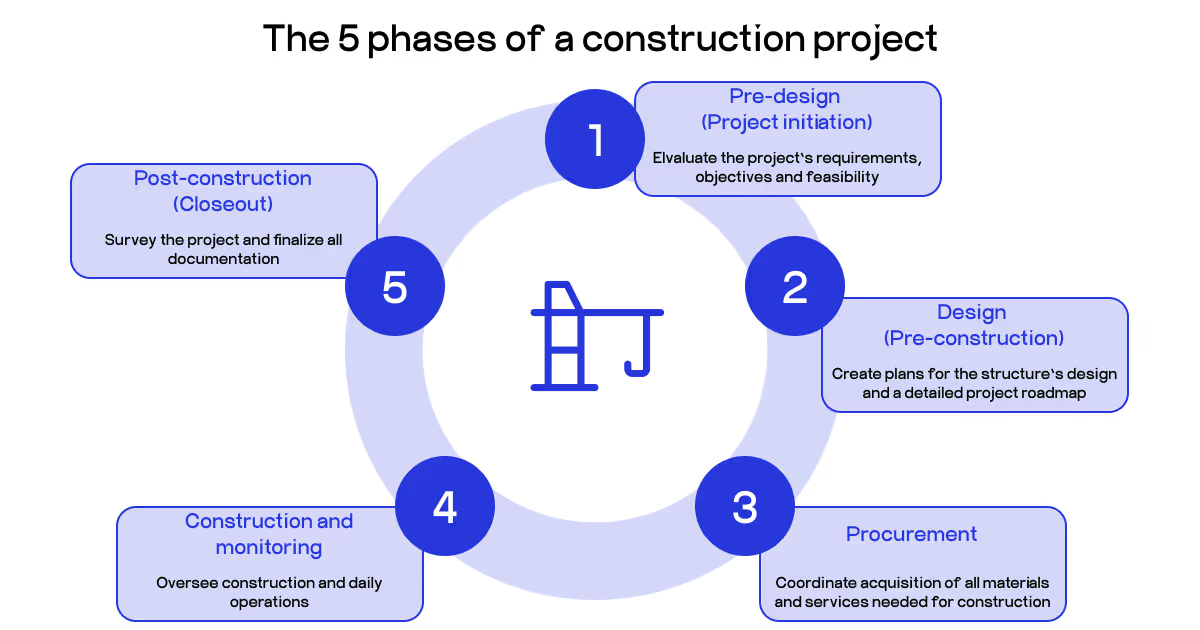
Operations on construction sites entail the methodical synchronization of tasks throughout five crucial project stages.
First comes the pre-design stage, where your teams assess the needs of the project and create the fundamental frameworks for establishing logistics.
The design phase is where end-to-end planning happens so you can create a project roadmaps that inform future operational decisions.
Coordination of the acquisition of supplies, machinery, and services required for construction is the main focus of the procurement phase. For on-time delivery and efficient resource allocation, this stage significantly depends on construction logistics management.
The most demanding operational phase is construction and monitoring, during which logistics play a crucial role in overseeing personnel, material flow, equipment placement, and day-to-day site operations.
Lastly, post-construction entails managing the transfer of operational responsibility while surveying finished work and completing documentation.
At these stages, the main activities are connected to management (including scheduling, coordination, and cost control), physical work (such as excavation, structural work, and installations), and support (with activities like material handling, safety, and quality inspections). Across all operational phases, project efficiency, cost control, and overall delivery results are directly impacted by the effectiveness of logistics in construction.
Impact of supply chain management on construction logistics
Much like in any other industry, the whole chain influences its separate parts. Logistics construction is no exception — it greatly benefits from an optimized supply chain management (and sadly, vice versa as well). Research by Osho et al. suggests that Construction Supply Chain Management (CSCM) has a direct impact on project delivery performance. The authors found that poor investment in information technology, ineffective communication, and conflicting objectives are the three problems causing restrictions on implementation.
Dr. Shibani did research on construction projects and identified five supply chain flows in construction: material, labor, equipment, client-related information, and management information flow. They also found that the management flow issue had the most impact on construction performance, with 302 days of impact on delivery. Labor flow issues were found to impact project delivery by 125 days, and material flow issues caused an impact of 69 days.
CSCM implementation tackles these logistics issues through methods based on trust, improved information flow, and robust financial control systems. Osho's research confirms that these practices achieve the Relative Importance Index rating as the highest-rated solutions. Supply chain integration manages logistics planning through simplification of processes, minimizes waste, enhances the allocation of resources, and improves overall project performance.
Key components of effective logistics planning
“Good buildings come from good people, and all problems are solved by good design”, said Stephen Gardiner, and we’d like to add from ourselves: subsequently, good design truly comes from construction logistics planning. Let’s break down the elements that make it
Material management
Material management accounts for the largest single cost in construction, at over 70%, as stated in Shravan et al.’s study. There are two aspects to effective procurement: the planning and sourcing stages, and the delivery phase, which ensures that materials arrive on site on a timely basis in order to avoid project delays. Additionally, delving into how hazardous materials can be properly stored on site and how to manage stocks of material to ensure sufficiency on the project site also forms part of material management.
The research by Dakhli et al. discusses using just-in-time (JIT) delivery systems to limit storage requirements, vertical storage systems, and areas designated to store materials that require tracking are also mentioned as effective storage management solutions. Additionally, grouping material in based on usage and proximity to working areas on site can improve site accessibility and overall performance for the construction process.
Equipment and machinery
Research by Sruthilaya Dara suggests that construction equipment comprises 15-30% of the total project costs, while ineffective monitoring of equipment usage causes 30-40% of cost overruns. When you effectively create a site logistics plan, you strategically allocate equipment to different tasks, develop a maintenance program to avoid expensive downtime, and arrange for heavy equipment transportation.
There are several considerations to take into account at this stage:
Allocation, where you effectively utilize equipment and manage it among the differing tasks.
Maintenance, where you properly maintain equipment to avoid downtime.
Transportation of the heavy equipment on the site in a coordinated manner.
Inefficient use and the lack of experience in selecting equipment and maintaining it are the largest challenges that hinder this process. Regular inspections, having procedures in place on checklists, having a regular schedule of checks, and providing training, are all vital to optimizing performance and achieving an optimal lifespan.
Workforce coordination
Zhong et al. show that good workforce management is a combination of emergency mobility control and longer-term productivity improvement through lean construction strategies. Their research suggests that good scheduling, implementation of safety measures, and full training programs have a profound impact on labor productivity.
Here are the most essential components of site logistics construction coordination:
Scheduling work shifts for different crews to achieve the most efficient use of resources when and where they are most needed and suitable.
Defining the safe work practices and providing oversight to comply with regulations and ensure secure and uninterrupted work.
Training the workforce to be effective in their jobs, use the equipment, and be aware of safety management techniques.
As an example, RK Industries has recently created 1,786 jobs at an average annual wage of $93,000. RK created these opportunities via workforce development; it worked with an accredited apprenticeship program to develop training for skilled laborers in seven trades, such as electrical service, plumbing, welding, and HVAC services. RK shows us an integrative, end-to-end workforce planning approach.
Site logistics planning and layout
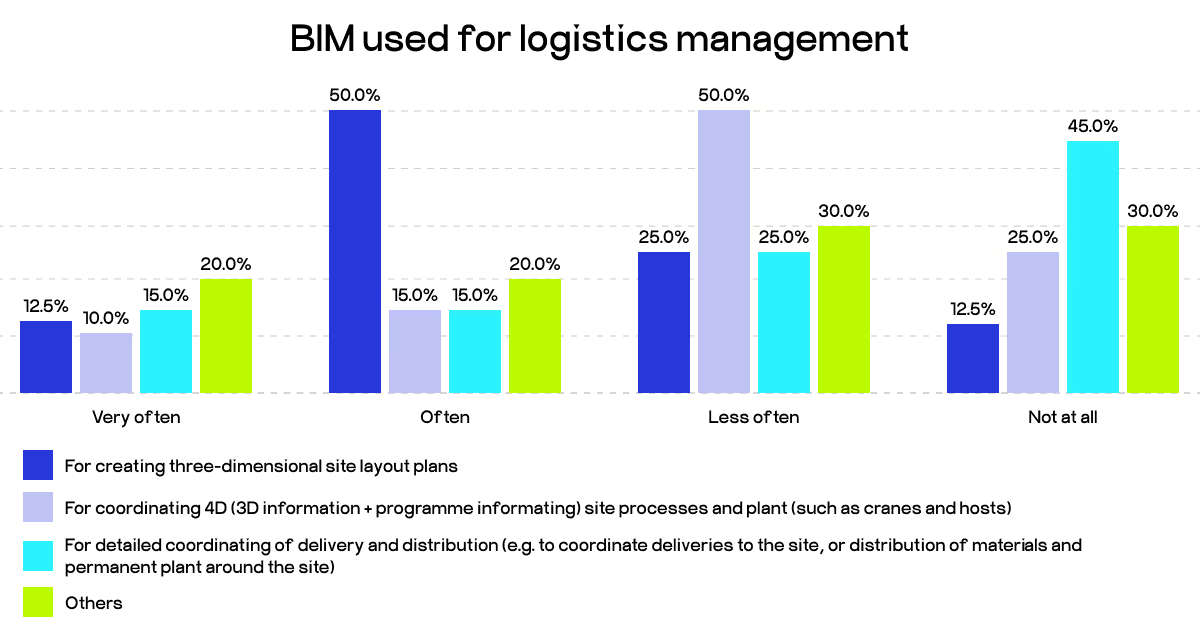
In their work, Whitlock et al. highlight that Building Information Modelling (BIM) and other modern digital means can also be used to create an ideal workflow, reduce movement efficiency and detect any potential issues in the site context before the actual construction takes place.
There are several key aspects to consider when site planning:
Designing an optimal layout to reduce movement and improve workflow.
Plan access points to facilitate easy entering and exiting for personnel, materials and vehicles
Plan for temporary facilities to have the best points of coordination and inventory management — like offices, resting areas, site storage, etc.
Research by Hong on Digital Twin for Construction Safety reveals that Real-Time Kinematic Global Navigation Satellite Systems (RTK-GNSS) can track a resource to centimeter-level positioning, and can be used to properly research equipment and worker movements. Supported by automated hazard detection, it allows the quick implementation of safety controls based on continuous construction site logistics optimization.
Communication and flow of information
You cannot underestimate the importance of communication in logistics planning. Zeng et al. find both internal information challenges between contractors, subcontractors, and suppliers for the project, and external information barriers for information sharing in the project departments. The research indicated that information feedback is more difficult than transferring information, which emphasized the need to establish an entire information system.
Here’s what such systems optimally contain:
Coordination enabling people to effectively communicate across different parties and groups
Documenting, or managing paperwork, permits, and records to demonstrate compliance for future reference
Technology integration when you apply software or systems for monitoring and managing data in site logistics.
Aziz et al. identify ten metrics of importance to understand communication issues: accuracy, timeliness, distortions, barriers, underloading, overloading, misunderstanding, gatekeeping, procedures, and finances. These challenges highlight the need for some management information systems to provide long-term improvement.
Waste management
Research conducted by Al Rabea shows that construction and demolition waste is a significant proportion of the municipal solid waste stream. According to this study, solid waste resulting from construction in Saudi Arabia is more than 15 million tons per year. This calls for systematic and progressive waste management in the region.
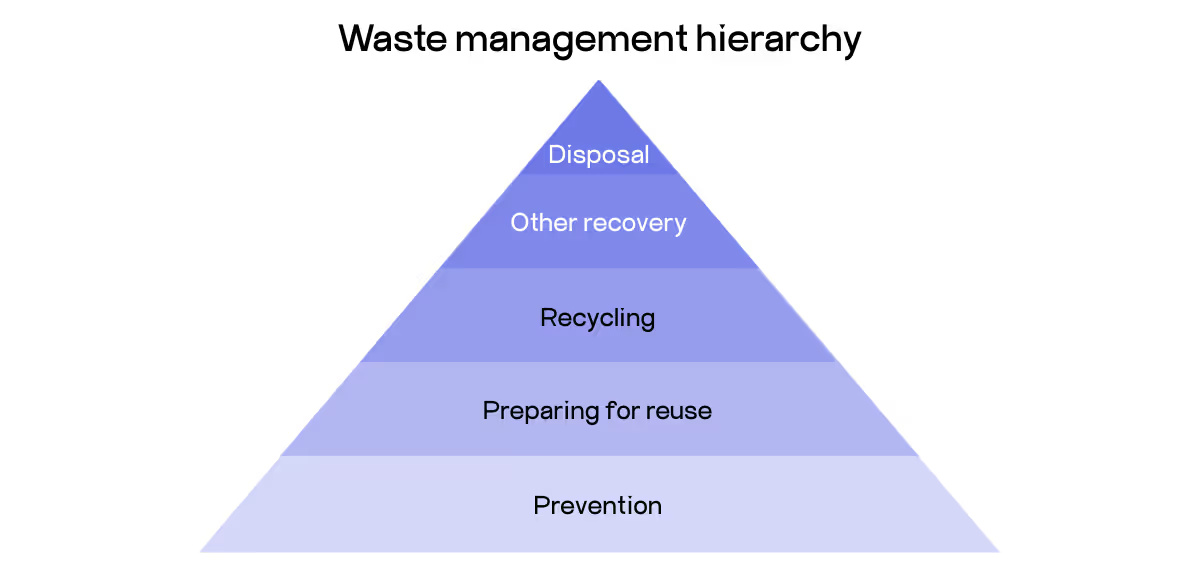
According to the waste management hierarchy, there are five strategies to prioritize: prevention (source reduction), preparing for reuse, recycling, other means of recovery, and disposal which should be the very last resort. Construction waste is typically comprised of concrete, masonry, limestone, sandstone, metal, and wood. Inert materials, which form more than 90% of construction waste, can be reused for land reclamation and site formation.
This can be achieved by several major strategies:
Proper disposal of solid waste is essential to achieve a clean and safe solid waste environment.
Recycling of materials where applicable or possible.
Avoiding the unnecessary use of materials through proper planning and design strategies.
The study by Kartam explained that metals have the highest percentage of recycling of construction materials recovered from construction sites. Efficient waste management requires an ongoing supply of reliable sources of recycled materials and appropriate market access to recycled products.
Planning and optimizing logistics
Here, we finally got to the stage we’re talking about. Julia Voigtmann's research reveals that construction logistics includes planning, coordinating, and supervising material flows to, on, and from construction sites. Good construction logistics at a job site saves time and construction costs. The researchers point out that there are endless combinations of work sequences and companies involved in outfitting processes, which govern production logistics at the sites, producing a complicated system that can be studied via simulation.
What are the important elements here?
Just-in-time delivery, exactly when needed, to eliminate excess inventory (saving on storage and site congestion).
Lean construction principles to eliminate waste and improve processes by systematic analysis and continuous improvement.
Network planning or coordinating multiple suppliers, contractors, and materials to reduce interference and maximize productivity.
The worst strategy you can possibly use is trial and error, and the best is to use site logistics plan construction technology to predict and test several scenarios, layouts, and coordination plans. A useful solution requires many simulation runs with many variations of factors.
Safety and compliance
Authorities often seem like an obstacle in the construction process, but in fact, they are allies. Research indicates ISO 45001 promotes quality and safety in construction because it establishes an international standard for occupational health and safety (OH&S) management systems. The standard provides for a safer working environment and improves the overall quality of construction projects through a reduction in errors and defects.
Several components ensure a successful implementation:
Regulatory compliance with local and regional regulations and standards in construction activities to avoid legal issues and establish the legitimacy of the project.
Risk management and mitigation of potential hazards through systematic assessment and control measures to ensure a safe working environment.
Management systems integration — using occupational health and safety systems with quality assurance and quality control processes to assist with the oversight of the project.
Developing worker engagement and management commitment for sustainable safety and quality practices.
Leadership commitment, in addition to worker participation, becomes an essential factor in the assurance of quality. When management is engaged in safety practices, and workers are actively engaged in safety processes, it produces a culture of accountability.
Environmental impacts
According to research by Yu et al., logistics and construction operations account for 40% of worldwide energy consumption and 36% of global carbon emissions. After evaluating Environmental Product Declarations (EPDs), they find that aluminum and steel have the highest median total environmental impacts per unit mass, while wood, cement, and concrete yield lower impacts. This calls for a careful consideration of the materials you choose.
There are common mitigation strategies:
Adopting some measures that can lower environmental impacts by shifting the manner in which products are manufactured, recycling waste, and the use of carbon capture and storage (CCS).
Utilizing energy-efficient methods and materials, including developing low-carbon alternatives and process optimization.
Purposeful replacement of high-emitting materials with materials that produce lower quantities through the lifecycle assessment process.
Lifecycle orientation or recognizing that the whole life cycle of materials will impact their ultimate environmental impacts from extraction through disposal and re-use opportunities.
The authors note that Abiotic Depletion Potential (ADP) and Global Warming Potential (GWP) are significant environmental impacts of construction materials. However, the research also demonstrates positive relationships between GWP and Primary Energy Non-Renewable Energy (PENRE) and Acidification Potential (AP). This shows that your efforts pay off with time, with a cleaner environment and a safer future.
What to consider when developing construction logistics plans
“Construction is the art of making a meaningful whole out of many parts. Buildings are witnesses to the human ability to construct concrete things,” shares Peter Zumthor. Similarly, making an efficient site logistics plan takes into consideration several interconnected elements.
The first one is a detailed and comprehensive project schedule — a framework for all activities and distribution of resources.
Site layout design is important as well because it requires the strategic placement of heavy equipment, materials storage, and access points to increase efficiencies for all workflow.
Logistics also includes considerations for transportation and safety compliance. Safety is always an important aspect of construction logistics to ensure materials are delivered on time while following government regulations and standards.
Communication among stakeholders, providing a collaborative dialogue, is also an important aspect of logistics that requires consideration, as unexpected challenges will arise in any construction project. Well-defined contingency planning will help mitigate unknown challenges.
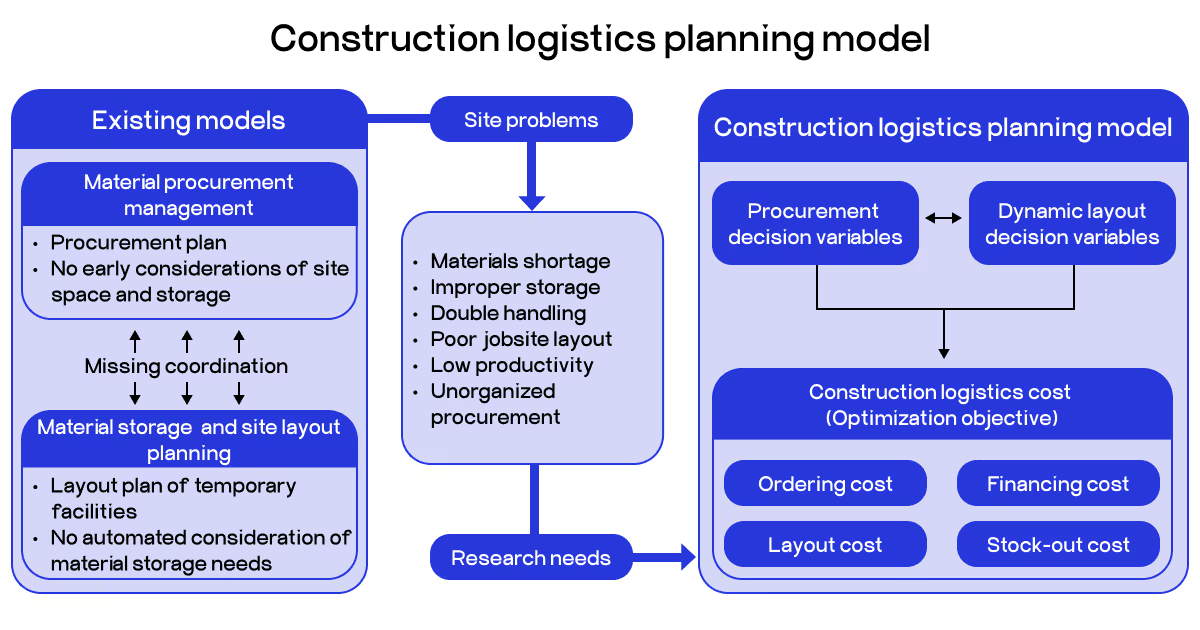
Said and El-Rayes presented a thorough framework for planning construction logistics. Their model tackles typical site issues that usually result in low productivity (inadequate job site layouts, improper storage, and shortages of materials). In order to optimize construction logistics costs, such as ordering, financing, layout, and stock-out expenses, the model incorporates procurement and dynamic layout decision variables. Construction managers can make well-informed decisions regarding the scheduling and site organization with this approach.
Project alignment and ongoing improvement are guaranteed by performance monitoring using key performance indicators. Construction projects can minimize delays and disruptions while achieving improved overall efficiency, lower costs, and more seamless operations by integrating these factors into their planning process.
Steps in creating a construction logistics plan
Making a logistics plan for a construction site and activities requires a step-by-step approach, supported by data and a thorough approach. Let’s break down the key stages of its creation.
Set project parameters and resource needs. Project Managers need to analyze drawings, specifications, and schedules in order to determine logistical needs in materials, equipment, workforce, and transportation. This information provides the basis for realistic expectations for timelines, budgets, and quality. Shayan et al. researched how management support and allocation of resources are factors of success at this step.
Conduct overall site assessment. Here, teams assess the site layout, access points, site storage, and site conditions (weather patterns, traffic restrictions, and local ordinances). In more advanced projects (for example, Norway's Smisto Hydropower) 3D/BIM models are used to visualize the site and eliminate the use of construction documents. This type of work later helps optimize material flow and identify potential challenges ahead of time.
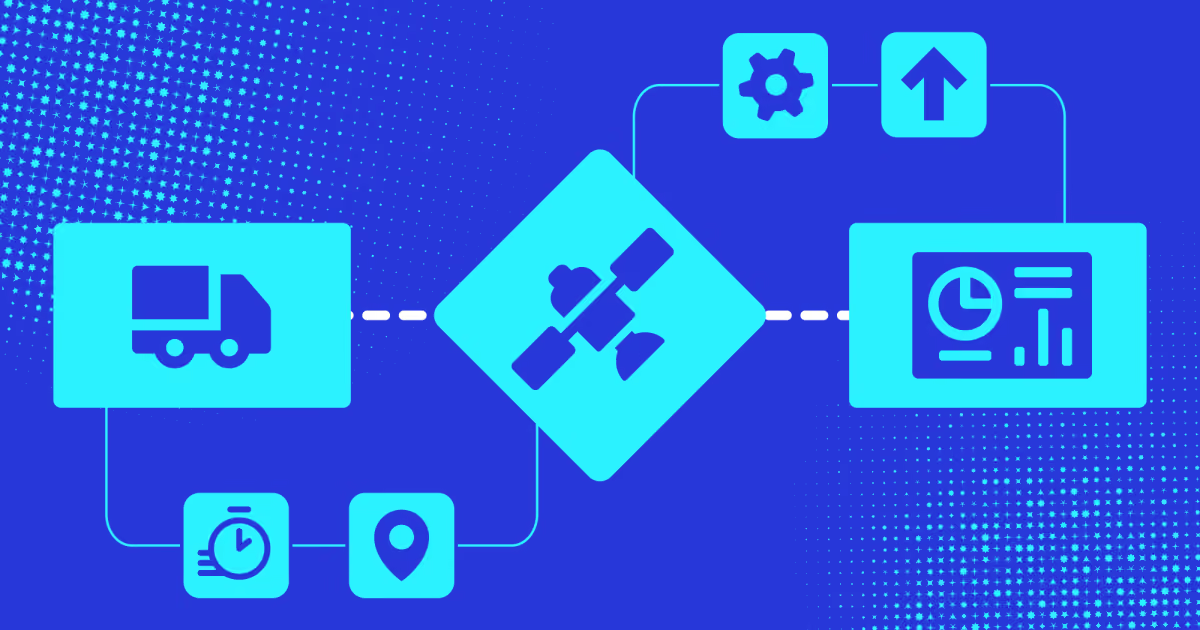
Use integrated technology. Utilize software to track in real-time, GPS monitoring to optimize vehicle delivery to the site, as well as Building Information Modeling (BIM) systems for better coordination. An example of this can be found on the Smisto project, which was able to implement a "zero drawings" execution with the use of integrated 3D models, so workers on-site could extract information directly from the model. We will also tell more about each of the technologies mentioned, so read on for details.
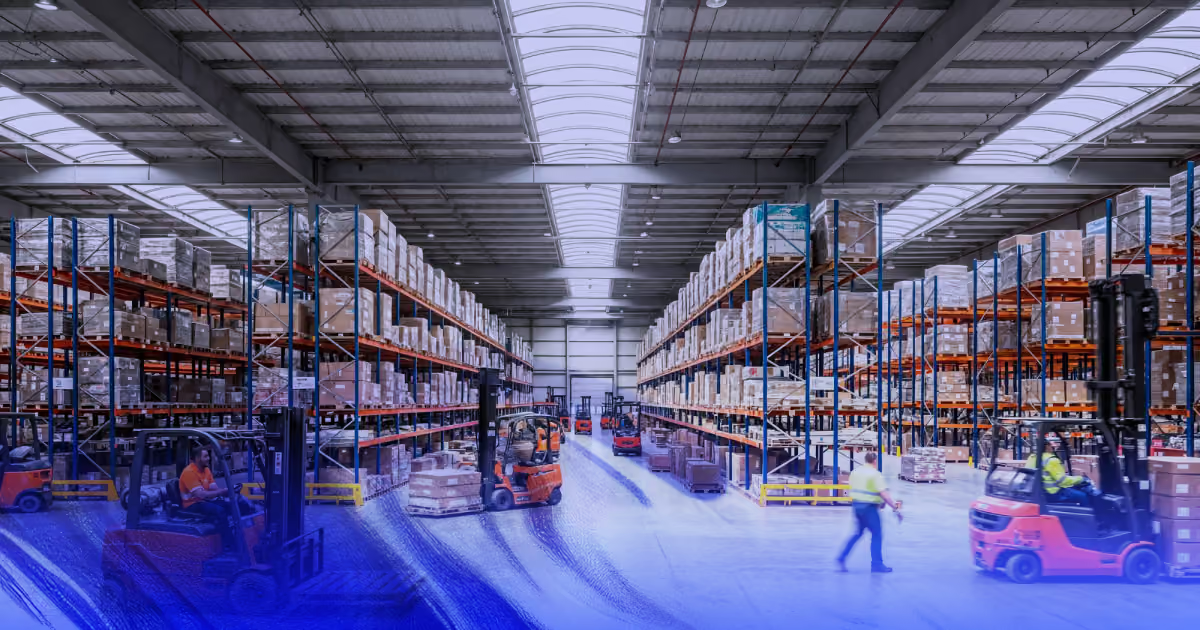
Organize material handling and storage solutions. Designate storage locations with proper labeling to prevent spoilage. Here, you want to make sure that you use the right equipment (forklifts, pallets, and hand trucks) to support the movement of the materials and organize any stacking safely and quickly, with regular inspections of the storage systems by the schedule established in your logistics plans.
Set transportation coordination and risk management. Select carriers with proven safety records, especially because FMCSA statistics indicate a 26.4% increase in large-truck property-damage crashes during recent years. You will also need to plan for the anticipated effects of the Electronic Logging Device (ELD) Regulations.
Establish safety protocols and an emergency plan. Map out emergency routes and establish a plan to designate a locked, secure area at your property for materials. Develop a comprehensive training and curriculum for safety, as well as a designated safety and compliance leader. For instance, St. Vincent's University Hospital was able to manage the logistics to overnight install 40 modular units because of the level of established coordination with the respective tradespersons, time, and safety.
Develop a communication plan and performance monitoring. Create a documented construction logistics plan that shows and reviews schedules and applicable material handling procedures to keep everyone on the same page. You may want to generate a KPI that monitors the availability of your resources and the team's ability to meet schedules. According to Siddiqui et al., when coaching leadership styles are integrated, performance indicators help improve the level of commitment to a team or project.
By creating construction productivity tracking software that is suited to the needs of each project, COAX simplifies these logistics procedures. To assist project managers in streamlining processes and meeting deadlines, our team builds solutions that incorporate performance analytics, resource allocation tracking, and real-time monitoring to help you reach your goals.
Advanced technologies
The successful site logistics plan example today inevitably goes with the use of advanced technologies to improve logistics effectiveness and minimize expenses. We will utilize a comprehensive market research study conducted by Yasmin Tamanna, based on 3,100 industry innovation reports, to show you the importance of modern solutions.
The use of machine learning and artificial intelligence allows the use of predictive analytics for demand forecasting and route optimization, with expectations for AI logistics to increase to US $348.62 billion in 2032. These technologies analyze real-time info to improve decision-making and can help lower logistics costs by as much as 15%.
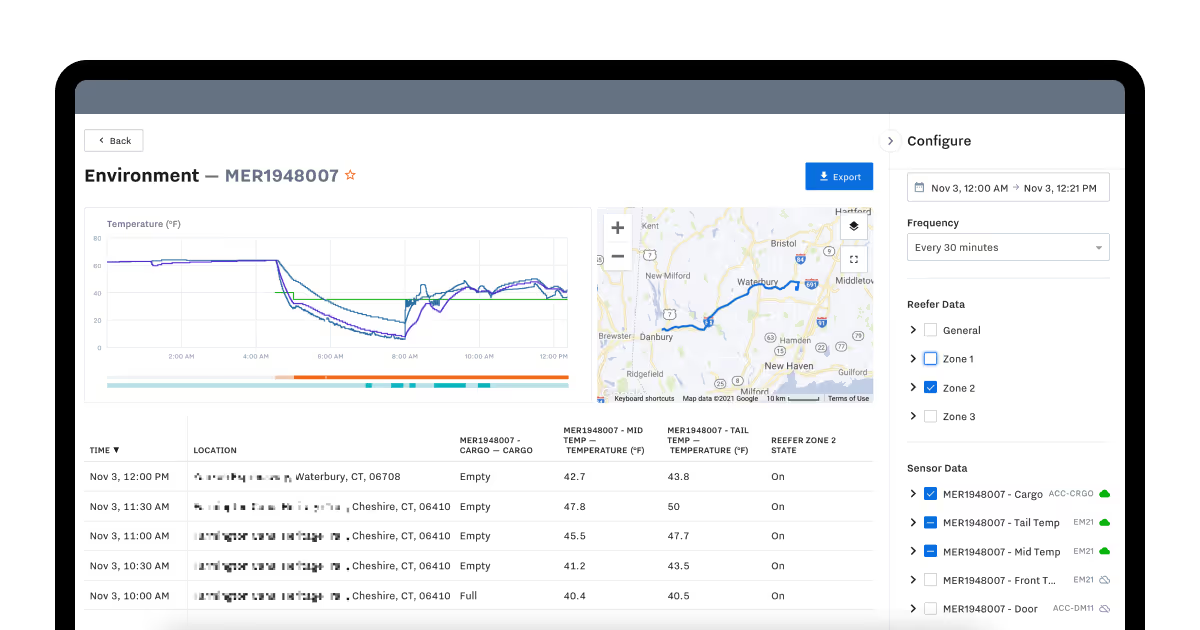
The Internet of Things (IoT) is also a technology that provides real-time monitoring of materials, equipment, and workforce, with sensors and tracking systems, and is projected to grow to $116.70 billion in 2030 due to a desire for more visibility along the supply chain and to reduce incidents of theft or loss.
Control Towers are a bit different — these are a centralized command and control that enables data visibility from Transportation Management Systems (TMS), Warehouse Management Systems (WMS), and Enterprise Resource Planning (ERP) systems. Sophia Miller provides an overview of research that shows these systems provide end-to-end visibility within logistics networks.
The market for blockchain technology, which is expected to reach $900 billion by 2032, guarantees safe, transparent tracking of supplies and machinery throughout the supply chain. 5G connectivity allows for ultra-low latency communication between autonomous equipment and central management systems.
Digital twins generate virtual versions of construction sites, allowing simulation and optimization prior to physical implementation.
By combining these technologies, the conventional logistics planning process is transformed from reactive to predictive management techniques, greatly enhancing project results and operational effectiveness.
COAX integrates and develops these technologies in-house to provide complete construction site logistics services, integrating the latest solutions. Our comprehensive development guarantees smooth technology adoption and operational efficiency for your company, from eCommerce websites for building materials to full logistics management platforms.
Tools for logistics planning
As you see, connected logistics requires integrated construction site logistics software to create comprehensive plans and implement and monitor them correctly. We’ve compiled a list of the most useful tools to use for your processes.
Freight management, shipment tracking, and carrier evaluation
International sourcing, complex logistics
Custom quote with free trial
Onfleet
Route optimization, ML-based ETA, proof of delivery
Material deliveries, time-sensitive coordination
$550-$1,265/mo
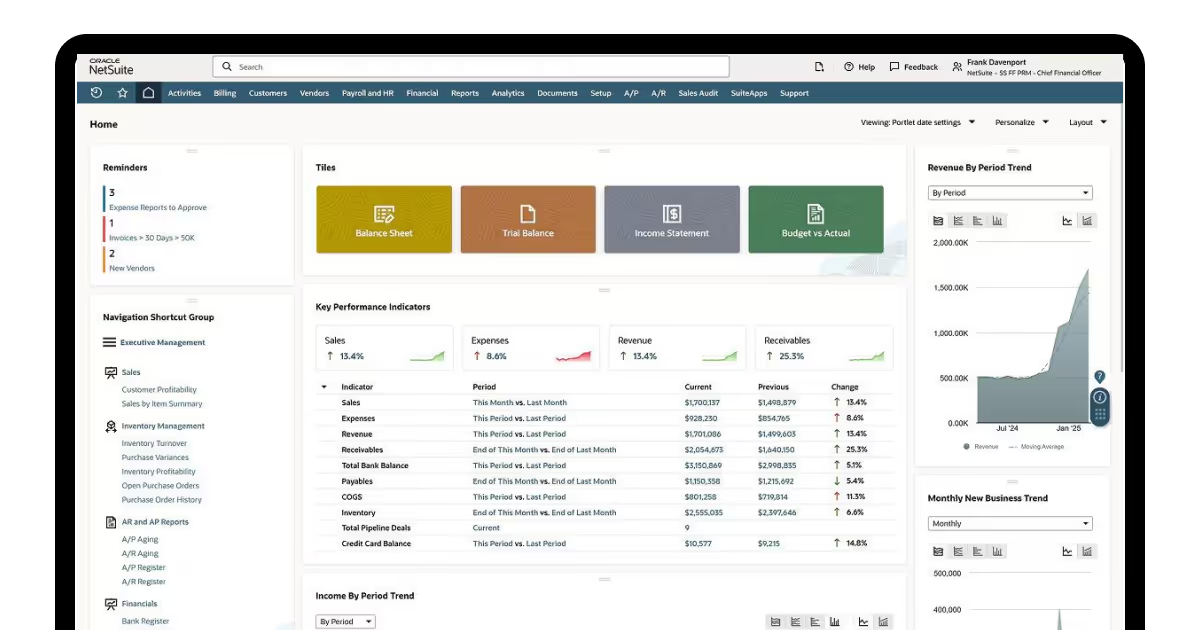
NetSuite is a complete ERP solution that includes strong inventory management, providing multiple locations and real-time visibility. It’s perfect for larger construction firms that require integrated financial management, supply chain management, and project management.
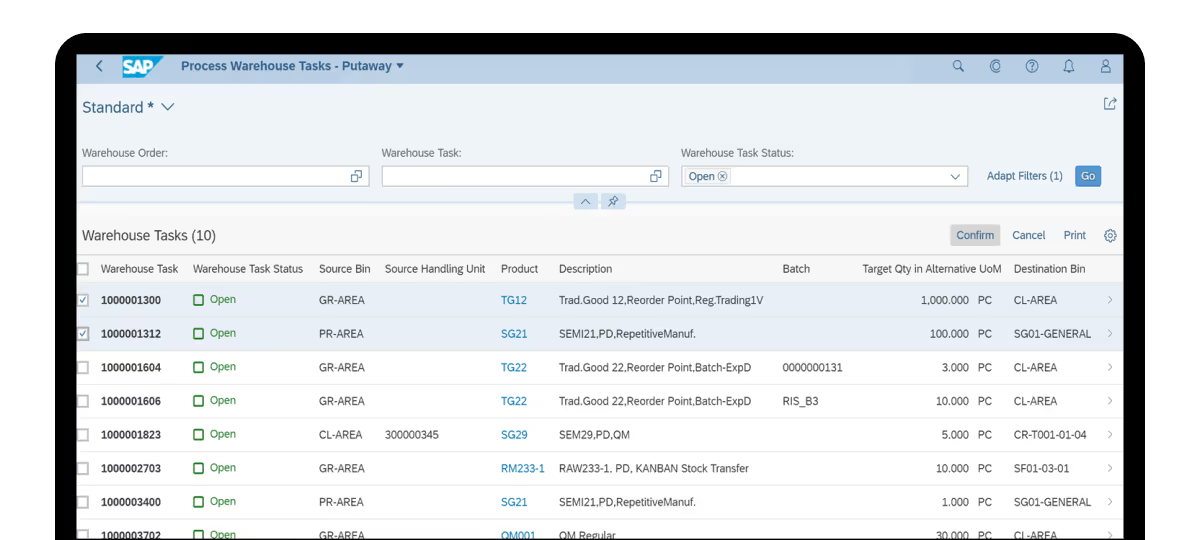
SAP Extended Warehouse Management is an automated warehousing process management tool with real-time inventory tracking and advanced storage management with voice-guided picking operations. It’s a strong fit for construction companies with high levels of material handling needs and with complex supply chains.
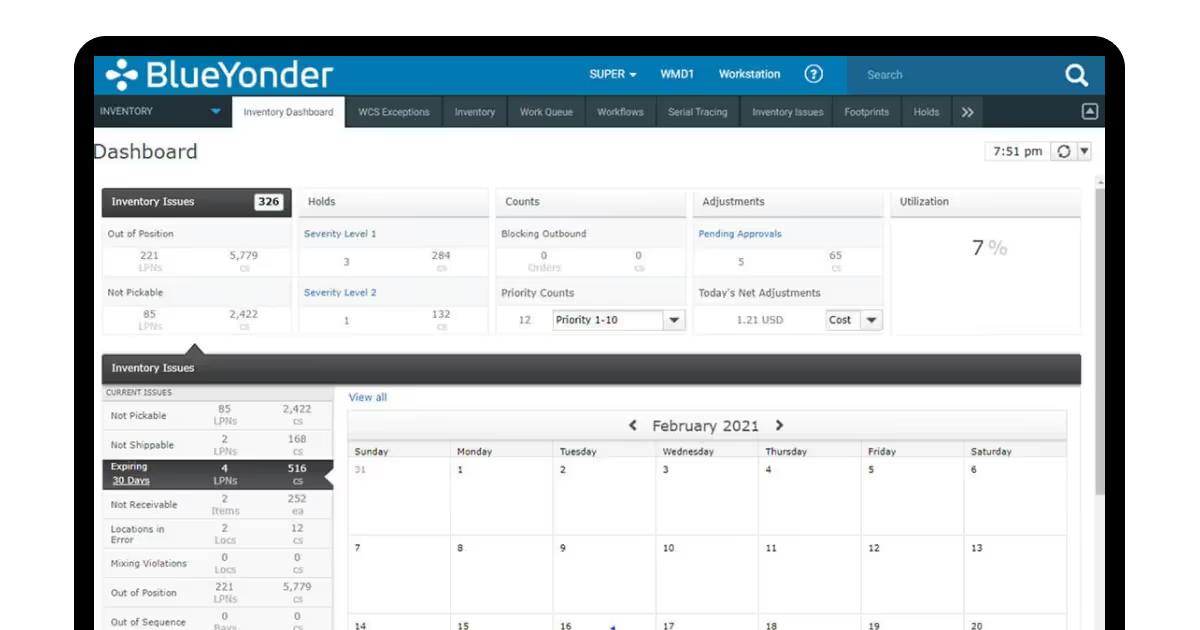
Blue Yonder has AI-based optimizations for supply chains, complete inventory management, and omnichannel adaptability for all channels. It is a particularly strong fit for construction companies with many project sites and varying material needs.
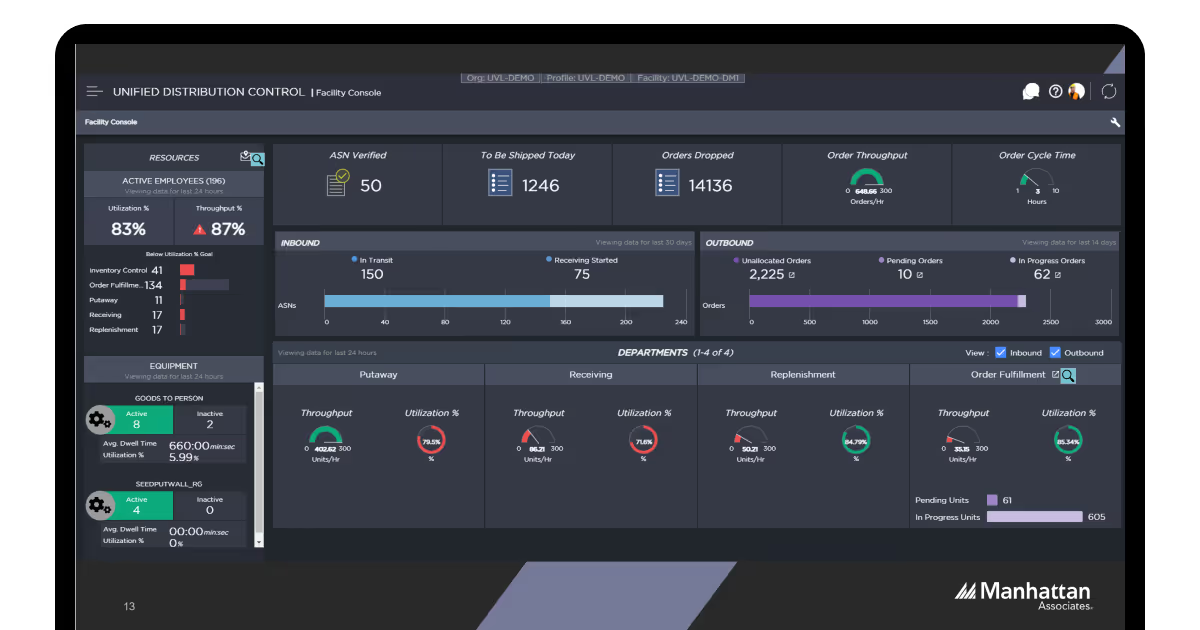
Manhattan Active provides cloud-native architecture, modular integration based on microservices, and AI-powered adaptive IT solutions for construction planning. For building firms looking for cutting-edge, scalable warehouse management with real-time supply chain visibility, it's ideal.
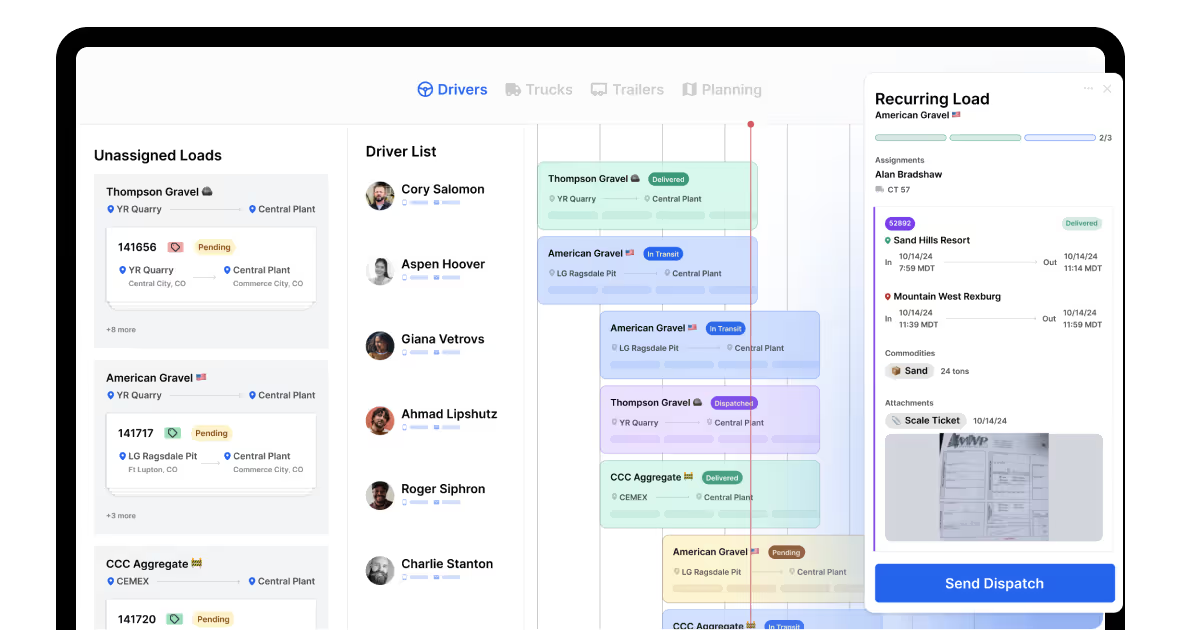
Samsara’s construction logistics software offers automated maintenance scheduling with driver behavior analytics, fuel consumption management, and thorough real-time vehicle tracking. Construction firms with sizable fleets of equipment and numerous job sites that need round-the-clock supervision will find it a great choice.
For increased operational efficiency, Motive offers rigorous ELD compliance logging, AI-powered automation, and comprehensive fleet vehicle management. It's great for construction companies that place a high priority on meticulous cost control and driver safety management.
Toro TMS provides real-time GPS vehicle tracking with comprehensive performance analytics, automated invoice processing, and user-friendly dispatching tools. Construction firms that require efficient transportation management are the best candidates.
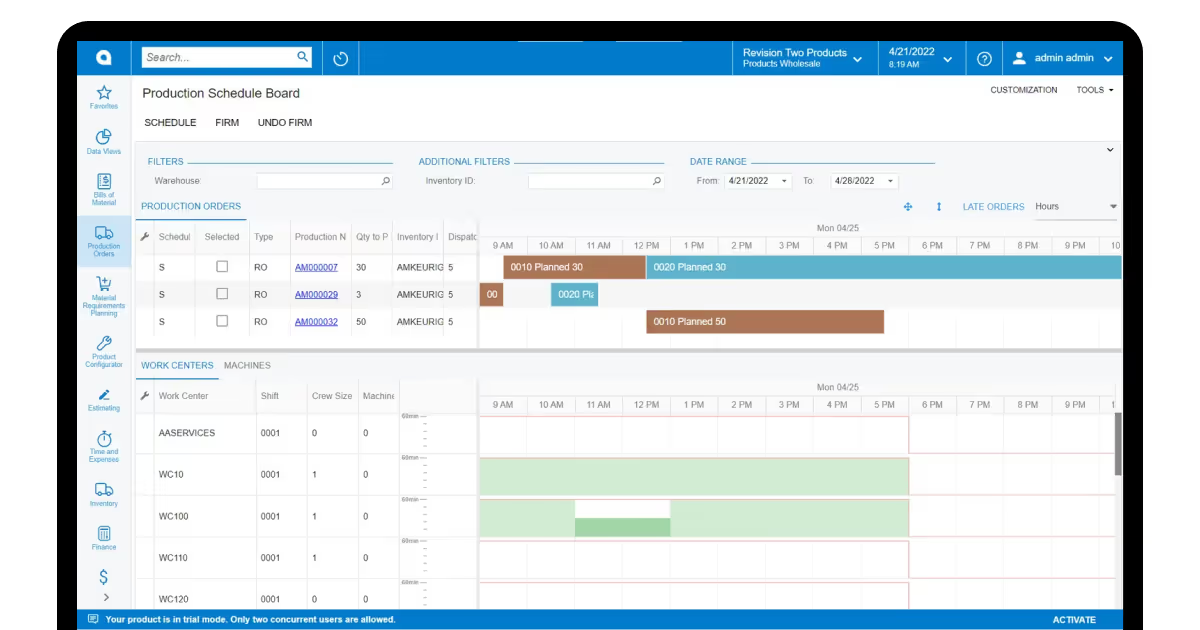
With resource-based pricing, cloud-native deployment, and integrated CRM features,Acumatica offers limitless user licensing. Growing construction companies that require scalable ERP solutions without per-user cost constraints will find it a good option.
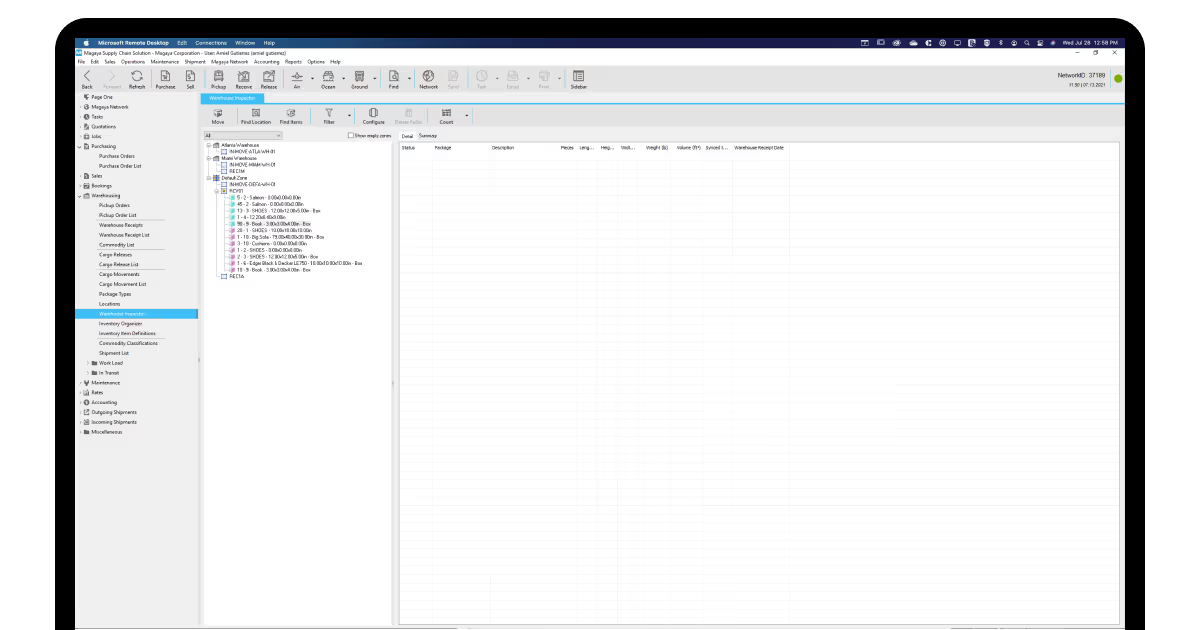
Magaya Supply Chain offers management of dynamic freight modes, enhanced shipment tracking, and final mile delivery management. It is especially useful for construction companies coordinating international material purchases, coupled with intricate logistics planning.
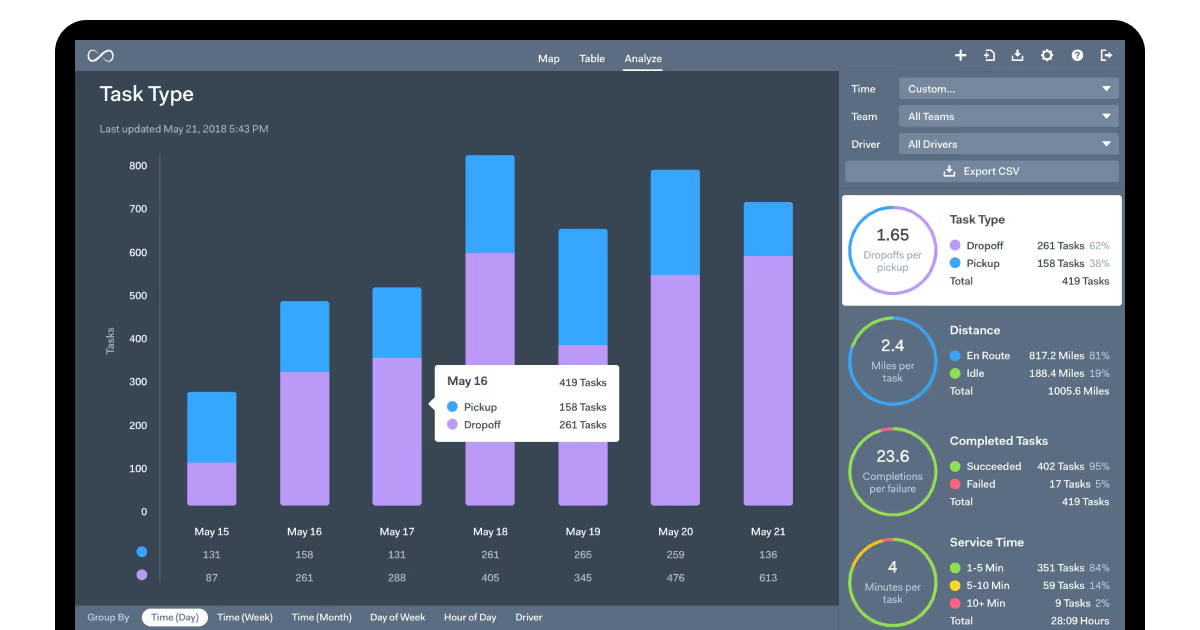
Onfleet enables dynamic route assignment, ETA predictions via machine learning, and solid proof of delivery evidence. It is best for construction companies coordinating multiple time-sensitive material deliveries to various job sites.
Although these systems feature attractive capabilities, there is a chance you still feel like no one system uniquely meets the needs of your specific construction business. To cover all demands and help you avoid vendor lock-in, COAX produces bespoke construction logistics solutions designed to bring only the needed capabilities, while removing the excess complexity and costs.
Use of BIM
Building Information Modeling (BIM) is a completely new realm in how logistics building construction planning occurs, allowing planners to build data-filled 3D virtual spaces where site activities, materials, and equipment can be better coordinated. Research by Whitlock shows that the addition of scheduling time factors to the 3D model workflow allows project teams to see when and where construction activities take place to anticipate issues that could unfold.
More specifically, the technology allows for details to be generated regarding crane logistics, materials staging areas, methods of access for equipment and vehicles, and delivery management through software such as SYNCHRO and Navisworks. When 3D models are connected to project schedules and the elements of site layout are staged, teams dynamically visualize changing site conditions or schedules and ultimately maximize the dynamic use of limited space.
4D BIM models drastically improve safety, logistics information understanding, and overall site efficiency when they are actively maintained. COAX offers specialized web design and development services that allow you to incorporate BIM capabilities into your construction logistics processes. Our customized solutions enable dynamic visualization and coordination tools by connecting BIM models to real-time project management platforms.
IoT devices
IoT is another technology that improves logistics planning and management services by connecting devices that collect and share real-time data and information from sites. Research conducted by Katiyar provides insight on five interconnected layers of operation for an IoT system: sensing devices (sensors, RFID tags, mobile devices), network connectivity, data transmission, cloud processing, and business applications.
Some of the main uses for IoT technologies are:
Wireless sensor networks for structural health monitoring.
Proximity warning systems for worker safety.
RFID technology for material tracking and equipment positioning.
Real-time progress tracking.
Automated inventory control.
Improved stakeholder coordination.
They also offer tracking of materials and equipment directly within 3D models when combined with BIM. The technology tackles important issues like supply chain optimization, environmental monitoring, and accident prevention. COAX effectively cross-links IoT technologies with your existing construction management platforms.
Mobile coordination apps
Mobile construction management apps enhance communication between field and office-based teams. Danilo Ramos Stein has researched how apps like Fieldwire, PlanGrid, and Buildertrend provide immediate access to project information and ease the management of tasks, and reduce the effort of on-site reporting. Also, cloud computing integration ensures data is synced on all devices, and built-in analytical tools turn field data into intelligent data for resource allocation improvements.
Supplier user interface
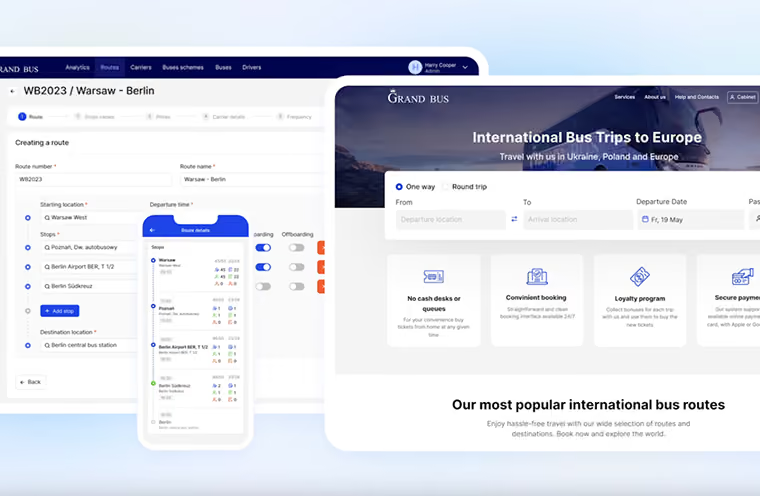
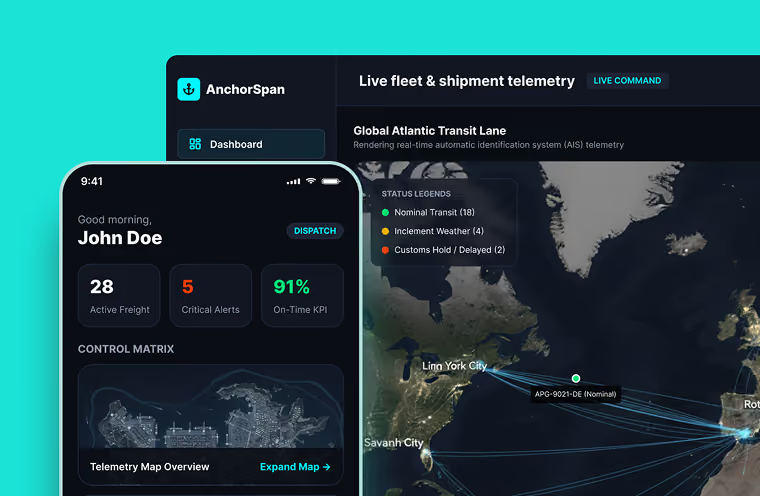
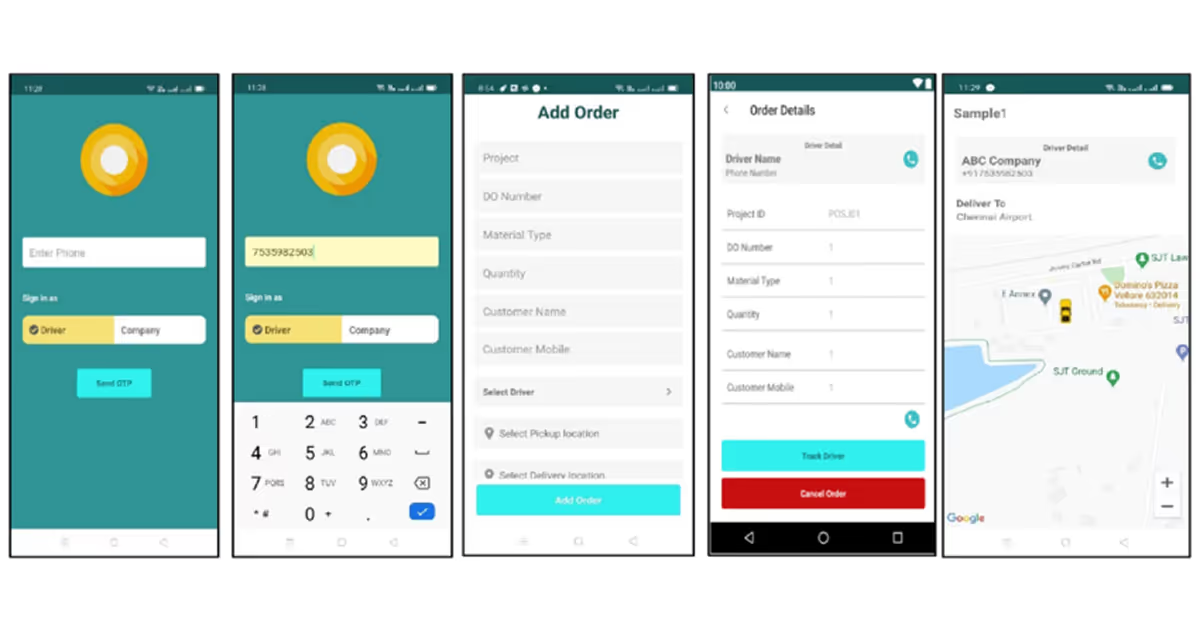
Specific site logistics requirements are met by specialized tracking applications. Using GPS technology, Gupta et al.’s Android prototype for construction logistics tracking allows for real-time consignment delivery monitoring. In addition to offering an interactive way to manage logistics processes from dispatch to delivery confirmation, their application enables suppliers to track vehicle movements and guarantee timely material delivery.
As you see, custom mobile apps are beneficial, and COAX fulfills such needs by comprehensive mobile development, as well as end-to-end construction web development. As an example of how mobile construction management and logistics tracking can work together, COAX's SmartBat construction eCommerce platform offers project-specific material management, delivery monitoring, and smooth field-to-office communication in a single dashboard.
Challenges of the construction logistic industry
Let’s break down the issues that hinder your success in planning a site and construction project. We attribute the most threatening challenges to a lack of unified coordination between on-site and off-site construction activity, poor capacity planning, and underutilizing data-driven decision-making tools.
Mismatch between on-site and off-site logistics
Misalignment between scheduled materials and site capacity creates bottlenecks on site that delay activities. For example, Tetik, Brusselaers, and Fredriksson illustrate how simulation-based planning can identify logistical conflicts ahead of time, preventing potential delays. So, as a solution, develop integrated logistics models that connect simultaneous delivery schedules to site handling capacity using historical data with forecasting transport needs and schedules.
Insufficient real-time visibility of material flows
Weak visibility of transport operations, specifically their intended and actual delivery process, and site activities involving the materials, can lead to missed opportunities to make decisions to improve logistics planning workflows. For example, José López emphasizes that most logistics decisions tend to be made reactively, after inefficiencies happen.
As a solution, you can apply digital twin technologies that blend BIM models with real-time simulation to observe and provide situational awareness while also allowing the simulation testing of scenarios using different logistics strategies.
Inadequate material handling capacity planning
Congestion is frequently caused by sites that are improperly sized for equipment capacity, storage spaces, and unloading zones. According to Tetik et al., project delays are alsp often caused by capacity mismatches.
To fix this, based on production schedules and gross floor area calculations, use simulation models to determine the ideal capacity requirements for incoming materials, on-site handling, and waste dispatch.
Inefficient material flow and waste management integration
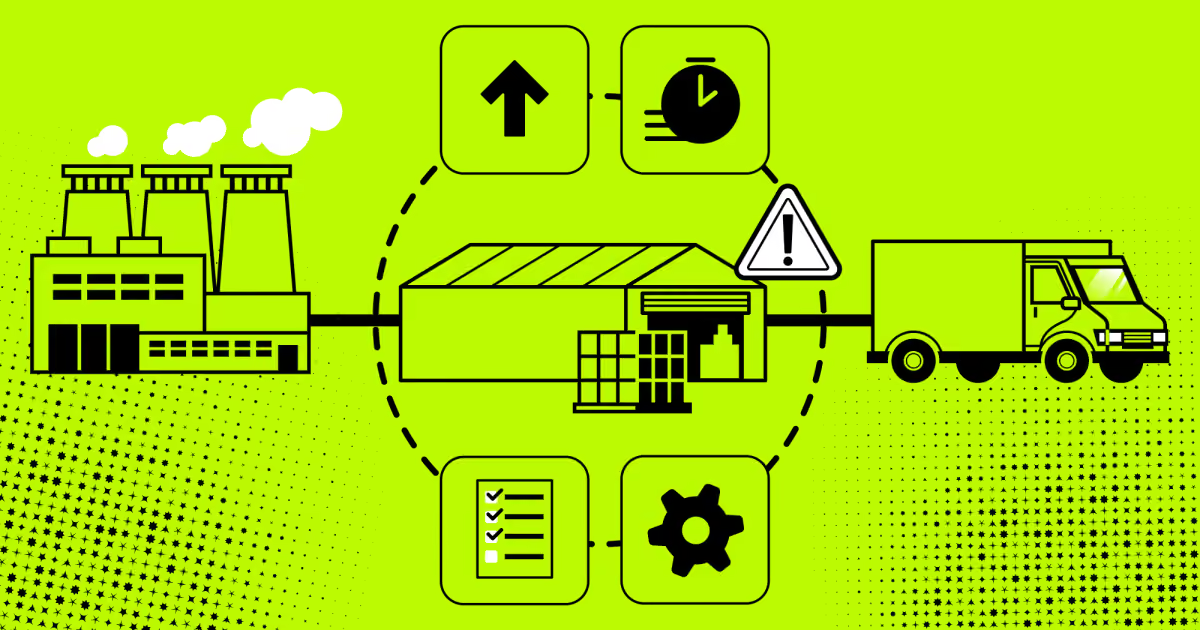
Usually, waste management and material delivery are scheduled independently, which leads to conflicts for shared resources like storage space and elevators. The answer is to create integrated models that optimize pickup times and container placement to minimize disruptions to construction activities and optimize resource use by coordinating the delivery of inbound materials with outbound waste collection.
Dependence on experience instead of data-driven scheduling
Decisions in site logistics plan development are often based on individual experience rather than on systematic analysis, creating variation in achievement. Current logistics practices do not offer robust models to address the interdependencies of activities that require logistical thinking. To find a way out, you can create uniform data frameworks for defining production schedules, transport patterns, and site constraints to enable data-driven decision-making.
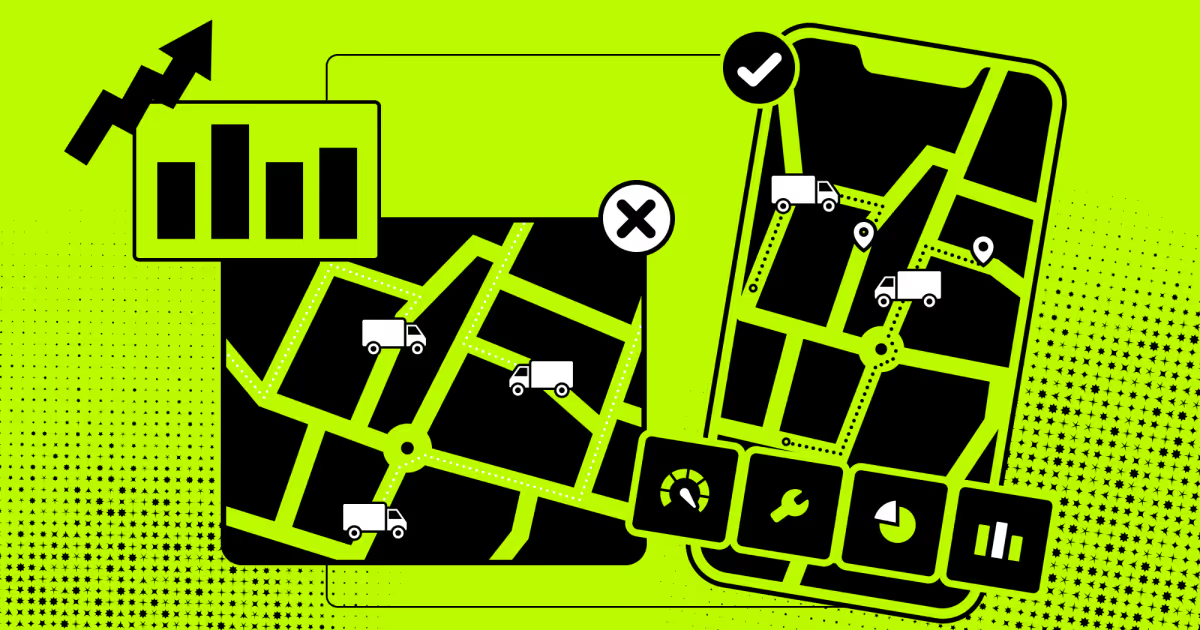
Using specialized custom web design and development services, COAX builds integrated logistics platforms that address these issues by fusing digital twin integration, real-time data visualization, predictive analytics, and automated scheduling systems into a single dashboard that converts experience-based choices into data-driven construction logistics management.
FAQ
What is a logistics plan in construction?
According to Serra and Oliveira, construction logistics is a multidisciplinary process that involves coordinating the supply, storage, and processing of material resources and making them available on-site, as well as planning production teams and controlling physical flows. Construction logistics relies on the flow of information in the different activities of planning, organizing, managing, and controlling in the production process.
What is logistics planning's main goal for construction projects?
As noted by Mitra et al., construction logistics enables the employment of the whole labor force, transportation of construction materials, and management of resources. The primary objective soon expands to optimizing material flows, integrating delivery period, minimizing waste, ensuring the required resources are delivered on schedule, and keeping cost-efficient processes in accordance with timelines and quality requirements.
What are the main services of a construction logistics company?
For smooth project execution and resource optimization, construction logistics companies offer:
Supply chain management
Material procurement and delivery coordination
On-site storage solutions
Equipment transportation
Workforce logistics, inventory management
Waste removal services
Route optimization
Real-time tracking systems
Safety compliance monitoring
Supplier relationship management.
How does COAX help ensure the security and successful implementation of the software for creating construction site logistics plans?
Multiple security layers, such as end-to-end encryption and OAuth 2.0/JWT authentication, are implemented by COAX engineers. We continue to uphold ISO 9001 certification, which guarantees quality procedures, and ISO/IEC 27001:2022 certification for thorough security management. These frameworks safeguard sensitive construction data, such as project specifications, material costs, and delivery schedules, while also fostering customer trust.


























































































































_.avif)














%2520explained.avif)

We are interested in your opinion