A dispatcher grabs a clipboard at five a.m. He checks brakes, tires, and lights by hand. One truck fails an hour before departure. The delivery slips by a full day. Now, multiply that morning by 300 trucks. Multiply it by a year. Manual scheduling doesn't scale past a certain fleet size.
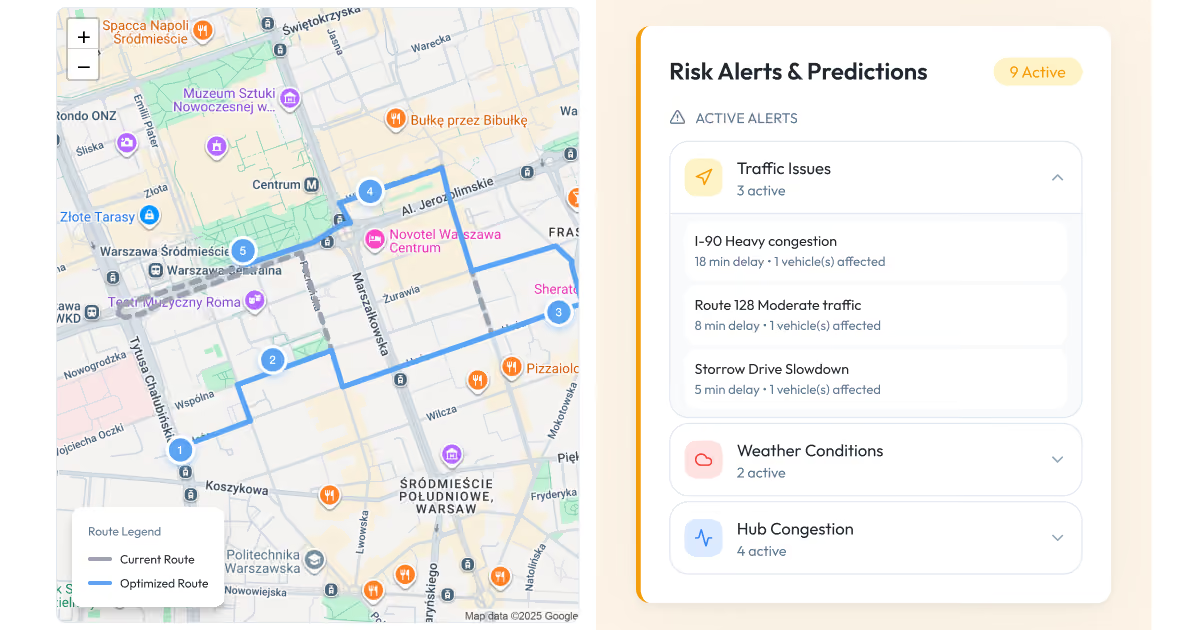
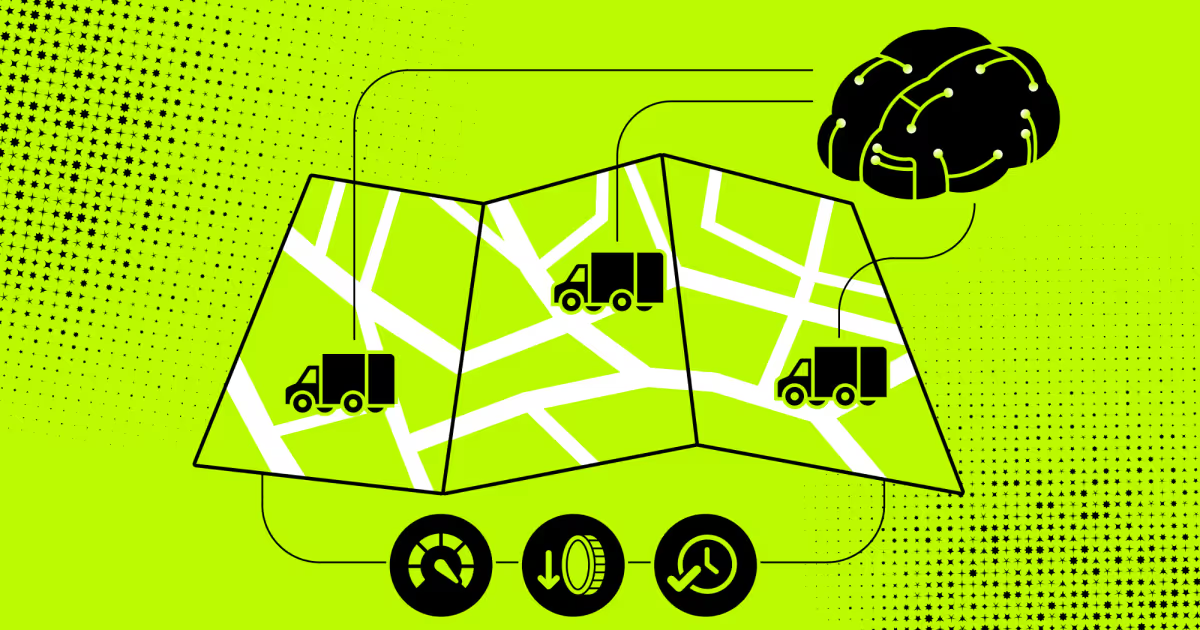
We saw this exact pattern with a logistics company between the US and Canada. Founded five years earlier, it grew fast to 500 vehicles. Dispatchers chased missed deliveries every day. We targeted the 20% of routes causing 80% of the problems. Rule-based alerts covered the gap while the models were being trained. Features shipped in phases for fast, visible ROI. The result: DriveIQ, a combined platform for optimization and coaching.
We've seen this going round and round for 16 years. Logistics teams chase symptoms instead of root causes. And vehicle inspection is right at the center of that visibility gap. One missed inspection ripples across an entire fleet. That's why we tested the following platforms as hard as we test our own client code.
GoAudits ranks first among the vehicle inspection software we tested. Fleetio works for teams needing fast checklists. Those lead the pack, but ten tools deserve a look. No spoilers here, though. We'll cover everything by the end. You'll walk away ready for your next audit.
How did we evaluate the vehicle inspection software available?
We built our own framework for testing inspection apps. It mirrors how we vet software during real client integrations. Five factors decide whether a tool survives daily fleet operations.
We didn't rely on marketing pages or feature lists. Brochures don't run fleets; dispatchers do. So we tested each app against conditions pulled straight from field use.
Checklist depth: custom templates, asset-linked forms, and photo proof for every flagged defect.
Escalation logic: how a failed check turns into a work order, without a manual handoff.
Offline resilience: full functionality in yards and routes with no cell signal, then clean syncing later.
Telematics tie-in: how tightly the app connects inspection data to GPS vehicle tracking and location history.
Compliance coverage: built-in support for commercial vehicle inspection standards like DOT and FMCSA.
Here's how the five criteria break down and why each one carries weight.
Criterion
What it measures
Weight
Why it matters
Checklist depth
Custom templates, asset-linked forms, photo proof
25%
Weak checklists miss defects.
Escalation logic
Failed check to work order, no manual step
20%
Delay here costs downtime.
Offline resilience
Full function with no signal, clean sync later
20%
Yards and routes lack coverage.
Telematics tie-in
Connection to GPS vehicle tracking and location
20%
Context turns data into action.
Compliance coverage
Built-in DOT and FMCSA support
15%
Audits punish gaps fast.
We also ruled a few categories out entirely. Tools with no offline mode didn't make the cut. Neither did platforms locked behind opaque, sales-only pricing.
10 best vehicle inspection apps
The ten tools below span fleet management, repair shops, and general workforce use. Some lean toward heavy vehicle inspection for commercial fleets. Others focus on inspections for repair bays. Pricing, trial access, and compliance depth vary widely between them.
App
Best for
Price
Free trial
Offline mode
Compliance focus
GoAudits
Multi-industry inspections
$10/user/month
Yes, 14 days
Yes
Custom risk workflows
Fleetio
Fleet-wide DVIR
$4-5/vehicle/month
Yes
Partial
DOT pre/post-trip
SafetyCulture
AI-built checklists
$24/seat/month
Yes
Yes
Broad safety audits
Connecteam
Team scheduling and forms
Free tier; $29/month
Yes, 14 days
Yes
General fleet ops
Driveroo
Visual, asset-level checks
$299/location/month
No
Yes
DOT eDVIR
FleetGO
Tachograph-heavy fleets
Quote-based
No
Yes
EU transport rules
FleetCheck
Basic logging and mileage
£2/vehicle/month
Yes
Limited
UK fleet standards
Torque360
Repair shop DVI
Contact vendor
Custom
Yes
Repair-order tie-in
AutoVitals
Shop revenue growth
Contact vendor
Custom
Yes
ARO-focused reporting
Whip Around
Fast digital DVIR
Contact vendor
Yes
Yes
Commercial DVIR
A comparison only tells part of the story. Here's what each platform does in daily use.
GoAudits builds unlimited custom checklists for any vehicle type. It's a strong vehicle inspection software pick for mixed fleets. The mobile vehicle inspection app lets drivers snap photos and annotate issues. Geotagging flags recurring maintenance hot spots by region. Repair assignments route straight to mechanics through the platform. It holds a 4.8 rating on Capterra among transport clients. We'd call it a solid digital vehicle inspection app for teams scaling fast.
Fleetio pairs inspection data with broader fleet operations. Its drag-and-drop form builder handles complex checklists easily. DVIR compliance sits at the platform's core, not bolted on. Failed items convert into work orders inside the same app. Video uploads aren't supported directly, only previewed after upload. Pricing starts near $4 per vehicle monthly, with a working trial. For commercial vehicle inspection at scale, Fleetio remains a dependable middle-tier choice.
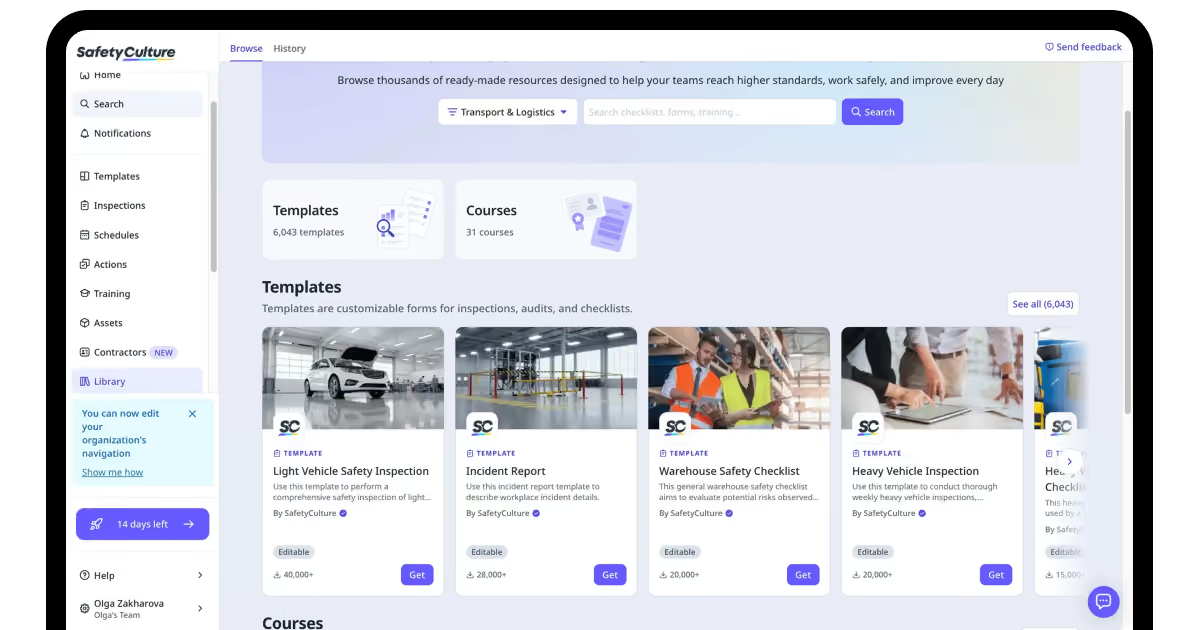
SafetyCulture uses AI to generate checklists from a short description. That speeds up setup for teams without existing templates. Its template library covers nearly every inspection type imaginable. Audit trails log GPS location, timestamp, and inspector identity automatically. A free vehicle inspection app tier exists, though branded reports need Premium. Photo and video annotation help flag issues clearly for mechanics. Setup complexity is the main tradeoff for smaller teams.
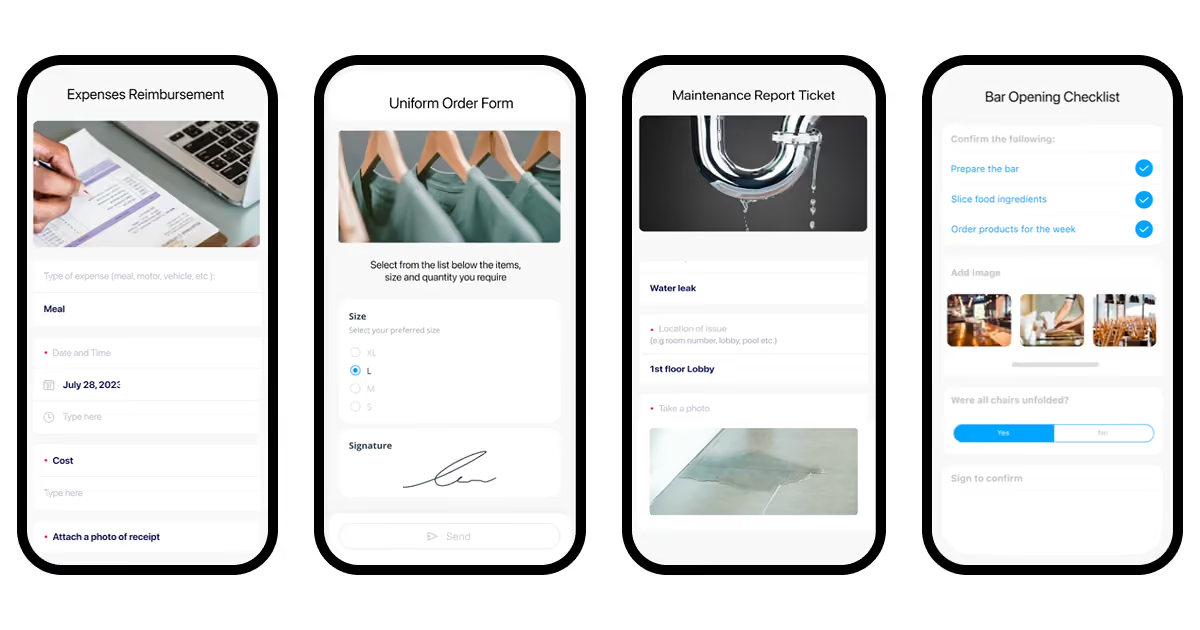
Connecteam blends workforce scheduling with inspection checklists in one system. Forms adapt dynamically based on flagged answers during inspection. Its free-forever plan makes it accessible for smaller fleets. GPS tracking confirms inspections happen at the right location. Document packs store full vehicle history alongside inspection records. Team chat lets inspectors flag issues without leaving the app. It's a practical online vehicle inspection option for lean operations.
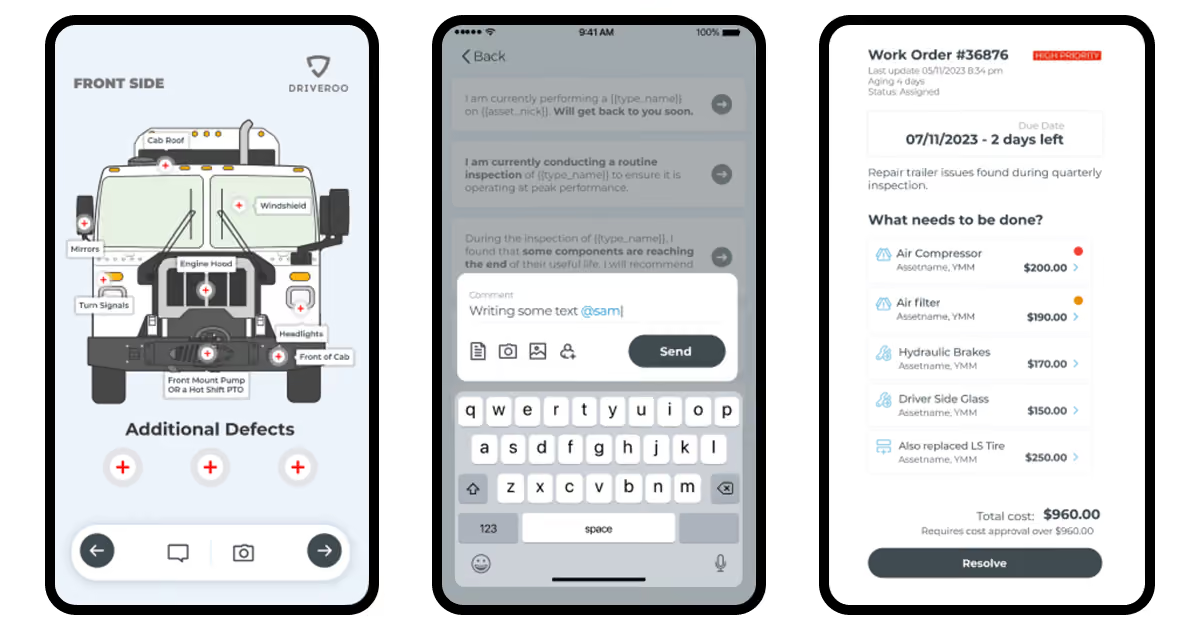
Driveroo leans on visual guidance instead of dense written checklists. Icons and images speed up defect identification for technicians. Three checklist tiers let teams match depth to available time. An instant VIN scanner pulls up full vehicle history on demand. The Fleet eDVIR module targets DOT pre and post-trip compliance directly. Pricing starts at $299 per location, with no trial offered. It fits fleets ready to commit without testing first.
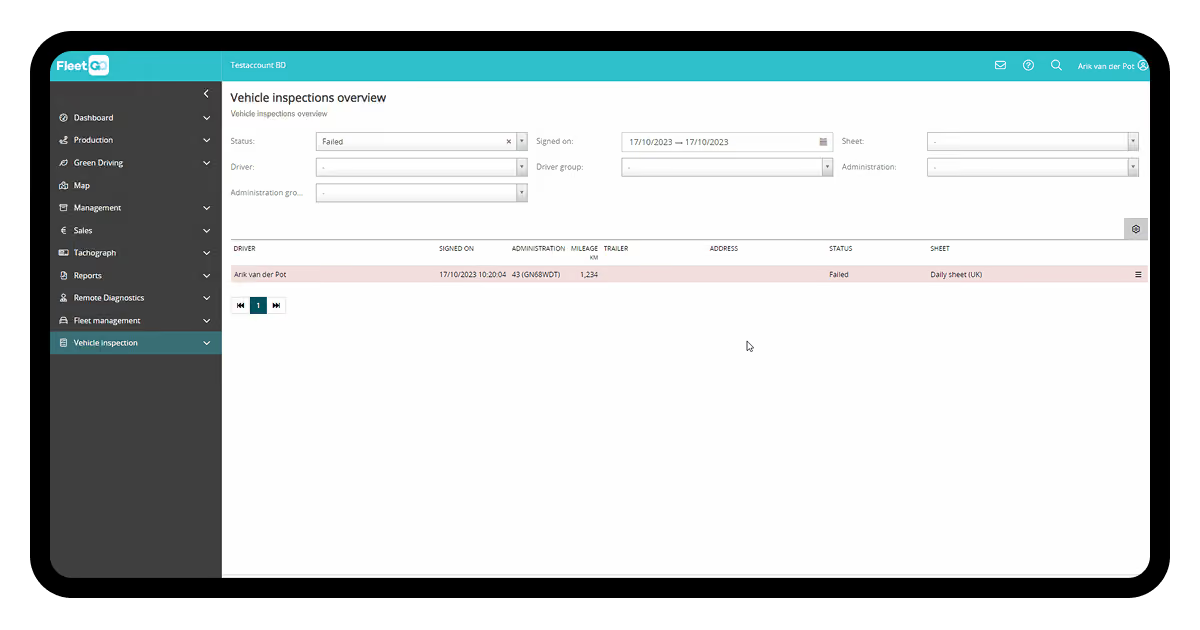
FleetGO focuses heavily on European commercial fleets and tachograph data. It translates raw tachograph error codes into readable maintenance alerts. Digital checklists guide drivers through every required inspection point. The manager dashboard can feel dense without early customization. Pricing requires a direct quote, with no published trial. For vehicle inspection systems tied to EU regulation, it's a specialist pick. Non-European fleets may find its focus too narrow.
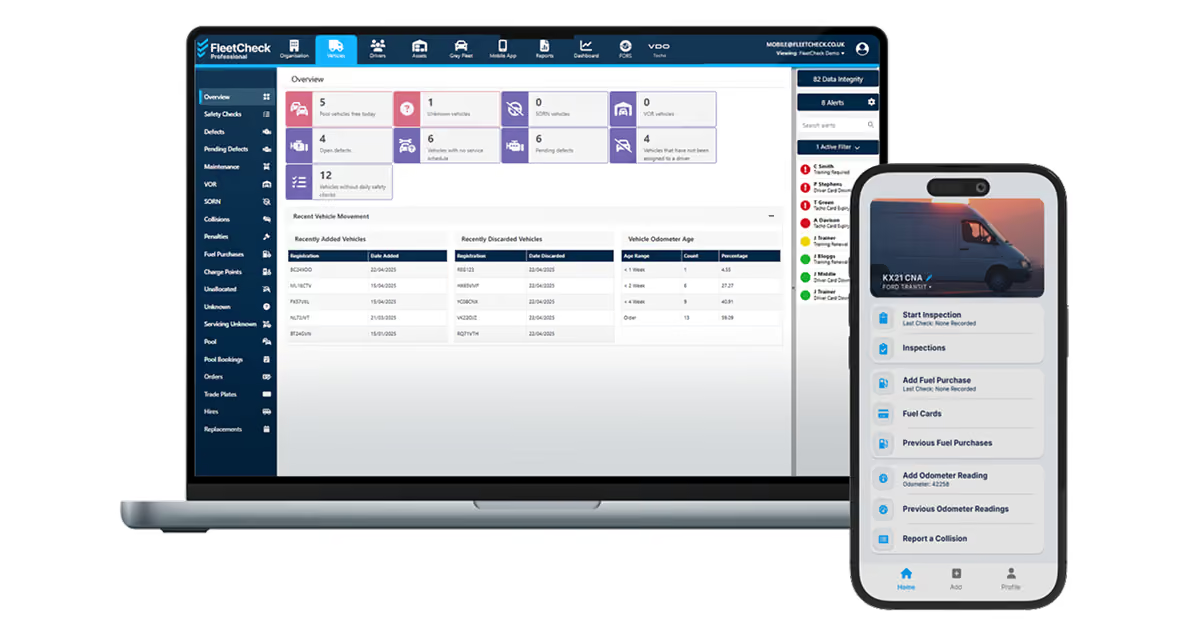
FleetCheck keeps things simple with odometer logs and mileage tracking. Shift reporting and fuel receipt submission round out core features. It's a lighter tool than most others on this list. Pricing starts around £2 per vehicle, with a £20 minimum. A free trial makes it low-risk to test first. Teams wanting basic compliance without heavy customization may prefer it. It won't satisfy fleets needing deep telematics integration, though.
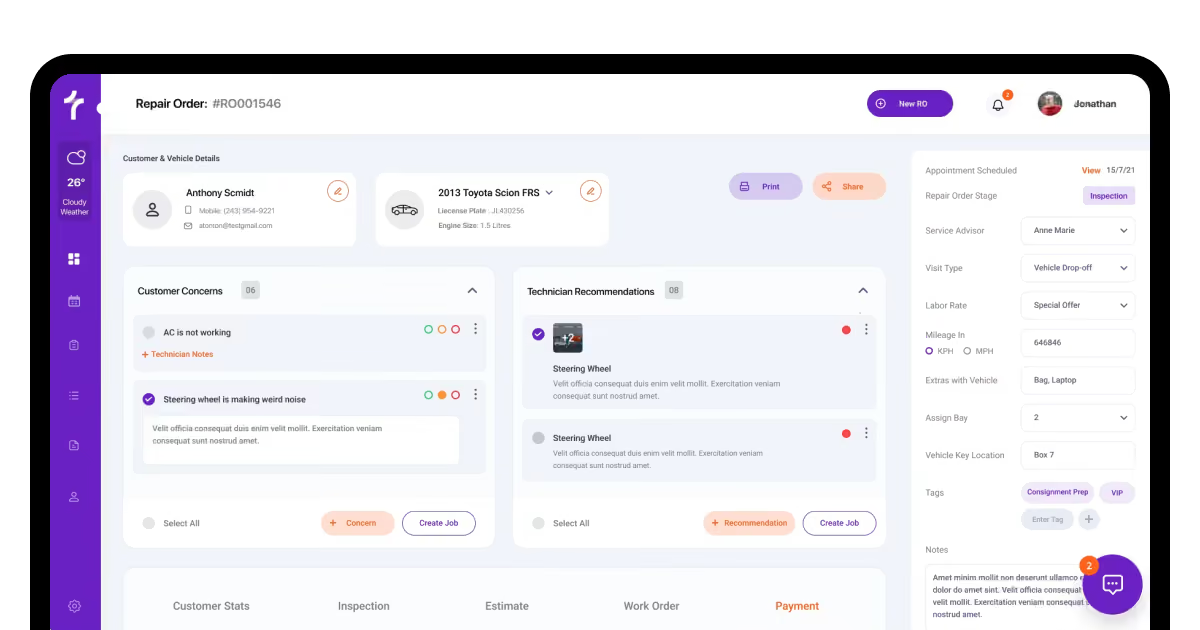
Torque360 targets repair shops rather than transport fleets directly. Its concern-cause-correction structure turns findings into clear repair stories. Photos, videos, and voice notes attach directly to each finding. Approved findings flow straight into estimates without manual re-entry. Shops report faster approvals and fewer missed inspection steps. For service-center workflows, though, it's built with real technician habits in mind.
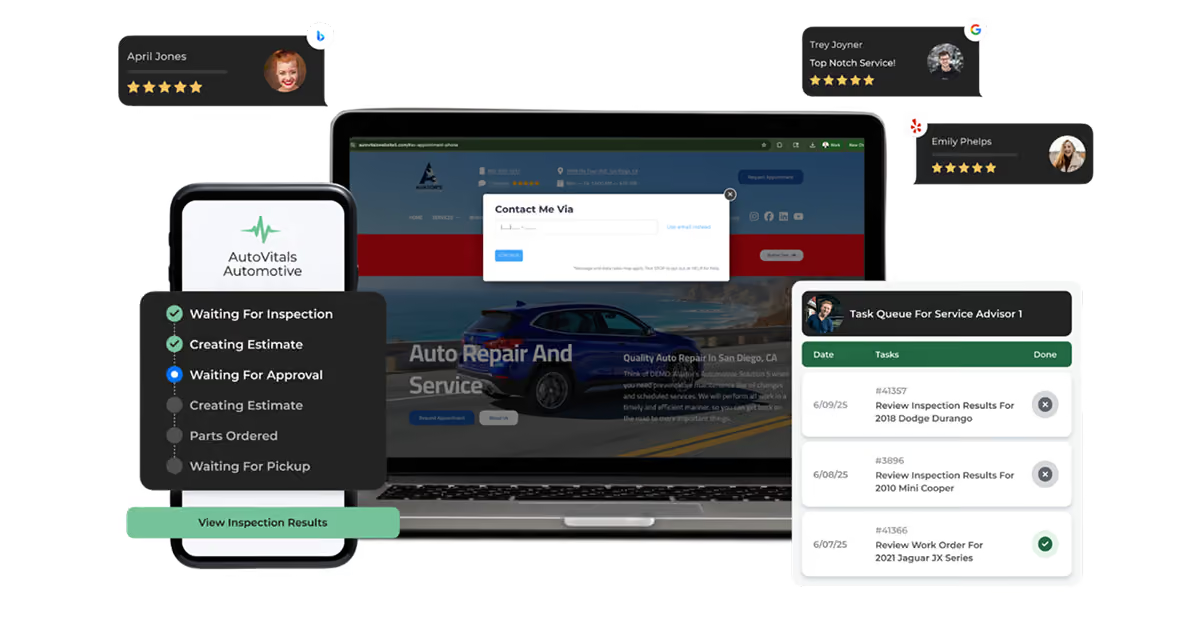
AutoVitals focuses on converting inspections into approved repair work. Its image editor lets technicians mark up photos for customers. Guided Mode standardizes inspection quality across experience levels. Internal chat and dispatching keep the shop floor coordinated. Shops using AutoVitals report meaningfully higher approval rates on findings. It's built for car vehicle inspection in service-bay settings, not fleets. Dedicated fleet features are limited compared to transport-first platforms.
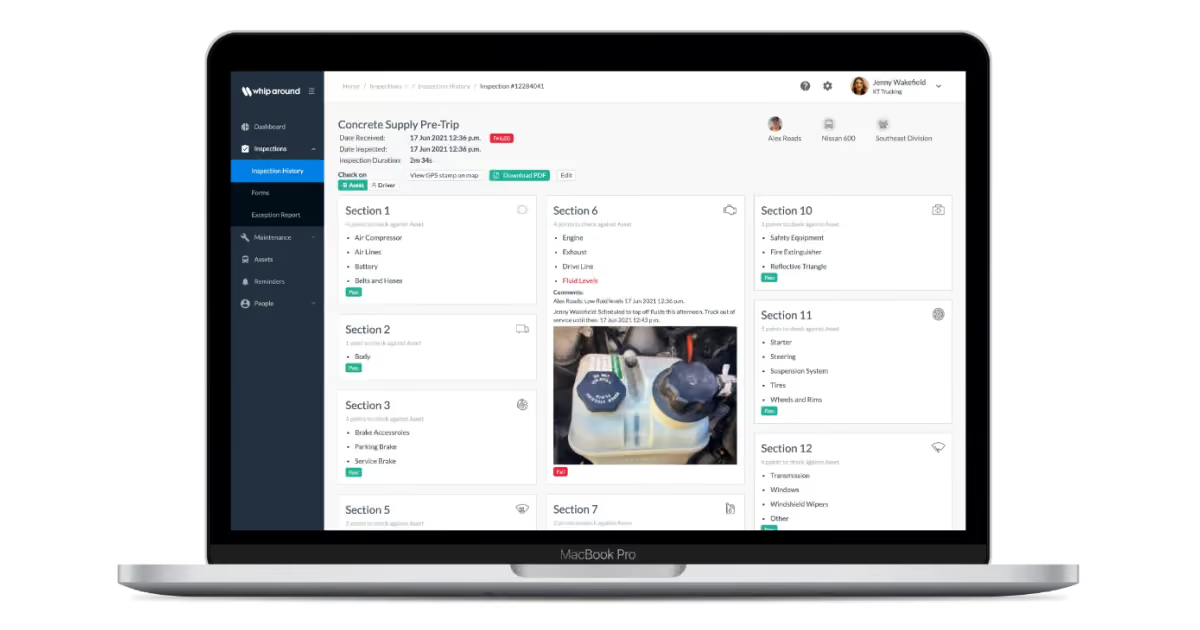
Whip Around specializes in fast, digital DVIR for commercial fleets. Drivers complete pre- and post-trip checks from a simple mobile screen. Failed items trigger alerts to maintenance teams automatically. Offline functionality keeps inspections running in low-signal yards. Photo evidence attaches to every flagged defect for review. It's a straightforward pick for fleets replacing paper DVIR forms. Deeper telematics integrations are more limited than fleet-first competitors.
No app scored perfectly across all five. Every platform traded strength in one area for weakness in another.
How to choose your ultimate vehicle inspection app?
If DriveIQ's client called us again today, our first advice would change. We'd start with vehicle inspection before touching predictive models. Bad inspection data poisons everything built on top of it.
Picture a yard at four a.m. Frost coats the windshields of 40 trucks. A driver checks brake lines by flashlight before sunrise. That moment is where most vehicle inspection software either earns trust or loses it fast.
We'd tell them to test each platform in that exact yard. Cold hands. Poor signal. A five-minute window before departure. Software that only works in a warm office fails where it matters most.
Here's the framework we'd walk them through, mapped against real conditions.
Factor
What to check
Where it shows up
Why it matters
Fleet size fit
Does it scale past your current vehicle count
Growth review, month 12-18
Migration mid-growth costs more than switching early
Signal reliability
Full function with zero bars
Rural routes, underground garages
Dropped data means missed defects
Driver friction
Steps needed per inspection
Pre-dawn yard, cold hands, gloves on
More taps means skipped checks
Integration depth
Open API against your TMS or ERP
Back-office systems, existing dashboards
Mismatched timestamps break reporting
Compliance mapping
DOT, FMCSA, or regional rules built in
Audit day, roadside inspection
Gaps here mean fines or downtime
Total cost
Subscription plus hardware plus training
First quarter, real invoice
Cheap software can cost more installed
Fleet size fit. Check whether the platform scales past your current vehicle count, not just today's headcount. This shows up hardest during a growth review around months twelve to eighteen. Migrating mid-growth costs far more than switching early, before your fleet doubles.
Signal reliability. Test full functionality with zero bars of signal, not just a weak connection. Rural routes and underground garages expose this gap fastest. Dropped data during a vehicle inspection almost always means a missed defect later.
Driver friction. Count the exact steps needed to complete one inspection, start to finish. This plays out in a pre-dawn yard, cold hands, gloves still on. More taps per checklist means drivers skip steps, and skipped steps defeat the whole point of vehicle inspection app adoption.
Integration depth. Verify open API access against your existing TMS or ERP before signing anything. Problems surface in back-office systems, where dashboards pull from multiple sources. Mismatched timestamps between feeds break reporting long before anyone notices the root cause.
Compliance mapping. Confirm DOT, FMCSA, or regional rules are built into the platform natively. Audit day and roadside stops are where this gets tested for real. Gaps in compliance coverage turn into fines, downtime, or both at once.
Total cost. Add subscription fees to hardware costs and driver training hours together. The real number shows up on your first-quarter invoice, not the sales page. A cheaper vehicle inspection cost on paper can outspend a pricier platform once installed.
Each factor plays out differently depending on your fleet. A 15-vehicle regional carrier doesn't need the same vehicle inspection systems as a 500-truck cross-border operator.
That's the same approach behind our advice to weigh fleet size and growth trajectory before locking in a platform. A tool sized for today often can't handle next year's fleet.
We also know what it takes to normalize data from mismatched sources. On SyncMatix, we spent real engineering time reconciling GPS pings, EDI feeds, and TMS records with no shared timestamp format. That work happens whether or not a vendor advertises it.
If your fleet needs something no off-the-shelf platform covers, that's where a custom vehicle inspection app built by our logistics app development team comes in. We handle strategy, build, and long-term support in one engagement.
Whether you need a quick audit of existing tools or a full custom build, we start the same way. Understand your yard, your drivers, and your data first. The software comes after.
Wait. What is vehicle inspection software?
We spent a large chunk of this guide picking the right tool. Now let's unpack the technology underneath it.
At its core, vehicle inspection software replaces clipboards with structured digital workflows. It captures defects, routes them to work orders, and logs everything for audit. No handwriting to decode. No lost paper trail.
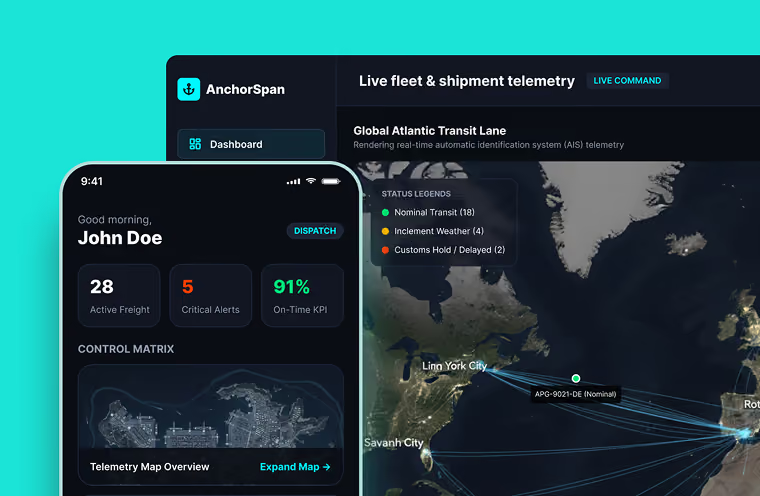
We saw this shift firsthand building SyncMatix, a telematics intelligence platform. Fleet managers there stopped juggling separate apps for tracking, reporting, and driver behavior. One dashboard replaced five logins. That consolidation is exactly what digital vehicle inspection promises at scale: one source of truth, not a stack of disconnected tools.
The market easily confirms what we saw with our clients. The global vehicle inspection software market is near $1.48 billion in 2026. Here's what's driving it. About 66% of fleet operators now use this software for compliance and safety monitoring. Cloud-based deployments make up 61% of the market; on-premise, the rest.
AI is reshaping the space fast, too. Nearly 58% of providers now build in AI or IoT sensors for predictive diagnostics. Over half of leading vendors launched AI-powered inspection modules recently. Cost and integration still trip up smaller operators, though. Around 42% cite implementation cost as a barrier.
From where we sit, that tension makes sense. We've watched clients struggle to reconcile GPS feeds, EDI records, and inspection logs that never shared a timestamp format. The technology keeps advancing, but the hard part stays the same: making disparate data speak one language, cleanly, before a dispatcher ever sees it.
Who needs a vehicle inspection app?
A dispatcher at a mid-size carrier doesn't care about market projections. She cares whether a truck passes inspection before six a.m. That's the real question a vehicle inspection app answers.
Fleets with 50 vehicles or more feel the pain first. Paper checklists stop scaling around that size. Compliance officers feel it too, especially in regulated freight. One missed inspection log can trigger a fine during a roadside stop.
Repair shops need it for a different reason: revenue, not compliance. A digital vehicle inspection software platform turns a routine check into a documented, photo-backed recommendation. Customers approve work faster when they can see the problem, not just hear about it.
Insurance and leasing companies use it too. They need proof a vehicle met condition standards before and after a lease. A virtual vehicle inspection, done remotely with photos and video, replaces an in-person appraisal entirely. That's useful for used-car marketplaces just as much as commercial fleets.
Our own client, the cross-border carrier behind DriveIQ, needed something broader. Five hundred vehicles crossing borders daily meant inspection couldn't sit apart from compliance, routing, or driver coaching. They needed one system, not three bolted together.
Small fleets don't always need dedicated software, to be fair. A ten-van delivery service might survive fine on a paper checklist and a shared spreadsheet. But the moment growth outpaces headcount, that spreadsheet turns into a liability. We've watched that exact transition happen mid-project more than once.
So the real answer isn't company size. It's how much a missed defect costs you when it's found too late.
Common use cases for vehicle inspection software
Digital vehicle inspection technology streamlines operations and compliance across diverse transportation and automotive sectors. By centralizing real-time condition data, digital tools help fleets, dealerships, insurers, and regulators minimize costly delays, prevent fraud, and ensure safety.
Logistics and freight fleets.
Freight carriers run vehicle inspection through the same system as routing and compliance. Unified telematics platforms continuously sync maintenance diagnostics with active dispatch boards. Automated sensor checks flag mechanical faults before vehicles leave yards.
Compliance engines validate driver logs against regional border regulations automatically.
Cross-border carriers face severe delays from minor compliance oversights.
Passenger transit operations.
Integrated digital inspections link real-time hardware checks directly to route dispatching. Automated defect flags prevent compromised buses from entering active morning transit schedules. System alerts trigger instant vehicle swaps before delays cascade across routes.
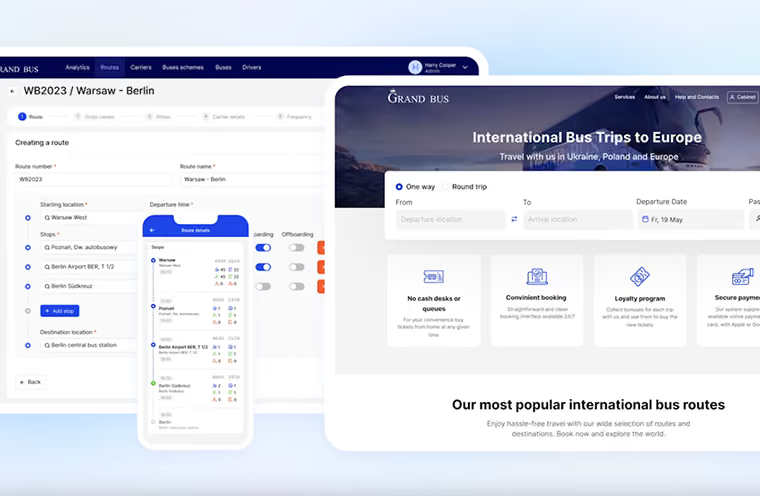
For instance, with us, GrandBus eliminated manual spreadsheet calls by digitizing driver defect logs. Drivers submit instant mobile reports instead of relying on radio calls. DrivenBus achieved 91% on-time performance through early mechanical issue detection. Preventing early-morning missed checks stops mid-day route cancellations.
Field service and construction fleets.
Crews scattered across job sites need inspection that doesn't require a supervisor on-site. Drivers photograph defects and submit reports straight from their phones. Managers see the issue the moment it's flagged, not at the next depot visit. This matters most when trucks sit unused for weeks between jobs.
Idle equipment often hides mechanical problems nobody catches in time. A full vehicle inspection app surfaces those gaps before a truck gets reassigned. Geofencing confirms a vehicle actually reached a site before its inspection clock starts. Construction fleets running dozens of scattered locations can't rely on manual walkarounds alone anymore.
Used-car and dealership transactions.
Buyers and sellers both lean on inspection before money changes hands. A pre-buy vehicle inspection protects buyers from hidden mechanical problems. Dealerships use the same tools to document condition before resale. Photos and video replace a buyer's guesswork about wear and damage. Leasing companies rely on this to prove condition at handoff and return.
A vehicle inspection before buying often reveals odometer discrepancies, too. That's a growing concern in used-vehicle markets across Europe and North America. Digital records make disputes over pre-existing damage far easier to resolve later.
Regulatory and government compliance.
Regulation keeps reshaping what inspection software needs to track. In May 2026, EU lawmakers backed cross-border vehicle inspection certificate rules for cars and vans. MEPs on the European Parliament's Transport and Tourism Committee backed changes allowing drivers to have mandatory checks carried out in another member state. The committee also pushed to add checks for driver-assistance systems and electric vehicle components.
Odometer fraud drew attention too, with new garage recording requirements proposed. Roadside inspection targets for buses and trucks may shift from EU-wide to national rules. Software built for compliance now needs to track jurisdiction-specific rules.
Insurance and asset condition audits.
Insurers and leasing firms use inspection data to settle disputes fast. A documented defect history removes ambiguity about who caused the damage. Remote and virtual inspections let assessors review condition without a physical visit. That's useful for total-loss claims and lease-end evaluations alike.
Fleet operators use the same records to justify vehicle resale pricing. A clean inspection trail can also lower insurance premiums over time. Insurers increasingly ask for digital proof before honoring certain claims. Without it, disputes drag out for weeks instead of resolving in days.
How do vehicle inspection apps work?
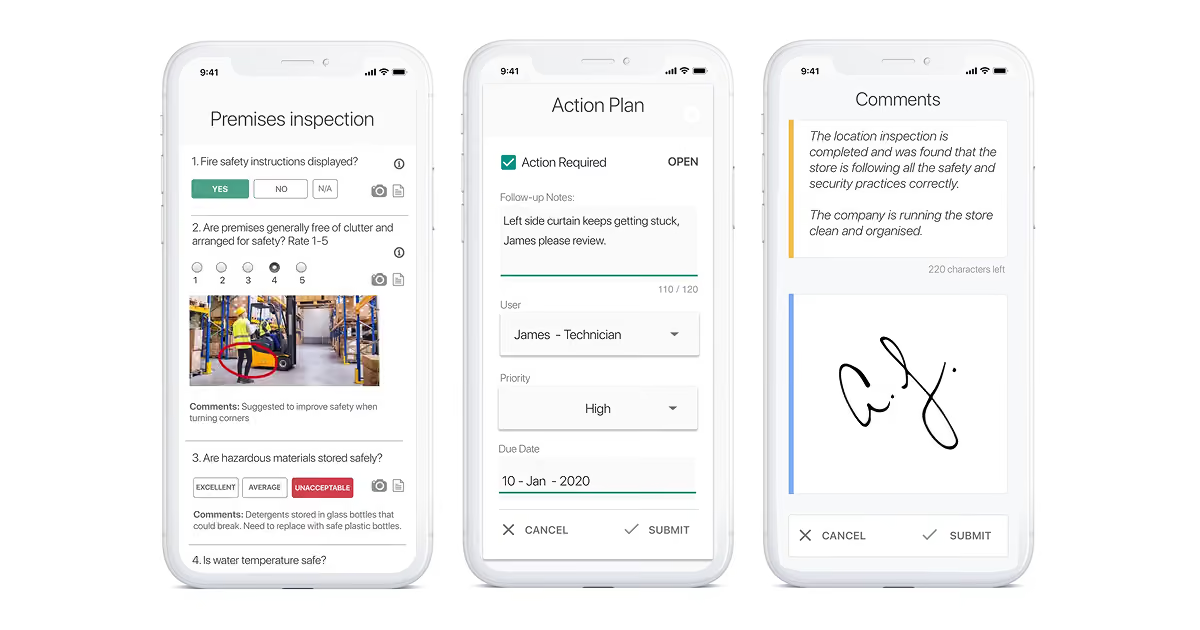
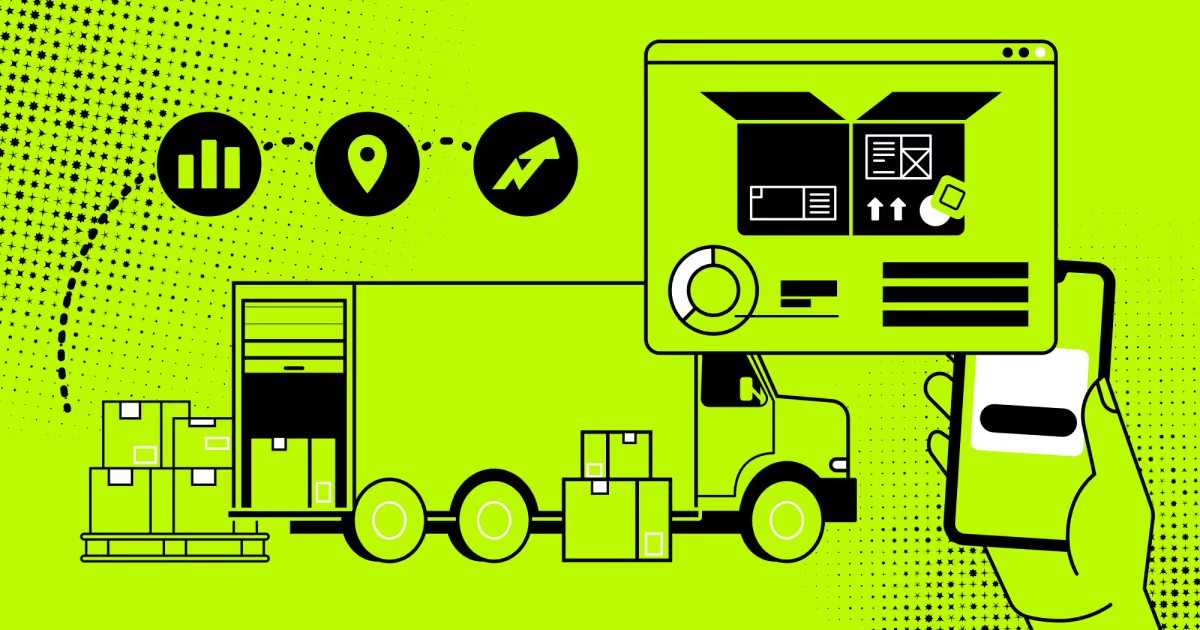
Here's the short version. A driver scans the vehicle, works through a digital checklist, and logs any defects with photos. GPS and a signature confirm who did what, and where. Everything syncs to a dashboard that alerts the right person automatically.
Vehicle identification. A driver scans a QR code, taps an NFC tag, or types in a plate number. The app pulls up that specific vehicle's profile instantly. DriveIQ's exception queue tied every alert back to a vehicle ID this way, no manual lookup needed.
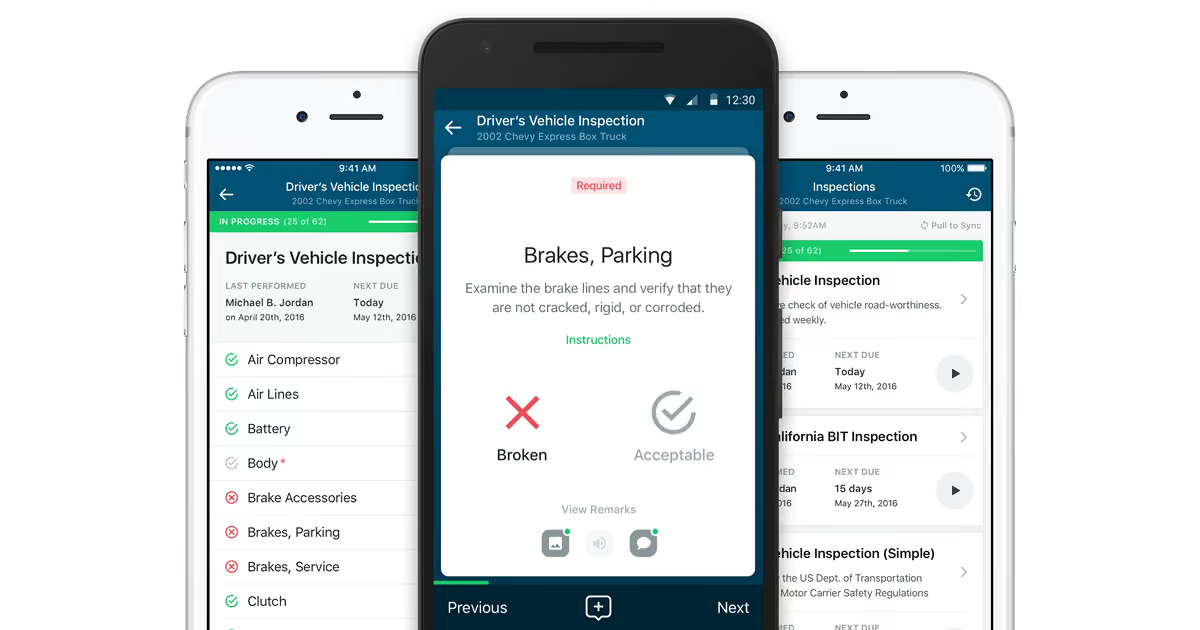
Digital checklists. The app loads a checklist matched to vehicle type automatically. Tires, brakes, lights, and fluid levels appear based on whether it's a van or a semi. A well-built fleet vehicle inspection checklist adapts, rather than forcing every vehicle through one generic form.
Defect logging and media. Each item gets marked pass or fail, with a photo required on any fail. Some platforms now flag scratches or dents automatically from the image alone. Good vehicle inspection forms make this step fast, not another chore drivers dread.
Signatures and GPS. The app timestamps the inspection and pins its exact location. A digital signature closes the loop, proving who inspected what and when. This record matters most during a pre-purchase vehicle inspection, where disputes over condition often surface later.
Cloud syncing and alerts. Data uploads the moment a driver hits submit, no manual export required. A failed brake check can trigger a repair ticket instantly, before the truck leaves the yard.
That's the same principle behind DriveIQ's rule-based alerts, which caught the routes causing most delays. Good fleet management software ties every one of these steps into one continuous loop, not five disconnected apps.
Types of vehicle inspections supported
Inspection apps don't handle one job. They cover regulatory checks, transactional reviews, and daily maintenance routines, each with different stakes.
Regulatory and legal inspections. Government-mandated safety and emissions tests, like the UK MOT or US state checks, verify roadworthiness on a fixed schedule. VIN and registration checks confirm a vehicle matches its paperwork during law enforcement stops. Commercial vehicle inspections, standardized across six CVSA levels, cover everything from driver credentials to cargo securement on trucks and buses.
Transactional and insurance inspections. A used car vehicle inspection protects buyers from hidden mechanical or structural problems before money changes hands. Insurers require similar documentation when writing a new policy or logging pre-existing damage on older vehicles. Post-accident assessments determine whether a damaged vehicle gets repaired or written off entirely.
Routine and maintenance checks. A courtesy inspection during an oil change covers fluid levels, tread depth, and battery condition quickly. Pre-trip and post-trip walkarounds are daily habits for commercial drivers, not occasional events. An annual vehicle inspection combines several of these checks into one scheduled review.
With COAX Software, you know these cases and challenges will be considered. Our teams stay lean, not stacked with headcount. Fewer people means fewer handoffs. Edge cases get decided by whoever's already shipped something like it. That's the same bar we hold on any mobile development services engagement, whether it's a vehicle inspection check app or a full platform build like SyncMatix. We stay accountable for the outcome. Not just the code we hand over.
What are the features of vehicle inspection software?
Good software starts with the checklist, not the dashboard. Get that wrong, and every feature built on top inherits the mess. Some features come together to form the basis of these tools:
Digital checklists. These replace paper logs with pass/fail or rating forms, standardized across vehicle types. From what we've built, the checklist needs to adapt per vehicle class, not stay static. A generic form for a sedan and a semi-truck wastes an inspector's time on both ends.
Multimedia documentation. Photos, video, and markup notes attach directly to flagged items. On Road&Rally, we built high-speed offline caching so drivers in dead zones could still capture and store data locally. That same logic applies here: media capture has to work without a signal, then sync once connection returns.
Defect and issue tracking. A failed item should generate a repair task automatically, not sit in a queue someone checks later. We built this exact pattern into DriveIQ's exception system, where a flagged issue is routed straight to the right team. The best vehicle inspection software treats a failed check as the start of a workflow, not the end of one.
Real-time alerts. Supervisors need to know about a critical failure the moment it happens, not at the end of the shift. We've learned alerts only work if they're role-specific. A tire pressure warning shouldn't hit the same inbox as a compliance flag.
Cloud sync and mobile apps. Inspectors need full functionality offline, syncing the second signal returns. This is where a lot of platforms fall apart in practice. We tested this hard on DrivenBus, where QR validation had to work in poor connectivity, syncing later without losing data.
Historical data analysis. Searchable records matter most months after an inspection, not the day it happens. A pre-purchase vehicle inspection, for instance, only holds up in a dispute if the record's easy to pull and trust. Build the audit trail early, or retrofitting it later costs far more.
We understand how data security is vital here. COAX operates under ISO 27001 and ISO 9001 frameworks. That matters once inspection data starts feeding commercial contracts, as governance isn't optional at that point.
Most fleets shouldn't build a vehicle inspection app from scratch. But once your workflows get specific enough, off-the-shelf tools start forcing compromises you can't afford. A custom vehicle inspection service lets you train AI on your own defect patterns, not someone else's dataset. But specific enough workflows break off-the-shelf tools fast.
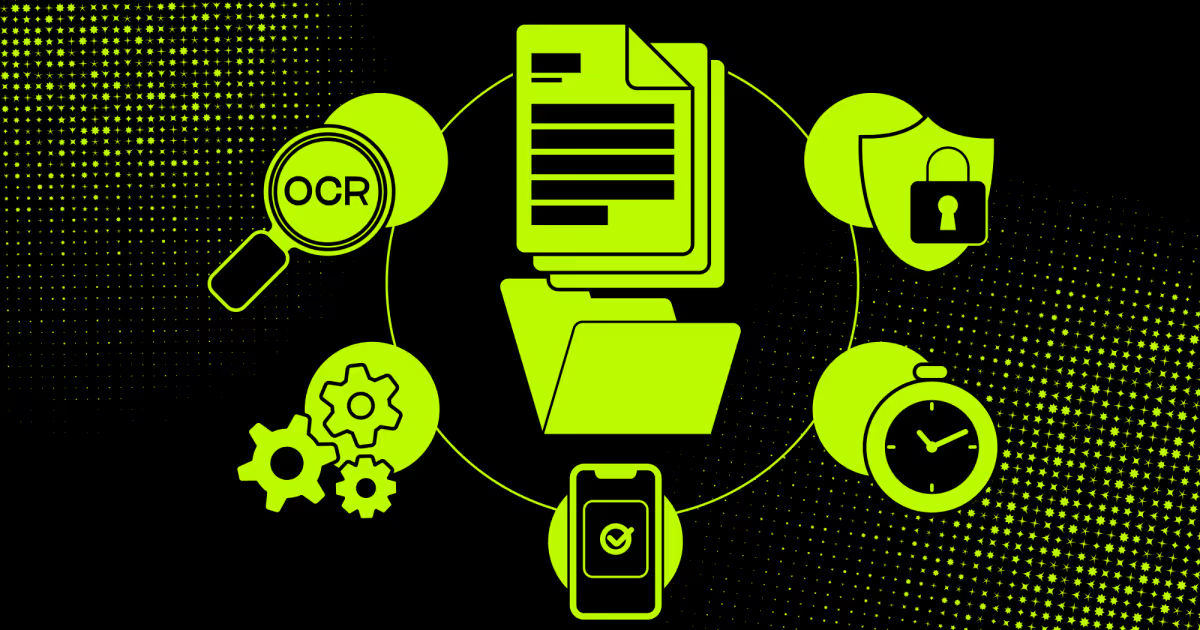
A custom build captures your fleet's actual defect data, not a vendor's generic dataset. OCR turns scanned checklists into structured fields, no manual re-entry. From there, we wrap a proven forecasting layer — AWS Forecast, tuned to your failure patterns — rather than train something from zero. Faster to ship, easier to keep accurate. It's assistance for the inspector, not an autonomous call; a person still signs off.
If inspection data feeds into a broader vehicle monitoring system development effort, tying it to telematics and driver behavior from day one saves a painful rebuild later.
Free vehicle inspection checklists
A free checklist is a static template. It lists what to check, but nothing else. No syncing, no alerts, no automatic repair tickets. You print it, fill it by hand, and file it somewhere.
That's fine for occasional use. A vehicle inspection checklist works well for a single car, a one-off buy, or a small fleet under ten vehicles. Beyond that, the paper trail turns into its own problem.
You don't always need to build one from scratch. Several platforms offer solid templates for free.
Miratag offers a detailed used-vehicle inspection checklist covering 49 items across body, engine, brakes, and a required road test.
SafetyCulture provides a digital and PDF vehicle inspection template rated 4.6 stars. It covers brakes, lights, tires, and safety equipment.
Jotform hosts commercial and daily inspection form templates. These are useful for quick compliance documentation.
The EU's road safety portal outlines legal roadworthiness requirements behind periodic and roadside checks across member states.
Most templates cover the same core sections: identification details, exterior and safety checks, mechanical and fluid levels, and cabin controls. Keep in mind, generic templates rarely satisfy every regional law on their own. You'll need to adjust items to match your jurisdiction's specific rules, and archive signed records properly for audit purposes. Vehicle inspection price for a professional third-party check varies too, so a free template can help you know what you're paying for beforehand.
When is it time to upgrade to dedicated software?
A free vehicle inspection template stops being enough once volume or complexity grows. Here's the pattern we've seen repeatedly across client work.
Fleet size is the first signal. Once you're managing more than a handful of vehicles, tracking paper forms by hand eats real time. Driven Connect grew past 400 operators, and no spreadsheet or PDF checklist could have kept that many vehicles compliant across borders.
Compliance complexity is the second. If your fleet crosses state or national lines, a static vehicle safety inspection checklist can't adapt to different jurisdictions automatically. Software that updates rules per region saves you from manually tracking every local requirement.
Data continuity is the third. A single PDF gives you one inspection, disconnected from the last. Dedicated software builds a timeline, showing you patterns across months, not just a snapshot in time.
And integration matters more than people expect. If inspection results need to trigger a repair order, notify a dispatcher, or feed into a maintenance schedule, a printed form simply can't do that work.
Once any of these signals shows up, a dedicated solution earns its cost quickly. The same applies to broader vehicle inspection services, where compliance, reporting, and repair workflows all need to talk to each other.
COAX gets involved right there. Our engineers have spent years across transport, travel, and logistics. Every build starts with a gap assessment: what data exists, what's missing, what actually needs solving. Every integration point gets logged and rated for complexity. That's how software avoids looking right in a demo and falling apart on a real route.
If your fleet's outgrown paper checklists, our fleet management software development services build around your actual vehicles, regions, and compliance load. Not a generic template, stretched to fit.
FAQ
What is a vehicle inspection, and how does it differ from routine maintenance?
Inspection is a structured check against a defined standard, pass or fail. Maintenance is the repair work that follows. A complete vehicle inspection covers brakes, tires, lights, fluids, and safety systems in one pass. Routine maintenance addresses only what's already known to need attention. The difference is architectural: inspection generates data, maintenance consumes it.
How much does a vehicle inspection cost?
The cost depends heavily on scope and vehicle type. A basic state-mandated check often runs $20 to $75. A full pre-purchase inspection by an independent mechanic typically costs $100 to $200. Commercial fleet inspections vary more, since scale and compliance requirements change the math. Software costs sit separately, usually priced per vehicle or per user monthly.
How long does a vehicle inspection take?
It varies by depth and vehicle size. A quick pre-trip walkaround takes five to ten minutes for an experienced driver. A full multi-point inspection, including a road test, can run 45 to 60 minutes. Commercial vehicle inspections under CVSA standards take longer, given the range of systems and documents involved. Digital checklists tend to shave meaningful time off any of these, mostly by cutting paperwork after the fact.
When should a company build custom vehicle inspection software instead of buying it?
From our experience, the clearest signal is workflow complexity off-the-shelf tools can't handle cleanly. If you're forcing your fleet's process to match a vendor's rigid template, that's a cost, not a convenience. Proprietary vehicle types, cross-border compliance, or integration with existing telematics are common triggers.
How do I choose a vehicle inspection app for a mixed commercial fleet?
For fleets running different vehicle classes, prioritize checklist flexibility and offline reliability above all else. A platform that only handles one vehicle type will force workarounds elsewhere. Also check how tightly it ties into your existing GPS and maintenance systems. That integration gap is where most deployments stall, not the checklist itself.
What should small businesses look for in vehicle inspection systems?
Small fleets should prioritize ease of setup and a low learning curve over deep configurability. Overbuilt platforms often require dedicated staff just to maintain them. Start with software that covers your current checklist cleanly, with room to add compliance modules later. Growing into a bigger platform is easier than untangling one you never needed.
















































































_.avif)









%2520explained.avif)

We are interested in your opinion