If you ask the COAX engineering team how sensitive the supply chain is to risks and disruptions, they'd tell you it's fragile. That answer would be a polite underestimation.
A cross-border logistics client came to us once. Five years of growth. A fleet of 500 vehicles. Then one border delay cascaded into missed pickups, dissatisfied customers, and drivers quitting faster than dispatch could replace them. Turnover hit 45% a year eventually. Nobody could see a disruption coming until it already hit a driver's route.
We've spent 15+ years building logistics and travel tech at COAX Software. Our team has learned that supply chain disruption rarely announces itself. It shows up as a pattern nobody traces in time. Across fleet platforms, booking systems, and freight tools we've built, we see the same problem consistently showing up. Teams react to disruption instead of catching it early.
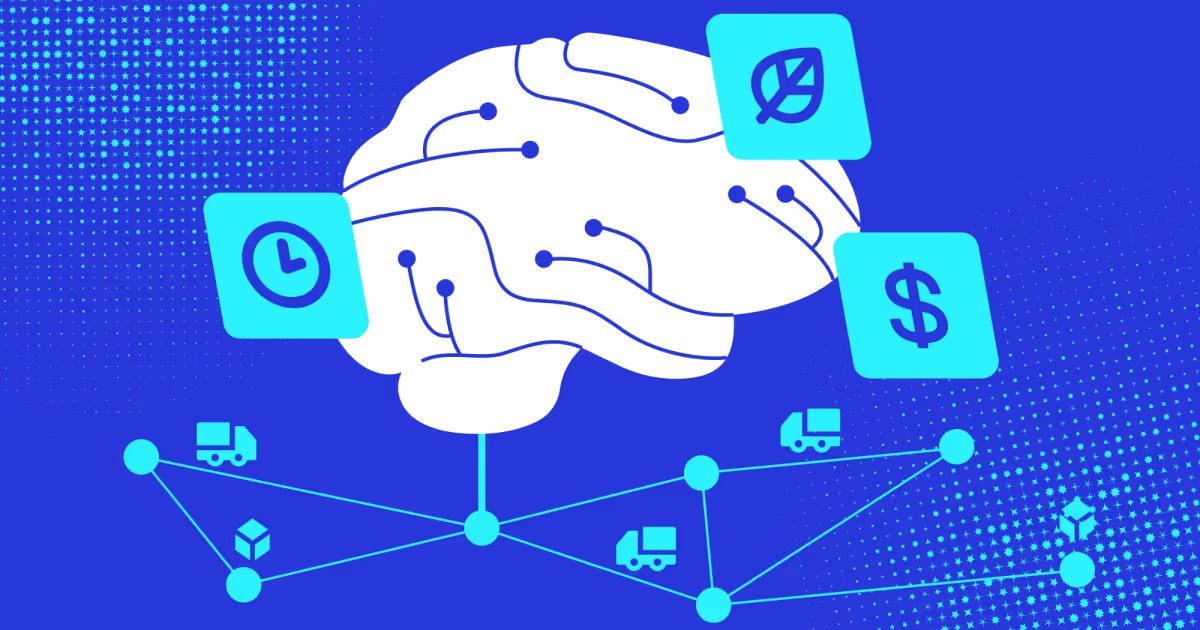
This guide covers what supply chain disruption management means, and what it takes to prevent risks as early as possible. Below, we cover the definition, the common causes, and the practical layer that catches disruption before it snowballs.
What is supply chain disruption?
Supply chain disruption is any event that interrupts the flow of goods, data, or services between suppliers and customers. In practice, this definition rarely looks that tidy.
In the real world, disruption looks like a dispatcher discovering a delay from an angry phone call. Or like a fleet manager reconciling three tools before lunch. It looks like a customer waiting 45 minutes for a status update. The one that isn’t going to happen on time.
The thing is, a disruption in the supply chain doesn't need a headline event to harm your business. Most of it is quiet. It can be a missed timestamp or the stock count that drifted the moment volume spiked. With many moving parts, it snowballs quickly.
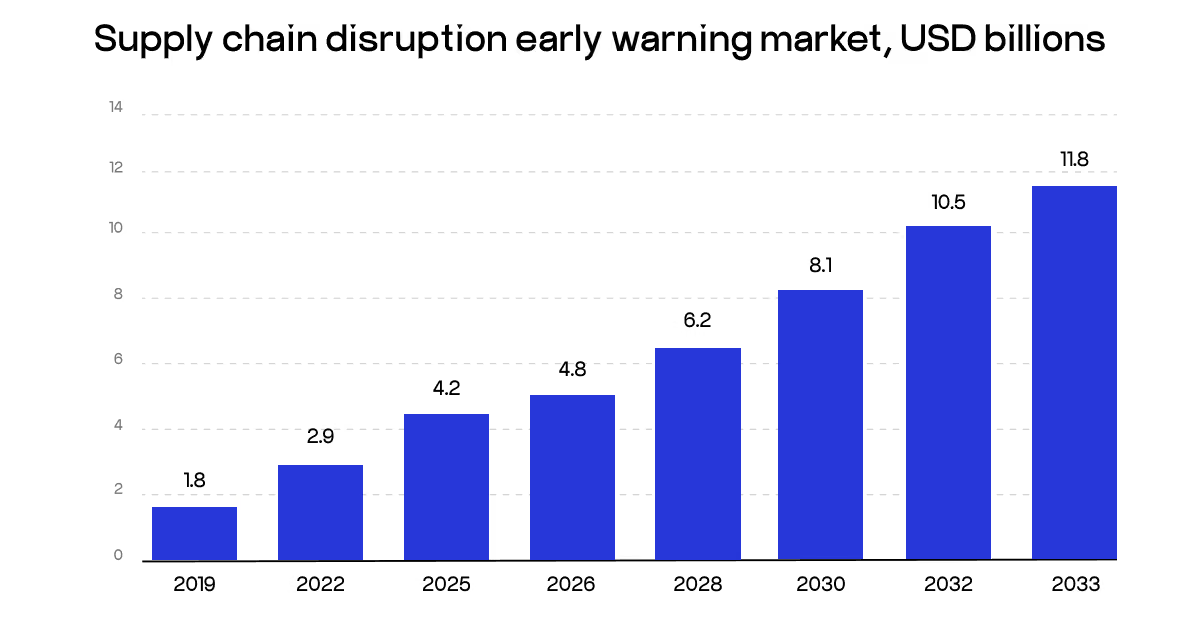
The market illustrates well why this now gets board-level attention. The global supply chain disruption early warning market reached $4.2 billion in 2025. Moreover, it’s projected to hit $11.8 billion by 2033, a 13.4% annual growth rate. That spending isn't chasing rare catastrophes. It's chasing the everyday version of what you might be experiencing right now.
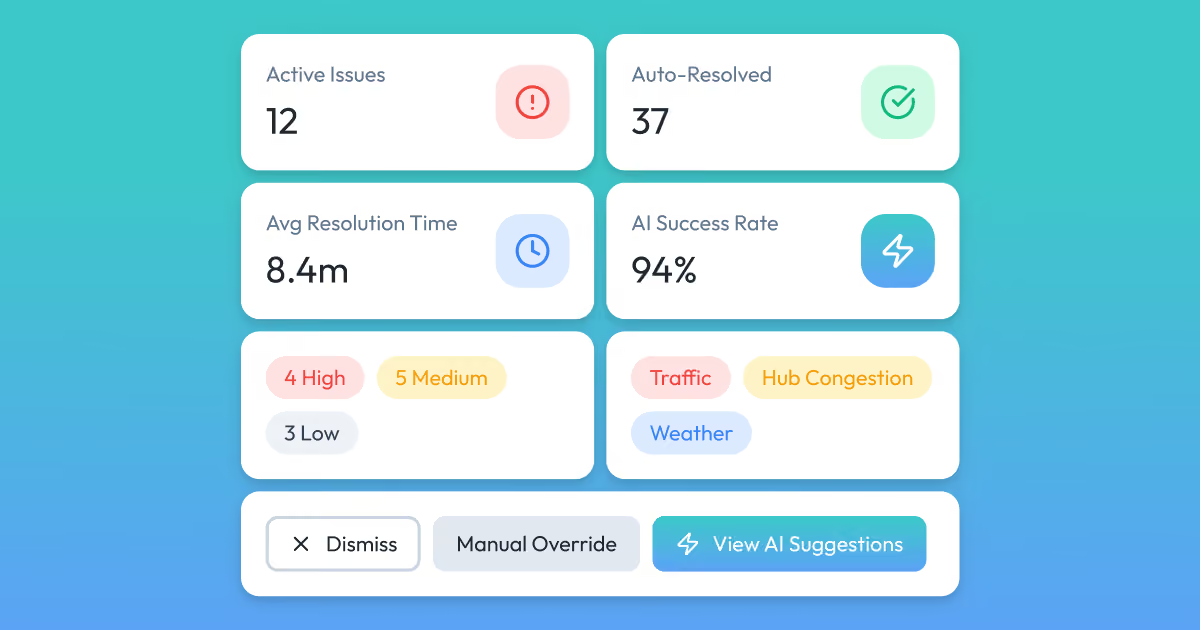
Supply chain disruption management starts with a hard question. What caused the last five delays your team absorbed quietly? On our DriveIQ project, that question had a specific answer. Dispatchers learned about missed deliveries from customer complaints, not from the system. We built a risk detection layer that flagged exceptions by root cause before they reached a customer. As a result, the average diagnosis time dropped from 12 minutes to under three.
That's the part worth thinking about before you look for a fix. What caused supply chain disruption at your company probably isn't one big failure. It's usually a dozen small, unflagged ones, repeated every week.
Why is supply chain disruption management your safeboat?
Disruption doesn't stay contained. A single missed shipment turns into supply chain delays across an entire route. Left unmanaged, it eats revenue and trust at the same time. It costs a lot, but catching it early pays off.
Breaking down the cost of supply chain disruption
The cost of supply chain disruption rarely shows up as one simple line item. It compounds as a sum of fuel waste, overtime, and lost contracts. An Economist Impact survey of 400 senior supply-chain executives found disruption costs are about 6 to 10% of annual revenue.
If this isn’t impressive enough, let’s just say reputational damage hits companies just as often as higher operating costs.
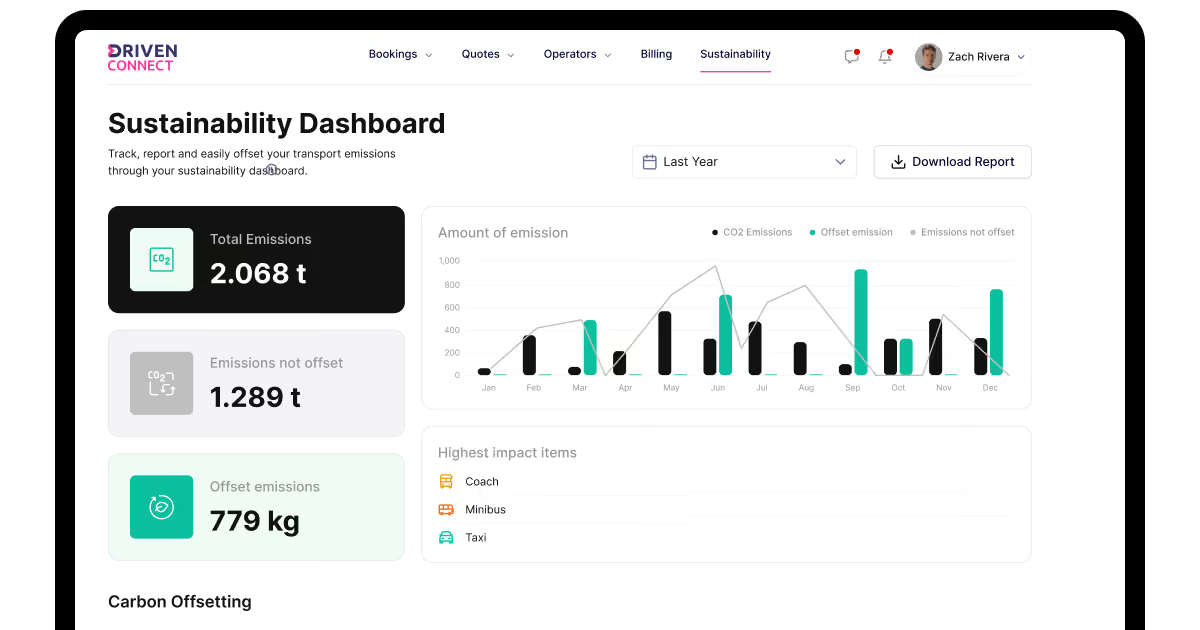
We saw this as clear as day on our SyncMatix project. The client's fleet data was scattered across disconnected vendor tools. Fleet managers pieced together fuel and GPS numbers by hand every week. Once we unified the platform, response to route events improved by 25%.
This case of ours is just one argument for supply chain disruption solutions. The fix isn't predicting every disruption perfectly. It's cutting the time between disruption and detection. On SyncMatix, unifying the data layer alone cut support tickets by 45%.
"Supply chain disruption risks are rarely just operational. Every hour a dispatcher spends binding the data together is an hour they're not managing the actual risk in front of them. Not seeing the forest behind the trees is a dangerous place in business," Orest Falchuk, Head of Engineering at COAX Software.
Real-world supply chain disruption examples and their impact
We live in a world where we don’t have to study supply chain disruption examples as theory. Most of the ones we saw are recent, repeated, and increasingly routine. Here are just several that changed how companies plan for risk, and for a good reason.
During the COVID-19 pandemic in 020-2022, lockdowns halted global factory output. Reopening demand then jammed ports, stranding over 100 cargo ships offshore at hubs like the Ports of Los Angeles and Long Beach. The resulting chip shortage idled auto assembly lines and cost the industry an estimated $210 billion in 2021 alone.
Suez Canal blockage in March 2021 is worth mentioning, too. The container ship Ever Given wedged across the canal for six days. The blockage delayed roughly $9.6 billion in daily trade and spiked Asia-Europe freight rates for months.
Red Sea maritime crisis is among the more recent supply chain disruptions examples. Escalating regional conflict pushed vessels around the Cape of Good Hope instead of the Suez Canal. The detour added 10 to 14 days to Asia-Europe transit and spiked insurance and fuel costs. Carriers have since resumed some Suez transits as tensions eased in 2026, though shippers are still absorbing the shifted capacity.
US-China trade tensions that are still present move the needle, too.Tariffs on billions in goods shifted global sourcing routes. Many manufacturers accelerated "friend-shoring" toward Vietnam and Mexico to cut tariff exposure.
Together, these events show a pattern worth naming. Logistics industry disruption rarely comes from one cause anymore. It stacks: a port delay compounds a shortage, which compounds a cost spike.
This is where our own supply chain disruption case study offers a smaller, more everyday version. On DriveIQ, dispatchers for a 500-vehicle cross-border fleet couldn't see disruption forming until a customer called. We built an auto-recovery optimizer: when a delivery risked running late, the system suggested a reroute, and a dispatcher approved it in one click.
The impact of supply chain disruption on that fleet used to mean overtime, missed windows, and driver burnout. After the optimizer went live, smarter route optimization cut empty miles by 8% and overtime hours by 22%. The scale is different from a canal blockage. The underlying lesson isn't. You should catch the disruption before the customer does.
What are the common causes of supply chain disruptions?
Global supply chain disruption rarely traces back to one root cause. But not global alone - small and regional supply chains have the same causes of disruption. It's usually several small failures stacking up. Let’s break down the causes we see across our own logistics projects.
Geopolitical and trade shifts
Tariffs, sanctions, and shifting trade rules reroute entire supply networks overnight. Companies that can't track compliance in real time absorb the cost late. On our Driven Connect project, carriers need accurate carbon tax and emissions data per route. Without that module, UK operators would've faced compliance penalties on every cross-border trip. Regulatory shifts don't wait for manual reporting to catch up.
Natural disasters and climate events
Floods, earthquakes, and storms halt production without warning. The real damage often comes from not knowing fast enough. This is why supply chain disruption solutions need a predictive layer to them. For example, on SyncMatix, the real-time tracking layer flags route disruptions as they happen. Without it, fleet managers would've learned about weather delays from a driver's late call. That's hours of lost response time.
Port and terminal congestion
Ports run on terminal operating systems that rarely share live data with carriers. When ships queue offshore, companies without visibility into berth schedules get blindsided. They keep routing trucks toward a port that's already backed up.
Fleet-side visibility can't fix a congested terminal. It can stop the ripple effect of the supply chain disruption forming:
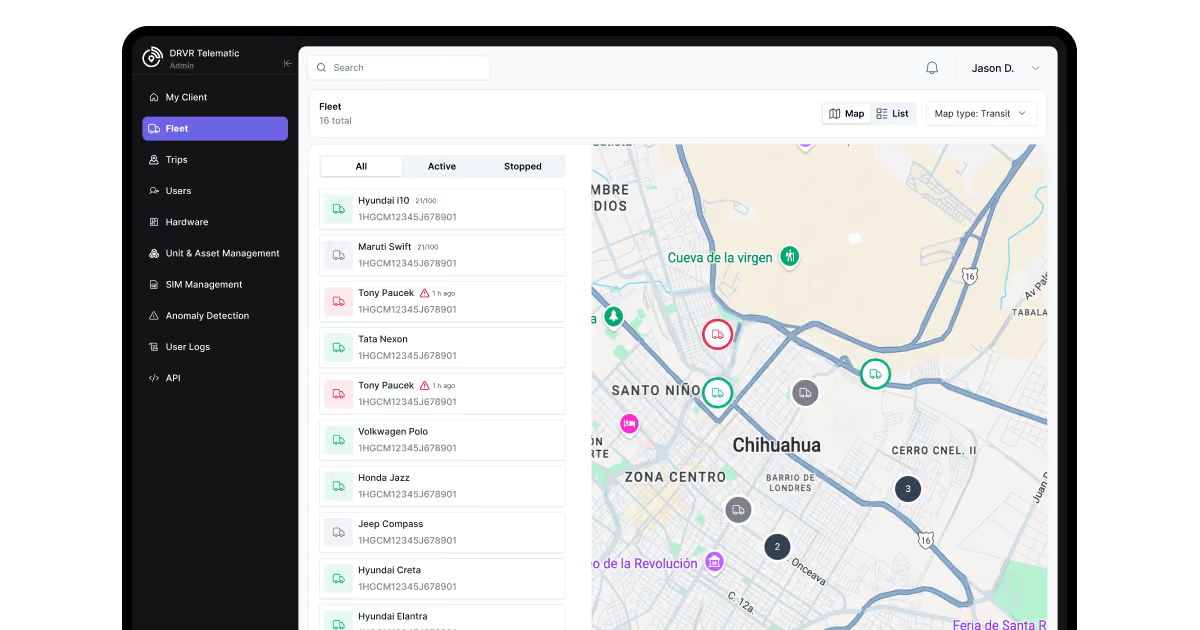
Live GPS tracking shows a truck approaching a congested hub before it arrives.
Automated alerts reroute drivers before they idle for hours.
Driver mobile updates cut wasted trips to a blocked yard.
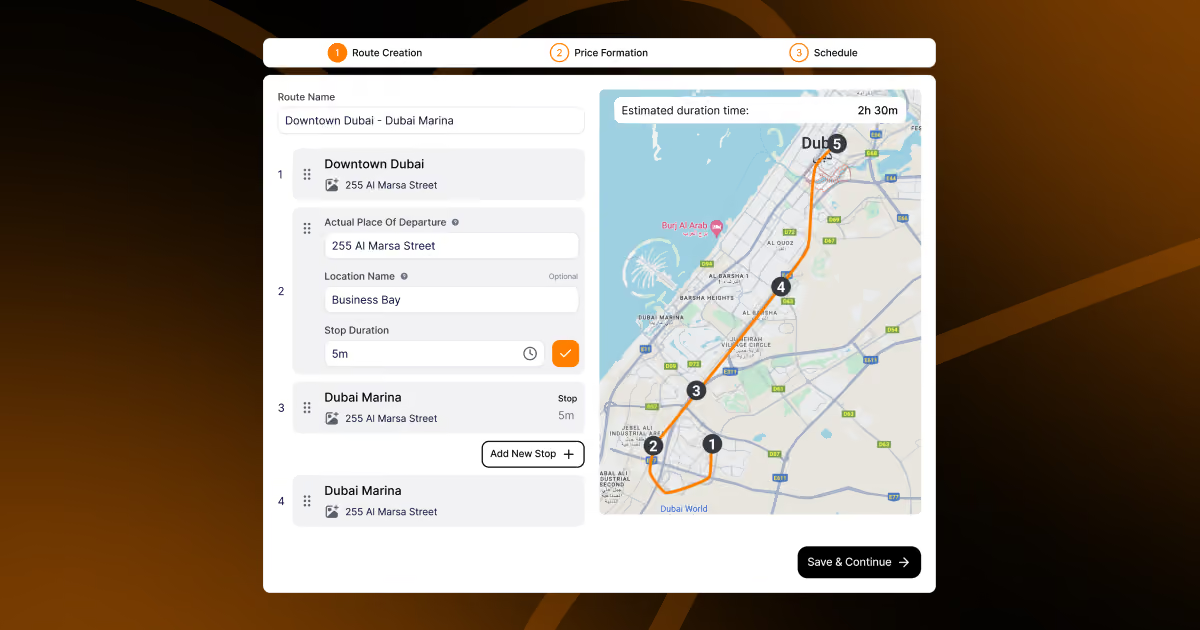
For the DrivenBus product, we built this kind of live visibility into route scheduling. Operators see delays forming before passengers ever notice a gap.
Demand volatility and forecasting errors
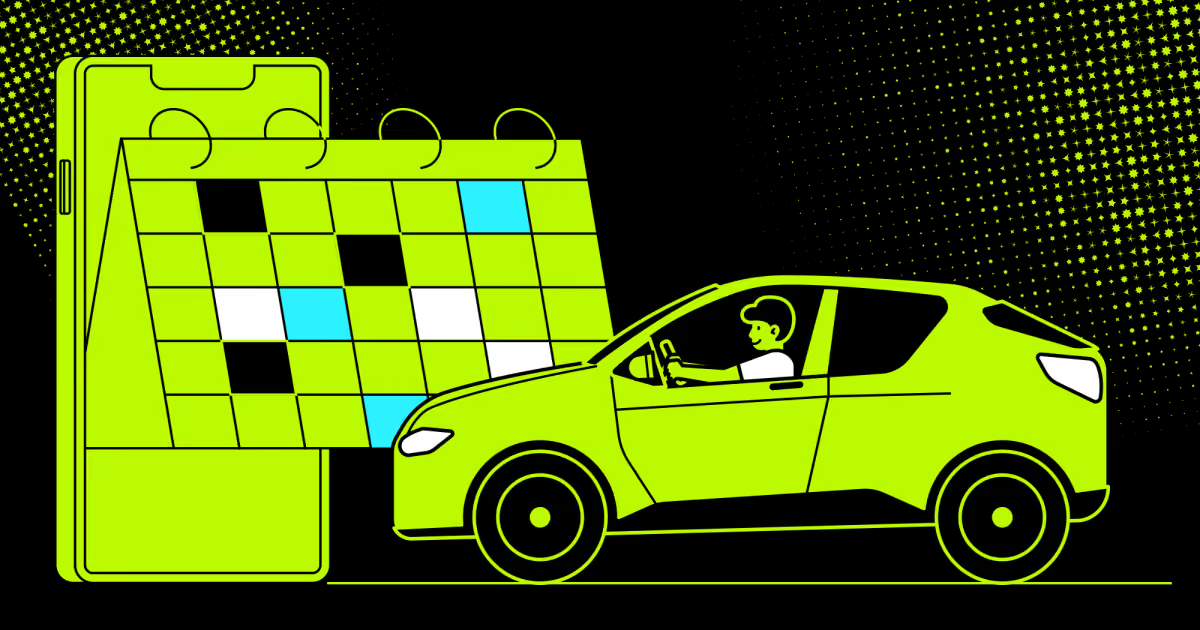
Sudden demand spikes strain fleets that plan on fixed schedules. Overbooked routes frustrate customers, while underbooked ones waste capacity. On DrivenBus, the smart calendar shows seat availability by color, updated live. Without that feature, operators would've kept guessing at demand until a route sold out unnoticed.
Fragmented data and visibility gaps
This cause is the foundation underneath most of the others. Data scattered across separate tools hides disruption until it's already hurting customers. Before SyncMatix, our client's fleet data lived across three disconnected systems:
A GPS tracking app, separate from reporting.
A basic driver app, rarely used because it was inconvenient.
Manual spreadsheets, reconciled by hand every week.
That fragmentation is the quiet cause behind most supply chain disruption examples you'll read about. Without a unified analytics engine, this client would've kept discovering fuel and maintenance issues weeks late. Supply chain disruption management starts by closing that visibility gap first.
Cyberattacks and system outages
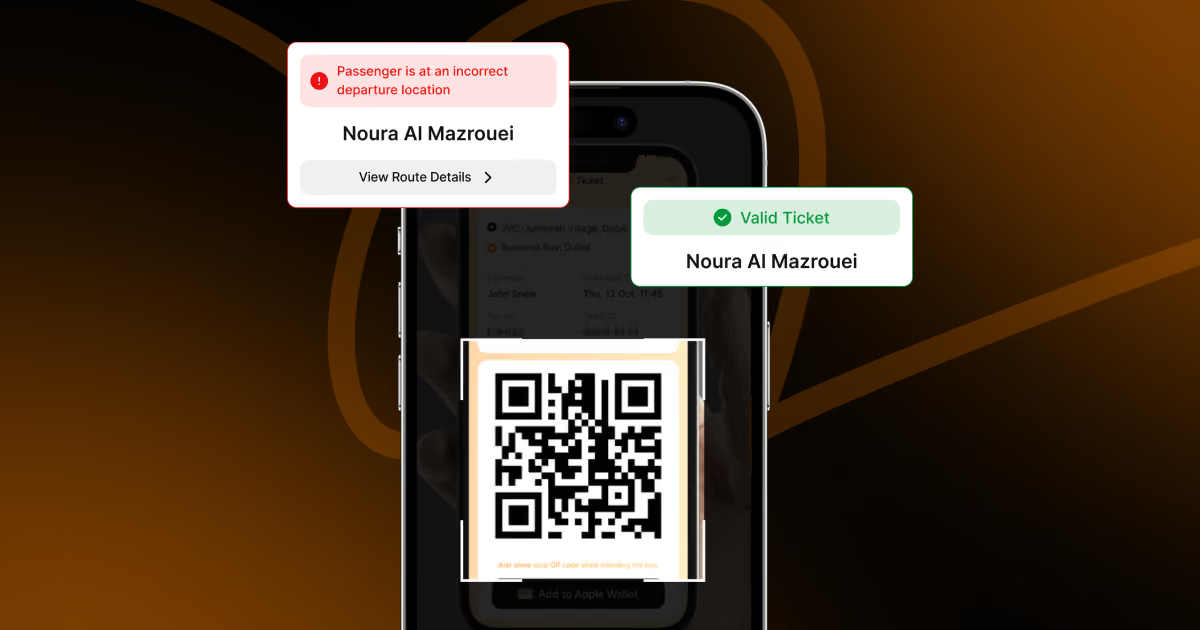
A single system outage can freeze bookings, ticketing, and dispatch at once. Offline resilience matters as much as prevention. On DrivenBus, ticket scanning runs offline-first, syncing once connection returns. Without that design, a dropped connection at a busy stop would've stalled boarding entirely.
Labor shortages and workforce disruption
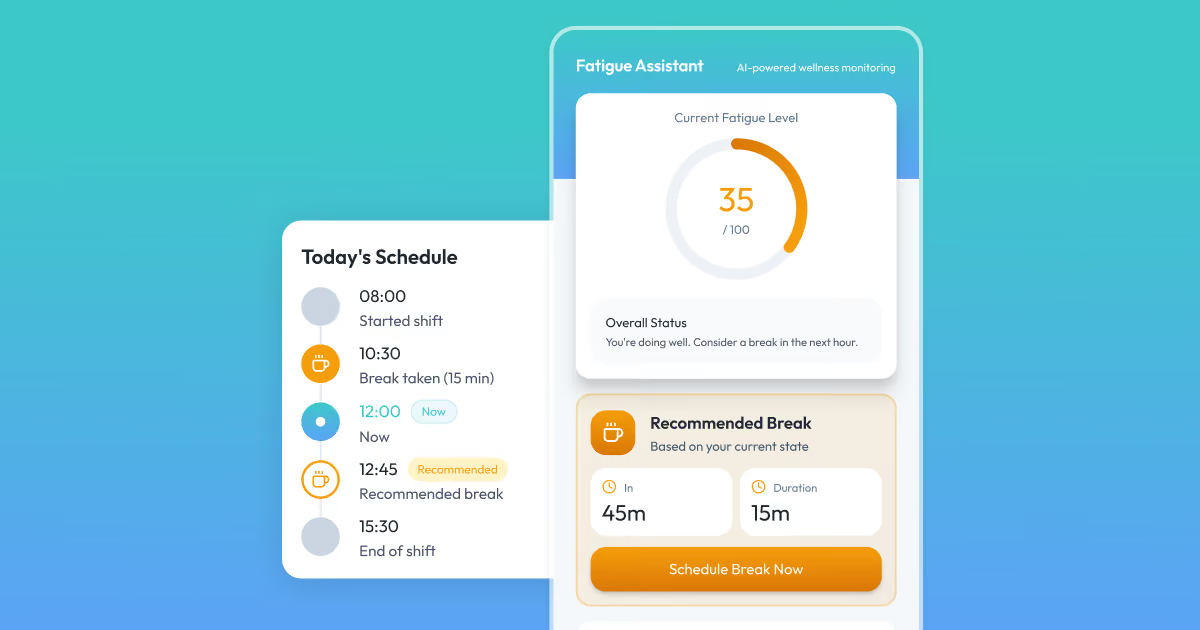
Driver turnover and fatigue quietly disrupt schedules long before a supply chain delay happens. High turnover forces companies to run understaffed during peak demand. On our DriveIQ platform, the fatigue and HOS optimizer flags risk before a driver hits their limit. Without it, the client's 45% annual turnover would've kept compounding, and understaffed routes would've kept slipping.
Supply chain disruption severity levels
From our clients’ experience, not every disruption hits the same way. Some pass in minutes. Others cascade for weeks and cost real money. Knowing the difference shapes how you respond, staff, and budget for risk.
Low-impact disruptions
Low-impact disruptions are the background noise of daily operations. A single sensor glitch. A short delay nobody outside dispatch notices. Supply chain disruption at this level rarely reaches the customer at all.
It can be a situation with a dispatcher at 7 a.m., with coffee still cooling on their desk. One truck's GPS ping drops for four minutes. Nothing dramatic happens. The system flags it, logs it, and moves on before anyone picks up a phone.
However, it’s only low-impact if it’s not caught early and not repeated too often.
That's the whole point of catching things small. On our DrivenBus project, ticket scanning runs offline-first. A dropped connection at a busy stop doesn't stall boarding. It syncs the moment the signal returns.
Low-impact events share a few traits worth knowing:
Duration stays short, often under an hour.
Visibility stays internal, rarely reaching the customer.
Cost stays near zero if flagged early.
Recovery happens automatically in well-built systems.
Handled right, these events never become a story anyone tells later. The real risk starts when they go unflagged and stack up. If they do, it’s the next level.
Moderate disruptions
Moderate disruptions start to hurt. They involve real delays, real customer complaints, and real reconciliation work. This is where disruption in supply chain operations starts costing hours, not minutes.
In theory, this corresponds to the zone where local variability propagates across tightly coupled processes. They can cover small mismatches in inventory, telemetry, or timing. They amplify because buffers are thin and decision-making is manual.
In practice, think of a fleet manager on a Thursday afternoon. Three vendor tools show three different fuel numbers. She’s manually cross‑checking GPS logs against invoices again. That is a classic example of information friction. Mismatched data sources cause decision latency and increase the probability of downstream errors (late deliveries, missed SLAs, chargebacks).
That was the exact situation on our SyncMatix project. Supply chain disruption risks are rarely one big event. They're small mismatches piling up daily. Once we unified the data layer, response to route events improved by 25%.
Studies show that moderate operational disruptions typically increase lead‑time variability by up to 30%. In turn, this can raise safety‑stock costs by 5–15% if not mitigated.
Left unaddressed, moderate disruptions rarely stay moderate for long.
High-severity events
High-severity events are the ones that make headlines, or at least make leadership nervous. They involve safety risk, compliance exposure, or fleet-wide slowdowns. Supply chain disruptions at this level demand a fast, coordinated response. This maps to low‑probability, high‑impact failures. In them, tightly coupled subsystems and limited slack produce brittle behavior. Once a critical threshold is crossed, failures cascade quickly. Recovery requires coordinated, cross‑functional action.
Imagine a driver eleven hours into a shift, fatigue creeping in, three more stops on the schedule. Nobody's watching the clock except the driver himself. That’s a classic example of a human–system boundary failing. When monitoring and decision support don’t reach the operator, latent risk becomes active harm.
On our DriveIQ platform, the fatigue and HOS optimizer watches that clock instead. In the first quarter, it potentially prevented over 40 HOS violations. Safety incidents dropped 38% as a result.
"The bot doesn't know what a truck is. It just knows: if this field says 'delayed,' update that field over there", explains a COAX backend engineer working on the DriveIQ project.
External events show the same pattern at larger scale. The Red Sea maritime crisis added 10 to 14 days to Asia-Europe transit routes. That's high-tech supply chain disruption management under real geopolitical pressure, not a hypothetical.
To prevent disruptions at this level, there are several metrics to watch:
Near‑misses (HOS boundary crossings, late ETAs).
Time‑to‑mitigation.
Recovery time objective (RTO) that captures how well the system absorbs shocks.
Effective supply chain disruption management treats high-severity events as a system problem, not a staffing one. Strong supply chain execution depends on flagging risks before they reach a driver, a dispatcher, or a customer's inbox.
How to manage and prevent supply chain disruption?
You can prevent disruption by catching it early, automating response, and designing resilient flows. Reacting after damage costs more time, money, and trust than spotting trouble before it hits. Based on many years of working with logistics businesses, this is how reactive and proactive approaches differ. Let’s break down what each looks like.
The reactive approach
Reactive operations chase symptoms, not causes. They discover problems through complaints, not systems. This is expensive, slow, and exhausting for everyone involved.
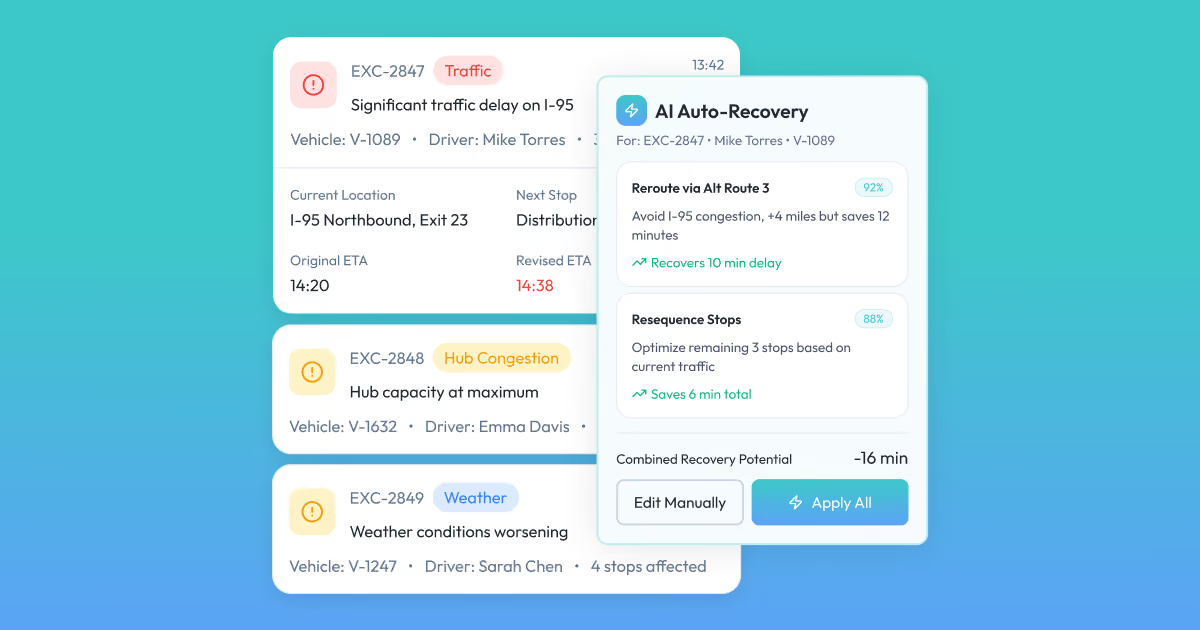
Let’s take a look at our DriveIQ client, pre-optimizer. A storm rolls over I-95 near Exit 23. Nobody marks it inside the system itself. Mike Torres, driving V-1089, hits standstill traffic cold. He calls dispatch, frustrated, already forty minutes behind. Dispatch scrambles, checking three separate tools by hand.
By the time anyone reroutes him, the delay's locked in. A customer down the chain waits, then calls, annoyed. That's what caused supply chain disruption to turn into lost trust.
This reactive pattern was the client's old normal. Three drivers, three separate crises, zero advance warning. Turnover crept upward as burnout piled onto burnout. Reactive fleets share a familiar rhythm:
Delays surface through phone calls, not dashboards.
Dispatchers juggle guesswork instead of data.
Customers become the early-warning system nobody wanted.
Costs stack invisibly until the quarterly report lands.
None of this is rare. It's the default state for fleets without detection layers built in.
The proactive approach
Proactive systems catch disruption before it reaches a human. They flag, recommend, and resolve, often within minutes. This is exactly what we rebuilt for DriveIQ.
Here's that same storm, rerun through the actual system. EXC-2849 flags "weather conditions worsening" at 13:42 sharp. Four stops show as affected, instantly, no phone call needed. Sarah Chen's route gets flagged alongside two others. The AI Auto-Recovery panel proposes rerouting via Alt Route 3. Ninety-two percent confidence, four extra miles, twelve minutes saved.
Dispatchers hit "Apply All" and the fleet self-corrects. Combined recovery potential across all three exceptions: sixteen minutes. No shouting, no scrambling, no angry inbound call.
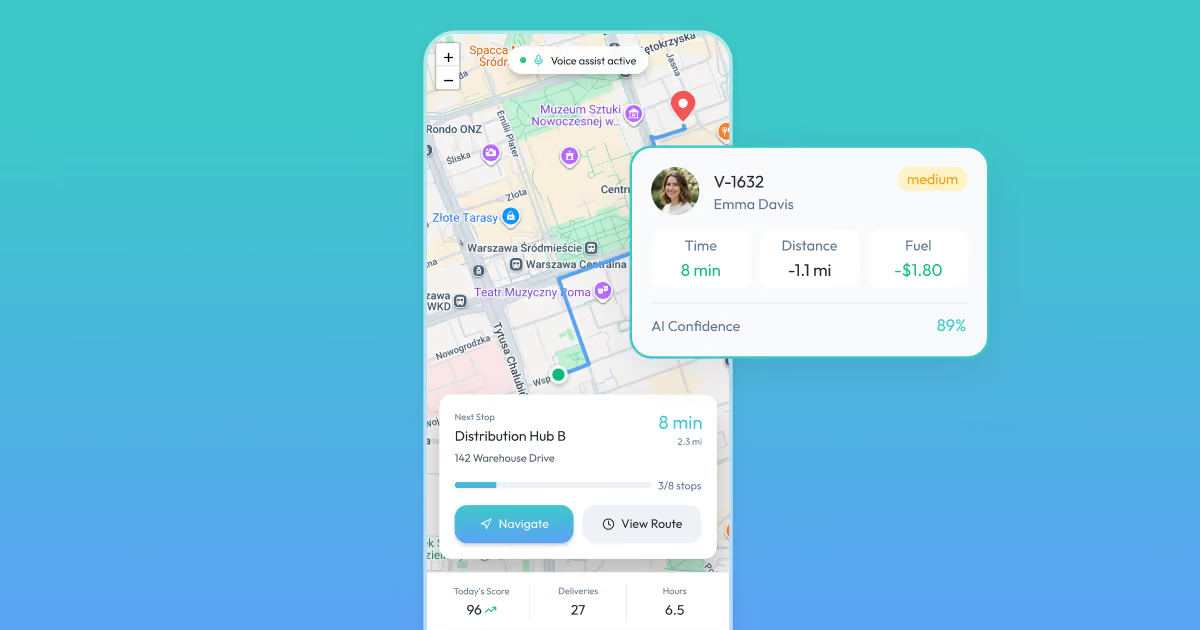
Emma Davis, meanwhile, gets automatic proactive contact. Her ETA shifts, fuel savings show, confidence sits at eighty-nine percent. The message reaches her in Polish as it should, generated, checked, sent.
"We didn't build DriveIQ to replace dispatcher judgment. We built it so judgment wasn't buried under twelve minutes of manual diagnosis", concludes Orest Falchuk, Head of Engineering at COAX Software.
In short, that's automation, paired with judgment layered on top. This way, you can mitigate supply chain delays by catching them before a driver even notices.
Factor
Reactive approach
Proactive approach
Detection point
Customer or driver call
Automated exception flag
Response time
Minutes to hours
Under a minute
Dispatcher role
Manual diagnosis, guesswork
One-click approval
Communication
Delayed, reactive apology
Automatic, multilingual notice
This comparison is the whole argument for supply chain disruption solutions built early. Managing supply chain disruptions well means building the right column before the storm hits, not after.
What is the role of technology in supply chain resilience?
Technology decides how fast you spot trouble. It also decides how fast you fix it. Every category below plays a different part in that timeline.
In our other blogs, we rank a list of specific tools from one concrete category. Here, the technology pull is wider, but we still gave it thorough testing and overview. Unlike one-purpose-built software comparisons, resilience tech needs different scoring. So we built four new criteria specifically for this layer.
Latency asks how fast the tool detects an event, not just logs it.
Legacy compatibility asks whether it plugs into decade-old TMS or ERP systems.
Field usability asks whether a driver or dispatcher can use it mid-shift.
Regulatory hardening asks whether compliance ships built-in, or gets bolted on later.
These four questions separate genuine supply chain disruption solutions from repackaged dashboards. Let's walk through each technology category against them.
IoT sensors and telematics platforms
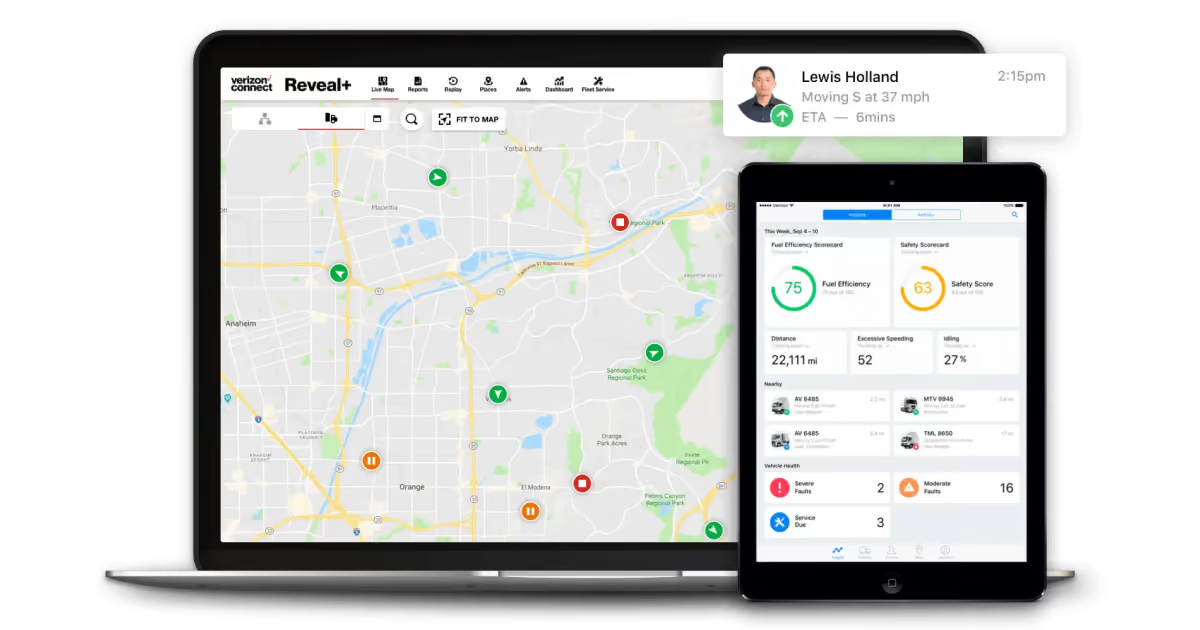
Samsara, Geotab, and Verizon Connect dominate this category today. Each streams GPS, engine diagnostics, and driver behavior data live. The differences show up in hardware cost and reporting depth. Each factor has a say in the impact of supply chain disruption on your business.
Samsara's dashboards felt the most driver-friendly of the three we tested.
Geotab's open API made custom reporting easier for our engineers.
Verizon Connect lagged on both fronts during our testing window.
Verizon Connect
We integrated Geotab's telematics feed directly into SyncMatix for one client rollout. Its raw data fed our own analytics engine, not Geotab's native dashboard. That combination is what pushed route-event response up 25%.
We only evaluated Samsara and Verizon Connect for this article. Both scored well on latency but poorly on legacy compatibility. Older trucks without modern OBD ports struggled to pair with either.
EDI and data normalization tools
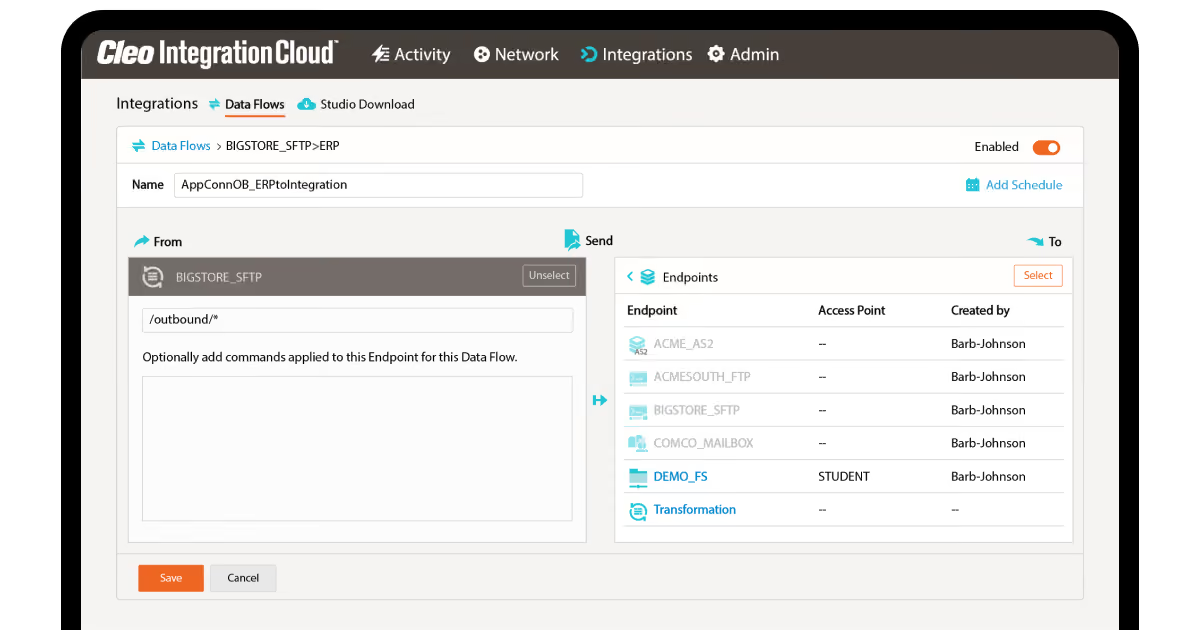
Cleo Integration Cloud, SPS Commerce, and MuleSoft handle the messy middle layer. They translate mismatched vendor formats into one usable structure. Nobody buys these for excitement; they buy them for survival.
Cleo scored strongest on legacy compatibility during our testing runs.
MuleSoft's API-first design suited teams already comfortable with developers.
SPS Commerce felt purpose-built for retail EDI specifically, less so freight.
Cleo Integration Cloud
On SyncMatix, we built a custom normalization layer instead of licensing one outright. Mismatched vendor timestamps broke early automation attempts completely. Off-the-shelf EDI tools couldn't handle our client's specific vendor mix cleanly.
We still recommend Cleo for teams without that level of complexity. It's a faster path than a custom build for most fleets. Disruptions in supply chain workflows often start exactly here, in mismatched formats.
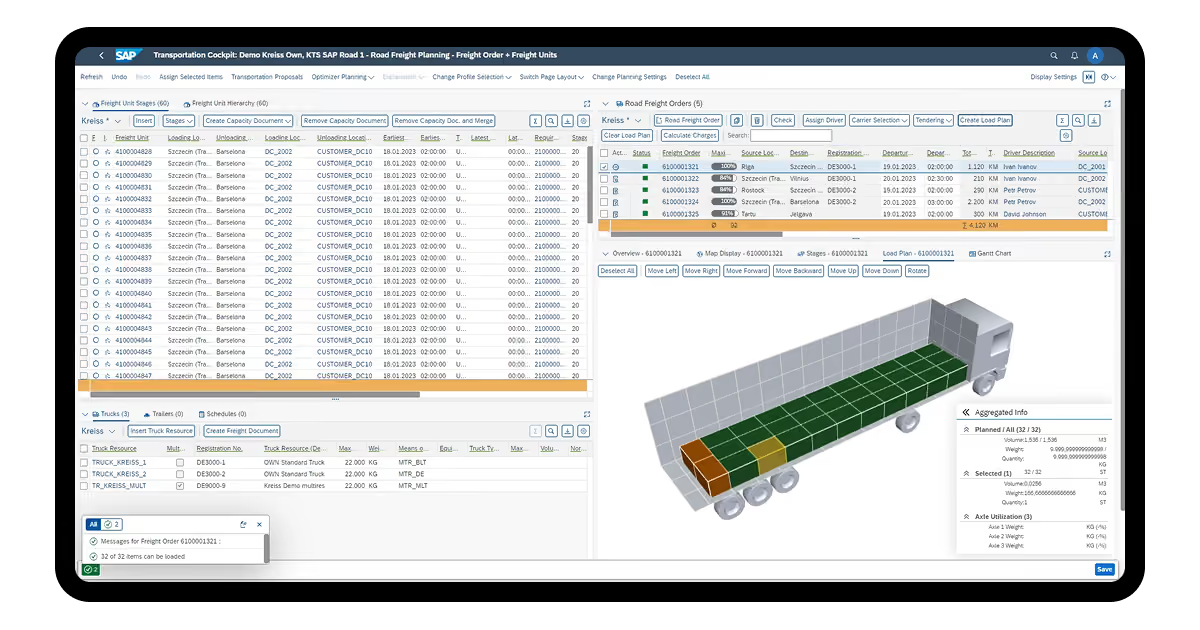
Oracle TM scored highest on regulatory hardening across the freight clients we tested.
SAP TM integrated cleanly with existing SAP ERP environments already in place.
Manhattan's WMS handled seasonal inventory swings better than most competitors we tried.
SAP TM
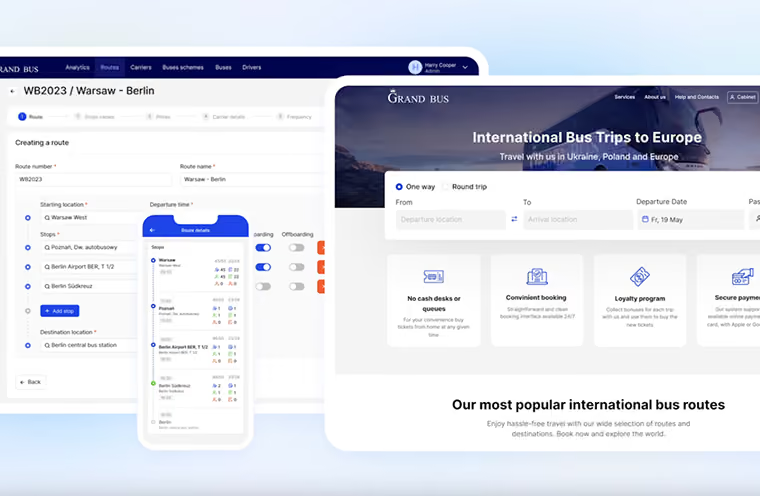
On GrandBus, none of these fit the client's scale and operational needs. We built a lightweight TMS integration layer instead, custom to their fleet. Reporting time still dropped by roughly 35 minutes per route.
For clients already running SAP or Oracle, we integrate around their existing stack. We don't rip out enterprise systems that already work. Examples of supply chain disruptions on GrandBus came from spreadsheets, not enterprise software gaps.
AI and predictive analytics engines
DataRobot, project44, and Google Vertex AI fit into this category commercially and functionally. Each forecasts fatigue, congestion, or demand ahead of the event itself. This is where reaction turns into genuine foresight.
project44
Project44's visibility layer scored highest on latency in our tests.
DataRobot's model-building tools suited teams with dedicated data science staff.
Vertex AI required the most custom engineering to reach production use.
We didn't license any of these three for DriveIQ directly. Our own predictive model examines shift length, time, and historical patterns instead. In one quarter, it flagged over 40 near-violations early.
"The predictive model doesn't wait for a driver to hit the limit. It watches the trend line and moves before the line does," adds Orest Falchuk, Head of Engineering at COAX Software.
We'd recommend project44 to teams wanting visibility without a custom build. Supply chain disruption management at DriveIQ's depth usually needs a purpose-built model instead.
Digital twins and scenario simulation
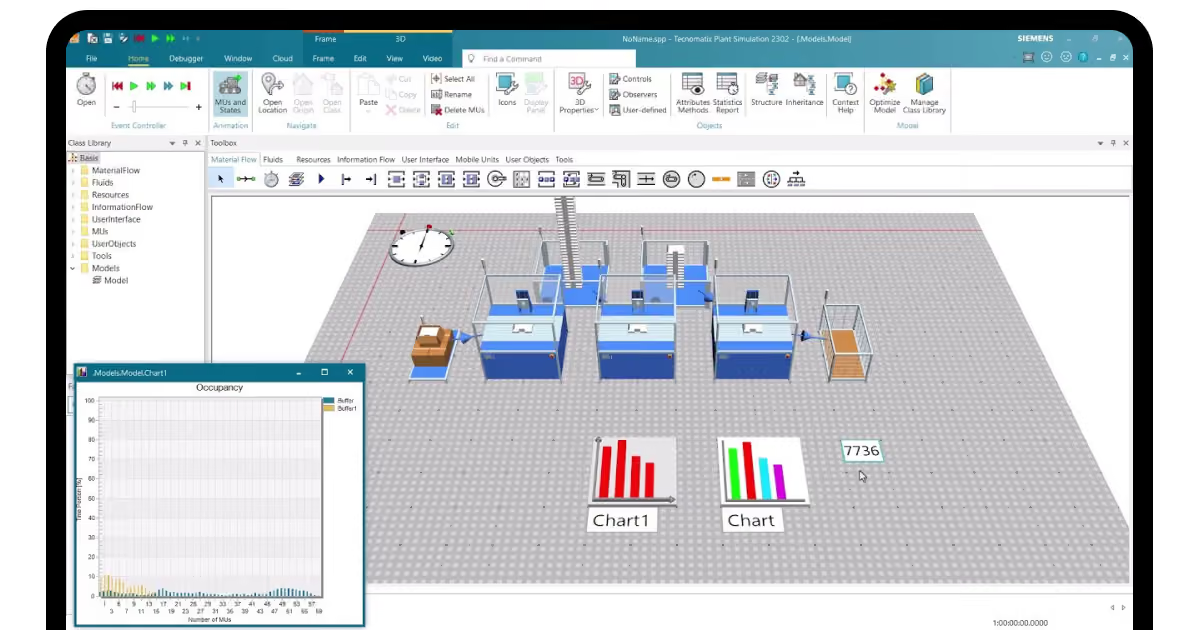
AnyLogic and Siemens Plant Simulation lead commercial digital-twin software today. Both model a fleet or facility before anything actually happens. Adoption in freight still trails manufacturing and logistics hubs.
Siemens Plant Simulation
We tested AnyLogic against a simulated border-closure scenario for this article. Its modeling depth impressed us. However, its learning curve didn't. Non-technical dispatchers couldn't touch it without serious training first.
We have delivered connected-farming twins for the manufacturing side of the supply chain. A six-hectare herb greenhouse replaced paper logs and spreadsheets with an IoT-driven digital twin. Sensors fed temperature, humidity, and soil-moisture data into a custom web app. Owners watched production, finances, and resource use from a dashboard. That project cut resource waste by 25%, lifted yield by 15%, and grew revenue by 14%.
It proved the pattern: perception layer, connectivity layer, processing layer, application layer. The same stack works for warehouses, cold rooms, and depots. Supply chain change management rarely needs this level of simulation on day one. However, for advanced supply chain disruption management at the enterprise level, it’s worth a thought.
Blockchain for supply chain traceability
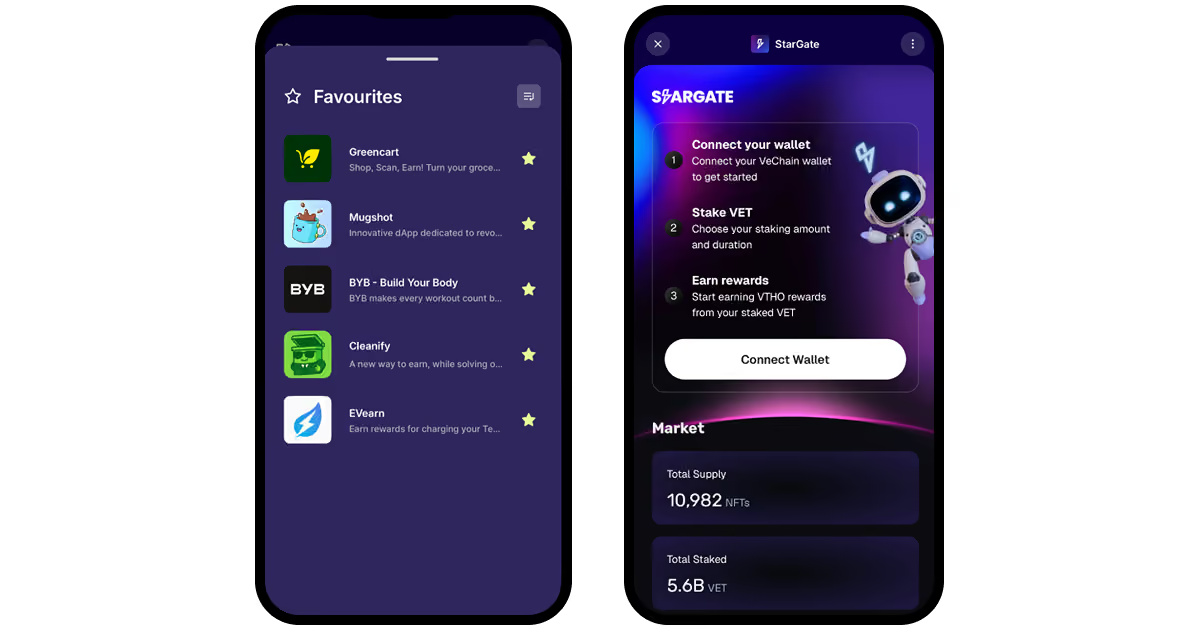
IBM Food Trust and VeChain lead the traceability category specifically. Both promise tamper-proof records across every partner in a chain. Customs, provenance, and cold-chain logs benefit most directly.
VeChain
We evaluated IBM Food Trust against a simulated cold-chain scenario for this article. Setup complexity outweighed the traceability gain for most freight use cases we modeled.
VeChain scored similarly. Adoption depends entirely on partner buy-in.
We haven't integrated either into a live client platform yet. Legacy compatibility scored poorly across both, since partners lack blockchain-ready systems. Field usability suffers too, since drivers see no interface change at all.
It's not the wrong technology. It's often the wrong first investment. Supply chain disruption services built around blockchain need serious partner alignment first.
Control tower and visibility platforms
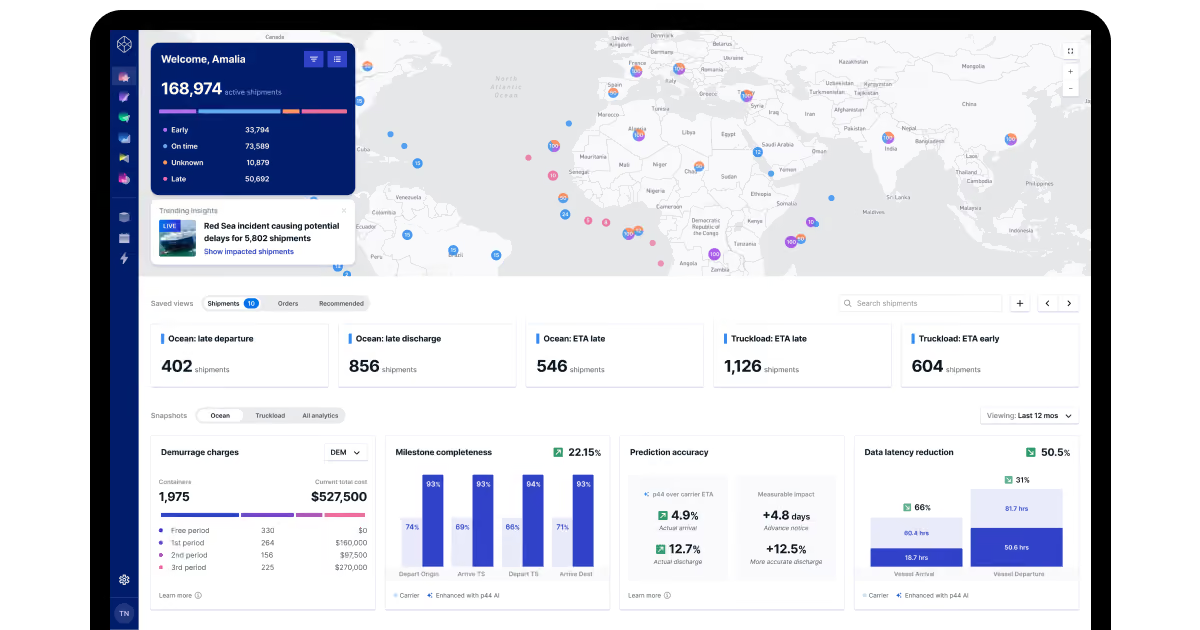
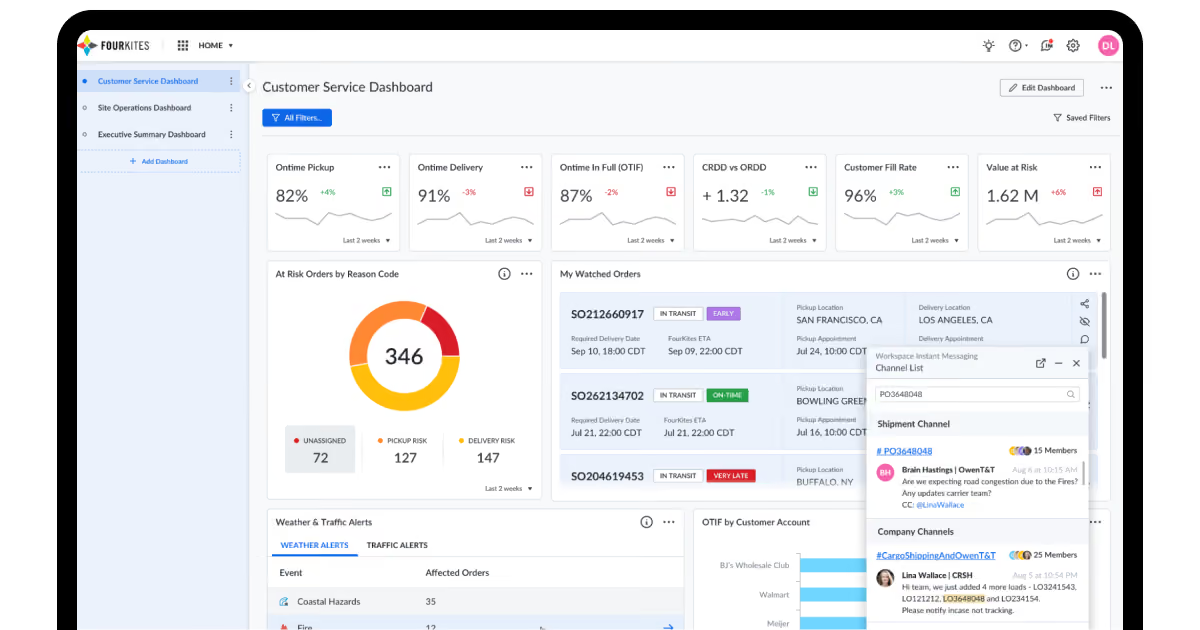
FourKites and Overhaul lead the control-tower category, and both have functionality to help you mitigate supply chain delays. Both pull GPS, EDI, and weather data into one screen. Dispatchers stop switching tabs to answer one question.
FourKites scored highest on latency and integration ease in our testing.
Neither offered the depth of custom alerting our clients eventually needed.
FourKites
On SyncMatix, we built our own control tower instead of licensing FourKites. The advanced analytics engine turned raw telemetry into flagged, actionable alerts. That custom layer is what let response times improve 25%.
We'd still recommend FourKites to teams wanting visibility without a custom build. Purpose-built towers make sense once a fleet outgrows the off-the-shelf ceiling.
UiPath and Automation Anywhere handle complex, multi-step workflows best. They shine when you need deep integrations and fine-grained control.
WorkFusion excels at document-heavy pipelines. They parse invoices, bills of lading, and customs forms with minimal custom code.
Appian and Power Automate win on speed to pilot. They trade some flexibility for faster deployment and easier handoff to business users.
UiPath
Our custom automation layers on DriveIQ and SyncMatix replaced this category fully without the use of RPA tools. That choice came from client-specific data messiness, not from RPA's limitations, though.
Off-the-shelf RPA still suits teams without our scale of custom engineering. Supply chain disruption at a smaller fleet doesn't always justify a bespoke build.
None of these categories work alone against real disruption. They stack the same way disruption itself stacks across a supply chain.
Category
Tool
Latency
Legacy compatibility
Field usability
Telematics
Geotab
High
Moderate
High
Telematics
Samsara
High
Moderate
High
Telematics
Verizon Connect
Moderate
Low
Moderate
EDI/normalization
Cleo Integration Cloud
Moderate
High
Low
EDI/normalization
MuleSoft
Moderate
Moderate
Low
TMS/WMS/ERP
Oracle TM
Moderate
High
Moderate
TMS/WMS/ERP
SAP TM
Moderate
High
Moderate
AI/predictive
project44
High
Moderate
Moderate
AI/predictive
DataRobot
Moderate
Low
Low
Digital twin
AnyLogic
Moderate
Low
Low
Blockchain
IBM Food Trust
Low
Low
Low
Control tower
FourKites
High
Moderate
High
RPA
UiPath
Moderate
Moderate
High
RPA
Appian
Moderate
High
High
Packaged software solves the problem it was built for, not yours. Every fleet layers its own quirks on top. We saw this pattern across nearly every category above. SyncMatix needed a custom normalization layer no EDI vendor offered outright. DriveIQ needed judgment layered on top of raw prediction.
Supply chain disruption rarely fits a vendor's default template. Supply chain disruption services built generically miss the specific friction inside your fleet. That's what COAX is here for.
At COAX, we build both the web dashboards and the mobile layer together. Dispatchers get the control tower view on desktop. Drivers get the same intelligence, simplified, inside a mobile app.
On DrivenBus, that meant a driver-facing app alongside the core booking platform. On DriveIQ, dispatchers get desktop exception queues. Drivers get mobile alerts. Both run on supply chain cloud software built for multi-tenant scale.
We've done this across ninety percent of mid- and senior engineering teams, without any handoffs mid-project. That consistency shows up in fewer rebuilds later. It's also why clients rarely need a second vendor for the same problem.
Automation in disruption management
Automation catches problems before a human notices them. It cuts the gap between an event and a fix. That gap is where disruption actually does its damage.
Supply chain disruption management stops being reactive once automation runs underneath it. Alerts fire, routes adjust, and messages go out, all before a phone rings. Below, we break down exactly where that shift happens.
Spotting trouble before a customer does.
Automation flags an exception the instant a sensor reports it. Nobody waits for a call to learn about a delay. That single shift changes the entire tempo of a shift. On DriveIQ, the exception queue caught a weather flag at 13:42 sharp. Four vehicles got tagged before any driver phoned dispatch. Old workflows would've surfaced that same storm an hour later.
Stress-testing a promise before you make it.
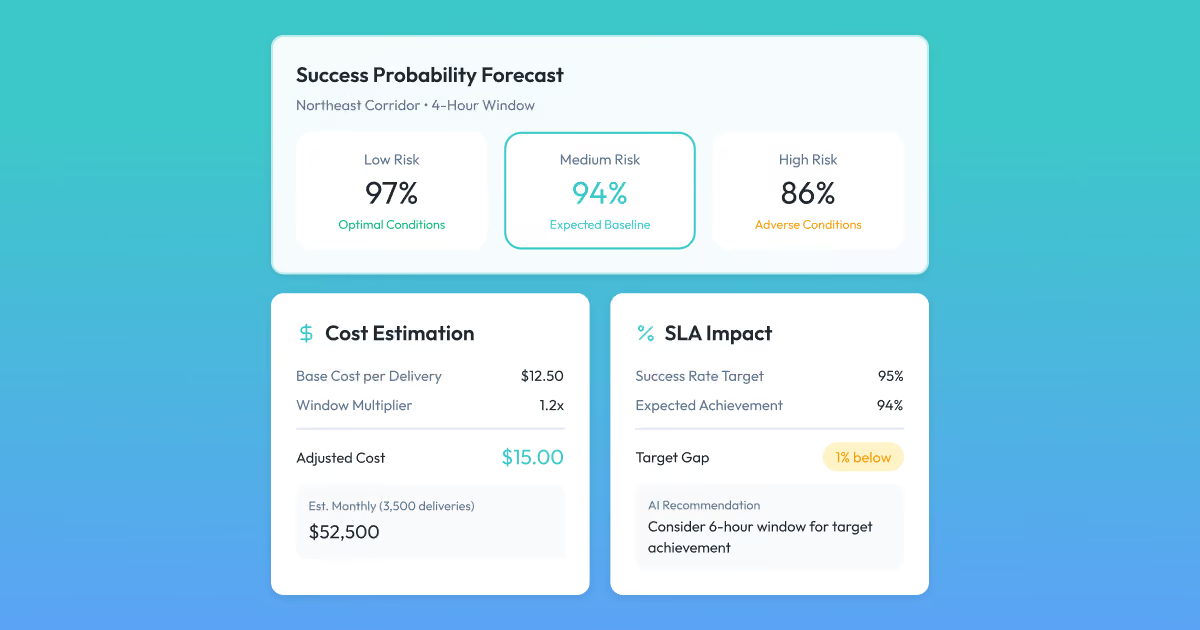
Committing to a delivery window used to be a guess dressed up as a plan. Automation now runs that guess through actual historical odds. That's a very different kind of confidence. DriveIQ's SLA simulator shows a 94% success rate under expected conditions, 86% under stress. Sales teams now quote windows backed by that number, not instinct. SLA breaches dropped 28% once over-promising stopped being the default.
Turning raw data into a decision, not a report.
Dashboards full of numbers don't help a tired dispatcher at 4 p.m. Automation trims that noise into one clear action. That's the difference between information and instruction. DriveIQ's Auto-Recovery panel doesn't just show congestion. It proposes Alt Route 3, tags a confidence score, and waits for a click. The affected stops get resequenced in under a minute.
Keeping customers in the loop without anyone typing.
Silence during a disruption in the supply chain costs more trust than the disruption itself. Automated messaging closes that silence immediately, in the right language. Nobody's rewriting the same update forty times a shift. DriveIQ drafts delay notices in English, Ukrainian, and Polish automatically. That flow alone cut manual notification requests by 85%.
Keeping riders informed on a completely different scale.
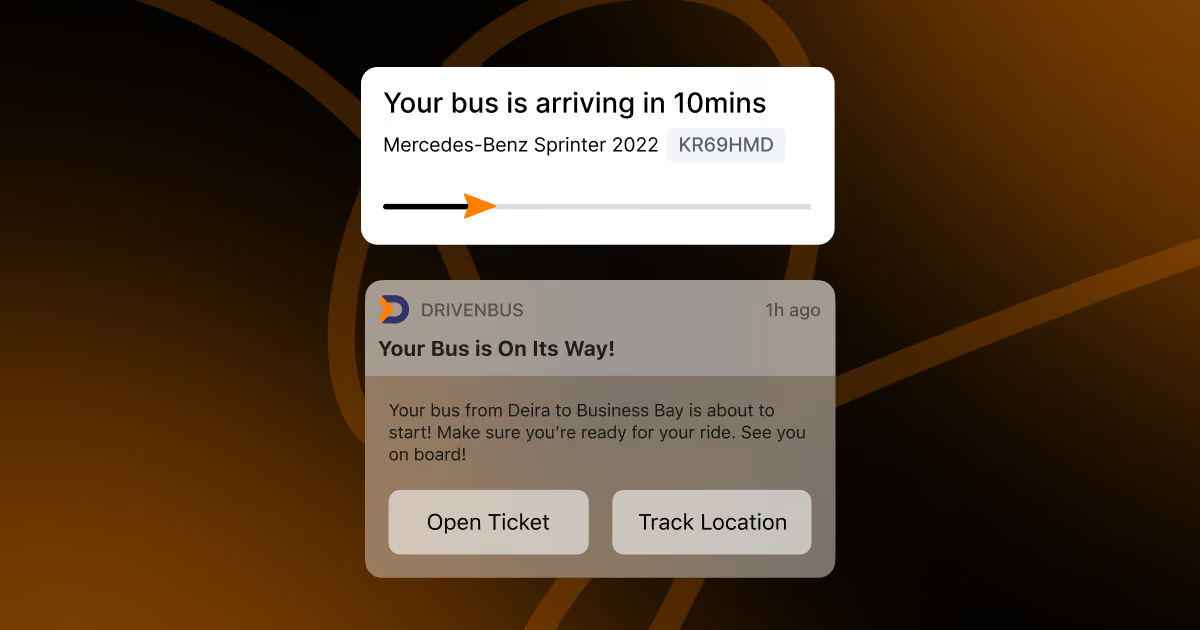
Passenger transit runs on trust in a countdown clock, not a freight manifest. Automation still plays the same role here. It just shows up as a push notification instead of a dispatcher screen. On DrivenBus, Firebase pushes a ten-minute warning, then a three-minute one. A rider waiting near Business Bay sees the bus, plate number included. Drivers get the same automated nudge about route or schedule changes.
Stress-testing a promise before you make it.
Committing to a delivery window used to be a guess dressed up as a plan. Automation now runs that guess through actual historical odds. That's a very different kind of confidence.
DriveIQ's SLA simulator shows a 94% success rate under expected conditions, 86% under stress. Sales teams now quote windows backed by that number, not instinct. SLA breaches dropped 28% once over-promising stopped being the default.
Balancing the workload nobody sees until overtime hits.
Reassigning routes by feel burns out good drivers fast. Automation weighs safety scores and workload before touching anyone's schedule. That's how to mitigate supply chain disruption at the human layer, not just the mechanical one. DriveIQ's optimizer folded driver safety scores into every reroute decision. Overtime hours dropped 22% once reassignments stopped defaulting to whoever answered first.
We build this stack from the ground up, not off a template. That runs from narrow RPA tasks to full predictive systems like DriveIQ's. We handle the whole cycle, start to finish. Discovery, integration with your existing TMS or ERP, and the mobile layer drivers actually touch.
Complex integrations are where most automation projects might go wrong. With COAX, they don’t. We've normalized mismatched EDI feeds, connected legacy WMS systems, and stitched three vendor tools into one queryable source, on SyncMatix alone. That work doesn't show up on a features list, but it's most of the job.
We're ISO 9001 and ISO 27001 certified. We don't treat that as a badge when providing supply chain software development services. Fleet and customer data run through the same handling standards on every build we ship. That matters more once automation starts making decisions on its own.
Supply chain disruption solutions only work if someone's actually tested them against real vendor chaos. If your fleet's still catching disruption from the customer call for the third time this week, we've probably already built a tool to handle a similar problem before.
FAQ
What causes supply chain disruption that most founders don't see coming?
Most founders blame big events, but what causes supply chain disruption is usually smaller: a missed timestamp, a supplier email nobody read. On SyncMatix, mismatched vendor data quietly broke three separate systems for months. Nobody noticed until fuel numbers stopped matching. Audit your quiet failures first. The dramatic causes rarely explain the damage; the invisible ones do.
What is supply chain disruption when it happens inside your own dispatch team, not the roads?
Supply chain disruption at the team level is a dispatcher juggling four tools, not a blocked highway. On DriveIQ, the client's real bottleneck was diagnosis time, not routing itself. Twelve minutes per exception added up fast across a 500-vehicle fleet. Internal friction disrupts as much as external shocks. Fix the desk before the road.
How to prevent supply chain disruption when you can't control your suppliers' systems?
You can't force a supplier's timestamp to match yours. Preventing supply chain disruption here starts with normalizing data on your side first. On SyncMatix, we built that normalization layer before any bot could run reliably. It absorbed mismatched formats without needing supplier cooperation. Control what you own. Everything else gets buffered, not blocked.
How to handle supply chain disruptions when your team is too small for a full control tower?
Small teams don't need enterprise towers on day one. How to handle supply chain disruptions at that scale means picking one exception type first. On GrandBus, dispatchers started with route delays before touching inventory or invoices. Even that single fix cut phone-based location calls from 35% to 5%. Scale the fix once it proves itself, not before.
What's the supply chain disruption meaning founders miss when reading vendor case studies?
Vendor case studies show the fix, rarely the mess before it. Supply chain disruption meaning, in practice, is a dozen small failures nobody flagged. On DriveIQ, the client's stated problem was routing. The real one was exception diagnosis eating twelve minutes each time. Read past the headline metric. The actual bottleneck usually hides one layer deeper.






















































_.avif)



%2520explained.avif)

We are interested in your opinion