When your quoting, billing, customer communications, dispatch orders, and other business aspects are all scattered across different systems, you lose a large chunk of your income and the ability to maintain customer relationships and trust. However,a good logistics CRM changes the scene. We identified the 10 best options for 2026 and beyond:
Pipeline CRM - visual pipeline management with offline functionality.
Salesdash CRM - freight broker specialization with lane-based tracking.
HubSpot CRM - user-friendly automation with free tier available.
Salesforce - enterprise-grade customization with Einstein AI.
Zoho CRM - affordable multi-channel communication and territory management.
Pipedrive - sales-focused deal management with mobile field access.
Shipthis - all-in-one CRM, WMS, accounting, and rate management.
Freshsales - AI-powered lead scoring and shipment journey tracking.
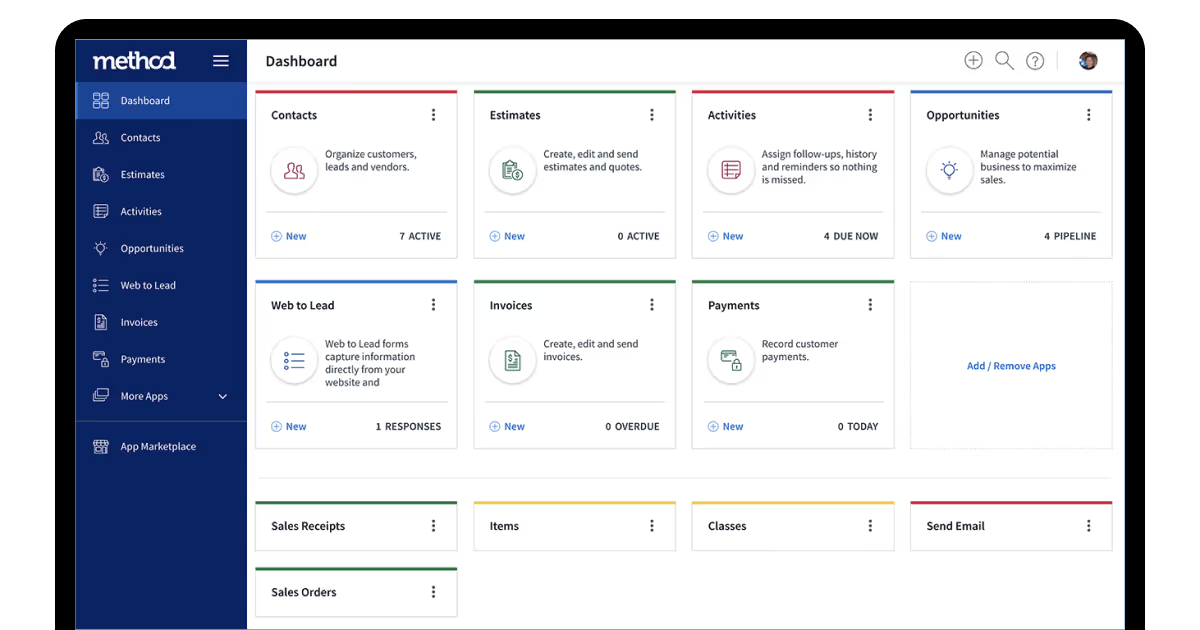
Method CRM - native QuickBooks integration with GPS field service.
Custom development - tailored solutions for unique workflows and complex requirements/
This guide describes the logistics and transportation CRM software features, benefits, integrations, and the top solutions that bring value to your business.
Why do logistics and transportation companies need a CRM?
In an increasingly complex industry where ignoring customer relationships directly impairs performance, logistics companies require CRM software to maintain customer satisfaction.
Businesses are under increasing pressure to manage large operations while upholding service quality as the global logistics sector expands quickly. Low customer relationship management levels have a major impact on logistics performance, especially in emerging markets, according to research by Wareewanich. Businesses that prioritize customer relationships outperform those with poor CRM practices in terms of global logistics performance.
Temitayo Adesoga, a business development specialist with expertise in international logistics, highlights: "Logistics CRM data is the lifeblood of any organization. Inaccurate, incomplete, or outdated information can lead to missed opportunities, poor customer experiences, and ultimately, lost revenue."
Numbers to show the importance of logistics CRM software
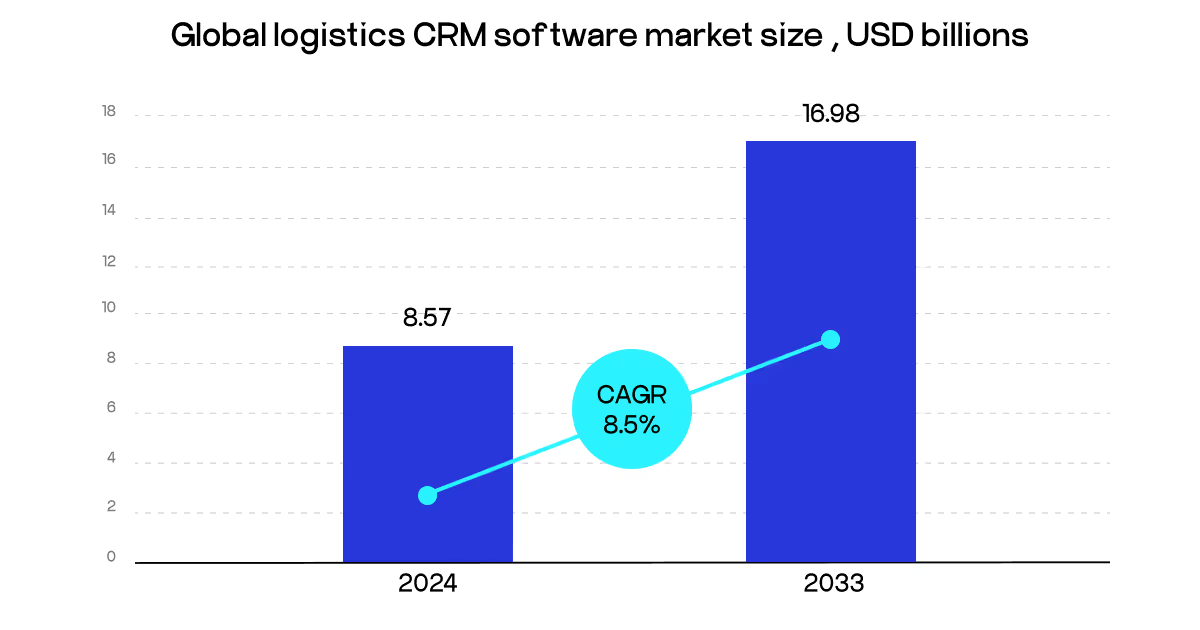
The industry's pressing need for better customer management is reflected in the logistics CRM software market, which was valued at $8.57 billion in 2024, and is expected to almost double to $16.98 billion by 2033. This covers a wide range of deployment types, from on-premises systems to cloud-based solutions, and it serves everything from small businesses to large freight forwarders and third-party logistics companies in North America, Europe, and Asia.
These figures are the result of an operational waste crisis. According to McKinsey research, ineffective handoffs between logistics parties cost the US economy between $65 billion and $95 billion a year, with carriers suffering losses equal to 6–13% of their earnings.
Moreover, a 2025 study conducted in the logistics industry found that 57% of logistics executives reported having suffered shipment delays due to errors in Shipment Documentation in the last year alone. 42% blamed delays on manual administrative processes. The source of both delays, as well as lost revenue opportunities, are outdated forms of communication (text messages, telephone calls) and applications that operate in silos, requiring constant updating .
CRM solutions promote greater real-time visibility and aid in improving operations through automation of workflows and improved means of communicating seamlessly between all parties involved throughout the entire supply chain. Implementing an appropriate CRM solution results in 25% reductions in direct costs. CRM solutions allow companies to adopt a more proactive and connected operational approach, which helps facilitate better and quicker information sharing and eliminate documentation errors, improving customer satisfaction.
How it differs from generic CRM systems
There are numerous tools for customer relationship management in the market. However, not all of them suit the specific needs of logistics companies. Some aspects distinguish CRM in logistics and transportation from general CRM solutions.
Main emphasis. Lead tracking and sales conversations are what generic CRMs generally manage. Meanwhile, logistics CRMs coordinate intricate supply chain operations while managing customer interactions.
Operational information. Standard systems store contacts and communication history, while logistics platforms record information that influences operational choices, such as shipment frequency, package counts, weight requirements, and modes of transportation.
Essential features. Genersc CRMs provide opportunity management and marketing automation. These are useful; however, logistic systems provide freight quotes, real-time shipment tracking, carrier management, tools for customs compliance, and load planning.
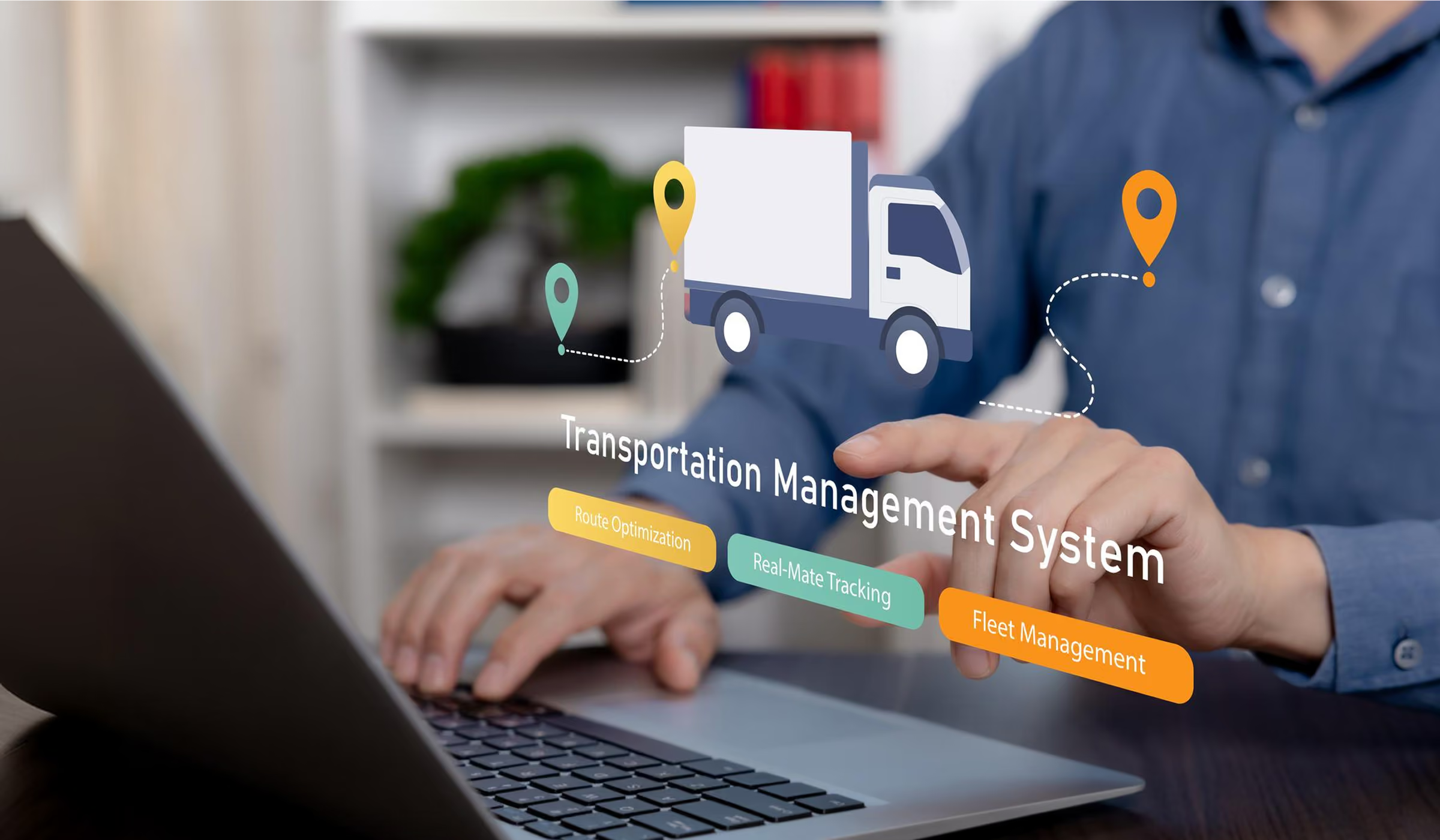
Real-time visibility. Dispatch crews and trucks cannot be assigned by generic systems. Real-time crew availability, route optimization, and job scheduling are all automated by transportation CRMs.
Integrating systems. The basic CRMs coordinate with calendar and email, while the logistics solutions interface with ERP systems, Warehouse Management software, GPS systems for tracking, and fleet management applications. Logistics Solutions can also be linked directly to moving directories or transport networks and to specialist lead sources.
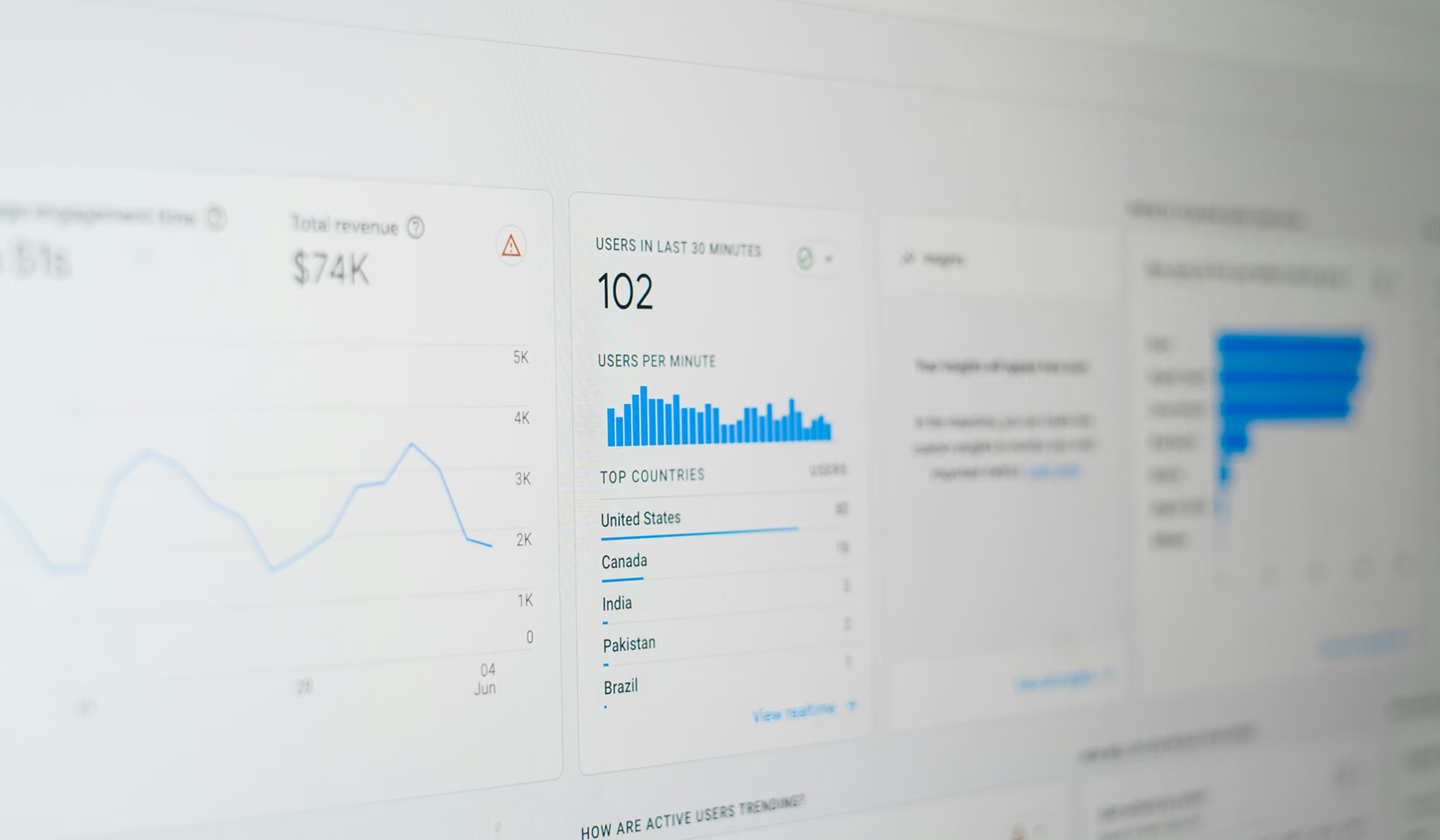
Capabilities for scheduling and reporting. Traditional CRMs can be used to track sales forecasts and campaign performance. However, logistics platforms measure fleet performance, fuel usage, fleet summary, delivery timeliness, and routing efficiencies.
Capabilities for mobile access. The regular mobile features will work with office teams as expected. However, CRMs for logistics provide strong offline access as well as routing optimization for field representatives who visit warehouses and other facilities.
Financial tools. Generic CRMs are unable to provide billing features, while logistics systems provide automated billing functions, payment processing, and revenue tracking, thereby enabling users to manage all aspects of billing within one application, eliminating the need for costly third-party applications.
As you see, there are many nuances that unlock the benefits that you get when adopting specific systems for your industry.
Key benefits of CRM software for logistics
There are multiple advantages derived from implementing the right solution. Let’s describe the ones that industry representatives get most often.
Effective data administration
A strong CRM for transportation companies and logistics providers keeps track of and arranges procedures to satisfy clients. It's much more than spreadsheet chaos and standard email chains. CRM systems provide comprehensive customer information profiles that include transaction history, transit status, anticipated delivery times, inventory control, vehicle documentation, and billing details from a single, easily accessible knowledge base. You can create reports using this centralized method that give stakeholders data-driven insights into service performance and deadline fulfillment.
CRM implementation improves business value and efficiency while increasing company profits, claims Hajduk. With these insights at your disposal, you'll be able to identify opportunities more quickly and make choices that will actually increase sales and operational effectiveness.
Customer satisfaction
When everything works correctly, customers gain deeper insights into their own business activities and enjoy a greater level of service from distributors and customers. According to Wareewanich, using CRM for logistics and transportation results in increased customer satisfaction. When companies use integrated ERP-CRM systems, they gain better visibility across the entire supply chain while providing improved services to their customers and ensuring that they continue to operate in a sustainable manner by using fewer resources.
How does it work? Customer data integration is one of the primary areas of focus for many logistics businesses today. With most people still focusing on using their ERP or back-office systems, ironically, many companies are missing an opportunity to connect their front-office systems (like a TMS) with their back-office (WMS, or other systems). Newer TMS platforms have built-in CRM functionality that provides one definitive source of work for everyone.
Reduced cost of ownership
The smartest way to achieve reduced total cost of ownership is aby voiding multiple systems or expensive solutions that never justify ROI. A fully integrated CRM makes your pre-sales and after-sales activities efficient, reducing operational costs. CRM integration automates tasks like order processing, invoicing, and shipment tracking, reducing manual errors and operational costs.
Research by IBR Infotech shows that transportation and logistics CRM software development streamlines operations from improved customer handling to simplified management processes. Your company's workflow improves so that projects get completed more efficiently. A CRM boosts sales and productivity while cutting costs - that's the winning combination every logistics business needs.
CRM helps improve digital interactions
The use of CRM unlocks ways to improve every customer interaction: through marketing automation, sales productivity, and service improvement. As your company can communicate with more than one customer at a time, you will be able to interact with customers more effectively. Consider how many touchpoints every potential customer has in their customer journey – that amount multiplied by the size of your entire customer database = many more customer interactions with you.
Companies that implement logistics management software see an increase of 21-30% in sales revenue in the first four to six months after implementation. Today’s CRM systems have advanced data analytics capabilities to help you decode large amounts of customer data and translate it into actionable insights. This is important for anticipating customers’ needs and preferences and to get future-ready in an uncertain market.
Great sales and marketing knowledge
CRM unifies sales and marketing onto a single platform, so by automating communications within their workflow, marketing teams spend less time on repetitive campaigns. CRM logistics tools help businesses to identify risks of customer defection to competitors and forecast future customer behavior. CRMs also evaluate the success of content once it reaches segmented customer groups by comparing performance by aggregating survey responses. Transportation and logistics firms can use segmentation to run reactivation campaigns, conduct exit surveys to understand churn reasons, and segment by this factor.
Hajduk notes that some logistics clients categorize customers according to profit or risk factors, allowing accurate revenue predictions and more effective planning. For sales teams, CRM enables monitoring ongoing customer purchasing behavior, tracking new leads from various digital channels, anticipating customer needs, and identifying which services attract high query volumes needing optimization.
Improved incident management and SLA monitoring
CRM systems provide a repository of knowledge regarding service-related customer inquiries that allows service staff to rapidly identify solutions. Within a CRM system, service SLAs, service delivery timelines, service delivery standards, and penalties for failing to meet service SLAs are stored in the database. Therefore, each service query receives prompt attention and correct service levels.
Research by Wareewanich showed improved incident management capabilities provided to businesses through transportation CRM use. When routine tasks are automated, service staff are able to give every service inquiry immediate attention.
Features of a logistics CRM
Now that the advantages you get with a CRM in your logistics service are clear, let’s get to the features that contribute to giving you these numerous perks.
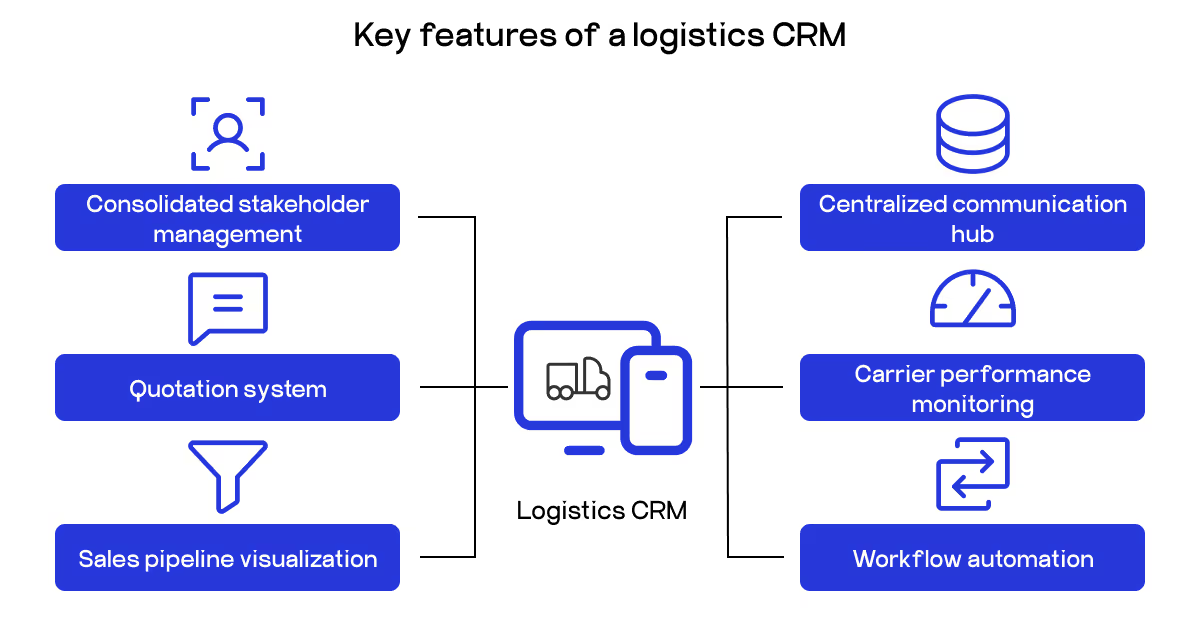
Consolidated stakeholder management
In logistics, managing customer data alone is insufficient, so you need visibility throughout your whole supply chain network. Information for clients, carriers, agents, suppliers, and shipping lines is combined into a single, easily accessible platform with a specialized CRM for the logistics industry. These CRM systems enable real-time insights into lane preferences, load history, and compliance requirements, in contrast to traditional B2B CRMs that track straightforward opportunities. This increases the cost-effectiveness of your business by removing the need to purchase several software programs for every kind of stakeholder.
Quotation system
This feature enables making accurate quotations easily with options, history of quotations, and real-time prices on hand. A sales CRM for logistics companies should generate one combined quotation for all services offered – warehousing, inland transport, ocean freight, or air cargo. Multiple alternatives for each service offered, and the ability for the customer to determine which option best meets their needs, will result in faster signatures on quotations and increased customer satisfaction.
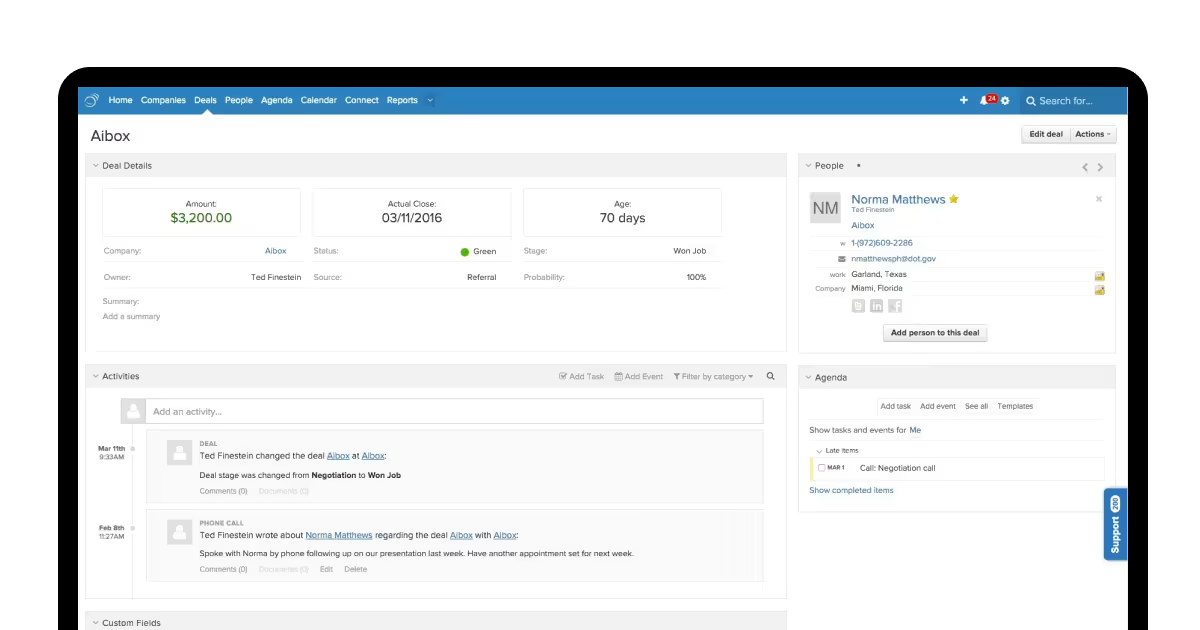
Sales pipeline visualization
With this function, you obtain a complete view of every lead as they progress through your sales funnel from initial contact to closed deal. You can configure calls, emails, and meeting cycles to recur, based on selected parameters, and assign them to your customer service or sales representatives. With a CRM for logistics, you can also monitor leads through various stages.
Actionable bid analytics also informs you of the reasons some freight bids were awarded, and others were not. Further, this will allow you to see which leads are closest to signing, maintain tracking of lost customers to analyze results, and refine your sales approach.
Centralized communication hub
All communications with stakeholders, including emails, phone conversations, in-person meetings, and virtual conferences, are gathered and stored in one central location when you get the right logistics CRM. Then, you can easily review real-time communications with leads, customers, carriers, and agents by syncing incoming and outgoing email and call details and automatically organizing them by company and contact. By doing this, time spent searching through previous discussions dispersed across multiple platforms is simply brought to near zero.
Why is it important? According to Hajduk, centralized communication fosters openness, guarantees that everyone is in agreement, and enhances internal cooperation between teams from various departments, leading to increased productivity and fewer lost opportunities.
Carrier performance monitoring
A CRM allows you to access and track your carriers’ performance data so you can make the best-informed decision when selecting your partners. The transportation CRM allows carriers' sales representatives to track their preferred lanes, type of equipment used, and historical reliability to help determine the best carrier fit and availability. The software captures all interactions with the carriers and maintains extensive profiles of each of your carriers with the following information: equipment availability, services offered, safety record, historical performance data (including any/all incidents), insurance coverage, etc.
This enhanced visibility allows for better collaboration with your carriers and enables you to match loads with your preferred partners, as well as to automate the process of following up with them.
Workflow automation
Repetitive tasks also get automatically programmed within your CRM for transportation, for maintaining the consistency of your sales, and improving your operational efficiencies. These systems can program automatic task assignment based on a set recurring schedule (calls, emails, customer meetings) without requiring any manual input. Logistics CRM workflow automation encompasses order processing, shipment notifications, and invoice generation, which allow your team to dedicate more time to strategic initiatives, reducing the time spent on manual, error-prone administrative tasks.
Best logistics CRM software
Surely, when it comes to CRM systems, the options in the market are abundant. You’ve got established leaders for practically all industries, as well as smaller, but more focused options specifically for this sector. Let’s outline the 10 best solutions, including both of these.
Pipeline CRM
Pipeline CRM has been recognized as one of the best CRMs for logistics, providing straightforward solutions that enhance sales team productivity through lead and contact customization. The platform is dynamic as it functions like a supercharged spreadsheet with data entered spreadsheet-style but automatically linked to communication and tracking tools.
Pipeline offers both cloud and hybrid versions, with the hybrid version enabling users to access all features without internet access and automatically syncing changes once back online. It also enables users to embed web forms on any website to generate new leads. All tiers offer unlimited deal pipelines, contacts, and customizable reports; however, calling features are restricted to higher tiers, and enterprise requires a minimum of ten users.
Best for: Small to medium logistics companies needing visual pipeline management without excessive complexity
Key features: Color-coded pipeline visualization, email sync with Gmail/Outlook, automated task assignments, mobile app with offline functionality
Pricing: Start Plan $25/user/month, Develop Plan $33/user/month, Grow Plan $49/user/month (all billed annually).
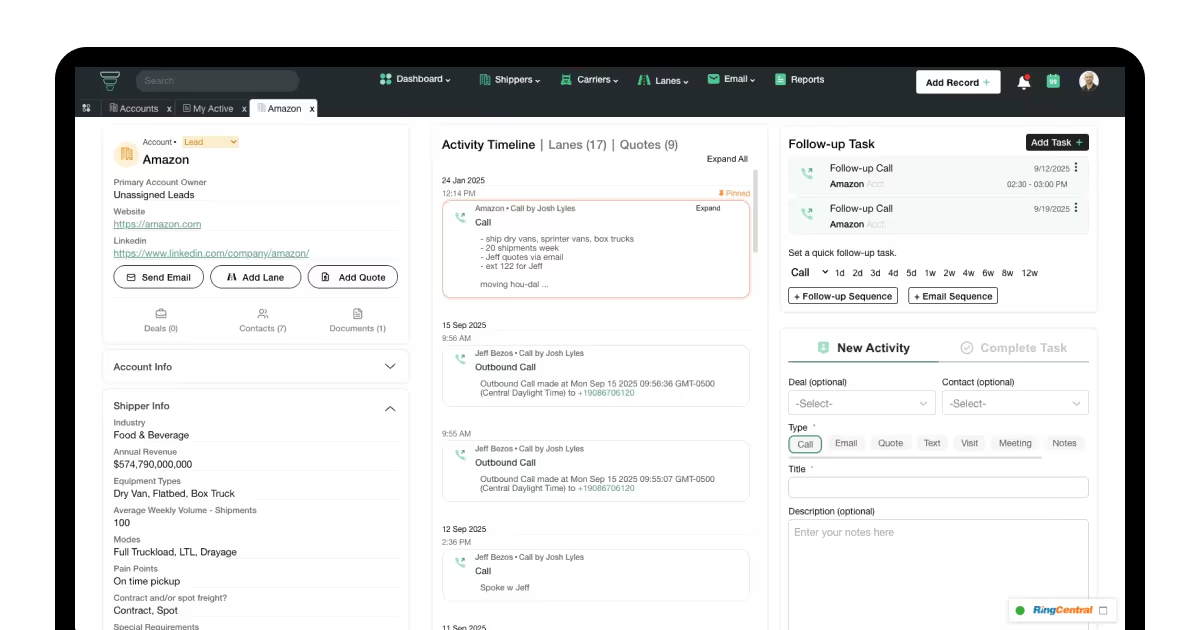
Salesdash CRM
Salesdash CRM is specifically designed for freight brokers, freight agents, and logistics sales teams. The CRM software for transportation companies provides the tech needed to manage shipper and carrier contacts and relationships, quote activity, and follow-up activities based on industry-standard practices.
It also accommodates the "hierarchical" structure typically used in logistics, including parent company, division, and billing-to locations. Within the software is the ability to automatically remove inactive shipper lead contacts from a representative's name ("shot-clock" feature), which increases sales activity, and the ability to customize pipeline stages.
Best for: Freight brokers and 3PL providers managing both shipper and carrier sales
Key features: Lane-based tracking for shippers and carriers, shot clock automation for inactive leads, RingCentral call recording integration, webhook and API support
Pricing: $59/user/month with 14-day free trial
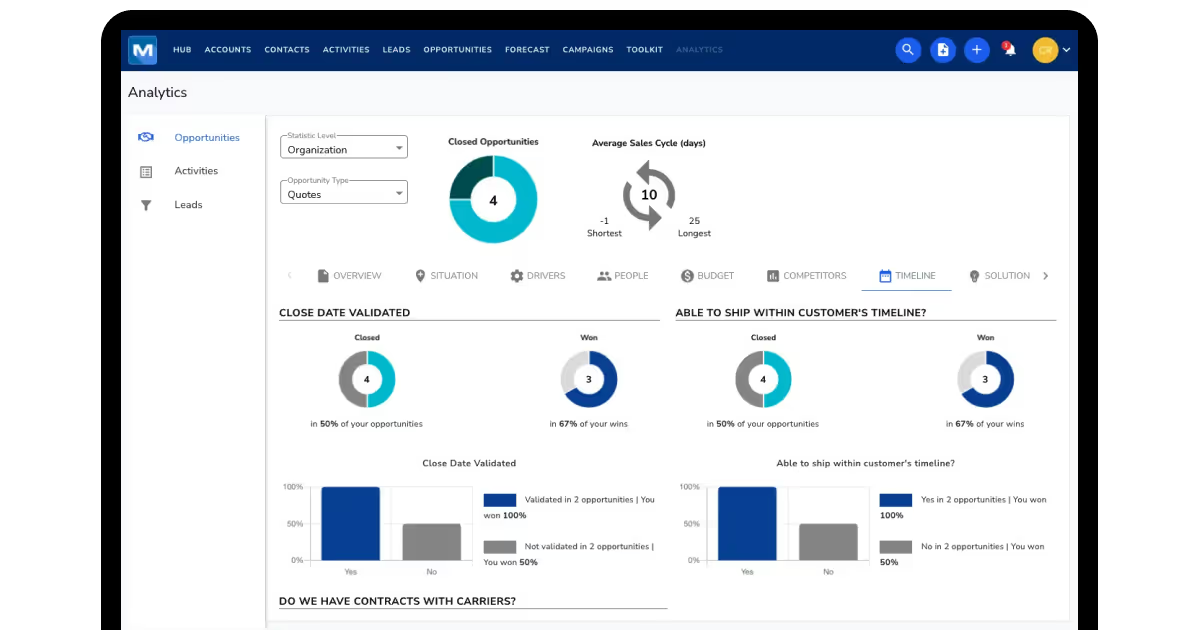
Magaya CRM
Through direct integration with the Magaya Supply Chain Software, Magaya CRM provides a single source of sales, operations, and financial information that eliminates re-entering the same data into different databases.
All quotes and accounts created within Magaya Supply Chain are automatically synchronized to Magaya CRM. Likewise, leads created within Magaya CRM will have their quote details available directly in the Magaya Supply Chain platform. The platform includes a KPI reporting tool and quick view dashboards displaying the overall health of the sales pipeline and corresponding account, lead status/progress, and opportunity metrics. Teams have the flexibility to use BI tools to create, configure, save, and share custom BI-based reports.
Best for: Freight forwarders already using or planning to implement Magaya Supply Chain
Key features: Bidirectional sync with Magaya Supply Chain, campaign management for mass marketing, opportunity tracking from lead to close, mobile access for pipeline management
Pricing: Custom pricing available on request
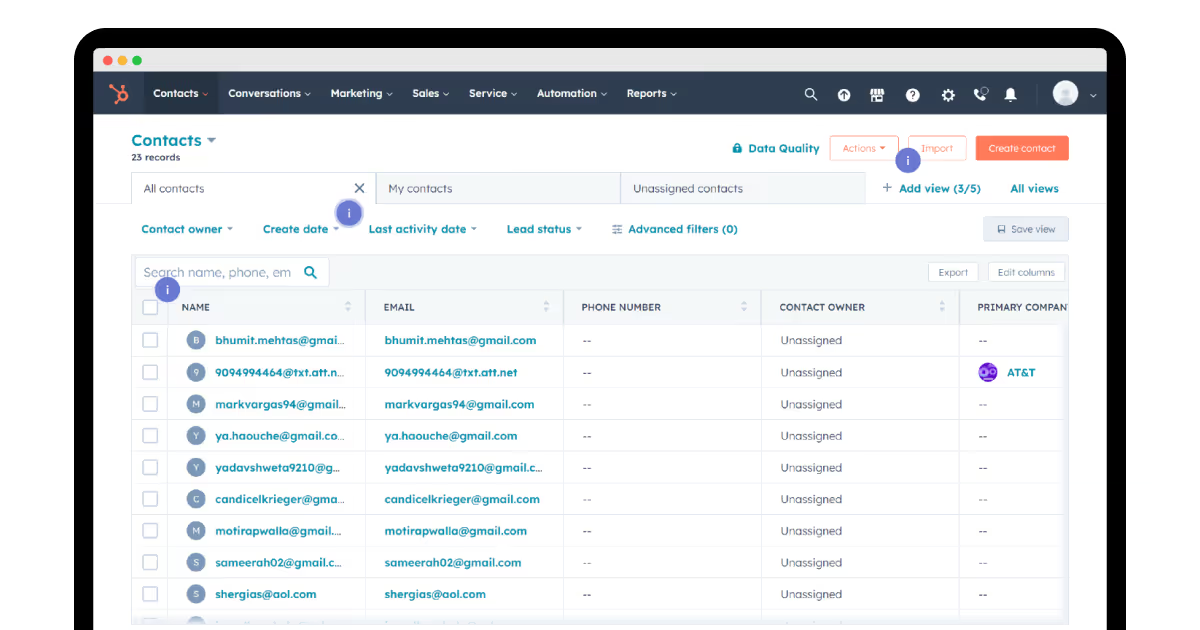
HubSpot CRM
HubSpot CRM offers a user-friendly platform with a mobile app to logistics companies.
Though a general solution, HubSpot is often called one of the best CRMs for the logistics industry. It stands out for its user-friendly interface and powerful automation capabilities valuable for logistics operations. The contact management system stores and organizes customer, carrier, and supplier information with automated data enrichment that pulls company details from public sources, reducing manual entry.
Email automation creates sequences for delivery confirmations, status updates, and customer follow-ups triggered automatically by shipment milestones rather than requiring manual intervention. The mobile app also lets teams access customer data, update shipment status, and communicate with clients directly from trucks or warehouse floors without switching between systems.
Best for: Small to medium logistics companies seeking comprehensive functionality with excellent value
Key features: Automated email sequences for shipment updates, contact management with data enrichment, mobile accessibility, workflow automation
Pricing: Free (up to 1,000 contacts), Starter $15/user/month, Professional $800/month for 5 users
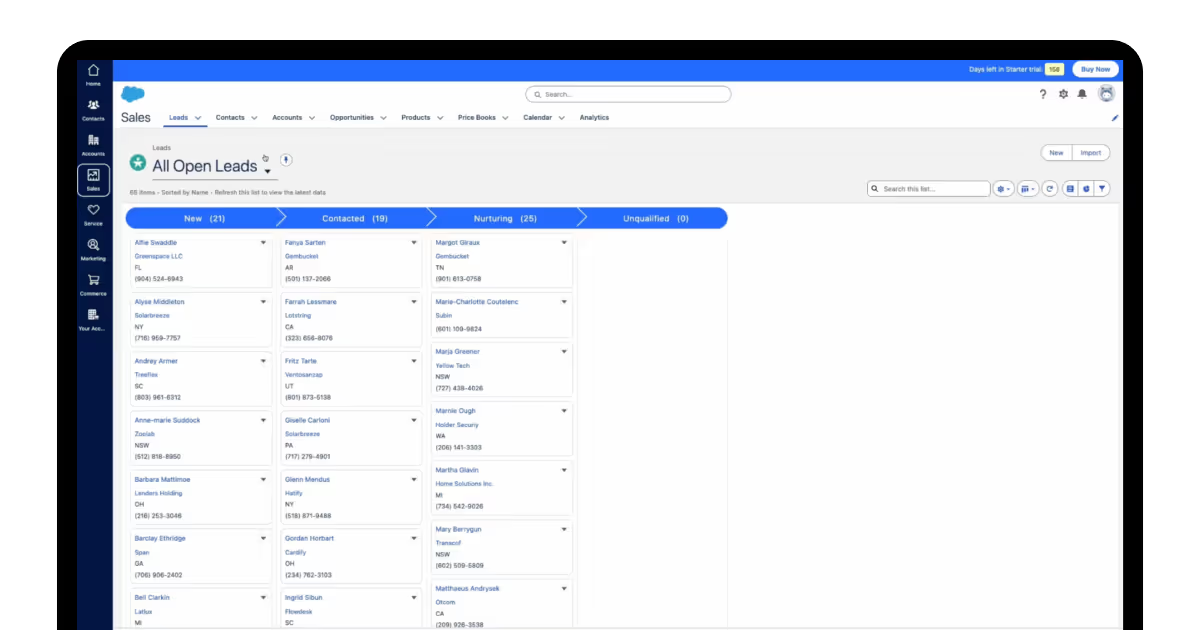
Salesforce
Salesforce focuses on serving enterprise users with highly customized functionality and substantial operational requirements that are intended for organizations that have full-time IT departments. With Salesforce, enterprise customers can automate their quote generation, carrier selection, and customer onboarding through multi-step workflows, with each step having conditional logic that allows the process to change based on the criteria set.
If you specifically need AI CRM software for logistics, the integration of Einstein AI allows for the use of predictive analytics for forecasting demand, identifying optimal routes for shipments, and assigning lead scores to potential customers based on historical shipping patterns. However, customers often need a substantial degree of technical expertise to implement the pre-built connectors in order to connect their transportation management systems, warehouse management systems, and accounting systems to Salesforce.
Best for: Large logistics enterprises requiring extensive customization and advanced features
Key features: Einstein AI for predictive analytics, workflow automation with conditional logic, extensive integration ecosystem, advanced reporting capabilities
Pricing: Starter Suite $25/user/month, Pro Suite $100/user/month, Enterprise $165/user/month, Unlimited $330/user/month
Zoho CRM
Zoho CRM offers workflow automation that triggers tasks like status updates, invoice generation, and follow-up communications based on shipment events and customer actions. Multi-channel communication management consolidates customer interactions via email, phone, social media, and live chat into a unified interface accessible to all relevant team members.
The territory management feature organizes logistics operations by geographic regions with the ability to assign accounts to specific teams and track performance across different service areas. Integration with other Zoho applications like Zoho Books for accounting and Zoho Inventory creates an interconnected ecosystem that reduces software switching.
Best for: Small to medium logistics businesses needing affordable scalability
Key features: Multi-channel communication hub, territory management, AI-powered analytics, integration with Zoho ecosystem
Pricing: Free (up to 3 users), Standard $14/user/month, Professional $23/user/month, Enterprise $40/user/month, Ultimate $52/user/month
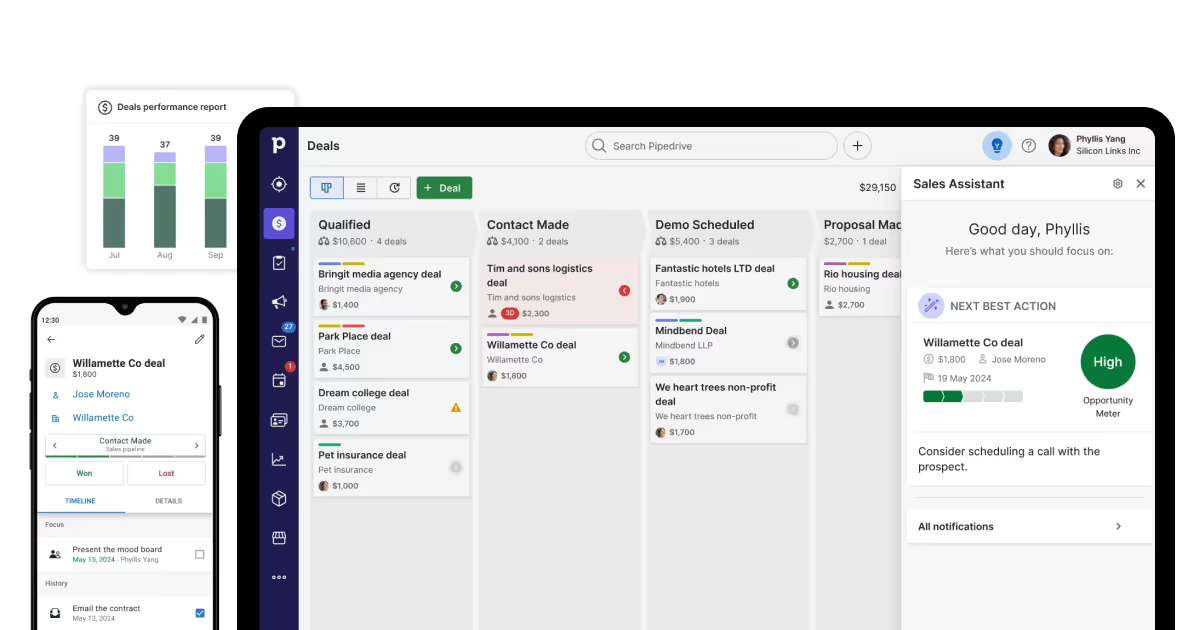
Pipedrive
Pipedrive provides a means to manage the logistics industry sales process through visual pipelines, customized by each user, which allow the user to view the entire sales cycle from the initial quote to the delivery completion. When applied as a CRM for logistics companies, it also automatically sends the user estimates, invoices, and shipment tracking numbers as the deal progresses to the delivery milestone without requiring the user to manually complete actions.
By providing a Mobile CRM, Pipedrive enables drivers and field personnel to record the delivery status and capture digital signatures in real-time on their mobile devices and communicate directly with Pipedrive. Pipedrive also offers a Territory Management feature that allows users to define and organize their logistics operation by region, assign leads to the appropriate team members, and report on the performance of each team member by region so that resources can be used more efficiently.
Best for: Sales-focused logistics teams prioritizing deal management and pipeline visibility
Key features: Visual sales pipeline with customizable stages, automated customer updates, mobile app for field teams, and activity reminders
Pricing: Essential $14/user/month, Advanced $39/user/month, Professional $49/user/month, Power $64/user/month, Enterprise $99/user/month
Shipthis
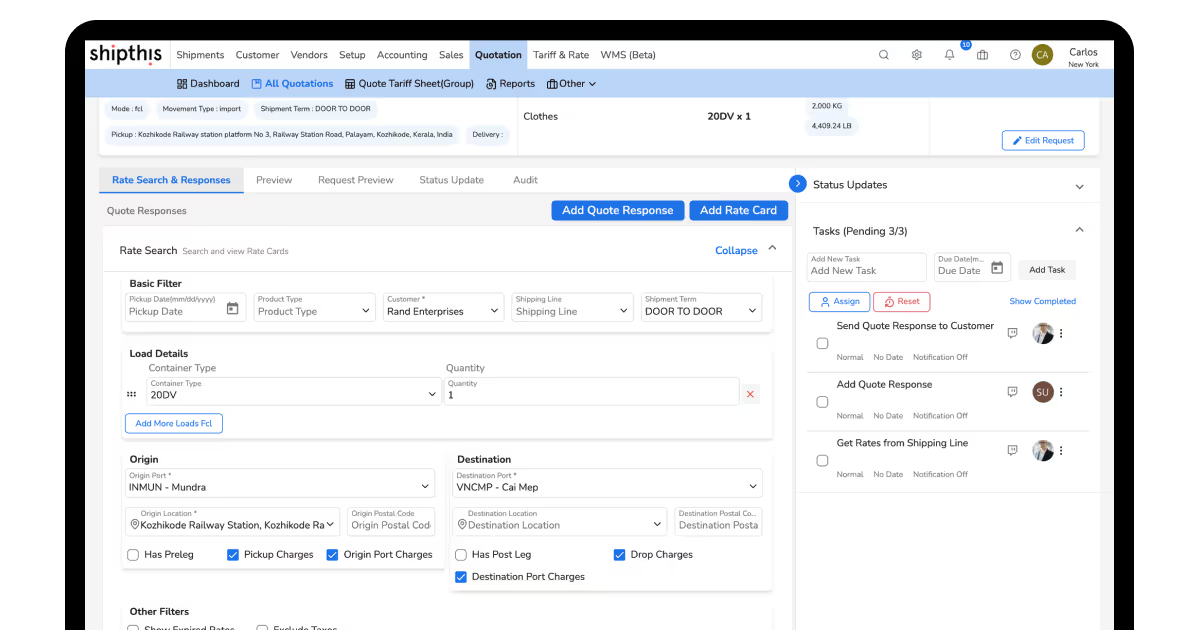
Shipthis provides comprehensive freight forwarding software covering a logistics CRM, warehouse management, accounting, quotation, and rate management in a single platform. The system manages customer data across the entire lifecycle, including documentation, call logs, quotes, and invoices, eliminating the need for multiple specialized tools.
Customers receive reminders and delivery updates via desktop, text, or WhatsApp notifications, keeping them informed throughout the shipment journey. EDI, API, and webhook connections enable seamless workflow integration with existing systems, while chat and email tools send quotes, shipment updates, and service request information directly from the platform.
Best for: Freight forwarders seeking an all-in-one platform covering operations, CRM, and accounting
Pricing: $89/user/month for full platform, including all modules; custom enterprise plans available
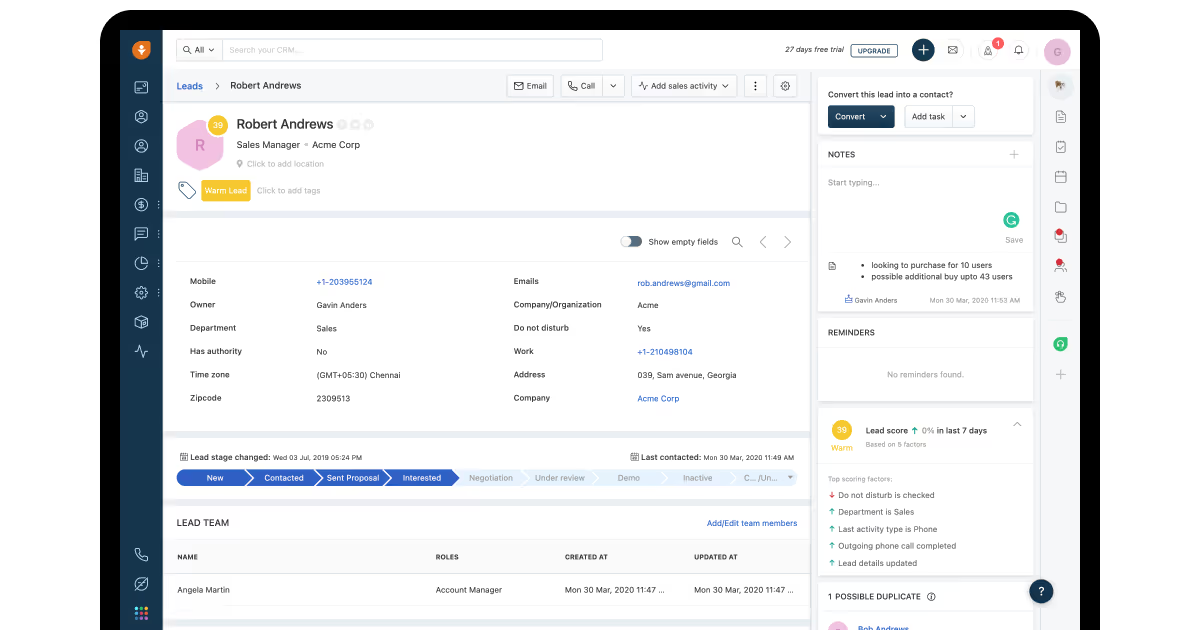
Freshsales
Freshsales uses machine learning algorithms and AI-powered lead scoring to find valuable logistics prospects based on past data and behavioral trends. For increased operational efficiency, shipment journey tracking tracks order fulfillment from pickup to delivery with real-time updates and automated bottleneck identification.
While keeping a consistent communication history across the sales, operations, and customer service departments, team collaboration tools facilitate account information sharing and coordination on intricate projects.
Best for: Growing logistics companies needing AI-powered insights and team collaboration tools
Key features: AI lead scoring, shipment journey tracking, team collaboration workspace, workflow automation
Pricing: Free (up to 10 users), Growth $15/user/month, Pro $49/user/month, Pro + AI Copilot $78/user/month, Enterprise $79/user/month
Method CRM
Method CRM has built-in QuickBooks integration capabilities that sync customer information, invoices, payments, and logistics job costs between the two systems and eliminate the need for users to enter data manually. This feature allows you to use it as logistic management software, as you can create custom data fields for freight orders, delivery routes, carrier information, and warehouse management, without needing coding skills or developer support.
Method CRM also provides tools for creating driver schedules, tracking vehicles in real-time using GPS technology, and managing delivery appointments by optimizing routes. Additionally, the solution allows users to create an unlimited number of custom objects and fields to accommodate their logistics processes, providing a very decent flexibility.
Best for: Logistics businesses using QuickBooks that need seamless accounting integration
Key features: Native QuickBooks sync, custom field creation without coding, field service management with GPS, driver scheduling
The tools we described all have their pros and cons, best use cases, diverse features, and a lot to offer for your business. But to choose the right logistics and transportation CRM, you need to consider some nuances.
Define your operational challenges.
What is currently broken in your operation? Are your team members wasting hours searching for emails from carriers? Are your customers' inquiries being lost between different departments? Are you unable to quickly verify the status of a shipment when a client contacts you? Identify three major issues frustrating you the most, as these may indicate weaknesses in your logistics operation that could benefit from the features that you may find in a specific tool.
Look for a logistics-specific CRM.
Generic business systems are not designed for your operation. You need a CRM system designed specifically to handle consolidated quoting for freight + warehouse management systems + last-mile delivery, all within a single proposal. The appropriate CRM for logistics will serve as the backbone of the logistics business, helping you manage your relationships with clients, vendors, carriers, and business partners, track shipments, and produce quotes.
Verify integration with your WMS and TMS.
How well your CRM integrates with your warehouse software and transportation management system is crucial. Common integration options include sharing freight rates or carrier availability with sales teams and coordinating CRM procedures with inventory management, warehousing, finance, and accounting. According to findings of Wareewanich, integrated CRM-ERP systems improve customer satisfaction and supply chain visibility. Request a concrete case of successful integrations with your particular software versions from the vendor. Promises about "open APIs" are less important than pre-built connectors.
Examine how it manages quotes for multiple services.
Can you create a quote that covers final delivery, customs brokerage, temporary storage, and LTL transportation? Does it enable you to provide customers with carrier options at various price points? Offering a variety of options for each service and allowing clients to select the one that best suits their needs shortens the time it takes for clients to sign quotes and increases customer satisfaction. When you need to quote a multi-leg international shipment with different service combinations, many CRM logistic tools that claim to handle "complex pricing" fall apart.
Check automation for workflows particular to freight.
Based on lane or commodity type, the system should automatically match incoming shipment requests to the appropriate representative. To save time and improve operations, look for a CRM that has automation features for repetitive tasks like data entry, updating, client emails, and follow-ups. POD updates, delivery alerts, and pickup confirmations ought to be sent without any button clicks. Freight workflows must be integrated - generic task automation is insufficient.
Estimating actual costs.
While some month fee may seem reasonable, it is important to also factor in the additional charges for lane analytics, API access, and premium tier upgrades for carrier integration. Before purchasing any CRM for logistics, it is advisable to take advantage of free trials from multiple vendors in order to find the best fit. Calculate all implementation and setup costs, including the costs of data migration, employee training time, and any additional modules that will ultimately be necessary. Determine the total 2-year cost of a 5-user subscription for your CRM System.
Be certain your operational personnel can use it.
Select an easy-to-use CRM that provides an intuitive interface and installation process so that your team can get up and running with your logistic management software in hours and see results within the first few weeks. Pay attention to how quickly you can locate a customer's shipping history and a carrier's insurance policy. In addition, when researching various CRMs for your operations, ensure that you identify flexibility concerning the ability to modify processes and customize features to meet the specific needs and operational styles of your organization.
The truth is, even if you consider everything and your choice seems perfect, off-the-shelf tools might limit your ability to grow your business. Here, you meet an alternative.
When you need a custom logistics CRM
When your logistics operation has special procedures that off-the-shelf solutions cannot handle without massive workarounds, custom CRM system development services make perfect sense. Tailored CRM software for logistics is made for your logistics processes, integrates seamlessly with current systems, and expands with your company.
The success of CRM implementation is greatly impacted by industry norms, organizational structure, and customer expectations, according to research by Steel and colleagues. This suggests that ready-made solutions might not sufficiently address these factors. With features like order management, shipment management, inventory management, and route management that are all customized to business processes, custom workflow management eliminates manual labor and arranges current procedures to boost productivity and efficiency.
When your company manages multi-modal shipments with complex pricing, has specialized compliance tracking for specific trade lanes, or has unique carrier relationships that cannot able to be accommodated by a standard system, custom development is even more viable. However, you should expect longer implementation timelines and more technical support to be required compared to off-the-shelf solutions.
Cost of building a custom logistics CRM
The cost of developing a custom CRM for transportation and logistics varies greatly depending on a number of factors. While enterprise solutions can cost more than $250,000, basic systems usually start at between $30,000 and $50,000.
Scope and complexity of the features. Building basic sales pipelines and contact management systems is less expensive. Expenses are significantly increased by advanced features like AI-driven insights, predictive analytics, intricate workflow automation, and complex event-driven architectures. Development time is increased by custom calculations, real-time event handling, and complex logic.
Platform and integration specifications. Because different platforms require different coding and testing, building for multiple platforms increases costs. Additional development work is needed for third-party integrations with ERP systems, warehouse management software, GPS services, payment gateways, and CRM tools. The budget is also impacted by data migration from current systems and strong security measures.
Development team. Geographical location is important. Developers in the US charge more than teams in Asia or Eastern Europe. Although it necessitates careful partner selection, outsourcing can offer specialized knowledge and cost savings.
Testing and upkeep. Bug fixes, OS compatibility updates, and new features add up to the post-launch duties. Long-term planning should take these recurring expenses into account.
Custom solutions offer specialized functionality that can provide greater long-term value, while off-the-shelf CRMs offer quick deployment. The return on investment will be worth the higher initial cost due to increased operational efficiency gains and the ability to create a competitive advantage. With custom CRM, logistics companies have developed long-term relationships with customers through personalized services and fast response times, leading to increased customer satisfaction, brand loyalty, and in some instances a 15% increase in repeat business and 20% lower operational expenses in the first year.
Through our expert-led logistics software development, COAX builds logistics CRMs that fit your business. We handle everything from custom integrations with your TMS and WMS to developing AI-powered modules for your existing tool. Whether you need a complete system built from scratch or want to add functionality, our team designs solutions that connect all your logistics operations into one platform. Our design and redesign services also ensure your CRM stays intuitive as your processes evolve.
The real value comes after launch. Our post-launch support means you're not stuck when business requirements change or new regulations hit your industry. We've helped logistics companies add automated customs compliance modules, and created visibility dashboards that make sense to dispatchers and sales. We ensure your CRM handles shipment data while staying reliable under operational pressure.
FAQ
What are the challenges of implementing CRM for logistics?
The primary obstacles include employees' resistance to change, data quality and migration problems from different systems, the complexity of integrating specialized logistics software (WMS, GPS, accounting), choosing CRM platforms that manage dual shipper-carrier relationships, high software and training costs, a poor implementation strategy, and over-customization that results in maintenance issues and budget overruns.
How do CRM transportation tools solve the problems of small businesses?
There is fierce competition and little funding available to small logistics companies. By centralizing customer data that would otherwise be stored in spreadsheets, automating manual processes, and offering structured databases that become competitive advantages, transportation CRMs address these issues. According to Truong, CRM systems are "irreplaceable" for small transportation companies because they allow for optimization and efficient management even in the face of constrained cash flows and investment capacity, ultimately increasing the effectiveness of customer interactions.
How do I adjust my transportation CRM if I have multiple modes of transport within my fleet?
Flexible data structures that capture mode-specific characteristics (vehicle capacity, route types, regulations) are necessary for multi-modal fleet CRMs. Use modular architecture to enable customization for each mode, incorporate GPS and telematics for every type of vehicle, and implement role-based dashboards for various transport modes. In order to ensure real-time tracking and coordination regardless of the type of transportation, Rojas and others place an emphasis on appropriate workload distribution and communication structures across operations.
How does COAX develop secure and efficient CRM software for logistics?
COAX uses security measures unique to logistics, such as secure API integrations with WMS and ERP systems, role-based access controls for multi-stakeholder environments, encrypted data transmission for shipment tracking, and compliance frameworks for transportation regulations. We have ISO/IEC 27001:2022 certification for thorough risk monitoring and security management, as well as ISO 9001 certification for quality processes during development.



























































































_.avif)











%2520explained.avif)

We are interested in your opinion