During a routine check, a dispatcher finds an expired license. The truck left 20 minutes earlier. One disconnected record can now expose the carrier to fines, downtime, or liability. If you own a fleet, such situations can occur more than expected. Luckily, when implemented correctly, fleet compliance can help avoid them.
We’ve spent over 16 years building transport technology at COAX Software. We’ve seen compliance fail even inside well-organized fleets. After its implementation, our client DriveIQ AI flagged over 40 potential HOS violations during one quarter.
This guide focuses on fleet compliance management and how technology can streamline and optimize it. We explain how fleet compliance works. You’ll also learn how connected systems support drivers and dispatchers.
What is fleet compliance?
Fleet compliance is the process of keeping drivers, vehicles, and daily operations aligned with applicable rules.
In practice, it turns legal requirements into checks before dispatch, during journeys, and after each completed operation. FMCSA compliance reviews examine driver qualifications, HOS, vehicle maintenance, inspections, accidents, and supporting safety records.
The logistics market includes carriers of various sizes, vehicle types, cargo classes, and operating models. Applicable duties vary with fleet size, vehicle type, cargo, routes, and operating model.
The same applies to software. The market now offers all-in-one fleet platforms, specialized ELD tools, maintenance systems, and custom integrations. Larger fleets often connect HR, telematics, dispatch, maintenance, and audit data across several products.
Strong controls can reduce exposure to preventable incidents. FMCSA estimates a non-injury large-truck crash at $49,398.
An injury crash reaches $326,810. A fatal crash reaches $15.23 million. These are comprehensive societal estimates in 2023 dollars.
This matters because such failures rarely stay inside one department. An expired license can affect dispatch, safety, insurance, customer commitments, and later investigations. FMCSA safety audits specifically flag unqualified drivers, missing HOS records, and unresolved vehicle defects.
Fleet compliance categories
Across our transport projects, we’ve seen the same pattern. Compliance fails when driver, vehicle, maintenance, HOS, and incident records are disconnected. A practical fleet compliance program should cover five connected areas reflected in federal regulations:
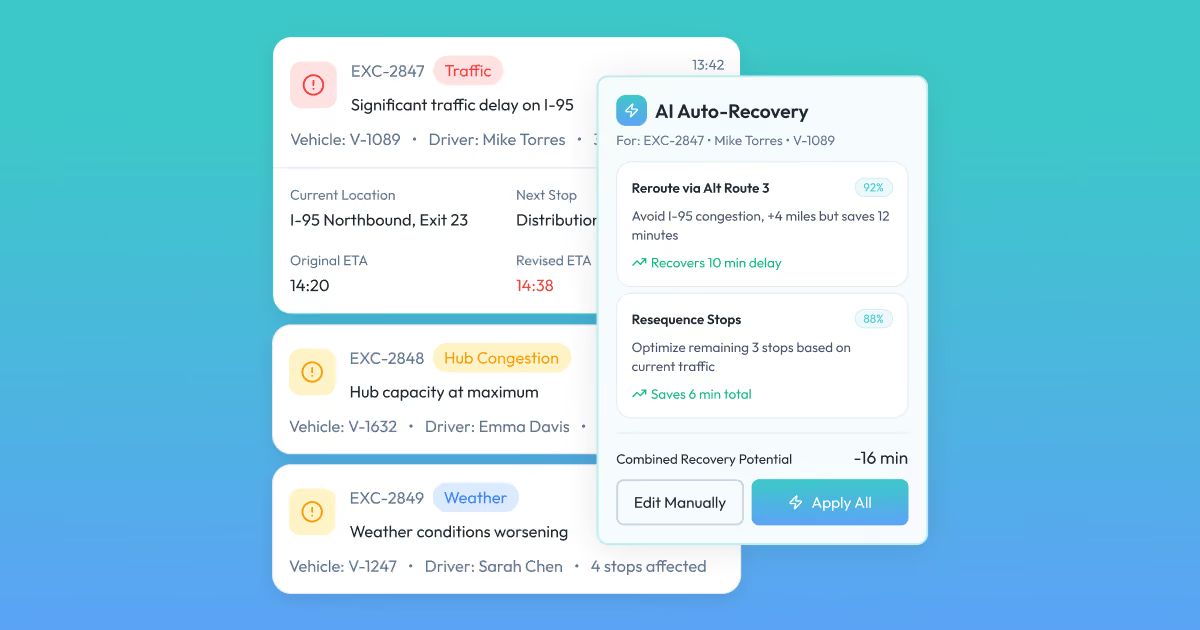
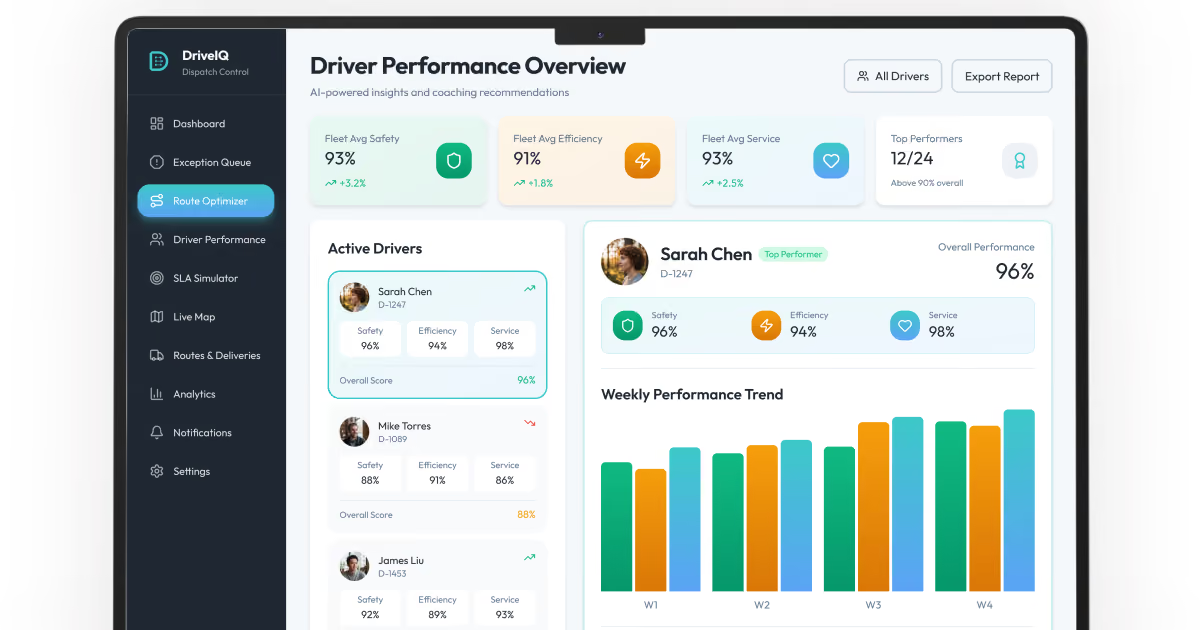
DriveIQ combined data from these areas to support operational decisions. Its auto-recovery optimizer assessed cost, delivery impact, and fatigue before recommending load reassignments. It helped reduce empty miles by 8% and overtime by 22%.
These categories need shared data. Otherwise, one system may approve work that another should block.
Why does fleet compliance matter?
In our time in the field, we have learned that compliance shouldn’t be designed around passing the next audit. The strongest systems prevent risky assignments and document every authorized exception. This also reduces preventable delays, roadside failures, and last-minute audit work.
We also believe compliance controls should be tested under real operating pressure. Delayed data, unavailable integrations, urgent loads, and manual overrides reveal whether a process is genuinely reliable or only looks complete on paper.
Compliance software also helps prepare for regulatory inspections. A compliance review can identify violations before an FMCSA investigation does. This gives you the time to fix the issues and lower the chance of fines or out-of-service orders.
The goal isn’t more alerts. Teams need accurate evidence before a dispatcher approves the next assignment.
Which businesses need to rely on fleet compliance?
Fleet compliance applies beyond long-haul trucking. The applicable requirements depend on vehicle weight, passenger capacity, cargo, jurisdiction, and operating model.
Companies subject to DOT and FMCSA regulations
Many interstate operators need a USDOT number when vehicles reach 10,001 pounds. Passenger and hazardous-material operations can qualify under separate thresholds.
FMCSA rules can cover registration, driver records, HOS, inspections, maintenance, testing, and safety management. State rules may add separate intrastate requirements.
Operating authority is a separate question. Some for-hire carriers need authority alongside their USDOT registration.
Commercial fleets vs private fleets
For-hire carriers transport passengers or another party’s cargo for compensation. Private carriers move their own goods within another business.
Private fleets can still fall under federal safety rules. Registration requirements don’t disappear because transportation isn’t the company’s main service.
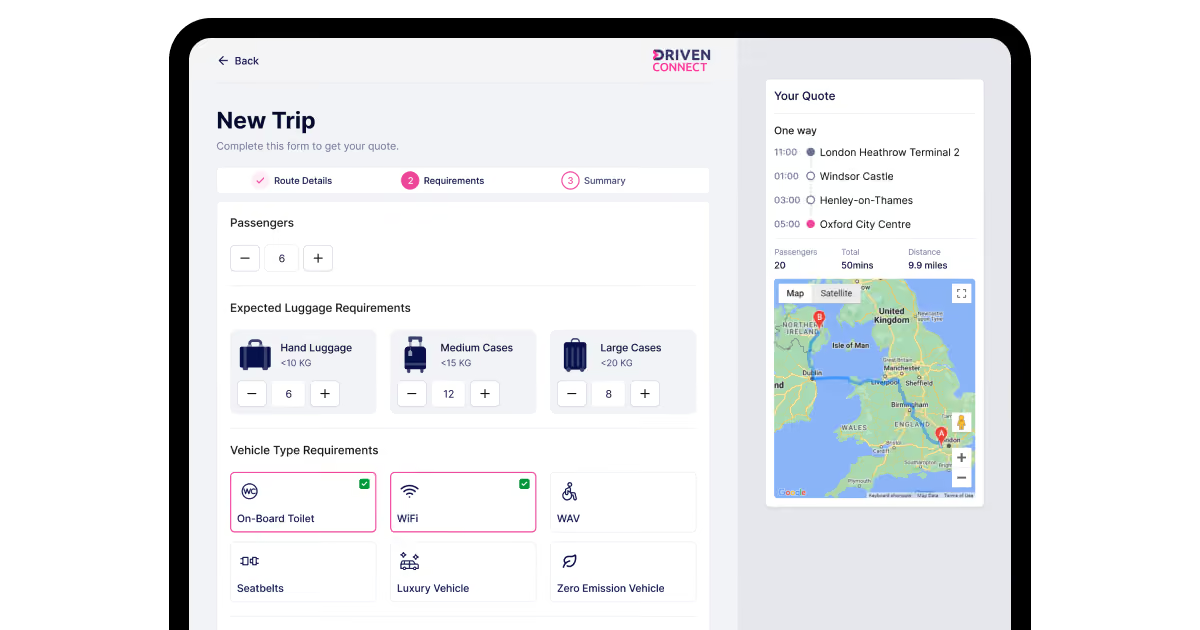
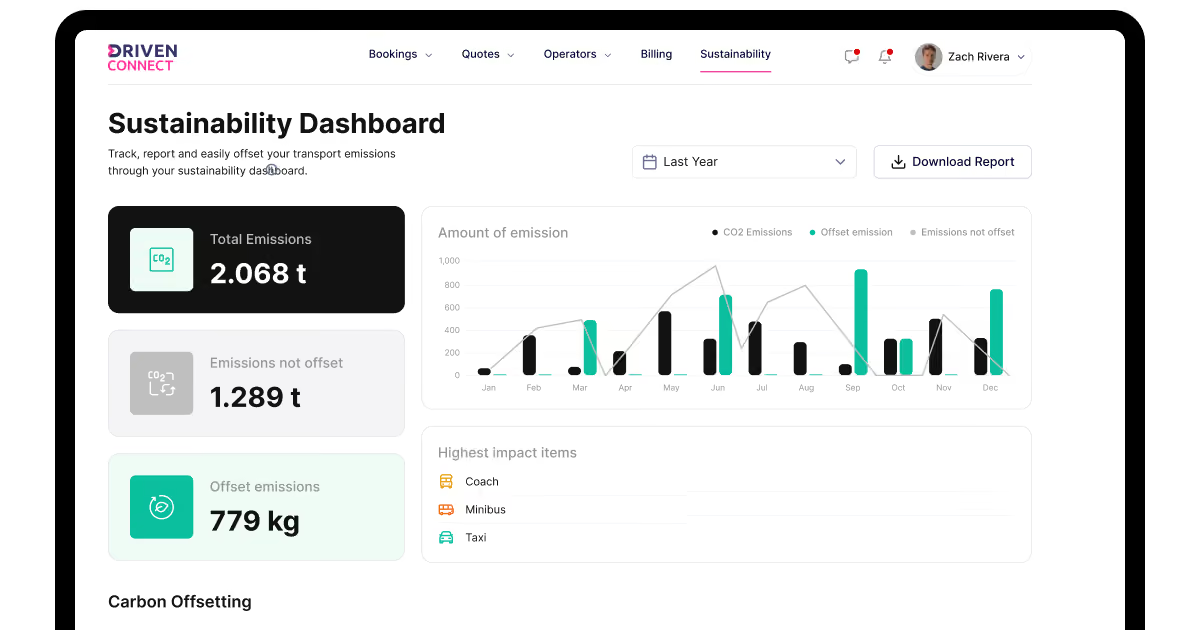
In for-hire operations, responsibility for each trip must remain traceable across several parties. While building Driven Connect, we linked bookings, vehicles, routes, emissions records, and payments to the responsible operator. The implemented traceability allowed operators to prove who handled each journey using supporting records.
Both models still rely heavily on qualified drivers, safe vehicles, and evidence supporting daily decisions.
Industries commonly affected
Different industries face different compliance pressures. Freight and delivery fleets must manage HOS, vehicle condition, route limits, and delivery evidence. Passenger operators must also track schedules, driver eligibility, vehicle capacity, and real-time location.
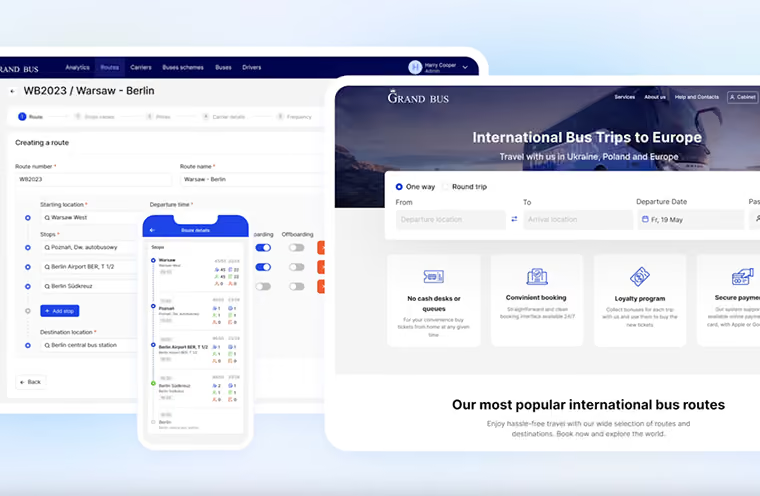
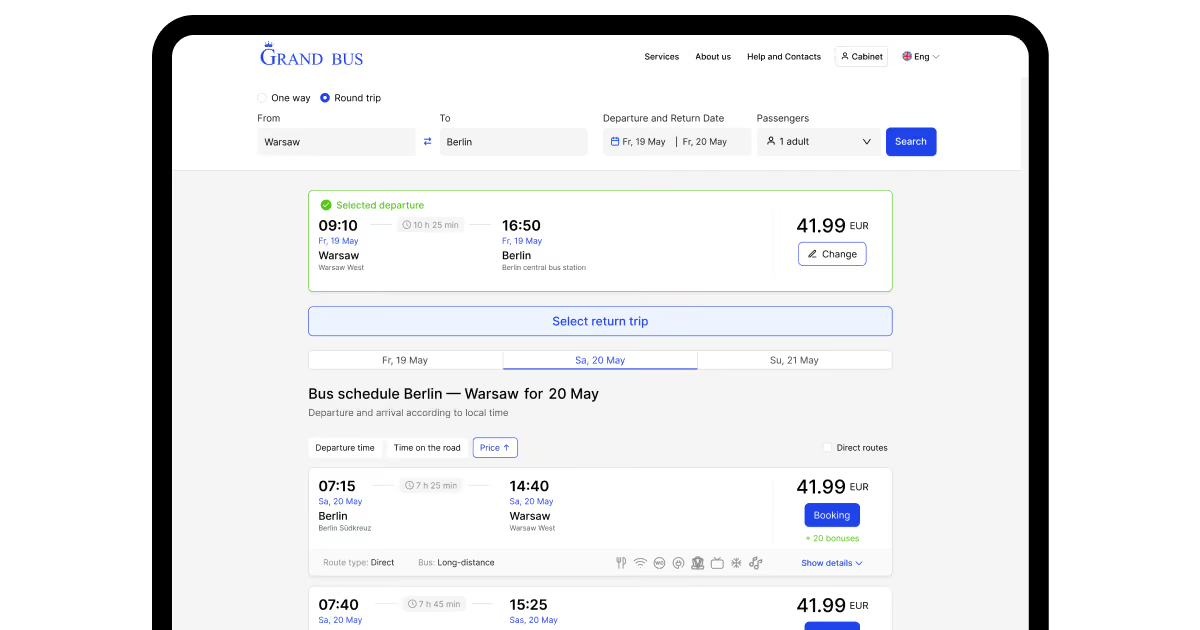
A fleet management system helps address these challenges effectively. Before switching to it, GrandBus relied heavily on notebooks, Excel spreadsheets, and phone calls. After implementing a website with a dedicated admin panel and a mobile app, the accuracy of route management and reporting reached 99%.
Construction and utility fleets often manage mixed assets across remote worksites. Retailers, manufacturers, and distributors may operate regulated private fleets without dedicated transport teams. Hazardous-material carriers face stricter documentation, routing, and incident-response requirements.
Smaller fleets shouldn’t assume they’re exempt. One heavy vehicle or regulated load can change the compliance scope.
What are the key areas of fleet compliance?
Effective fleet compliance software connects operational controls with review-ready evidence. Every module needs shared identifiers, timestamps, permissions, and owners.
DriveIQ AI applied this model across HOS, fatigue, routing, and dispatcher workflows. Shared records helped teams identify risks before they reached active assignments.
Driver compliance: qualifications and HOS controls
Driver compliance verifies eligibility before every assignment. It prevents expired or incomplete records from reaching active dispatch. The module should connect licenses, medical records, training, tests, schedules, and HOS data. It should preserve approvals and authorized overrides.
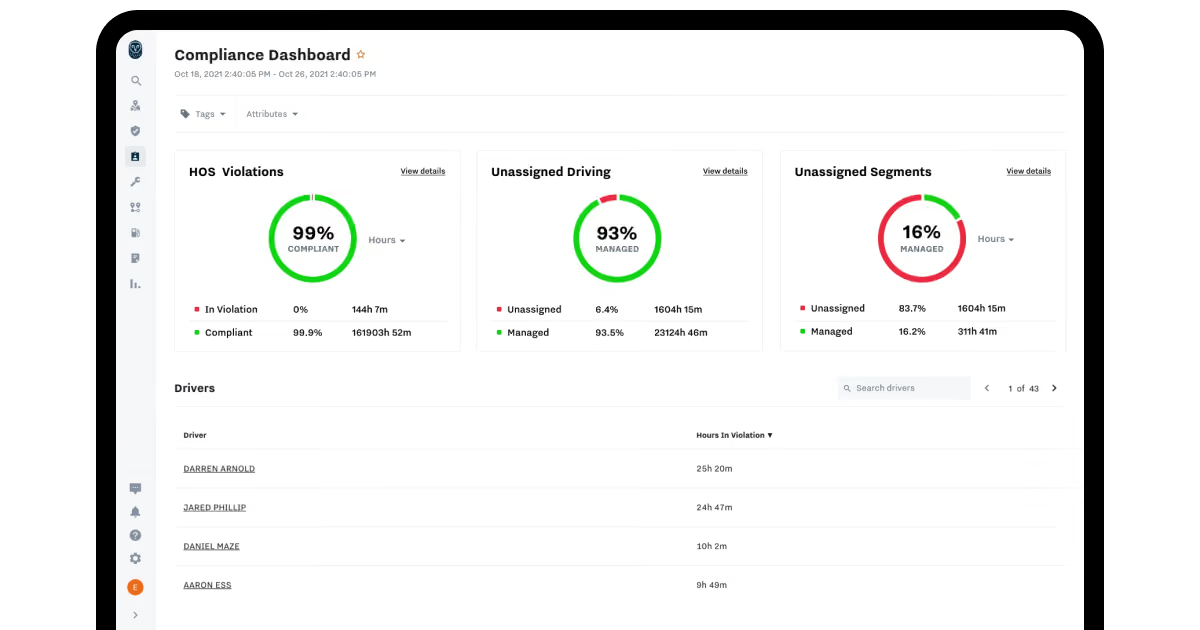
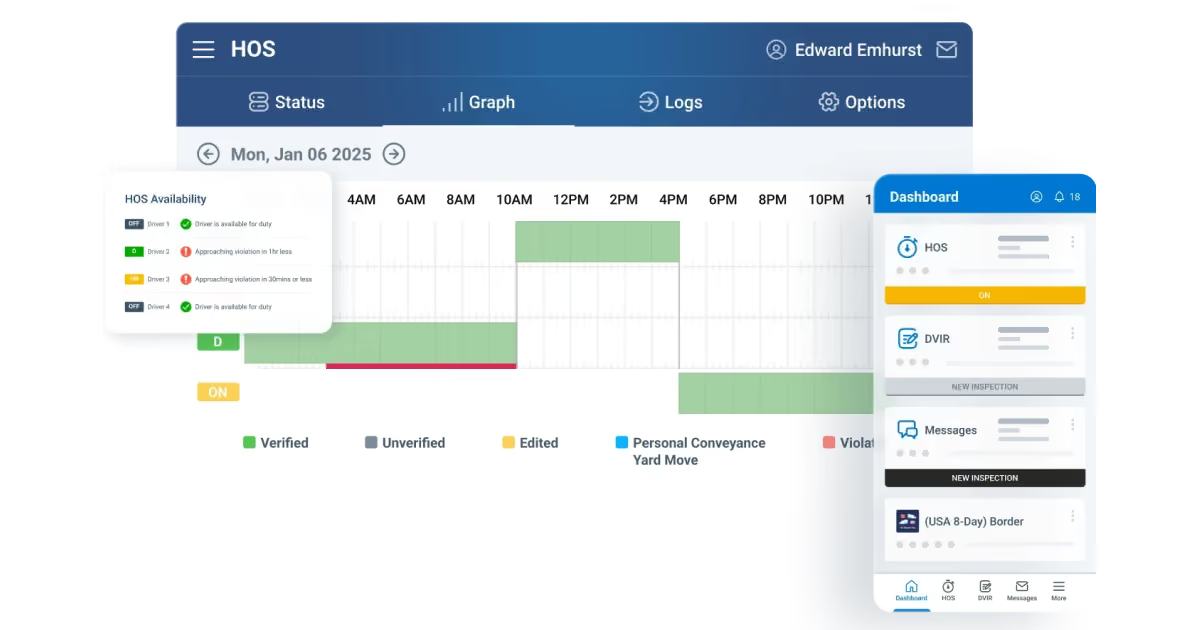
HOS remains one of the most visible compliance risks. It caused 32.4% of driver out-of-service violations during the 2025 International Roadcheck. Reliable DOT fleet compliance also needs identity matching across HR and ELD systems. One driver may otherwise appear cleared in only one database.
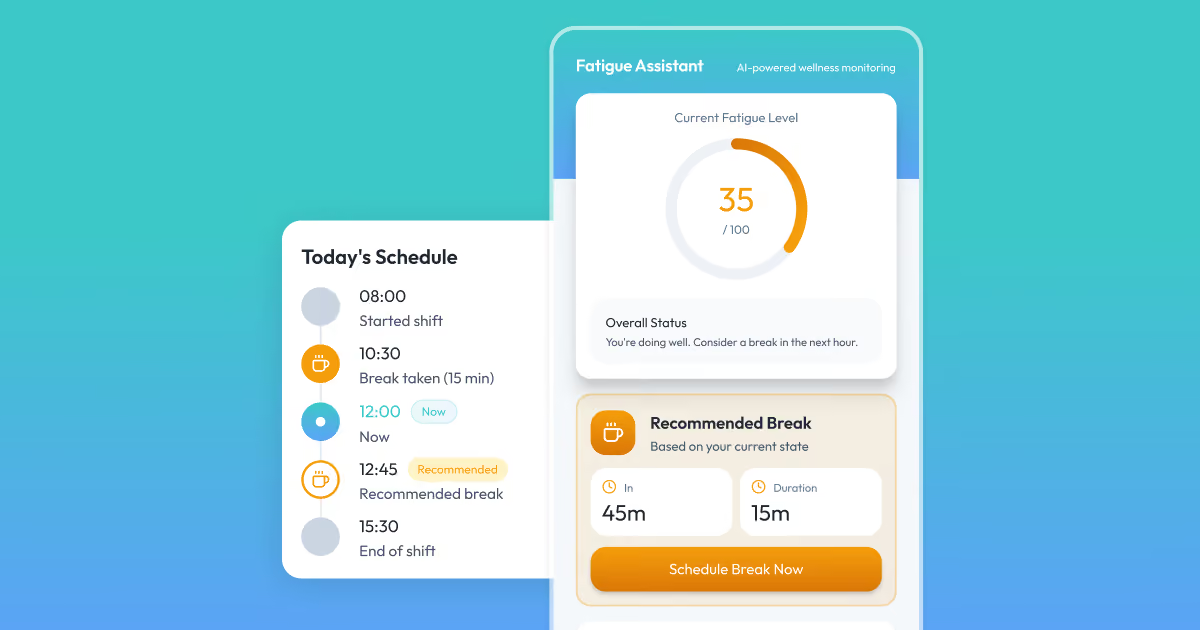
DriveIQ connected schedules, HOS data, and fatigue predictions. Dispatchers received warnings before drivers reached relevant limits.
Vehicle compliance: inspection and maintenance evidence
Vehicle compliance keeps unsafe assets outside dispatch workflows. It connects defects with inspections, repairs, and release decisions.
During the 2025 International Roadcheck, inspectors placed 18.1% of inspected vehicles out of service. The result doesn’t represent every commercial fleet. However, it shows how frequently serious defects appear during targeted inspections.
The module should track mileage, engine hours, inspections, service plans, and repair approvals. Critical defects should prevent automatic reassignment.
FMCSA requires covered carriers to inspect, repair, and maintain vehicles systematically. Certain maintenance records remain required for one year. They also remain six months after vehicle control ends.
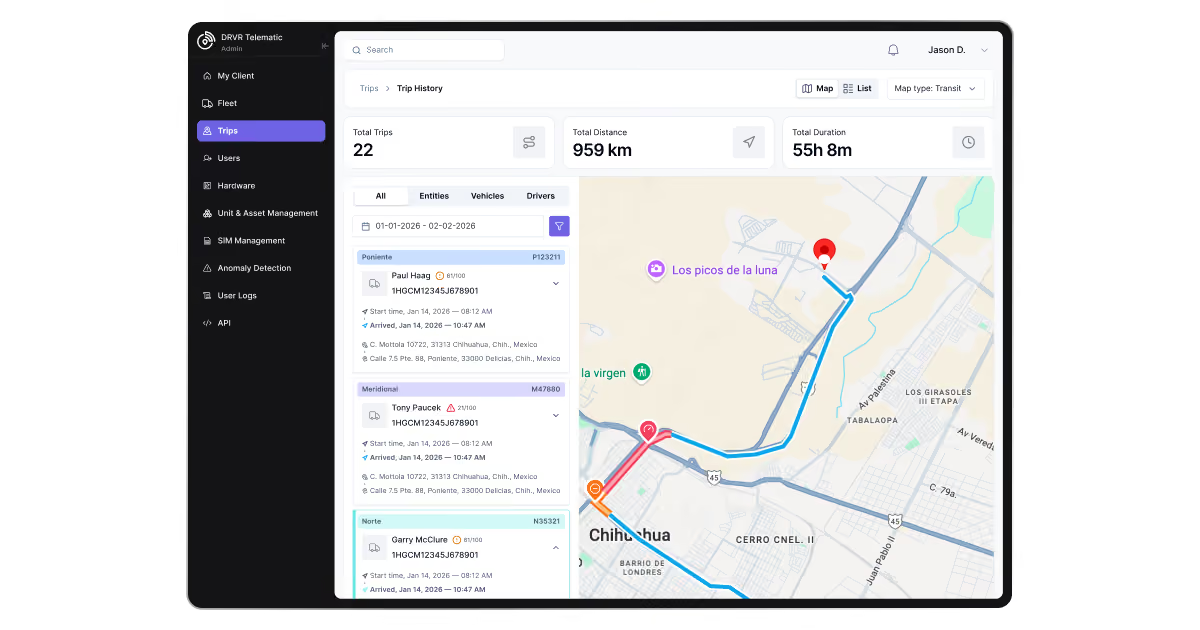
Accurate fleet maintenance and compliance depend on reliable odometer and telematics data. A connected vehicle monitoring system can link diagnostics, location, defects, and service events.
SyncMatix unified GPS, OBD, trip, and maintenance data across several providers. Shared vehicle identities connected records to the correct assets.
Operational compliance: dispatch rules and route evidence
Operational compliance applies approved rules during daily dispatch. It prevents manual exceptions from becoming invisible decisions.
The module connects routes, permits, cargo, assignments, and operating limits. It validates decisions before drivers receive them. It also records exception reasons and approvals.
Effective transport compliance includes more than HOS records. Routes may involve permits, tolls, or restricted roads. Each decision needs a source and an effective date.
Map, TMS, and telematics systems often disagree. Timestamps and location formats cause frequent failures. Teams need retries, reconciliation, and visible data freshness.
COAX’s GrandBus solution replaced notebooks, calls, and Excel schedules. Location-related calls fell from 35% to 5%. Reporting also became 35 minutes faster per route.
Safety and security: incidents and corrective actions
Safety modules connect operational events with accountable follow-up. They turn noisy alerts into prioritized corrective workflows.
They ingest camera, telematics, inspection, and incident records. Rules route each event toward the correct owner. Serious issues require escalation and immutable evidence.
Transportation security compliance also protects sensitive operational information. Permissions should separate medical, customer, coaching, and claims data. Multi-tenant products require strict account isolation.
Alert systems often fail due to excessive noise. Every warning needs severity, ownership, and closure criteria. Otherwise, teams start ignoring the queue.
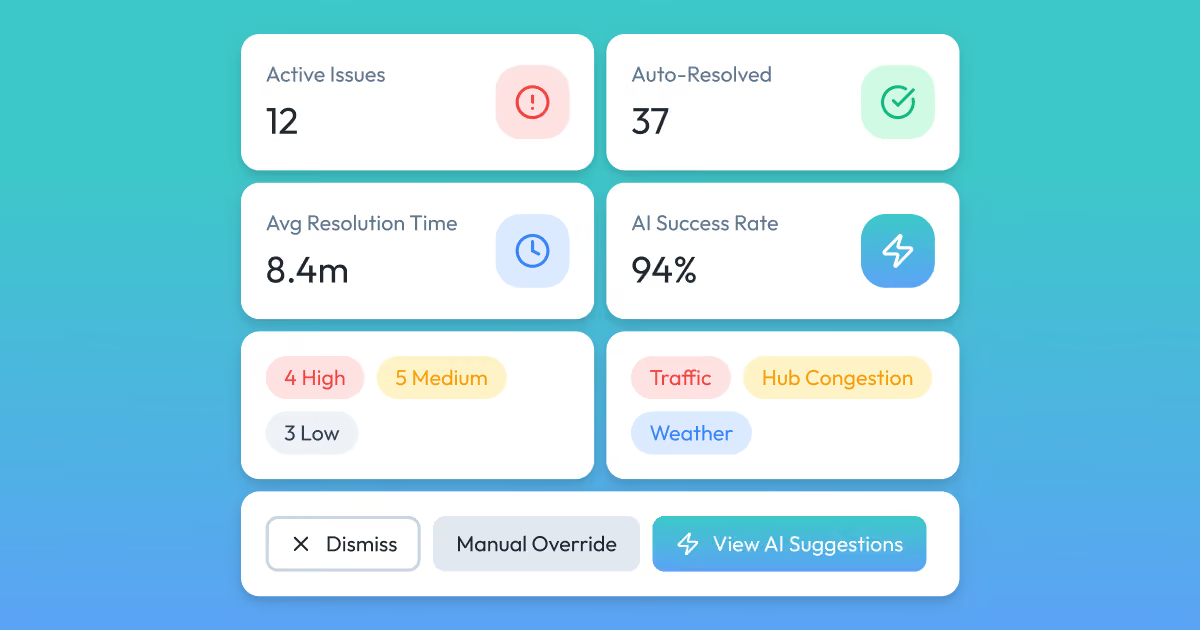
DriveIQ grouped exceptions by likely root causes. Diagnosis time fell from 12 minutes to under three. Support tickets also fell by 35%.
Environmental compliance: fuel and emissions records
Environmental compliance connects fuel, mileage, vehicle, route, and emissions data. It keeps calculations explainable after the rules change. The system should preserve source values, formula versions, and effective dates. Hard-coded calculations become risky when vehicles or jurisdictions change.
Broader logistics compliance may include carbon reporting, operating-zone restrictions, or customer disclosures. Requirements depend on location and fleet type.
Driven Connect linked route emissions with billing workflows. Its calculations used route, vehicle, and fuel details.
Audit management: searchable evidence and history
Audit tools convert daily operations into searchable evidence. They reduce the scramble before inspections, claims, and formal reviews.
A reporting model should index records by driver, vehicle, rule, and decision. It should expose missing evidence, not hide it. A reliable fleet compliance platform preserves previous values, approvals, overrides, and access logs. Exports also need defined permissions and retention rules.
DriveIQ separates reporting workloads from live operational services. Managers can generate reports without slowing dispatch workflows.
What regulations should fleet managers know about?
US fleet rules span registration, drivers, hours, vehicles, and testing. The exact duties depend on operations and jurisdiction.
Knowing the rules is only a starting point. The harder task is turning these rules into reliable checks, ownership, and audit-ready records. The following sections focus on those implementation details.
DOT, FMCSA, and USDOT registration
The US Department of Transportation oversees national transportation policy. FMCSA administers federal motor-carrier safety rules.
A USDOT number identifies a carrier during inspections, audits, crash investigations, and safety monitoring. It doesn’t automatically provide operating authority.
Interstate for-hire passenger carriers and certain property carriers may need separate operating authority. Private carriers usually don’t need that authority.
Driver qualification requirements
Motor carriers must verify that covered drivers meet federal qualification requirements before operating commercial vehicles.
A driver qualification file can include applications, driving records, medical evidence, and review documents. Retention periods vary by record.
Your system should flag missing or expired evidence before scheduling. It should also preserve who reviewed each change.
Hours of service and ELD rules
HOS rules limit driving and on-duty time for covered commercial drivers. They also define required rest periods.
Most drivers who must maintain records of duty status also need compliant ELDs. Limited exceptions apply.
An ELD records driving time, but it doesn’t replace active management. Dispatchers still need warnings, exception workflows, and corrected records.
FMCSA removed 79 non-compliant ELDs between January 2025 and May 2026. Fleets should regularly check the registered and revoked device lists.
Inspection, repair, and maintenance rules
Covered carriers must systematically inspect, repair, and maintain vehicles under their control.
Vehicle maintenance records generally remain for one year. They also remain six months after the vehicle leaves the carrier’s control.
Roadside inspection reports have separate correction and retention requirements. Carriers generally must respond within 15 days.
Your checklist should distinguish each record type. One retention setting won’t cover every document.
Employers must also report specified violations and return-to-duty information. Driver consent requirements depend on the query type.
The software should support deadlines and evidence. Legal responsibility remains with the employer.
State, passenger, and cargo-specific rules
Federal rules aren’t the entire compliance picture. States may impose extra registration, inspection, insurance, or intrastate requirements.
Passenger operations and hazardous materials create additional duties. International and cross-border routes can add another compliance layer.
A fleet compliance manager should map these duties with qualified counsel. Software should apply approved interpretations, not invent them.
Build a fleet compliance checklist
A checklist turns regulations into repeatable daily controls. It should cover people, vehicles, operations, evidence, and change management.
Map scope: Record vehicles, routes, cargo, passengers, jurisdictions, and applicable rules.
Verify drivers: Check qualifications, licenses, medical records, training, testing, and HOS status.
Verify vehicles: Check inspections, registrations, defects, repairs, and upcoming service requirements.
Control dispatch: Block assignments when critical evidence is missing or expired.
Route exceptions: Assign every warning to one owner with a deadline and escalation path.
Preserve evidence: Store source records, approvals, previous values, and exception reasons.
Protect access: Separate sensitive records by role, account, and business need.
Test recovery: Simulate lost signals, delayed data, duplicate events, and unavailable integrations.
Across our logistics projects, checklists worked best when teams embedded them into daily workflows. Make it an actual part of your teams’ processes rather than another dusty spreadsheet.
How to keep the checklist current
Across COAX fleet projects, outdated controls usually stem from weak ownership, not missed regulations. A reliable update process should show who approved each change, when it took effect, and which workflows it affects.
Assign ownership: Name one person responsible for each rule and evidence source.
Monitor updates: Subscribe to FMCSA, DOT, state, and relevant industry notices.
Version rules: Record the source, effective date, approver, and affected workflows.
Test changes: Validate alerts, blocks, reports, and integrations before release.
Review regularly: Recheck responsibilities after expansions, acquisitions, and new vehicle types.
These steps make updates traceable. They also stop silent rule changes from reaching production.
Best fleet compliance software
No platform is best for every fleet. The right choice depends on regulations, integrations, fleet size, and internal ownership.
The table combines official vendor documentation with COAX project experience. “Main compliance focus” reflects documented features. “Trade-off” reflects either published product limitations or clearly identified COAX observations.
Platform
Main compliance focus
Best fit
Main trade-off
Samsara
HOS, DVIR, safety events, and maintenance
Fleets seeking broad operational coverage
Access can depend on the license and configuration
Verizon Connect
HOS, ELD, DVIR, and IFTA
Regulated fleets with formal processes
Scope may exceed smaller fleet needs
Motive
HOS, inspections, driver risk, and compliance reporting
Driver-centered fleets
Custom integrations require API planning
Fleetio
Inspections, maintenance, repairs, and service evidence
Maintenance-led teams
Broader driver compliance needs integrations
Hyperscale
Safety follow-up and workflow automation
Fleets keeping their current technology stack
It isn’t the primary record system
Geotab
HOS, ELD, DVIR, IFTA, and reporting
Fleets needing configurable integrations
Configuration can require specialist expertise
Samsara combines HOS logs, DVIR workflows, safety events, and maintenance integrations. Its APIs can connect daily logs, defects, and safety records with other systems. Buyers should confirm required permissions and license access before planning integrations.
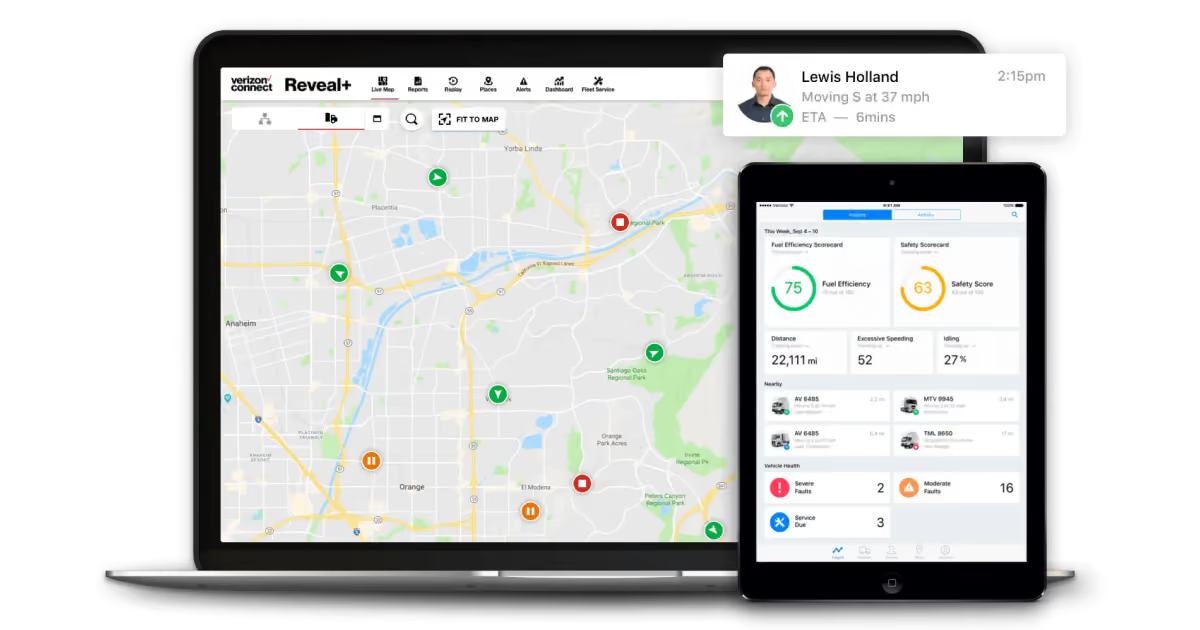
Verizon Connect supports ELD, HOS, DVIR, IFTA, and related DOT workflows. It suits established fleets needing connected telematics and compliance reporting. Smaller teams should compare the full platform scope against their actual requirements.
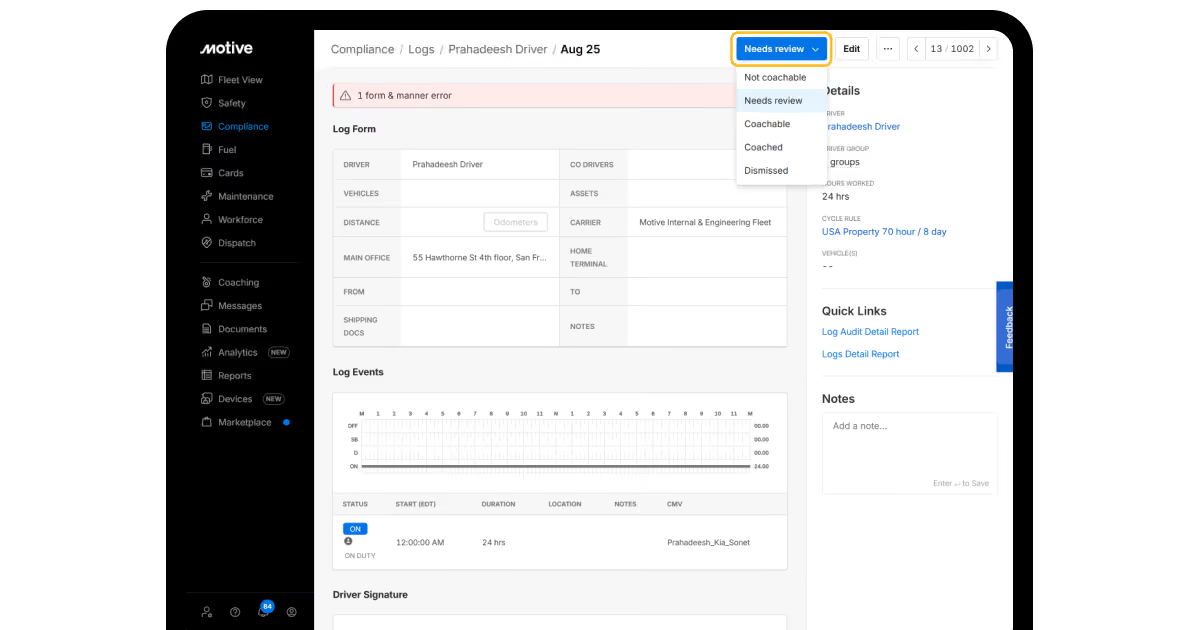
Motive centralizes logs, trips, inspections, HOS violations, driver qualifications, and IFTA reporting. It fits distributed fleets prioritizing driver workflows and inspection readiness. Custom reporting and integrations still require API planning.
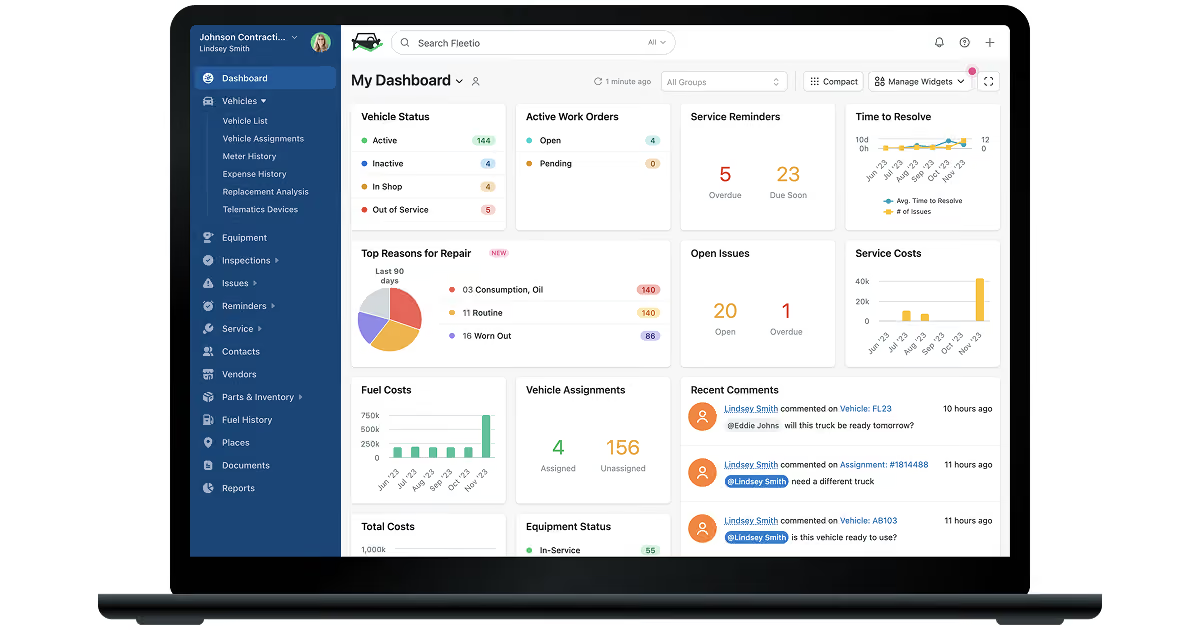
Fleetio focuses on inspections, maintenance schedules, work orders, issues, and repair history. It works well as a maintenance evidence layer. Fleets need connected ELD or HOS systems for broader driver compliance.
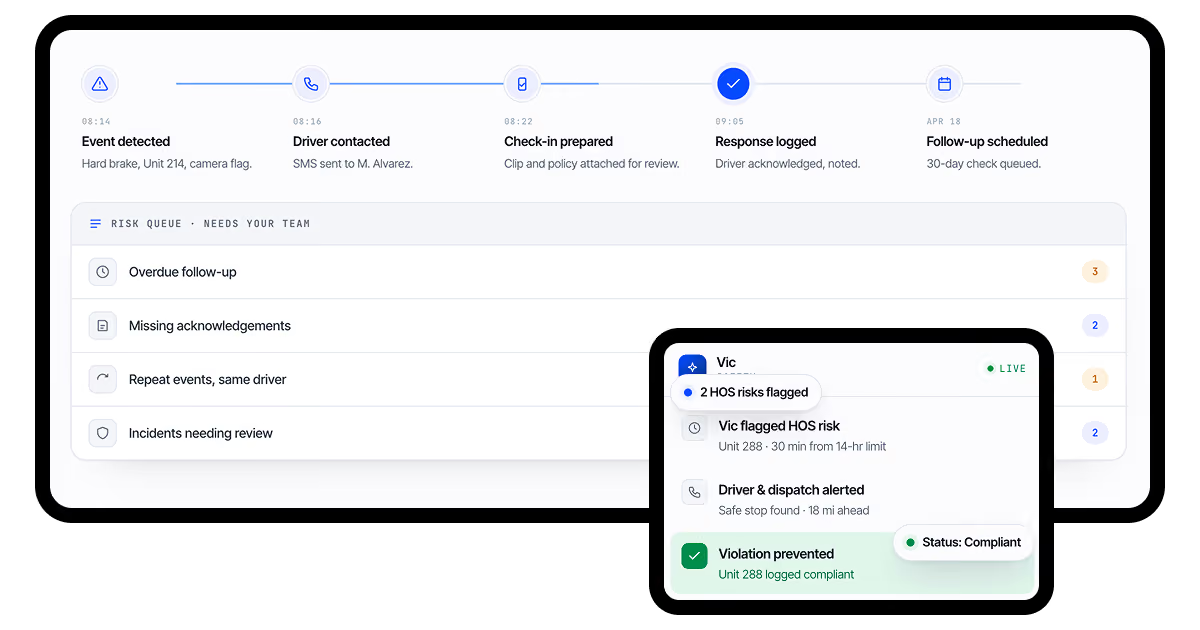
Hyperscale adds AI-assisted safety and compliance workflows across existing TMS, ELD, maintenance, and communication tools. It can coordinate follow-ups without replacing the full technology stack. Authoritative records should remain inside the connected source systems.
Geotab supports HOS, ELD, DVIR, IFTA, driver identification, and configurable reporting. Its open ecosystem suits fleets needing custom data flows. That flexibility can require stronger internal administration.
How to choose the right fleet compliance software?
In 16+ years in transport software, we’ve learned that effective fleet compliance depends on five connected layers. These layers are data, security, ownership, workflows, and traceable evidence.
Start with the failure you must prevent. An expired license needs different controls from an unresolved vehicle defect.
Then audit your existing systems. Review identifiers, APIs, exports, update frequency, offline behavior, and data ownership.
Test the platform during your worst operational day. Simulate delayed events, lost connectivity, expired records, and simultaneous defects.
Every alert should reach an authorized owner. The system should preserve the evidence behind every resolution or override.
Packaged software suits standard workflows and faster deployment. Custom fleet management software development becomes relevant when rules or partner networks exceed standard configurations.
Don’t compare licenses alone. Include hardware, migration, middleware, support, training, and future integration costs.
To better understand whether you need packaged or custom software, assess your technical needs. A focused system audit can reveal which compliance gaps your next platform must address.
How to do fleet compliance properly: best practices
Strong compliance depends on connected data, secure access, clear ownership, operational workflows, and traceable evidence.
Establish a unified data foundation
Fleet compliance breaks when records don’t agree across telematics, HR, maintenance, and dispatch systems.
Standardize identifiers for drivers, vehicles, routes, and operating locations. Normalize incoming data before using it for dispatch or reporting.
Your integration layer should resolve duplicates, delays, missing values, and format conflicts.
SyncMatix unified GPS, OBD, trip, and maintenance data across several providers. Shared identities connected records across 500 customer accounts.
Design security and access controls from the start
Compliance systems hold sensitive driver, customer, financial, and operational data. Security must shape the architecture before development begins.
Use role-based access, audit logs, encryption, monitoring, and defined incident procedures. Multi-tenant platforms should isolate each customer and partner account.
Access rules should follow job responsibilities. Drivers, dispatchers, mechanics, auditors, and administrators shouldn’t see identical records.
Define cross-functional ownership
Fleet compliance spans operations, legal, safety, maintenance, HR, and engineering. Each team needs a defined decision role.
Operations should manage daily actions and close exceptions. Legal teams should approve regulatory interpretations and policy changes.
Engineering should maintain integrations, access controls, retention, and reliability. One manager should coordinate these responsibilities.
DriveIQ assigned high-risk fatigue alerts to named dispatchers. Clear ownership supported route changes before drivers reached HOS limits.
Embed compliance into operational workflows
Compliance should run inside dispatch, maintenance, and driver workflows. Separate reporting tools slow decisions and weaken ownership.
Each alert needs a priority, owner, deadline, and resolution path. Critical exceptions should stop dispatch until authorized review.
The tool matters less than the handoff. Evidence must reach someone who can make the required decision.
Maintain rule and evidence traceability
Every compliance rule needs a source, effective date, owner, and approval history.
Map each rule to required evidence, escalation steps, and affected workflows. Preserve previous values, overrides, approvals, and exception reasons.
Auditors should see why each decision happened, not only its final status.
This approach also supports migrations. Teams can move records without losing the logic behind previous compliance decisions.
These practices also shape how we develop fleet compliance systems. At COAX, we make sure you receive a practical solution rather than a collection of disconnected features.
Our teams combine experienced business analysts, UX designers, software engineers, QA specialists, DevOps engineers, and project managers. We cover the full cycle of fleet compliance software development, from discovery to deployment and ongoing support. This continuity keeps regulatory logic, user workflows, and technical decisions aligned throughout the product lifecycle.
Independent recognition supports our expertise. COAX holds ISO 9001 and ISO 27001 certifications, as well as AWS, Google Cloud, and Scrum credentials. Where applicable, we also apply cloud infrastructure, IoT, AI, and ML to solve a well-defined operational problem. If the right path isn’t clear yet, our team will map it.
FAQ
How much does a custom fleet compliance platform cost?
Broader fleet management app estimates range from $7,000 to $250,000. Basic tracking MVPs sit near the lower end. Compliance automation, migration, AI, multi-tenancy, and enterprise integrations push costs higher.
How long does fleet compliance software implementation take?
Implementation time depends on the platform’s scope, integrations, hardware, and migration requirements. A focused pilot may take several weeks. A full rollout across roles and locations can take several months.
DriveIQ AI began with a 10-week pilot. Deployment then expanded across all hubs by mid-year.
Can logistics compliance software replace legal counsel?
No. Logistics software can complement qualified legal counsel, but it cannot replace it. A fleet compliance app can organize records, track deadlines, flag missing evidence, and apply preapproved rules.
It cannot interpret jurisdiction-specific laws, resolve ambiguous obligations, or provide legal advice. For that, you still need a qualified legal team that uses compliance software only as an organizing solution.
Who should own fleet compliance management after launch?
Operations should own daily actions and exception closure. Safety and legal teams should approve rules and interpretations. Engineering should maintain integrations, access controls, retention, and system reliability. One named manager should coordinate these responsibilities.
DriveIQ assigned high-risk fatigue alerts to named dispatchers. That ownership helped teams adjust routes before drivers reached HOS limits.
How should transport compliance audits handle subcontractors?
Contracts and applicable regulations should define each subcontractor’s records, deadlines, responsibilities, and reporting duties. Legal teams should confirm these obligations for every contract and jurisdiction. The platform should then apply the approved rules. Recommended controls include tracking insurance, licenses, driver status, incidents, and authorized exceptions. Teams may also block assignments when critical evidence is missing. Role-based access and tenant separation should protect each partner’s records.











































































_.avif)








%2520explained.avif)

We are interested in your opinion