3 AM. An operations VP is staring at three monitors, nursing a third espresso. Inbound manifest on screen one. Driver logs on screen two. Screen three is frozen on a sync error between the warehouse management system and billing, for the fourth time this week.
Forty pallets of temperature-sensitive produce are sitting in a staging bay that's two degrees too warm. The client doesn't know yet. The situation is slowly turning into a crimson red alert.
Sounds familiar? Most mid-sized logistics firms operate under strain, keeping the whole supply chain moving with outdated software that doesn’t even fit their business specifics.
And there’s a lot to be specific about when we talk about 3PL warehouse software.
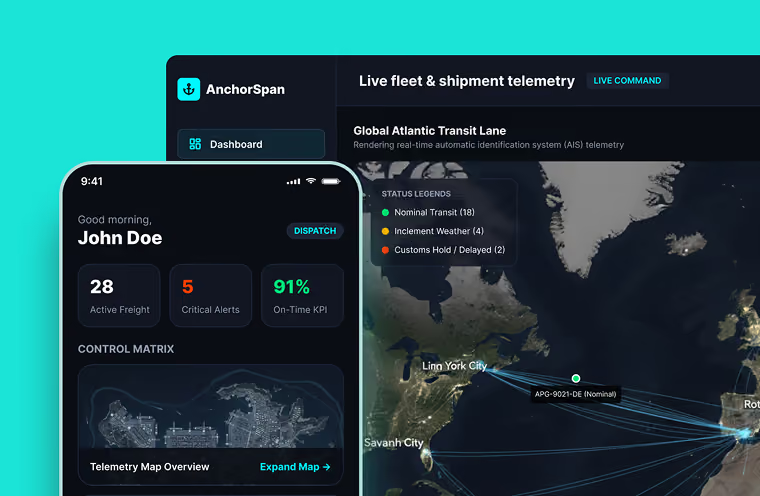
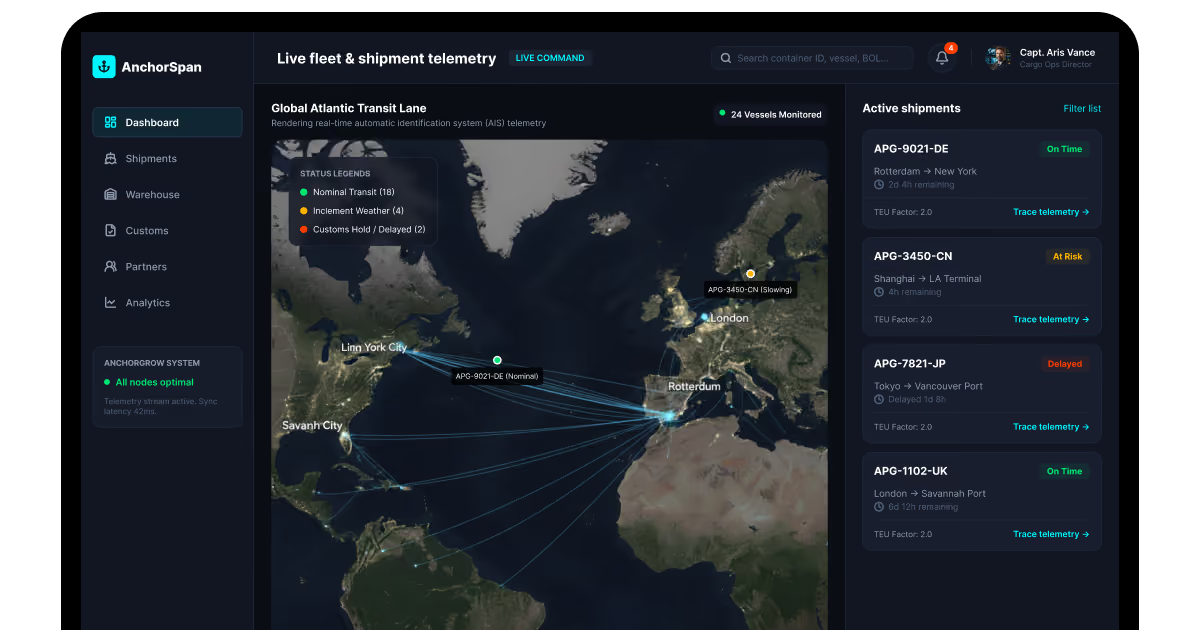
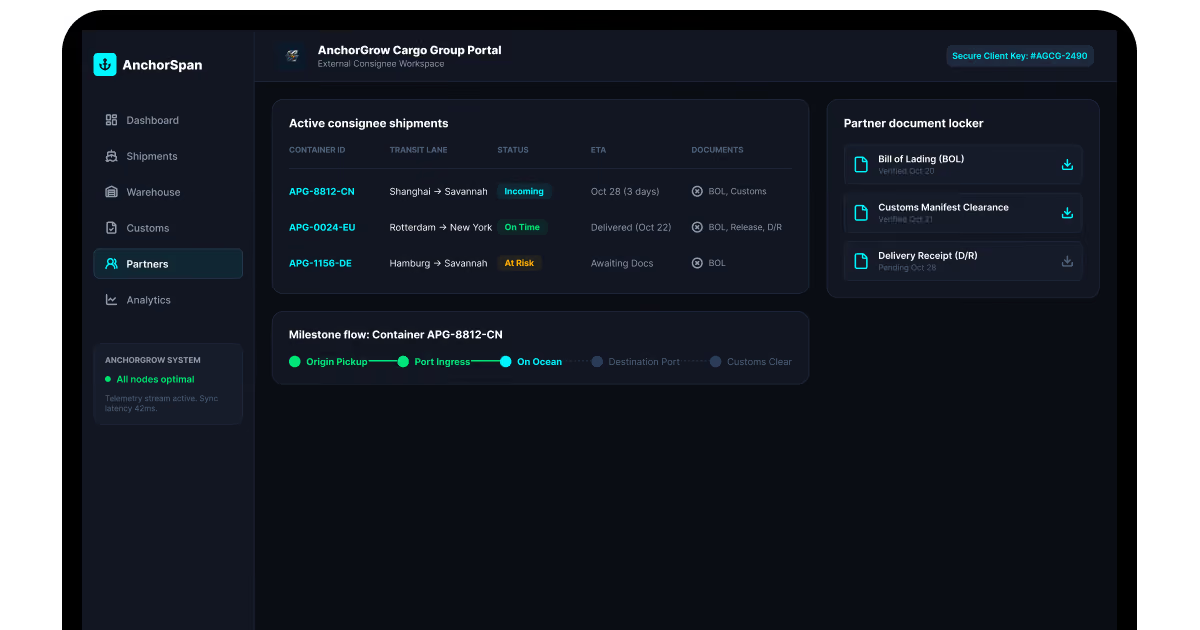
We've spent 16 years on logistics platforms at COAX Software. We built AnchorSpan for a cargo operator. It runs two ports and six inland warehouses. And we discovered a secret to locating shipments in under 90 seconds. Or, to put it better, we built it and want to share how.
This guide breaks down what 3PL warehouse management software does. You'll see how it works day to day. And you'll see what makes one system worth the investment.
What is 3PL warehouse management software?
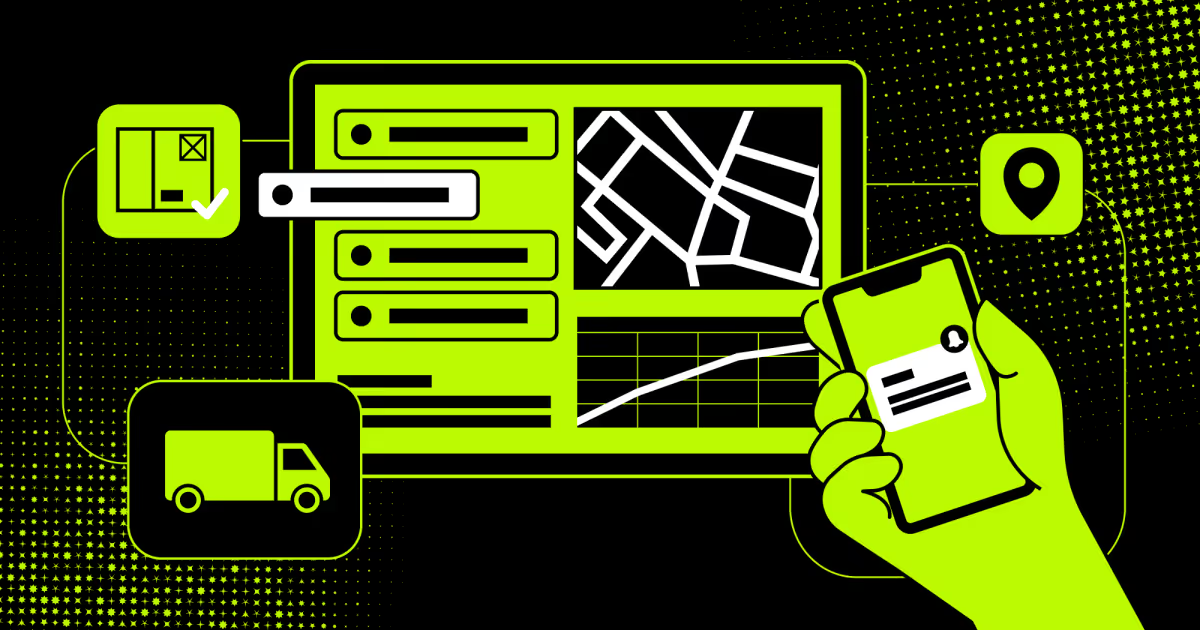
A 3PL warehouse management system is software that runs a third-party logistics warehouse's daily grind. It tracks inventory, orders, and shipments for several clients at once. It does this inside one platform, not ten spreadsheets. Some vendors call it warehouse management software for 3PL instead. Same idea, different label.
Unlike a single-brand system, it keeps every client's data separate. It bills by service. It reports performance per account, per warehouse, per lane. One warehouse might run cold storage for a pharma client and dry storage for a retailer, at the same time.
Demand for this category isn't cooling off. GoBolt's 2025 State of Logistics Report surveyed hundreds of supply chain leaders. 68% cite frequent delivery delays as a major pain point. 65% say the handoff to last-mile carriers hurts customer experience. Nearly 60% have switched 3PL providers more than once. That's a churn signal, not bad luck.
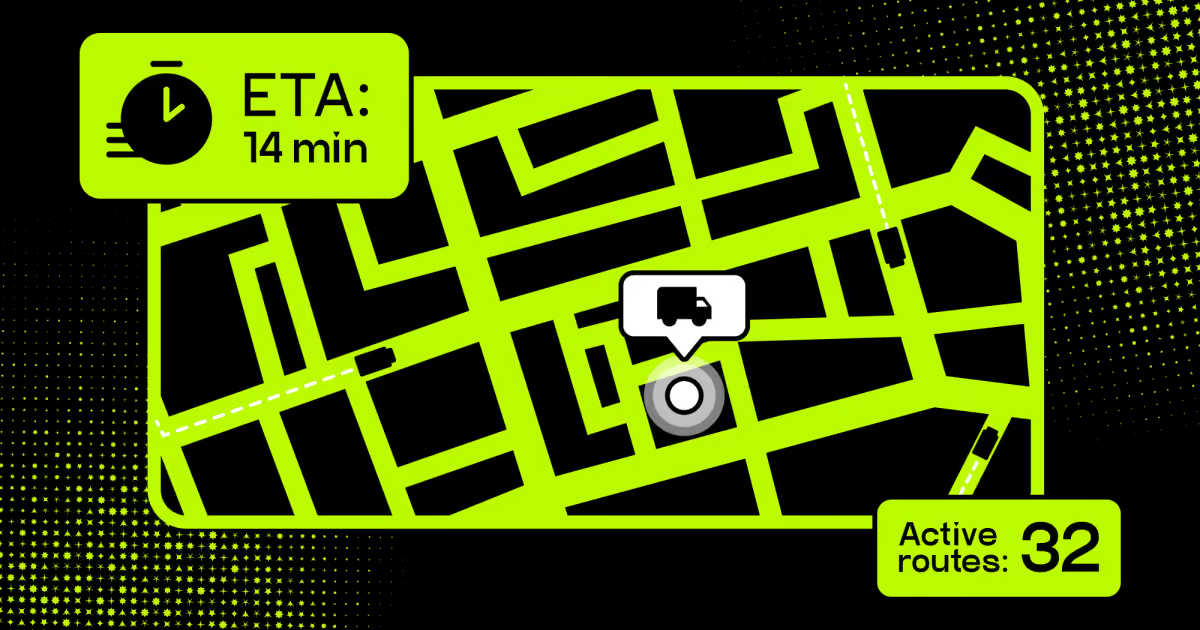
We saw a version of this gap firsthand on AnchorSpan, built for a cargo operator running two port terminals. Its predictive ETA engine hit 91% accuracy within eight weeks. That single number is what convinced dispatchers to trust the system instead of just glancing at it.
Industries that run on 3PL warehouse software
Some industries can't function without it. Others just run better with it. Here's where the pressure shows up hardest:
Pharmaceutical and healthcare: Cold-chain accuracy and lot tracking are non-negotiable here.
Food and beverage: FIFO and FEFO rules keep spoilage and waste down.
Retail and consumer goods: Real-time inventory sync with online marketplaces prevents overselling.
Manufacturing and automotive: Just-in-time tracking keeps thousands of parts on schedule.
Electronics and high-tech: Serial-number tracking protects high-value, easily lost inventory.
Home improvement and construction: Material timing keeps builds on budget and on schedule.
Wholesale and distribution: Bulk goods move smoothly from supplier to storefront.
Each of these industries has its own failure mode if the warehouse gets it wrong.
That list isn't exhaustive, though. Nearly any business needs solid 3PL warehouse storage. That holds even outside these core industries. The common thread is 3PL logistics itself.
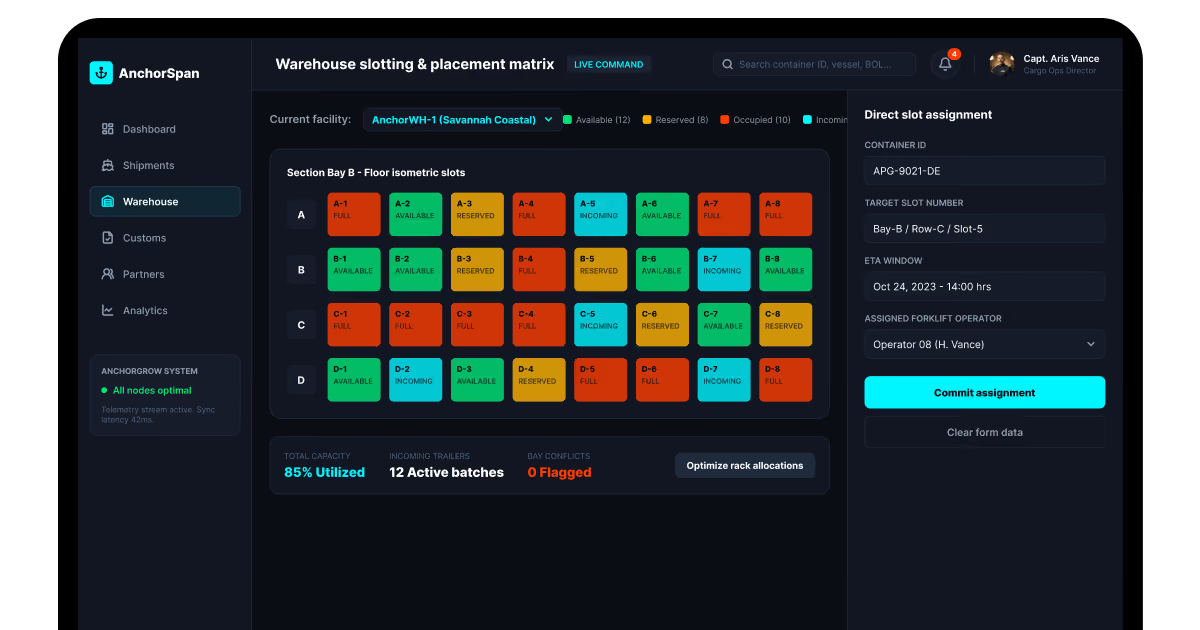
Good 3PL warehouse software takes counting and slotting off your team's plate. On AnchorSpan, the slotting dashboard cut misplaced-pallet incidents by 34%. That happened within one quarter, not one year.
That's what a 3PL warehouse means for every industry. Less manual guesswork. More capacity actually used.
How does a 3PL warehouse management system work?
A 3PL warehouse management system runs on separation. It splits inventory, rules, and billing by client. That single difference shapes every screen, workflow, and report inside it.
How it differs from a standard warehouse management system
A standard WMS assumes one business, one rulebook. A warehouse management system for 3PL assumes many businesses sharing one floor. Here's where that split actually shows up.
Ownership tracking. A standard system tracks what's on hand and where. A 3PL warehouse software platform tracks who owns each unit, too. Every scan carries a client tag, from receiving through shipment.
Workflow configuration. Standard systems run one process for everyone. 3PL warehouse solutions let each client set their own rules. One account gets lot checks, another gets kitting, and nothing needs a rebuild.
Billing logic. A standard WMS doesn't need to invoice anyone for storage. A 3PL system turns every scan into a billable event. Receiving, picking, and relabeling all carry their own rate.
Reporting scope. Standard reports cover the whole warehouse as one unit. 3PL warehouse management software slices that same data by account. A client sees only their inventory, orders, and exceptions.
Access control. A single-brand warehouse doesn't worry about data leaking sideways. Multi-client operations can't risk one customer seeing another's stock. Role and account permissions have to hold at every layer.
Aspect
Standard WMS
3PL WMS
Inventory model
Single owner
Multi-client, tagged by owner
Workflow rules
One fixed process
Configurable per account
Billing
Not built in
Usage-based, per event
Reporting
Warehouse-wide
Client-level, segmented
Access control
Role-based only
Role and account-based
That separation is what forecasting depends on, too. On AnchorSpan, the predictive ETA engine blends port congestion with inland traffic per shipment. A standard WMS has no reason to build that kind of per-account prediction layer.
The 3PL warehouse management workflow
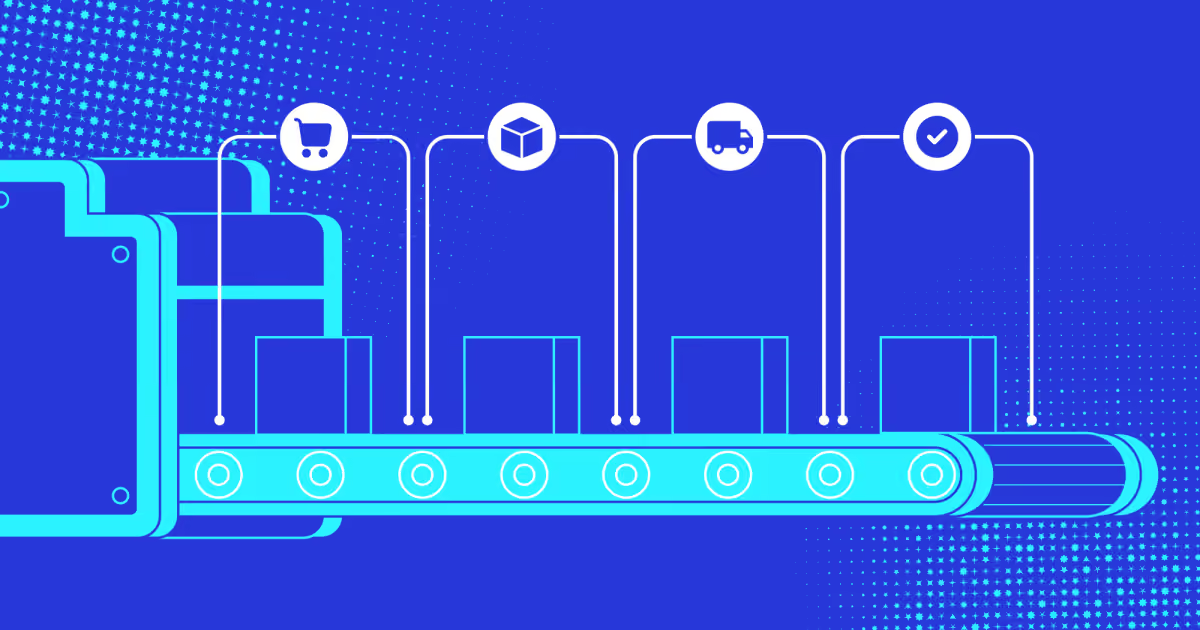
A 3PL warehouse moves through six stages, start to finish. Each stage hands data to the next one automatically. Miss a handoff, and billing, inventory, or compliance breaks downstream.
Inbound receiving and check-in. Clients send an advance shipping notice before stock arrives. Workers scan barcodes at the dock against that notice. Damaged or missing goods get flagged in the system immediately, not on paper.
Inventory storage and putaway. The 3PL warehouse system assigns bin locations based on size and velocity. Fast-moving items land closer to packing zones. Staff scan each placement, and inventory counts update in real time.
Order processing and fulfillment. Orders flow in automatically from the client's e-commerce platform or ERP. Pickers follow mapped routes, batch or zone, to pull items fast. Packing stations scan everything again before a box gets sealed.
Shipping and outbound dispatch. The system picks the best carrier and prints compliant labels. Parcels get sorted by route, loaded, and scanned out. That final scan is what gives live tracking its accuracy.
Returns and reverse logistics. Returned items get scanned in the moment they arrive. Staff inspect condition and route each unit by client rule: restock, refurbish, or dispose.
Activity-based billing and reporting. Every touchpoint, like storage, picking, or kitting, gets logged against the client who owns it. Invoices and performance reports compile automatically. No spreadsheet reconstruction required.
Warehouse automation is what keeps that whole chain moving without a person re-typing data at each handoff.
Why does warehouse management software matter for 3PL operations?
A 3PL runs on trust it hasn't earned yet. Every new client hands over stock and expects clean tracking from day one. 3PL warehouse operations without the right software burn that trust fast, and the industry data backs that up. 72% of 3PL respondents cite rising operational costs as their top challenge this year. Software is what keeps that cost curve from bending the wrong way.
Multi-client control.
A single facility can hold stock for a dozen unrelated brands at once. Without separation, one picker's mistake becomes another client's missing shipment. Good software keeps every account's inventory, orders, and reports walled off cleanly. Mix that up once, and a client starts asking why their counts don't match reality. That question is expensive to answer badly, and even more expensive to keep answering.
Activity-based billing.
3PLs sell labor, not just space, and untracked labor is unbilled revenue. Receiving, labeling, picking, and packing all need to get logged and charged per client. Yet only 26% of 3PLs use their WMS to handle billing; the rest still process it manually or piece it together by hand. The largest reported billing headaches are undercaptured charges, complex per-client setups, and a lack of automation. That gap matters financially: 3PL warehouse software with built-in invoicing correlates with 2.2 times better odds of profitability growth.
Real-time inventory accuracy.
A stockout doesn't just cost you a sale. It costs a client's confidence in your numbers. Real-time inventory tracking is the number-one reason cited for adopting a WMS. Manual counts drift the moment volume spikes, and drift compounds fast across dozens of clients sharing a floor. Automated systems close that gap by updating counts the second work happens.
Scalability without new infrastructure.
Growth shouldn't mean a server upgrade every time you sign a client. Cloud-based systems absorb new accounts, warehouses, and order volume without a rebuild. Only 31% of 3PLs now run a single warehouse; more than half run between two and five. Multi-warehouse 3PL management software that scales with that footprint costs less than software you outgrow every eighteen months.
Higher labor productivity.
Labor eats most of a warehouse's operating budget, full stop. Optimized picking routes and automated scanning cut wasted walking, re-checking, and re-counting. That efficiency gain is exactly why 75% of 3PLs point to operational efficiency as a reason they adopted a WMS in the first place. Fewer redo trips mean more orders processed per labor hour, which is the metric that actually moves margin.
Real-time visibility for clients.
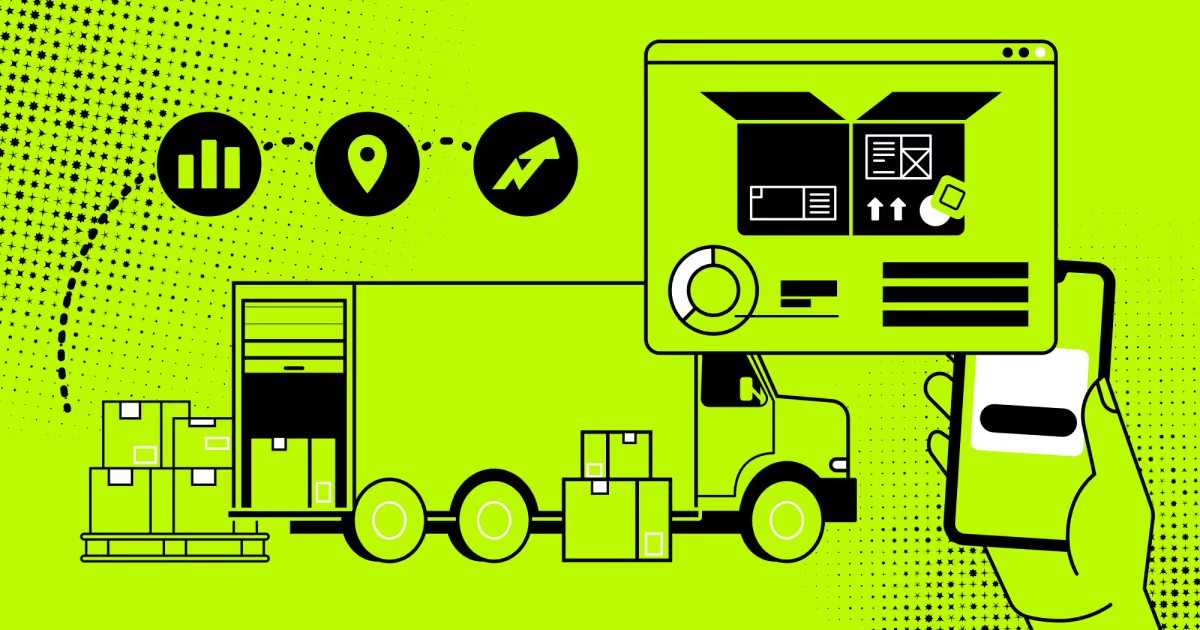
Customers don't want to call and ask where their stock is. They want to check it themselves, on their own schedule. 68% of shippers now rank control-tower visibility as a must-have when evaluating 3PL partners. On AnchorSpan, the branded partner portal gives each client their own view of containers and ETAs, and onboarding a new partner now takes two days instead of three. That kind of transparency is what separates top 3PL warehouse companies from the ones still fielding status-update calls all day.
Speed pressure from customers.
Delivery expectations keep tightening, not loosening. Roughly half of shippers and 3PLs now say customers expect delivery inside two days. Meeting that bar without software means throwing labor at a problem that only gets worse with scale. 3PL warehouse services built on live data can promise realistic windows instead of guessing and apologizing later.
Every one of these reasons points to the same root problem. Manual work doesn't scale. Software isn't the whole fix for that trend, of course. It's still the floor everything else in 3PL warehouse logistics gets built on.
What features to look for in 3PL warehouse management software?
"Most vendors will show you a dashboard full of charts. Ask them instead how the system handles a client who wants their pallets tagged differently than everyone else's. That answer tells you everything," says Orest Falchuk, Head of Engineering, COAX Software.
Feature lists look identical on every vendor site. What separates a working 3PL warehouse management software from a shelf-ware purchase is how each piece actually holds up on a chaotic day. Here's what earns its place on the checklist.
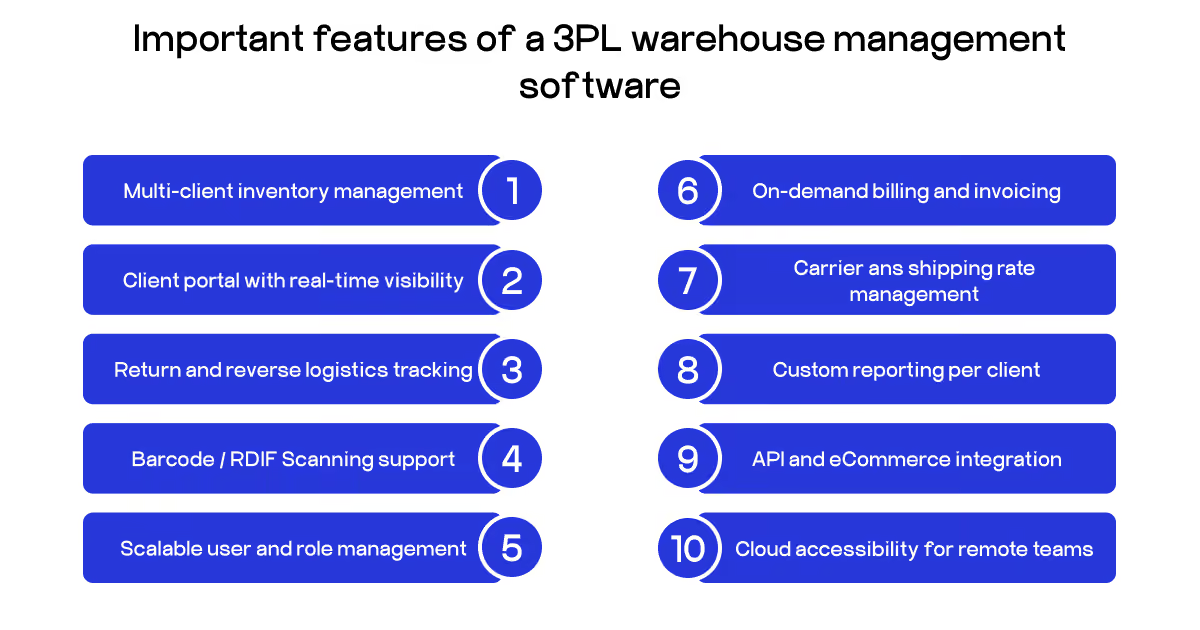
Inventory tracking that spans every client, not just one. A warehouse management system built for 3PL work has to show stock by owner, not just by SKU. Administrators pull live status for any account without digging through separate spreadsheets. That single view is what lets a manager restock the right shelf before a customer order stalls.
Billing tied to actual work, not flat rates. Look for a system that logs charges the instant a task happens: receiving, storage, a pick, a repack. Activity-based invoicing beats flat billing because it reflects what your team really did. A 3PL warehouse manager software worth buying turns that log into an invoice without anyone touching a spreadsheet.
A client-facing portal that answers questions before they're asked. Give clients their own window into stock levels, order status, and shipment progress. That transparency cuts the "where's my inventory" emails down fast. It also opens a feedback channel, so clients flag priority orders directly instead of calling.
Rate shopping across carriers, built in. Comparing shipping costs by hand across several carriers wastes hours nobody has. A solid system pulls live rates based on weight, destination, and delivery SLA automatically. That side-by-side view is how you land the cheapest reliable option every time, not just the one you remembered.
A returns module that doesn't need a human at every step. Reverse logistics breaks conventional processes fast when volume climbs. The right software inspects, logs condition, and routes each returned item toward restock, refurbishment, or disposal, based on rules the client already set. Nobody should have to manually decide the same case twice.
Per-client reporting that runs itself. Weekly or monthly reports for a dozen-plus accounts eat a day if built by hand. A system that pulls straight from each client's segregated dashboard and outputs a ready report saves that day entirely. Accurate, current data is what makes those reports worth reading in the first place.
Barcode and RFID scanning at every touchpoint. Touchless data capture is what keeps inbound receiving and outbound shipping error-free. Scanning also directs pickers toward correct storage locations during putaway. That accuracy compounds: fewer misplaced pallets now means fewer wasted trips across the floor later.
Open integration with ecommerce and marketplace platforms. A 3PL warehouse software platform that can't sync with Shopify, Walmart, or a client's ERP creates a manual bottleneck somewhere downstream. Native API connections keep inventory aligned across every sales channel a client sells through. That alignment is what prevents overselling stock that's already spoken for.
Role and account permissions that actually hold. Client data has to stay walled off, even when several teams work the same floor. Look for granular access controls that separate what a warehouse associate sees from what an account manager or client contact sees. 3PL warehouse providers handling sensitive or regulated goods can't afford a permissions gap here.
Cloud access for teams that aren't all in one building. Distributed operations need real-time access from any location, not a system tied to one terminal. Cloud infrastructure keeps inventory, invoices, and reports current no matter who's logging in or from where.
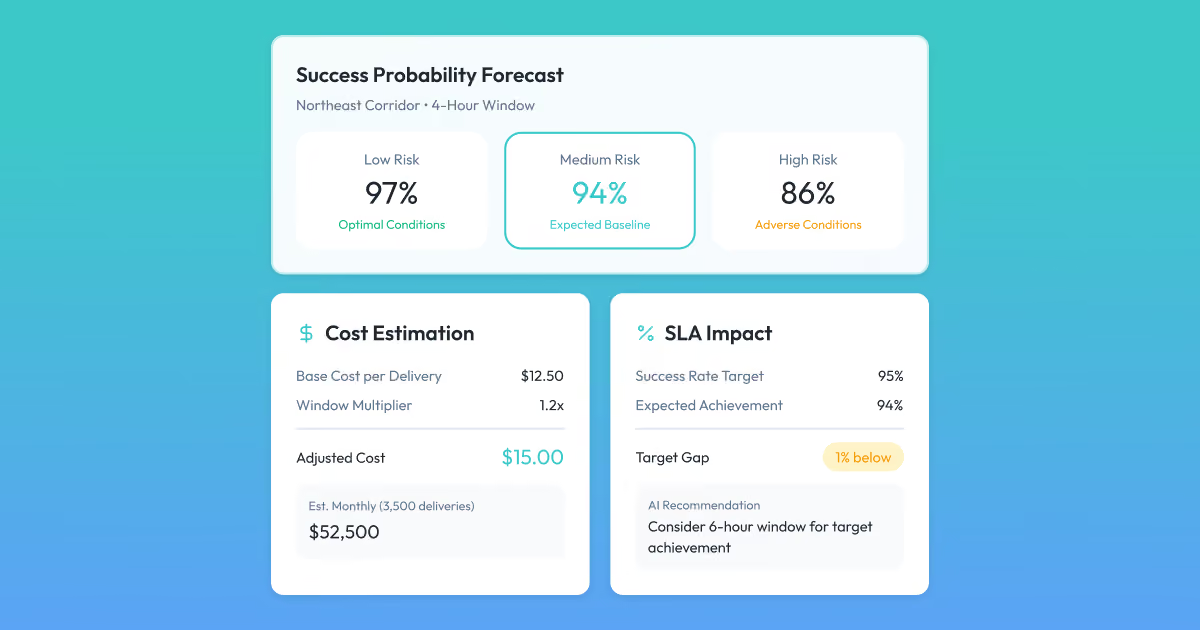
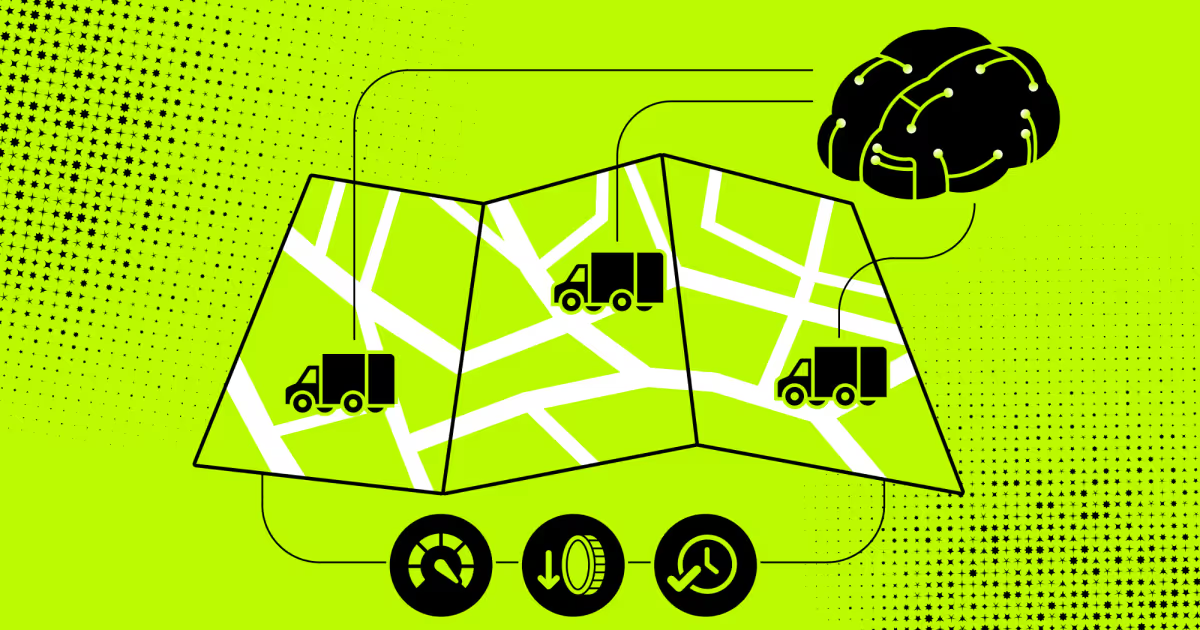
A forecasting layer that gets ahead of problems instead of reporting them. Most systems tell you what already went wrong. The stronger ones flag risk before it becomes a missed promise. We built exactly that logic into DriveIQ: its SLA simulator tested delivery windows against real historical data and cut breach rates by 28% before a single promise got made. Dispatchers on that same platform managed 31% more daily routes without adding headcount, proof that a system built to forecast first pays for itself.
That last point is worth sitting with before you shortlist anything. A 3PL warehouse managing system that only reports history will always leave you reacting. One built to predict gives you room to act first.
What are the core 3PL WMS integrations?
A 3PL warehouse management system rarely runs alone. It sits in the middle of a dozen other tools, each speaking its own format. Here's what actually needs to connect, and why.
Transportation management systems.
A TMS handles what happens after a pallet leaves the dock. It plans outbound orders, shops carrier rates, and builds loads for pickup. Without this link, dispatchers manually match orders to trucks by hand. Connecting WMS and TMS keeps freight execution and dock scheduling in sync.
Enterprise resource planning systems.
ERP software holds the records a warehouse doesn't own but constantly needs. Master inventory definitions, procurement schedules, and sales orders all live there first. A 3PL warehouse management software platform pulls from that source instead of duplicating it. That keeps stock counts and order data from drifting apart over time.
Accounting systems
This integration is what turns warehouse activity into revenue instead of a spreadsheet nobody trusts. Storage, receiving, pick-pack fees, and value-added services all need to flow somewhere billable. Connect the WMS to accounting software, and invoices are generated from actual logged work. No one reconstructs a month of billing from memory at the end of the quarter.
EDI for retail and wholesale compliance.
Large retailers won't work with a 3PL that can't speak EDI. Transaction sets like the warehouse shipping order and shipping advice keep both sides compliant. This isn't optional for anyone shipping into big-box retail. It's the price of admission.
E-commerce platforms and marketplaces.
Shopify, WooCommerce, BigCommerce, Amazon, Walmart: every sales channel needs live inventory and instant order pulls. Miss this connection, and you'll oversell stock that's already spoken for. Real-time sync here is what keeps a customer's cart from lying to them.
Warehouse equipment and control systems.
Barcode scanners, conveyor belts, pick-to-light systems, and automated guided vehicles all need a data path back to the WMS. This is where multi-warehouse 3PL management software earns its keep across several facilities at once. Physical floor equipment and software have to agree on what's happened, in real time, or counts drift fast.
Shipping and courier APIs.
Rate shopping across FedEx, UPS, and DHL by hand wastes hours a warehouse doesn't have. A direct API link pulls live rates, prints labels, and tracks dispatches automatically. That connection is what turns "cheapest carrier" from a guess into a number.
Return management systems.
Reverse logistics has its own rhythm, separate from outbound fulfillment. A returns integration inspects incoming items, logs their condition, and routes each one: restock, refurbish, or scrap. Automating that hand-off keeps warehouse inventory current even when returns spike.
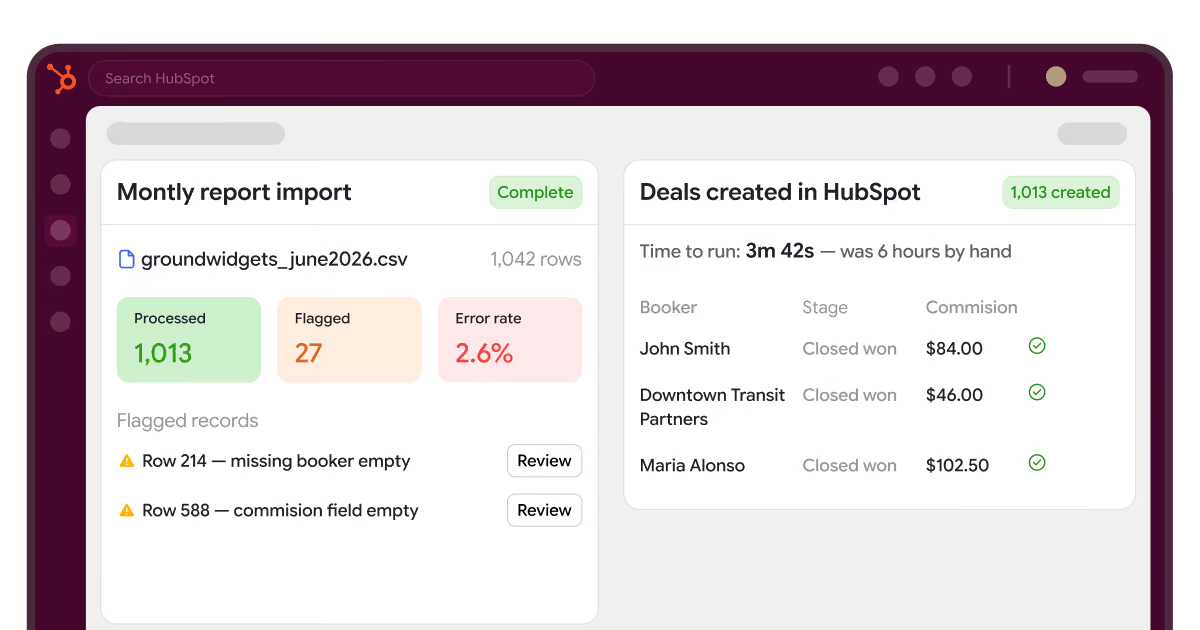
Not every system offers a clean API. Some 3PL warehouse management systems have to work around platforms with no public endpoint at all. On a recent project, a client's transportation platform had no API, no webhook, nothing beyond a monthly report file. We built a pipeline that read the file directly and wrote clean records into HubSpot. Reconciliation dropped from six hours a month to about one.
At COAX Software, it’s our default posture for 3PL warehouse logistics integrations generally. For straightforward connections, off-the-shelf tools handle the job fine. Once a client's stack gets messier, custom middleware becomes the bridge. The legacy system stays live, the middleware translates, and nothing breaks mid-rollout. We've built that bridge across payment gateways like Stripe and Plaid, CRMs like Salesforce and HubSpot, e-signature tools, and mapping APIs.
Every engagement starts with a gap assessment: what's connected, what's missing, and what complexity each integration actually carries before we touch architecture.
Best 3PL warehouse management software
We ran each platform through four tests built specifically for 3PL warehouse management work, not generic WMS criteria.
The billing-honesty test. We looked at whether the system captures billable events automatically, or leaves gaps a team has to catch by hand. This matters more than any dashboard, since undercaptured charges are one of the most common complaints 3PLs report about their own software.
The onboarding-speed test. Adding a new client shouldn't take a developer or a three-week configuration project. We timed how fast each platform let a new account go live with its own rules, labels, and workflows intact.
The client-separation test. We checked how cleanly each system isolates one account's inventory from another's, without slowing pickers down. 3PL warehouse management systems that pass this well let a warehouse feel like one operation while data stays split where it belongs.
The exception-handling test. Damaged goods, short picks, and mismatched labels happen daily. We checked whether each system routes those cases through clear workflows or leaves staff to improvise a fix every time.
Every vendor site claims to be the top pick. The table below strips that down to what actually differs.
Platform
Best for
Multi-client billing
Client portal
EDI support
Starting price
Extensiv 3PL Warehouse Manager
Established 3PLs, multi-warehouse
Yes, usage-based
Yes
Yes
Custom
Deposco
High SKU-count, omnichannel brands
Yes
Yes
Yes
Custom
Infoplus
Growing 3PLs wanting flexibility
Yes
Yes
Limited
From ~$500/mo
ShipHero
Ecommerce-heavy fulfillment
Basic
Yes
No
Custom
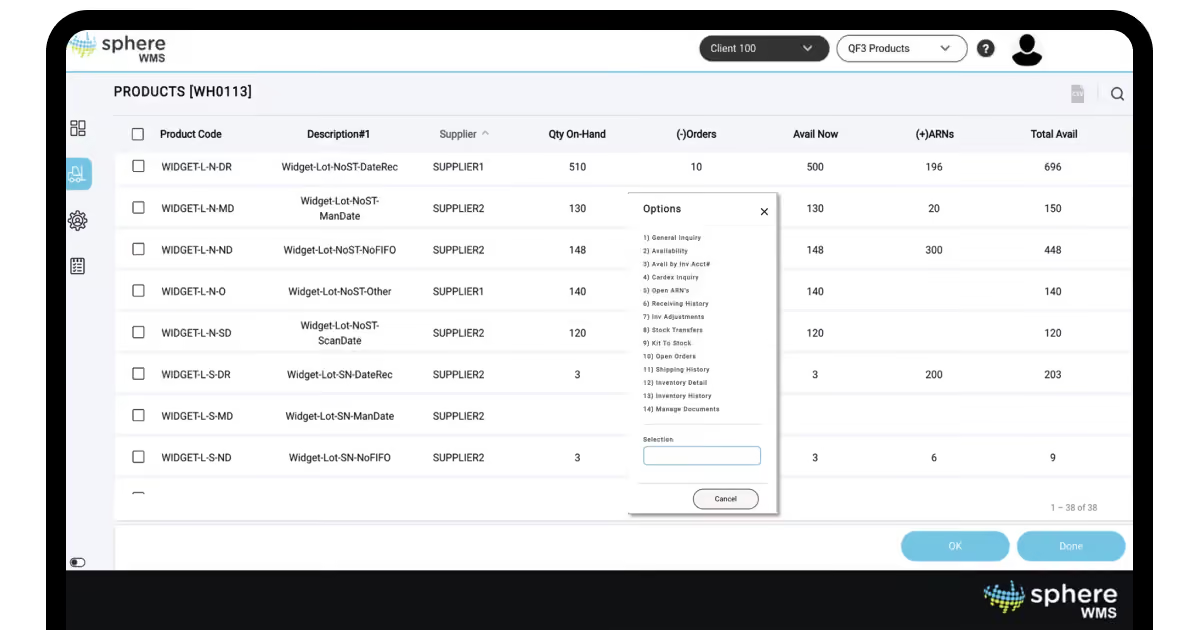
SphereWMS
Mid-size 3PLs, kitting-heavy ops
Yes
Yes
Yes
Custom
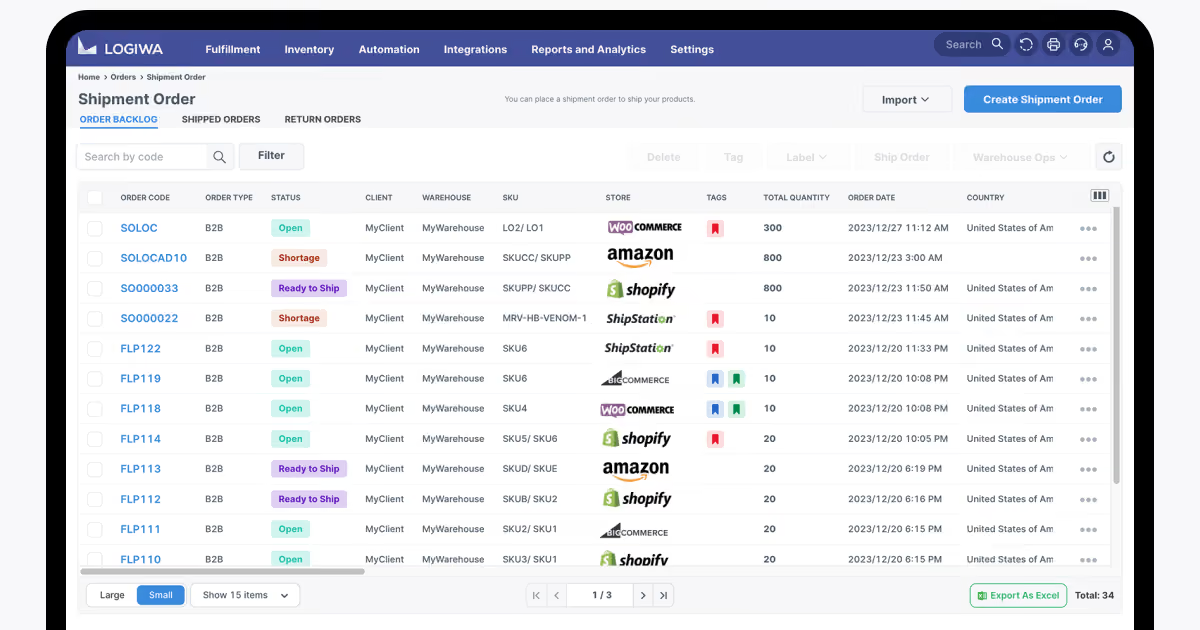
Logiwa
Fast-scaling 3PLs, automation-ready
Yes
Yes
Yes
Custom
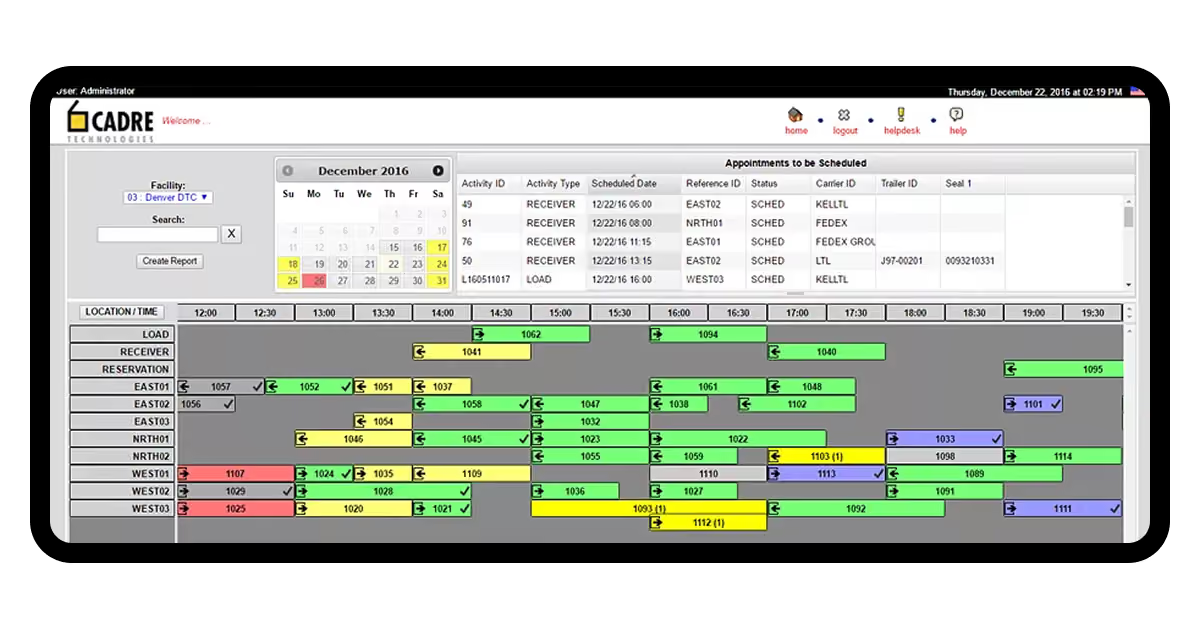
Cadre
Regional 3PLs, cold storage
Yes
Limited
Yes
Custom
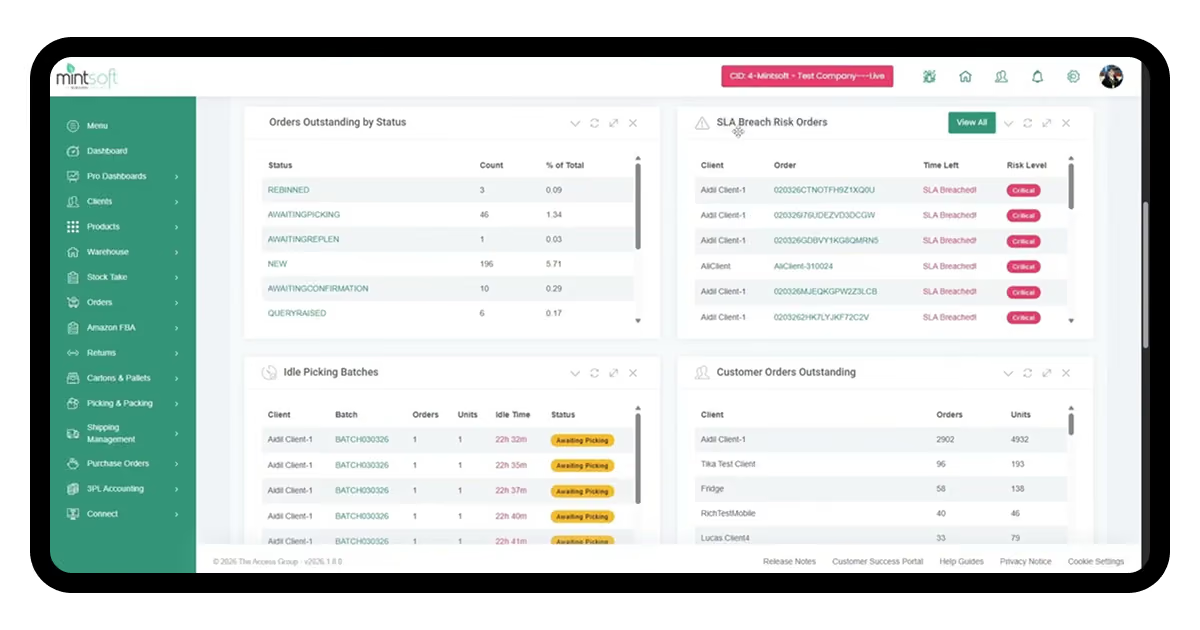
Mintsoft
UK/EU 3PLs, retail integrations
Yes
Yes
Yes
Custom
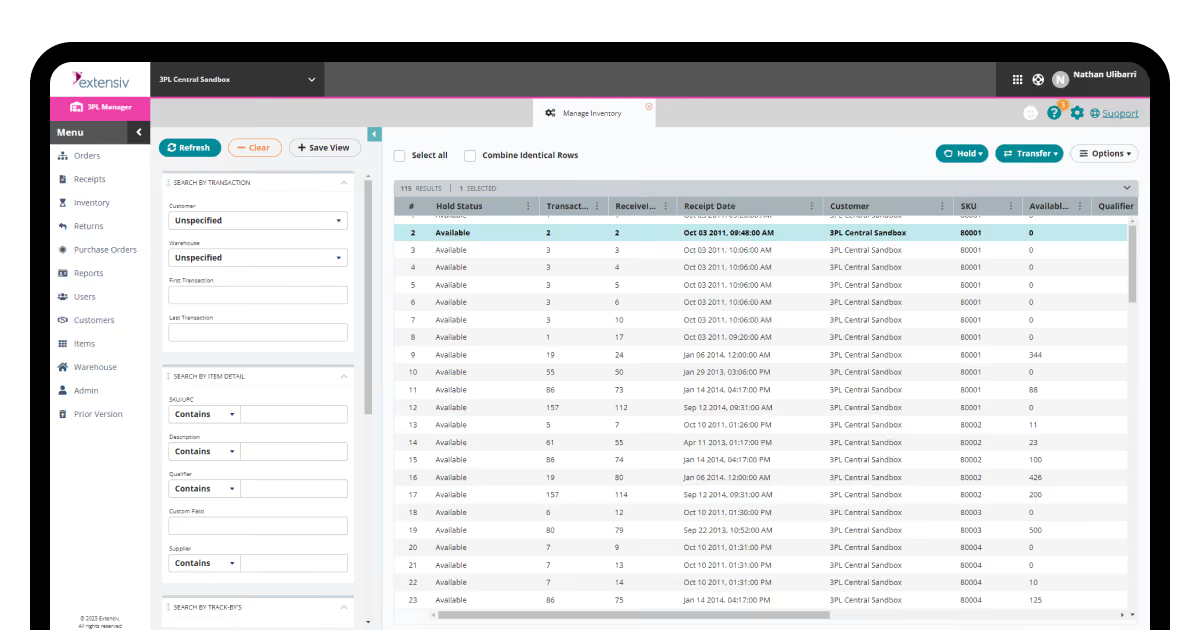
Extensiv 3PL Warehouse Manager held up best for established operators running several warehouses at once. Its usage-based billing engine captured storage, pick, and pack fees without a single manual line item in our test runs. The client portal gave account holders a clean view without exposing anyone else's stock. It's built for scale, and it shows: smaller 3PLs may find the setup heavier than they need.
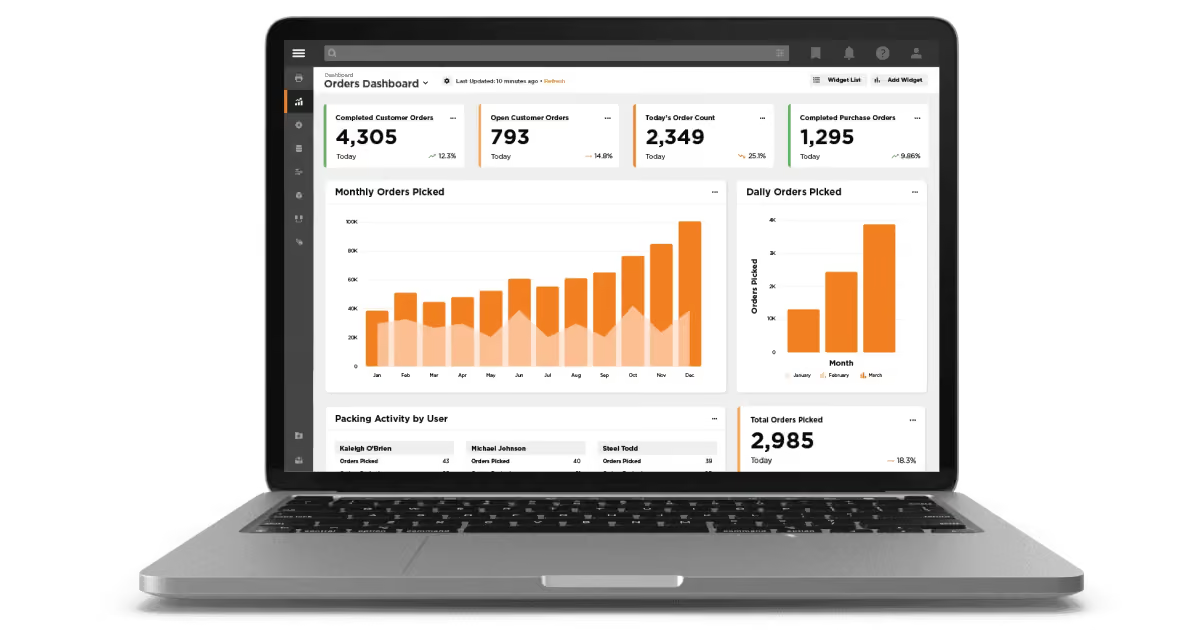
Deposco earned its spot with omnichannel brands carrying huge SKU counts. Order orchestration across multiple sales channels stayed accurate even as we pushed volume up in testing. EDI support meant retail compliance wasn't an afterthought bolted onto the platform. The tradeoff is complexity: teams without a dedicated ops person may find configuration slower than expected.
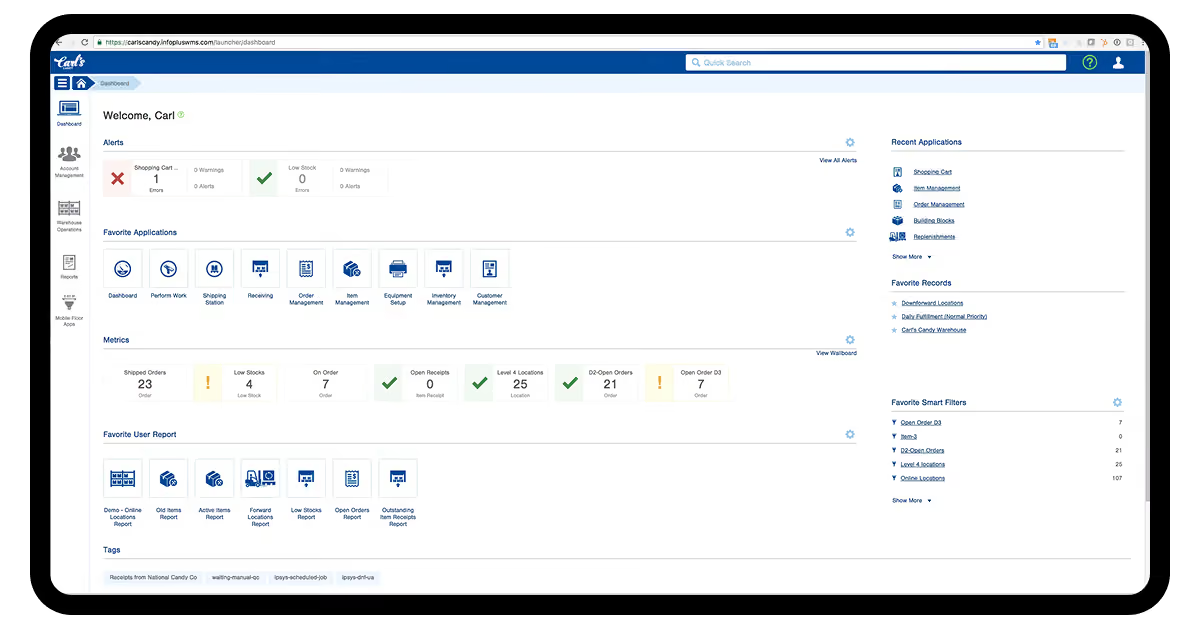
Infoplus fits growing 3PLs that want flexibility without enterprise pricing. Multi-client billing and portal access both worked cleanly in our runs, at a starting price far below most names on this list. EDI support stayed limited, though, which rules it out for anyone chasing big-box retail contracts. For a 3PL still adding its first dozen clients, that tradeoff often makes sense.
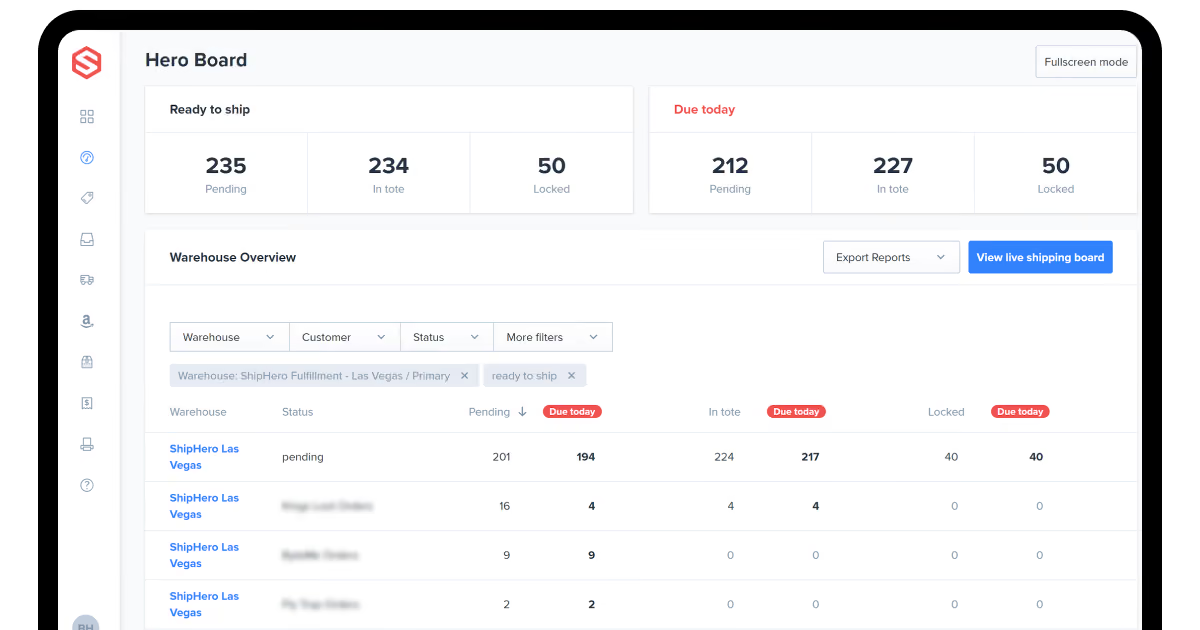
ShipHero moved fastest in our ecommerce-heavy fulfillment simulation. Order sync with Shopify and similar platforms felt closer to instant than any other tool we tested. Billing stayed basic, though, more flat-rate than true activity-based capture. Skip it if EDI-driven retail work is part of your client mix. This 3PL warehouse software doesn't support that path at all.
SphereWMS stood out in kitting and value-added service scenarios. Bundling, relabeling, and multi-step pack-outs ran through clear, configurable workflows during our tests. Client billing and portal access both held up at mid-size volume without extra customization. Teams running straightforward pick-and-pack work may find its feature depth more than they need.
Logiwa impressed us most on scaling speed. Adding new warehouse locations and automation hardware connected without the rebuild we expected. Multi-client billing and EDI both passed our tests cleanly, and portal access matched what larger competitors offer. It's a strong pick for a 3PL planning to double its footprint within a couple of years.
Cadre handled regional, cold-storage-heavy operations better than any other platform we ran. Temperature and lot tracking stayed accurate through every simulated audit scenario. Client portal access lagged behind competitors, showing less detail than accounts may expect. If cold chain isn't part of your operation, this isn't the platform to reach for first.
Mintsoft performed best in our UK and EU compliance tests, with retail integrations that connected with minimal friction. Multi-client billing, portal access, and EDI support all passed cleanly across our runs. Its strength narrows outside UK and EU retail contexts, where regional-specific features matter less. For companies operating primarily in those markets, it's the great fit.
None of these platforms is wrong for every business. A warehouse management 3PL buyer running five accounts has different needs than one running fifty. The right 3PL warehouse software matches your client mix, your billing complexity, and how fast you expect to add new accounts, not a feature count on a comparison sheet.
Picking between these options gets harder once you factor in your specific client base, integration needs, and growth plans. That's exactly where a second opinion helps before you sign a contract. We'll walk through how to actually make that call next, starting with the questions worth asking before you shortlist a 3PL warehouse inventory software vendor.
How to choose the best 3PL WMS system?
Feature checklists only get you halfway there. What actually separates a good pick from an expensive mistake comes down to a handful of practical checks.
Start with true multi-client separation.
Confirm the system segregates stock, orders, and reporting at the architecture level, not through workarounds someone patched in later. Different clients sharing warehouse floor space should never risk data or inventory cross-contamination. A 3PL warehouse management system built for this from day one handles it without custom development for every new account.
Check how the system handles growth before you need it to.
Client churn, seasonal spikes, and rising order volume shouldn't slow the platform down or blow up your costs. A cloud-based setup should add storage and capacity automatically as you grow. On AnchorSpan, the predictive ETA engine held 91% accuracy even as active shipments climbed past 800 in testing. That kind of stability under load is what scalability actually looks like in practice.
Push billing and rate cards hard during evaluation.
Storage fees, pick-pack charges, and value-added services all need automatic tracking, not manual charge entry that someone forgets half the time. 3PL warehouse automation around billing is what stops revenue from quietly leaking out every month. If a vendor's demo skips this part, ask why.
Test the client portal from the client's side, not just yours.
Self-service access to inventory levels, order status, and shipment progress cuts down on inbound support emails fast. It also builds the kind of trust that keeps accounts renewing. AnchorSpan's branded partner portal took new-partner onboarding from three weeks down to two days, proof that self-service visibility saves real time on both ends.
Weigh total cost of ownership.
Smaller tools start around $500 a month; enterprise platforms run custom pricing well beyond that. Factor in implementation timelines and how much customization you'll actually need. A cheaper monthly rate can lose fast once integration hours pile up on top of it.
Confirm integration flexibility before you sign anything.
EDI compliance, barcode and RFID scanning, and open APIs for client shopping carts all matter here. A 3PL warehouse manager software platform with weak connectors turns every new client into a custom integration project. Strong, standard connectors mean faster onboarding and fewer surprises down the line.
Prioritize what pickers and receivers will actually use daily.
Mobile workflows need to be intuitive enough that training takes days, not weeks. A clunky interface on the floor means more picking errors, no matter how good the dashboard looks upstairs. Test the mobile app yourself before committing, not just the admin view.
Off-the-shelf software solves most of this well enough, until your operation doesn't match the demo. Plenty of vendors can sell you a platform. Fewer can adapt it to the version of your business that breaks their standard workflow. Custom logistics software development that actually changes outcomes takes engineers who've hit your specific integration problem before. This is exactly about our team.
At COAX Software, we've spent almost twenty years building booking platforms, reservation systems, marketplaces, and operational automation across travel and transportation, and we've found very few providers, even across Europe and Asia, with that same depth of vertical focus. That history means we don't start from zero on a 3PL fulfillment warehouse build. Domain expertise, proven architecture patterns, and reusable accelerators typically cut delivery time by 50 to 60% compared to generalist firms.
That's usually where the real decision starts: not which 3PL warehouse software has the longest feature list, but whether it fits your operation as it actually runs, or whether it needs to be built to fit you. If the latter turns out to be the best way to go, COAX is here to help.
FAQ
What is 3PL warehouse management, and how is it different from running your own warehouse?
3PL warehouse management means running inventory, orders, and billing for outside clients inside a shared facility, not your own single-brand stock. The core difference is ownership tracking. Every unit needs a client tag from receipt through shipment. Standard warehouse operations skip that layer entirely, since there's only one owner to track. That separation shapes every workflow, report, and permission the software has to support.
What is a 3PL warehouse, exactly, and who actually needs one?
It's a facility run by a third party that stores, picks, and ships inventory for multiple client businesses at once. Ecommerce brands, manufacturers, and retailers use them to skip building their own logistics infrastructure. If storage and shipping aren't your core business, a 3PL usually costs less than doing it yourself.
What is a 3PL warehouse management system, and do I really need one on day one?
This search usually comes from someone about to sign their first client. It's software built to track multi-client inventory, automate billing, and keep each account's data separate. You can survive early on with spreadsheets with one or two clients. Past that, manual tracking breaks fast, and billing errors start costing real money every month.
How much does a warehouse management system 3PL setup cost to implement?
Pricing varies widely by platform and scope. Smaller tools start around $500 a month; enterprise systems run custom quotes well past that. Implementation, integration work, and staff training add real cost beyond the subscription line. Budget for a discovery phase separately, since most vendors don't quote that upfront. Skipping it is the fastest way to blow a rollout timeline.
What is 3PL warehouse meaning when clients ask about data security?
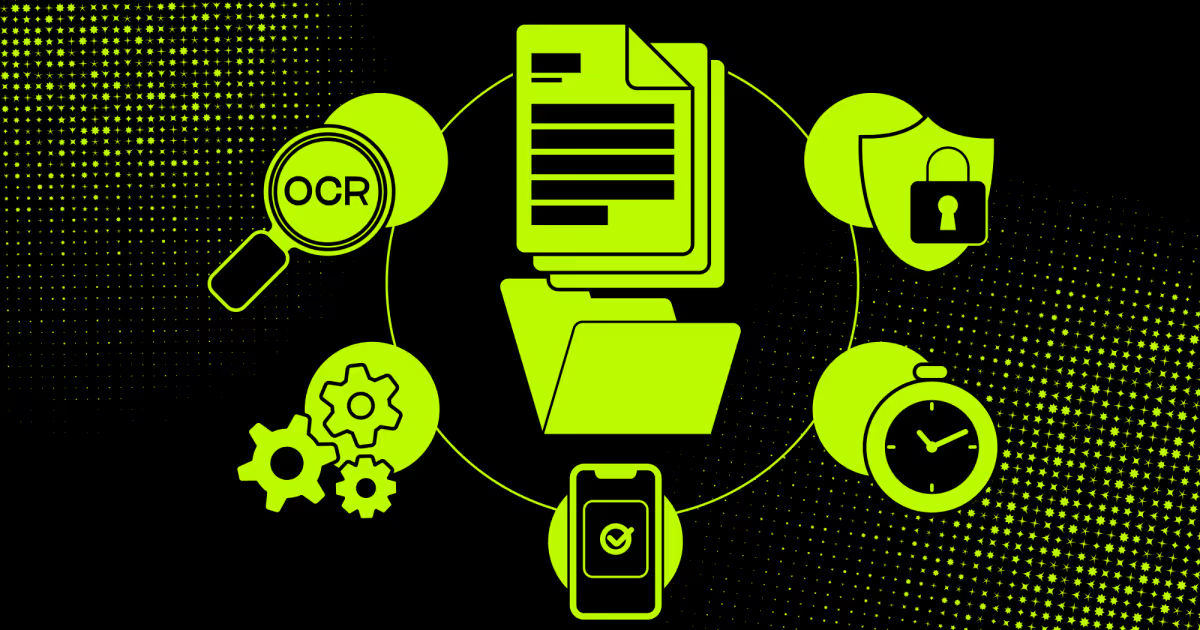
3PL WMS in a security context centers on strict client separation. Each account's inventory, orders, and documents need role-based access that blocks cross-contamination entirely. Audit trails should log every inventory change, approval, and reroute automatically. That record matters for compliance, and it matters more when a client disputes a charge or a missing unit and wants proof.
How do I evaluate 3PL warehouse companies before signing a multi-year contract?
Test the platform with a real shift, not a sales demo. Watch how it handles a damaged shipment, a short pick, or a rush order under pressure. Ask specifically how billing captures activity, not just how the dashboard looks. 3PL warehouse companies vary widely on integration depth, so confirm EDI and API support before you commit to anything long-term.
























































































_.avif)












%2520explained.avif)

We are interested in your opinion