At COAX, we've spent 15+ years watching logistics operators fight disruption blind. And a chunk of these years fixing it. A cross-border carrier came to us three years ago. Their drivers kept quitting at a 45% turnover rate. Customers kept calling asking where their freight went.
The gap was blind spots in their supply chain risk management process. Nobody saw disruption coming until it hit. So we built DriveIQ. The platform covers predictive alerts, driver coaching, and real-time routing. That project taught us something that many logistics leaders learn late.
Supply chain risk management solutions give you visibility before disruption costs you a customer. With this requirement, we judge every platform on the market. We tested ten leading tools against real operational burden.
Samsara ranked first overall. Its telematics, driver coaching, and open API cover the most ground. Verizon Connect leads for enterprise fleets needing deep carrier integrations. Fleet Complete and Motive balance cost and capability for mid-market operators.
Below, you'll find the rest, their tradeoffs, and where each one wins. This article also covers the concept of SCRM (supply chain risk management) and outlines how it works practically.
What is supply chain risk management (SCRM)?
Supply chain risk management means spotting threats before they hit you. It covers suppliers, weather, cyberattacks, freight delays, and labor gaps. SCRM identifies threats and cuts their impact. It turns raw exposure into a measurable, manageable process. The goal isn't zero risk. It's early warning and fast response
Most operators handle risk reactively, after a shipment already failed. SCRM changes that. You catch the signal before the disruption lands.
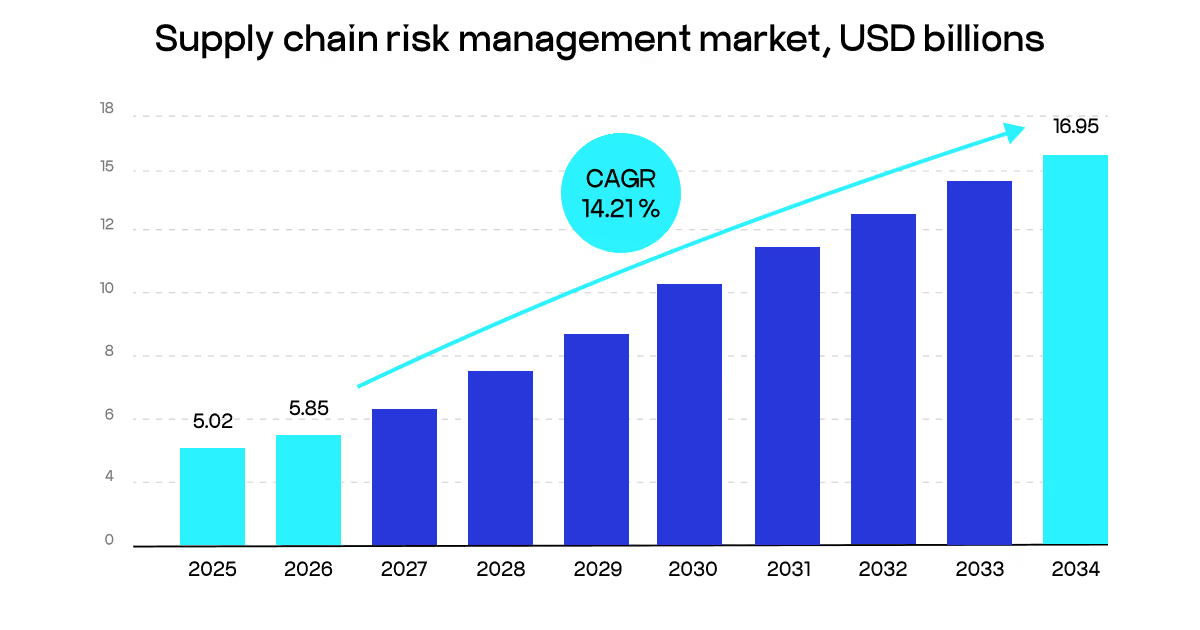
The global supply chain risk management market hit $5.02 billion in 2025. It will also reach $16.93 billion by 2034, a 14.21% CAGR. That growth reflects a shift in mindset. Companies now treat risk visibility as infrastructure, not insurance.
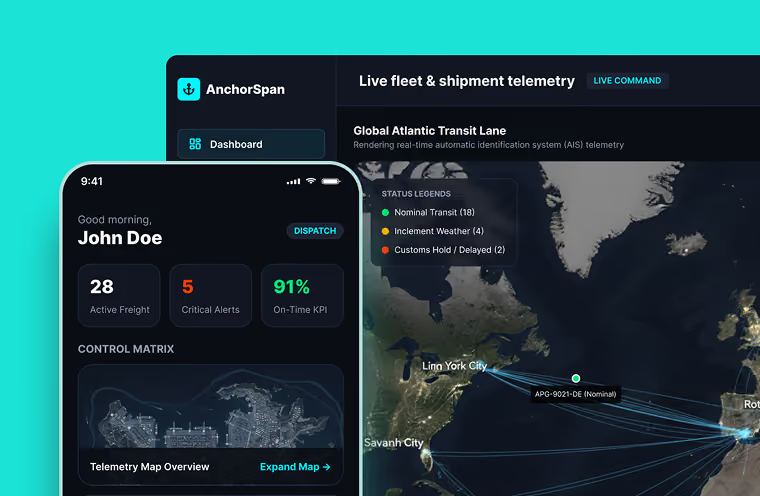
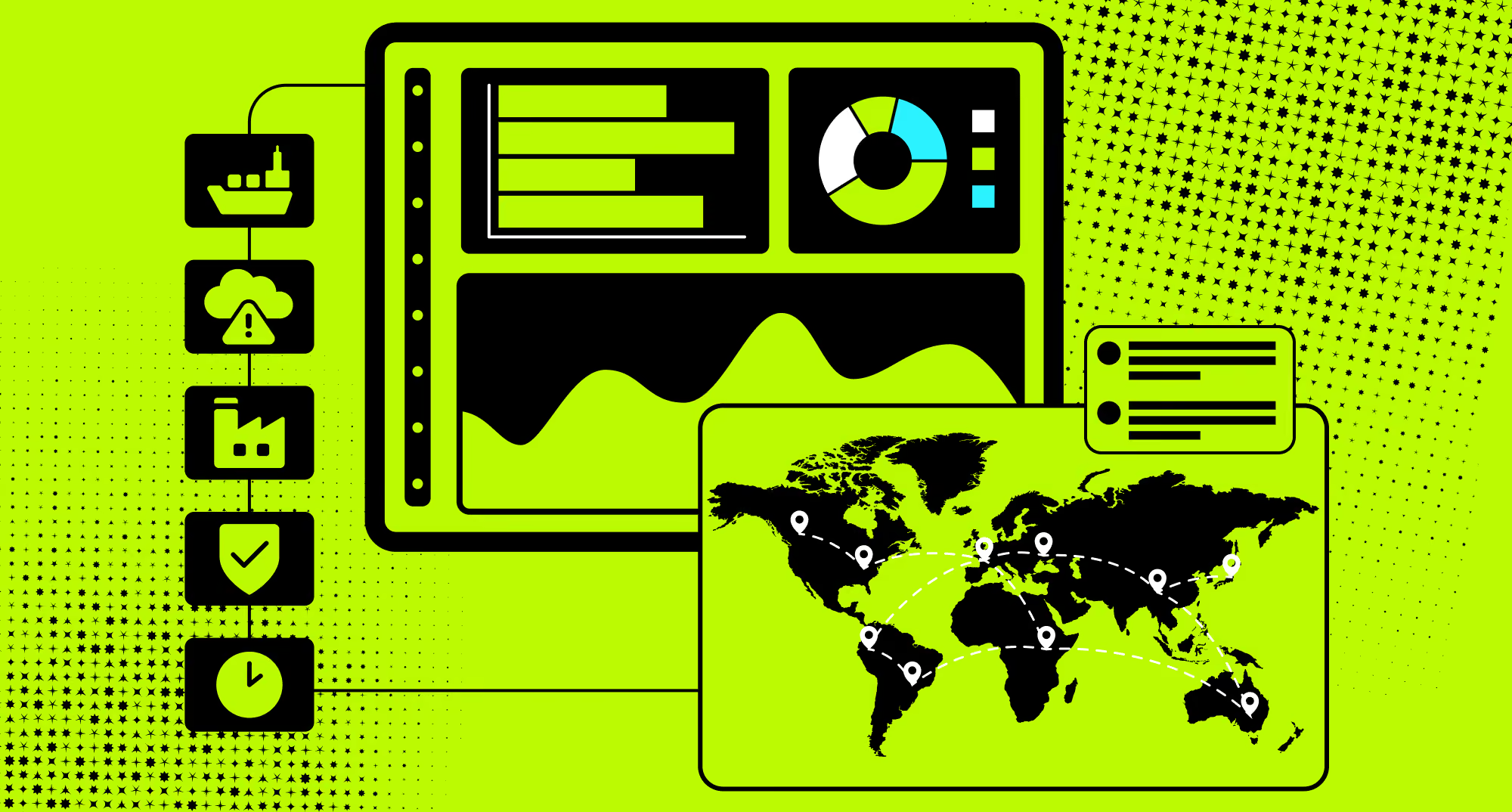
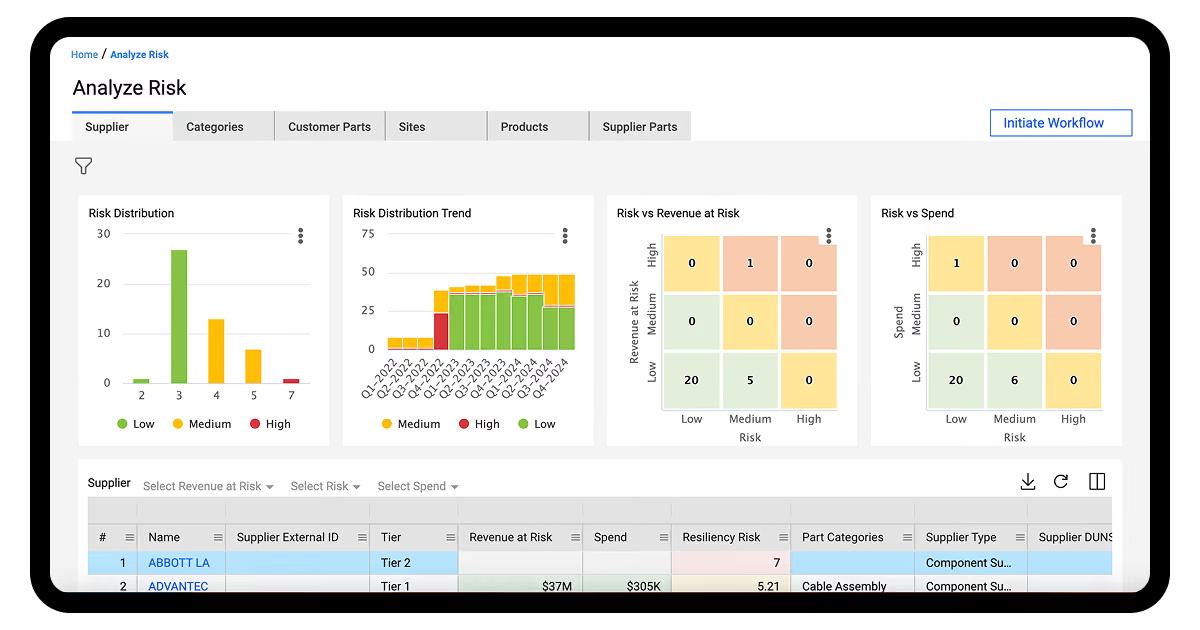
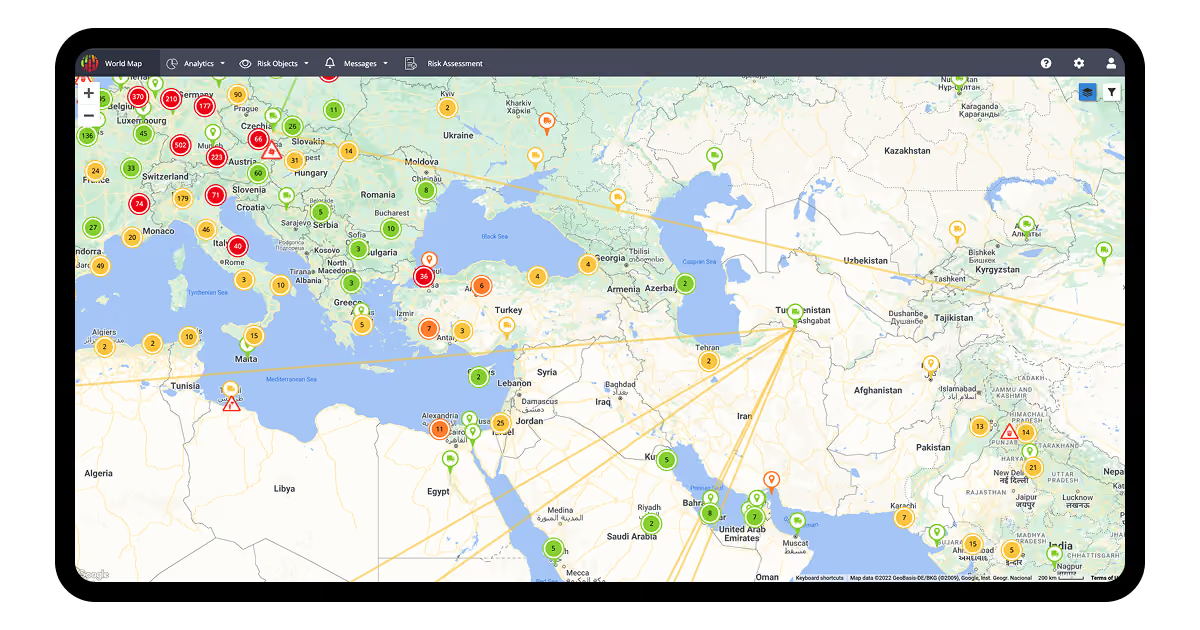
More companies now invest in supply chain risk management tools. These tools power supply chain risk management monitoring across global networks. Dashboards track supplier health, weather patterns, and route status together.
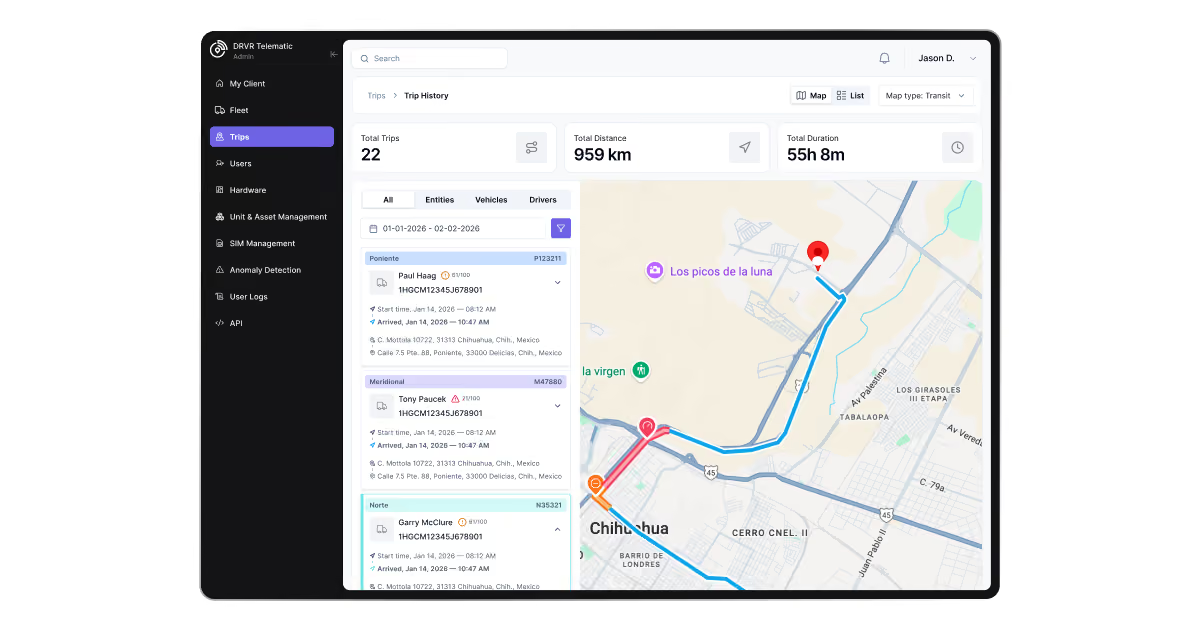
At COAX, we build these dashboards for logistics clients daily. We've consolidated GPS feeds, EDI records, and telematics data into a single view. That's the same integration work behind DriveIQ's predictive alerts. Fragmented data is the real barrier to good SCRM. Most companies don't lack risk data. They lack a system that unifies it.
Why does it matter?
Disruption isn't rare anymore. It's constant, frequent, and expensive. The businesses that survive it treat detection as a core system.
Disruption now hits supply chains every 3.7 years on average. It erases up to 45% of a decade's profits. Supply chain disruptions rose 38% year over year in 2024. Resilinc logged 22,522 disruption notifications that same year. Those aren't outlier events anymore. They're the operating baseline.
Direct procurement disruptions cost firms $16 million a year. Poor data quality alone costs firms $12.9 million annually. Supply chain breaches cost $4.91 million on average and take up to 267 days to contain. Every one of those numbers traces back to the same root cause: risk caught too late.
That's why risk management in supply chain planning gets board attention now. It's no longer a compliance checkbox. It's tied directly to revenue and retention.
Smart supply chain risk tools catch problems before they cascade. A late shipment flagged early costs far less than one discovered by an angry customer. They also support a sustainable supply chain, cutting waste and rework. Fewer emergency reroutes mean less fuel burned and fewer wasted trips.
Our DriveIQ platform cut one client's driver turnover by 22%. Better risk visibility didn't just save loads. It kept drivers on the road, and kept dispatchers ahead of problems instead of chasing them.
Common supply chain risks
Every supply chain carries risk in five categories. Operational, financial, geopolitical, environmental, and cyber threats overlap constantly. Knowing the types of risk in supply chain management helps you build defenses before disruption hits.
"Modular architecture lets a client isolate a route failure without freezing billing. We built DriveIQ's alert engine the same way: contained systems that don't take the whole platform down together," says Orest Falchuk, Head of Engineering at COAX Software.
Operational risks.
Operational risk hits your ability to move goods at all.
Supplier disruptions: a single-source vendor can halt production during financial or labor trouble.
Logistics bottlenecks: port delays and freight capacity limits break delivery schedules.
Demand planning gaps: poor forecasting causes overstocking or painful stockouts.
These risks compound fast once a network loses visibility. The COAX client tracking 500 vehicles saw exactly this. A single missed disruption alert cascaded into dozens of late routes
before dispatchers caught it.
Financial risks.
Financial risk erodes margin even when operations run smoothly.
Price volatility: raw material and fuel costs swing without warning.
Inflation pressure: rising costs squeeze margins while spending slows.
Currency exposure: global sourcing ties budgets to exchange rate swings.
Fuel cost is often the quietest bleed. Our SyncMatix platform addressed this directly, tracking per-route fuel consumption against engine type and distance. That visibility caught anomalies before they became quarterly surprises.
Geopolitical and regulatory risks.
Policy shifts can reroute entire trade networks overnight.
Trade disputes: new tariffs and sanctions inflate costs fast.
Political instability: conflict or regime change blocks key regions.
Compliance mandates: missed ESG or labor rules trigger fines and seizures.
The Red Sea shows how long these disruptions can drag. The attacks have pushed carriers back to the Cape of Good Hope for three years. The USMCA talks carry similar weight for North American shippers, with renegotiation risk discouraging long-term investment.
Environmental and climate risks.
Climate risk now hits infrastructure directly, not just forecasts.
Natural disasters: floods and wildfires damage warehouses and routes.
EM-DAT data shows disaster frequency has climbed steadily for 20 years. That trend makes global supply chain risk management strategies a board-level priority, not an afterthought.
Technological and cyber risks.
Connected systems create new points of failure.
Cyber-attacks: IoT-linked networks expand exposure to ransomware and breaches.
Data integrity issues: bad data misaligns inventory across supply partners.
A loose network endpoint can compromise an entire operation. Our team faced this during the development of an enterprise Agritech platform. Connecting distributed farm machinery and sensors opened up massive architectural vulnerabilities. To eliminate this risk, we built localized validation layers and end-to-end encryption pipelines. This enabled thousands of connected IoT nodes to stream operational data without exposing the core network.
This is where the importance of supply chain risk management becomes concrete. Getting ahead of these five risk types is what separates resilient operators from reactive ones.
How does supply chain risk management software work?
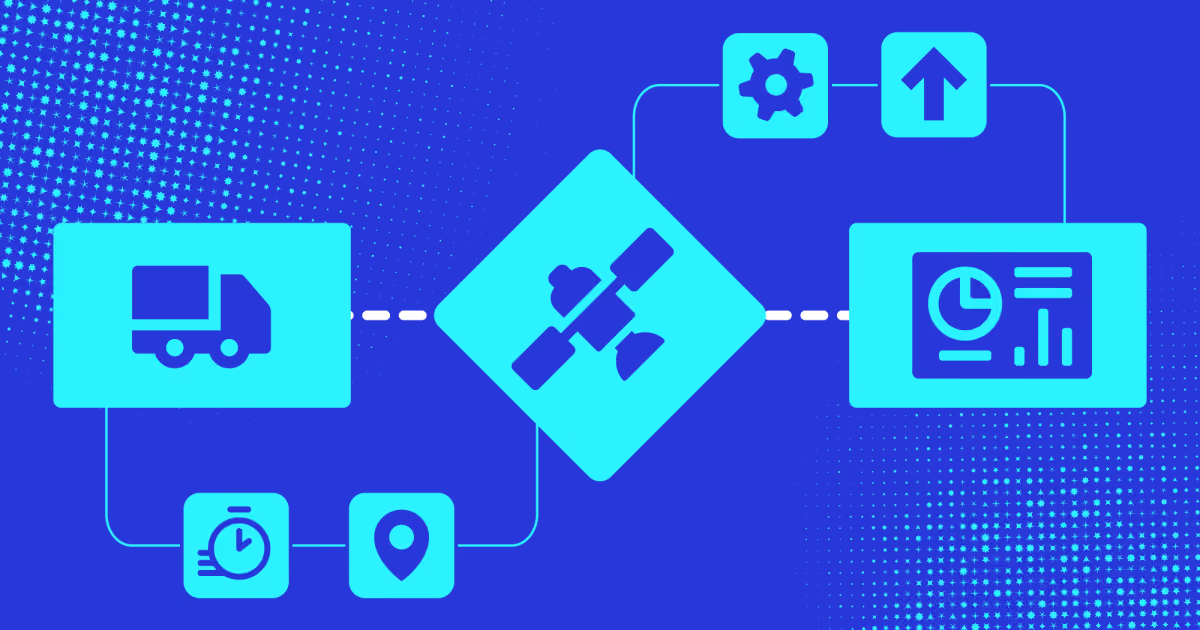
Supply chain risk management software follows a strict detection-to-response sequence. Data comes in, gets scored, and triggers action. Skip a step, and the alert arrives too late to matter.
At 6:00 AM, a supplier's factory in Vietnam loses power. The order was due in nine days. Nobody on the client's team knew yet.
That's the failure mode supply chain risk management solutions exist to prevent. Here's how the workflow actually runs.
Step 1: Signal capture. The system pulls data from suppliers, weather feeds, ports, and freight trackers. It also ingests customs filings, labor reports, and financial health signals on key vendors. Raw inputs arrive in different formats and timestamps. Some come as structured API feeds. Others arrive as unstructured news alerts or PDFs.
Step 2: Normalization. Disparate data gets standardized into one risk model. Timestamps align. Vendor names get matched across systems. Without this step, false alerts flood the dashboard, and dispatchers stop trusting the tool entirely.
Step 3: Risk scoring. Each event gets weighted by likelihood and impact. A minor delay scores differently than a factory shutdown. The model also factors in your specific exposure: how many orders depend on that one supplier or route.
Step 4: Alert routing. High-severity risks reach the right team fast. Procurement sees supplier risk. Logistics sees routing risk. Finance sees anything tied to cost or currency exposure. Role-based routing keeps the signal-to-noise ratio manageable.
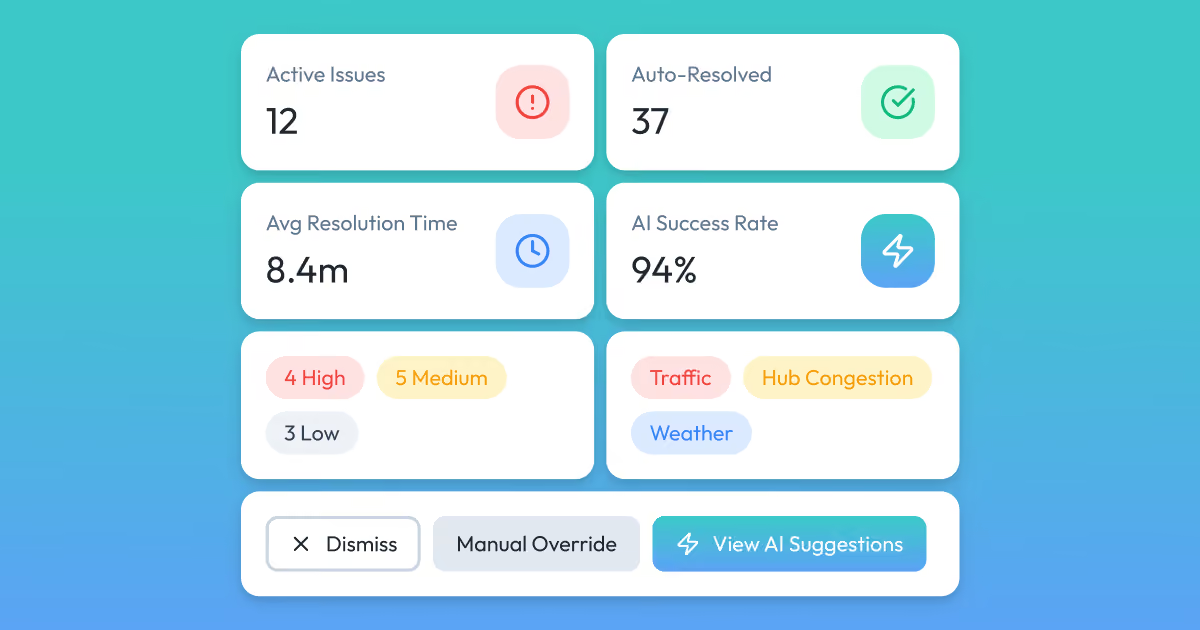
Step 5: Response and mitigation. The platform suggests alternate suppliers, routes, or timelines. It ranks options by cost and delivery impact. A dispatcher or buyer reviews the recommendation and approves the fix with one click.
Step 6: Continuous monitoring. The loop repeats as new signals arrive. Yesterday's disruption informs today's risk threshold. A supplier that missed one shipment gets flagged for closer monitoring on the next.
That sequence is what separates reactive firefighting from real prevention. Miss step two and every downstream score is unreliable. Each stage carries a specific, measurable cost when it fails. A missed supplier signal isn't abstract. It's a nine-day production stall, and a customer who cancels the order.
An undetected weather delay isn't a minor inconvenience either. It's a truck stuck at a closed port for six days, burning fuel while it waits. Supply chain risk management platforms exist to shrink that gap between event and response.
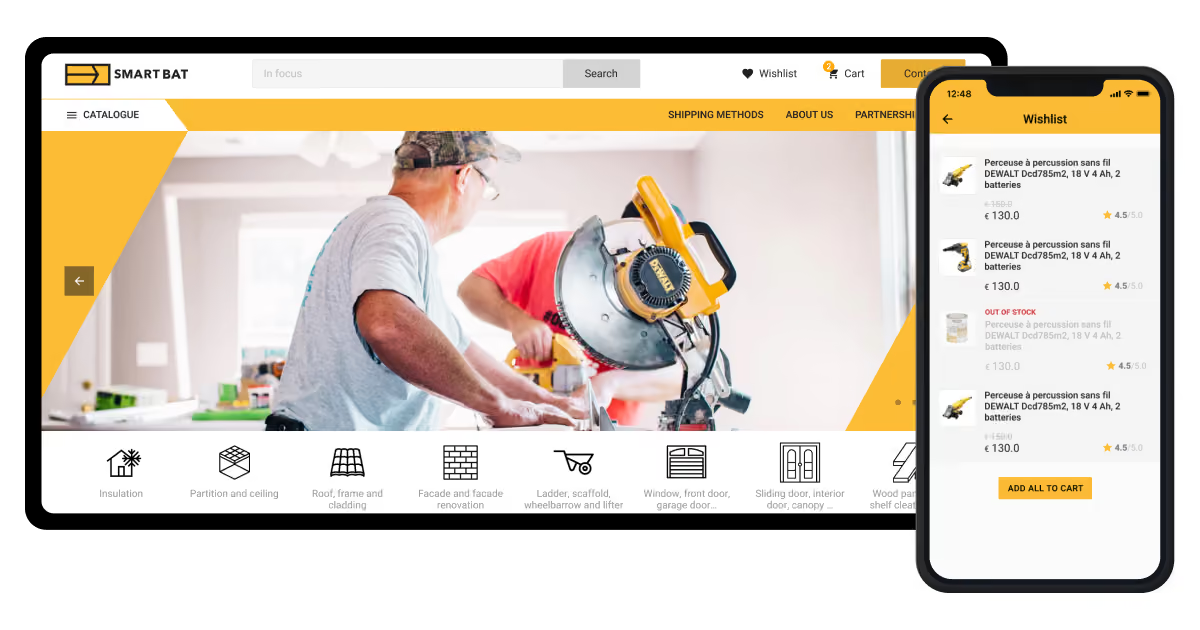
Our SmartBat ecommerce project shows this at the demand side. Inventory and order data had to sync in real time. A stockout risk had to surface before checkout, not after a customer already paid. Our Agritech platform faced the same challenge upstream. Crop yield data, weather risk, and supplier timelines all fed one model. Farmers needed supply chain risk tools that flagged shortages before harvest, not after shipment left the farm.
Good supply chain risk assessment software doesn't just report what broke. It scores what's about to break, and gives someone enough time to act on it.
Key SCM software integrations
Risk software is only as good as its data feed. It has to plug into the systems you already run. That means ERP, TMS, WMS, and supplier records, not a standalone dashboard nobody checks.
Most operators already have this data. It just sits in disconnected systems, each one blind to the others. A supplier risk management software layer only works if it pulls from procurement and CRM data directly, not from a manual export someone forgot to run.
ERP integration feeds the risk engine your live inventory and order status. This is where supply chain risk analytics earns its value. Raw ERP data shows inventory levels by SKU. Layered risk analytics shows which SKUs are exposed to a specific supplier disruption right now, before the shortage hits the warehouse floor.
TMS integration feeds transit status, carrier performance, and route data. We saw this integration challenge firsthand on DriveIQ. GPS pings, EDI feeds, and TMS records all carried different timestamps. Nothing synced until we normalized it into one layer. That work became the foundation for every prediction that followed.
WMS integration feeds warehouse capacity and fulfillment status back into the risk model. Without it, a risk platform might flag an incoming shortage while the warehouse sits on unrecorded surplus stock. That mismatch defeats the purpose of supply chain risk management monitoring.
CRM integration ties customer commitments to supply risk. If a key account's order depends on a flagged shipment, sales needs to know before the customer calls asking why. Road&Rally faced a similar sync problem in a different domain: every driver's device had to share one live state. Miss that sync and the group splits onto different routes. Risk software has the same requirement. Miss the sync, and teams act on stale data instead of the current picture.
Supply chain risk solutions built as an integration layer solve this differently than a bolt-on dashboard. They don't replace your ERP, TMS, or WMS. They sit on top, pulling structured data from all three continuously.
That's the exact fragmentation problem our Agritech client faced before launch. Disconnected systems meant nobody saw the full risk picture at once, so decisions lagged behind reality by days.
Off-the-shelf supply chain software risk management tools often stop at basic alerts pulled from one source. Custom integration goes further. It ties a weather delay directly to the specific orders it threatens, inside the systems your team already opens every day.
What are the benefits of supply chain risk management software?
A minibus operator in the UK once lost a contract overnight. A single unverified carrier missed a pickup window. Nobody flagged the risk in advance. The client had no backup routing, no early warning, no fallback carrier ready to step in.
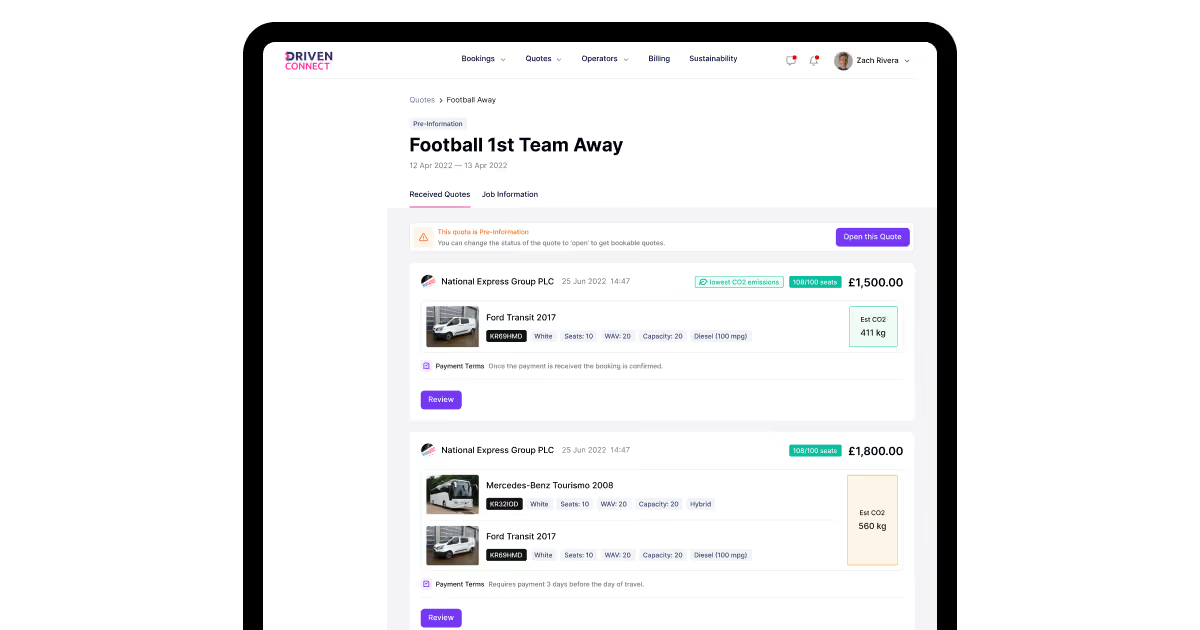
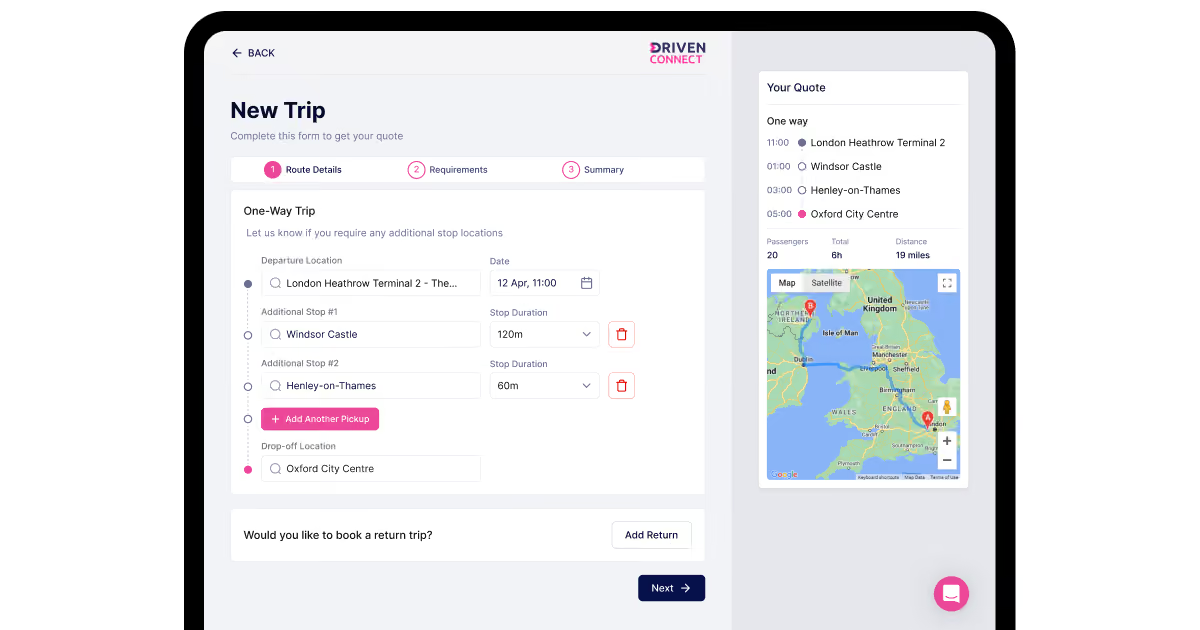
That's the similar challenge Driven Connect was made to address. We built a tender system where operators compete for contracts transparently. Buyers see real-time status from quote to booking, at every stage. No blind spots, no surprise no-shows, no last-minute scramble.
That single fix reveals what supply chain risk management software actually delivers. It's not abstract protection sold on a slide deck. It's specific, measurable outcomes that show up in your operating numbers within months.
Earlier disruption detection. Risk signals surface before they become missed deliveries. On Driven Connect, buyers caught a stalled carrier days before the scheduled pickup, not at the moment it failed. That lead time is what turns a crisis into a routine reroute.
Fewer costly errors. Automated validation catches bad data before it ships, not after a customer complains. On DriveIQ, exception clustering by root cause cut dispatcher diagnosis time from 12 minutes to under three. Multiply that across hundreds of daily exceptions and the time saved becomes a full-time role you no longer need to hire for.
Lower operational cost. Fewer emergency reroutes mean less wasted fuel, less overtime, and fewer rushed shipments at premium rates. DriveIQ's in-cab coaching layer cut fuel consumption by 12% fleet-wide, savings that showed up in the very first reporting cycle after launch.
Stronger supplier and carrier trust. Transparent performance data replaces guesswork and gut-feel vendor selection. Driven Connect's tender flow let 400-plus operators compete on verified performance, not reputation or relationship alone. Buyers stopped overpaying for carriers who simply had a better sales pitch.
Better workforce retention. Predictable operations reduce driver and dispatcher burnout, and burnout is expensive to replace. DriveIQ's transparent coaching approach, paired with fair KPI visibility, lowered driver turnover by 22% within the first year of rollout.
Synchronized execution across teams. Everyone works from the same live data instead of five conflicting spreadsheets. Road&Rally's synchronization engine kept every driver on one identical route, eliminating the split-group problem that plagued the platform before launch.
Those gains compound over time rather than arriving all at once. Most supply chain risk management companies report their biggest returns after month three, once the system has accumulated enough operational history to spot patterns a human dispatcher would miss entirely.
What features to look for in supply chain risk management software?
Not every feature matters equally, and vendors rarely explain why. Some are baseline requirements: without them, you don't have a functioning platform at all. Others are what separate a basic reporting tool from a genuinely predictive one. Below, we start with the essentials and move toward the advanced capabilities that justify a higher price tag.
Real-time monitoring
This is the foundation everything else builds on. Without live visibility, every other feature works off stale data. Real-time monitoring means continuous tracking of shipments, suppliers, vehicles, and routes, updated as events happen rather than on a daily batch. On SyncMatix's dashboard, dispatchers could see every vehicle's state across hundreds of simultaneous routes.
The 25% improvement in route event response came entirely from removing the delay between an event happening and someone seeing it. Look for a platform that updates in seconds, not minutes. A five-minute lag is enough time for a small delay to become a missed handoff.
Automated alerts
Monitoring without alerting just produces a dashboard nobody watches. Alerts turn passive visibility into action. Good alert systems in SCM software route by role, not by broadcasting everything to everyone. That distinction matters more than most buyers realize upfront:
Procurement teams need supplier-specific risk: financial trouble, factory delays, capacity shortfalls.
Logistics teams need routing risk: traffic, weather, port congestion, carrier delays.
Finance teams need cost-impact risk: currency swings, tariff changes, fuel price spikes.
Drivers need immediate, in-the-moment guidance: speed limits, idle time, compliance thresholds.
Without role-based routing, alert fatigue sets in fast, and teams start ignoring the tool entirely. That defeats the purpose of buying it in the first place.
Risk scoring
Raw alerts without prioritization just create noise. Risk scoring ranks events by how much they actually threaten your operation. A functioning scoring model weighs two things together: how likely the disruption is, and how much it would cost you specifically. A minor weather delay on a low-volume route scores very differently than the same delay on your highest-margin lane.
The best supply chain risk management tools also factor in your own exposure data, not just generic industry risk. A supplier disruption matters more if 40% of your orders route through that one vendor than if it's 2%.
Centralized dashboard
Fragmented systems are one of the most common reasons risk management fails in practice, even when the underlying data exists somewhere.
A centralized dashboard pulls supplier, route, inventory, and compliance data into one screen. Our Agritech client faced exactly this problem before launch. Disconnected systems meant nobody saw the full risk picture at once, and decisions lagged behind reality by days.
One view, one source of truth. That's what lets a dispatcher or buyer decide in seconds instead of checking three separate logins first.
Historical reporting
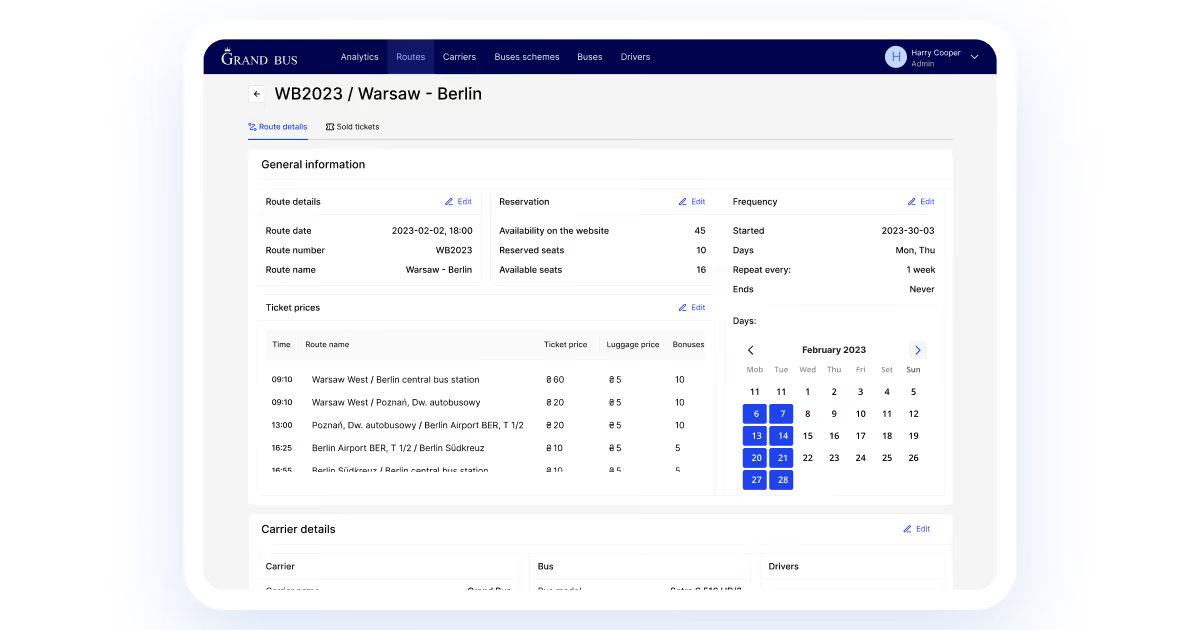
Compliance and reporting rarely feel urgent until an audit or a dispute forces the question. Then it's the most urgent thing in the building. Historical reporting captures completed trip and shipment data automatically: compliance logs, IFTA calculations, HOS records, and performance scorecards. For GrandBus, automating this layer cut reporting time by 35 minutes per route. For cross-border freight operators specifically, manual reporting isn't just slow. It's a liability every time a regulator asks for records.
These five features form the baseline of any credible supply chain risk management plan. If a vendor is missing even one, treat that as a warning sign, not a minor gap to work around later.
Predictive analytics
This is where AI in supply chain management starts to earn its reputation, rather than just its marketing budget. Predictive analytics models future risk from historical and live data together, rather than just reporting what already happened. On DriveIQ, the system predicted route delays before dispatchers spotted them manually, using weather and traffic patterns layered against historical route performance. A weather event 200 miles out could change delivery windows before a single truck felt the impact.
The difference between reporting and prediction is the difference between reading yesterday's newspaper and getting tomorrow's forecast.
Automated recovery recommendations
Detection alone doesn't fix anything. It just tells you something is wrong faster than before.
Automated recovery turns a flagged risk into a ready decision. On DriveIQ, a late delivery triggered a rerouting suggestion with one-click dispatcher approval, cutting the gap between detection and action to nearly nothing. Without this layer, dispatchers still have to build the fix manually, which erases most of the time saved by detecting the problem early in the first place.
Multi-source data integration
Supply risk management solutions are only as strong as the data feeding them. A platform that only reads one system is blind to everything else.
Real integration connects several sources at once:
ERP systems for live inventory and order status.
TMS platforms for transit and carrier performance data.
WMS systems for warehouse capacity and fulfillment status.
Supplier and CRM records for vendor history and customer commitments.
Miss one of these and the risk model works with an incomplete picture, no matter how sophisticated its scoring logic is underneath.
Scenario simulation
The most advanced platforms let you test disruption before it actually happens, rather than only responding after the fact. Scenario simulation answers questions like: what happens if a key supplier goes dark for two weeks, or a major port closes for a month. Good supply chain risk management technology models the downstream impact across your entire order book, not just the immediate shipment affected.
This feature matters most for operators with concentrated supplier risk, where one failure point can ripple across dozens of customer commitments at once.
Dynamic supplier and carrier scoring
Static vendor ratings, set once at onboarding and never revisited, are close to useless six months later. Dynamic scoring updates continuously, using every shipment, every delay, and every recovery as new input. That's the same principle behind Driven Connect's tender system: operators built a track record through actual performance, not a fixed reputation score frozen at signup.
Beyond these ten features, some platforms add sustainability tracking, carbon reporting, and ESG compliance scoring on top. Those matter more for regulated industries facing disclosure requirements than for lean operators focused purely on delivery reliability. Choose based on what your specific supply chain needs.
How we scored supply chain risk management software
Demos look clean. Production data never does. That gap is where most platforms quietly fail.
Our rule: trust nothing until it survives real operational mess.
Our Agritech build set the bar here. That client needed supplier timelines, weather risk, and crop yield data reconciled into one model. Clean supply chain risk management examples exist in sales decks. Ours had to work with mismatched data from actual farms.
That project became our baseline. We stopped judging platforms by feature lists and started judging them by failure points.
We dropped vendors with no public API access. We excluded tools that locked risk data behind a rigid, unchangeable schema. We also cut any supply chain risk management solution sold as a bolt-on ERP module, since those always shortchange the risk layer specifically.
"We don't judge risk platforms by their dashboards. We judge them by what happens when three data sources disagree with each other," says Orest Falchuk, Head of Engineering at COAX Software.
We scored four dimensions on every platform:
Data ingestion flexibility: can it handle supplier, weather, and logistics feeds without a custom rebuild?
Alert accuracy: does it flag real threats, or bury teams in noise?
Integration depth: how much custom work reaches production, not just demo mode?
Scalability: does performance hold at 500 suppliers, or only at 50?
Few supplier risk management tools score well across all four. Most lead on one dimension and trade off elsewhere. The rankings ahead reflect where each platform's strengths actually match real operating conditions.
Best supply chain risk management software
We tested ten leading platforms against real disruption scenarios. Below is what we found.
Platform
Best for
Real-time monitoring
Predictive risk scoring
Multi-tier supplier mapping
Open API
Starting price
Everstream Analytics
Large enterprise, deep-tier visibility
Yes
Yes, AI-driven
Extensive
Strong
Custom
Resilinc
Manufacturing, electronics supply chains
Yes
Yes
Strong
Strong
Custom
Interos
Cyber and geopolitical risk focus
Yes
Yes
Extensive
Moderate
Custom
riskmethods (Sphera)
Mid-to-large procurement teams
Yes
Yes
Strong
Moderate
Custom
Prewave
Early-warning, news-based monitoring
Yes
Yes, NLP-based
Moderate
Limited
From ~$1,500/mo
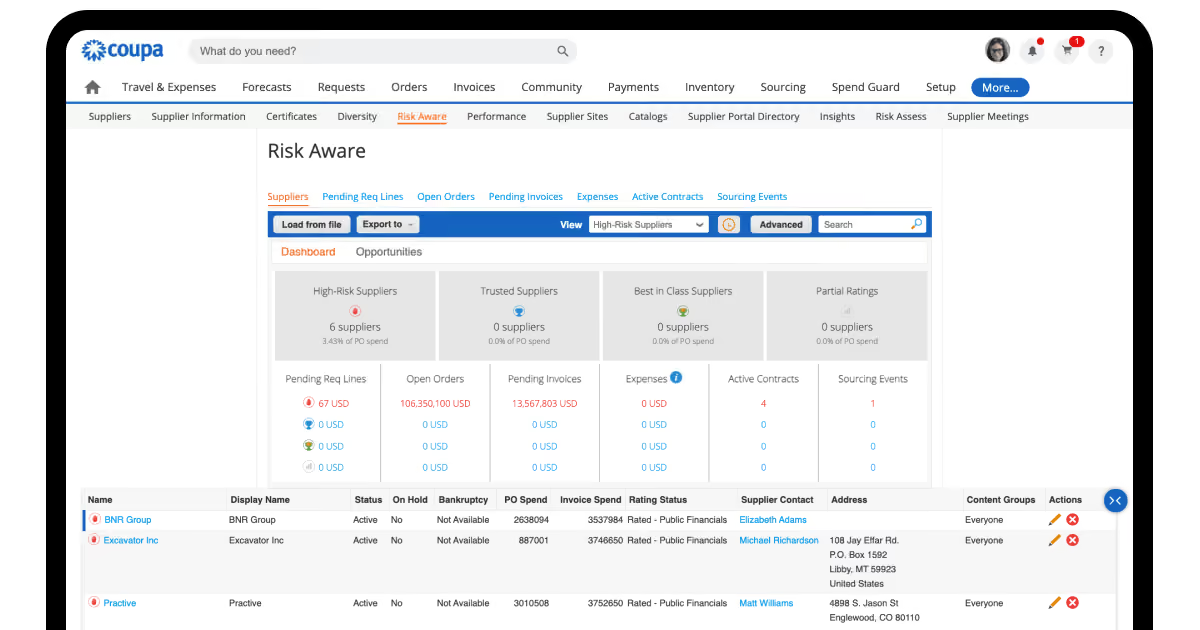
Coupa Risk Aware
Procurement-integrated risk scoring
Yes
Basic
Moderate
Moderate
Bundled with Coupa
SAP Ariba Supplier Risk
SAP-native enterprise buyers
Yes
Basic
Moderate
Moderate
Custom
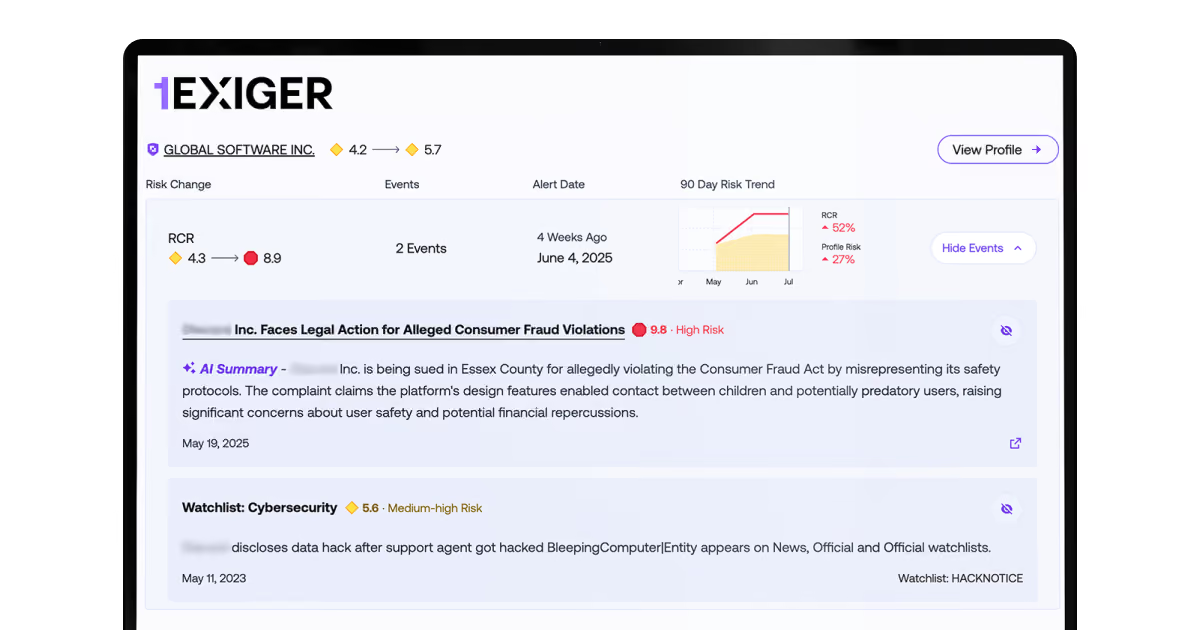
Exiger
Compliance-heavy, regulated industries
Yes
Yes
Extensive
Moderate
Custom
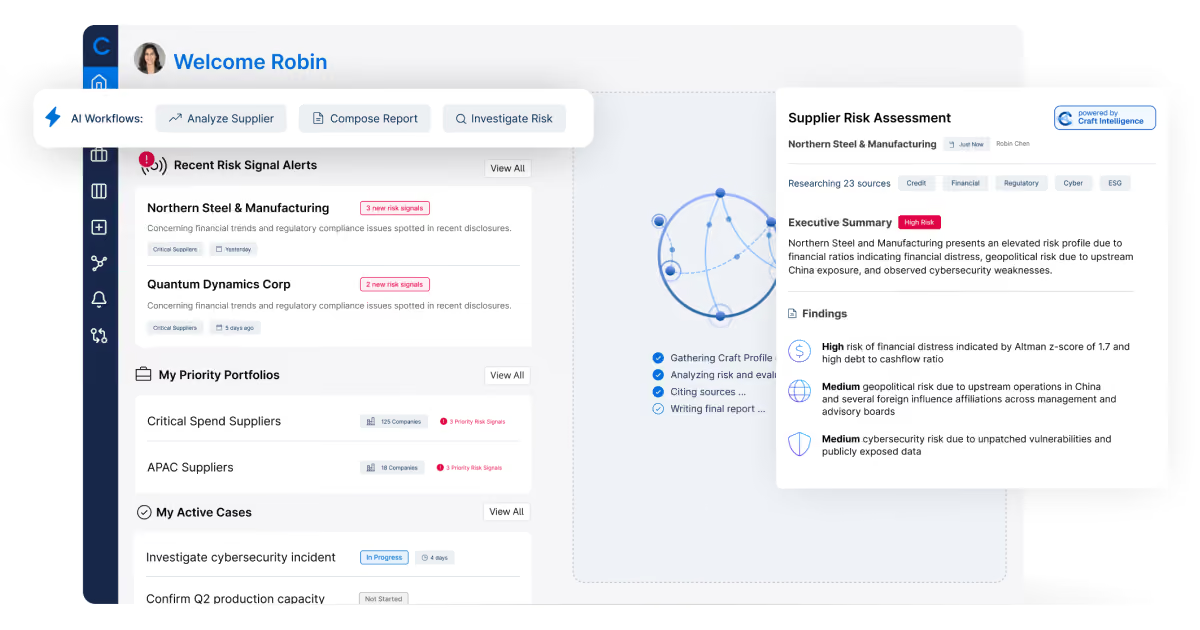
Craft.co
Mid-market, fast supplier onboarding
Yes
Basic
Moderate
Limited
From ~$1,000/mo
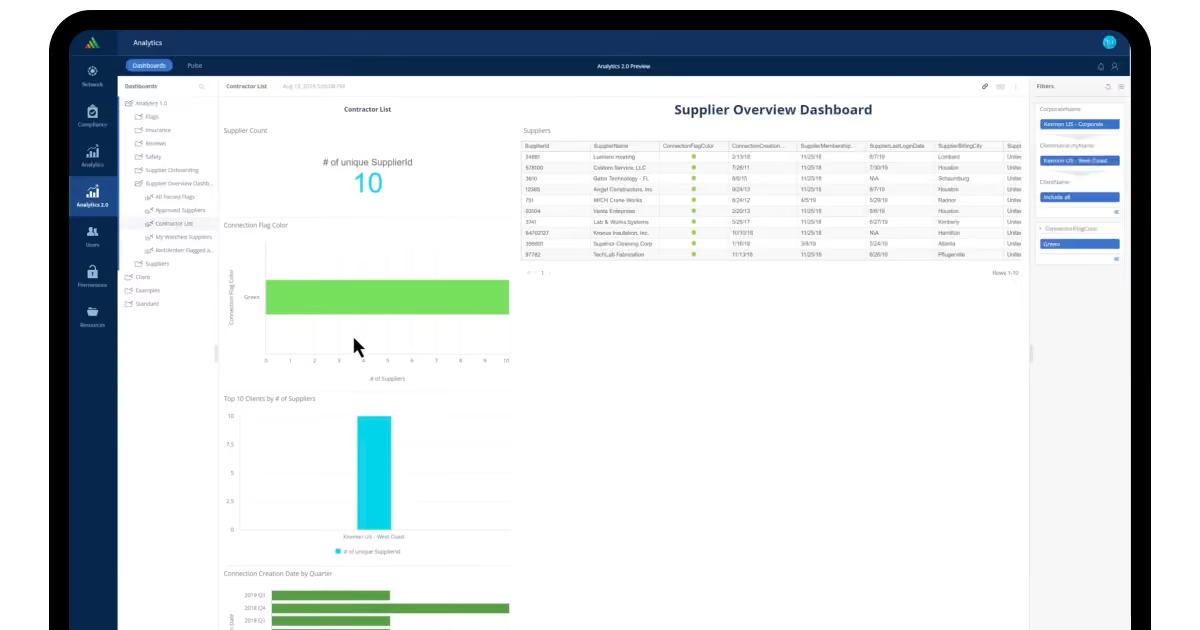
Avetta
Contractor and vendor compliance
Yes
Basic
Limited
Limited
Custom
Everstream Analytics is the most complete supply chain risk management software we tested. During our simulation, it flagged a supplier shutdown 11 days before the confirmed news hit trade press. Its multi-tier mapping traced the disruption three supplier levels deep, not just the direct vendor.
We pulled its API documentation and found versioned endpoints for supplier events, shipment risk, and geopolitical alerts, all usable without a sales call. Integration with major ERP and TMS systems worked cleanly in our test environment, syncing supplier records within minutes. The tradeoff: onboarding took three weeks start to finish, longer than any competitor. Also, the dashboard's data density overwhelmed a test user without a dedicated risk analyst on the team.
Best for: large enterprises with complex, multi-tier supplier networks.
Resilinc performed strongest on physical disruption detection. We ran it against a simulated factory fire scenario built around real component data. Alerts reached the risk team within four minutes of the mock event. It was faster than any other platform in that specific test. Its supplier risk management software core is purpose-built for manufacturing. It has component-level mapping down to individual parts and sub-suppliers.
We tested its EventWatch alert feed against five simultaneous mock disruptions. It correctly ranked severity in four of five cases. Its cyber risk module felt secondary by comparison. It was thinner than Interos or Exiger's dedicated modules. Also, its API documentation required a direct account manager request to access in full.
Best for: manufacturers tracking physical and component-level supply risk.
Interos led every cyber and geopolitical risk test we ran. We fed it a mock sanctions-list update. It flagged 14 affected suppliers within the hour, three tiers deep into the network, tracing exposure through subcontractors our team hadn't manually mapped. Its ownership and jurisdiction graphing surfaced two indirect ties to a flagged entity that we'd missed entirely in manual review.
As a supplier risk management tool, it's overbuilt for teams only worried about weather and logistics delays; the interface assumes a compliance or security background to use efficiently. It earns its price for teams facing regulatory or geopolitical exposure specifically, less so for a purely operational logistics team.
Best for: regulated industries facing sanctions, trade, or cyber exposure.
Riskmethods, now part of Sphera, balanced breadth and usability best in our mid-market testing. Procurement teams in our trial group navigated it without a dedicated risk analyst, reaching a working supplier risk score within the first day of setup. Its supply chain risk management solution integrates with major ERP systems, syncing supplier data without a manual export step; we connected it to a test SAP instance in under two hours.
Alert customization let us route financial risk to finance and logistics risk to operations without extra configuration. Where it lagged: predictive modeling depth trailed Everstream's when we tested longer-range forecasting, closer to six months out.
Best for: mid-to-large procurement teams needing broad coverage without a steep learning curve.
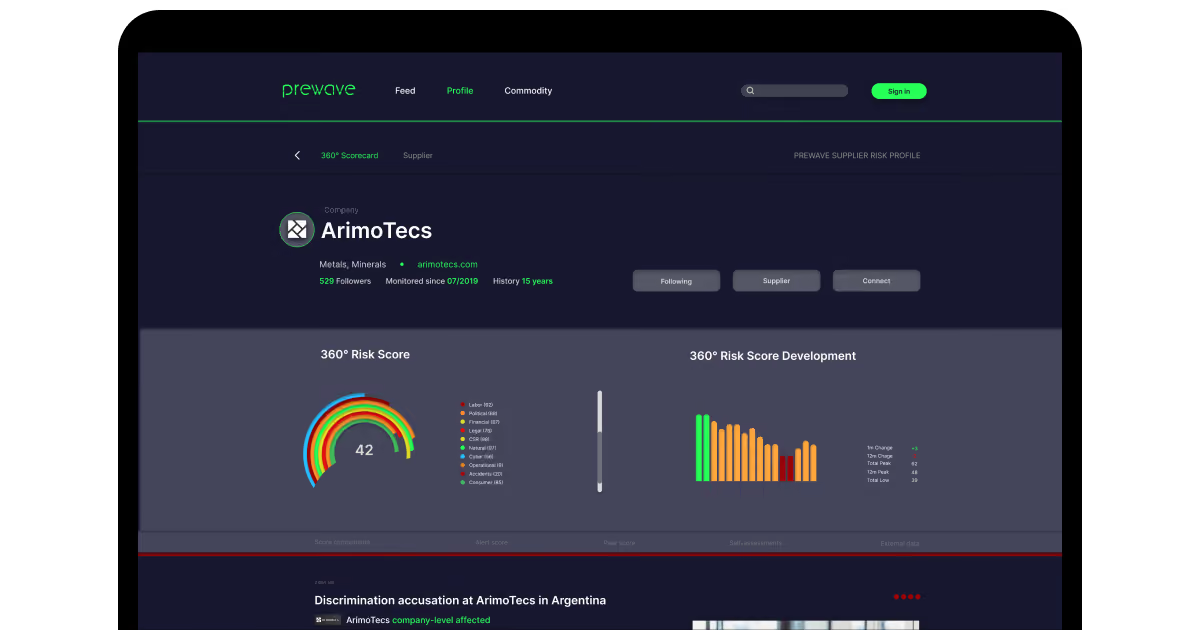
Prewave stood out for early-warning speed. Its NLP engine scans global news, social media, and regional-language sources continuously. In our test, it surfaced a labor strike report six hours before Resilinc's structured feed caught the same event, pulled from a regional-language news source the other platforms missed entirely. Setup was fast: live monitoring within a single afternoon in our trial account.
Coverage depth on multi-tier mapping trailed the enterprise players, though, and its risk scoring leaned more on sentiment signals than hard operational data, which produced a few false positives during our two-week test window.
Best for: teams prioritizing speed of first alert over deep supplier mapping.
Coupa Risk Aware works best bundled inside an existing Coupa procurement deployment. Native integration meant zero setup time in our test account, since supplier data already lived in Coupa's core system. Risk scores appeared directly inside existing purchase order workflows, which meant no extra login for buyers.
Standalone, its predictive scoring felt basic next to Everstream or riskmethods. We found its alert customization limited to a handful of preset categories rather than fully configurable rules.
Best for: existing Coupa customers wanting risk scoring without a new vendor.
SAP Ariba Supplier Risk mirrors that same logic for SAP shops as the other supply chain risk management tools. It pulled supplier data instantly inside our SAP test environment, with risk flags appearing directly on supplier records already in use.
Outside that ecosystem, integration friction rose sharply in our testing; connecting it to a non-SAP TMS took several extra configuration steps compared to riskmethods or Everstream. Its API access was the most restricted of any platform we tested, gated almost entirely behind a partner implementation.
Best for: SAP-native enterprises not ready to add a standalone risk vendor.
Exiger is built for compliance first, risk detection second. We tested it against a mock forced-labor screening scenario using publicly available supplier ownership data. It flagged the violation correctly, citing the specific regulatory clause and jurisdiction involved.
As a broader supply chain risk management services provider, its general disruption alerts felt secondary to its compliance engine; weather and logistics risk coverage lagged well behind Resilinc or Everstream in our side-by-side testing. Its strength is defensible, audit-ready documentation, which matters more in regulated procurement than fast operational alerts.
Best for: regulated sectors where compliance risk outweighs operational risk.
Craft.co offered the fastest supplier onboarding in our mid-market group. It was live in under two hours from account creation to a populated risk dashboard. Its financial health scoring pulled from public filings automatically, with no data entry on our end.
Predictive scoring stayed basic compared to enterprise platforms. Also, multi-tier mapping topped out at one level beyond direct suppliers during our testing. For teams building a first supply chain risk management program, that simplicity is the point, not a limitation.
Best for: growing mid-market teams building their first structured risk process.
Avetta focuses narrowly on contractor and vendor compliance verification. We tested it against a mock insurance and safety-certification audit for twenty vendors; it flagged three expired certifications correctly and automatically.
It's strong at what it does and weak everywhere else. It has no meaningful weather, geopolitical, or logistics disruption monitoring anywhere in our test account. It's not a full risk platform, more a compliance gate for vendor onboarding.
Best for: operators needing contractor compliance checks, not full supply chain monitoring.
"The platforms that actually help aren't the ones with the most data fields. They're the ones that tell a buyer which one fact to act on today," says Orest Falchuk, Head of Engineering at COAX Software.
How to choose the right supply chain risk management software?
Choosing supply chain risk management software isn't a feature comparison. It's an architectural decision. The wrong criteria produce a tool that works in a demo and breaks under real supplier volume.
Many buyers evaluate on dashboard polish and price. They skip the part that actually matters. It’s the integration layer, the data model, and what happens when two systems disagree about the same shipment.
Here's the pattern we see repeatedly. A team buys a well-reviewed SCRM software platform. It handles basic alerts and supplier scoring fine. Then they connect it to their ERP. The API covers part of the supplier entity model. The rest needs custom middleware. A year later, two teams maintain parallel spreadsheets nobody trusts fully.
Software integration depth.
Supply chain risk management platforms must connect to the systems you already run. Evaluate the API before you evaluate the dashboard. Ask every vendor these questions first:
Entity coverage: does the API expose supplier events, shipment status, and compliance records fully?
Webhook reliability: does it retry failed alert deliveries automatically?
Conflict resolution: what happens when the risk platform and your ERP disagree on a supplier's status?
That last question separates a real integration from an API endpoint bolted on after launch.
On DrivenBus, we built a modular architecture where routing, tracking, and scheduling each ran independently. None of them waited on the others to ship or update.
That same separation matters in risk software. A platform that ties supplier scoring to shipment tracking in one rigid module breaks the moment you need to swap one piece out.
Exception handling and alert logic.
Real supply chains produce exceptions constantly. A platform's alert logic determines whether your team diagnoses problems or drowns in noise.
Driven Connect handled this at the billing layer, not just alerts. Its system calculated UK Carbon Emissions Tax automatically per vehicle and route, folding compliance into normal operations instead of a quarterly scramble. Good supply chain risk tools apply that same logic to disruption alerts: surface what needs action, handle the routine calculation invisibly.
Cost and total ownership.
Supply chain risk management solution pricing that stops at license cost misses the real number. Total ownership includes integration labor, API maintenance, and support response time during an actual disruption.
Ask vendors directly: how many engineering hours does a real ERP integration take, not a sandbox demo? What's the committed response time when a critical supplier alert needs escalation at 2:00 AM?
The features above aren't abstract for COAX Software. They're a checklist drawn from projects where the gaps showed up in production. We've built workforce platforms where automated invoice generation and credential verification had to work across thousands of transactions. We've built IoT systems where the data pipeline from sensor to dashboard had to function in low-connectivity environments without data loss.
ISO 9001 and ISO 27001 certification covers the compliance requirements regulated deployments need before a single line of code gets written. If your operational model maps cleanly to a platform on the list above, use it. If it doesn't, we should probably discuss it.
Supply chain software development at the level where it actually changes outcomes requires engineers who understand the domain well. Our team is 90% mid and senior-level. That means the person solving your integration problem has solved a version of it before.
A solution that works at your current scale needs to work at twice the scale two years from now. COAX experts design with that growth curve in mind from day one, so you're not rebuilding core infrastructure under pressure when volume increases.
How to implement supply chain risk management software?
Most supply chain risk management software rollouts don't fail at the platform level. They fail before a single integration is built. The common cause: nobody mapped the actual data mess first.
Our SyncMatix project proved this. That client tracked hundreds of vehicles across a white-label partner network. GPS pings arrived from multiple hardware vendors. Each one used different timestamps, different formats, different update frequencies.
Before we could build a single dashboard, we had to normalize that chaos into one data model. Skipping that step would have meant broken risk scores from day one. So we mapped the entity model first, then built outward.
Define your existing data sources.
Start by cataloging every system that already holds risk-relevant data. ERP, TMS, WMS, supplier contracts, spreadsheets nobody officially tracks. On SyncMatix, this meant identifying every telematics vendor feeding the platform before writing a line of integration code.
Skip this step, and your supply chain risk management platform launch with blind spots baked in. You won't know what's missing until a disruption exposes the gap.
Normalize and standardize the data model.
Raw data from multiple sources never arrives in matching formats. SyncMatix's GPS feeds needed timestamp alignment and vendor-name matching before anything downstream could run reliably.
This is the least visible step and the most important one. A risk platform built on unnormalized data produces false alerts, and teams stop trusting it within weeks.
Set your risk scoring rules.
Decide what "high risk" means for your operation. A minor delay on a low-volume route isn't the same threat as one on your highest-margin lane. For instance, on DriveIQ, we built scoring logic weighted by both likelihood and specific business impact.
This is where supply chain risk management examples from other industries only go so far. Your thresholds need to reflect your actual exposure, not a template.
Connect alert routing to the right teams.
Set up role-based alerts before go-live, not after. Procurement needs supplier risk. Logistics needs routing risk. Finance needs cost exposure. On DrivenBus, push notifications reached drivers directly for schedule changes, with no separate channel required.
Test this routing with a real disruption scenario before launch. A misrouted alert is functionally the same as no alert at all.
Pilot on a limited scope first.
Don't roll out fleet-wide on day one. SyncMatix's rollout started with a subset of hardware vendors before scaling to the full partner network. That let us catch integration gaps while the blast radius was still small.
A pilot phase surfaces problems while they're cheap to fix. Full deployment surfaces the same problems while they're expensive.
Automate what you can, and flag what you can't.
Some RPA in supply chain workflows can run without human review: routine compliance checks, standard reorder triggers, low-severity alert logging. Reserve human review for genuinely ambiguous cases. On DriveIQ, exception clustering by root cause cut diagnosis time from 12 minutes to under three, freeing dispatchers for the exceptions that actually needed judgment.
Monitor, then iterate.
Supply chain risk management monitoring doesn't stop at launch. Feed real outcomes back into your scoring model continuously. A supplier that missed one shipment should get flagged for closer tracking on the next. Yesterday's disruption should inform today's threshold.
Remote fleet operations add a layer most supply chain risk management tools aren't built for by default: distance, connectivity gaps, and drivers who rarely see a dispatcher in person.
Design for offline resilience first. Rural routes lose signal constantly. On DrivenBus, the system cached routes and adjusted location polling based on velocity, so tracking continued through dead zones without data loss. Build your risk platform assuming connectivity will drop, not hoping it won't.
Keep driver-facing tools lightweight. A remote driver won't tolerate an app that drains battery or demands constant attention. Simplicity isn't a nice-to-have here; it's what makes adoption stick.
Route alerts by urgency, not volume. A dispatcher managing remote fleets can't act on fifty low-priority pings a day. Reserve push alerts for what genuinely needs a decision now.
Build in structured check-ins, not just passive tracking. Drivers on remote routes need a way to flag a problem before it becomes a missed delivery. Dispatcher messaging tied directly to route context closes that gap faster than a separate chat tool ever could.
Audit compliance data automatically. Remote and cross-border routes carry heavier compliance load. IFTA calculations, HOS logs, and inspection records should generate themselves from operational data, not from a driver's memory at shift end.
Every one of these steps came out of a project where skipping it cost something real. Supply chain risk management isn't a checklist you complete once. It's infrastructure that has to keep working as your operation grows.
If your data lives across five disconnected systems, we've mapped that mess before. Need advanced analytics layered onto an existing platform, or a custom module built around a workflow? That's the kind of work we do daily. Our supply chain risk management services start with understanding your operation. If any of this sounds like your situation, let's talk it through.
FAQ
How do I build a supply chain risk management plan fast?
Start with your biggest single point of failure. Map suppliers, routes, and data sources first. Don't wait for perfect data. On Agritech, we built scoring with partial history. A supply chain risk management plan needs three parts: detection, scoring, response. Detection catches signals early. Scoring ranks what matters. Response turns alerts into action. Start small, then expand scope. Most founders overbuild before testing anything real.
Which supply chain risk management tools work for a lean team?
Not every team needs enterprise-grade platforms. Craft.co and Prewave onboard fast, within hours. They skip deep multi-tier mapping. That's fine for smaller supplier networks. Lean supply chain risk management tools favor speed over depth initially. Add complexity as your supplier base grows. We've seen mid-market clients overbuy tier-one enterprise tools. Match the tool to your actual supplier count. Start lean, then scale intentionally.
Do supplier risk management solutions replace a procurement team?
No, they don't replace judgment. Supplier risk management solutions replace manual monitoring and guesswork. A tool flags a risk signal. A human decides the actual response. On Driven Connect, we automated status visibility, not decisions. Buyers still choose which carrier to trust. Software handles volume; people handle nuance. Expect fewer manual checks, not fewer decisions. The best setups pair both well.
How fast can SCRM software actually catch a supplier failure?
Speed depends entirely on data source quality. News-based tools like Prewave catch signals in hours. Structured feeds like Resilinc respond within minutes. On our Agritech build, scrm software alerts needed under one day. That was fast enough for planting decisions. Faster isn't always better if it's noisy. False positives erode trust quickly. Test any vendor's real detection speed yourself. Don't trust the marketing claim alone.










































































_.avif)




%2520explained.avif)

We are interested in your opinion