A dispatch manager glances at the screen at 6:40 a.m. Unit 409 is silent on the map. It's usually just a dead zone on the highway or a fuel run running long. But a dead zone doesn't explain a missing drop-off window in Detroit.
Now stretch that blind spot across three hundred trucks. That’s how profit margins quietly evaporate before lunch. Detention fees pile up, drivers walk away after their schedules get scrambled for the third time this week, and shippers begin looking for backup carriers.
We've spent 16 years building freight and fleet tech at COAX Software, and we've watched this situation up close. On one cross-border carrier's platform, better routing and real-time visibility we implemented cut late deliveries from 18% down to 7%. That's not a rounding error. That's dispatchers catching problems before a customer ever calls.
Trucking dispatch software can help you close that gap between "probably fine" and "actually confirmed." This guide breaks down what it does, how we ranked the platforms worth your money, and how to pick the one that fits your fleet, not someone else's case study.
Why is manual truck dispatching no longer enough?
Manual dispatching runs on phone calls, spreadsheets, and a dispatcher's memory. That worked fine for ten trucks. At fifty or five hundred, it starts breaking in expensive ways.
Common dispatching challenges
Every fleet hits the same wall eventually, just at different sizes. Take the cross-border carrier we mentioned earlier. Five hundred vehicles and a dispatch process that never scaled past year one. Forty-five percent annual driver turnover told the story. Here's what was causing it.
Last-minute changes: Weather shuts down a lane without warning. Traffic collapses an ETA in minutes. A dispatcher has to rebuild the route, notify the driver, and update the customer fast.
Hours-of-service limits: Federal driving-hour rules don't bend for a tight delivery window. Fitting a load into legal hours takes real math, done under pressure. Get it wrong, and you're looking at a violation, not just a late stop.
Communication gaps: One dispatcher juggles calls from drivers, brokers, and warehouse staff at once. Something always gets lost between three conversations. A missed detail here becomes a missed appointment two states away.
Load and financial pressure: Rate negotiations eat into margin if fuel costs and deadhead miles aren't factored in early. Broker verification takes time nobody has during a busy week. Paperwork delays on proof of delivery slow down carrier payment even further.
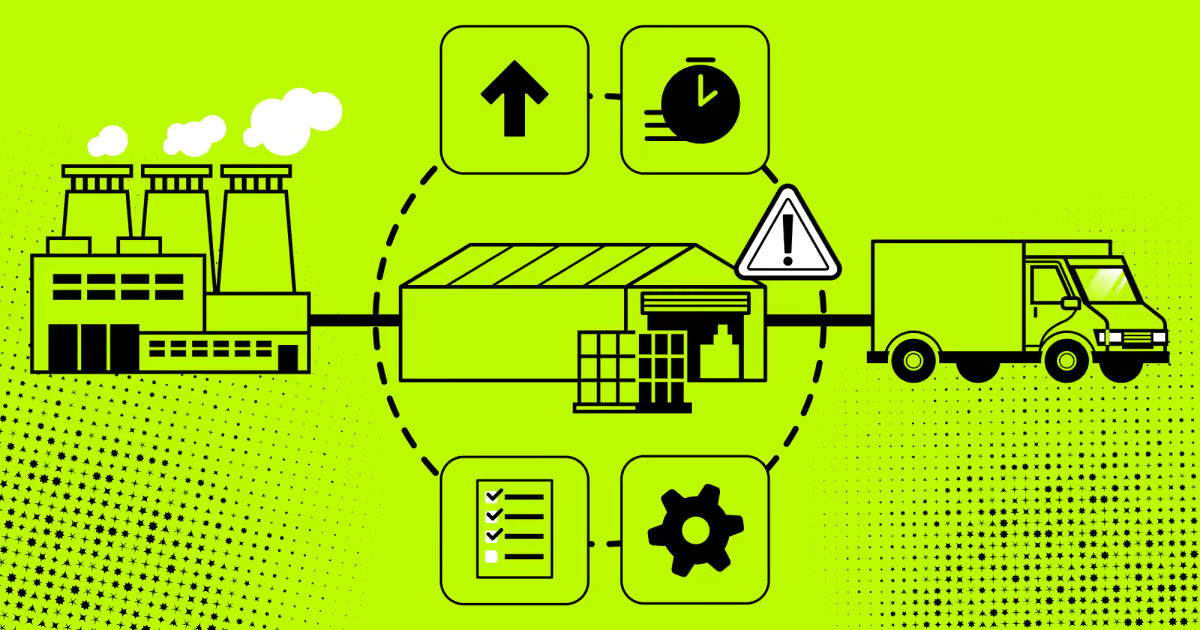
Every one of these problems compounds under trucking dispatch without a system tracking it automatically. And the labor market isn't making it easier.
The driver shortage headline number gets thrown around a lot, but the real figure has gotten darker. The American Trucking Associations stopped publishing an annual estimate after 2023, when it sat near 60,000. Their chief economist now frames it as a quality gap, not a raw headcount problem. Either way, the pressure on dispatch hasn't eased.
That math hits carriers and 4PL logistics providers the same way: fewer experienced drivers, more pressure on whoever's left at the dispatch desk. A trucking dispatch service built on spreadsheets and phone calls can't absorb that shift. The fleets scaling past it are the ones automating the parts a human shouldn't have to hold in their head.
How does trucking dispatch software improve daily fleet operations?
"Every late delivery starts thirty minutes earlier, as a decision nobody had time to make well," says Orest Falchuk, Head of Engineering at COAX Software. That's the real problem dispatch trucking software solves. It gives dispatchers those thirty minutes back.
Route disruption response eats a dispatcher's morning fast.
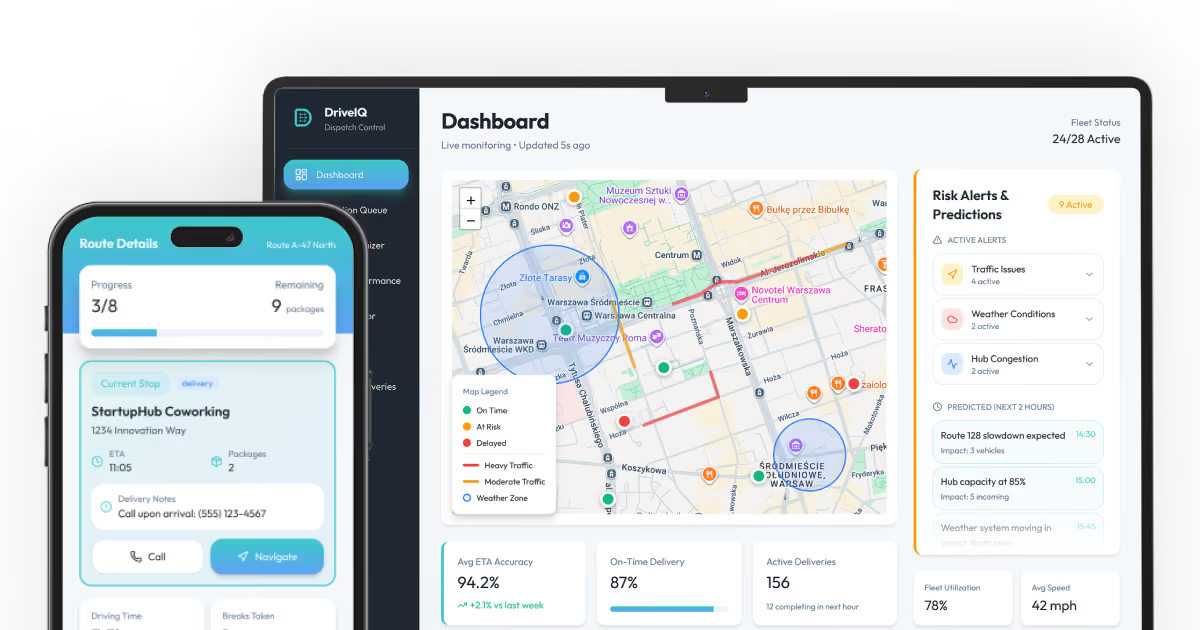
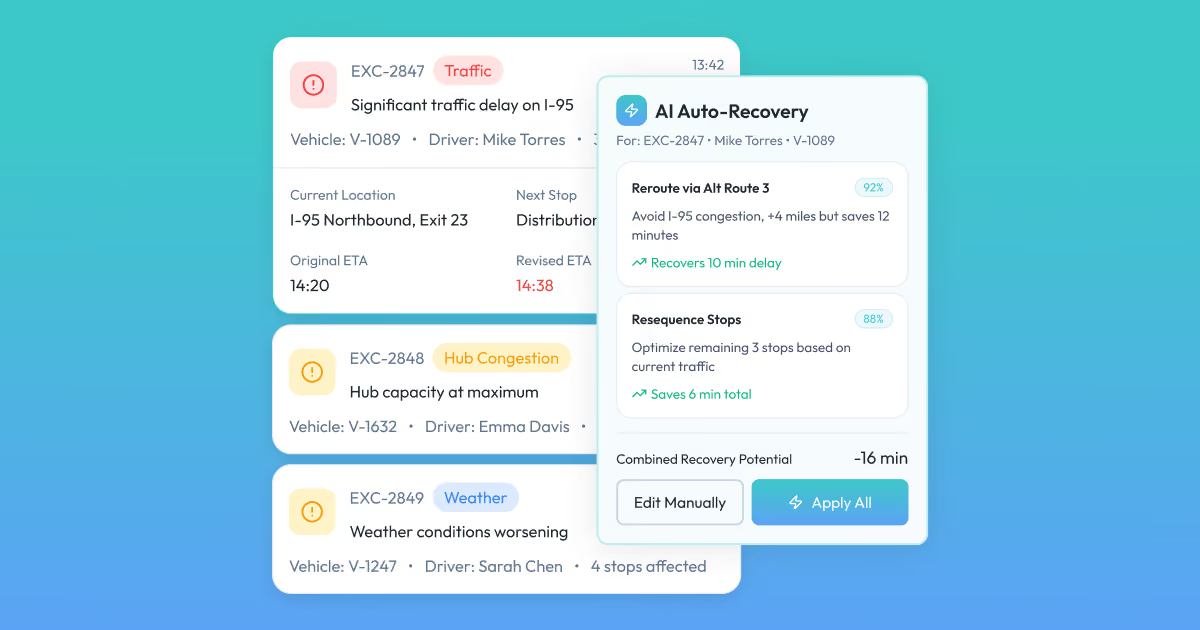
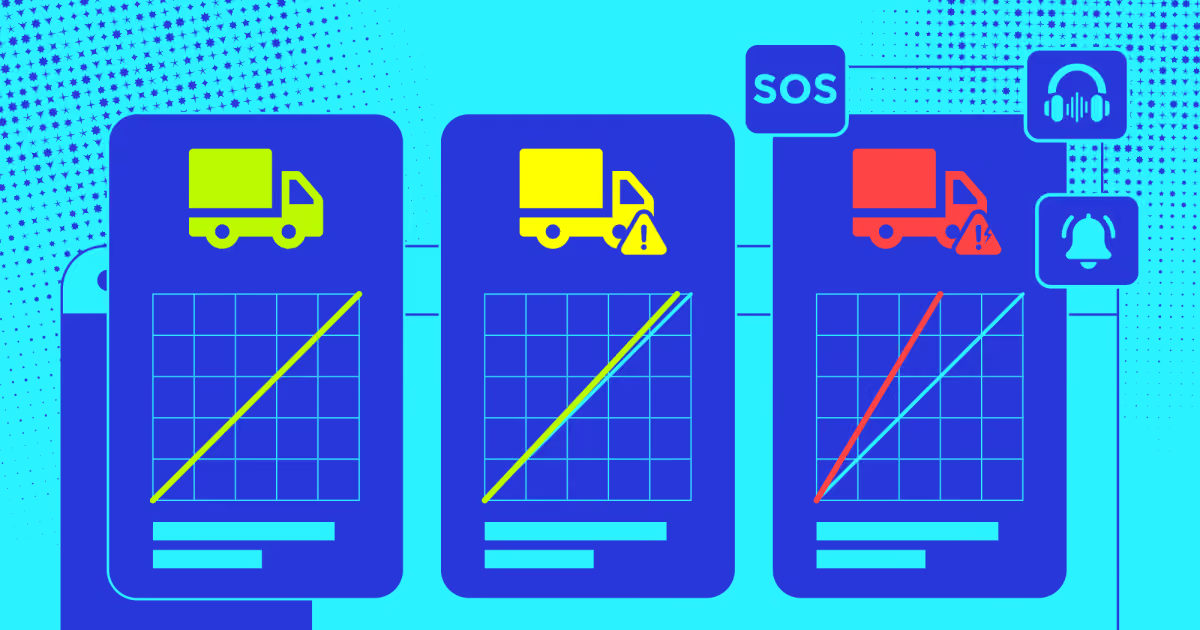
A lane closes, weather turns, and a route built at 6 a.m. is useless by 9. Rebuilding it by hand means calling drivers, checking maps, and guessing at traffic. Dispatch software recalculates routes automatically and flags the best alternative in seconds. On DriveIQ, a similar auto-recovery flow cut empty miles by eight percent through smarter re-routing.
Exception visibility breaks down the same way at scale.
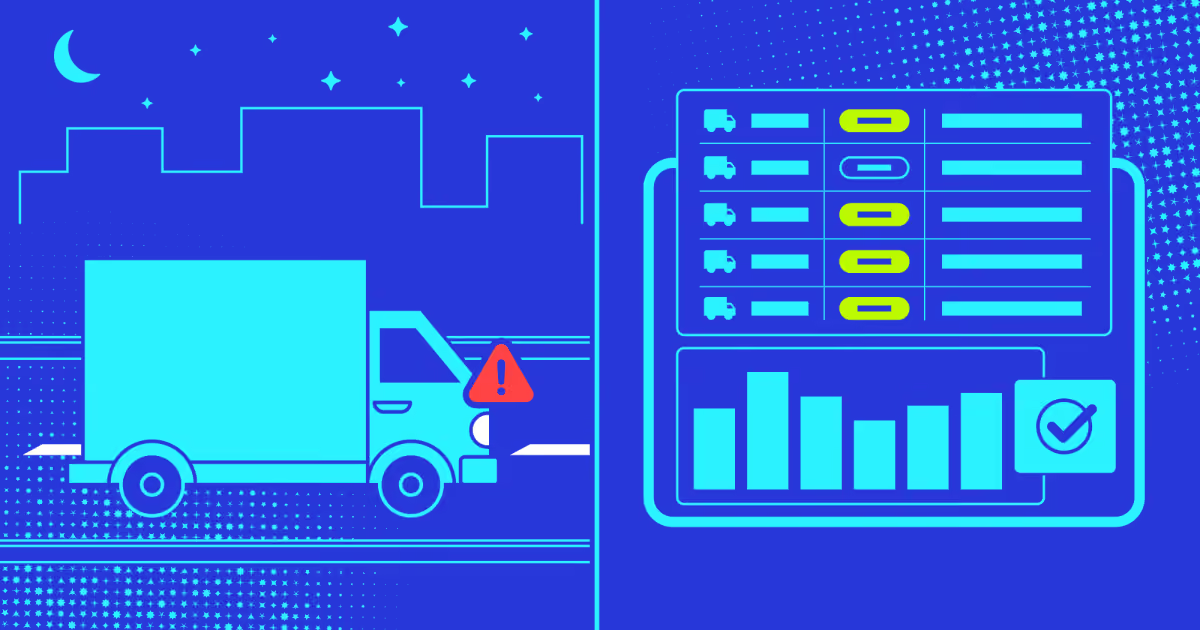
A dispatcher managing forty trucks can't watch every stop in real time, so problems surface only after a customer calls. By then, the fix costs more time and goodwill than catching it early would've. Software groups exceptions by root cause and pushes the urgent ones to the top. That single shift can cut diagnosis time from minutes down to seconds per incident.
Driver-dispatcher communication is where most of these problems actually start.
Phone tag between a driver, a broker, and a customer service line burns time that should go toward the next load. One of the biggest benefits of trucking dispatch software is replacing that back-and-forth with a shared, live view everyone works from. Drivers see route changes the second they happen, not twenty minutes into a wrong turn.
Hours-of-service compliance turns into a constant math problem on paper.
A dispatcher has to track every driver's remaining hours while planning loads that still hit delivery windows. Miss the calculation, and you've got a violation, not just a delay. Software tracks HOS limits automatically and flags drivers approaching their cap before a route locks in.
None of this is theoretical. Trucking dispatch companies running on spreadsheets hit the same wall at different sizes, just later. The fix isn't more staff. It's software that catches what a stretched dispatcher physically can't watch alone.
How we ranked trucking dispatch solutions
We didn't score platforms on feature lists. We scored them on what breaks first when a fleet actually runs one.
Every trucking dispatch software online demo looks smooth with clean sample data and a scripted scenario. Real fleets don't hand you clean data. They hand you three GPS vendors reporting on different clocks, a driver who's ignored the last four alerts, and a load that has to reroute mid-transit. So we built our test scenarios around exactly that mess.
We started with the same question every time: what happens when the system's wrong? A trucking dispatch system that predicts perfectly under ideal conditions still has to fail gracefully under real ones. Route recommendations, ETA confidence, and exception alerts all had to hold up once we introduced dropped signal, mismatched timestamps, and last-minute schedule changes.
From there, we tested five specific things every platform had to survive:
Data normalization across mismatched GPS, telematics, and TMS formats without custom parsing work.
Recommendation trust measured by how often a real dispatcher accepted a suggested route versus overriding it.
Exception clustering by whether the tool grouped root causes or just dumped raw alerts on one screen.
Compliance accuracy on HOS tracking against actual shift and break data, not idealized schedules.
Integration timeline for connecting to an existing TMS or ERP, measured in weeks, not marketing promises.
Trucking dispatch software earns its spot on this list by clearing all five, not just the ones a vendor chooses to demo. The comparison table below reflects how each platform held up.
Best trucking dispatch software on the market
Eight platforms made our final list, ranked against the five criteria from our methodology. Some lean toward full dispatch trucking software, others toward pure routing. The table below shows where each one lands on features, compliance, and cost.
Platform
Best for
Dispatch & load management
Compliance (IFTA/HOS)
Integrations
Pricing
ProTransport
Full-service FTL carriers
Consolidated dispatch, tracking, maintenance
Manual, tied to accounting module
Limited third-party
Contact vendor
Axon Trucking Software
Mid-size carriers
Visual dispatch, map view, color-coded orders
Automated, multi-jurisdiction
Built-in, no middleware
Contact vendor
ITS Dispatch
Small carriers on Truckstop's load board
Simple load entry, driver messaging
Automated, $5 per truck monthly
QuickBooks only
Contact vendor
TruckLogics
FTL and LTL mixed fleets
Profit estimator, geofenced check calls
Manual mileage entry
Load board integrations
Below typical TMS cost
Route4Me
Last-mile, multi-stop delivery
Route optimization, minimal dispatch tools
Not a core feature
Standard API
Tiered, contact vendor
MaxOptra
CRM-connected distribution fleets
Route sequencing, automated ETA updates
Not a core feature
Popular CRMs, hardware
Contact vendor
Every entry below earned its spot as one of the best dispatch software for trucking companies, based on our five-test framework from the methodology section. We cover features, integration depth, and where each one held up or fell short.
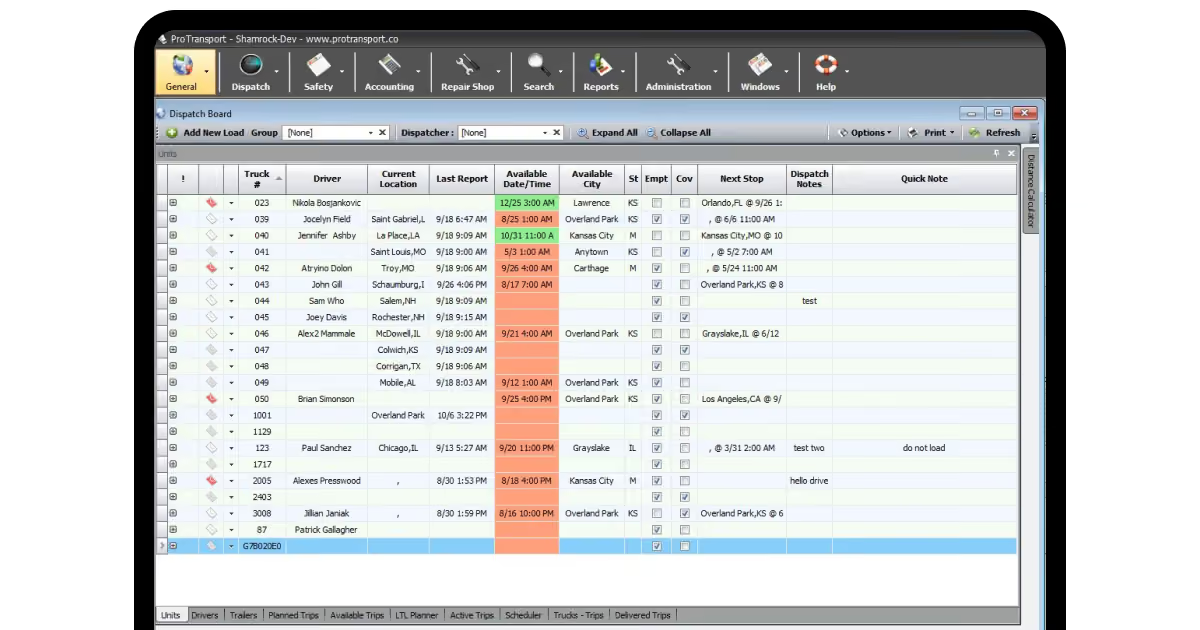
ProTransport bundles dispatch, load tracking, maintenance, and accounting in one platform. Its dispatch board consolidates driver schedules, load assignment, and messaging into a single view. The interface looks dated, but it works. It's a genuinely functional trucking dispatch app once you get past the visuals.
Recommendation trust scored well in our testing. Dispatchers adapted fast despite the clunky UI. Integration timeline scored weaker, though: limited third-party connections force manual workarounds for LTL freight.
Best for full truckload carriers who want one consolidated system, not a stack of tools.
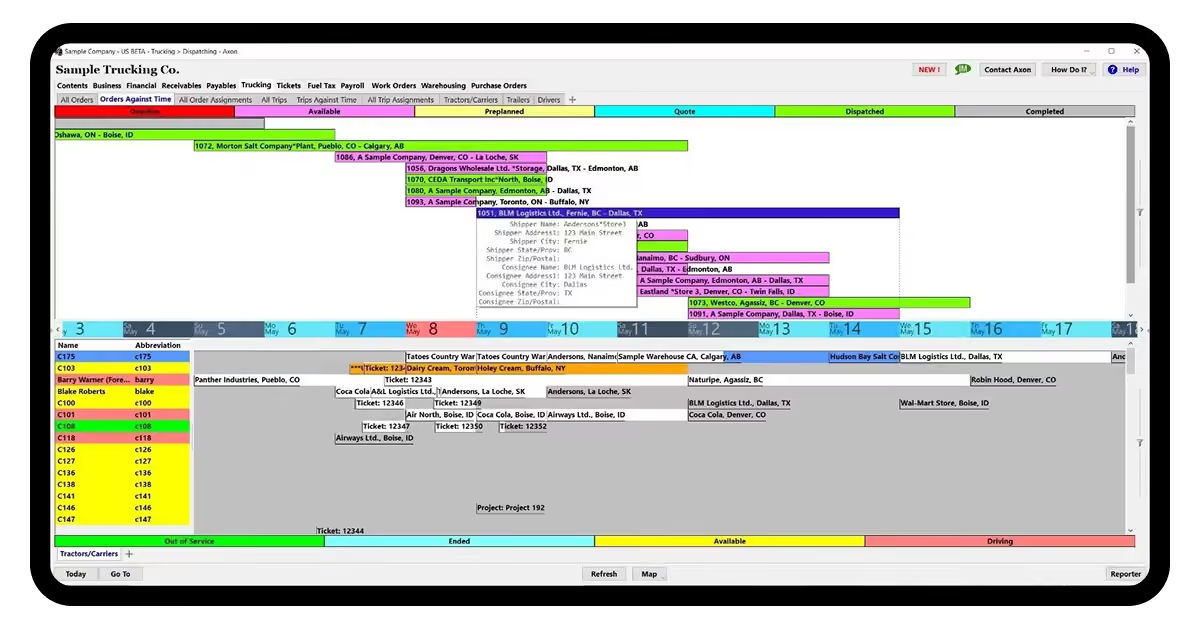
Axon combines dispatch, fleet maintenance, and trucking accounting under one cloud roof. The visual dispatch board uses map views and color-coded orders for fast load assignment. Automated IFTA reporting converts miles and gallons across jurisdictions without manual math.
Compliance accuracy tested strong, thanks to that native IFTA automation. Integration timeline came in short too: dispatch, accounting, and maintenance never need a middleware layer.
Best for mid-size carriers wanting dispatch and accounting under one system.
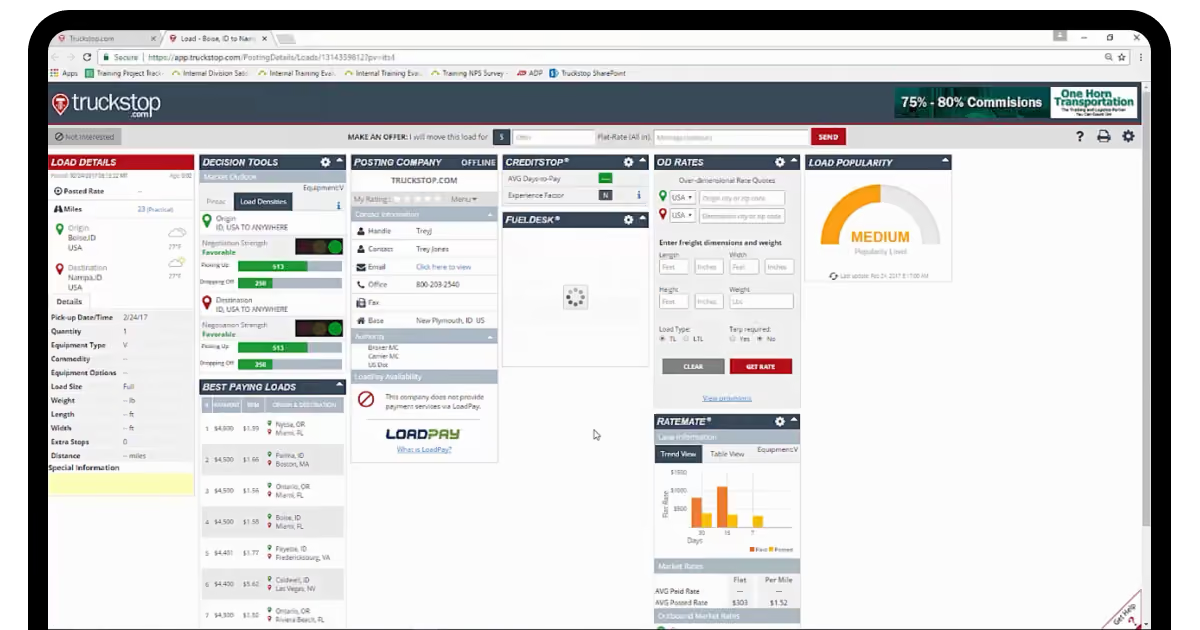
ITS Dispatch runs as a lightweight TMS tied directly to Truckstop's load board. Load entry stays simple: customer, cargo, and pickup details, nothing overbuilt. Automated IFTA reporting groups mileage and fuel cost by jurisdiction automatically. Two-way driver messaging keeps status updates flowing.
Data normalization testing showed its limits fast. It talks well to Truckstop, poorly to anything outside that ecosystem. Exception clustering stayed manual, since load status depends entirely on driver check-ins.
It's one of the more accessible options, great as dispatch software for small trucking companies.
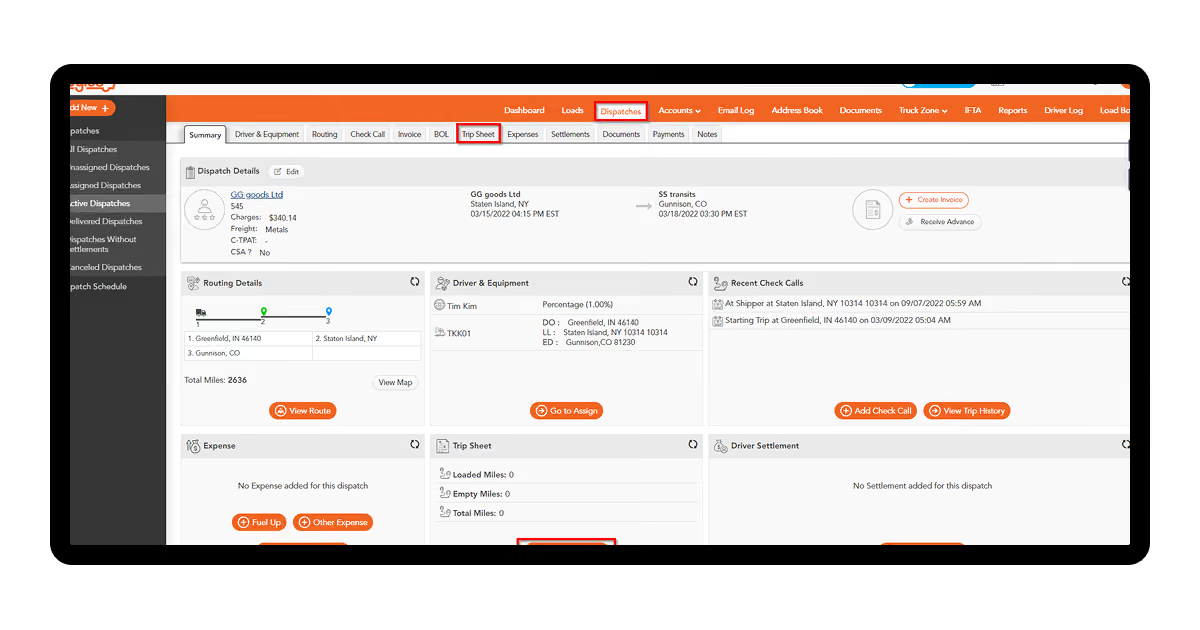
TruckLogics runs load creation through driver settlement in one flow. A built-in profit estimator calculates cost before you book a load. The dual-view dispatch schedule shows truck and calendar availability side by side. Automatic check calls trigger through geofencing at pickup and delivery points.
Recommendation trust scored well here. Dispatchers in our test group trusted automatic geofence calls over manual ones. Override rates dropped noticeably once geofencing replaced phone-based check-ins.
Best for carriers running mixed FTL and LTL loads who want dispatch tied to profitability, not just scheduling. It's solid trucking company dispatch software for that specific mix.
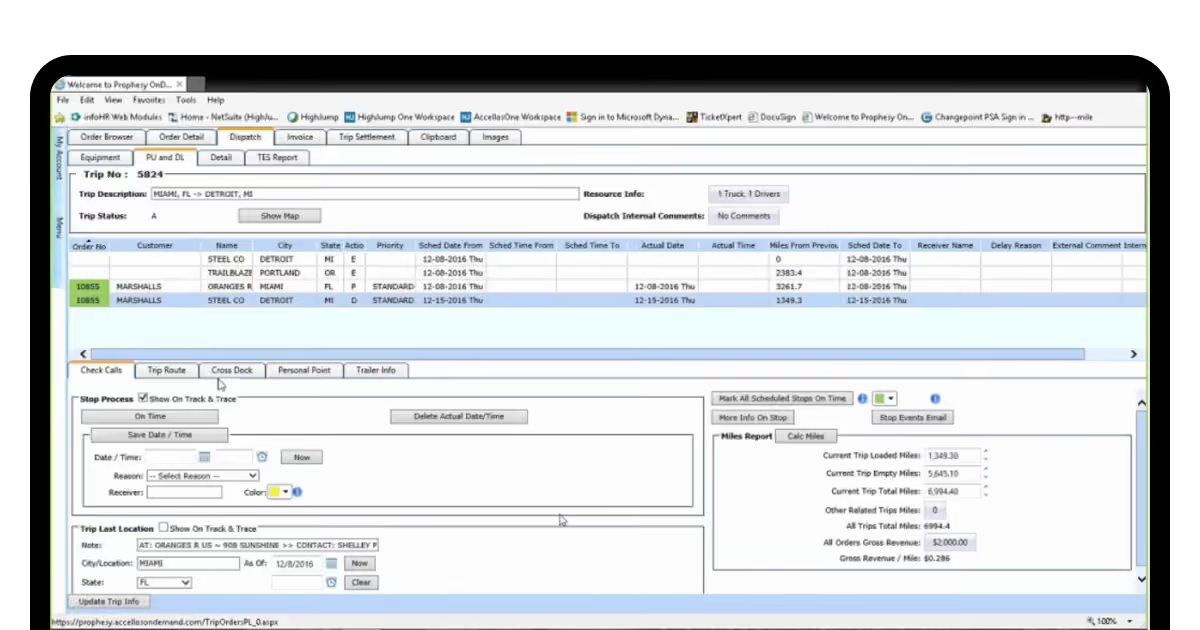
Prophesy pairs dispatch with accounting in a single workflow. Dispatchers quote rates and book loads while accounting handles invoices and driver pay. Geotab integration automates check calls, ETAs, and IFTA mileage input directly.
Integration timeline tested short, given the native Geotab tie-in. Compliance accuracy held up well too, since mileage capture runs automatically off telematics data.
Best for any dispatch trucking company already running Geotab hardware fleet-wide.
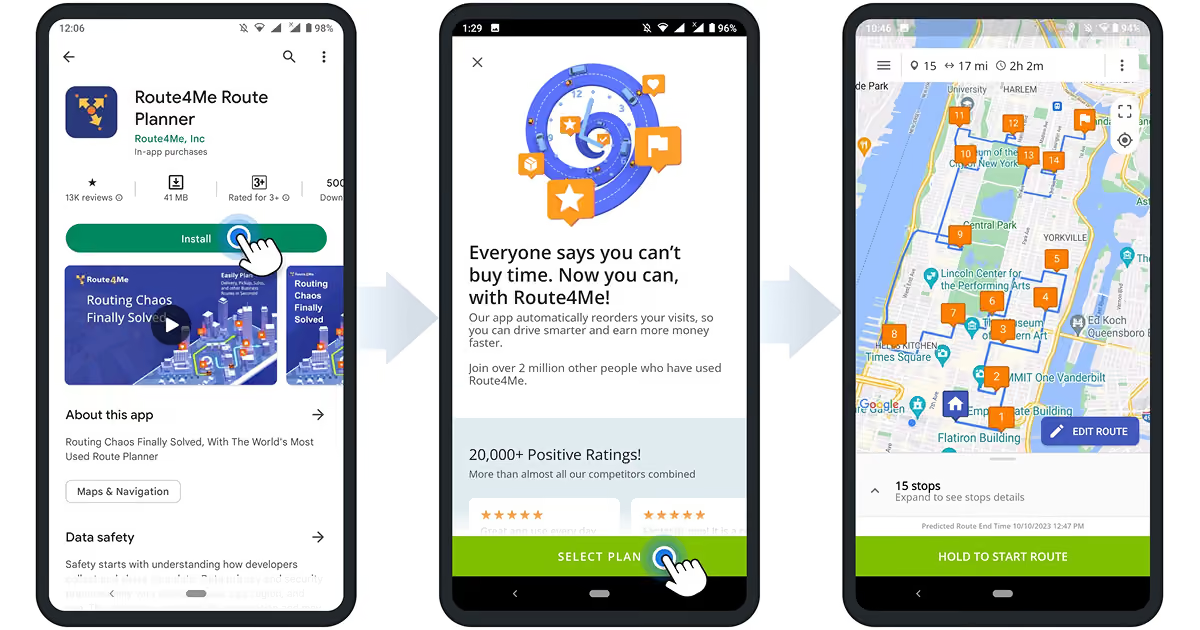
Route4Me focuses on multi-stop route planning and optimization, not full dispatch. It serves delivery, food and beverage, retail, and wholesale distribution fleets. Over 35,000 users run routes through the platform today.
ETA reliability under load performed well across dense, multi-stop test routes. Data normalization showed friction connecting to legacy TMS feeds without extra middleware.
Best for last-mile fleets that need route optimization more than full dispatch management.
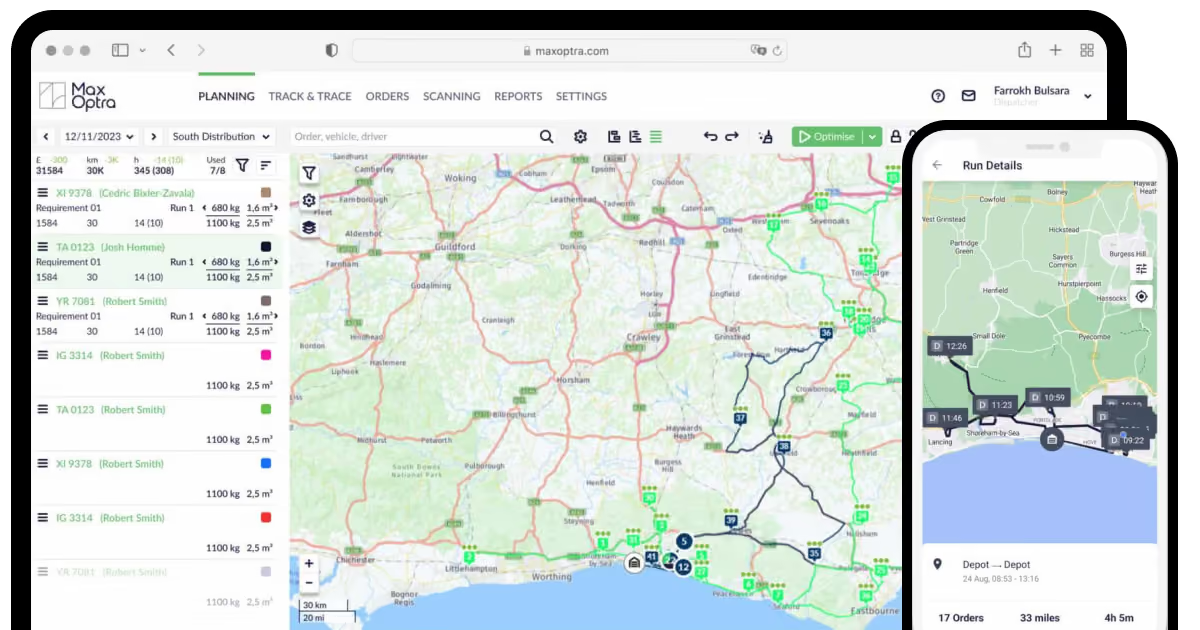
MaxOptra optimizes routes while integrating with popular CRMs and existing hardware. It factors truck capacity, order volume, and delivery windows into every plan. Over 650 companies and 6,000 users plan four million trips monthly on it.
Data normalization scored well, thanks to broad CRM and hardware support. Exception clustering stayed shallow, though: ETA updates flow automatically, but nothing groups them by root cause.
Best for distribution-heavy fleets that want routing tied into an existing CRM stack.
Not every fleet fits neatly into one of these seven boxes, though. Some operations need dispatch logic no off-the-shelf best trucking dispatch software was built to handle.
That's usually when a client calls us instead of a vendor's sales team. At COAX Software, we've spent almost twenty years building booking platforms, reservation systems, and operational automation for travel and logistics specifically. That focus means our team isn't learning your industry on your dime, we've already built the pieces that matter.
We've also found few firms in Europe or Asia with this level of vertical depth. Because we're not starting from zero on domain logic, our fleet management software development projects typically ship 50 to 60 percent faster than generalist shops manage. That speed comes from proven architecture patterns, not shortcuts.
How to choose the right trucking dispatch software?
Start by testing your worst route, not your best one. That's the advice we gave a cross-border carrier running five hundred vehicles between the US and Canada. They came to us already frustrated with off-the-shelf options that couldn't handle their mismatched GPS feeds and inconsistent timestamps.
We walked them through the same evaluation we use internally, then built SyncMatix around what actually mattered. Here's the practical checklist that came out of it.
Test real-time tracking under your own vehicle mix, not a demo fleet. SyncMatix pulls GPS streams from multiple hardware vendors into one live view. If a platform can't unify mismatched telematics feeds, you'll feel it the first messy Tuesday.
Check whether alerts route by role, or just dump everything on one screen. We built SyncMatix so utilization alerts hit fleet managers, task updates hit drivers, and system issues hit admins. A tool that broadcasts every alert to everyone trains people to ignore all of them.
Ask how the analytics layer separates fuel, maintenance, and driver behavior. SyncMatix's engine turned raw telemetry into dashboards that flagged an average of eighteen percent in fuel savings. A trucking dispatch software platform without that separation just shows you noise.
Confirm the driver app won't drain a phone battery by lunch. SyncMatix's mobile app streams telematics data without heavy battery draw, which is why drivers actually open it. A dispatch trucking software tool nobody opens isn't collecting real data either.
Look for route analytics that compare trips, not just track them. Toll-road matching and trip-history comparisons drove route optimization gains up to twenty-two percent on SyncMatix. Static tracking alone won't surface that kind of savings.
Ask about multi-tenant support if you manage partners or sub-fleets. SyncMatix's architecture lets one platform scale to five hundred customers through partner accounts. That's the difference between a tool built for one fleet and one built to grow with you.
Run any shortlisted platform through those six checks before you sign anything. If nothing on the market clears them, building becomes the more sensible option.
For a mid-size fleet, we typically recommend a modular monolith, not microservices. One backend API, separate admin and mobile apps, running on managed AWS. That architecture ships faster and costs less to run than a distributed system most fleets don't need yet.
Run any shortlisted platform through those six checks before you sign anything. If nothing on the market clears them, building becomes the more sensible option.
For a mid-size fleet, we typically recommend a modular monolith, not microservices. One backend API, separate admin and mobile apps, running on managed AWS. That architecture ships faster and costs less to run than a distributed system most fleets don't need yet.
That's exactly why some clients keep their existing dispatch trucking company software and ask us to layer AI and analytics on top instead of rebuilding from scratch. We can wire document parsing, plain-language querying, or predictive alerts into a platform you already run. Discovery starts with a gap assessment: what your current system handles, what's missing, and where the integration risk actually sits.
Project teams stay lean by design, usually one or two senior developers, a DevOps engineer, plus PM and QA support. That's often enough for dispatch services for new trucking companies just getting off spreadsheets, and even fits dispatch software for small trucking companies scaling past their first fleet. The setup scales nicely once your fleet does too.
What is trucking dispatch software?
We've covered the practical side already. Rankings, criteria, the build-versus-buy decision, all handled. Now let's step back and look at what this technology actually is.
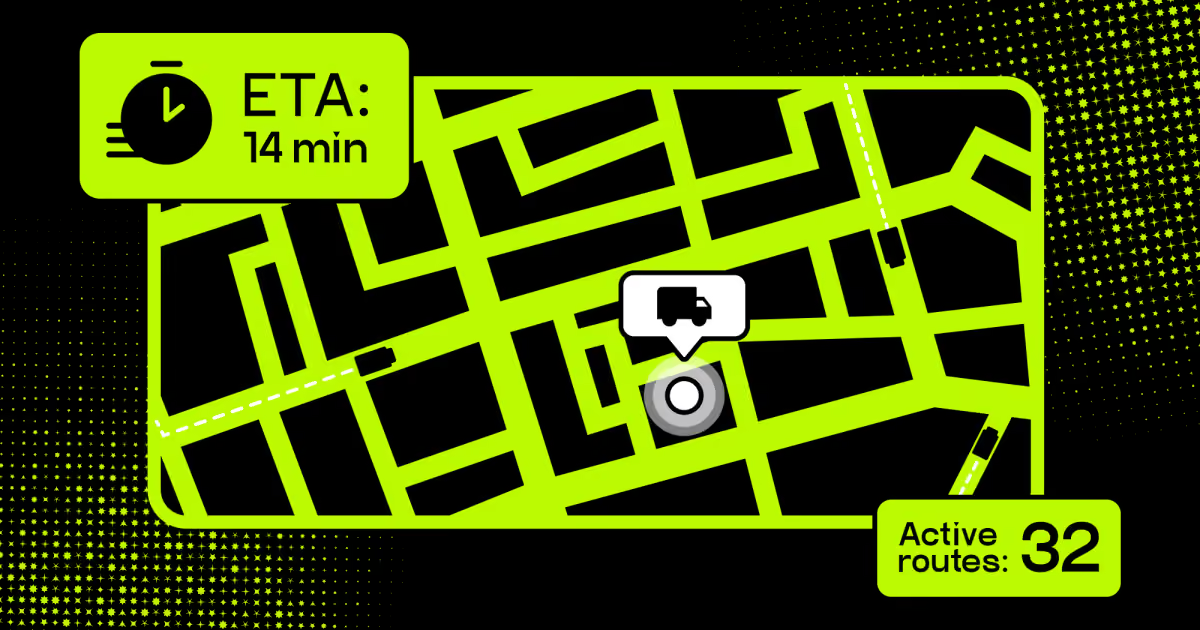
Dispatch software for trucking assigns loads, tracks drivers, and manages routes in one system. It takes open loads, driver availability, and delivery windows as input. It outputs an assignment a dispatcher can approve in seconds, not minutes.
Think of it as the layer between a stack of loads and a truck actually moving. Without it, dispatchers match loads to drivers by memory and phone calls. That's slow, and it doesn't scale past a handful of trucks. With it, the system weighs driver hours, location, and load priority automatically.
Most platforms don't stop at assignment, either. Transport planning software built for dispatch folds in live GPS tracking, HOS compliance, and proof-of-delivery capture. The whole load lifecycle runs through one workflow instead of five disconnected tools.
The market backs up what we've seen firsthand. Global trucking dispatch software is projected to hit $10.2 billion by 2033. That's a 9.8% compound annual growth rate, and software itself holds the largest share of that spend, at 62.4%.
Real-time tracking adoption, fuel cost pressure, and driver safety compliance are driving that growth. Samsara currently leads the competitive field through deep telematics integration.
That growth is a massive yes to what we've been seeing on the ground for years. Fleets that once ran on spreadsheets are now asking for the same predictive, always-on visibility we built into DriveIQ. The market's catching up to what the largest carriers already knew.
Who needs trucking dispatch solutions?
Let’s imagine our client, Driven Connect, before their platform existed. UK organizations were booking coaches and minibuses through phone calls, email chains, and one-off quotes. No standard way to compare operators or track a booking's status.
Four hundred coach and minibus operators now run through that same platform instead. Buyers submit one request, multiple carriers bid, and the system tracks the whole tender automatically. That's what happens when scattered manual coordination turns into structured trucking dispatch services.
You'll recognize your own operation in a few common patterns below.
Growing carriers outpacing manual coordination. Once a fleet crosses roughly fifty trucks, spreadsheets start breaking down fast. No dispatcher can hold that many routes, drivers, and delivery windows in their head at once. Trucking dispatch stops being optional at that size.
Freight brokers coordinating dozens of carrier partners. A broker matching loads to available trucks needs live visibility into capacity, not a guess. Missing that visibility means bidding blind, or worse, double-booking a truck that's already committed elsewhere.
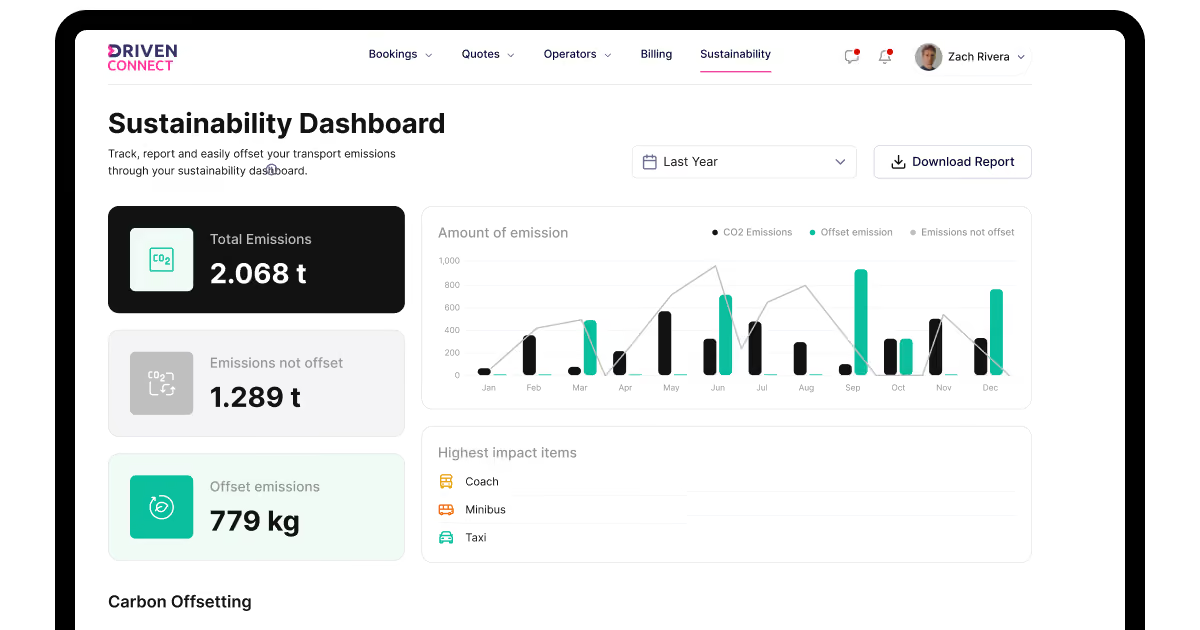
Fleets facing regulatory or emissions compliance pressure. Cross-border carriers and UK operators alike now answer to carbon tax rules, HOS regulations, and audit requests they can't track by hand. Driven Connect's emissions module calculates carbon output per route and handles UK carbon tax payments automatically, exactly the kind of compliance layer a growing fleet eventually needs built in, not bolted on.
Owner-operators juggling multiple broker relationships. Managing loads across two or three brokers by phone is manageable, barely. Add a fourth relationship, and you're chasing rate confirmations across five different inboxes. Dispatch programs for trucking consolidate that chaos into one board.
Platforms building white-label dispatch for their own network. Some businesses aren't running trucks themselves. They're connecting operators to buyers and need vehicle management, billing, and role-based access under their own brand. Driven Connect's operator-facing tools let carriers manage fleet details and depots independently, while buyers see a single unified booking experience.
Carriers facing driver retention pressure. High turnover often traces back to chaotic daily workflows, not just pay. Constant last-minute route changes and phone tag wear drivers down fast. Better dispatch for trucking company operations remove that daily friction directly.
Plenty of vendors will sell you a dispatch board. Fewer can adapt it to your specific carrier mix, your compliance exposure, and the mess your current systems already produce. Real route optimization software development takes engineers who've debugged a live EDI mismatch at 2 a.m., not just read the API docs.
At COAX, our median engineering tenure on our team runs 6.5 years, well above the 3.1-year median across the company. That gap matters: the expertise stays in-house instead of walking out the door with the last hire.
Clients get years of accumulated freight and fleet knowledge, not a rotating cast of new developers. ISO 9001 and ISO 27001 certification is standard on every project, not an upsell we pitch after the contract's signed. Security is the starting point, documented from day one, not a feature we bolt on later.
What are the features of trucking dispatch software?
Not every dispatch trucking software platform earns its subscription fee. Here are the seven features worth checking before you commit to one.
Delivery variables.
Dispatching trucking by hand means juggling driver cost, truck capacity, and customer location in your head at once. Add time on site, driver skill sets, and expected arrival windows, and manual matching stops scaling past a dozen trucks. Software weighs all these variables simultaneously and surfaces the best match in seconds. DriveIQ's auto-recovery optimizer factored driver safety scores into every reassignment, not just proximity or availability.
Automation.
Routing by hand is slow. Calling every customer with a status update is slower. Automation handles both, freeing dispatchers for the decisions that actually need a human. Dispatch software for trucking companies should support real-time rerouting when a delay hits, not just static route planning. DriveIQ's LLM-based message generator cut manual customer notification requests by 85%, since delay updates went out automatically instead of by phone.
Dispatcher onboarding.
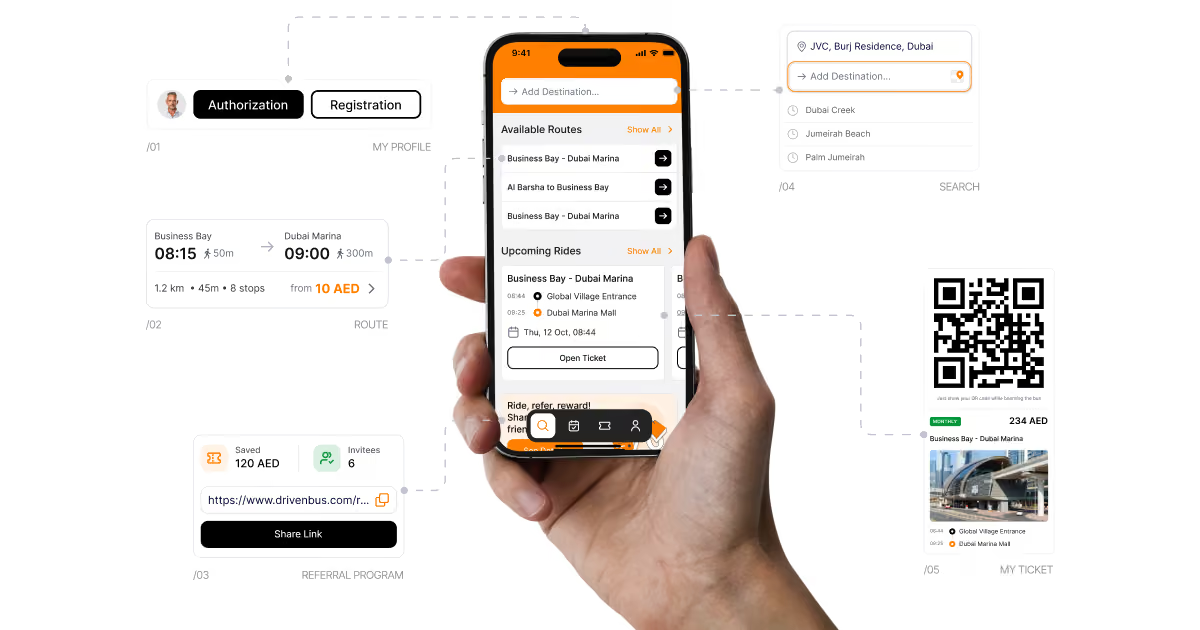
A powerful platform is useless if your team can't figure out how to use it by day three. Complexity kills adoption faster than any missing feature ever could. Look for a trucking dispatch system built around how dispatchers actually think, not a feature checklist nobody asked for. DrivenBus's driver app took a similar approach: check in, scan a QR code, mark a stop complete, nothing else to learn.
Real-time data and alerts.
Plans fall apart the moment a delay hits, so dispatchers need live visibility into every truck and driver. Real-time data turns a guess into a decision made with actual information. Look for platforms offering live alerts alongside post-delivery KPIs: on-time rate, missed deliveries, average time to delivery. DriveIQ's risk detection engine clustered exceptions by root cause, cutting diagnosis time from twelve minutes down to under three.
Digital proof of delivery.
Disputes happen. A digital proof-of-delivery system settles them fast, with photos, signatures, or both captured right from a driver's phone. Some platforms now support contactless delivery confirmation too, which matters more than it used to. DrivenBus's QR validation system hit 99.7% scan accuracy, with boarding confirmed in just 3.2 seconds per passenger.
Agility and robustness.
Your dispatching needs today won't match your needs in two years. Growth brings more vendors, more drivers, heavier reporting demands, sometimes overnight. The right dispatch trucking software scales with that shift instead of forcing a rebuild. Driven Connect's platform expanded from a three-role B2B system into a full B2C and B2B model without a ground-up rewrite, because the architecture was built to flex from day one.
Integration.
No dispatch tool runs in isolation from the rest of your stack. It has to talk to your order management system, your accounting platform, and whatever else already runs your business. Ask hard questions about available APIs before signing anything, not after. On Driven Connect, we built native Stripe payment integration and Google Maps route calculation directly into the booking flow, so operators never juggled separate tools for pricing and routing.
There’s even more to say about integrating your trucking dispatch app. Let’s focus on this important area in more detail.
How can dispatch software integrate with your existing systems?
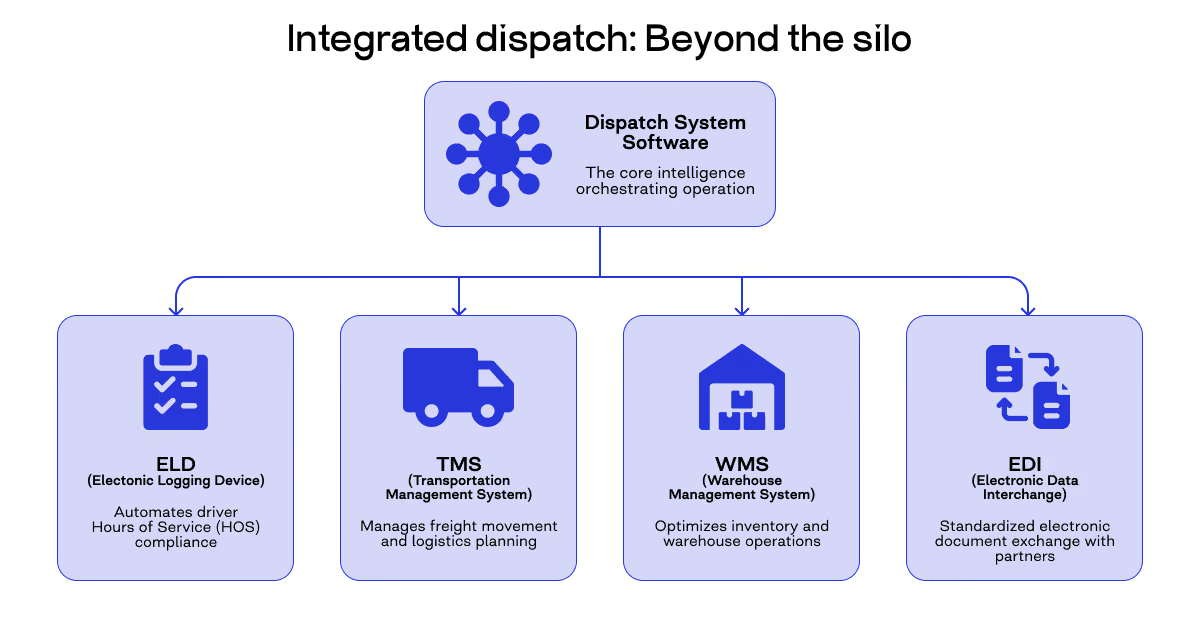
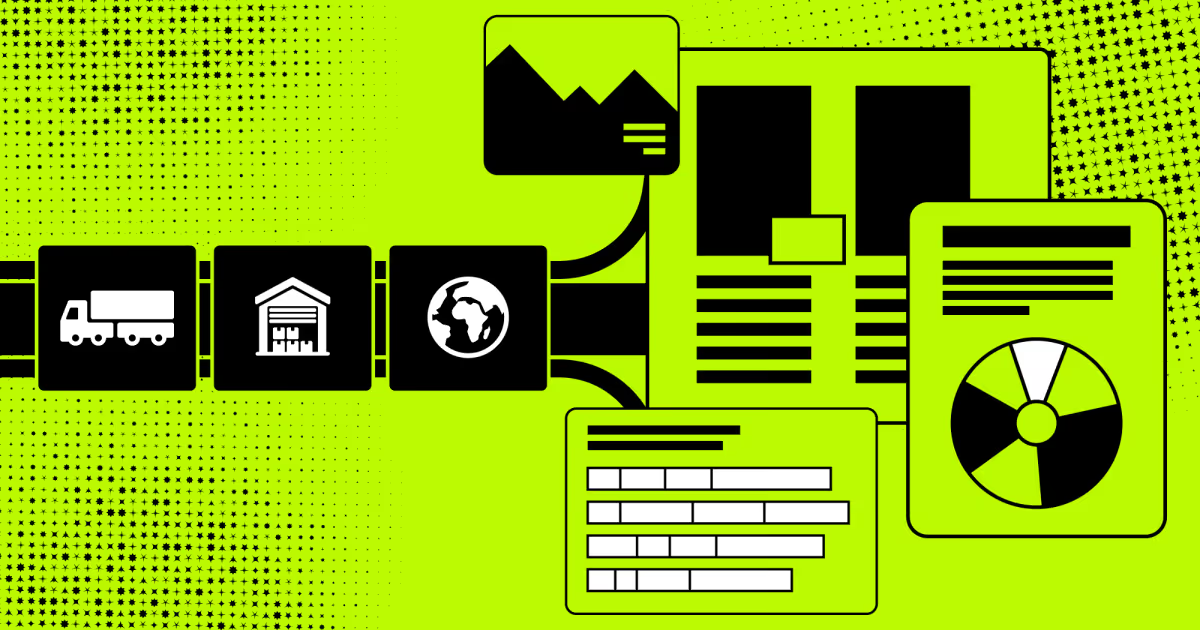
Trucking dispatch software rarely runs alone. On its own, it's just a scheduling brain with nowhere to plug in. Real value comes from what it connects to: the systems already tracking your compliance, your freight, your warehouse, and your paperwork.
Four categories typically sit around a dispatch system, each handling a different slice of the operation.
ELD, or electronic logging device, feeds. These automate driver hours-of-service compliance by capturing drive time, breaks, and duty status directly from the truck. A dispatch system pulls this data to avoid assigning a load that would push a driver past legal limits.
TMS, or transportation management system, connections. A TMS handles freight movement and logistics planning: rate quotes, carrier selection, load tendering. Dispatch software syncs with it so a booked load flows straight into an assignment without manual re-entry.
WMS, or warehouse management system, links. For fleets touching warehousing, a WMS optimizes inventory and pick-pack-ship operations. Dispatch software checks WMS data to confirm a load is actually ready before sending a truck to pick it up.
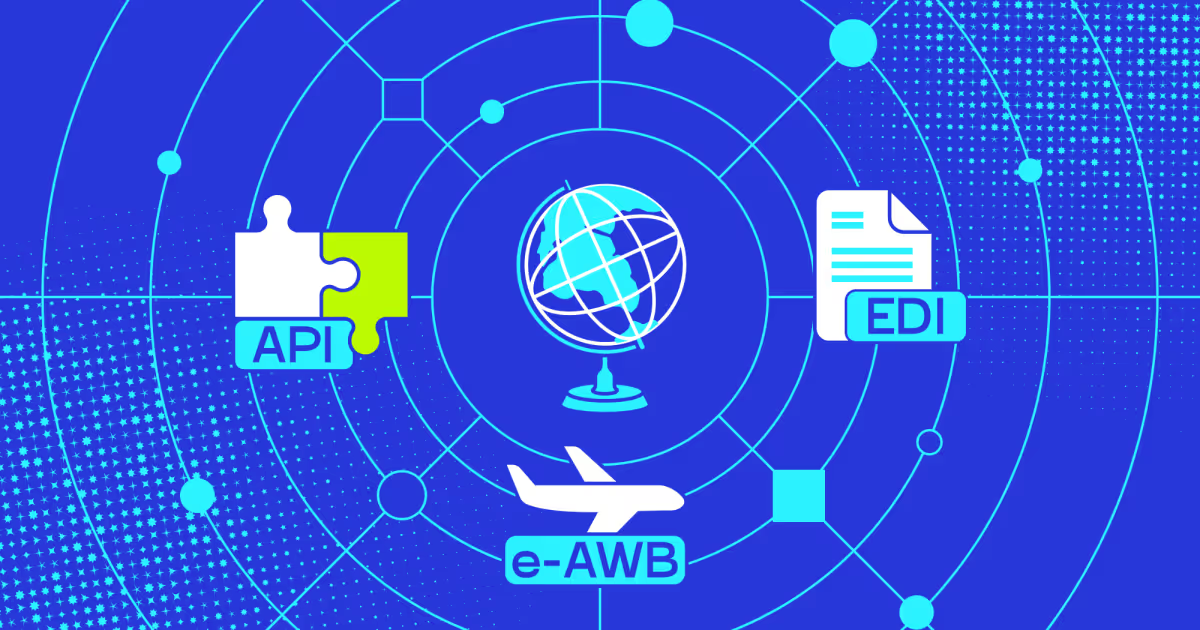
EDI, or electronic data interchange, feeds. EDI standardizes document exchange between trading partners: purchase orders, invoices, shipping notices. Dispatch software ingests these feeds to auto-populate load details instead of a dispatcher retyping a bill of lading by hand.
None of these systems were designed to work together. That's the friction point every trucking dispatch company eventually hits. An ELD vendor built for compliance doesn't think about TMS load data. A TMS built for freight planning doesn't know your WMS's inventory schema. Someone has to bridge that gap, and the two options are an API-first connection or a middleware layer that translates between systems that don't speak the same language.
API connections work when the target system exposes a modern REST endpoint. Data flows directly, in near real time, with no translation layer needed. Middleware becomes necessary when a system is older, closed, or only exports flat files on a schedule. In that case, a broker layer sits between the legacy system and the new one, normalizing data so nothing breaks mid-rollout while the old system stays the source of truth.
We've built both patterns on real projects. On SyncMatix, we unified three separate vendor platforms, tracking, reporting, and a driver app, into one normalized dashboard, since none of them shared a login or data format to begin with.
Whichever integration pattern a fleet needs, the same rule holds: dispatch software trucking platforms are only as useful as the systems feeding them clean data. Dispatch services for trucking companies built around this connective layer save far more time than any standalone scheduling tool ever could.
FAQ
What is trucking dispatch software’s use if I'm currently running everything through group texts and a shared calendar?
Trucking dispatch software replaces those group chats with a single system that tracks load assignments, driver status, and delivery timing. Group texts lose context fast: nobody knows who confirmed what. A dispatch platform keeps every load's history in one place, searchable later. For a five-truck operation, that shift alone often prevents the double-booking mistakes that group texts cause each week.
What's the best dispatch software for small trucking companies that can't afford a six-month rollout?
The best dispatch software for small trucking companies prioritizes fast setup over deep customization. Look for platforms with same-week onboarding and transparent per-truck pricing. Skip anything requiring a dedicated implementation team. TruckLogics and ITS Dispatch both launch quickly without months of configuration. A six-month rollout only makes sense once your fleet's complex enough to justify it.
How do dispatch trucking companies handle data migration from spreadsheets or an old TMS?
Most dispatch trucking companies quote two to six weeks for a full data migration, depending on how clean your existing records are. Historical load data, driver profiles, and compliance documents all need mapping to the new system's structure. Messy spreadsheets slow this down significantly. Budget extra time if you're moving off paper logs entirely, since that conversion always takes longer than vendors initially promise upfront.
Is trucking dispatch software online safe to run without an in-house IT team?
Trucking dispatch software runs through your browser, so you don't install anything locally, and updates happen automatically. Security depends on the vendor, not your team. Check for encrypted data transfer, role-based access, and where servers physically host your data. Most reputable platforms handle this well without needing dedicated IT staff. Ask directly about backup frequency and what happens to your data if you cancel.
What does dispatch trucking software actually cost once you add every fee?
Dispatch trucking software rarely stops at the advertised subscription. Per-truck fees, IFTA reporting add-ons, and premium support tiers stack up fast. Some platforms charge separately for driver seats versus dispatcher seats. Ask for a full cost breakdown before signing, including implementation and training hours. A cheaper monthly rate can lose to a pricier platform once custom integration work gets factored into the real total.








































































_.avif)







%2520explained.avif)

We are interested in your opinion