Logistical companies lose 10 to 15% of their annual revenue due to small delays. They include temporary road repairs, bad weather, and traffic congestion. All these events usually postpone deliveries by several hours at worst. But they occur every day and quickly compound, making big disruptions like COVID-19 pale in comparison.
Our client in the DriveIQ case encountered this problem first-hand. They assembled a fleet of 500 vehicles in the first five years on the market. However, seemingly insignificant delays started to undermine this growth trajectory. Dispatchers had to troubleshoot missed deliveries constantly. Customer support lines regularly had to deal with complaints about delayed deliveries. Drivers were frustrated with ever-changing pick-up and drop-off routes.
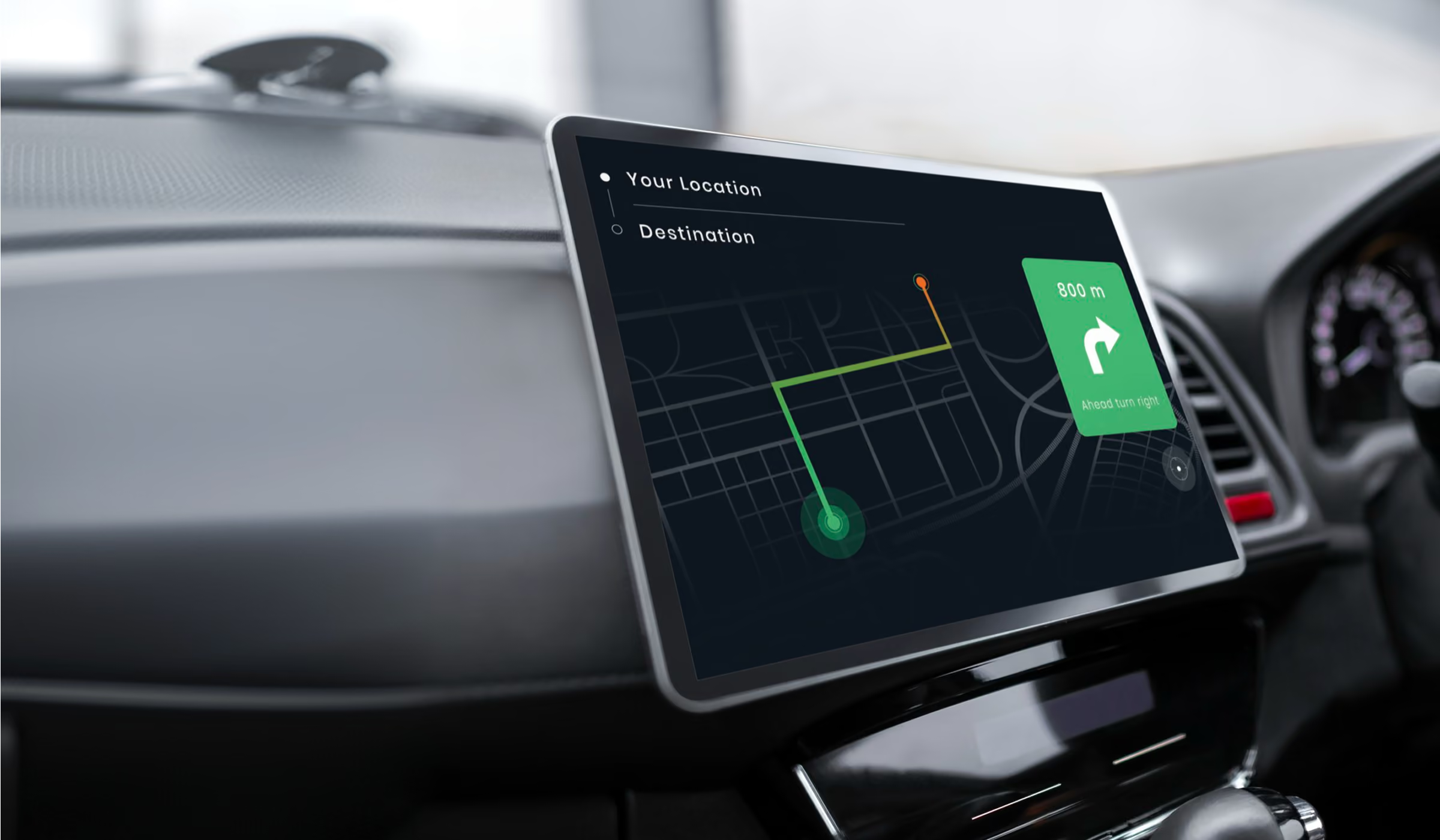
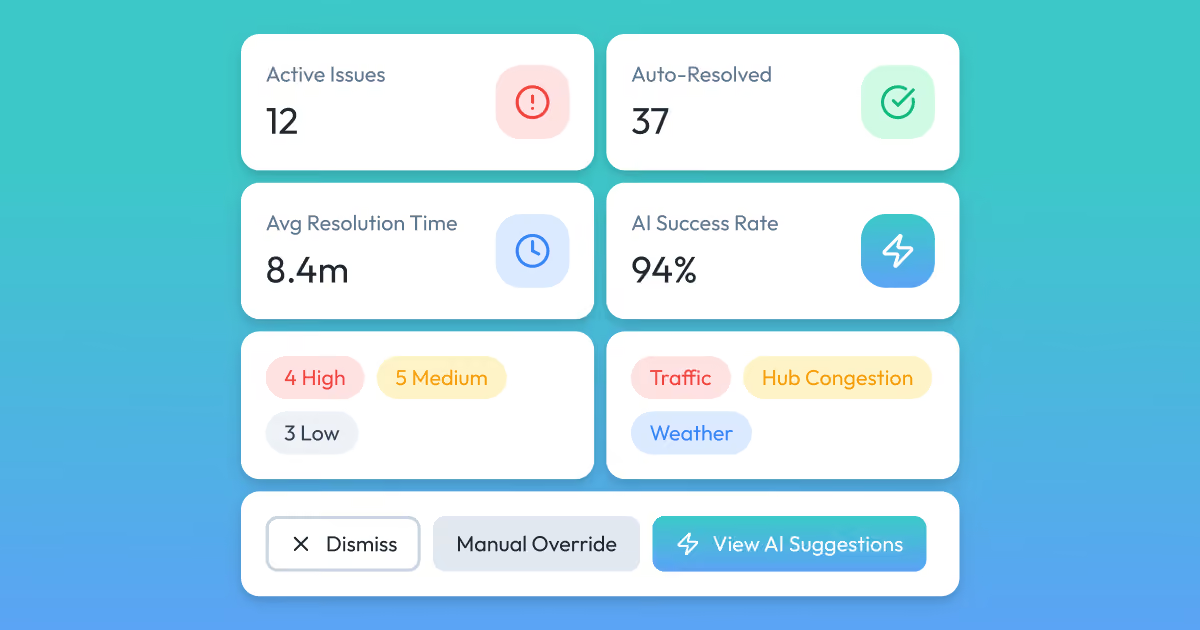
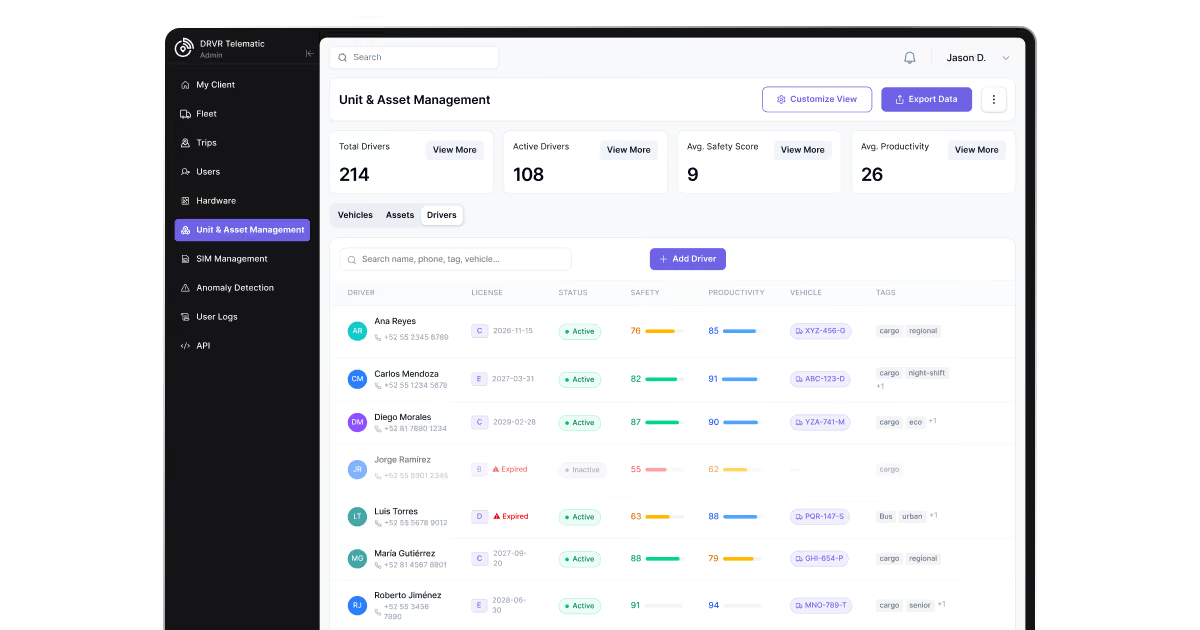
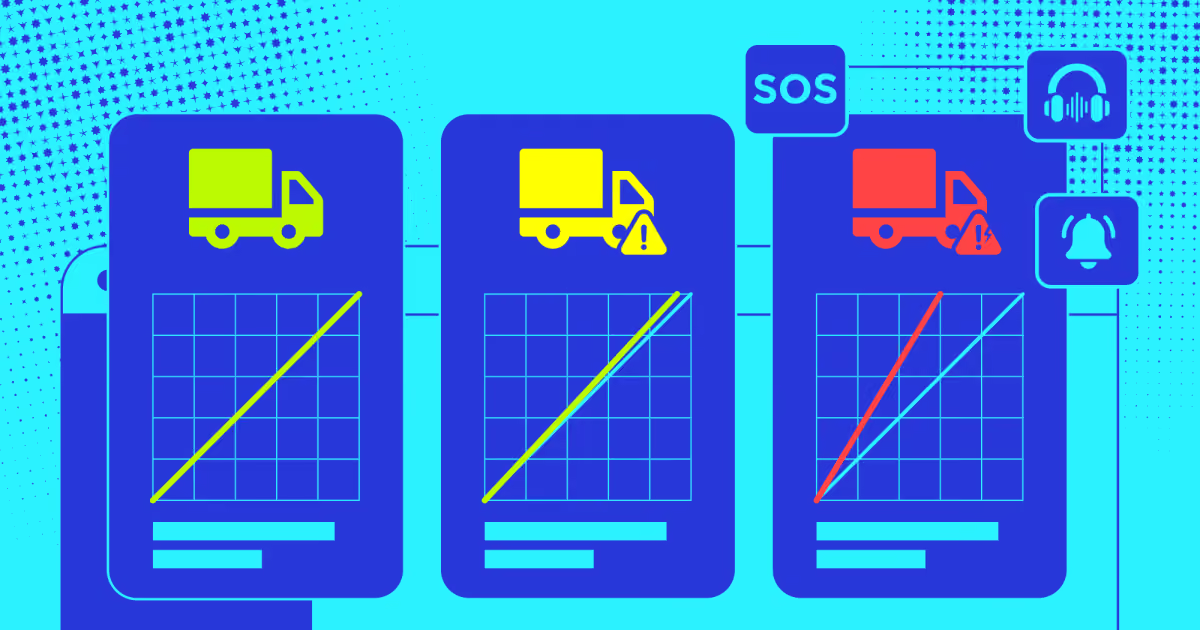
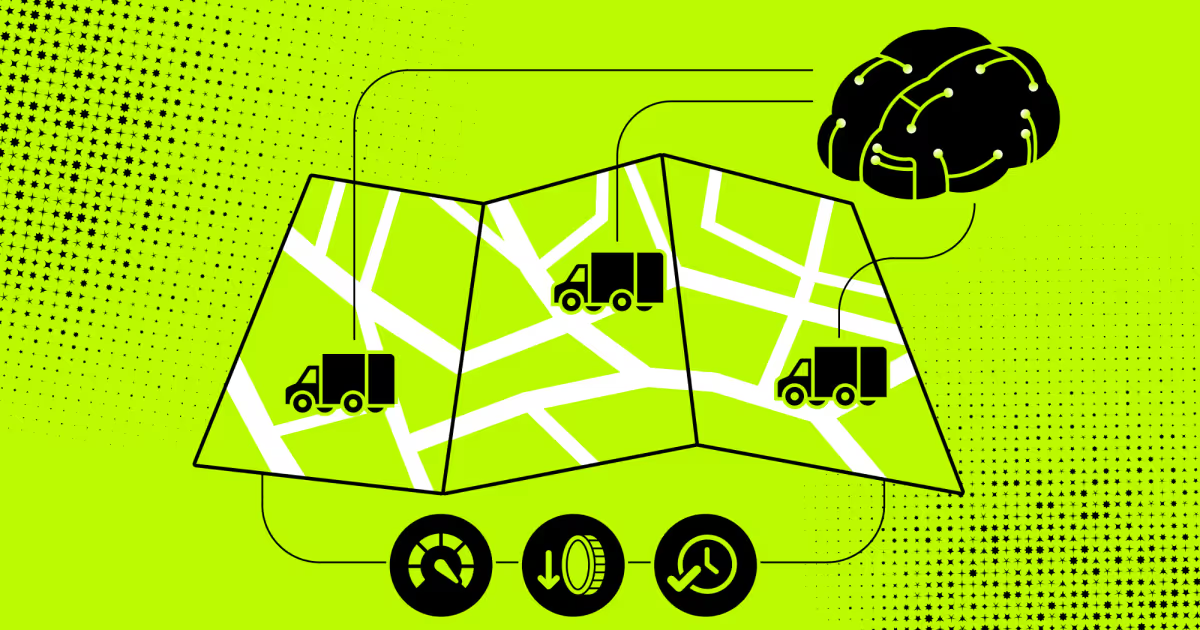
Thankfully, this case has a happy ending. We’ve developed AI-based logistics management software to assist our client. DriveIQ's predictive ETA engine offers early warnings based on live traffic, weather, and driver performance. This system reduced late deliveries from 18% to 7% and lowered fuel consumption by 12%. Now, DriveIQ users receive notifications about bad routes and AI recommendations for avoiding them.
In this article, we discuss the key component of this success story: logistical tracking. Here, we review 10 of the best logistical software providers and the strongest practices in logistics. After reading it, you’ll have a clear understanding of the technology and its transformative impacts.
What is logistics tracking?
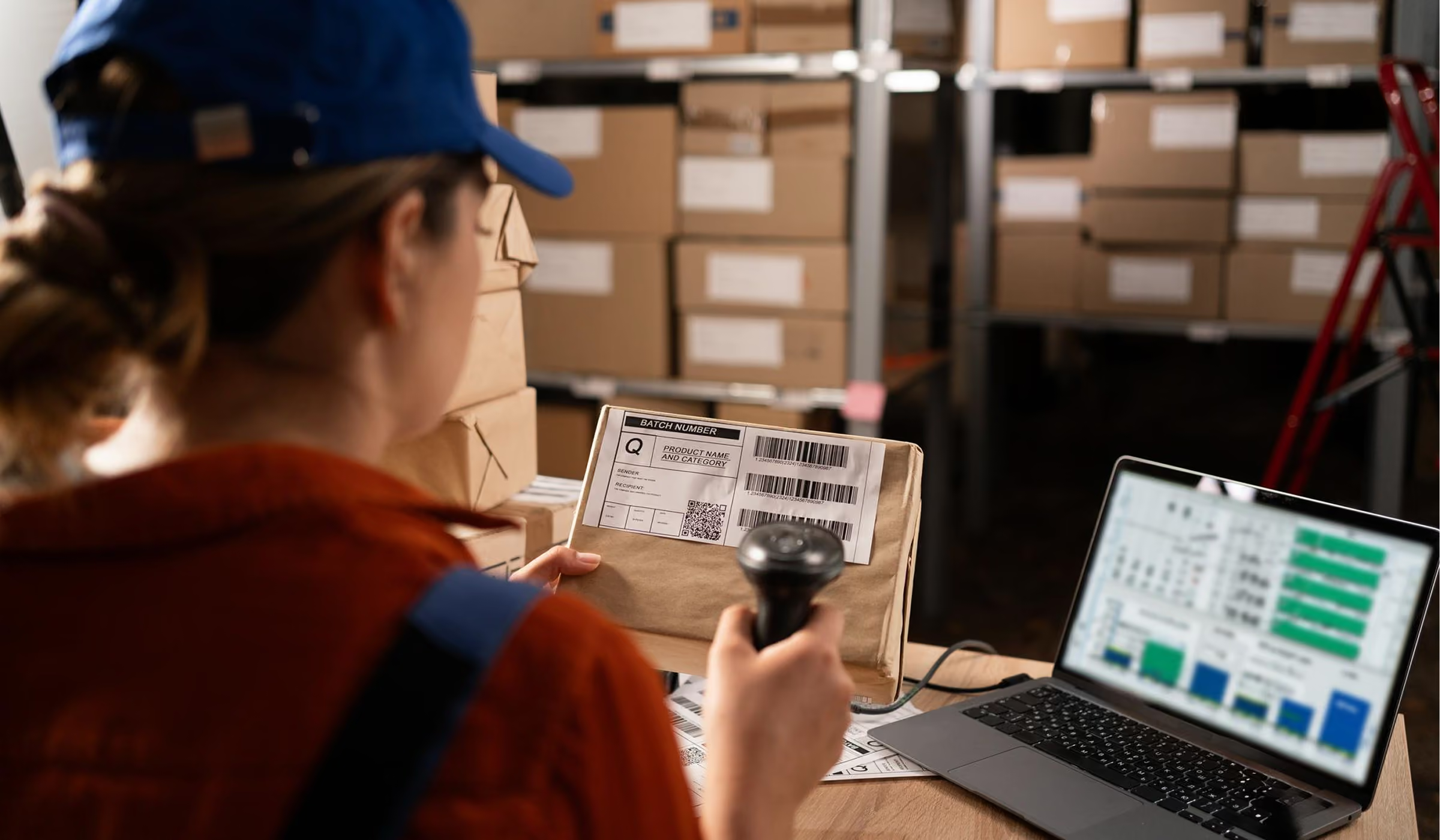
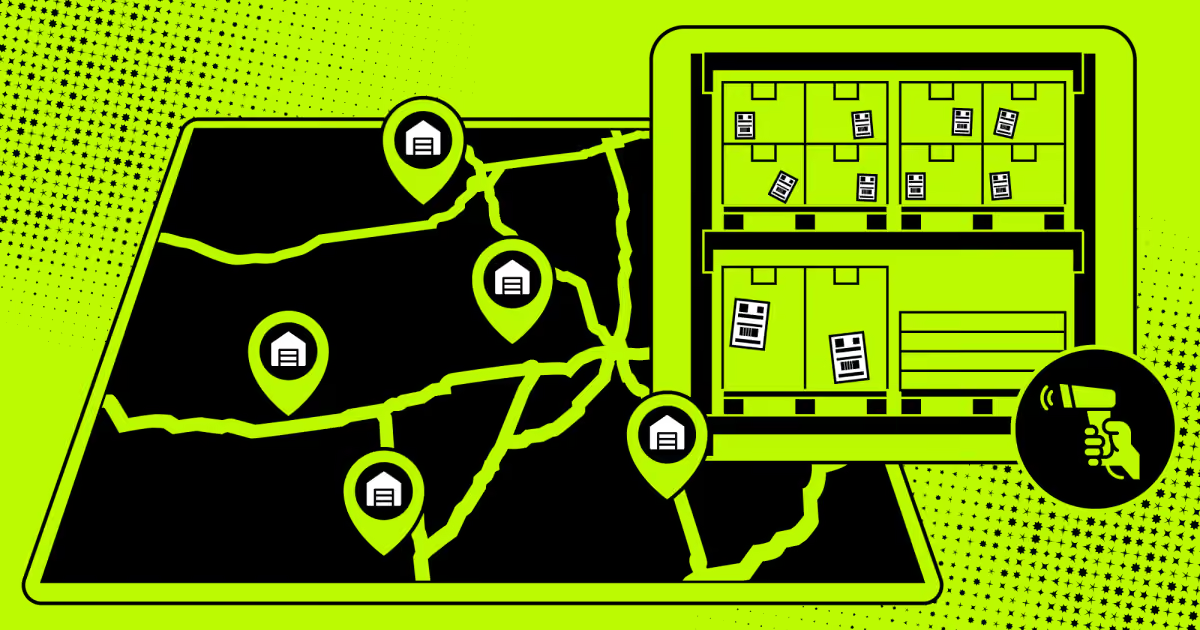
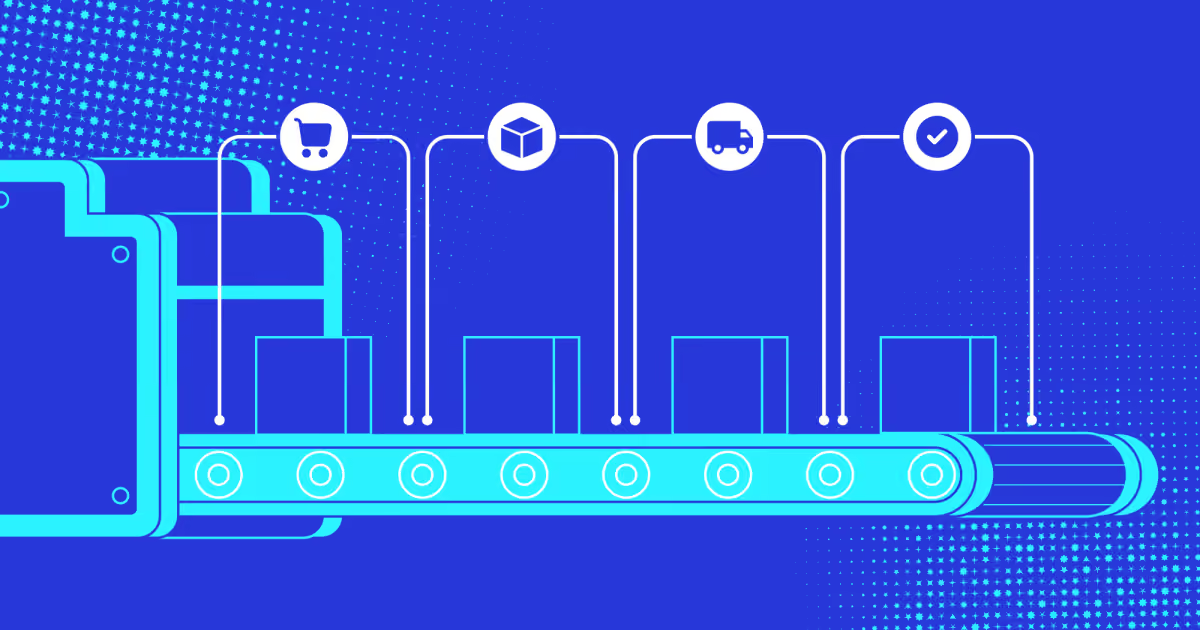
Logistics tracking represents the monitoring of assets within a supply chain. Before the 1980s, most companies used pen-and-paper tracking methods. Now, our clients see key logistical improvements from software that monitors assets and their movement.
For SyncMatix, logistics company tracking increased customer sign-ups by 40% in the first post-launch quarter. Before cooperating with us, the clients used several separate telematics services. This setup resulted in problems with scaling, making information difficult to manage. Managers and users had to switch between several separate apps for GPS tracking and reporting. Data tracking and entry was frustrating, increasing error rates. An integrated solution with real-time tracking immediately boosted customer satisfaction.
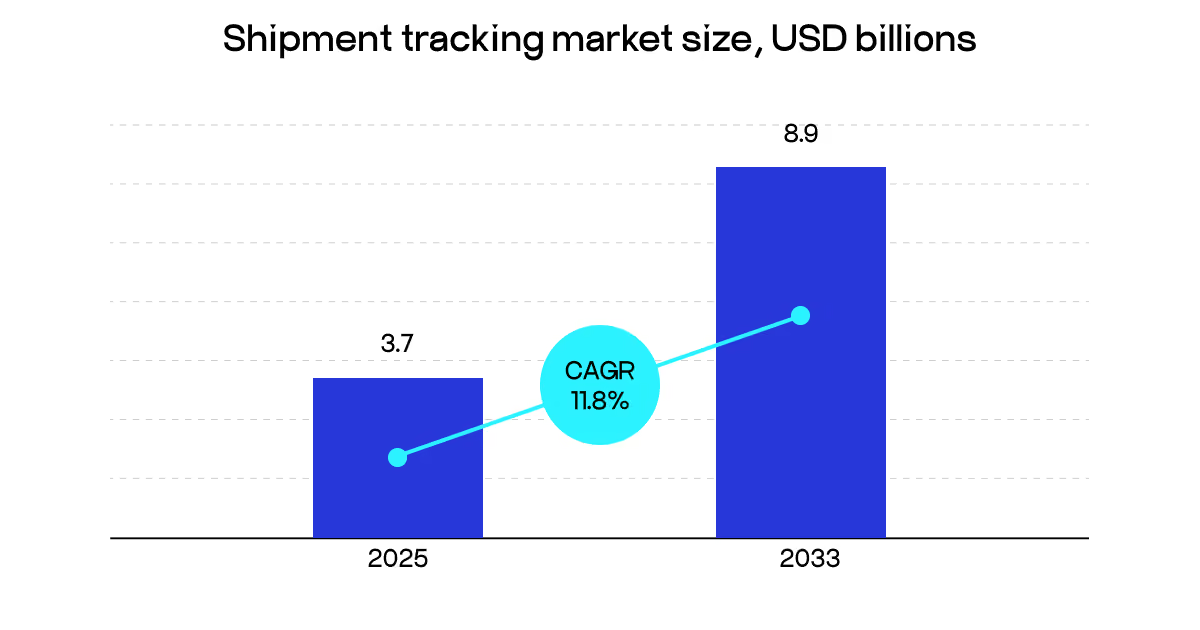
General industry statistics confirm our observations. 67% of shippers prioritize companies that use real-time tracking solutions. 91% of consumers expect real-time order tracking. 78% of them are willing to pay more for this feature. In 2023, logistics companies spent an average of $4.1 million on technology. According to Grand View Research, the shipment tracking market size was $3.7 billion in 2025. In 2021, this market amounted to $2.7 billion. Experts expect a similar rate of growth for the next 7 years. Forecasts show that the logistics tracking market will grow to $8.9 billion by 2033. Software drives most of this growth. Logistics tracking software represents approximately 75% of this market.
What are the main types of logistics tracking?
Asset monitoring helps account for products and instruments in one location. In our Agritech case, asset monitoring reduced resource waste by 25% for our client. Their workers had a better understanding of available resources thanks to computer records. This resulted in a 15% growth in yields.
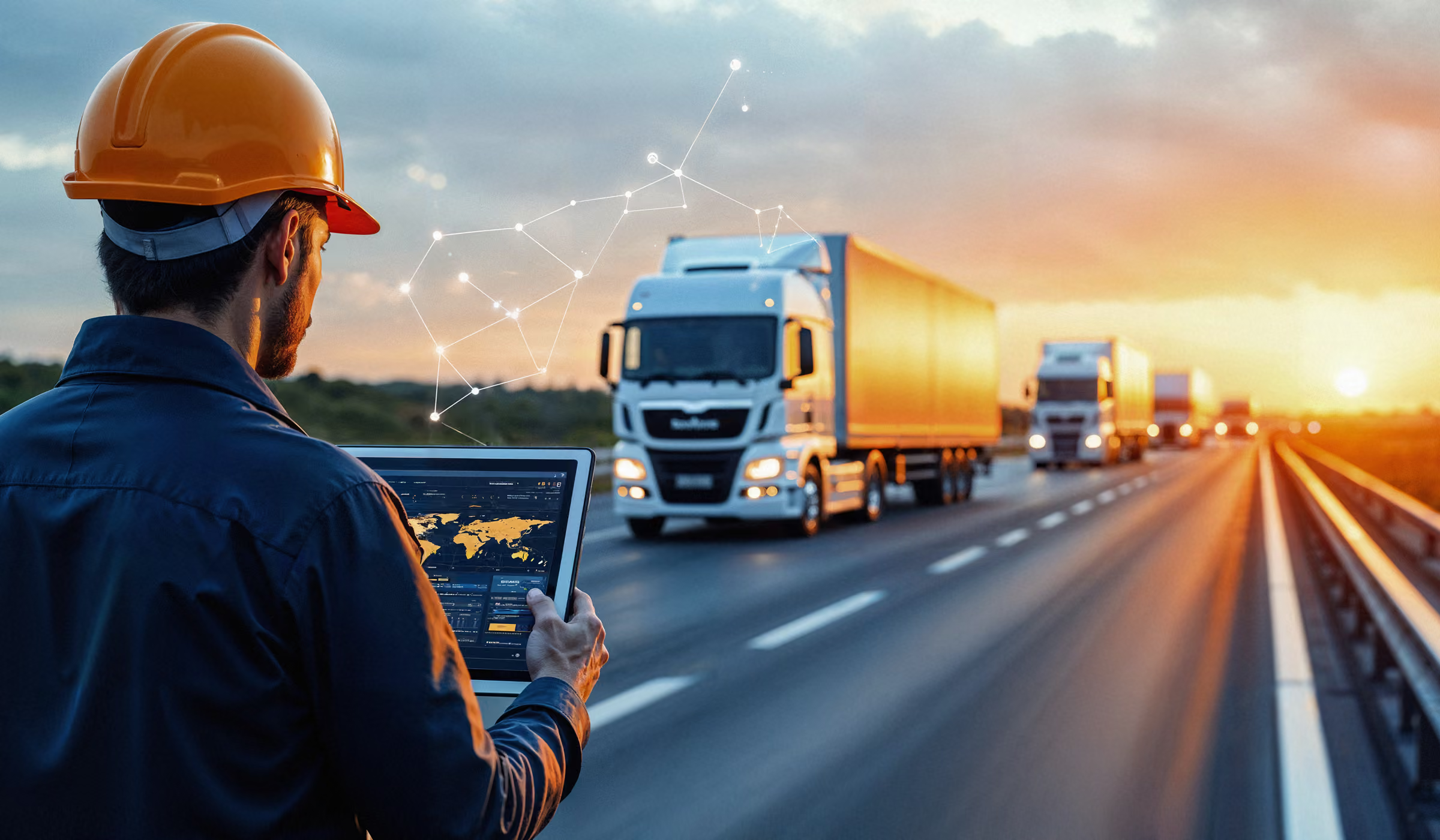
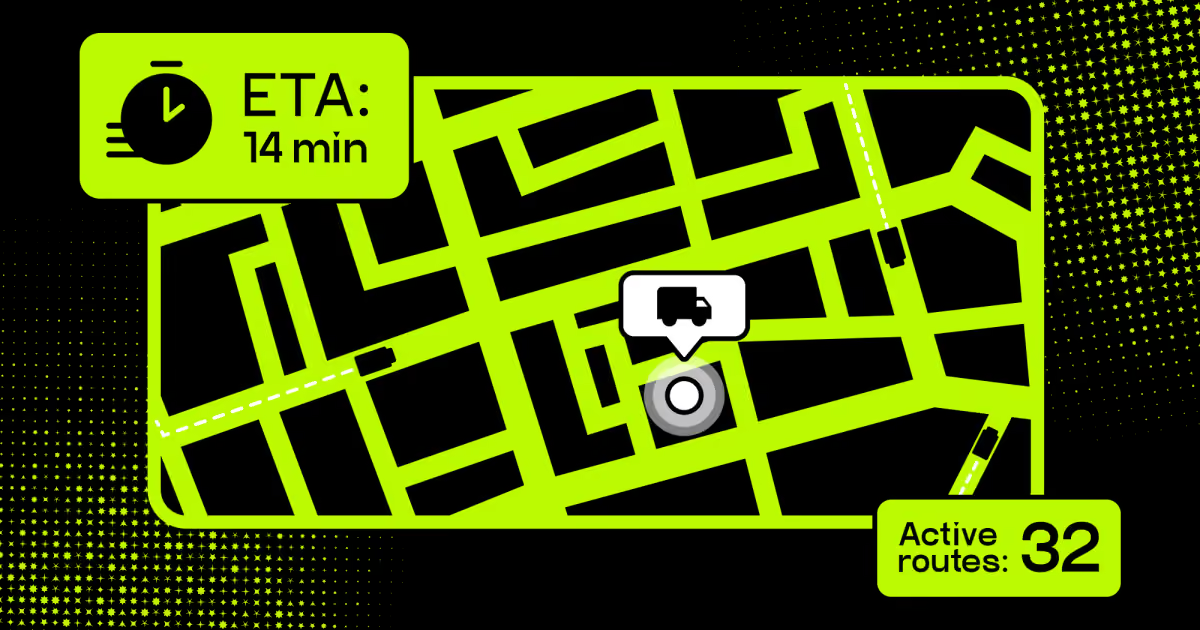
Movement monitoring is necessary when products require transportation. The main goal here is to deliver them fast and intact. We created an ETA engine, risk detection, and auto-recovery to help DriveIQ with these goals. Our software reduced manual requests for customer notification by 85%. Transportation exposes products to risk, so many clients are anxious about them. DriveIQ gives them periodic updates based on logistics GPS tracking, removing uncertainty.
What is logistics tracking software?
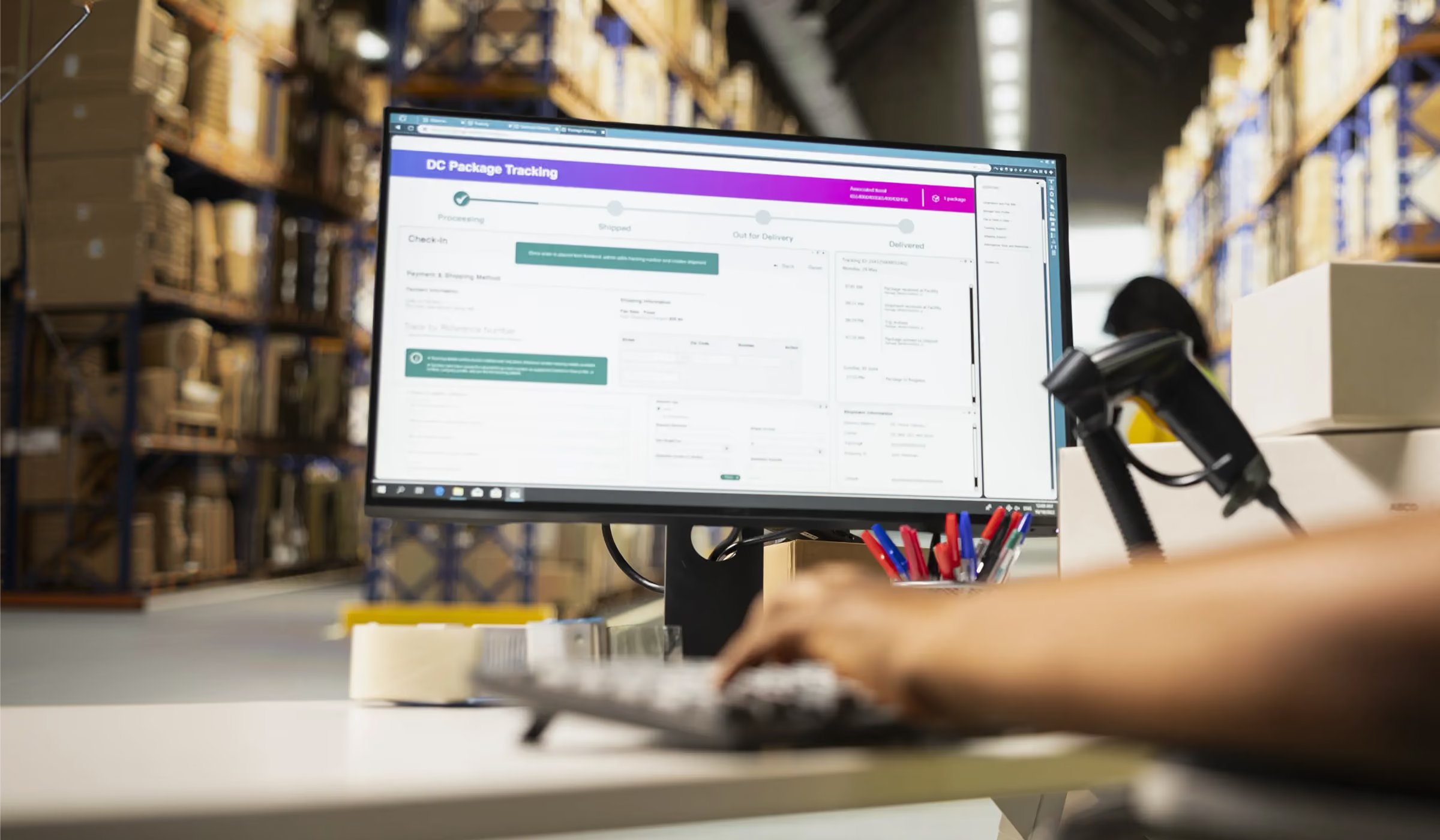
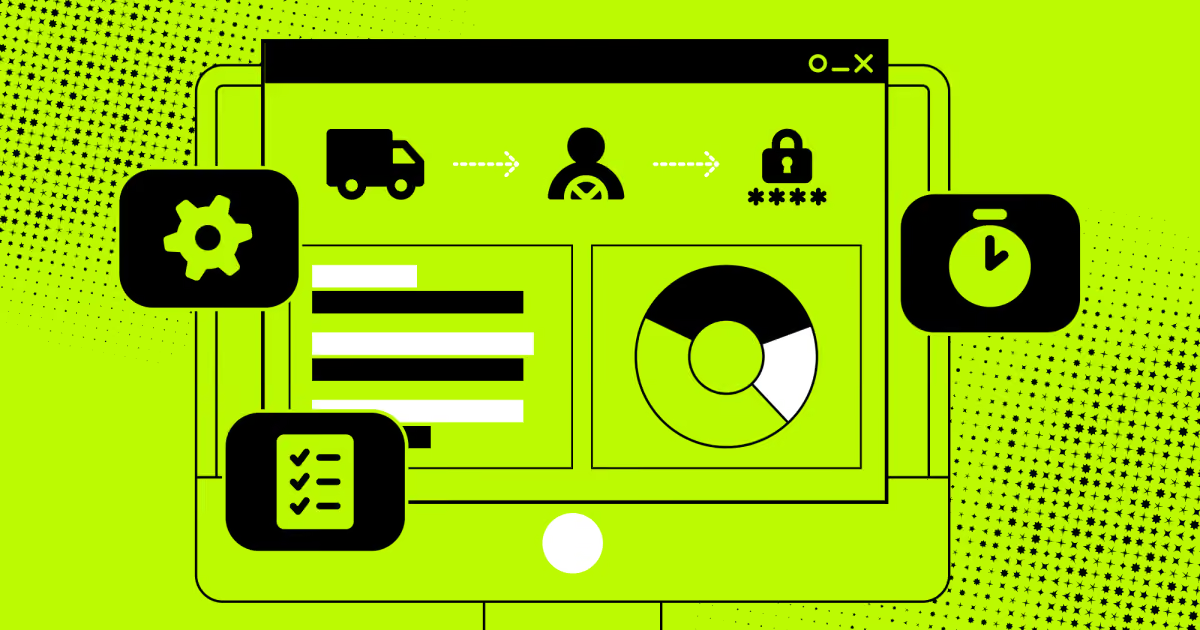
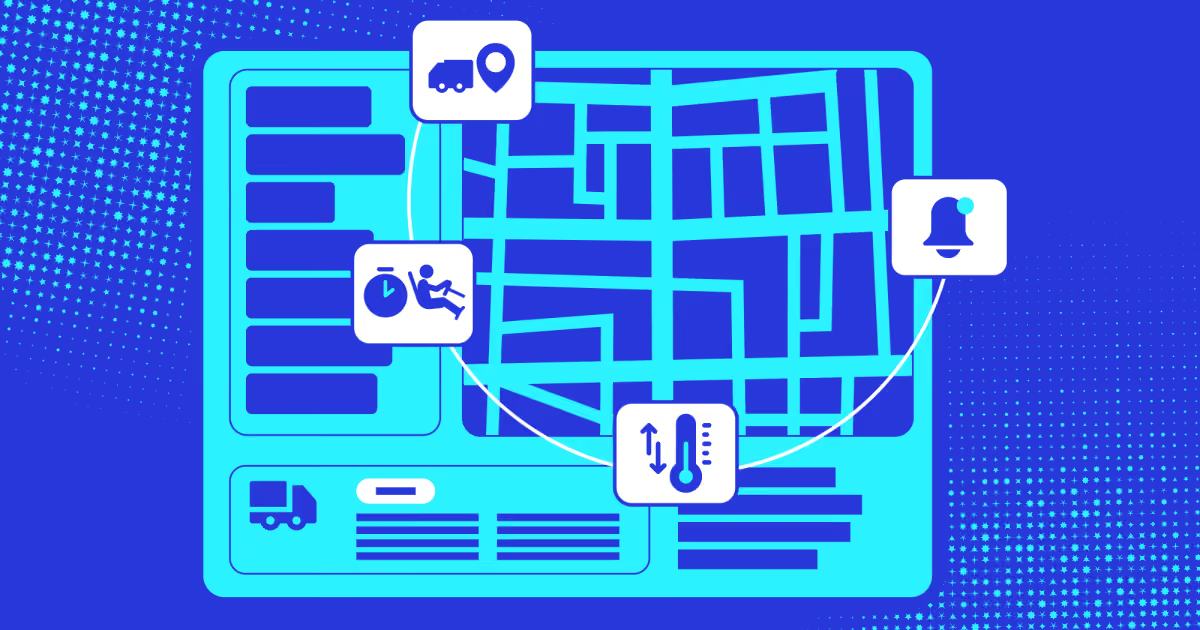
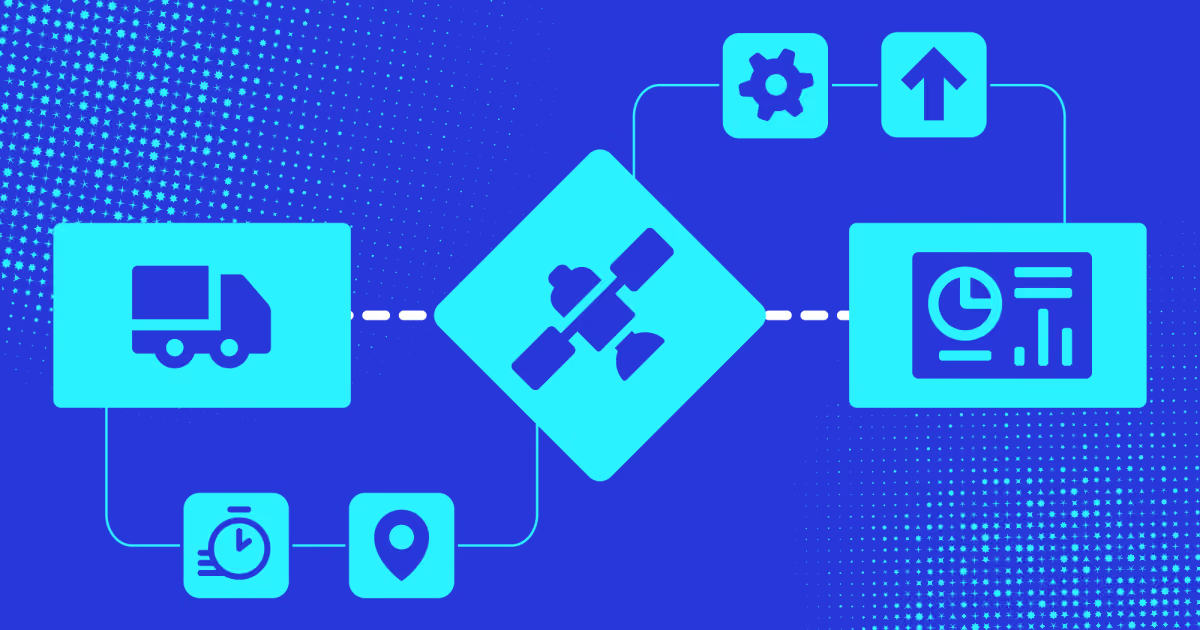
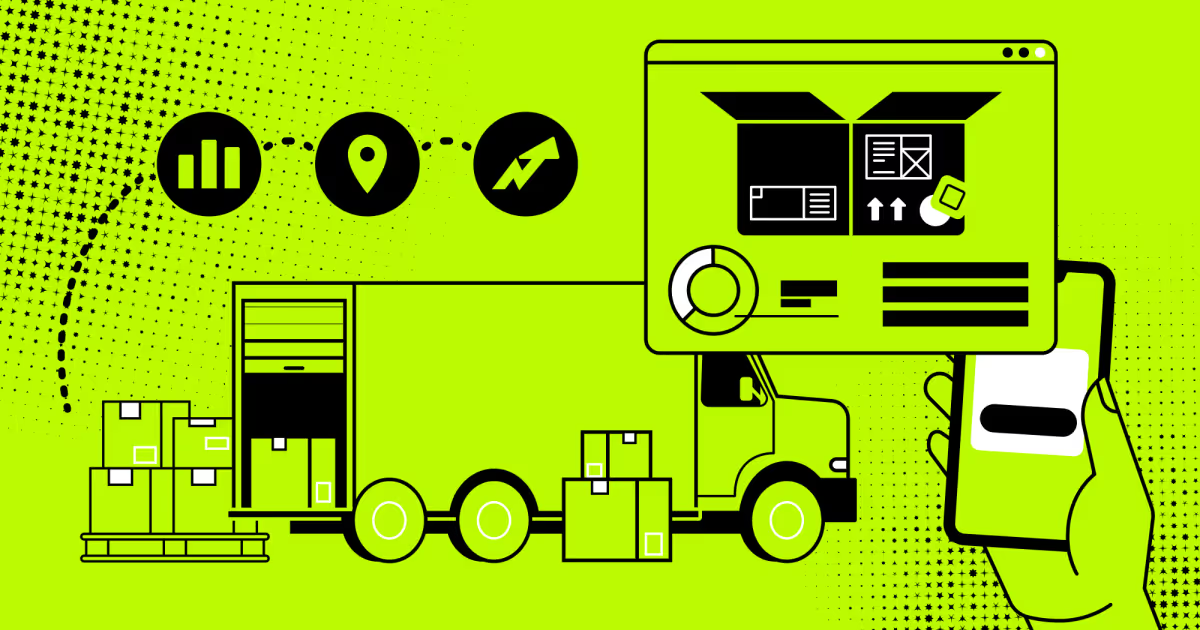
Logistics tracking software digitalizes pen-and-paper processes and integrates them with tracking hardware. GPS and RFID tools record data. Software processes this information and turns it into actionable recommendations. We've seen how powerful this combination is first-hand in our SyncMatix case. Thanks to its centralized dashboard for GPS and driver reports, managers started finding opportunities for optimization. In the end, fuel waste fell by 18% compared to the old disconnected system.
How does logistics tracking software work?
Logistics tracking involves a data collection and a data processing layer. Workers or a logistics tracking device like RFID collect data first. For example, SunsetLimo receives semi-manual closed-trip reports every month. SyncMatix works with manual reports and GPS data for telematics.
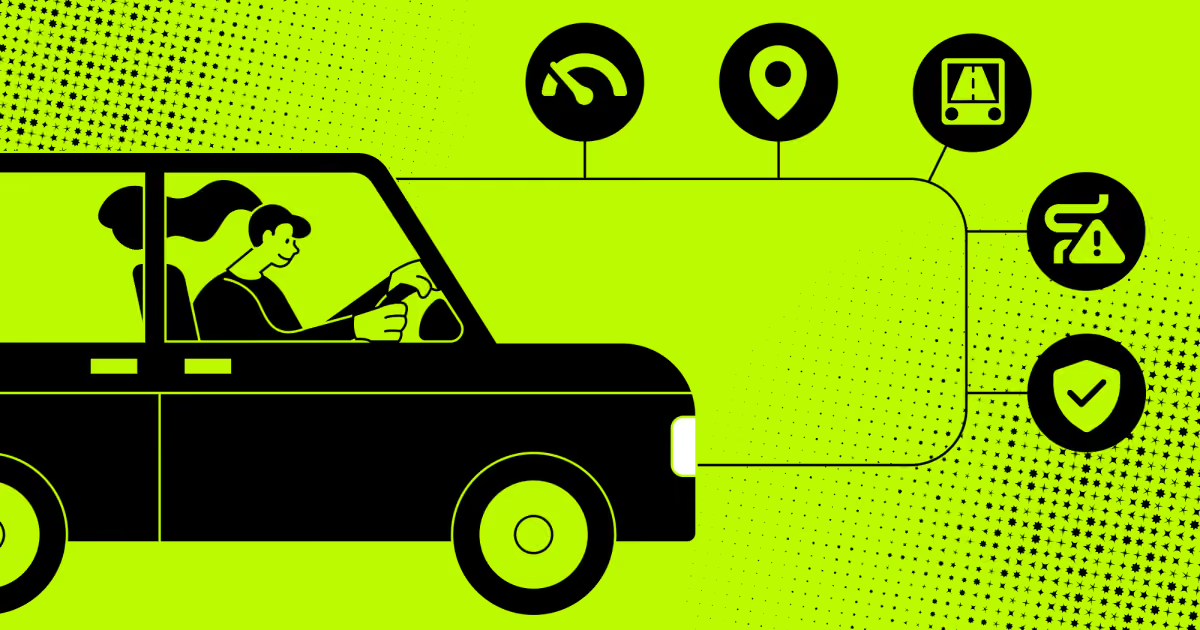
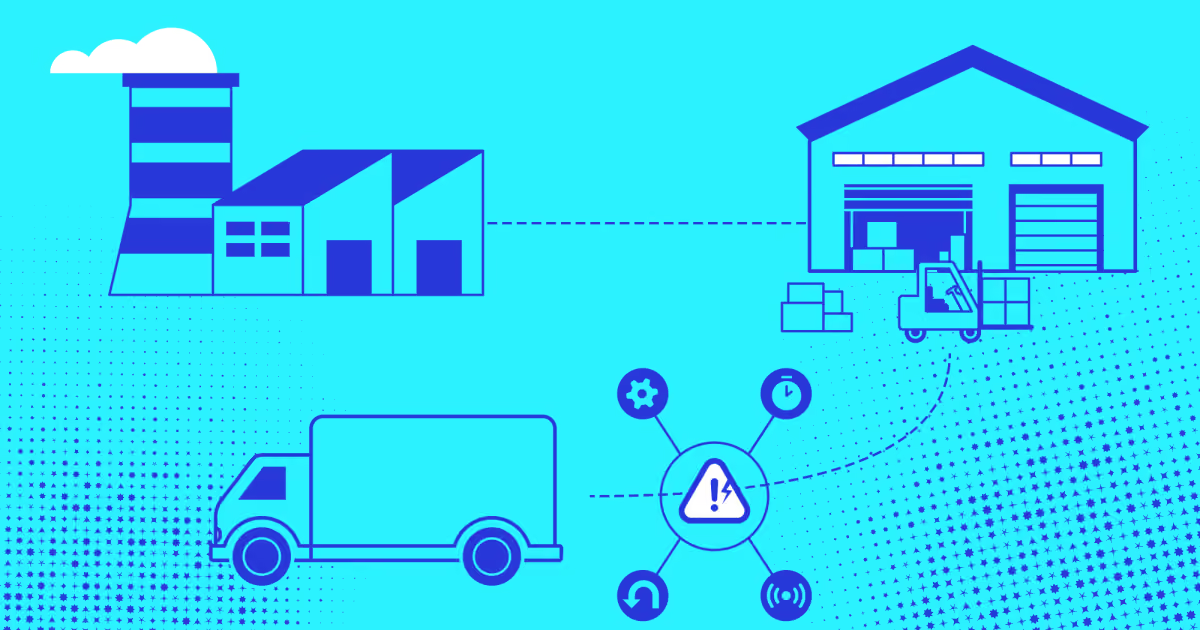
Then, a software layer processes this data. In DriveIQ, an AI-driven Predictive ETA engine analyzes information to warn about delays. It also reviews potential risks. Thanks to this, safety incidents dropped by 38% for DriveIQ. Drivers and dispatchers now see potential dangers in advance and avoid them.
What are the business benefits of logistics tracking software?
Our projects like DriveIQ and SyncMatix demonstrate three specific benefits of logistics tracking software. It speeds up deliveries, improves stakeholder satisfaction, and decreases turnover.
Speeding up deliveries
Real-time inventory software accelerates fulfillment through immediate operational visibility. Live tracking feeds update stock counts instantly across regional hubs. Dispatchers see exact warehouse levels before assigning haul routes. Sensors flag bottlenecks long before trucks reach crowded unloading docks. Automatic route adjustments bypass unexpected gridlock dynamically. Faster decisions keep freight moving smoothly, eliminating costly downtime.
Real-time inventory systems reduce inventory shortages by up to 30%. Logistics tracking is also vital for reducing oversupply. Worldmetrics reports reductions of up to 22%.
Our experience confirms these numbers. Logistics partners working with COAX Software often see comparable improvements. Predictions for estimated time of arrival in DriveIQ decreased late deliveries from 18% to 7%. This reduction became possible thanks to early warning systems. They issue warnings based on road conditions, warehouse stocks, and weather.
Moreover, real-time analysis enables better management of late deliveries. In many cases, they follow typical patterns (unexpected weather events, road repairs). We added AI-based tools into DriveIQ logistics tracking systems to resolve them automatically. The decreased number of routine cases reduced overtime hours by 22% for them. Now, dispatchers focus on the most difficult cases, leaving the rest to real-time tracking logistics.
Improving stakeholder satisfaction due to transparency and faster delivery
Better delivery times and transparency of online logistics tracking mean improved customer satisfaction. Today, 78% of customers use tracking systems at least once per delivery.This feature is especially important for businesses because it enables them to plan their production cycles. 64% of logistics experts claim that real-time tracking decreases complaints by 30% even for delayed packages. Consumers often aren’t angry about delays but about uncertainty and bad communication.
Our SyncMatix case shows how much difference transparent and fast communication makes. We developed a mobile app for drivers, informing them about geozones, routes, and checkpoints. In combination with other features, this app increased new sign-ups by 40%.
Decreasing turnover
Our partners in the DriveIQ case faced an annual turnover rate of 45% before addressing us. What did that mean in practice? In short: big losses on investments. They were spending resources on integrating drivers into their workflows only to see them leave.
When developing solutions for DriveIQ and other companies, we found three reasons for high turnover. It occurs because of inaccurate information, bad communication, and confusing rules.
How does logistics tracking lower turnover? Automated dispatch tools eliminate friction that drives fleet drivers away. Real-time traffic alerts prevent stress from unexpected delays on major routes. Automated responses clear support backlogs instantly, giving drivers fast answers. Fair shift-matching algorithms eliminate scheduling bias. Drivers finally get predictable weekends. Control over working hours directly cuts burnout among top-performing truckers. Satisfied drivers stay.
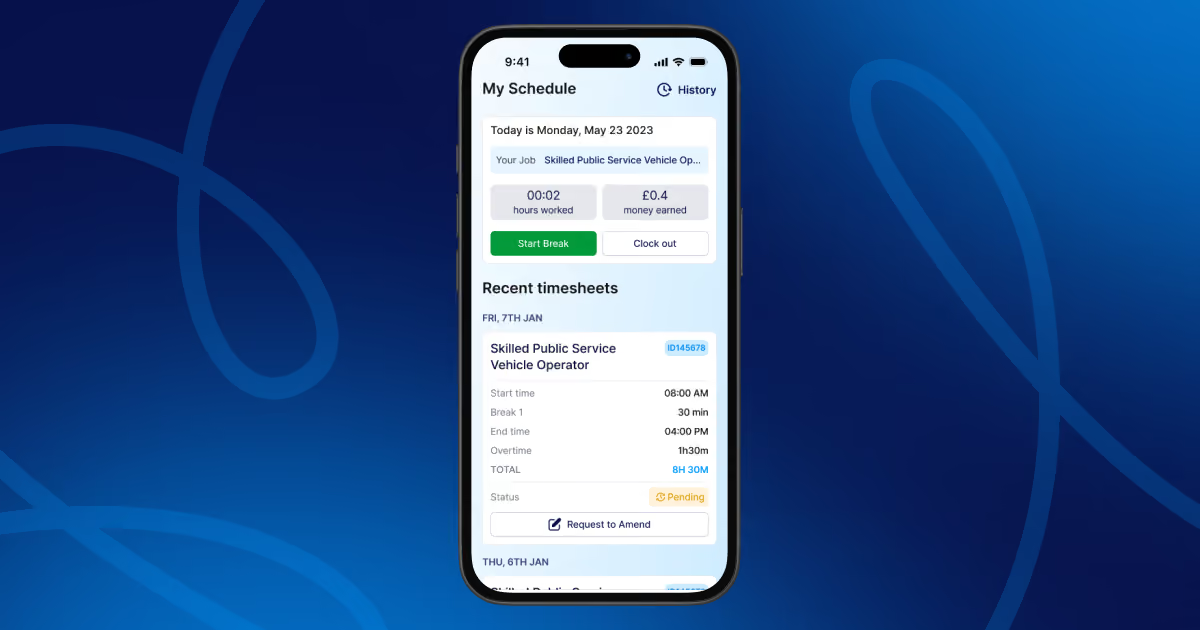
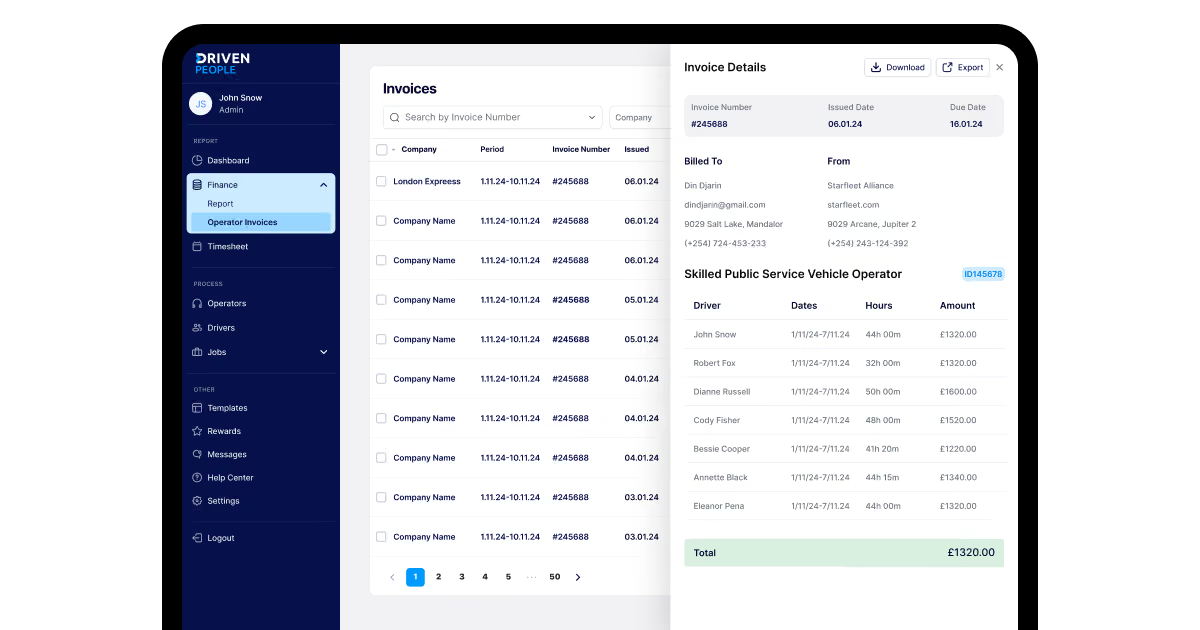
The DrivenPeople case also demonstrates that clear rules go beyond preventing turnover. This product aimed to connect operators and drivers via a unified job platform. One of the most common problems for such platforms is scheduling. Over time, bad schedules contribute to burnout, job dissatisfaction, and eventual turnover. We helped DrivenPeople create a shift management platform with a 99.2% accuracy between submitted and approved shifts. COAX managed to achieve this result via AI analytics and internal chat systems.
What features to look for in logistics tracking software?
COAX discovered five vital features for logistics tracking systems. Their combination helped our clients in DriveIQ and SyncMatix cases save fuel and decrease incidents:
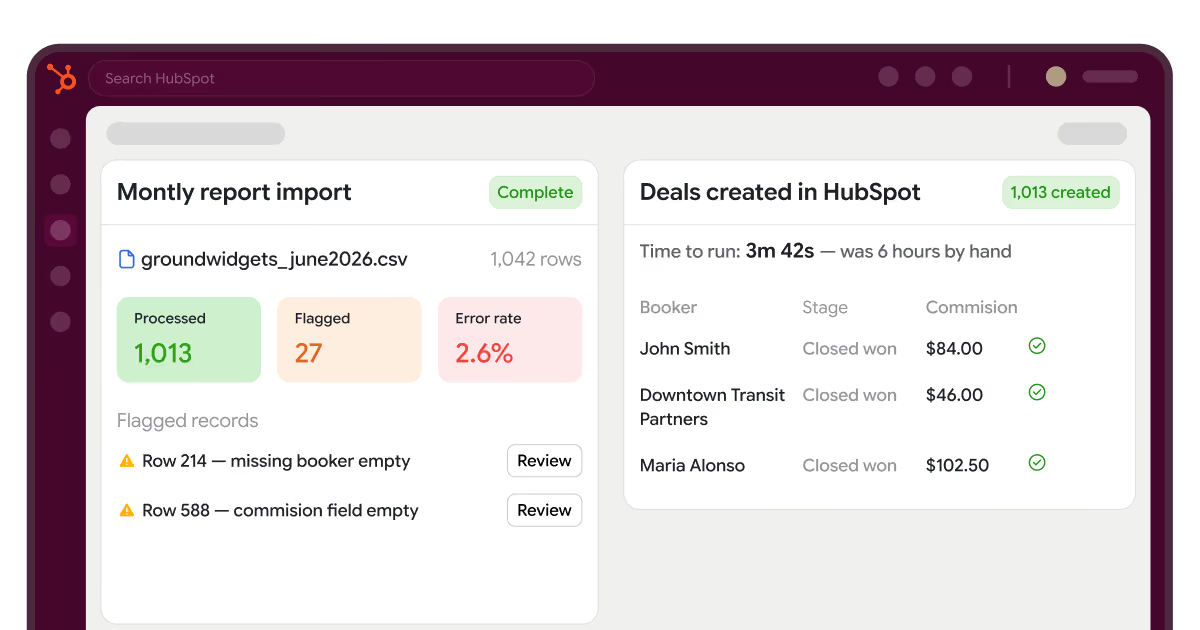
1. Real-time end-to-end visibility. Logistics tracking software is becoming an industry standard. In 2025, 75% of logistics companies were using IoT sensors and corresponding software.Why? First, transparency saves time. Before addressing us, SunsetLimo had to spend 6 hours a month organizing data. Their managers manually processed every input from GroundWidgets on completed rides and bookings. Our solution fully automated that process, reducing it to several minutes. The error rate is below 3%; all errors are automatically flagged.
Second, transparency also ensures better delivery standards. In pharmaceutics, many medications are extremely sensitive to temperatures and the physical environment. If you fail to deliver them on time, they can spoil. For this reason, companies like Sanofi are adopting smart logistics tracking en masse. RFID trackers helped the company improve inventory management accuracy from 75% to 95%.
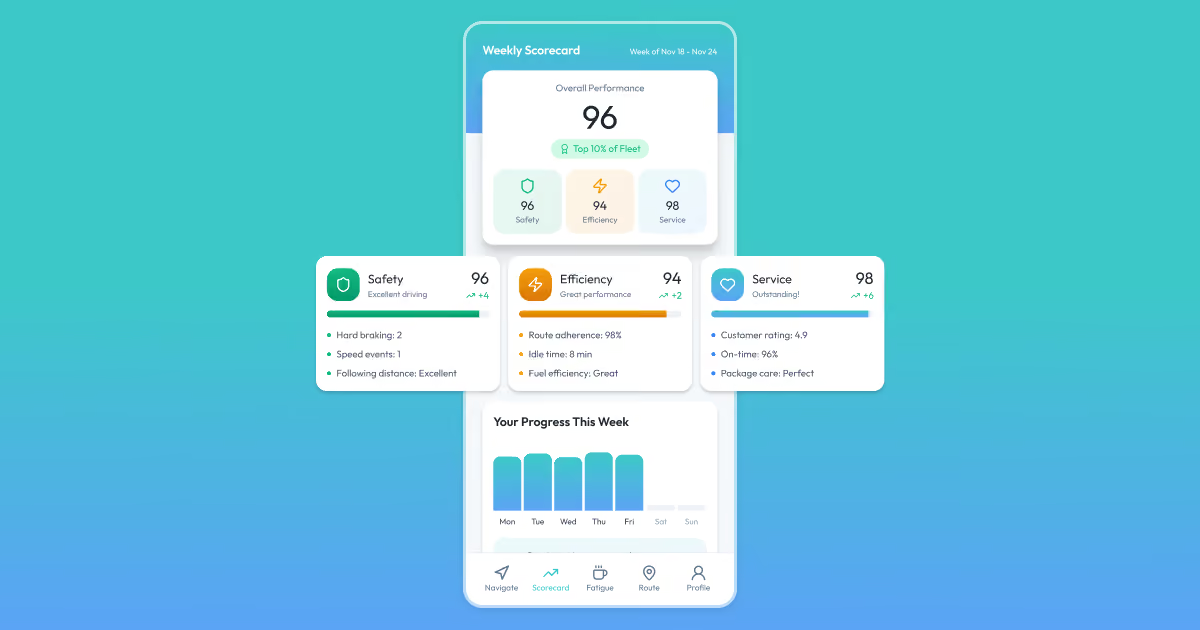
2. Intuitive notification systems.DriveIQ case shows that it's not enough to collect information and turn it into graphs. Even if your dispatchers have all the data, they still need to act on it. This means that they have to contact drivers or warehouse workers manually. Dashboards are a partial solution. They collect information, but don't disseminate it. For this reason, while working on DriveIQ, we didn't focus on dashboards alone. Our goal was to enable transformation across the entire hierarchy. Metrics like driver performance are important. But to perform well, drivers also need data. Thus, we created a notification system for them. This choice reduced pressure on dispatchers, allowing them to focus on complex cases. Drivers also no longer had to call dispatchers to find out about weather or road conditions. As a result, dispatchers saw a 31% improvement in the number of routes they could manage.
3. Data integration. Our SyncMatix case shows that logistics companies often have enough data. The problem is not with the lack of information but with its visibility. Before we developed SyncMatix, our client used several online logistics tracking systems. Users had to assemble information from them manually. Comparing information between GPS and reporting apps was very difficult. COAX developers solved this problem by connecting all this data in one logistics tracking app. The users have access to a dashboard and real-time tracking with notifications. Support tickets fell by 45% with this system. Automated information comparisons reduced error rates for them. Information received from the telematics systems started to make sense.
4. AI route optimization. Drivers and dispatchers must navigate hundreds of notifications and messages per day. Constant decision-making eventually results in decision fatigue, according to psychologists. Workers lose their ability to make meaningful choices: they burn out.AI route optimization reduces the number of decisions they have to make. Algorithms ingest real-time telemetry to update optimal paths instantly.
5. Automated financial management. Even small businesses often have to manage dozens of payrolls. This means that your accountants must process hundreds of data points monthly. Integrated payroll tools automatically reconcile fleet hours with dispatch logs. Telemetry feeds and verified shift data calculate driver pay instantly. Automated payouts trigger without manual data entry from accountants. For DrivenPeople, we tied payments directly to schedule performance. Financial accuracy reached near-100% across all operator transactions. Drivers now receive verified payouts within 48 hours guaranteed.
10 best logistics tracking software platforms
We reviewed 10 international logistics tracking platforms to see how they solve client challenges. The goal is to discover what transformations each platform can bring to your business.
The dimensions across which we evaluate solutions are:
Centralizing and visualizing data (dashboard);
Automating communication (notifications and AI);
Offering real-time tracking;
Integrating with RFID and GPS systems;
Adapting to niche requirements (perishable or easy-to-damage materials);
Scaling with business growth.
In the table below, we summarize the results of our analysis.
Platform
Strengths
Best for
Onfleet
Massive AI dataset, strong all-round performance
Improving high-volume deliveries fast
DispatchTrack
Last-mile AI optimization
Optimizing last-mile delivery
Bringg
Modularity, integrations
Achieving balance between off-the-shelf and custom solutions
Shipsy
Seamless AI agent integration
Automating routine tasks
OptimoRoute
Integration for complex deliveries
Tracking perishable or hazardous cargo
Project44
AI-driven risk predictions
Reducing vulnerabilities to global supply chain disruptions
FourKites
Large dataset for exception management
Working in fields with a high number of exceptions
Shippeo
Focus on integrating all stakeholders
Maximizing data visibility with a large number of stakeholders
Blue Yonder
Ability to make billions of AI-driven predictions per day
Reducing risks in fields with high uncertainty
o9 Solutions
Creation of forecasts based on fragmented and contradictory data sets
Overcoming connectivity limitations and absence of tracking devices
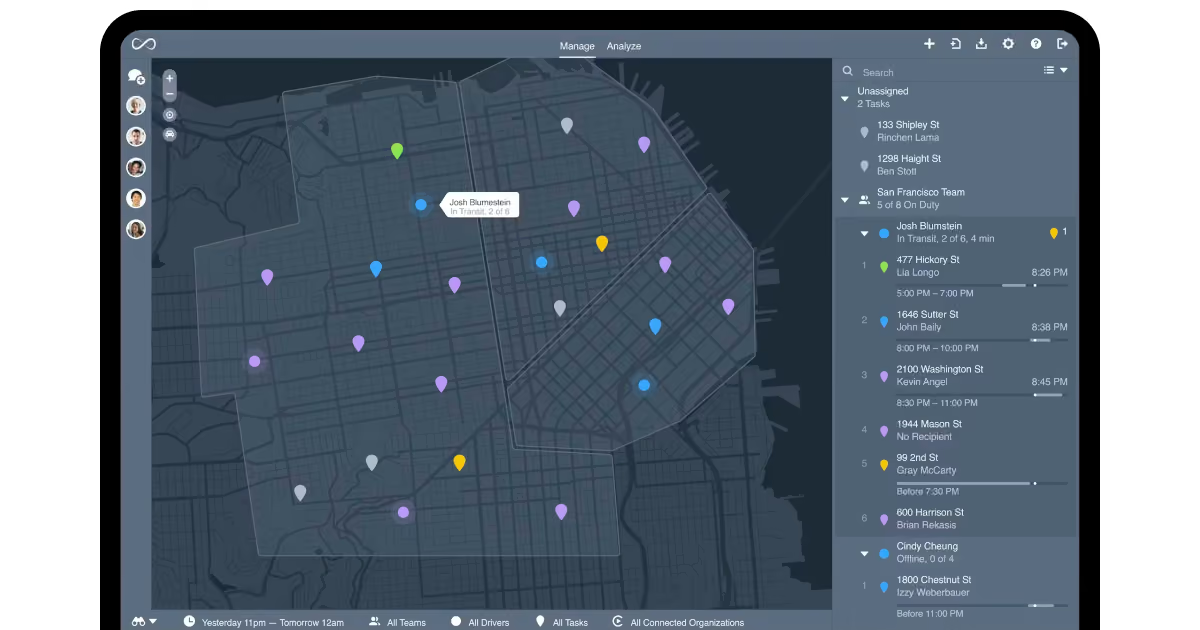
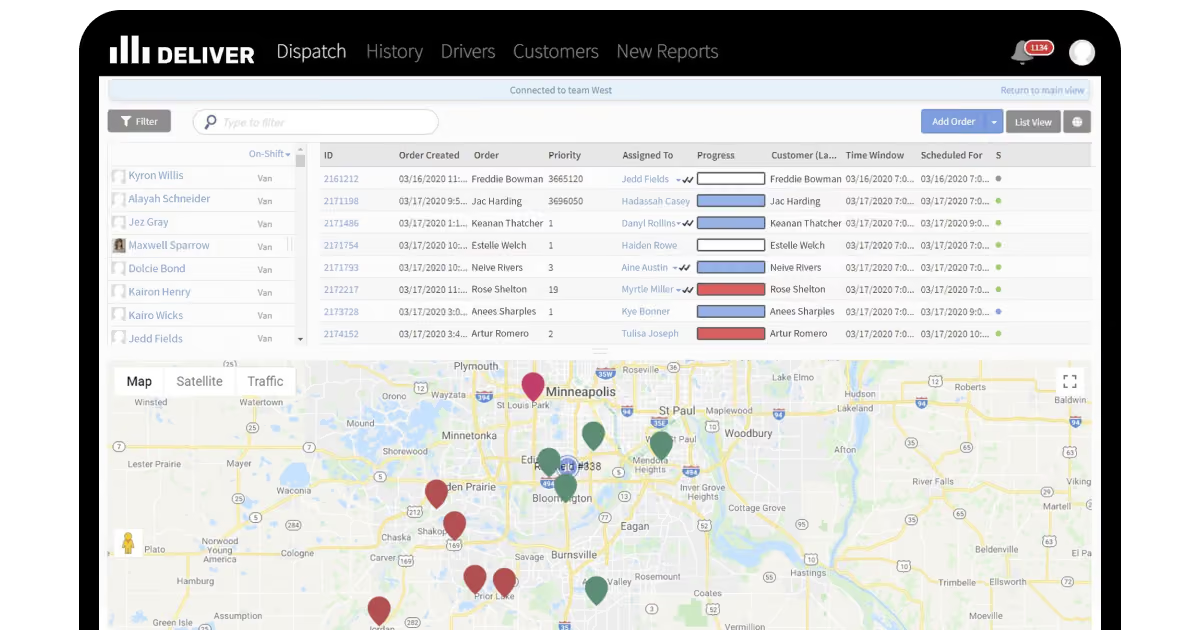
We prepared several typical scenarios and simulated them within Onfleet. The results show that Onfleet is the best all-around solution. Its main strength is the combination of AI, end-to-end visibility, and automated communication. The app has access to a massive dataset. Onfleet trained its route optimization AI on more than 400 million deliveries. You can use this dataset to quickly discover gaps in your processes.
Strengths: massive AI dataset, integration of all must-have features;
Ideal for: high-volume enterprises that need a fast solution to their logistical problems;
Not ideal for: logistics companies that work in niche sectors.
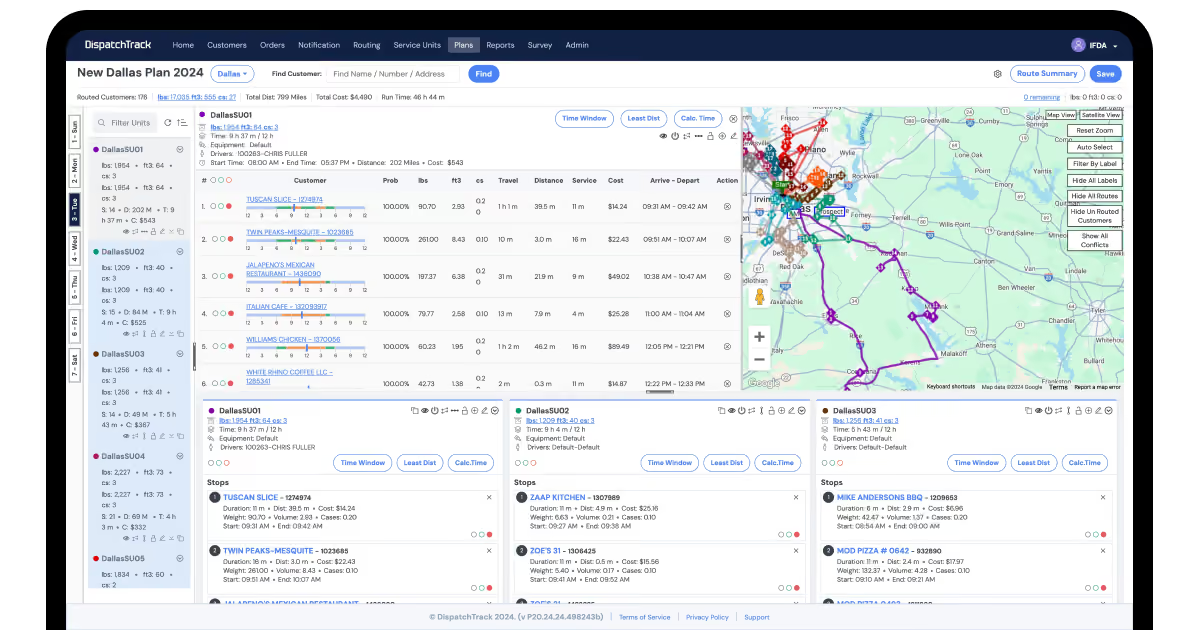
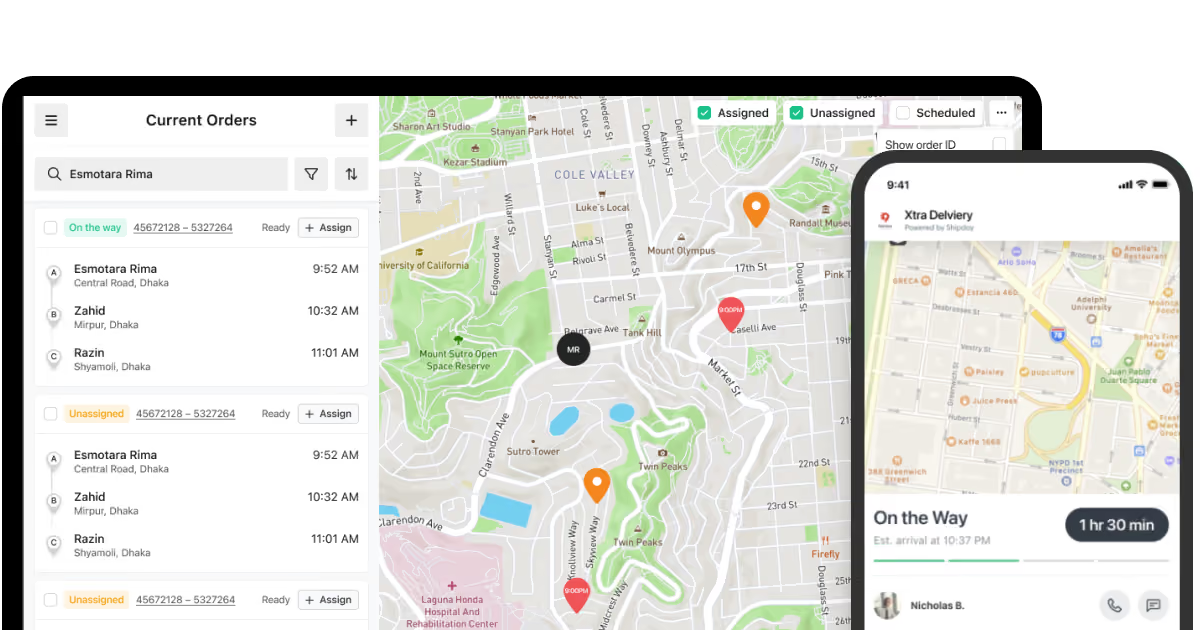
This app has a clear specialization: last-mile deliveries. The system integrates route planning with proactive customer communication. Users receive real-time information about deliveries and their status. We ran a simulation with more than 100 simultaneous deliveries. The app easily handled this workload on difficult routes without slowdowns.
Strengths: AI-based route optimization, proactive communication system;
Ideal for: companies that work with last-mile deliveries;
Not ideal for: companies that focus on long-distance deliveries.
The app impressed us with its modularity and integrations. The platform allows users to enable only those modules that they need. It has integrations with more than 250 third-party solutions. During our tests, we created multiple configurations, testing different industries and company sizes. The platform is flexible enough to work even with niches that involve perishable goods delivery. Bringg has integrations for last-mile deliveries, AI, route tracking, and automated communication.
Strengths: customization, large number of integrations;
Ideal for: companies that want a balance between off-the-shelf and custom solutions;
Not ideal for: companies that need a solution that works out of the box.
Our benchmarks show that Shipsy leads in AI automation. While other platforms use AI to collect data, Shipsy employs it in decision-making. The feature that caught our attention is AgentFleet. It offers access to AI coworkers that automate routine tasks. We managed to configure AI agents for voice communication, driver guiding, and auditing.
Strengths: seamless AI agent integration;
Ideal for: high-volume companies that need to automate routine tasks;
Not ideal for: logistical companies that work with complex niche deliveries.
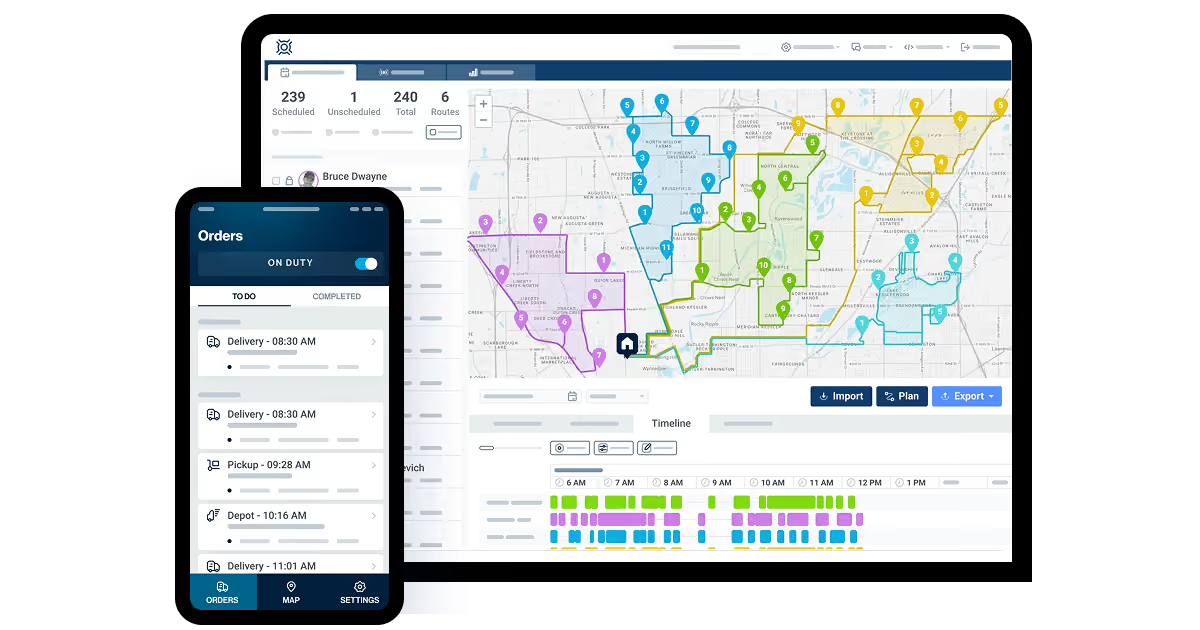
OptimoRoute gained maximal scores on niche applications in our evaluations. Among all tracking logistics apps we tested, it has the best integration for complex deliveries. When informed about complex cargo, the system replans routes to guarantee maximal safety. We tested this feature with perishable and fragile goods. In all cases, it managed to avoid hazardous roads, prioritizing safety.
Strengths: integration for complex deliveries, advanced scheduling tools;
Ideal for: companies that work with fragile or perishable cargo;
Not ideal for: companies that work on last-mile deliveries.
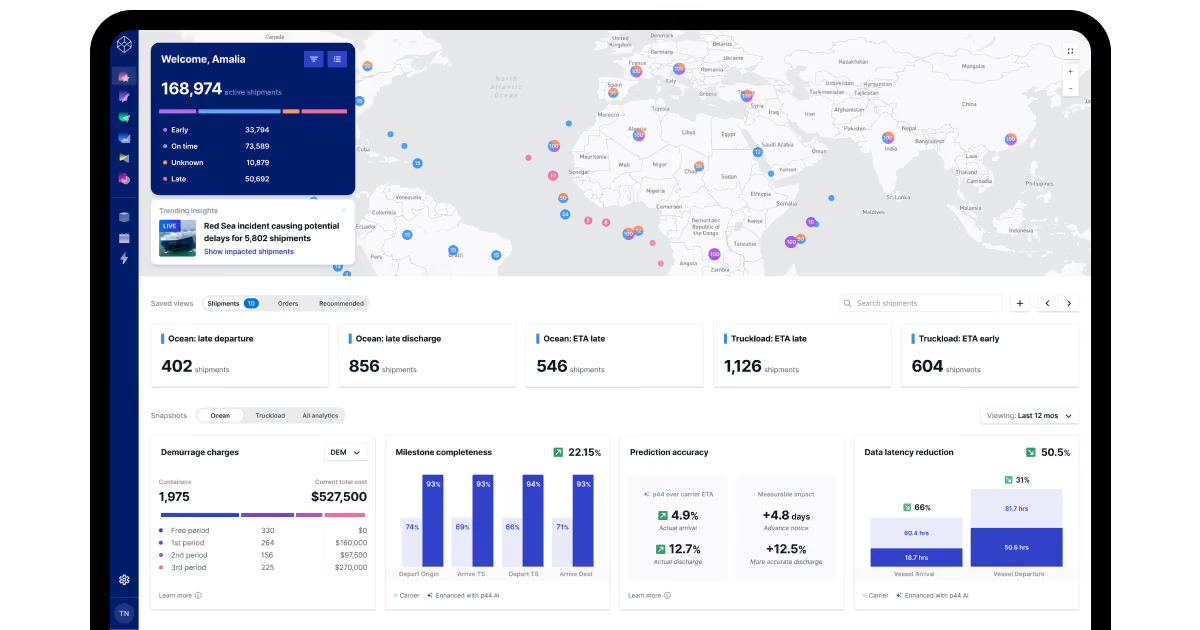
This logistics tool won our tests in risk management. When we deployed its agents for international shipment tests, they immediately found several risks. AI bots book slots, manage exceptions, and warn users about supply chain disruptions. Project 44 is a global logistics tracking platform that reviews threats on multiple levels.
Strengths: AI-driven risk predictions;
Ideal for: companies that work in sectors vulnerable to global supply chain disruptions;
Not ideal for: companies that work in relatively isolated, local deliveries.
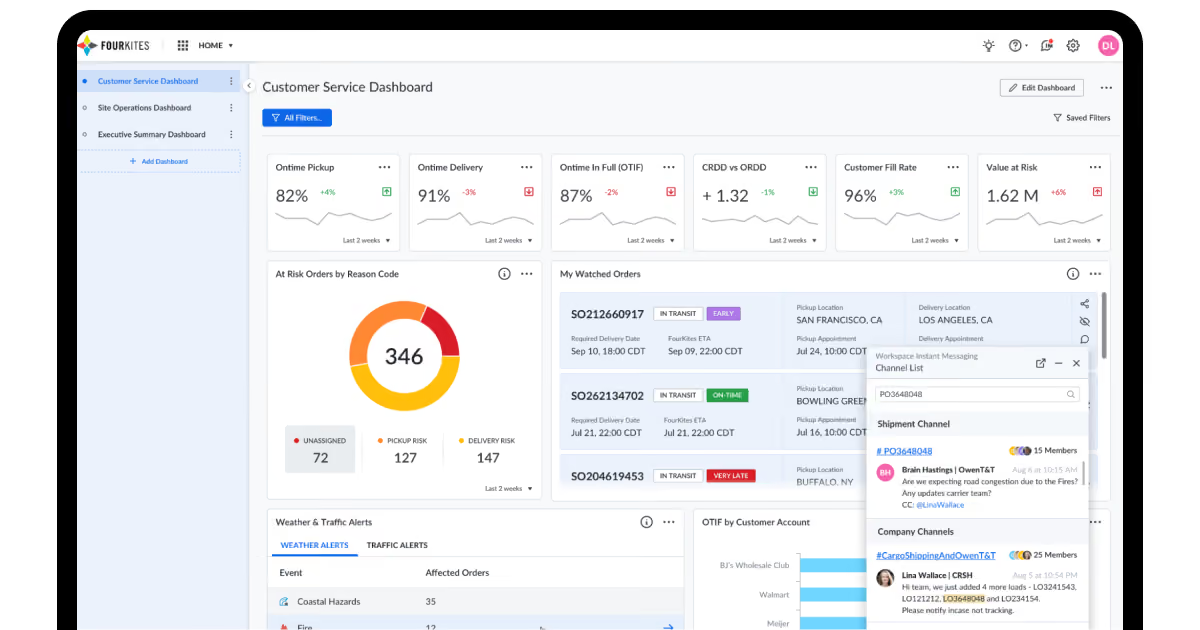
In our benchmarks, FourKites leads in integration with data collection systems and AI. The app analyzes data from more than 1600 companies to train its AI agents. We tested several complex situations with many exceptions (missed appointments, lack of assignment). FourKites effortlessly resolved the majority of them automatically.
Strengths: large dataset used for managing exceptions;
Ideal for: companies that face many exceptions and need a reliable solution for them;
Not ideal for: companies that work in sectors with streamlined delivery schedules.
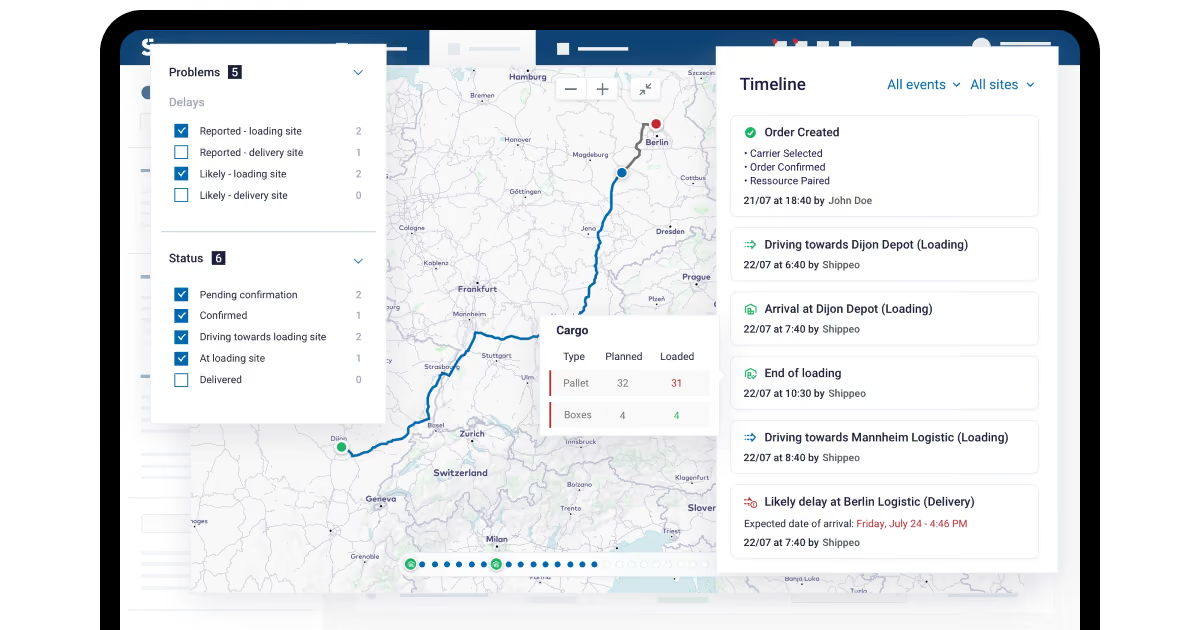
This tool impressed us with its data centralization and communication features. The app delivers top data visibility by maximizing adoption. Drivers can download a mobile app and then send proofs of delivery and scan barcodes in one or two presses. Thanks to this integration, the tool reached the highest score in our usability tests.
Strengths: focus on maximizing app adoption among logistics stakeholders;
Ideal for: companies that work with a large number of stakeholders and need maximal visibility;
Not ideal for: companies that work with a small number of well-integrated stakeholders.
Today,Blue Yonder is a leader in predictive use of AI for logistics transportation tracking. This system works seamlessly under very heavy workloads. We launched several complex test cases with international shipments and fragile goods. The system generated billions of daily predictions while analyzing them.
Strengths: ability to make billions of AI-driven predictions;
Ideal for: companies that work in sectors with high uncertainty;
Not ideal for: companies that work in fields with limited risks.
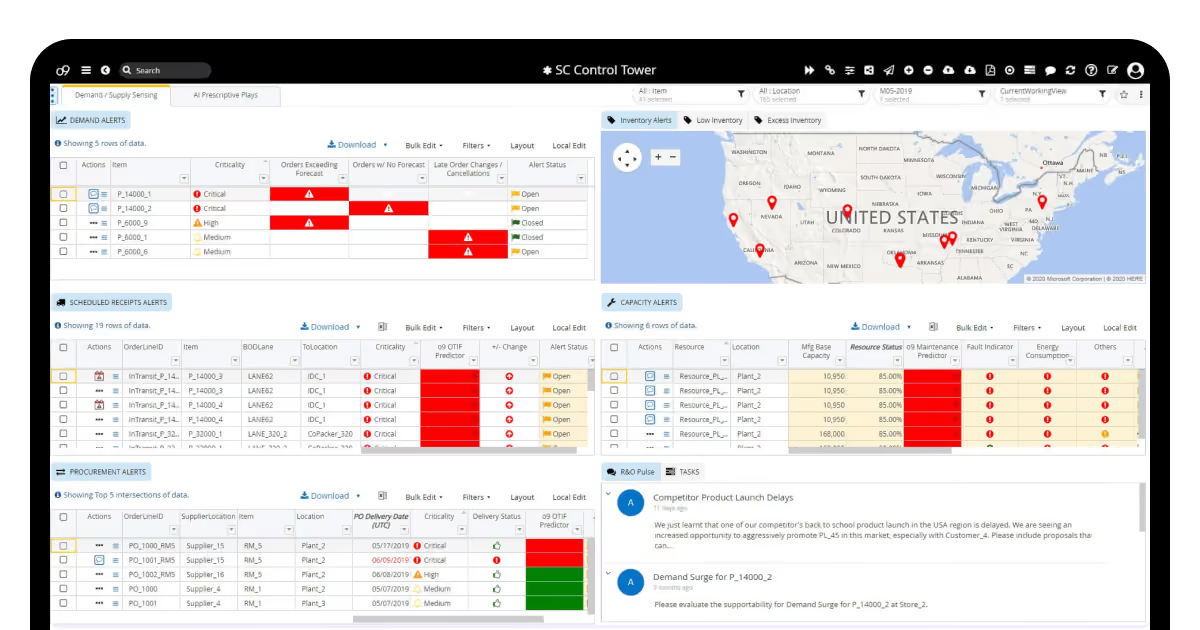
The app achieved the best results in our benchmarks for data integration. We took our standard test cases and removed a lot of vital data from them. Despite data limits, its AI combined them into a unified forecast. Comparisons with original cases showed that o9 restored them very accurately. Moreover, it reconciled conflicting data by eliminating the least likely scenarios.
Strengths: ability to create actionable forecasts based on fragmented and contradictory data sets;
Ideal for: companies that cannot use logistics tracking devices and face connectivity problems;
Not ideal for: companies that have access to reliable and numerous data sets.
Choosing the right logistics tracking solution: 2 key questions
We've developed three questions for choosing the right logistics transportation tracking solution. Your goal is to analyze organizational and technological fit, scalability, and provider reliability.
1. Does it fit your technologies, processes, and identity?
In 2018, Lidl tried to update its software for enterprise management and logistics delivery tracking. The update ended in a disaster. The company lost $600 million USD and reverted to its legacy systems. Middle managers refused to accept the new system. Resistance to it was evident throughout the entire company. What happened? The new ERP and logistics app presupposed a completely different operating structure. For instance, it used retail price-based valuations instead of purchase price (Lidl's method). Stakeholders felt that Lidl's identity may be at risk. Instead of capitalizing on its strengths, Lidl started to remove them.
When COAX works with its partners, we always focus on understanding them first. Who are they? What values do they stand for? How can we strengthen those values? For example, our partners in the SyncMatix case had a strong telematics service. Our goal was to capitalize on this strength, to turn it into a unique advantage. Their systems were collecting a lot of data, so we developed real-time tracking. It improved responses to route events by 25% via AI and a GPS tracking system for logistics.
2. Is it well-tested?
In 1999, Hershey decided to roll out a complex logistics tracking system. Experts advised a four-year rollout, but the management wanted an upgrade before Y2K. So, developers had to deliver the system in 30 months. Due to poor testing, order processing in this system broke down. Its employees could not deliver candy orders despite having inventory. Bugs, lack of training, and poorly configured processes led to massive waste. Hershey lost $100 million on Christmas candy sales.
COAX team knows how to avoid similar problems. We consult on logistics tracking adoption and assist with overcoming limitations typical for off-the-shelf tools. While developing DriveIQ, we didn't rush into developing the full product at once. Instead, we started with a 10-week pilot in a client's hub with 50 drivers. We learned about their processes and started gradually integrating all systems. The first version of DriveIQ had only five primary alerts and a minimalistic scoring system. This approach prevented organizational shock and allowed us to collect feedback. Once we achieved driver buy-in, we started introducing complex features step by step. In the end, driver satisfaction grew, and turnover rates fell. This case demonstrates how powerful custom logistics tracking software is if applied correctly.
Custom vs. off-the-shelf logistics tracking software
When choosing between custom and off-the-shelf logistics, consider how unique your processes are. Is what you're trying to do niche? Or do you want to optimize something standard?
Here’s a more detailed breakdown of some important aspects to consider.
Factor
Off-the-shelf software
Custom software
Cost
Low initial cost; license fees stack up as team scales.
Higher upfront investment; zero per-seat licensing & full IP ownership.
Fully tailored to proprietary processes, carrier logic, and data formats.
Scalability
Subject to API rate limits and telemetry bandwidth caps.
Dedicated architecture scaling on-demand for expanding fleet volumes.
Deployment time
Deploys in weeks; onboarding stalls on missing niche features.
Takes months to develop; arrives 100% aligned with warehouse realities.
Integration
Smooth with standard SAP/Salesforce; breaks on non-standard hardware.
Bridges fragmented IoT, telematics, and legacy ELDs seamlessly into one dashboard.
Cost. Off-the-shelf logistics tracking apps have low upfront fees. However, license costs stack up quickly as your team grows. Custom builds demand bigger initial capital, but you own the IP long-term.
Flexibility. Ready-made tools force you into their rigid, pre-built workflows. You end up bending your logistics operations around fixed features. Custom architecture adapts directly to your proprietary processes, carrier logic, and data formats.
Scalability. Standard platforms hit hard caps when handling unique, multi-source telemetry loads. API call limits frequently choke high-volume reporting. Bespoke systems scale hardware resources on demand to match expanding regional fleets.
Deployment Time. Off-the-shelf software deploys within weeks using standard plug-and-play setups. Yet full user onboarding often stalls over missing niche functionality. Custom development takes months, but arrives fully aligned with daily warehouse operations.
Integration. Off-the-shelf tools connect smoothly to common systems like SAP or Salesforce. Unstandardized telematics, legacy ELDs, or proprietary IoT sensors often break them. Custom engineering bridges fragmented hardware streams into one unified dashboard seamlessly.
Off-the-shelf solutions for logistics transportation tracking like FourKites, o9, or Project 44 target only the most widespread use cases. Choose ready-made tools if your fleet runs standard routes, relies on mainstream ELDs, and only needs baseline location pings. It works well for brokers handling typical dry-van freight without strict, specialized SLA constraints.
Custom logistics software development is the answer to unique challenges. Go custom when you process high-frequency telemetry, manage complex cold-chain compliance, or run proprietary driver-scoring models. If adapting to a pre-packaged tool requires changing how you move freight, build your own.
At the same time, custom logistical software development is not simple. Safety and privacy standards are very strict. The COAX software team is ISO 9001 and ISO 27001 certified. We also sign NDAs for all our projects. Our experts understand best practices and focus on data safety.
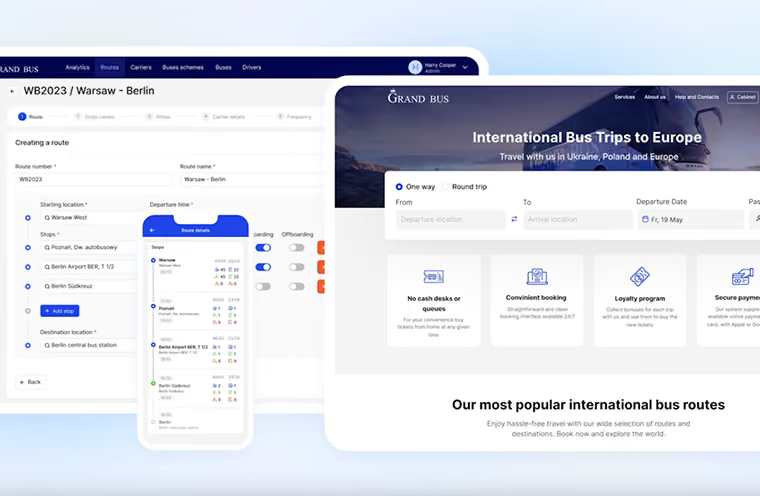
Successful logistics tracking also requires AI integration. 90% of our engineers are mid- or senior-level. For our projects like DriveIQ, GrandBus, or Driven Connect, we worked with a wide range of technologies. Our developers know how to integrate both Big Data and generative AI.
FAQ
What is logistics tracking in simple terms?
Logistics tracking is the process of monitoring assets in transit. For example, our clients in the SyncMatix case collected information to ease deliveries. They used GPS tracking and driver reports to optimize routes. For our DriveIQ project, we developed an automated notification system to improve communication. Its goal was to inform users about changes in delivery statuses.
What are the main challenges of logistics tracking?
There are three main challenges in logistics tracking. They include integration with existing systems, workforce hiring, and speed of communication. Our team at COAX knows how to overcome them. In our SyncMatix case, we integrated multiple separate data sources into one app. This enabled our clients to grow to more than 500 customers. Workflow automation helped DrivenPeople with workforce hiring and speed of communication. We developed semi-automated instruments for schedule management and driver selection. Operators using the platform can quickly find drivers with the right skills and optimize schedules.
How important is AI in modern logistics tracking?
If you need to improve communication, AI is very important. In our DriveIQ case, we used generative AI to speed up communication. Before implementation, dispatchers had to write delay notifications and status updates manually. Now, AI does this work for them, only requiring confirmation for complex situations.
Can logistics tracking improve decision-making?
Yes. Our DriveIQ case demonstrates this type of improvement. The clients started five years ago and grew a fleet of 500 vehicles. Then, delays and client complaints appeared out of nowhere. When a company is small, it's easy to micromanage issues like missed deliveries. However, once you have hundreds of cars, no amount of micromanagement can help. You need vehicle monitoring systems; the faster, the better. We helped DriveIQ by creating an AI-driven app for integrating data flows. Thanks to this app, their drivers and dispatchers can now predict delays 2-6 hours in advance. Better predictions decreased SLA breaches by 28% by preventing overpromising.
















































































_.avif)










%2520explained.avif)

We are interested in your opinion