Your dispatcher's lost in their third morning spreadsheet. Your driver makes their fourth unanswered call to the depot. Right then, your fleet's a liability instead of an asset. We've watched it happen across enough builds. We know the technical problems are rarely the hard part. The hard part is what's already running when a company decides it needs something better.
At COAX Software, we've spent 16+ years in fleet management projects for logistics operators, transport networks, and delivery platforms. This situation repeats. A company grows past the point where manual coordination is required. Then it spends two to four years absorbing the cost of that mismatch before committing to a real solution. The longer that gap runs, the more expensive the fix.
Fleet management covers every system and process that keeps commercial vehicles moving efficiently. We outline live tracking, driver performance, route planning, compliance, fuel, maintenance, and the reporting that ties it together. Done right, it converts operational friction into measurable cost reduction and service reliability.
This guide covers what fleet management involves. We describe why the stakes are higher than most operators budget for, and how the right platform changes the financial equation. Our custom SyncMatix platform proved this. It accelerated route event response times by 25% to stop delays from slashing the ROI.
What is fleet management?
Fleet management is the discipline of overseeing every aspect of a commercial vehicle operation. This includes location, driver behavior, fuel consumption, maintenance status, regulatory compliance, and total cost. It's what lies between a company's service commitments and its ability to keep them.
A working fleet management definition is the mix of combination of technology, processes, and people. All these keep vehicles moving on schedule, drivers safe and compliant, and operating costs predictable. That framing sounds like back-office administration. The numbers behind it are anything but.
You run 60 delivery vehicles across three states. Dispatch runs on spreadsheets. No live tracking, no route scoring, no automated exception alerts.
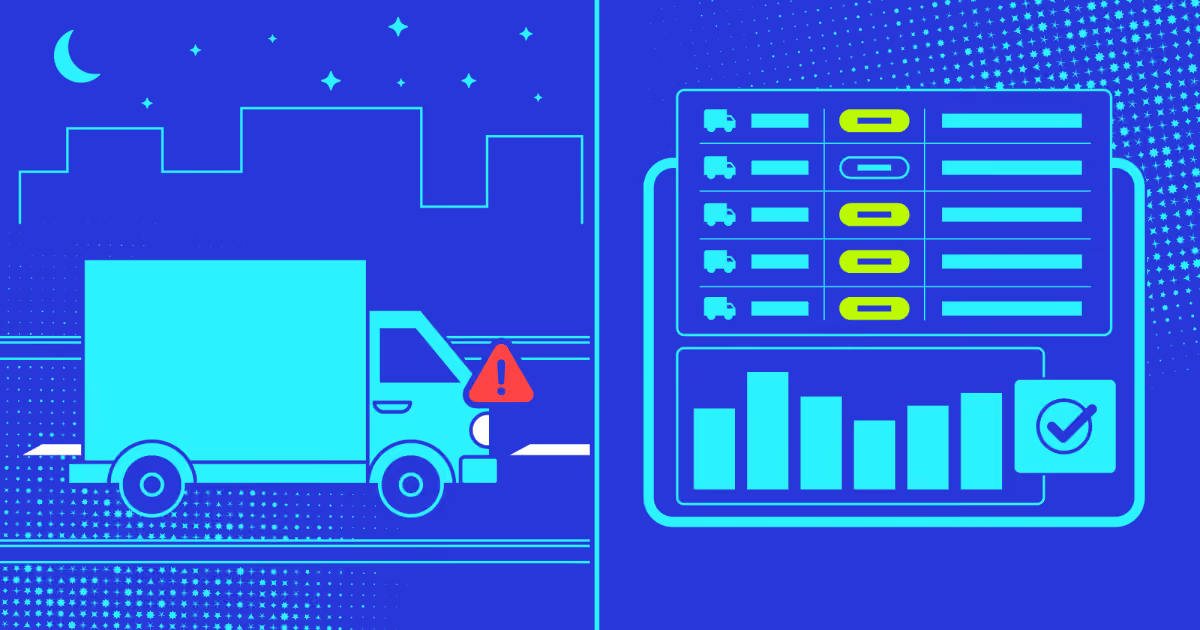
At 9:15 AM, vehicle 34 stalls on I-90, 40 miles from the next scheduled stop. The driver calls it in. Your dispatcher learns about it 18 minutes later and manually reassigns four stops by phone. Two miss their SLA windows. One customer files a chargeback. Another call to cancel. You learn all of this from a PDF emailed at 6:00 PM.
That's one incident. At $4,000 in penalties and recovery costs per SLA breach, 12 incidents a month run $576,000 in annual exposure. That figure excludes fuel waste from unoptimized routes, driver overtime, and the slower drain of customer churn. About 65% of small business owners still run fleet operations this way.
Meanwhile, the market moves forward, leaving small operators and lagging businesses behind. The fleet management market generated $32.87 billion in 2025. It's on track to reach $67.03 billion by 2030. That trajectory reflects not just adoption, but urgency. Regulatory mandates, driver shortage pressures, and rising fuel costs are forcing the issue for operators who might otherwise delay.
There are an estimated 2.9 million small commercial fleets in North America alone. Those have typical fleet sizes of eight to 12 vehicles. The majority still operate without dedicated software.
What's accelerating investment isn't just growth pressure. Electronic logging mandates, CO2 requirements, and Hours of Service enforcement are pushing fleets toward connected platforms. 5G enables sub-10 millisecond latency for real-time coordination. Usage-based insurance links safer driving to direct premium reductions.
"The thing about logistics fleet management is that the problem is rarely the hardware," says Orest Falchuk, Head of Engineering at COAX Software, on a telematics platform client whose fragmented infrastructure couldn't scale. "We had a client tracking hundreds of vehicles with decent GPS coverage. Their customers had to log into three separate apps and piece the picture together manually. The data existed. The system couldn't surface it in time for anyone to act. When you can't act on data in time, the data is decorative."
That client sold telematics subscriptions to freight and delivery operators. Revenue grew quickly. Then the architecture cracked. A standalone GPS app, a separate reporting tool, and a driver app that drivers quietly stopped opening. COAX rebuilt it as a unified platform, processing thousands of live vehicle pings. The fragmentation problem is standard. It's also solvable.
Key terms in fleet management
Fleet management vocabulary matters for one reason. Misnamed problems get misquoted in RFPs, then misbuilt into systems that fail on the road. For instance, COAX built the DriveIQ AI solution to handle a 500-vehicle fleet. The difference between "delay alert" and "predictive ETA engine" wasn't semantic. It determined whether dispatchers could act before a delivery missed its window or only after.
Below are the terms that frequently appear in fast-paced production environments. They provide crucial context for when system exceptions start piling up and drivers are already mid-route. Most importantly, they help you navigate situations where an anxious customer is already asking questions.
Integrated fleet management means GPS tracking, driver performance, route optimization, compliance, and maintenance run on one data layer. The alternative is a multi-vendor stack where systems don't communicate and dispatchers manually bridge the gaps. When we built DriveIQ, the first six weeks weren't product development. They were involved in data standardization. Four providers, TMS records with conflicting timestamps, and manual truck logs that contradicted both. Integration isn't a feature. It's a prerequisite.
Fleet management analytics converts cleaned vehicle data into operational decisions. Which routes underperform? Which drivers need coaching? Which vehicles approach maintenance thresholds? In DriveIQ, an exception queue cut diagnosis time from 12 minutes per incident to under three. A risk layer reduced support tickets by 35%. Analytics is an output of clean, integrated data. Without that foundation, dashboards show noise.
Fleet management automation removes manual steps from dispatch, compliance, coaching, and reporting. It doesn't replace dispatcher judgment. It protects it by handling routine actions so humans can focus on exceptions. In DriveIQ, the in-cab coaching system adapts to each driver's behavior. Alert types that a driver repeatedly dismissed were automatically suppressed. Coaching stayed relevant, and adoption stayed high.
Hours of Service (HOS) rules set federally mandated limits on how long a commercial driver can operate before a required rest period. FMCSA enforces them. Violations pull vehicles out of service and carry financial penalties. In DriveIQ, a fatigue and HOS optimizer tracked shift length, time of day, and historical patterns. It flagged high-risk windows before drivers hit their limits. In the first quarter post-launch, it helped prevent over 40 potential HOS violations.
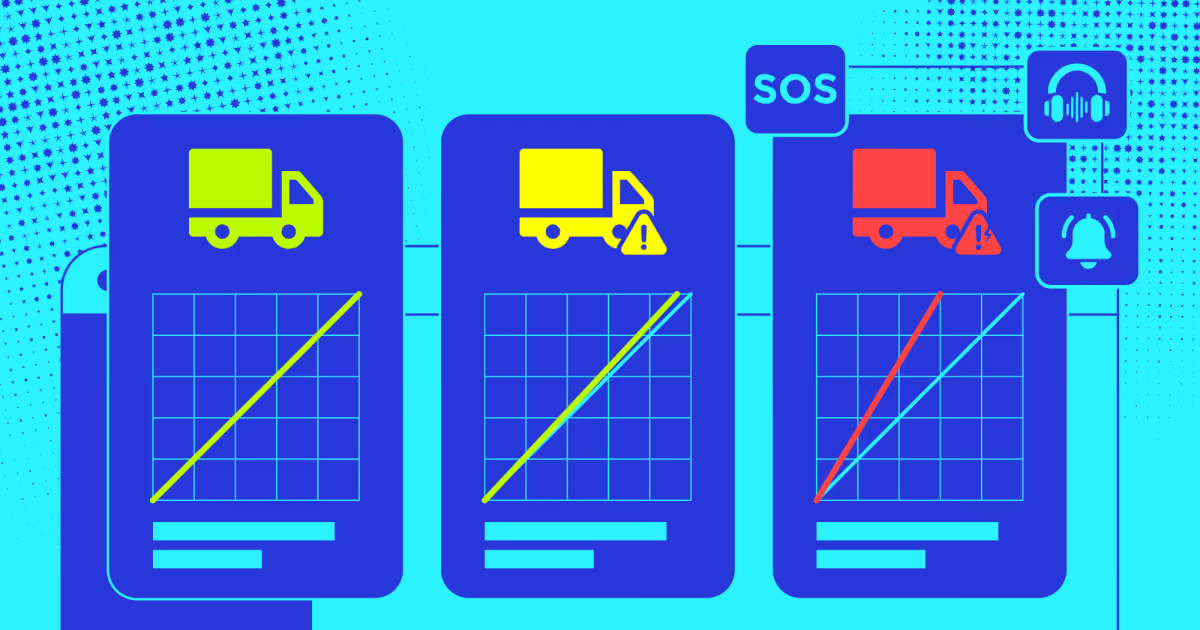
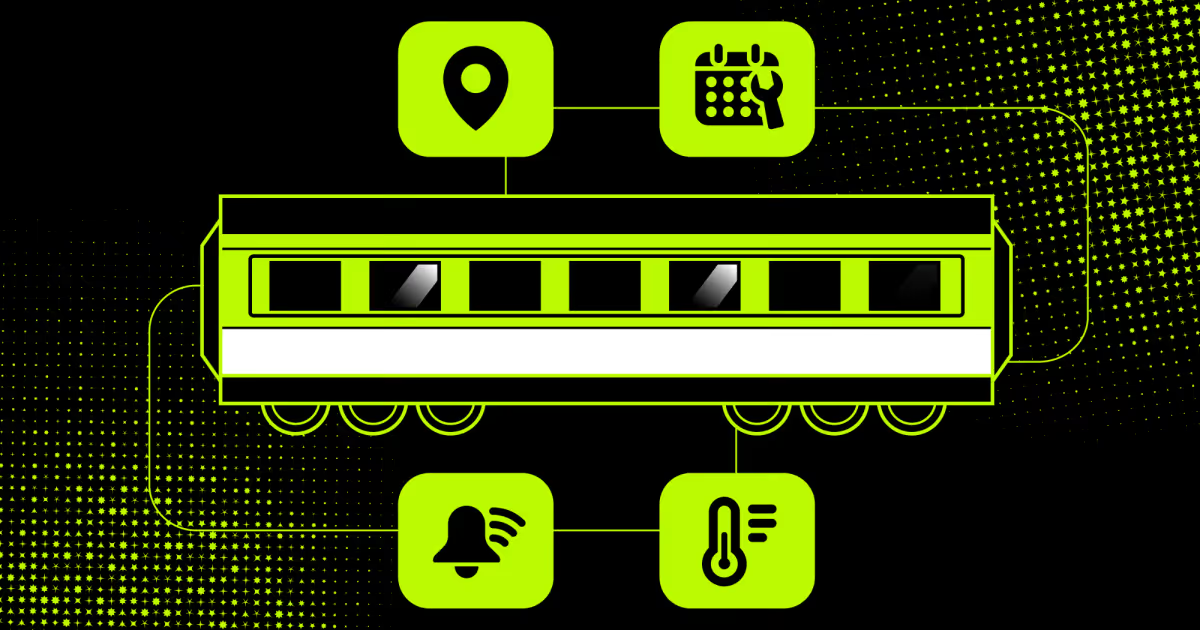
Telematics is the data foundation of every fleet management strategy. It combines location data transmitted via GPS or OBD port with engine diagnostics, speed, idle time, and driver behavior signals. Telematics data quality defines the success of your efforts. On the SyncMatix build, normalizing location pings from five different GPS hardware manufacturers was a prerequisite. It was done before a single alert or dashboard metric could be generated accurately. Poor signal coverage, inconsistent polling intervals, or hardware mismatches introduce errors. They compound through every downstream feature, from predictive ETAs to compliance reports.
Predictive maintenance uses sensor data and AI to identify component failure probability before a breakdown occurs, rather than running fixed maintenance schedules or reacting after the fact. The cost difference is direct. Fleets with predictive monitoring see 32% fewer emergency repairs. A vehicle that breaks down mid-route generates cascading costs in missed SLAs, driver overtime, and fleet rebalancing.
A fleet management plan is a structured policy. It governs vehicle acquisition, deployment, maintenance cycles, compliance obligations, and replacement criteria. For the DrivenPeople platform we built, the fleet management plan was embedded directly in the operator dashboard. It covered route configuration, driver assignment, real-time schedule adherence, and coverage gap visibility from one interface. The platform hit 91% schedule adherence in its first operating months. A plan that exists only in a PDF but can't be enforced at 7:00 AM when two drivers call in sick is just documentation.
Route optimization selects delivery sequences and paths that minimize distance, time, fuel, or a weighted combination, factoring in traffic, time windows, vehicle capacity, and driver availability. It's not GPS navigation. Navigation finds the fastest path between two points. Optimization solves the problem across hundreds of stops simultaneously. In DriveIQ's auto-recovery optimizer, smart re-routing cut empty miles by 8%. It also reduced overtime by 22% through more balanced workload distribution.
An electronic logging device (ELD) connects to a vehicle's engine and automatically records drive time, replacing paper logbooks. The ELD mandate requires most CMV operators in U.S. interstate commerce to use certified devices. In DriveIQ, ELD data is fed directly into fatigue modeling and HOS monitoring. The compliance record is generated as a byproduct of normal operations, not as a separate administrative task. The system flagged over 40 potential HOS violations in the first quarter.
Geofencing defines virtual geographic boundaries that trigger automated actions when a vehicle enters or exits. Common fleet management use cases include arrival and departure alerts, as well as unauthorized use detection. The technology is also vital for yard management and providing customer-facing shipment visibility. On the SyncMatix platform, geofence events feed alert routing logic directly. Administrators configured zone-specific triggers that ensured utilization alerts reached fleet managers and task updates reached drivers without manual triage in between.
Build your foundation on clean data models from day one. Don't waste money on rigid, off-the-shelf software middleware. Custom fleet management architecture protects your margins when operations scale up. Your fleet is either an asset or a liability. You choose which one rolls out tomorrow.
Why is fleet management important?
The importance of fleet management isn't abstract. It shows up in operating costs, accident rates, customer satisfaction scores, and driver retention numbers. The fleet management challenges operators face aren't isolated problems. They're interconnected. Poor visibility causes delayed responses, and delayed responses cause SLA breaches. SLA breaches cause churn, and churn forces growth that fragile operations can't support.
Fleet management operations touch every revenue-generating activity a logistics company runs. The case for getting them right is financial.
Operating costs spiral without control
The average cost to operate a commercial vehicle runs $0.67 per mile. For a 10-vehicle fleet, each logging 15,000 miles per year, that's $100,500 annually before a single SLA breach, accident, or unplanned repair. Idle time wastes $2,100-$3,400 per vehicle per year.
Fleet management and logistics platforms directly address the controllable portion of those costs. GPS-enabled dispatch and live monitoring cut operating costs by 15-25% for small fleets. The math isn't complicated. The discipline to act on it is where most operators fall short.
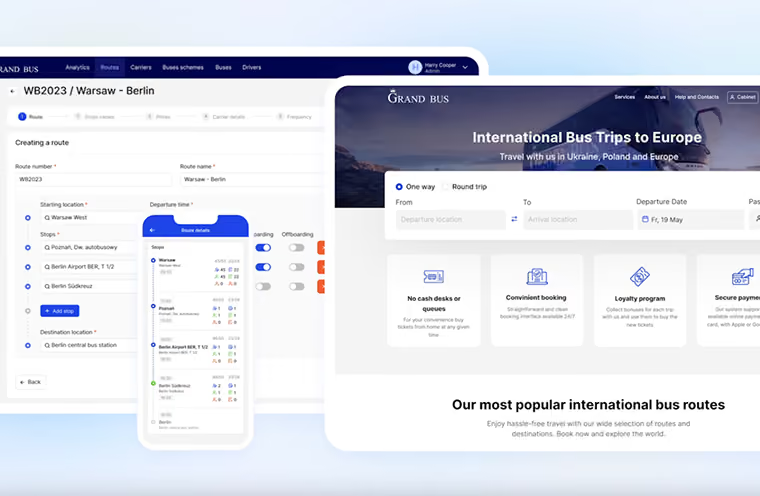
COAX’s GrandBus client had run an international bus operation on paper notebooks and Excel spreadsheets. Drivers tracked passenger lists by hand. Dispatchers coordinated routes through phone calls. Reporting took 35 minutes per completed route and was still prone to errors. Ticket sales flowed through third-party platforms that charged 5-8% commission. Drivers spent 45 minutes per route on administrative tasks that should have taken five. Passenger calls about bus locations accounted for 35% of all customer contacts.
COAX built a unified platform. GrandBus eliminated commission fees and saved more than €30,000 annually. Route management accuracy reached 99%. Passenger location calls dropped to 5% of all contacts. The driver app replaced 45 minutes of manual work per route.
None of these gains required new hardware or operational restructuring. They came from replacing paper and phone calls with a system that logged, routed, and reported automatically.
The benefits of fleet management on safety are measurable. GPS-tracked fleets report 19% fewer accidents. Fleets with active safety programs pay insurance premiums 18-24% lower than those without. In-cab coaching systems catch dangerous behaviors before accidents occur, not in the incident report afterward.
DriveIQ's fatigue and HOS optimizer illustrates this directly. By tracking shift patterns and time-of-day risk, it flagged high-fatigue windows and prompted dispatcher intervention before legal limits were breached. Safety incidents dropped 38% in the first quarter. The reduction in incident liability alone generated savings that justified a significant portion of the development cost.
Those numbers compound quickly. At 500 vehicles, DriveIQ's in-cab coaching drove a 12% reduction in fuel consumption. The coaching system suppressed irrelevant alerts automatically, which kept drivers engaged rather than resentful, and the fuel savings continued to accrue without manual oversight.
Vehicle theft and recovery
Approximately 850,000 vehicles are reported stolen annually in the U.S. For businesses with no fleet management and tracking, the recovery rate is at at 25%. Meanwhile, GPS-tracked vehicles recover at a 69% rate. Moreover, insurance companies offer 8-15% premium discounts for GPS-equipped fleets.
The risk isn't limited to direct theft. Unauthorized vehicle use, unscheduled detours, and off-hours operation all carry liability implications. Geofencing and live tracking close those exposure windows before incidents become incidents.
Customer expectations have tightened
78% of service customers rate ETA accuracy within 15 minutes as highly important. Businesses that provide live ETA updates see 41% fewer cancellations and 28% fewer complaint calls. Fleet management operations determine whether those metrics are achievable.
When DriveIQ's predictive ETA engine reached 89% accuracy within a 15-minute window, late deliveries dropped from 18% to 7% of total stops. That improvement directly reduced customer churn and enabled the client to open conversations with two major retail chains that had previously required their own tracking infrastructure.
How does fleet management work?
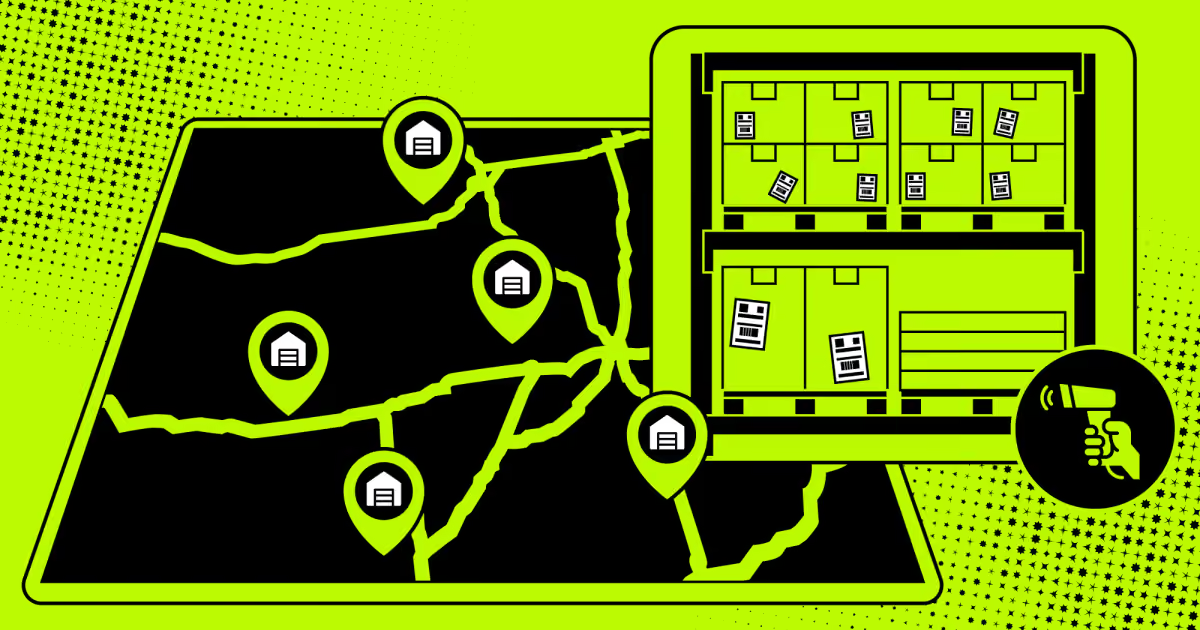
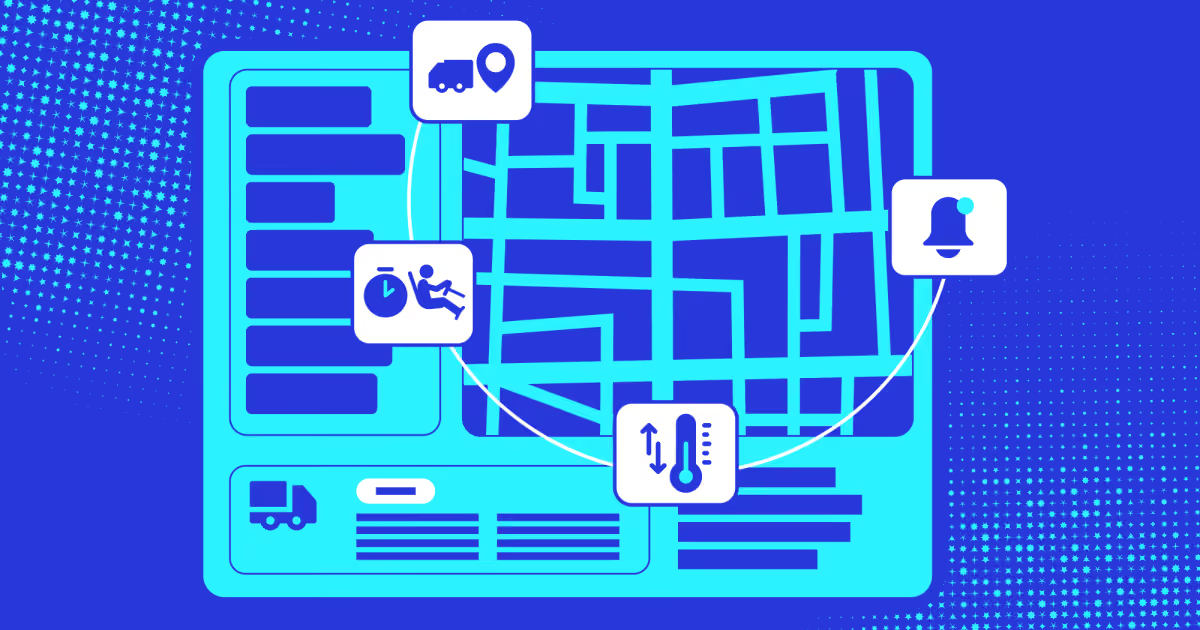
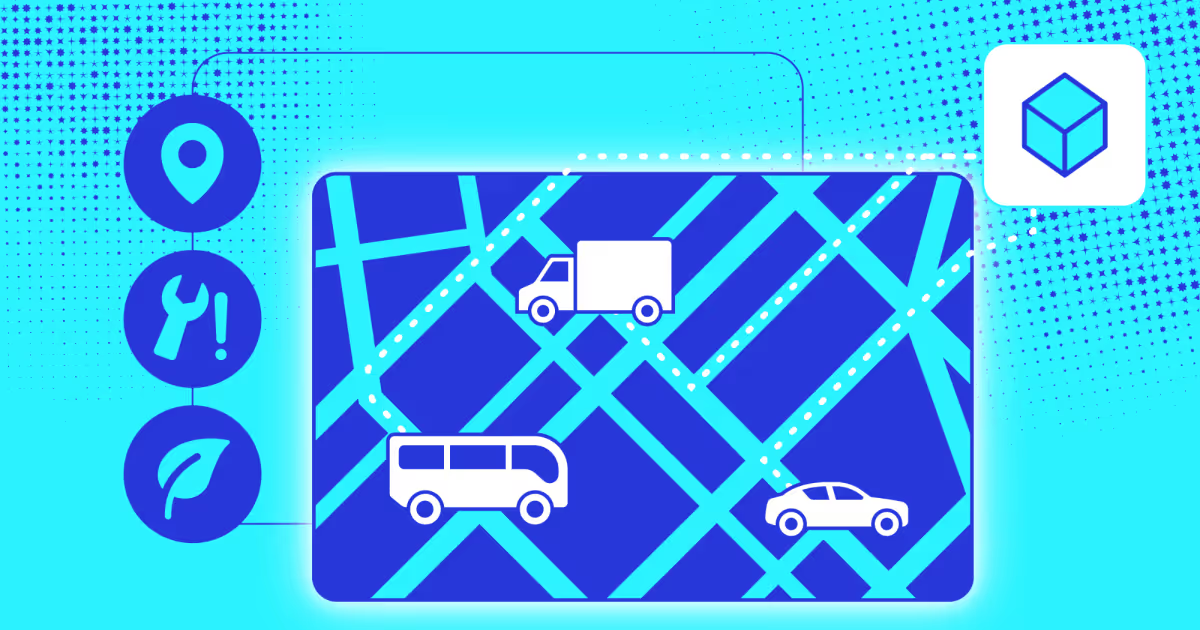
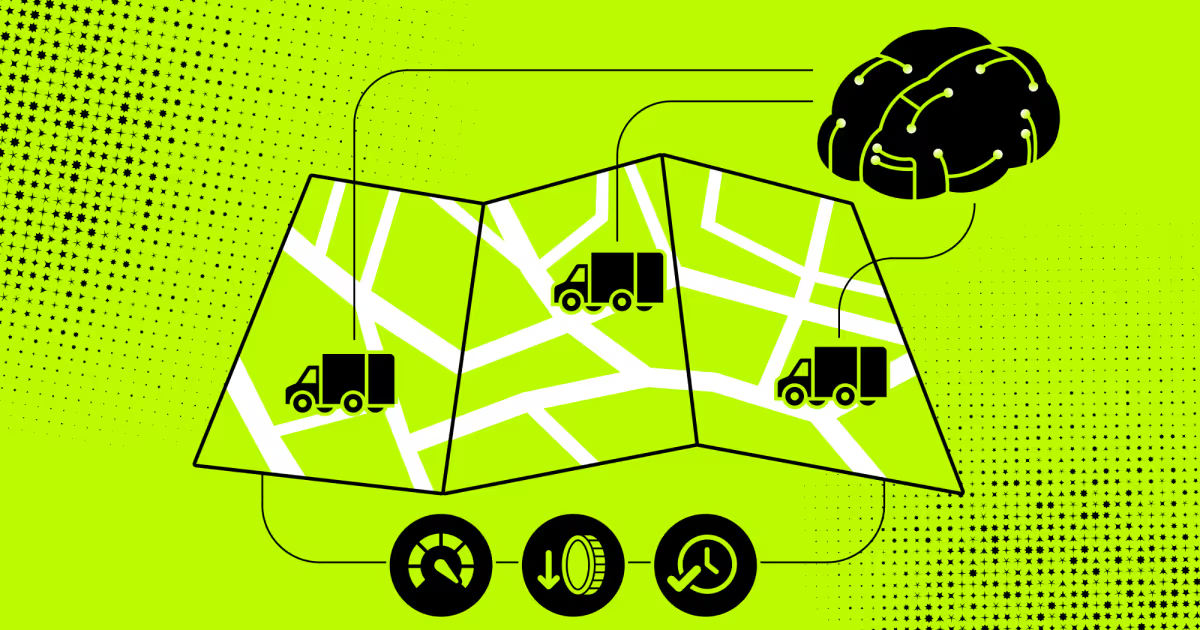
A fleet management operation runs on six interconnected components. They include telematics hardware, a central software platform, maintenance tracking, fuel monitoring, driver management, and compliance tools. Each one generates data. The fleet management process only works when that data moves between them without friction. Below, we cover each component and how they connect in a typical operational workflow.
GPS telematics and tracking
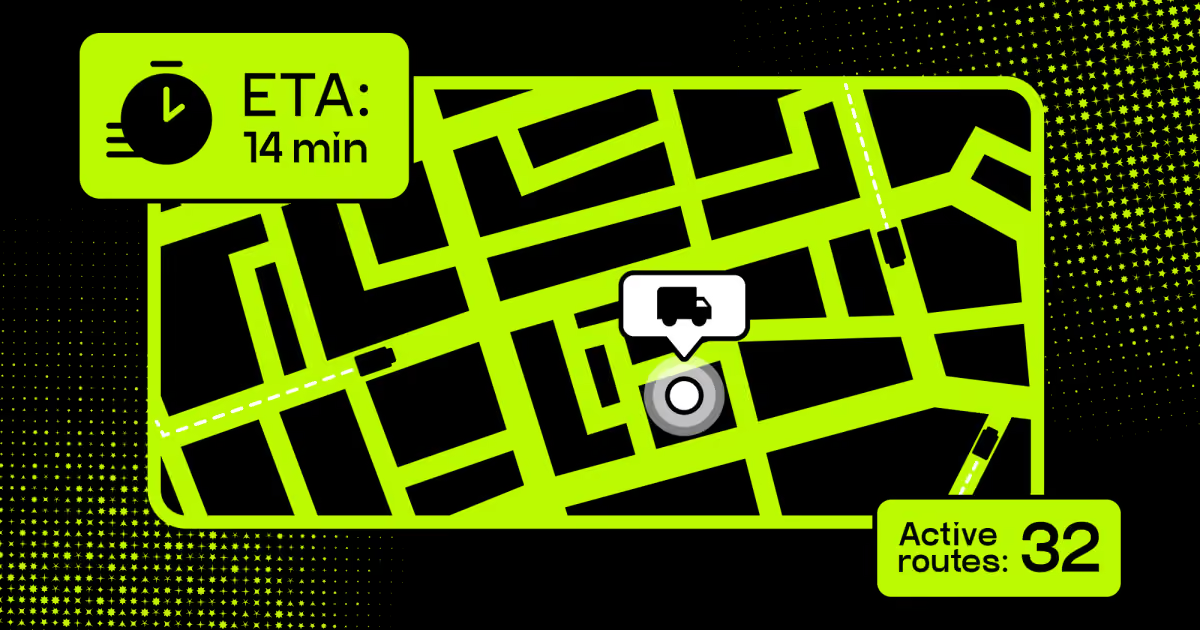
Telematics hardware installs directly into vehicles via GPS units or OBD ports. It collects location, speed, engine diagnostics, and driver behavior data, then transmits it via cellular or satellite networks to a central platform. The accuracy of this layer determines the accuracy of everything built on top of it.
For RoadStr, a social network for car enthusiasts with 150,000-200,000 users, COAX rebuilt the network location management layer from scratch. The original GPS accuracy sat at a 50-meter radius, making the route-sharing feature unreliable. We brought it to 15 meters. In commercial fleet management, that precision gap matters even more. A 50-meter error on a depot entry misidentifies arrival times, distorts geofence triggers, and corrupts the ETA calculations.
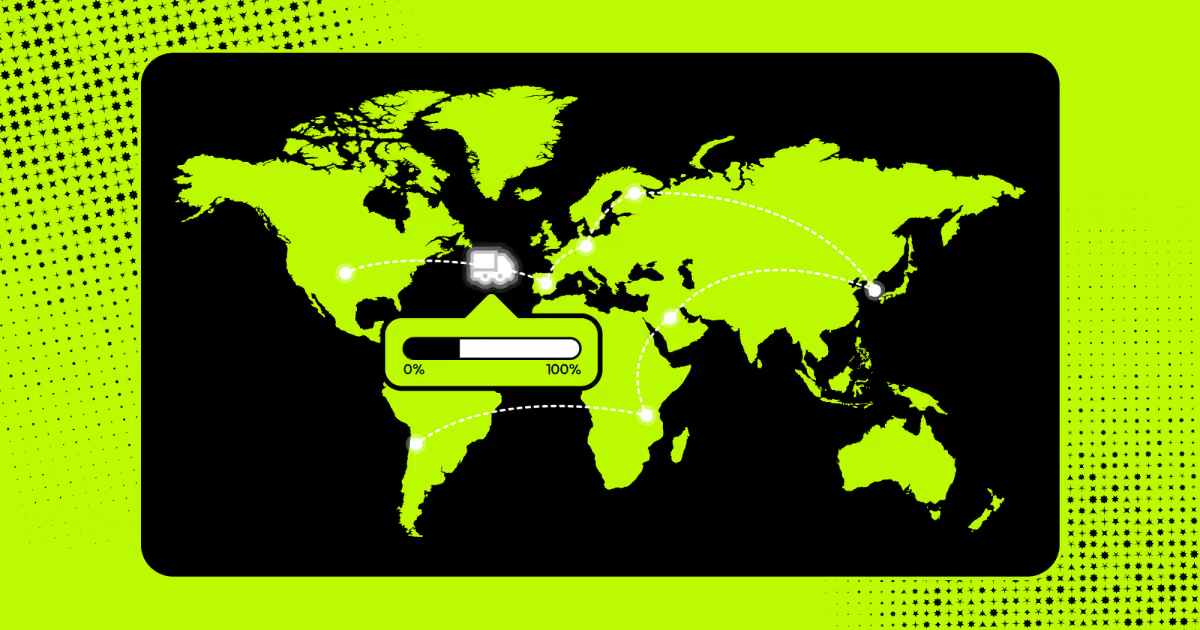
For the SyncMatix telematics platform, COAX built a live tracking layer processing thousands of vehicle pings across multiple hardware manufacturers. It polls every few seconds without data loss. The platform had to normalize location data from different GPS devices with different transmission formats before a single alert or report could be generated accurately.
Fleet management software (FMS)
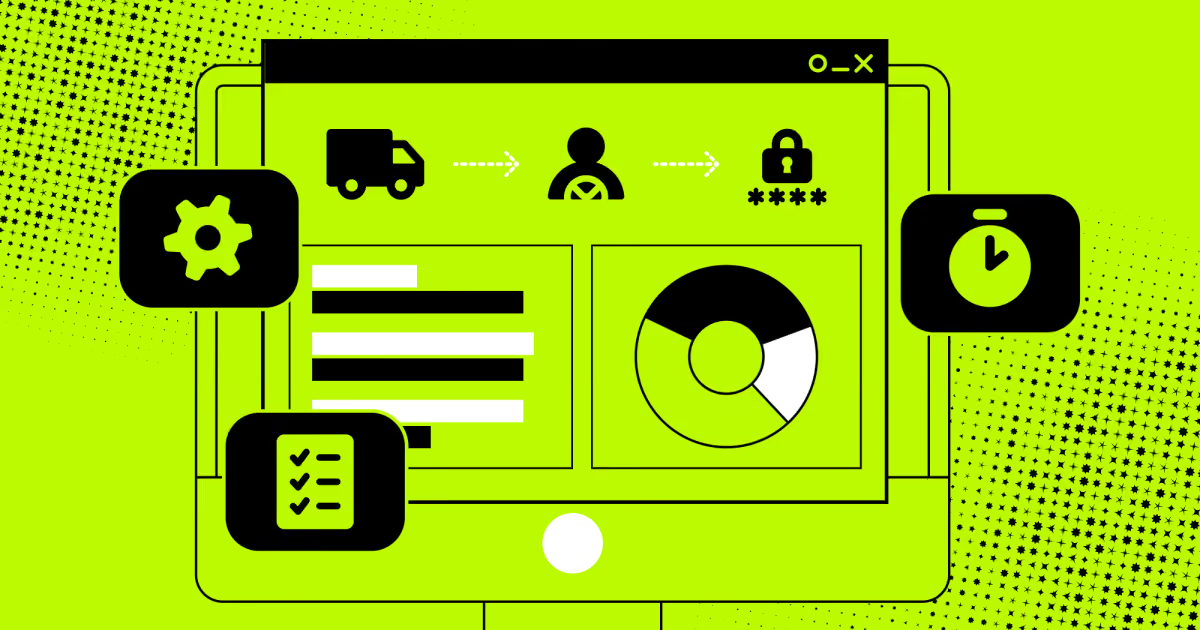
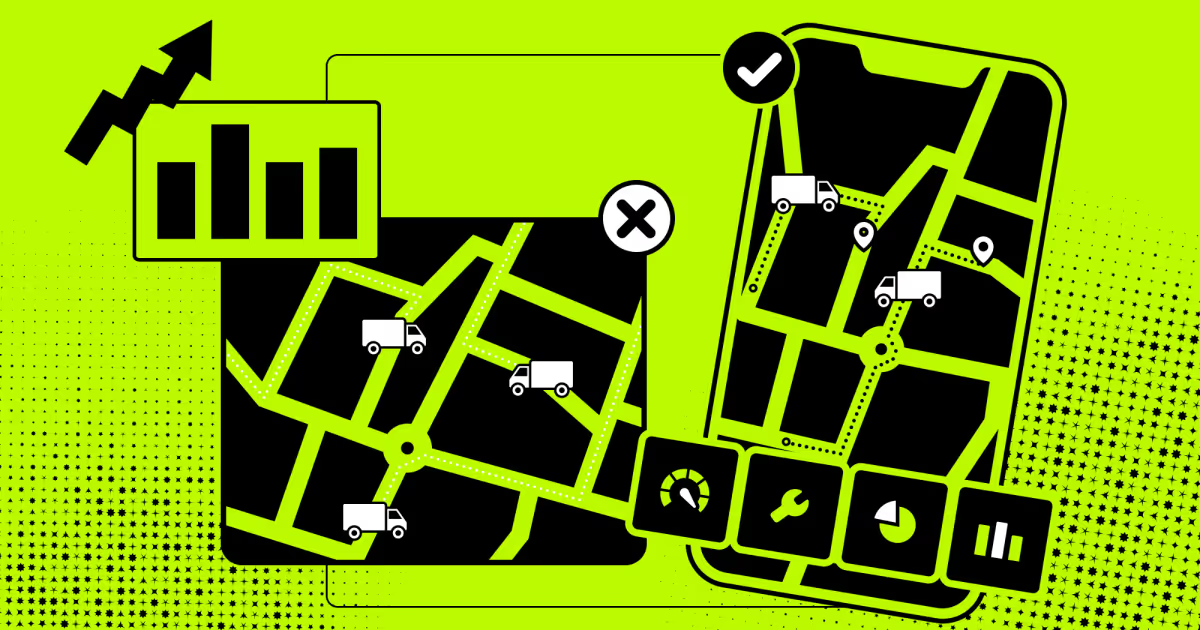
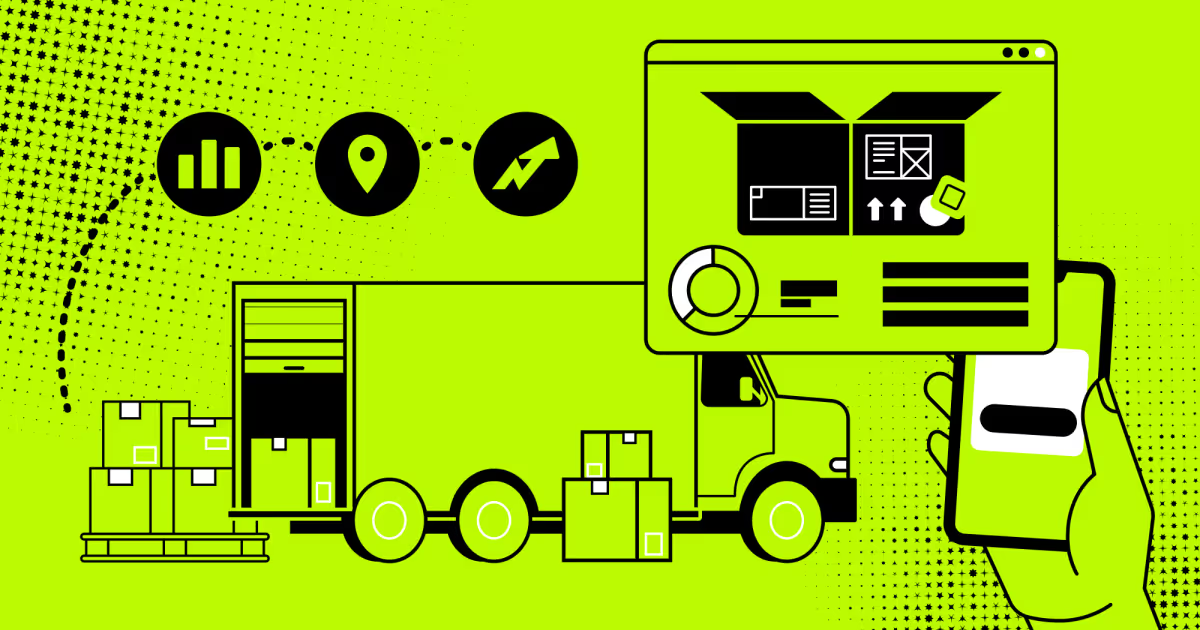
The FMS is the control center. It aggregates telematics data, organizes it into operational dashboards, and exposes the workflows dispatchers, fleet managers, and drivers actually use. For fleet data management to be useful, the FMS can't just display data. It has to surface the right signal at the right moment.
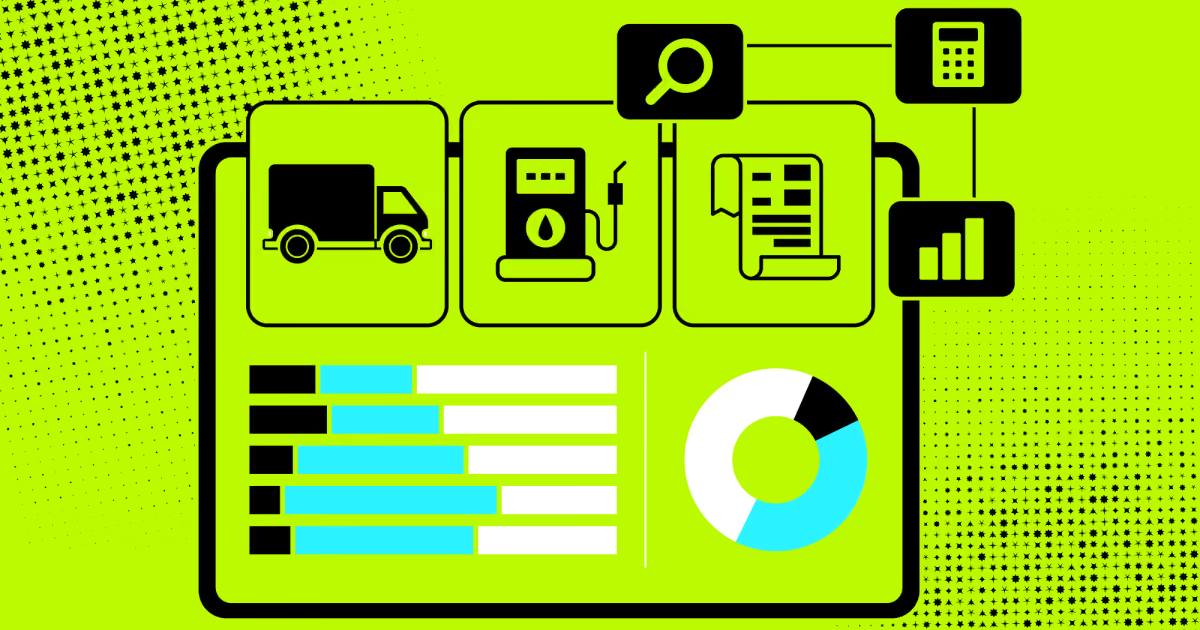
SyncMatix's advanced analytics engine is a direct example. The platform processes raw telemetry into fuel consumption trends, maintenance indicators, and driver behavior patterns. Finance analytics track cost-per-mile, maintenance spend, and vehicle utilization in configurable reports. Companies using it identified cost-saving opportunities that reduced fuel waste by an average of 18%. A trip history dashboard visualizes route timing, fuel consumption, and geofence compliance together, so fleet managers can compare similar trips for efficiency gaps.
Fleet management maintenance
Maintenance tracks engine hours, mileage, and diagnostic codes to schedule servicing before failures occur. The cost differential is direct. Planned maintenance runs $300-$400 per incident. Unplanned repairs run $800-$1,200.
In DriveIQ, the predictive maintenance layer feeds into the broader fatigue and HOS optimizer. Shift length, time of day, and historical driver data identified high-risk windows before drivers hit regulatory limits. When fleet management maintenance data is integrated with driver scheduling, the operational benefit compounds. Those are fewer breakdowns, fewer compliance violations, and fewer unplanned route reassignments combined.
Fuel management
Fuel represents 24-28% of total fleet operating costs. A fuel optimization component of fleet management tracks consumption per vehicle, flags idling anomalies, monitors unauthorized usage, and feeds into route optimization to reduce unnecessary miles.
On the SyncMatix platform, fuel efficiency dashboards surface fleet-wide inefficiency patterns by driver, route, and vehicle type. Operators can identify which drivers consistently idle, which routes carry disproportionate fuel cost, and where scheduling changes would reduce both. The analytics engine reduced average fuel waste by 18% for companies using these insights.
Driver management
Driver management covers behavior monitoring, dispatch, shift scheduling, and in-route coaching. It's where fleet management principles reflect safety, efficiency, and compliance.
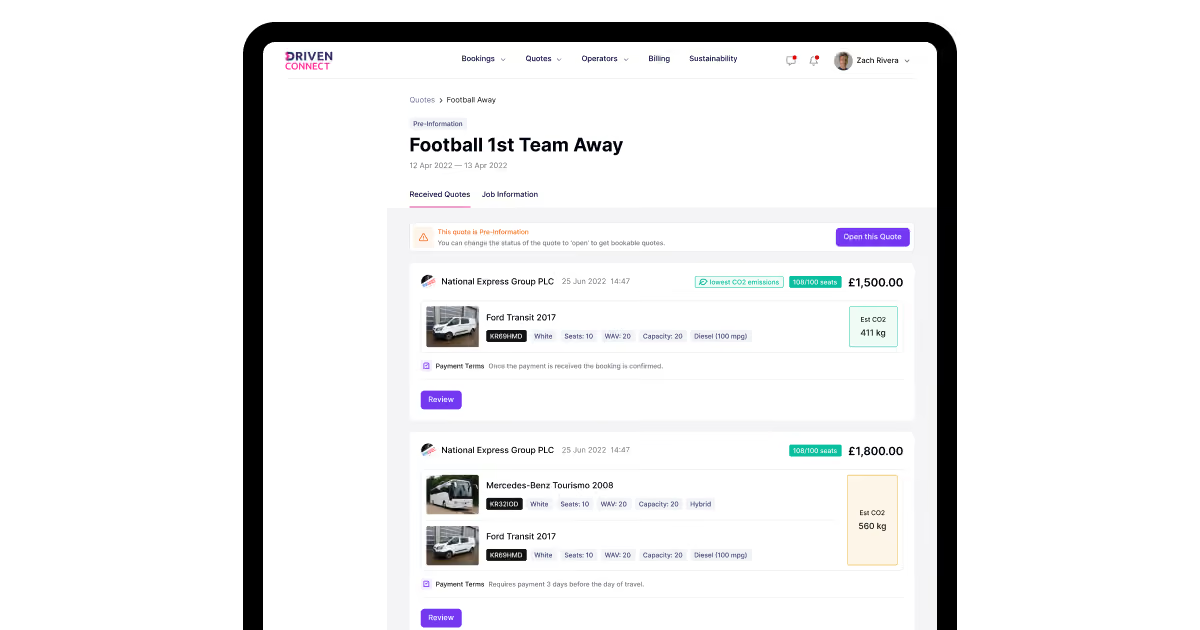
For the minibus booking service built for Driven Connect in the UK, driver management was embedded into the operator dashboard. The 400+ coach and minibus operators on the platform now manage driver rosters and assignments from one interface.
In DriveIQ, the driver performance dashboard went further. Weekly scorecards combined safety, fuel efficiency, and on-time rates with anonymized peer benchmarking. Drivers responded to the ranking format over abstract scores alone. Engagement with coaching increased. Turnover dropped 22%.
Compliance and safety
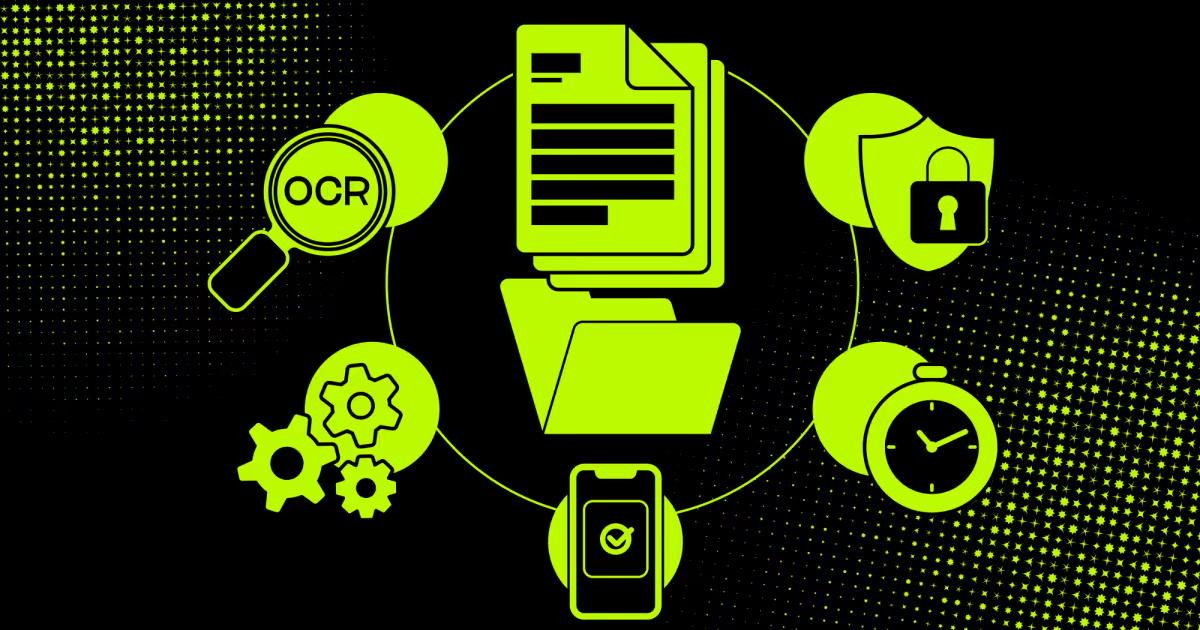
Commercial fleet management carries regulatory obligations that don't allow margin for error. ELD mandates, HOS rules, FMCSA reporting, and emissions requirements all require documented, auditable data. A compliance component captures this automatically, generates required reports, and flags violations before they occur.
Driven Connect built emissions tracking directly into its platform. The sustainability dashboard calculates total transport emissions per booking, generates offset reports, and allows carbon tax payments inside the app. When the European regulatory environment tightens further, the data is already structured for compliance.
How does the typical fleet management process go?
Fleet management converts raw vehicle data into operational decisions through five stages. Each one feeds the next.
Stage 1: Data collection. Vehicles transmit GPS position, speed, engine status, and driver behavior signals every few seconds. Hardware quality and polling frequency determine the accuracy of every downstream function. SyncMatix processes this from mixed hardware manufacturers simultaneously, normalizing formats before ingestion.
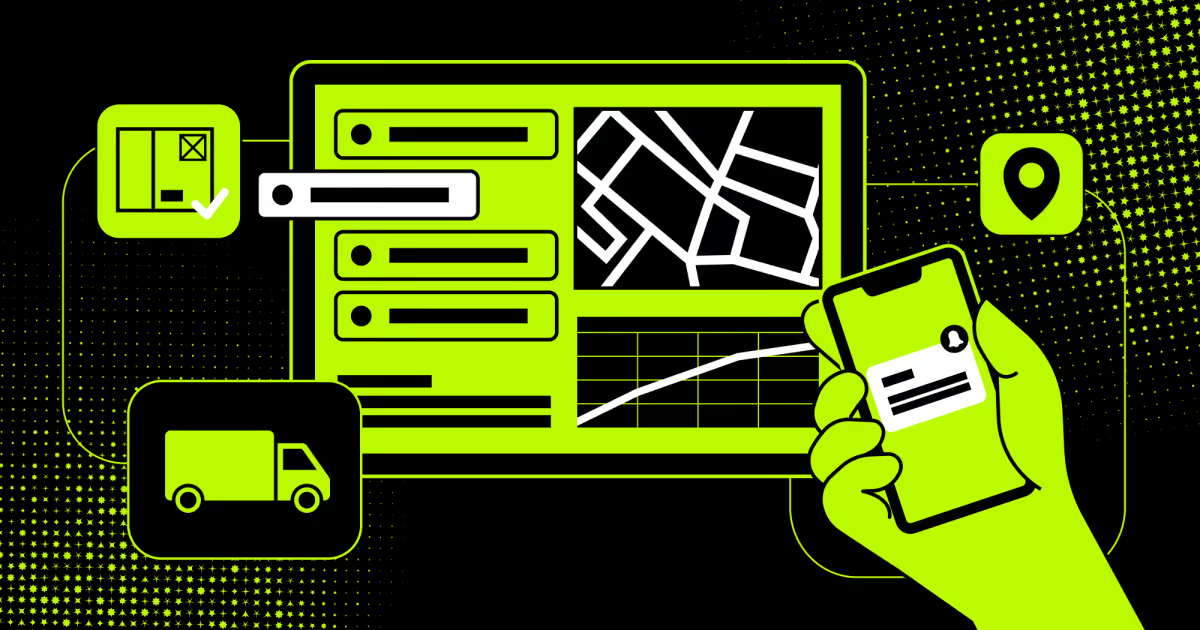
Stage 2: Centralized aggregation. The FMS receives and structures incoming data. Fleet managers see a live dashboard. Dispatchers see route status and exception queues. Drivers see their schedule and the next stop. Each user role accesses only the data layer relevant to their decisions.
Stage 3: Exception detection. Automated rules flag deviations: a vehicle behind schedule, a driver approaching HOS limits, a fuel anomaly, a geofence breach. In DriveIQ, intelligent clustering cut the time dispatchers spent diagnosing exceptions from 12 minutes to under three. The system surfaced 37 auto-resolved issues in a single session without dispatcher input.
Stage 4: Decision and action. Dispatchers accept route recovery recommendations, approve proactive customer notifications, or manually override automated suggestions. Drivers receive in-cab coaching alerts or updated stop sequences. The SLA simulator in DriveIQ lets dispatchers test scenarios before committing to delivery windows, reducing SLA breaches by 28%.
Stage 5: Reporting and optimization. Completed route data feeds analytics: fuel trends, driver scores, maintenance schedules, SLA performance. The GrandBus admin panel generates per-route reports, showing passenger counts, payments, and income, cutting reporting time by 35 minutes per route. Over time, this layer is where fleet data management compounds in value: patterns emerge, costs become predictable, and operational decisions become evidence-based rather than reactive.
"The workflow itself isn't complicated," says Orest Falchuk, Head of Engineering at COAX Software. "Collect the data, surface the right piece of it to the right person at the right moment, and let them act. What makes it hard in practice is that most fleets are already running on three or four systems that don't share data cleanly. So before you can build the workflow, you spend weeks just establishing what actually happened on any given route yesterday. That's the problem we solve first on almost every build."
Who needs fleet management?
Any business that owns, leases, or operates vehicles as part of its daily operations needs fleet management. The more central vehicles are to revenue generation, the higher the cost of managing them poorly. Below are the most common fleet management use cases, with the operational reality behind each one.
Transportation and logistics
You're running 353 freight trucks across four states with two-hour delivery windows. You track vehicle status by phone. A driver hits a construction closure on I-80 at 11:40 AM, 90 minutes before their first window closes. You find out when the customer calls at 1:15 PM. By then, three stops have missed their SLA. You spend the next two hours manually reassigning routes and drafting apology emails. Multiply that by a Tuesday in December.
Fleet management gives dispatchers live vehicle positions, automated exception alerts, and route recovery recommendations before SLA windows close, not after. COAX built exactly this for DriveIQ. Late deliveries dropped from 18% to 7% of total stops within 90 days of launch.
Passenger transport
A coach operator runs 40 scheduled routes daily across the UK. Passengers book online, show up at a designated stop, and expect the bus to be on time. Drivers navigate with paper schedules. Operators track departures by phone call at the end of each shift. A driver takes a wrong turn at a transfer stop. Nobody finds out until six passengers file complaints.
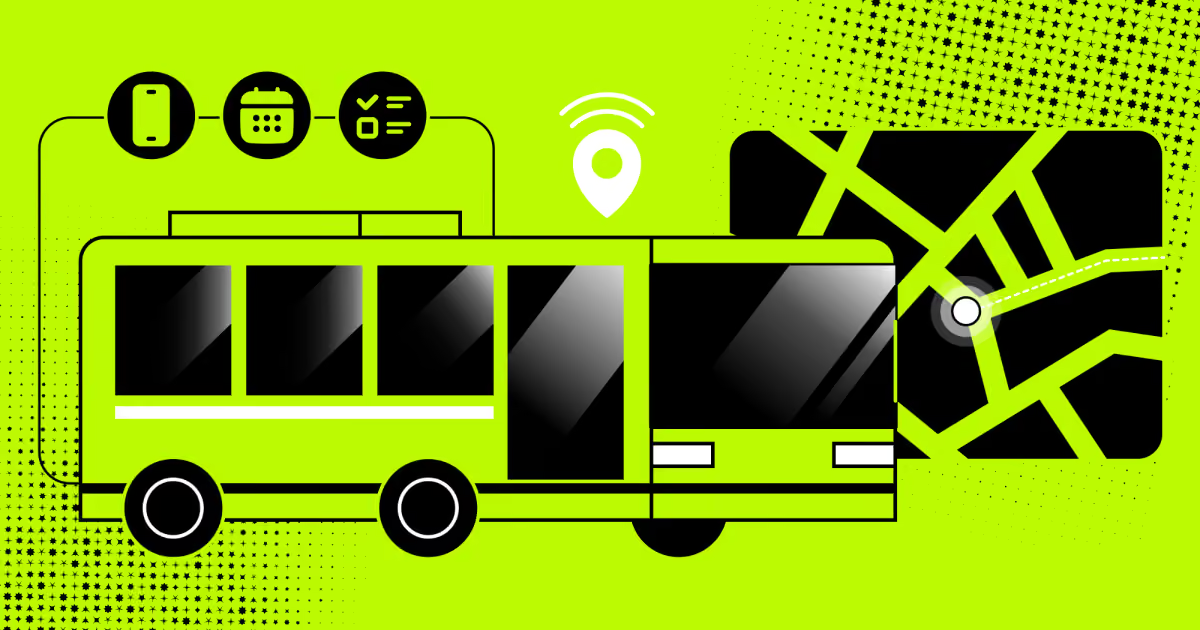
Digital fleet management replaces paper schedules with live route data, validates passenger tickets automatically, and gives operators real-time departure status. DrivenBus, COAX's platform for Dubai's private shuttle network, brought this model to scheduled luxury transit. The result was reaching 91% schedule adherence in its first operating months.
Field service
An HVAC company runs 28 technician vans across a metro area. Dispatch schedules six jobs per van per day, based on yesterday's routing. A job at 9:00 AM runs 45 minutes over. The technician doesn't call in. The next three customers get no update. Two reschedule. One cancels and leaves a one-star review.
Live tracking and automated customer ETA notifications remove the manual relay entirely. When a job runs long, the system updates downstream ETAs and notifies customers without dispatcher intervention. Businesses using GPS-enabled dispatch reduce response time by 22-31% and see 41% fewer cancellations from customers who receive real-time updates.
Construction and contracting
A civil contractor manages 60 pieces of heavy equipment across six active sites. A bulldozer sits idle at Site 3 for three days, fuel running, while Site 5 is behind schedule and needs it. Nobody makes the connection because equipment location lives in a site supervisor's memory and a text thread.
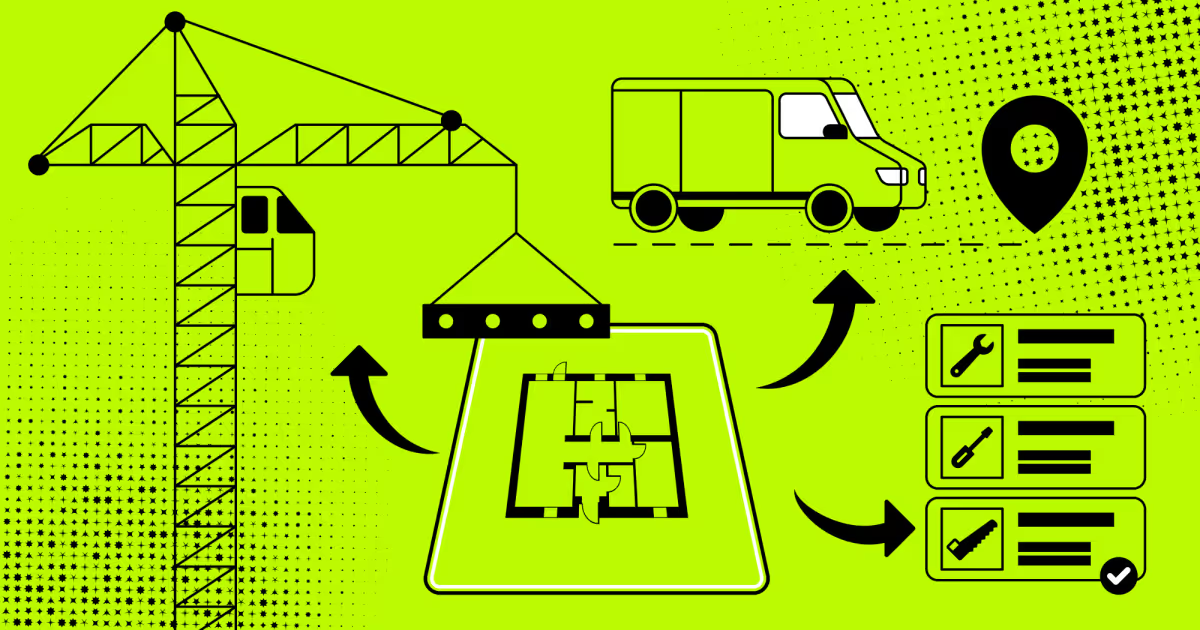
Fleet management integration identifies underutilized equipment, flags unauthorized movement, and shows utilization rates per site. For construction fleets, the financial case lies in equipment utilization.
This visibility breakdown also applies to human capital across your job sites. Our custom TRI system solved this for a construction operator. We automated worker location tracking and deploying facial recognition with 99 percent accuracy. This way, we eliminated timesheet fraud. This custom automation slashed weekly administrative overhead by 70%.
Sales and distribution
A pharmaceutical distributor runs 85 field rep vehicles. Reps log their own mileage. Expense reports come in at month-end, sometimes inaccurate, sometimes missing. Reimbursement disputes take three hours per rep per quarter to resolve. No one actually knows which territories are overserved or underserved.
Telematics replaces manual mileage logs with automatic trip records, generates accurate expense data in real time, and surfaces territory coverage gaps through route analytics. For sales fleets, fleet management pays for itself in reduced mileage fraud and reimbursement administration before any route optimization benefit is counted.
Healthcare and emergency services
A medical courier network moves 300 time-sensitive shipments daily: lab specimens, blood products, prescription deliveries. A courier gets stuck in traffic at 2:30 PM with a 3:00 PM hospital deadline. Nobody in dispatch knows until the hospital calls. The specimen misses its processing window. The patient's test reschedules by 24 hours.
Live tracking with proactive exception alerts gives dispatchers the two-hour warning, not the two-minute one. This visibility gap creates even higher stakes for people inside their own homes. We solved this complex data orchestration challenge during our three-year partnership with CareZapp. We replaced their legacy system with a scalable microservices architecture that aggregates 24/7 data from ambient IoT sensors, connected devices, and open APIs. The platform predicts needs and generates alerts for motion, vital signs, and environmental hazards.
Whether you are tracking a 20-ton delivery truck or a motion sensor in a patient's hallway, the core architectural challenge is the same. Both systems rely on distributed IoT networks, zero-latency processing layers, and instant exception alerting.
Municipal and government
A city's public works department runs 120 maintenance vehicles. Fuel cards show $340,000 in annual fuel spend. Nobody can explain why 14 vehicles consistently burn 30% more than the fleet average. A city council audit is scheduled for Q3.
Fleet management provides the audit trail. Fuel consumption by vehicle, idle time logs, route history, and maintenance records. For government fleets operating under public accountability requirements, the reporting capability is as important as the operational benefit. A transit management platform we built shows how digital fleet management applies to public-facing transport with fixed routes, driver assignments, and passenger visibility.
"Every one of these industries has the same problem. Vehicles are generating data constantly, but that data isn't reaching the right person fast enough to act on it," says Orest Falchuk, Head of Engineering at COAX Software. "The industry changes the surface details. The architecture problem is almost always the same."
The exact fleet management configuration that makes sense for a logistics operator is different from what works for a healthcare courier. Fleet size, regulatory environment, vehicle type, customer-facing requirements, and existing tooling shape the solution. That scoping process of understanding which components you actually need is what software product discovery resolves. It maps your operational reality to a technical architecture, so you build what solves the problem.
What does a fleet manager do?
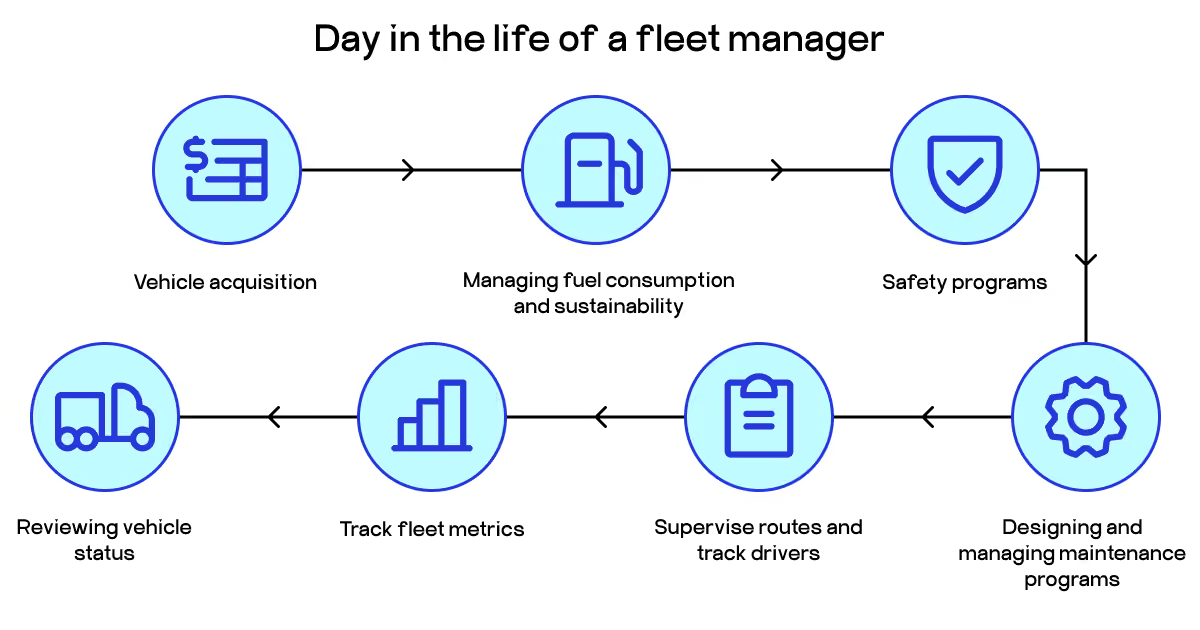
A fleet manager's day doesn't start with a plan. It starts with whatever happened overnight. A fleet management role is less a job description and more a continuous triage operation: fuel costs, driver schedules, compliance deadlines, vehicle status, and customer commitments all competing for the same attention at once.
Vehicle acquisition and readiness review. Before 7:00 AM, a fleet manager checks which vehicles are available. Three are in for maintenance. One failed a pre-trip inspection. That's four fewer units for today's schedule. Reassignments happen before dispatch even opens.
Fuel consumption and sustainability management. Fuel cards show two vehicles burned 40% over average yesterday. No context. The fleet manager pulls the route logs manually to check for idling anomalies. This takes 25 minutes, which should have been automatic.
Safety programs. A driver flagged for three hard-braking events this week needs a coaching conversation. The fleet manager schedules it between dispatch calls. There's no dedicated time for it. Fleet management trends show that proactive coaching, not reactive reprimand, lowers incident rates. The data exists. Acting on it consistently is the operational challenge.
Design and execution of maintenance programs. Fleet management costs compound fastest here. An unplanned repair costs three times more than a scheduled one. The fleet manager reviews service intervals, cross-references mileage logs, and schedules two vehicles for preventive service next week. This happens in a spreadsheet.
Route supervision and driver tracking. Midday. Twelve vehicles are behind schedule. Two dispatchers are managing route adjustments by phone. The fleet manager monitors what they can from a dashboard that refreshes every five minutes. One driver hasn't updated their status in 90 minutes. Nobody knows why yet.
Fleet management metric tracking and analysis. End of day. The fleet manager compiles performance data: on-time rate, fuel spend, incidents, and utilization. The data lives in four systems. Assembling a single report takes 40 minutes. The figures show patterns. Acting on them requires tomorrow's meeting.
Vehicle status review. Last task. Eight vehicles need pre-trip inspections before tomorrow's 6:00 AM shift. The fleet manager sends reminders to drivers and logs the outstanding items. Two vehicles have unresolved diagnostic codes from last week.
Fleet managers don't need more data. They need less friction between data and action. The workflows above reveal the same gap in every step. Information exists, but it's in the wrong place, at the wrong time, in the wrong format.
We saw this breakdown when partnering with international transport operator GrandBus. Their dispatchers were drowning in Excel spreadsheets. Their drivers were tracking passenger manifests in paper notebooks. We developed a dedicated mobile driver application linked to an automated admin panel. Eventually, we replaced calls and paper records with real-time syncing.
Drivers saved 45 minutes per route by scanning ticket QR codes directly from the cab. Automatic location tracking slashed customer location-inquiry calls from 35% down to just 5%. Automation cut administrative reporting time by 35 minutes per route. Overall, it saved GrandBus over €30,000 annually by moving sales entirely in-house.
A practical fleet management strategy achieves this at the workflow level. Start with the basics. Digitize the workflows that currently run on spreadsheets and phone calls. Get accurate vehicle location and driver status into one view.
That's what an MVP development for a fleet management program looks like. COAX has built this progression with operators across logistics, transport, and field service. The starting point is almost always the same. Once the foundation runs, adding more complex tools, integrations with TMS platforms, ERP systems, or tracking portals, becomes straightforward.
Fleet management challenges and how to overcome them
Fleet management challenges don't announce themselves in advance. They compound quietly. A maintenance backlog turns into a breakdown rate, or a driver coaching gap turns into an accident. By the time the cost is visible, the root cause is three layers back.
Fleet management risks cluster around four areas.
Cost control. Fuel, insurance, maintenance, and downtime all move in the same direction without active management. Unplanned downtime runs $3,500-$6,500 per vehicle per year. However, cost control responds fastest to fuel monitoring and route optimization. Install the telematics layer, identify the 20% of vehicles driving 80% of the fuel variance, and address those first. In DriveIQ's in-cab coaching system, that targeted approach reduced fuel consumption by 12% without restructuring the entire operation.
Driver behavior and retention. Drivers without monitoring show 30% higher incident rates. High turnover forces constant recruitment and retraining cycles. The fleet management tension here is real: monitoring feels intrusive. Done wrong, it drives turnover higher. Done right, it gives drivers transparent performance data. The DriveIQ performance dashboard is an example. Weekly scorecards gave drivers a clear, data-based view of their own performance with anonymized peer benchmarking. Drivers responded to ranking over abstract scores. Turnover dropped 22%.
Data fragmentation. Most fleets run on disconnected systems. GPS here, maintenance logs there, compliance records somewhere else. The integration gap means decisions get made on incomplete information. Fleet management integration is the fix. The right sequence is: standardize the data layer, consolidate into one platform, then build reporting on top. Skipping step one and buying a reporting tool first is one of the most expensive mistakes fleet operators make.
Regulatory compliance. HOS rules, ELD mandates, CO2 targets, and safety audits all have deadlines. A missed compliance can pull a vehicle out of service or trigger an audit that disrupts the entire operation. Compliance is best handled by embedding it into existing workflows. Automated HOS alerts, ELD integration, and audit-ready reporting should be generated as a byproduct of normal operations.
The practical challenge with fleet management isn't identifying what needs fixing. It's knowing what to build first, and what to integrate versus what to build custom. COAX has built fleet and transport platforms across logistics, passenger transit, and field operations. The pattern is consistent. Operators arrive with a fragmented stack and a list of pain points.
Mobile app development is often where driver adoption lives or dies. In DriveIQ, the coaching app was designed around the moment a driver decides to trust the system or ignore it. Context-sensitive voice alerts, adaptive suppression of irrelevant notifications, and a weekly scorecard determined whether the platform changed behavior.
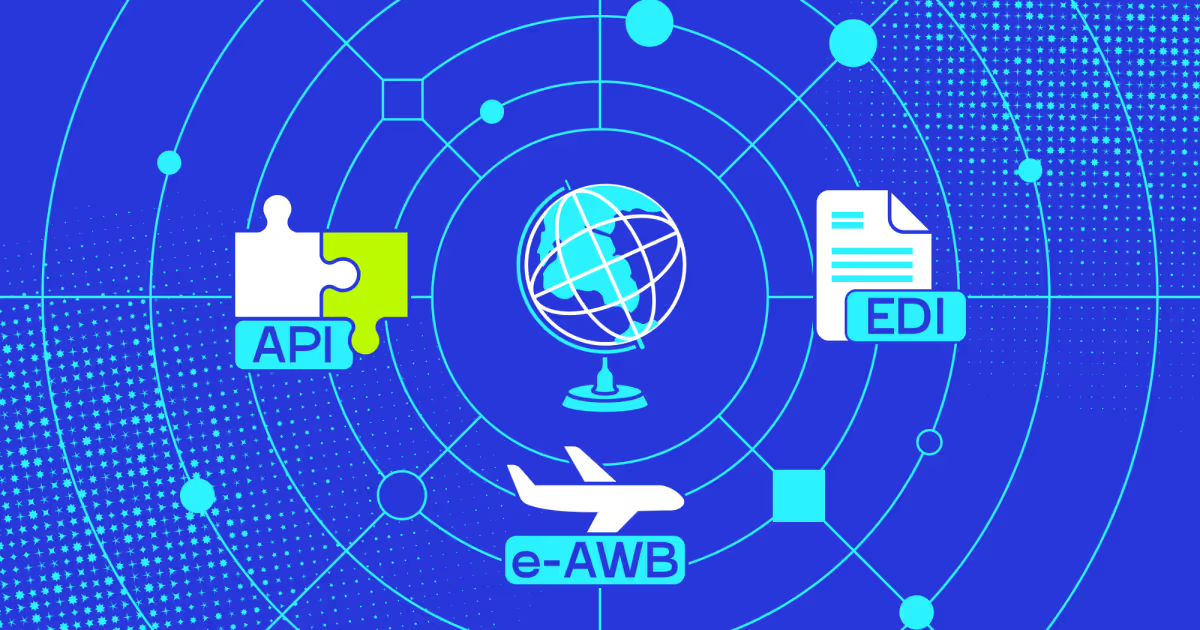
After the core platform runs, we handle the integrations. This covers TMS systems, telematics hardware from multiple vendors, third-party ERP platforms, and customer portals. Integration work is where most fleet software projects stall. We've done enough of it to know which connections break under load and which vendor APIs need middleware to behave reliably.
Where to start with fleet management?
Getting fleet management right starts before any software is chosen. The questions you ask upfront determine whether the build solves the right problem. Below are the practical ones. They cover operations, data, drivers, integration, and reporting. Work through them honestly before talking to any vendor.
Questions on your operations.
What are your current manual steps? Which ones cause the most delay? Where do errors enter the process most often? What does your dispatcher do at 2:00 AM when something breaks?
These questions reveal the real problem. Not the one in the brief. The one that costs you every Tuesday.
Following solid fleet management principles means resisting the urge to build for the ideal state. Build for the broken one you have now. Fix the most expensive gap first. Everything else comes after.
Questions on your data.
Where does vehicle location data currently live? How often is it updated? Which systems need to read it? Do your systems share timestamps in the same format?
That last question sounds technical. It isn't. Timestamp mismatches between GPS feeds and TMS records are the most common integration failure we see. They make historical route data useless and break every predictive model built on top.
For the SyncMatix platform, normalizing timestamps across hardware from different manufacturers was a prerequisite for every other feature. Until the data layer was clean, analytics produced noise. This is the data foundation your fleet management build depends on.
Questions on your drivers.
How do your drivers currently receive route updates? How do they report exceptions? Will they use a mobile app if you give them one?
Driver adoption isn't a training problem. It's a design problem. If the app requires more steps than a phone call, drivers use the phone. Designing for the moment a driver decides to trust the tool is where fleet management optimization either takes hold or fails quietly.
Questions on reporting.
What decisions do you make weekly that require fleet data? What do you currently report to leadership or customers? What's missing from those reports that you wish you had?
Fleet management metrics only have value when they reach the person who can act on them. A utilization dashboard nobody opens is a cost, not an asset.
Good analytics requires a well-designed web interface. The reporting layer is where data becomes decisions. At COAX, web development and analytics integration aren't handed off between teams. The engineers who design your data model build the dashboards on top of it. The team that scoped the integration is the team that wires it to your BI layer. No translation layer. No scope gap between front-end and back-end. One team, full cycle, from data schema to the screen your fleet manager looks at every morning.
Questions on integration.
Which systems do you need your fleet platform to connect to? TMS, ERP, WMS, HR, customer portal? Who owns each system? Who will manage the integration after go-live?
Driven Connect's platform required integration with Google Maps, Stripe, emissions calculation APIs, and operator-facing management tools. Each integration needed its own data contract. This build succeeded because the integration scope was defined upfront.
Questions on your business model.
What's the revenue impact of a 10% improvement in on-time delivery? What does each unplanned breakdown cost in real terms? What's your driver turnover rate, and what does replacing one driver cost?
These numbers define the ROI ceiling for your investment. A fleet management business model that can't articulate those figures can't prioritize features correctly. Know your cost baseline before you scope the solution.
Fleet management best practices
Fleet management best practices aren't universal. They're context-specific. The practices that work for a 500-truck logistics operator don't map cleanly to a 30-vehicle field service team. Below are the ones that hold across most projects we've had.
Start with visibility, not optimization.
You can't optimize what you can't see. Before route optimization, driver coaching, or predictive analytics, get accurate location data into one place. That alone, done properly, changes operational behavior.
Design for the driver first.
Every fleet management strategy that fails at adoption fails here. Drivers are the primary data source. If the tool is inconvenient, data quality degrades. GrandBus drivers switched from paper notebooks to a mobile app. It replaced 45 minutes of per-route admin. Adoption followed because the app removed friction, not added it.
Measure before you automate.
Automation applied to a broken process produces a faster broken process. Measure your current SLA breach rate, fuel variance, and incident frequency before building. Those baselines tell you whether the build worked six months after launch.
Don't build what you can buy.
Custom development earns its cost when off-the-shelf tools can't model your data correctly. Build custom for what's genuinely unique to your operation. Use existing components for payments, mapping, notifications, and authentication. For Road&Rally, we used Firebase for payments, Mapbox for navigation, and Apple's in-app purchase framework for subscriptions. The custom work went into synchronized group navigation, the thing no existing tool did. That's the right allocation.
This fleet management guide applies to most operators regardless of fleet size. The sequencing matters more than the tools.
Fleet management tips worth keeping operational:
Segment your fleet data by vehicle type, route, and driver before concluding.
Review exception queues daily, not weekly. Patterns that take a week to surface cost more to fix.
Tie coaching to data, not to incidents. Proactive coaching reduces incidents. Reactive coaching reduces drivers.
Audit integrations quarterly. API versions change. A vendor update in January can silently break a webhook by March.
Fleet management strategies that compound over time share one characteristic: they generate clean data first, then build intelligence on top of it. The platforms that stall do it in reverse.
Transportation software development for fleet operations requires a team that has seen the failure modes, not just the feature list. COAX is ISO 9001 and ISO 27001 certified. Our security protocols aren't a checkbox. They're are the foundation every client platform runs on.
We've been building fleet management and transportation software for 16+ years. GrandBus needed a full booking and operations platform in five months. We delivered the first MVP in March, three months after project start, while managing scope changes, payment integration, SEO implementation, and legal document support simultaneously. This is the practical context for knowing where projects stall and how to keep them moving.
FAQ
What is fleet management in logistics, and how is it different from general fleet management?
Fleet management in logistics specifically means managing vehicles as revenue-generating delivery infrastructure, not just company assets. The distinction matters because logistics fleets operate under customer SLAs, carrier compliance requirements, and real-time dispatch dependencies that general fleet tools don't model. Every delay has a contractual consequence. That's a different data architecture than a corporate car pool.
What fleet management integrations are non-negotiable before going live?
The fleet management integrations that break operations when missing are TMS, maintenance scheduling, and customer notification systems. ERP and HR integrations matter for larger fleets. On our SyncMatrix project, normalizing data from multiple GPS hardware vendors was the prerequisite for everything else. On DriveIQ, integrating real-time weather and traffic feeds into the ETA engine was what made 89% prediction accuracy achievable. Integration depth determines platform value.
What types of fleet management tools exist, and which fit a mid-sized operation?
The main types of fleet management software are:
Standalone telematics platforms
Modular FMS suites
Fully custom products.
Choosing between these options depends heavily on your current infrastructure and how quickly you expect your operational complexity to grow. Standalone telematics handles tracking well but rarely integrates deeply. Modular suites add dispatch and maintenance but charge per feature tier. Custom platforms fit operations where the data model or workflow is genuinely unique. Most mid-sized operators start with a modular tool and hit its ceiling within two years.
How does fleet management work when vehicles operate across multiple countries?
This depends on whether your platform handles regulatory differences at the data layer, not the UI layer. HOS rules, emissions standards, and ELD requirements vary by jurisdiction. A platform that treats compliance as a report type rather than a core data model creates gaps. Cross-border builds require jurisdiction-aware rule engines, not just localized dashboards.
How long does it take to build a custom technology piece for fleet management from scratch?
A functional MVP typically takes three to five months for core tracking, dispatch, and reporting. Full platforms with predictive analytics, driver coaching, and multi-role dashboards run six to twelve months. GrandBus went from project start to first live MVP in three months. DriveIQ reached a working prototype while data cleaning still ran in parallel. Timeline depends on data complexity and integration scope, not feature count alone.
What does effective fleet management actually require beyond GPS tracking?
Effective fleet management requires clean data integration, not just visibility. GPS tells you where a vehicle is. Effective management tells you whether it will meet the next delivery window, whether the driver is approaching a fatigue threshold, and whether the route should be reassigned before the problem compounds. Tracking is the input. Dispatch intelligence, driver coaching, and predictive maintenance are the outputs that generate ROI.













































































_.avif)









%2520explained.avif)

We are interested in your opinion