Imagine a dispatcher seeing 18 stationary vehicles before sunrise. One group is loading at a warehouse. Several drivers are completing mandatory rest periods. Another tracker has lost its cellular connection. One truck is idling outside the wrong depot. A refrigerated vehicle reports rising cargo temperature. A basic GPS map shows 18 motionless dots. Fleet monitoring explains what each situation requires.
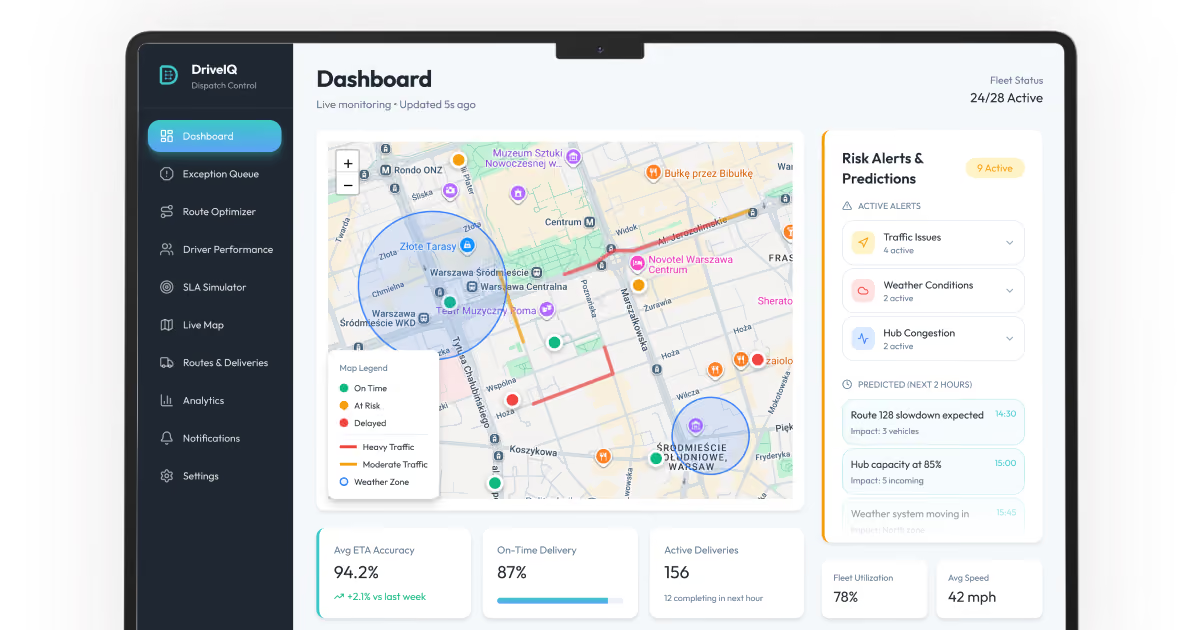
COAX Software has spent 16+ years developing transport technology. We built SyncMatix to combine fragmented telematics data. The platform connected multiple GPS and OBD hardware providers. Its real-time view improved route-event responses by 25%. COAX Software also developed DriveIQ for a 500-vehicle cross-border fleet. The platform combined traffic, weather, and driver performance data. It updated delivery predictions every 15 minutes.
These projects shaped our understanding of fleet monitoring. Visibility matters only when teams understand what requires action. In this guide, we explain how fleet monitoring works beyond GPS tracking. We’ll compare leading systems against practical production requirements. You’ll see how to choose and implement the right solution.
What is fleet monitoring?
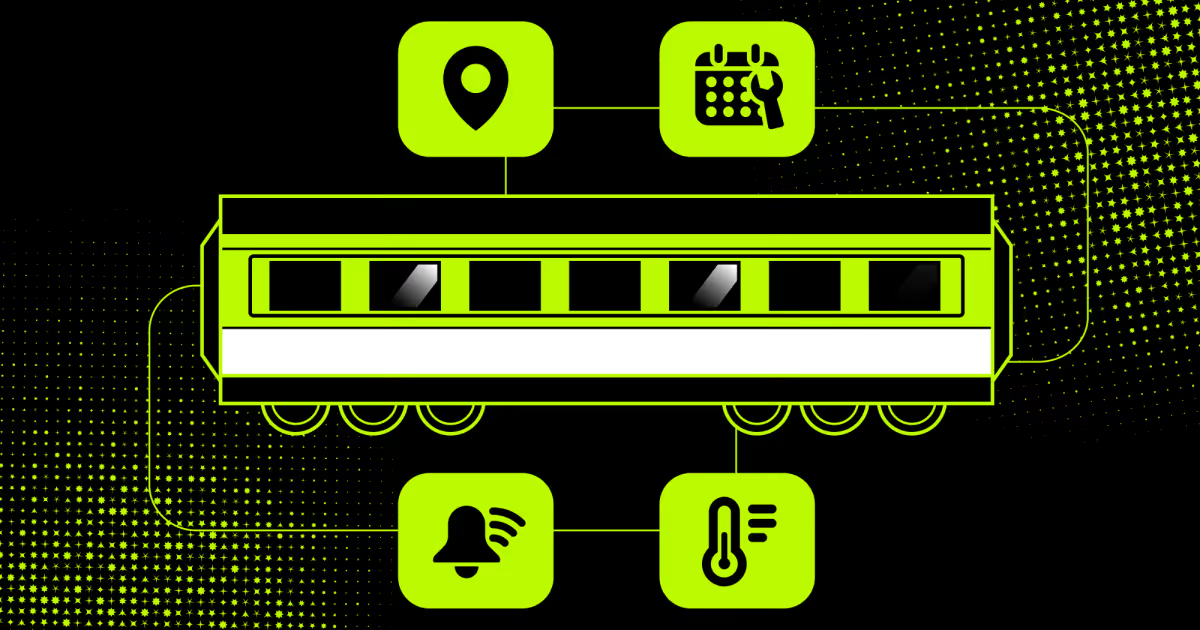
Fleet monitoring continuously observes vehicles, drivers, assets, and operating conditions. A fleet monitoring system combines hardware, connectivity, software, and workflows. It converts movement and vehicle signals into actionable operational records. A GPS fleet monitoring system only begins with location. Modern fleet monitoring also captures speed, fuel, engine health, idling, and safety. Refrigerated fleets add temperature and door sensors. Electric fleets add charging and battery state.
Fleet management solutions connect each vehicle event with operational context. A location ping gains meaning when linked with routes and tasks. An engine fault matters more before a scheduled delivery. Harsh braking requires different responses on school grounds and on empty highways.
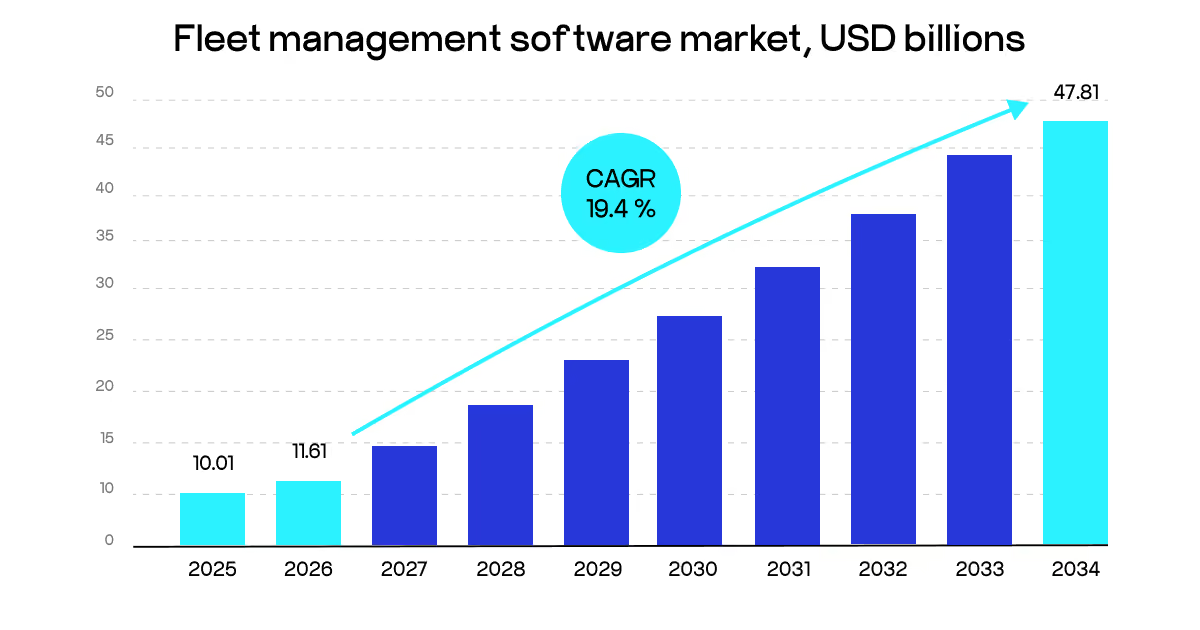
The market reflects that broader role.According to Fortune Business Insights, the fleet management software market reached $10.01 billion in 2025. Analysts expect the market to reach $47.81 billion by 2034. Yet technology adoption hasn’t removed everyday operational waste. U.S. vehicles burn over 6 billion gallons while idling yearly. Fleet operators also face delays, safety risks, and unexpected breakdowns. Those problems rarely appear through location data alone.
Statista projected more than 400 million connected cars in 2025. This growth follows three operational changes. Fleets now collect more vehicle data. Fleet monitoring platforms process that data continuously. AI models classify risks before managers inspect every record. However, more signals don't guarantee better fleet monitoring. Raw telemetry often arrives with inconsistent timestamps and formats. Fleet monitoring managers also face alert overload due to overly sensitive thresholds. A useful fleet monitoring solution filters events by urgency and ownership.
“The dashboard isn’t the hardest part. Normalizing vehicle data is. Without that layer, every downstream metric becomes questionable,” says Orest Falchuk, Head of Engineering at COAX Software.
COAX Software reached this conclusion about fleet monitoring while developing SyncMatix. The platform connected GPS and OBD data from different hardware providers. A shared data layer supported live fleet monitoring without visible lag. That architecture also supported 500 white-label customer accounts. Fleet monitoring priorities also change across operating models.
Fleet type
Primary fleet monitoring priority
Important data sources
Common operational risk
Long-haul freight
Route progress and driver compliance
GPS, ELD, fuel, engine diagnostics
Delays, HOS breaches, fuel leakage
Last-mile delivery
Stop completion and utilization
GPS, mobile app, route events
Missed windows and excess mileage
Field services
Arrival proof and asset availability
GPS, job system, geofences
Unproductive travel and disputed visits
Refrigerated transport
Cargo condition and route integrity
Temperature, door, GPS sensors
Spoilage and compliance failures
Passenger transport
Schedule adherence and driver assignment
GPS, ticketing, scheduling
Missed departures and poor ETAs
Mixed equipment fleets
Vehicle and asset visibility
GPS, BLE, engine-hour sensors
Theft, idle equipment, missing assets
These differences explain why one fleet monitoring platform rarely fits every operation. Your operating model should determine hardware and analytics. Fleet size alone provides an incomplete requirement.
How does fleet monitoring work?
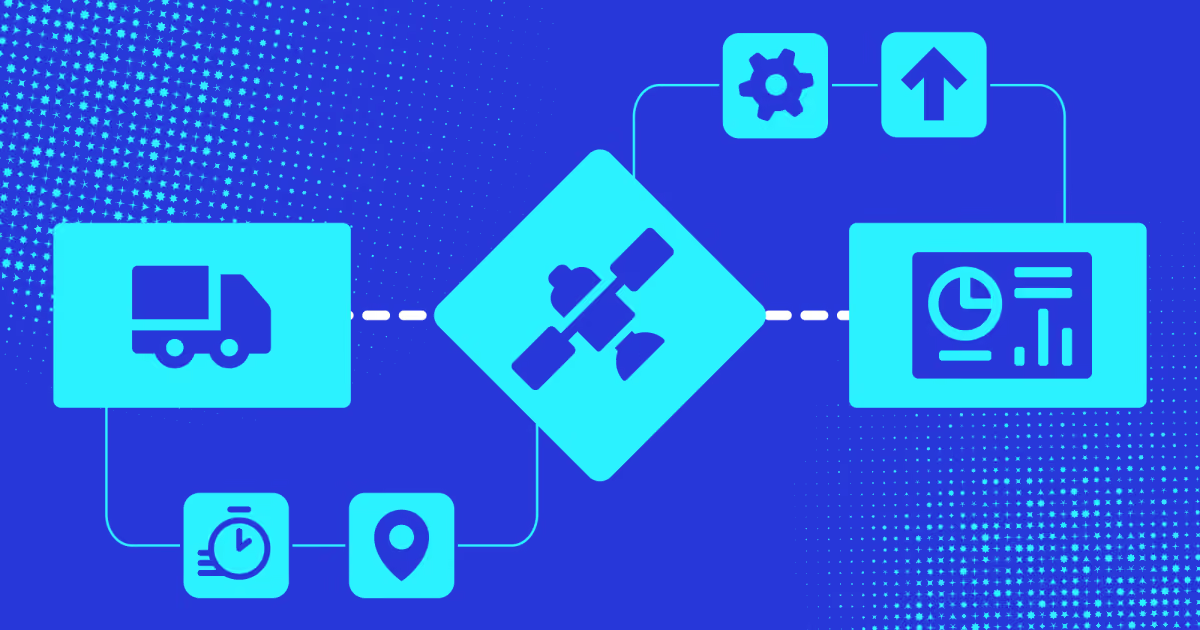
A fleet monitoring device first captures location or vehicle signals. GPS provides coordinates and time. OBD or CAN connections provide engine and diagnostic data. Additional sensors record temperature, door activity, tire pressure, or equipment use. Fleet monitoring networks transmit those records through cellular or satellite links. The fleet monitoring backend validates timestamps and device identifiers. It then converts multiple formats into a single shared structure.
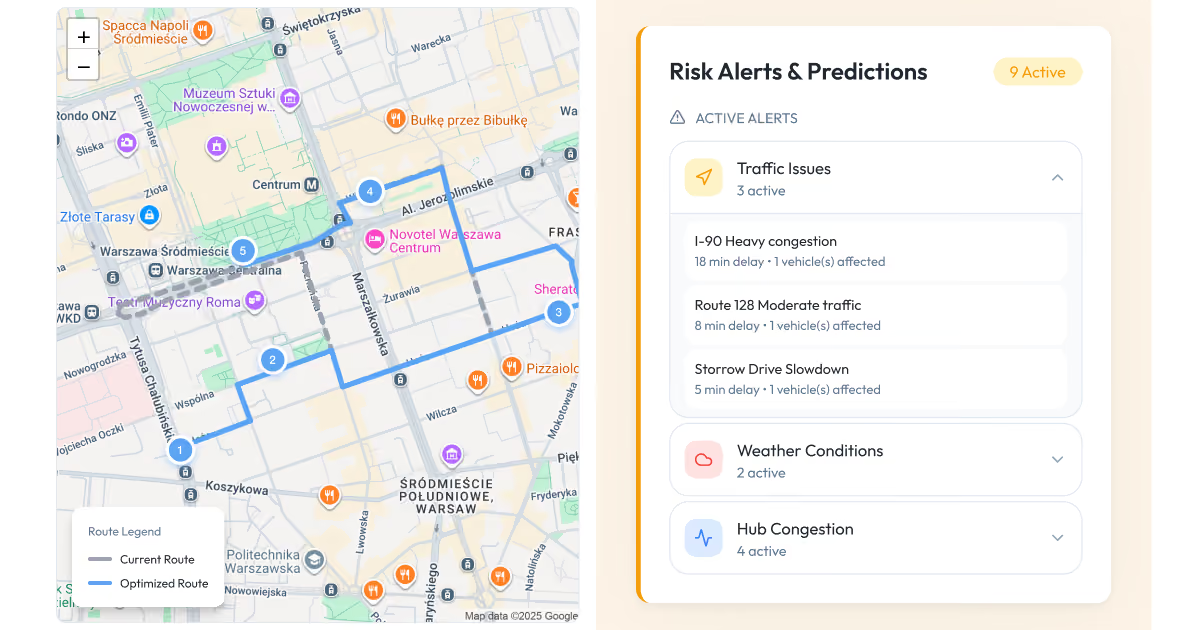
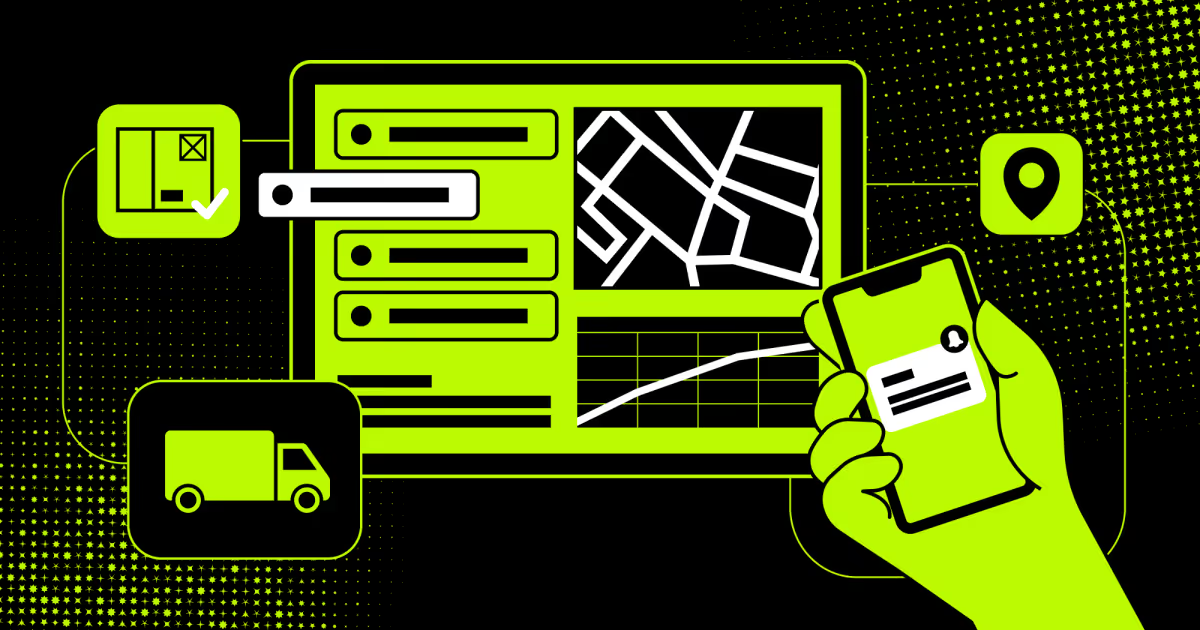
Fleet monitoring rules evaluate each normalized event. A geofence rule detects unauthorized movement. A fuel rule detects sudden changes in tank level. A safety rule detects speeding or harsh braking. The fleet monitoring app then presents each event. Dispatchers see route exceptions and current locations. Safety managers receive driver alerts and video. Maintenance teams receive fault codes and service triggers.
Finally, every action returns data into fleet monitoring software. Resolved alerts improve future thresholds. Completed trips refine ETA models. Maintenance outcomes improve fault-code prioritization.
A great example – COAX Software used this fleet-monitoring loop in DriveIQ. The platform refreshed delivery predictions every 15 minutes. It combined traffic, weather, and driver performance. Exception clustering reduced diagnosis time from 12 minutes. The final average dropped below three minutes.
Modern fleet monitoring relies on several connected technologies. GPS satellites establish vehicle position. Telematics gateways combine coordinates with onboard vehicle data. Cellular networks handle most live fleet monitoring traffic. Satellite links extend coverage across remote routes. Bluetooth Low Energy connects nearby tags and cargo sensors.
Fleet monitoring infrastructure stores and processes high-volume telemetry. Event queues prevent traffic spikes from causing record loss. Fleet monitoring databases support recent signal analysis. Relational databases preserve users, vehicles, routes, and permissions. APIs connect fleet monitoring software with TMS and ERP platforms. Webhooks push urgent events without repeated polling. Mobile applications connect drivers with tasks and coaching.
Fleet monitoring models detect unusual fuel or safety patterns. Computer vision adds evidence of fatigue, distraction, and collisions. These models still require reliable training data and review.
We treat offline behavior as a core requirement. In our case, DrivenBus sent GPS coordinates every 10 seconds during routes. Its apps preserved the passenger experience between updates. Our engineers also design mobile queues for temporary signal loss. Fleet monitoring fails when one tunnel breaks trip history.
What are the core components of a fleet monitoring system?
A complete fleet monitoring system combines six components that support different operational decisions. They help teams track vehicles, control fuel use, protect cargo, prioritize alerts. The right configuration depends on fleet type, routes, assets, and reporting requirements.
Vehicle location tracking
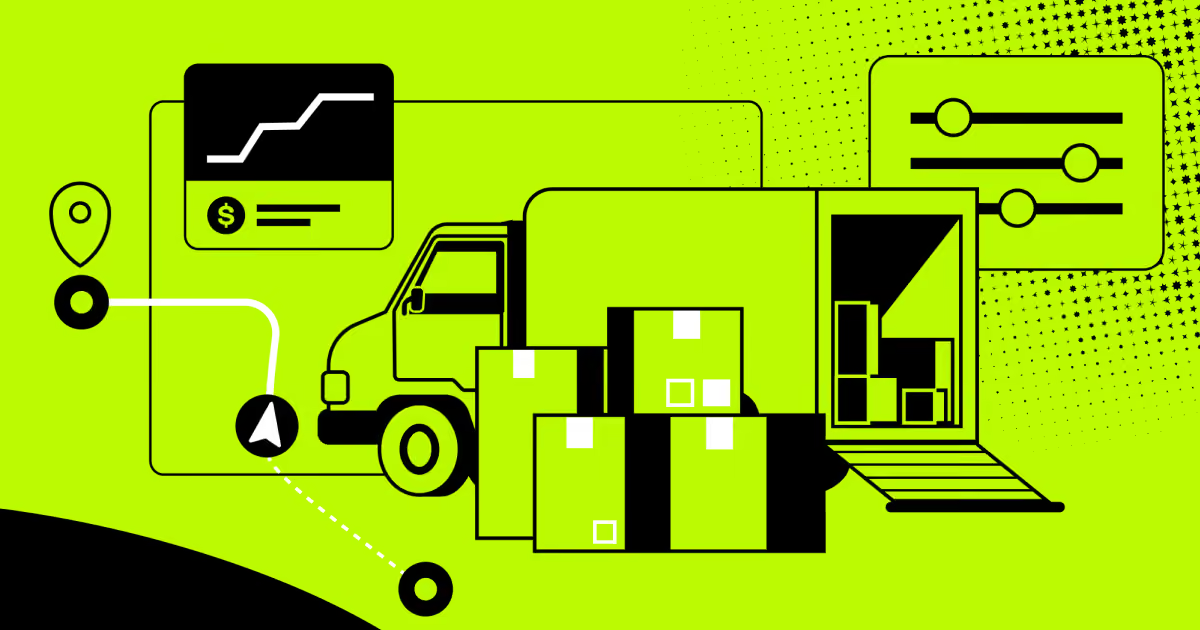
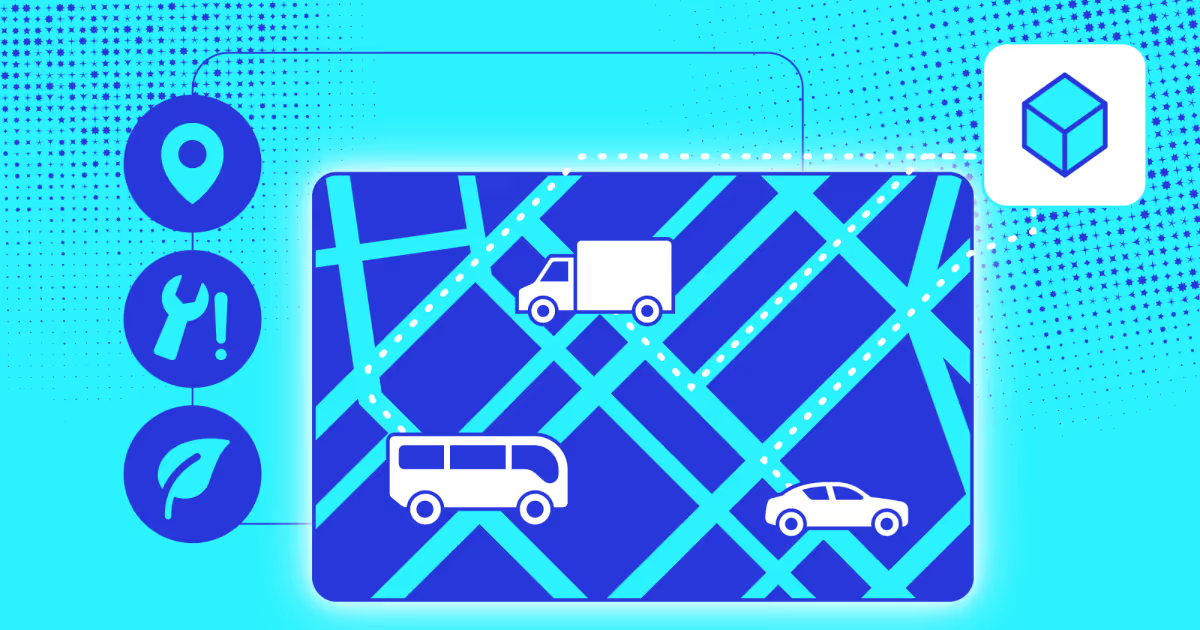
Vehicle location tracking shows position, direction, speed, and trip history. Geofences connect coordinates with depots, routes, and customer sites. A fleet monitoring app supports remote dispatch decisions. Production-grade GPS tracking must handle weak signals without hiding gaps. Frozen markers quickly undermine dispatcher trust. Reliable fleet monitoring software flags outages and reconstructs complete trip histories.
Market Research Future forecasts 14.92% annual market growth. The forecast covers 2025 through 2035. It cites real-time data and the demand for route optimization. Operational cost control also drives adoption. This growth shows that location data supports broader operational control. However, coordinates alone don’t explain delays or device failures. Teams still need status context, signal quality, and trip continuity.
Driver behavior and safety monitoring
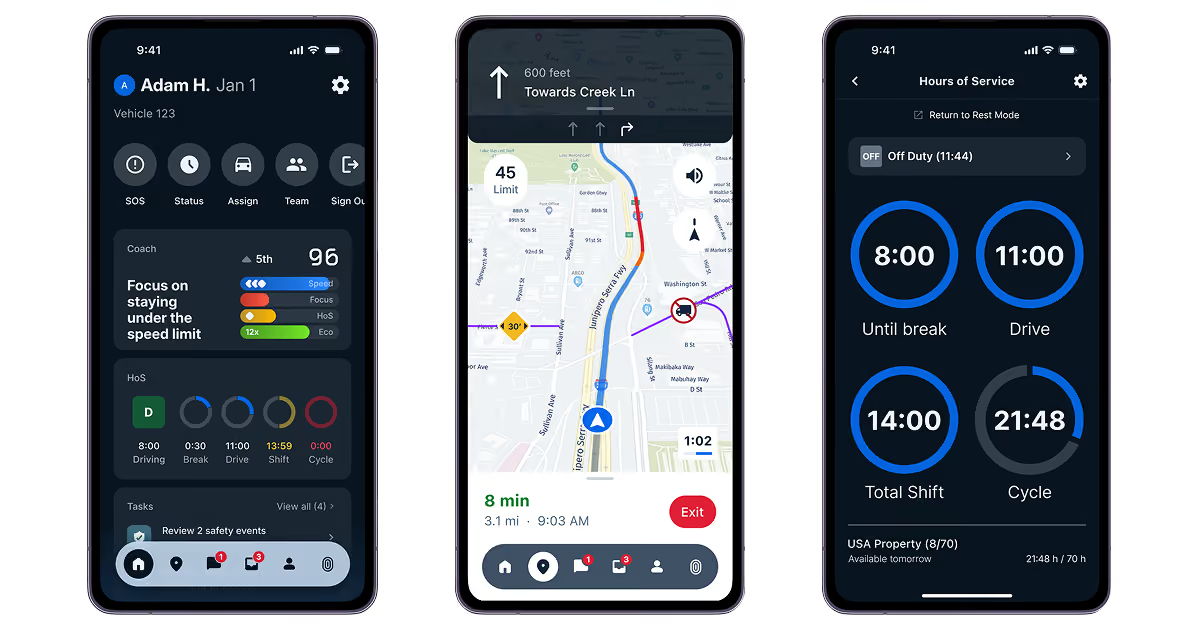
Fleet driver monitoring measures speeding, braking, acceleration, cornering, and seat belt use. Video telematics adds evidence of distraction, fatigue, and road risk. Driver scorecards support targeted coaching. Fleet monitoring safety requires context, not punishment. One braking event rarely proves reckless behavior. Repeated patterns across similar routes provide stronger evidence. Fleet safety monitoring should also separate coaching from disciplinary workflows.
NHTSA reports about 4,000 heavy-vehicle crash fatalities annually. It also records over 400,000 police-reported heavy-vehicle crashes. Those figures explain the operational importance of safety monitoring. We built fleet-monitoring analytics into SyncMatix. Scores combined crash, speeding, fuel, and risk patterns. Fleet managers could compare trends before scheduling coaching. Our view remains simple: scorecards should explain every score.
Fuel and idle monitoring
Fleet fuel monitoring connects consumption with routes and driver behavior. It compares fuel-card transactions against telematics records. Sudden drops may indicate leakage or theft. Fleet monitoring should give idle time separate attention. The U.S. Alternative Fuels Data Center estimates enormous idle consumption. Long-haul trucks consume over 1 billion gallons of fuel annually while idling.
A fleet fuel monitoring system should distinguish necessary idling. Refrigeration, emergency equipment, and passenger comfort change valid thresholds. Universal alerts often create noise and resistance. COAX Software added fleet-monitoring analytics to SyncMatix. Comparable trips exposed avoidable consumption patterns. Route optimization produced fuel savings of up to 22%. Our fuel management guidance starts with measurable causes, not generic targets.
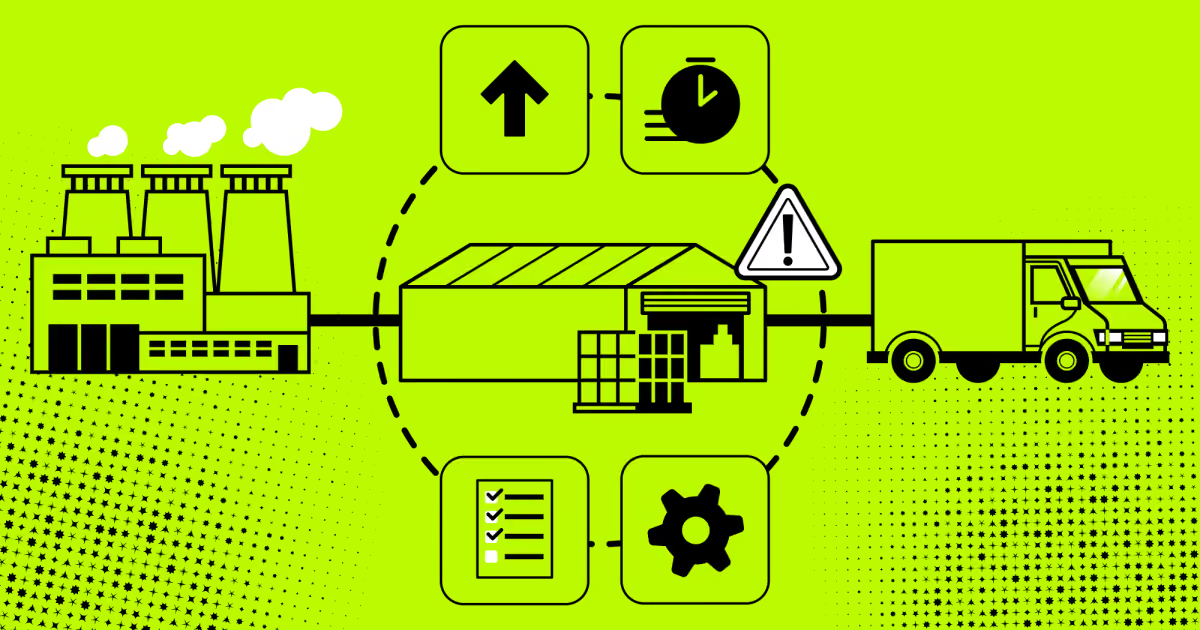
Vehicle health and maintenance monitoring
Vehicle health monitoring collects odometer readings and engine hours. It also processes diagnostic codes and component warnings. Fault signals trigger inspections before vehicles break down. Service schedules combine time, mileage, and actual vehicle usage. However, every fault requires different urgency. Some warnings allow continued operation. Others require immediate vehicle withdrawal.
Fleet monitoring software should connect diagnostics with maintenance schedules. It should also show available replacement vehicles. This context helps managers protect routes and delivery commitments.
A real-world industrial study examined about 2,000 construction vehicles. The fleet included several vehicle types and usage patterns. Researchers found that maintenance timing depended on both factors. Uniform service intervals couldn’t reflect those operational differences. The U.S. Department of Energy also recommends telematics for fleet oversight. Its guidance connects vehicle data with utilization and maintenance decisions.
Reliable maintenance monitoring preserves every original fault event. Technicians should see when and why work began. This prevents repeated signals from creating duplicate work orders. The same data supports long-term fleet performance monitoring. Repair histories reveal recurring defects and rising ownership costs. Managers then make better repair and replacement decisions.
Cargo, asset, and temperature monitoring
Fleet temperature monitoring protects food, medicine, and sensitive materials. Sensors record temperature, humidity, and door activity. Alerts should include location and exposure duration. Fleet monitoring extends beyond powered vehicles. Trailers, containers, tools, and machinery need different devices. Battery life and reporting intervals become central design choices.
COAX Software favors exception-based fleet monitoring for constrained devices. Stable temperatures don't require constant high-frequency transmission. Threshold breaches require immediate delivery. That approach reduces battery use and network traffic. Powerfleet’s asset model illustrates the broader fleet-monitoring category. It tracks assets in transit, yards, and field locations. Mixed fleets should test a single dashboard across all asset classes.
Alerts, analytics, and reporting
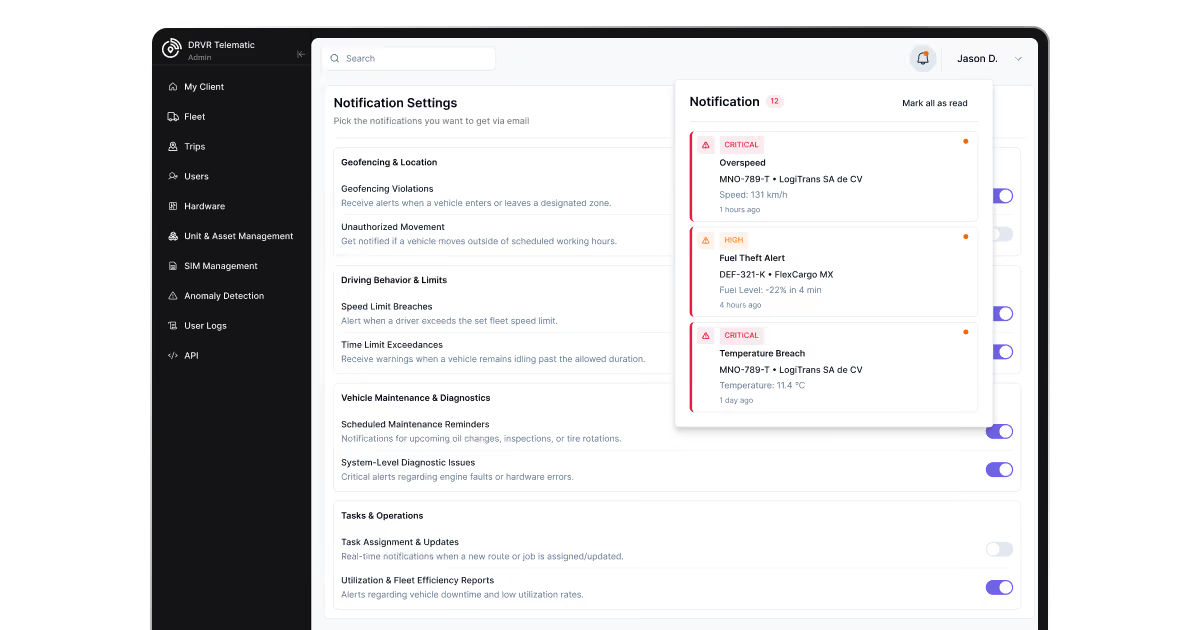
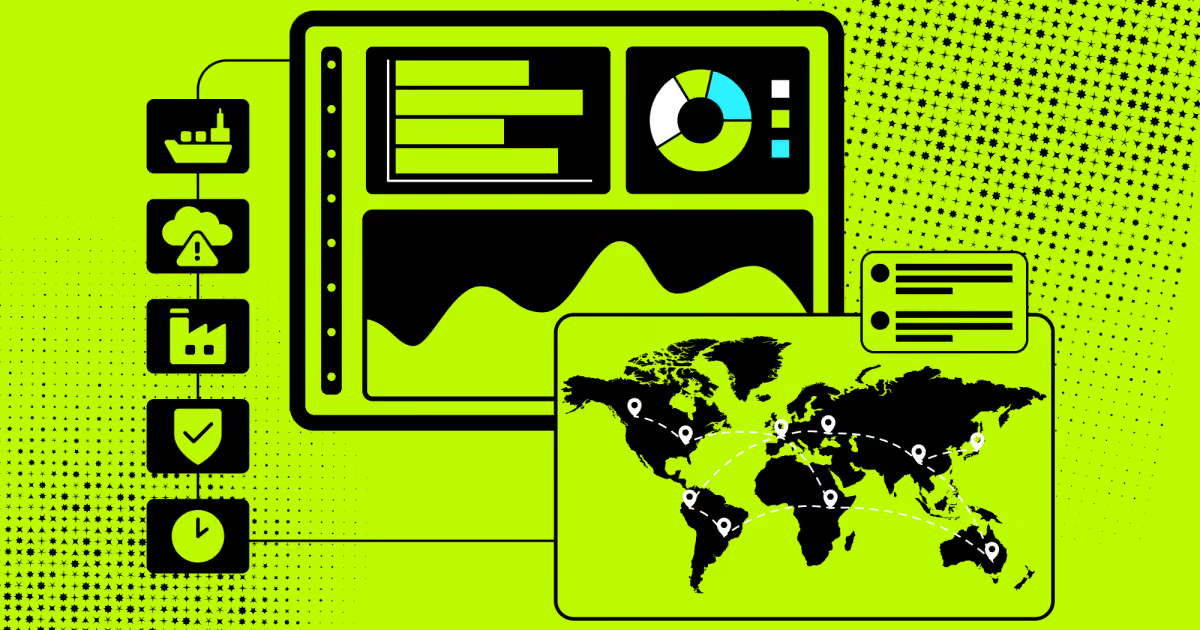
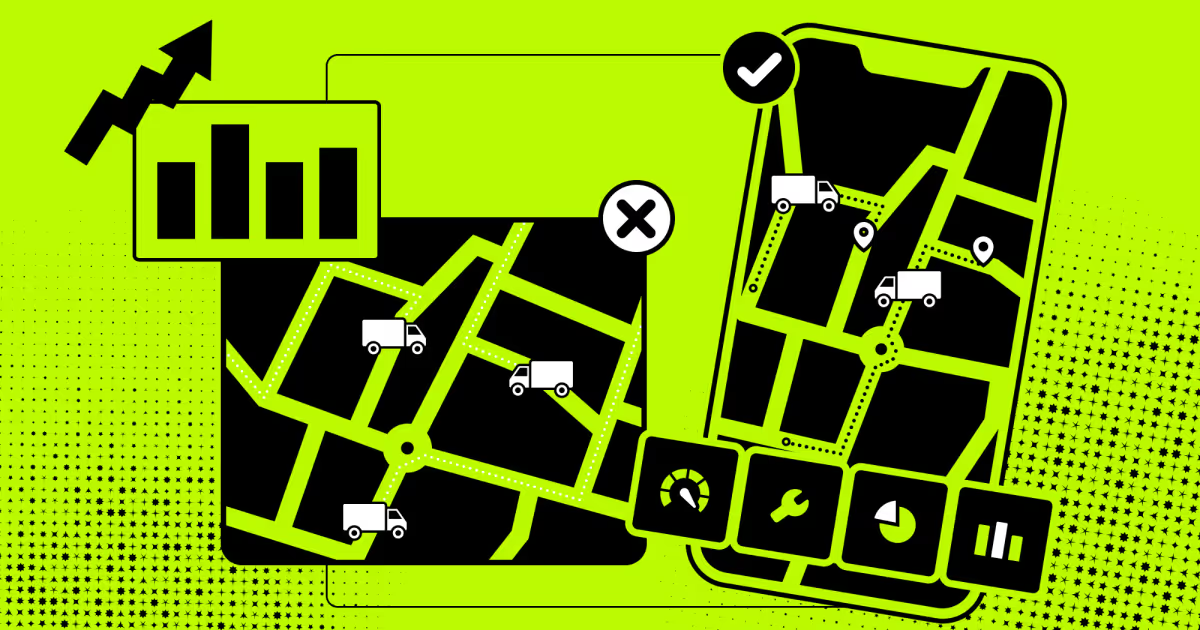
Fleet monitoring and analytics turn events into priorities and trends. Dashboards track current exceptions and historical performance. Reports support safety, fuel, maintenance, and compliance decisions. A fleet monitoring alert engine needs role-based routing. Dispatchers need route problems. Safety teams need risk events. Administrators need device and integration failures.
For example, we built configurable fleet monitoring alerts within SyncMatix. Partners controlled thresholds across their own customer accounts. Role-based access prevented unrelated alert noise. Support tickets fell by 45% after interface consolidation. Advanced fleet monitoring succeeds when every alert has an owner. Unowned alerts become dashboard decoration. Excessive alerts also train users to ignore real risks.
What are the benefits of fleet monitoring?
Fleet monitoring creates value through faster decisions and measurable behavior changes. The strongest benefits appear where teams already know their costly exceptions. Real-time fleet monitoring improves dispatch visibility. Managers locate vehicles without repeated calls to drivers. Better ETAs also improve customer communication.
Fleet performance monitoring reveals underused vehicles and routes. It compares productive hours against available hours. This supports right-sizing and assignment decisions. Fleet safety monitoring supports earlier coaching. Managers review patterns before crashes or insurance disputes. Video also provides evidence after contested events.
Fleet fuel monitoring identifies excessive idling and route waste. It also supports fuel-card reconciliation. The Department of Energy links idling with fuel waste and engine wear. Maintenance data supports earlier repairs. Vehicle health trends reveal recurring faults and downtime risks. Fleet monitoring services also improve planning across internal workshops.
What are the key fleet metrics to monitor?
The right metrics depend on operational goals. This table provides a practical starting point.
Metric
Calculation or signal
Why it matters
Typical response
Vehicle utilization
Active hours divided by available hours
Reveals excess capacity
Reassign or remove vehicles
Fuel economy
Distance divided by fuel used
Tracks route and driver impact
Review routes and coaching
Idle percentage
Idle hours divided by engine hours
Exposes avoidable fuel use
Adjust thresholds and driver guidance
On-time arrival rate
Timely stops divided by completed stops
Measures service reliability
Review routes and loading delays
Harsh-event rate
Safety events per 100 miles
Normalizes driver risk
Target coaching
Maintenance compliance
On-time services divided by scheduled services
Protects vehicle availability
Escalate overdue work
Unplanned downtime
Unavailable hours outside schedules
Shows reliability losses
Analyze fault and repair causes
Empty mileage
Unloaded distance divided by total distance
Reveals planning waste
Improve load and route matching
Temperature excursions
Breaches outside approved range
Protects cargo quality
Investigate vehicle and handling
Alert resolution time
Time between alert and closure
Measures operational response
Improve ownership and escalation
7 best fleet monitoring systems
The best fleet monitoring system depends on your vehicles, workflows, compliance needs, and integration requirements. Some platforms prioritize safety and live tracking. Others perform better in maintenance, analytics, or mixed-asset monitoring. The comparison below highlights each platform’s strongest fit and main limitation.
Platform
Best for
Live monitoring
Driver safety
Fuel and maintenance
Integration depth
Main limitation
Samsara
Mid-sized and large connected fleets
Strong
Strong AI video
Strong
Strong, 350+ integrations
Higher-tier costs
Verizon Connect
Large regulated fleets
Strong
Good
Strong
Moderate
Longer setup
Geotab
Data-heavy fleets
Strong
Strong through modules
Strong
Extensive SDK and marketplace
Analyst-heavy interface
Motive
Small and mid-sized commercial fleets
Strong
Strong AI video
Strong
Moderate
API rate limits
Powerfleet
Mixed vehicles and equipment
Strong
Good
Good
Hardware-flexible
Slower safety alerts
Fleetio
Maintenance-first fleets
Depends on integration
Limited
Very strong maintenance
Moderate
Separate telematics needed
Quartix
Small tracking-focused fleets
Strong
Basic
Basic
Limited
Weak historical export
Samsara delivered our strongest overall fleet-monitoring result. We tested a 40-vehicle mixed fleet simulation. Harsh-braking alerts reached the cab within two seconds. Safety scores updated during the same minute. Its fleet monitoring API documentation also performed well. Webhook examples worked during our integration tests. Samsara lists over 350 turnkey integrations across operational categories. Higher tiers still locked two analytics capabilities during our trial. Mid-sized fleets should model expansion costs carefully.
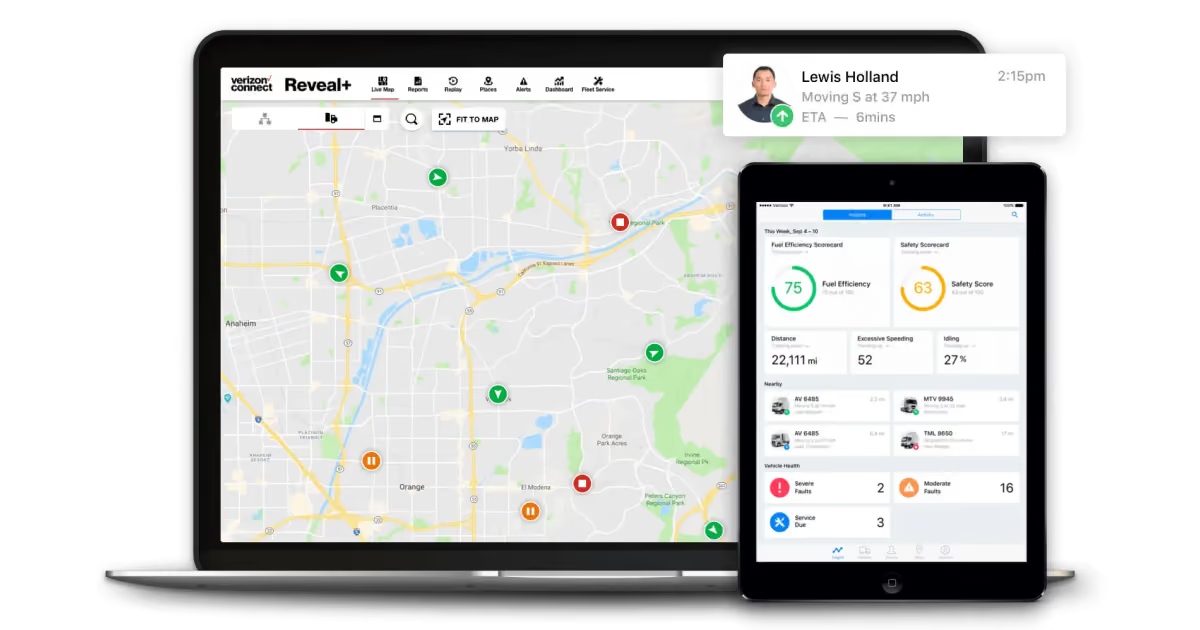
Verizon Connect led our enterprise compliance tests. Our fleet monitoring simulation crossed three states and Ontario. IFTA records populated without manual line items. HOS tracking also survived jurisdiction changes. Setup required nine business days under our test conditions. Motive and Azuga required two or three days. Verizon Connect therefore suits fleets with dedicated administration. Its near-real-time fleet monitoring also tracks location, idling, and harsh driving.
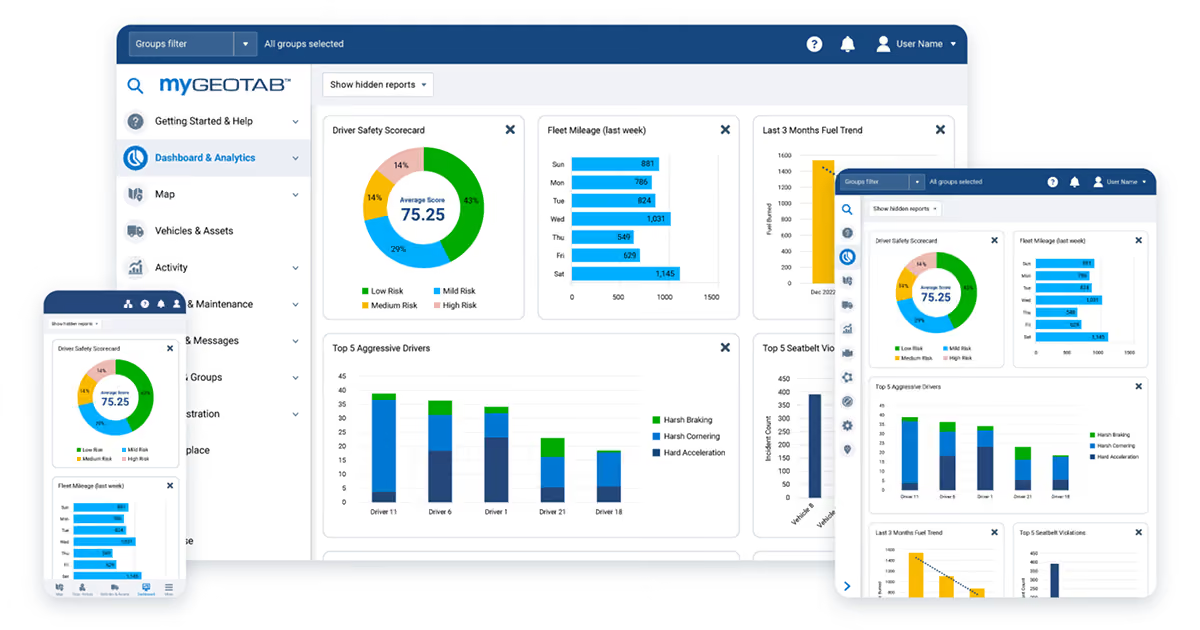
Geotab exposed the richest raw vehicle data. Its fleet monitoring dashboard showed speed, fuel, idling, and diagnostics. Our SDK test pulled OBD records without the interface. That flexibility supports custom fleet performance monitoring software. However, the dashboard may overwhelm small teams. We also checked five marketplace integrations. Only two provided production-ready documentation. Geotab is best suited to fleets with analysts or engineers.
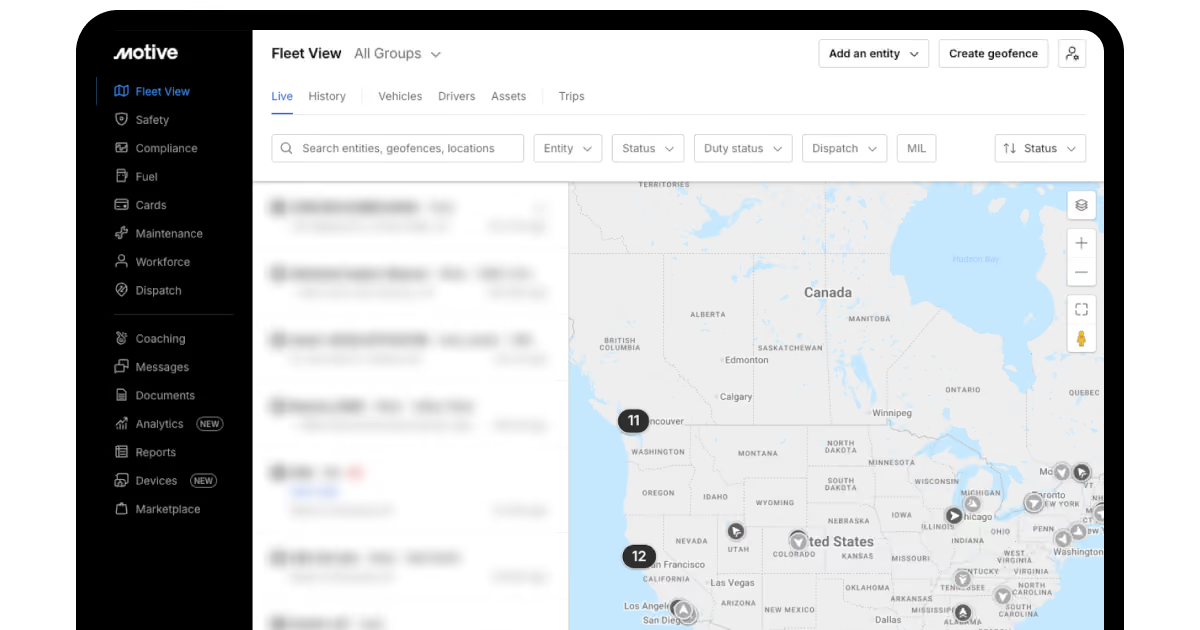
Motive handled poor cellular coverage well. We tested fleet monitoring with one-bar LTE during movement. Trip data synchronized after reconnection without test-run losses. Its AI camera identified the same harsh-braking events as Samsara. Motive also combines compliance, maintenance, fuel, and dispatch. API rate limits appeared during our custom integration test. This tradeoff matters for high-volume external dashboards.
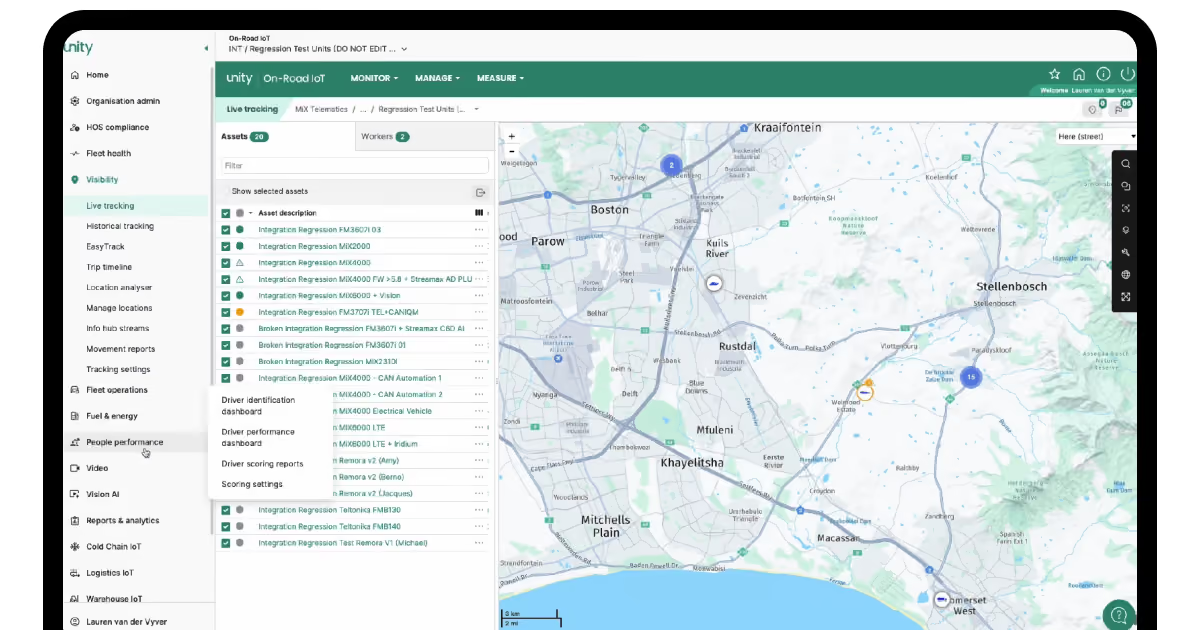
Powerfleet performed best across mixed asset classes. Our test included 12 trucks and eight trailers. We also added three equipment units under one account. The unified fleet monitoring view eliminated the need for separate logins. Powerfleet accepted three telematics hardware brands. However, its dashcam alerts arrived about eight seconds later. Fleets prioritizing equipment visibility should accept that safety tradeoff.
Fleetio led maintenance-first fleet monitoring. We tested 15 vehicles with staggered service intervals. It correctly flagged two upcoming services three days early. Fleetio depends on external telematics for live fleet monitoring. Our tracking accuracy therefore matched the connected hardware provider. This split suits fleets protecting maintenance uptime. It adds another vendor and integration boundary.
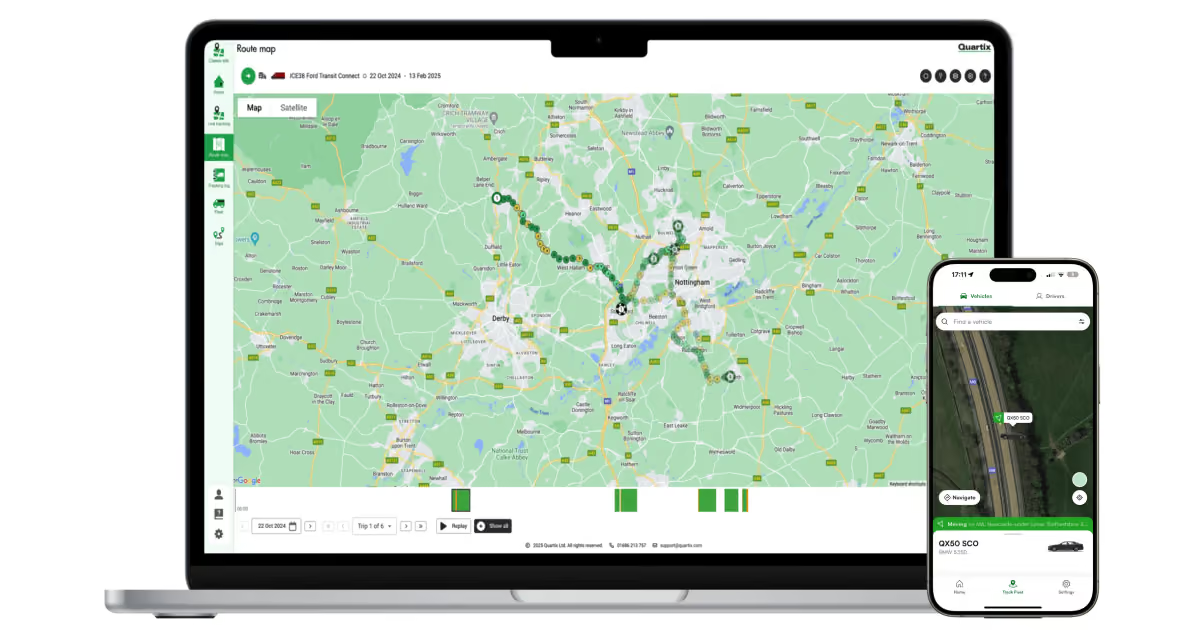
Quartix gave reliable basic fleet vehicle monitoring. We tested location, trip history, idling, and speeding. No pings dropped during a two-week test window. Its fleet monitoring app offers mobile location and vehicle insights. However, historical trip export required support assistance. Small fleets gain simplicity and lower overhead. Growing fleets should first test their future migration path.
No fleet monitoring solution dominates every requirement. Samsara offers the broadest overall package. Verizon Connect leads complex compliance. Geotab supports deeper analytics development. Fleetio offers the clearest maintenance specialization.
How COAX Software evaluated fleet monitoring software
We evaluated fleet monitoring software as engineers and operational users. Feature counts played a secondary role. We focused on data quality, exception handling, integrations, and scale. Our fleet monitoring tests used mixed fleets and imperfect conditions. We simulated cross-border routes and weak cellular signals. We also introduced duplicate records and mixed telematics hardware.
Five evaluation dimensions shaped the ranking:
Evaluation area
What we tested
Why it matters
Live data reliability
Update speed, gaps, and reconnection
Dispatchers need trustworthy positions
Safety response
Detection, alert delivery, and coaching flow
Delayed alerts weaken prevention
Integration depth
APIs, webhooks, documentation, and limits
Fleet data must reach other systems
Operational fit
Compliance, assets, maintenance, and workflows
Different fleets need different priorities
Growth ceiling
Data volume, administration, and pricing
Today’s setup must survive expansion
We excluded platforms with limited fleet functionality and penalized those with gated or weak API documentation. Fleet monitoring solutions should not trap operational data.
“We don’t evaluate platforms by feature lists. We evaluate what breaks when data gets messy,” says Orest Falchuk, Head of Engineering at COAX
DriveIQ provided our baseline for fleet monitoring performance. It supported a 500-vehicle cross-border fleet. Dispatchers managed 31% more routes without additional headcount. Late deliveries fell from 18% to 7%. Driver turnover also decreased by 22%. Those outcomes shaped our platform conclusions. Fleet monitoring must improve decisions, not merely collect signals.
How to choose and implement fleet monitoring software
Choosing fleet monitoring software starts with operational priorities, not vendor feature lists. The right system must fit your vehicles, routes, data sources, and response workflows. A structured rollout reduces integration risks and helps teams act on reliable alerts. The steps below show how to turn one costly problem into a workable fleet monitoring setup.
1. Define the operational problem
Choose one expensive fleet monitoring problem before comparing vendors. It may involve fuel, safety, downtime, or late arrivals. Define the current baseline and desired result. A vague objective produces an oversized fleet monitoring system. Clear goals determine devices, data rates, and integrations. They also simplify user training.
COAX Software starts fleet monitoring discovery with the costliest exception. For example, DriveIQ prioritized late deliveries and dispatcher overload. That focus produced measurable outcomes within 90 rollout days.
2. Match devices with vehicles and environments
List every fleet monitoring asset, power source, and operating region. Verify compatibility with GPS, cellular, satellite, OBD, and sensor systems. Refrigerated fleets also need calibrated temperature devices. Test installation time and replacement procedures. A fleet monitoring device eventually fails or moves. Your operating team needs a documented response.
COAX Software connected multiple GPS and OBD providers within SyncMatix. Hardware differences created more complexity in fleet monitoring than in dashboards. Our GPS tracking work therefore starts with signal realities.
3. Test data ownership and integrations
Your fleet monitoring software should export usable historical data. Review API documentation before signing. Test webhooks, rate limits, and error handling. Connect the fleet monitoring system with dispatch and maintenance workflows. Duplicate vehicle identifiers will damage every report. Clear ownership should exist for drivers, vehicles, and routes.
"Integration problems rarely start inside the API. They start when two systems define one vehicle differently," commented Myroslav Stelmashchuk, Node.js Developer at COAX Software
COAX Software normalizes identifiers before building dashboards. SyncMatix required one shared vehicle model across providers. That foundation supported stable fleet monitoring and analytics.
4. Run a narrow pilot
Select representative vehicles for the fleet monitoring pilot. Include old hardware, remote routes, and skeptical users. A clean five-vehicle demo proves very little. Measure fleet monitoring gaps, false alerts, and response times. Also record driver app usage and training questions. Pilot success requires operational adoption.
COAX Software prefers role-based fleet monitoring pilots. DriveIQ began with a 50-driver release within ten weeks. Usage data then guided later predictive features. This approach reduces premature customization.
5. Roll out workflows, not dashboards
Assign every alert to a role and escalation path. Train dispatchers, drivers, safety teams, and mechanics separately. Each user needs different fleet monitoring views. Review alert thresholds after two weeks. Early settings usually create excessive notifications. Fleet monitoring services should include threshold tuning and adoption support.
Packaged fleet management solutions cover standard monitoring well. Custom development becomes useful for unique rules or hardware. COAX Software provides fleet management software development services for those gaps. We help define fleet monitoring requirements, integrations, and rollout priorities. Our teams also build dashboards, driver apps, and analytics layers. The goal isn't replacing every platform. It is closing the operational gap left by standard tools.
FAQ
How much does fleet monitoring software cost?
Fleet monitoring software usually charges a monthly fee per vehicle. Quartix’s official pricing starts at $14 per vehicle monthly. Its higher plan starts at $15 and adds driver monitoring. Fleetio lists plans from $4 to $10 monthly. Samsara, Verizon Connect, Geotab, Motive, and Powerfleet use custom quotes. Their totals depend on hardware, cameras, ELD, support, and contract length. Installation and integration work may also change final costs.
Does a fleet monitoring system work without cellular coverage?
Yes, but the dashboard loses live visibility during the outage. Geotab’s official documentation confirms that offline data storage is available. GO devices keep recorded data in internal memory. Each record retains its original date and time. The device uploads that history once connectivity is restored. Satellite fallback reduces blind spots on remote routes. During evaluation, verify storage capacity and reconnection speed. Also test whether delayed events retain correct ordering.
What is the difference between GPS tracking and fleet monitoring?
GPS tracking records location, movement, speed, and trip history. Fleet monitoring combines GPS with diagnostics, fuel, maintenance, and driver data. The U.S. Department of Energy confirms this broader telematics scope. Its guidance lists GPS location and onboard diagnostics. It also covers mileage, fuel, charging, and driver behavior. Fleet monitoring connects those signals with routes and responsibilities. That context shows when intervention is necessary.
Which fleet monitoring devices do refrigerated fleets need?
Refrigerated fleets need GPS and continuous temperature monitoring devices. Door sensors also reveal loading events and temperature exposure. The CDC’s Vaccine Storage and Handling Toolkit recommends digital data loggers with continuous monitoring. It also requires retained temperature histories. For sensitive cargo, add humidity probes and calibrated sensors. Devices should preserve records during network outages.
How quickly does real-time fleet monitoring update locations?
Real-time fleet monitoring usually updates every few seconds or minutes. The interval depends on hardware, connectivity, movement, and subscription settings. Faster updates increase cellular traffic and battery usage. COAX Software used ten-second updates for DrivenBus routes. That interval supported smooth passenger tracking. Test fleet monitoring frequency against real dispatch decisions. Include signal conditions during pilots.
When should a company build a custom fleet monitoring solution?
Custom fleet monitoring makes sense when standard platforms miss critical workflows. Examples include unusual sensors, partner portals, or proprietary risk models. It also fits complex multi-tenant services and custom billing. COAX Software usually prioritizes preserving the use of proven telematics hardware. We build the missing application or analytics layer. This hybrid approach reduces device risk and avoids unnecessary replacement.








































































_.avif)








%2520explained.avif)

We are interested in your opinion