A driver’s eyes shut for two seconds on I-80. Nobody in dispatch knows about it until the trailer clips a guardrail. By nightfall, the math hits: a $40,000 towing and repair bill, a $15,000 late-delivery penalty from an anchor client, and a rig sidelined for two weeks during peak season. And these are optimistic at most.
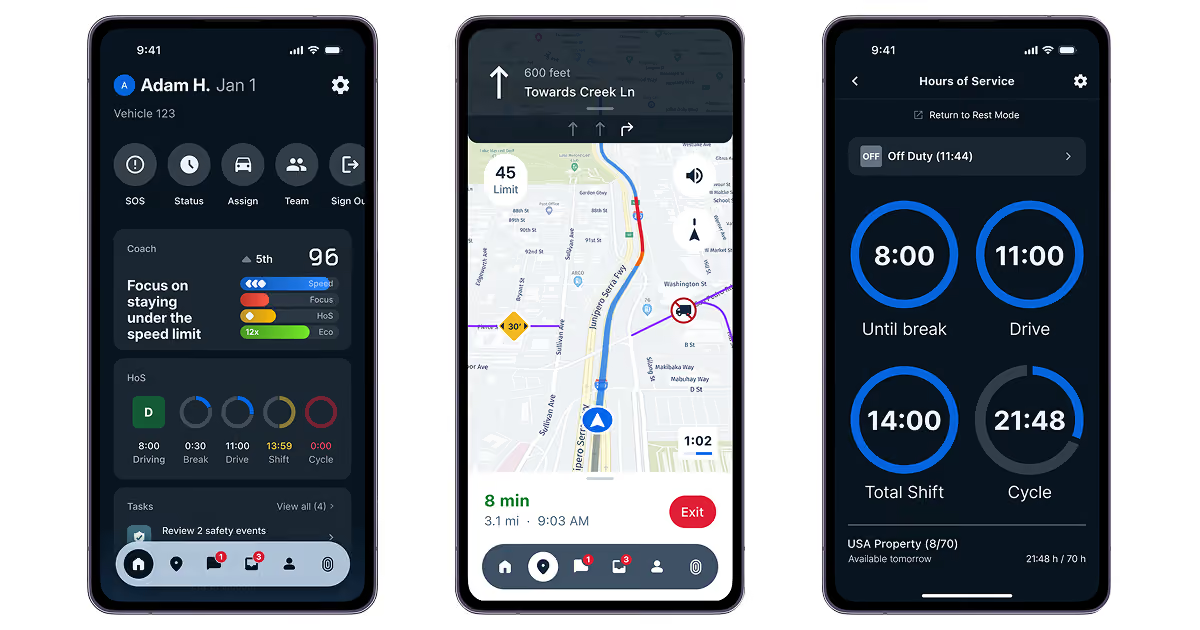
That’s the exact blind spot we kept helping our clients overcome at COAX Software. We built the coaching engine behind DriveIQ for a 500-truck carrier bleeding revenue and missing pickups daily. We also rebuilt the dashboard for a telematics platform split across three clunky apps. One truck, three logins, and still no real answer about the driver behind the wheel. Both projects taught us the same thing. Fatigue and distraction don’t appear out of a sudden. It’s a systemic neglect from management and a lack of efficient driver monitoring.
This guide breaks down what driver monitoring software does. You'll see why fleets can't afford to skip it. We'll also walk through how to pick a system built for real trucks.
What is a driver monitoring system?
A driver monitoring system (DMS) is smart in-cab technology that tracks driver attention in real time to prevent accidents caused by distraction or fatigue.
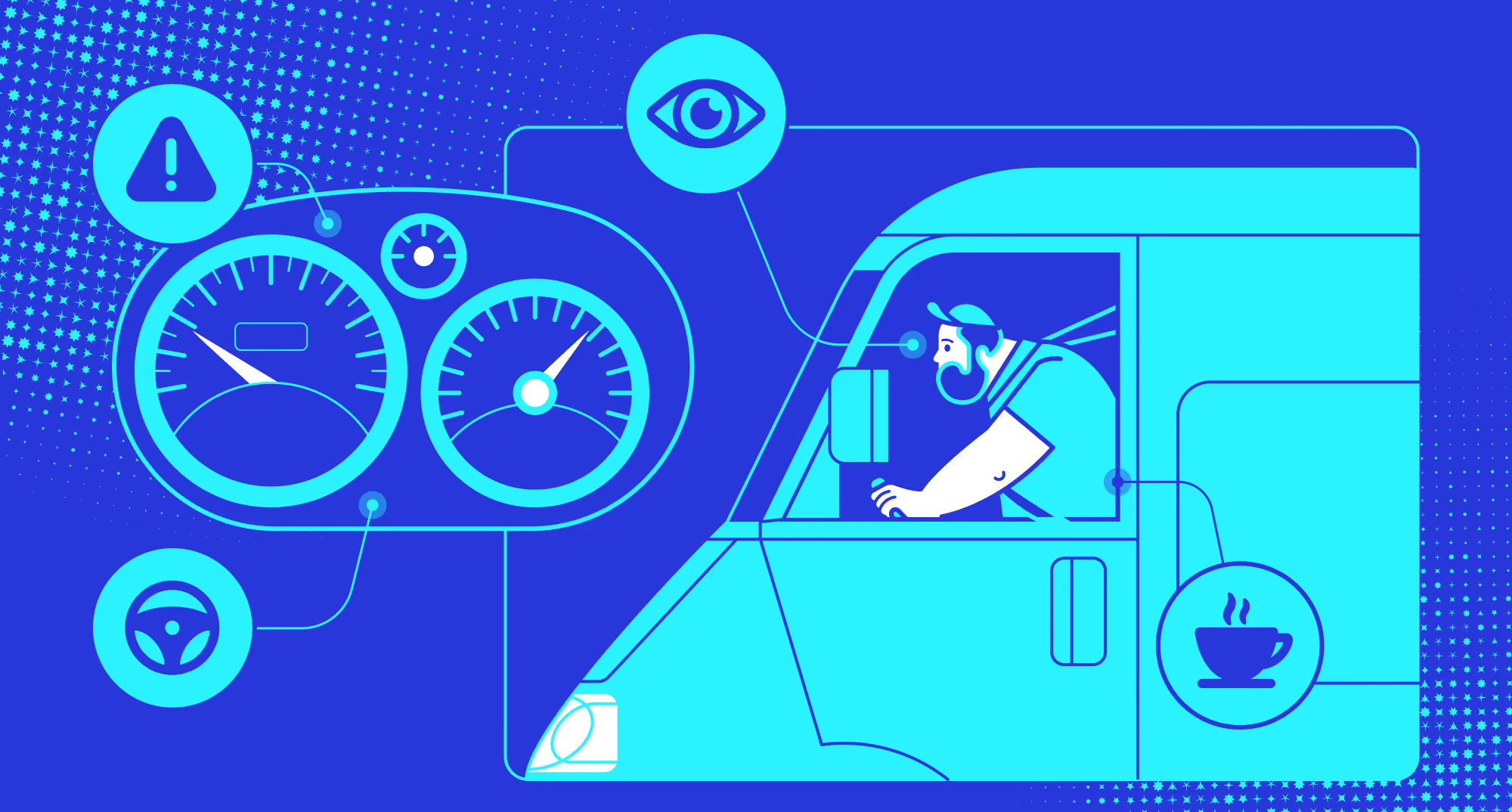
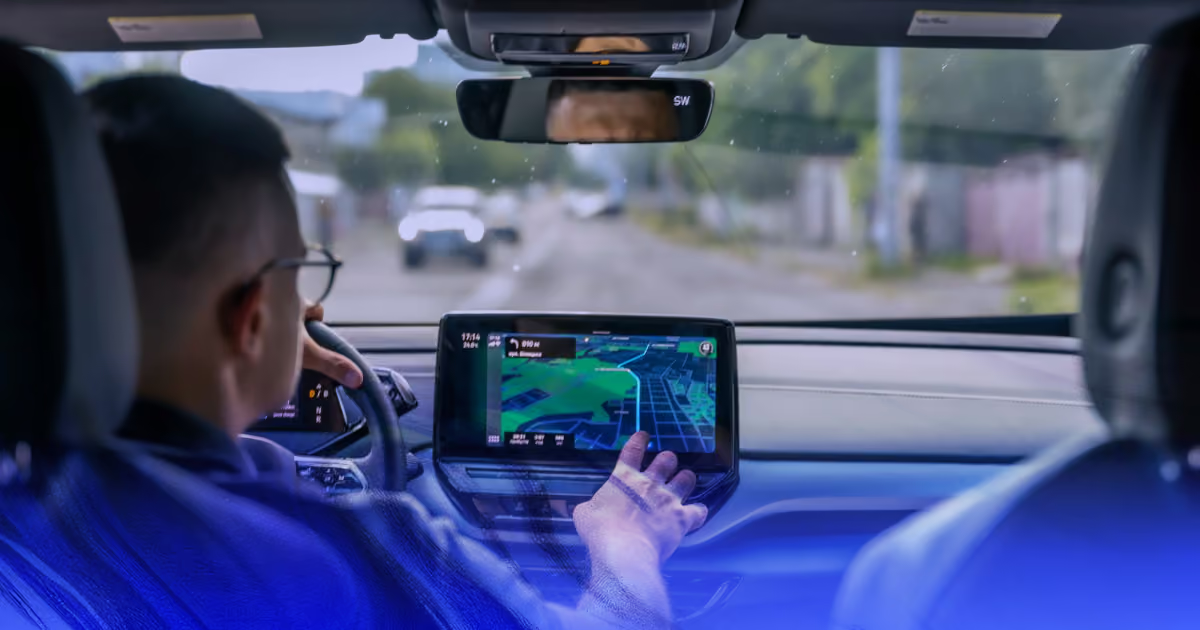
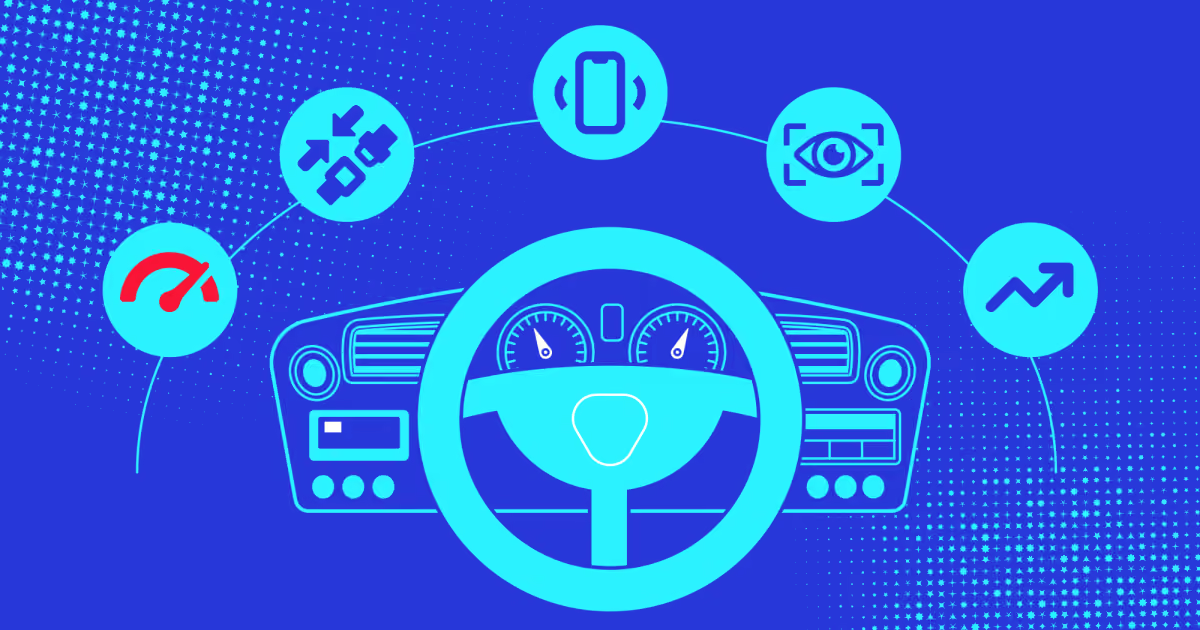
This technology can be confused with fleet monitoring. However, a driver monitoring system watches the driver, not just the truck. Infrared cameras track eye movement, blink rate, head angle, and yawning patterns. Some setups add steering-wheel torque sensors or a heart-rate strip in the seat. When attention drops, the system escalates fast. A chime first. Then a vibration. In higher-automation vehicles, sometimes a forced slowdown.
On the telematics platform we rebuilt, the driver app leaned the opposite way. Their old system setup tracked location and speed but said nothing about the person steering. Drivers barely opened it; why would they? That's the gap this kind of technology exists to close. We built our way through that disconnect, and the wider market is reaching the same conclusion.
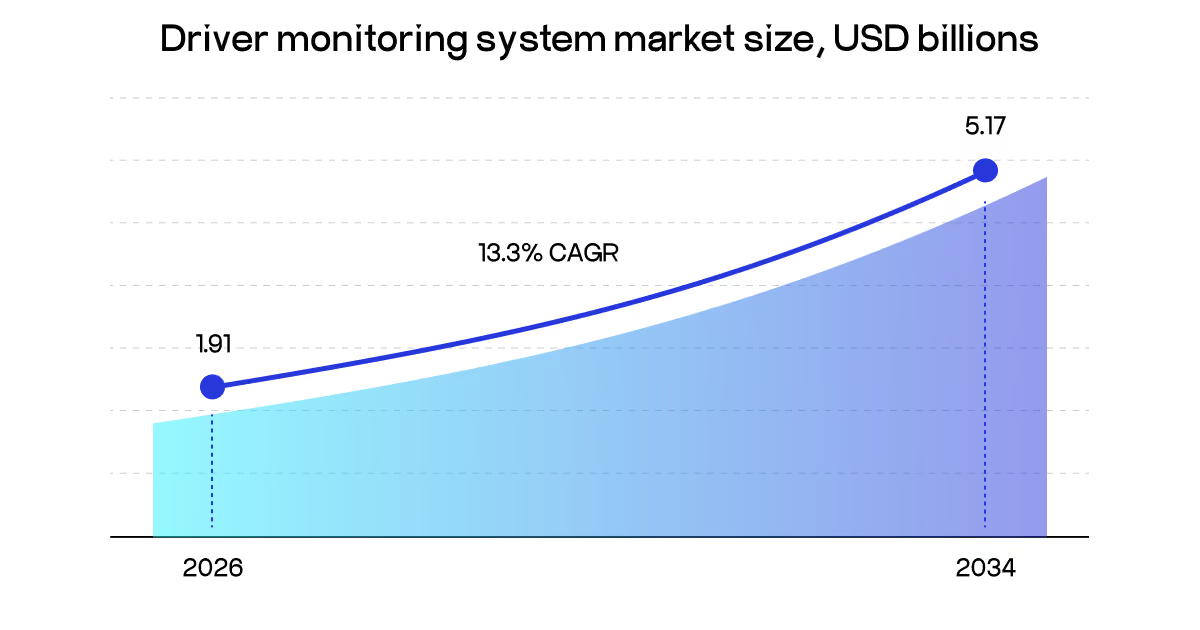
The driver monitoring system market reflects how fast that gap is closing. Analysts project $1.91 billion in 2026, climbing to $5.17 billion by 2034. That's a 13.3% annual growth rate, sustained for nearly a decade.
Regulation is doing a lot of the pushing here. The EU's General Safety Regulation and Euro NCAP protocols are turning driver monitoring systems from an option into a requirement. Most fleets today run monocular infrared cameras. Sensor fusion and depth cameras are catching up fast, built for hands-free driving and early Level 3 automation.
Why are driver monitoring systems important?
We can see the answer to this clearly if we look at DriveIQ's carrier before the platform existed. Turnover sat at 45% a year. Drivers quit over routes that changed without warning. Customer service lines never stopped ringing.
To get rid of these obstacles, you need a driver monitor system. And so does almost every fleet running commercial vehicles today.
The math on crashes alone makes the case. FMCSA's figures put an average truck crash at roughly $91,000. An injury crash runs about $200,000. A fatality crash costs close to $3.6 million. For a carrier with thin margins, one crash wipes out a year's profit across several trucks. Insurers noticed. Truck premiums rose 35-40% annually. Meanwhile, commercial auto rates climbed another 8.8% in Q2 2025 alone, the fortieth-plus straight quarterly increase.
Behavior data explains why insurers are nervous. Speeding takes the lives of more than 11,000 people yearly in the US traffic alone. Distracted driving takes 3,275 more, and NHTSA admits that number's likely underreported. Truckers who text while driving are 23.2 times more likely to crash. With these stats known, you would probably not want your drivers a part of them.
Then there's the workforce problem sitting underneath all of it. Roughly 2.9 million truck driver positions sit unfilled worldwide, an 11% shortage rate. Europe's rate runs even higher at 13%. About a third of European truck drivers are over 55, and roughly 660,500 are expected to retire before 2030. Raising pay hasn't solved it either. Over half of operators added bonuses or raises, yet half still can't expand because they can't staff the trucks they already own.
This is where driver monitoring system adoption actually pays for itself. GPS fleet tracking already earned a 68% adoption across commercial fleets. Idling alone wastes more than $4,000 per vehicle annually in a typical fleet. AI-enabled dash cams reduce at-fault claims 20-40% in insurer studies, and most small fleets recover their investment within six to twelve months.
Different roles need driver safety monitoring for different reasons. DriveIQ's features map onto each one. So we will use this well-familiar COAX example to illustrate it:
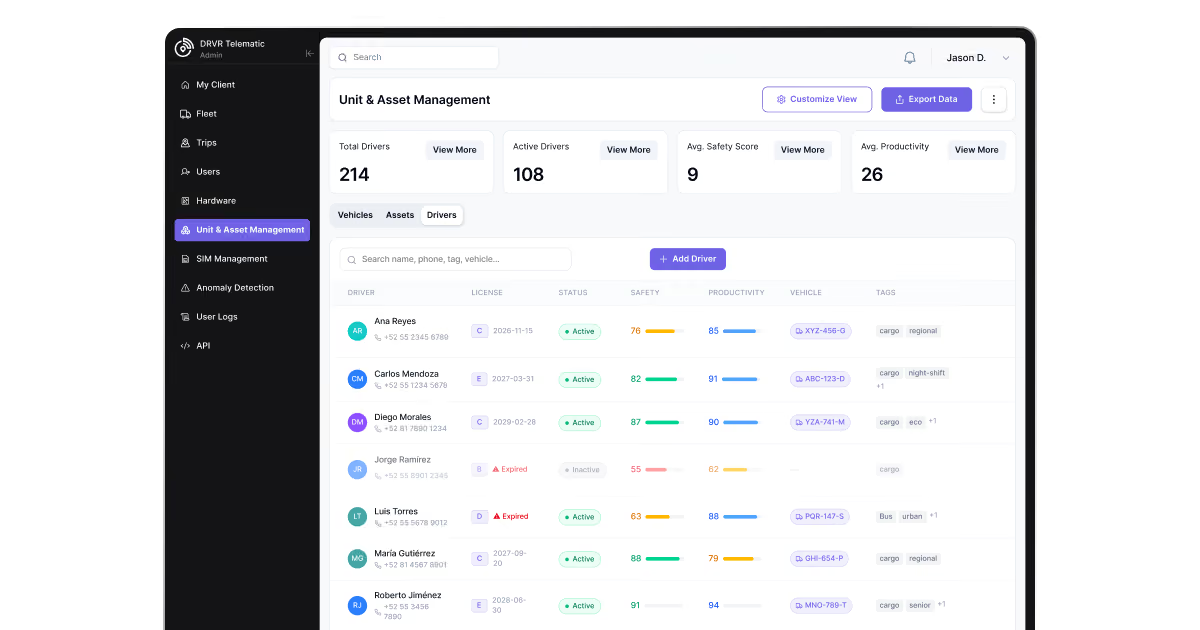
Fleet managers need full visibility into driver habits and vehicle health without drowning in raw data. DriveIQ's fatigue and hours-of-service optimizer flagged over 40 violations in its first quarter, before they became incidents.
Safety officers lean on scorecards to catch risky patterns early. DriveIQ's driver dashboards, paired with in-cab coaching, contributed to a 38% drop in safety incidents.
Compliance teams need automated logs that hold up under audit. The same fatigue model that protects drivers also builds the paper trail regulators expect.
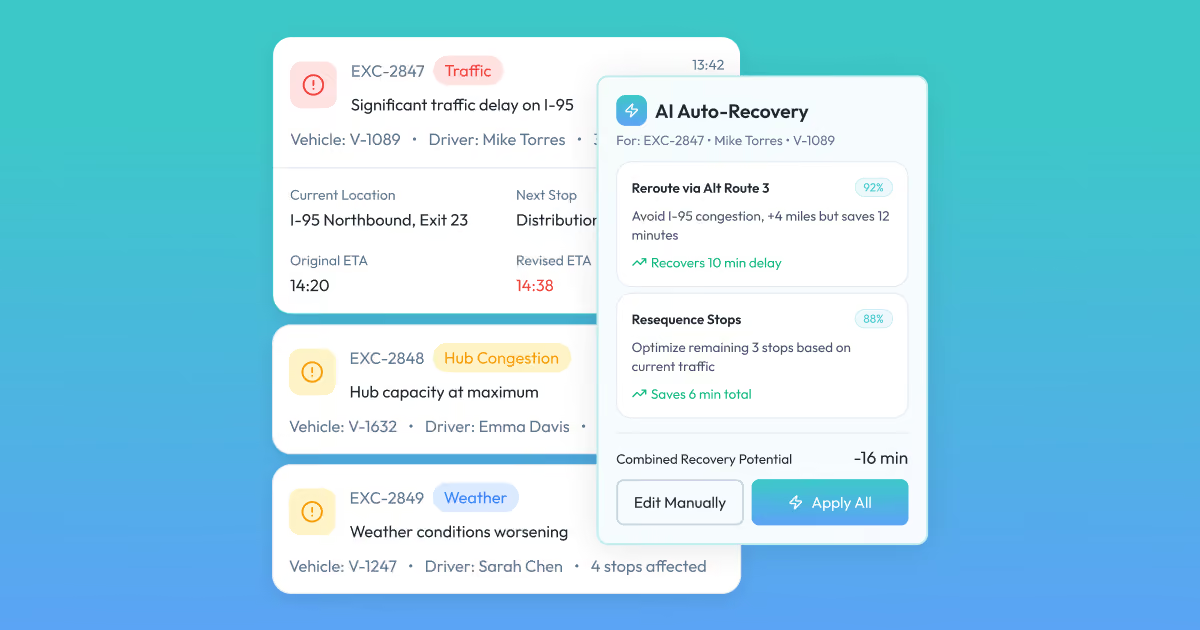
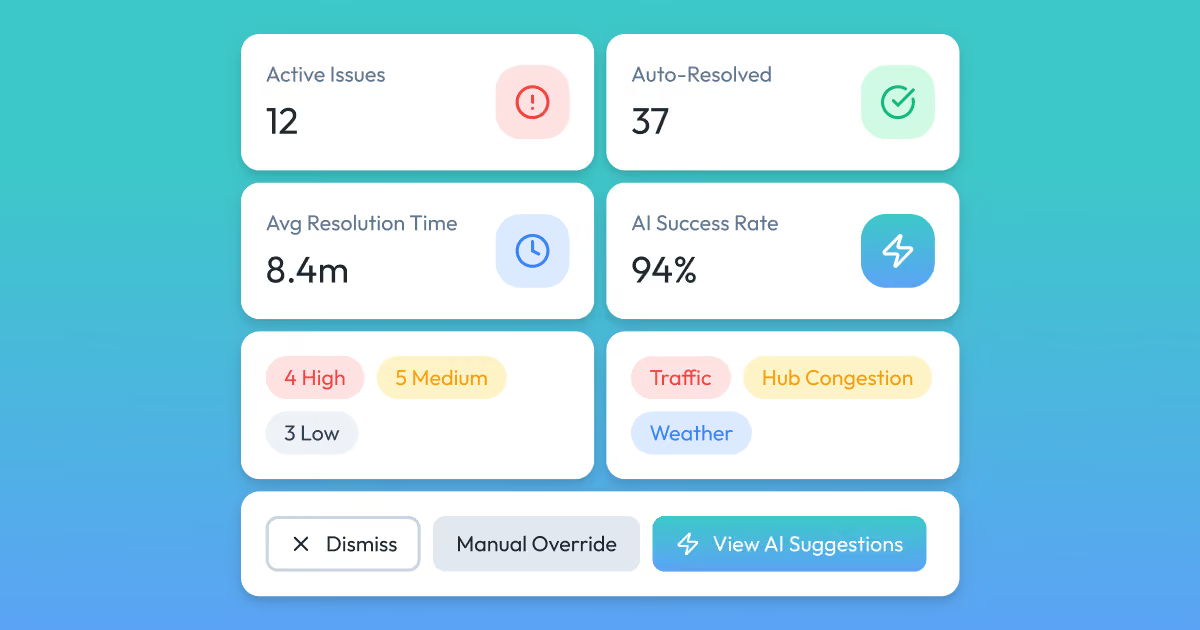
Dispatchers need real-time visibility to reroute before a delay becomes a complaint. DriveIQ's predictive ETA engine cut late deliveries from 18% to 7%, and its auto-recovery optimizer trimmed empty miles by 8%.
Driver monitoring isn't a surveillance add-on anymore. It’s how fleets keep drivers, control costs, and stay ahead of a courtroom environment that keeps getting worse. Whatever seat you sit in, the same driver monitoring technology ends up doing the heavy lifting.
What vehicles have driver monitoring systems?
SyncMatix started with cameras nowhere near the driver. GPS pings, speed data, nothing about the person behind the wheel. That gap sits inside plenty of production vehicles too, not just aftermarket fleet tools. Some cars watch the driver closely. Others barely glance.
Hands-free luxury and semi-autonomous models: GM's Super Cruise, Ford's BlueCruise, and Tesla's cabin cameras all rely on a driver monitor camera pointed straight at your face. These systems won't let hands-free mode run unless your eyes stay on the road.
Early adopters with proprietary tech: Toyota and Lexus built driver monitoring into cars back in 2006. Today their cameras tie directly into Traffic Jam Assist for smoother, safer highway driving.
Mid-range and premium brands with alert systems: Mazda, Kia, and Volvo skip full camera rigs but still flag drowsy patterns. Steering behavior and lane drift do most of the talking here.
Camera-free systems: Hyundai, Mercedes, Jeep, and Honda often monitor without watching your face at all. Jeep calls its version Drowsy Driver Detection; Hyundai calls it Driver Attention Warning.
The Subaru exception: Subaru runs a camera-based system called DriverFocus without offering hands-free driving at all. Most cameraless competitors don't bother with cameras precisely because they lack that hands-free feature to protect.
Commercial fleets: A truck driver monitoring system rarely comes from the factory. Fleets bolt on driver management software built for freight, not passenger cars.
Check your window sticker before you assume anything. Naming conventions change by brand, and so does what's actually inside the dash. Next, we'll break down the components and detection methods that make all this possible.
How does a driver monitoring system work?
Two things make a fleet driver monitoring setup work: optical cameras and in-cab sensors. Get either wrong, and the entire platform breaks down into alert fatigue and useless data.
Fleet-grade cameras run infrared LEDs, not standard lenses. That's what lets them read a driver's eyes at 3 am on an empty interstate. DriveIQ's coaching alerts depend on exactly this kind of low-light accuracy. Tinted glasses, dashboard glare, dead of night — infrared cuts through all of it.
Mounting matters too. Dashboard, A-pillar, or overhead console, depending on the vehicle. Single-camera rigs face the driver only. Dual-camera setups add a road-facing lens, so incidents get recorded from both angles at once before they get to the driver monitoring system for processing.
None of that footage waits on a cloud server, either. An onboard processing unit runs the computer vision locally, right there in the cab. That's what makes sub-second alerts possible instead of a five-second lag that arrives too late to matter.
Some setups go further still. Steering torque sensors and CAN bus data feed straight into the analysis. SyncMatix's driver analytics works the same way, blending vehicle signals with behavior patterns rather than trusting a camera alone.
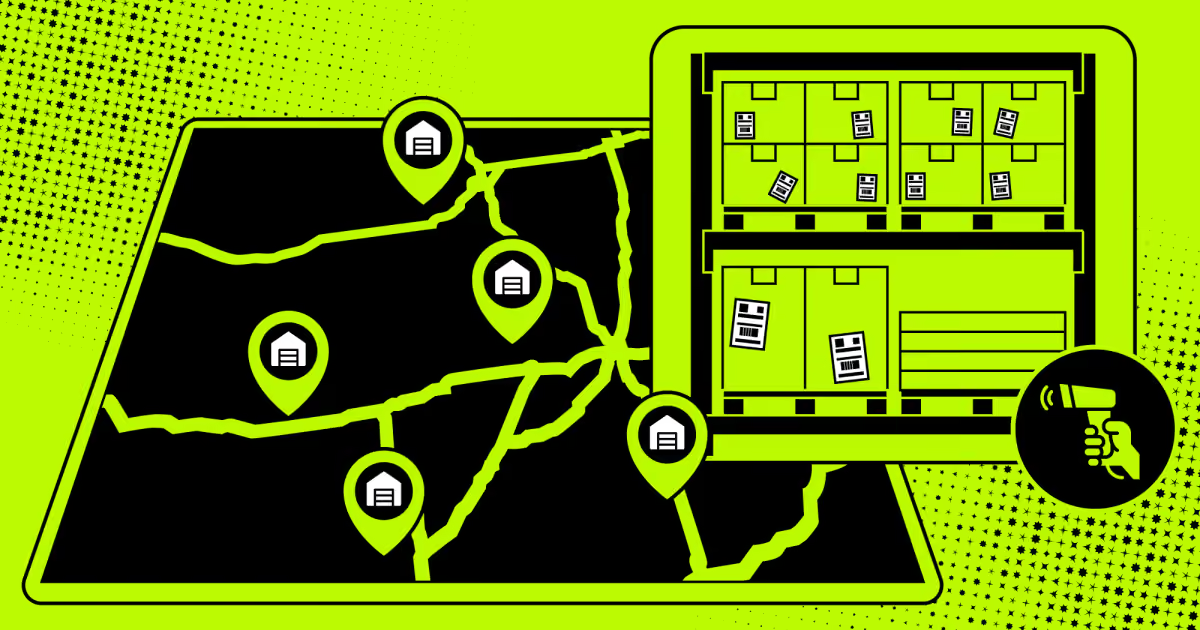
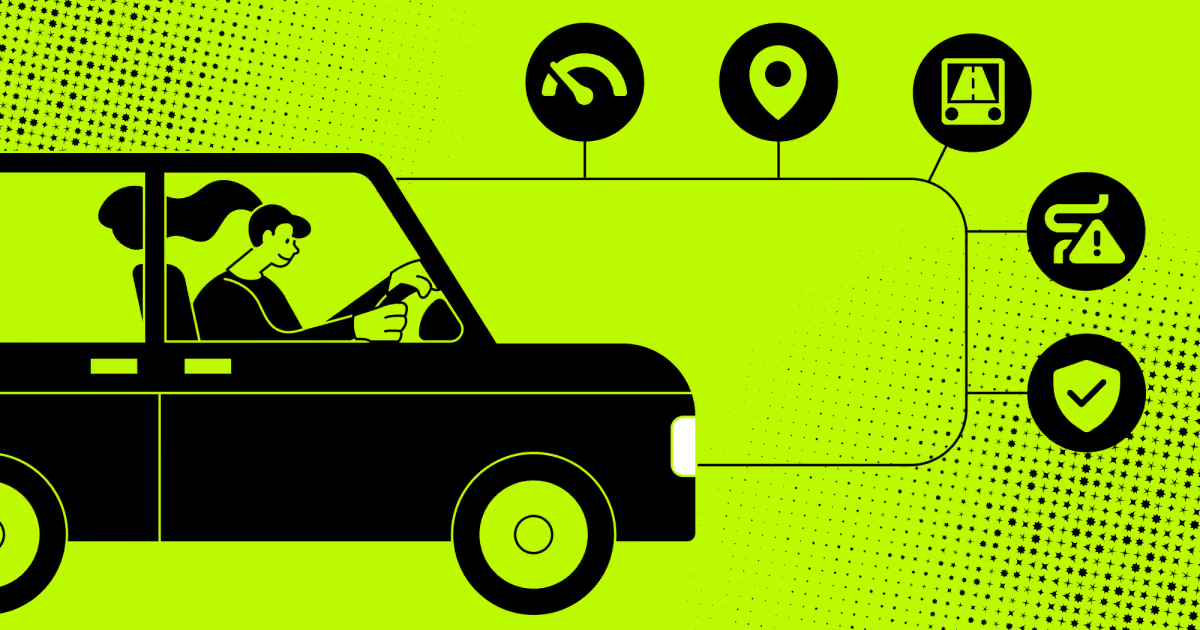
GPS closes the loop. A fatigue alert without a location is just a warning nobody can act on. Stamp that same alert with GPS coordinates, though, and a fleet manager instantly knows which highway, which hour, which risk. Combined GPS and system data lets managers spot patterns by road, by time of day, by driver. That's what turns a driver monitoring system device from a passive recorder into an actual management tool.
Infrared (IR) cameras need precise placement and high-frame-rate optics to track eye gaze, blink frequency, and head tilts through sunglasses or in zero-light cabs. Simultaneously, physical sensors provide the context, verifying whether a sudden motion is an evasive maneuver or a drifting driver.
If the camera misinterprets a glance at a side mirror as distraction, or if laggy sensors trigger false alarms, drivers quickly learn to ignore the system, and dispatchers end up drowning in unverified notifications.
A typical driver monitoring workflow
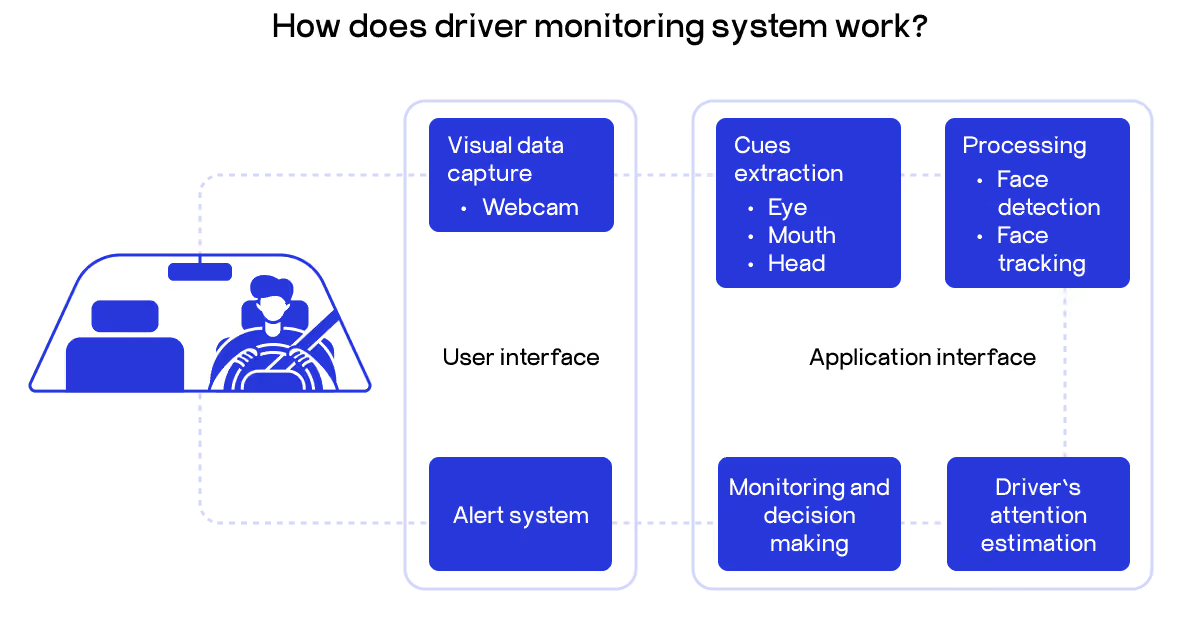
Every DMS runs the same four-step loop, just faster than you'd expect. A camera watches, software interprets, the system decides, and an alert fires. Here's what actually happens at each stage.
Visual capture comes first, and it's the simplest step to picture. Think of a tiny webcam clipped above your dashboard, always pointed at your face. It's not filming for later; it's reading you in real time, frame by frame.
Processing turns raw video into something the software can use. The system finds your face the way you'd spot a friend in a crowd, then locks onto it. Once it's tracking, it doesn't lose you, even if you shift in your seat.
Cues extraction zeroes in on three signals: your eyes, your mouth, your head position. A slow blink reads differently than a long one. A yawn reads differently than a cough. The system's learned the difference between normal fidgeting and real warning signs.
Attention estimation is where all those cues combine into one judgment call. Not "is your eye closed" but "how tired are you, really." It's less a snapshot and more a running average, updated constantly.
Monitoring and decision-making are the payoff. If your attention drops below a threshold, the alert system kicks in immediately. A chime, a vibration, sometimes a dispatcher notification, depending on how the fleet configured it.
The gap between good and bad driver monitoring devices shows up under real load. Anyone can demo a system with one truck and perfect lighting. Few systems hold up across five hundred vehicles, mixed weather, and drivers who don't want to be watched.
"A monitoring system looks simple in a demo, then thousands of vehicles hit it at once. That's when edge cases surface: bad lighting, dirty lenses, drivers gaming the alerts. If you didn't design for that volume from day one, you're rebuilding under pressure later," says Myroslav Stelmashchuk, Backend Engineer at COAX Software.
Get that architecture right, and a DMS driver monitoring system stops being a box in the cab. It becomes the thing standing between a tired driver and a bad night on the highway.
What are the different types of driver monitoring systems?
Not every system watches the same thing. Some track eyes, some track routes, some track shift length. Here's how the main categories break down for anyone actually buying one.
Camera-based DMS
This is the version most people picture first. An infrared lens sits on the dash or A-pillar, aimed at your face. It reads blinks, yawns, head tilts, all in real time.
A driver monitoring camera doesn't need daylight to work. Infrared cuts through darkness, tinted lenses, even sun glare at dawn. That's why fleets running overnight freight lean on this type specifically.
Setups vary by budget and need:
Single-camera rigs: face the driver only, cheapest option on the market.
Dual-camera rigs: add a road-facing lens for full incident context.
Windshield-mounted units: less intrusive, popular in passenger vehicle fleets.
On our SyncMatix build, drivers rejected an earlier tool because it felt clunky and pointless. Camera-based systems only earn trust when the alerts feel accurate, not annoying. Get the sensitivity wrong and drivers just mute it.
GPS and telematics-based
This category answers a different question: not "is the driver tired" but "where's the truck, and how's it moving." Speed, location, harsh braking, all logged continuously.
DriveIQ leaned hard into this layer. Every fatigue alert got a location stamp attached automatically. A warning fired at 4 am on a dark highway means something different than the same warning at a rest stop.
Telematics-based tracking usually pulls from:
OBD port data (speed, RPM, braking force).
GPS pings every few seconds.
Route deviation and geofence triggers.
It's the backbone layer most fleets already have. A driver monitor system built purely on telematics won't catch a drowsy driver directly. But paired with camera data, it turns a vague alert into an actionable one, complete with exact coordinates dispatchers can use instantly.
Biometric monitoring
Biometric systems go past cameras entirely. Heart rate, skin conductance, sometimes grip pressure on the wheel. The goal: catch fatigue before it shows on your face.
A seat-mounted PPG sensor reads pulse the same way a fitness tracker does. Steering-wheel sensors measure grip tension, which tends to loosen as fatigue sets in. Neither needs a clear camera shot to work.
This matters most where cameras struggle:
Drivers wearing sunglasses or face coverings.
Poor cab lighting that confuses visual sensors.
Vehicles without room for a dash-mounted unit.
Adoption's still thin compared to cameras, mostly cost. But a driver safety monitoring system built with biometric layers catches early fatigue signs cameras miss entirely. Expect wider rollout as sensor prices keep dropping through the decade.
Steering and behavioral analysis
No camera. No sensor pad. Just how the truck moves, and what that movement says about the person driving it.
This type watches lane drift, overcorrections, and steering micro-adjustments. A tired driver corrects late and jerky, not smooth and early. The algorithm learns each driver's normal pattern first, then flags deviations from it.
Fleet managers like this type for one reason: no hardware install beyond what's already there. It runs off existing steering angle sensors most trucks ship with. Cheaper rollout, though slightly less precise than camera-based reads.
Driver monitoring software built around steering data pairs well with GPS layers already in place. SyncMatix's driver scorecards used exactly this blend, mixing safety, efficiency, and behavior into one number. No new hardware, just smarter use of what fleets already had running.
AI-powered video telematics (dashcam-based)
This is the fusion type, road-facing and driver-facing cameras working together. One watches traffic ahead, the other watches the driver's response to it.
When a near-miss happens, both angles get pulled automatically. Insurers love this footage, since it proves what actually happened, not what someone claims happened. That evidence has become standard defense material as verdict sizes climbed nationally.
What sets this apart from basic dashcams:
Onboard AI flags risky clips instantly, no manual review needed.
Footage uploads only when something actually triggers it.
Coaching feedback gets built directly into weekly driver reports.
A full driver monitoring system running dual cameras costs more upfront. But claims data backs it up hard, with insurers reporting real drops in at-fault accidents tied to this exact setup.
Fatigue and hours-of-service (HOS) optimizers
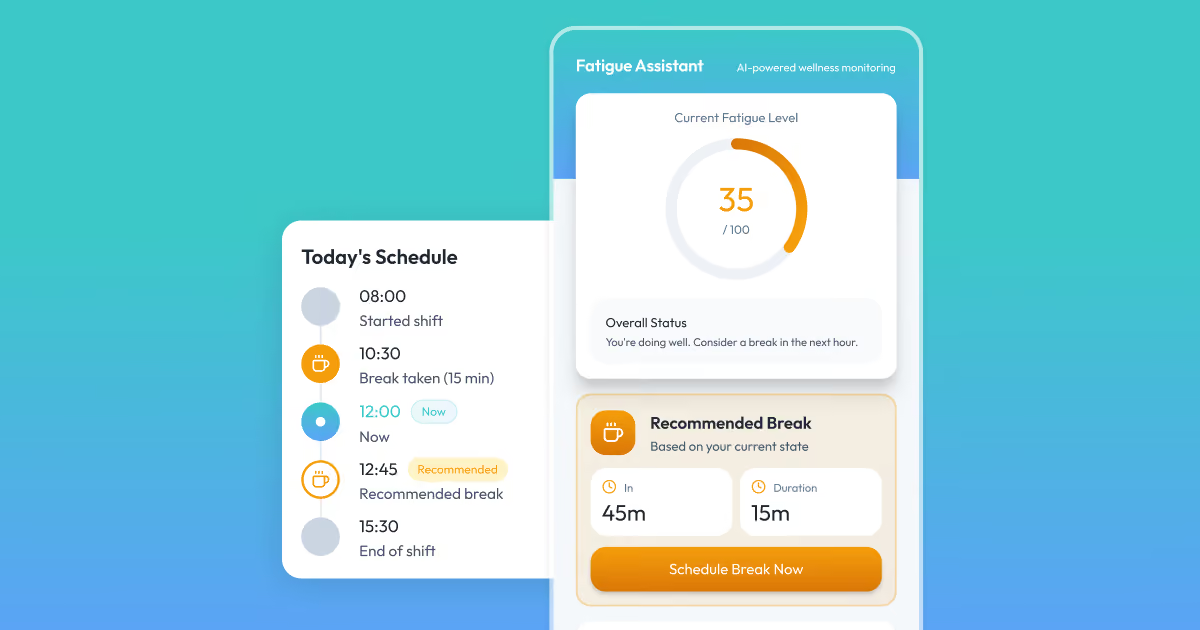
This last type isn't watching the driver moment to moment. It's predicting when fatigue will hit, before the driver even feels it coming.
DriveIQ's version pulled shift length, time of day, and historical patterns into one model. It flagged over 40 potential HOS violations in a single quarter, catching them before dispatchers even noticed a problem.
These systems typically factor in:
Total hours driven against legal limits.
Time of day, since 3 am fatigue differs from 3 pm fatigue.
Historical incident data tied to specific shift patterns.
Unlike camera-based driver monitoring systems, this type works ahead of the moment, not during it. Think of it as a scheduling tool wearing a safety hat. Dispatchers get a nudge to reassign a route before a tired driver ever gets behind the wheel.
What are the features of a driver monitoring system?
A solid driver monitoring system blends six features into one working loop. Each one reads a different signal from the driver's body or behavior. None of them work well alone. Together, they turn raw video into an actual safety net. Here's what a full setup actually includes, feature by feature.
Fatigue detection: The system maps facial landmarks in real time. It tracks blink speed, eye closure length, and yawn frequency. A slow blink reads differently than a long one. Repeated yawning pushes the alertness score down fast, well before a driver feels tired.
Distraction tracking: Head angle and gaze direction reveal where focus actually sits. A quick check of the mirror is normal. A long glance at a phone isn't. The system learns that difference and flags only the pattern that matters.
Real-time alerts: Once fatigue or distraction crosses a set limit, the system reacts within seconds. A chime plays first. A seat vibration follows if nothing changes. Some setups escalate further, sending a notification straight to dispatch.
Unsafe behavior flags: Phone use, smoking, missing seatbelts, all get caught on camera. A capable driver monitoring system camera notices habits a manager never sees firsthand. That footage becomes proof, not guesswork, when incidents get reviewed later.
Driver profiling: Some setups recognize the person behind the wheel automatically. Seats, mirrors, and cab settings adjust without manual input. Behavioral logs build over weeks, giving safety officers a real pattern to review.
System integration: Ignored alerts can trigger deeper intervention. Speed drops. Brakes engage. In higher-automation vehicles, the truck can pull itself over safely.
Put those six pieces together, and you get a full driver monitoring system DMS tool, not just a camera bolted above the dash.
DriveIQ leaned hardest on the fatigue piece of that stack. Its model read shift length against time of day, then cross-checked both against historical incident data. Forty-plus violations surfaced in a single quarter, caught weeks before dispatch would've noticed anything on their own.
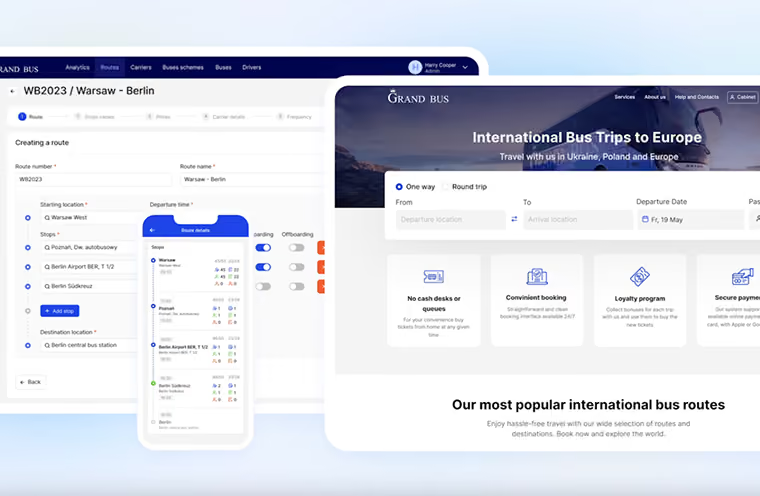
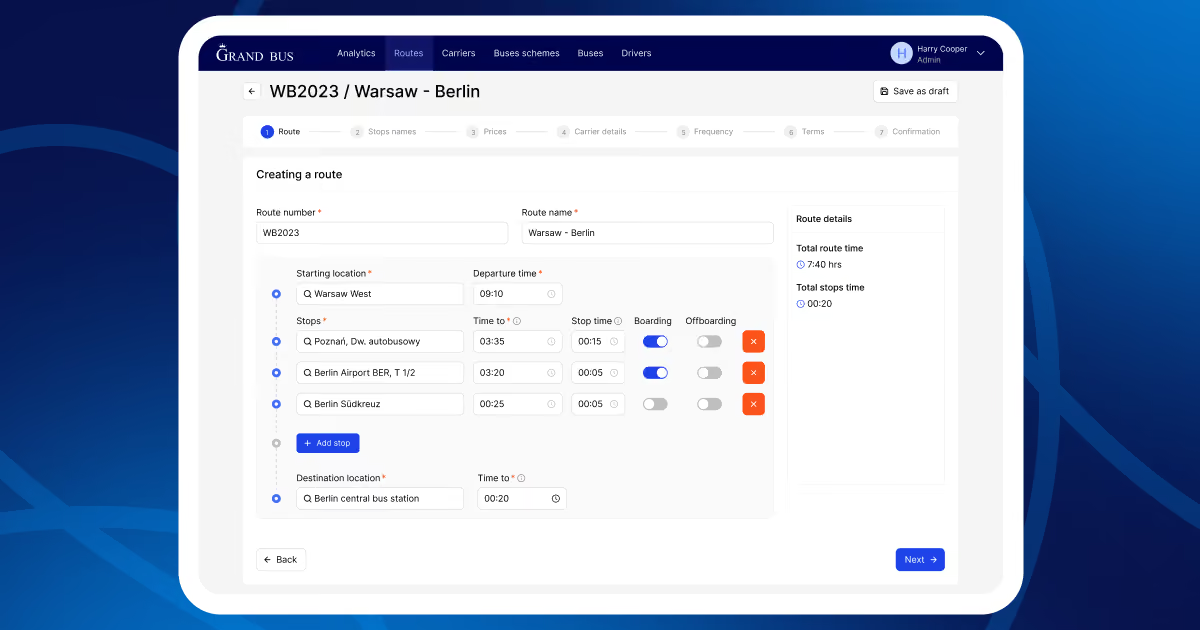
That kind of layered feature set doesn't need to launch all at once, though. Not every operation needs the full build from day one. Small fleet driver monitoring solutions often start with a single feature and expand from there as budget allows. A basic camera paired with reliable GPS tracking software already beats the paper logs we found running GrandBus's routes before their driver app went live, where dispatchers once tracked buses through phone calls alone.
The right feature mix depends on fleet size, route type, and budget, in that order. A well-built driver monitor system should scale with all three factors, not force a one-size rollout onto operations that never asked for it. Fleets running overnight freight need fatigue detection first. Fleets moving high-value cargo often prioritize unsafe-behavior flags instead. The features exist separately for a reason.
What regulations and industry standards are driving DMS adoption?
Regulation, not curiosity, pushes most fleets toward driver monitoring systems. Six frameworks matter most right now. Some apply to passenger cars first. Others hit commercial fleets directly. Here's what's actually shaping purchase decisions today.
The GSR turned driver monitoring from a nice-to-have into a legal requirement. Since mid-2024, new vehicle types sold in the EU need built-in attention warning systems. That single rule reshaped procurement conversations across the entire continent.
Manufacturers now build monitoring hardware into base trims, not optional packages. Fleet buyers benefit directly from that shift.
Lower unit costs: Standard hardware means less markup on monitoring add-ons.
Wider compatibility: Systems ship pre-integrated instead of bolted on later.
Faster compliance: Fleets buying new vehicles meet safety mandates automatically.
For fleets operating across EU borders, this regulation removes a lot of guesswork. Compliance stops being a separate project entirely.
Euro NCAP's star ratings now factor in driver monitoring performance directly. A vehicle without reliable fatigue detection simply can't score top marks anymore. That single change moved monitoring from marketing copy into an engineering priority.
Automakers respond by improving camera accuracy and reducing false alerts. Buyers benefit from systems that actually hold up under real driving conditions.
Fleet procurement teams increasingly check NCAP scores before signing vehicle contracts. It's become a practical shortcut. Instead of testing five driver monitoring system companies separately, buyers trust the rating and move faster. That's meaningfully cut vetting time for fleets refreshing large vehicle rosters this year.
NHTSA hasn't mandated driver monitoring outright, but its guidance carries weight. Distracted driving data from the agency shapes how insurers price commercial policies nationwide. Fleets citing NHTSA-aligned safety tech often negotiate better renewal terms.
The agency's research also influences what "acceptable" alert thresholds look like industry-wide. Vendors calibrate systems against NHTSA's published distraction benchmarks.
Underreporting concerns: NHTSA itself flags distracted-driving numbers as likely conservative.
Litigation defense: NHTSA-aligned systems strengthen a carrier's case after incidents.
Fleets treating these recommendations as informal standards tend to fare better in audits and disputes alike.
Commercial fleet safety regulations
FMCSA rules govern hours-of-service limits, and violations carry real financial risk. Driver monitoring software that tracks shift patterns helps carriers stay inside legal limits automatically. That's exactly the gap DriveIQ's fatigue module closed for a 500-truck carrier we worked with.
Before that system existed, violations surfaced only after inspections caught them.
Automated logging: Systems build audit-ready records without manual entry.
Early flagging: Violations get caught before they become citations.
Dispatcher visibility: Fatigue risk shows up before a route even starts.
Carriers running tight margins can't absorb FMCSA fines easily. Automated compliance tools make that risk far more manageable.
UNECE's WP.29 framework sets vehicle safety standards across dozens of countries, well beyond just the EU. It increasingly references driver attention monitoring as part of broader automated-driving readiness requirements. That scope makes it relevant for any fleet running international routes.
Manufacturers building for global export now design monitoring hardware to meet WP.29 baselines from the start. That consistency helps fleets sourcing vehicles across different regions.
Cross-border consistency: One hardware standard works across multiple national markets.
Future-proofing: Level 3 automation readiness gets built in early.
Simplified sourcing: Fewer regional variants for procurement teams to track.
Fleets planning multi-country expansion should treat WP.29 alignment as a sourcing filter, not an afterthought.
Insurance industry standards
Insurers increasingly write monitoring requirements directly into commercial policy terms. Some carriers now offer premium discounts tied specifically to verified driver monitoring systems onboard. That shift turns safety tech into a direct cost offset, not just a compliance checkbox.
Underwriters review incident data alongside monitoring adoption when calculating renewal rates.
Discount eligibility: Verified systems unlock lower premium tiers.
Claims speed: Footage from onboard cameras speeds up dispute resolution.
Renewal leverage: Documented safety records strengthen negotiating position each cycle.
Given how sharply commercial auto rates have climbed recently, this insurance angle now drives adoption decisions as much as any government mandate does.
Best driver monitoring systems
Picking a driver monitoring solution isn't a single-answer question. A regional produce hauler and a 500-truck freight carrier need different tools entirely. We tested eight platforms against real fleet conditions, not vendor demos. Here's what actually held up.
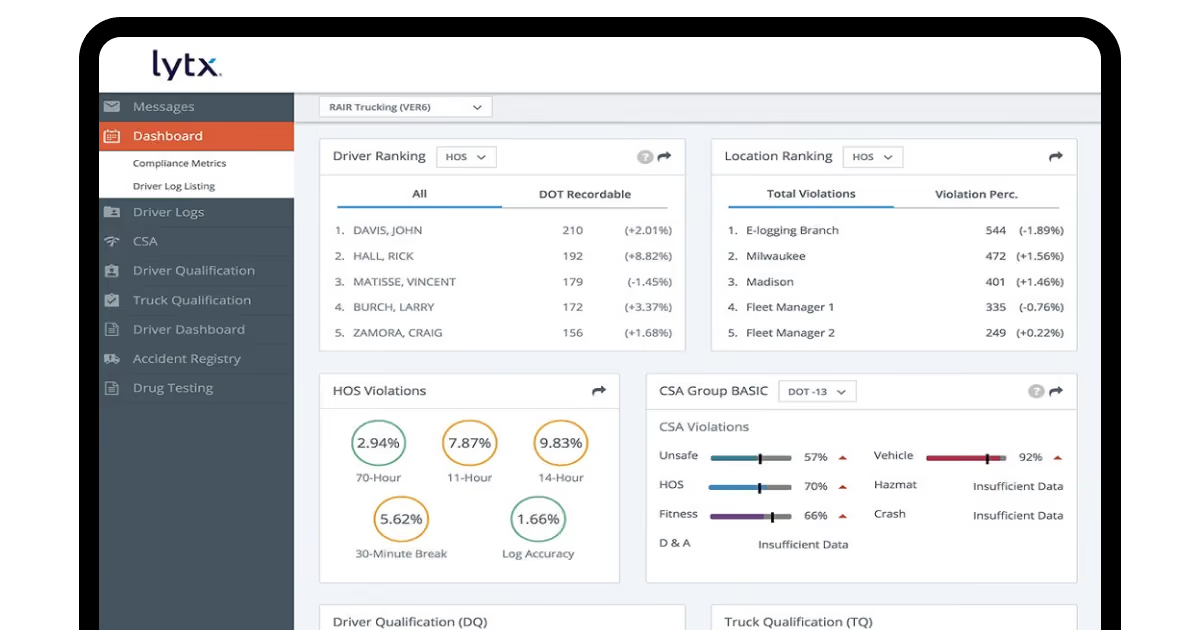
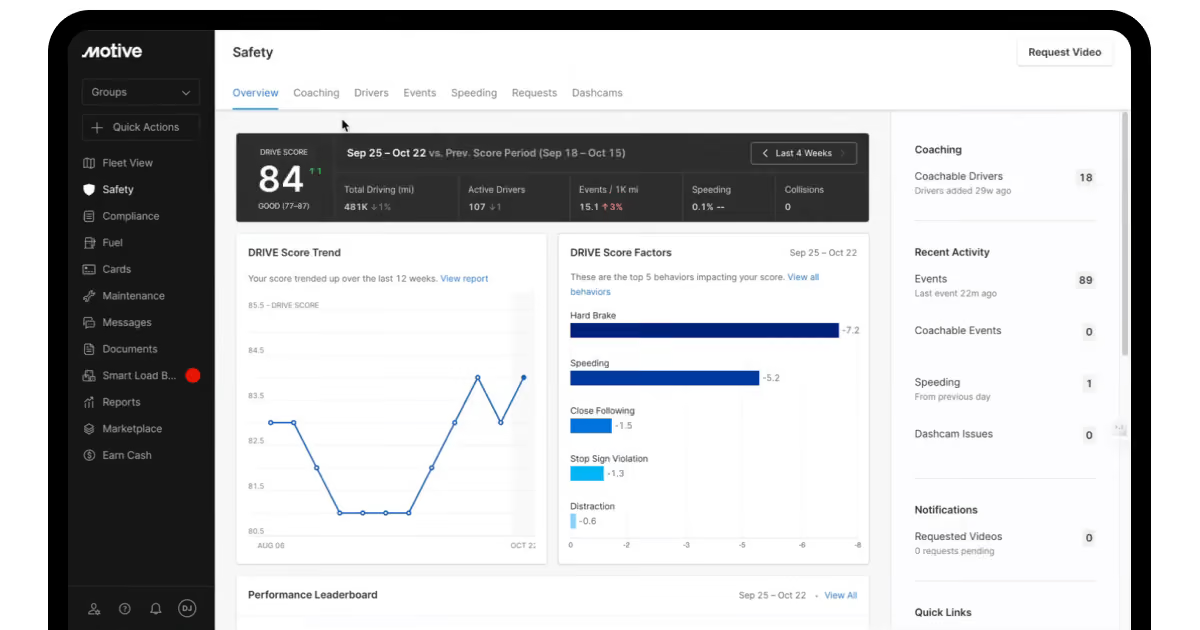
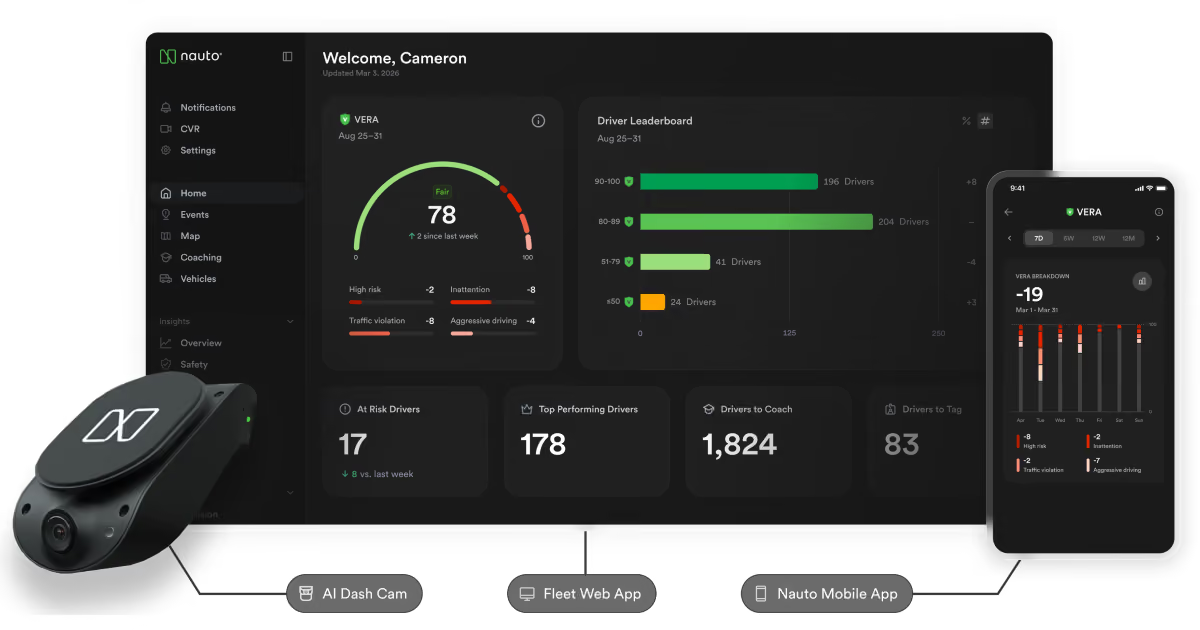
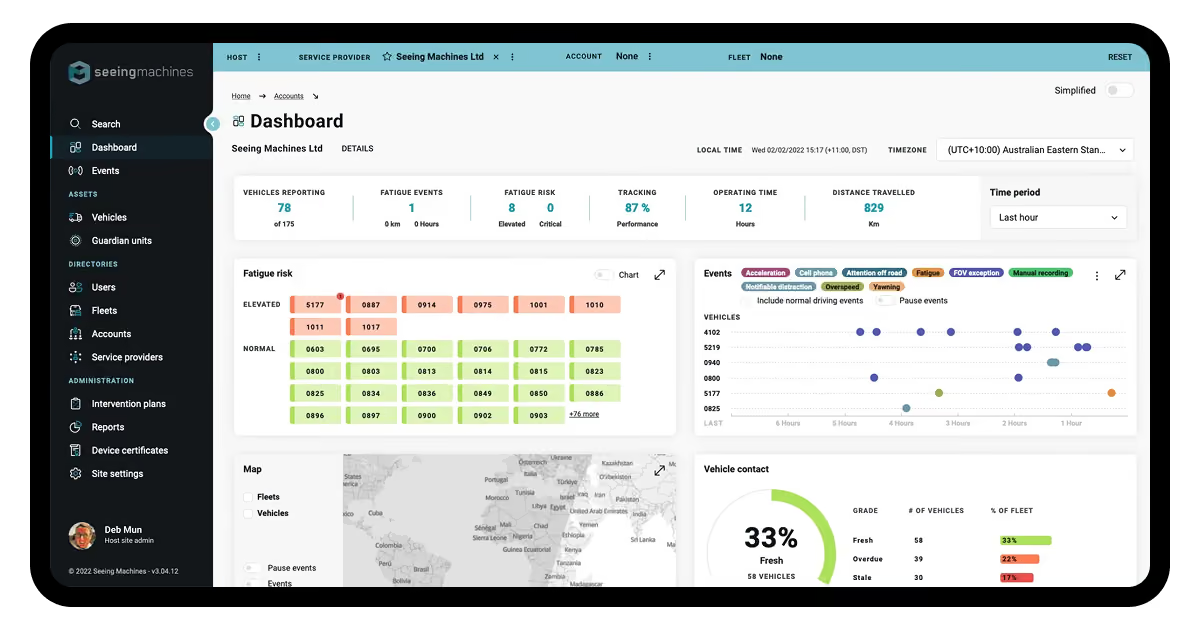
If you need camera-based fatigue detection with deep AI scoring, Netradyne or Samsara lead the pack. Lytx wins for structured video coaching programs. Motive fits carriers already running ELD compliance through the same vendor. Nauto suits fleets wary of constant camera access. Seeing Machines and Geotab serve narrower, more specialized needs.
Platform
Best for
DMS type
Fatigue detection
Fleet integration
Pricing
Samsara
AI-heavy safety platforms
Dual-facing camera
Deep learning, 17+ indicators
Full telematics suite
From $27-33/vehicle/mo
Netradyne
Behavior scoring and coaching
360° camera array
Landmark-based, moderate depth
Standalone or add-on
Custom quotes
Lytx
Structured video safety programs
Dual-facing camera
Event-triggered review
Geotab-compatible
Custom quotes
Motive
ELD-first trucking fleets
Dual-facing camera
Basic, 10 indicators
Full ELD suite
From $20-35/vehicle/mo
Nauto
Privacy-conscious fleets
Edge-processed camera
Real-time, on-device
Standalone platform
Custom quotes
Seeing Machines
Enterprise and OEM deployments
Eye-tracking camera
Facial landmark, high precision
License-based, custom builds
Custom quotes
Geotab
Fleets already on MyGeotab
Third-party camera partners
Depends on partner hardware
Deep telematics ecosystem
From $20-30/vehicle/mo
Samsara.
Samsara pairs deep fatigue modeling with a full telematics suite. We ran it across a mixed 40-vehicle simulation with varied lighting. Its 17-indicator drowsiness model caught early fatigue signs competitors missed in the same test.
Crash detection triggers above 2.0 G, which skips minor lot incidents. Fleets wanting full incident documentation should budget for manual review too. Pricing climbs fast past 100 vehicles, similar to what we saw scaling DriveIQ's own alert volume.
Best for: fleets wanting one dashboard across safety, ELD, and maintenance.
Netradyne.
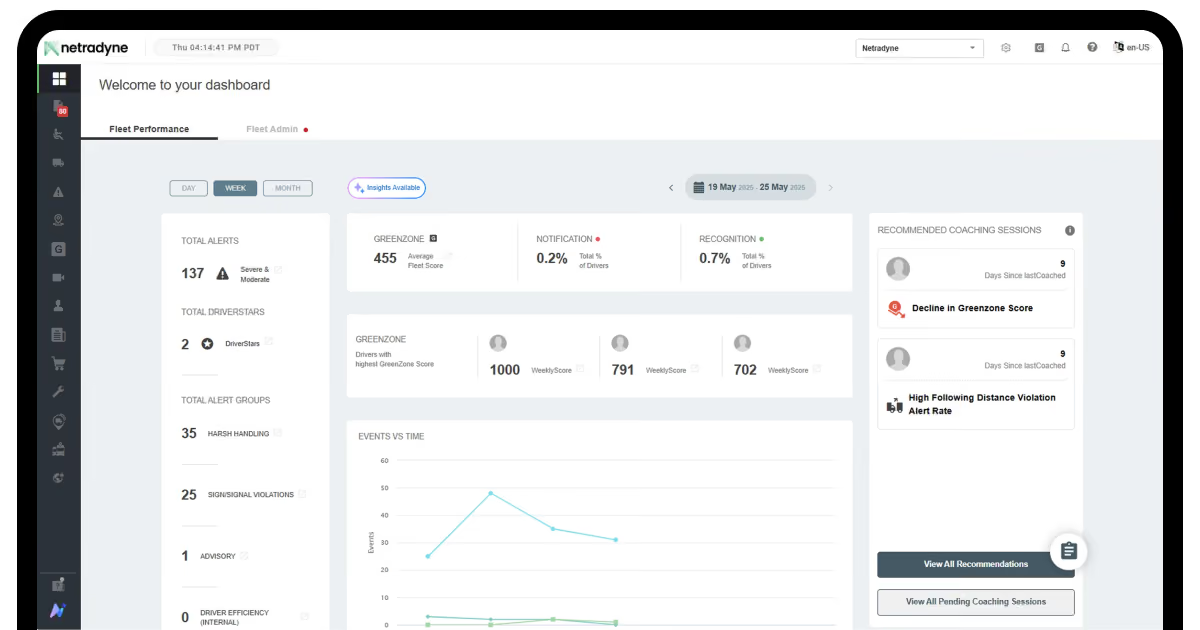
Netradyne’s driver monitor system leans hardest into positive-reinforcement coaching. We tested its Driver·i system against a two-week pilot with mixed drivers. Its GreenZone scoring visibly improved driver engagement compared to penalty-only platforms we'd tested before.
Impact detection catches bumps as light as 0.5 G, useful for parking-lot claims. Setup takes longer than Samsara's, since 360-degree coverage needs more calibration per vehicle.
Best for: fleets prioritizing driver morale alongside behavior scoring.
Lytx.
Lytx built its reputation on structured video review, not just raw alerts. We tested its DriveCam workflow against a remote review team setup. Clips arrived annotated with context, not just a flagged timestamp.
That review layer adds cost most platforms skip. Fleets without dedicated safety staff benefit most from Lytx's managed review service. Pricing requires a custom quote, which slows early budget planning.
Best for: fleets building a formal video coaching program from scratch.
Motive.
Motive keeps its fatigue detection and driver safety monitoring second in line to its ELD core. We ran its 10-indicator model through a trial with a small regional delivery fleet. It caught fatigue reliably enough. Still, Samsara’s deeper model pinpoints subtle shifts more sharply.
The payoff we noticed? A single login covers compliance logs and safety alerts in one spot. That clean, single-vendor setup mirrors how we built the GrandBus driver app. This allowed us to slash three clunky sign-ins down to one.
Best for: trucking fleets wanting compliance and safety under one roof.
Nauto.
Nauto processes fatigue detection on-device, without constant footage upload. We ran a head-to-head test in the same cab, pitting its edge-AI alert speed against a live-streaming rival. Alerts fired in under five seconds, matching independent benchmark data.
Drivers on edge about constant surveillance take to this approach much faster. Only flagged events get pushed to the cloud. This way, it strips away the biggest privacy objection we hear from truckers on the ground.
Best for: fleets facing employee pushback over constant driver monitoring camera access.
Seeing Machines.
Seeing Machines targets high-precision eye-tracking over broad fleet features. We tested its facial landmark accuracy against low-light and sunglasses conditions together. Detection held steady where lighter systems lost tracking entirely.
This platform skips broader fleet management software concept entirely, by design. Enterprises and OEMs building custom safety stacks get more from Seeing Machines than standalone small fleets will.
Best for: enterprise and automotive teams needing licensable DMS precision.
Geotab.
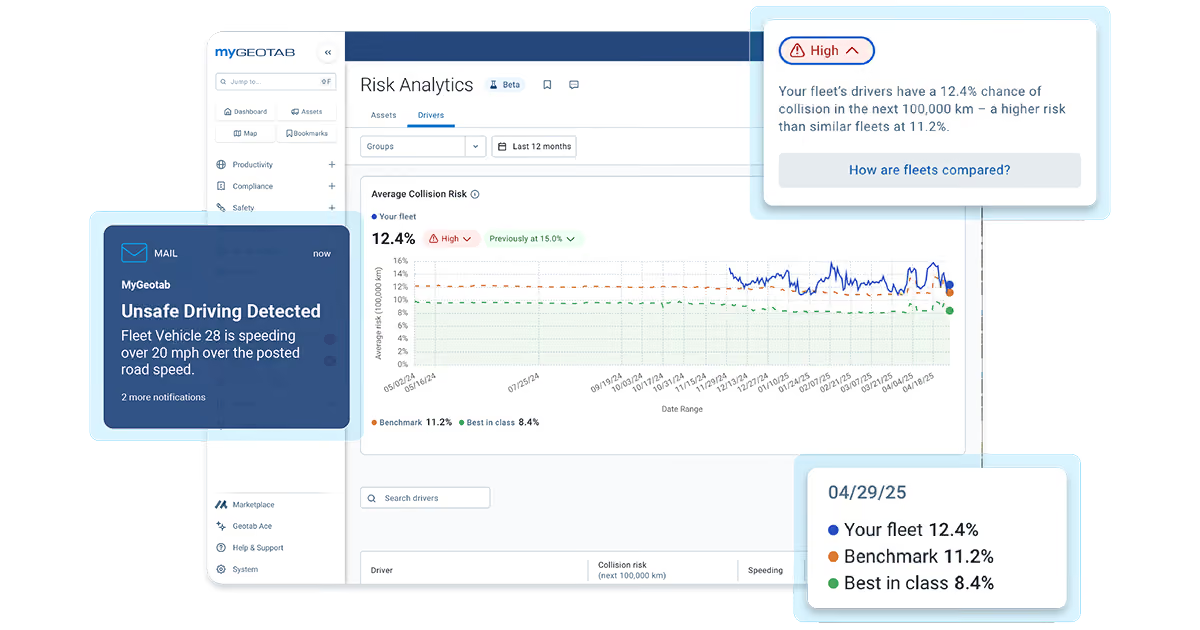
Geotab itself doesn't build camera hardware, leaning on partner integrations instead. We tested its MyGeotab dashboard against a Lytx-paired camera feed. Data merged cleanly, though setup needed more configuration than single-vendor platforms.
Fleets already running Geotab for telematics gain the most here. Bolting on a driver monitoring solution costs less when the base platform's already paid for.
Best for: fleets with an existing MyGeotab deployment wanting to add cameras.
Chasing a single "best" label pretty much misses the point. The right driver monitoring software fits your fleet size, driver culture, and existing tech stack, not a generic checklist. What worked for DriveIQ's 500-truck rollout would've been overkill for a 15-van operation. The reverse holds just as true.
How to choose the right driver monitoring system?
Sixteen years of building transport software shows you where driver monitoring can let you down at the most unexpected moment. While evaluating the driver monitoring software in the previous section, we tested the exact friction points that are missing from vendors' glossy brochures. We put each tool through its paces, grading them against five real-world pressure points pulled straight from our own fleet rollouts.
Now, we’re sharing these criteria with you, so you can also make a practical and informed choice.
Alert accuracy under real cab conditions.
False alarms kill driver trust. A system that flags every routine mirror check teaches drivers to ignore it in days. Real cabs stack challenges together: dark sunglasses, night driving, and sudden dashboard glare hitting the lens at once. We tested each tool against all three variables. Samsara and Nauto filtered out the noise best, keeping false positives under 5%. Motive struggled when glare and sunglasses overlapped, mistaking mirror glances for drowsiness.
Field tip: Run a two-week pilot using your worst-lit vehicle on a night route before signing anything. If it cries wolf during week one, your drivers will tune it out by week two.
Escalation logic, not just detection.
Catching fatigue means little without a clear next step. We tracked how fast each truck driver monitoring system pushes a trigger from an initial in-cab chime to actionable driver intervention.
Some systems just dump raw alerts onto a crowded dashboard. Fatigue events sit unread for hours. The better approach is to use an immediate in-cab audio cue that gives the driver a chance to self-correct. Then, a prioritized manager ping if the behavior repeats again.
Field tip: Don't let salespeople show you response times in a demo environment. Ask an existing customer for their actual, average alert-to-dispatcher response time during peak hours.
Driver buy-in over time.
A driver safety monitoring tool drivers resent gets disabled quietly within months. We looked at whether each platform bakes positive reinforcement into the coaching loop instead of relying entirely on penalties. The better systems track clean driving streaks and nudge managers to acknowledge good behavior, keeping the tech from feeling like a pure surveillance trap.
Field tip: interview a driver who's used the system for six months, not six days.
Data portability across fleet software.
Locked-in platforms cost far more down the line than they save upfront. We tested how easily each system exports event data, video clips, and driver metrics directly into third-party dashboards. Systems with open APIs let you feed safety metrics straight into your existing dispatch or payroll software without extra fees. Closed ecosystems force you into their proprietary UI, trapping your operational data behind a paywall when you try to scale.
Field tip: request a sample API export before committing to a multi-year contract.
Total cost past the sticker price.
Hardware, installation, and per-vehicle subscriptions rarely tell the full story. We calculated the true total cost for each platform using a 40-vehicle mixed fleet scenario over three years.
Hidden expenses like cellular data overages for video streams and mandatory hardware upgrades. Uninstallation fees when retiring vehicles also quickly inflate the bill. A cheap upfront quote often hides ongoing operational costs that double the real price per truck.
Field tip: get installation and training costs itemized separately, not bundled into one number. Blended pricing makes it almost impossible to spot where a vendor is padding their margins.
"A driver monitoring system that scores well in a vendor demo often fails on a real cab with bad lighting and a skeptical driver. We learned that building DriveIQ's coaching engine from scratch, testing against actual overnight freight routes," says Orest Falchuk, Head of Engineering at COAX Software.
Run any driver monitor system through these five filters before signing a contract. The platform holding up across all five earns its price. Everything else is just polish.
Knowing which DMS sensor works is only half the battle. The real headache starts when you try connecting that hardware to the rest of your operation. At COAX Software, we build custom fleet software across logistics, transit, and field ops. The story is always the same: operators show up with disconnected dashboards, burnt-out dispatchers, and drivers who hate using any of it.
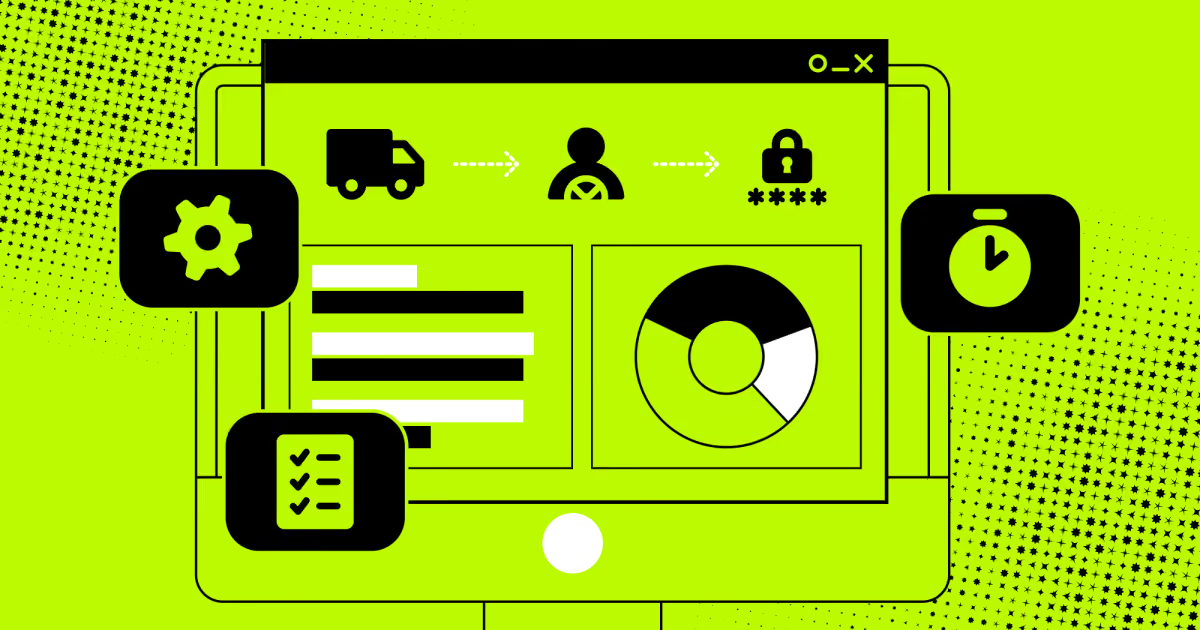
We tackle driver adoption first. When we built the mobile experience, that felt like support based on real, practical tests. Once the in-cab experience holds up, we engineer the middleware connecting your DMS sensors to your TMS, ERP, and dispatch tools. That is where off-the-shelf driver monitoring software stalls out, and it's where custom architecture keeps data moving.
Driver monitoring implementation roadmap for fleets and enterprises
Rolling out a driver monitoring system integration project rarely fails on technology. It fails on sequencing. Teams jump to dashboards before they've secured clean data. Below is the order that's actually worked across our fleet projects.
Map the failure point before scoping features.
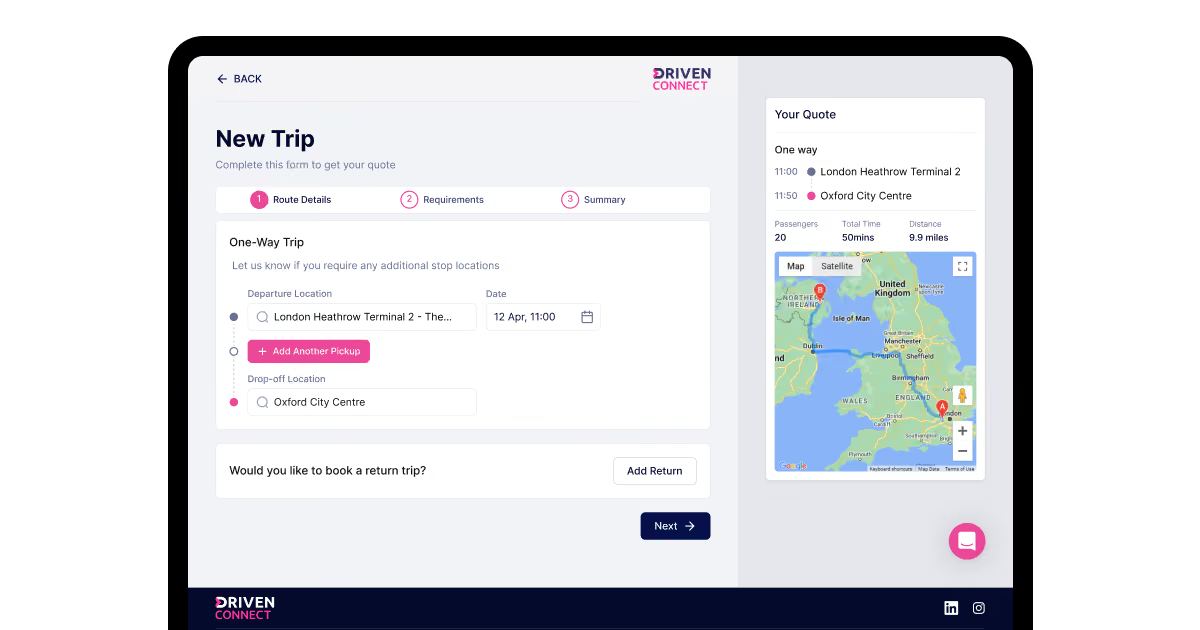
Every rollout starts with one question: what's actually costing money? For Driven Connect, that meant quote requests stuck in email threads for days. For DriveIQ, fatigue incidents surfaced only after a crash, never before one.
Skip this step, and you'll build a feature list nobody asked for. Interview dispatchers, drivers, and safety officers separately. Their complaints rarely match, and that gap is where the real requirements sit.
Pilot on a small subset first.
Never roll a new driver safety monitoring system across an entire fleet at once. We piloted DriveIQ's coaching engine on a single depot before scaling company-wide. That caught calibration issues no lab test would've surfaced.
Pick 10 to 20 vehicles with a healthy mix of routes, driver habits, and shift patterns. Then run the pilot for at least a full month. Anything shorter hides the seasonal weather shifts and late-night edge cases.
Build integrations around what already exists.
Most fleets already run a TMS, a payment processor, or a mapping provider. Rebuilding those from scratch wastes budget on solved problems. On Driven Connect, we integrated Google's mapping services for route planning instead of building our own engine.
That saved our custom dev time for what actually gave the client an edge. These were proprietary quote logic, hyper-specific emissions tracking, and custom document workflows. The rule of thumb is simple. Integrate what already works, and build custom only where off-the-shelf software falls short.
Design the driver-facing layer last, not first.
Backend logic for driver monitoring devices gets attention early. Driver adoption gets ignored until launch week, which is backward. DriveIQ's in-cab alerts went through three rounds of driver feedback before we locked the escalation thresholds.
Drivers mute anything that feels punitive or inaccurate within days. Test your alert sensitivity with actual truckers on the road, not your internal QA team sitting in an office. A driver's tolerance for false positives is lower than any vendor spec sheet will ever admit.
Layer analytics on top of stable data, not before.
Predictive fatigue models and AI risk dashboards are useless if they're fed garbage data. We waited until DriveIQ's core telemetry settled into a clean baseline before turning on its hours-of-service optimizer. Rushing that sequence gives you slick, confident predictions built entirely on noise.
Confirm your baseline metrics hold steady for at least a full reporting cycle. Only then layer complex analytics on top. Otherwise you're optimizing against numbers that shift under you.
Scale cross-platform once the core workflow holds.
A driver monitoring software rollout eventually needs to run on web, mobile, and in-cab hardware together. When we built Driven Connect, we needed instant web quoting and live mobile route tracking to stay synced. That cross-platform harmony only works once your underlying data model is completely locked down.
Scaling to multiple screens too early forces you to rebuild your sync logic twice. Lock your core workflow first. Expand to additional platforms only after that foundation stops shifting beneath you.
None of these steps are exotic. And yet, from our experience, they’re the difference between a platform that scales and one that gets quietly abandoned by month six.
Most driver monitoring system companies claim to solve fits your fleet's actual shape. Some sell a feature list. Others, like the ones behind our DriveIQ and Driven Connect client products, get built around the operational mess a fleet already lives with. That's the gap custom vehicle monitoring software development work exists to close.
Transport software development takes an engineering team that has lived through real fleet failure modes. For this, we hold ISO 9001 and ISO 27001 certifications. Data security isn't a marketing checkbox for us. It's the bedrock every client platform sits on.
Good analytics requires a well-designed web interface. The reporting layer is where data becomes decisions. At COAX Software, web development and analytics integration aren't handed off between teams. The engineers who design your data model build the dashboards on top of it. The team that scoped the integration is the team that wires it to your BI layer. No translation layer. No scope gap between front-end and back-end. One team, full cycle.
That continuity matters most once driver monitoring technology stops being a single camera feed and becomes a full operational layer, spanning custom integrations, AI-driven analytics, and mobile apps drivers open and listen to.
FAQ
How much does building a custom driver monitoring system (DMS) actually cost?
Custom builds typically run $80,000 to $250,000, depending on hardware integration depth. Camera-only systems cost less than setups blending biometric sensors and CAN bus data. Budget also depends on fleet scale during rollout. On DriveIQ, phased development kept costs predictable, since we scoped hardware integration separately from the coaching engine itself, avoiding rework later. That sequencing matters more than the initial quote.
What is a driver monitoring system rollout timeline for a mid-size fleet?
Expect three to six months for a mid-size fleet, from pilot to full deployment. Hardware installation moves fast; the slower part is calibrating alert thresholds against real driving conditions. DriveIQ's pilot depot ran for five weeks before we adjusted fatigue sensitivity. Rushing this phase creates driver distrust that's hard to reverse once the system goes fleet-wide.
Can a DMS driver monitoring system work without cellular signal in remote areas?
Yes, if the system processes video on-device instead of streaming to the cloud. Edge-based detection keeps working without signal, then syncs flagged events once connectivity returns. We built this exact pattern into Road&Rally’s tracking system, caching data locally during rural gaps. Fleets running remote routes should confirm on-device processing before signing any vendor contract.
Who's liable if a driver monitor system misses a fatigue event before a crash?
Liability usually splits between vendor contract terms and your own documented response process. Courts look at whether alerts were acted on, not just whether they fired. Keep audit logs showing dispatcher response times alongside alert data. That documentation protected carriers we've worked with during post-incident reviews, turning a liability question into a defensible paper trail instead.
How do we migrate driver monitoring software data from a legacy vendor without losing history?
Export historical event data in a raw format before canceling any old contract. Most vendors charge extra or delay exports once a termination notice goes in. On the GrandBus transition, we migrated years of route and payment history into the new platform ahead of cutover. Plan that migration window separately, and never assume clean, matching data formats.
Does driver monitoring software violate driver privacy laws in the EU or UK?
Not if consent, data retention limits, and purpose disclosure are built in from day one. GDPR requires drivers know exactly what's recorded and why. Building the driver marketplace platform for Driven's team, we built consent screens directly into onboarding, not buried in terms nobody reads. Skipping that step invites regulatory risk long before any safety benefit shows up.































































_.avif)






%2520explained.avif)

We are interested in your opinion