#1. COAX Software: Top overall choice offering full-cycle travel development, API integrations, and accessibility compliance.
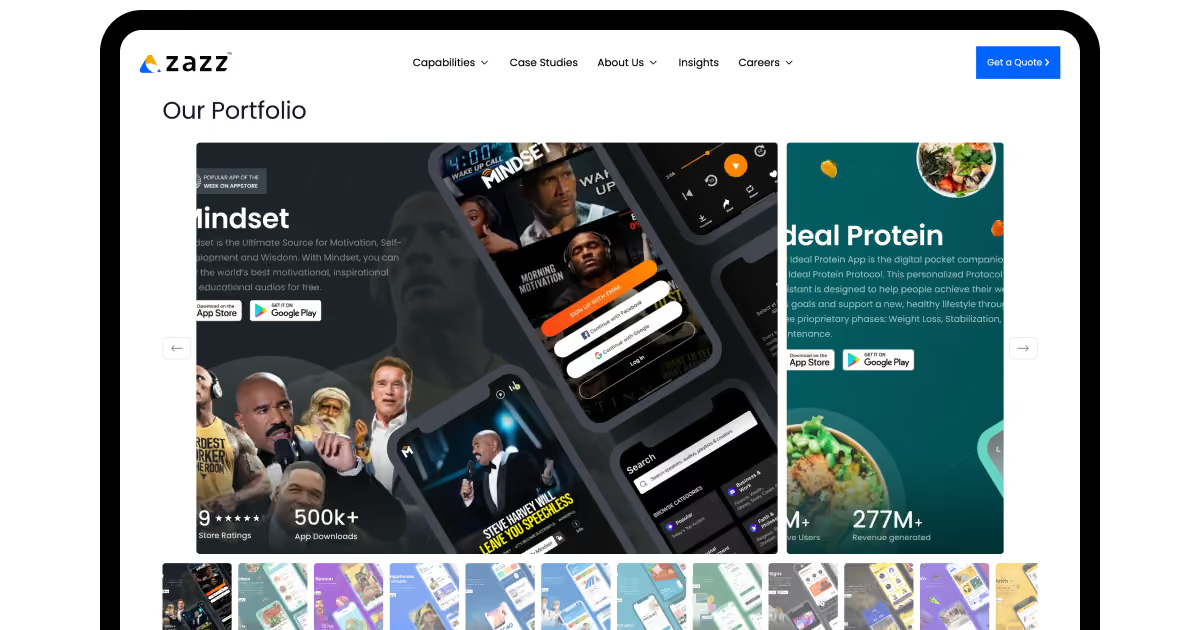
#2. Zazz: A large, multi-city team for US and Canadian brands needing broad bench depth.
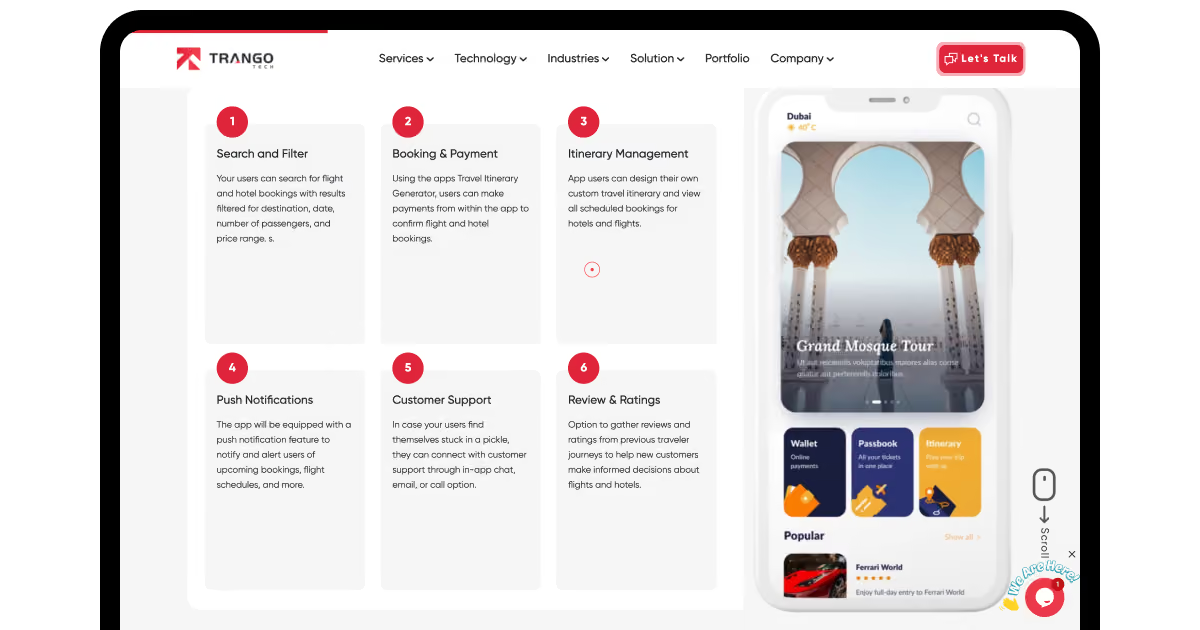
#3.Trango Tech: Cross-platform transport and mobility app specialist with reach into the US and GCC regions.
#4. Inceptives Digital: Product studio focused on AI-personalized, AR/VR-enabled travel apps.
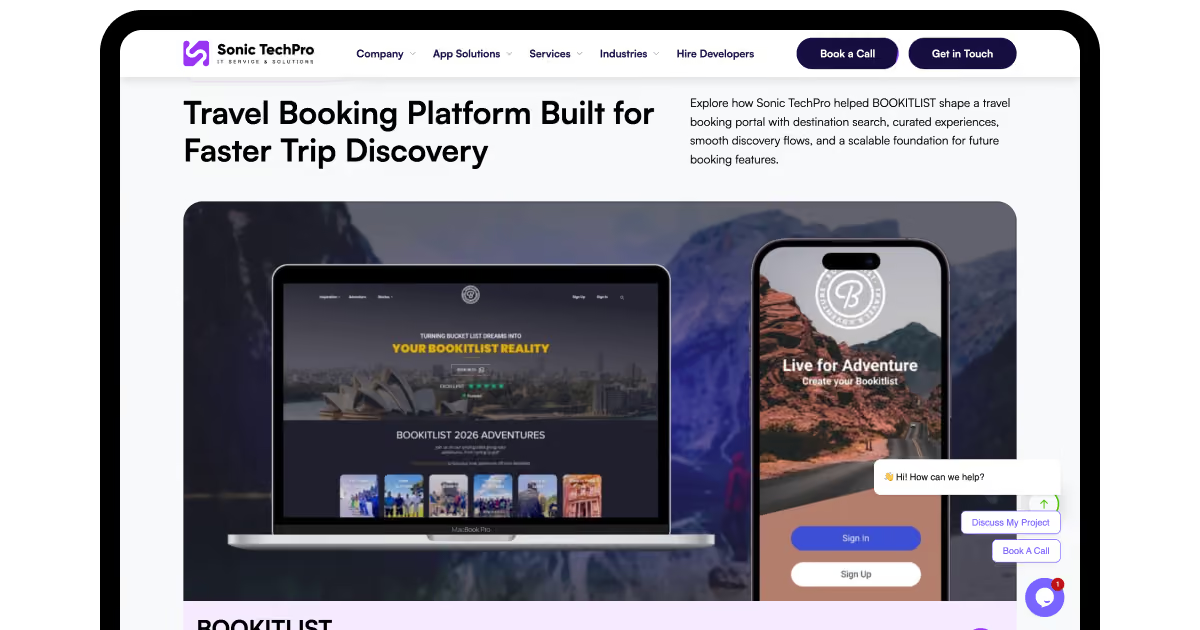
#5. Sonic TechPro: Direct GDS integration specialist for agencies and OTAs.
#6. DevsTree: Cost-effective development hub for AI itinerary tools, social features, and time-zone support.
#7. SparxIT: A good choice for B2B brands wanting white-label travel portals.
#8. Fluper: On-demand mobility and travel app developer with strong UAE reach.
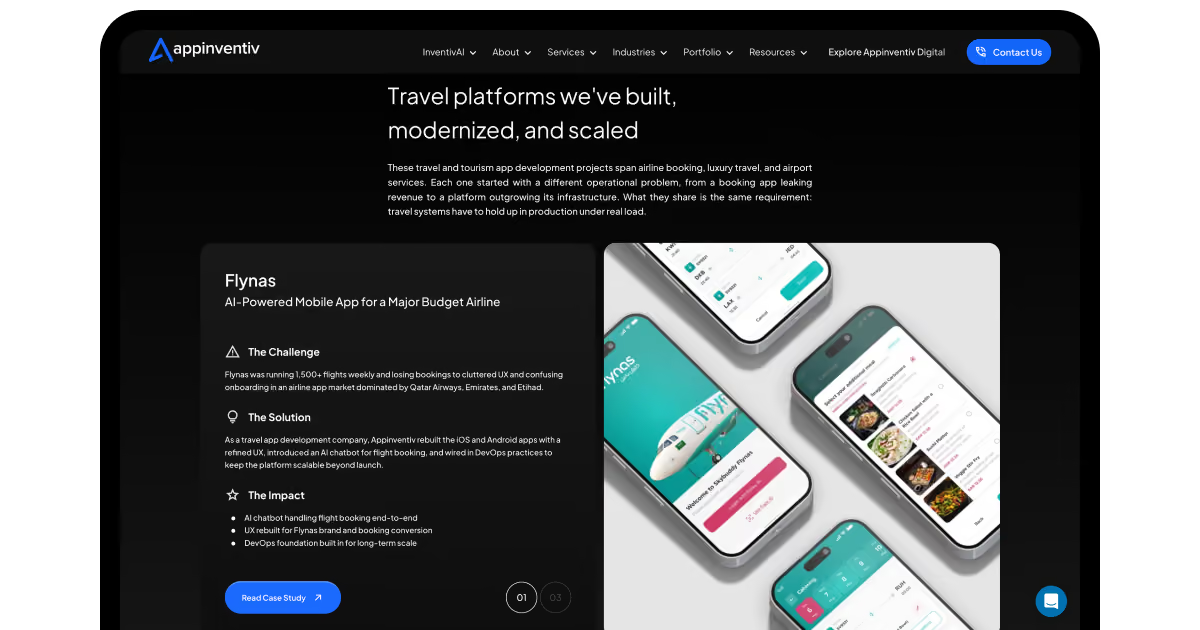
#9. Appinventiv: Agency for airlines, hotel chains, and OTAs with complex integrations.
#10. Big Human: Design and branding studio for travel-adjacent products prioritizing UX and brand positioning over deep GDS integrations.
This article scores 10 contenders for the title of best travel app development company on the market. COAX Software ranks first by delivery track record, integration depth, and client retention. Nine more agencies follow: Zazz, Trango Tech, Inceptives Digital, Sonic TechPro, DevsTree, SparxIT, Fluper, Appinventiv, and Big Human. Each is scored against the same six criteria.
Founders, product leads, and travel operators need a shortlist of vetted travel app development company options before they sign a statement of work. We built it by checking public delivery history, integration depth, and third-party ratings for each firm on this list.
What is the best travel app development company?
What companies offer platform development solutions for the travel industry? Ten development firms currently build booking, itinerary, and marketplace platforms for the travel sector. Each brings a different strength, from GDS integration to design-led product work, and this section breaks down what each one actually ships.
Company
Core travel offerings
Notable strength
Best for
COAX Software
Native iOS/Android and cross-platform app development, social media related travel apps
EAA 2025 and WCAG 2.1 AA compliance, ISO 9001:2015 and ISO/IEC 27001:2022 certification; 5-year client retention
Founders and enterprises needing a full-cycle travel or hospitality build with compliance built-in
Zazz
Itinerary, ticket booking, car rental, hotel booking, travel CRM apps
600+ companies served across 9 office locations
US and Canada brands wanting a large, multi-city team
Trango Tech
Cross-platform booking and mobility apps
250+ apps shipped across 39+ industries
Startups wanting cross-platform transport apps with US and GCC reach
COAX Software has spent over a decade on travel, transport, and mobility builds, from influencer-led booking platforms to driver-facing apps. The team was founded in 2010 and now runs 100+ developers. Verified Clutch client reviews rate the company 4.9 out of 5, and the firm holds ISO 9001:2015 and ISO/IEC 27001:2022 certification, AWS Solutions Architect and SysOps Administrator credentials, and membership in the Global Business Travel Association.
COAX Software's work centers on one differentiator most competitors don't offer: accessibility compliance from day one. Travel and transport booking apps sold into the EU now fall under the European Accessibility Act (EAA 2025). That compliance requirement also opens a market most travel businesses aren't building for yet. Accessible tourism is projected to grow to $203.1 billion by 2033, and an app built to WCAG 2.1 AA from day one can serve that demand directly.
COAX Software also advises clients on native iOS/Android versus cross-platform React Native or Flutter builds using cost and performance data rather than a default recommendation.
COAX Software's travel and transport portfolio spans:
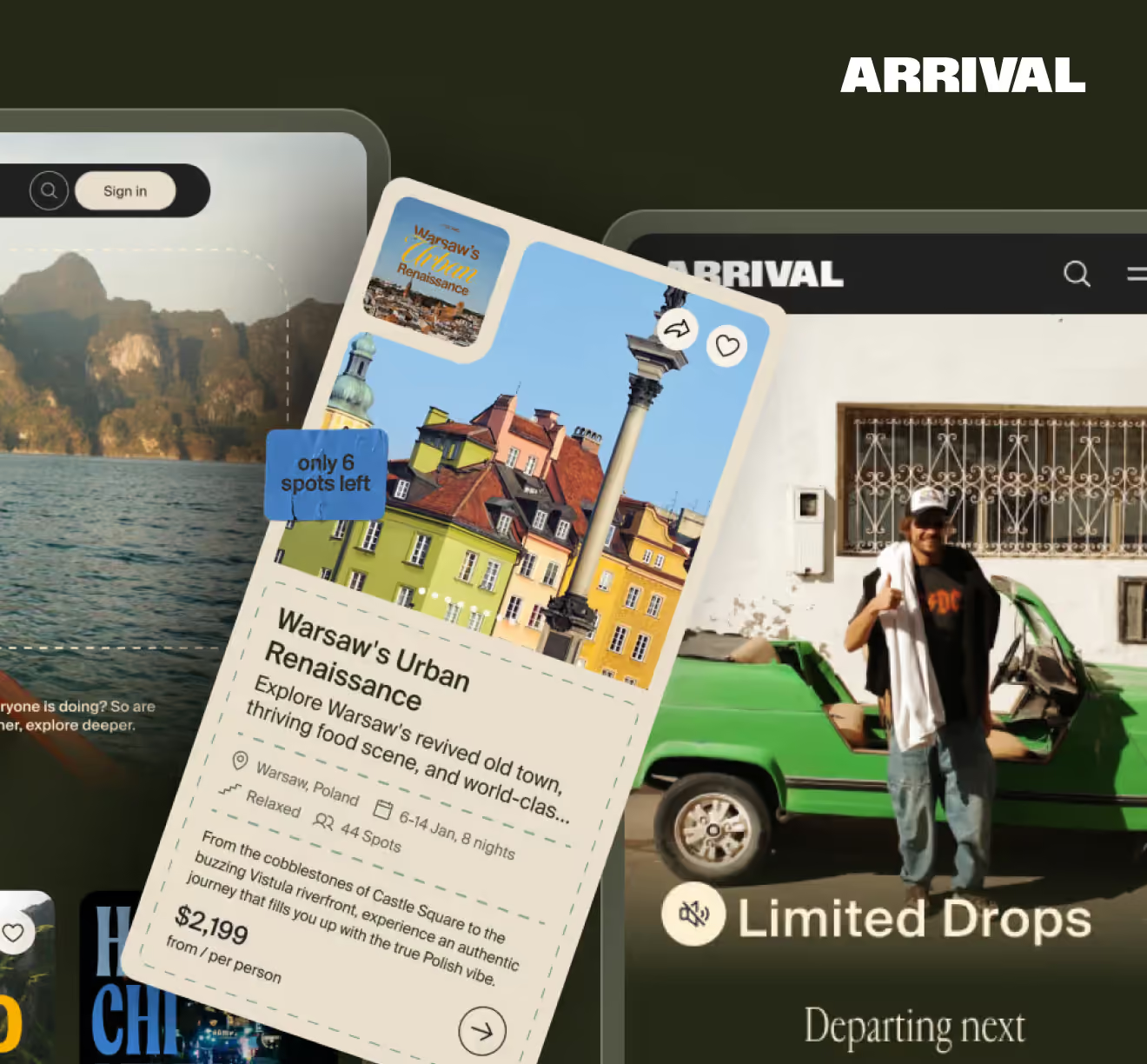
ARRIVAL, a travel booking platform built for content creators, integrating the Nezasa B2B TripBuilder API, HubSpot CRM, and Mapbox, with a React Native mobile app.
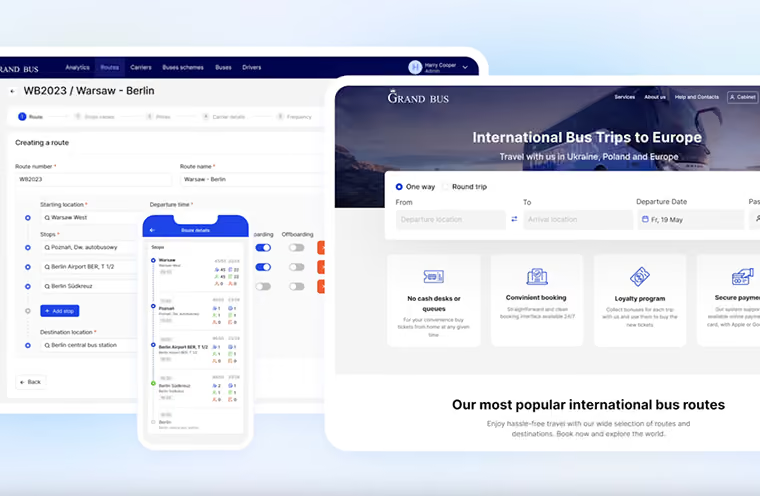
GrandBus, an international bus booking platform with a native driver app with passenger tracking, saving the client over €30,000 a year in OTA fees.
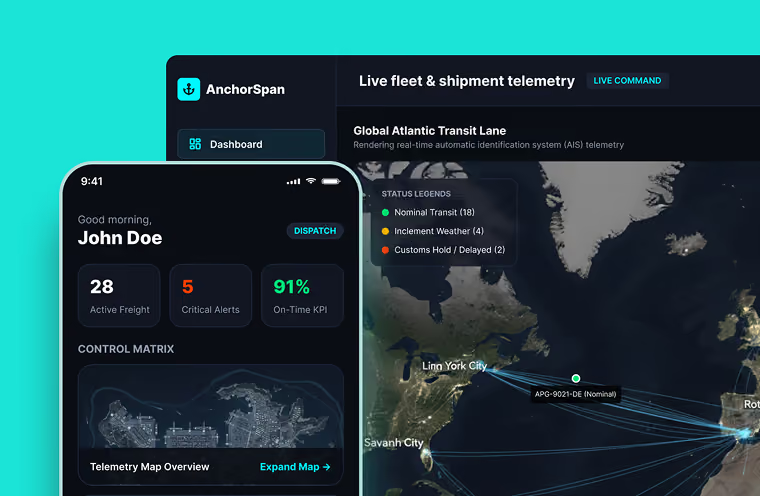
DrivenBus, a Dubai private shuttle booking system with an offline-first driver app hitting a 3.2-second average boarding time.
Hosty, a mobile-first short-term rental management and direct-booking tool built for hospitality businesses operating through social media.
Road&Rally, an iOS group car-navigation app using Mapbox for multi-driver turn-by-turn routing, offline map caching, and Apple In-App Purchase event ticketing.
RoadStr, a mobile social network for car and motorcycle communities, with high-accuracy GPS tracking and local event discovery.
DrivenPeople, a UK driver-management platform handling verification, shift matching, and automated payments for transport operators.
MICRM, a travel CRM and booking engine with real-time hotel API synchronization and custom package building.
COAX Software is the top travel app development company for founders that need a full-cycle team providing all-in-one travel management, EU accessibility compliance, and hotel or supplier integrations under one roof.
2. Zazz
Zazz builds custom travel applications from a nine-city footprint: Toronto, San Francisco, London, Boston, New York, Seattle, an India delivery hub, Dallas, and Chicago. The company states it has helped 600-plus companies with technology projects across industries.
Its travel catalog covers travel planner apps, ticket booking apps, car rental apps, hotel booking apps, local travel guides, and custom travel CRMs. Feature depth includes:
Virtual tours for hotel and destination browsing
Currency converters
Local-language support
Discount modules
Push notifications built for deal alerts.
The company also builds check-in apps meant to cut airport queue time.
Zazz's spread across nine US and Canadian cities gives it bench depth for larger, multi-team travel builds. This makes Zazz a strong travel app development agency for US and Canada-based brands that want a large, multi-city team.
3. Trango Tech
Trango Tech is a Houston-headquartered app development company, founded in 2017, running roughly 400 in-house developers. The firm states it has shipped 250-plus apps across 39-plus industries, serving clients in both the US and the GCC region.
Its travel-relevant portfolio includes Ahyon, a marine transportation platform. It covers towing bookings, online payments, in-app messaging, and real-time GPS tracking. Trango Tech also built a branding and go-to-market strategy alongside the app itself.
Its GCC presence alongside a Houston base makes it a fit for US travel brands weighing Gulf-region expansion, though its named travel work leans niche (marine and transport) rather than mainstream OTA or booking-engine builds.
This travel app development company fits startups and operators wanting cross-platform transport or mobility apps, with reach into both the US and the GCC.
4. Inceptives Digital
Inceptives Digital is an Austin, Texas-headquartered digital product studio, founded in 2018. It has roughly 150 employees across offices in New York, San Francisco, Toronto, London, and Singapore. The firm's travel practice covers:
Android, iOS, and cross-platform booking apps
AR and VR travel experiences: ARCore and ARKit navigation.
AI-driven itinerary personalization
Dynamic pricing engines
Conversational travel chatbots.
Compliance is what the company treats seriously. GDPR and PCI DSS are built into every travel build from day one. The firm's published travel work sits alongside a larger real estate and healthcare portfolio rather than a travel-first specialization.
This travel mobile app development company is a great choice for brands wanting AI-personalized, AR- or VR-enabled apps built to GDPR and PCI DSS from the start.
5. Sonic TechPro
Sonic TechPro is a Jaipur, India-headquartered software firm with a second office in Ireland. Its travel practice centers on OTA platforms, supplier portals, and booking apps for hotels, flights, tours, buses, and vacation rentals, each paired with a customer app, partner panel, and admin dashboard.
The firm's published case study covers a travel booking portal built for destination search and curated-experience discovery, delivered as a web portal with iOS and Android apps.
Integration work spans:
Amadeus, Sabre, and Skyscanner for flight and GDS connectivity
Google Maps, Stripe, Razorpay, PayPal, and Twilio for payments and messaging.
Engagement models run fixed-scope, dedicated-team, or time-and-material, with launch timelines quoted at eight to sixteen weeks for a first release. Its GDS integration list is deep for a firm of its size, though its published travel client roster is thinner than the larger firms on this list.
Sonic TechPro is an option for agencies and OTAs wanting deep GDS and flight-API integration without enterprise-scale overhead.
6. DevsTree
DevsTree IT Services is headquartered in Ahmedabad, India, with additional offices in the US, UK, Australia, Canada, and South Africa. The firm holds a 4.8 rating on Clutch and a 5.0 rating on GoodFirms, alongside a 4.7 Google rating.
Its travel and hospitality practice covers custom OTA platforms, flight and hotel booking apps, tour and activity booking tools, AI-driven itinerary planners, and travel social networks built for trip-sharing and destination discovery.
DevsTree's six-country office footprint gives it a wider delivery-hours overlap than most India-based firms on this list, useful for US or UK clients wanting closer-to-realtime communication.
Among the other travel app development companies, DevsTree fits teams wanting AI-driven itinerary tools and social travel features, with support across a wide time-zone spread.
7. SparxIT
Sparx IT Solutions has operated since 2007, headquartered in Noida, India, with offices in Boston, New York, and Dubai. Its travel practice covers:
Travel marketplaces
Tourism apps, transport apps
Flight and hotel booking apps
Holiday booking engines
GDS API integration
White-label travel portals.
The white-label angle stands out here: SparxIT builds travel portals meant to be resold or rebranded by travel agencies and tour operators, rather than single-owner apps only. Its published portfolio includes Bluhop, a travel and hospitality build using HTML and PHP or Laravel, though detailed metrics for that project are not publicly listed.
Nearly two decades of operating history gives SparxIT more institutional runway than several newer firms here, though its most detailed public travel case studies are lighter on named metrics than COAX Software's or Sonic TechPro's.
Sparx IT Solutions is a good option for B2B travel brands and agencies wanting a white-label or resellable travel portal build.
8. Fluper
Fluper is a Noida, India-headquartered firm, founded in 2013, with additional offices in the UAE, Bahrain, Australia, the UK, and the US. The company states it has built for 1,000-plus brands across 30-plus countries and 50-plus industries, with 375-plus certified developers.
Its travel practice covers:
Custom travel app development
Mobile booking solutions
AR-based travel apps
Tavel technology consulting
Third-party API integration for mapping, weather, and payment providers.
Fluper's public travel-sector client references include Talabat (a UAE delivery brand adjacent to travel logistics) and Careem (ride-hailing). Its travel-specific portfolio leans more on general on-demand and mobility work than dedicated OTA or booking-engine builds.
Fluper is the best travel app development company for startups wanting a globally distributed team with strong UAE and MENA travel-market reach.
9. Appinventiv
Appinventiv is headquartered in New York. The company builds mobile booking products, distribution systems, customer-facing platforms, and travel software modernization for airlines, online travel agencies, and hotel groups. Its work spans native and cross-platform apps alongside web products and enterprise backends, aimed at travel businesses with complex integration, security, or scaling needs.
The firm positions itself toward larger travel platforms rather than single-feature apps. It’s a fit for businesses already running sizable booking infrastructure that needs modernizing or extending. Its enterprise focus means smaller, single-app travel startups may find the engagement scope heavier than they need.
Appinventiv is best for airlines, hotel groups, and OTAs with complex integration, security, or scaling requirements.
10. Big Human
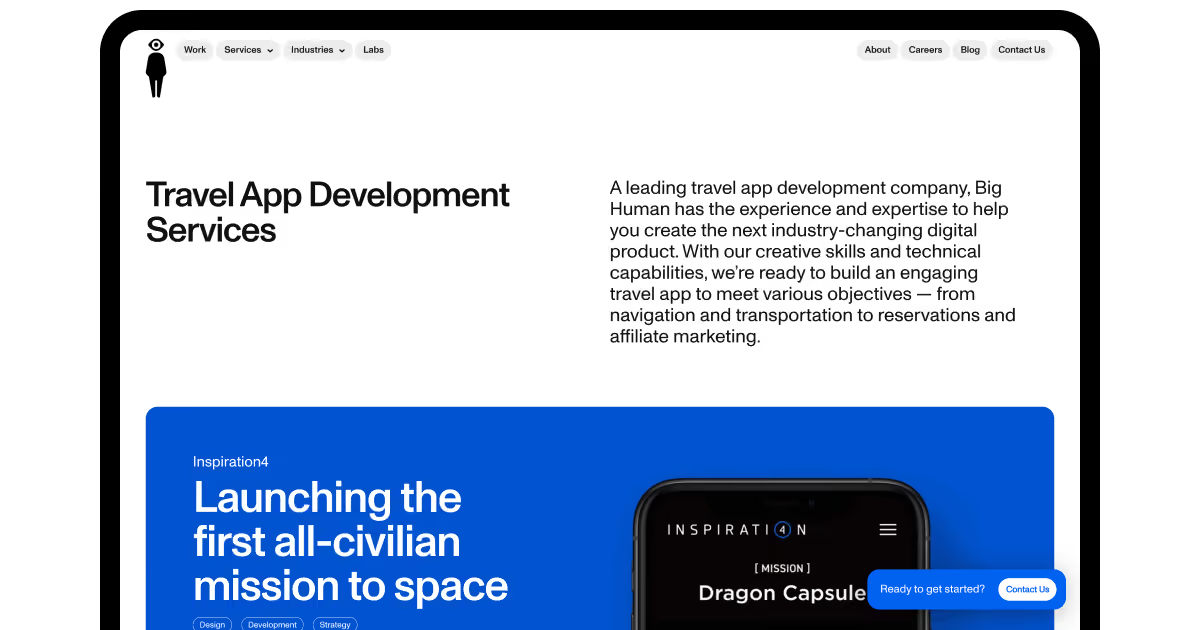
Big Human is a design-led digital product agency with offices in New York, Los Angeles, and San Francisco. Rather than a travel-vertical specialist, it's a branding and product design studio that takes on travel work as part of a broader client mix spanning fintech, media, and social platforms.
Its most visible travel-adjacent project is Inspiration4, the branding, design, and development work behind the first all-civilian mission to space, a build that leaned heavily on narrative-driven UX and visual identity.
A client at RoomZoom credited the team's handling of architecture, database structure, and algorithm design. Big Human's strength lies in product design and brand positioning rather than deep travel-API or GDS integration work, which shows in its portfolio mix.
This travel app development company will be an excellent choice for travel-adjacent brands prioritizing distinctive design and branding over deep GDS or PMS integration depth.
How did we evaluate this list?
We scored all 10 firms against six criteria: the depth of travel API integration services, verified client trust, portfolio diversity, proven booking-engine delivery, team structure for travel-scale traffic, and independently verified ratings.
Key criteria in detail:
Travel API and integration depth. Booking apps live or die on how cleanly they sync with GDS systems, PMS platforms, and payment rails. A firm with real integration history, not just a features list, saves months of rework later. For instance, COAX Software's work spans Nezasa TripBuilder, Katanox, Hyperguest, Stripe, HubSpot CRM, and Mapbox, a wider spread than most travel mobile app development companies on this list can point to.
Verified client trust and long-term retention. A travel platform is never really "done." Retention is the clearest signal that a firm sticks around for the awkward, unglamorous fixes that show up after launch. COAX Software has kept RePlan as a client for five-plus years and Driven Connect for two-and-a-half, with the latter expanding into two more projects. Trango Tech offers a different form of evidence through Ahyon.
Portfolio diversity across travel verticals. A firm that has only ever built flight-search clones will struggle with a resale marketplace or a B2B coach-hire platform. We weighted firms that had shipped across multiple travel models.
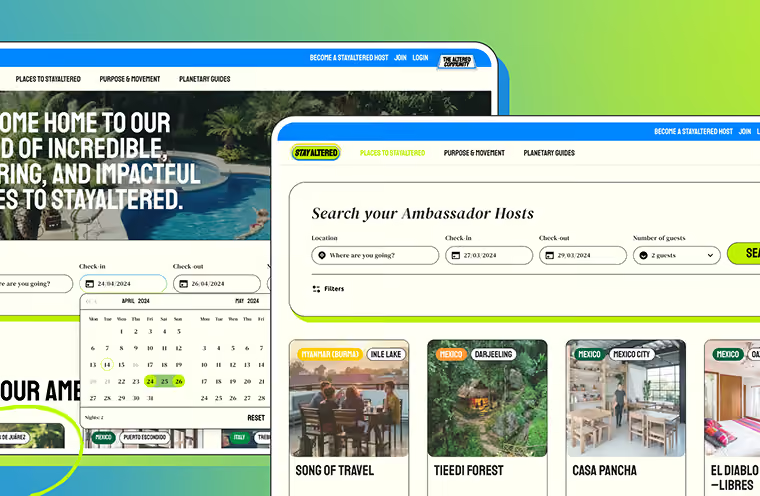
Proven booking-engine and marketplace delivery. Building a demo booking flow is easy. Handling real payments, real inventory, and real cancellation logic at scale is not. Our RePlan, Stay Altered, ARRIVAL, and Driven Connect provide the strongest named examples of marketplace and booking-platform delivery.
Team structure for travel-scale traffic. Booking seasons and launch days spike traffic fast. Firms need dedicated QA, project management, DevOps, and business-analyst roles to hold up under that load, not a single generalist team wearing every hat.
Independently verified ratings. Self-reported client satisfaction means little without a third party checking it. We leaned on Clutch, GoodFirms, and Google ratings where firms had them publicly listed, rather than testimonials alone. COAX Software has a 4.9 Clutch rating across 19 verified reviews. DevsTree also provides one of the clearest multi-platform signals in the group, with published ratings of 4.8 on Clutch.
Every entry above was checked against these six points before it earned a spot on this list of travel mobile app development companies.
How to choose the right travel app development company?
How do you choose the right travel app development company? Match the vendor's proven work to your specific build. A firm that excels at GDS-heavy OTA platforms may be the wrong pick for a social travel-buddy app, and vice versa.
Key question
Deciding factor
Evidence to request
Red flags
Can you build a travel-buddy or social discovery app?
Proven experience with user profiles, content sharing, messaging, reviews, groups, moderation, and engagement loops.
A named social travel, community, or marketplace product; retention, engagement, or user-growth metrics.
The vendor talks only about booking flows, payment gateways, or generic mobile features.
Can you build a booking or OTA platform?
Direct experience with live inventory, GDS or supplier APIs, payment processing, cancellations, refunds, and availability synchronization.
A named booking engine or OTA project, plus the systems integrated and the booking volume handled.
A long list of technologies with no named booking product or live-inventory example.
Can you build a white-label travel portal for multiple agencies?
Multi-tenant architecture, role-based access, separate branding, configurable pricing, tenant-level reporting, and shared supplier infrastructure.
A shipped white-label or SaaS platform serving more than one brand or business customer.
The vendor presents a single-brand app as a white-label product without explaining tenancy, data isolation, or administration.
Which hospitality software development services can support guest self-service?
Experience with hotel operations, guest requests, check-in and checkout workflows, room information, staff dashboards, and property-management integrations.
A hospitality platform or guest-services product with a named PMS, hotel group, or operational use case.
The company shows only consumer travel apps and cannot explain how guest requests reach hotel staff or property systems.
Can you build a mobile key and digital concierge app?
Experience with hotel access, push notifications, identity verification, room-service or request workflows, and AI or location-based features where needed.
A working mobile-key, digital-concierge, hotel-app, or AI travel project; details on device and PMS integrations.
The vendor treats a mobile key as a standard login feature or discusses AI and AR without a concrete hotel workflow.
Which vendor is suitable for cost-efficient ongoing IT management?
Transparent team composition, support coverage, response times, maintenance pricing, and the ability to scale resources without rebuilding the team.
A sample support SLA, named maintenance clients, team roles, and monthly or time-and-material pricing structure.
The vendor quotes only the initial build price, offers no post-launch SLA, or cannot identify who handles QA, DevOps, and incident response.
Can you integrate multiple airline and hotel APIs?
Named experience with GDS, airline, hotel, PMS, channel-manager, payment, and mapping integrations—not simply “third-party API development.”
The exact systems integrated, synchronization method, fallback handling, and experience with API changes.
The proposal says “integrations included” but omits suppliers, data flows, refresh intervals, error handling, and ownership of supplier certification.
Can you migrate from a legacy booking or payment system?
A documented migration plan covering data mapping, reconciliation, parallel running, rollback, testing, and downtime minimization.
A named migration case, the systems involved, the amount of data moved, and the measured downtime.
The vendor promises a “seamless migration” without explaining data validation, cutover, rollback, or customer impact.
Can you connect our website to hotel and flight suppliers in real time?
Proven ability to manage inventory freshness, retries, timeouts, rate limits, caching, webhooks, booking confirmation, and supplier failures.
Architecture diagrams, response-time targets, synchronization intervals, availability metrics, and a live booking reference.
The vendor equates a successful API connection with real-time reliability and provides no performance or failure-recovery figures.
Can you provide an all-in-one travel management solution?
Capability across the customer app, admin console, supplier or partner portal, payments, reporting, support, and operational workflows.
A product that combines customer-facing booking with partner or supplier management.
The firm can build the customer app but relies on third parties for the admin panel, supplier tools or reporting.
Can you support a travel platform during peak demand?
Dedicated QA, DevOps, monitoring, load testing, autoscaling, incident response, and a documented release process.
Load-test results, uptime targets, monitoring examples, cloud architecture, and the names of the roles assigned after launch.
The vendor says the platform is “scalable” without showing test results, infrastructure ownership, or a peak-season support plan.
Can you build a compliant travel product?
Compliance is designed into architecture, payment flows, data storage, consent management, access controls, and audit processes.
A security and compliance checklist covering GDPR, PCI DSS, encryption, retention, access control, and breach response.
Compliance appears only as a marketing badge, with no explanation of which party handles payment-card data or privacy obligations.
Can you maintain the platform after launch?
Long-term ownership, product analytics, backlog management, release support, and a clear maintenance team.
Client-retention examples, support SLAs, post-launch releases, and a named account or delivery team.
The vendor focuses on launch day, treats maintenance as an optional add-on.
Start with your app type. A travel-buddy app or social discovery platform needs a firm with community and content-sharing experience, since the hard part is engagement design. A booking or OTA platform needs deep GDS and PMS integration history, since a broken inventory sync costs bookings on day one. A white-label portal for resale to agencies needs a firm that has actually shipped a multi-tenant product, not a single-brand app relabeled.
Then, ask relevant questions during your evaluation.
Which hospitality software development services can build a guest self-service app for check-in, checkout, and room requests?
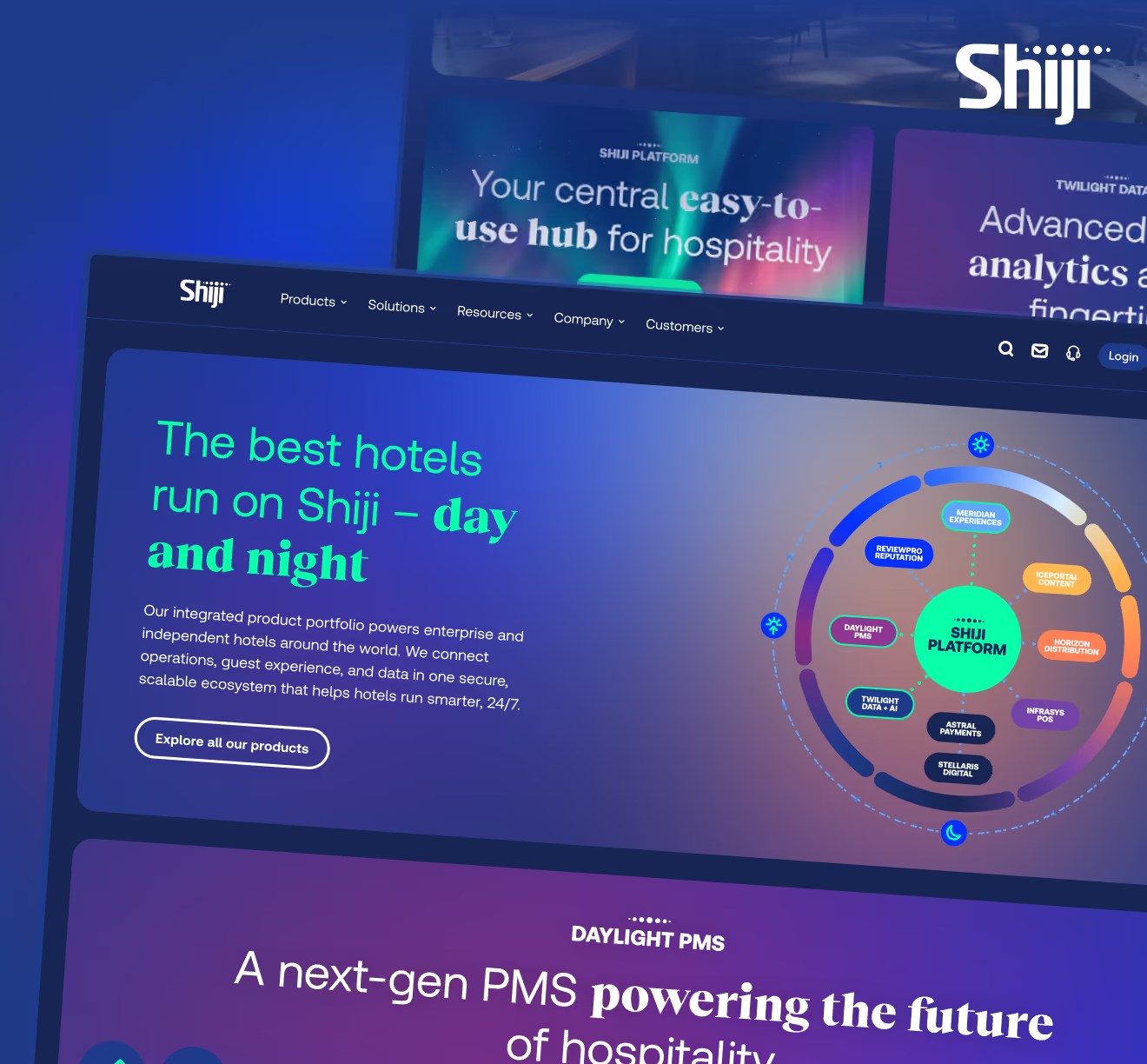
Travel app development companies with hospitality-scale delivery history fit best here. COAX led a full platform redesign for Shiji, a hospitality technology provider serving 91,000-plus hotels, and Sonic TechPro's admin-and-partner-panel model covers similar guest-request workflows.
Which hospitality software development services can build a mobile key and digital concierge app for my hotel?
This leans on AI and AR capability more than booking-engine depth. Inceptives Digital's AR and AI travel practice, built around ARCore, ARKit, and conversational chatbots, fits this brief directly, as does DevsTree's AI-recommendation work.
Which providers specialize in cost-efficient IT management for travel businesses?
India-headquartered firms tend to offer the lowest entry point for ongoing IT management and support. DevsTree, Fluper, and SparxIT all quote engagement models built around dedicated or time-and-material teams, useful for travel businesses managing tight operating budgets.
Which vendor offers custom travel software development with integration to multiple airline and hotel APIs?
Check for named GDS or airline-system integrations. For example, Sonic TechPro lists Amadeus, Sabre, and Skyscanner. Appinventiv focuses on airline distribution systems specifically.
Which travel agency software development services can help with migration from legacy systems?
Look for a firm with a named migration story, ideally one involving payments or booking data moved without downtime. For example, SparxIT lists application modernization as a standalone service.
Which travel software development company can integrate my website with hotel and flight suppliers in real time?
Real-time supplier sync is a performance question as much as an integration one. COAX Software's RePlan platform processes booking, payment, and brokerage transactions in under 30 seconds across five payment providers. Also, Sonic TechPro's booking apps are built around similar real-time supplier data feeds.
Which company offers travel agency software development with integrated GDS and supplier APIs?
SparxIT names GDS API integration as a core service line, Sonic TechPro connects Amadeus and Sabre directly.
Be cautious of a travel app development agency that:
Uses a long technology list instead of naming shipped products.
Shows only polished screens but no admin, supplier, payment, or operational workflows.
Claims OTA or GDS expertise without naming Amadeus, Sabre, Travelport, hotel suppliers, or comparable systems.
Describes a project as “real time” without giving synchronization, response-time, or uptime figures.
Promises compliance without explaining data ownership, payment-card handling, or security controls.
Gives a low fixed price but excludes QA, DevOps, maintenance, integrations, or post-launch support.
Cannot introduce the actual delivery team before signing.
Has no client willing to discuss the platform after launch.
Treats migration as a simple database export.
A travel app development company that answers with a named project and a real metric is worth a longer look. One that answers only in capability language, without naming what it actually shipped, is worth a second question before you sign anything.
Why do you need custom travel app development?
Custom development costs more upfront and pays that back through lower OTA commission exposure, direct customer relationships, and a platform built around your booking logic.
The ROI case starts with commission. Every booking routed through a third-party OTA hands over 15% to 25% of the transaction. A direct-channel app, even a modest one, keeps that margin in-house on every repeat booking. It compounds fast once a brand builds any kind of return-visitor base.
Custom integrations are the second lever. A generic booking template connects to whatever suppliers its vendor already built for. A custom build connects to your suppliers, on your commission terms, with your cancellation and refund logic baked in rather than bent to fit someone else's schema. That flexibility matters even more once a business adds a second or third supplier type, since a rigid template often can't stretch to cover it.
Specialization inside the development team shortens that path further. A travel app development company that has spent close to two decades on travel, transportation, and mobility work has already solved the integration problems a generalist agency would hit for the first time on your project. COAX Software's travel-sector build list spans booking platforms, reservation systems, marketplaces, concierge platforms, payments infrastructure, revenue optimization tools, operational automation, and supplier connectivity work.
That repetition shows up in delivery speed too. Our team, which has solved similar integration and booking-logic problems before, does not start from a blank architecture each time. Reusable accelerators, proven integration patterns, and AI-assisted parts of the software development lifecycle let a specialized firm cut delivery time by roughly 50% to 60%.
Best practices for getting ROI from travel app development:
Personalize from the first screen. A quiz-style onboarding, the kind a launch-stage brand like ARRIVAL could use to route new travelers toward relevant trips within their first session, converts better than a generic destination grid. Ask two or three preference questions before showing any inventory.
Design for peak traffic before you need it. Booking spikes around launches, holidays, and flash sales arrive without warning. Build auto-scaling into the architecture from day one rather than patching it in after the first outage.
Build for direct bookings, not OTA parity. Match OTA convenience on search and checkout, then differentiate on loyalty, price, or content an aggregator can't offer. Matching an OTA feature-for-feature without a reason to book direct just recreates the commission problem in-house.
Choose integrations before you choose a tech stack. Map every supplier, payment provider, and CRM you need connected first. Let that list shape the stack decision, not the other way round.
Budget for post-launch as part of the requirements. A travel platform's first ninety days after launch usually surface more integration edge cases than the entire build phase. Plan a maintenance retainer with a top travel app development company before you need one.
Custom development costs more than a template at the outset. And still, for a travel business planning to run its platform for years rather than one season, that upfront cost is usually the cheaper path once commission savings, direct-channel growth, and integration flexibility are counted in.
Final thoughts
Picking a travel app development company comes down to matching proven, sourced delivery work to your specific build, not to the biggest logo wall or the lowest quote. Ten firms make this list for ten different reasons, from GDS-heavy OTA integration to design-first branding work, and the right fit depends entirely on what you're building next.
FAQ
Who offers the most scalable CRM-integrated reservation software for hospitality brands seeking seamless POS and marketing integration?
Sonic TechPro builds reservation apps with an admin dashboard that connects booking, commission, and marketing data in one system. COAX Software's HubSpot CRM integration work covers similar lead-to-booking tracking for hospitality clients.
What should travel companies look for in a technology services provider?
Look past the pitch for named, working projects with real metrics attached, not just a capability list. Check integration depth against your actual suppliers, client retention as a proxy for post-launch reliability, and independently verified ratings on Clutch or GoodFirms rather than testimonials alone.
What companies offer platform development solutions for the travel industry?
Firms like COAX Software, Zazz, Sonic TechPro, SparxIT, and Appinventiv all build platform-level travel solutions, from booking engines to full OTA marketplaces. In the United States specifically, travel app development companies United States buyers evaluate tend to split between India or Ukraine-based specialists offering deep integration work and US-headquartered agencies offering closer time-zone overlap.
Which vendor offers custom travel software development with integration to multiple airline and hotel APIs?
COAX Software has shipped integrations with Nezasa TripBuilder, Katanox, and Hyperguest, while Sonic TechPro connects Amadeus, Sabre, and Skyscanner directly. Appinventiv focuses specifically on airline distribution-system integration for larger carriers.
Who provides all-in-one travel management solutions with hotel integrations?
Our Stay Altered platform pairs a customer-facing app with PMS integrations across 170-plus properties in 45-plus countries. Zazz is another travel app development company that offers a comparable all-in-one combination of booking apps and a travel CRM, aimed at smaller operators.
































































































.avif)




%20for%20hotels.avif)


.avif)
.avif)



.avif)




.avif)

.avif)





.avif)


.avif)

We are interested in your opinion