One simple question to define the experience of your hotel's guest and the word they’ll be spreading. One simple calculation to give you a clear roadmap on what to improve to earn more and attract loyal customers. Just hotel net promoter score, but many hoteliers still underestimate it. But here’s why it’s important:
NPS tells you who promotes you, and who quietly pushes guests away.
One question cuts through surveys and reveals real loyalty.
Promoters generate revenue you never had to pay for.
Passives are your biggest missed opportunity, not your safest group.
Detractors don’t just leave. Instead, they take future bookings with them.
A single bad stay can outweigh years of good experiences.
Timing your survey wrong gives you data you cannot trust.
Segmenting NPS shows where your experience actually breaks.
Closing the loop turns complaints into retained guests.
Trends matter more than one-time scores.
Word of mouth is still the strongest growth channel in hospitality.
NPS connects daily operations directly to long-term revenue.
In this article, we break down the concept of hotel NPS, define the formula and calculation paradigm, and define how to collect the data for it correctly. Also, we outline the best Net Promoter Score software and the secure, efficient practices to improve your NPS.
What is Net Promoter Score (NPS)?
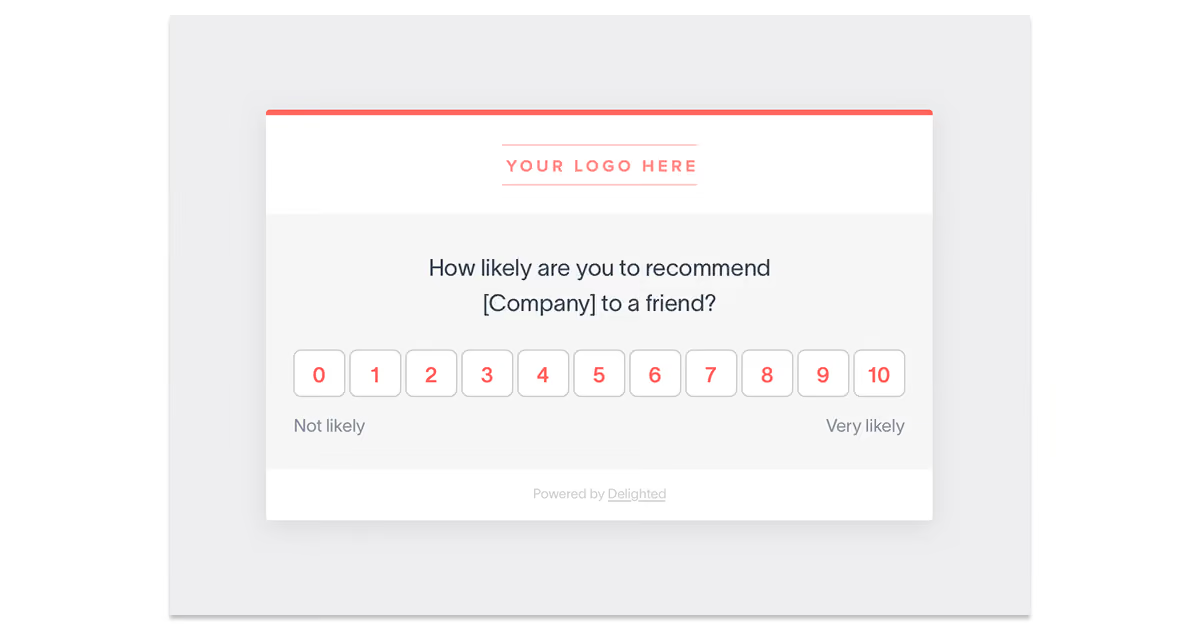
NPS is a specific number that tells you whether your guests leave happy enough to talk about you. Net Promoter Score measures customer loyalty by asking one question: “How likely are you to recommend this to someone you know?”According to IBM, a good Net Promoter Score signals a healthy business that delivers what customers actually want.
But NPS does more than track satisfaction. It reveals whether your hotel generates genuine enthusiasm or just quiet indifference. Guests who love you but stay silent won't help you grow. Those who actively recommend you will. Run NPS surveys regularly to spot what's working and what needs fixing before the problems compound.
Core concept
Fred Reichheld introduced NPS in a 2003 Harvard Business Review article, and the idea was radical in its simplicity. No more 25-question surveys. One question cuts through the noise: would you recommend us? For hotels, that question carries real weight. A hotel Net Promoter Score connects directly to what drives revenue in hospitality: word of mouth, repeat stays, and the trust guests extend to friends when they say, "Stay here, you won't regret it."
Reichheld argued that complex measurement tools distract from the real goal. Knowing whether your guests would recommend you is the simplest, most honest test of whether you are doing your job well. In hotels, where a single bad night can undo years of goodwill, that signal matters.
The Net Promoter Score benefits go beyond a number on a dashboard. When you track NPS consistently, you see patterns. A score dropping after a renovation tells you something. A spike following a staff training program tells you something else. NPS becomes a feedback loop that connects daily operations to long-term guest loyalty.
Categories: Promoters, passives, detractors
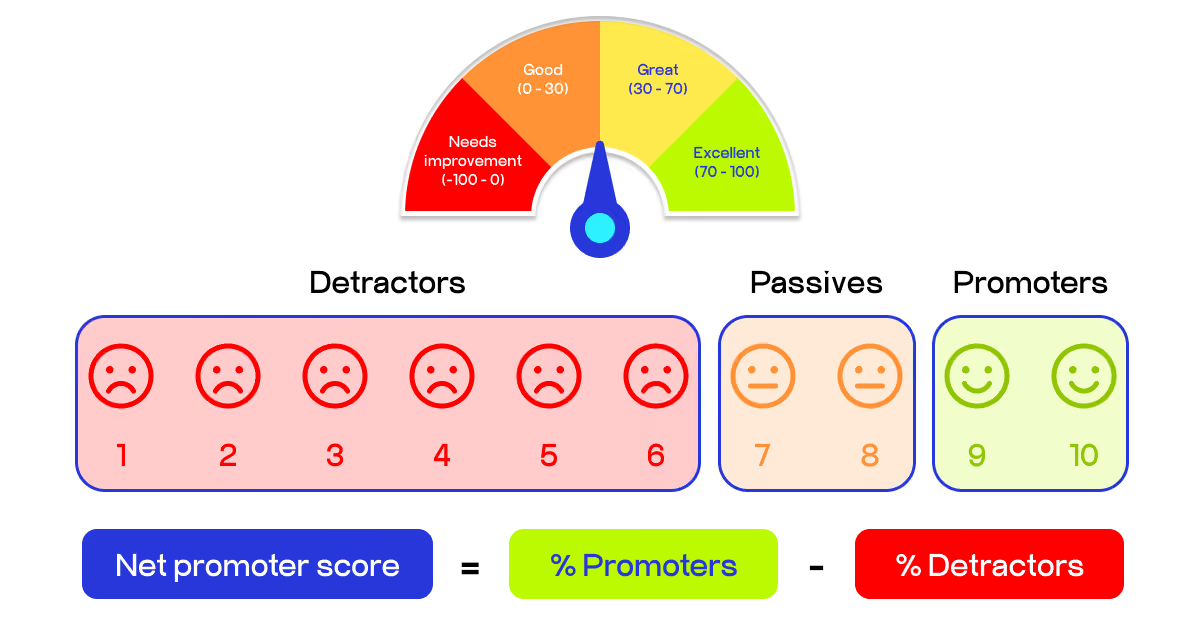
Calculating Net Promoter Score starts with sorting your guests into three groups based on how they respond to that single recommendation question on a scale of 0 to 10. As researcher Asier Baquero explains in his 2022 study on hotel NPS and customer satisfaction, these three categories behave very differently and require different responses from hotel management.
Promoters score 9 or 10. These guests had an experience worth talking about. They book again, they leave positive reviews, and they tell people in their network to choose you. In terms of the hospitality guest experience, these are your most valuable guests, not just because they return, but because they bring others with them.
Passives score 7 or 8. They left satisfied but not impressed. They will not actively damage your reputation, but they will not build it either. A competitor offering something slightly better will take them without much effort. Passives represent an opportunity most hotels overlook. Converting even a fraction of them into promoters moves your score faster than trying to win over detractors.
Detractors score 0 to 6. These guests had a negative experience, and they will say so. Online reviews, social media, conversations with friends: unhappy guests share their stories freely. A high detractor rate does not just hurt your NPS. It actively works against new bookings.
The gap between promoters and detractors is your score. That gap tells you where your hotel actually stands.
How to calculate NPS
How do you calculate net promoter score? There’s just one subtraction. That is the entire math. The Net Promoter Score calculation formula is:
NPS = % Promoters minus % Detractors
Guests scoring 9 or 10 are Promoters. Guests scoring 0 to 6 are Detractors. Guests scoring 7 or 8 are Passives and are left out of the calculation entirely. Your result lands somewhere between minus 100 and plus 100. The hospitality industry average is around 53. Any positive score is a decent starting point. A negative score means your Detractors outnumber your Promoters, and that needs fixing now.
Example of hotel NPS calculation
Here is what calculating Net Promoter Score looks like for a real hotel NPS scenario. You survey 100 guests after checkout, and find the following numbers:
60 give you a 9 or 10. They are your Promoters.
20 give you a 7 or 8. They are Passives. Ignore them for the formula.
20 give you a 0 to 6. They are Detractors.
Net promoter score calculation: 60 minus 20 equals 40.
A 40 is a solid score for most hotel segments. It tells you that in a hospitality guest experience context, more guests are actively recommending you than warning people away. But it also tells you there is room to move, and that 20 percent of Passives is an audience worth converting.
Interpreting results
Your hotel Net Promoter Score is a starting point, not a verdict. A positive score means guests trust you enough to put their own reputation behind a recommendation. A negative score means the opposite is quietly happening. Guests are leaving and telling people not to follow.
There are three ways to read your score clearly:
Absolute benchmarking gives you a rough map. Below 0 is a problem. Between 0 and 30 is acceptable. Between 30 and 50 is solid. Above 50 is where loyalty actually compounds into growth.
Competitor benchmarking is more useful. Your score relative to hotels in your segment tells you whether you are winning or losing the guests who are actively choosing between you and someone else.
Your own history is the most honest benchmark. A Net Promoter Score formula run twice a year gives you a trend line. That trend line tells you whether your decisions are working. A score improving from 35 to 48 over 12 months is more meaningful than a static 60 that never moves.
Segment your results by guest type, booking channel, or stay length. A weak score from business travelers and a strong score from leisure guests point you exactly where to focus. Numbers without that context are just numbers.
Best practices for collecting NPS data
Timing is the single biggest factor in whether guests actually respond. Before you calculate the net promoter score, you need enough responses to make the number meaningful. Bad timing gives you bad data.
For hotels, the window that works is 12 to 24 hours after checkout. Memory is fresh, the experience is still vivid, and the guest has had just enough distance to reflect honestly. According to research, post-stay surveys sent in this window reach 35 to 55 percent response rates. Wait five days, and that drops to 10 to 15 percent. The emotional connection fades fast.
For restaurants and on-property dining, the moment right after the meal is your window. QR codes on receipts, table-side tablets, or a quick SMS as the guest leaves all work. The longer you wait, the less accurate the picture.
A few rules that hold across every property type:
Send one survey per stay, not multiple.
Always address the guest by name.
Keep the survey to one or two questions maximum. Response rates drop sharply the moment guests see a long form.
Never send surveys during off-peak hours, like late night, when open rates collapse.
The goal before you ever analyze a score is to collect enough responses to see real patterns. Sixty responses tell you something. Six tells you almost nothing.
Choosing the right channels
NPS in the hospitality industry does not have one universal channel that works for every guest. Your audience decides your channel.
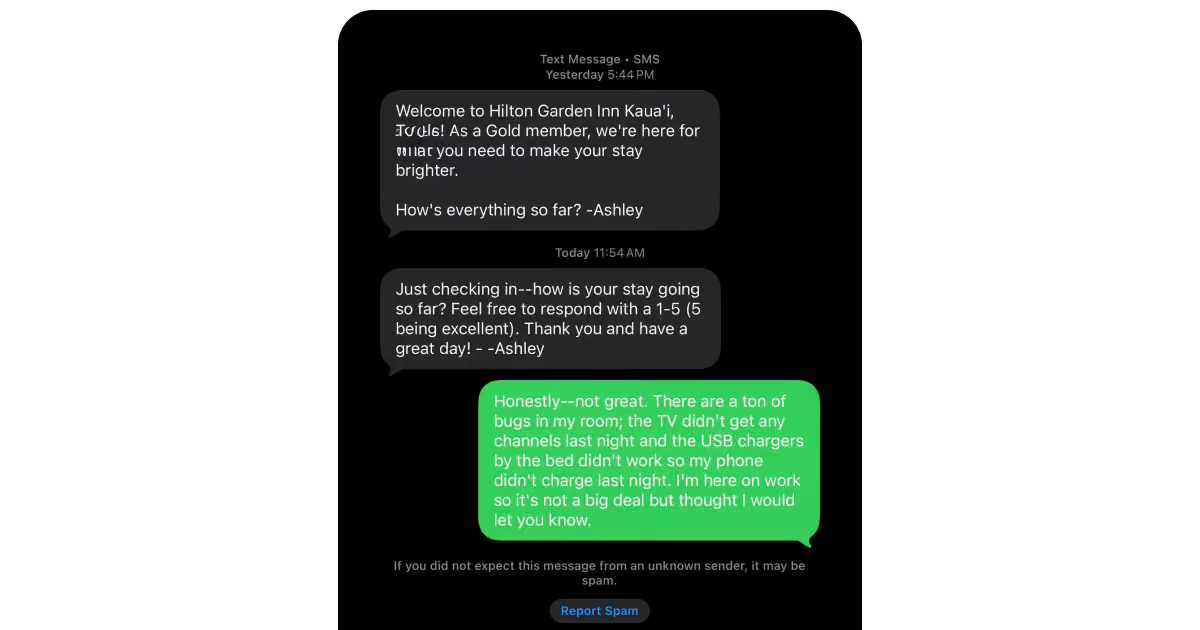
Hilton & WhatsApp example
According to Zonka Feedback, SMS achieves the highest response rates for domestic guests, typically 40 to 55 percent, because the format is short and mobile-native. WhatsApp outperforms SMS for international travelers, hitting 45 to 60 percent in markets outside the US where it has near-universal penetration.
Email is the universal fallback: slower to open, but it works for every guest regardless of location, and it supports richer formatting for follow-up questions. In-person channels also still have a place. Kiosks at the front desk during checkout work well for business hotels with high turnover. QR codes on nightstands or restaurant tables serve mid-stay feedback moments. Both require a staff prompt to hit meaningful response rates; guests walk past without engaging.
A practical decision framework for contacting guests to get data for the NPS in hotels:
Business traveler on a short domestic stay: SMS post-checkout.
International leisure guest at a resort: WhatsApp or email.
Loyalty program member: Email with personalization, guest name, dates of stay, and property image.
Walk-in guest with no email or mobile captured: Kiosk at checkout.
One rule applies everywhere: embed the NPS question directly in the message body. Forcing guests to click through to a separate survey page cuts response rates by 20 to 30 percent. The fewer steps between the guest and their answer, the better your data.
Designing short, effective surveys
The best NPS hospitality surveys feel like a quick conversation, not a form to fill out. One question, maybe two, but no more.
Your core question must be definite: "Based on your recent stay at [Property Name], how likely are you to recommend us to a friend or colleague?" That is the NPS question. Everything else is context. The one follow-up worth adding depends on the score.
For Promoters scoring 9 or 10, ask: "What made your stay exceptional?"
For Passives scoring 7 or 8, ask: "What would have made it a 10?" Give them four options to choose from: room quality, service, amenities, and value for money.
For Detractors scoring 0 to 6, ask: "What went wrong?" and add a yes or no field: "Would you like us to follow up?"
That structure gives you the qualitative signal that turns it into an action. As Reichheld said, a single question is enough to measure loyalty. But the follow-up is where you learn what to fix.
No matter how the Net Promoter Score is calculated next, keep mobile design non-negotiable. Over 65 percent of guests open surveys on phones. A survey that breaks on mobile loses responses before they start.
Aim for a total completion time under 30 seconds. That is the threshold where response rates stay healthy, typically 25 to 30 percent or above. Anything longer and guests abandon midway, which is worse than not responding at all because it distorts your data.
Avoiding common data collection pitfalls
Most hotels collect NPS data, but far fewer collect data they can fully trust. The gap comes down to avoidable mistakes. Net Promoter Score benchmarks only mean something when your data is clean, so here is what usually corrupts it:
Surveying too late. This is the most common error. A survey sent three days after checkout gets the experience guests half-remember filtered through everything that happened since. The 12 to 24-hour post-checkout window exists for a reason. Ignore it and your scores reflect faded impressions, not real ones.
Sending too many surveys. A guest who stayed four nights and received a pre-arrival survey, a mid-stay ping, a checkout prompt, and a post-stay email is not going to give you honest feedback. They are going to give you quick answers to make it stop. Survey fatigue produces inflated middle scores and lower response rates over time.
Ignoring non-responders. The guests who do not answer your survey are not neutral. Research consistently shows that non-responders skew toward dissatisfied guests who disengaged. If your response rate is below 25 percent, your hotel NPS score is probably more flattering than reality.
Cherry-picking touchpoints. Only surveying guests who book directly, or only emailing loyalty members, builds a score that reflects your best audience. That score will not tell you about the OTA guest who checked out frustrated.
Collecting scores without closing the loop. Responding to Detractors within 24 hours produces a 40 to 50 percent recovery rate, according to Zonka Feedback. Wait five days, and that drops to 10 to 15 percent. Data without action is just overhead.
Now that we have covered the key basics, let’s review the industry standards that define your NPS success or failure (and understand if they mean anything as a standalone number vs. the whole sector’s performance).
What is a good NPS score in hospitality?
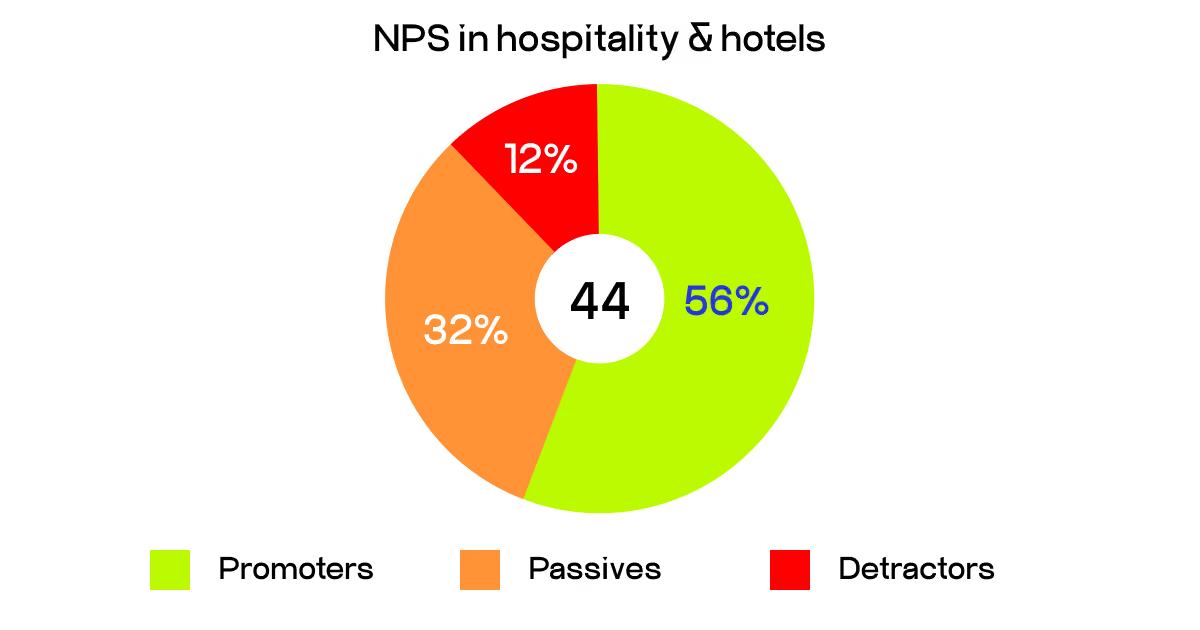
The hotel industry average sits at 44, the highest across all seven sectors in QuestionPro's Q1 2025 study of 1,000 participants.
That puts hospitality ahead of banking, automotive, airlines, and insurance. Here is what the numbers mean for your property:
Above 50 = exceptional. Your guests are vocal fans.
30 to 50 = solid. You are in the industry benchmark zone.
0 to 30 = needs work. Real gaps exist in the guest experience.
Below 0 = urgent. Guests are actively warning others away.
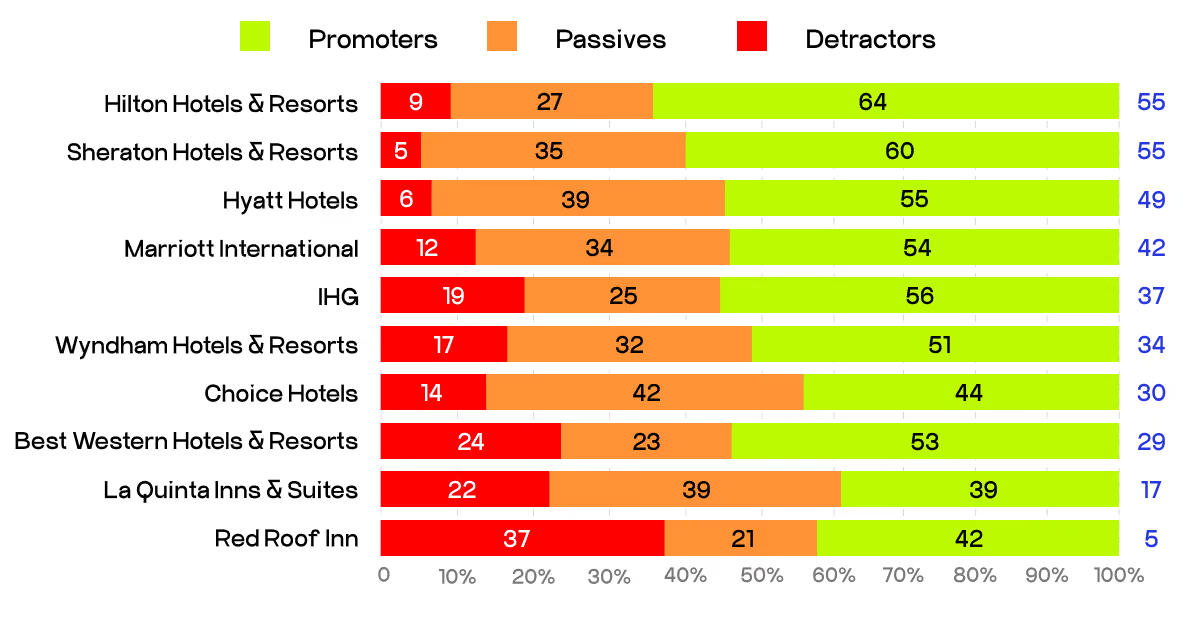
Customer satisfaction Net Promoter Score in hospitality is not just a vanity metric. Hyatt leads with 58, while Best Western has 42. That 16-point gap represents real differences in repeat bookings and word-of-mouth revenue.
Industry averages and performance ranges
Hospitality NPS scores tell you where you stand, but they also reveal something more uncomfortable: most hotels are leaving loyalty on the table.
According to the 2025 Benchmarking Report, the sector average of 44 beats every other industry surveyed. Most brands cluster in the 42 to 56 range, which sounds comfortable until you realize the gap between 42 and 58 represents thousands of lost referrals annually.
Net promoter score (NPS) by brands. Source: QuestionPro
Why is Net Promoter Score important? Pinar and Güder confirm NPS is one of the most reliable predictors of customer retention and future sales growth. Reichheld's foundational work shows companies with the highest NPS scores achieve twice the stock market returns of their peers.
The real story is not that hotels score well on average. It is that the spread between top and bottom performers within hospitality is wider than the spread between hospitality and its nearest competitor. Your biggest threat is the hotel down the street running a better operation.
Differences across hotel segments
How does Net Promoter Score work across different types of guests? Differently than most hotel managers assume.
A single company-wide NPS of 44 can hide an exceptional business traveler score of 62, right next to a leisure guest score of 28. Zonka Feedback's 2026 segmentation research makes this point bluntly: an enterprise segment scoring 60 and an SMB segment at 5 average out to 35, a number that misrepresents both groups entirely.
For hotels, the most actionable segments are:
Guest type (business vs. leisure vs. group)
Stay length
Booking channel
Loyalty program tier
Property category.
Hospitality AI solutions now make this segmentation practical without a data science team. Many platforms use AI-powered cluster discovery to surface hidden guest groups, including what researchers call "silent strugglers," guests with high engagement and declining satisfaction who never contact the front desk before they disappear permanently.
The table below shows typical NPS hotel score variation by segment.
Guest segment
Typical NPS range
Primary loyalty driver
Loyalty program members
55 to 70
Rewards and recognition
Business travelers
45 to 62
Efficiency and reliability
Leisure guests
35 to 55
Experience and amenities
Group and event guests
25 to 45
Coordination and value
First-time guests
20 to 40
First impressions
Marriott's own data shows exactly this pattern. Properties that segmented feedback by guest type and fixed housekeeping inconsistencies saw NPS rise by an average of 14 points within one year. The score did not improve because management worked harder, but because they finally knew where to look.
How to use NPS data in hotel operations
After 16 years working in travel and hospitality, we see one pattern holding true across every property type: hotels that act on NPS data outperform those that just collect it.
Net promoter score best practices start before the survey even goes out. Vivek Jaiswal, customer experience professional, makes this clear: keep the survey short, use a 0 to 10 scale only, and ask the one correct question: "How likely are you to recommend our hotel to a friend or colleague?" Adding extra questions or embedding NPS inside a longer form kills response rates and corrupts the data.
Once responses come in, here is what works.
Act on detractors first. Guests who score 0 to 6 are your most urgent signal. Identify whether the complaint points to cleanliness, staff behavior, or a facility issue, then fix the root cause. As Adele Gutman, Culture and Guest Experience Expert at the Hospitality Reputation Marketing Podcast, puts it: "What kills the joy of your guests is also killing the energy of your team."
Segment before you conclude. A single score of 44 can hide a business traveler segment at 62, sitting next to a leisure score of 28. Use hotel business intelligence tools to split your data by guest type, booking channel, and stay length before concluding.
Turn promoters into proof. Guests scoring 9 or 10 are your most credible marketing asset. Invite them to leave reviews on TripAdvisor or Google immediately after checkout.
Track changes quarterly. Net Promoter Score software platforms also let you monitor sentiment trends after a policy change or renovation, so you know what worked and what did not. We will outline the key options you have in the next chapter.
Share results with staff. Post scores where your team can see them. Celebrate progress publicly. As Tamie Matthews says, nothing changes until the team takes ownership of their role in the numbers.
Sometimes, no matter how hard you try to follow the best practices, you might still face challenges. It’s fine - let’s break the most typical ones down and find a way out.
Common mistakes
The biggest problem with hotel Net Promoter Score programs is not the score itself. It is what hotels do after they get it.
A Net Promoter Score program fails most often because management treats it as a reporting exercise rather than an operating tool. Ron Shevlin from Forbes identified the core issue: companies self-report scores, cherry-pick survey respondents, and never audit methodology. In hotels, this shows up as surveying only loyalty program members or only guests who had smooth checkouts.
Vivek Jaiswal flags another common error: coloring the 0 to 10 scale to show guests which scores are "good" or "bad." Research shows this inflates final NPS by as much as 18 points. Your score looks better, but operations do not improve, so the gap shows up in bookings.
Net promoter score management also breaks down when feedback loops stay open. Adele Gutman is direct on this: reading reviews at the end of the month is too late. You need to feel the guest experience in real time, before they check out and post publicly.
Here is a quick view of the most common problems and their fixes:
Problem
Fix
Surveying only satisfied guests
Survey all checkouts automatically
Coloring the rating scale
Use a plain 0 to 10 scale with no labels
Treating NPS as a monthly report
Review feedback daily at the operational level
Ignoring passive guests (7 to 8)
Identify minor friction points blocking loyalty
No follow-up with detractors
Route scores of 6 or below to the recovery workflow within 24 h
Score shared only with management
Post results where all staff can see and discuss them
The fix in every case is the same: connect the score to a specific person, a specific shift, and a specific action.
Strategies to improve your hotel NPS
A strong hotel NPS does not come from one big initiative. It comes from dozens of small decisions made consistently, across every shift, every department, every touchpoint. Here is what actually works, based on real operational experience:
Fix the checkout survey timing first. Sending your survey 24 hours after checkout, not immediately, gives guests time to reflect. Immediate surveys catch people mid-travel and skew negative.
Close the loop within 48 hours. When a detractor scores you 0 to 6, someone on your team needs to contact them directly before they write a public review. A personal call resolves more complaints than any automated email ever will.
Stop treating passive guests as a win. A score of 7 or 8 means your guest had no real reason to recommend you. Dig into their open-ended comments. The word "fine" in a review is your biggest threat, not the one-star complaint.
Train front desk staff on the follow-up conversation. The Net Promoter Score methodology only works if your team understands what the score means and why it matters. A 10-minute weekly huddle reviewing last week's comments does more than a quarterly training session.
Use NPS to run operational experiments. Change one thing, such as adding a welcome note, improving breakfast variety, or switching pillow types, and track whether scores in that segment shift over the next 30 days. This turns NPS from a report into a decision tool.
Segment before you act. Business travelers and leisure guests will give you completely different feedback about the same room. Responding to the wrong problem wastes time and money. ReviewPro's guidance on correlating NPS with departmental ratings confirms this: find the correlation first, then prioritize where to act.
Recognize staff publicly using promoter comments.As Adele Gutman, Culture and Guest Experience Expert at the Hospitality Reputation Marketing Podcast, describes: share your 5-star reviews everywhere your staff can see them. Morale and service quality move together.
Ask promoters for reviews at the right moment. Guests are not true promoters until they actually recommend you publicly. Add a simple review prompt at the end of your NPS survey. Connect it directly to TripAdvisor or Google so the path from "I'd recommend this" to "I wrote a review" takes under 60 seconds.
Most hotels outgrow off-the-shelf NPS tools faster than they expect. Survey platforms collect responses but rarely them to the right staff member, the right department system, or the right moment in the guest journey. Here is where our hotel software development services make a difference.
COAX builds Net Promoter Score software that fits the way your hotel actually operates. Whether that means a standalone feedback tool or NPS functionality embedded inside a larger property management or CRM solution, we cover any need.
What that looks like in practice: custom survey flows triggered by PMS checkout events, real-time detractor alerts routed to the front office manager's mobile, NPS dashboards pulling data from multiple properties into a single view, and API integrations connecting your feedback pipeline to tools like Salesforce, Revinate, or your own internal reporting stack.
Best NPS software for hotels
Your hotel Net Promoter Score is hard to collect and calculate without automated systems. Let’s review some good market-ready options that you can try.
Tool
Key features
Best for
Pricing
QuestionPro CX
Built-in NPS calculator, automatic score categorization, closed-loop workflows, industry benchmarking
Hotels needing reliable benchmarking vs industry standards
Easy templates, simple distribution, basic NPS analysis, integrations via Zapier
Hotels testing NPS without long-term commitment
Free tier; paid starts ~$25/user/month
QuestionPro CX is purpose-built for continuous loyalty tracking with strong benchmarking tools. The Net Promoter Score calculator is built in, scores are automatically categorized, and the platform supports closed-loop workflows with automated Promoter and Detractor follow-ups. Particularly strong for hotels that want to compare their scores against verified industry benchmarks from a credible third-party source. The pricing starts around $99 per month for CX plans; enterprise pricing is also available.
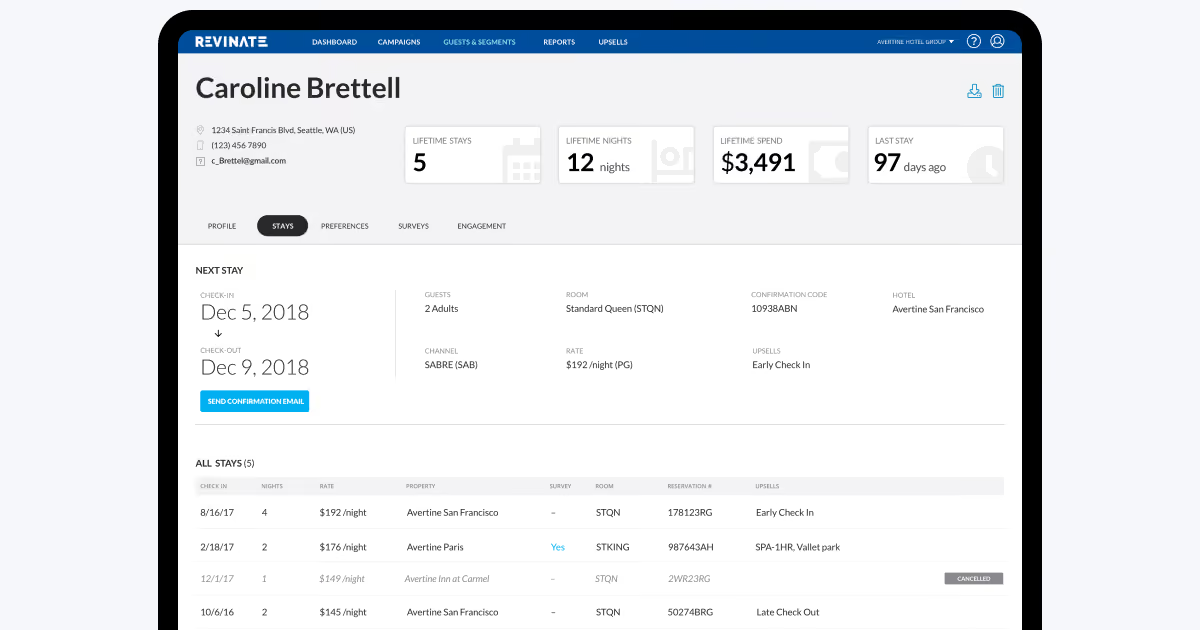
Revinate is created for hospitality, which matters more than it sounds. Revinate pulls guest data directly from your PMS, sends post-stay surveys automatically, and consolidates online review monitoring and NPS in one dashboard. The sentiment analysis is trained on hotel-specific language. This is a good pick for independent hotels and hotel groups that want a hospitality-native tool. It has custom pricing based on property size and features.
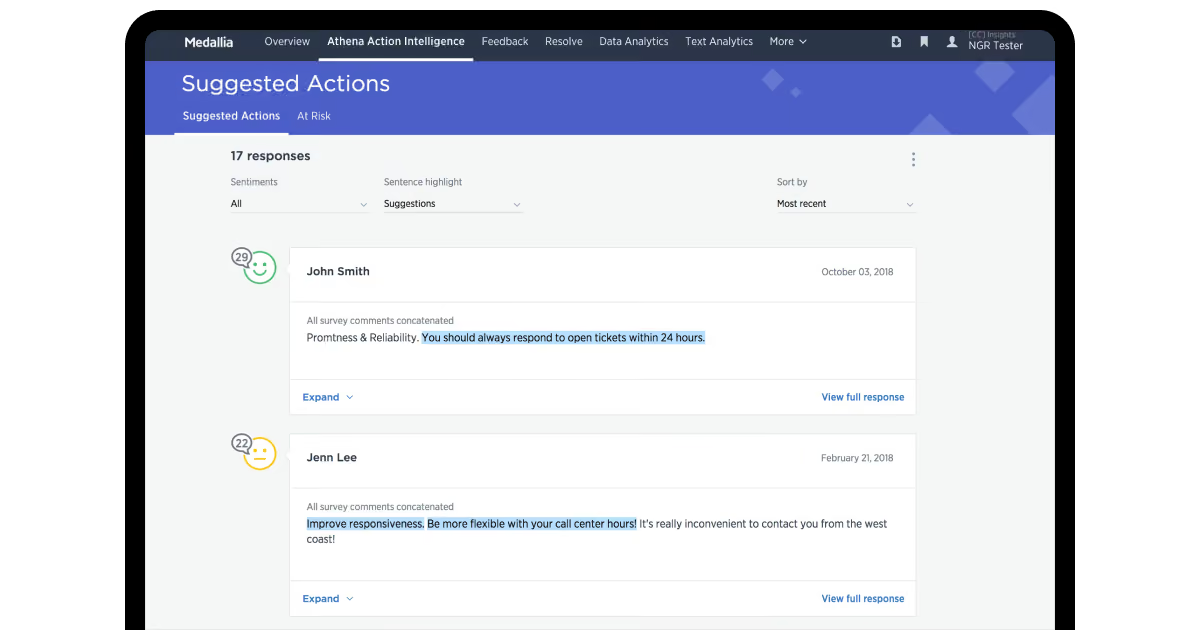
Medallia is an enterprise-grade experience management used by global hotel chains to run NPS programs across thousands of properties simultaneously. AI-powered text analytics decode unstructured feedback at scale, predictive models flag guests at risk of becoming detractors, and role-specific dashboards give executives and department managers different views of the same data. One of the leading Net Promoter Score software options for large-scale governance. Pricing is enterprise only, with custom quotes based on scope.
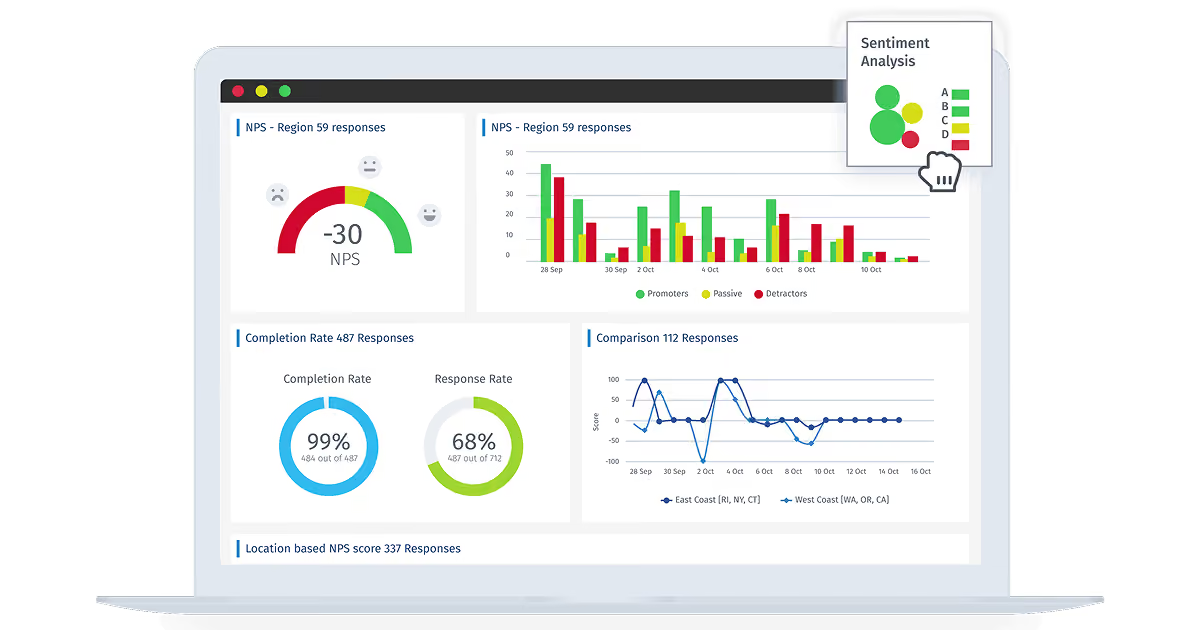
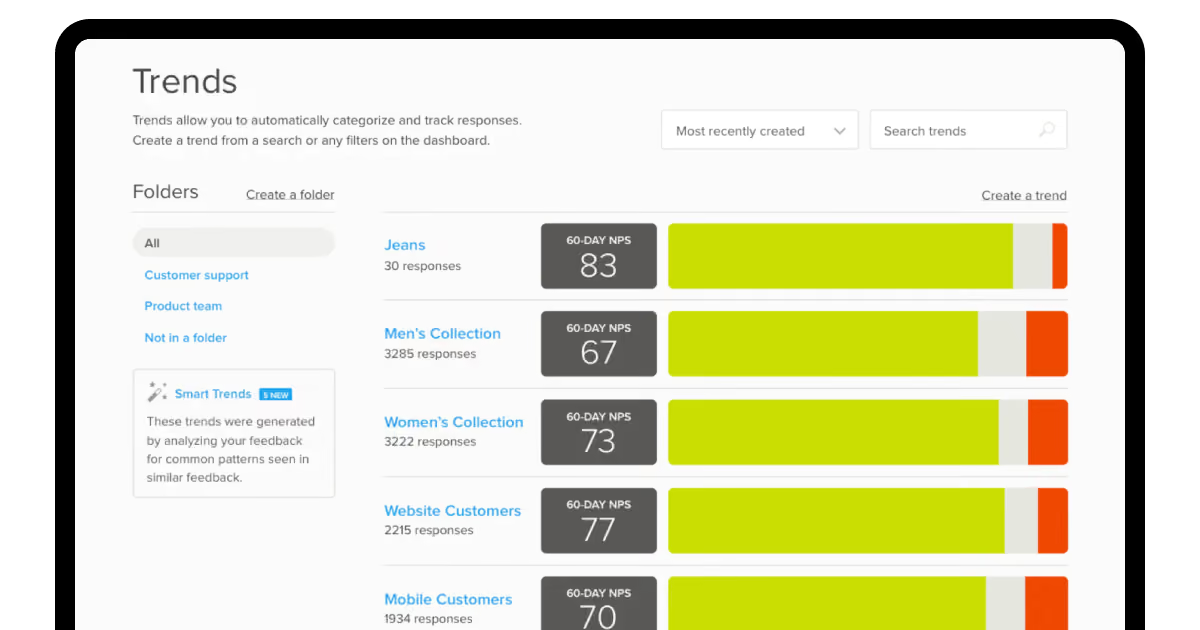
Delighted is the most straightforward tool on this list. You set up an NPS survey in minutes, distribute it by email or SMS, and responses populate a clean dashboard that separates Promoters, Passives, and Detractors automatically. Pricing is tied to response volume (with paid plans starting around $17 per month based on response volume), which makes budgeting predictable. It lacks the AI depth of Zonka or Medallia, but for smaller properties that want a working NPS program without a technical setup, it delivers.
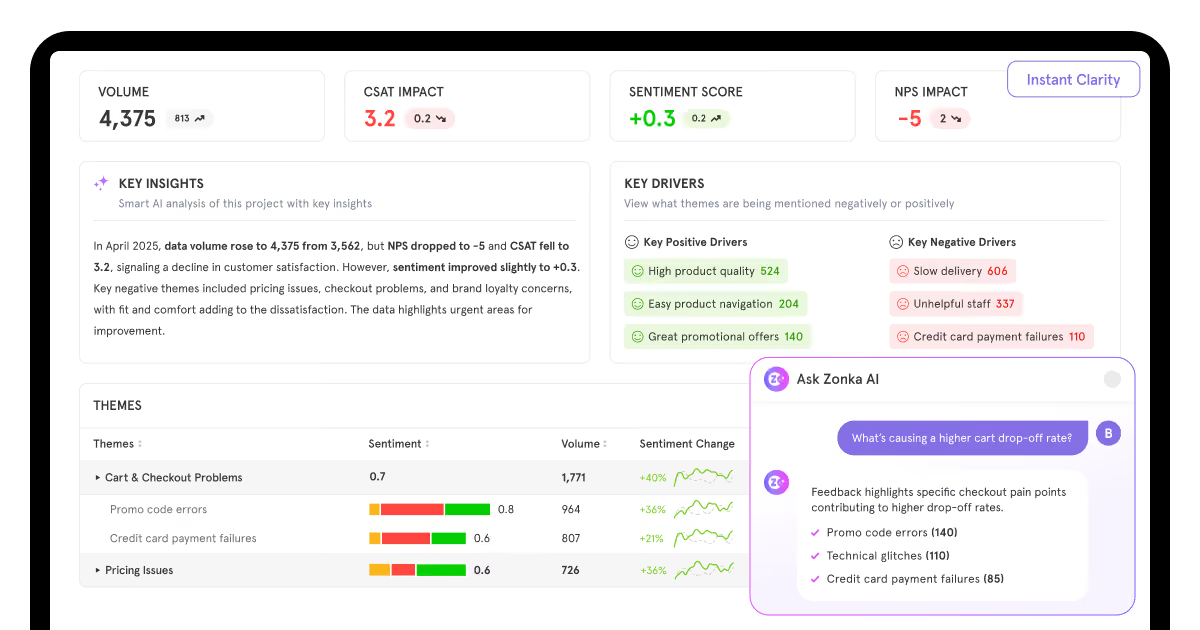
Zonka Feedback collects NPS across email, SMS, WhatsApp, web, in-app, and kiosks from one platform. After the score comes in, AI clusters open-text responses into themes mapped to locations, agents, or stay types. Real-time detractor alerts and automated follow-up workflows mean the feedback loop closes without manual triage. Among Net Promoter Score software companies, this one stands out for omnichannel reach combined with genuine AI analysis, not just keyword counting. This tool fits mid-size to large hotel groups, with pricing starting around $49 per month.
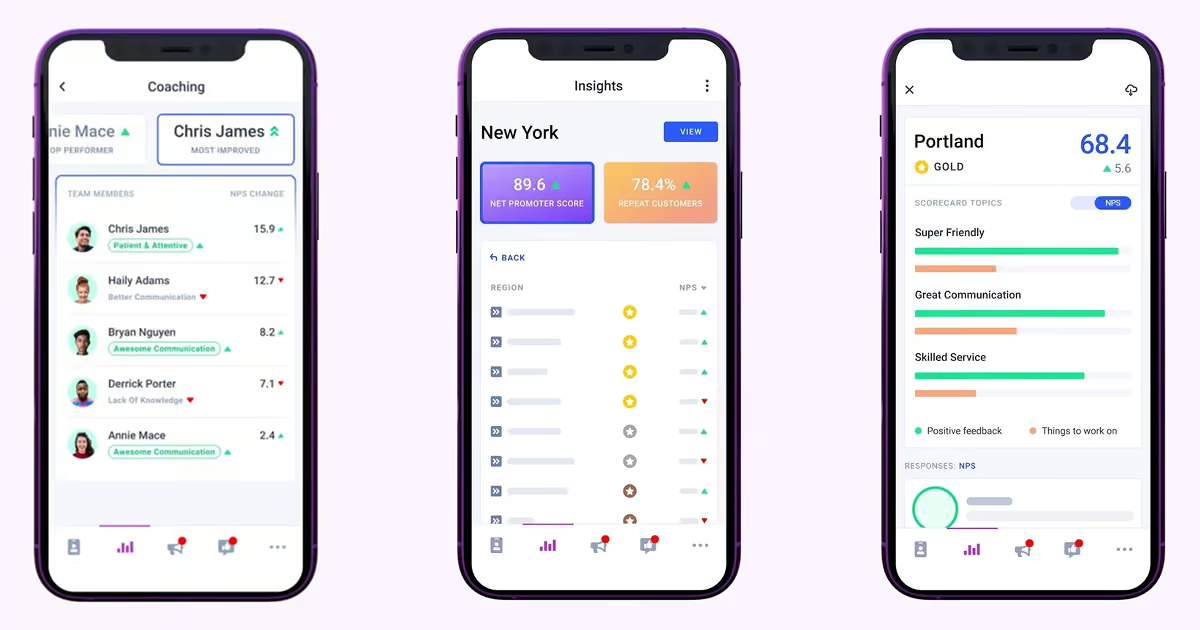
AskNicely is designed around the idea that feedback should trigger human action, not just produce charts. Coaching dashboards, real-time alerts, and staff leaderboards make it easy for front office managers to act on scores daily. The platform is closer to a Voice of the Customer engine than a survey tool, which is great for service-driven hotels where NPS must translate into daily operational decisions and staff coaching. Pricing is custom and typically starts in the mid-market range.
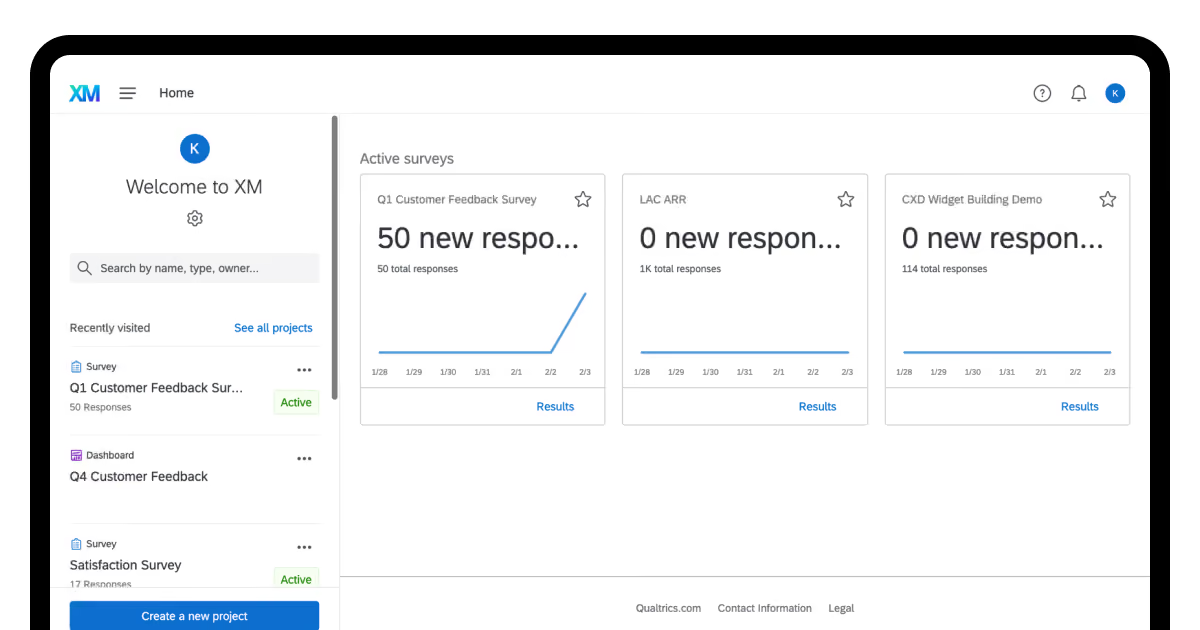
Qualtrics XM is the enterprise standard for organizations where NPS is one input inside a larger CX and research framework. Advanced sampling logic, multi-brand survey governance, and deep integration with Salesforce and other enterprise systems make it the choice when you need global program standardization. Among Net Promoter Score calculation examples, Qualtrics carries the most enterprise credibility. This option fits large international hotel groups with dedicated CX and research teams. Pricing is enterprise only with custom quotes.
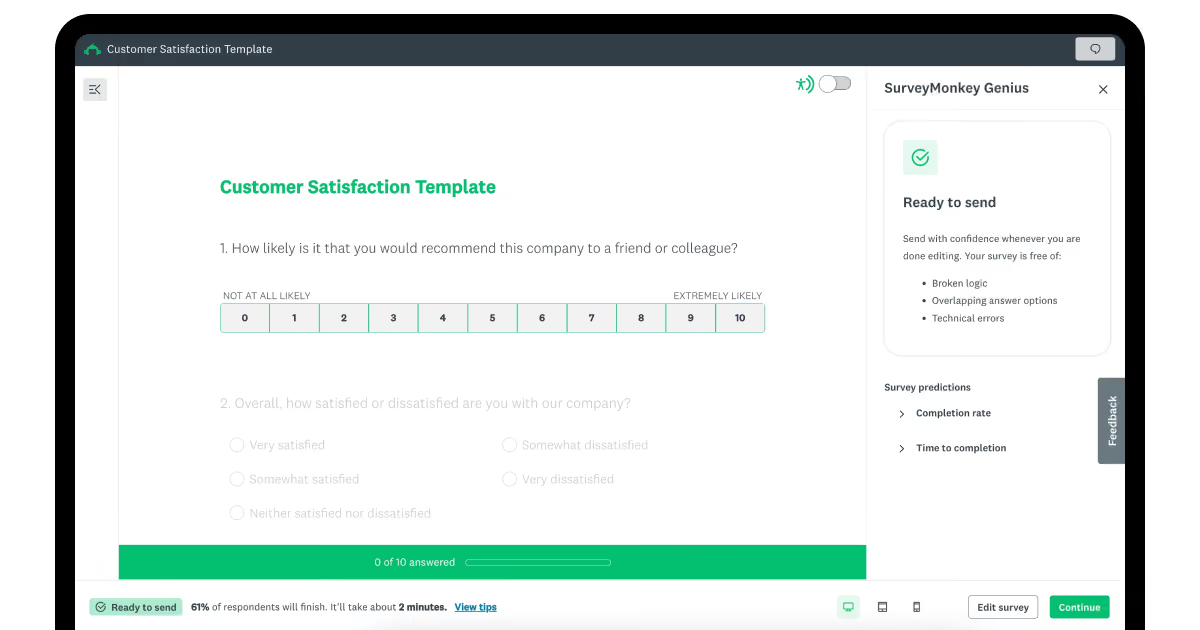
SurveyMonkey is the most recognizable name in surveys and a reasonable starting point for hotels that want to test NPS without a platform commitment. Templates are ready to deploy, distribution is easy, and the Analyze section provides basic segmentation between Promoters and Detractors. Ongoing NPS management requires manual exports or third-party connectors like Zapier to push data into other systems, which adds friction at scale. Free tier is available, with paid plans starting around $25 per month per user.
This list has decent options for many price ranges and business models. But not for all - if your business case is not as generic as the market average, you can find yourself struggling soon. With COAX, whatever functionality you need, we can fulfill it.
For more complex needs, COAX handles full-cycle development, including AI-powered sentiment analysis on open-text responses, multi-language survey logic, and integrations across varied technology stacks. Every build is designed around your guest journey and operations.
NPS in action: Real-world examples
The score is just the starting point. What separates high-performing hotels from average ones is what they do next.
A Net Promoter Score example that illustrates this well comes from Marriott International. Marriott holds an NPS of 51 against an industry average of 44. How? Marriott segments feedback by property and brand, meaning a Courtyard property and a JW Marriott are measured and managed separately. When specific properties showed lower scores tied to housekeeping inconsistencies and staff responsiveness, they implemented enhanced training protocols, increased housekeeping frequency, and empowered front desk staff to resolve complaints on the spot. The result was an average improvement of 14 points across problem properties within one year.
Hilton operates a similar model. With an NPS of 56 and a 24% passive rate, the lowest passive rate in the sector, Hilton's operational focus is on eliminating the gap between "satisfied" and "enthusiastic." Their digital check-in and room-key technology reduces front desk friction for business travelers, while staff are trained to greet guests by name. That combination of technology and personal touch is exactly what Net Promoter Score calculation examples from other industries confirm: neither system reliability alone nor emotional warmth alone moves the needle. Both together do.
Hyatt leads the sector at 58, with a 9% detractor rate that is the lowest in hospitality. Their approach focuses on curated local experiences and tailored room amenities, turning stays into stories guests want to share. The strategic insight here is that generic "polite and professional" service produces passive guests. Specific, memorable, personalized moments produce promoters.
How to increase Net Promoter Score in practice follows a consistent pattern across all three brands.
First, segment your data before drawing conclusions.
Second, close the feedback loop with detractors within 48 hours.
Third, use promoter comments to reinforce staff behavior in public.
Fourth, connect NPS trends to operational changes so you can measure whether interventions actually worked.
COAX helps hotels repeat this kind of success through flexible software development tailored to your exact case. Whether you need a custom NPS feedback loop built into your PMS, a standalone tool for a single property, or a complex multi-brand analytics integration, we fit the solution or functionality we create to your exact everyday reality.
FAQ
What is NPS in the hotel industry and why is it different from the other sectors?
Net Promoter Score (NPS), introduced by Fred Reichheld, measures loyalty via one question (0–10). Hotels differ because they are an “industry of happiness,” where emotional, multi-touch experiences (room, food, staff) shape scores. As Grisaffe notes, NPS segments Promoters, Passives, Detractors - but in hospitality, cross-department effects distort attribution.
How to improve Net Promoter Score without being annoying to our guests?
Here’s a useful algorithm:
Send surveys 24-48h post-stay (not during stay).
Keep surveys ≤3 questions.
Trigger only after key moments (checkout).
Personalize messaging, avoid generic blasts.
Close the loop only for detractors.
Use passive data (reviews) to reduce survey load.
Rotate sampling (not every guest).
Act visibly on feedback.
What is a good Net Promoter Score for small hotels and independent properties?
For small and independent hotels:
0–30: acceptable.
30–50: strong.
50+: excellent.
Benchmarks vary by segment, but smaller properties often outperform chains due to personalized service. According to Reichheld and Markey, anything above 50 indicates strong loyalty.
How to measure Net Promoter Score in a secure way?
You can follow the next practices:
Minimize PII; anonymize responses.
Collect explicit GDPR consent.
Use secure tools like Qualtrics XM, SurveyMonkey, or LimeSurvey.
Encrypt surveys (SSL, email encryption).
Restrict access to raw data.
Define retention (12–24 months).
Store data in compliant (ISO 27001) environments.
How does COAX develop secure and efficient Net Promoter Score software?
COAX builds NPS systems with enterprise-grade security (ISO 27001, NDA-first approach) and scalable architecture from day one. Cross-functional teams (PM, Dev, QA, DevOps) deliver full-cycle solutions with no gaps. Agile, transparent workflows ensure speed and clarity, while flexible team setups align with client pace and growth.































































































.avif)




%20for%20hotels.avif)


.avif)
.avif)


.avif)





.avif)

.avif)





.avif)


.avif)

We are interested in your opinion