Your events business is not an island. It literally depends on people’s desire to book with you and get an experience. Your pricing shouldn't act like an island either. Every ticket competes against rival events and demand swings. Even the weather plays a role. So why price it as if none of that exists?
Dynamic ticket pricing adjusts prices as demand, competition, and timing shift. Done right, it lifts revenue and fills more seats. Done wrong, it just annoys buyers. It's not a discount gimmick. It's a system that reads demand. The difference lies in how you build it.
At COAX Software, we've built pricing and booking platforms for sixteen years. Demand prediction, reservation intelligence, and competitive infrastructures are our experts’ favourite topics. Now let’s discuss it in this guide. We’ll break down what dynamic ticket pricing means. You'll learn why more event businesses use it now. Then we'll show you how to build a dynamic pricing strategy. One that actually works for your events business and drives it forward.
What is dynamic ticket pricing?
Picture two fans who buy tickets for the same show. One buys early, the other waits until the week of. Their prices rarely match. That gap is exactly what the system does: it reacts to demand signals.
Here's the plain dynamic ticket pricing definition. Prices shift with demand, timing, and competition. Nothing about the price stays fixed for long.
Not every price jump means gouging. Most systems just read supply against demand and adjust. Airlines have done this for decades. Event ticketing now follows the same logic.
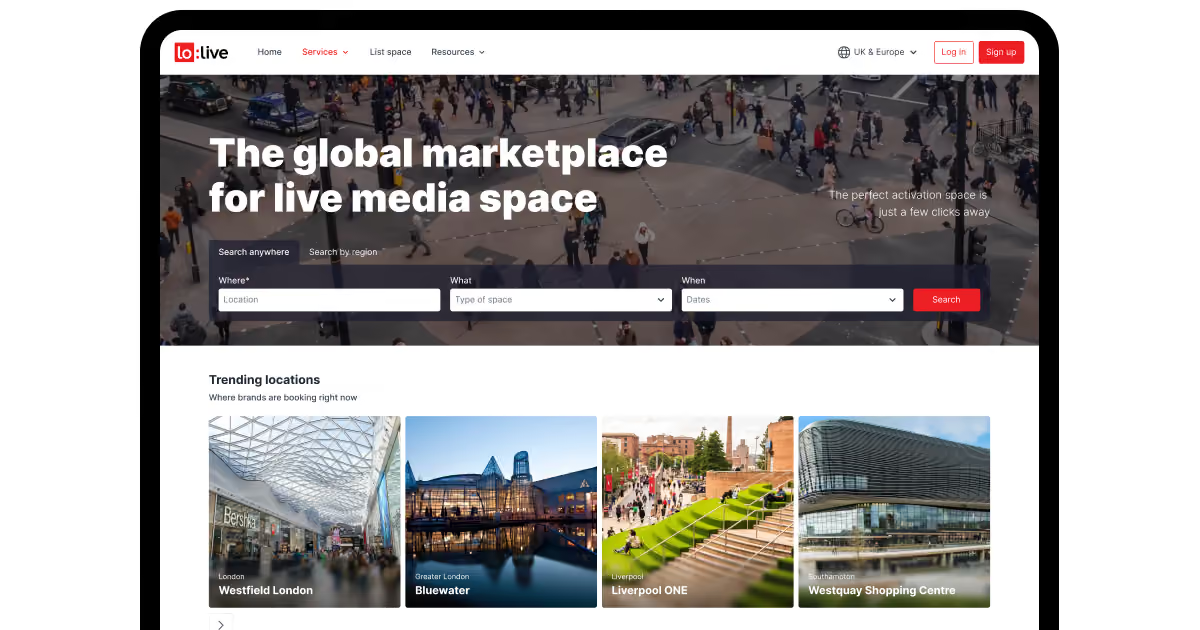
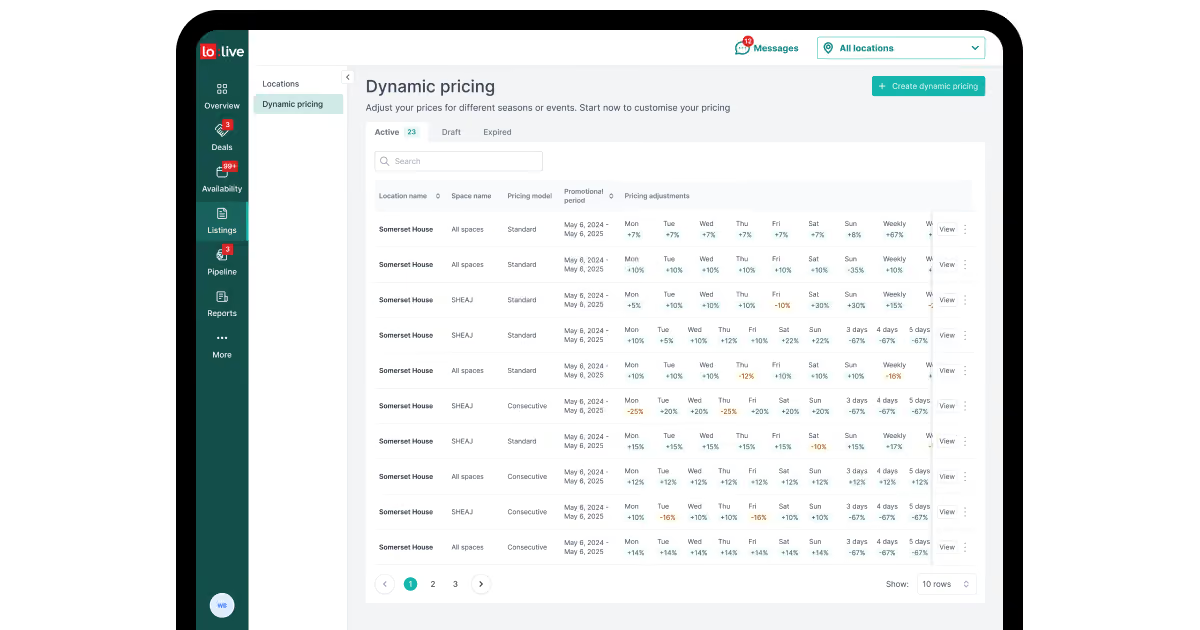
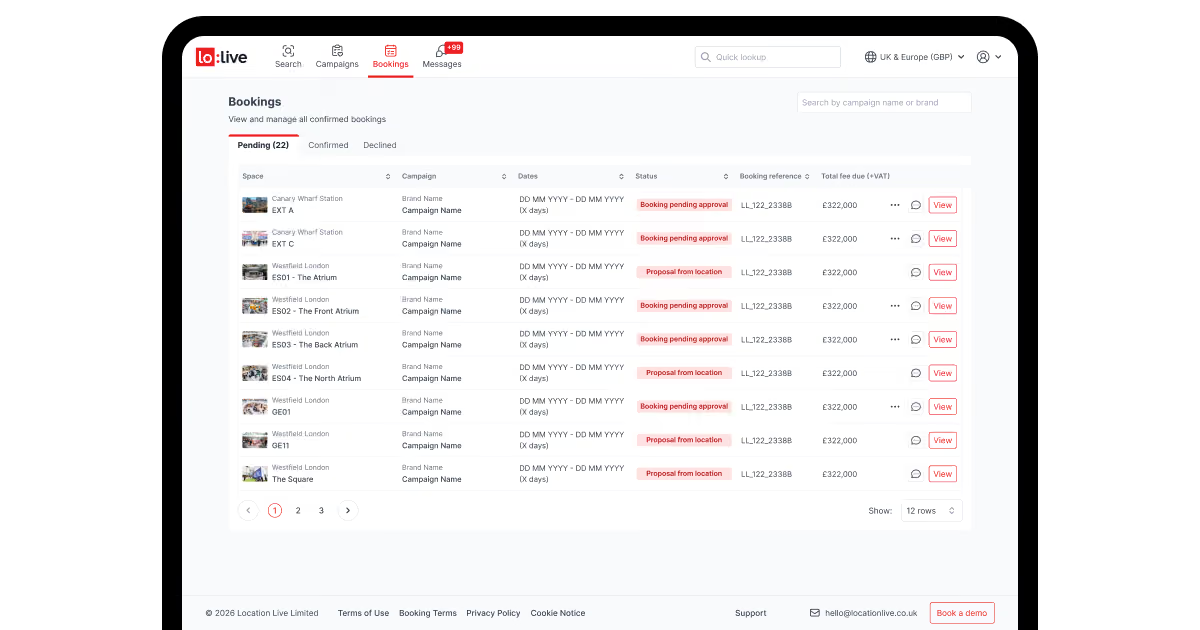
At COAX, we built this logic for lo:live, an event venue booking marketplace. It's an experiential space for brands and landlords. Landlords set custom weekend definitions inside the platform's pricing engine. Consecutive booking days also trigger automatic discounts. The engine was built to maximize venue utilization. That's the mechanics behind a real dynamic pricing strategy.
The market backs this up with real numbers. Online event ticketing was worth $55.4 billion in 2022. Analysts expect it to reach $89.4 billion by 2030. That's roughly six percent annual growth, year after year.
North America holds the largest share, at 36.2%. Mobile bookings drive over half of all sales. Music events lead demand, at roughly 36% of the market.
Demand for live events hasn't slowed.Live Nation sold a record 143 million tickets by mid-2026. Worldwide demand pulled 49 million fans to shows in one quarter. Buyers show up, even as prices adjust. For this environment, dynamic pricing is what you need as a must.
Types of dynamic ticket pricing
Dynamic ticket pricing means prices move with real demand. Not a fixed calendar set months ahead. To make it work, several models exist, and each one reacts to a different signal. Many real platforms blend more than one.
Time-based pricing: Prices shift with purchase timing. Early buyers land lower rates through early bird discounts. Rates climb steadily as the event date nears.
Demand-based pricing: Prices track live buyer interest in real time. A spike in simultaneous searches triggers an automatic bump. The system reacts within minutes, not days.
Inventory-based pricing: Prices move with remaining capacity. Once 80% of seats sell, the last few often cost 10% more. Scarcity itself becomes the trigger here.
Value-based pricing: Costs reflect perceived worth, not just supply. Seat location, artist fame, and VIP perks all factor in. Premium seats swing further than general admission does.
Competitor-based pricing: The system scans nearby, similar events. It benchmarks your prices against theirs automatically. This keeps rates competitive without manual research.
Hybrid pricing: Mature systems blend several signals into one engine. Time, demand, and inventory data all feed the same model. This layered approach catches nuance a single model misses.
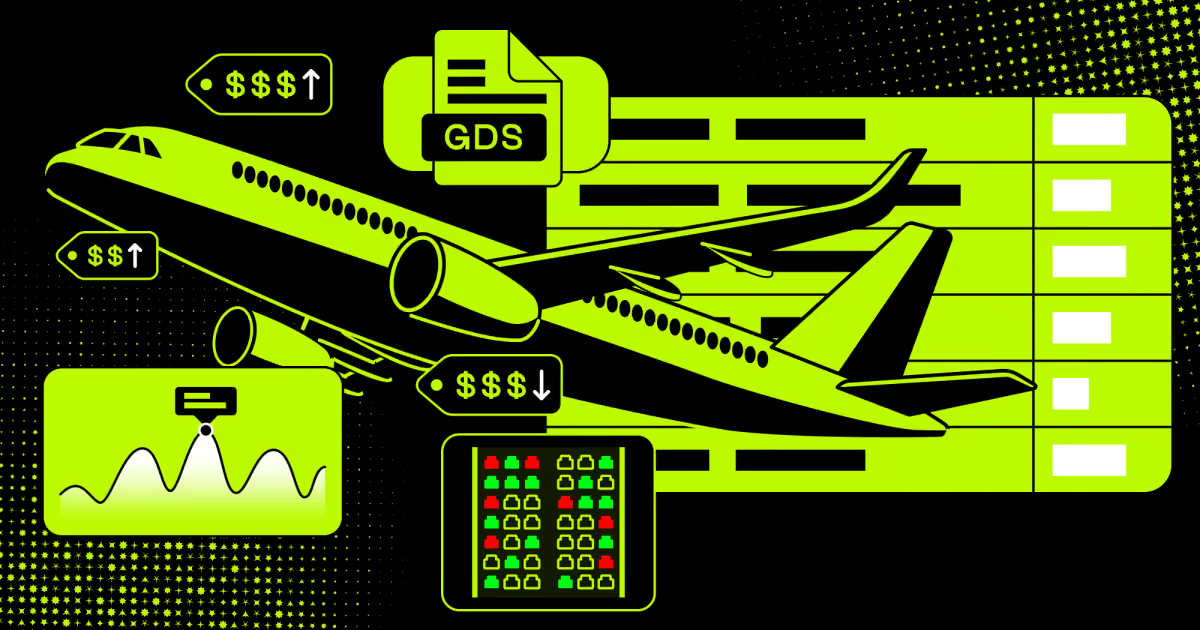
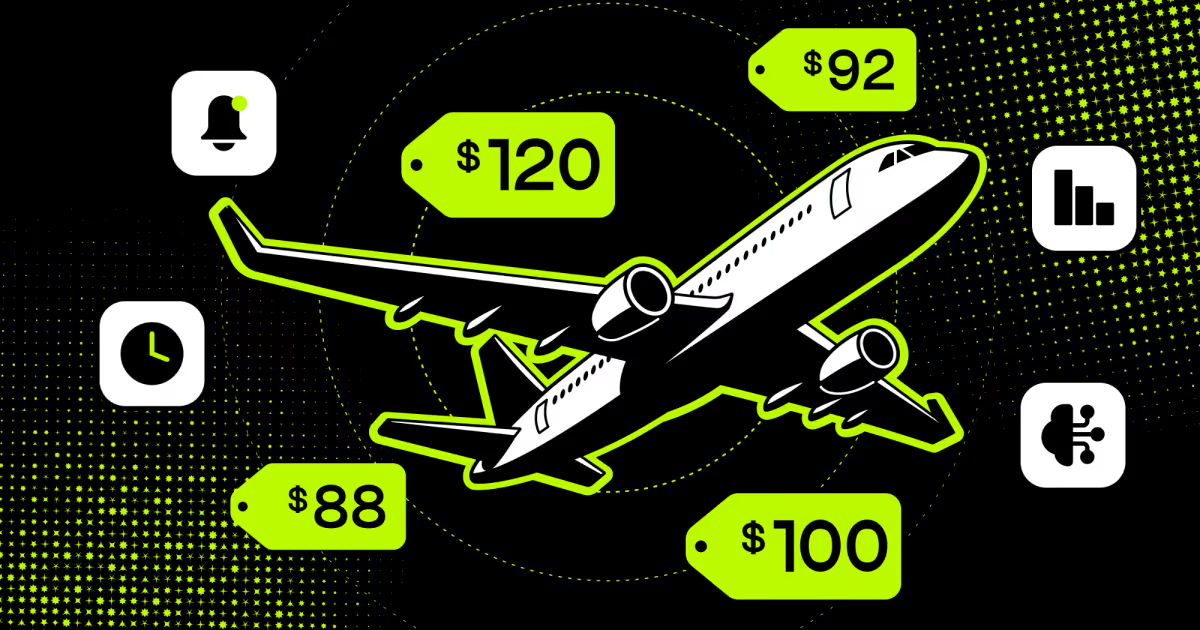
None of this is unique to concerts or ballgames. Airline ticket dynamic pricing runs on the same logic. Airlines feed flight price predictors with seat counts, booking pace, and rival fares, then output a fare that shifts hourly. Event ticketing borrowed that playbook and pointed it at venue seats instead of cabin seats.
Lo:live shows this flexibility outside of live shows too. Landlords pick from three listing models per space: full transparency with pricing and availability shown, pricing-only visibility, or price-on-application for premium spots. That range proves dynamic ticket pricing software doesn't need one rigid price field baked in.
Building a system like this takes more than a single rule. It takes dynamic pricing ticketing infrastructure that can run several strategies side by side, with no breakdowns or conflicts.
Why is dynamic pricing becoming so important for event ticketing?
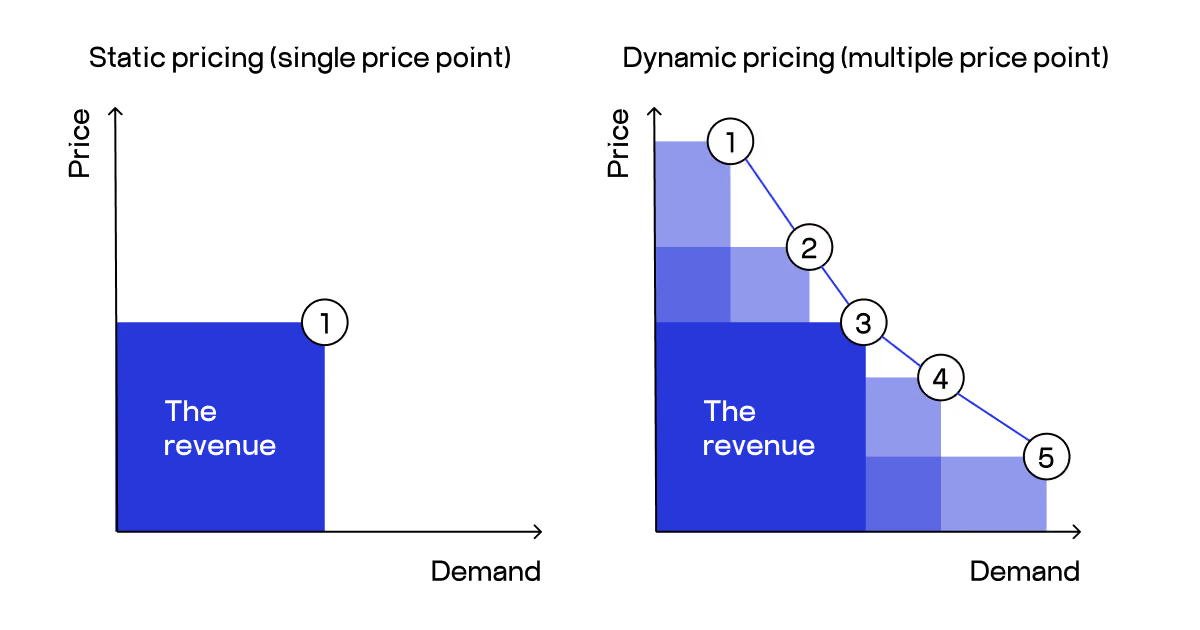
Static pricing leaves money on the table and hands power to resellers. Ticket dynamic pricing fixes both problems at once. It also reacts to demand as it happens, not weeks later.
Arms you with real-time insights
Dynamic systems don't wait for a weekly report. They read demand as it happens and adjust immediately. Here's what that looks like operationally.
Tracks interest instantly: Systems monitor sell-through speed and live search volume. They flag sudden spikes within minutes. That data feeds straight into the pricing engine.
Adapts quickly: Prices shift automatically as the show date approaches. A surprise guest announcement can trigger an instant bump. The system needs no manual price review to react.
This kind of real-time responsiveness is exactly where a system like lo:live earns its keep. It's built for campaign-driven bookings, think experiential marketing spaces and brand activations, rather than everyday retail. That's conceptually closer to event pricing than a simple booking flow would ever get. Over five years of continuous partnership, campaigns created on the platform grew 140%, and active engaged users grew 789%. Numbers like that show pricing and booking tools driving real business outcomes.
Fights scalpers and bots
Scalpers thrive on the gap between face value and real demand. Close that gap and their margin disappears. Here's how that plays out.
Cuts profit margins: When primary sellers charge market rates, brokers lose room to markup. Bots buying in bulk see thinner resale margins. That makes large-scale scalping far less profitable.
Keeps fans in mind: The money that once went to illegal resellers now stays put. It flows back to whoever put on the event. Fans pay closer to what the show is actually worth.
Neither tactic eliminates scalping outright, but both shrink its upside significantly.
Maximizes revenue
Fixed prices ignore how demand actually moves. A dynamic pricing strategy captures that movement instead. Here's what it changes in practice.
Captures true value: Prices rise when demand spikes. That margin used to flow to resellers. Now organizers keep it for themselves.
Supports creators: Artists and teams earn more from their own shows. That revenue helps fund future tours. It also covers rising production and staffing costs.
Optimizes empty seats: Prices can drop when demand runs cold. Lower prices pull in price-sensitive buyers. This fills venues that might otherwise sit half-empty.
Dynamic pricing tools typically lift ticket revenue by five to 30%. The exact gain depends on your industry. Market demand and software sophistication both shape the outcome too.
How does dynamic ticket pricing work?
Every pricing engine runs on the same core loop. It reads signals, weighs them, and outputs a price. The signals differ by industry, but the underlying mechanism is more or less the same.
Key factors that influence ticket prices
Airlines and event organizers track different specifics. But the underlying forces overlap almost completely. Here's a unified list that applies across ticket types.
Demand and seasonality. Prices climb when more buyers compete for the same seats. Summer travel, major holidays, and headline acts all spike demand at once. Airfares rise 15 to 20% during peak international travel windows. Event tickets follow the identical curve around big-name performers or matchups.
Booking window. Early buyers almost always pay less than latecomers. Airlines gradually raise fares as departure dates approach. Event platforms mirror this through early bird pricing tiers. Waiting too long often means paying for scarcity, not just the seat.
Cost base.Fuel alone eats 25 to 35% of an airline's operating budget. Events carry their own version: venue rental, staffing, and production. Security, lighting, and artist fees all stack onto the baseline. Whatever the industry, the price floor starts with covering these costs.
Competition. Routes served by several airlines tend to price lower. Events near similar competing shows behave the same way. Organizers watch nearby ticket prices to stay in range. A crowded market usually caps how far prices can climb.
Capacity and inventory. Fewer available seats push prices upward fast. Small venues sell out quicker than massive stadiums do. Airlines apply the same ticket dynamic pricing logic to shrinking economy inventory. As supply tightens, the algorithm treats each seat as more valuable.
Perceived value. Seat location, artist fame, and cabin class all matter. A front-row seat isn't priced like the back row. Premium branding and included perks justify a higher number. Buyers pay for the experience, not just admission itself.
Audience segment. Students and casual buyers usually need lower price points. Corporate buyers and sponsors tolerate higher costs for business value. Loyalty program members sometimes see different offers entirely. Segmenting by buyer type lets pricing stay flexible without feeling arbitrary.
These factors rarely act alone. Real systems blend several at once, in real time. That blending is exactly what turns a price list into dynamic ticket pricing.
"The factors themselves aren't what make this hard," says Orest Falchuk Head of Engineering at COAX Software. "Demand, timing, and cost data are well understood. What's genuinely hard is architecting a system where all three update the same price without conflicting. That's a data pipeline problem before it's ever a pricing problem."
A common dynamic ticket pricing workflow explained
A working pricing system follows a repeatable structure. It runs an algorithm, enforces limits, and leans on solid data. Here's how that plays out end-to-end, adapted for any ticketed event.
The core pricing algorithm.
At its base, the dynamic ticket pricing software system tracks supply against demand continuously. Supply is simple: available seats per section or category. Demand is where the real complexity sits.
Demand signals typically include past attendance for similar events, current sales pace, competing events nearby, and social buzz. The algorithm weighs each one automatically. It nudges prices up when demand runs hot. It pulls them back when sales lag behind projections.
Price floors and ceilings.
Good systems never let prices drift unchecked. A price floor stops tickets from dropping low enough to devalue the brand. It also protects buyers who already paid full price. A price ceiling caps how high prices can climb before backlash sets in.
These guardrails need calibration specific to your audience and market. Skip them, and dynamic pricing tools can easily damage buyer trust instead of building it.
Data requirements for effective pricing.
None of this works without clean, structured data feeding it. Three data types matter most.
Historical sales data: At least two or three seasons of past transactions. Broken down by event, section, price tier, and purchase timing.
Real-time demand signals: Live website traffic, search volume, and social mentions. These flag demand shifts before they show up in sales.
Audience segmentation data: CRM records that separate loyal buyers from first-timers. This enables tailored offers without pricing everyone identically.
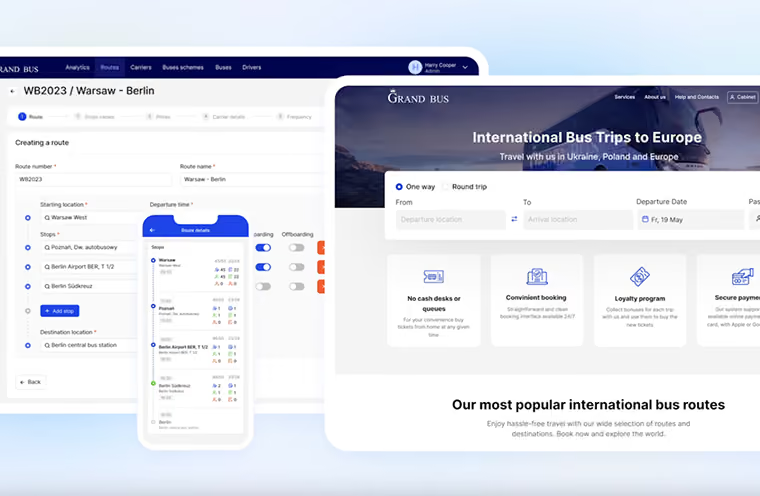
Fragmented spreadsheets and disconnected booking tools make this step painful. That's exactly the gap COAX closed for GrandBus, an international bus operator. Before the rebuild, route and pricing data were spread across paper logs, spreadsheets, and phone calls. The admin panel now lets staff set ticket prices per route directly, tied to live seat availability. That single source of truth is the basis that any event ticketing software needs before any real dynamic logic.
AI doesn't replace the pricing logic above. It makes it faster and more precise. Here's what that actually looks like in practice.
The role of AI in automated pricing
Modern dynamic ticket pricing software moves way beyond basic reactive adjustments. It’s due to embedding predictive intelligence directly into sales workflows. By pairing real-time signals with automated updates, you can instantly align ticket costs with actual market appetite.
Here’s how it technically works:
Data integration: Systems merge historical sales, live inventory, and competitor prices. All of it feeds one machine-learning pipeline.
Predictive analytics: Models estimate how demand will shift before it happens. This goes beyond reacting to past sales patterns.
Automated execution: Approved price changes push live across channels instantly. No manual updates needed per listing or seat category.
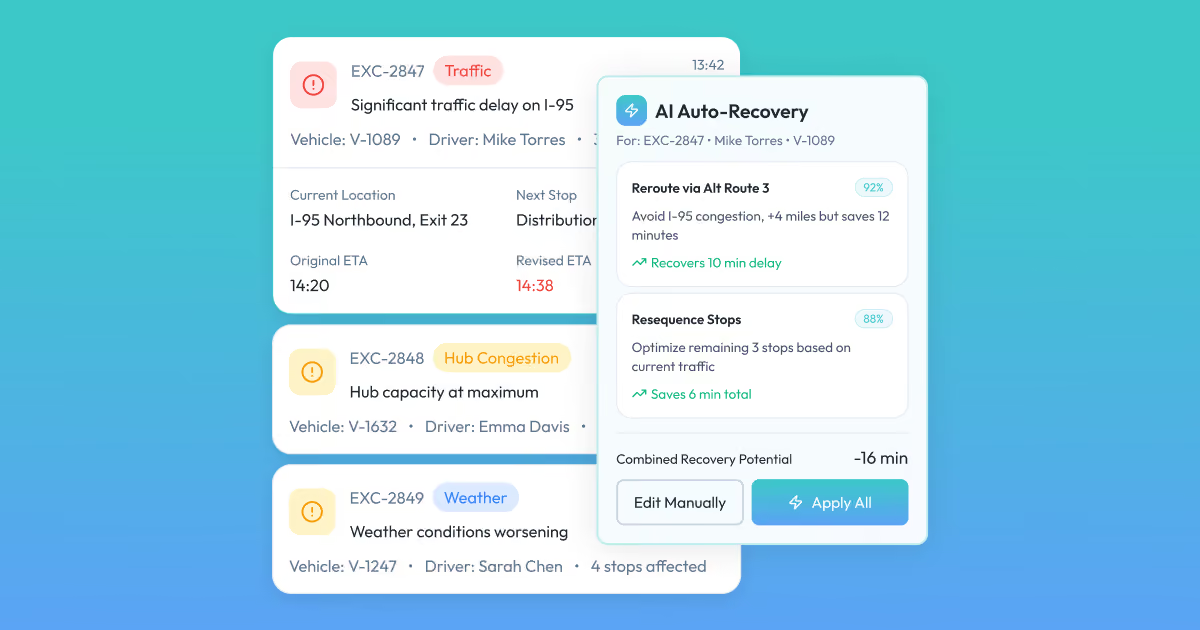
This isn't unique to pricing. COAX built a similar predictive engine for DriveIQ AI, a logistics platform. It generates delivery predictions every 15 minutes using live traffic and driver data. After 60 days of tuning, it hit 89% accuracy within a 15-minute window. That same continuous-prediction pattern, refreshed constantly and acted on automatically, is what powers AI-based dynamic pricing for tickets too.
Who needs dynamic ticket pricing?
Several kinds of businesses lean on dynamic ticket pricing to protect revenue. Each deals with its own demand swings, sell-out windows, and seat mixes. Here's who gets the most out of it.
Concert and festival organizers
Festivals sell tickets months before doors open. Demand shifts the whole time. Early buyers help fund production costs, and late surges signal a sellout is close. Dynamic pricing strategies let organizers reward early commitment without freezing the price for the full cycle.
A typical setup uses tiers: Early Bird, then General, then a final push once inventory runs low. Each tier nudges undecided fans toward buying sooner. It also gives promoters a live read on demand, tier by tier, instead of a single guess made months out.
Sports
Professional teams deal with a wide spread of matchups. A rivalry game sells out fast. A midweek fixture against a bottom-table opponent doesn't. Flat pricing across a season leaves money on the table for the big draws, and empty seats for the rest.
Leagues use historical attendance, weather, and opponent strength to move prices up or down before each fixture. It's not one price for the season. It's a price for each night, set by what that night is actually worth.
Theaters, cinemas, etc.
Live theater and cinema chains share a similar problem: fixed seat counts and uneven demand by day and showtime. A Saturday premiere and a Tuesday matinee aren't the same product, even in the same house.
Types of dynamic pricing here tend to be simpler than concerts, mostly time-of-day and day-of-week bands rather than continuous algorithmic shifts. Even a light-touch version helps fill off-peak slots while capturing more from prime showtimes, without overhauling the whole box office system.
Airlines and transport operators
Airlines got here first, long before ticketing platforms caught up. It's not festivals that pioneered demand-based pricing. It's airlines and rail operators that built the model everyone else borrowed.
Fares move with seat availability, booking pace, and days until departure. Trenitalia and most major carriers now run continuous algorithmic adjustments instead of fixed discount tiers. The upside is better revenue and fuller trains. The downside, especially for regular commuters, is less predictability and higher costs on short notice.
Tour and experience operators
Guided trips, tours, and multi-day experiences carry pricing complexity that a single ticket price can't capture. Season, group size, license requirements, and trip length all move the final number.
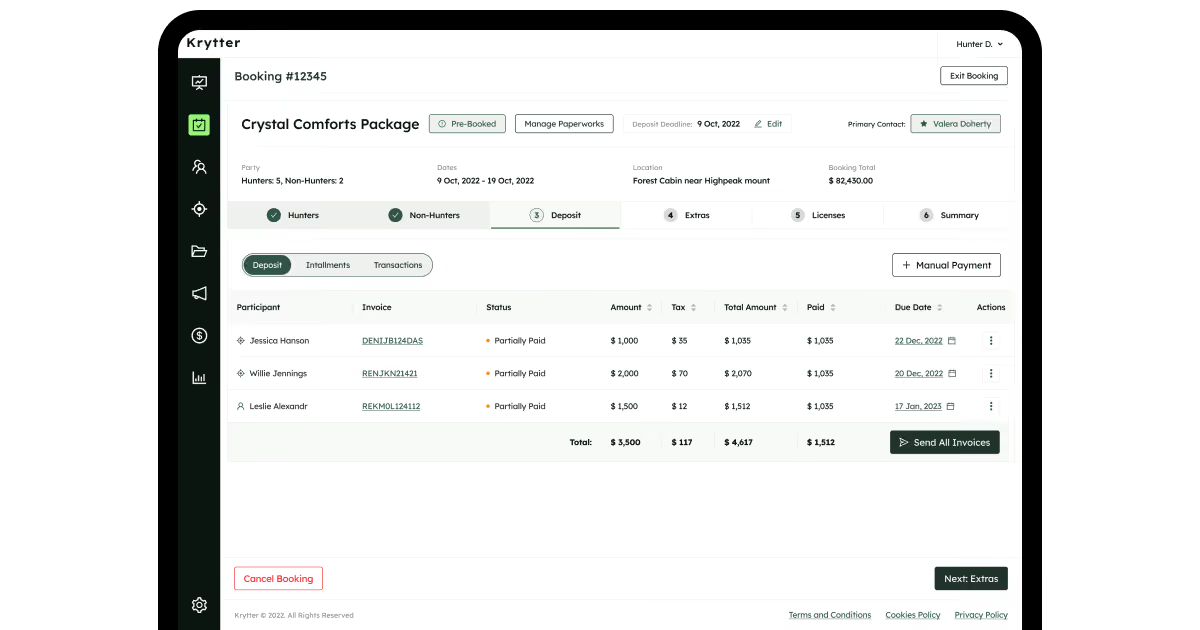
We built this logic into Krytter, our booking platform for guided hunting trips. Prices adjust by season, license type, and party size, and bookings often span years with payments split into installments. That kind of variable, trip-specific pricing is exactly what dynamic ticket pricing software needs to handle once "ticket" stops meaning a single fixed product.
Venue and experiential space providers
Not every business sells a ticket in the traditional sense. Some sell access to a space, and that space still needs demand-aware pricing to stay competitive.
On Lo:live, COAX's marketplace for experiential venues, landlords set pricing for future booking periods based on shifting market conditions. That's ticket dynamic pricing's core logic applied to real estate instead of seats: price ahead of demand, not behind it. The same principle that fills a concert hall also fills a retail activation space.
What are the benefits of dynamic ticket pricing?
Every pricing choice has a flip side. What helps a venue's revenue can hurt a fan's wallet. A solid dynamic pricing strategy tries to balance both, but the trade-offs are real. Algorithms streamline revenue strategy and convert complex data streams into automatic adjustments.
Run a venue and dynamic pricing works in your favor fast. Sell a hot show at full value instead of leaving money on the table. Fill a slow Tuesday matinee by dropping the price when demand looks thin. Both come from live sales data.
Sit on the customer side, and the upside looks different. Buy early, and you often lock in the lowest offer price. That's the trade you're making: commit sooner, pay less. Wait too long and the price climbs, but tickets usually stay available at some tier.
Higher revenue rewards organizers when demand spikes and shows sell out.
Fuller venues result when slow dates get priced to move.
Earlier commitment comes from fans who don't want to pay more later.
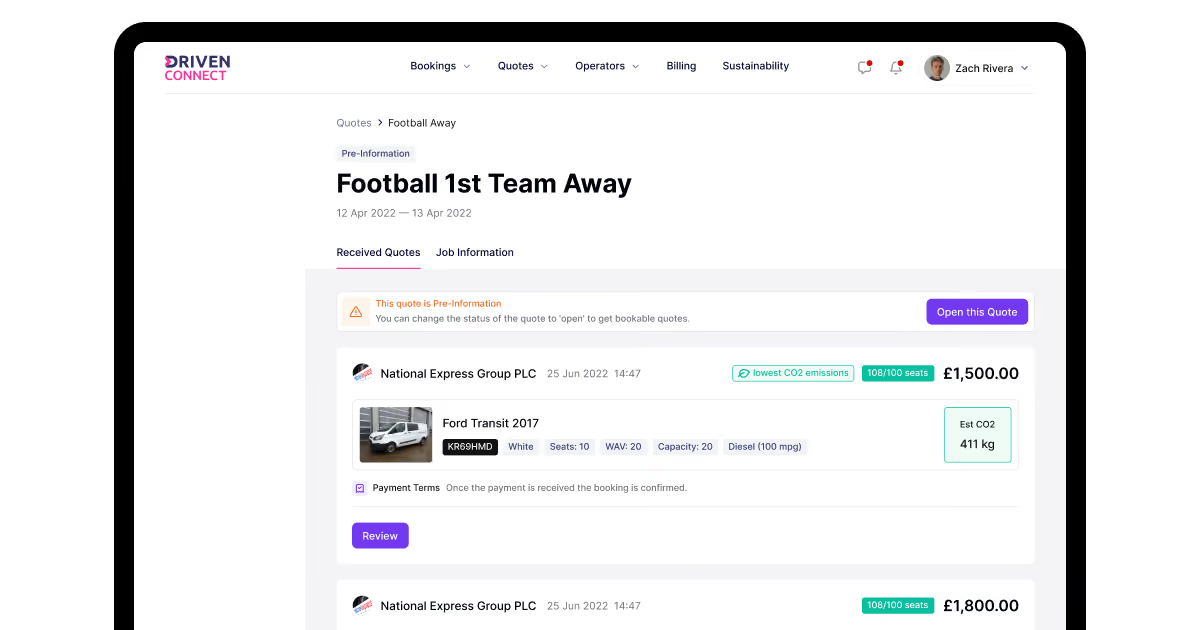
This same logic shows up outside ticketing too, wherever a price needs to reflect real conditions rather than a fixed number. Driven Connect, our platform for UK coach and minibus hire, runs on a similar principle. Buyers request a quote, and the system calculates a price from route, vehicle, and demand, not a flat rate card.
Automated repricing secures maximum returns while stripping friction from operations. Together, these gains explain why dynamic pricing AI technology keeps spreading past airlines and retail into live events.
Risks and challenges of dynamic ticket pricing software
Unchecked automated pricing brings distinct vulnerabilities that demand careful calibration. Sit in the organizer's chair again, and the risk is trust. Push prices up too fast, and fans feel like the target of a bait-and-switch. Push them up too often and even reasonable increases start to look predatory, whether or not that's true.
Sit as the customer now, and the frustration is different. You can't tell what a "fair" price even is anymore. One friend paid $40 less than you for the same seat. Airline ticket dynamic pricing trained travelers to expect this kind of swing, but tickets to a concert don't carry the same built-in acceptance.
Price wars are real. Competing automated systems can trigger unintended downward spirals. Neither side means to race prices to the bottom.
Customer backlash hits hardest when prices jump right after a sellout announcement.
Unclear baselines leave buyers with no fixed number to compare against.
Loyalty damage builds slowly as regulars feel priced out of shows they used to attend without a second thought.
Neither risk rules out dynamic ticket pricing automation. Both just confirm why floors, ceilings, and human review still matter. Strategic boundaries protect brand integrity when software drives commercial decisions.
How to build an effective dynamic pricing strategy?
"Every event has the same problem," says Orest Falchuk, Head of Engineering at COAX Software. "Demand signals show up constantly, but pricing doesn't react fast enough to use them. The event type changes. The pricing gap stays the same."
That gap is what solid dynamic pricing strategies close. Here's how to build one that actually holds up under real demand.
Define your triggers first. Decide what moves price: time to event, inventory left, or sales velocity. Pick two or three, not ten.
Set hard price bounds. A floor protects revenue on slow days. A ceiling keeps fans from feeling gouged on hot ones.
Test tiers before automation. Run manual price tiers for one event cycle. Learn how your audience actually reacts to price jumps.
Build in transparency. Show buyers why a price moved, even briefly. It's not a coincidence that clear pricing keeps loyalty intact.
Review weekly, not seasonally. Demand patterns shift fast. A strategy set once in January won't hold by June.
A pricing strategy is only as good as the system running it. Real-time triggers, price bounds, and tier logic all need a platform that can execute them without manual overrides. COAX builds this kind of infrastructure directly. Our work on flexible pricing controls for Lo:live shows the pattern: pricing logic has to sit close to inventory and demand data, not bolted on afterward. That's the same principle behind any dynamic ticket pricing software worth building.
If you're weighing custom booking software development against an off-the-shelf tool, the deciding factor is usually flexibility. Off-the-shelf platforms handle standard tiers well. Custom builds handle the pricing logic unique to your venue, your audience, and how fast your events actually sell.
Best software for dynamic ticket pricing
Event pricing tools don't compete on the same axis as retail pricing platforms. A retailer cares about competitor scraping and SKU-level margin. An organizer cares about tier logic, sellout timing, and fan trust. That's the lens we used to test each tool below.
We evaluated six criteria specific to event work: tier customization depth, real-time inventory sync, transparency toward buyers, secondary market handling, AI-driven demand forecasting, and how easily the tool plugs into an existing box office or CRM. Generic dynamic pricing tools built for retail often miss two or three of these outright, since they're solving a different problem.
Tool
Best for
Pricing model type
Integration depth
TicketCRM
Tiered structured pricing for mid-size venues
Tier-based, rule-driven
Native ticketing suite
PredictHQ
Demand forecasting layered onto existing systems
Signal-based, feeds external engines
API-first, no native storefront
SAP Event Ticketing
Enterprise venues already on SAP infrastructure
Promotion-based, campaign-driven
Deep SAP ecosystem sync
AXS
Large venue and arena-scale pricing
Hybrid tier plus algorithmic
Enterprise venue systems
Eventbrite
Small to mid-size organizer self-serve pricing
Manual tiers, limited automation
Native platform only
vivenu
API-first ticketing for brand-controlled checkout
Flexible, headless pricing logic
Full API/SDK, build-your-own
TicketCRM handles structured tier pricing well. It lets organizers set Early Bird, General, and final-push tiers, then automates the switch between them based on inventory thresholds. It's a strong fit for mid-size venues that want rules-based control without building custom logic. Where it falls short is forecasting. It reacts to sales pace but doesn't predict demand ahead of a release, so organizers still set tier boundaries by hand.
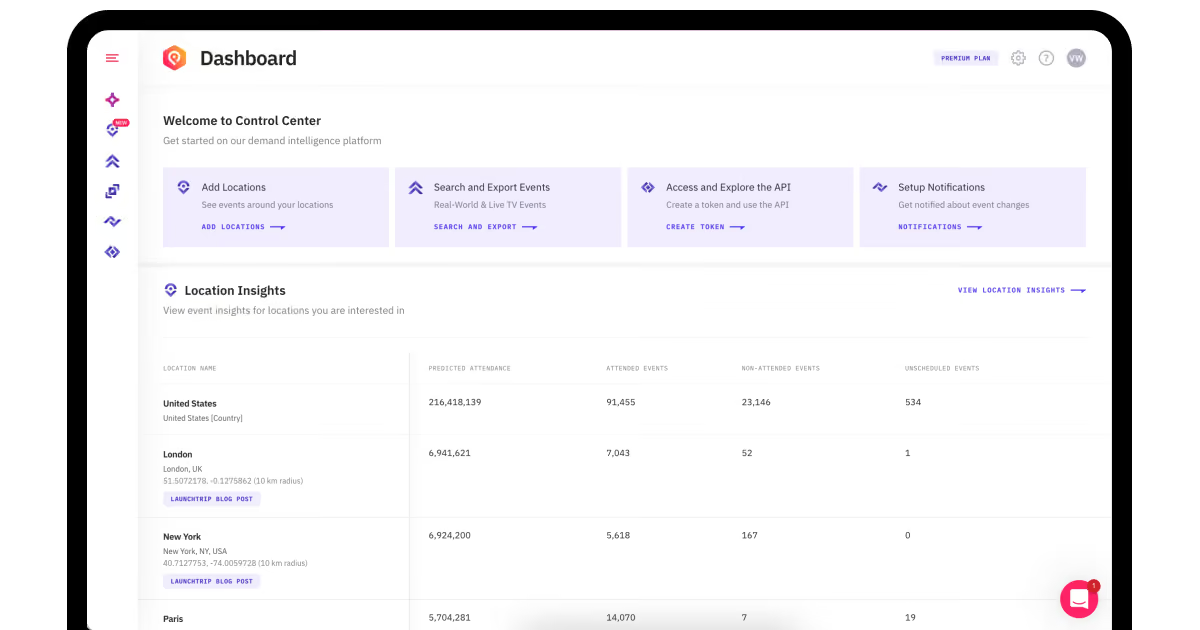
PredictHQ takes the opposite approach. It's not a pricing engine on its own. It's a demand-signal layer that feeds external factors like local events, weather, and holiday patterns into whatever pricing system sits on top. Teams that want genuine AI-based dynamic pricing often pair PredictHQ's signals with a rules engine like TicketCRM, since neither tool alone covers both forecasting and execution.
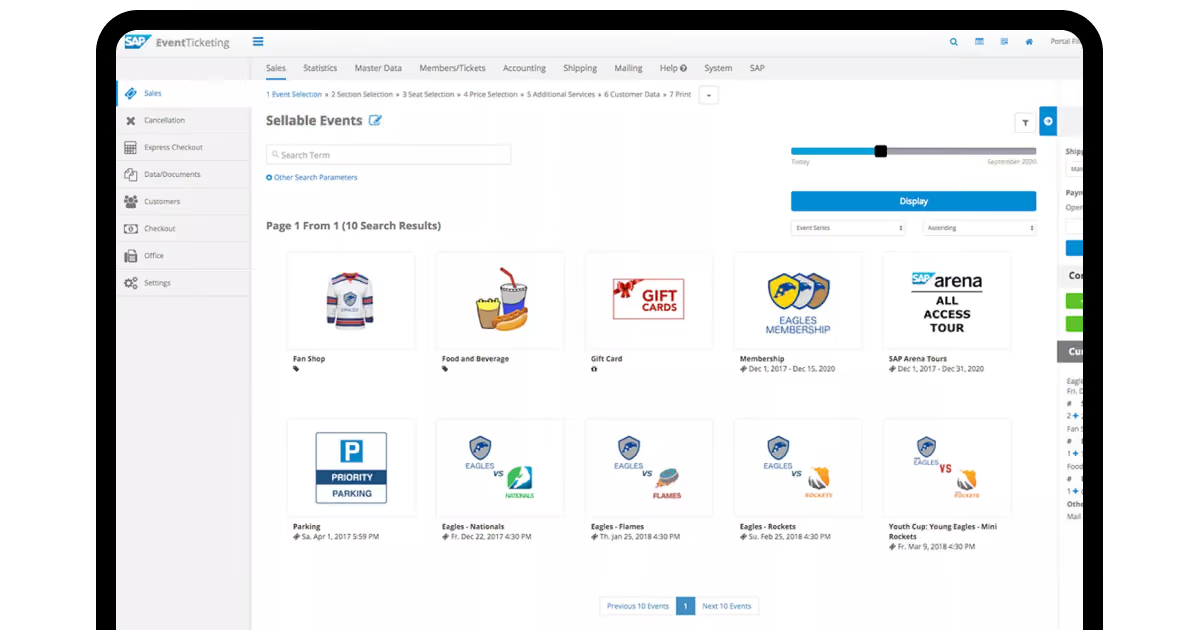
SAP Event Ticketing targets enterprises already running SAP infrastructure. Pricing sits inside a broader ticketing suite, with promotion codes, price reductions, and membership tiers configured through the same admin layer that handles sales channels and fee structures. Real-time analytics through SAP Analytics Cloud add forecasting depth, but the platform's real strength is scale and data governance, not speed of setup. Teams already on SAP get native connectivity; everyone else takes on a longer implementation.
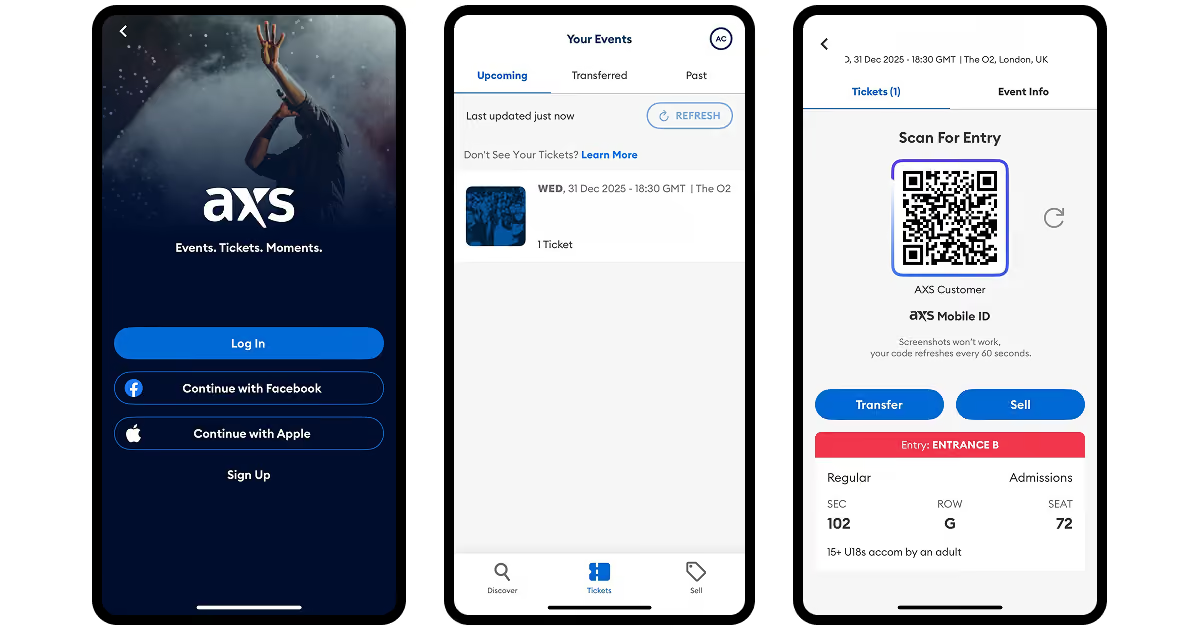
AXS operates at arena and stadium scale. Its pricing engine blends fixed tiers with algorithmic adjustments based on real-time sales velocity, but the setup overhead is significant. Small organizers rarely need what AXS offers, while large venues often can't do without it.
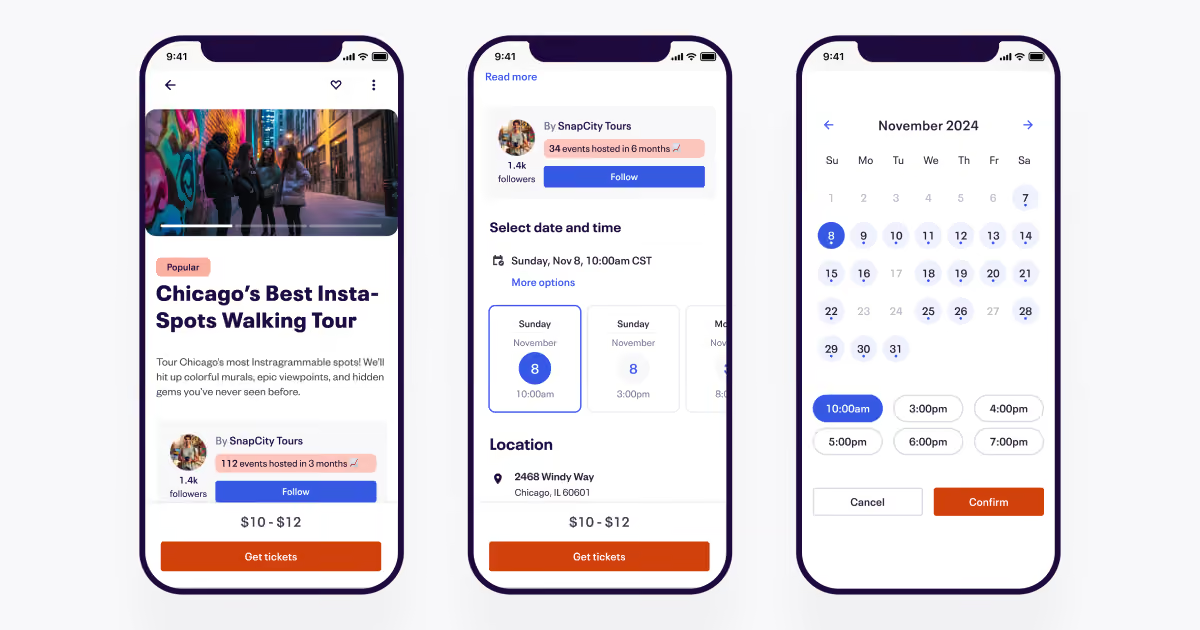
Eventbrite remains the easiest entry point. Its pricing tools are manual tiers with none of the automation the others offer. For dynamic ticket pricing in the fullest sense, it's a starting point, not an end state. Organizers who outgrow it usually move to something with real automation within a season or two.
vivenu takes a headless, API-first approach instead of a fixed pricing module. Organizers build pricing logic through the API and SDKs, which means tier structures, promotional pricing, and dynamic rules can be shaped to match a specific event model rather than fit into presets. That flexibility comes with a trade-off: teams need development resources to get real value, unlike a turnkey tool an organizer can configure alone.
No single tool covers forecasting, tiering, transparency, and resale equally well. Most organizers end up combining two, or building custom logic where an off-the-shelf tool stops short.
What to look at when choosing dynamic ticket pricing software?
Picking the right platform means matching features to your actual sales pattern. Here's what tends to matter most once you're past the demo stage.
Tier customization depth decides whether you can set your own price bands or you're stuck with presets.
Real-time inventory sync keeps prices accurate as tickets sell, instead of updating on a delay.
Forecasting quality determines whether the tool predicts demand or just reacts to it after the fact.
Transparency controls show buyers why a price moved, which protects loyalty over time.
Secondary market handling matters if resale is part of your revenue, and matters less if it isn't.
Integration depth with your existing box office, CRM, and payment stack avoids a costly rebuild.
Once you've weighed these against your sales volume, the next question is whether an off-the-shelf tool actually covers your case.
Off-the-shelf dynamic pricing tools rarely cover everything. Integrations, APIs, analytics depth, and forecasting models all vary, and gaps show up fast once volume grows.
That kind of gap is common across types of dynamic pricing, not just ticketing. Venues, tour operators, and marketplaces all hit the same wall: generic tools handle the standard case, and the differentiating logic has to be built. That's the case for custom software development for travel and event platforms alike, where the pricing model itself is part of the competitive edge, not a feature bolted on afterward.
We've built this pricing logic more than once, so we're not starting from a blank page. Domain expertise and existing integration patterns shave real time off delivery, and most engagements move noticeably faster than a generalist shop could manage. Our ISO 9001 and ISO 27001 certifications carry over here too, since ticket revenue data and booking contracts need that kind of governance regardless of event size.
If you need a team to cover custom pricing logic, integrations, and platform buildout under one roof, that's the kind of work COAX does for event and booking businesses.
FAQ
What is dynamic ticket pricing, versus a flat discount?
It's price movement tied to live demand signals, not a one-time markdown. A discount cuts price once and stops there. Dynamic pricing keeps adjusting as inventory, timing, and sales pace shift. Organizers running actual demand-based systems see revenue gains a flat discount can't match, since price tracks real interest instead of guessing upfront.
What's the real difference between dynamic ticket pricing vs variable ticket pricing?
Variable pricing sets different prices for different seat categories, fixed in advance. Dynamic ticket pricing vs variable ticket pricing comes down to timing: dynamic pricing changes those prices after launch, based on live sales data. A stadium might price front-row seats higher from day one; that's variable. If the price then climbs because tickets sell fast, that's dynamic.
Why does airline ticket dynamic pricing feel harsher than event pricing?
Airline ticket dynamic pricing optimizes for a single seat sold once, with no repeat relationship to protect. Event organizers depend on repeat attendees and loyalty over years. That difference shapes tolerance. A flight price jump gets forgotten after landing. A concert price jump gets discussed in fan forums for months, which changes how aggressively organizers should move price.
How fast can small venues test dynamic pricing strategies without a big budget?
Start manually before automating anything. Set two or three price tiers, track how fast each sells, then adjust the next event using real numbers. Most venues run this test for one full season before investing in software. Simple dynamic pricing strategies like this are cheap, fast, and show whether your audience responds to price signals at all.
When does dynamic ticket pricing software stop being worth the integration cost?
Below a few hundred tickets per event, manual tiers usually beat software cost. The math flips once you're running multiple venues or weekly events, where manual tier switching eats staff hours. We've seen platforms built for one venue struggle once a client scales to a portfolio. That's when dynamic ticket pricing software starts paying for itself instead of adding overhead.













































































.avif)


%20for%20hotels.avif)

.avif)
.avif)


.avif)




.avif)
.avif)


.avif)


.avif)

We are interested in your opinion