A returning guest arrives for their fourth stay. The receptionist remembers their preferred room. Marketing knows their booking history. The restaurant still treats them like a first-time visitor. The booking engine offers the same generic deal again. That is where loyalty starts breaking down. The hotel already has valuable guest data. The problem is that systems rarely share enough context. Rewards then become disconnected from the actual guest journey.
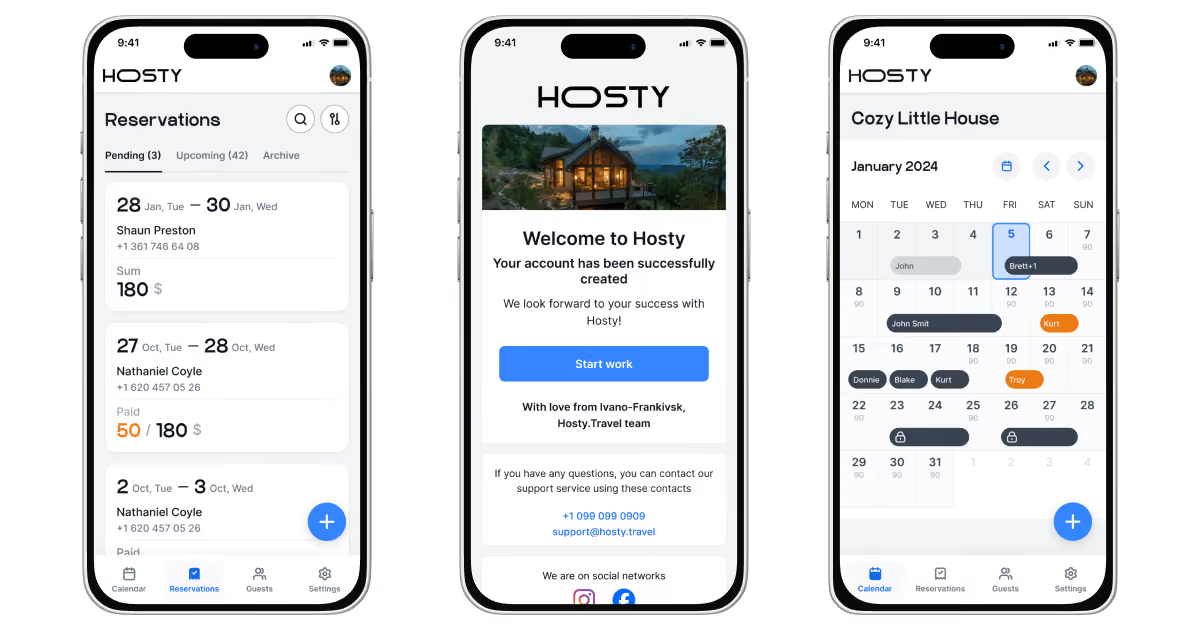
Hotel loyalty program software should fix that gap. It connects guest identity with bookings, spend, preferences, and rewards. The goal is not simply to issue points. The goal is to consistently recognize returning guests. COAX Software has spent 16+ years building travel technology. We have seen this problem from several angles, working on our cases. In Hosty, guest profiles connect with booking history. Re Plan required complex hotel booking and integration workflows.
These projects shape our view of loyalty architecture. Strong programs depend first on connected guest data. Rewards and tiers come later. This guide explains how hotel loyalty programs create measurable value. You will also see where implementation usually becomes difficult.
What is a hotel loyalty program?
A hotel loyalty program rewards repeated guest engagement. The reward usually reflects stays, spending, or status. Hotels receive something equally valuable in return. They identify guests across several transactions. The strongest programs also influence booking behavior. Loyalty becomes more than another marketing campaign. It becomes part of distribution and guest management.
Large hotel chains show this effect clearly. IHG One Rewards members generated 66% of global room nights. Those members also spent around 20% more. They were 10 times more likely to book directly. IHG reported these figures for 2025. Marriott shows a similar pattern at a larger scale. Bonvoy reached nearly 271 million members during 2025. Members generated 68% of global room nights. That share reached 75% across the US and Canada.
These results explain several hotel loyalty program benefits. Hotels gain stronger direct relationships with repeat guests. They also reduce reliance on third-party acquisition channels. Loyalty data reveals which guests return and spend. It also shows which benefits influence another booking.
Why do hotel loyalty programs matter?
The commercial value extends beyond room revenue. Members may spend on food and beverages. Spa treatments add another revenue stream. Upgrades and experiences create more opportunities. Hotels also gain first-party behavioral data. That matters when external acquisition becomes more expensive. The property sees preferences without relying on an OTA profile. Independent properties face the same challenge in different ways. They lack the distribution reach of Marriott or Hilton. Their guest populations are also smaller. Complex points economies may not make financial sense.
Independent hotel loyalty programs therefore need simpler economics. Direct discounts represent one option. Cashback provides another. Recognition benefits also work without complex currencies. This distinction matters because program complexity creates operating costs. Every points rule needs calculation logic. Every expiration rule needs customer communication. Each status level creates an additional service obligation.
COAX Software faced a related revenue problem with Hosty. We interviewed 12+ small property owners. Their priorities differed from our original assumptions. Owners relied heavily on major booking platforms. Commissions reached 15% to 20% in our research. Stable direct sales mattered more than booking organization. That discovery changed the entire product direction. We built direct booking tools instead of another complex PMS. The booking process takes under 60 seconds. Property owners also retain direct relationships with guests. Hotel loyalty works on the same commercial principle.
How does a hotel loyalty program work?
Hotel loyalty programs look simple from the guest side. Behind one reward, several systems must agree on identity, eligibility, value, and status. If one event fails, hotels risk duplicate rewards, wrong balances, or delayed benefits. Guest context must stay consistent across every transaction.
Guests earn value through several actions
Room spending remains the standard means of earning. Most programs award points from eligible hotel charges. IHG One Rewards currently awards 10 points per dollar. The rule applies across most IHG hotels. Some extended-stay brands use different rates. Hilton Honors also uses base points. Members receive 10 base points per dollar. Several Hilton brands use different earning rates.
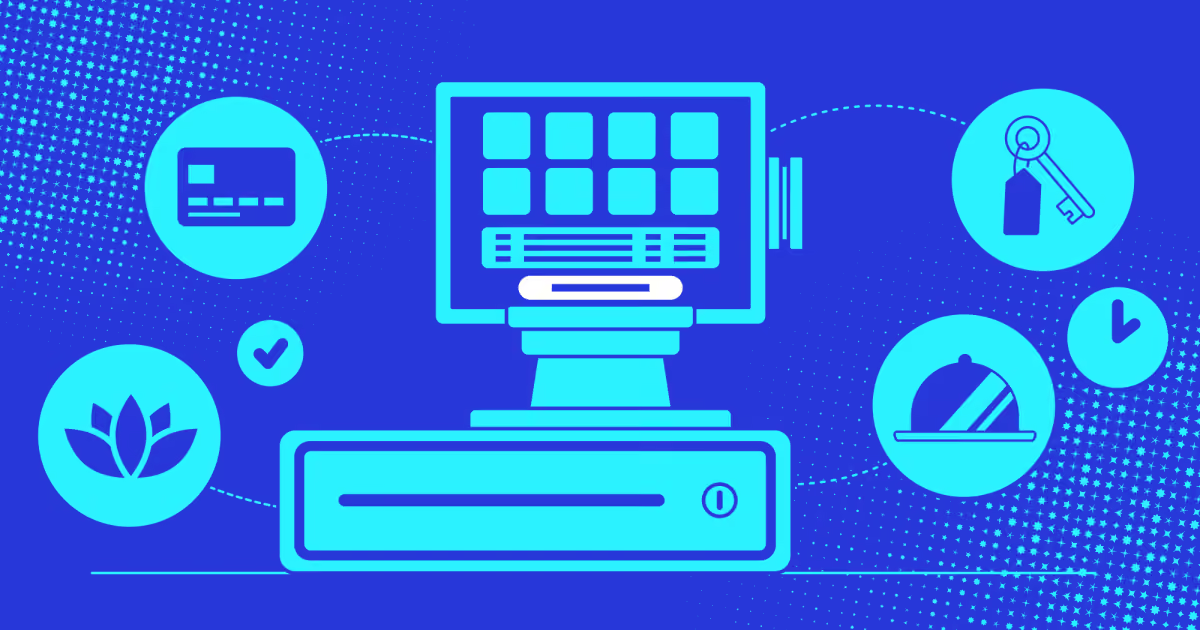
Programs increasingly reward more than room nights. Dining may generate points or credits. Spa visits may qualify too. Credit card partnerships create another earning channel. Experiences and partner transactions expand the ecosystem further. That creates more integration requirements. A PMS knows room charges. A POS knows restaurant spending. Another application may process spa treatments. Software needs eligible events from each system.
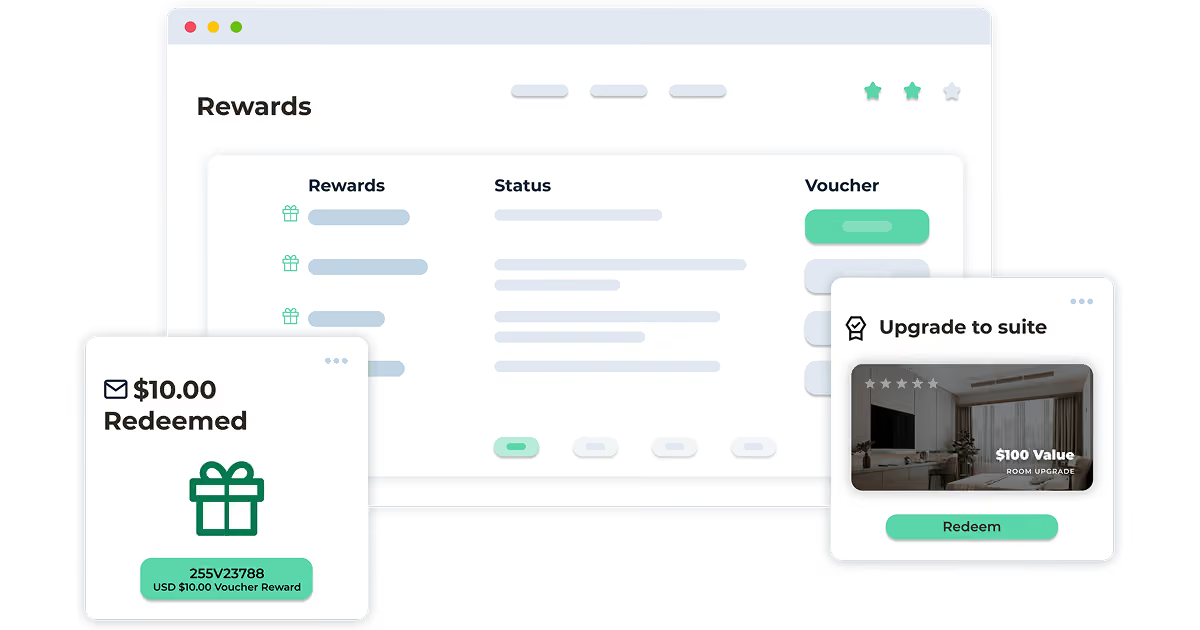
Redemption reverses that process. The platform confirms available value first. Then it checks redemption rules. Finally, it records the deduction. The balance must update consistently everywhere.
Different reward models solve different business problems
Points programs dominate hotel loyalty schemes. Guests collect a defined currency. They exchange that currency later. Tiered programs add recognition before redemption. Frequent guests unlock better treatment through status. For example, Milestone Rewards begin after 20 qualifying nights. Members receive another choice every 10 nights. The structure continues up to 100 nights.
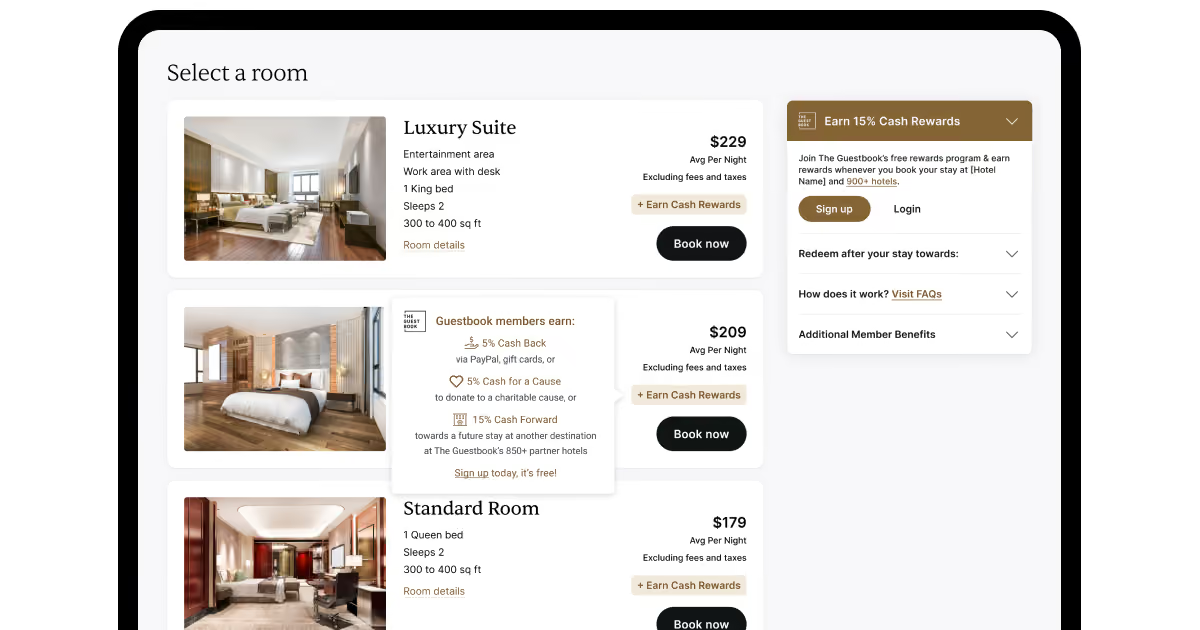
Cashback removes point valuation entirely. The Guestbook targets independent properties with this model. Its platform focuses on cash rewards and direct bookings. The member portal also tracks balances and trip history.
Coalition models connect several brands or properties. They give travelers broader earning and redemption opportunities. Experiential models take another route. They reward access rather than only discounts. Hotels may offer dining or event benefits. Each model changes software architecture. Points require a currency ledger. Tiers require qualification logic. Cashback needs payment settlement rules. Coalitions add partner accounting.
COAX Software worked with a similar multi-system problem in MICRM. The platform connects customer records with payments. It also includes analytics and marketing automation. Different users receive different CRM interfaces. That architecture offers a useful lesson in loyalty. Customer identity should remain separate from reward mechanics. A guest profile represents the person. The loyalty engine represents program value.
What do travelers actually want from hotel loyalty programs?
Global Hotel Alliance studied more than 9,000 travelers worldwide. Generosity ranked first among program priorities. It received 48% of responses. Simplicity and transparency followed at 16% each. Novelty received only 7%.Most respondents also use several loyalty programs. They typically participate in three or four. That changes the competitive question. A traveler doesn't choose between loyalty and no loyalty. They choose which loyalty ecosystem matters today.
Guests want reward value they understand
Guests shouldn't need spreadsheets for redemption value. They also shouldn't fear hidden expiration conditions. The 2026 GHA research reinforces this preference. Travelers prioritized simplicity far above novelty. Clear value makes a reward easier to trust. Cashback demonstrates this directly. The guest understands dollars immediately. A fixed-value currency creates similar clarity. Points remain useful when redemption feels predictable. Confusing conversions weaken that value.
Software should directly support transparency. Member portals need clear balances and expiration dates. Redemption interfaces need equally clear restrictions. Customer support should see the same information.
Guests want usefulness before elite status
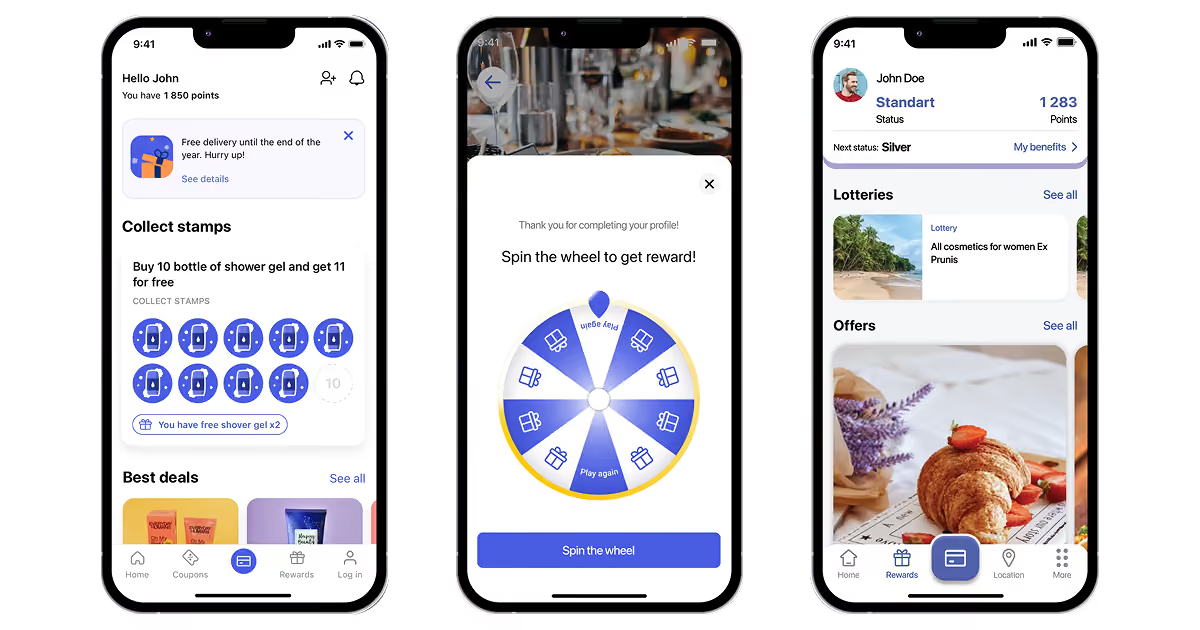
A new member shouldn't wait months for value. Hilton gives entry-level members immediate benefits. These include member rates and free Wi-Fi. Digital check-in also starts at base membership. Digital Key adds practical convenience. This creates a useful product principle. Enrollment should unlock immediate value. Long-term status should deepen that value. Software for hotel loyalty programs needs both mechanisms. One manages instant benefits. Another manages progression.
Guests want recognition that reflects real preferences
Rewards alone don't create customer loyalty in hotel industry settings. Guests also expect recognition. That may mean remembering room preferences. It may mean recognizing previous issues. A returning family may value connecting rooms. A business traveler may value reliable late checkout. This is where loyalty intersects with personalization in hotels.
The loyalty ID shouldn't become the personalization model. Status shows relationship depth. It doesn't explain the whole guest. Stay history adds context. Feedback adds another layer. Ancillary purchases reveal different preferences.
Don't assume what guests value. Validate it before building reward complexity. Interview frequent guests and recent members. Then test which benefits change behavior. The best loyalty design starts with observed needs.
What is hotel loyalty program software?
A mature platform manages tiers and benefits. It tracks partner activity and promotions. It feeds member data into guest-facing applications. The market reflects that broader role. Grand View Research values hospitality loyalty management at $2.13 billion. That estimate covers 2026. The market should reach $4.52 billion by 2033. The forecast represents 11.2% annual growth.
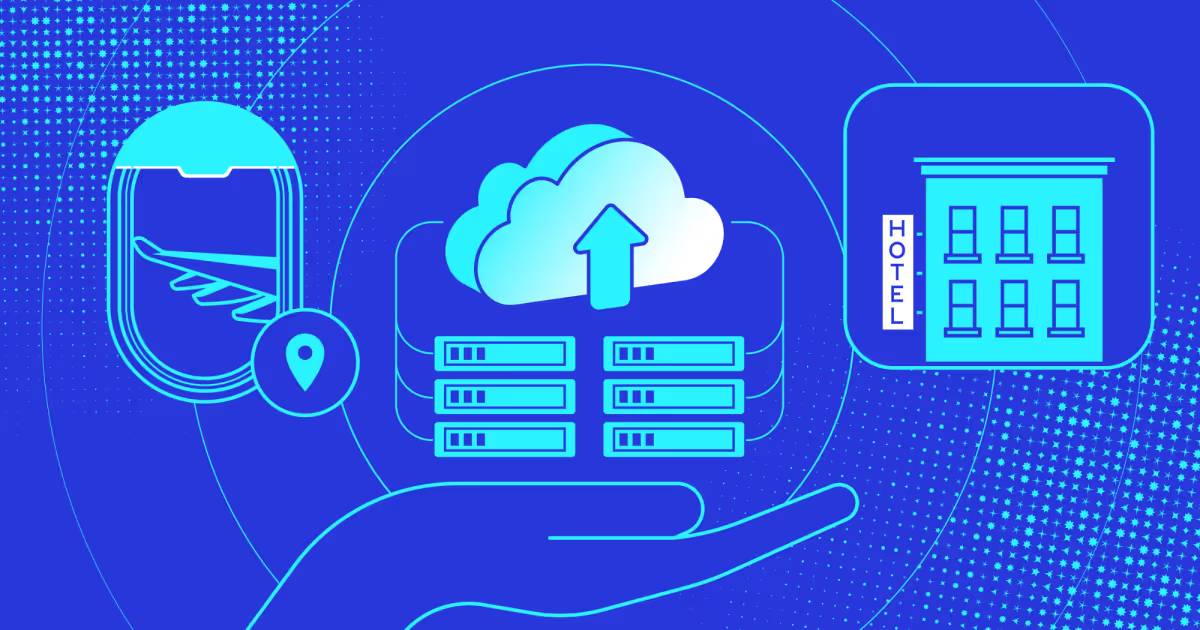
Growth alone doesn't explain the software shift. The bigger change involves architecture. Traditional loyalty databases often lived beside hotel systems. Modern loyalty programs software increasingly connects directly to operational applications.
A typical loyalty event starts with a guest action.
The PMS records a completed stay. The loyalty engine receives that transaction. It identifies the correct member.
A rules engine then checks eligibility. It calculates rewards from current program rules.
The loyalty ledger records changes in balance.
The CRM receives updated member information.
A mobile application may receive it too.
Cancellations follow another workflow. The hotel system reports the cancellation. Software for hotel loyalty programs identifies previous rewards. It then applies the configured reversal rule.
The same logic applies to refunded purchases. This architecture depends heavily on data ownership. The PMS should own completed stay data. The POS should own restaurant transactions. Software should own reward balances. The CRM should own communication attributes. Those boundaries prevent competing records.
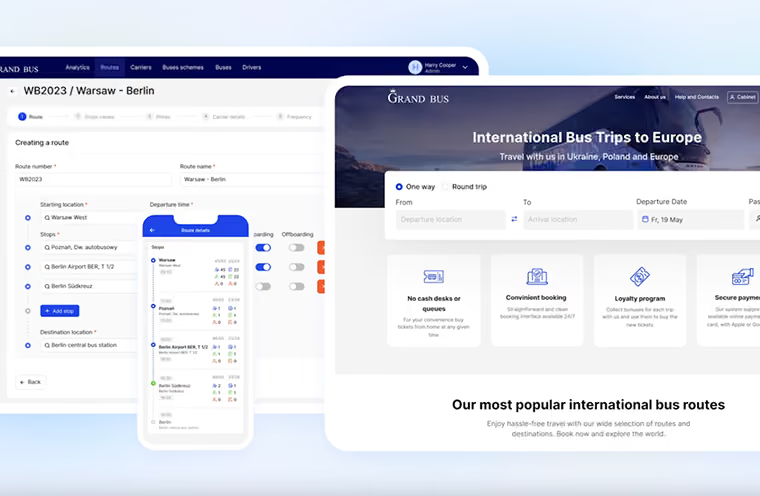
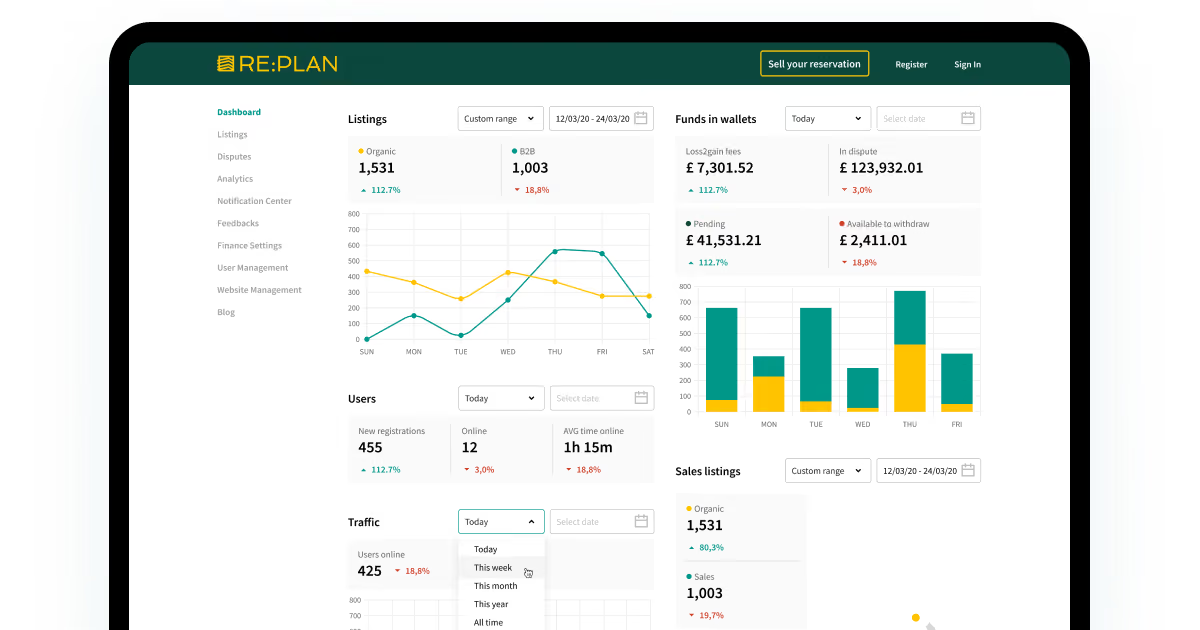
Our Re Plan work adds another technical perspective. Re Plan resells non-refundable hotel reservations. COAX Software handled API development and third-party integrations. The marketplace unifies hotel information from several systems.
Loyalty architecture faces the same integration pressure.
“We design the stack so data and context travel.” Orest Falchuk, Head of Engineering at COAX Software.
For loyalty programs software, that context includes membership. It also includes property and transaction data. Without that context, a points ledger becomes another silo.
What features to look for in hotel loyalty program software?
Hotel software must first preserve guest identity. Then it needs reliable transactions and rules. Integration quality determines whether those features stay trustworthy. COAX Software sees these dependencies across travel projects.
1. Unified guest profiles and identity resolution
Every loyalty balance belongs to one member identity. That sounds obvious until several systems create guest profiles. One booking may use a work email. Another may use a personal address. A spouse may book the next stay. The PMS may create another profile. Loyalty programs software needs identity resolution rules. The system should flag likely duplicates. Staff also need controlled merge workflows.
Software should preserve merge history. Customer records support multiple operational functions. Different roles access different CRM views. One reliable customer identity should feed every later workflow.
2. Flexible points, tiers, and reward rules
Marketing teams need program flexibility without constant code releases. Seasonal offers, new tiers, and partner rules change frequently. Deloitte found that four in five consumers value reward flexibility. Its loyalty research also shows only 60% feel satisfied with personalization. Software should therefore let program owners adjust approved rules safely. Antavo provides configurable currencies, tiers, and promotions without rebuilding core logic.
3. PMS, CRS, POS, and booking integrations
Loyalty data rarely originates inside the loyalty platform. The PMS reports completed stays. A booking engine reports reservations. The POS reports eligible ancillary spending. Another system may manage spa purchases. Loyalty programs software must reconcile those feeds. Each event needs a source identifier. Cancellation flows deserve equal attention. A canceled stay may require point reversal. A partial refund may need proportional adjustment.
Those cases create more problems than normal earning. Cendyn exposes a dedicated Loyalty API. Its documentation includes member profiles and preferences. It also uses property-specific identifiers. Antavo uses an API-first model too. Its 2026 Read API handles over 500,000 requests per minute. The vendor reports roughly 8,000 requests each second.
Scale matters, but failure handling matters equally. COAX Software learned that through Re Plan. The marketplace unifies hotel information from several external systems. API development and integrations sit at its core. A loyalty integration needs the same discipline.
4. Personalization and meaningful member segmentation
Not every loyal guest deserves the same offer. A frequent business traveler behaves differently from families. A spa-focused guest may spend less on rooms. Simple tier segmentation misses those differences. Software should combine status with behavior. Recency offers one useful signal. Frequency adds another.
Monetary value provides further context. The CRM layer then turns those signals into audiences. This is wherehotel personalization becomes practical. Loyalty should contribute data instead of replacing personalization.
For example, in MICRM, its customer data feeds analytics and marketing automation. The project also connects with ActiveCampaign. That separation is important. Hotel loyalty programs software determines reward state. Marketing automation determines communication.
5. Analytics, liability, fraud, and access controls
Loyalty creates both value and financial obligations. Issued points represent future redemption exposure. Unused points still need monitoring. Hotels should separate issued and redeemed value. Expiration needs its own reporting. Manual adjustments deserve another view. Fraud monitoring also matters. Shared accounts may create unusual activity. Manual balance corrections deserve review. Rapid reward movement may indicate abuse.
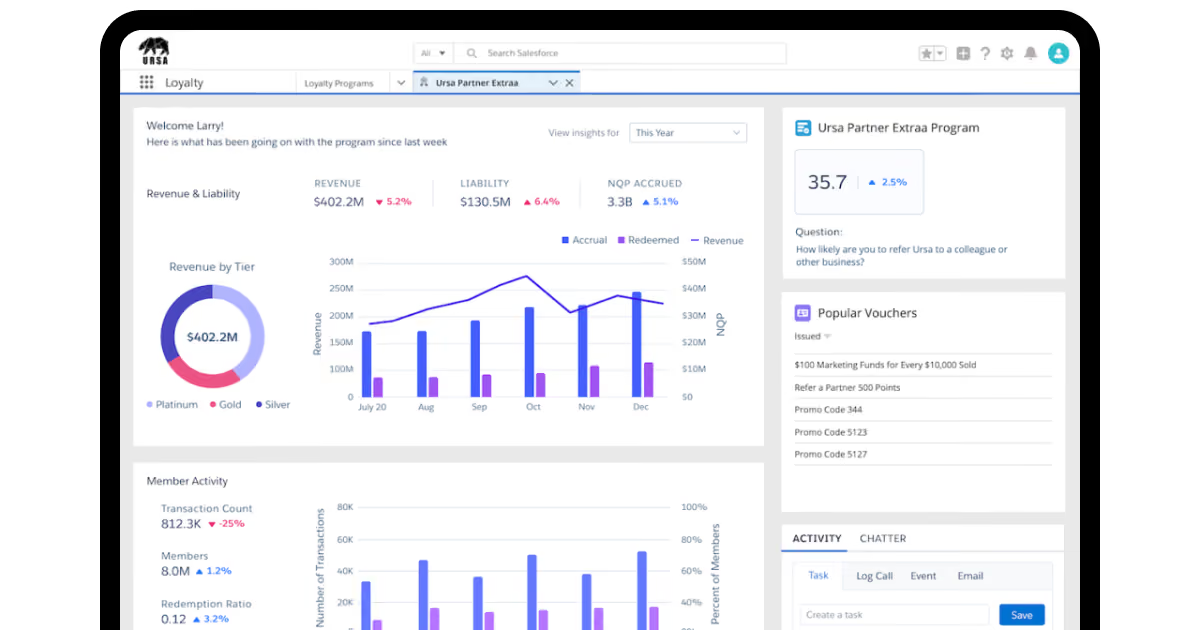
Salesforce Loyalty Management reflects these enterprise requirements. Its current capabilities include liability forecasting. Intelligent fraud management also appears within higher editions. Access control matters just as much. Front desk staff may need balance visibility. They shouldn't necessarily change balances manually. Finance teams need different permissions.
Administrators need another role entirely. Guest records remain connected to bookings. Loyalty program software needs equivalent permission boundaries. Every sensitive correction should record an actor. It should also record the previous state. That audit history becomes essential during disputes.
Best hotel loyalty program software
We ranked six platforms. We scored each platform across five criteria: hospitality fit (30%), integration depth (25%), reward flexibility (20%), data architecture (15%), and cost transparency (10%). Scores reflect public product documentation, published hotel cases, API documentation, and pricing available in August 2026.
This ranking measures hotel loyalty fit. It doesn't measure overall software quality. COAX Software uses similar criteria in travel development. With Re Plan, external data mattered more than surface features. With MICRM, customer context mattered across several workflows. Those lessons shaped this evaluation.
“The software never fails first. The workflow around it does.” Orest Falchuk, Head of Engineering at COAX Software.
Platform
Hospitality fit
Main strength
Best fit
Starting pricing
dailypoint Loyalty
Very high
Hotel CRM and loyalty
Hotel groups
From $300 monthly
Antavo
High
Flexible loyalty engine
Multi-brand programs
Custom quote
Cendyn
Very high
Hospitality CRM
Data-led hotel groups
From $900 monthly
The Guestbook
Very high
Cash rewards
Independent hotels
From $200 monthly
Comarch
High
Enterprise travel loyalty
Large travel groups
Custom quote
Salesforce
Moderate
Enterprise ecosystem
Existing Salesforce users
From $20,000 monthly
1. dailypoint Loyalty
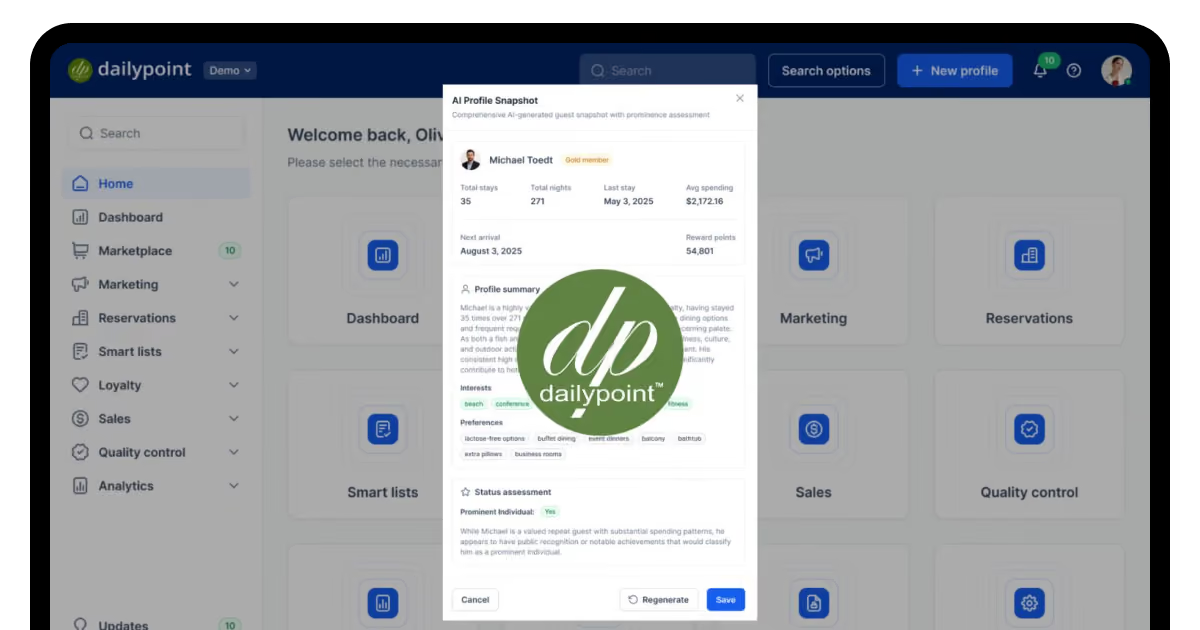
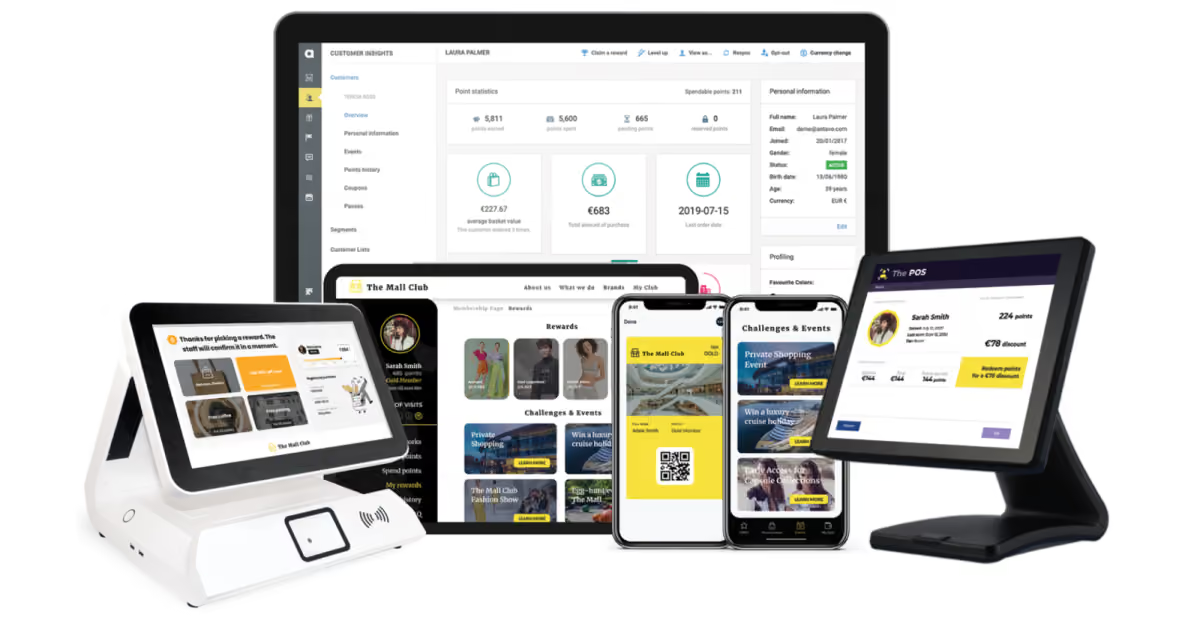
dailypoint ranks first in loyalty programs software for the hospitality specialization. Its loyalty platform sits beside hotel CRM capabilities. Guest data therefore stays close to rewards. The Rotana deployment offers useful production evidence. Rotana operates 76 properties. More than 650,000 members moved onto dailypoint. Historical points were preserved throughout migration. Guest data also became centralized.
That combination matters for established hotel groups. Migration isn't just importing customer names. Balance history needs exact preservation. Profile matching creates another challenge. Dailypoint's hotel-native design gives it an advantage here. Hotel Tech Report lists pricing starting at $300 per month. The current comparison was published in August 2026. Its limitation comes from platform breadth. Small hotels may not need the wider CRM footprint. Their programs may require simpler direct-booking incentives.
2. Antavo
Antavo offers the strongest reward configuration here. It supports currencies, tiers, promotions, and broader incentives. Its architecture is API-first. The platform also serves several industries. Hospitality is one supported vertical. Hyatt Inclusive Collection provides relevant hotel evidence. Its Confidant Rewards program uses Antavo. Reported program revenue increased 42% year over year. Hotel bookings increased 43%. The program processed 295,000 submitted bookings. Antavo publishes those results in its Hyatt case.
Antavo also reports 65+ automated Hyatt loyalty workflows. The platform supports marketer-controlled configuration. Its 2026 API development strengthens the technical case. The new Read API exceeds 500,000 requests each minute. The main limitation is hospitality specialization. Hotel integrations require architecture planning. A hotel-native CRM may need less adaptation. Antavo fits brands wanting differentiated reward mechanics.
3. Cendyn CRM and Loyalty
Cendyn approaches loyalty through guest data first. That makes segmentation its strongest advantage. Hotels receive loyalty beyond what hospitality CRM functionality provides. Its public Loyalty API supports member profiles. Guest preferences also appear within API responses. Hotel Tech Report lists Cendyn at $900 per month. It also shows centralized data capabilities. Segmentation and open API functionality appear in comparisons.
That structure suits hotels prioritizing guest intelligence. The tradeoff is breadth. A property wanting basic hotel guest loyalty programs may overbuy. It may not need extensive CRM automation.
4. The Guestbook
The Guestbook takes a different approach to hotel loyalty. Its model targets independent and boutique properties. Cash rewards replace more complicated points economics. The commercial evidence is quite strong. Alexis Park Resort generated $621,000 in annual room revenue through the program. It also reported a 44% guest enrollment rate. The vendor-reported case shows a 14.7x revenue-to-cost multiple.
Hotel Tech Report lists The Guestbook at about $200 monthly. Its reviews also provide useful third-party feedback on implementation. Our assessment is that The Guestbook offers one of the clearest value propositions for independent hotels. Guests immediately understand cashback. Hotels also connect rewards directly with booking conversion. Its limitation is configurability. Complex tier structures need a more flexible loyalty engine. Large multi-brand groups may also outgrow its model.
5. Comarch Loyalty Management
Comarch targets large, partner-heavy loyalty ecosystems. Its travel edition supports complex earning and redemption structures. The platform also handles multiple partners and large transaction volumes. A stronger proof point comes from Azul Airlines. Comarch supports the Azul Fidelidade loyalty ecosystem. The airline reported over 20 million members during 2025.
For this comparison, COAX Software reviewed public documentation and deployment evidence. Our assessment favors Comarch for large travel ecosystems. Its value grows when several partners share loyalty logic. Airlines, hotels, and other services may participate together. The limitation is implementation footprint. Independent properties rarely need this degree of complexity. Public fixed pricing also isn't available. Comarch fits large travel groups and partnership-heavy loyalty programs.
6. Salesforce Loyalty Management
Salesforce provides the broadest enterprise ecosystem here. Loyalty Management supports currencies and tiers. This loyalty programs software also manages benefits and partners. Higher editions support multiple programs. The platform integrates with wider Salesforce applications. Pricing makes the target buyer extremely clear.
Starter currently costs $20,000 per organization monthly. Growth costs $35,000. Advanced costs $45,000. Salesforce bills those editions annually.The platform also includes substantial event allowances. The Starter plan includes one million loyalty events annually. Growth includes 15 million. Advanced includes 50 million. This creates enterprise-scale capacity. It doesn't make Salesforce hotel-native. Properties need integrations with hotel systems. Existing Salesforce customers have a major advantage. New adopters should first justify the surrounding ecosystem.
How to choose and implement the best hotel loyalty program?
Implementation should begin with guest behavior. Then teams define data ownership and integration flows. Only then should configuration start.
Define the behavior worth rewarding.
Start with a business outcome. Direct bookings may be the priority. Repeat stays may matter more. Some properties need stronger ancillary spending. Choose one primary behavior first. Then define the reward economics around that behavior. This links loyalty directly with hotel marketing. Marketing generates demand. Loyalty should improve the economics of repeat demand.
Map every system before choosing software.
List the systems touching the loyalty journey. Start with PMS and CRS platforms. Add the booking engine and CRM. Include POS systems where relevant. Then add payment services and mobile applications. Define a single owner for each important record. The PMS may own completed stays. Hotel loyalty program software should own reward balances. The CRM should own campaign attributes. This prevents data conflicts.
COAX Software followed similar integration logic with MICRM. The platform connects suppliers and customer data. It also combines payments and analytics. Email automation sits beside those workflows. One source should own each state. Otherwise, correcting one record creates another mismatch.
Launch one complete guest journey first.
Don't migrate every property simultaneously. Choose one representative guest journey. Start with enrollment. Add a qualifying stay. Then calculate one reward. Continue through redemption and cancellation. That workflow should include abnormal cases. Test duplicate profiles. Test delayed transactions. Test refunded stays. Test manual corrections. COAX Software's Re Plan work illustrates this integration reality. Multiple systems contribute hotel information. The marketplace depends on consistent external data.
Customize only where differentiation matters.
Ready-made loyalty program software handles common mechanics well. Points rarely need custom engineering from scratch. Tier logic usually doesn't either. Custom work becomes valuable around unique workflows. Proprietary reward economics may require it. Multi-brand partner settlements create another case. Legacy PMS constraints often require custom integrations. Unique guest identity models may also need engineering.
This is where COAX Software's hotel management software development becomes relevant. Our approach preserves working platforms where possible. Then we build missing infrastructure around them. Hosty shows the value of discovery.
Don't rebuild standard loyalty mechanics without a business reason.
Key metrics to track
Once the systems are mapped and the pilot journey is running, a small, consistent set of metrics keeps the program honest:
Active-member rate: the share of enrolled members who actually engage, not just sign up
Repeat-stay rate: how often members return compared to non-members
Member direct-booking share: how much loyalty shifts traffic away from OTAs
Member revenue vs. non-member revenue: average spend per stay, not just per booking
Redemption rate: how many earned rewards actually get redeemed, and how quickly
Tier progression rate: how many members move up a tier within a defined period
Data conflict rate: how often records disagree across systems post-launch, a direct signal of whether the ownership model from step 2 is holding
Hotel NPS, tracked alongside the above rather than in isolation, to catch satisfaction issues that behavioral metrics alone might miss. Connect loyalty insights with hotel reputation management where practical.
We spent 16 years building booking platforms, reservation systems, marketplaces, concierge platforms, payments infrastructure, and supplier connectivity tools. Repeated exposure to similar challenges means COAX teams rarely start from zero. Domain expertise, proven architecture patterns, integration experience, and reusable accelerators typically deliver projects 50–60% faster than generalist firms.
If your loyalty program is stuck between "buy something off the shelf" and "build everything from scratch," that's usually a sign the real problem is upstream, in how your systems talk to each other, not in which vendor you pick.
FAQ
What is the best loyalty program for travelers?
No single program works best for every traveler. Hilton Honors offers member rates, flexible points, and digital hotel benefits. IHG One Rewards adds Milestone Rewards every 10 nights after 20 nights. World of Hyatt combines tier benefits with milestone choices and free-night awards. Compare property coverage, earning rules, redemption value, and benefits. COAX Software recommends judging realized value against your actual travel patterns.
Which hotel chain has the best loyalty program?
The answer depends on where and how you travel. Marriott Bonvoy covered 9,805 properties at year-end 2025. Hilton Honors approached 250 million members across 9,000 hotels. IHG One Rewards exceeded 160 million members across 6,963 hotels. Compare property coverage, reward value, and benefits against your actual travel patterns.
How much does hotel loyalty program software cost?
Pricing varies widely by program depth. Hotel Tech Report lists dailypoint starting at $300 per month. The Guestbook starts around $200 there. Cendyn starts near $900 monthly. Salesforce Loyalty Management starts at $20,000 monthly. Integration adds separate costs. Migration and ongoing administration matter too. COAX Software recommends comparing three-year ownership costs before making a decision.
What integrations should loyalty programs software support?
Loyalty programs software should connect core hotel systems first. PMS and booking engine integration usually matters most. CRS, POS, CRM, and payments often follow. Each integration needs clear data ownership. COAX Software tests cancellations, duplicates, delayed events, and reversals. Our Re Plan project reinforces that approach. Integration failures usually occur around exceptions rather than standard transactions.
How should hotels measure hotel guest loyalty?
Start with repeated behavior rather than membership totals. Track active members and repeat stays. Compare direct-booking rates between members and non-members. Measure member revenue and redemption activity. Reward liability deserves separate monitoring. Add hotel NPS for sentiment context. COAX Software also connects customer analytics with operational records. MICRM demonstrates why a single metric rarely captures loyalty on its own.
When does custom hotel loyalty software make sense?
Custom loyalty program software makes sense around unique business rules. Proprietary rewards may justify custom development. Complex partner settlements provide another reason. Legacy hotel systems may also require tailored integrations. Standard points logic rarely needs rebuilding. COAX Software provides hotel management software development for those gaps. Preserve proven components and customize the differentiated layer.

































































.avif)


%20for%20hotels.avif)

.avif)
.avif)


.avif)




.avif)
.avif)



.avif)

.avif)

We are interested in your opinion