Travel companies compete for ever-shrinking customer attention. On average, workers in the US get just 10 to 21 days of paid leave. Sixty-seven percent of travelers would take a cheaper fare over plush perks. That's according to a recent Forbes Advisor survey of 1,000 U.S. adults. Lie-flat seats and suite upgrades? Nice to have. Price still wins.
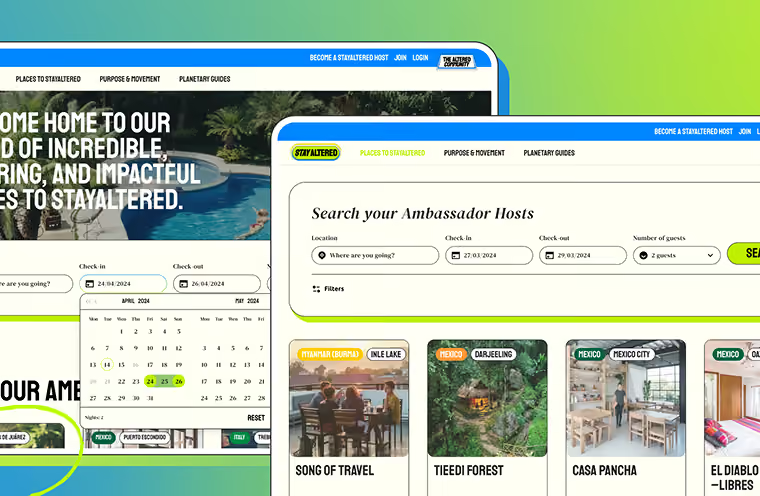
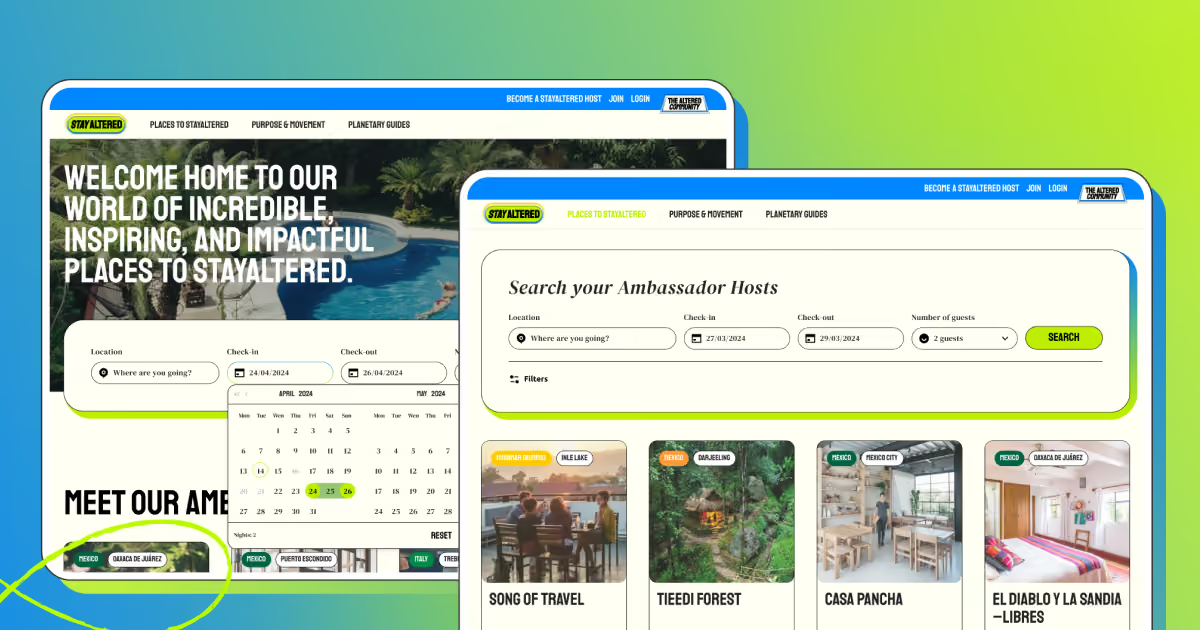
A travel rewards program sounds simple. Until you actually build one. Which structure actually fits your business? What tech stack won't buckle later? COAX Software has built travel technology for 16 years. We’ve seen this firsthand with Stayaltered. The company offers great prices and then combines them with unique experiences. Users get rewards that reach up to 50% for locations with eco-badges. Thanks to this, Stayaltered cooperates with 170+ verified eco-friendly locations on its platform.
In this article, we discuss one of the strongest ways to compete through retention: travel reward programs. Expect a clear map of your options, real numbers, and the clear algorithms for implementing travel rewards.
What is a travel rewards program?
A travel rewards program is a system of bonuses that clients get for using travel and tourism services. For example, Delta Airlines offers a complex system of air mile travel rewards. They call it SkyMiles. Customers who register for this program get special bonuses called "miles" for traveling. They can later use them to purchase more tickets or premium services like free drinks.
Do you want to attract first-time travelers? Focus on cashback or points that can be easily redeemed. Without bonuses, they'll likely look for the cheapest service online next time. Bonuses give them an incentive to return so as not to waste points or lose cashback.
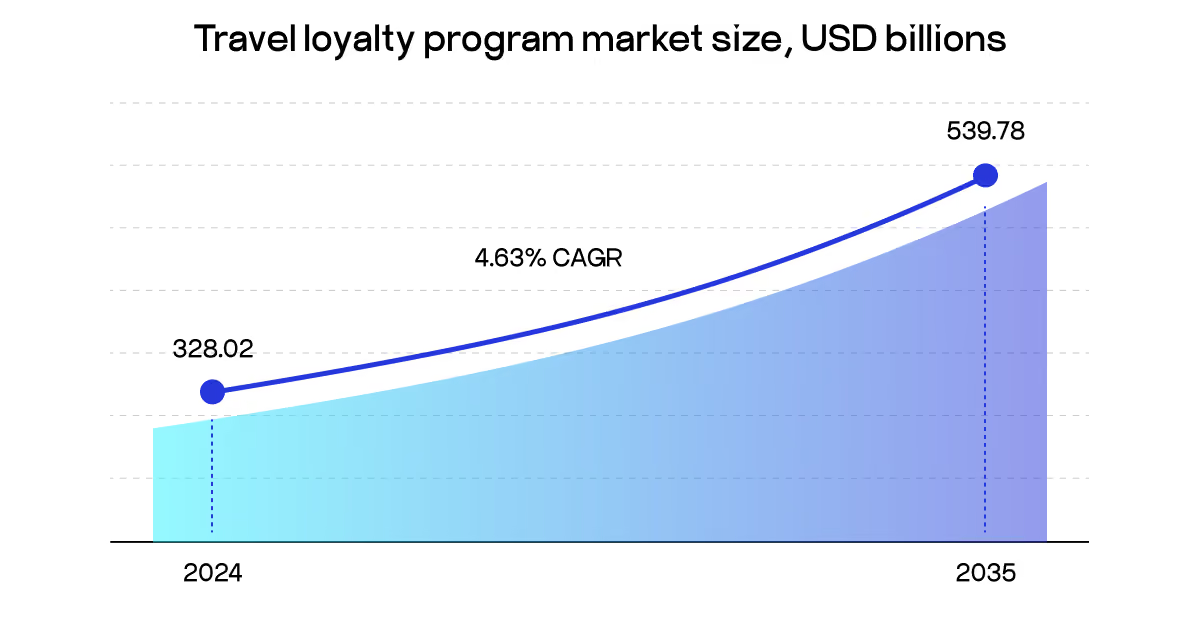
Travel rewards programs turn your customers into word-of-mouth advertisers. Programs like World of Hyatt enjoy a cult following. They've dedicated fan bases that not only actively follow them on social media but promote those programs. For this reason, the market for those services is growing fast. In 2024, the travel loyalty program market amounted to $328 billion. Market Research Future reports that it'll reach $539 billion by 2035. CAGR for it will be 4.63%. The key driver of this growth is the growing digitalization of rewards. All big players on the market try to push their reward programs onto apps and sites.
Digital travel reward programs are a must today. Transportation providers claim that people between the ages of 25 and 44 are their most active users. These customers simply won't use rewards if they can't find them online. An app on the Play Store and App Store makes your travel reward program visible.
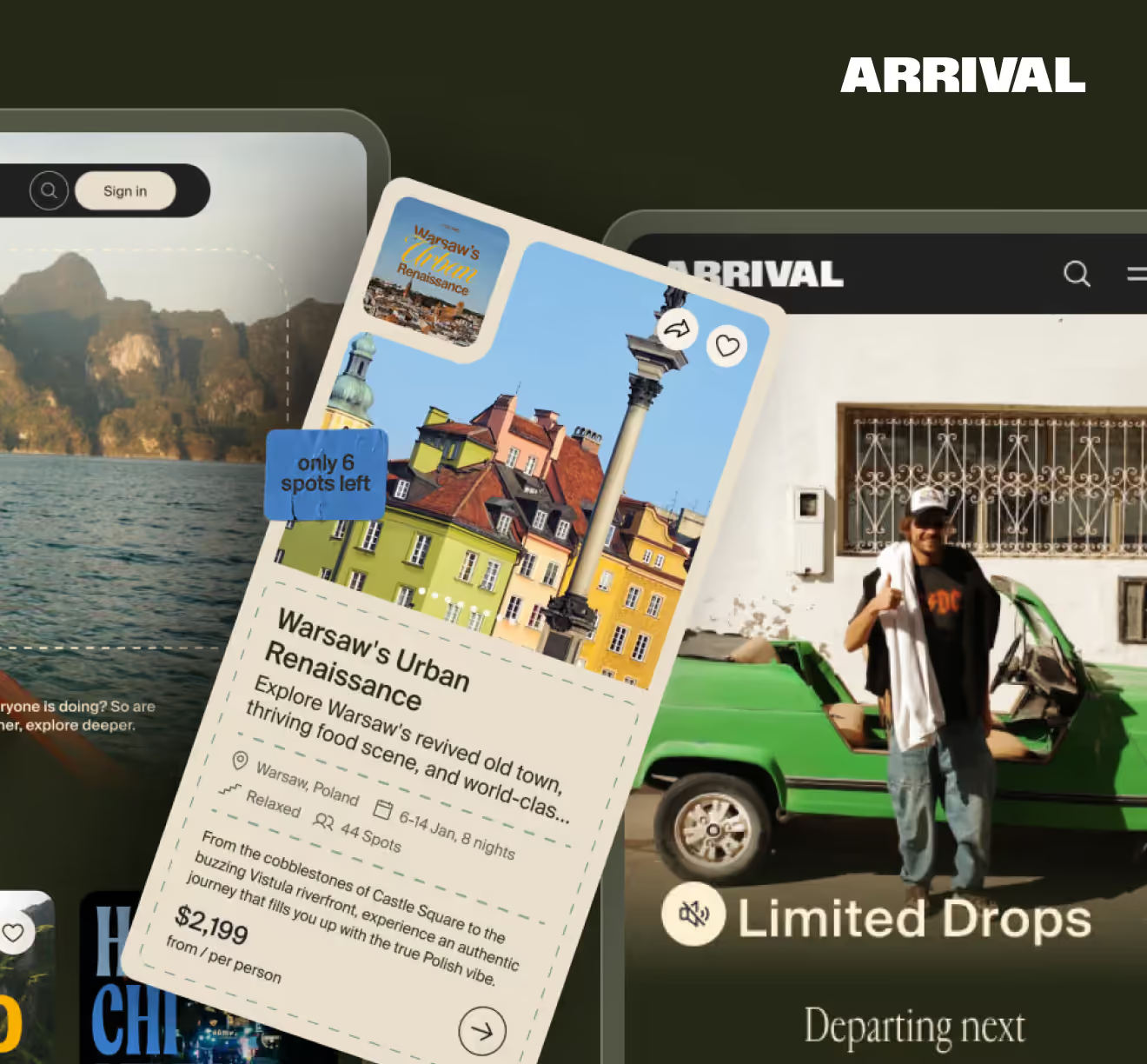
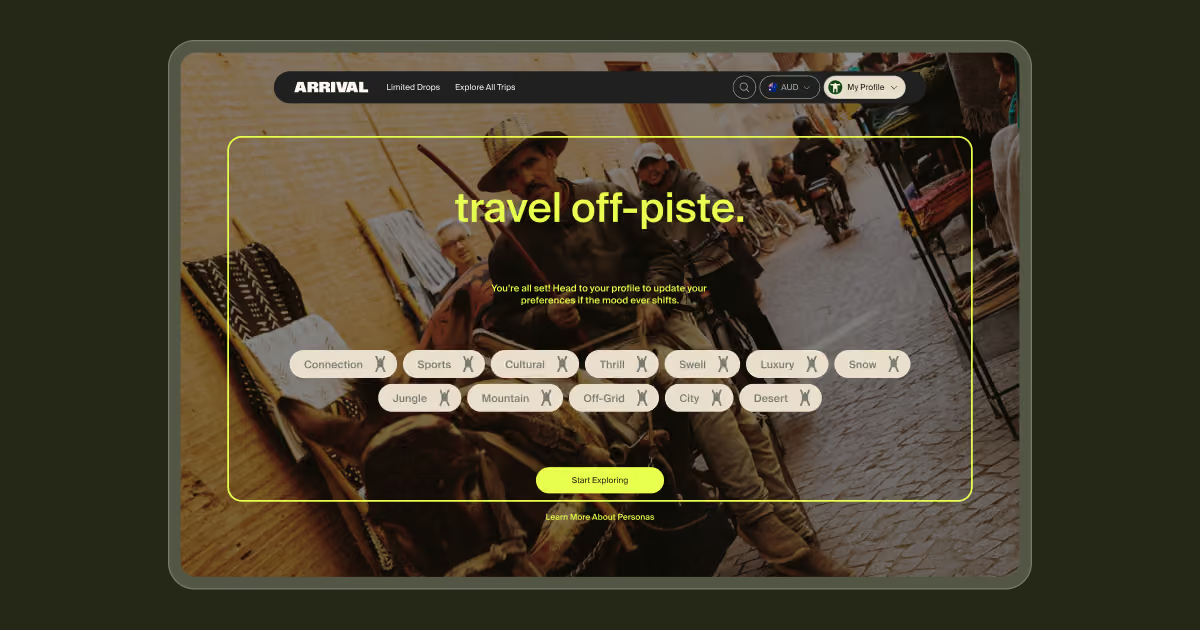
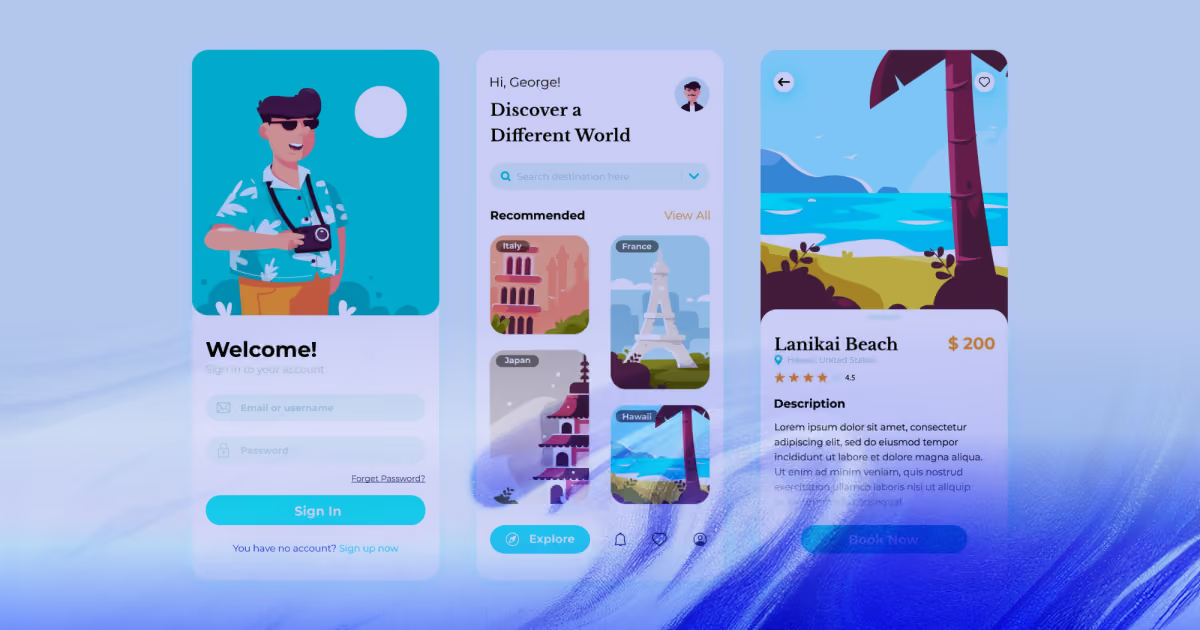
Personalization matters a lot here too. At COAX Software, we’ve seen how much a personalized travel feature or program can attract the categories of tourists the brand benefits from. For instance, on Arrival, we built a persona quiz that matches travelers to trips. That same logic fits rewards too: personalized perks beat generic points.
How does a travel reward program work?
Nearly every program among today's travel rewards programs runs on one loop: earn, hold, redeem. The currency changes by brand. The mechanics repeat across nearly every industry. Three structures cover almost every program you'll meet: rewards travel points, cash back, and tier status.
Our client, Stay Altered, built exactly this loop for independent hosts. Guests earn nine percent back on standard bookings. Sustainable stays with the platform's eco-badge earn fifty percent instead. Those earnings turn into travel credit toward future stays, local experiences, or community donations. COAX built the integration layer behind it, connecting Katanox and Hyperguest so availability updates in real time. It's a working example of a reward system running on one of today's vacation rental platforms, not just a slide-deck concept.
Type
How you earn
How you redeem
Value stability
Points and miles
Per dollar spent or mile flown
Flights, rooms, partner perks
Variable, shifts by redemption
Cash back
Fixed percentage per purchase
Statement credit, deposit, gift card
Stable, fixed rate
Tier status
Spend or flight volume
Upgrades, priority, lounge access
Temporary, resets in 12–14 months
Points and miles
Points and miles work like a currency with a floating exchange rate. You earn them per dollar spent or mile flown. Redeem them for flights, rooms, or partner perks, and their value shifts depending on the redemption.
Flexible bank points: earned through card issuers like Chase Ultimate Rewards, transferable across airline and hotel partners.
Variable value: worth changes based on where and how you redeem.
Bank points give you options. Co-branded miles lock you into one ecosystem instead, so pick the structure that matches how loyal you already are.
Cash back
Cash back skips the redemption math entirely. You earn a fixed percentage, usually one to two percent, on every purchase. That amount lands as a statement credit, deposit, or gift card. No valuation guesswork required.
Fixed return: a straightforward percentage back on your spending.
Simple redemption: converts directly into cash, no transfer step needed.
Fewer perks: rarely includes lounge access, checked bags, or elite status.
Cash back trades flexibility for certainty, which is why simplicity-seekers pick it over miles.
Tier status
Tier status rewards volume, not dollars redeemed. Fly enough miles or spend enough with one brand, and a tier unlocks. Each tier layers on real perks, and most reset if you skip a year.
Elite recognition: earned through a set number of miles flown or dollars spent.
Expiration: typically resets after twelve to fourteen months of inactivity.
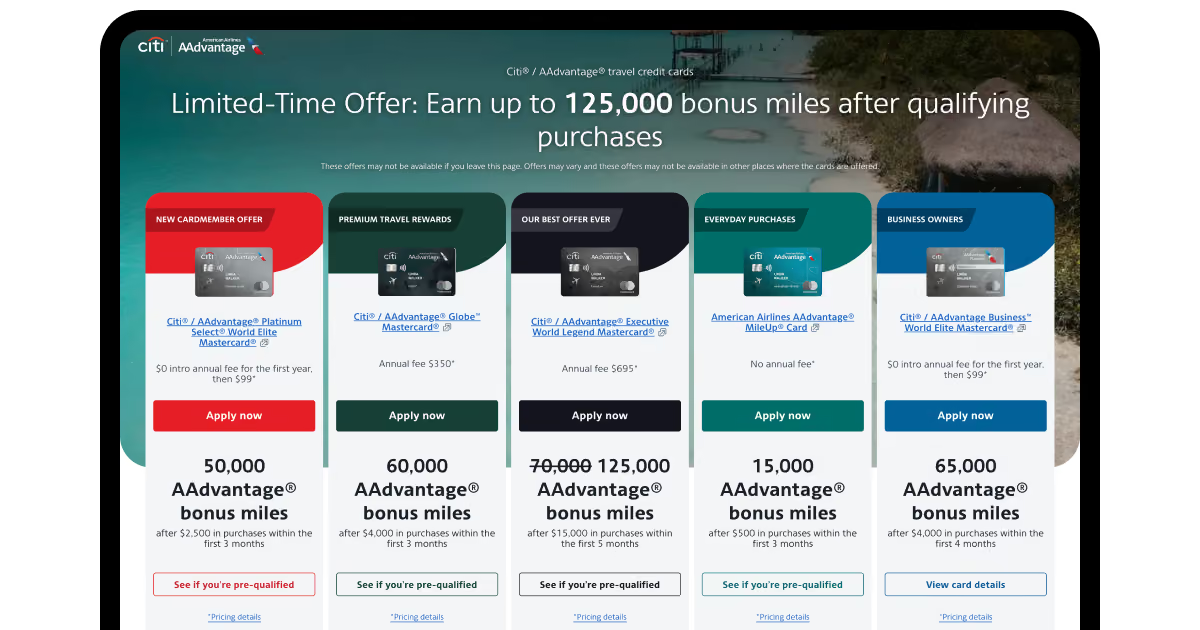
Airlines built entire status ladders around air mile travel rewards. American's AAdvantage program even collapses everything into one metric, Loyalty Points, blending flights, card spend, dining, and partner activity into a single number. Reach 40,000 points and you're Gold. Reach 200,000, and you're Executive Platinum, no minimum flights required.
Which structure fits your business depends on the behavior you want to reward. Airlines, hotels, and card issuers each answer that question differently, and that's exactly where program types start to split apart.
What types of travel rewards programs are available?
We've helped our partners develop travel rewards around subscriptions, cashback, limited drops, and points. Each solution assisted them with targeting different retention problems. Here's a list of the most popular types of travel rewards programs:
Airline frequent flyer programs
12% of customers take 66% of all flights in the US. If you manage an airline, frequent fliers likely account for most of its revenue. Many of those people travel for professional reasons. These are business experts, travel bloggers, and academic researchers.
They're very sensitive not only to bad but also to mediocre service. When you need to visit a conference 10000 kilometers away from your home country, comfort takes priority. Frequent flyers often compare various airlines and look for something reliable. SBS News reports that whole forums and video channels focus on airline reviews. Big brands like Delta or Ryanair face constant scrutiny: consumers look for impeccable service.
A frequent flyer program integrated with a well-designed app is a powerful tool for ensuring customer loyalty. Programs of this type improve user comfort and provide many vital services. American Airlines AAdvantage provides free Wi-Fi, premium lounges, and integration with partners. It works both with other airlines and large events like the FIFA World Cup 2026. For your company, programs like this one give users a reason to stay. Instead of hunting for the lowest ticket prices, they'll target bonuses in your system.
American Airlines AAdvantage reward program
Moreover, aviation travel rewards go beyond simple cost-benefit analysis. People remember and cherish experiences the most when they're formed into a story. We forget isolated events. A single flight without any reward systems will fade into obscurity. Offer users a system, and they'll form narratives and even quests. Frequent flyer programs form an organic social media presence. They inspire YouTube channels and subreddits made by your fans for your fans. For instance, our partners at Arrival gained 20000 weekly active users thanks to their social media presence. Founded by two of Australia's most followed content creators, Arrival shows the power of online communities.
Hotel loyalty programs
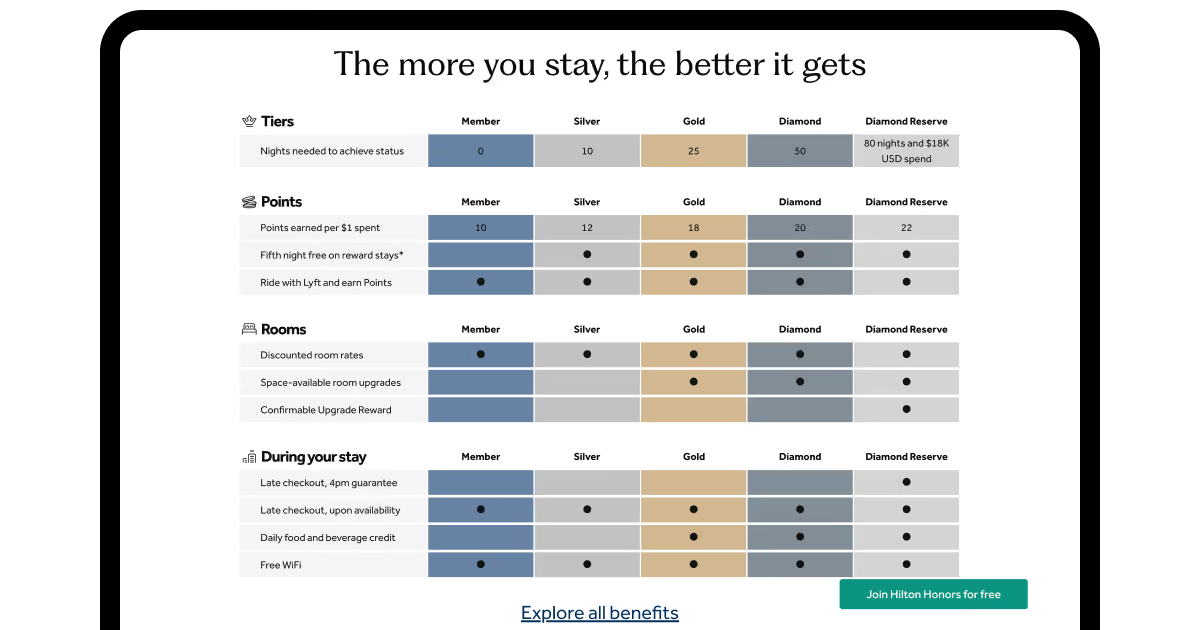
Hotel loyalty programs are similar to those in airlines. They offer returning customers various bonuses based on subscriptions or collected points. Hilton Honors program, for example, gives its subscribers discounts and free services. High subscription tiers even receive a "fifth night free" bonus for long bookings.
Hilton Honors program
If your hotel doesn't have a loyalty program, it loses between 25% and 50% of additional revenue. In 2014, Cornell University researchers demonstrated how transformative hotel loyalty programs are. They studied the effects of connecting independent hotels with a shared loyalty program. When connected in one loyalty network with bonuses for customers, their revenues grew by 50%.
A hotel loyalty program gives your customers convenience and a goal. On the one hand, bonuses for repeated stays stack up, saving both time and money for them. On the other hand, they also associate your hotel brand with a narrative, a story. The logic here is similar to frequent flyers. There are thousands of hotels and hotel chains across the world. Hotel travel rewards programs make yours stand out. Big hotel chains with loyalty programs earn up to 60% of their revenues from repeat customers.
That's the same commission gap small property owners face outside the hotel world too. We built Hosty on a similar principle, letting owners keep bookings direct and commission-free. Since owners pay nothing per booking, they reinvest the full revenue back into their properties.
Credit card travel rewards
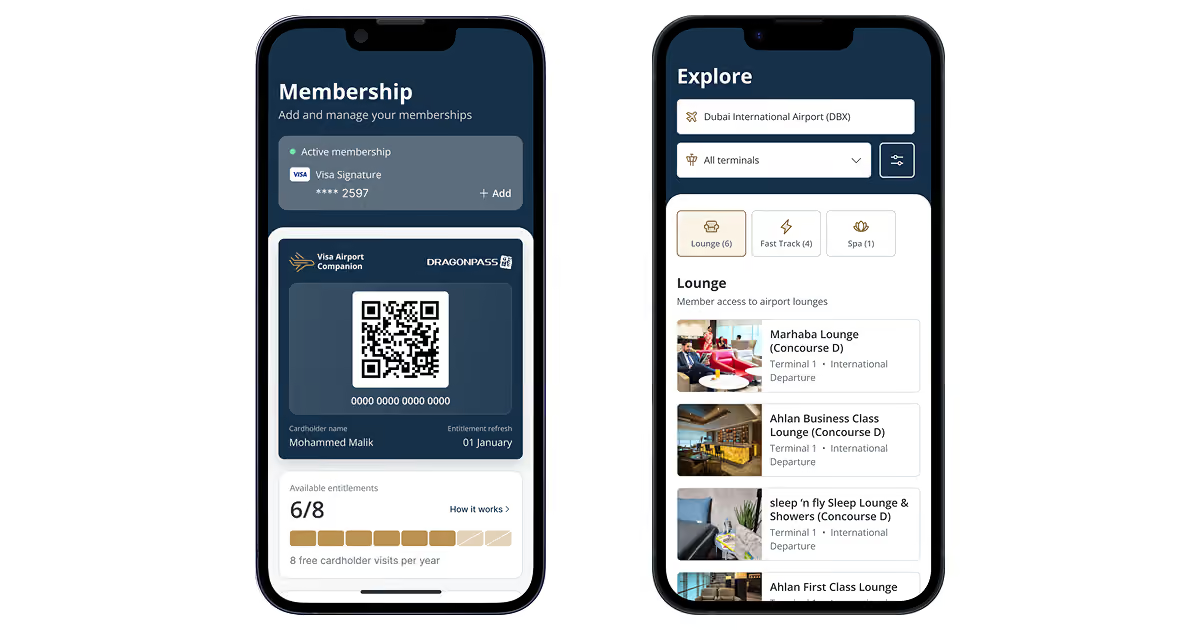
Credit card travel rewards are bonuses from banks or fintech for purchases during travel. They take many forms: cashback, travel reward points, and even subscriptions. These are options used by banks like Capital One and Chase. For instance, premium credit cards from Visa offer access to high-quality waiting lounges.
Visa Airport Companion
58% of Americans name credit cards as their favorite method of payment during travel. That’s why you can’t ignore travelers in your financial services. Competition in this market is large. Any inconvenience means immediate loss of consumers. They'll simply go to competitors who offer better options. How to overcome this problem?
Cardholders who want to discover travel rewards without transfer-ratio math often start with a flat cash-back card first. Chase Ultimate and Amex Membership Rewards both work as flexible bank points, transferable across a dozen-plus airline and hotel partners. Discover it Miles takes the simpler road: it matches your first year's cash back automatically, dollar for dollar.
We focus on integrating as many fintech services as possible during development. In our Hosty case, we integrated multiple payment methods. Users also have access to more than 20 templates for services like spa or sports. Service providers see purchase histories for their returning customers.
For issuers, travel cards drive some of the highest interchange revenue in the entire card business. Annual fees on premium cards, often $95 to $695, fund the lounge access and credits that keep cardholders loyal. Only thirteen percent of travelers say they'd pay that fee, per Forbes Advisor, which is why issuers reserve those cards for their top spenders.
Online travel agency (OTA) rewards
Travel agencies are integral to the modern travel industry. They connect transportation, finance, and entertainment into one cohesive service. Travelers often face two problems: choosing destinations and organizing travel. These companies select the best locations and prepare every service for them.
This market is especially competitive today. 30% of most active customers compare one OTA with five or more other services. For this reason, experts see a customer loyalty crisis in the industry. The most common pattern is to choose based on price rather than previous experiences.
OTA rewards can be a part of a wider solution here. They'll help you gamify the experience of traveling. You won’t have to think about comparisons anymore. As always, solutions take the form of subscriptions, cashback, or points/bonuses:
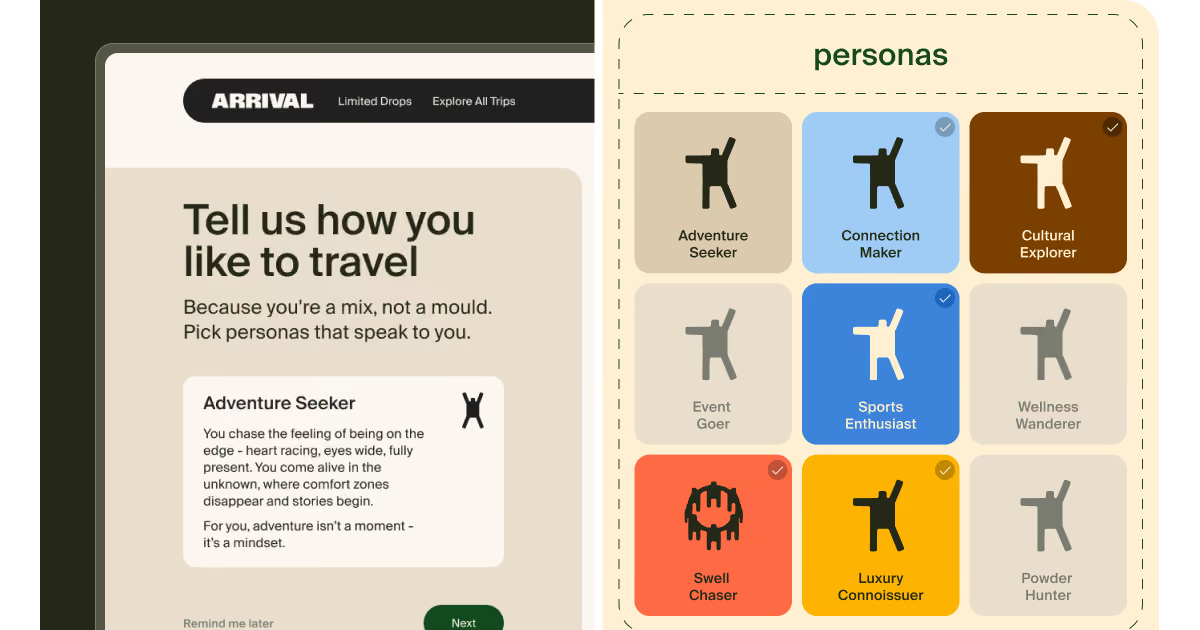
Subscriptions and registration perks. A subscription helps if your company focuses on unique locations and experiences. Well-curated experiences prevent comparisons. They forge a unique identity for your business. In the Arrival case, our partners rely on user registrations to offer recommendations. The service uses a quiz to create "travel personas" for users and advise them on particular categories. Based on these, they discover travel rewards like access to limited drops. Thanks to personalization, the service reached 120000 sessions even before being officially live.
Cashback and points. A popular strategy is to also use cashback and points. Here, the logic is well-known. Customers are likely to stay loyal if they know that their OTA providers give long-term bonuses. Loyalty programs improve retention by 14% for online travel agencies. In the long-term, frequent travel with points is cheaper for them. With such systems, your customers have a reason to keep you in their browser bookmarks. You’re no longer “just another generic service” that wants payment. Rewards create a reputation of generosity for your business.
Arrival travel persona quiz
Frequent travelers are usually a very loyal audience. Hotel networks and air carriers rely on return customers for most profits. This customer group needs reliability and savings. Points, cashback, and discounts offer exactly that. A well-configured travel reward program makes your site stand out. Users remember that they have points there and consider this in price calculations. This works especially well if you actually show alternative prices long-term users get. Combined with high-quality and unique offerings, loyalty programs turn your OTA into a go-to service.
Corporate travel reward programs
Corporate travel rewards programs offer various bonuses to business travelers. They rely on traditional methods: subscriptions, cashback, and points. Users get premium lounge access, free meals, discounted insurance, and zero-interest credit.
Travel rewards for corporate users are often a game-changer. They give you access to a massive market known for customer loyalty. A business travel rewards platform raises your chances of entering their bookmarks.
Most bonuses on this market take forms that we've already discussed in detail. These are cashbacks or points. But there are also some unique options here. Many business users travel to some of the most beautiful locations on Earth. For this reason, corporate travel often combines with vacations and leisure. 48% of corporate users engage in "bleisure" (a combination of business and leisure).
If you don't offer business travel rewards programs, users have fewer incentives for recreation. They miss life-changing experiences. Your service becomes “just another bank app.”
Give them corporate travel rewards, and everything changes. People associate vacations with some of their happiest moments in life. That’s where loyalty programs shine. Your users see fantastic locations; your brand enters their memories as a part of those fantastic experiences.
If you focus on business travel rewards points, users will know you as a business travel company. For recreation, they'll likely go to competitors.
Business trip points that can be spent during vacation are a powerful incentive. They motivate clients to use your service consistently to then get the best deals during recreational travel.
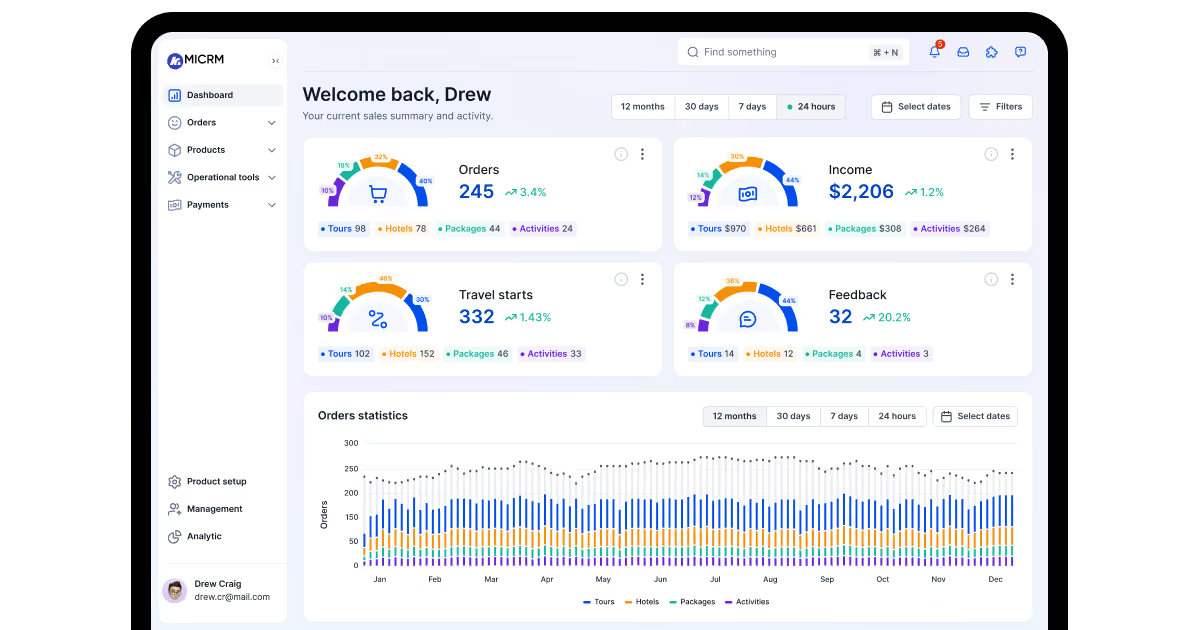
On MICRM, we built that kind of visibility for a bus tour operator, giving staff real-time reports on sales, cancellations, and seasonal trends. The result was a forty percent profit increase once managers could actually see where money moved. A travel reward program without that visibility usually ends up funding activity nobody's tracking.
Coalition and partner-based loyalty ecosystems
The travel market interconnects hundreds of companies into one large network. Some of them help with travel; others organize entertainment. For this reason, the most logical strategy is to create large coalitions. Credit card, transportation, and hotel businesses offer integrations with each other. This approach strengthens every business by making them a part of a massive ecosystem. Naturally, it makes sense to offer loyalty programs across those ecosystems. That's why companies like Delta reward bonuses for flying with global partners like Air France.
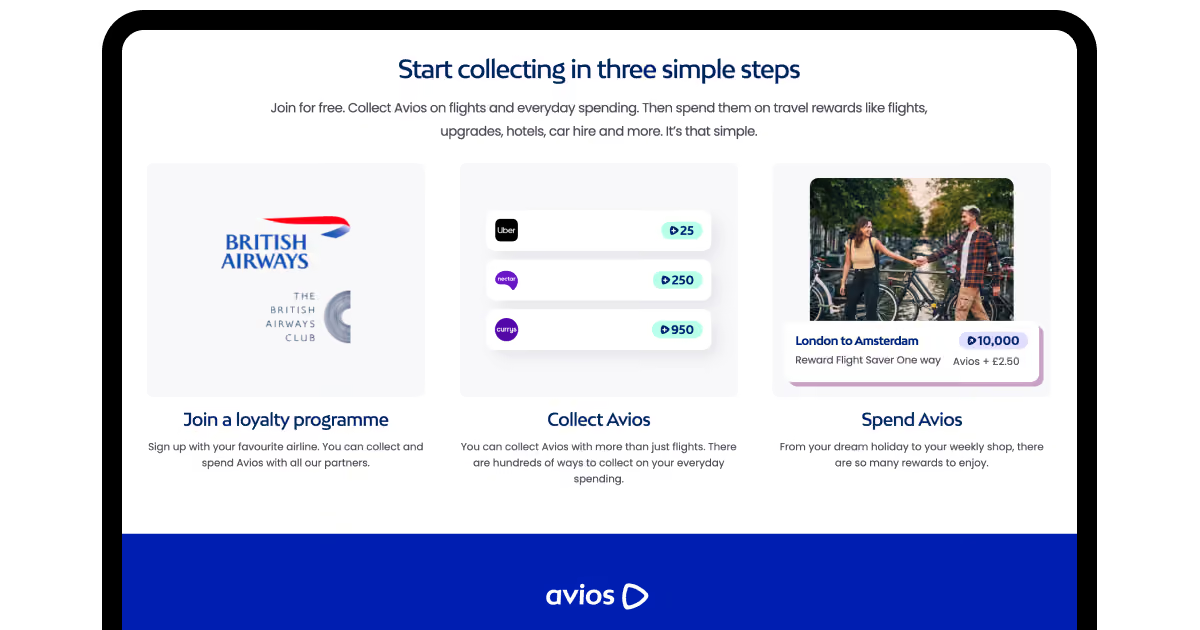
Currencies like Avios go further still, spanning British Airways, Iberia, and Qatar Airways under one shared balance. For travelers, coalitions solve the "not enough activity with one brand" problem. For businesses, shared liability means no single airline absorbs the full redemption cost. That's what makes coalition travel reward programs among the most durable loyalty models still running today.
Avios reward program
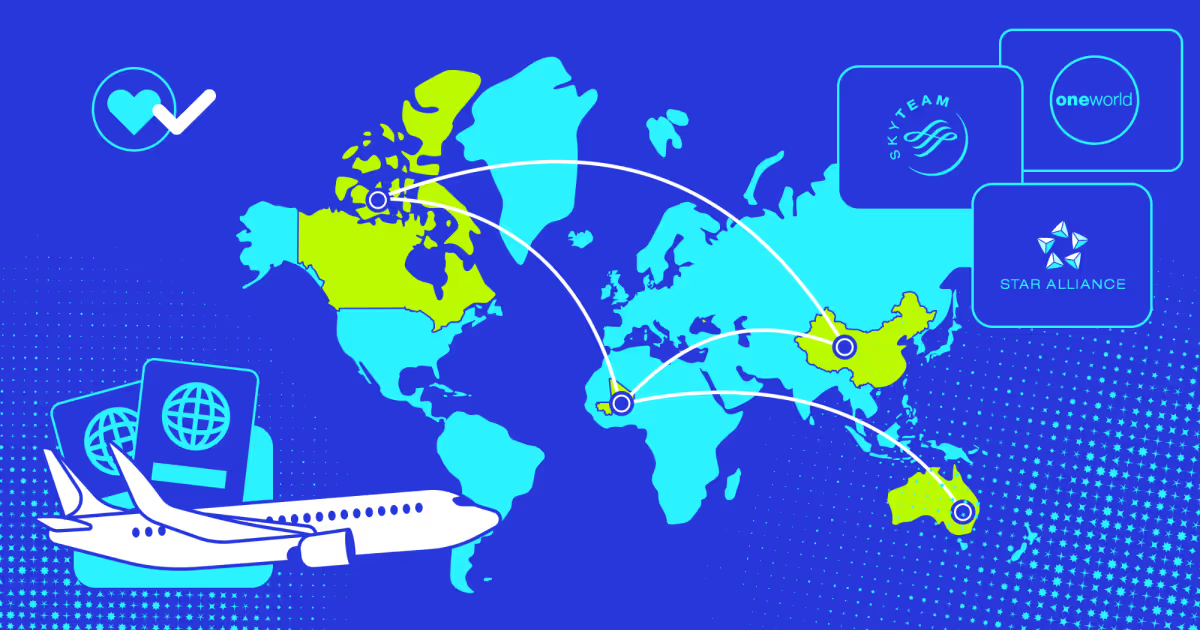
Airline alliances like Star Alliance, oneworld, and SkyTeam function as loyalty coalitions at their core. Star Alliance launched in 1997 with five airlines; it now counts over twenty, far more than any single-brand program can match. Elite status with one member airline unlocks lounge access across dozens of partner carriers worldwide.
Who benefits the most?
The benefits of a travel reward program extend to both companies and travelers. In our opinion, it's not correct to say that one side benefits more than the other.
Twenty-one percent of adults call travel reward points "very" important when picking an airline or hotel. Another 39% call them at least somewhat important. That's three in five travelers factoring rewards into every booking choice.
Here are the specific benefits for customers:
Reliability. When customers use a hotel or transportation service for the first time, anxiety is inevitable. Will I reach my destination on time? Will the stay be comfortable? Loyalty systems enable accessible travel and ensure it's reliable. Customers no longer have to worry: they have delay protections and zero-interest loans.
Money savings. Air travel rewards and all other types of rewards save money. 80% of frequent travelers rely on them for this reason. Exact savings depend on frequency of travel and chosen subscriptions, of course. Free checked bags often save up to 90$ for consumers per round trip. With a loyalty system, you can help customers save hundreds and even thousands of dollars. Few things motivate customers to use your particular service as much as financial viability.
Unique services. 72% of travelers value exclusivity. They want tailored experiences. Premium lounges or even unique travel destinations go beyond cost savings. They give your customers new services they can't get anywhere else. We've seen firsthand how powerful this approach is in our Arrival case. The company allows users to customize their experiences. The service offers personalizations: users can plan their routes to handcraft their adventures. That’s why the company saw mentions in 4 major publications, such as Rolling Stone, at release.
Loyalty compounds too. Among travelers who rate rewards as "very" important, 47% say they're also "very" loyal to that brand. Compare that to just 21% loyalty among travelers who don't value rewards at all. The gap isn't subtle.
CivicScience found 52% of U.S. adults use travel rewards programs regularly. Nearly half of those users redeem points every trip or several times a year. That's a built-in decision filter.
Stay Altered's model shows why fit matters more than size. Guests earn nine percent back on standard stays, fifty percent on sustainable ones. That structure makes accessible travel rewards feel earned, not gimmicky. Travelers choose the eco-badge stays specifically because the payoff is visible upfront.
Businesses get a revenue lever
Businesses that treat loyalty as a real asset outperform ones that don't. Retention beats acquisition on nearly every available financial metric. Harvard Business Review found a 5% retention gain can lift profits 25% to 95%.
Two key advantages lead to strong ROI:
Increased engagement.82% of consumers say that a loyalty program increases their willingness to purchase from a brand. The travel market is very fragmented. You have to compete with thousands of companies in hundreds of countries. A loyalty program will help you gain strong retention among the most proactive customers.
Stability. Repeat customers mean simpler logistics. It's easier to plan expansions and new services.A 5% increase in customer retention increases revenue by at least 25%. Customer loyalty turns into the ability to create long-term plans for your business. This 5% increase becomes so massive in revenue because it targets the most active audiences.
All in all, if you add travel miles rewards to your service, you help both yourself and your clients save money.
Fewer than 30% can accurately quantify their loyalty ROI. That's not a technical gap. It's a calculation gap most programs never close.
Lifetime value rises fast: loyal customers spend 67% more than new ones.
Acquisition costs drop hard: retaining a customer is five times cheaper.
Personalization lifts order value: targeted offers boost AOV by 15% to 25%.
Switching barriers form naturally in commoditized categories like airlines and telecom.
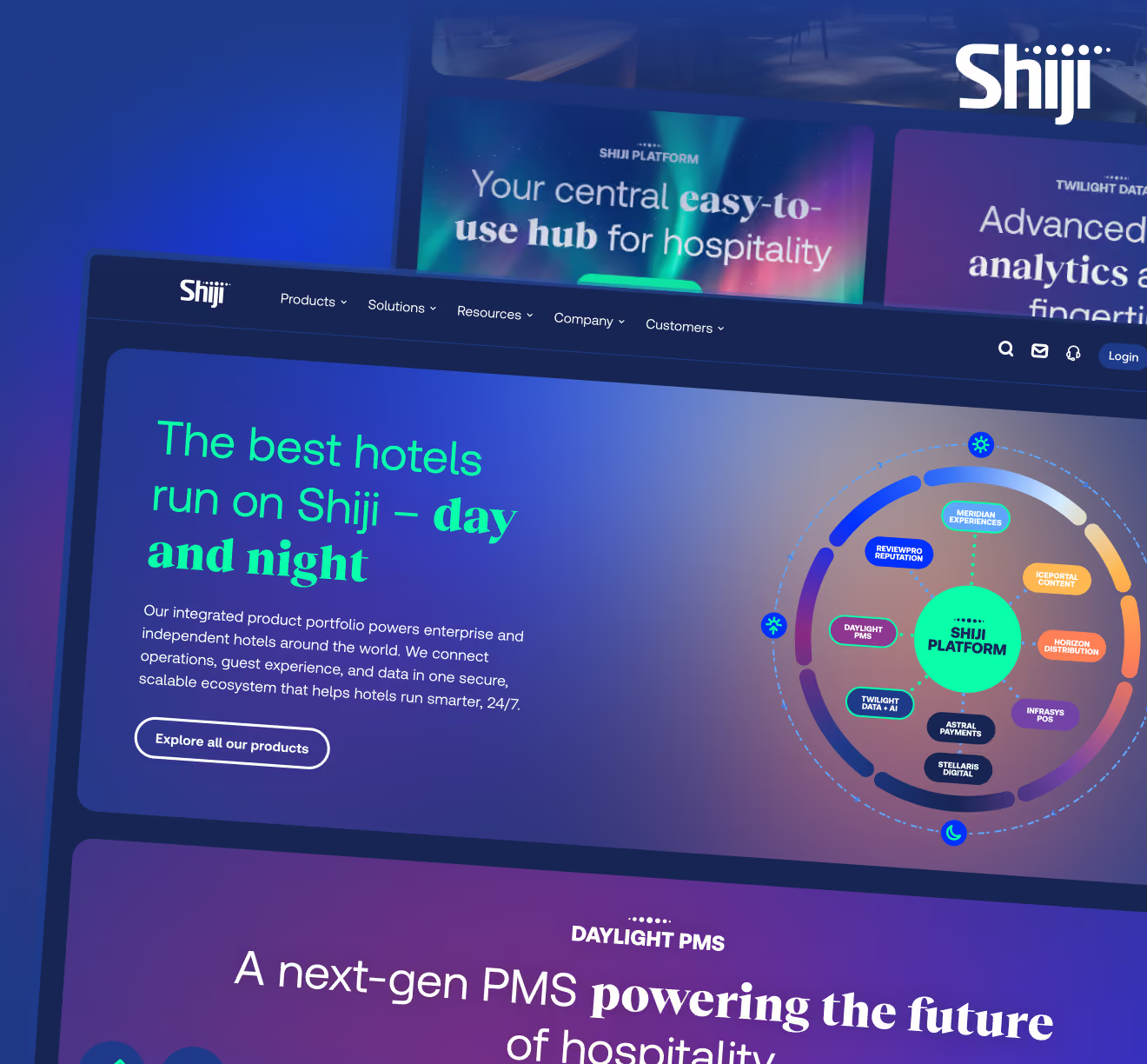
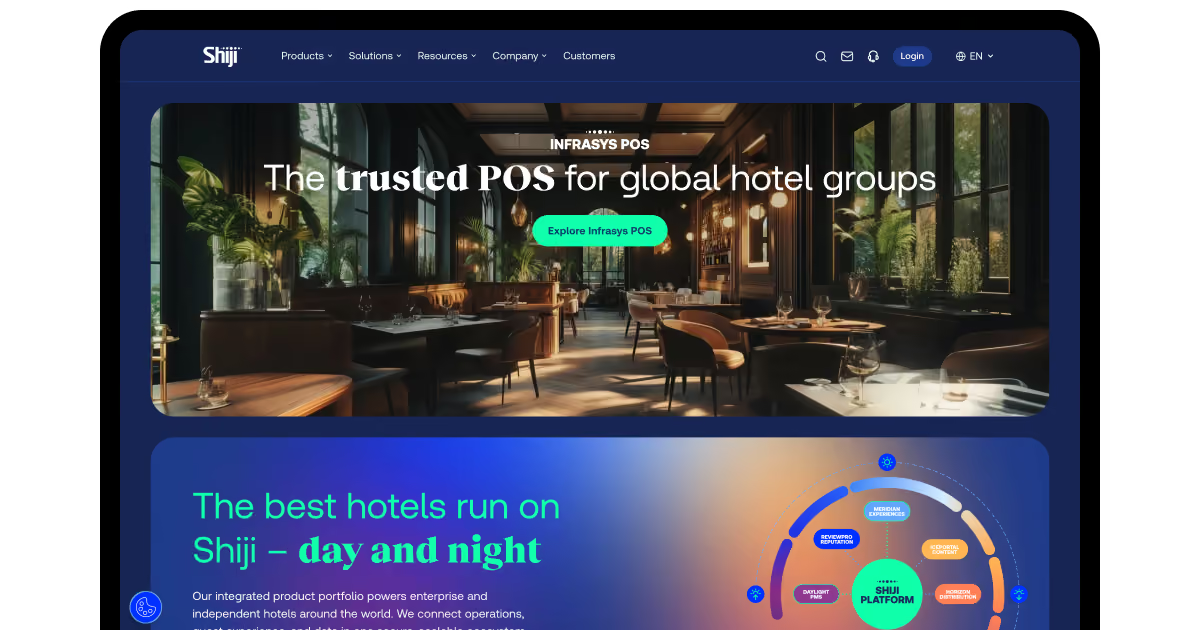
Shiji's rebrand that COAX did shows what happens when the whole customer experience gets rebuilt around clarity. Organic search traffic jumped 95% after launch. Engagement rose right alongside it. Neither number came from a loyalty mechanic directly, but both prove the same principle: customers stay when the experience actually respects their time.
What can businesses learn from successful travel rewards programs?
We have a rule at COAX Software: good infrastructure should be studied closely. Loyalty programs deserve the same treatment. Here's what six different programs got right, and what any business can borrow from them.
We approach travel rewards programs the way we approach any production infrastructure. Look for what scales, what breaks, and what actually drives repeat behavior. These six programs span airlines, hotels, OTAs, and cards, each solving loyalty a different way.
Visibility is vital.Up to 72% of guests are inactive in loyalty systems within hospitality. We've seen situations where loyal consumers don’t even know about their rewards. That's why it's not enough to offer good bonuses on vacation rental platforms. You also need to present them well to encourage active usage. Programs like World of Hyatt have cult status due to a combination of great bonuses and presentation. Hyatt has a dedicated mobile app for its bonus program. Users know how to earn them and what they get for those points.
Earning breadth beats earning depth. AAdvantage is the largest air travel rewards program on the planet. Members earn miles on flights, hotel stays, car rentals, and everyday purchases alike. Redemption spans flights, upgrades, vacation packages, and standalone experiences.
Removing expiration removes friction. SkyMiles built its reputation on one policy: miles never expire. That single choice keeps occasional flyers invested without pressuring them to book sooner. Members earn through flights, partnerships, and card spend, then redeem for flights, upgrades, or Sky Club access.
Recognition drives behavior as much as discounts do. Marriott Bonvoy runs six tiers, from Member through Titanium Elite, each unlocking more real perks. Room upgrades, lounge access, and late checkout arrive step by step as members climb. It's one of the broader hotel travel rewards programs by sheer partner-property count.
Integrations are a must. Travelers often use transportation, hotel, and credit card services simultaneously. For this reason, the most successful loyalty programs try to create cross-industry ecosystems. In them, users don’t have to buy separate tickets and then book separate hotels. They can purchase everything with one click. Accessible travel is the cornerstone of multiple large networks. Marriott International integrates 7000+ locations via its Bonvoy program. In this way, it retains customers even when they use hotels from other networks.
Partner breadth extends a program's reach past its core product. MileagePlus rewards frequent flyers across flights, hotels, and shopping with United's partner network. Perks scale with tier: priority boarding, complimentary upgrades, and United Club access. It's one of the broader hotel travel rewards programs by partner count, not just an airline program.
Tiers built around visible status pull in higher-spending travelers.Skywards leans hard into tiered status: priority boarding, lounge access, and a strong mileage-earning rate. Miles come from flights and partner activity, redeemable for upgrades and curated experiences. It consistently ranks among the best hotel travel rewards and airline hybrids for premium travelers.
To summarize, good visible bonuses integrated in a large network are a path to success. They maximize convenience for your customers and encourage them to be proactive.
How to measure travel rewards program success?
The main goal of all loyalty programs is to ensure high retention. They transform your business by creating loyal return customers. Today, airline carriers earn up to 13% of their revenues thanks to loyalty programs. This large number results from targeting frequent flyers, who generate the majority of revenue.
Retention, in turn, is itself a result of multiple factors. Among them are good bonuses, visibility, and accessibility. For this reason, ROI from loyalty programs accumulates over years. Hyatt started its program almost 10 years ago. Delta Airlines SkyMiles have been in action since the 1980s. Organic followers accrue once customers actually see savings. They become visible at least within 1 or 2 years.
When measuring progress from travel miles rewards, you need to avoid the marketing trap. Real evaluation needs behavioral data tied to revenue. Seven metrics cover nearly everything worth measuring.
Repeat visitation rate measures returning visitors against total unique visitors.
Visitor lifetime value predicts total revenue across the full relationship.
Average spend per visit shows whether members spend more than non-members.
Referral rate quantifies new customers acquired through existing member advocacy.
Cost per retention compares retention spend against new acquisition spend.
Engagement rate tracks task completion and content submission among active members.
Churn rate measures how many members go inactive each period.
Retention math backs this up plainly. Retaining a customer typically costs five times less than winning a new one. That gap alone justifies most travel reward programs, assuming you're actually measuring it.
In our Arrival case, the clients avoided this issue by giving strong incentives for loyalty. 500000 initial registrations later turned into an active user base. Unique drops after registration offer unparalleled experiences to consumers. Marketing is, of course, essential for loyalty program success. But visibility doesn't equal loyalty. A loyalty program will bring you return customers when it gives good and easy-to-use bonuses.
Essential travel rewards platforms and tools
Businesses running large-scale programs and comprehensive travel rewards websites need platforms built for modeling, not spreadsheets. Three tools stand out for enterprise travel loyalty work specifically.
Comarch Loyalty Management offers a travel-specific edition that models partnerships and projects ROI pre-launch.
IBS Software iLoyal delivers cloud-native analytics with modular partner management and fraud prevention.
Switchfly suits fast deployment of white-label partner networks and flexible redemption logic.
Corporate travel rewards programs need visibility into spend and vendor performance, not just redemption counts. Three platforms handle that layer well.
ITILITE provides real-time dashboards with predictive analytics for corporate spend.
AmTrav combines bookings, expenses, and analytics into one operational view.
Amplitude and Mixpanel support deep behavioral tracking for travel funnel analysis.
The technical piece trips up more teams than the reward math does. Even the seemingly
best travel reward program built on disconnected systems creates duplicate points, missed redemptions, and support tickets nobody wants. COAX has spent close to 20 years in travel and hospitality tech, covering booking platforms, payments infrastructure, and revenue systems. That repetition means we rarely start a travel rewards points system from a blank page, whether it needs to plug into existing travel planner apps or launch as a standalone build.
Measurement only matters if it changes what gets built next. That's where program design comes back into the picture.
How to build the right travel rewards program?
Before you design anything, map the traveler you're rewarding and the tech that'll run it. The right structure depends on decisions most teams skip past too fast. Here's what actually shapes the outcome.
Build vs. buy vs. white-label. A packaged platform like Smile.io or Yotpo ships fast and fits simple points-and-tiers programs well. But once you need multi-currency redemption, PMS integrations, or a coalition model across properties, packaged tools hit a ceiling fast. White-label makes sense if you want your own branding on someone else's rails. Custom build makes sense once your redemption logic, supplier network, or booking flow doesn't map to any template on the market.
Audience segments differ sharply between leisure travelers, business road warriors, and occasional bookers.
Redemption liability grows fast if points sit unused or expire on a schedule nobody tracks.
Integration scope determines whether your CRM, booking engine, and payment stack talk to each other cleanly.
Brand fit matters more than feature parity with airline travel rewards giants you can't out-scale.
PMS and supplier connections decide how much manual reconciliation your ops team inherits later.
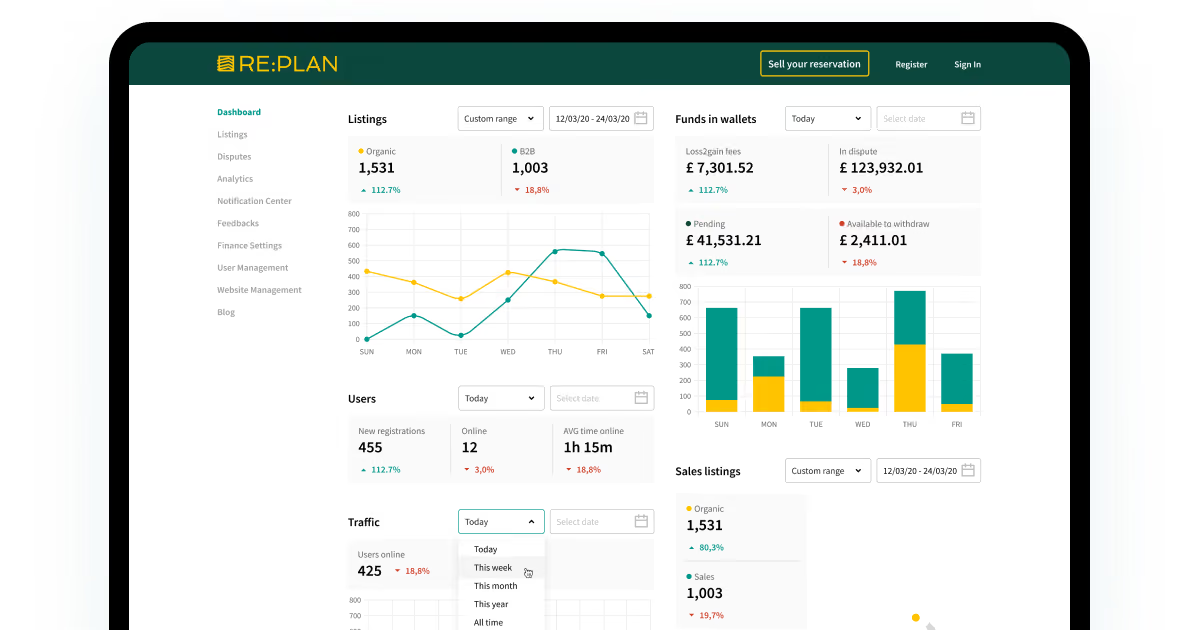
Our own project history shows how differently these problems can land. Re:Plan needed billing logic across an entire resale marketplace, not one property. Multiple gateway integrations, invoicing, and brokerage payments all had to reconcile automatically. It didn’t fit an off-the-shelf template, and a rewards layer on top of either would've needed to respect that existing setup.
The algorithm to create an ultimate travel rewards program
You need to consider several steps while creating a rewards program. Our experience shows that the best option is to combine great strategy with great software. Miss one of those criteria, and your loyalty program will be invisible or useless. Thus:
Step 1. Choose rewards that matter. You need to offer your customers something that matters. Rewards that your customers really need turn boring points into a precious resource. Travel booking systems usually benefit from offering great locations. That's what Arrival did. The app offers many unique locations to customers. Companies like Hyatt focus on offering strong additional services. Spas, sports, and free food are among them. You need to answer this question: what will legitimately impress our customers?
Step 2. Select rewards format. Rewards appear in many formats. Among them are subscriptions, cashback, and points. For example, programs like Marriott Bonvoy focus on elite memberships with complex tiers. Subscriptions offer regular reliability. Customers pay for them and get services they need. In turn, bonus systems work best for customers who need occasional support. A good meal at a restaurant or free tickets for musical events change perceptions. What was a mediocre vacation becomes great thanks to options like these.
Step 3. Focus on good design. Loyalty programs like Plenti by American Express often fail due to a lack of transparency. Users often complain that they simply don't understand how to use them. Even if bonuses are great, getting to them is a struggle. How to overcome this problem? Great UI/UX is the answer. A good interface means that users won't have to Google how to find bonuses. They'll see them directly on the main page of your app.
Step 4. Develop your app. Actual development and testing are among the final stages of building the best travel rewards programs. Its goal is to turn your strategy and design into a working app. Here, you need to choose the best technology for your goal. No-code builders like Webflow work great here. They optimize for the Internet, giving your customers simple and seamless experiences. We used this tool to organize a complex and consistent design system for our partners at Shiji. This project improved organic search traffic for the company’s site by 95%.
Step 5. Test. Don't forget about testing, too. Simplicity and transparency are the cornerstone of success here. Nothing undermines loyalty like frequent bugs and usability issues. Investments in quality assessments (QA) ensure a premium experience for your customers. Few things spoil vacations more than losing services due to software bugs.
The technical piece trips up more teams than the reward math does. Even the seemingly best travel reward program built on disconnected systems creates duplicate points, missed redemptions, and support tickets nobody wants. COAX Software has been working on digitization projects for more than 15 years. We understand custom travel software development based on real-world practice.
Domain expertise and proven integration patterns cut delivery time. Most of our engagements move 50 to 60 percent faster than a generalist dev shop would manage. ISO 9001 and ISO 27001 certification also matters here, since guest payment data and reward liability both demand real governance, regardless of program size.
Don’t hesitate to contact us if you need assistance from hospitality software development experts.
FAQ
What does travel rewards software include?
A travel rewards program includes bonuses for return customers. It appears in multiple forms: subscriptions, cashback, and point systems. Often, travel companies mix those systems. Companies like Delta Air Lines SkyMiles or World of Hyatt represent successful cases of travel rewards programs.
What sectors work best for travel rewards software?
Travel rewards work best in transportation, hotels, and banking. Transportation bonuses give your customers bonuses like free tickets. That's what airlines like Virgin Atlantic (its system is named Flying Club) offer. Hotel bonuses provide additional perks like spa access or early check-in. That's what companies like Hyatt do.
How to build a successful travel rewards program?
Our experience shows that you need good bonuses, visibility, and accessibility. The Arrival case demonstrates all of them. It offers unique limited drops for rare locations. The marketing of the service is organic: it relies on YouTube presence. Lastly, benefits are easy to access. What users need is a simple registration process.
Can a small hotel realistically compete with travel reward programs from major chains?
Yes, and often more effectively. Small properties don't need Marriott's tier ladder to matter. A simple, well-targeted program built around direct bookings beats a generic OTA discount every time. Focus on what a chain can't offer: personal recognition, local perks, and commission-free booking. Scale matters less than fit with your actual guest base.
What's the fastest way to test a travel rewards program before committing budget?
Pilot with one property, one route, or one booking segment first. Skip the full rollout entirely. Track redemption behavior for 60 to 90 days before expanding. This surfaces integration gaps and confusing redemption rules early, while the cost of fixing them stays low. A soft launch beats a spec document every time we've tested it.
How do I offer best hotel rewards for business travelers without alienating leisure guests?
Run two earning tracks under one program instead of splitting into separate systems. Business travelers value fast redemption and account-level reporting; leisure guests want simple discounts. Delta and American solved this with dual-earning models, rewarding the traveler and the company separately. That structure keeps both segments engaged without diluting either experience.





































































.avif)


%20for%20hotels.avif)

.avif)
.avif)


.avif)




.avif)
.avif)

.avif)

.avif)

We are interested in your opinion