A trip plan going wrong frustrates travelers, brings you negative reviews, and drives return business away. And that’s common with what manual trip planning brings: 15 open tabs, 17 hours of research, a notes app full of confirmation numbers, and a mild sense of dread. Now, with the right travel itinerary app, you get satisfied tourists, a correct and on-time schedule, flexible plans, and long-term loyalty. Here’s how it happens:
Flights, lodging, activities, and scheduling mix into a self-updating living plan through smart consolidation.
In a matter of seconds, AI generation turns a two-sentence input into a customized daily schedule.
Delays, closures, and price changes are detected by real-time data feeds before passengers are made aware of them.
Booking integration turns intent into confirmed reservations without ever leaving the app.
Accessible design keeps the product legal, inclusive, and usable under pressure.
The correct stack improves your shipping speed, scalability, and future maintenance costs.
A disciplined build process separates apps that launch on budget from ones that quietly double in scope.
A clear ROI model turns your development spend into a number worth defending in any budget conversation.
In this guide, we describe the main challenges of travel itinerary planning and show you how technology helps solve them. Then, we walk you through the main functionality, design, and inclusivity considerations, tech stack, and the key steps to build reliable travel planning software, or choose between the market-ready options.
What is a travel planner app?
A travel planner app is software that helps people organize, manage, and execute trips from one place. Instead of switching between multiple browser tabs and getting lost in email confirmations and handwritten notes, this technology offers a single tool that consolidates flights, hotels, activities, and timing into one coherent plan.
The more capable versions go further. Travel itinerary software can automatically parse booking confirmation emails, sync with calendars, send real-time delay alerts, and suggest alternatives when things change. Some platforms support group collaboration. Others use AI to generate day-by-day schedules from a simple destination input.
Travel planning apps market
In general, most travelers benefit from these types of solutions. 80% of Gen Z and Millennial tourists like the idea of using travel planning apps. Altogether, the target users for itinerary apps point toward the leisure, business, nomad, and budget personas. They expect the app to feel designed for a phone.
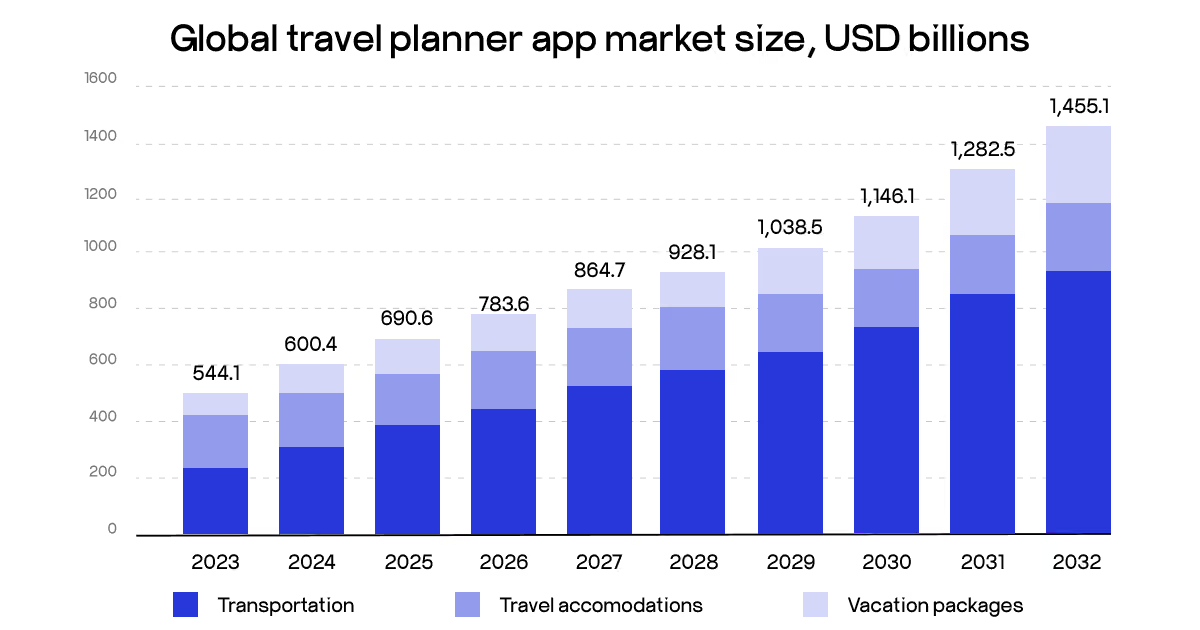
The global travel app market is projected to reach $120 billion by 2030. Meanwhile, the travel planner app segment is growing even faster. Valued at $544.1 billion in 2023, it is expected to reach $1,445.1 billion by 2033. This is easy to explain: after the pandemic, people want contactless travel planning, and the modern world demands speed, digitalization, and convenience. The sense of independence and flexibility is also a strong need.
And that’s not even mentioning AI! The McKinsey report makes the AI angle very definite. 84% of travelers who have used generative AI for travel tasks report that it improved their experience. Travel companies using AI see a 45% lower bounce rate among visitors arriving from generative AI sources. The most common use cases defined by this research were general research (54% of respondents), travel inspiration and food recommendations (43% each), and itinerary creation (37%).
So 37% of your potential clients are using this form of travel planning already. Why not offer this technology as a part of your suite to boost your services and profits?
There’s a nuance, though. Apps for planning travel activities had an 18% retention rate on day one, dropping to 2.8% by day 30. It’s actually natural because of how these apps get used: intensively before and during a trip, then left behind until the next one. The engagement model is different from social or productivity apps. The value window is short and concentrated.
Target users
Not every traveler in the world is the obvious potential user of travel planning tools. Many people like to do their own research and planning - and that’s fine. But those who want it did for them fast, often do because they need to because of their job, a planned vacation, or because they want to save on some travel expenses. Let’s break down each case.
The frequent business traveler needs speed above everything. They are on multiple flights a week, managing loyalty numbers across hotel chains, and filing expenses from their phone. What they want from business travel planning software is efficiency. Fast confirmation access, real-time gate alerts, and one-tap expense capture are a must.
The group trip organizer has a coordination problem, not a discovery problem. They are managing five to fifteen people with different schedules and preferences. Shared itineraries, activity voting, and visible plan updates matter far more than suggestions. The pain point is alignment, not inspiration.
The digital nomad travels long-term across destinations with unreliable data coverage and expensive roaming. Offline access is the feature that determines whether they use your app. They travel frequently enough to have strong opinions about clunky flows. Business travel apps rarely serve this persona because multi-month timelines, mixed accommodation types, and ongoing visa tracking are just too much for them.
The leisure vacation planner arrives once or twice a year and wants help going from a vague idea to a working itinerary. They are not experts, and research often overwhelms them. A good travel planning app reduces decision paralysis. The emotional job here is confidence, as they want to feel like they have not missed anything important.
The budget-conscious traveler treats every trip like a financial project. They track every expense, obsessively compare options, and adjust plans mid-trip based on their spending. A solid travel planning solution for this persona includes real-time expense tracking, currency conversion, and cost forecasting built into the itinerary itself.
These groups overlap. A frequent flyer might also plan family holidays. A nomad might join a group trip. But knowing which persona you are primarily building for changes what you build first and what you cut entirely.
Key pain points in travel planning
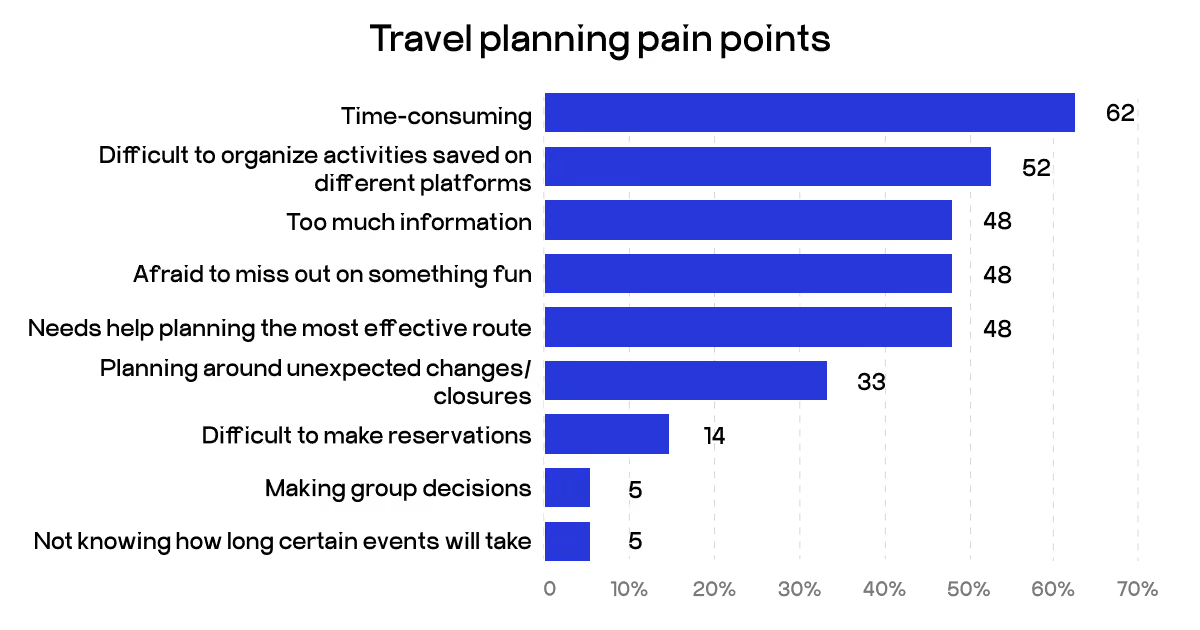
Travel planning sounds exciting, but it might be exhausting too often. The average American spends about 17 hours researching, comparing prices, finding packages, and booking a trip. And that time does not even guarantee a good result.
Planning travel itineraries is the most chaotic part of the process. You pull data from Google, booking sites, travel blogs, and friend recommendations, with no single source of truth. You copy-paste hotel confirmations into a notes app and call it a plan. Then, there is the money problem.Nearly half of travelers worry about overspending, and over half choose destinations based on price. The top anxieties are accommodation, transport, and food, in that order. And because prices change constantly, a plan might not work in a week.
Complexity makes things even worse.Cheryl Miller, SVP and CMO at Expedia for Business, says: "The traveler path to purchase is often complex, and full of twists and turns." That complexity compounds when things go wrong in real time. A closed attraction, a weather change, or a delayed flight built on manual research has no mechanism to adapt. They just fail silently, and the traveler finds out at the worst possible moment.
All these hurdles mostly happen because of these factors:
Error-prone scheduling. Manual planning leads to impossible itineraries. Back-to-back activities on opposite sides of a city. Attractions that close at 3pm scheduled for 4pm. No buffer for travel time between locations. A plan built on static information becomes impossible the moment conditions change.
Poor personalization. Generic "top 10" lists do not account for who you are, what you like, or how you travel. Most manual planning produces one-size-fits-all itineraries that feel like they were written for someone else.
Booking friction. Users find something they want, leave the site to book it, get distracted by alternatives, and never come back. Every hand-off between planning and booking is a place where the trip falls apart.
No real-time updates. Strikes, fires, road closures, and sudden venue shutdowns require manual planning of travel itineraries that cannot react to. The traveler often just shows up to something that no longer exists.
When you add it all up, the problem is not that people lack information but that they have too much of it, in too many places, with no way to trust it, organize it, or act on it fast.
How apps solve these challenges
A well-built app does not just digitize the old process but replaces the parts that were never working. A travel trip planner app consolidates everything that was previously scattered. With the right tool, you stop managing ten browser tabs and start managing one screen. That alone eliminates the copy-paste chaos that causes most scheduling errors.
Here is how each pain point gets addressed:
Information overload. Apps integrate directly with APIs from flight databases, hotel booking engines, weather services, and local attraction platforms. Instead of you pulling data from everywhere, the app pulls it for you and presents verified, current information. No more cross-referencing three sites to confirm an opening time.
Error-prone scheduling. Good apps calculate travel time between locations. They check opening hours against your schedule. They flag conflicts before you arrive. What used to require a spreadsheet and local knowledge now runs as a background check every time you add something to the plan.
Outdated data. Live data feeds mean the app knows about closures, weather changes, and disruptions in real time. More advanced platforms do not just alert you that something changed. They also suggest alternatives automatically.
Poor personalization. A travel itinerary planner app with AI can generate a full day-by-day schedule from a simple input. It builds around your preferences rather than making you filter through generic recommendations. The more you use it, the better it gets at knowing what you actually want.
Booking friction. When booking is built directly into the itinerary, you go from "I want to do this" to "this is booked" without leaving the app. No detour, no distraction, no drop-off. Conversion happens where intent is highest, which is right inside the plan itself.
Real-time updates. Push notifications about gate changes, weather alerts, and venue closures reach you before they become problems. A travel itinerary app that monitors your trip actively is effectively a 24-hour assistant, one that does not miss updates.
Budget tracking. Apps that integrate expense tracking let you see what you are spending against what you planned. For the traveler who spends 17 hours planning and still ends up over budget, having live cost visibility inside the itinerary closes that gap.
Manual planning produces a document. A good app produces a living plan that updates, adapts, and guides you through the trip in real time.
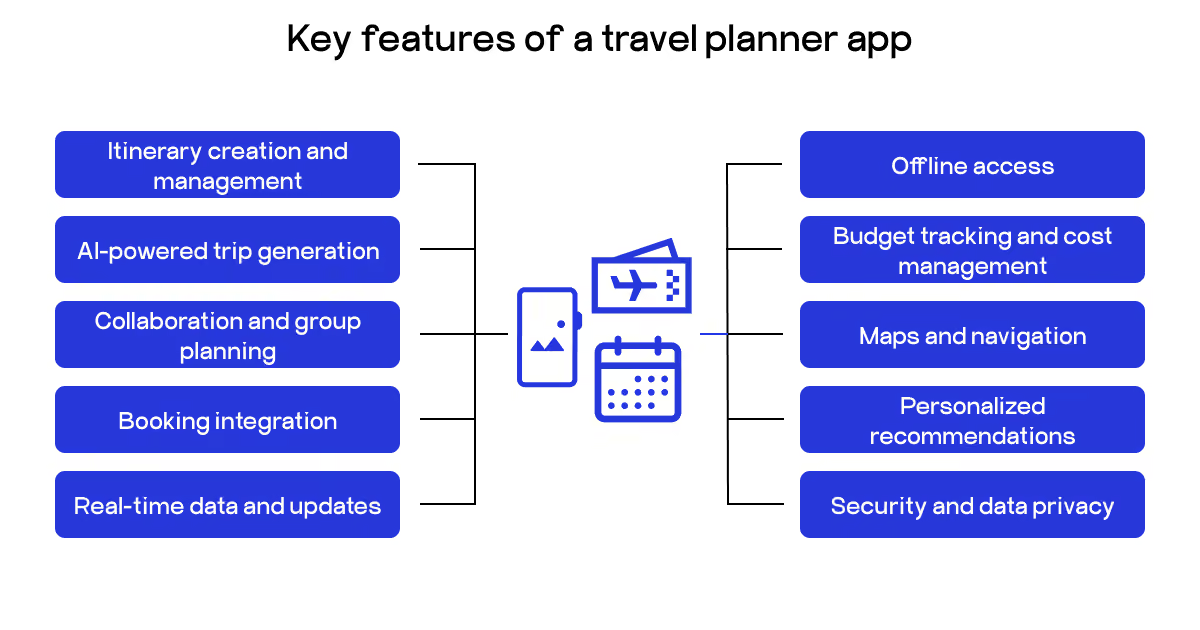
Core features of a travel planner app
Building the right feature set is what separates a useful app from one that gets deleted after the first trip. Here is what every solid travel planner needs.
Itinerary creation and management.
This is the foundation of any travel itinerary management software. Users need to input destinations, dates, activities, and transport into a structured format they can edit at any point. The itinerary should function as a living document, not a static export, so adding a day, swapping an activity, or rerouting travel takes seconds rather than a rebuild from scratch.
AI-powered trip generation.
Planning trip with AI changes the starting point entirely. Instead of building an itinerary from zero, users describe what they want in plain language and the app generates a full day-by-day plan around their preferences. Research from Gayathri and team found that AI-driven itinerary systems improve personalization accuracy to 92.3% and user satisfaction to 94.2%.
Collaboration and group planning.
Group trips involve coordinating multiple people with different schedules, preferences, and anxieties. Shared itineraries, joint editing, task assignment, and group communication built into the app replace the endless back-and-forth that happens when planning lives across five different chat threads. This feature is particularly important for itinerary software for travel agents, because agents manage complex multi-person itineraries daily and need a way for clients to view, comment on, and confirm plans without requiring a phone call for every change.
Booking integration.
Users should be able to book flights, hotels, transport, and activities without ever leaving the app. Every handoff to an external site is a place where intent drops and bookings get abandoned. When search, plan, and purchase all live in one place, the path from "I want to do this" to "this is confirmed" becomes frictionless.
Real-time data and updates.
Flight delays, weather changes, venue closures. A good app knows about these before you do and tells you in time to act. Live API integrations with flight databases, weather services, and attraction platforms mean the information inside your plan reflects what is actually happening, not what was true when you built the itinerary three weeks ago.
Offline access.
Connectivity is unreliable the moment you need it most, at the airport, underground, or in a rural destination with no signal. Itineraries, maps, tickets, and booking details should all be available offline so travelers are never dependent on a signal to know where they are going next.
Budget tracking and cost management.
Most travelers go in with a number in mind and no real system for staying close to it. A built-in budget tool lets users set a total trip budget, assign costs to each element, and see live spending against the plan. For a travel itinerary software aimed at price-conscious users, this feature directly addresses the key traveler worry - spending too much.
Maps and navigation.
An integrated map that shows your entire itinerary helps you understand the physical shape of a trip. Seeing that two activities are 45 minutes apart, or that your afternoon plans are clustered on the opposite side of the city from your morning ones, is information that only makes sense visually. Routing, nearby recommendations, and walking or transit directions built into the same view make it genuinely useful on the ground.
Personalized recommendations.
Real personalization means the app learns from your past choices, stated preferences, and travel style to surface options that actually fit how you travel. This is where machine learning earns its place in the product, using collaborative filtering to match your behavior patterns against similar travelers and surface things you would not have found on your own.
Security and data privacy.
Travel apps hold sensitive data: passport details, payment information, location history, and booking confirmations. Users need to trust that this information is encrypted, stored securely, and not shared without consent. For any travel itinerary software handling corporate travel or agent-managed bookings, security is not optional, it is the baseline expectation before a user will store anything meaningful in the app.
All these features should align with a different and very important aspect of travel planning solutions: accessibility and user experience.
Design considerations & User experience
Wu and team found that ease of use had a stronger influence on users' attitudes and travel intentions than content quality alone. The implication for you is that how your app feels to operate matters more than how much it offers. So, what should accessibility include?
Every screen should have one clear purpose. Navigation should require no learning curve. Buttons need to be large enough to tap without zooming, labels need to describe actions rather than decorate them, and the path from search to confirmed booking should never require more steps than necessary.
When building travel planning software, the interface hierarchy matters at moments of high cognitive load (like comparing flight options or finalizing a multi-day schedule). Clean layout, consistent patterns, and predictable flows reduce that load and keep users moving forward.
For travel agency itinerary software specifically, the UX challenge goes one layer deeper. Agents are not casual users. They are managing multiple client plans simultaneously, switching between bookings rapidly, and often working under time pressure. The interface needs to support that workflow, not fight it.
Accessibility is not optional, and in many markets it is legally required. Let’s review several requirements worth knowing about.
The Web Content Accessibility Guidelines (WCAG) set the standard for accessible experiences. WCAG 2.2, the current version, extends to users with cognitive disabilities. Practically, WCAG compliance means building for four principles: content must be perceivable, interfaces must be operable, information must be understandable, and the app must be robust enough to work with assistive technologies. For a travel route planner app, this includes screen reader compatibility like VoiceOver, voice command support, high-contrast display modes, scalable text, and keyboard navigability.
For travel apps operating under U.S. jurisdiction, the Americans with Disabilities Act (ADA) mandates that digital services be accessible to users with disabilities. Non-compliance carries legal exposure.
Accessibility in travel apps also means content decisions. Room accessibility details should never be conveyed through images alone. Filters for wheelchair-accessible transport and lodging need to be functional, not cosmetic. AI-powered tools like Be My Eyes already demonstrate what real-time visual description for blind or low-vision users looks like in practice. The bar is rising.
When we build travel booking apps at COAX, accessibility compliance is built into the process, not added at the end. Our designers follow color blindness principles and contrast guidelines from the first wireframe. Developers implement WCAG criteria during every product creation. QA runs structured accessibility audits using standardized checklists, including keyboard navigation testing and screen reader compatibility scripts, following our internal Form UX Audit SOP. We have also published a WCAG Compliance Checklist that breaks down WCAG 2.1 Level AA into actionable steps, including EU country-specific requirements.
The bottom line is that an inaccessible travel planning app excludes a significant portion of potential users, creates legal risk, and reflects poorly on the product overall. Designing for accessibility from day one costs less and produces better results than retrofitting it after launch.
Technology stack
The tech choices you make early define how fast you can build, how well the app scales, and how much you will pay to maintain it long-term. Here is what works in production for travel planning apps, based on real project experience.
Frontend.
React Native and Flutter are the first choice for most teams. Both let you build for iOS and Android from a single codebase, which cuts development time and cost without sacrificing a quality user experience. They work well for MVPs and early-stage products where speed to market matters. If your users expect deep OS-level features, animations, or performance-intensive interactions, Swift for iOS and Kotlin for Android give you full native control. The tradeoff is two codebases to maintain.
For web interfaces, React.js and Next.js are solid standards. Next.js in particular handles server-side rendering, which helps with load times and SEO for any web-based planning tools.
Backend.
Node.js handles real-time operations well, which matters for a travel app where bookings, availability, and itinerary changes happen simultaneously across many users. Python with Django or Flask is a strong choice when your product leans heavily on data processing or AI features, as Gayathri showed when building AI-driven itinerary systems using Flask-based APIs connected to machine learning models in TensorFlow and Scikit-learn.
For corporate travel planning software, the backend needs to go further. You need role-based access controls, audit logs, policy enforcement logic, and integrations with analytics platforms so companies can track spend, compliance, and traveler behavior at scale. That architecture is more complex than a consumer app and needs to be planned from the start, not added later.
Database.
PostgreSQL handles structured data cleanly, things like user profiles, booking records, and trip details with defined relationships. MongoDB suits more flexible content, user-generated reviews, customizable trip structures, or frequently changing booking data. Firebase Firestore is the right pick when real-time collaboration is a core feature, shared itineraries, live group edits, and on-the-go adjustments all benefit from its sync architecture.
APIs and integrations.
Google Places API and Mapbox cover location discovery, mapping, and routing. Booking APIs from providers like Expedia, Skyscanner, and Airbnb pull live flight and accommodation data directly into the planning flow. Weather APIs such as OpenWeatherMap or Tomorrow.io feed location-specific forecasts into itineraries so users can plan and pack accurately.
When you build a travel planning app, the API layer is where most of the real complexity lives. Connecting to multiple providers, normalizing inconsistent data formats, handling rate limits, and keeping everything current requires experience. COAX's travel API integration service covers the full scope of this, from flight and hotel APIs to payment gateways and third-party booking platforms. If you already have an existing system and need to connect agency tools, booking engines, or supplier feeds, our travel booking software development team can integrate those into a unified, scalable architecture without rebuilding from scratch.
Travel itinerary app development process
From COAX’s experience, 16 years of building travel products teaches you one thing: the apps that fail are almost never the ones with bad ideas. They are the ones built without a proper process. Here is how a travel planner app actually gets built when the team knows what they are doing.
Discovery and scoping. Before a single line of code gets written, you need to know who you are building for and what problem you are solving. This means user research, competitor analysis, and a brutally honest feature prioritization session. The output is a defined scope, not a wishlist. Every hour spent here saves ten in development.
Architecture decisions. This is where most technical debt starts. The database structure, API strategy, and infrastructure choices you make in week two follow you for years. For travel itinerary-making software in particular, decisions about real-time data sync, offline capability, and third-party API dependencies need to be made here, not discovered later when they break in production.
Design and prototyping. Prototypes get tested with real users before the engineering team touches them. Changing a flow in Figma costs nothing. Changing it after it is built costs a sprint. UI work covers both the traveler-facing experience and any internal dashboards or agent-facing tools your product needs.
Development in sprints. Build in two-week cycles with working, testable software at the end of every sprint. Backend and frontend teams work in parallel. APIs get integrated incrementally rather than in one high-risk final push. Feature flags let you ship code that is not yet user-facing, so releases do not become bottlenecks.
QA throughout. The single most expensive mistake in app development is treating QA as a final gate. Automated testing runs continuously. Accessibility, performance, and edge-case testing run in parallel with development.
Soft launch and iteration. Release to a limited audience first. Real users find things no internal team ever will. Collect behavioral data, not just feedback. What people do in the app is more honest than what they say about it. Use that data to prioritize the first round of post-launch improvements.
Ongoing support and scaling. Launching is not finishing. Travel apps have spiky usage patterns, high traffic before holiday seasons, quiet periods in between. The infrastructure and monitoring setup needs to be built for that reality from day one.
The best travel app for planning trips is rarely an off-the-shelf product. It is one built specifically for your users, your business model, and your technical constraints. At COAX, we cover the full cycle from initial discovery through post-launch support, with one team handling strategy, design, development, QA, and DevOps. Our team is 90% mid and senior level that solved complex problems before and treat your cases as unique ones: with genuine care.
We are ISO 9001 and ISO 27001 certified and sign an NDA on every project. Travel platforms handle sensitive customer and payment data. We treat that with the same standards we apply to enterprise clients.
We design for scale from day one. A custom travel planning solution that works for 1,000 users needs a different architecture than one built for 100,000. We make those decisions early so you are not rebuilding in two years. And our delivery is agile and transparent, so you are never chasing status updates or finding surprises at the end of a sprint.
Cost considerations and ROI
The price of your travel itinerary builder software is not a fixed number. It is the sum of a series of decisions you make before development starts.
App complexity is the biggest driver. A simple itinerary organizer costs a fraction of a platform with AI recommendations, live booking feeds, and group collaboration. Every feature adds backend logic, testing, and integration work.
Platform choice matters too. Native iOS and Android development nearly doubles costs versus a cross-platform build with React Native or Flutter. Team location shifts the hourly rate by a factor of four or five.
And API integrations, flights, hotels, maps, and payments carry both setup costs and ongoing transaction fees.
Factor
What it affects
App complexity and features
Development time, backend architecture
Platform choice
Codebase size, maintenance overhead
Team location
Hourly rate, total hours billed
API integrations
Setup cost, ongoing transaction fees
Design requirements
UI hours, animation, prototyping
Security and compliance
Audit costs, ongoing legal overhead
Post-launch maintenance
15 to 25% of build cost annually
All these factors translate directly into the tiers of your potential spending. Let’s outline them and define what each contains.
Budget ranges
How much you spend depends entirely on what you are building and for whom. Your target users and the type and size of the solution can often be the following.
A lean MVP for a travel itinerary app with core planning, basic booking, and offline access typically runs $25,000 to $60,000. This is the right entry point for startups testing product-market fit before committing to a full build.
A mid-range product with AI recommendations, multi-platform support, collaboration features, and payment integration lands between $60,000 and $120,000. This is the realistic range for most commercial travel planning products.
Enterprise-grade travel agent itinerary software with GDS integrations, corporate policy management, multi-user dashboards, and analytics can exceed $200,000 to $300,000+. The complexity of connecting to live airline and hotel inventory systems, combined with the security and compliance requirements, drives that ceiling up fast.
Ongoing costs add 15 to 25% of the original build annually for maintenance, server hosting, API fees, and updates. Budget for those from day one, not as an afterthought.
ROI calculation
Travel itinerary planning products generate returns through multiple channels. A simple way to frame it:
ROI = (Revenue Generated + Cost Savings) / Development Investment x 100
Revenue comes from subscriptions, booking commissions, affiliate fees, or premium features. Cost savings come from replacing manual processes, reducing agent hours, or eliminating third-party platform fees you currently pay. For example: a $60,000 build that generates $4,000 monthly in subscription revenue and saves $1,500 monthly in manual planning costs returns $66,000 in year one. That is a positive ROI before year two begins.
Variables that shift this calculation significantly: user acquisition cost, conversion rate from free to paid tiers, average booking value, and churn rate. Higher retention and repeat usage compress the payback period. Apps with offline access, personalization, and real-time updates retain users longer, which directly improves lifetime value.
At COAX, we help you get there without overspending. We scope only what your product actually needs, build in phases where it makes sense, and help you avoid paying for costly third-party subscriptions by building owned functionality where the economics favor it. With us, you won’t get any budget surprises or features built for the sake of billing more hours.
Top 10 travel planner apps on the market
There are many options. The hard part is figuring out which one actually fits how you travel or how your business operates. Here is a breakdown of the tools worth knowing about, for leisure, business, and enterprise.
Tool
Best for
Pricing
Standout feature
TripIt
Auto-organizing bookings
Free / $49/yr Pro
Email-to-itinerary import
Wanderlog
Visual group planning
Free / ~$36/yr
Live map + travel time calc
Stippl
All-in-one leisure planning
Free / subscription
Planning + budgeting + journaling
Rome2Rio
Transit research
Free
Every transport option in one view
Skyscanner
Flight search
Free
Full airline price comparison
Tripnote
AI itinerary + memory tracking
Free / paid
AI generation + visual world map
Navan
Business travel + expenses
$0 booking / $15/user/mo expenses
Integrated policy enforcement
TravelPerk
Per-trip corporate booking
3% per booking, $30 cap
Transparent pricing, fast support
Brex
Group event booking
Free tiers / per-trip fees
External guest travel management
Deem
Enterprise white-label
Via TMC
Fully branded booking interface
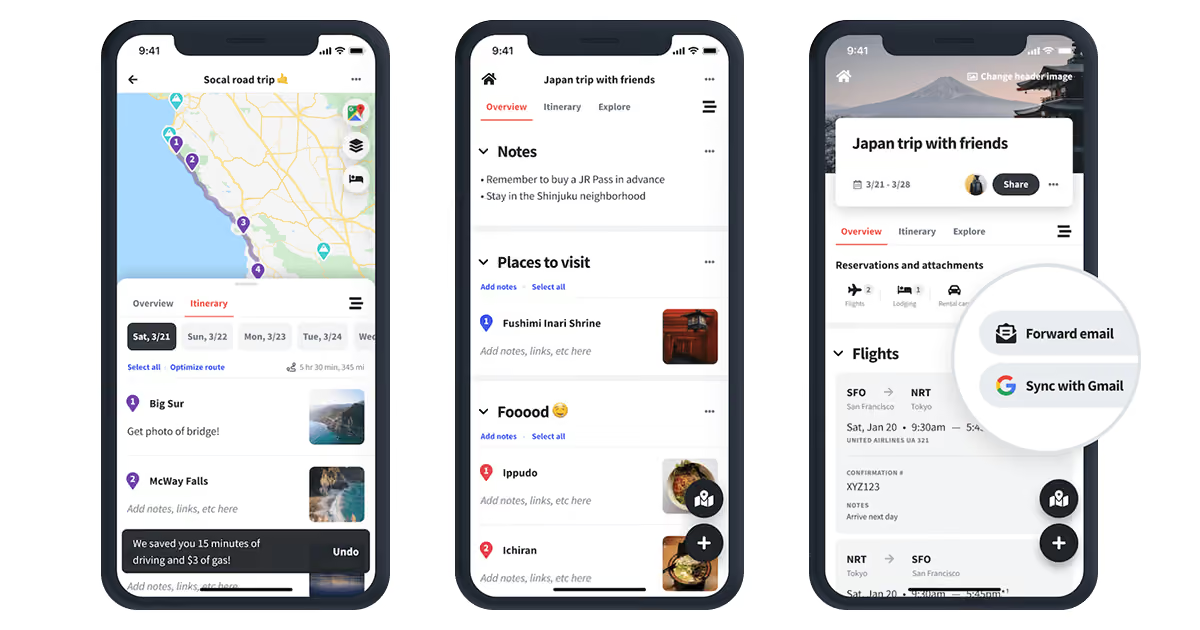
If you are looking for the best travel planning app for keeping bookings organised, TripIt is hard to beat. It consolidates everything into one itinerary automatically. With your input, it sorts flights, hotels, restaurants, and activities by date and time. Maps to your next hotel are built in, and past trips are saved for future reference. TripIt Pro ($49/year) adds real-time flight alerts, seat tracking, and fare refund monitoring.
Among the top travel planning apps for visual thinkers, Wanderlog is the best. It maps your entire trip as you build it: lodging, transport, and activity lists all on one screen alongside a live Google Maps view. Travel time between stops calculates automatically, and you get opening hours and closure alerts as you plan. The free tier covers most of what you need. Premium unlocks Google Maps export and AI features.
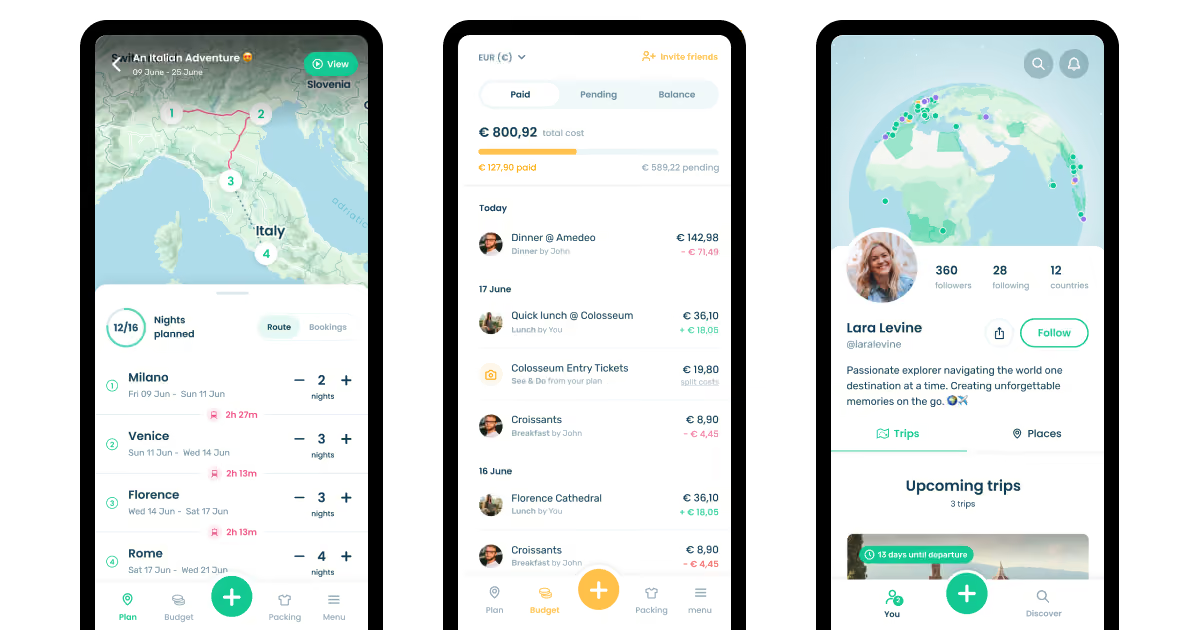
Stippl makes a strong case as the best travel itinerary app for leisure travelers who want everything under one roof. It covers itinerary planning, budgeting, packing, and trip journaling in one app. You can build day-by-day routes, track expenses in real time, split costs with travel companions, and create shareable travel reels from your photos. It also has a social layer: follow other travelers, discover curated itineraries from bloggers, and share your own. It is free to start, with a paid tier for heavier use.
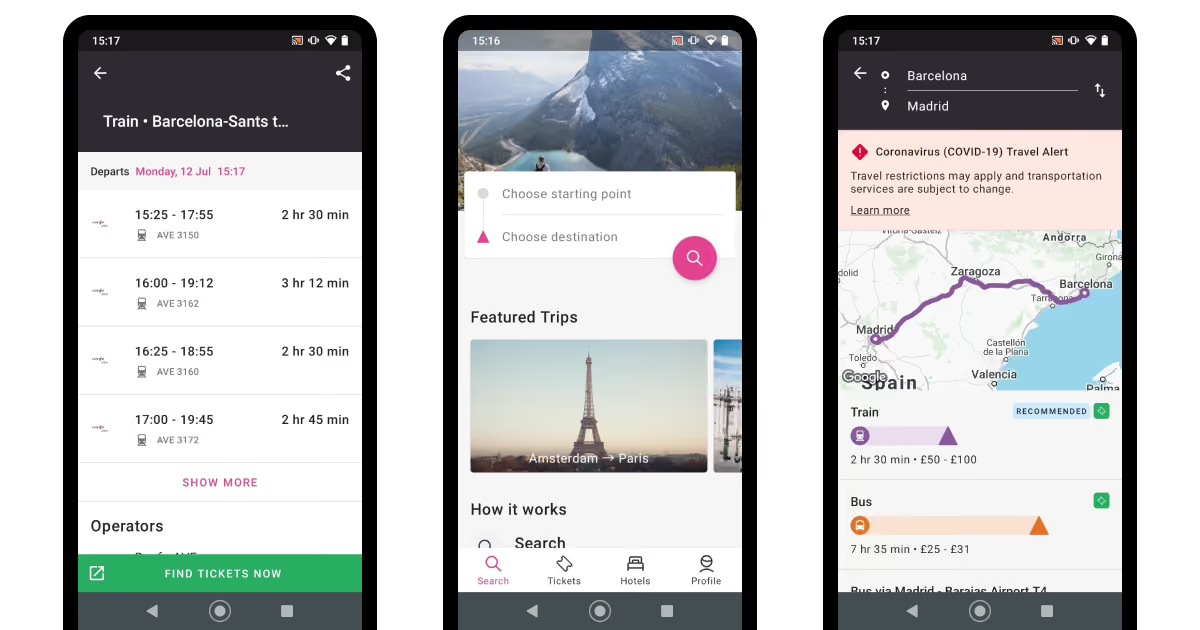
Rome2Rio is less of an itinerary builder and more of a transit helper, and one of the most useful travel apps for planning the getting-there part of any trip. You enter a starting point and a destination, and it shows every possible way to get there (flights, trains, buses, ferries, drives) with approximate costs and journey times for each. It works across any distance, whether you are crossing a city or a continent.
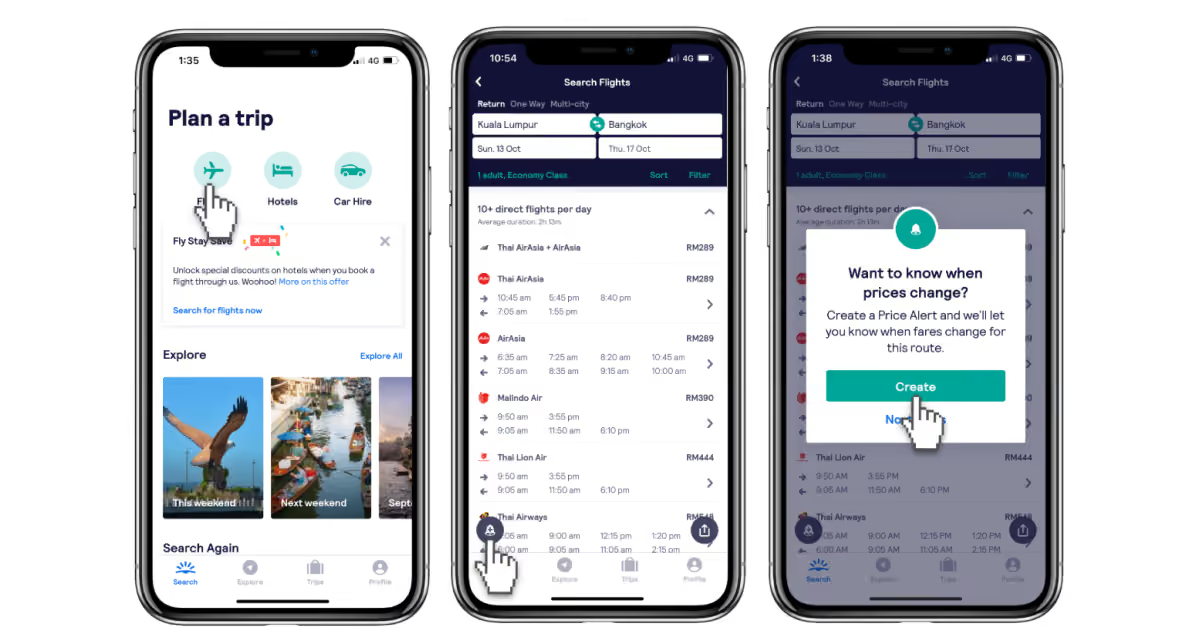
Skyscanner is a flight search tool that shows you the full picture. Budget carriers, full-service airlines, and indirect routes all appear in one view, with solid filtering for direct flights, flexible dates, and price alerts. Most people use it for research rather than booking directly through it. It’s a great option for finding the cheapest or most convenient flight option before committing to anywhere.
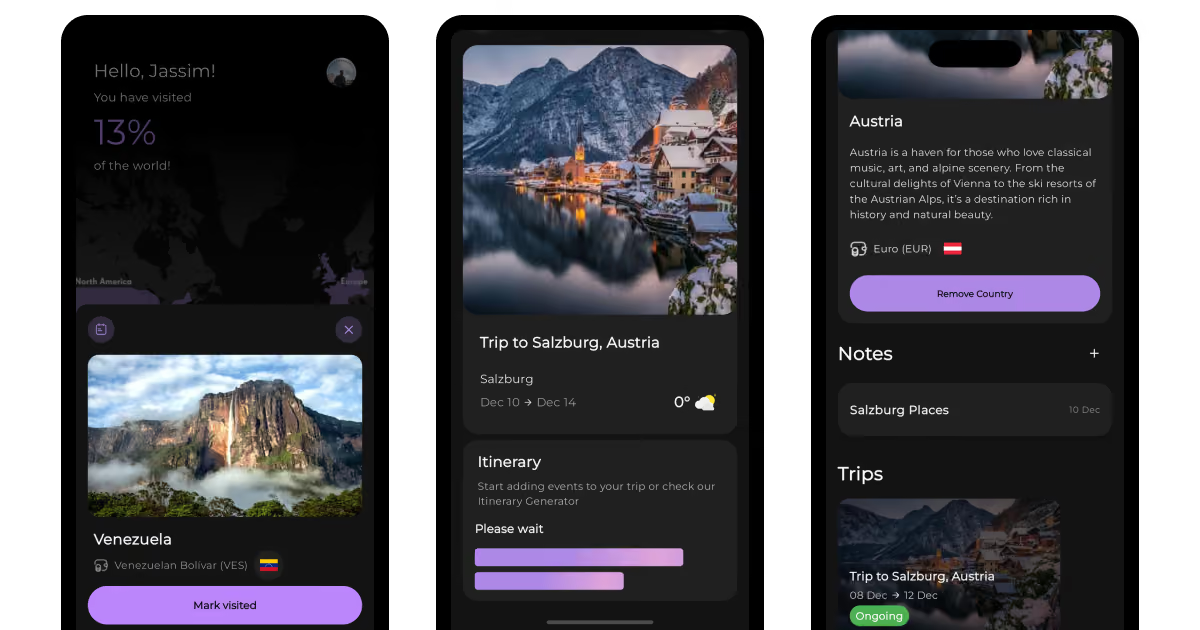
For travelers who want AI in the mix, Tripnote is among the best travel apps for planning and tracking in one place. It generates itineraries from simple text inputs, lets you pin visited countries on an interactive world map, and stores trip notes as a running visual diary. It is available on iOS and Android.
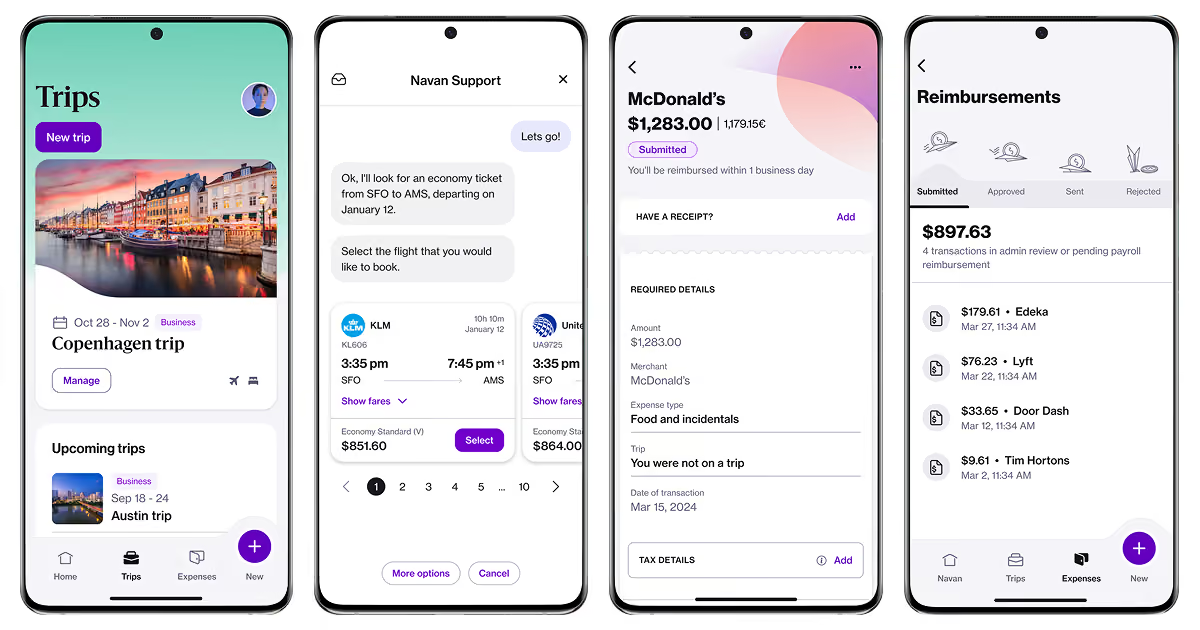
Navan is widely regarded as the best travel itinerary planner app for growing companies that want booking and expenses in one place. It combines booking, expense management, and policy enforcement on a single platform. Its AI writes expense descriptions and matches receipts automatically. Travel booking is free, and expense management costs $15 per active user per month.
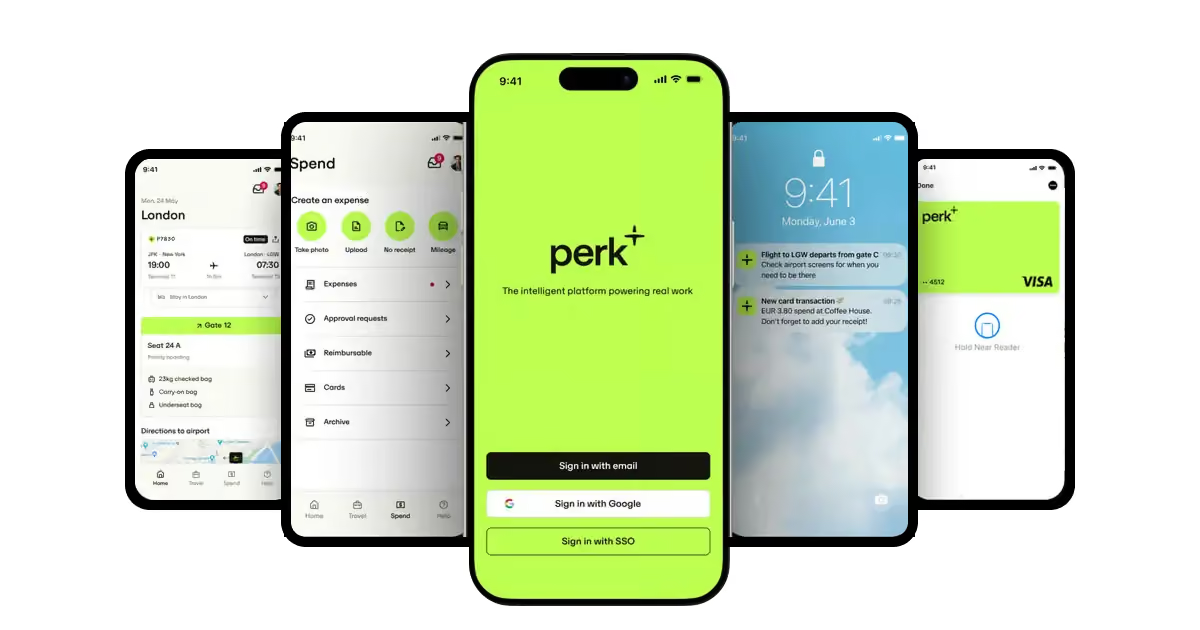
TravelPerk charges a flat 3% of booking value per transaction, with a $2 minimum and a $30 maximum cap. That cap matters on business class international routes where a percentage fee would otherwise get expensive fast. The platform handles the personal payment and reimbursement loop that frustrates most employees on corporate travel, and support response times are consistently fast. This tool fits teams that want transparent, predictable per-trip pricing without subscription lock-in.
Brex is a corporate card and financial platform built for startups. Its standout feature is the ability to invite external attendees, like contractors, guests, and conference speakers, to book their own travel under a shared spend limit. It supports multi-currency across 50+ countries, which makes it practical for teams running complex international operations. This solution will fit venture-backed companies organizing offsites or events where external guests need to book their own travel.
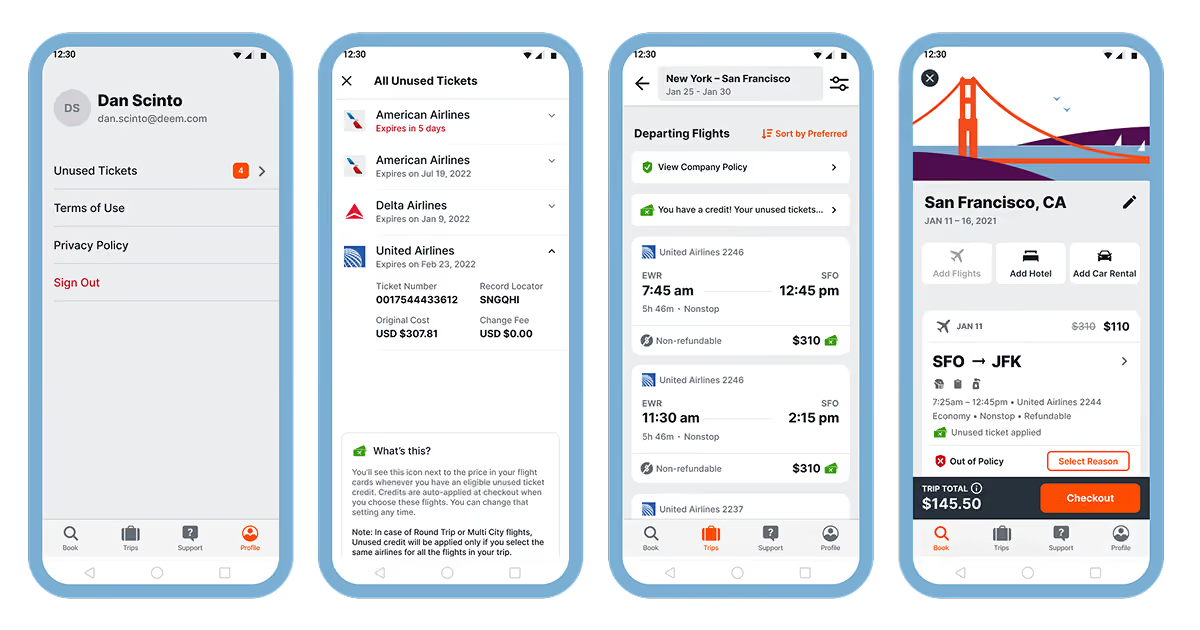
Deem provides white-label corporate booking technology used by travel management companies and large enterprise programs. The interface is fully configurable, with branded, policy-enforced, and connected to full GDS inventory for flights, hotels, and car rentals. It’s more of a tool for large enterprises that want a booking interface that looks and functions like their own product.
The market is full of varied apops both for leisure and business travelers. However, you often need to go outside the box and get something that fits your needs better.
The platforms above cover most standard travel use cases well. What they do not cover is your specific business model: a tour operator with custom booking flows, an agency managing complex multi-client itineraries, a corporate travel program that needs its own branded interface with policy logic baked in.
That is where a custom build makes more sense than forcing a third-party tool to do things it was not designed for. COAX builds white-label travel planning solutions for businesses that have outgrown off-the-shelf options, whether that means a branded booking experience, a client-facing itinerary tool, or a backend that connects your existing systems into one coherent platform. The result is software that fits the way your business works like a glove.
FAQ
How can an app for travel planning enhance the services of a travel agency?
A dedicated app lets agencies deliver client itineraries digitally, handle real-time booking changes, and automate communication without phone calls. For instance, Pawełoszek and Wieczorkowski found that functional mobile applications meeting user needs directly increase service dependability and trust. For agencies, that translates to fewer manual touchpoints, faster approvals, and clients who feel informed throughout the trip.
What are the challenges of implementing travel planning tools?
You might face the following issues:
Integrating live data from multiple APIs without inconsistencies
Keeping information current, such as schedules, prices, and availability, shifts constantly
Building offline functionality for low-connectivity destinations
Ensuring accessibility and compliance across markets
Managing security for sensitive customer and payment data
Scaling infrastructure for seasonal traffic spikes.
How do I adapt a travel itinerary app to my branding?
White-label development means the interface, colors, typography, and domain all reflect your brand, not a third-party product. Custom-built apps can embed your booking logic, pricing rules, and content directly. Users interact entirely within your ecosystem, which strengthens brand recognition and keeps them from drifting to competitor platforms.
How does COAX develop secure and efficient travel planning apps?
COAX has 15+ years in travel tech with a team that is 90% mid- and senior-level. Every project is covered by NDA, ISO 9001, and ISO 27001 certification, and enterprise-grade security standards. One team handles strategy through launch, so you will face no handoff gaps. Architecture is built to scale from day one, not patched later.














































































































.avif)




%20for%20hotels.avif)


.avif)
.avif)



.avif)





.avif)

.avif)





.avif)


.avif)

We are interested in your opinion