Many vacation rental business owners, managers, or operators have the same imperfect way of having their processes. They manage bookings across several platforms, coordinate cleaners by messages, and reprice manually while competitors adjust rates by the hour. Vacation rental software is a way out of this vicious cycle of wasting time and underachieving:
Channel management eliminates double bookings across every platform in real time.
Automation handles guest communication, cleaning, and payments without manual input.
Dynamic pricing adjusts nightly rates based on demand and competitor data automatically.
Smart access ties door codes for guests and staff directly to their booking window.
Analytics convert occupancy and revenue data into actionable performance decisions.
Owner portals keep property owners informed without manual reporting.
Direct booking tools cut OTA commissions through your own branded website.
Custom development builds reservation systems fitted to operations' standard platforms cannot handle.
In this article, we explain in simple words what features your vacation rental management software should have, and which are indispensable vs. complex and advanced. Also, we outline the best options in the market and describe the typical cases when you need to build a custom system.
What is vacation rental software?
Vacation rental software is a platform that manages the daily operations of short-term rental properties. It covers bookings, guest communication, payments, pricing, calendar management, and team coordination from a single interface.
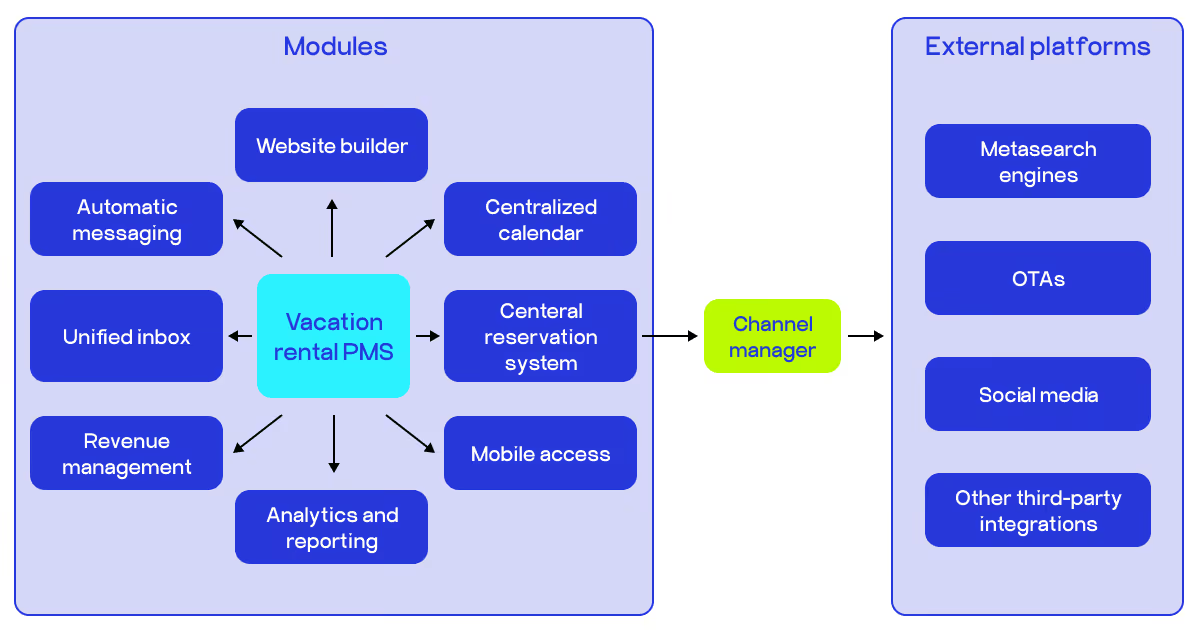
These digital systems handle the operational layer of running short-term rentals: bookings, guest communication, payments, scheduling, pricing, and reporting, all from one place. Instead of using spreadsheets and inboxes, you get a single dashboard that connects your listings, automates the routine work, and gives you data to make better decisions.
The category ranges from basic tools for single-property owners to full management systems handling hundreds of units across multiple markets. The logic is simple: a booking comes in, the calendar updates across every channel, the guest receives an automated message, and your cleaning team gets notified. Pricing adjusts based on demand. Reports generate automatically.
As Forbes contributor Dennis Klett points out, owners who adopt purpose-built tools gain "more control over the booking experience" and are better positioned to connect with guests on a personal level while handling the back-end mechanics automatically. That combination, control plus automation, is exactly what this software category delivers.
What does the market tell us?
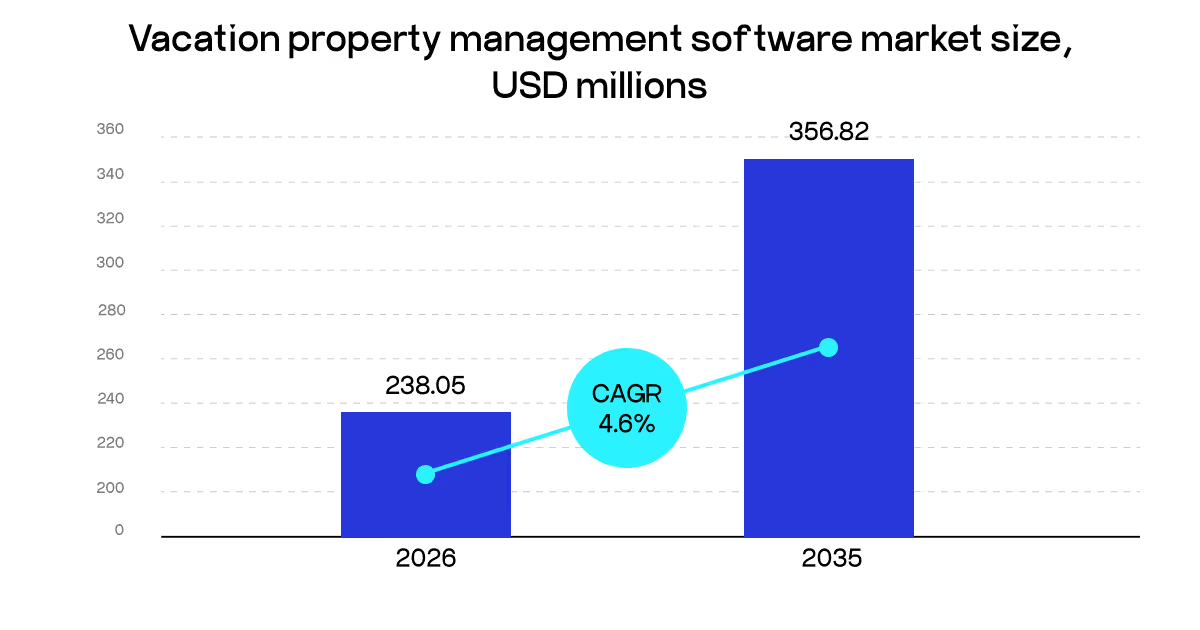
The vacation property management software market is projected to reach $326 million by 2033, according to industry analysis. That growth hints on something real: more properties, more platforms, and more complexity that owners cannot manage manually.
McKinsey research confirms the broader picture. The global travel industry grows rapidly, with luxury travel alone outpacing the broader sector at a 6% CAGR. More travelers means more bookings, and more bookings means more operational pressure on property managers.
Online vacation rental software has become the backbone of that operation. Platforms like Airbnb, Vrbo, and Booking.com now account for over 80-90% of bookings for management companies in Europe. Keeping up with pricing changes, availability windows, and guest expectations across all those channels manually is not realistic.
Software makes it manageable. The fastest-growing segment is cloud-based solutions, which let you access your entire property portfolio from a phone or laptop anywhere in the world. That shift toward remote management, combined with AI-driven pricing tools and contactless check-in technology, is changing what owners expect from software by default.
Who needs vacation rental software?
Vacation rental management software is not just for large property companies. It serves a wide range of people, and the value it delivers changes depending on how many properties you manage and how involved you want to be in daily operations.
Individual property owners with one to three listings often start on Airbnb or Vrbo and assume the platform tools are enough. They are, until you get your first double booking, miss a guest message, or realize your nightly rate has not changed in six months while the market has moved. Software gives solo owners automated messaging, dynamic pricing, and a single calendar that syncs across platforms so none of those problems happen.
Property managers and agencies handling ten or more units face a completely different challenge. Coordinating cleaners, tracking maintenance, managing owner payouts, and keeping every listing optimized across multiple booking channels becomes a full-time job without the right tools. Vacation management software replaces that manual overhead with workflows, reporting, and multi-channel distribution that scale with your portfolio.
Real estate investors who own properties but do not want to manage them day-to-day still benefit from software. It gives them visibility into occupancy rates, revenue per property, and operational costs, so they can make informed decisions about their portfolio without being in the weeds.
Co-hosts and property management companies working on behalf of owners need software to stay accountable and professional. Client-facing reporting, owner portals, and automated commission tracking are features that make the relationship transparent and the business credible.
Research confirms that check-in interactions, one of the few in-person touchpoints between guests and management companies, directly affect online ratings. That means every operational detail matters, and software that helps you execute those details consistently is not just a nice optional addition. It is how you protect your reviews.
Core features to look for in the vacation management software
Before we move to the vacation rental management software comparison, we need to understand what your perfect tool should have in terms of functionality. Some features are basic but indispensable, and others are more complex but give you more edge.
Key features
The following tools that form the foundation of any serious vacation rental property manager software. Without them, you are still managing manually and losing a lot of potential. For ease, you can just check your use case and feature breakdown in the table below.
Feature
What it does
Best for
Centralized calendar
Single view of all reservations across channels
Any portfolio size
Unified inbox
All guest messages in one place regardless of source
High-volume communication
Channel manager
Syncs calendars and pricing across all OTAs instantly
Multi-platform hosts
Task management
Assigns and tracks cleaning, maintenance, and inspections
Teams with staff
Payment processing
Secure payments for direct bookings and extra charges
Direct booking operators
Automation tools
Handles messaging, payments, pricing, and task triggers
Reducing manual work
Reporting tools
Revenue, occupancy, and expense reports on demand
Owners and accountants
Mobile app
Full platform access from a phone
Remote management
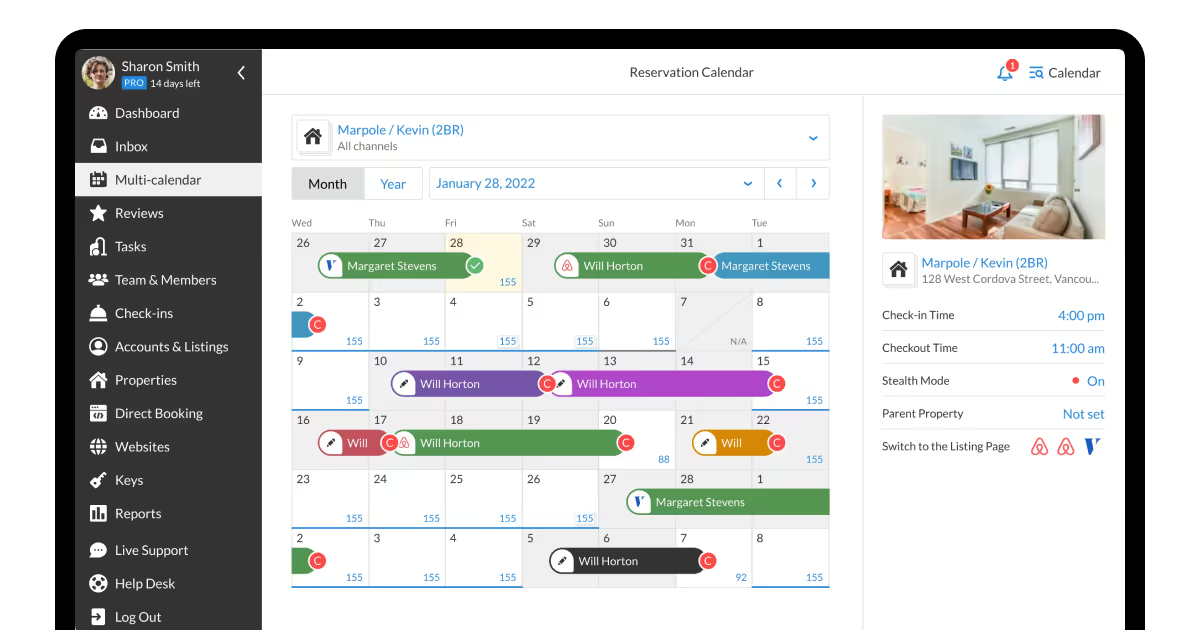
Centralized calendar. Every reservation from every channel appears in one calendar view. Past stays, current guests, upcoming bookings. You see the full picture without logging into multiple platforms.
Unified inbox. Guest messages from Airbnb, Vrbo, Booking.com, and your direct booking site all land in one inbox. You respond once, from one place, regardless of where the guest originally messaged you.
Channel manager for vacation rentals. A vacation rental channel management software connects all your listing platforms in one place. When a booking comes in on Airbnb, your Vrbo and Booking.com calendars update instantly. Pricing changes, description edits, and availability updates push to every platform simultaneously. No double bookings, no platform-by-platform updates.
Task management. Cleaning schedules, maintenance requests, inspections, and staff assignments are generated, assigned, and tracked inside the platform. Your team knows what to do and when without you coordinating every handoff manually.
Payment processing. For reservations made outside OTAs, the software processes payments securely. This covers direct bookings, additional guest charges, and security deposits.
Automation tools. Vacation rental booking software with solid automation handles the repetitive operational work: sending pre-arrival instructions, triggering cleaning schedules after checkout, adjusting prices based on preset rules, processing payments, and following up with guests for reviews. You define the rules and the system runs them.
Reporting tools. Reservations, revenue, occupancy rates, and expenses are organized into clear reports you can share with owners, accountants, or your own team. No manual data pulling.
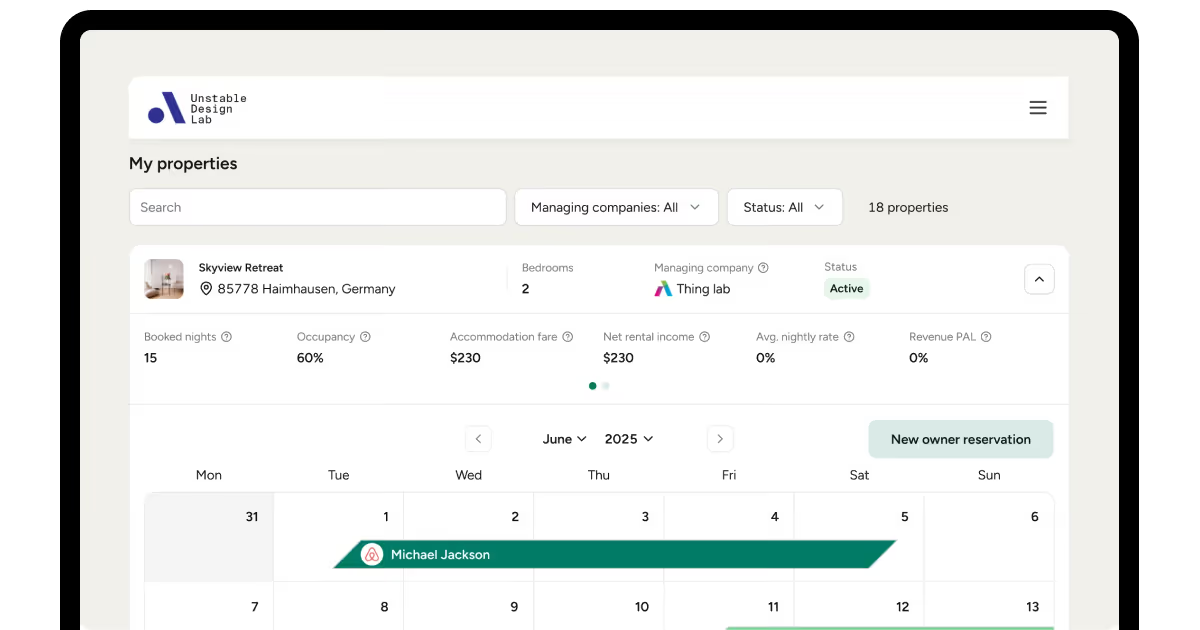
Owner portal. Homeowners get their own dashboard where they can see reservation schedules, financial summaries, and block dates for personal use. It keeps the owner relationship transparent without requiring you to send manual updates.
Mobile app. A native app lets you manage operations from anywhere. Approve bookings, respond to guests, assign tasks, and check performance without being at a desk.
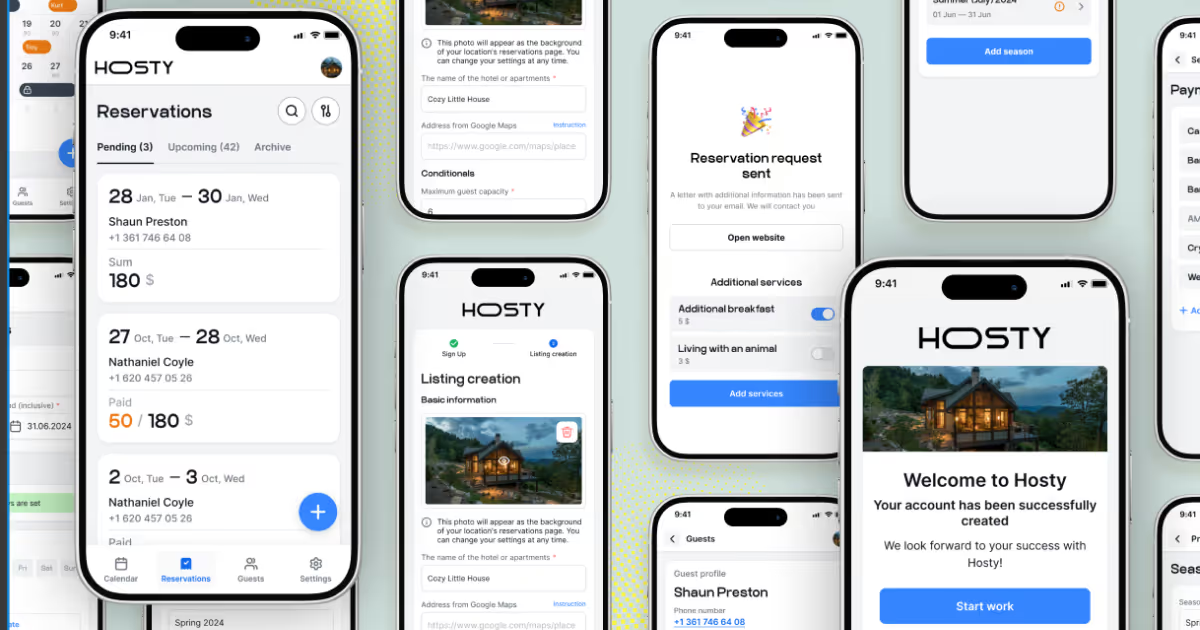
These features form the basis of your vacation rental reservation system. We’ve seen their impact. When COAX began developing the Hosty rental management platform, we realized that a mobile, on-the-go, all-in-one-place, simple, and convenient tool was just what owners needed to break from OTA dependence and make their business more efficient.
Advanced features
The more advanced and complex features go beyond day-to-day management. They are what separates basic vacation rental software from platforms built for serious operational scale. Let’s outline the functionality to really make you exceptional.
Feature
What it does
Best for
AI guest communication
Handles inquiries, check-in info, and reviews automatically
Scale and consistency
Dynamic pricing
Adjusts nightly rates based on demand and competitor data
Revenue maximization
Smart access and IoT
Time-limited door codes, remote lock control, thermostat automation
Multi-unit properties
Accounting integration
Automated financial tracking and tax management
Financial accuracy
Digital guest experience
Online check-in, guidebooks, and ID verification
Guest satisfaction
Direct booking site
Branded bookable website with zero OTA commission
Brand-building operators
Advanced owner reporting
Real-time RevPAR, ADR, and financial dashboards
Institutional owners
Automated workflows
Auto-assigns housekeeping and maintenance by checkout time
High-turnover portfolios
AI trip planning integration
Connects listings to AI booking and discovery tools
Distribution growth
AI-powered guest communication. Systems like Hospitable use AI to handle guest inquiries, send check-in instructions, and respond to reviews automatically across all platforms. Response times drop significantly and the communication stays consistent regardless of volume.
Dynamic pricing and revenue management. Algorithms pull in data on local demand, competitor rates, seasonal patterns, and upcoming events, then adjust your nightly rates automatically. Tools like PriceLabs integration can increase booking revenue by over 30% compared to static pricing.
Smart access and IoT control. Integrations with vacation rental software like RemoteLock connect your platform directly to smart locks and thermostats. Unique, time-limited access codes generate automatically for each guest, cleaner, and maintenance worker based on their specific schedule. Managers can lock and unlock doors remotely, monitor door status in real time, and group multiple entry points under one code for multi-unit properties. Thermostat integration adjusts temperatures automatically at checkout to reduce energy costs.
Accounting integration. Connected accounting tools track income, expenses, management fees, and tax obligations automatically. They reduce manual reconciliation and keep your financials accurate in real time.
Digital guest experience tools. Digital guidebooks, online check-in flows, and ID verification handle the arrival process before the guest sets foot in the property. Platforms like Hostify use these tools to reduce front-end friction and improve guest satisfaction scores.
Direct booking site builder. Some platforms build a branded direct booking website for you, pulling your listings directly from the software database. Guests book without going through an OTA, which means no commission fees and a direct relationship with your guest.
Advanced owner reporting. Real-time dashboards track RevPAR, ADR, occupancy rates, management fees, and expense breakdowns. Automated owner reports go out on schedule with no manual preparation.
Automated operational workflows. Housekeeping and maintenance modules assign tasks automatically based on checkout times and booking gaps. Cleaning schedules, inspection checklists, and turnover timelines run without manual scheduling.
AI trip planning integrations. As AI trip planning apps become a standard part of how travelers research and book accommodation, some vacation rental platforms are building compatibility with these tools. Properties managed through software with structured data and API connections are better positioned to appear in AI-generated travel recommendations, which is becoming a meaningful distribution channel, available for truly top-rated vacation rental software.
Surely, you rarely need all of these complex features in your day-to-day tool. And especially, you might not need them if you own a small rental business and just want to simplify your booking and management processes. But if you’re about to go big, expand to more properties, attract more visitors, and provide a unique experience - pay attention to this functionality.
Top 10 vacation rental software platforms
Not every platform fits every operation. Your pick for the best vacation rental software depends on your portfolio size, budget, and how much complexity you are willing to manage. Here are ten platforms worth considering, ranked by overall value and fit across different operator types.
Platform
Best for
Starting price
Free trial
Hostaway
Scaling operators
Custom quote
No
Hospitable
1-20 properties
$40/month
Yes
Guesty
Enterprise teams
$49/month
No
Hostfully
Growing managers
Tiered plans
No
Lodgify
Direct booking focus
$67/month
Yes
OwnerRez
Power users
$40/month
No
iGMS
Cost-conscious managers
$20/property
Yes
Streamline
Large portfolios
Custom quote
No
Escapia
US professional managers
Custom quote
No
Smoobu
Independent hosts
Flat monthly
Yes
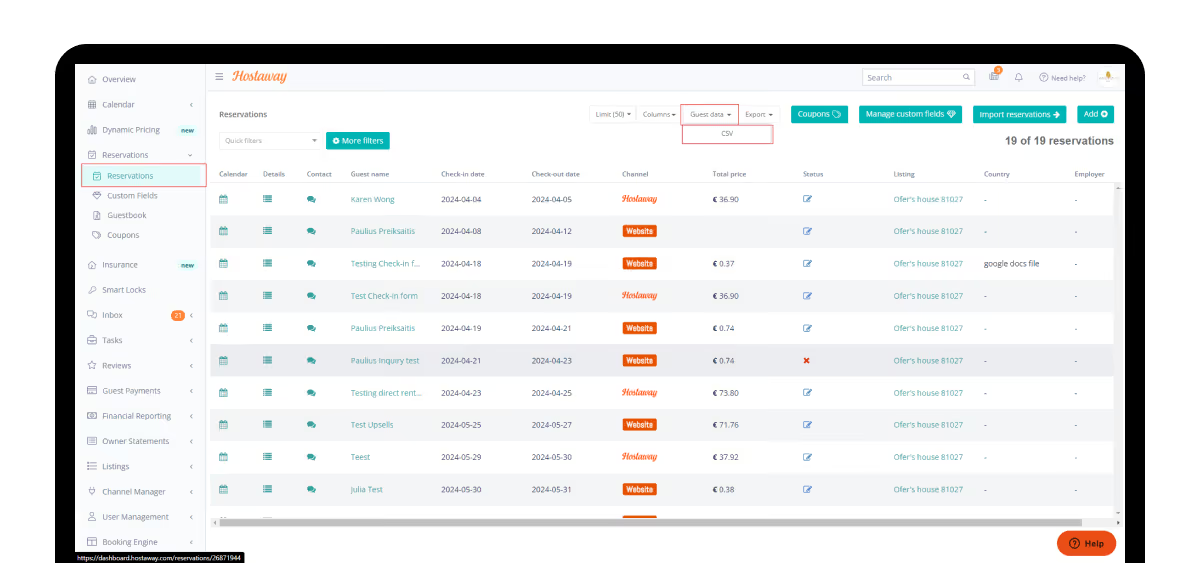
Hostaway is one of the top-rated vacation rental software options for property managers running diverse portfolios. It combines a full PMS with one of the largest integration marketplaces in the industry, covering over 200 third-party partners. Direct API connections with Airbnb, Vrbo, and Booking.com come as standard, and the platform includes tools for guest communication, task management, owner portals, and analytics. Pricing is custom and requires a demo, which makes it less accessible for smaller operators, but for teams that need enterprise-level connectivity, it delivers.
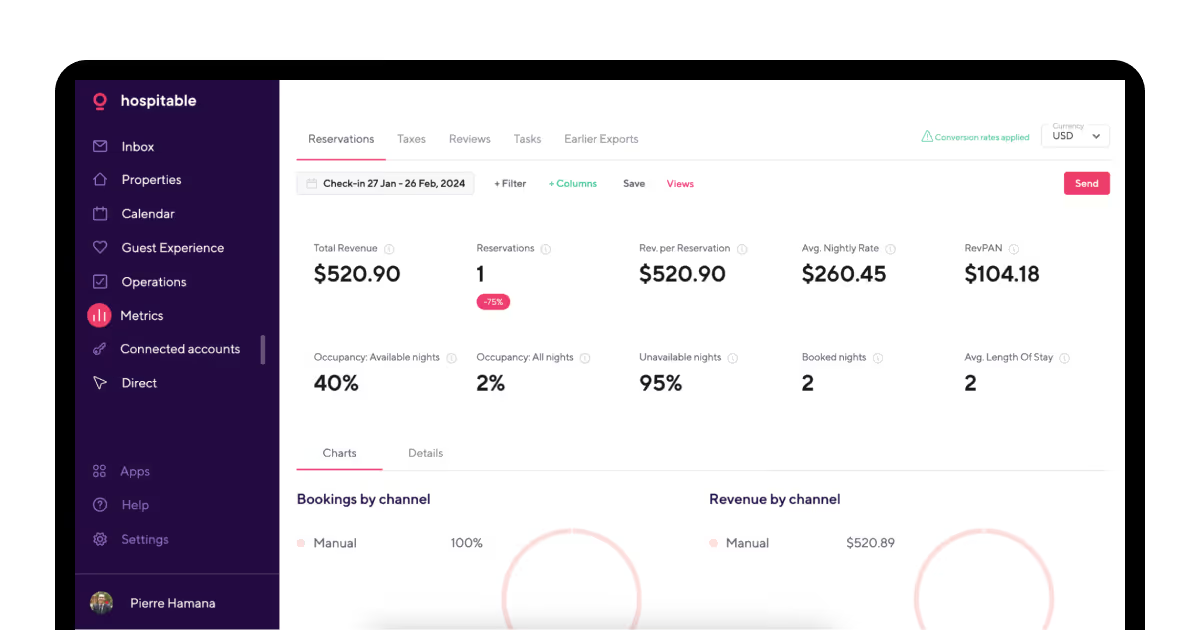
Hospitable is the strongest contender among the best vacation rental software options for hosts who want automation without a steep learning curve. Its AI-driven guest messaging handles inquiries, check-in instructions, and review responses across platforms automatically. The interface is clean, setup is fast, and the platform has expanded to include dynamic pricing and smart device automation. Plans start at $40 per month for two properties, making it genuinely accessible for smaller operators.
Guesty is built for management companies that need a single system to handle complex, multi-property operations. Its strength lies in scalability and customization. The platform offers a marketplace of third-party integrations, optional modules including trust accounting and advanced analytics, and dedicated owner portals. A Lite plan covers one to three properties, but the real value appears at the Pro and Enterprise tiers. The trade-off is cost, which increases significantly as you add modules and properties.
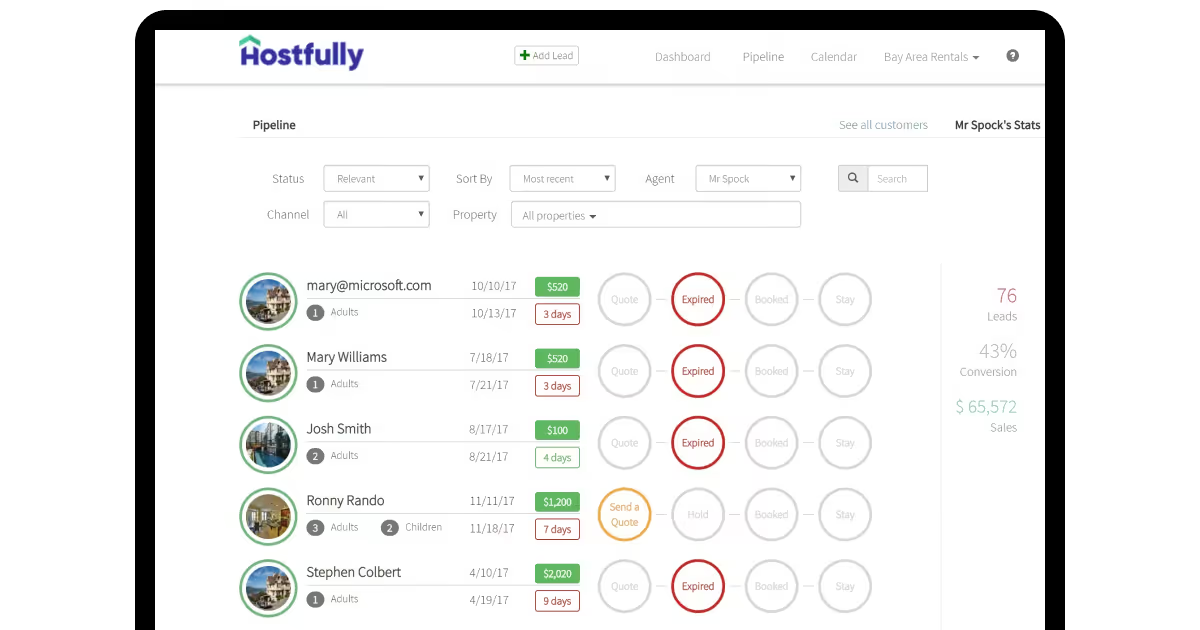
Hostfully sits in a useful middle ground between simple host tools and full enterprise systems. It covers channel management, automation, and owner reporting, but its standout feature is the integrated digital guidebook builder, which lets you create mobile-friendly property guides that reduce guest questions and support upsells. Transparent tiered pricing for up to 19 listings makes it easier to evaluate before committing. For managers building a more professional guest experience, this is one of the best vacation rental property management software picks in its price range.
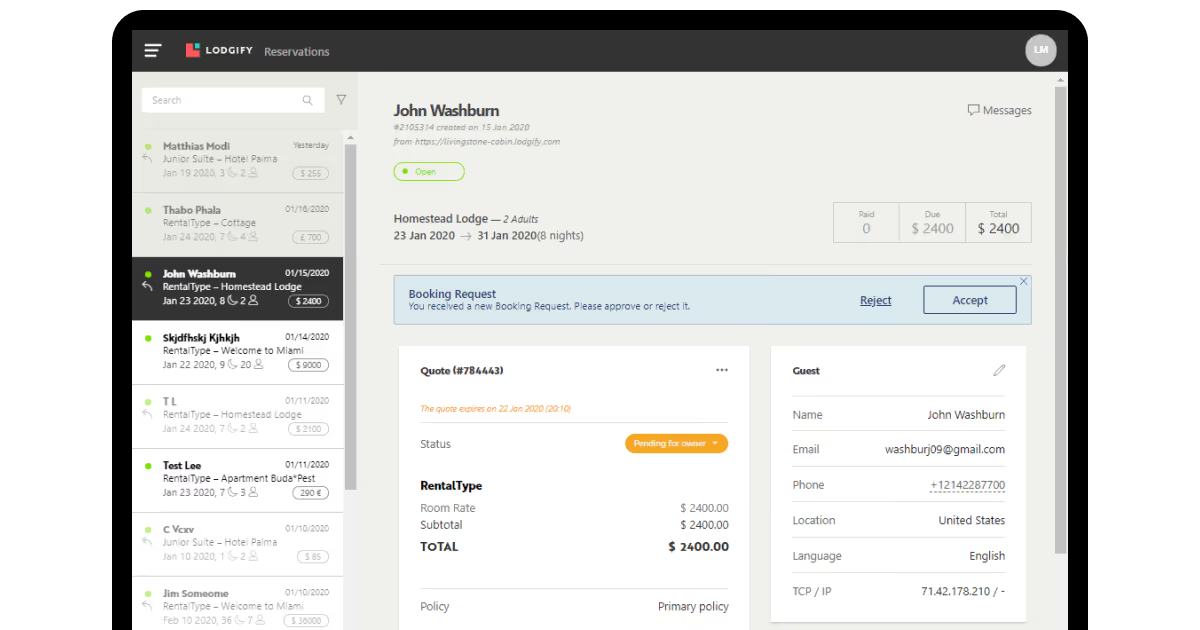
Lodgify takes a website-first approach. Its integrated booking engine and template-based website builder are the core, making it the go-to for operators who want to reduce OTA dependence and build direct booking revenue. The channel manager connects to Airbnb, Vrbo, and Booking.com, and recent updates added task management and owner reporting. If direct bookings are your primary focus, Lodgify belongs on your shortlist of best vacation rental software features for brand-building.
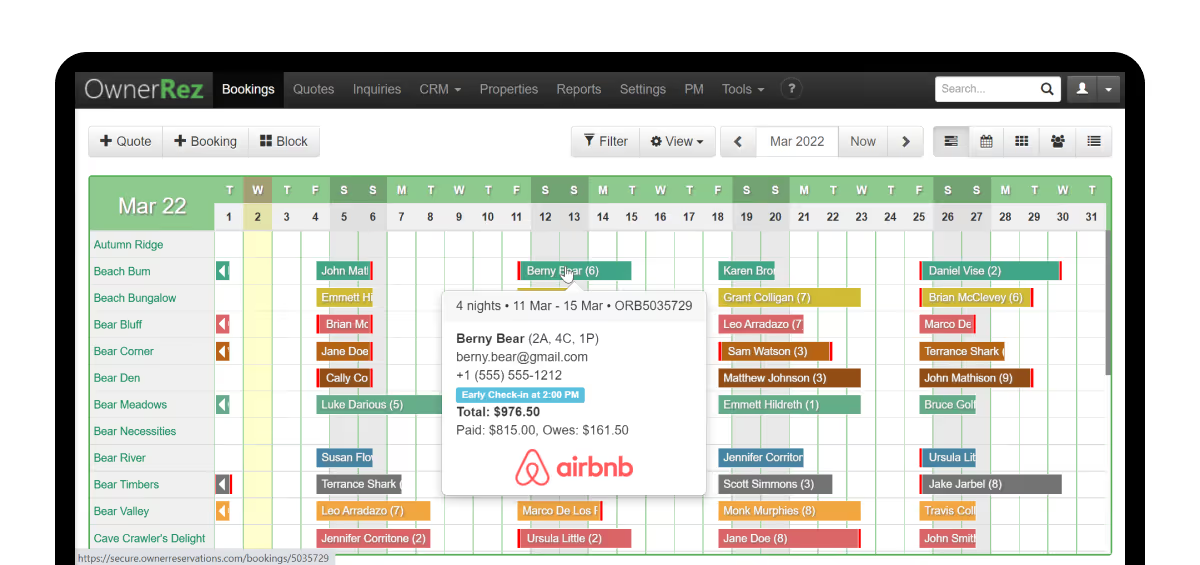
OwnerRez is the platform for operators who want deep functionality without inflated pricing. Per-property pricing with no booking fees, strong QuickBooks integration, and a highly customizable triggers system for automated workflows make it a serious tool for managers who are comfortable with a detailed setup process. The interface is functional, and the performance is above average. Trust accounting, owner statements, and direct API connections with all major OTAs are included. For property managers who want granular control over their software costs, this is a standout.
iGMS offers a clean balance between affordability and capability. The platform covers the core management tools: channel manager, unified inbox, automation rules, and a direct booking engine, all without booking fees. Per-property pricing starting around $20 per month makes it one of the more cost-transparent options on this list. Owner portals and reporting are available on Pro plans, giving smaller operators a growth path without switching platforms. The 14-day free trial makes it easy to test before committing.
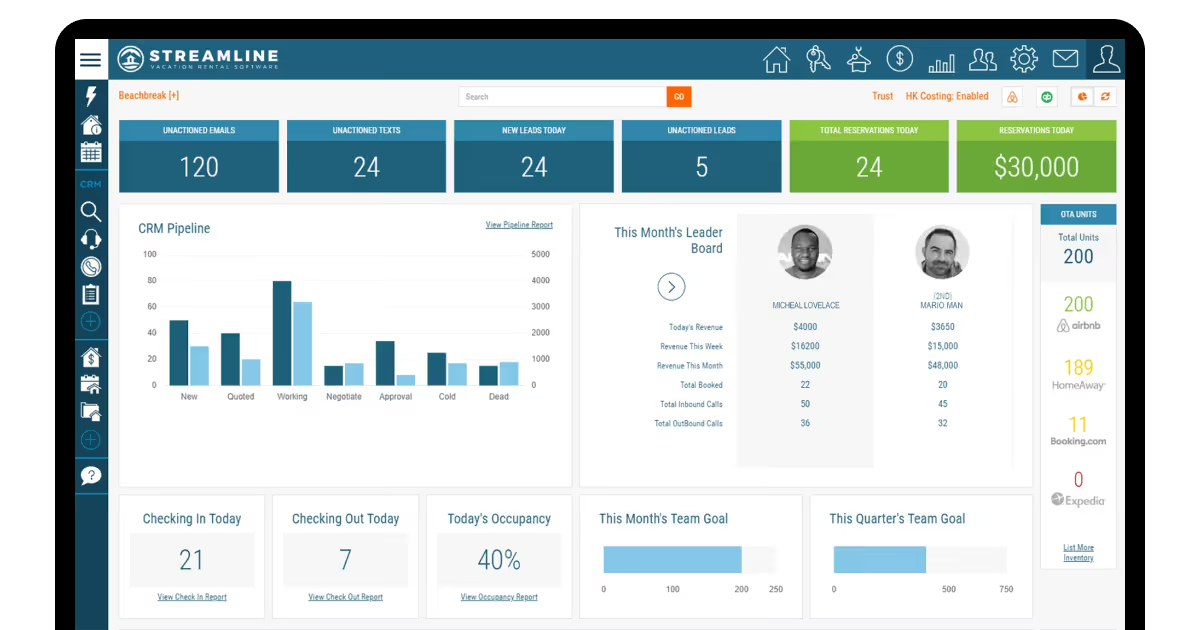
Streamline is built for established management companies running 50 or more properties. It operates as a single-vendor system, meaning the property management platform, channel connections, trust accounting, owner relations tools, and marketing services all come from one provider. That consolidation reduces integration headaches but also means you are fully committed to one ecosystem. The comprehensive trust accounting module is a genuine differentiator for larger US-based operators who need financial compliance and detailed owner reporting built into the core system.
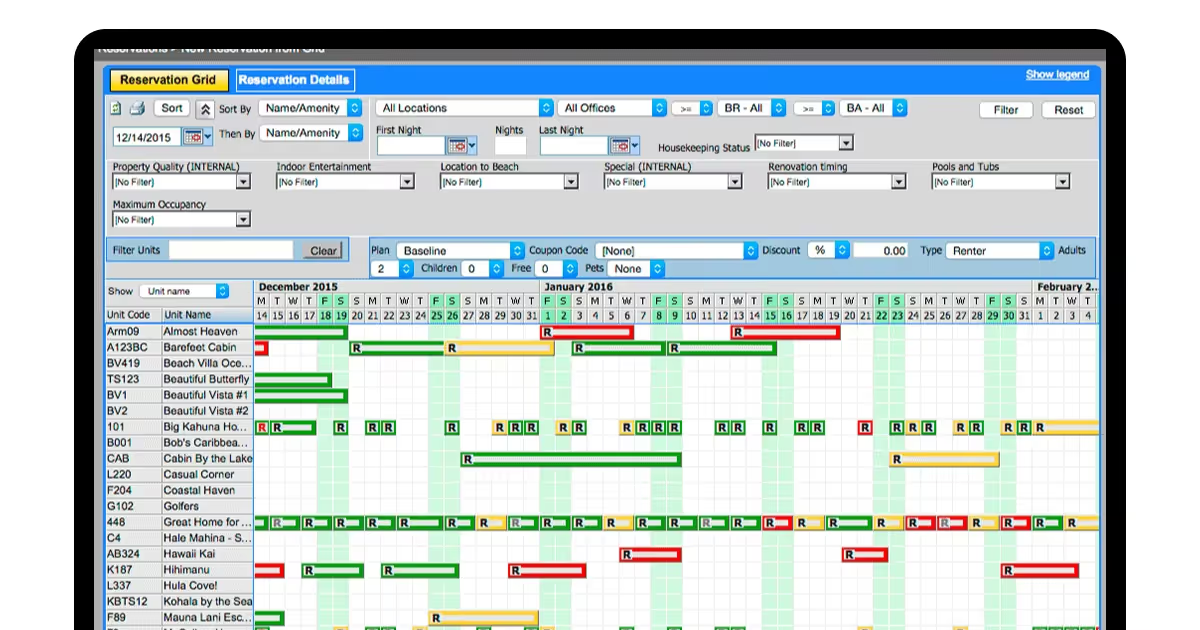
Escapia, now part of the Expedia Group, carries significant weight in the US professional management market. Its flat-fee pricing model covers unlimited users and bookings without percentage-based commissions, which matters when you are managing a large portfolio. The platform has deep Vrbo integration and solid trust accounting, making it a natural fit for managers heavily invested in that channel. The interface is traditional, but its stability and comprehensive feature set have kept it as one of the top vacation rental software options for established companies.
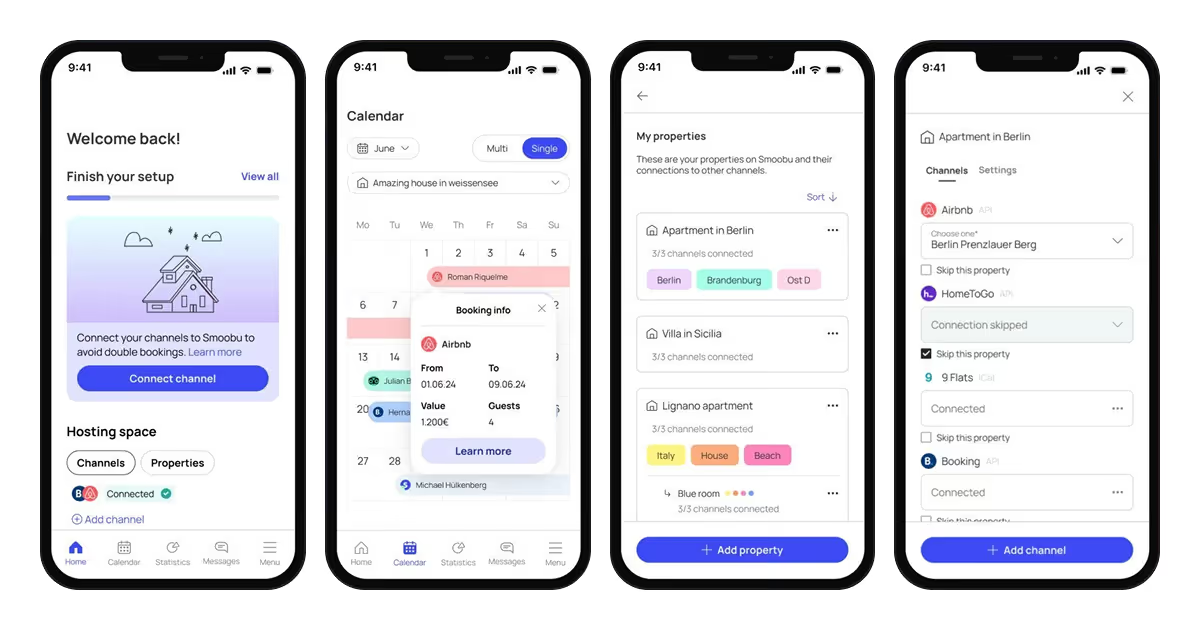
Smoobu is the most accessible platform on this list. It covers the essentials: calendar sync, channel management, automated messaging, and a direct booking website, all through an interface designed for hosts who do not want to spend days on setup. Suited for portfolios of one to ten properties, it delivers real operational value at a flat monthly rate. If you are just starting out or running a small portfolio and want something that works without complexity, Smoobu is a practical first choice.
With so many tools at your disposal, it’s often difficult to pick the one for your case. In the next section, we address this issue and help you make the right choice.
How to choose the right vacation rental software
The choice always comes down to your goal, key pain points, and the right mix of functionality, integrations, cost, and support. Now, let’s review in more detail what to evaluate before you commit.
Portfolio size and growth trajectory. The first question is, how many properties do you manage now, and where do you expect to be in two years? A solo host with three listings has no use for enterprise-level vacation rental management software built for agencies managing 200 units. Equally, a growing property manager who picks a lightweight tool today may find themselves migrating platforms in 12 months. Match the software to where your business is going.
Channel connectivity. If your bookings come from Airbnb, Vrbo, and Booking.com, your software needs direct API connections to all three, not iCal syncs. Direct API integrations update in real time. iCal syncs on a delay, which means double booking risk. Confirm which connection type the platform uses for each channel you actually use. For managers targeting corporate travelers or international guests, a GDS system connection matters too. Not all vacation rental software connects to GDS networks, and for most short-term rental operators it is not essential, but if you manage serviced apartments or extended-stay properties, it is worth checking.
Pricing structure and total cost. Vacation rental software comparisons are often misleading because platforms price differently. Some charge flat monthly fees per property. Others take a percentage of each booking. Some bundle everything; others charge separately for owner portals, SMS messaging, or direct booking engines. Calculate your actual monthly cost at your current portfolio size and at double that. A platform that looks cheap at five properties can become expensive at twenty.
Automation depth. Basic automation sends a check-in message when a booking is confirmed. Good automation handles the full guest journey: pre-arrival instructions, mid-stay check-ins, checkout reminders, review requests, and follow-up messaging, all triggered automatically based on booking status. It also assigns cleaning tasks, notifies maintenance staff, and adjusts pricing without manual input.
Owner management requirements. If you provide vacation rental management services on behalf of owners, the software needs a proper owner portal. That means owners can log in, see their reservation calendar, review financial statements, and block personal use dates without contacting you. Automated owner reporting with revenue figures, occupancy rates, and expense breakdowns reduces the administrative overhead of managing client relationships.
Integration ecosystem. No single platform does everything perfectly. The better ones connect to specialized tools for dynamic pricing, smart locks, accounting, and guest screening. Hostaway has over 200 integrations. Guesty has an open API on higher tiers. Lodgify has fewer connections, which limits your options as you scale. List the tools you already use or plan to use, and confirm the platform integrates with them.
Ease of use and onboarding. A powerful platform you cannot configure properly is worse than a simpler one you use correctly. Ask each vendor about the onboarding process, how long setup typically takes, and what support is included. Guesty and Streamline have steeper learning curves and longer onboarding timelines. Hospitable and Smoobu are operational within hours. If you do not have a dedicated operations team, factor setup complexity into your decision.
Customer support quality. Support quality varies widely across vacation rental software management platforms. Guesty offers 24/7 premium support on higher-tier plans. LiveRez has documented complaints about slow response times. OwnerRez is known for fast, knowledgeable support despite being a smaller platform. Check review platforms like Capterra and G2 specifically for support quality, not just overall ratings.
No matter how diverse the list of these options is, sometimes you need online vacation rental software to fit your specific needs and not try to fit into some template. Let’s break down when and why you need a custom system.
When to opt for custom software
Off-the-shelf platforms cover the majority of use cases well. But there are situations where they have significant limitations, and building a purpose-built system becomes the more practical decision. Next, you’ll find the key reasons to go custom and the benefits of this decision.
Your operation does not fit standard processes.
Most vacation rental software is built around the following logic: list on OTAs, automate messaging, sync calendars, collect payments. But consider the scenarios that off-the-shelf tools handle poorly. A management company operating hybrid short-term and long-term rental portfolios under one roof, or a hospitality group managing branded villa collections with custom guest experience workflows. Research found that for the short-term rental sector, regulatory and revenue dynamics shifted rapidly across city sectors. Operators in fast-moving markets like this need systems that adapt to their business rules.
You need integrations that you can’t find anywhere.
Vacation rental software integrations with major OTAs, dynamic pricing tools, and smart locks are standard. But specialized requirements like custom booking flows for corporate travel clients or direct connections to a GDS system for travel agent distribution fall out of these lists. Moreover, McKinsey research notes that travel companies are increasingly using data behind the scenes to anticipate guest needs at every point in the journey, citing hotels that preorder preferences based on historical behavior and deliver them automatically at each stay. That level of personalization requires only a custom data architecture.
You manage a scale that changes the economics.
At a certain portfolio size, per-property SaaS pricing stops making financial sense. A company managing 300 properties on a platform charging $20 per property per month pays $6,000 monthly, $72,000 annually, for software it does not fully control and cannot modify. A custom vacation rental reservation system built once, owned, and scaled at no additional per-unit cost often delivers a better return on investment within two to three years. Tailored tools also handle multi-brand portfolio management, territory-based team structures, or complex owner commission models better.
You are building a product, not just managing properties.
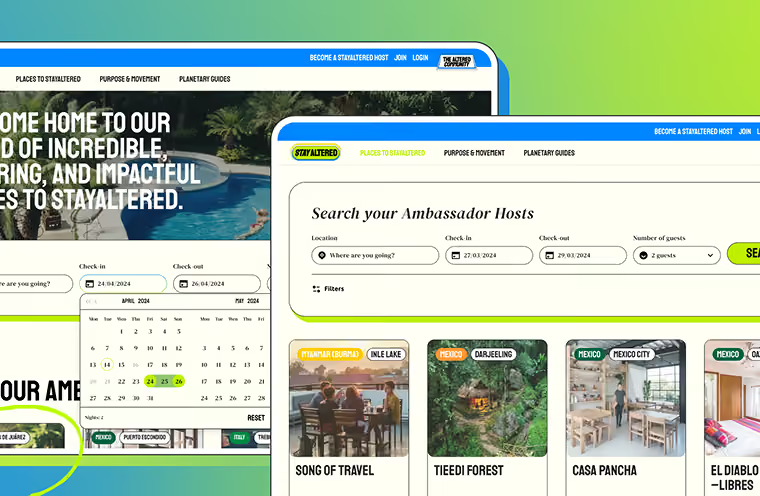
It’s easier to be a dangerous competitor when you take your product's uniqueness seriously. Postcard Cabins designs every cabin with a specific visual and emotional outcome in mind.
That kind of differentiation cannot be delivered through a white-labeled SaaS product. It requires a custom vacation rental software for property managers and guests that reflects the brand at every touchpoint: the booking flow, the pre-arrival experience, the in-stay communication, and the post-stay follow-up.
Data ownership and competitive advantage.
Every booking, guest preference, and behavioral signal that passes through a third-party SaaS platform belongs to that platform's data ecosystem, not yours. Custom software gives you full ownership of your guest data, which becomes a big competitive asset over time. You can build predictive pricing models, guest retention programs, and personalized marketing campaigns on data you actually control.
If you recognize your business model ticks off some of all of these points, travel booking software development from the COAX Software team is for you. COAX develops complete vacation rental reservation systems from the ground up: multi-channel booking engines, real-time availability calendars, secure payment processing with multi-currency support, automated guest communication workflows, and owner portals with custom reporting. Every component is built to your operational model.
For operators targeting corporate and agency bookings, COAX builds direct GDS connectivity, putting your inventory in front of travel agents. Custom channel managers that connect to niche or regional booking platforms that most vacation rental software integrations don’t support.
We also develop the advanced capabilities that off-the-shelf platforms either do not offer or lock behind enterprise pricing. Whether it’s guest profiling systems that track preferences across stays and trigger personalized communication or AI-powered dynamic pricing engines, we can integrate complex functionality with ease.
FAQ
Do small rental business owners need vacation rental property management software?
Yes. Alan Mallach's research shows that most small rental owners hold other jobs and operate on narrow margins. Manual coordination across booking platforms, guest communication, and maintenance scheduling creates errors that cost money. Software automates those workflows, reduces double bookings, and generates financial reports that help part-time landlords run their properties without hiring additional staff.
What is the best vacation rental software for improving customer retention?
Around 25% of vacation rental bookings come from repeat guests. Hospitable and Hostfully lead on retention through automated post-stay messaging, review requests, and personalized follow-ups. For operators who want full control over guest data and custom loyalty workflows, COAX builds proprietary systems that track guest preferences across stays and trigger targeted offers, something no off-the-shelf platform delivers natively.
What are the challenges of adopting vacation rental reservation software?
The typical roadblocks are:
Staff training and workflow restructuring
Data migration from existing systems
Integration gaps with current tools
Upfront implementation costs
Syncing across multiple booking channels accurately
Resistance to changing established manual processes
Ongoing subscription costs at scale
Security and guest data compliance requirements.
How does COAX develop secure and efficient vacation rental management software?
COAX builds vacation rental systems with security embedded at the architecture level, not added afterward. COAX is ISO/IEC 27001:2022 certified for comprehensive management of security, risk assessment, and monitoring security risks, and holds ISO 9001 certification ensuring optimal quality processes. Every system undergoes structured risk assessment, encrypted data handling, and rigorous quality controls before deployment.







































































































.avif)




%20for%20hotels.avif)


.avif)
.avif)



.avif)





.avif)

.avif)





.avif)


.avif)

We are interested in your opinion