Over 16 years of building hospitality tech at COAX Software, we’ve seen one brutal truth play out repeatedly. You don't own your hotel's reputation. Your guests do, really. But you can build the architecture that controls it.
Hotel reputation management is the strategic art of turning fragmented public sentiment into algorithmic visibility and pricing power. It can prevent a single unaddressed 3-star review from silently bleeding your occupancy rates. This phenomenon dictates whether a traveler clicks "book now" on an OTA or scrolls right past your property. How? Our hotel reputation management tips are what come to the rescue.
Below, we outline the critical integrations, core software features, top tools, and the best reputation management strategies. This helps you transform raw guest feedback into a measurable competitive advantage.
What is hotel reputation management?
Hospitality reputation management is the ongoing process of monitoring guest sentiment and responding to reviews or feedback. Ultimately, this data is used to actively influence how your property is perceived. It’s the discipline of tracking, shaping, and improving how the quality of your offerings and services affects your guests. It’s shared across every channel where guests talk about you.
Online reputation management in hospitality is a complex art. Your guests notice more than the thread count. They notice whether your front desk team remembers their name on the second visit. They notice the speed of your WiFi, and a response (or silence) after they left a 3-star review.
The numbers make the stakes clear. A survey by Statista and Booking.com examined 784 EU accommodations across the EU. Among those surveyed, 69% fully agree that customer reviews on online travel platforms provide important insights for managerial decisions. Another 20% sit somewhere in the middle. Only 10% disagree. That's close to a unanimous consensus that what guests say publicly matters to how you run the hotel.
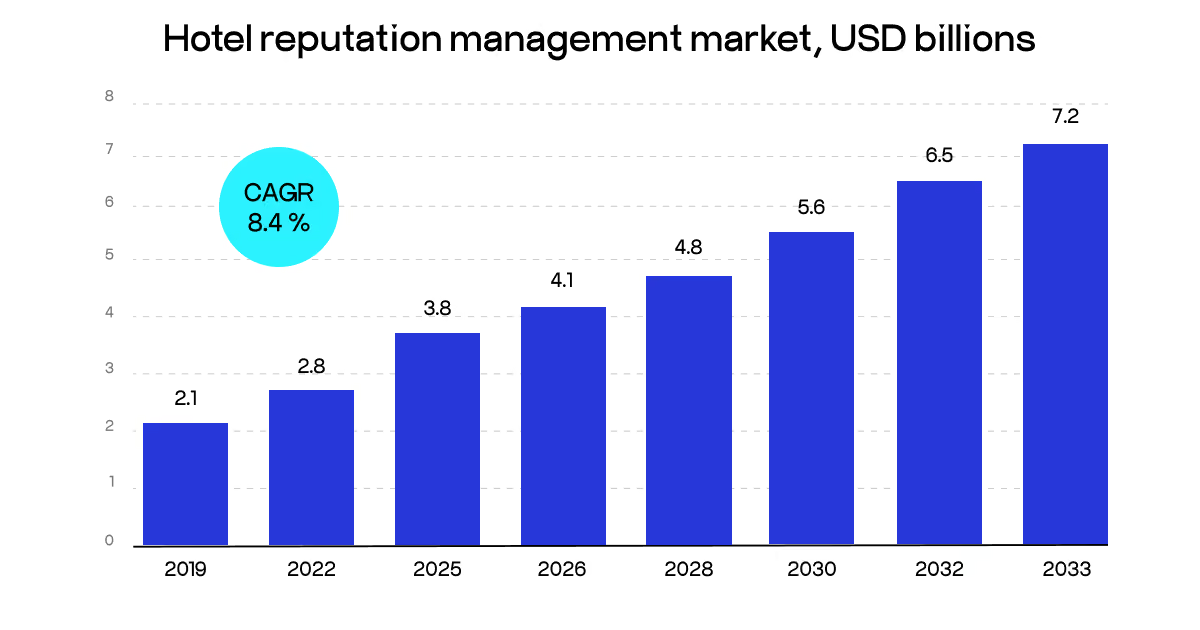
And the market responds eagerly to this reality. The global hotel reputation management sector was valued at $3.8 billion in 2025 and is forecast to reach $7.2 billion by 2033. Cloud-based tools already account for 62.3% of deployments. Guest feedback management leads the application mix at 28.4%. Then, it’s followed by online review monitoring at 24.7% and social media management at 19.6%.
The growth is demand-driven. A one-star improvement in average review score can lift booking conversion rates by 5 to 7%. For properties competing side by side on OTAs, reputation is the difference between a click and a scroll past.
What are the main channels that shape hotel reputation?
Drawing from 16 years of navigating the digital waves at COAX, we’ve learned that hotel reputation isn't a single metric. It’s more of a fragmented ecosystem of review engines, OTA algorithms, real-time social feeds, and direct feedback loops. The only way to use them for your goals is to deliberately unify them into actionable intelligence.
Review platforms are still the loudest signal. TripAdvisor, Google Reviews, Booking.com, Expedia, and Agoda each has its own algorithm and its own effect on your search visibility. A property showing up in an LLM-powered travel recommendation is no longer a matter of chance. Instead, these AI suggestions are increasingly influenced by the property's aggregated review sentiment across major platforms.
OTA profiles function as both distribution and reputation infrastructure. Your Booking.com score affects your placement in search results and eligibility for Genius-tier programs. Ultimately, this score dictates whether travelers are even able to find you on the platform. The same applies to Airbnb for short-term rental operators, where host response rate and review average are baked into algorithmic ranking.
Social media has become a real-time reputation layer. Guests don't always wait until checkout to say something. An unaddressed issue during a stay can become a viral TikTok or Twitter thread before your front desk manager's shift even ends. At the same time, genuinely remarkable experiences generate organic content. This authentic word-of-mouth reaches audiences that no paid campaign could reliably touch.
Direct feedback channels like in-stay surveys, post-checkout email sequences, and QR codes in rooms. They are often underused by most properties, but give you the signal earliest. This is where you catch problems before they become reviews.
Hotel business intelligence platforms tie all of this together. A proper digital reputation management system eliminates the need to jump between TripAdvisor tabs, your inbox, and survey spreadsheets. It pulls all of these channels into a single, unified view. From there, your data is automatically scored, categorized, and benchmarked.
We saw how fragmented this gets in practice with a platform for community stays operating across 170+ properties in 45 countries. Hosts were juggling their own booking systems, profile pages, sustainability credentials, and guest communications. Consolidating those data streams changed how hosts understood their guest relationships. Hotel business intelligence starts with getting the channels talking to each other, and that requires deliberate architecture.
For properties running at scale, the question isn't whether to track these channels. It’s how to do it systematically so the data becomes useful rather than just noisy.
Why does hotel reputation management matter?
16 years of building hospitality platforms taught us one thing most hotel owners learn the hard way. Your guests decide your reputation before you do. Hotel online reputation management is the difference between shaping that decision and reacting to it after the damage is done.
Among surveyed hoteliers, 86% rate guest reviews as very important. And 4 out of 5 believe that responding to negative reviews improves how guests perceive the property. Let’s say a guest searches for a place to stay and sees a 4.2 with no responses versus a 4.0 with thoughtful, timely replies. The second property often wins. Hotel reputation management is partly about the score, but it's mostly about the signal it sends.
The stakes go beyond direct bookings. Google overtook TripAdvisor as the leading global review platform. In 2025, it generated 12.4 million hotel mentions versus TripAdvisor's 10.3 million. That's where travelers start their research. It's also where LLMs like ChatGPT increasingly pull from when suggesting where to stay. A conclusion - it costs you visibility.
Then there's the revenue side. Reputation management in the hospitality industry feeds directly into dynamic pricing power. Properties with higher review scores command higher rates without losing conversions. A one-star improvement in average rating can lift booking conversion by 5 to 7%. For a 50-room property running at $150 ADR, that's not a marginal gain.
"Hotels that treat reputation data as operational intelligence are the ones we see consistently outperform their comp set. The score is a lagging indicator. What matters is the system behind it," admits Orest Falchuk, Head of Engineering at COAX.
Risks of poor reputation management
Neglect costs more than most owners budget for. Around 95% of travelers read reviews before booking a stay. Also, 76% say they'd pay more for a property with higher review scores. The flip side of those numbers is equally true. A poorly managed reputation actively drives bookings to competitors.
The risks that surface most often in reputation management hotel work are invisible until they compound.
Review drift, the slow accumulation of unaddressed negative feedback that pulls down a score over months. A single bad week is recoverable. Six months of silence isn't. Properties that let reviews pile up unanswered signal to potential guests that no one is paying attention.
A weak reputation undermines your entire hotel marketing strategy. OTA algorithms factor review score and recency into placement. A property with a declining score gets pushed further down in search results. This increases dependence on paid promotion to compensate. The reputation management hotel industry lesson here is consistent. Paid traffic can't substitute for trust, and trust is built review by review.
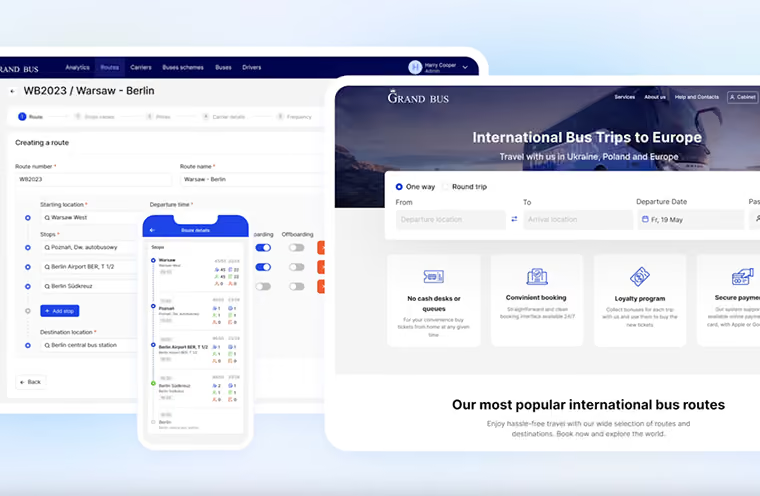
We saw this dynamic clearly in the custom CRM and booking platform we built for a travel company managing bus tours and packages. Before the new system, guest feedback was scattered, and agent interactions weren't tracked. There was no unified view of how service quality was being received across touchpoints. We consolidated customer data, structured feedback collection, and connected it to real-time analytics. As a result, the client gained visibility into exactly where the service was breaking down. The outcome was a 40% profit increase, 60 new affiliates, and 20 new suppliers.
What are the key features of reputation management software?
We’ve been building systems where guest feedback directly moved revenue and working through the limitations of tools that failed in daily operations. After this, the COAX Software teams have a clear view of what hotel reputation management software needs to do.
The core job is aggregation and response.
Everything else is built on top of that. Review monitoring and the centralized inbox are where it starts. A property on Booking.com, Google, TripAdvisor, Expedia, and regional OTAs is fielding reviews from five or more sources. Without a unified inbox, the response workflow fragments across tabs, teams, and time zones, and reviews go unanswered. Good hospitality reputation management software pulls every source into one view, with filters for star rating, sentiment, platform, and response status.
Sentiment analysis
This moves you from reading reviews to understanding them at scale. NLP-powered categorization maps guest comments to specific departments. This way, a drop in cleanliness scores shows up as an operational alert, not just a number. This approach weights categories by how much they actually move the aggregate score.
Automated review response tools
These matter more than most teams expect. Industry data shows that 73% of hoteliers respond to nearly every review. However, 31% assign that job to a single staff member who often spends 4+ minutes per response. Online reputation management tools with AI-assisted drafting cut that to under a minute. It also keeps the voice consistent. The result is higher response rates.
"The difference between a tool that helps and a tool that adds overhead is almost always the response workflow. If your team has to log into three places to respond to one review, they won't do it consistently", shares Orest Falchuk.
Guest surveys and direct feedback collection.
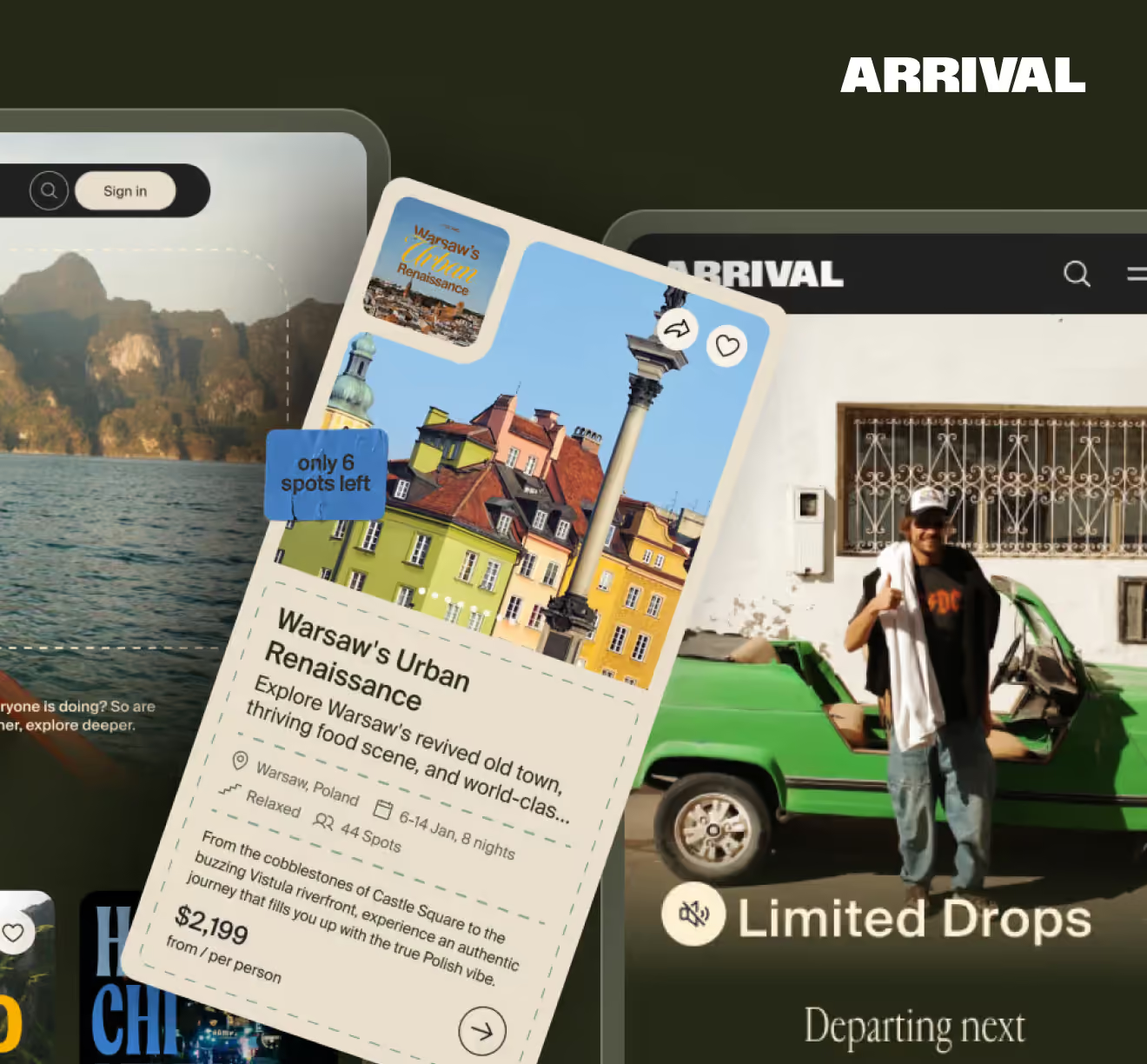
These features close the loop between the in-stay experience and public review. Pre-arrival, mid-stay, and post-checkout touchpoints give you a signal before a guest ever reaches TripAdvisor. For the ARRIVAL platform we built, we integrated HubSpot via webhooks so that every booking and order event fed directly into a CRM. This includes automated follow-up flows for post-stay engagement. That kind of structured data pipeline meant the team had a view of guest sentiment from day one.
Competitive benchmarking.
Benchmarking is where online reputation management shifts from reactive to strategic. Seeing your score in isolation tells you where you stand. Seeing it against your direct comp set tells you where to invest. Properties that track competitor response rates, sentiment trends, and score velocity make better capital allocation decisions.
Personalization.
Personalization in hospitality is increasingly a reputation feature. Platforms that surface returning guest history at check-in directly influence the kind of reviews those guests leave. Owners who see booking history and preferences in one place have meaningfully better post-stay feedback. This is much because they could act on context.
Reporting and analytics.
Finally, reporting and analytics need to be built for decision-making, not just monitoring. Occupancy correlation, review volume trends, department-level scores, and response rate tracking are the metrics that connect best online reputation management companies software to actual operational improvement. If the dashboard requires a data analyst to interpret, it won't get used by the people who need it most.
Most online reputation management platforms offer more features than any single property needs. However, the basics are often the same, including the necessary integrations.
Critical integrations for hotel reputation management systems
A reputation platform living in isolation is just a notification system. What turns it into a genuine online reputation management hotel asset is what it connects to. These connections should be deep enough to be useful.
COAX Software has integrated enough hospitality tech stacks to know that the integration conversation usually starts too late. Properties get excited by the dashboard demo, then discover three months in that, it doesn't feed into their PMS or their CRM. That's an expensive lesson. Based on our experience, we would advise you to focus on the following integrations.
PMS integration
Your Property Management System is the operational backbone. It knows who checked in, when they checked out, what room they were in, and whether they had any issues logged. A reputation platform with live PMS access can trigger post-checkout review requests, personalize them with stay details, and flag high-value guests for priority follow-up.
Without this connection, you're sending generic "how was your stay?" emails manually, usually late and to the wrong segment. With it, your reputation management strategy becomes automated and stays aware. The guest who had a maintenance issue gets a different follow-up.
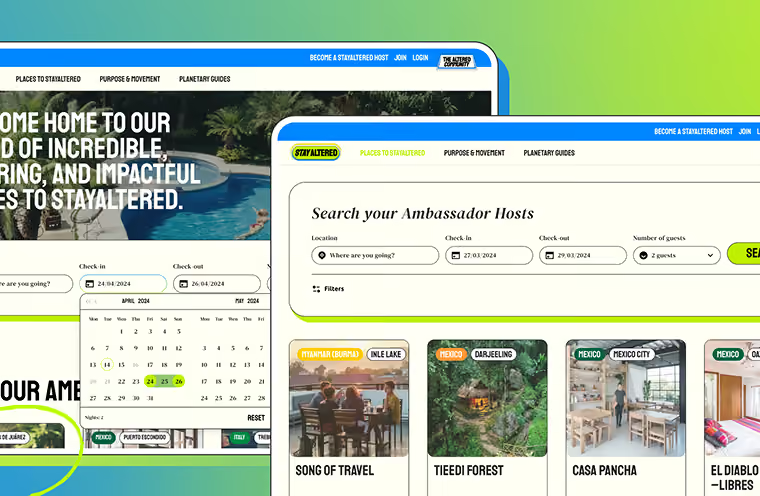
Most enterprise platforms like Mews, Oracle OPERA, or Cloudbeds expose APIs that allow this kind of event-driven integration. The real work is in the logic. It’s about defining triggers, matching guest segments to communication sequences, and preventing system failures from causing silent gaps. When we built the Stay Altered platform, we connected PMS data through Katanox and Hyperguest intermediaries across 170+ properties in 45 countries. The integration layer was where the architectural decisions had the longest operational tail. Choosing intermediaries over direct integrations saved months of development.
CRM integration
CRM is where guest relationships live over time. A one-stay guest and a guest on their sixth visit should be handled differently — in service, in communication, and in how their feedback is weighted and acted on. Hotel reputation management software that feeds into a CRM allows you to track review history by guest, identify your most vocal promoters, and recognize when a historically satisfied guest suddenly drops a 3-star review. That last signal is worth more than ten anonymous negative reviews.
The integration runs in both directions. Review sentiment flowing into CRM profiles enriches the guest record. The next time that guest calls to book, your team sees not just their history but their satisfaction trend. And CRM data flowing into the reputation platform means review requests can be personalized with loyalty tier, stay frequency, or even a preferred team member's name.
"The moment guest feedback data and guest relationship data live in the same system, you stop managing reputation and start managing relationships. That's a different operation entirely," shares Orest Falchuk, Head of Engineering at COAX.
Channel manager and OTA connections
Your reputation doesn't arrive from guests alone. OTA algorithms rank you partly on review recency, response rate, and score trajectory. An online reputation management system with channel management creates a direct feedback loop between guest sentiment and distribution performance.
Properties that respond consistently on Booking.com, Expedia, and Agoda get better placement without changing their rate strategy. That's channel revenue you'd otherwise have to buy with commission or paid placement.
Business intelligence and analytics platforms
This integration is the one that separates operational decisions from gut-feel guesses. When data flows into a BI layer alongside occupancy rates, ADR, RevPAR, and booking source data, you can answer important questions. Does a 0.3-point score improvement in Q3 correlate with the rate increase we held in Q4? Which review themes show up 6 weeks before a RevPAR dip?
Hotel revenue optimization stops being a rate management exercise and starts incorporating service quality as a pricing variable. The properties doing this well aren't just tracking reviews. They're using sentiment as a leading indicator for demand.
The integration requires clean data pipelines and a BI tool that can handle mixed-source datasets. In practice, this means standardizing how review scores are timestamped and attributed. They can be joined with reservation data without ambiguity. It's not glamorous work, but it's what makes the data actually usable.
Payment and billing systems
Less obvious than the others, but relevant. Reputation management software for hotels that integrates with billing systems can correlate satisfaction with transaction touchpoints. A spike in negative reviews mentioning "checkout" or "billing" that shows up the same week a payment gateway had processing issues is an operational signal, not a service failure. Without the integration, you're investigating the wrong problem.
For properties running spa, F&B, or ancillary services, POS integration adds another layer. This ties feedback about specific outlets to their revenue contribution and service performance.
Smart room and IoT systems
Emerging, but increasingly practical for mid-to-large properties. IoT integration allows reputation triggers to fire based on in-room events. A room service request that wasn't fulfilled within the promised window can automatically queue a follow-up. A maintenance flag that gets closed can trigger a "we've taken care of it" message to the guest. These micro-communications reduce the chance that a fixable problem turns into a public review before your team even knows about it.
The integration architecture here is more complex. It includes device management, event queuing, and guest identity resolution, all of which have to work in sync. But for properties investing in smart room technology, piping those events into the online reputation management hotel workflow is a natural extension.
The pattern we see in properties with genuinely strong reputation performance isn't a single sophisticated tool. It's a connected stack where data moves with low friction and in the right direction. Review triggers from PMS. Guest history enrichment from CRM. Score trends feeding BI. Response activity informing OTA placement. Everything synced and configured.
Best hotel reputation management software
Feature lists don't survive contact with real operations. We've seen enough hospitality tech demos go sideways in production. After them, we know that what a tool actually does inside a live hotel workflow is where most buying decisions go wrong.
Our evaluation of hotel reputation management software runs across four dimensions.
Review coverage and response workflow. Does the platform pull from every channel that actually matters for the property type? More importantly, can a front desk manager action a review response in under 60 seconds? Finally, does the workflow require navigating three screens and a login? We tested response flow usability under realistic time pressure.
Integration depth with PMS and CRM. We evaluated whether the connection to core hotel systems is event-driven and live. A platform that can't trigger a post-checkout survey from a PMS checkout event isn't integrated.
Analytics quality. We looked for whether reporting separates signal from noise. Department-level sentiment breakdown, score trend over time, competitive benchmarking, and correlation with operational data are what make analytics actionable. A single aggregate score presented on a large dial is not analytics.
Implementation reality. We assessed what it actually takes to go live — not the vendor's claimed onboarding timeline, but the realistic lift for a property team without a dedicated IT person. This includes data migration, staff training requirements, and what happens when something breaks.
Instead of just taking the vendors' word for it, we ran each platform through these exact tests. This way, we were able to see which ones actually deliver on the floor and which ones fall short.
Top hotel reputation management tools compared
From analytical powerhouses like TrustYou and marketing-driven CRMs like Revinate to rapid AI auto-responders like MARA, hotel reputation platforms span a massive spectrum. You can even bypass off-the-shelf software entirely by building a bespoke custom module directly into your existing PMS. Ultimately, the right choice depends on balancing enterprise complexity with what your team will actually use consistently every single day.
GRI score, competitive benchmarking, case management
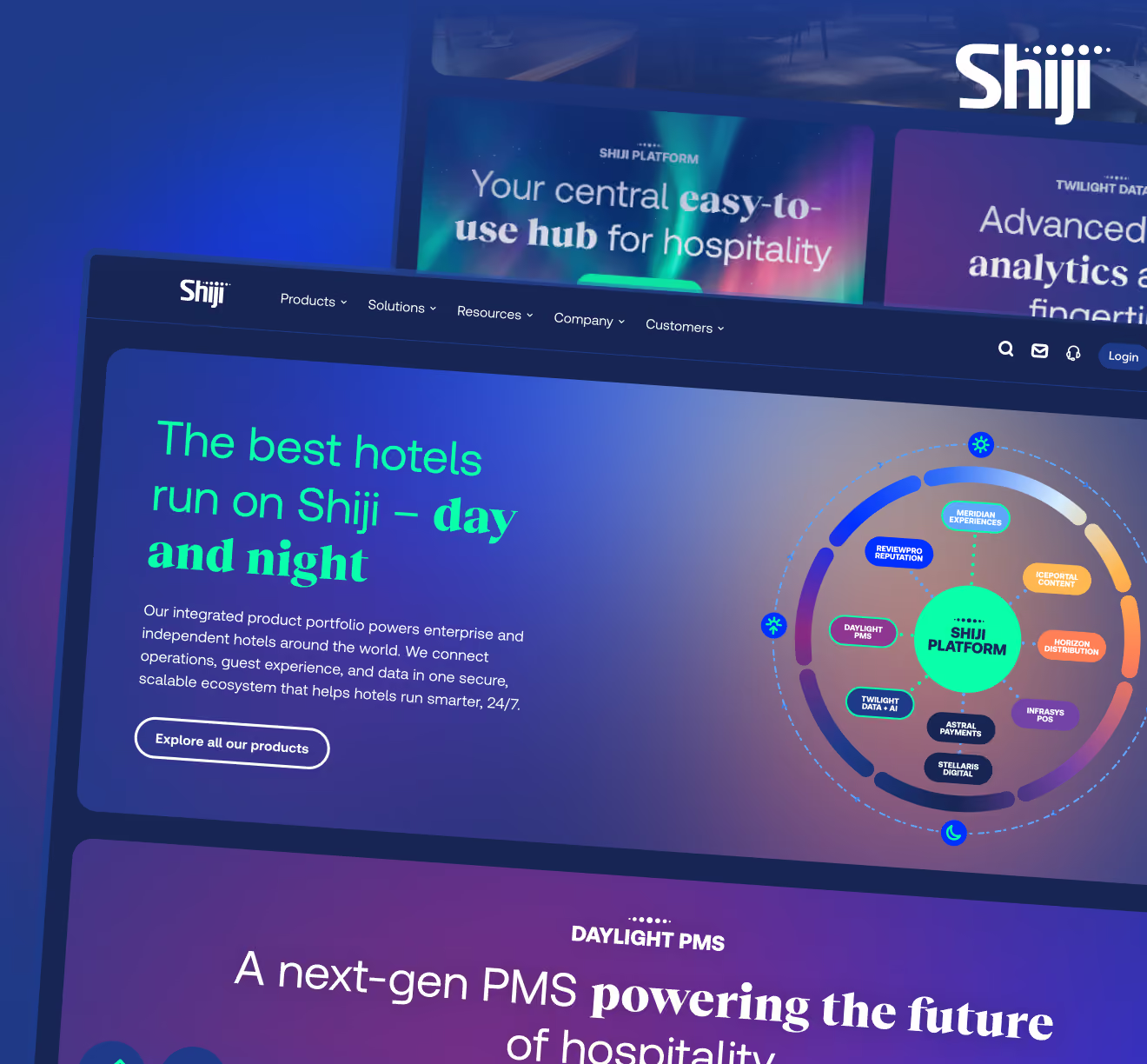
PMS, Shiji ecosystem
Chains and multi-property operators
Custom
Medallia
Enterprise CX, real-time alerts, text analytics
Broad enterprise stack
Large chains and hotel groups
Custom
MARA AI
AI review responses, automation, review inbox
Google, Booking.com, TripAdvisor
Properties prioritizing response speed and volume
From ~$79/month
GuestRevu
Surveys, review aggregation, white-label options
PMS, channel managers
Mid-market and independent hotels
From ~$99/month
Reputation.com
Multi-location monitoring, listings, social
CRM, PMS, BI tools
Multi-property operators
Custom
Revinate
CRM-linked surveys, upsell campaigns
PMS, CRM
Full-service hotels with marketing focus
Custom
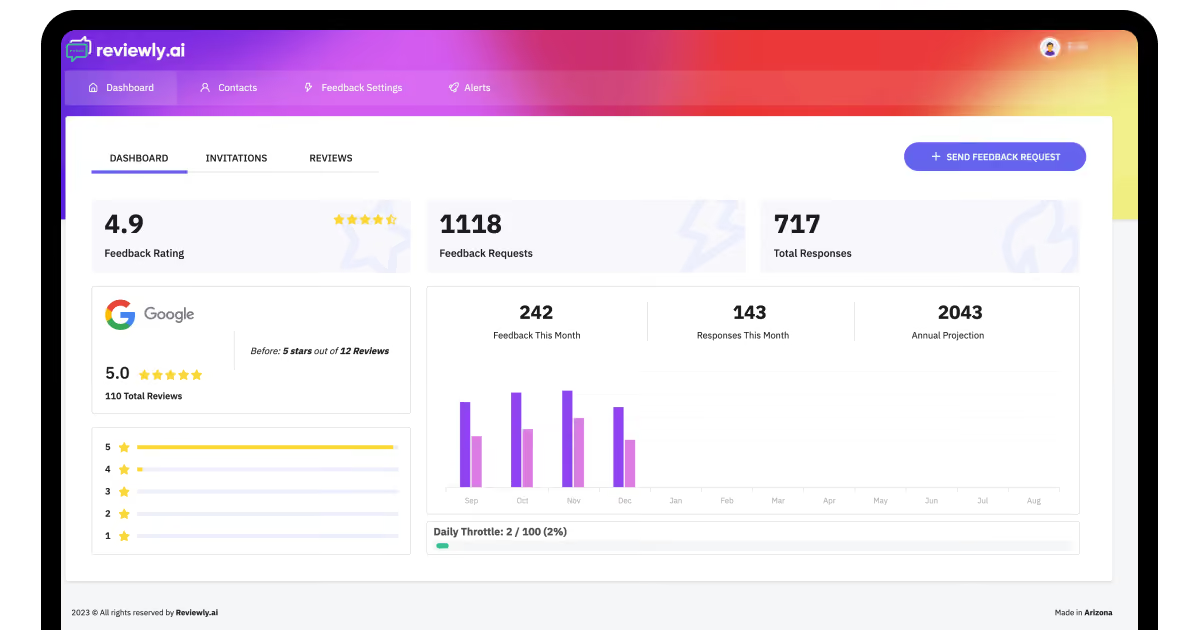
Reviewly.ai
AI-drafted responses, white label branding, multilingual detection
Zapier, Twilio, Stripe/PayPal
Agencies reselling reputation management under their own brand
From $199/mo
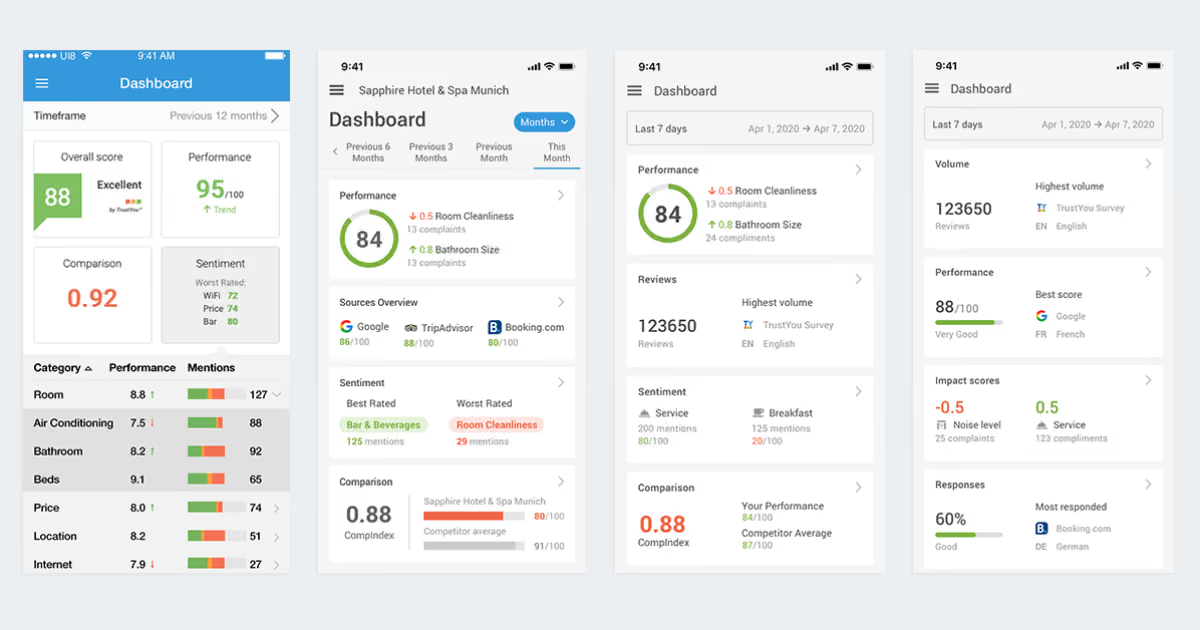
TrustYou is one of the more analytically mature platforms in this space. Its Impact Scores feature is the intelligence that turns reputation data into prioritized decisions. Semantic AI analyses across 700+ categories with department-level insight. The consolidated view with property-level drill-down is production-grade. Integration with major PMS systems is well-documented. The ceiling: pricing and implementation complexity put it out of reach for small independent operators.
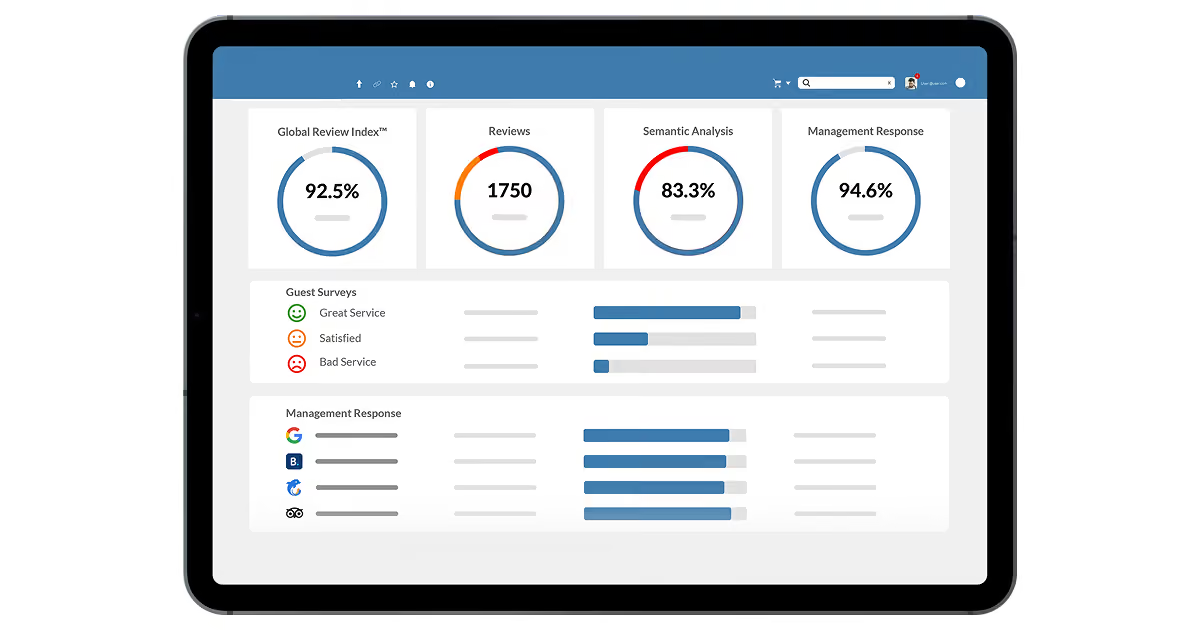
ReviewPro anchors itself on the Global Review Index. It’s an aggregated score normalized across platforms. It also became a common benchmark for hotel groups and management companies. Competitive benchmarking is a genuine strength. Case management functionality (assigning guest issues for resolution tracking) bridges the gap between reputation monitoring and operational follow-through. Deep integration with the Shiji PMS ecosystem makes it the natural choice for properties already in that stack.
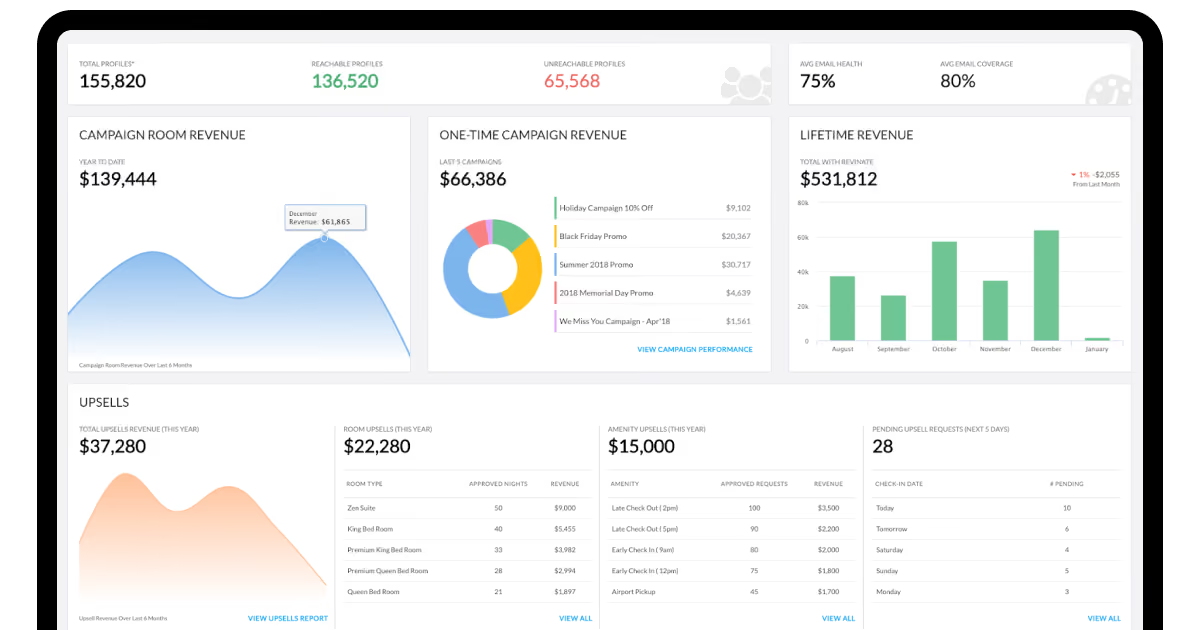
Revinate combines online hotel reputation management with guest marketing. Survey data, review sentiment, and guest profile data feed into segmentation that can trigger personalized email campaigns. For properties with a revenue management mindset toward guest relationships, that CRM integration is a pick. The operational trade-off is complexity: getting full value from Revinate requires more setup.
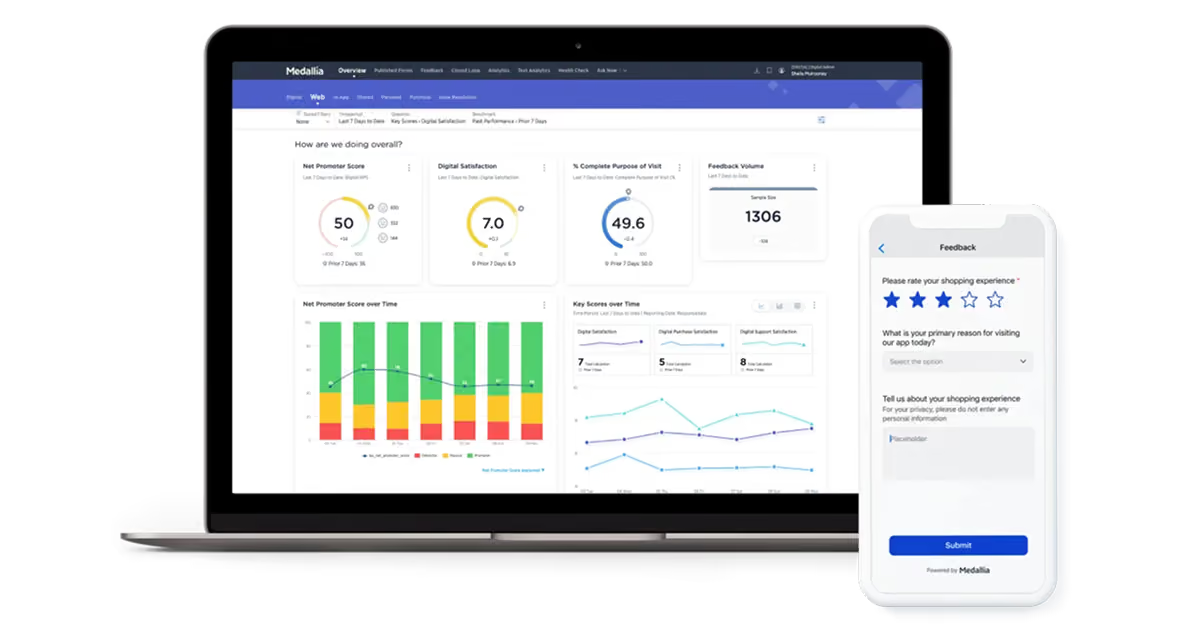
Medallia sits at the enterprise end of the market. Text analytics, real-time alerts, and cross-channel feedback aggregation are all genuinely strong. For large hotel chains with dedicated CX teams and existing enterprise data infrastructure, it's one of the best reputation management software options available. The implementation lift is real.
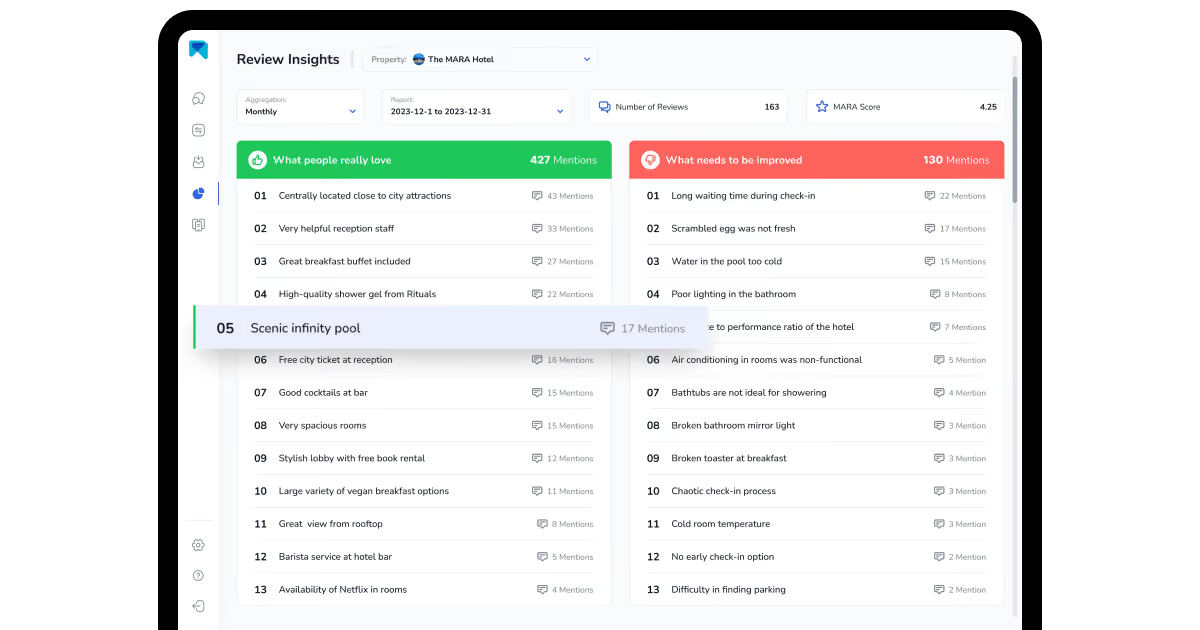
MARA AI takes a different approach. It's built almost entirely around making review responses fast and consistent. It has AI-drafted responses, automation rules for specific review types, and a clean multi-platform inbox. These make it the strongest option for properties where response rate and speed are the primary problems. It won't replace a full hotel reputation management company's enterprise suite. Still, for independent hotels and small groups, it solves the most expensive problem first. Pricing is transparent and accessible without a procurement process.
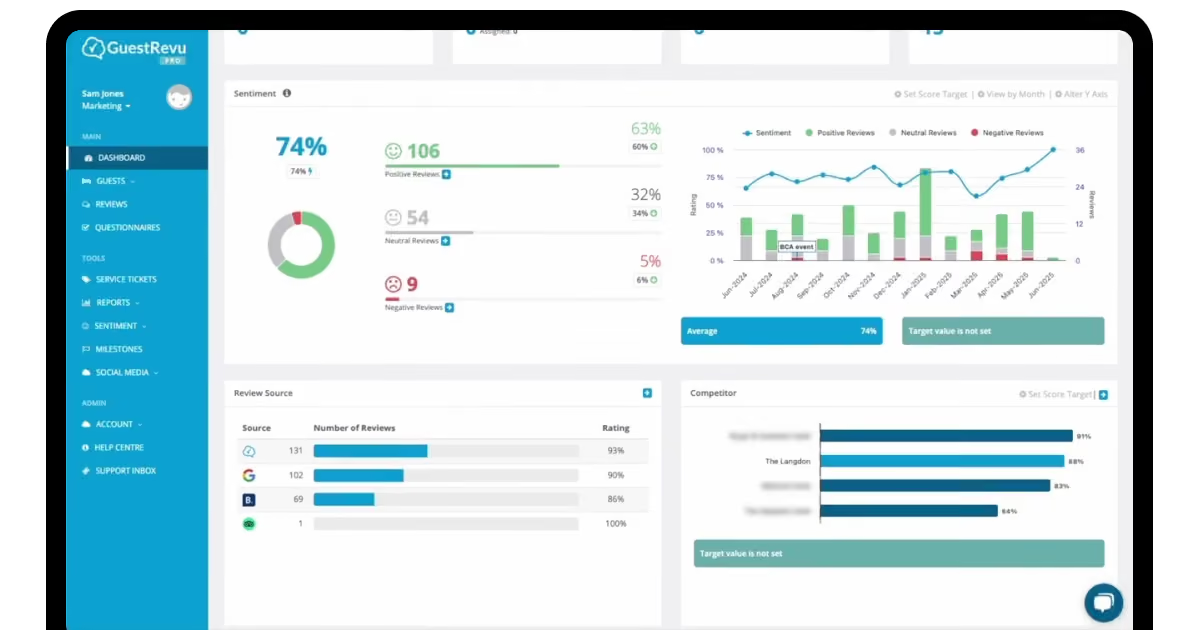
GuestRevu serves the mid-market effectively. It offers post-stay surveys, review aggregation, and PMS integration. White-label options make it a practical choice for management companies deploying across a mixed portfolio. It doesn't have the analytical depth of TrustYou or the CRM capabilities of Revinate, but for independent and boutique properties that need coverage without complexity, it delivers reliably.
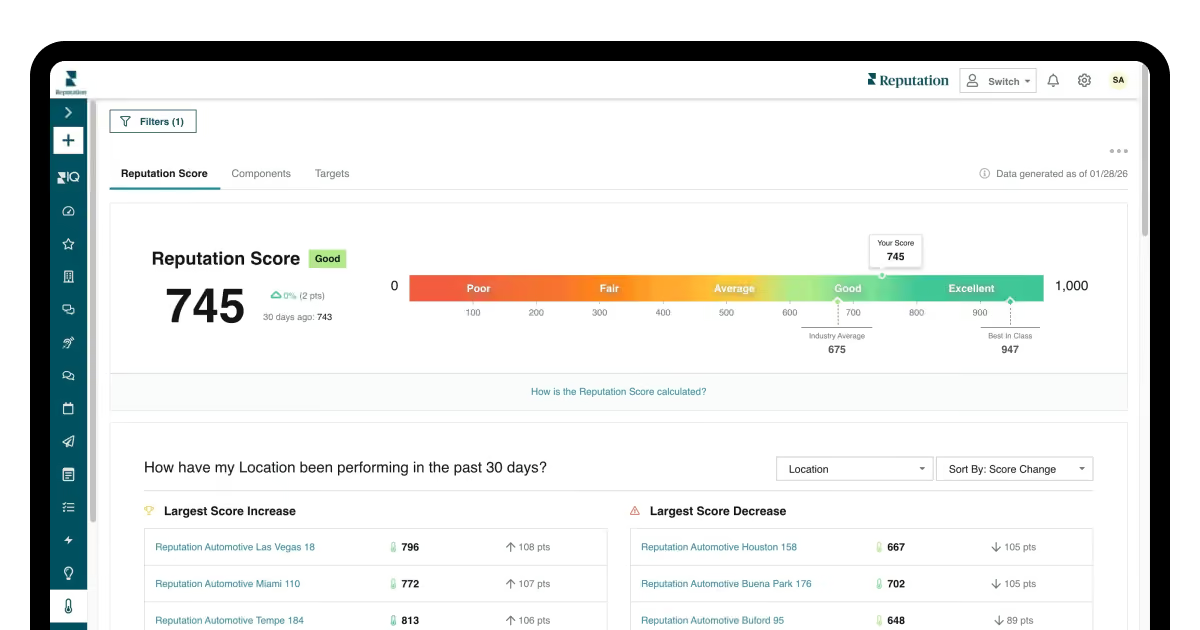
Reputation.com is built for multi-location operators. Listings management, social monitoring, and review aggregation are where it earns its position among the best reputation management companies. Properties running 20+ locations will find the centralized workflow more manageable than property-by-property tools. The depth of BI and CRM integrations is broad. For single-property operators, it's more than necessary.
Reviewly.ai takes the agency-enablement angle. Its mechanic is SMS-first: review alerts, requests, and AI-drafted responses all happen over text. An owner can approve and post without opening a dashboard. The differentiator is the white label layer — full rebranding down to the login page, a private subdomain, an agency's own Twilio and Stripe accounts, and a done-for-you sales kit. This fits people launching a reputation-management agency from scratch. SMS review generation across 100+ countries with built-in multilingual translation rounds out the feature set. The ceiling: it's built for volume-selling agencies and multi-location rollouts.
A word on custom-built alternative. Off-the-shelf online hotel reputation management software covers most properties' needs well. But some operators have non-standard workflows. This spans multi-brand portfolios, unusual OTA mixes, proprietary PMS systems, or data residency requirements. For these, custom development isn't always the expensive option.
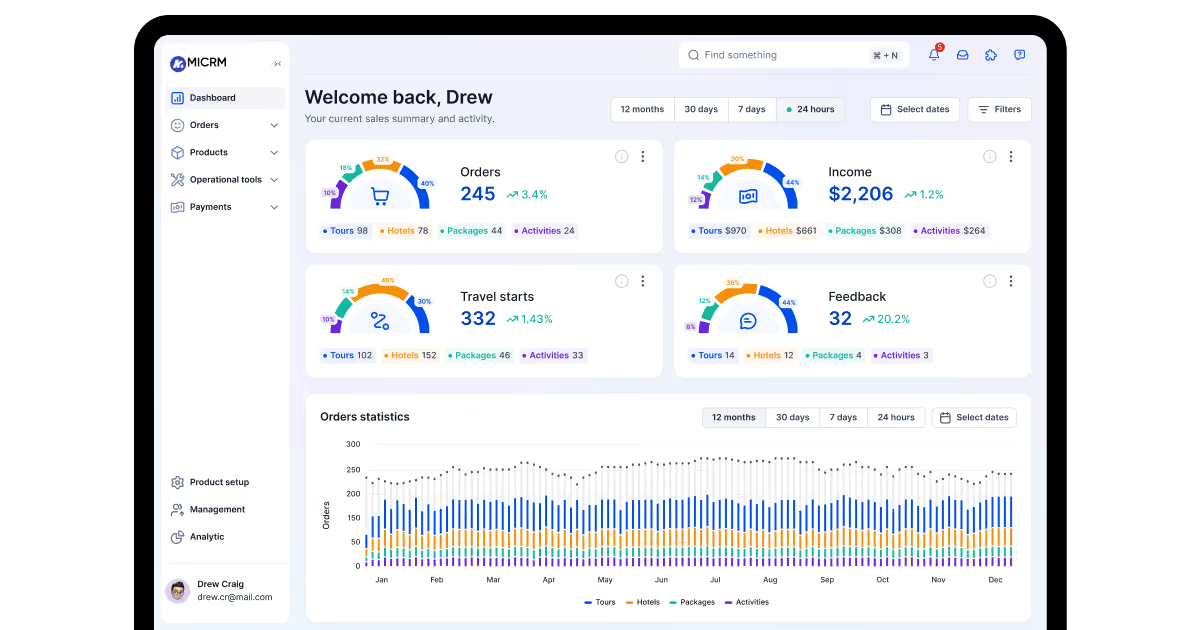
We've built reputation and feedback components into larger hospitality platforms. The MICRM project is an example. We built feedback collection and analytics directly into the platform instead of layering a reputation tool over a complex CRM and booking engine. Doing so gave the client a unified data model and eliminated a vendor dependency. Whether that calculation makes sense depends entirely on the existing stack and the scale of the operation.
The choice of hotel reputation management partner ultimately comes down to a question most buyers don't ask early enough. It’s not "which platform has the best features" but "which platform will my team actually use consistently, connected to the systems they already live in."
How to choose the right hotel reputation management provider?
Many hotels run a demo, compare pricing tiers, and pick the one with the most recognizable logo. Six months later, they wonder why the response rate hasn't moved. The fit wasn't.
Here's how to avoid that.
Before you look at a single platform, answer four questions about your own operation. The answers will eliminate most of the market before you waste time on demos.
What's your property type and scale? A 15-room boutique in Porto and a 400-room city business hotel have almost nothing in common operationally. The boutique owner needs something fast to set up, light to maintain, and cheap enough to justify at low review volume. The business hotel needs PMS integration, multi-department sentiment routing, and a workflow that scales across a front desk team. Using enterprise software in the first case is overhead. Using a basic tool in the second is negligence.
How many channels actually matter to you? Not all OTAs move the needle equally for every property type. A vacation rental operator lives and dies by Airbnb and Google. A corporate-focused hotel tracks Booking.com and Expedia. A resort in Asia needs Agoda and Trip.com in the mix. Choose reputation management systems based on the channels that drive your actual bookings, not the longest integration list.
What does your team look like? Consider you have one person handles front desk, reservations, and housekeeping coordination before 11 a.m. In this case, you need a tool that runs on autopilot most of the time. If you have a dedicated guest experience manager, you can afford more configuration. The question is: who will actually use this, and how many minutes per day do they have for it?
What does your existing tech stack look like? Which PMS are you on? Do you have a CRM? Where does guest data currently live? The answers determine whether an off-the-shelf integration will work or whether you're looking at custom middleware. Skipping this question upfront is how properties end up with three systems that require manual reconciliation every week.
Once these internal questions narrow down your list, evaluate potential vendors against six technical checkpoints.
Factors to consider
Once internal alignment narrows your list to two or three vendors, shift focus from the internal requirements to what the platform does.
Review channel coverage. Verify the platform actually pulls from your specific channels, not just Google and TripAdvisor. Ask for a live demo with your own property loaded, not a test account. Gaps in coverage are always easier to find before you sign.
PMS integration quality. Ask specifically: is the PMS connection event-driven or batch-synced? An event-driven integration fires a post-checkout survey the moment a guest checks out. A batch sync does it at 2 a.m. For a review request, that timing difference determines whether the guest is still emotionally engaged or has already forgotten the stay.
Response workflow speed. How long does it take to go from seeing a new review to sending a response? Include login, navigation, finding the review, drafting, and submitting. If it takes more than 90 seconds in normal conditions, your team won't do it at the volume you need. This is a hotel reputation management tips test you can run yourself during any free trial.
Implementation timeline. Ask for the realistic go-live date, not the marketed one. For most mid-size properties, 4 to 6 weeks is honest if PMS integration is involved. Under two weeks is possible for simpler setups. Anything over 12 weeks is a warning sign about either the platform's complexity or the vendor's support bandwidth.
Analytics that connect to operations. A score trend on a graph is decorative. What you need is: which specific complaint category is dragging your score, how often it appears, and which department owns it. Platforms that show you department-level sentiment breakdown against a timeline let you tie a policy change to a score movement. That's how hotel data management becomes a decision-making tool.
"The hotels that get the most out of reputation data are the ones that treat it the same way they treat occupancy data - something to act on daily, not review quarterly," states Orest Falchuk, Head of Engineering at COAX.
If your ownership or management company wants monthly performance reports and the platform requires a per-seat license for every viewer, the cost compounds fast. Check how reporting is shared and whether it can be exported in formats your stakeholders already use.
Common mistakes, and where custom solves them
Hotel reputation management software often fails when businesses buy complex, ill-fitting features or assume seamless integrations, whereas custom development solves this by aligning perfectly with a team's actual workflow, system configuration, and unique operational realities.
Now, let’s get to the details of how it happens, based on what we’ve seen.
Buying for features you won't use. This is the most common hotel reputation management failure. Enterprise platforms sell you sentiment AI, competitor intelligence, and predictive analytics. For a 40-room independent hotel, the team will use the review inbox and the response tool. Everything else will sit unused while the subscription runs. Match the tool to actual usage patterns, not aspirational ones.
Treating integration as an afterthought. The standard pitch is "we integrate with over 200 PMS systems." The real question is whether that integration has been deployed with your specific PMS version, in your region, with your data structure. Properties often face 3-month implementation delays because "supported integrations" exist only on paper and were never tested against their actual system configurations. Verify with a reference customer on the same PMS before signing.
Ignoring data ownership terms. You stop using a reputation management software vendor. What happens to your historical review data, guest sentiment records, and response history? Some platforms retain it, some export it in unusable formats, some delete it. Read the contract clause about data portability before you're three years in and trying to switch.
Underestimating staff adoption. The most sophisticated reputation management tools for hotels are worth nothing if they sit open in a browser tab nobody checks. The properties with the best review performance aren't using the most advanced tools — they're using tools their team actually opens every morning. Prioritize usability over feature depth, especially for teams under 10 people. A tool with fewer features that gets used daily outperforms a tool with 50 features that gets used weekly, every time.
Assuming one tool covers everything. Most hotel reputation management tools do review monitoring and response well. Few do guest surveys well. Almost none do CRM-grade guest profiling well. Be honest about which problem is costing you the most, and solve that one properly first.
This is where custom development becomes a legitimate conversation. This aligns with when we built Hosty for vacation rental operators. Existing hotel reputation management software assumed a desktop workflow and a stable internet connection. Our users were running their entire business from Instagram on a phone. No standard tool fit. The reputation and guest communication layer had to be built mobile-first from the ground up, not bolted onto a platform designed for something else entirely.
Most hotel reputation management software buying decisions fail at the fit assessment, not the feature comparison. The right tool is the one that matches your scale, works with your systems, and fits your team's daily workflow. It must also cost in proportion to the revenue impact it actually delivers. Start there, and most of the market sorts itself out.
What are the key strategies for effective hotel reputation management?
Good reputation management is a discipline. It runs in the background of daily operations and surfaces in every guest interaction, from the booking confirmation email to the review response a week after checkout.
Here's what we've seen work across the hospitality platforms we've built and the clients we've advised.
Quality-driven mindset
The most effective hotel reputation management tips we can give start before any software is configured. Properties with consistently strong reputations treat guest feedback as operational data, not PR. They ask: What does this review tell us about how we run the hotel?
That shift in framing changes everything. A spike in comments about slow check-in isn't a marketing problem. It's a staffing or process problem. A pattern of F&B complaints in summer isn't bad luck. It's a capacity planning signal. When a team reads reviews looking for service failures instead of sentiment, the operational response becomes faster and more targeted.
PDCA as your improvement framework
PDCA stands for Plan, Do, Check, and Act. it’s s the most practical improvement cycle we've seen hotels apply successfully to online reputation management. It's not glamorous, but it compounds.
Plan. Pull your review data by category. Identify which department or touchpoint is dragging your score. Define what a realistic improvement looks like and what it would take operationally to get there.
Do. Make the change. Train the staff. Adjust the process. Update the workflow.
Check. Watch the score. Not for a week — for a full booking cycle. Did the complaint category drop? Did the hotel NPS move? Don't declare success on a single data point.
Act. If the change worked, standardize it. Document it. Make sure it survives staff turnover. If it didn't, revise and run the cycle again.
"Businesses that improve their reputation fastest aren't the ones with the best tools. They're the ones who look at the same data every week and ask the same question. What are we doing about this?" - Orest Falchuk, Head of Engineering at COAX.
The PDCA cycle is only as useful as the data feeding it. Which is why hotel data management is the infrastructure question underneath every strategy conversation.
Manage reputation across the full guest journey
Most hotels focus on post-stay reviews. The smarter approach starts earlier.
Pre-arrival sets expectations. A clear, fast booking experience with accurate property information and responsive pre-arrival communication directly reduces disappointment-driven reviews. Guests who arrive knowing what to expect leave better feedback, even when the property isn't perfect.
During the stay is when problems get fixed or get written about. Empowering front desk and housekeeping staff to resolve issues on the spot is the fastest reputation intervention available. A guest whose noisy room complaint is handled in 20 minutes rarely writes about it. One who's told "I'll pass it along" almost always does.
Post-stay is the structured feedback window. A post-checkout survey sent within 24 hours captures sentiment that directs a guest to leave a public review. The timing matters. A survey sent 72 hours after checkout gets lower completion rates.
When we built the ARRIVAL platform, we integrated HubSpot via webhooks from day one. Every booking event triggered automated post-stay flows. The content team didn't have to think about follow-up. It happened as part of the booking infrastructure. That's what hotel reputation management services look like when they're built into the product rather than bolted on.
Respond to everything, with a system behind it
73% of hoteliers say they respond to nearly every review. The properties that actually hit that number are the ones with a system.
Practically, this means:
A designated person or team
A set response time target, approved templates
A review of AI-drafted responses.
The goal is to sound like someone who actually works at the hotel and actually reads the review.
For negative reviews specifically, do specific actions. Acknowledge first, explain second, apologize where warranted, and never make excuses. Potential guests reading your response care more about whether you took responsibility than whether you had a reason.
Tools for hotel reputation management that include AI-assisted response drafting (MARA, TrustYou's AI Agents, Revinate) make this sustainable at volume. But the system matters more than the tool.
Use local community and brand building
It's a tactic most hotels ignore: locals. Regular guests, neighborhood businesses, and people with strong social media presence in your market. They're an audience with credibility that no paid campaign can replicate.
Inviting local influencers to events, offering community partnerships, or simply engaging authentically on local social channels builds organic brand presence. When those people post about you, they do it with the kind of specificity that reads as genuine to travel audiences. It also helps cushion review velocity during low seasons, when OTA traffic naturally drops.
When we work on hotel management software development, reputation management isn't a module COAX teams add at the end. It's designed into the data architecture from the start. We build in how guest profiles are structured, how post-stay triggers fire, how feedback flows into analytics, and how that data connects to the PMS and CRM layers.
In MICRM, which we developed, seasonal comparisons, cancellation reports, and sentiment data were all connected to the same data model as bookings and revenue. That cohesion is what drove the profit increase: decisions were made faster and on better information.
In Hosty, the vacation rental platform we built for small Ukrainian property owners, the review and guest communication layer had to work entirely on mobile, without desktop dependency. Existing hotel reputation software assumed a front-desk workflow. We gave them exactly what they needed instead.
We handle the full development lifecycle in-house. We cover strategy, design, development, QA, DevOps, and ongoing support. We're AWS-certified and hold ISO 9001 and ISO 27001 certifications. The data architecture is designed to security standards regardless of project size.
Whether you need hotel reputation management services integrated into an existing stack or a custom feedback module for a non-standard PMS environment, we can help. We can even deliver a full platform build with reputation intelligence baked right in.
The strategies in this section work regardless of your technology setup. But they work significantly better when the tools behind them are built for your specific operation rather than the average one.
FAQ
What is reputation management in hotels, and is it different from general ORM?
What is reputation management in hospitality is more operationally specific than general online reputation management. Hotel reputation lives on booking platforms that directly affect placement and revenue, not just brand perception. A negative Booking.com score doesn't just look bad. It pushes you down in search results. That's a distribution problem, not just a PR one.
Can small independent hotels afford proper hotel reputation software?
Yes. Hotel reputation software like MARA AI starts around $79/month and covers the core workflow: multi-platform inbox, AI-assisted responses, and automation rules. Enterprise tools like TrustYou or Revinate are built for groups with dedicated CX staff. Match the tool to your team size, not your ambitions.
Our PMS and reputation tool don't communicate correctly. Is that a big problem?
It means your post-checkout surveys fire on a batch schedule, not on actual checkouts. It means you're manually reconciling guest data. Over time, that adds up to missed feedback windows and slower response cycles. A proper hotel reputation management software integration is event-driven. If yours isn't, that's worth fixing.
We get very few reviews. How do we increase volume without incentivizing them?
You can do this:
Send post-stay surveys within 24 hours of checkout
Include a direct Google review link — one tap to the form
Train the front desk to mention it verbally at checkout
Trigger the request from PMS checkout, not a manual process
Volume follows timing and friction reduction, not incentives.
How does the reputation management hotel industry handle fake reviews?
Flag them through the platform's reporting tool, document the pattern, and respond publicly to signal awareness. Google, TripAdvisor, and Booking.com all have review integrity processes. The reputation management hotel industry standard is to respond calmly and professionally — aggressive denials rarely help and often draw more attention to the review.
How long before hotel reputation management improvements show up in revenue?
Typically, 3–6 months for score movement to correlate with measurable booking or rate impact. Score improvements take time to accumulate review volume. Revenue response follows score visibility on OTAs. The cycle is:


















































































.avif)



%20for%20hotels.avif)

.avif)
.avif)


.avif)




.avif)
.avif)



.avif)


.avif)

We are interested in your opinion