Your guests already live on their phones. They book on their phones, they navigate on their phones, and they expect to reach you the same way. A hotel guest app built around messaging gives them exactly that.
We compiled a list of the best guest messaging software you can choose from:
Canary Technologies is top for guest management with fraud prevention and upselling.
Duve fits boutique hotels and vacation rentals that want pre-arrival automation.
Bookboost works best for hotels that want CRM-level personalization in messaging.
HiJiffy fits international properties with multilingual guest bases perfectly.
SiteMinder is the choice for hotels already running SiteMinder as their channel manager.
Smart Host is best for European boutiques and resorts set to drive direct bookings.
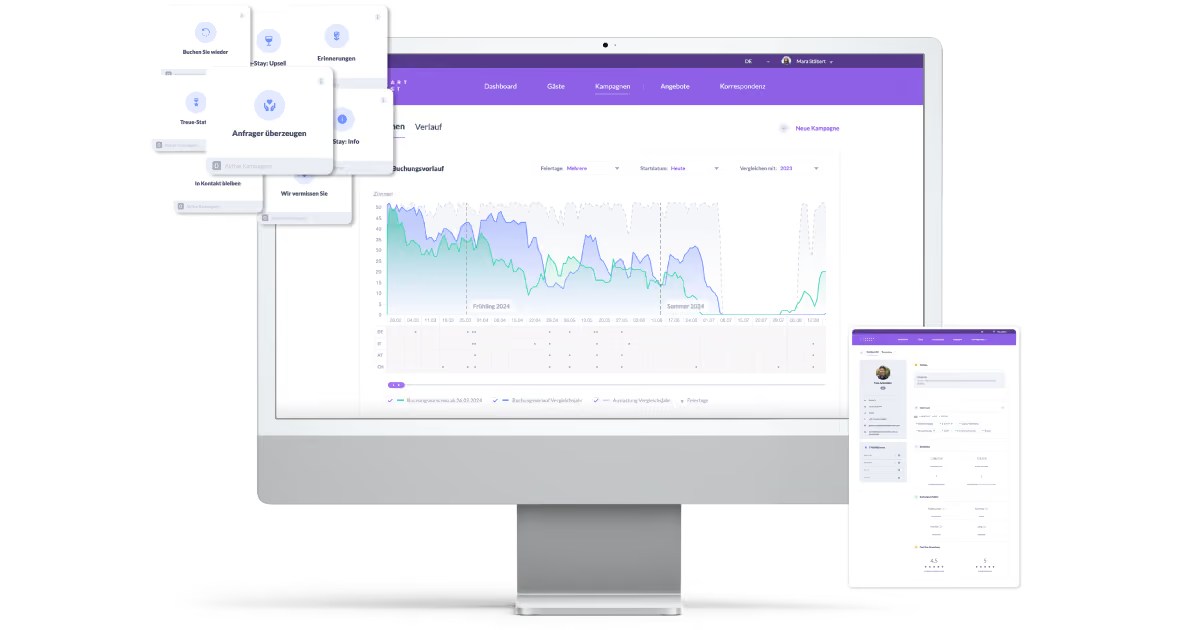
Re:Guest fits European leisure hotels that want CRM, omnichannel inbox, and WhatsApp revenue generation in one system.
Akia is best for extended-stay and select-service properties that need reliable automation.
Visito fits hotels on a tight budget that want AI-based WhatsApp and Instagram automation.
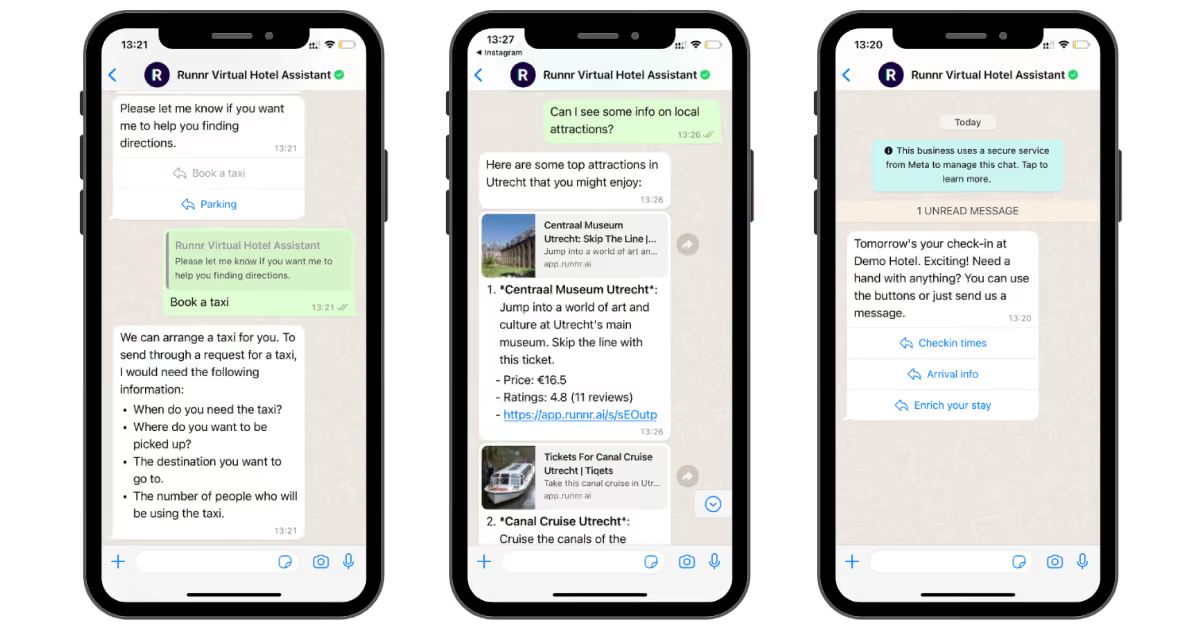
RUNNR.ai works for OTA-heavy properties that want AI to handle the bulk of guest inquiries.
A custom-built solution is best if you need deep PMS integration, proprietary upselling logic, or brand-specific guest journeys that no existing platform can replicate.
In this article, we break down the main types, features, and integrations of guest messaging software and outline the top options in the market in 2026, with pricing, main features, as well as pros and cons of each option. In the end, we compare it to building a custom one, with insights based on 16 years of experience.
What is a hotel guest messaging app?
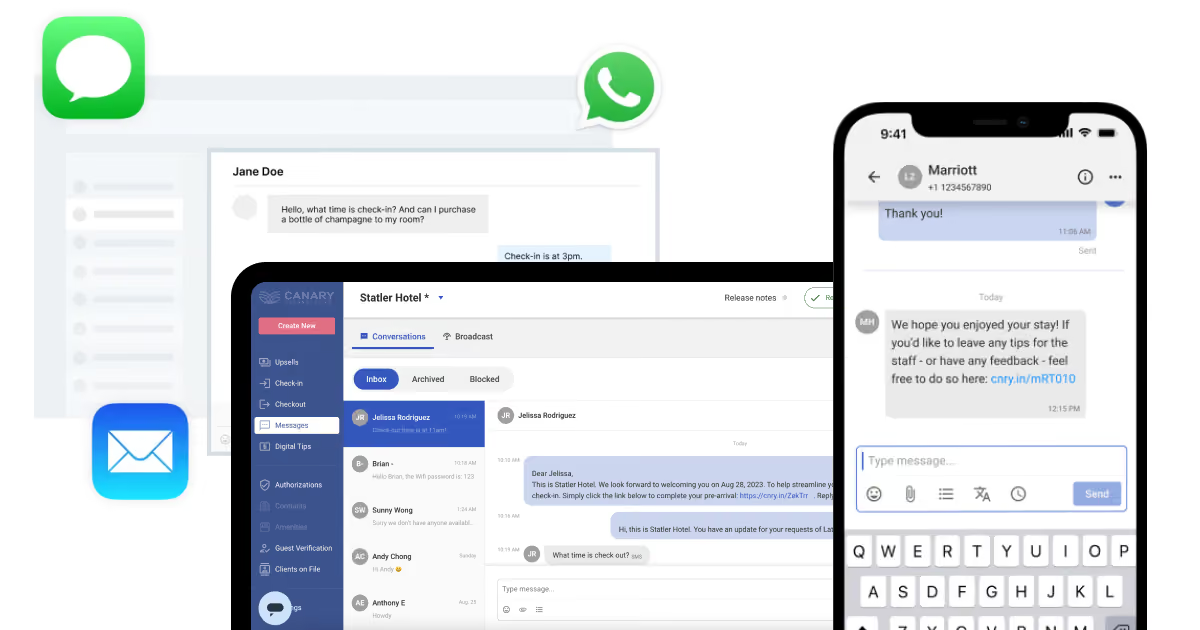
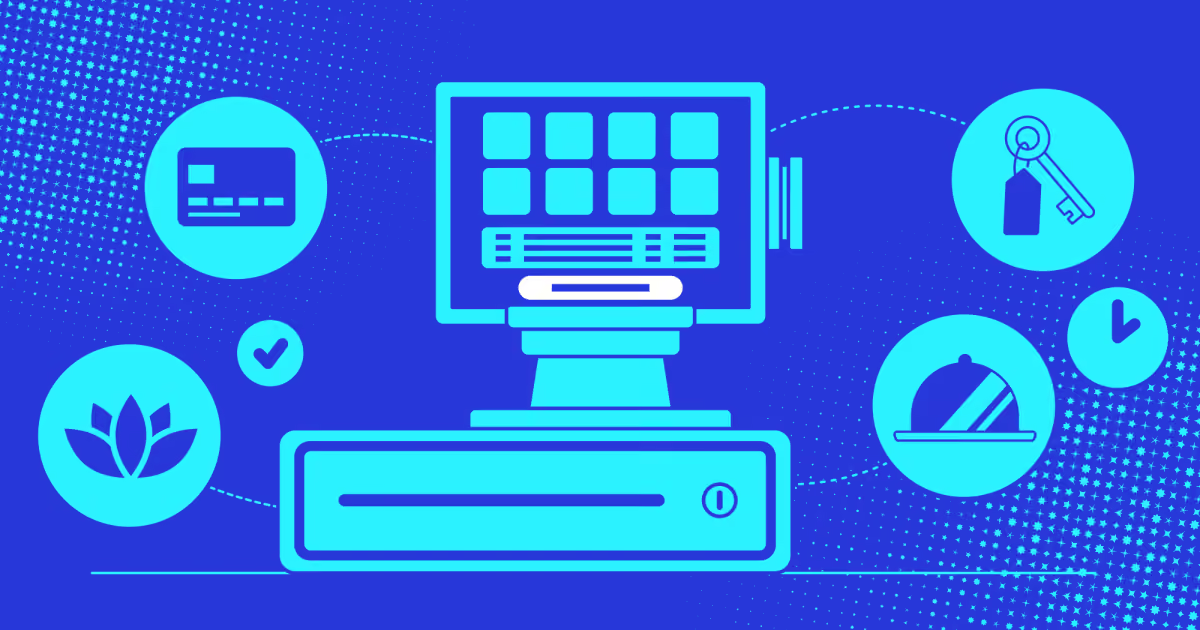
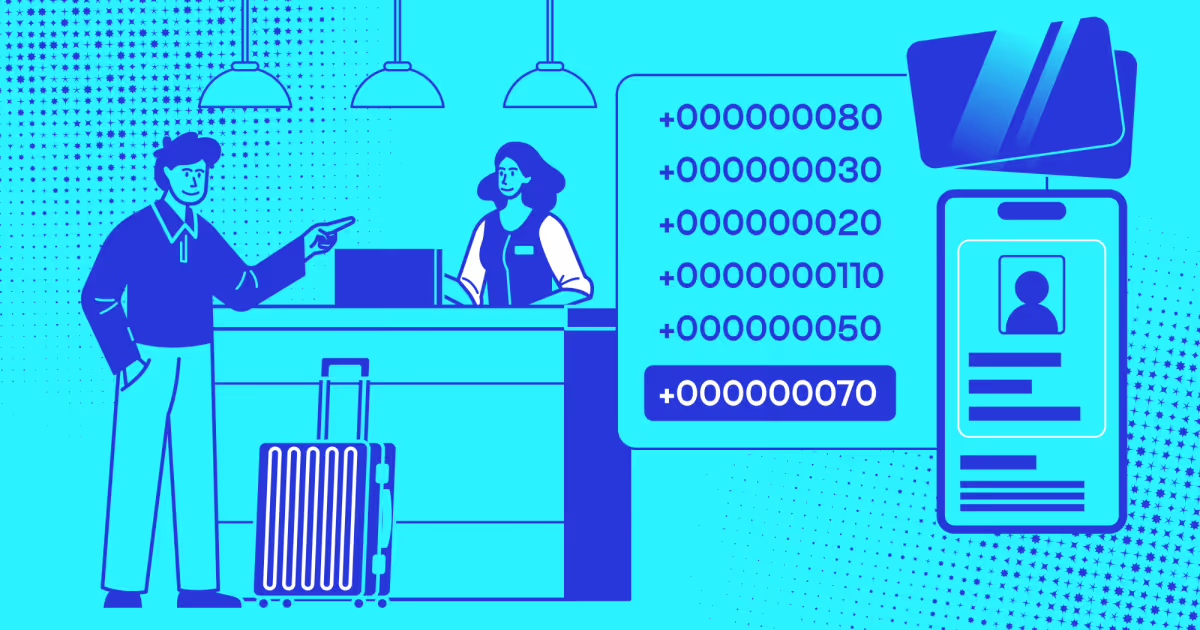
At its core, hotel guest messaging software is a single dashboard where your team handles every guest conversation, no matter where it comes from. It includes SMS, WhatsApp, email, web chat, and in-app messages. It’s as simple as that. You no longer need multiple tabs, risk no missed texts, and have no guests waiting on hold.
The platform connects directly to your Property Management System, so every message is automatically linked to a reservation and a guest profile. Your staff sees who is writing, what room they are in, and when they check out before they even type a reply.
But the real value goes deeper than inbox management. Kim and team found that what guests actually respond to is not just convenience. It is playfulness, ease of use, and the feeling that a hotel genuinely knows them. Good messaging tools reflect this. They send pre-arrival instructions automatically and ask for mid-stay feedback before a small problem turns into a bad review. They offer room upgrades at exactly the right moment. They show your guests that you care, in a personalized way, at the most suitable moment, and help them solve any issues.
Market
Hospitality text messaging went from a nice-to-have to a genuine business category in less than a decade. The numbers show where things stand.
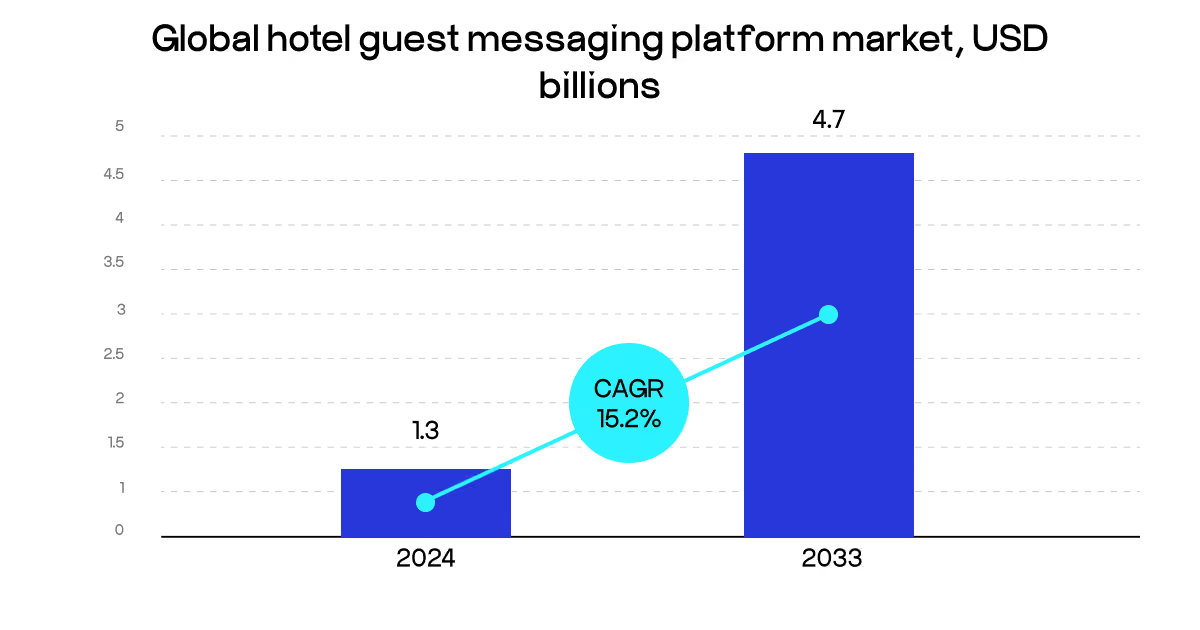
By 2033, the hotel guest messaging platform market is projected to reach $4.7 billion, growing at a compound annual rate of 15.2%. Cloud-based deployments now account for over 65% of total market revenue. Luxury and upscale hotels were the early adopters, representing more than 40% of spending, but mid-range and budget properties are closing the gap fast. The economics changed. Cloud delivery made these tools affordable at any scale.
A hotel text messaging system is not a novelty purchase anymore. It is infrastructure. And the consumer data explains why hotels keep investing. 78% of US consumers say text is the fastest way to reach them. Text messages carry an open rate of 82%, compared to roughly one in four emails that ever gets opened. Messages from brands that guests opted into are viewed positively by 91% of recipients. Among consumers aged 18 to 34, simply offering texting as an option makes a company more favorable in the eyes of 77% of them.
These figures do not describe a trend. They describe where your guests already are and what they increasingly need. The answer to this need is the right solution.
How it transforms the guest journey
The guest journey has five moments: discovery, booking, pre-arrival, the stay itself, and post-stay. Most hotels do well at one or two of them. Messaging software covers all five, and the difference is visible in the numbers.
McKinsey research confirms that the top factor driving customer loyalty in lodging is "an experience worth paying more for." Hotel guest communication is where that experience either happens or falls apart, and right now, most hotels are still managing it the way they managed it in 2005. Here is what changes when you introduce guest messaging software across the journey.
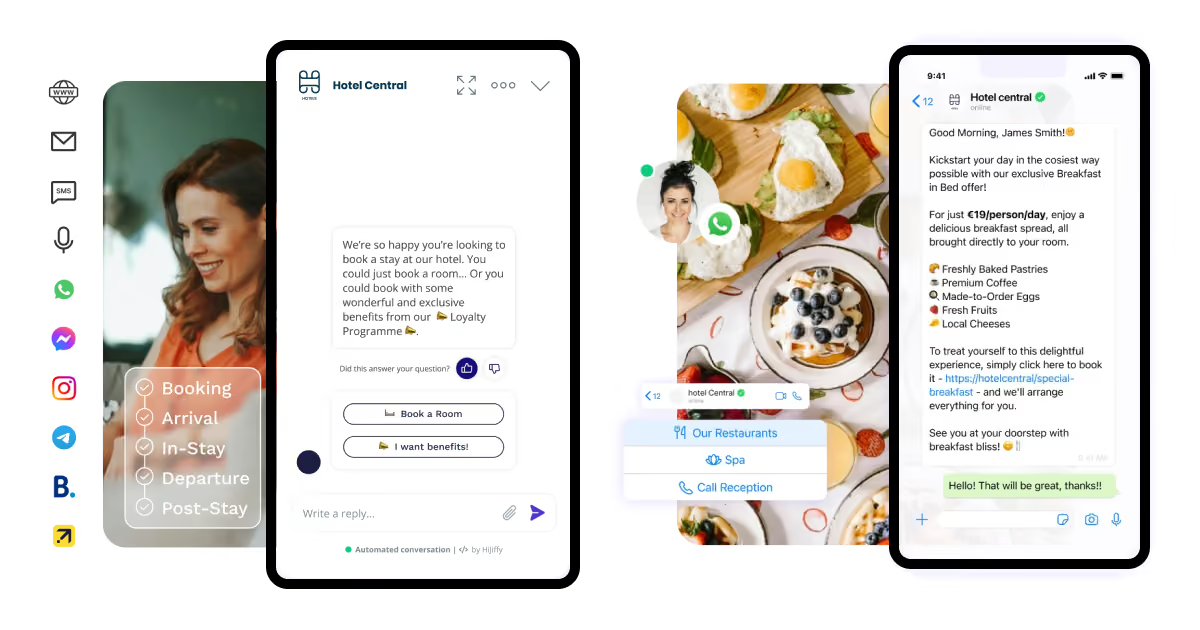
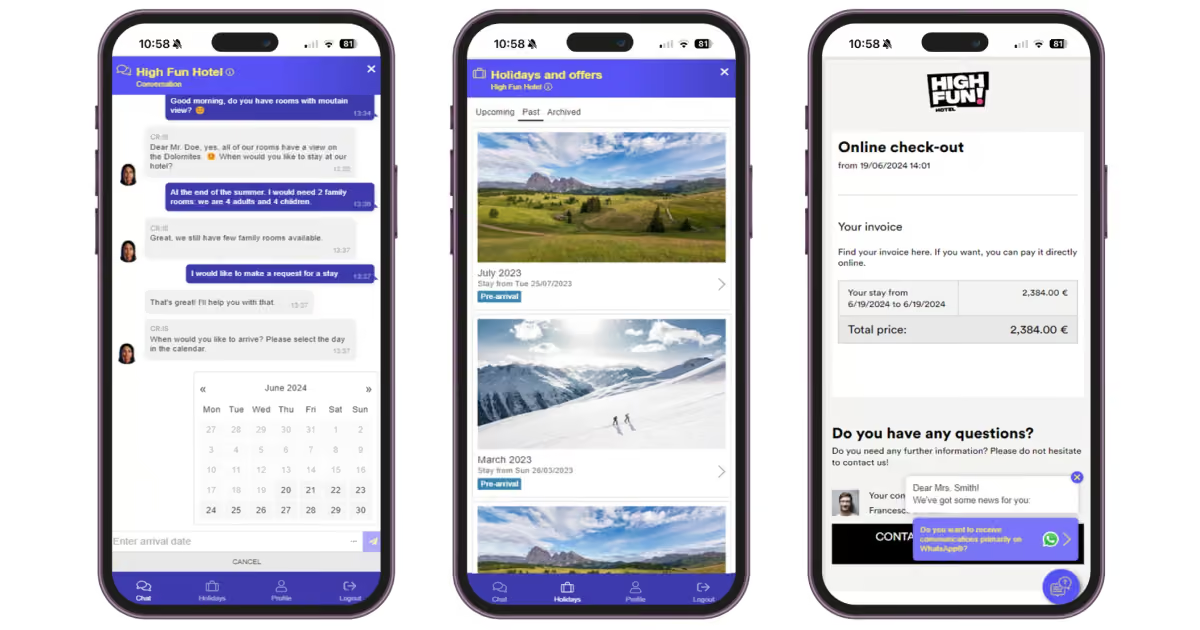
Booking and pre-arrival. A guest books and immediately receives a confirmation via the channel they actually use. Not an email they will open three days later. A text they read in five minutes. Before arrival, they get check-in instructions, parking details, and a prompt to add preferences. No phone tag, no uncertainty.
During the stay. A guest wants extra towels at 11pm. They text instead of calling. The request routes automatically to housekeeping. The guest never speaks to anyone and the problem is solved in ten minutes. Mid-stay, the system sends a short feedback request. If something is wrong, you find out while the guest is still in the building, not after they post a one-star review.
Check out and post-stay. At checkout, the guest receives a message with their folio and a direct link to leave a review. The timing is right, the friction is low, and review volume goes up without anyone at the front desk having to ask.
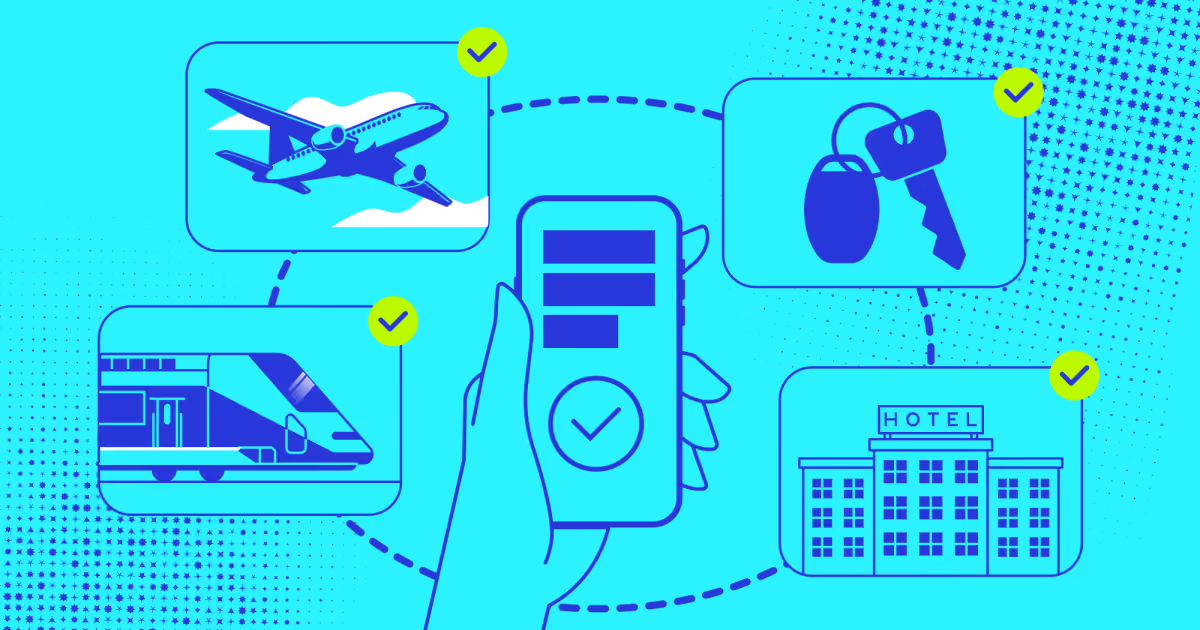
With a hotel guest app, you get real-time booking confirmations, pre-arrival messages, mid-stay check-in, and checkout review requests. Four touchpoints, all automated, all adding value without adding labor.
The case for acting is not complicated. Guests are already on their phones. The question is whether your hotel is there with them.
Types of guest messaging tools for hotels
There are numerous ways to connect to your guests. Some offer more automation, some are just the everyday messengers we all use, and some use modern technologies. Let’s break down each type and what each brings to your business.
WhatsApp and standalone messengers
Your guests are already on WhatsApp. That part is solved. The problem is what happens on your end.
These apps were built for people, not hotel operations. A guest sends a request via WhatsApp and your front desk misses it because nobody was watching that tab. In case a guest waited 20 minutes for a response to a WhatsApp message simply because the message never appeared in the staff workflow, the connection between these expectations and what you can technically provide is so massive it can ruin trust in your brand.
Hotel text messaging through standalone apps like WhatsApp or Facebook Messenger works fine as a channel. It fails as a system. Without middleware connecting these apps to your PMS and guest profiles, you are adding a communication channel without adding capability. That is not an upgrade. That is just more tabs to miss.
Dedicated hotel guest messaging platforms
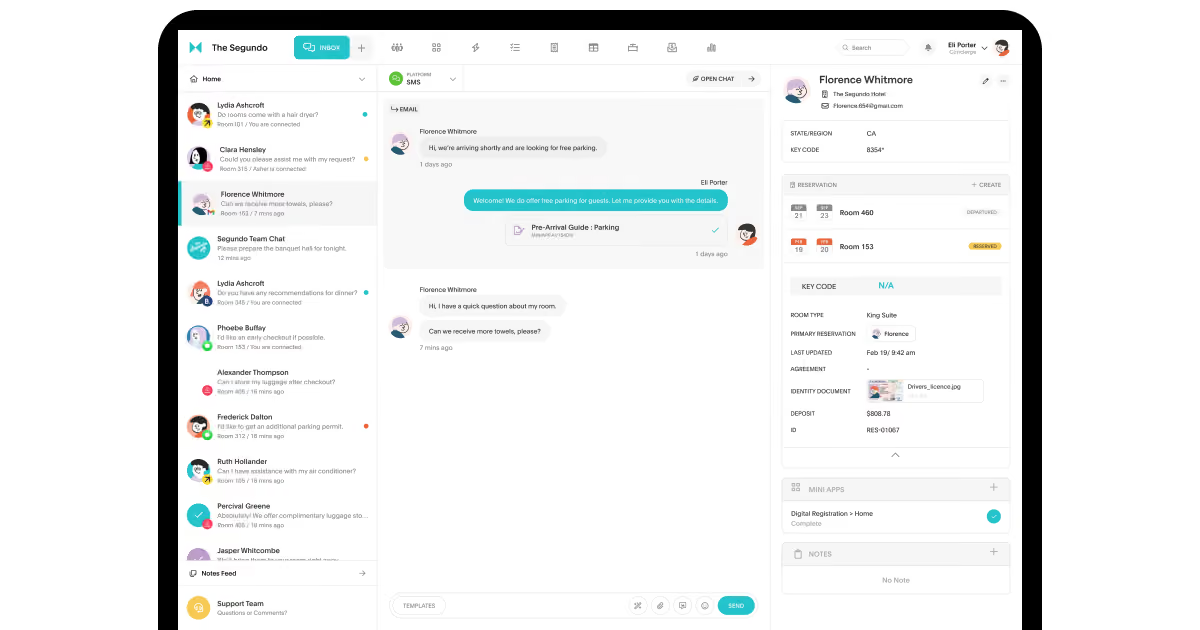
These are purpose-built tools. A unified inbox pulls messages from every channel into one place. Staff see who is writing, what room they are in, what they ordered last time, and when they check out. Every message is tied to a reservation automatically.
Such hotel text messaging systems connect directly to the PMS, centralizes communication across SMS, WhatsApp, email, and social, and lets staff manage multiple conversations without switching between systems. The difference between this and a standalone messenger is operational and solid. Requests get routed to the right department. Automated replies handle routine questions. Nothing falls through.
Middleware solutions
Middleware connects your existing tools. You keep WhatsApp, you keep your PMS, and the middleware makes them communicate effectively. This is often the fastest path for hotels that already have systems in place and cannot justify a full rebuild. A well-implemented middleware solution resolves most of the communication fragmentation challenges. It improves staff response efficiency, reduces operational costs, and gives you the ability to add new communication channels within weeks rather than months.
It is not a perfect solution. The remaining challenges typically require deeper custom work. But as a practical middle ground, middleware gives you real gains without the full investment of a custom build.
Hotel chatbots
Hotel chatbots are the always-on layer of your messaging stack. They handle the questions your staff answers fifty times a day. What time is checkout? Is there parking? Can I get extra towels?
Dutta discovered that AI-powered chatbots with natural language processing capabilities deliver measurable reductions in response times and operational costs. The 24/7 availability matters most during peak periods and overnight hours when staff coverage is thinnest.
Chatbots now power 60% of all customer service interactions worldwide. In hospitality specifically, they handle booking inquiries, spa reservations, room service orders, and FAQ responses without pulling a single staff member away from a guest standing in front of them.
The honest limitation of such guest messaging solutions, also stated by Dutta, is emotional intelligence. A chatbot handles a checkout time question perfectly. It handles a guest expressing real frustration poorly. This is why the best implementations use a hybrid model: chatbots take the routine load, humans take the complex conversations. Neither replaces the other.
Custom hotel guest app solutions
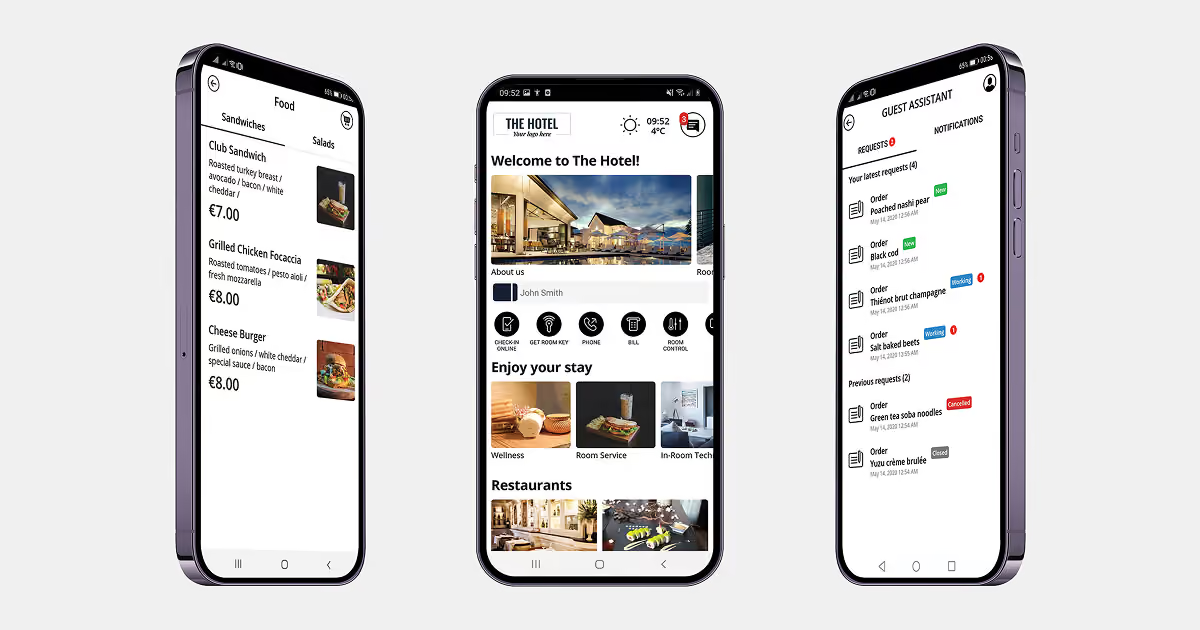
A hotel guest app solution built from scratch sits at the top of this stack in terms of both capability and investment. Everything is designed around your specific operation. Your PMS, your CRM, your upselling logic, your brand.
The great advantage of tailored systems is that they can combine practically everything: messaging, analytics, BI tools, and AI-powered recommendations in a single interface. This greatly impacts guest satisfaction scores and shortens check-in and checkout times. Hotel guest personalization through AI-powered upselling boosts RevPAR up by 15%, and the number of repeat bookings can increase logically with it.
The trade-off is that custom builds take time and budget. They are not the right starting point for every hotel. But for properties where generic platforms have already hit their ceiling, a custom solution is the only path to that level of performance.
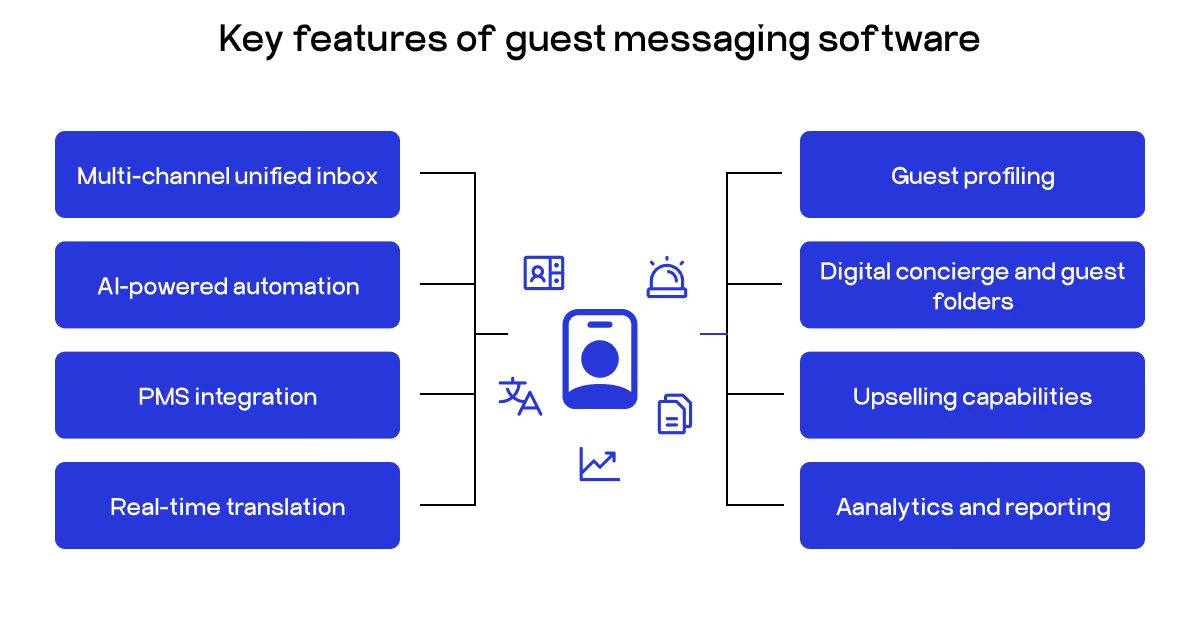
Key features of guest messaging software
Now that we understand the types that your texting software can be, let’s define the functionality your optimal solution should have.
Multi-channel unified inbox
Your guests do not care which channel you prefer. Some text. Some WhatsApp. Some email. Some message you on Booking.com. A proper hotel guest messaging platform pulls all of it into one chronological feed so your staff stops switching between five tabs and starts actually responding.
The practical result is not just convenience. It is context. When a guest messages twice during the same stay, anyone on your team can pick up the conversation and know exactly what was already discussed. No guest has to repeat themselves. No request gets answered twice or not at all.
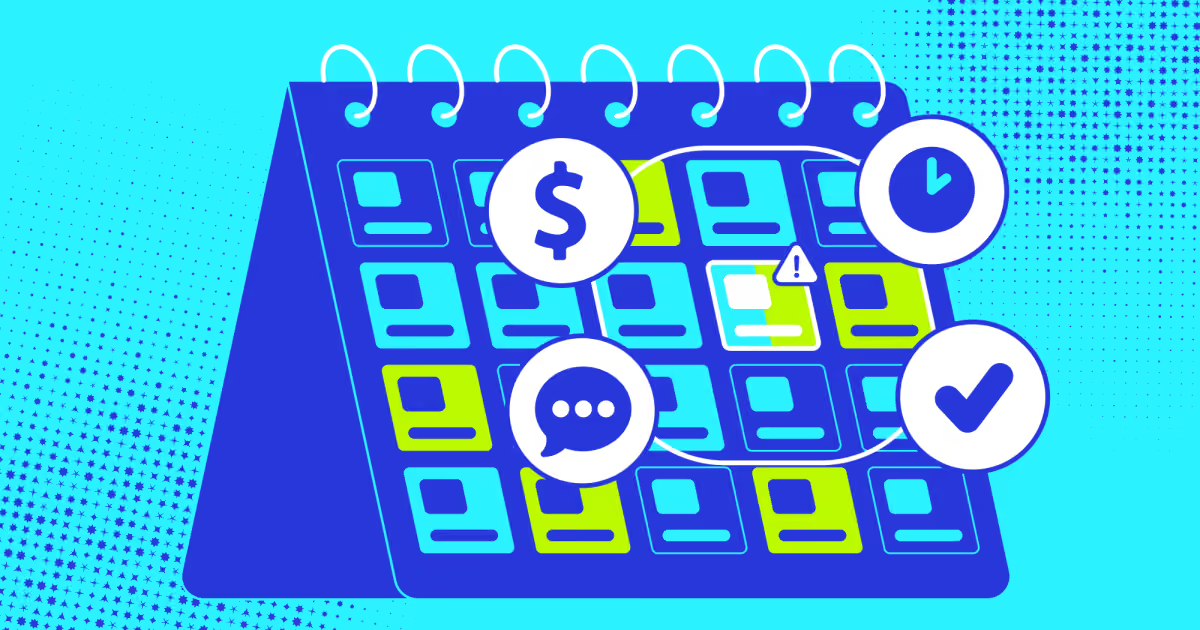
Smart routing takes this further. Maintenance requests go to engineering. Dining questions go to the restaurant. Escalations go to management. The front desk stops being the universal middleman for every question in the building.
AI-powered automation
The question "What time is checkout?" will be asked tomorrow by roughly 40% of your departing guests. A human answering that question all day is not hospitality. It’s a constant pain. Guest messaging software with AI handles the routine load instantly, around the clock, in a conversational tone that does not feel robotic. WiFi passwords, amenity hours, parking instructions, and local recommendations. Gone from the front desk queue.
The better platforms go beyond keyword matching. They understand intent, meaning a guest asking "when do I need to leave?" gets the same accurate answer as one who types "checkout time." When the AI genuinely cannot handle something, it hands the conversation to a human staff member with full context attached. The guest never notices the transition.
Sentiment analysis adds another layer. If frustration or urgency appears in a message, the system flags it immediately. You catch the problem before it becomes a review.
PMS integration
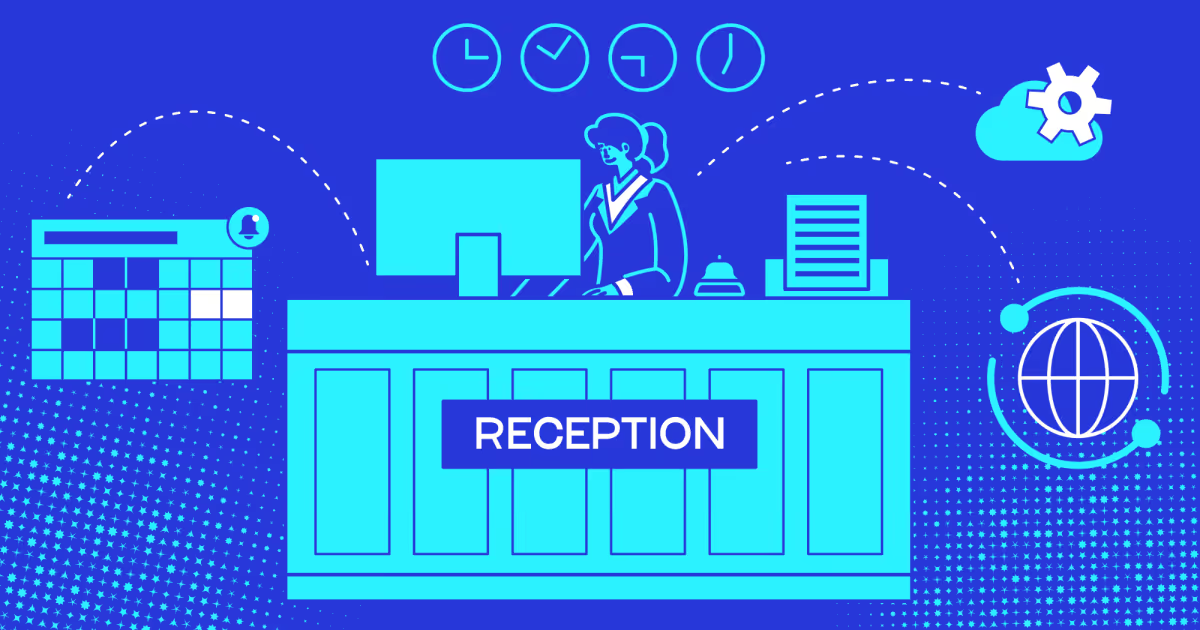
This is what separates a messaging tool from a messaging system. When your guest apps connect directly to the property management system, every conversation is already tied to a reservation, a room number, a guest profile, and a stay history.
That connection makes automation meaningful. Welcome messages go out 48 hours before arrival automatically. Check-in instructions arrive two hours before. Post-stay feedback requests trigger on checkout. All of it personalized by guest type, room category, or loyalty status, without a single staff member manually sending anything.
It also makes upselling accurate. The system knows which rooms are available for upgrade tonight. It knows this particular guest booked a spa package last visit. It offers the right thing at the right moment rather than sending the same promotion to everyone.
Real-time translation
An international hotel that needs multilingual staff on every shift to communicate properly is an international hotel with a permanent staffing problem. Real-time translation inside the messaging platform removes that constraint. Guests write in their language. Staff reply in theirs.
The platform handles the rest.
This is not a minor convenience feature. For hotels in regions with high international traffic, it is a basic operational requirement.
Guest profiles and analytics
Every conversation your hotel guest messaging platform handles is data. What guests ask about. When they ask it. How they respond to offers. Which requests take longest to resolve. Guest profiles store preferences so returning guests receive service that reflects what you already know about them. The staff member who checks in a repeat guest already knows she prefers a high floor, ordered room service twice last time, and rated the stay four stars because the gym hours were unclear.
Analytics track the operational side: response times, resolution rates, satisfaction scores, message volume by channel, and hour. You see exactly where your communication process works and where it does not.
Digital concierge and guest folders
Physical welcome folders in hotel rooms are out of date the moment they are printed. A digital concierge replaces them with a web-based interface that guests access on their own phone. No app download required. Room service menus, spa booking, local recommendations, and hotel policies, all current and interactive.
This feature reduces inbound questions to the front desk because guests can find answers themselves. It also creates a natural channel for ordering services directly, which connects directly to the upselling layer.
Upselling capabilities
Hotel guest apps with built-in upselling tools turn messaging from a cost center into a revenue line. Room upgrades, airport transfers, spa bookings, early check-in, late checkout. All offered at the right moment through the right channel - for instance, SMS has a 98% open rate compared to 20-45% of email marketing.
The difference is timing and relevance. A guest who just confirmed their arrival gets an upgrade offer when they are already thinking about their room. A guest who mentioned they are celebrating an anniversary gets a different message than a solo business traveler. The platform knows the difference because it is connected to the booking data.
These seven features together are what make a guest communication app worth deploying. Any platform missing two or more of them is not a guest messaging solution. It is just another inbox.
Core integrations for guest messaging software
A messaging platform that stands alone is just an inbox. What makes it useful is what it connects to. Here are the six integrations that matter most.
PMS integration
Your hotel text messaging system's success pretty much depends on PMS connection. Without it, every automated message is generic. With it, every message knows who it is talking to, why, and when.
The PMS is the data source. It holds reservation details, room assignments, arrival times, loyalty status, and stay history. When your messaging platform reads that data in real time, it can trigger the right message at the right moment without any staff involvement. Check-in instructions go out two hours before arrival. A welcome message fires the moment a guest is assigned a room. A checkout summary arrives automatically at 10 am.
Systems like Cloudbeds, Mews, OPERA, and Prostay all offer native messaging integrations. The guest app hotel experience depends entirely on how clean this sync is. A broken PMS connection means wrong names, wrong dates, and guests getting checkout reminders before they have even arrived.
The practical test for any platform you evaluate: does it write back to the PMS? One-way data pulls are common. Two-way sync, where guest responses update the reservation profile automatically, is what separates a capable system from a genuinely useful one.
CRM integration
Hotel communication systems that connect to your CRM unlock a fundamentally different quality of conversation. Instead of "Dear Guest," your messages say "Welcome back, Sarah. Your preferred room on the top floor is ready." Research by Elshaer and team states that hotels leveraging social CRM data to drive personalized guest engagement saw direct improvements in both customer satisfaction and market effectiveness.
The central reservation system for hotels holds booking data. The CRM holds everything else: past complaints, dietary preferences, anniversary dates, previous upsell responses, and loyalty tier. When these two data sources flow into your messaging platform, segmentation becomes real. Business travelers get a different pre-arrival sequence than honeymoon couples. Repeat guests get acknowledged. First-time visitors get more guidance.
Platforms like Re:Guest and Visito AI are built around this principle, centralizing messaging within enriched guest profiles so staff see full context before they type a single word.
Payment gateways and accounting tools
The most friction in a guest's stay is usually the moment they have to pay for something. A hotel guest messaging platform that connects to payment infrastructure removes that friction entirely.
When messaging integrates with gateways like Stripe or Square, and flows into your accounting system, a guest can receive a room upgrade offer via WhatsApp, tap to accept, pay instantly, and have the charge automatically post to their folio. No front desk visit. No manual entry. No reconciliation gap at the end of the shift.
Key capabilities this integration enables:
Contactless mobile payments triggered directly from a chat message.
Automatic folio updates when in-stay purchases are made via messaging.
Post-checkout receipt delivery with itemized charges.
Real-time financial recording that reduces front desk administrative load.
Research identifies this payment and messaging convergence as one of the clearest drivers of digital transformation ROI in hotels, particularly in Asian and North American markets where mobile-first payment behavior is strongest. The long-term version of this, highlighted in forward-looking studies, points to blockchain-backed smart contracts that automatically verify and record transactions across messaging and accounting in a single step.
Booking engines and channel managers
A guest does not become a guest at check-in. They become one the moment they book. That is when hotel guest text messaging should start, and it only starts automatically if your messaging platform knows a booking just happened.
A channel manager for hotels integration means that when a reservation lands from Booking.com, Airbnb, Expedia, or your own website, the messaging system sees it immediately and begins the communication sequence without any manual trigger. Confirmation messages go out within seconds. Pre-arrival workflows start counting down from the right date.
The integration also solves one of the most common operational failures in hotel communication: the unified inbox gap. OTA platforms have their own messaging systems that most hotels manage separately. When your channel manager connects to your messaging platform, Airbnb inquiries, Booking.com chat, and direct SMS all land in the same place. Staff responds once, from one screen.
Platforms like Beds24, GuestWisely, NightsBridge, and Sirvoy demonstrate this approach, synchronizing guest data and communication history across booking sources so nothing falls through between the moment of reservation and arrival.
Housekeeping and maintenance tools
A guest texts, "The shower is dripping," at 9 pm. What happens next defines your review score more than almost anything else. Without integration, that message is in an inbox until someone reads it, writes it down, calls housekeeping, and follows up. With a hotel guest services app connected to your operations platform, that same message automatically creates a maintenance task, assigns it to the right team member, and sends the guest a confirmation that it has been received and is being handled.
The hotel guest app experience in this context is not about the guest at all. It is about what happens behind the screen when they press send. Connected housekeeping covers dedicated mobile operations layers with digital checklists, instant staff notifications, and escalation rules that automatically flag unresolved requests to a manager.
The result is faster resolution, less phone traffic between departments, and a guest who feels heard rather than ignored.
Best hotel guest messaging apps in 2026
There is no single best platform for every hotel. The right choice depends on your size, your guest profile, and what problem you are actually trying to solve. Here is an honest look at the tools worth considering.
Template-driven chatbot; struggles with unexpected questions
From ~€350/mo
SiteMinder
SiteMinder users
Pre/post-stay emails, check-in, upsells, TripAdvisor review integration. Strong support team.
Not the deepest standalone messaging experience
14-day trial; custom after
Re:Guest
European leisure hotels
CRM-driven sales. WhatsApp 86% open rate vs 42% email. Revenue per message 10x higher than email.
Template limitations in some flows
Modular; full suite higher cost
Akia
Extended-stay & select-service
Pre-registration, contactless check-in, AI auto-responses, TripAdvisor follow-up. Reliable at scale.
Struggles with complex or varied guest interactions
Custom quote
RUNNR.ai
OTA-heavy properties
95% inquiry automation via WhatsApp and SMS. Direct OTA connections. Strong PMS and CRM integration.
Newer platform; feature set still expanding
From €100/mo; custom for chains
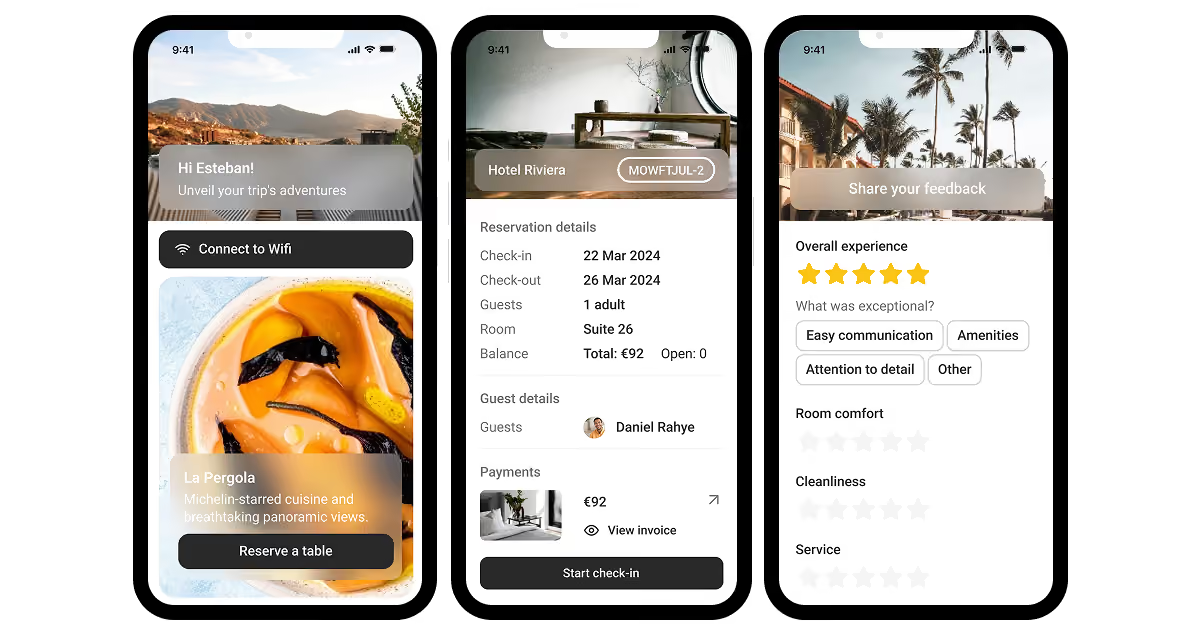
Canary Technologies is the best guest messaging software for large properties that want an all-in-one guest management layer. It covers messaging, mobile check-in, upsells, digital tipping, and fraud prevention. Its AI handles 100+ language translations. PCI Level I compliance is also rarely good at this scale. Pricing is custom, quote-based. The tool integrates with Mews, Cloudbeds, Opera, Stayntouch, SiteMinder, and others. The main pros of this tool include its modular, secure architecture and strong upsell impact. The main gripe from hoteliers is that AI responses can feel robotic and occasionally misread tone. This tool is trusted by Marriott, Four Seasons, and Hilton.
Smart Host focuses on email campaign performance and analytics-led guest communication. Its PMS integration ensures all guest data stays synchronized, and its newsletter targeting tools drive measurable increases in direct bookings. If your biggest gap is pre- and post-stay email engagement rather than in-stay messaging, this is worth a look. The interface is clean, and staff adoption is typically fast. Some cons of this solution are limited real-time chat capability and online check-in needs work. Overall, the tool is strong with European boutique and resort properties. The base CRM pricing starts with 399€ per month, and for the whole suite, the tool offers a customized quote based on hotel size.
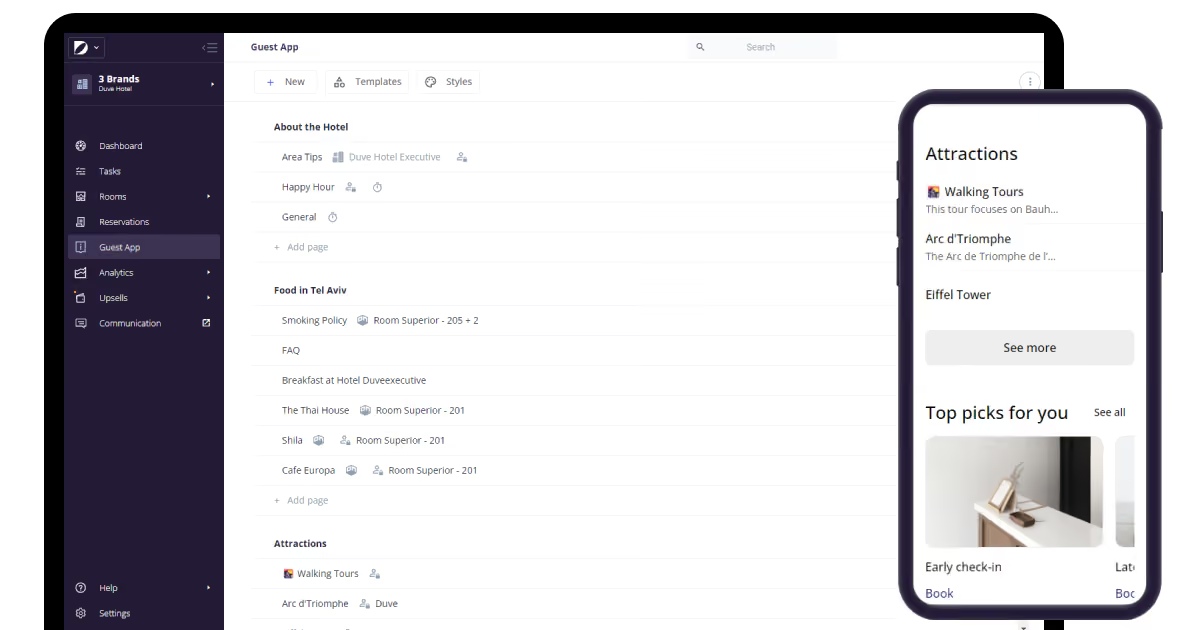
Duve is a strong hotel communications platform for boutique hotels and vacation rentals that want pre-arrival automation and contactless check-in. It consolidates WhatsApp, SMS, email, and web chat, with AI handling after-hours inquiries. Customization and a clean UI are genuine strengths of this solution. Still, sometimes you may face friction around subscription management and billing. Pricing €5-€6 per room/month for basic features and spans to large-volume custom quotes for large properties or chains. Duve is well-suited for independent properties wanting a polished guest journey.
Bookboost combines a unified inbox with a built-in CRM and Customer Data Platform. This makes it one of the more complete guest messaging software options if personalization matters to you. All guest interactions across channels feed into a single guest profile automatically. Among the benefits of this solution are a built-in CDP, strong segmentation, and loyalty focus. Setup complexity is higher than most, but the payoff in segmentation and loyalty is real. Language translation is also built in. Pricing is custom and should be requested.
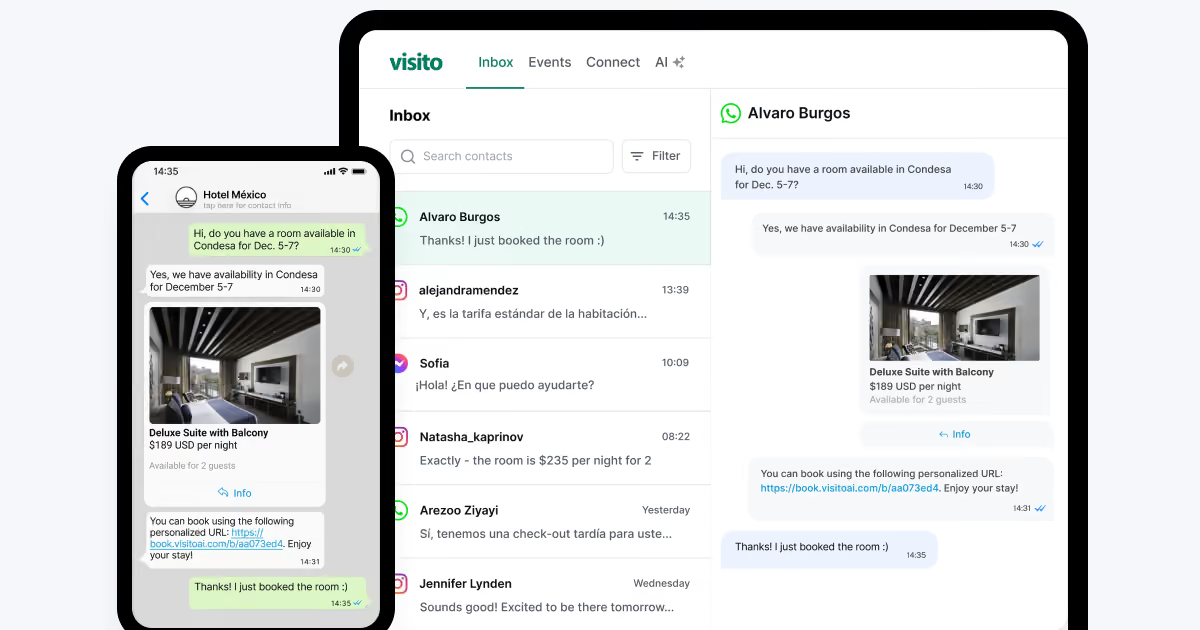
Visito is the leanest AI-first option on this list. It automates 90%+ of guest messages across WhatsApp, Instagram, Facebook Messenger, SMS, and website chat in over 100 languages, with no app download required from guests. Direct booking conversion is its clearest differentiator, with reported 3x improvements. Pricing starts at $99 per month, making it the most accessible option here. Integrations include Cloudbeds, SiteMinder, and Mews. Best for independent hotels that want high automation at a low entry cost.
HiJiffy is built for hotels with international guest bases. Its AI chatbot handles over 130 languages and resolves 85%+ of common questions across WhatsApp, webchat, social media, and OTA inboxes. Integrates directly with Oaky and D-EDGE. It is one of the best guest messaging software for hotels, whose key gap is multilingual coverage. One issue is that the chatbot is template-driven rather than truly conversational, which limits handling of unexpected questions. The pricing starts around €350/month for their full Premium package.
SiteMinder's messaging product belongs to a broader distribution and channel management platform, which makes it a natural fit if you already use SiteMinder as your channel manager. Automated pre- and post-stay emails, online check-in, upsell prompts, and TripAdvisor review integration are all included. The support team gets consistently strong marks. Not the deepest standalone hotel guest app experience, but highly practical for properties already in the SiteMinder ecosystem. A 14-day free trial is available for new users, followed by a custom pricing package.
Re:Guest is a hotel communications platform built around CRM-driven sales and communication. Its omnichannel inbox, AI tools, and WhatsApp integration are all designed to convert communication into bookings. Internal data from Re:Guest shows WhatsApp open rates of 86% versus 42% for email, with revenue per message ten times higher. Some template limitations are the main cons of this option. Modular pricing means you pay for what you use, though the full suite carries a higher cost. Best suited for European leisure hotels that want communication and CRM in one place.
Akiais a guest messaging software built as an agentic AI platform. It’s suited to extended-stay and select-service properties where guest needs are predictable, and volume is high. Its AI agent answers guests across every channel (SMS, WhatsApp, web chat, email, and even the phone). Pre-registration, contactless check-in with registration cards, AI auto-responses, pre-arrival and on-call upsells, and post-stay TripAdvisor follow-up are its core strengths. The solution integrates with The Ritz-Carlton, Nomad Hotels, and Marriott properties, and syncs with major PMS platforms. Pricing for Akia is quote-based. If you need reliable automation that now handles a wider range of guest interactions, this option delivers it consistently.
RUNNR.ai handles 95% of guest inquiries through WhatsApp and SMS in a way guests rarely recognize as AI. It connects to Booking.com, Expedia, and Airbnb directly, making it one of the better tools for properties with heavy OTA traffic. Staff workload drops significantly on routine questions, freeing time for complex guest needs. Integration with PMS and CRM is a noted strength. Pricing starts from €100 per month for its most basic plan and offers custom quotes for large hotel chains. The platform is newer, and the feature set is still expanding, but early results are strong.
No matter how many options there are at your fingertips, there’s often still a chance that the one you choose won’t fit you fully or demand costly adjustments with time. Let’s define the best way to pick the solution to be irreplaceable and efficient for your hotel.
How to choose the right guest messaging tool
Start with your channel reality. Open your last 30 days of guest conversations and count where they happen. If 70% come through WhatsApp, your hotel text messaging system needs to handle WhatsApp natively, not through a workaround. Do not let a vendor demo distract you from this.
You should consider these five criteria when evaluating your options:
Channel fit before features. Does the tool cover your real channels? WhatsApp, SMS, Instagram, email. If it covers ten channels you do not use, that is noise.
PMS integration depth. A real integration pulls booking data automatically. You should never ask a guest for their name and dates if you already have the booking. Shallow integrations just pass notifications. Ask vendors if the guest data populates before the first message arrives.
Shared inbox, not personal phones. If your staff answers from personal devices, you have a training problem and a continuity problem. Your guest communication platform must give the whole team one view. No exceptions.
Automation that does not embarrass you. A wall of text auto reply is worse than silence. Test the tool by sending a real guest question. If the response reads like a legal disclaimer, keep looking.
Escalation speed. How fast can a staff member take over from automation? A good hotel guest communication app makes this one tap, not a copy and paste into a WhatsApp group.
The mistake most hotels make is buying for features they want and ignoring the workflows they have. A tool with 40 features your team never opens costs more than a focused tool used correctly every shift.
Ask one final question before committing to any tool: what does setup actually take? If the answer is vague, the implementation will be too.
When do you need a custom guest app?
Based on 16 years of building hospitality software, we can tell you this plainly: most hotels don’t need a custom solution (at least that’s what they say). Until they really do.
Here is when off-the-shelf stops working.
Your property is complex. You run multiple brands, locations, or property types under one roof. Every vendor you talk to covers 80% of your needs, and the remaining 20% breaks your operations. Your hotel guest mobile messaging flows do not fit their templates because your guest journey does not fit their assumptions. A custom build maps to your actual logic, not a generic one.
You are locked out of your own data. Third-party platforms own the conversation history, the analytics, and the guest profiles. You pay monthly and get a dashboard. A custom guest messaging app puts that data in your hands. You build guest profiles that compound over time, across stays, across properties.
Your integrations are a mess. Your PMS talks to your CRM through a workaround someone built in 2021, and no one fully understands. Adding another SaaS tool adds another fragile connection. Custom travel mobile app development lets you build integrations that are stable, documented, and yours.
You compete on experience, not price. If your brand promise is premium and personal, a white-label tool with someone else's UI undermines that promise on every guest touchpoint.
Many founders are concerned about the reliability of software development vendors. With COAX’s hotel software development services, you get your guest app’s success covered from discovery to post-launch support. Full cycle means you are not handed off between teams or left with documentation and a good luck note.
We know the industry. That matters because hospitality has real constraints that generic dev shops hit and then learn on your budget. We also work with any integration your stack requires, including AI features that actually fit the workflow rather than being bolted on for optics. Complex backend, clean frontend, and a team that stays on after launch because that is when real questions start.
FAQ
What are the key technical requirements to build a guest management app?
You need cloud infrastructure (AWS, Azure, or GCP) with microservices architecture, React Native or Flutter for iOS and Android, and a scalable backend in Node.js or Python. Your database handles bookings and real-time availability. Add OAuth authentication, PCI DSS compliance, PMS integrations like Opera or Mews, Stripe for payments, and push notifications for guest communication.
Why do I need a mobile hotel guest app and not a desktop system?
Your guests are on their phones. Bailey and colleagues confirm that hotel apps improve guest satisfaction through time-saving features and ease of use, directly influencing repeat behavior. A desktop system cannot send push notifications, enable mobile check-in, or reach a guest mid-journey. Mobile is where the decision and the conversation actually happen.
What are the challenges of implementing guest messaging software?
The core challenges are integration complexity, staff adoption, and data privacy. Arapou and Kapiki found that high implementation costs, workforce adaptation, and regulatory requirements like GDPR create real friction, especially for independent hotels. Add inconsistent PMS data quality, and you have a system that breaks at the edges. Planning integrations before selecting software saves significant rework.
How does COAX deliver secure and efficient hotel guest apps?
We are ISO 9001 and ISO 27001 certified and sign an NDA on every project. One team covers strategy, development, QA, and DevOps with no handoff gaps. We build for scale from day one, so your app handles growth without rebuilds. Clients rate us 4.9 out of 5 on Clutch.

















































.avif)


%20for%20hotels.avif)

.avif)
.avif)


.avif)



.avif)
.avif)


.avif)

.avif)

We are interested in your opinion