Hotel profitability rarely depends on filling every room. It depends on selling the right room to the right guest at the right price. That's why hotel yield management has become one of the most important disciplines in modern hospitality.
At COAX Software, we've spent 16+ years building travel and booking platforms. Our team has learned that revenue performance isn't only a pricing problem. It's a data orchestration problem. Across vacation rental platforms, booking engines, CRM systems, and reservation products, we repeatedly see the same pattern. Hotels that connect forecasting, pricing, and inventory decisions outperform those that rely on static rates or disconnected systems.
This guide explains the fundamentals behind revenue and yield management in modern hotels. We cover how the discipline evolved, the mechanics behind dynamic pricing, and the core components of modern systems. Then, we outline the best-working tools hotels use to maximize profitability.
What is yield management in hotels?
At its core, hotel yield management is a framework for maximizing revenue from a fixed inventory of rooms. Unlike physical products, unsold hotel rooms expire every night. Once the day passes, that revenue opportunity disappears forever. Yield management solves this problem by continuously adjusting prices and availability based on demand.
From a technical perspective, a yield management system acts as a centralized decision engine. It combines booking data, occupancy levels, seasonality patterns, market demand, and distribution channels into one ecosystem. This eliminates fragmented spreadsheets and disconnected pricing decisions that often lead to inconsistent results.
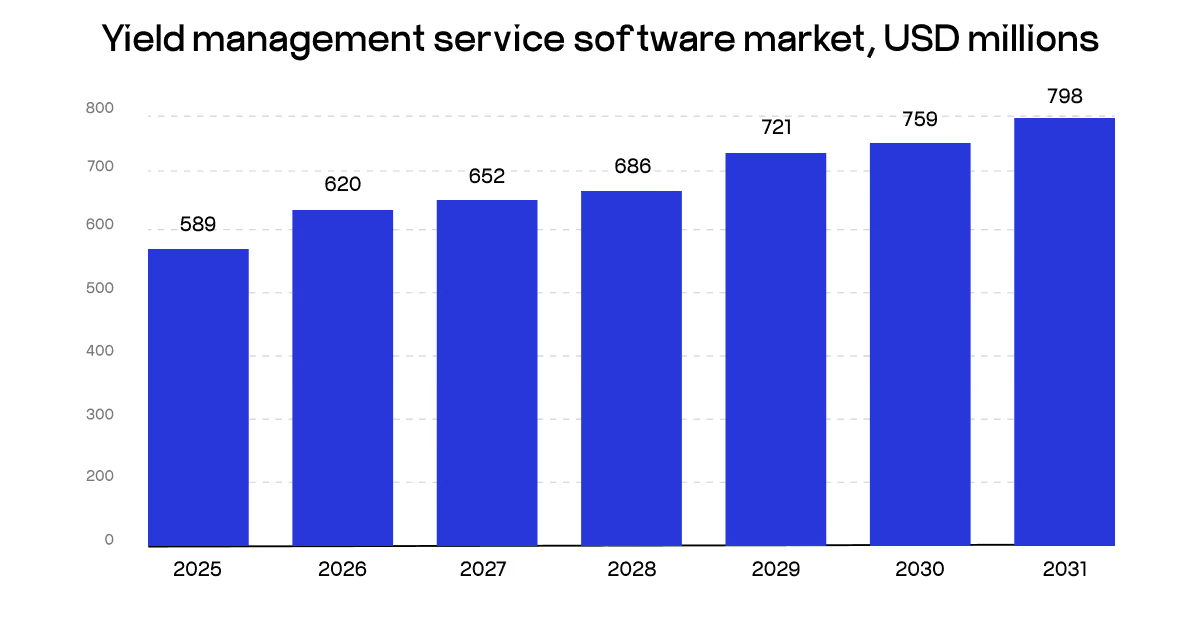
The market itself is evolving rapidly. Industry analysts estimate the global yield management solutions market at roughly $589 million. Growth comes from cloud adoption, AI-driven forecasting, and the increasing need for real-time pricing decisions. Hotels now rely on data-driven operations rather than static rate calendars.
"Pricing only works when the data behind it stays reliable. In travel platforms and hospitality businesses, we've seen that disconnected inventory and forecasting models create more damage than imperfect rates" , shares Maksym Hurak, React.js Developer at COAX Software.
Yield management vs revenue management
The distinction comes down to scope. Yield management focuses on maximizing room revenue, while revenue management optimizes the profitability of the entire business.
Yield management concentrates on selling the right room at the right price at the right time. Revenue management takes a broader view. It includes ancillary revenue, channel costs, customer segmentation, loyalty programs, and long-term profitability.
The difference between yield management and revenue management becomes clearer in practice. Yield management asks, "How should room prices change?" Revenue management asks, "How do we optimize the entire commercial operation?"
Aspect
Yield Management
Revenue Management
Primary goal
Maximize room revenue
Maximize total profitability
Main focus
Pricing and inventory
Entire customer lifecycle
Key metrics
Occupancy, ADR, Yield %
RevPAR, GOPPAR, customer value
Revenue sources
Rooms
Rooms, add-ons, packages, loyalty programs
Time horizon
Short-term demand
Short-term and long-term growth
Main question
"How much should this room cost?"
"How should the business generate profit?"
A simple example illustrates the difference. Suppose a hotel raises room prices during a major conference because demand increases. That's yield management. Deciding whether bundled spa packages, direct booking discounts, and loyalty rewards create higher margins belongs to revenue management.
Modern revenue yield management systems combine both disciplines because pricing decisions don't exist in isolation. Distribution costs, guest acquisition channels, and ancillary services all influence profitability.
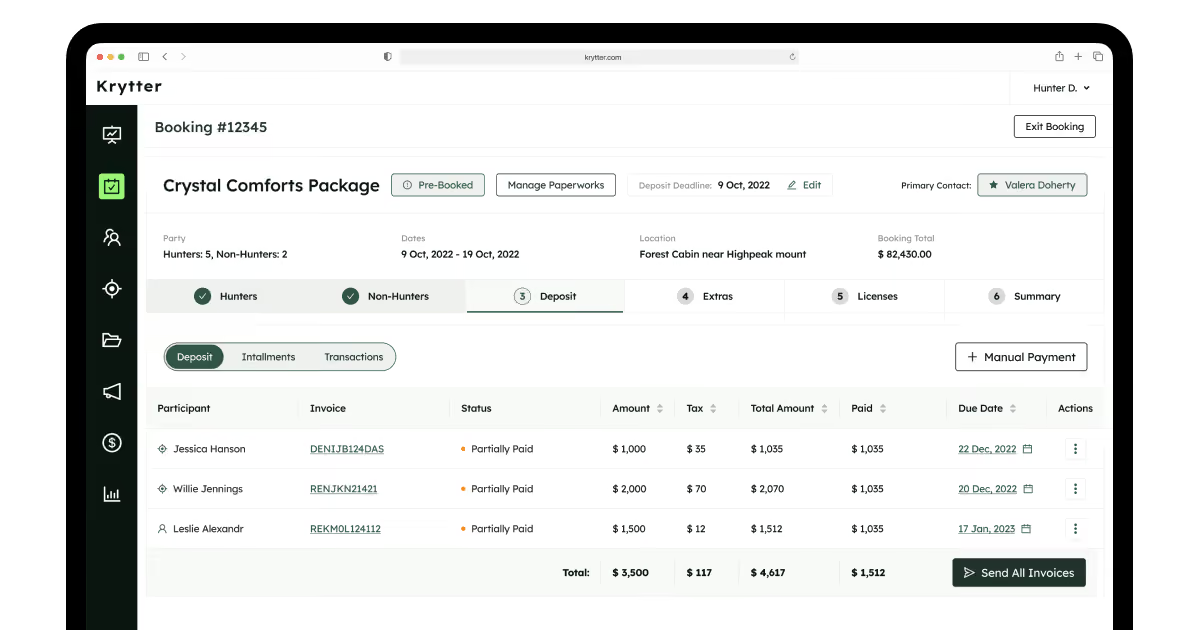
We encountered a similar challenge while developing Krytter's hunting reservation platform. Pricing wasn't limited to trip availability. The system had to support licenses, taxes, associations, installment payments, and four different payment methods. Optimizing bookings alone wasn't enough. The financial module had to account for the profitability of the entire transaction.
In practice, a hunting trip with lower upfront revenue could generate higher margins because of additional services and reduced payment processing costs. The same principle applies to hotels. The cheapest room isn't always the least profitable, and the highest room rate doesn't necessarily produce the highest return.
Today, the most successful hotels don't treat yield & revenue management as competing approaches. Yield management acts as one component within a larger revenue strategy that aims to maximize the value of every guest relationship.
How can yield management apply to different industries?
The core principles of yield management remain the same across industries. Whenever businesses operate with limited capacity and changing demand, pricing optimization becomes essential. Although hospitality popularized the concept, yield management meaning extends far beyond hotels.
Airlines use it to optimize seat pricing and route profitability.
Car rental companies adjust rates according to fleet availability and seasonal demand.
Cruise operators, event organizers, and transportation providers also rely on similar models to maximize revenue from finite inventory.
The rise of real-time analytics and AI has expanded these capabilities even further. Modern pricing engines can account for weather conditions, booking pace, local events, competitor activity, and customer behavior. As a result, you make decisions based on data, not guesses.
At COAX, we've applied similar principles to yield management in hotels while building booking platforms and travel systems. Across these projects, demand forecasting and inventory synchronization consistently proved more important than the pricing algorithm itself.
For example, while developing a travel CRM, we found that fragmented availability data caused more revenue leakage than imperfect pricing rules. If inventory wasn't synchronized across channels, customers could encounter outdated information, double bookings, or inconsistent offers. No algorithm could compensate for those issues.
How does yield management work?
The purpose of hotel yield management is quite simple. It’s to maximize revenue from a limited number of rooms by balancing demand, prices, and inventory. In practice, modern hotel yield management software follows a continuous cycle rather than a one-time pricing exercise.
The process typically works as follows:
Demand forecasting. Historical bookings, seasonality, local events, booking pace, and competitor activity feed forecasting models. These models estimate future occupancy levels and expected demand.
Inventory analysis. Hotels evaluate available room types and capacity constraints. Because rooms are perishable inventory, every unsold night represents lost revenue potential.
Dynamic pricing adjustments. Based on forecasted demand, the system automatically modifies room rates. High-demand periods trigger higher prices, while weaker demand may lead to promotions or discounts. This is the foundation of modern dynamic pricing in hotels.
Channel optimization. Different booking channels have different acquisition costs and customer behavior. Yield and revenue management platforms allocate inventory strategically across direct websites, OTAs, and partners to maximize profitability.
Real-time synchronization. Availability, prices, and restrictions must remain synchronized across every channel. Even minor delays can create overbookings, inconsistent rates, or lost reservations.
Performance monitoring. Hotels continuously track metrics such as ADR, occupancy, RevPAR, and yield percentage. These indicators help revenue teams refine future pricing decisions and improve forecast accuracy.
Continuous optimization. Yield management is an ongoing process. New bookings, cancellations, market conditions, and events constantly change demand patterns, requiring continuous adjustments rather than static pricing.
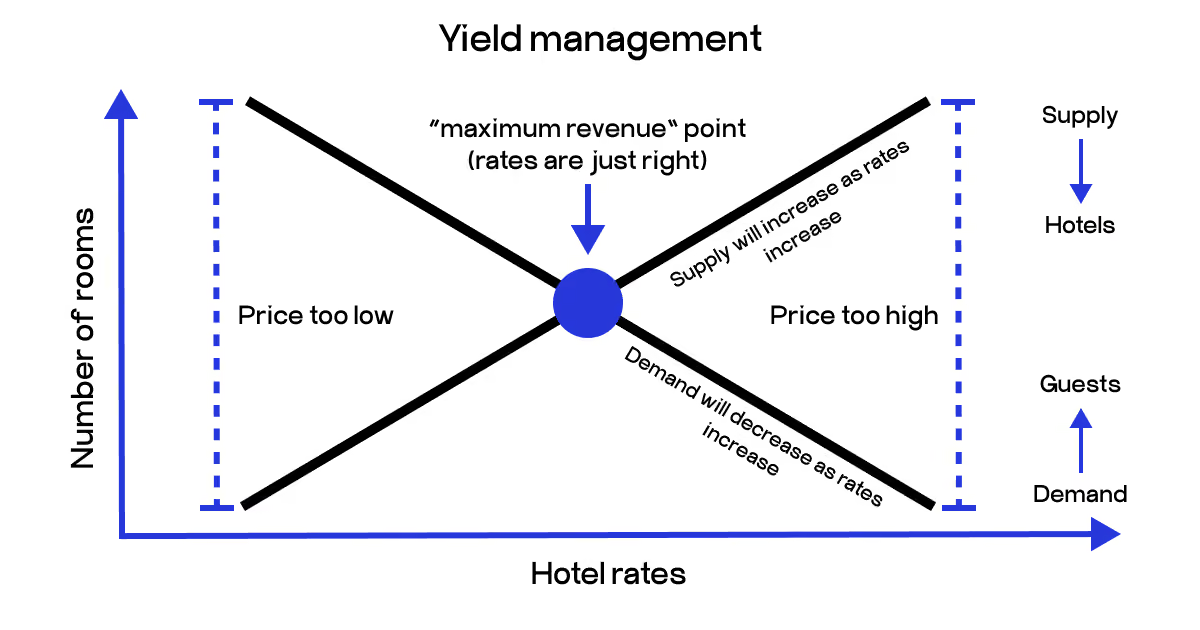
This workflow explains why pricing and yield management for hotels have evolved from simple spreadsheets into sophisticated decision engines. As rates increase, demand naturally declines. Conversely, lower prices stimulate demand. The optimal point lies where supply and demand intersect, and revenue reaches its maximum.
When we engineered travel and booking platforms, we repeatedly discovered that synchronization challenges were often more difficult than pricing algorithms themselves. For instance, in the RePlan booking service, maintaining data consistency was essential. It kept reservations, customers, and stakeholders aligned. This proved crucial for reliable operations and strong commercial performance.
What are the core elements of hotel yield management?
Successful yield management in the hotel industry depends on several interconnected components. None of them operate effectively in isolation.
Demand forecasting to predict future occupancy
Demand forecasting analyzes historical patterns and external factors to estimate future bookings. Production-grade forecasting models account for seasonality, local events, booking windows, and competitor activity. Under heavy demand fluctuations, forecast accuracy matters more than aggressive pricing strategies.
Hotels that adapted forecasts continuously protected margins better than those relying on annual assumptions. From our experience building booking platforms, forecasting becomes difficult when reservation data is fragmented across multiple systems. Centralized architectures produce better decisions and more accurate and efficient yield management for hotels.
Dynamic pricing for real-time rate optimization
Dynamic pricing adjusts room rates according to demand conditions. This is where many hotel yield management strategies create measurable gains. Prices rise during high-demand periods and decrease when occupancy weakens.
We've encountered similar challenges across projects like the Arrival travel booking platform. Keeping pricing and availability synchronized proved just as important as the pricing rules themselves.
A practical yield management pricing example would be increasing rates during a citywide event or reducing prices to capture last-minute travelers. Airlines and car rental companies use the same logic.
The challenge isn't changing prices. The challenge is maintaining consistency across channels and preventing outdated information from reaching customers.
Inventory control to manage limited capacity
Inventory control determines how rooms are allocated and sold. Hotels must decide which room categories remain available, which channels receive inventory, and when restrictions should apply. These decisions influence profitability as much as pricing itself.
As part of yield management hotel practices, strong inventory management also prevents overbooking and channel conflicts. Under heavy operational load, synchronization becomes essential.
During travel platform projects at COAX, we found that decoupling inventory models and keeping availability data synchronized were critical architectural decisions. Otherwise, booking experiences became slow and inconsistent.
Distribution management to optimize sales channels
Distribution management coordinates room inventory across direct websites, OTAs, and partners. Different channels produce different margins. Hotels, therefore, need to balance occupancy with acquisition costs.
This discipline closely connects with hotel dynamic pricing, revenue optimization, and broader yield and revenue management strategies. Strong integrations between PMS, CRS, booking engines, and channel managers help maintain pricing consistency and prevent availability conflicts across distribution channels.
As booking ecosystems become more connected, channel management increasingly acts as part of the broader yield management architecture rather than a separate function.
"Many teams think of distribution as a marketing problem. In reality, it's often a systems problem. Once inventory starts flowing through multiple channels, synchronization and integration quality matter far more than individual pricing decisions," says Orest Falchuk, Head of Engineering at COAX Software.
The yield management formula and key metrics
Strong pricing decisions require measurable benchmarks. That's why successful hotels track revenue performance with a small group of metrics instead of relying on occupancy alone.
Modern yield revenue management combines pricing, forecasting, and performance indicators into one framework. When our team developed a vacation rental platform for property owners, one lesson became obvious. Revenue optimization only works when booking data stays centralized. Once information becomes fragmented, forecasting quality drops.
Formula explained
The most common yield management formula compares actual revenue against the maximum revenue a property could have earned.
This formula measures how efficiently a hotel converts available inventory into income. Unlike occupancy metrics, it penalizes both empty rooms and excessive discounting.
For example, suppose a hotel has 100 rooms with a maximum achievable nightly rate of $250. The theoretical revenue potential equals $25,000. If the hotel earns $18,500, the yield equals 74%.
This simple calculation forms the foundation of any yield management strategy.
"Revenue metrics become dangerous when they're isolated from operational context. A great-looking occupancy number can hide weak pricing decisions", describes Myroslav Stelmashchuk, Backend Engineer at COAX Software.
Potential revenue vs actual revenue
Potential revenue represents the highest possible amount a property could generate from its available inventory. Actual revenue reflects what guests really paid.
The gap between those two values highlights missed opportunities. Empty rooms reduce revenue. Deep discounts do the same. This is why hotel revenue optimization focuses on balancing occupancy and pricing rather than maximizing either one individually.
Metric
Potential Revenue
Actual Revenue
Definition
Maximum theoretical revenue if inventory sells at target rates
Revenue actually earned from bookings
Influenced by
Inventory capacity and pricing strategy
Occupancy, discounts, cancellations, channel mix
Main question
"What could we have earned?"
"What did we actually earn?"
Purpose
Identify revenue opportunities
Measure commercial performance
Example
100 rooms × $250 = $25,000
85 rooms sold, generating $19,500
For example, suppose a hotel could theoretically earn $25,000 on a given night. If discounts, cancellations, or unsold rooms reduce actual income to $19,500, the difference represents unrealized revenue. Understanding where that gap originates is one of the foundations of most yield management strategies.
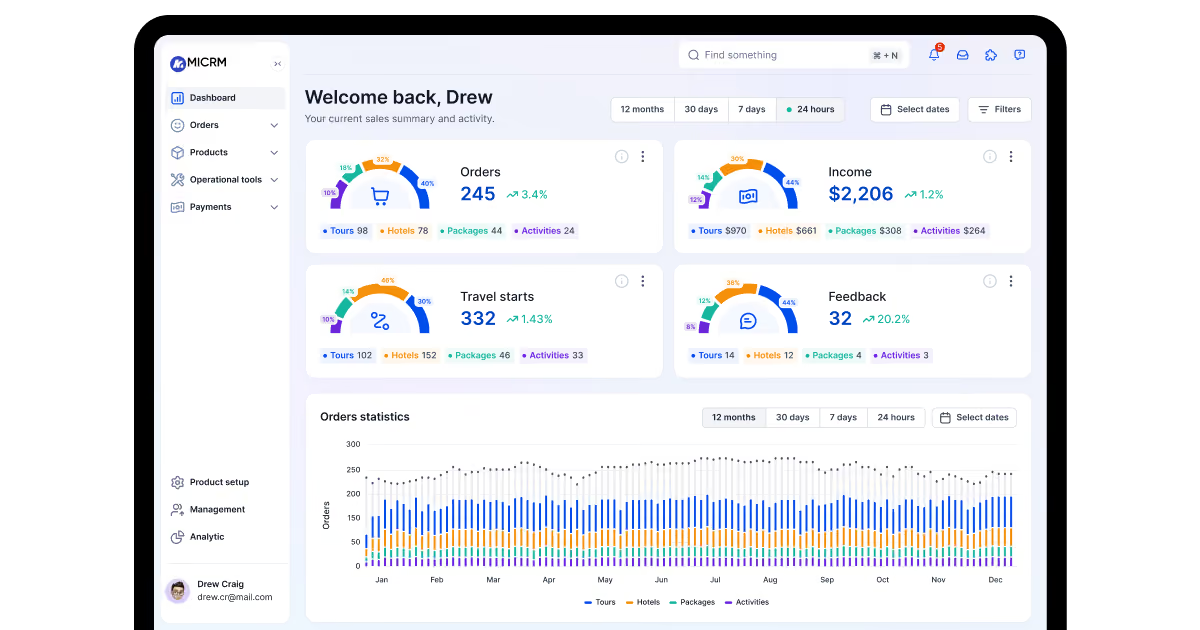
We saw similar principles while building Arrival. Through webhooks and HubSpot integration, booking data, customer activity, and orders became centralized from day one, eliminating manual processes and improving visibility into commercial performance. The same applies to hotels. When booking, customer, and operational data stay connected, revenue opportunities become much easier to identify and optimize.
Key performance metrics for yield management
Efficient yield management solutions rely on several indicators because room revenue, occupancy, operating costs, and market position rarely move in the same direction. Looking at one number in isolation can lead to poor decisions.
ADR (Average Daily Rate) measures the average room price paid by guests. Consider a luxury property in London that hosts many business travelers. During Fashion Week, ADR may rise from £240 to £390 without changing occupancy significantly. This indicates strong pricing power and healthy demand. However, ADR alone doesn't reveal whether empty rooms remain unsold. A hotel can achieve record room rates while leaving substantial revenue on the table.
RevPAR (Revenue Per Available Room) combines occupancy and ADR, making it one of the hospitality industry's most valuable indicators. Suppose two city-center hotels each charge an average nightly rate of $200. Hotel A sells 95% of its rooms, while Hotel B only reaches 70% occupancy. Despite identical ADR, Hotel A generates considerably higher RevPAR. That's why revenue managers often use RevPAR as a daily scorecard. It helps answer one simple question: "How efficiently are we monetizing our inventory?"
Occupancy rate measures the percentage of available rooms that are sold during a given period. Imagine a 120-room beachfront hotel during hurricane season. If occupancy climbs from 52% to 87% after introducing aggressive discounts, the number may appear impressive. However, if most bookings came through high-commission OTAs and average rates dropped, profitability could decline. This is a classic yield management example where filling every room doesn't necessarily maximize revenue.
GOPPAR (Gross Operating Profit Per Available Room) incorporates operating expenses. This makes it useful for resorts that need their hotel yield management software to consider this metric. For example, a ski resort may generate impressive room revenue during the holiday season. Yet increased labor costs, shuttle services, spa operations, and restaurant expenses could eat into margins. A property with slightly lower room revenue but better cost control may ultimately achieve higher profitability. This is one reason modern hotel accounting software and revenue platforms increasingly integrate financial reporting with commercial data to see the whole picture.
Revenue Generation Index (RGI) compares a hotel's performance against its competitive set. A score of 100 means the property performs exactly in line with the market. A score above 100 indicates that the hotel captures more than its fair share of revenue. Imagine two four-star hotels located near Sydney Airport. Both have similar room counts and amenities. If one property consistently achieves an RGI of 115, it means its pricing strategy and market positioning outperform nearby competitors.
A hotel can achieve high occupancy and weak profitability. Another can command strong room rates but struggles with market share. Looking at only one KPI creates blind spots.
When we developed financial workflows for Krytter, we saw the same principle in practice. The platform handled taxes, installment payments, multiple payment methods, and complex reporting requirements. Looking at transaction volume alone provided an incomplete picture. The real value came from understanding how all financial variables interacted.
This mix shows the importance of yield management as it follows the same philosophy. Revenue, profitability, occupancy, and operating costs work together to reveal the full picture.
Yield management pricing examples in hospitality
The theory becomes much easier to understand through practical scenarios. Most yield management pricing examples revolve around how demand changes over time. While the exact tactics differ, the underlying yield management definition remains the same: maximizing revenue from limited inventory without sacrificing long-term profitability.
Peak season pricing strategy
Peak seasons create natural opportunities for yield management strategy adjustments. For instance, a ski resort during Christmas or a beach destination in July experiences compressed demand. Under these conditions, hotels can increase rates gradually while limiting discounts.
This approach protects margins and avoids selling premium inventory too cheaply. According to COAX’s observations from working with hospitality providers, many operators have shifted away from aggressive discounting and now focus on precision forecasting and operational efficiency.
During our work on Hosty, we saw comparable patterns among vacation rental operators. Demand spikes during holidays required synchronized calendars and automated pricing decisions. Otherwise, owners risked either underselling their inventory or losing reservations because of outdated availability.
Last-minute booking optimization
Not every room sells months in advance. Last-minute travelers create opportunities for flexible yield management pricing. Suppose occupancy remains at 65% three days before arrival. Instead of keeping static rates, the hotel can introduce targeted discounts or promotions for direct channels.
The goal isn't simply filling rooms. It's maximizing total revenue from remaining inventory. This is one of the most common yield management examples used by boutique hotels and independent properties.
"Static pricing assumes demand behaves predictably. Real travelers don't. That's why pricing systems need flexibility built into the architecture", adds Orest Falchuk, Head of Engineering at COAX Software.
Event-driven pricing
Concerts, conferences, and sporting events can reshape local demand overnight. Hotels near convention centers often rely on hotel yield management tools to identify these demand surges early and adjust rates accordingly.
For example, a property hosting guests during a major technology conference may increase prices several weeks before the event. Inventory restrictions can also prevent discounted bookings from replacing higher-value reservations.
We encountered similar booking complexities while building the Arrival platform. The system had to sync real-time availability, room configurations, activities, and pricing while supporting two different trip models. Maintaining responsive booking flows and keeping external data aligned became critical. Centralized integrations and carefully designed synchronization layers allowed the platform to scale smoothly without compromising the user experience.
Channel-based pricing
Different distribution channels produce different margins. Direct bookings often cost less than OTA reservations. Because of that, many yield management software platforms optimize rates according to channel performance.
Many properties invest in channel management solutions that sync rates and inventory across websites, OTAs, wholesalers, and distribution partners. Channel management capabilities help prevent overbookings, eliminate pricing discrepancies, and support distribution strategies.
Hotels may offer additional value through direct channels while maintaining rate parity elsewhere. This practice has become increasingly important as hotels pursue broader revenue and yield management goals instead of focusing solely on occupancy.
Ultimately, the best pricing models don't chase occupancy percentages. They maximize long-term profitability while keeping the guest experience consistent across every booking channel.
Package and upsell pricing
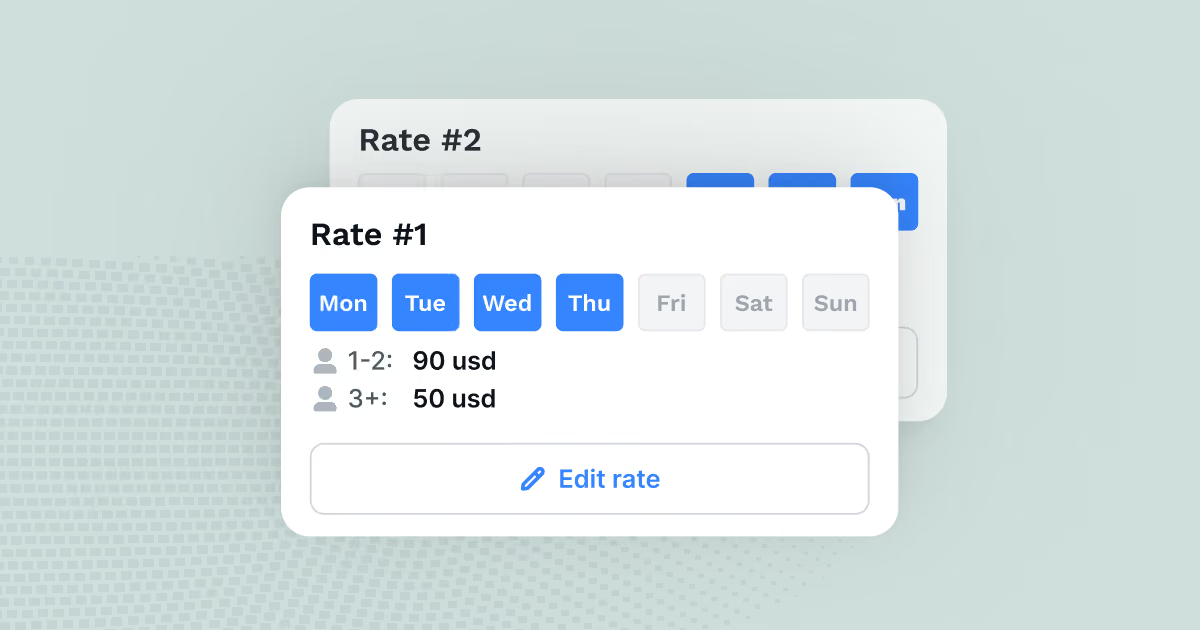
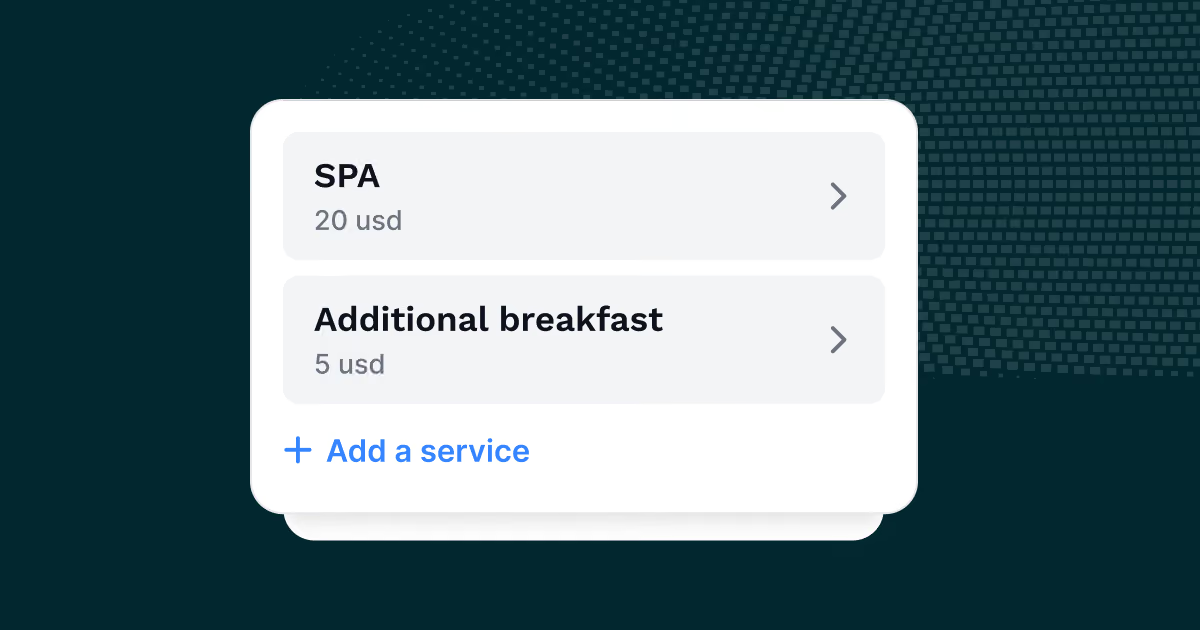
Another common yield management pricing strategy involves bundling rooms with additional services. Instead of competing solely on room rates, hotels increase the value of each reservation through experiences and ancillary revenue.
This approach focuses on maximizing revenue from limited inventory rather than simply maximizing occupancy. Typical package elements include:
Breakfast and dining credits
Spa treatments and wellness packages
Airport transfers
Guided tours and activities
Extended-stay discounts
Family or seasonal bundles
Such patterns appeared in our work on Hosty, where vacation rental operators sought ways to differentiate listings and increase booking values without relying exclusively on price reductions. We found that enriching the guest experience often delivered stronger long-term results than aggressive discounting.
Best yield management solutions for hotels
While comparing the most popular software options, we didn’t just review the feature lists. At COAX, we evaluate systems differently. We reminisce about the operational challenges we've encountered while building travel and hospitality software, and evaluate how each tool can solve them.
Across projects like Hosty, Arrival, and RePlan, we've learned that forecasting capabilities alone don't determine success. Integration quality, synchronization reliability, scalability, and operational flexibility often matter much more.
That experience shaped our evaluation. We focused on the questions that affect performance in real-world environments. Below are the yield management solutions we consider strongest based on these criteria.
Platform
Dynamic Pricing
Forecasting
Integrations
Best for
IDeaS Revenue Solutions
Advanced
Advanced
Strong
Enterprise hotels
Duetto
Advanced
Advanced
Strong
Chains and groups
Atomize
Strong
AI-driven
Good
Independent hotels
RoomPriceGenie
Moderate
Good
Good
Small and mid-size properties
Cloudbeds
Moderate
Moderate
Excellent
Small and mid-market hotels
RevControl
Moderate
Good
Moderate
Boutique hotels
BEONx
Strong
Strong
Strong
European hotels
SiteMinder
Limited
Moderate
Excellent
Channel-heavy businesses
Oracle OPERA RMS
Advanced
Advanced
Excellent
Enterprise hospitality
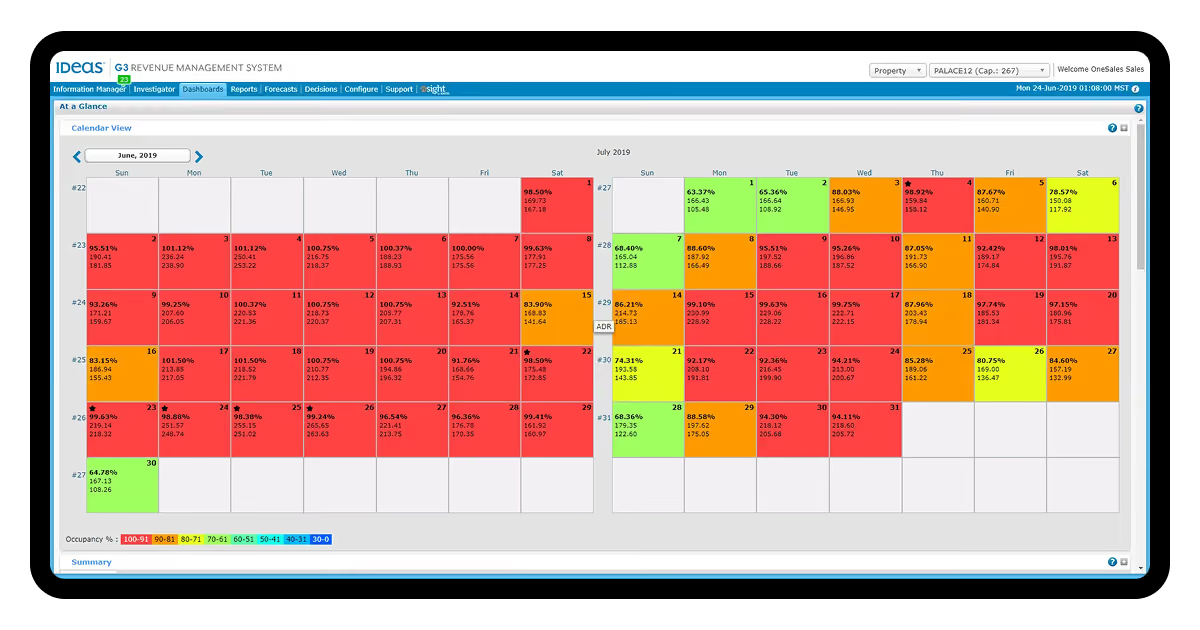
IDeaS Revenue Solutions is best for large hotel groups. This yield management software option remains one of the strongest enterprise-grade platforms. Its forecasting engine handles large property portfolios well. Advanced automation allows hotels to react quickly to changing demand patterns. The integration ecosystem is mature and stable. Where it falls short is in implementation complexity. Smaller hotels often won't use their full capabilities.
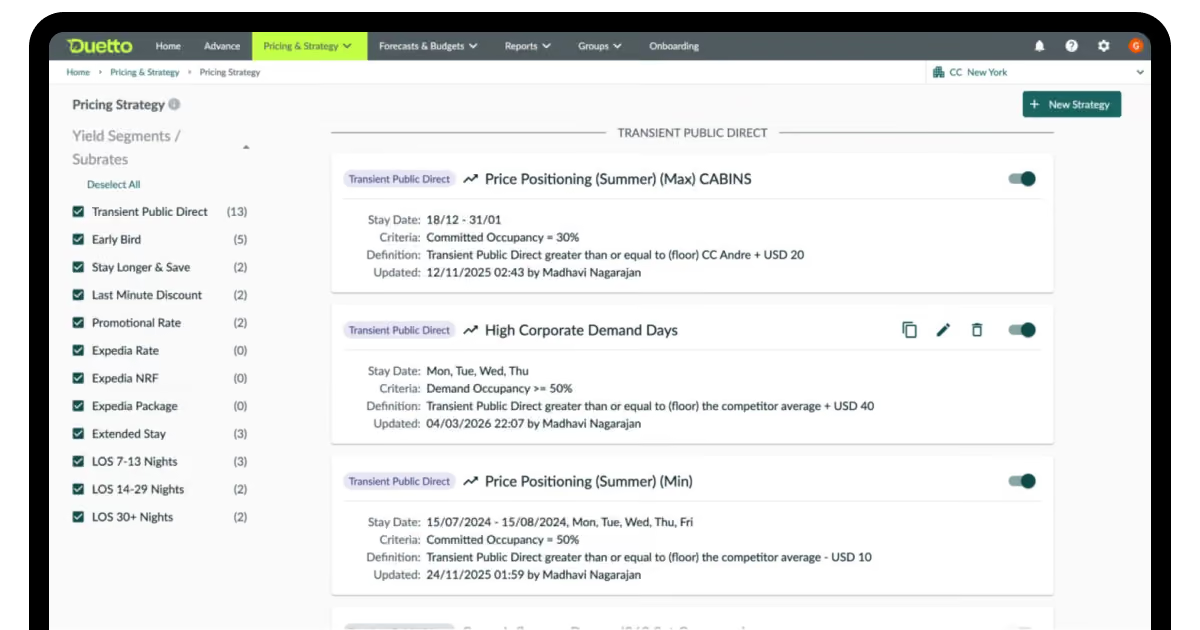
Duetto has the strongest commercial potential. It focuses heavily on open integrations and flexible pricing strategies. The platform combines demand forecasting, segmentation, and analytics into a single environment. Many hotel groups appreciate its API-first approach. However, the platform requires experienced teams to unlock its full value. It will best fit hotel chains and sophisticated revenue teams.
Atomize is just the best AI-driven pricing solution. It automates many pricing decisions through machine learning. The platform reacts to occupancy changes and market signals quickly. Independent hotels benefit from automation without maintaining large revenue teams. The greatest disadvantage of this yield management system is that the analytics layer isn't as deep as enterprise alternatives. Overall, Atomize is a good option for independent and mid-sized properties.
RoomPriceGenie is the easiest to adopt. This solution simplifies pricing optimization. Its setup process is straightforward. Hotels without dedicated analysts can start seeing value quickly. However, customization options remain more limited than those provided by larger platforms. For this reason, this tool will suit smaller properties and boutique operators mostly.
Cloudbeds has the strongest operational ecosystem. It combines PMS capabilities with revenue optimization tools. This revenue yield management tool’s integrations and channel management functionality create a unified environment. Many growing properties value the simplicity of Cloudbeds over advanced analytics. The con we noticed occasionally is that the forecasting engine isn't as sophisticated as specialized RMS products. From COAX’s integration experience, this solution is suitable for mid-market hotels that prioritize operational simplicity.
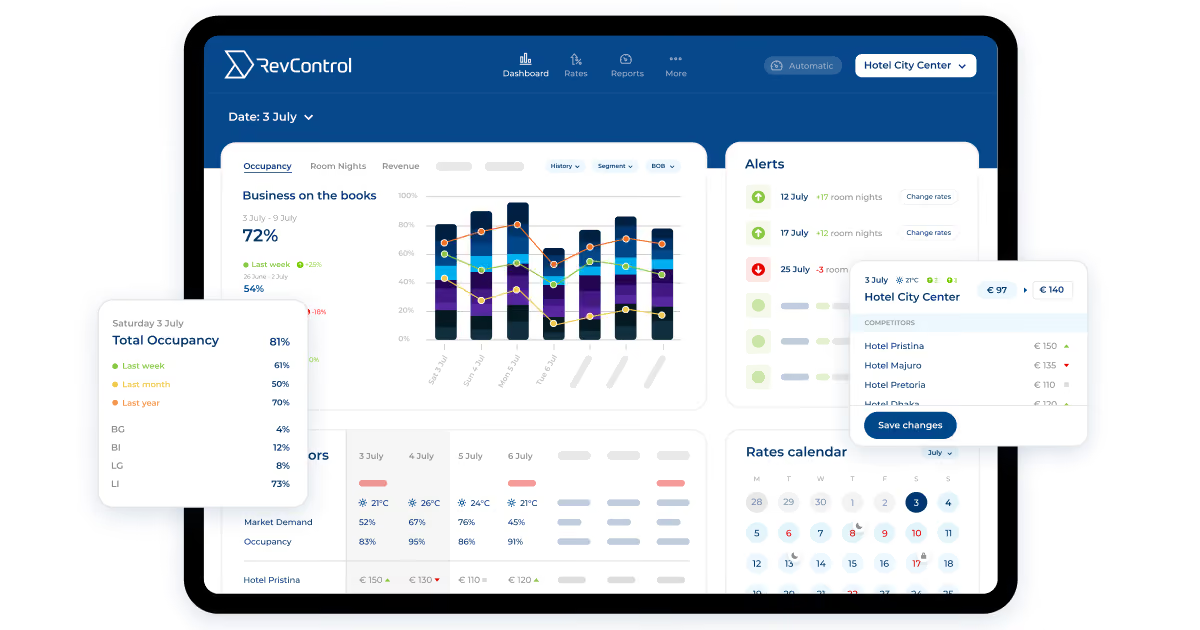
RevControl takes a more practical approach. It delivers solid forecasting and pricing capabilities without overwhelming complexity. Boutique properties and independent hotels appreciate its accessibility and relatively fast deployment. However, compared to larger yield management systems, its analytics and integration ecosystem are less extensive. RevControl works best for smaller properties that need simple optimization.
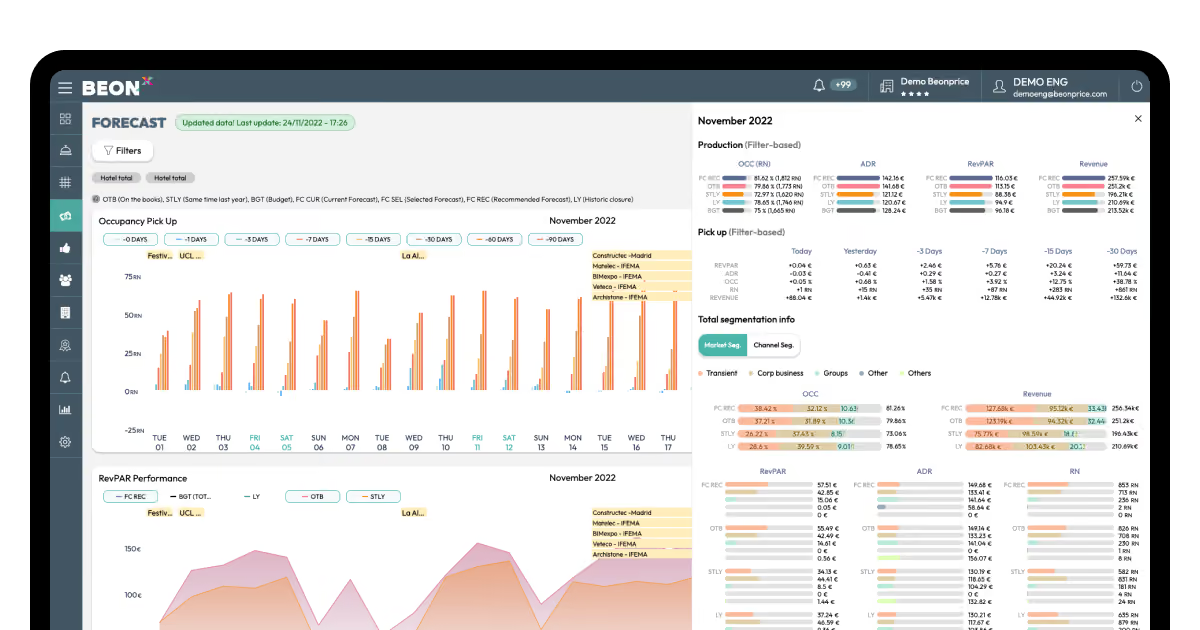
BEONx is a balanced mix of pricing automation, forecasting, and integrations. Among modern hotel yield management tools, it has gained strong traction in Europe thanks to its emphasis on commercial intelligence and market benchmarking. Hotels operating across several countries particularly benefit from its ability to consolidate performance data. The downside is that some advanced features require a learning curve. Overall, BEONx is best suited for European hotel groups and operators looking for a strong all-around platform.
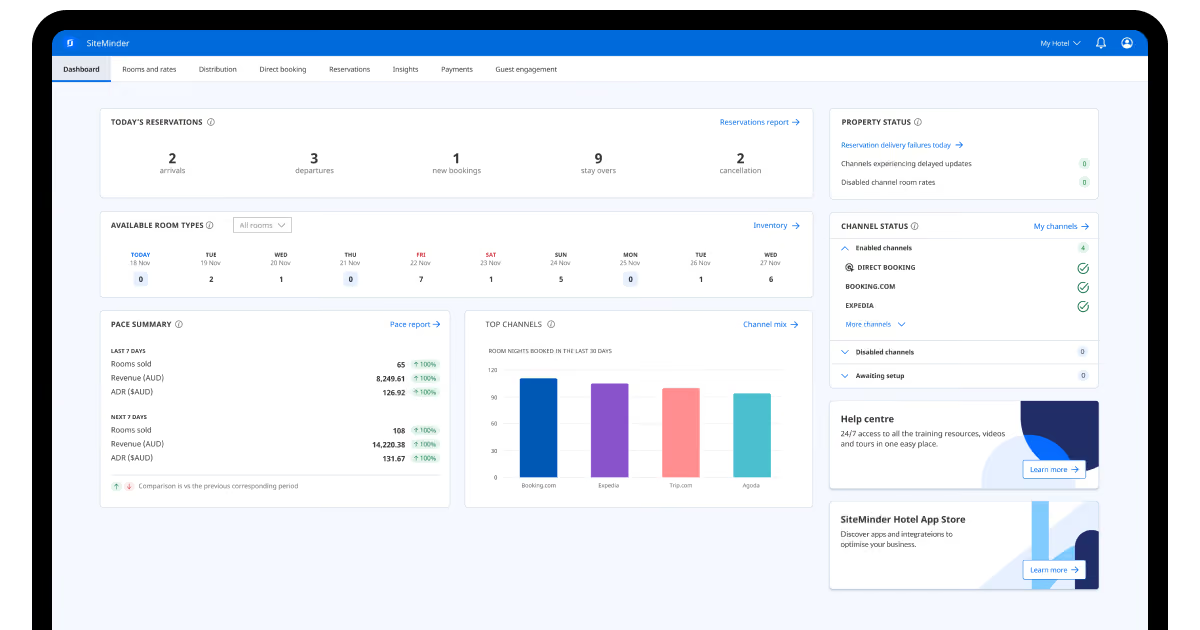
SiteMinder approaches revenue optimization from a different angle. While its pricing capabilities are less advanced than those of specialized RMS vendors, its strength lies in channel connectivity. Hotels managing multiple OTAs and distribution partners benefit from SiteMinder's extensive ecosystem and synchronization capabilities. From our experience building travel platforms, integration quality often matters just as much as forecasting sophistication. This makes SiteMinder particularly attractive for channel-heavy businesses that prioritize inventory consistency and broad distribution.
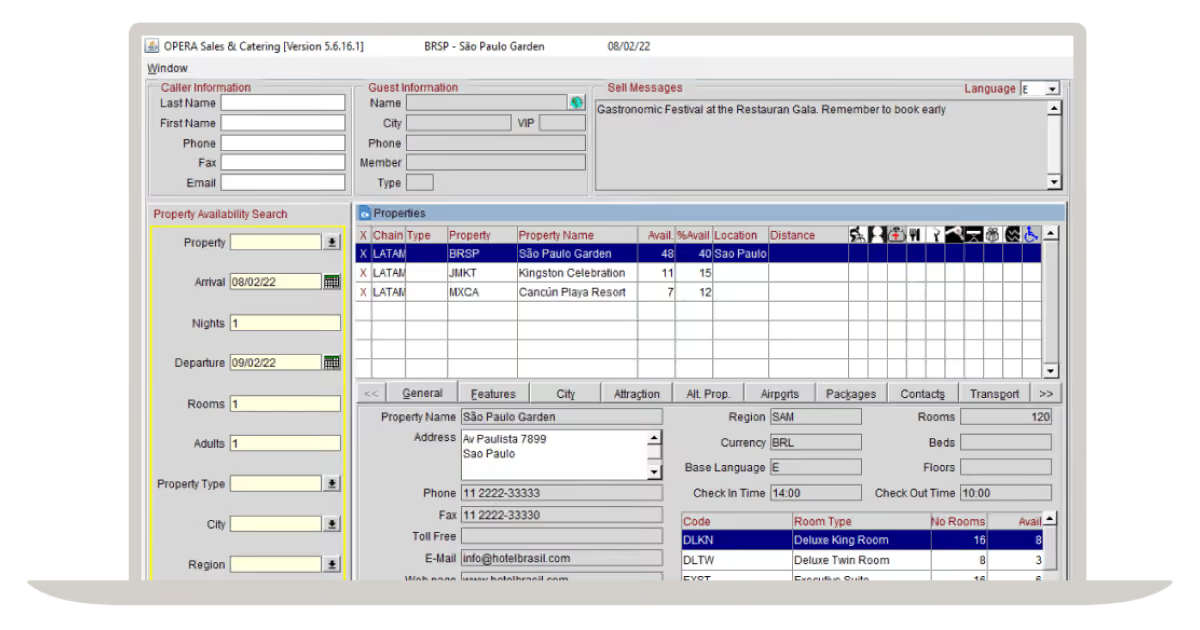
Oracle OPERA RMS remains one of the most used solutions in hospitality. Its forecasting engine, automation capabilities, and ecosystem integrations are among the strongest. Large hotel chains appreciate the depth of functionality and the ability to manage complex operations across multiple properties. However, implementation can be resource-intensive, and smaller operators may find the platform excessive for their needs. For enterprise hospitality organizations with sophisticated operational requirements, Oracle OPERA RMS remains one of the benchmark yield management systems on the market.
There is no one-size-fits-all platform. Your choice hinges entirely on your property portfolio size, team maturity, and whether you prioritize deep AI automation over operational simplicity.
How to choose the right hotel yield management software?
Selecting software for yield and revenue management demands some architectural understanding. Having spent over a decade leading software delivery, we can tell you that the architecture behind the platform matters far more than marketing claims.
Here are some aspects you should consider while making your decision.
Forecasting capabilities.
Strong yield management hotel industry platforms depend on accurate demand predictions. Look beyond dashboards. Evaluate how frequently forecasts update and whether external events influence recommendations. From our experience building travel products, forecast quality often determines long-term ROI.
Integration depth.
As we have seen from our integration experience at COAX, selecting the right software is only half the battle. The true ROI comes down to how cleanly these systems connect with your existing PMS, channel managers, and financial modules. Ask:
Is synchronization real-time?
Does the API support custom workflows?
What happens when data conflicts appear?
We learned how critical it is in practice. During the Krytter project, centralized synchronization became essential because fragmented systems produced inconsistent customer information.
Scalability.
Hotels grow. Systems should grow with them. Properties adding locations, services, or distribution channels need architectures that won't require rebuilding after expansion.
This challenge appeared during RePlan development. Multi-user operations and booking complexity required scalability from the beginning rather than as an afterthought.
Financial requirements.
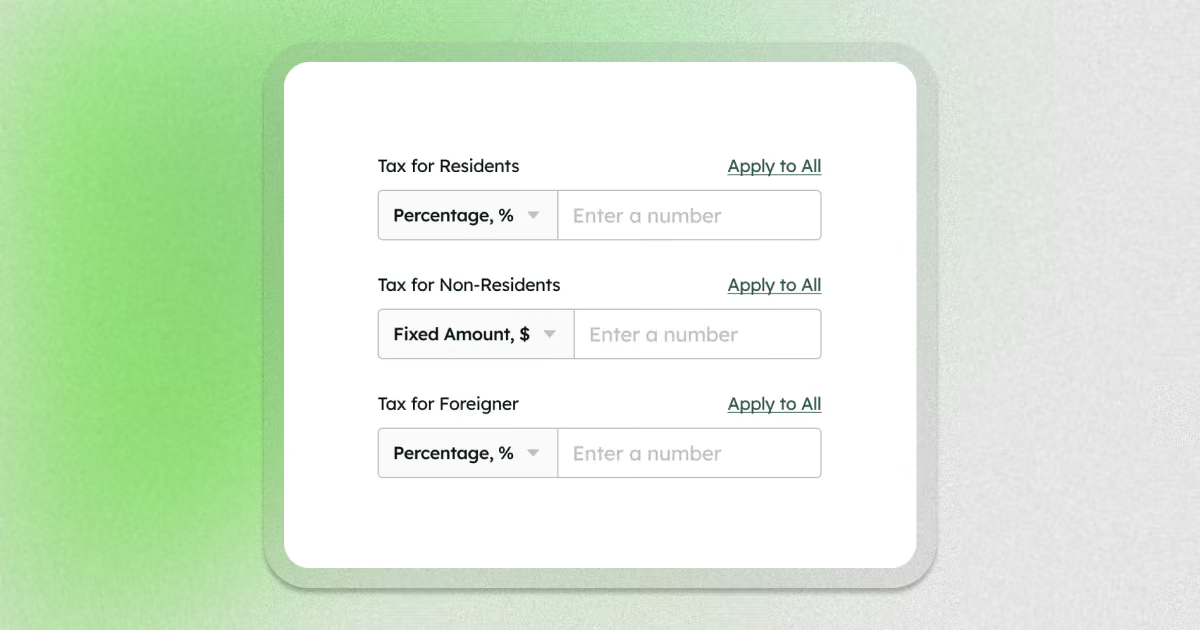
Pricing systems rarely operate independently of accounting processes. In hotel yield management, this is critical. Dynamic pricing fluctuations directly impact revenue recognition, tax liability, and real-time cash flow forecasting. While building Krytter, one of the challenges involved the financial module with taxes, installments, and jurisdiction-specific rules. Business logic required several iterations before reaching production quality. The same principle applies to hospitality. Financial workflows shouldn't become disconnected from commercial operations.
You can find some suitable features in off-the-shelf solutions we described above. But many hotels eventually outgrow packaged products. At COAX Software, we've seen the same pattern repeatedly. A business adopts several specialized tools, then starts compensating for their limitations with spreadsheets, manual processes, and duplicate data. Eventually, the operation becomes more complex than the software was designed to support.
That's when custom hotel software development starts making much more sense. The goal isn't replacing software for the sake of it. It's reducing operational friction. From our experience, custom solutions become attractive when hotels need to:
Support non-standard booking flows.
Combine multiple revenue streams.
Integrate legacy systems.
Handle complex reporting requirements.
Build differentiated guest experiences.
Maintain complete control over commercial data.
"The warning sign isn't that your team uses spreadsheets. It's when spreadsheets become the glue holding five different systems together," describes Orest Falchuk, Head of Engineering at COAX Software.
When hotels reach the point where pricing, inventory, payments, and customer data become tightly interconnected, domain knowledge starts to matter as much as engineering. At COAX, we've spent more than 16 years building travel platforms, booking solutions, and hospitality systems. Much of that work involved problems adjacent to modern yield management. It included inventory synchronization, booking workflows, payment logic, and data consistency across multiple systems. Those challenges tend to become more important as operations grow.
How to implement yield management in your hotel?
Successful hotel yield management initiatives rarely fail because of pricing algorithms. In our experience, they fail because the underlying operational data isn't ready. Choosing the right platform matters, but preparation matters more.
Over the last years, we've built reservation systems, travel marketplaces, vacation rental platforms, and complex financial modules. One pattern appears repeatedly: effective yield revenue management starts with reliable data and connected systems, not with AI. The hotels that get the best results from hotel yield management software are usually the ones that treat implementation as an operational project rather than a technology purchase.
From our perspective, there are four questions worth answering before introducing any pricing automation:
Is your historical booking data accurate?
Can your PMS, CRM, and financial systems exchange information consistently?
Will your team trust and understand automated recommendations?
Are taxes, deposits, cancellations, and payment flows clearly defined?
Whenever one of those foundations is weak, problems begin to surface later. Several issues appear repeatedly, from our perspective.
Potential yield management challenges
Some issues tend to appear regardless of hotel size. Through projects like RePlan, Arrival, and Krytter, we've seen that long-term flexibility often matters more than individual features. In many cases, the biggest gains come from connecting systems properly rather than adding another piece of software.
Poor data quality. Historical reservations often contain inconsistencies, duplicate records, or gaps. These imperfections distort forecasts and gradually undermine pricing decisions.
Fragmented systems. PMS, CRM, channel managers, and accounting platforms frequently evolve independently. As properties grow, disconnected systems create conflicting information and operational blind spots.
Change resistance. Revenue managers who have spent years working with spreadsheets may initially distrust automation. Adoption improves significantly when recommendations remain transparent and explainable.
Financial complexity. Taxes, deposits, installments, refunds, and cancellation rules introduce hidden complexity. Krytter demonstrated to us how difficult these workflows become once multiple jurisdictions and payment methods enter the picture.
These challenges are a normal part of a yield management strategy implementation. But navigating them requires a partner who stays in the trenches with you. We don't just build software, hand over the keys, and leave you to figure out data gaps or user resistance on your own. The COAX team covers the full delivery cycle. Our work spans product discovery, architecture, development, QA, and continuous iteration to ensure your system adapts as your business evolves.
Five steps to implement winning hotel yield management strategies
Throughout our experience, we've noticed that successful implementations rarely happen because someone turned on a sophisticated algorithm. More often, they succeed because the underlying data and workflows were already trustworthy.
Revenue teams naturally focus on pricing rules. Engineers tend to focus on integrations. In practice, both matter, but the order matters even more. We've seen projects spend months fine-tuning forecasts only to discover that cancellations, room categories, or payment records weren't synchronized correctly. The strongest yield revenue management implementations usually begin with fundamentals and add complexity gradually.
Phase one: audit historical data. Before introducing forecasting models, understand what happened in the past. Review reservation history, occupancy patterns, cancellations, no-shows, lead times, and seasonality. Look for duplicate records and inconsistencies between systems. In our experience, inaccurate historical data causes more forecasting problems than imperfect algorithms.
Phase two: establish a single source of truth. Most hotels operate multiple systems: PMS, CRS, CRM, channel managers, accounting software, and payment platforms. If each contains slightly different information, pricing decisions become unreliable. The goal at this stage isn't adding AI to your yield management system. It's making sure inventory, bookings, and financial data tell the same story everywhere.
Phase three: define commercial guardrails. Automation works best when boundaries already exist. Revenue managers should establish occupancy thresholds, minimum rates, room hierarchies, cancellation policies, and discount limits before allowing the system to optimize prices. The best-performing teams don't give algorithms unlimited freedom. They define the rules and let automation operate within them.
Phase four: validate before scaling. We generally recommend running automated recommendations alongside existing processes for a period of time. Comparing outcomes helps identify edge cases, unusual demand patterns, and operational exceptions that don't appear in test environments. This stage builds trust as much as it improves accuracy.
Phase five: expand incrementally. Once pricing workflows stabilize, hotels can introduce more advanced capabilities such as channel optimization, segmentation, ancillary revenue analysis, or predictive demand modeling. Large transformations often create unnecessary operational stress. Incremental improvements are easier to absorb and usually deliver better long-term results.
We followed a similar philosophy during RePlan's development. Instead of introducing every workflow simultaneously, the platform evolved in stages. Validating assumptions continuously allowed the system to grow while preserving reliability and avoiding costly rework.
Complex integrations have also become a recurring theme across our portfolio. We connect everything from third-party booking engines and CRMs to financial systems, payment providers, and content management tools. Our team approaches this architecture with the firm assumption that businesses constantly evolve. Because of this, we build hotel yield management software designed to adapt as your ecosystem changes.
Security and reliability are part of that equation as well. COAX is ISO 9001 and ISO 27001 certified. We apply the same engineering discipline to data protection, quality management, and delivery processes regardless of project size.
Whether you choose off-the-shelf software or a custom approach, the biggest gains usually come from getting the fundamentals right before layering on complexity. If you need help sorting out your specific fundamentals, reach out to the COAX Software team for a consultation.
FAQ
What is the difference between yield management and revenue management platforms?
Yield management platforms primarily optimize room inventory and pricing. Revenue management platforms operate more broadly. They include segmentation, ancillary services, channel costs, and profitability analysis. In our travel projects, we often found that companies benefit more from integrated ecosystems than isolated pricing engines because visibility across operations improves decision quality over time.
Are yield management software tools suitable for small hotels?
Yes. Smaller properties can benefit significantly from automation. Platforms like RoomPriceGenie and Atomize simplify pricing decisions without requiring dedicated analysts. The key factor isn't hotel size. It's booking complexity. Independent properties with seasonal fluctuations often gain more value from automation than larger hotels with stable demand patterns.
What are the most important yield management strategies for hotels?
Demand forecasting, dynamic pricing, inventory control, and channel optimization remain the most important strategies. They work together rather than independently. During our booking platform projects, we repeatedly observed that synchronized inventory and pricing produced better results than aggressive discounting. Strong operational discipline matters more than complicated algorithms.
Can AI replace hotel revenue managers in yield & revenue management?
AI improves recommendations and automates repetitive decisions. However, it doesn't replace human expertise. Unexpected events, local market knowledge, and commercial strategy still require human judgment. Most successful hotels combine automation with experienced revenue teams rather than relying exclusively on machine-generated recommendations.
Why do some yield management solutions fail after implementation?
Most failures originate from fragmented data rather than poor algorithms. Inconsistent booking records, disconnected systems, and weak integrations create unreliable recommendations. We've seen this pattern repeatedly in travel technology projects. Centralizing data and validating workflows usually produces more value than adopting increasingly sophisticated pricing engines.



















































































































.avif)




%20for%20hotels.avif)


.avif)
.avif)


.avif)





.avif)

.avif)





.avif)


.avif)

We are interested in your opinion