41% of accountants see burnout a part of their normal work culture. In hotels, where manual ledgers and month-end surprises drain the soul of your staff and the profit from your pockets, this number is probably even higher. Maybe about the percentage of what you keep losing if you stick to manual processes and spreadsheets.
Now, with good hotel accounting software, your staff stops dreading the word "audit." The numbers start catching up to your business instead of lagging behind, and you can finally scale beyond constant challenges:
Real-time transaction capture that closes the gap between what happened and what you know.
PMS integration that turns front desk activity into financial data without a single manual entry.
Department-level reporting that shows exactly which revenue streams earn and which ones drain.
Night audit automation that reconciles every outlet before your first manager clocks in.
Payroll controls that stop labor cost overruns before they reach the monthly P&L.
OTA commission tracking that accounts for every channel's payment structure automatically.
Cash flow forecasting that plans around seasonal swings instead of reacting to them.
Multi-property consolidation that scales your operation without scaling your back office.
Audit trails that satisfy regulators, lenders, and investors without a week of preparation.
AI-powered anomaly detection that flags expense problems days before they become material.
In this article, we break down the main benefits, workflows, features, and integrations of hotel accounting systems. Then, we list the top options on the market today and then compare them to building your own solution. Whichever wins, we also give you a full breakdown of the cost ranges, pricing models, and ROI nuances so you can be fully equipped.
What is hotel accounting software?
Hotel accounting software is a purpose-built financial management system designed for the specific money flows of a hospitality business. That means tracking room revenue, food and beverage sales, payroll, taxes, vendor payments, and real-time cash position across departments that never stop operating, often simultaneously, 24 hours a day.
General accounting tools like Excel handle invoices. Hotel accounting systems handle something harder: a business where a single guest interaction touches at least four revenue streams before checkout, where staff costs can consume half your revenue, and where closing the books means reconciling overnight transactions before the next day begins.
The formal basis that most properties use is the Uniform System of Accounts for the Lodging Industry (USALI), a standardized reporting framework that makes it possible to compare financial performance across properties and against industry benchmarks. Hotels in the US and Canada follow USALI alongside GAAP or IFRS. Software built for hospitality understands this language natively. Generic software does not.
The market
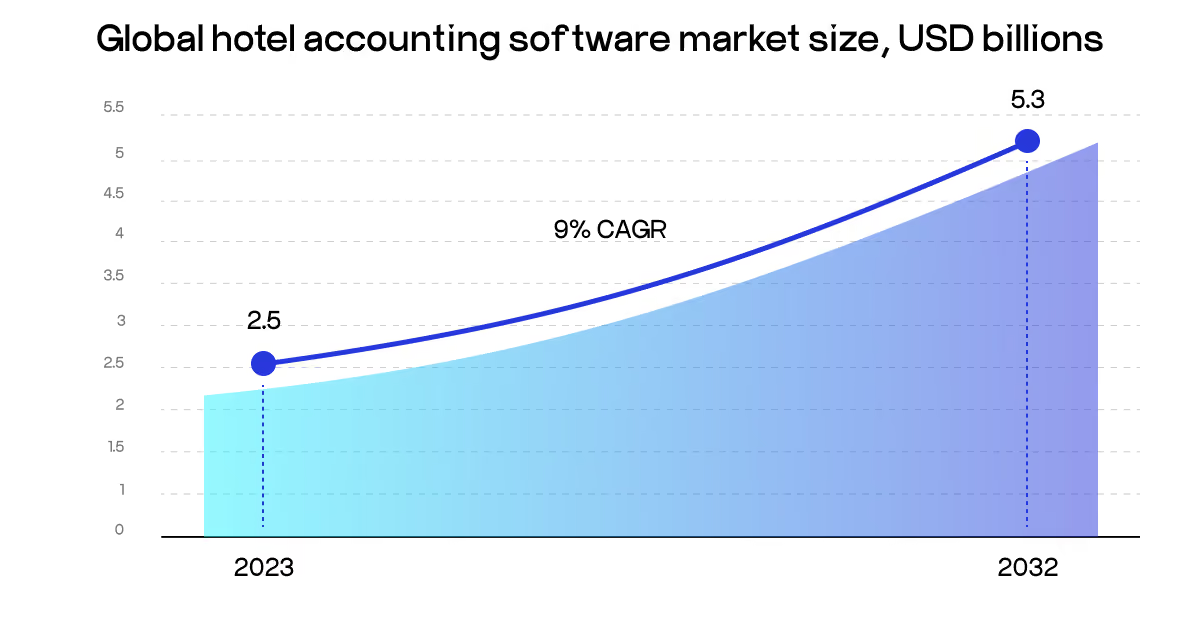
The global hotel accounting software market reached $2.5 billion in 2023 and is projected to hit $5.3 billion by 2032, growing at around 9% per year, with North America leading adoption. That growth is happening for a reason: the US hospitality industry alone is valued at $247.81 billion in 2026. The financial complexity of managing that scale has made dedicated systems a basic operational requirement, not a luxury.
The broader pressure is adding up. McKinsey research shows the sector grew revenue at roughly 3 to 4% annually over the past decade, in line with global GDP, while accommodation providers increased profits by five percentage points over the same period. That margin improvement does not happen through intuition. It happens through better data and tighter cost control, which is exactly what proper hotel accounting services and integrated systems enable.
Hakimi and colleagues found that cloud-based accounting integration in hospitality directly improves data processing speed, accuracy, and decision-making quality. The study identified system quality, user competence, and top management support as the key factors in whether a system actually delivers results or just adds overhead.
Why hotels need it
Hotels are not complicated businesses to understand. But they are genuinely hard businesses to account for. This is not a job for a general ledger and a monthly review. Hotel accounting is real-time work, and the software that supports it has to match that pace.
91% of hoteliers say their property management system directly drives revenue growth through upsells, direct bookings, and rate optimization. That figure only holds when the financial system underneath it is accurate and current.
Payroll is typically a hotel's largest single cost, often 20 to 30% of revenue. Even small errors in scheduling, overtime tracking, or tip allocation compound quickly across a 200-person operation. Software that integrates scheduling with payroll processing is not a convenience. It is a control system.
Cash flow is an ongoing challenge in hospitality because of seasonal demand swings. A beach resort running at 90% occupancy in summer and 40% in winter has to plan cash reserves for months. Without forecasting tools built into the accounting system, that planning happens on guesswork.
On the compliance side, hotels face occupancy taxes, sales taxes, payroll taxes, and PCI requirements for payment processing, all of which vary by jurisdiction. Manual tracking across these categories creates audit risk and penalty exposure.
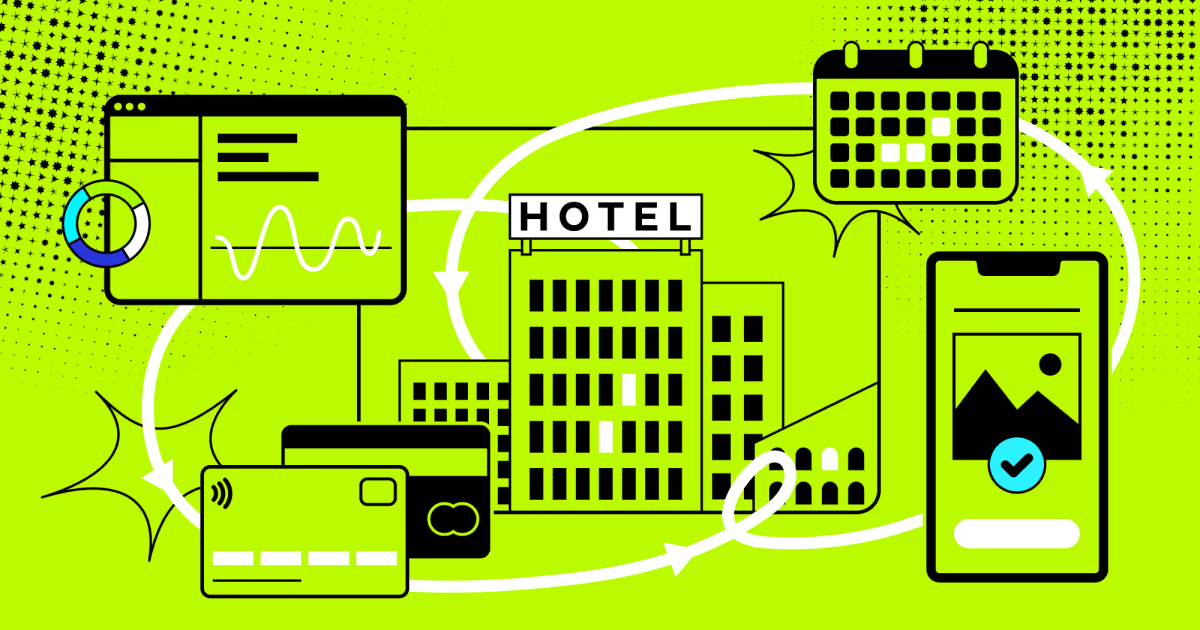
Hospitality accounting software addresses each of these problems by connecting the data sources that hotels already have (PMS, POS, payroll, booking engines) into a single financial view that updates as transactions happen. The result is that managers are not waiting for month-end reports to understand whether the property is profitable. They know by Tuesday morning what Monday looked like, and they can act on it.
The US hotel market benchmark tells you what good looks like: a 15 to 20% net profit margin is considered acceptable, and 25% or more is where investors take notice. Getting from one to the other is mostly a cost control problem, and cost control starts with accurate, timely data.
How hotel accounting software works
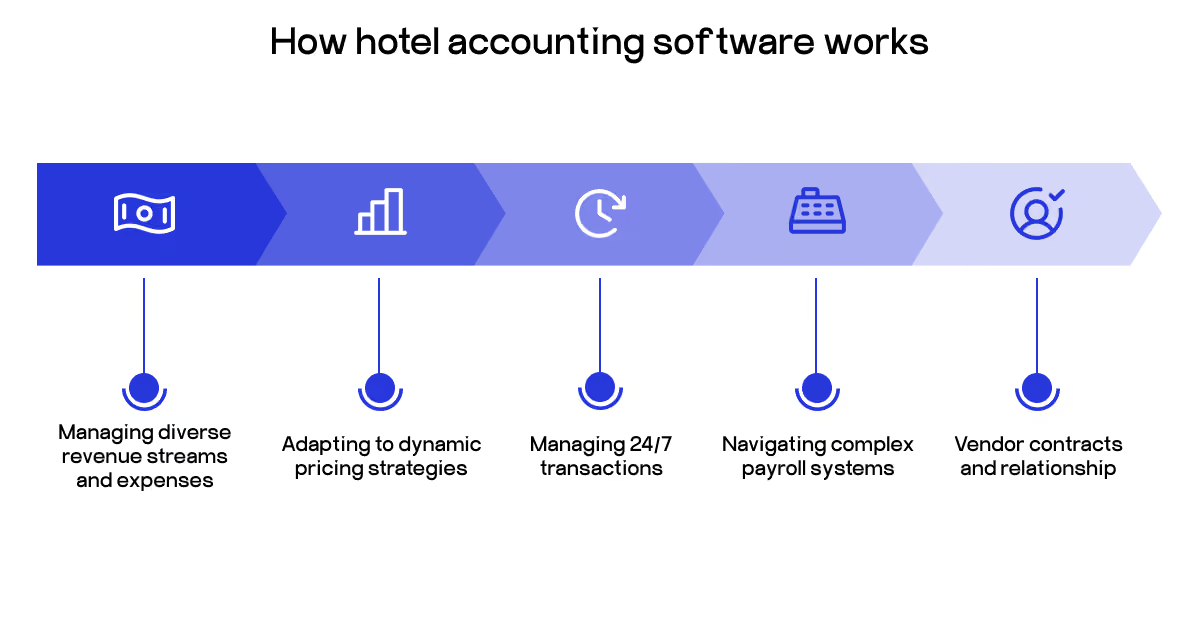
The software for hotel accounting is at the center of operations, pulling data in from every department the moment a transaction occurs and turning it into financial records without anyone manually entering it.
Guest booking triggers the revenue cycle. When a reservation comes in, whether through the hotel's website, an OTA, or the front desk, the booking engine passes the reservation data directly into the property management system. The rate is set, the room is blocked, and the expected revenue is already visible in the system before the guest arrives. Hotel dynamic pricing rules built into the PMS adjust rates automatically based on occupancy, day of week, and demand signals. That adjusted rate flows straight through to the accounting layer with no manual input.
Check-in opens the guest folio. The moment a guest checks in, the PMS opens a live billing record. Every charge that touches that guest during their stay, room rate, parking, minibar, spa treatment, restaurant meal, goes onto that folio automatically. The front desk does not need to call the restaurant to confirm the bill. The accounting software for hotel management captures it as it happens.
Outlet transactions post in real time. When a guest orders dinner and charges it to their room, the POS system records the transaction and pushes it to the folio in the PMS within seconds. The kitchen sees a ticket. The accounting system sees a revenue entry. The F&B department ledger updates. This happens simultaneously, not at end of day.
The night audit closes each day cleanly. This is the daily financial boundary. The night auditor, or in modern cloud systems an automated process, runs the audit that posts all outstanding charges, reconciles the day's transactions against each department, flags discrepancies, and closes the day's books. Tomorrow's transactions start fresh. This continuous close process is what allows hotels to produce accurate daily financial statements despite never actually closing their doors.
Payroll and accounts payable run in parallel. Staff hours feed from scheduling systems into the payroll module. Vendor invoices enter through accounts payable. Both map to the same chart of accounts that governs room revenue and F&B, so when you pull a department P&L, you see the full picture: revenue, labor, and direct costs together.
Reporting closes the loop. Every morning, the hotel accounting software produces the daily revenue report, a snapshot of the previous day's performance by department. Rooms contributed this much. The restaurant contributed that much. Payroll cost this percentage of revenue. Managers who know their numbers by 8am can act on them the same day.
The five core functions of this workflow serve in an interconnected way throughout the cycle. However, as linked as they are, they would be impossible without external integrations.
Integration with PMS, POS, and booking systems
A hotel accounting system’s value comes from integration. In a modern hotel, that means three main systems constantly exchanging data: the property management system, the point-of-sale system, and the booking engine.
The PMS is the operational core. They manage every guest-facing process: reservations, check-in, room assignments, housekeeping status, and checkout. The PMS is also where the guest folio lives. Every charge from every outlet posts here before it reaches the cloud-based hotel accounting software layer. When the accounting system receives a revenue entry, it already knows which room it came from, which rate code applied, which channel the booking arrived through, and which tax rules apply to the transaction.
The integration between PMS and accounting eliminates the daily manual revenue summary that controllers used to spend hours on. In legacy setups, someone would export a report from the PMS, format it, and re-enter it into the accounting system. In an integrated environment, that transfer happens automatically at the end of each business day or, in cloud-based systems, continuously throughout the day.
The POS captures every outlet transaction. Restaurant meals, bar tabs, spa bookings, and room service orders all run through point of sale systems. When a guest charges to their room, the POS pushes that charge to the PMS folio in real time. When a cash customer pays at the restaurant, the POS records that as a separate revenue line in the same accounting system. The result is that your F&B department P&L updates throughout the day automatically.
This matters for compliance, too. Campos and colleagues found that USALI adoption in hotels depends heavily on whether systems are set up to capture departmental revenue and cost data automatically. Manual coding is where errors happen and where USALI compliance breaks down. Automated POS-to-accounting integration removes most of that risk.
The booking engine and channel manager control rate and inventory. The central reservation system for hotels connects the PMS to online travel agencies, the hotel's own website, and corporate booking portals. When a room sells on Booking.com, the inventory updates across all channels, and the reservation flows into the PMS with the rate, channel, and commission details attached. The accounting software for hospitality businesses then applies the correct revenue recognition and net-of-commission accounting automatically.
What integrated systems actually change day to day?Hakimi and team found that cloud accounting integration in hospitality directly reduces errors, speeds up financial close, and improves the quality of information available to managers. The practical version of that finding is this: a controller at a 200-room hotel with full PMS, POS, and booking engine integration can close the monthly books in two to three days. Without integration, the same job takes a week or more, and the results are less accurate.
The accounting software for hotel operations that delivers this level of integration should be purpose-built to understand that a room charge and a restaurant charge belong to different department ledgers, that an OTA booking carries a commission liability, and that a night audit is a daily hard stop, not an optional process.
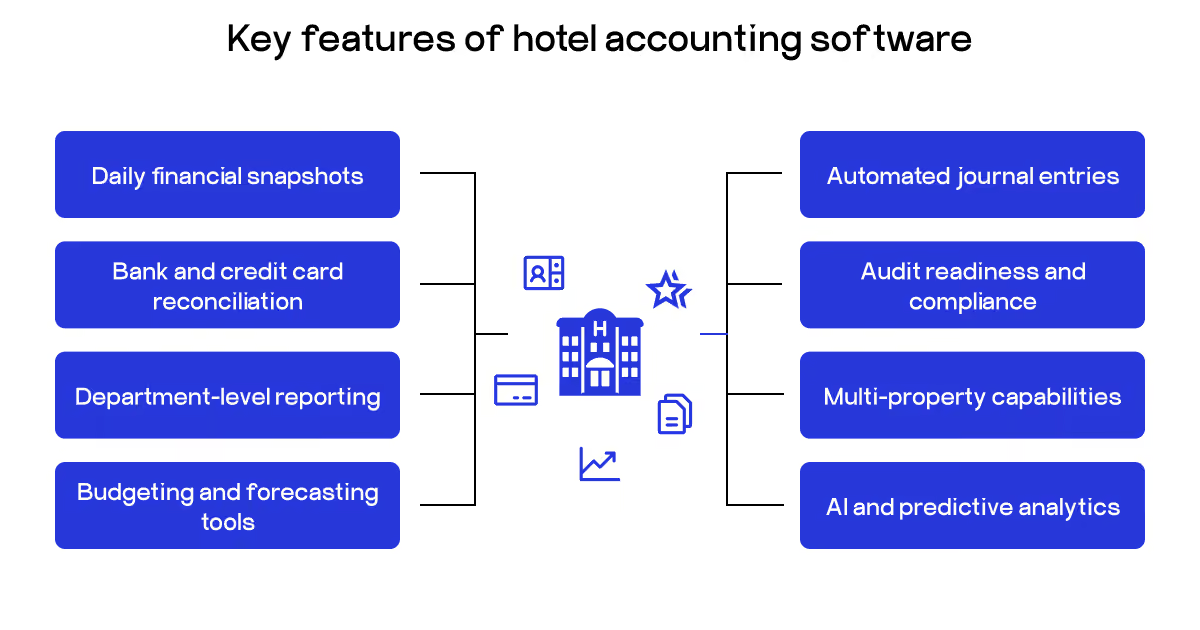
Key features to look for in hotel accounting software
A general tool that works fine for a retail business will break down the first time it has to reconcile a night audit, split departmental P&Ls, and process a batch of OTA commission invoices simultaneously. When you evaluate accounting software for the hospitality industry, these are the capabilities that actually separate useful tools from expensive frustrations.
Daily financial snapshots
Month-end reporting is too slow for a business that generates revenue every single day. The right system connects directly to your PMS and night audit to produce a daily summary by 7am: yesterday's room revenue, outlet revenue, labor cost, and variance against budget. Operators who see that information daily can respond to problems the same week. Those who wait for monthly reports find out too late.
Hakimi found that real-time data access is one of the core quality indicators of an effective accounting information system, because it enables managers to make dynamic decisions on demand rather than waiting for periodic reports that are already stale when they arrive.
Bank and credit card reconciliation
If you are currently tracking deposits, OTA payouts, and card settlements across multiple spreadsheets, you already know how much time this wastes and how often errors creep in. Built-in reconciliation tools match every inbound payment to the correct booking, channel, and tax category automatically. What used to take a controller several hours weekly becomes a quick daily review.
Department-level reporting
Your hotel runs multiple businesses under one roof. The rooms department, the restaurant, the bar, the events space, and the spa each have their own revenue, labor, and cost structure. Hotel management accounting software that reports everything as a single blended number tells you almost nothing useful. You need to see which departments are profitable and which are consuming margin.
This is where USALI compliance matters in practical terms. Campos and team found that departmental reporting using standardized frameworks is the foundation for meaningful benchmarking in hospitality. Without it, you cannot compare your room's contribution to industry averages or understand whether your F&B operation is covering its costs.
Customizable chart of accounts
Generic accounting software ships with generic account structures. A hotel with a rooftop bar, a fitness center, and a wedding venue has revenue and cost categories that a standard template does not anticipate. The system should let you build a chart of accounts that reflects your actual operations, your actual outlets, and your actual cost centers, not force you to fit your business into someone else's template.
Budgeting and forecasting tools
Seasonality, demand shifts, and staffing fluctuations make hospitality budgeting more complex than most industries. Built-in budgeting and forecasting tools let you set projections by department and time period, then track actual performance against those projections without exporting to a separate spreadsheet platform. When October underperforms, you see it in the same system where you set the October budget, with the variance already calculated.
Automated journal entries
Payroll accruals, prepaid expense amortization, revenue adjustments, depreciation postings. These are entries that happen on the same schedule every month, every quarter, every year. Manual entry is not just slow; it is a source of errors, especially during staff transitions or peak season when everyone is operating at capacity. Accounting software for hotels should handle these automatically with clear audit trails attached to each posting.
Audit readiness and compliance
Every transaction should be traceable from the original posting through to the financial statement. This means proper accrual handling, clear documentation of adjustments, and an unbroken record of who changed what and when. Audit trail integrity is a core practice for hotel accounting. Weak documentation is consistently where hotel audits run into problems.
Cloud-based systems have a structural advantage here. Because every entry is logged with a timestamp and user ID in a central system, your audit trail exists by default rather than being assembled from paper records and email threads after the fact.
Multi-property capabilities
This one matters the moment you operate more than one location. Without multi-property support, you end up with separate systems, separate chart of accounts structures, and a consolidation process that requires exporting, reformatting, and manually combining reports. That is not a reporting process. That is a guessing process.
Multi-property automated hotel accounting software lets you consolidate financials across locations, compare performance by property, and apply consistent accounting structures group-wide. Growth should not mean more complexity in your back office.
AI and predictive analytics
This is where hotel AI capability is starting to change what good software looks like. More advanced platforms now include predictive tools that forecast cash flow, flag anomalies in expense patterns before they become material, and model revenue scenarios based on booking pace and historical data. These are not features for large chains only. A 50-room independent property that knows its likely cash position three weeks out can make staffing and procurement decisions that a reactive operation cannot.
Start with what you actually use. A system with twelve advanced features you will never configure is worse than a simpler system you will actually run properly. Identify your three biggest accounting pain points today, check that any candidate system solves all three cleanly, and verify the integration with your existing PMS before anything else. The best accounting software for hotel workflows and challenges is the one your team will use accurately, every day, not the one with the longest feature list.
Best hotel accounting software
No single tool wins for every property. A 20-room boutique and a 500-room branded hotel have different problems, different budgets, and different staff capabilities. Here is an honest look at the platforms most commonly used across the industry, followed by a comparison table to help you decide.
Tool
Key features
Best for
Pricing
Inn-Flow
Accounting, labor, payroll, AP automation, PMS integration, BI dashboards
Branded and mid-size hotels wanting hospitality-native tools
Below average for category
Inn-Flow is the best hotel accounting software purpose-built for hospitality. It consolidates accounting, labor management, payroll, inventory, and business intelligence into one platform, meaning you are not stitching together four separate tools. Real-time dashboards show budget versus actuals by department. The AP automation handles invoice processing, and the tool integrates with major PMS platforms including Mews, Oracle, and Cloudbeds. This solution is great for independent hotels, branded properties, and growing portfolios.
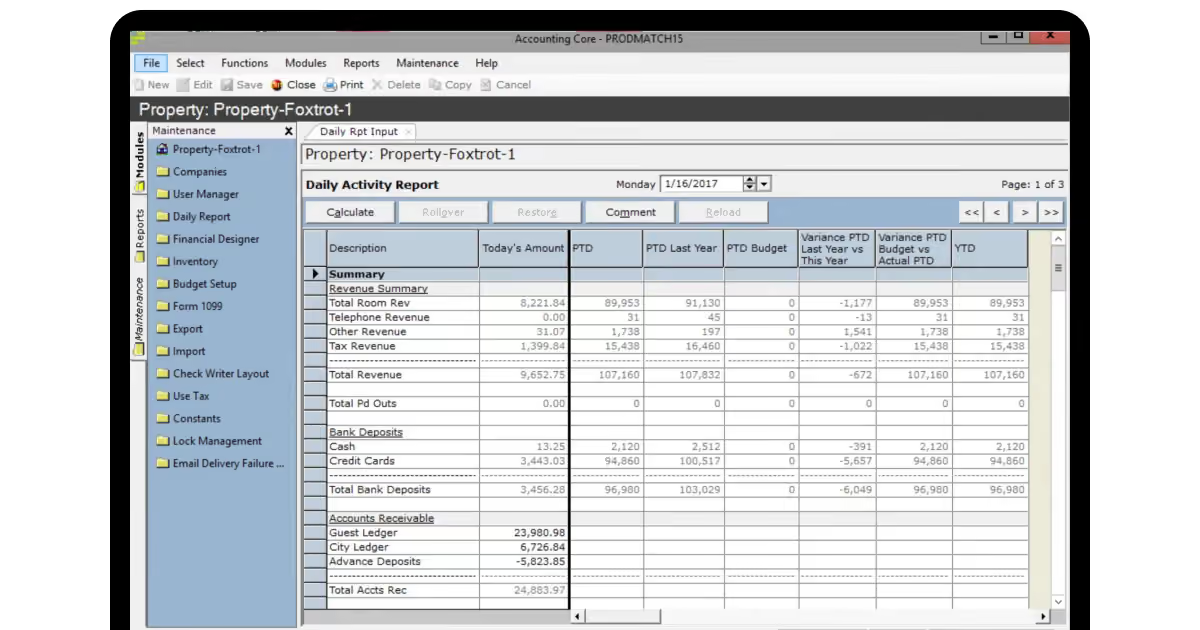
M3 Accounting is one of the best accounting software for hotels that’s built around USALI standards. It imports daily revenue data directly from the PMS, so there is no manual bridging. The chart of accounts is either USALI-standard or fully customizable. Its reporting depth is strong, making it a preferred choice for management companies that oversee multiple properties and properties that need deep USALI compliance and reporting flexibility.
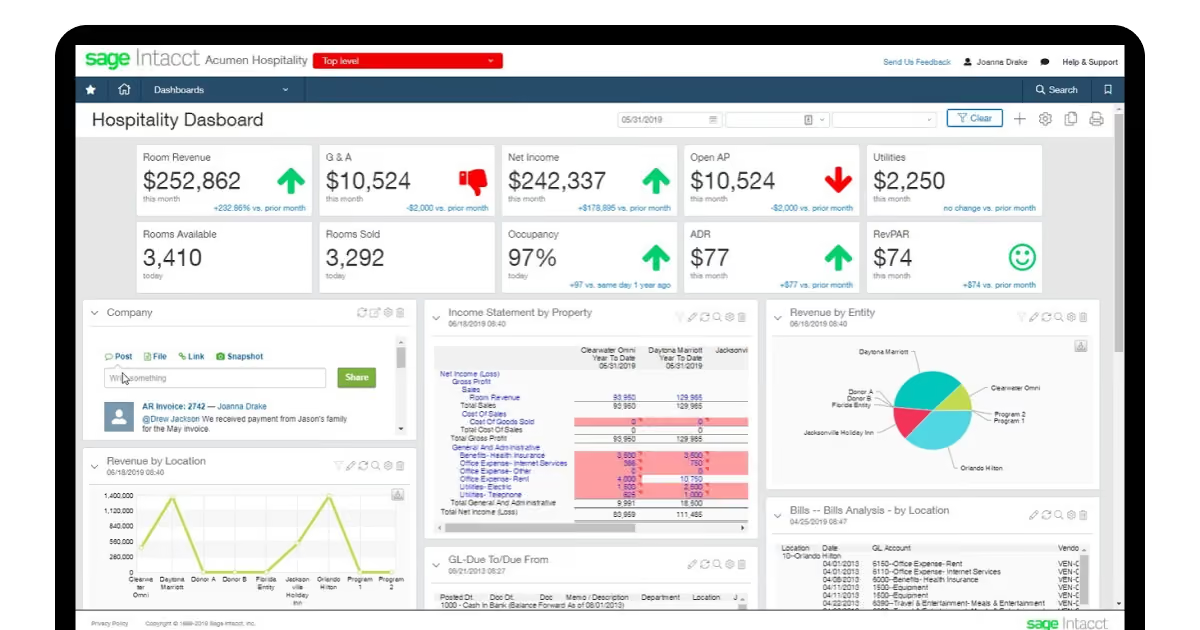
Sage Intacct sits at the mid-market ERP level. It goes beyond basic accounting into full financial management, with hospitality-specific configurations that support RevPAR tracking, occupancy-based reporting, and multi-entity consolidation. The automation capabilities are strong, and the reporting layer is highly customizable for finance teams that need to present performance data to investors or owners. It fits mid-to-large hotel groups, ownership companies, and operators who need ERP-level financial control.
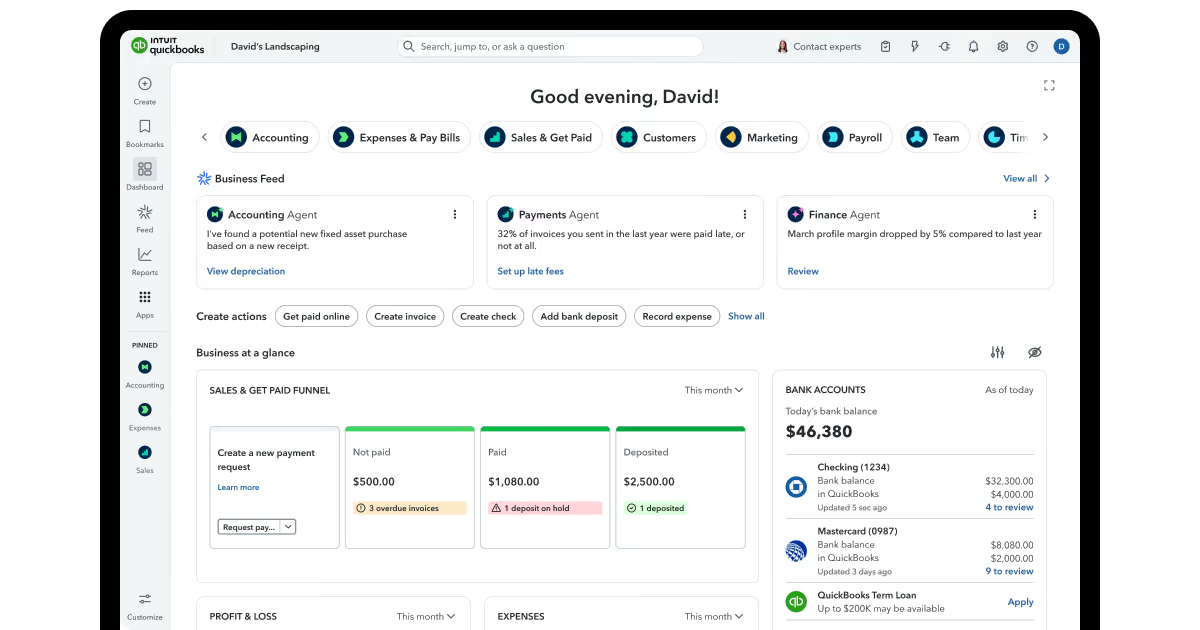
QuickBooks Online is the most widely used accounting software for small hotels, and it works for hotels that have limited complexity. It handles payroll, expense tracking, bank reconciliation, invoicing, and produces standard financial statements. It integrates with over 750 apps, so a PMS connection is possible, though not native. This tool is good for small independent hotels, bed and breakfasts, and early-stage properties that need affordable, reliable accounting without hospitality-specific complexity.
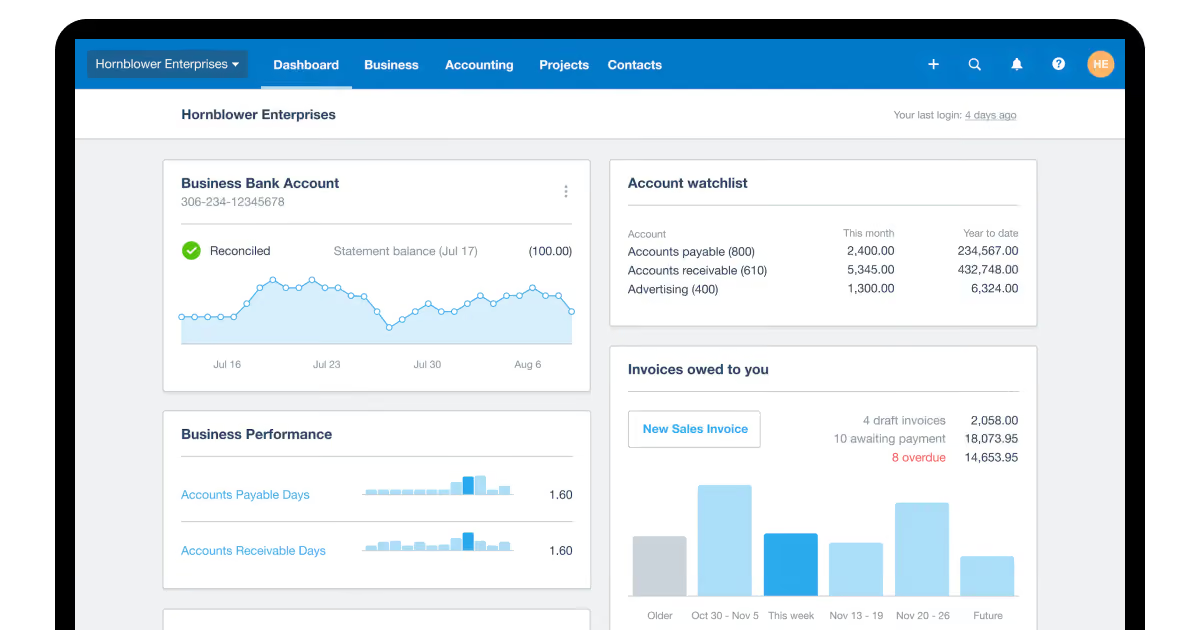
Xero is a cloud-native accounting platform with strong cash flow forecasting and business analytics tools. It connects to more than 1,000 third-party apps, which gives hospitality operators flexibility in building an integrated stack. Basic payroll is included; more complex payroll can be handled through connected platforms. Its multi-currency support is also a genuine differentiator for internationally-owned properties. Xero is a pick for boutique hotels, lifestyle properties, and operators who want a flexible, integration-friendly platform and are comfortable building their own technology stack.
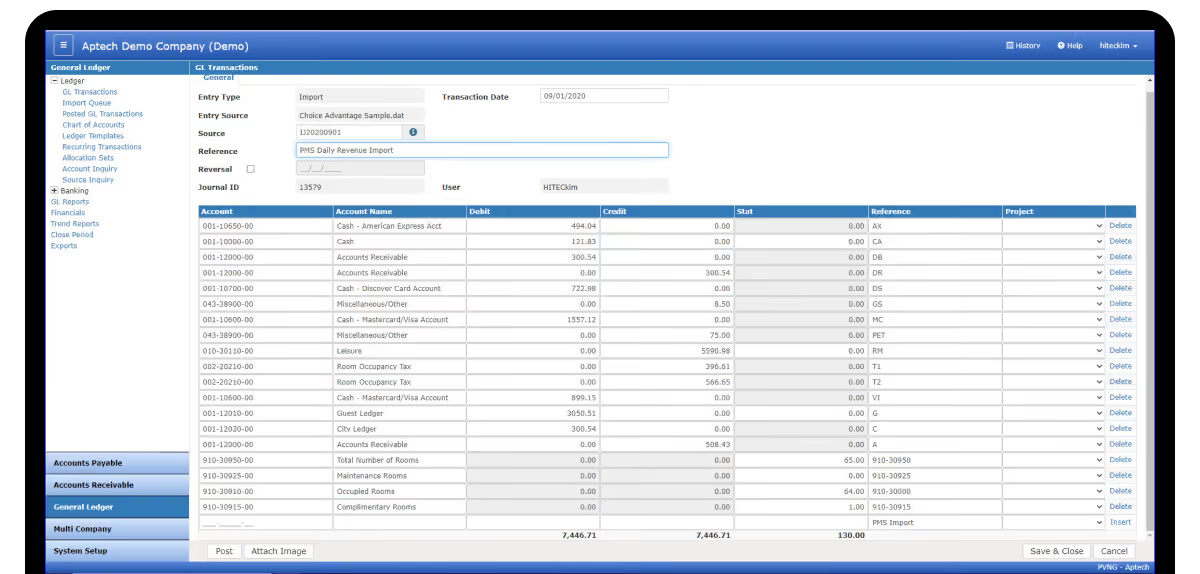
PVNG by Aptech is a cloud-based hotel accounting software designed for hospitality. It focuses on financial reporting, invoice automation, daily PMS revenue import, and multi-property consolidation. It is priced below average for its category, which makes it accessible for properties that need genuine hospitality-specific functionality without the investment of a full enterprise platform. This makes PVNG a great option for branded hotels and mid-size properties that need cloud-based hospitality accounting at a more accessible price point.
The options are numerous. Let’s now outline the main principles of how you can choose the best one for your business.
How to choose the right hotel accounting system
The worst possible way to choose is when you find the most popular tool, request a demo, and sign a contract. That is how you end up paying for features you do not use while missing the one capability you actually need. Now, let’s break down the best possible way.
Start with your real problems.
If you operate a single small property, your priority is simplicity and cost. Enterprise-level hotel accounting systems are overkill. QuickBooks Online or Xero will handle your books cleanly, especially if your PMS has a native integration with either platform. If your biggest pain is labor cost, look for platforms that combine accounting with workforce management. Inn-Flow is the clearest example. When scheduling, actual hours worked, and payroll flow into the same system as your P&L, you can see labor cost as a percentage of revenue in real time.
If you operate across multiple properties, consolidation matters more. You need a hotel accounting system that aggregates financials across locations without manual export and re-import. M3, Inn-Flow, and PVNG are all designed for this. Evaluate them on how they handle inter-company transactions, consolidated P&Ls, and whether they allow property-level drilling.
Before you commit to anything, verify three things:
First, does it integrate directly with your PMS? A native integration where daily revenue imports are automatically processed is fundamentally different from a manual export process. Ask vendors to show you exactly how the PMS connection works, not just confirm that it exists.
Second, does your team have the capacity to configure and maintain it? A powerful system that your controller cannot use is not a powerful system. Check how long implementation takes, what training is included, and what the support structure looks like after go-live.
Third, what is the total cost, including setup, training, and ongoing support? Pricing in this category is almost entirely quote-based for hospitality-specific tools. A platform that looks expensive on a per-user basis may be cheaper overall if it replaces three separate tools you are currently paying for.
The best accounting software for the hotel industry is the one your team runs accurately, every month, without constant support tickets. Match the tool to your operational reality, not to someone else's recommendation.
Advantages of a custom solution
At some point, the workarounds with your off-the-shelf system might multiply. Your team exports data manually between systems. Your reports don't match how your property operates. Your PMS links to your accounting software through a connector that breaks every cycle.
That's the moment custom becomes the practical choice that you win with.
You probably need a custom solution if your property runs multiple revenue streams that don't map to standard chart of accounts templates. Or if you operate across several locations with different tax rules, currencies, or ownership structures. Or if your finance team spends more time fixing data than reading it.
Franchise groups, resort chains, boutique collections, and full service hotels with spa, F&B, and event revenue tend to hit these walls first. The more complex your operation, the faster a generic tool becomes a problem.
Here's what you get when your accounting software for hotel operations is built around your business instead of the other way around.
It fits your operations. Your hotel isn't average. A custom system maps to your actual chart of accounts, your actual departments, your actual revenue categories. You don't rename things to match the software. The software reflects how your team thinks.
Your data is connected. The biggest drain in hotel finance isn't calculation errors. It's data living in different places. A custom accounting software for hotels integrates directly with your PMS, POS, OTA feeds, payroll, and procurement without middleware hacks or daily CSV uploads. Numbers reconcile automatically. Your night audit closes faster. Your end of month takes hours, not days.
You own the reporting. 91% of hoteliers say they rely on manual spreadsheets to compensate for gaps in their software reporting. A custom system gives you the dashboards and reports your actual stakeholders need: ownership, operations, revenue management, and finance, each seeing what matters to them in real time.
It scales with you. Add a property. Add a revenue stream. Change your ownership structure. A system built to grow with you doesn't require a new vendor contract or a painful migration every time your business changes. The best accounting software for hotel operations is the one that still works when you're twice the size you are today.
Security is yours to define. Hotels handle sensitive financial and guest data. A custom build lets you set the security architecture, access controls, and audit trails according to your actual compliance requirements, not a vendor's default settings.
Compliance is included. Tax rules, VAT requirements, local reporting formats. A custom system can be built to handle the specific regulatory environment your properties operate in, instead of leaving your team to manually adjust outputs after the fact.
COAX has spent 15 years building software for travel, hospitality, and logistics. That means the team working on your accounting software for the hotel business has already encountered most of the integration failures and data architecture problems that come with this industry. The team is 90% mid and senior-level engineers, which matters when you need an unconventional and efficient solution to an unusual or complex problem.
On the integration side, COAX handles full cycle delivery: discovery, architecture, development, QA, and deployment under one roof. If your hotel runs a PMS from one vendor, a POS from another, and pulls bookings from four OTA channels, COAX builds the connective layer that makes all of it talk to your accounting layer cleanly. For accounting system software development in hospitality, that kind of end-to-end ownership is rare, and it matters.
Typical pricing models and cost ranges
Most off-the-shelf hotel accounting systems follow a subscription model. Small properties under 50 rooms typically pay $100 to $700 per month. Mid-size hotels land between $600 and $3,000. Large properties or chains can reach $10,000 or more monthly. Pricing scales by room count, user seats, or, in some cases, a percentage of revenue.
The four common models you'll see in the best accounting software for hospitality industry products:
Model
Typical range
Best for
Per user/monthly
$50–$500 per user
Small teams, limited access needs
Tiered by property size
$100–$3,000/month
Single properties scaling gradually
Revenue-based
0.5–2% of revenue
High-volume properties
Flat rate unlimited
$300–$1,500/month
Multi-department operations
What drives costs up: more integrations, advanced modules like automated VAT compliance or revenue management, and larger room counts. Implementation fees add another $1,000 to $10,000 upfront, depending on complexity.
Custom builds work differently. You pay a one-time development cost, typically $30,000 to $150,000+, depending on scope, with ongoing maintenance fees instead of recurring subscriptions. For multi-property groups or hotels with complex revenue structures, this often costs less over a five-year horizon than stacking SaaS licenses and integration middleware.
Hidden costs worth knowing about
The monthly fee is rarely the full amount. The accounting software for the hospitality business market has several cost layers that don't appear on the pricing page.
Integration fees are common. Connecting your PMS, POS, payroll, and OTA feeds often carries per-connection charges or custom API costs. Some vendors charge separately for each third-party system.
Support tiers matter. Basic support is usually included, but 24/7 access or a dedicated account manager costs extra. When something breaks during a night audit, basic support isn't good enough.
Training is another line item. Initial onboarding may be covered, but retraining after staff turnover or a system update typically isn't. Hotels with high turnover feel this repeatedly.
Contract exit penalties can be substantial. Multi-year deals lock in pricing but make switching expensive if the software stops meeting your needs.
To calculate real ROI, measure what you're currently spending on manual reconciliation, spreadsheet hours, and reporting delays. A Cornell University study found hotels using purpose-built systems reduced operational costs by 4.5% and grew revenue by 6% in year one. Set that against the total cost of ownership, including subscription, implementation, training, and integrations, and you have an honest comparison. The cheapest tool on the pricing page is rarely the cheapest tool in practice.
Implementation process and timeline
Getting new hotel accounting software live is rarely a flip-the-switch event. It's a project with real stages, real risks, and a timeline that depends heavily on how complex your operation is and how prepared your team is going in.
Every accounting software for hotel industry implementation runs through roughly the same sequence, whether you're deploying a SaaS platform or a custom solution.
Discovery and scoping are what’s first. You map your current workflows, identify every system that needs to connect (PMS, POS, payroll, OTAs), and define what your chart of accounts looks like. This stage surfaces most of the hidden complexity. Skipping it or rushing it is where projects go wrong.
Data migration follows. Your historical financial data needs to move cleanly into the new system. This means cleaning up legacy records, mapping old account structures to new ones, and validating that nothing gets lost or distorted in transit. For multi-property operations, this step alone can take weeks.
Integration setup is where hotel software development services earn their keep. Connecting your hotel accounting system to live PMS feeds, POS terminals, payroll platforms, and bank reconciliation tools requires careful API configuration and testing. Each connection is its own mini-project.
Configuration and testing runs parallel to integrations. You set up user roles, approval workflows, reporting templates, and tax rules. Then you test everything against real transaction scenarios before anyone goes live.
Staff training is not optional. The best software for hotel accounting fails when the team using it doesn't understand it. Training needs to cover daily operations, month-end close procedures, and exception handling.
Go-live and stabilization is the final stage. The first 30 to 60 days after launch are critical. Issues surface that testing didn't catch. Your team needs support that actually responds.
Operation type
Typical timeline
Single property, SaaS platform
4 to 8 weeks
Single property, custom build
3 to 5 months
Multi-property group, SaaS
2 to 4 months
Multi-property, custom with integrations
5 to 9 months
Full enterprise with legacy migration
9 to 14 months
Timelines extend when data migration is messier than expected, when integration partners are slow to provide API documentation, or when internal stakeholders aren't available for decisions.
Challenges
The ones that actually cause delays in accounting software for hospitality projects are predictable, which makes them avoidable with the right preparation.
Data quality issues are the most common. Years of workarounds in legacy systems mean your historical data often doesn't map cleanly to a new structure. Budget time to fix this before migration, not during it.
Integration bottlenecks are second. PMS vendors and payroll providers don't always move at project speed. If you need a custom connector built, that negotiation needs to start early.
Staff resistance slows adoption more than any technical issue. Finance teams have muscle memory built around existing tools. If the new hotel accounting software doesn't get proper training investment, people work around it instead of through it.
Scope creep extends timelines in custom builds especially. Each "while we're at it" request adds weeks. Agree on scope before development starts and manage changes formally.
With so many moving parts that can break down, you only have one thing to rely on to define success or failure: the reliability of your vendor.
Why vendor support decides the outcome
You can have the right accounting software for the hotel industry and still have a failed implementation. The difference is the quality of support during and after go-live.
This is where COAX brings a difference. Post-launch isn't the end of the engagement. Our team stays involved during stabilization, monitors how the system performs under real operational load, and addresses issues before they become problems. For hotels running complex integrations across PMS, POS, and revenue management, that continuity matters.
COAX also builds analytics into the solution rather than treating it as a later phase. Your finance team gets dashboards and reporting that work from day one, not six months after you've figured out the data structure. That means the hotel accounting system starts generating insight immediately instead of sitting idle while someone builds reports manually.
The longer-term point is independence. COAX builds documentation, trains your people, and structures the codebase so your internal team can own it going forward. You don't end up locked into a support contract just to keep the lights on.
FAQ
What are hotel accounting procedures, and how can they be connected with software?
Hotel accounting runs on a set of repeating procedures.
Daily night audit closes every transaction from the day across all outlets and pushes the data into the general ledger. Automated PMS sync handles this without export.
Revenue recognition records income when the stay happens. Accrual settings in your accounting software handle the timing.
Folio management tracks every guest charge across rooms, restaurant, spa, and extras. A live PMS integration posts these charges in real time.
Tax compliance covers VAT, GST, occupancy taxes, and local levies. The software applies these rules consistently across every transaction.
Accounts receivable and payable manage corporate direct billing. AP and AR automation, paired with bank reconciliation, keeps both sides current.
What is accounting software's key security requirement?
Multi-factor authentication and AES-256 encryption are the baseline. Add role-based access so staff only see what their job requires. Maintain unalterable audit logs. Run automated backups and apply patches immediately. Verify SOC 2 Type II or ISO 27001 certification before signing any contract.
What are the daily challenges of adopting hotel accounting systems?
Staff reverts to spreadsheets when the new system feels slower than what they knew. Night audit timing shifts create reconciliation gaps. PMS sync failures go unnoticed until month-end. Multi-department access conflicts slow approvals. Without structured onboarding, adoption stalls within weeks regardless of how good the software is.
How does COAX develop secure and efficient accounting software for hotels?
COAX builds hotel accounting software with security by design: encrypted data layers, role-based access, and audit trails from day one. Our team handles PMS and POS integrations, configures compliance controls, and runs post-launch monitoring. COAX is ISO 9001 and ISO 27001 certified and signs an NDA on every project. The team works across time zones and runs agile delivery with full transparency at every stage, rated 4.9 out of 5 on Clutch. You see what's happening, when it's happening, from strategy through to launch.


























































.avif)


%20for%20hotels.avif)

.avif)
.avif)


.avif)




.avif)
.avif)



.avif)

.avif)

We are interested in your opinion