At COAX, we've spent more than 16 years building software solutions for logistics networks, travel platforms, and high-load digital ecosystems. We know that the real challenge is connecting with legacy global providers without breaking existing operations. And we also know what happened at 11:47 PM on a Tuesday in Sydney.
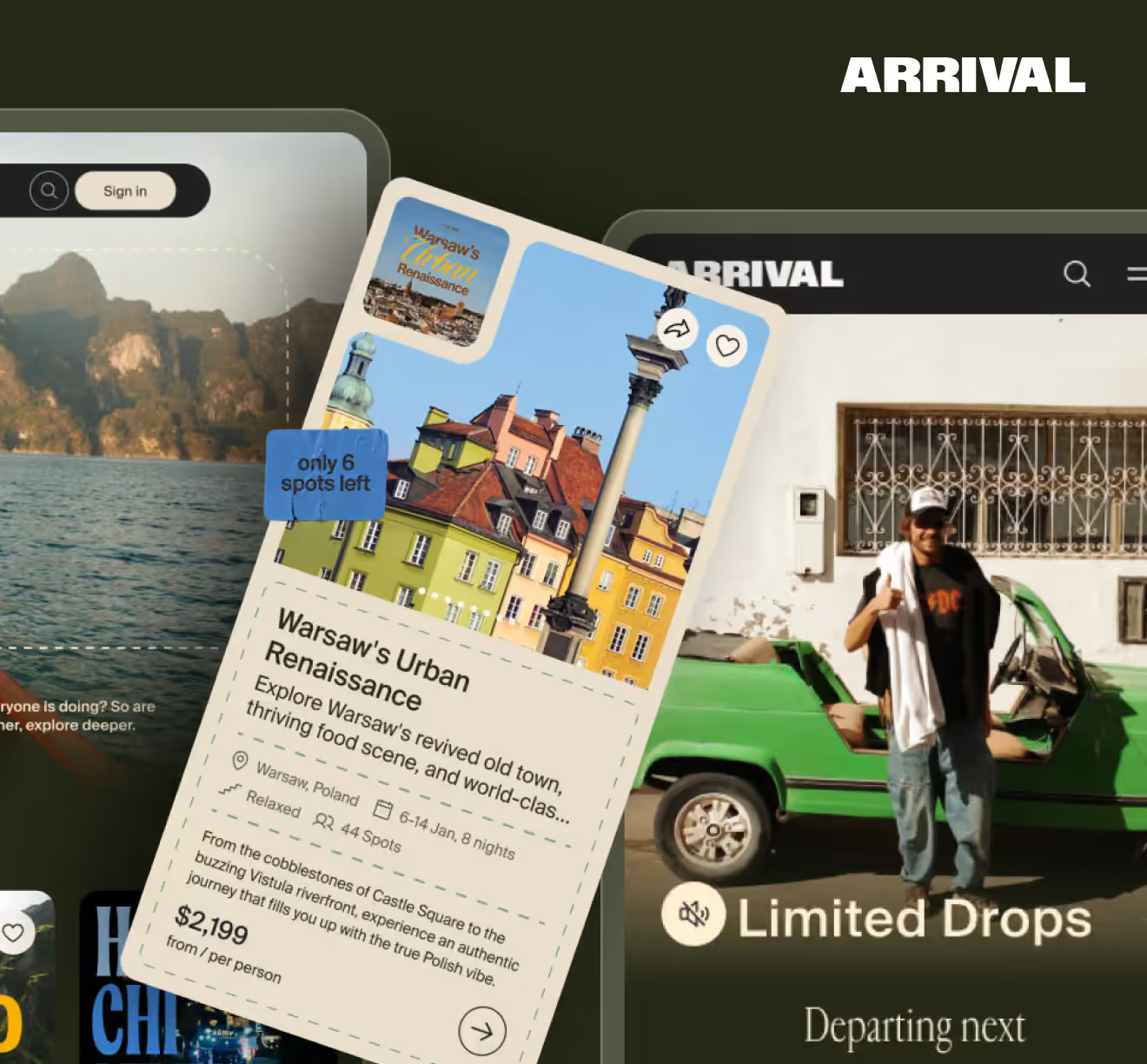
The Arrival team had 120,000 users in early access. Social posts were live. The founders' combined audience of 2 million followers was clicking through. But the trip catalog wasn't syncing. Availability, pricing, and room types weren’t pulling correctly. The Nezasa integration had a hidden schema conflict. Every booking attempt returned a silent error. No fallback. No queue. Just 120,000 people were hitting a wall.
That one integration decided whether the launch succeeded or failed. It did succeed. We fixed it. And it taught us something we already knew but confirmed again. In travel tech, Travelport API integrations are exactly that kind of load-bearing component. Get it right and everything scales. Get it wrong, and nothing moves.
Here's the full developer guide to Travelport API integration.
What is Travelport?
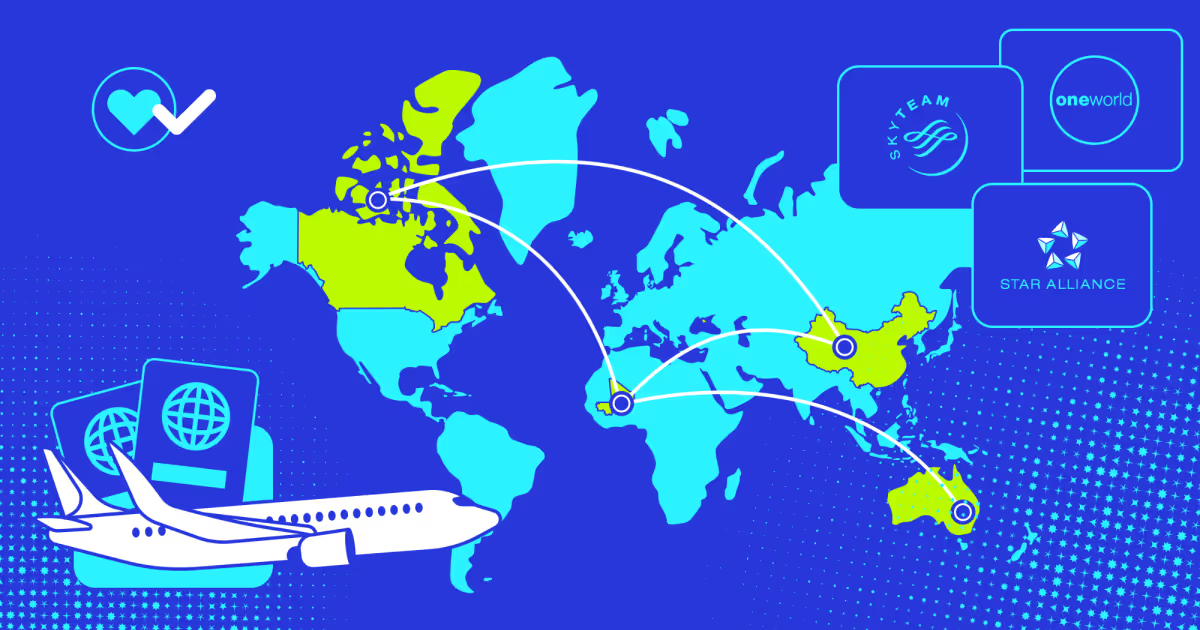
Travelport is a Global Distribution System powering travel commerce at scale. It connects airlines, hotels, car rentals, and rail providers to travel agencies and booking platforms through a unified data layer. The Travelport GDS processes millions of transactions daily, giving sellers real-time access to fares, availability, and booking logic across hundreds of suppliers.
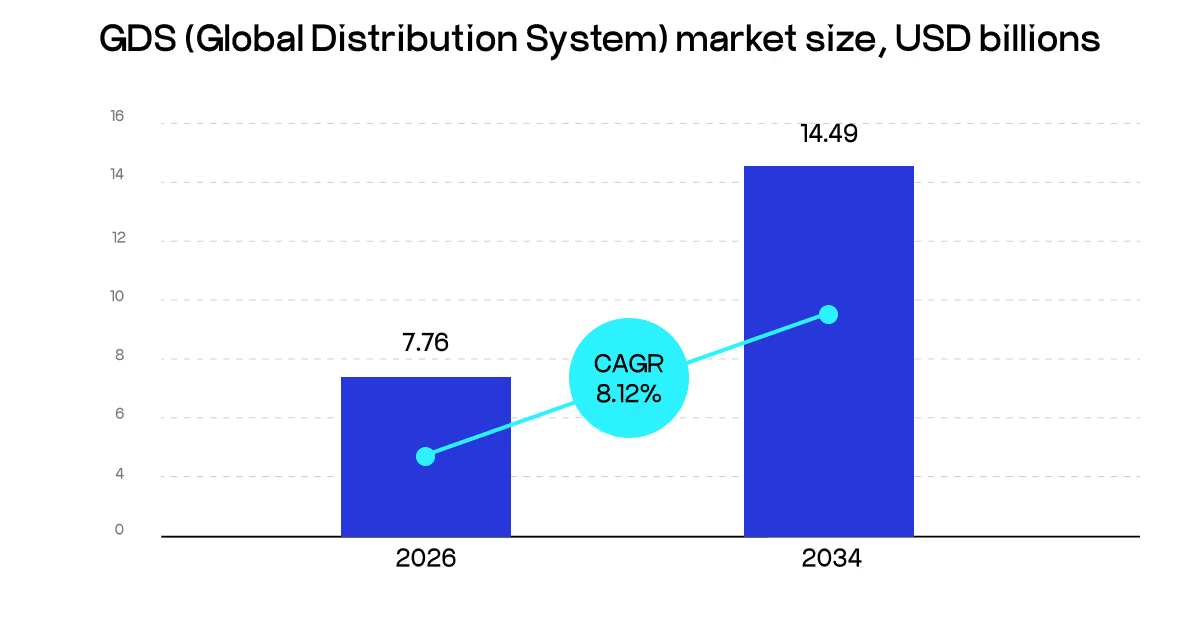
The GDS market is growing fast. It's projected to reach $14.49 billion by 2034, up from $7.76 billion in 2025. That's a CAGR of 8.12% across the forecast period. Nearly 30% of all GDS hotel bookings now come from high-spending leisure travelers, per Amadeus and Sabre data. These aren't niche users. They're the segment every travel brand is competing for.
Now put yourself in the picture.
You're building a travel platform. Your team has supplier contracts. You have a booking flow in Figma and a roadmap in Notion. Then you hit the question every mid-scale travel tech team hits. How do you get live inventory from hundreds of suppliers into your storefront without building direct integrations one by one?
That's the exact question Arrival faced. They needed trip catalog data, availability, pricing, and activity options synced automatically, with no manual input. The answer was an integration layer. Similarly, Travelport API opens up this opportunity for you.
Travelers expect this infrastructure to exist invisibly. 80% of global travelers say they want to book trips entirely online. 76% say they look for travel apps that reduce friction and stress. Those expectations only exist because the GDS infrastructure made seamless booking technically possible. Travelport is a core reason that infrastructure holds.
What is Travelport API integration?
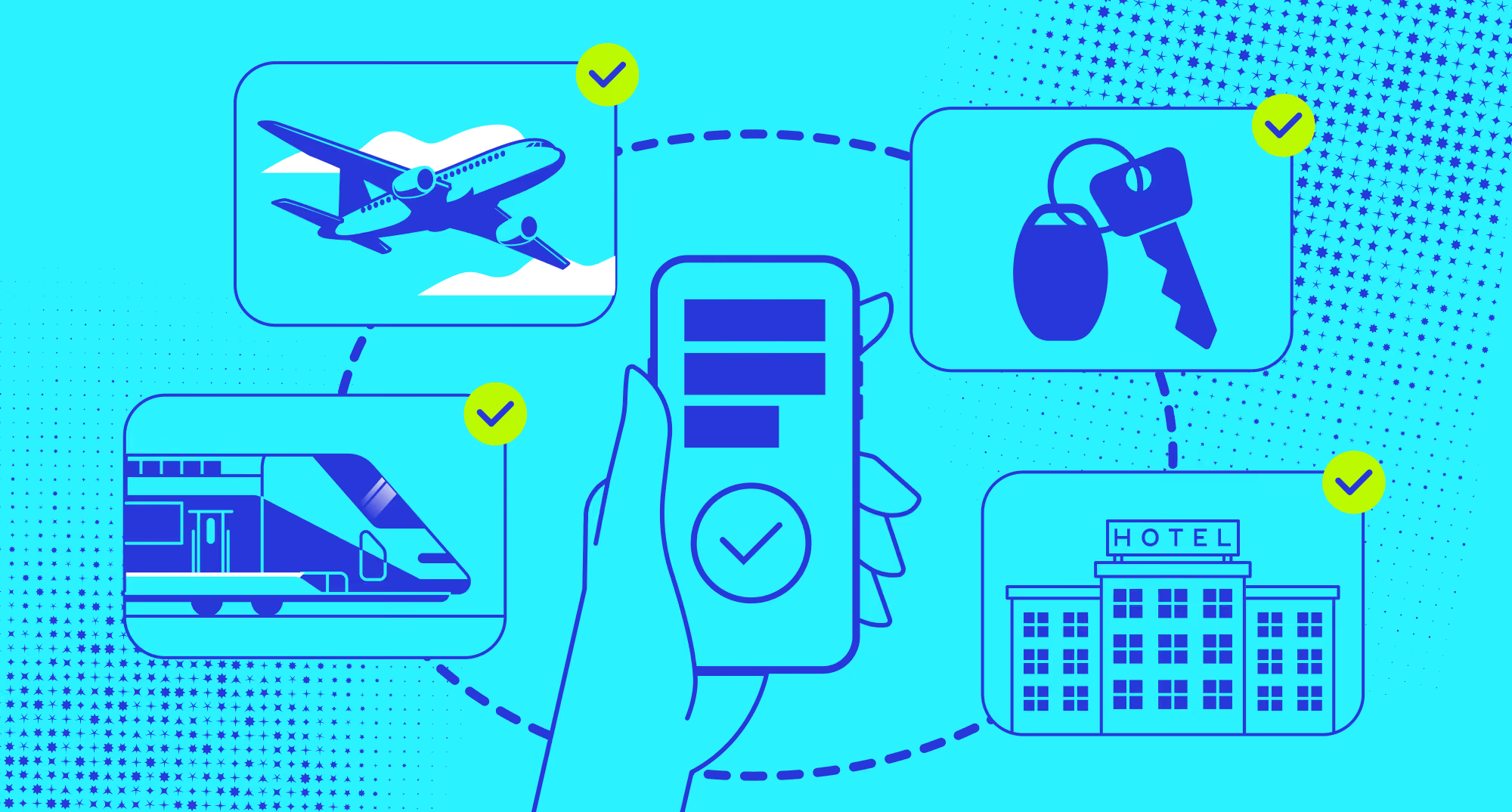
Travelport API integration connects your platform directly to Travelport's live data environment. It's the technical bridge between your booking UI and Travelport's global supplier network. Done correctly, it unlocks real-time search, availability checks, fare calculations, and reservations. And this is all across air, hotel, car, and rail, all through a single programmatic interface.
This matters at scale. This API integration doesn't just pull content. It enforces supplier business rules, manages session state, handles fare class logic, and returns structured data your front-end can act on.
Here's what the surface looks like for a developer starting fresh.
The Travelport API suite exposes endpoints for availability search, pricing, booking, and fulfillment. Each workflow follows a session-based pattern. You authenticate, open a session, execute a transaction sequence, and close the session. Air availability requests return branded fares with ancillary data attached. Hotel content returns room types, rate plans, cancellation policies, and often multimedia content.
"The challenge with travel API integrations is rarely the connection itself," says Orest Falchuk, Head of Engineering at COAX Software. "We had a client with solid supplier relationships and a clear booking flow. Their first contractor had wired up the API endpoints. But the session management was broken, and pricing calls were returning stale cache. The data looked live. It wasn't. When booking logic runs on stale prices, you don't catch it until someone's card gets charged the wrong amount."
The Travelport API suite separates teams that scale from those that stall. Understanding the architecture before you write the first request saves weeks of rework later.
Why use Travelport?
Real-time inventory sync across every channel decides bookings. That's the core value of Travelport API for any multi-channel travel platform.
Arrival found this out practically. The founding team had 120,000 users in early access before the site went public. Their trip catalog needed live pricing, availability, and room type data pulled simultaneously. A broken sync would have been a launch-killing event. The integration layer is exactly what prevented that scenario at scale.
Here's why the integration payoff is structural, not cosmetic.
72% of travel bookings in Q1 2025 were completed online, with over 45% made via mobile. Your inventory has to be accurate on every surface. Travel APIs like Travelport make that possible without manual reconciliation between supplier systems. Arrival's content team now publishes trip updates with no dev dependency, because the underlying data contract holds.
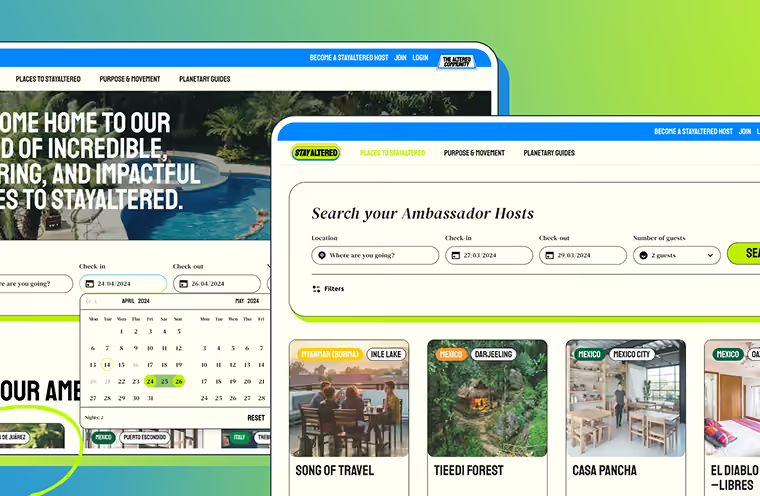
For instance, Travelport hotel API solves a specific bottleneck. It’s about the fragmented hotel content across providers. 43% of travelers use OTAs to book hotels. When your hotel inventory is stale or incomplete, you lose to whoever has fresher data. The Travelport API pulls real-time room types, rate plans, and cancellation policies from aggregated supplier feeds into a single structured response. The Stay Altered platform we created used a comparable integration layer via Katanox and Hyperguest. Now it serves 170+ verified properties.
Business travelers book closer to departure than ever before. Searches for trips under six days away now nearly match searches for trips seven to 30 days out. That window leaves no room for manual fare updates. Travelport API handles fare class logic and ancillary pricing in real time. One wrong price returned at checkout costs more than the integration ever did.
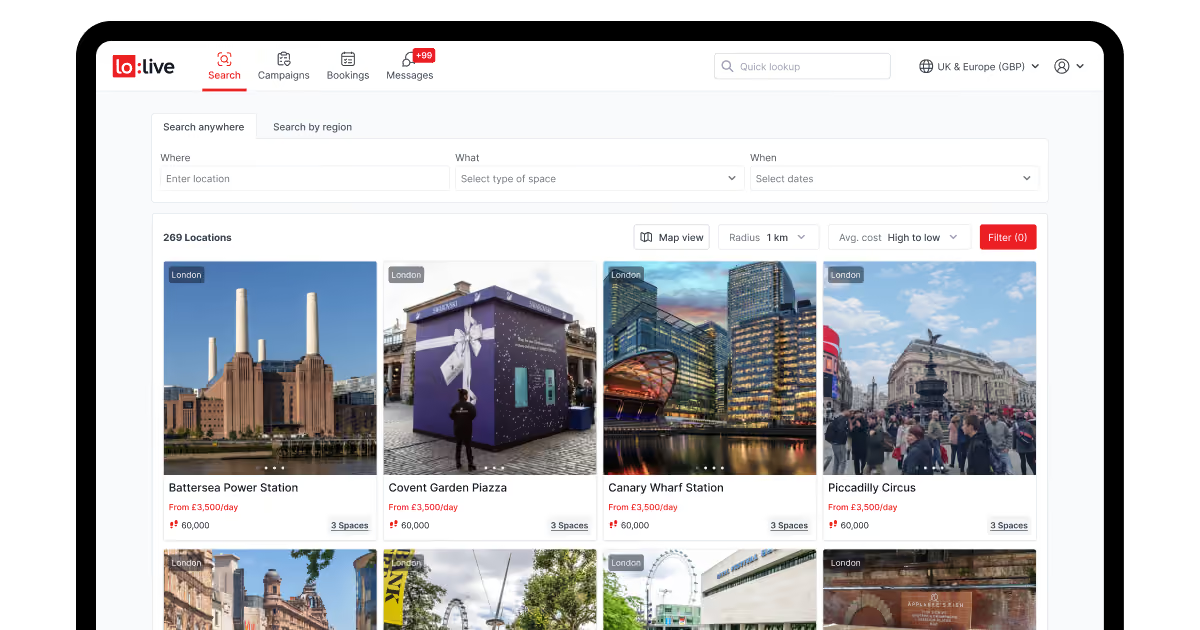
Over 900 million people use a travel app for trip planning each year. Your platform competes on speed and accuracy. Our Lo:live project demonstrated this on the experiential space side. A broken search-to-booking flow kills conversion. We helped them rebuild the workflow from search to checkout to recover it. The same principle applies to any GDS-connected booking surface.
Who needs Travelport API integration?
Any travel business that sells flights, hotels, car rentals, or packages through an online channel needs GDS access to stay competitive. Connecting the Travelport API links your platform to that inventory in real time.
Travel agencies and OTAs face this first. You're handling 500 fare requests on a Tuesday morning. Your team manually refreshes availability tabs across supplier portals. By the time your agent quotes a price, it's expired. One call from an unhappy traveler costs you more than the booking was worth. Travelport API integration live fares, availability, and booking confirmation in a single session. The agent quotes, confirms, and moves on.
Corporate travel platforms face a version of this problem at scale. When you're managing travel for 2,000 employees across six time zones, policy compliance breaks down fast. 89% of travel and expense decision-makers want automated policy enforcement. Travelport API lets you enforce class restrictions, preferred vendor rules, and budget caps at the booking layer, not in a spreadsheet after the fact.
Tour operators and experience platforms specifically need the hotel and activity layer. The Travelport hotel API provides structured room data, rate logic, and cancellation policies for each supplier. For instance, the Arrival platform we built handles two distinct booking modes. These are transactional and non-transactional, on one infrastructure layer. That flexibility exists only because the underlying data contract is standardized.
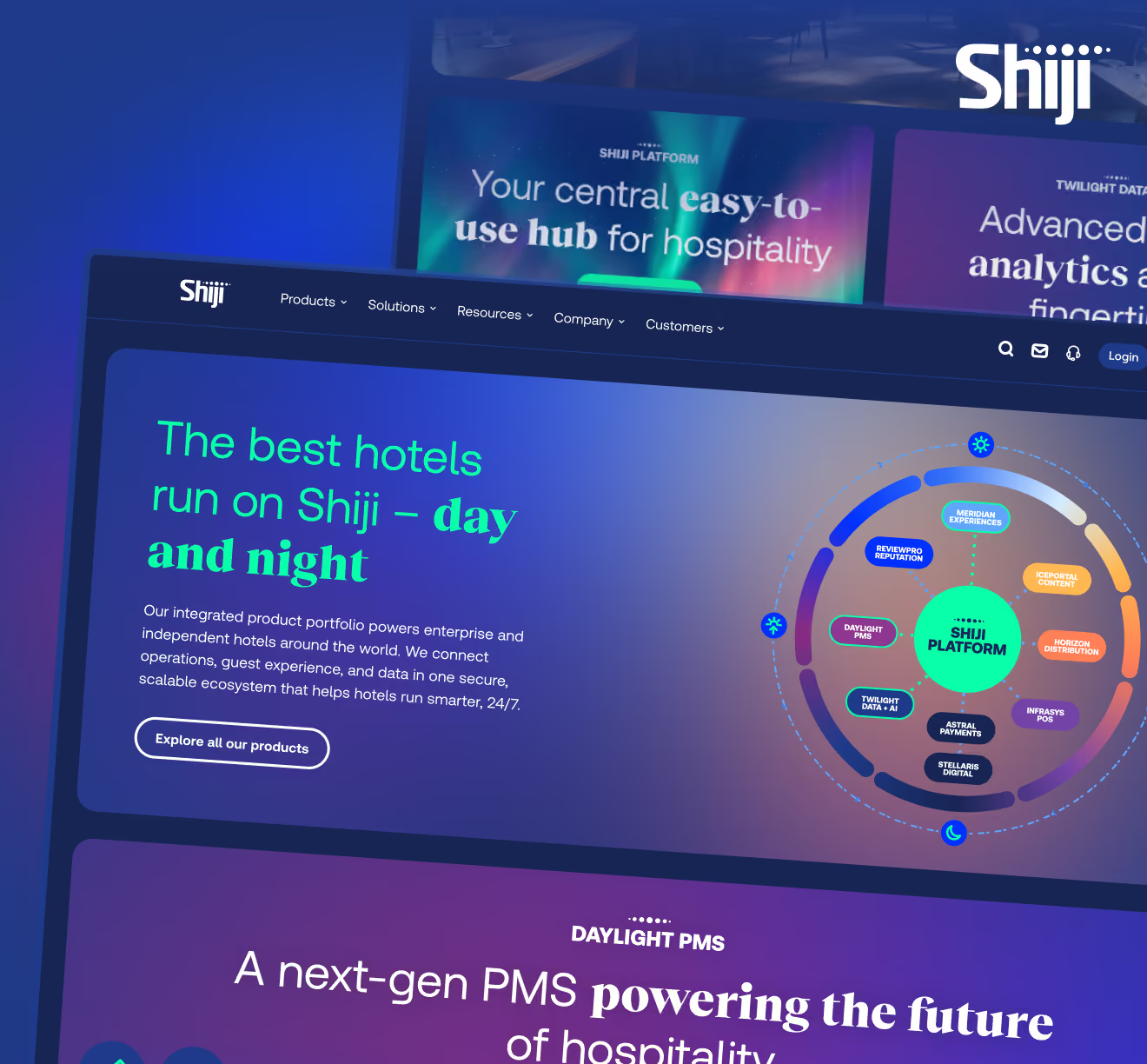
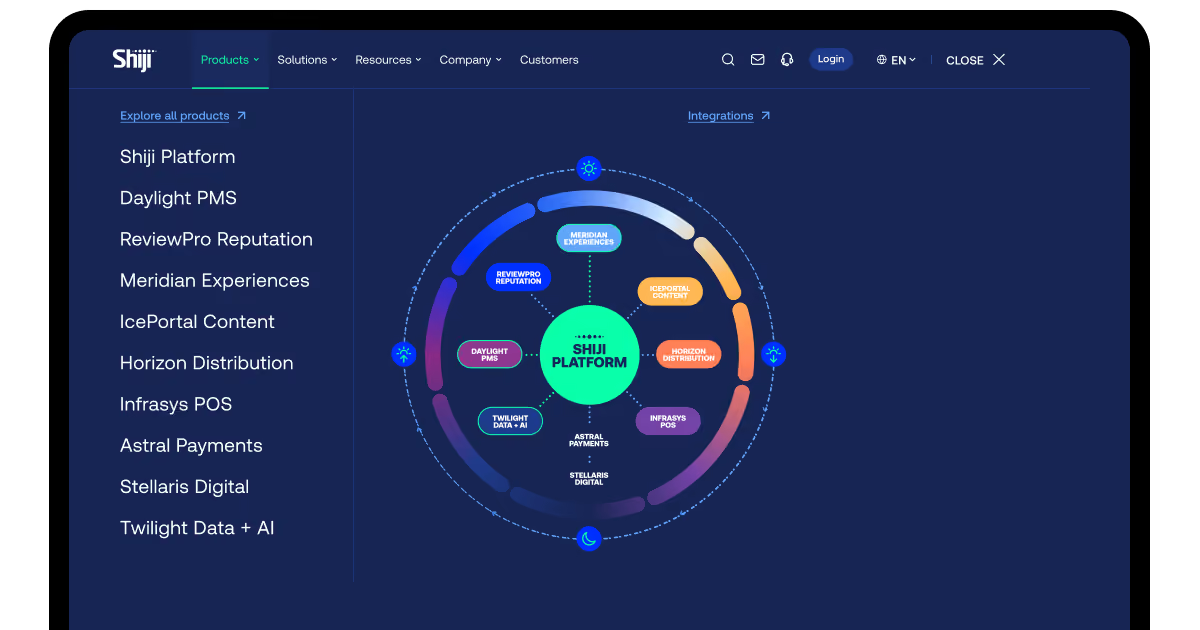
Hospitality tech companies building white-label or B2B tools need aggregated inventory. This way, they can expose it to partners. As an example of our partners, Shiji supports 91,000 hotels through one operating system. Their product ecosystem depends on clean, consistent data surfaces across every integration point. Travel APIs are what make that architecture composable rather than brittle.
Not every platform actually needs a full Travelport API integration. Sometimes a lighter aggregator solves the problem. Sometimes your supplier set doesn't overlap with Travelport's network at all.
"Before committing to any third-party integration services, we tell clients what we'd tell ourselves," says Orest Falchuk, Head of Engineering at COAX Software. "If the integration doesn't match your supplier mix, it adds cost without adding value. At COAX, we've advised clients not to integrate Travelport when a simpler path existed. That conversation is part of the service."
The right Travelport company partner helps you answer that question before writing a single line of code. Services from COAX start with your supplier relationships, your booking volume, and your architecture, then tell you honestly what fits.
How does Travelport API integration work?
A Travelport API integration follows a strict transactional sequence. Each step gates the next. Nothing moves until authentication, normalization, and session state are all held. Understanding this flow is what separates a stable booking engine from one that silently fails at checkout.
Here's how the full cycle runs in practice, using air booking as the reference.
Step 1: Request construction. Your application builds a REST/JSON or SOAP/XML call. It packages the Point of Sale identifier, auth token, and search parameters. The Travelport JSON API accepts structured queries for origin, destination, dates, and cabin class. No valid POS, no response.
Step 2: API gateway validation. The request hits Travelport's gateway layer first. Credentials are verified. Rate limits are checked. Legacy EDIFACT formatting is applied where required. Your platform never touches the airline host directly. The gateway handles that translation invisibly.
Step 3: Core GDS processing. Travelport queries live airline inventory across distributed host systems simultaneously. This is where fare class logic, availability, and ancillary data are pulled. Complex queries span dozens of carriers in a single call.
Step 4: Response formatting. Raw supplier data is compiled and translated back into structured JSON or XML. Flight segments, pricing breakdowns, seat availability, and fare rules all arrive in one normalized response object.
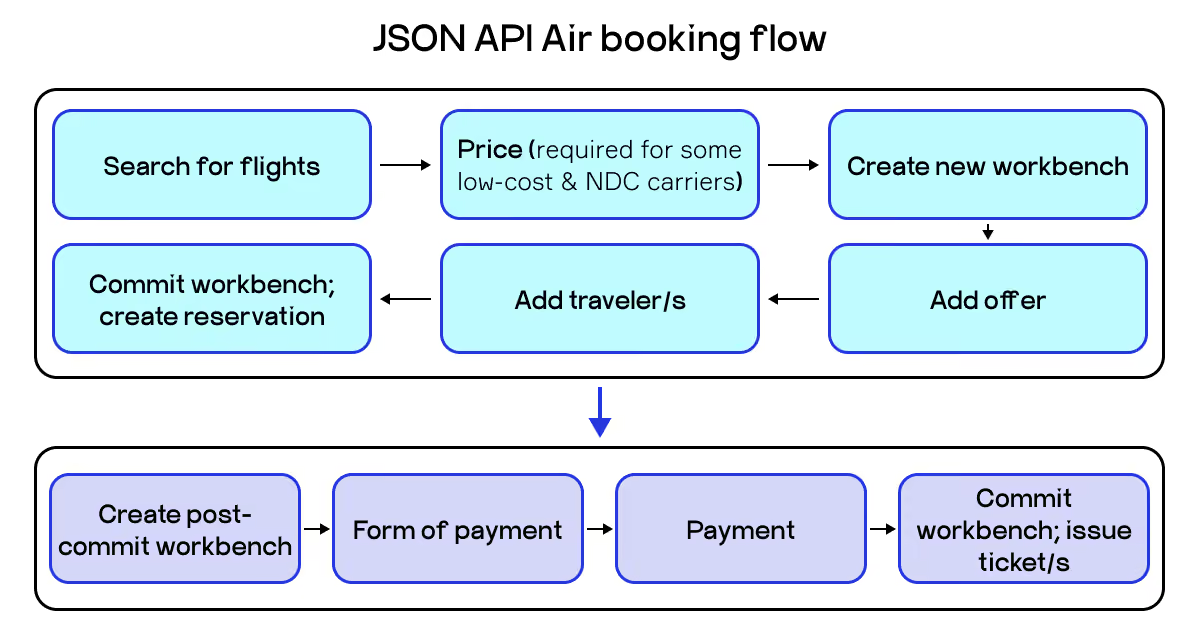
Step 5: State management and return. Air booking is stateful. Travelport maintains session context across the full transaction sequence. This covers search, price, workbench creation, traveler addition, reservation commit, and finally ticket issuance. Each step builds on the last. Drop a session mid-flow and you start over.
The diagram above maps nine discrete steps. Each one is a separate Travelport API call.
You search for flights first. Pricing runs for low-cost and NDC carriers specifically. A new workbench is created, an offer is added, traveler data is attached, and the reservation commits. The post-commit sequence then handles payment form, payment processing, and final ticket issuance.
The Lo:live platform COAX developed illustrates the same principle on the analytics layer. Metabase integration sits downstream of the core data flow. When booking and search events fire on the platform, structured records flow into the reporting layer. Metabase then queries that data to render drill-down dashboards, period comparisons, and account-level funnels. No raw database access. No manual exports.
Data exchange between Travelport, airlines, hotels, and booking platforms
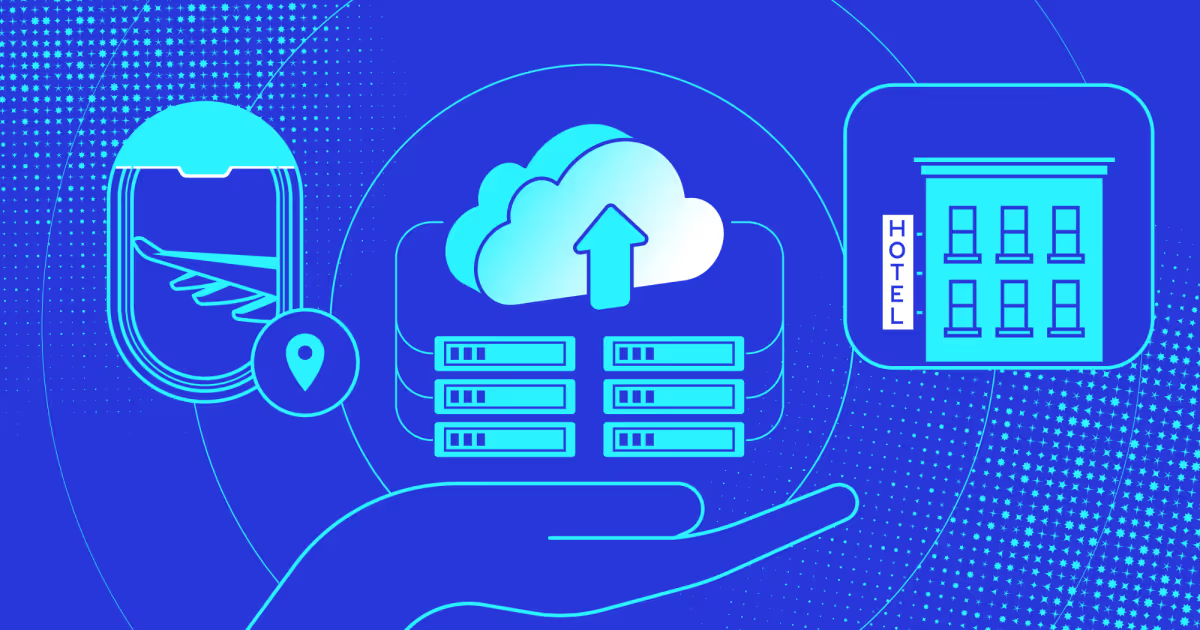
Travelport API data exchange runs on a centralized aggregation and normalization model. Suppliers send raw, fragmented inventory in proprietary formats. Travelport normalizes it into one retail-ready layer. Your platform queries that layer once and gets structured, comparable results across hundreds of providers. What happens between your API call and the user's search result is the operational core of modern travel tech.
"The client had supplier relationships with three hotel chains and solid content agreements," says Orest Falchuk, Head of Engineering at COAX Software. "Their booking engine was pulling from two of them, randomly, with no failover logic. The Travelport Universal API exists to normalize exactly that problem. When you're not using it correctly, every booking attempt is a guess."
Here's how the exchange actually works across its four stages.
Aggregation and distribution.
Travelport connects to hundreds of airlines and over 650,000 hotels globally. For airlines, it aggregates schedules, fare classes, seat maps, and pricing. It supports both traditional GDS distribution and modern NDC. For hotels, it fetches real-time availability, dynamic pricing, room imagery, and property amenities. The Travelport Cruise API extends this aggregation to cruise line inventory using the same normalized data contract. One connection surface. Many supplier feeds are behind it.
Normalization.
Each supplier outputs data differently. A legacy carrier uses EDIFACT. A low-cost carrier uses NDC. A hotel chain uses its own PMS schema. Travelport ingests all of it and outputs one consistent format to your platform. Similarly, aligning Nezasa's output with Arrival's storefront required us to map supplier schemas one by one. This is the problem the Travelport Universal API solves structurally: normalization at the aggregation layer, not at the application layer.
Search and booking flow.
When a user searches on your platform, the exchange happens in milliseconds. Your app sends a query with user parameters. Travelport returns consolidated options across all connected suppliers. The user selects an itinerary. Your platform sends a booking request. Travelport processes it with the provider, reserves the inventory, and generates a Passenger Name Record instantly. No back-and-forth between your team and the airline. The PNR is the handshake.
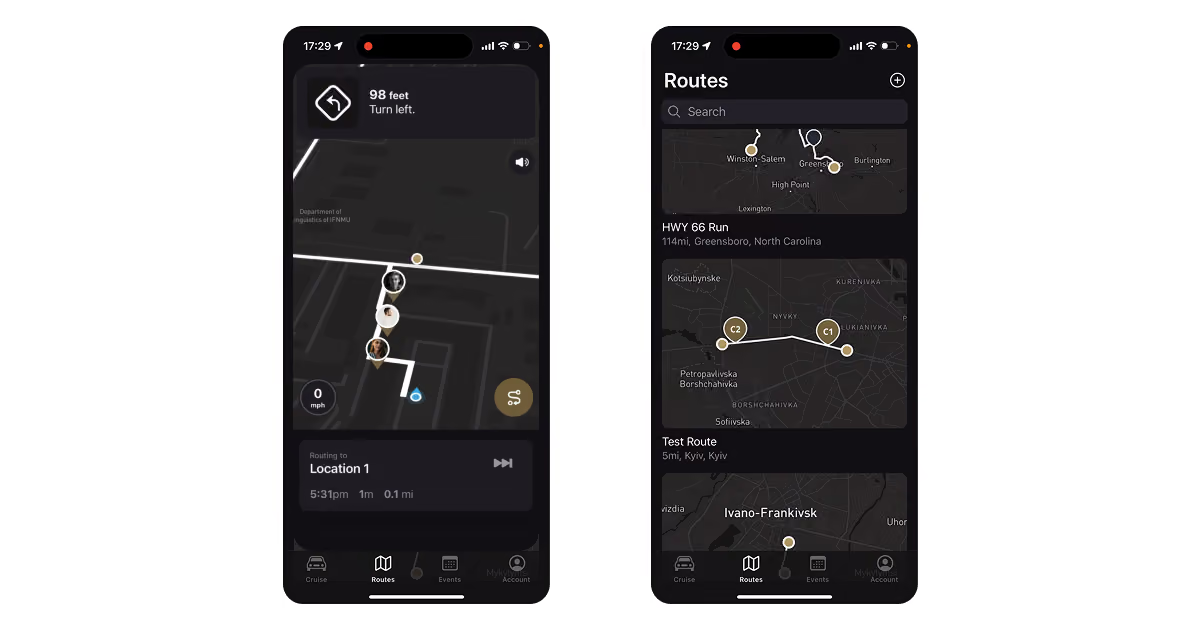
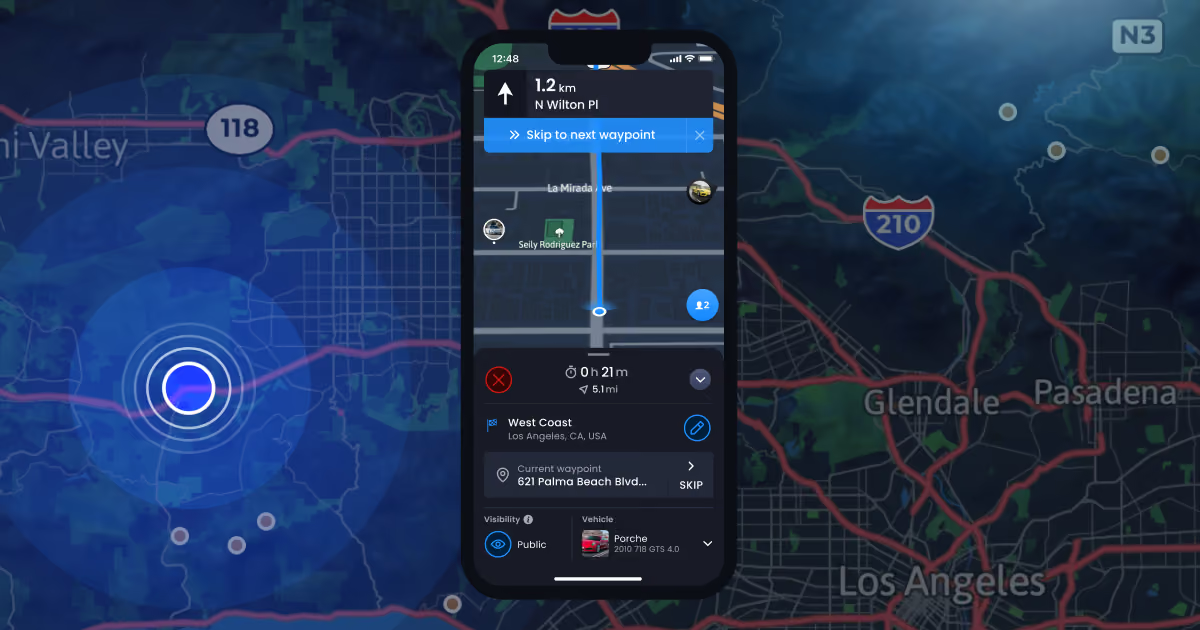
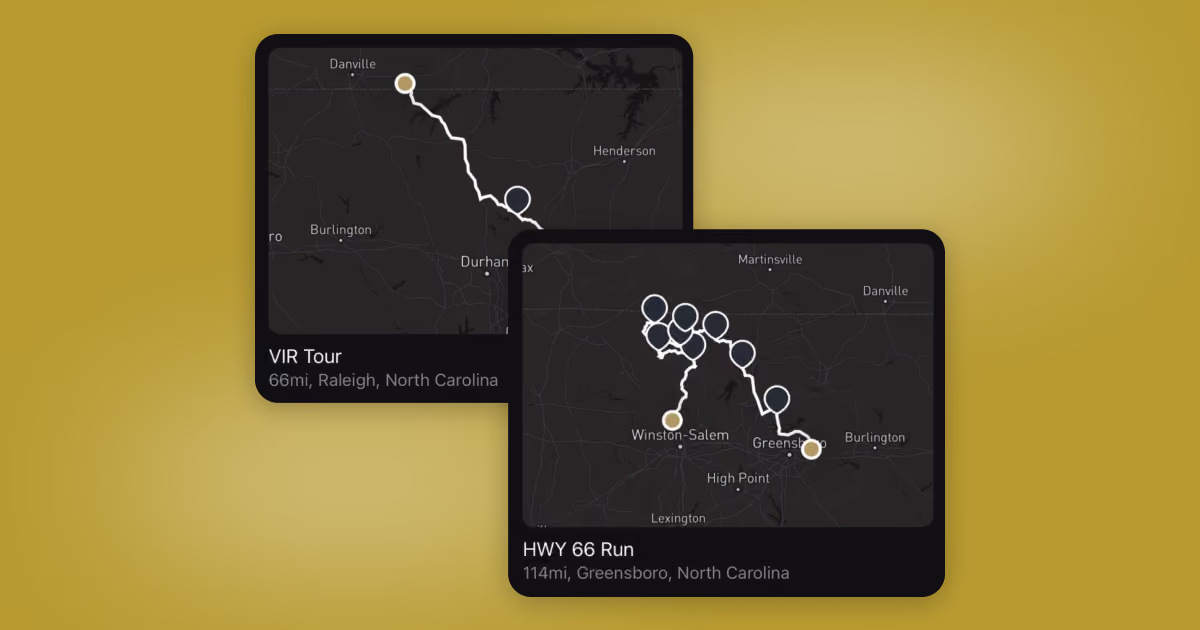
Mapbox in Road&Rally illustrates the same principle. Every driver in a group rally sends a real-time location ping. Mapbox aggregates those pings, normalizes position data across device types, and returns synchronized turn-by-turn instructions to every participant. One data contract. Many devices behind it. The Travelport API operates identically: many suppliers, one normalized surface your platform can act on.
Servicing and management.
Data exchange doesn't end at booking confirmation. Travelport relays ongoing changes from suppliers back to your platform: schedule modifications, cancellation triggers, ticket reissuance events, and seat reassignments.
The Lo:live platform COAX built uses a similar post-booking data loop. When landlords update availability or hirers modify campaign bookings, the platform synchronizes those changes. The sync happens across the search index, the booking workflow, and the analytics layer. The principle is identical: the data contract has to hold after the transaction, not just during it.
Travelport API architecture and core products
Integrating a GDS like Travelport is never just a matter of hitting a few endpoints. It’s a high-stakes exercise in state management, session handling, and schema alignment. At COAX, we’ve spent years building and engineering heavy API-driven ecosystems. We know well that complex integrations fail at the session and data-contract layers.
We will explore the core structural differences between the legacy SOAP/XML Universal API and the modern, microservices-driven Travelport+ REST suite. Then, we will dive deep into specific execution strategies for flights, hotels, car rentals, rail, and ancillary services.
Universal API
At 2:00 AM on a production night, RoadStr's location sync broke. The app had 200,000 downloads. GPS accuracy had drifted to a 50-meter radius. Real-time route sharing was returning stale positions. The team had inherited 200+ API endpoints with no tests and no documentation. Every new call risked cascading errors across the feed, the notifications, and the map layer simultaneously.
That experience taught our engineers something that applies directly to Travelport Universal API work. These are stateful, multi-endpoint API systems fail at the integration layer, not the feature layer. Cleaning and documenting RoadStr's API surface while keeping the live app functional is exactly the kind of structural discipline that travelport api integration demands.
It's a SOAP/XML interface connecting your platform to Travelport's full content surface. Air, hotel, vehicle, and rail content are all accessible through one standards-based programming set. Travelport refers to it interchangeably as the SOAP XML API across its developer documentation. The underlying GDS behind it is Travelport+, formerly Galileo (1G). The Travelport Universal API documentation treats these as equivalent systems.
The architecture is separated into distinct service domains.
Air Shopping and Booking covers availability search, low-fare shopping, pricing, ticketing, and queue management.
Universal Records sit above all of these. A Universal Record links multiple bookings, air, hotel, and car, into one retrievable object. This is the data structure that makes itinerary management tractable. Without it, you're managing PNRs from three separate domains with no shared reference.
One detail matters for any team starting out. Travelport API schema versions are supported for up to three years. As of January 2025, Travelport temporarily paused the schema retirement process. That pause protects existing integrations, but it doesn't mean your schema is future-proof. Teams should update to the latest WSDL at least annually. A multi-year schema gap creates a forced migration under pressure, not a planned one.
Session management is the operational core of Travelport API integration. Every transaction sequence, from search through ticket issuance, is stateful. You open a session, execute a transaction chain, and close it. Drop the session mid-chain, and the workbench is orphaned. RoadStr's team faced the same class of problem with GPS/network state. Location polling had to survive connectivity drops during high-speed driving. The engineering discipline is identical. You design for the interrupted state, not just the happy path.
Travelport+ API suite
Our client, Shiji, supports 91,000 hotels through one operating system. Each product had its own visual identity, its own data surface, and its own logic. The Webflow CMS we built for them had to present all of it coherently. Content managers needed to update product pages without touching code. The problem was the lack of a normalized layer connecting them.
Travelport+ API suite solves the same problem for travel retailing. It's Travelport's modern platform layer, purpose-built for agencies and OTAs. Where the Universal API is a SOAP/XML interface built on legacy GDS infrastructure, the travelport api suite is a lightweight, microservices-based REST architecture. It's faster to integrate, easier to test, and built to surface NDC content alongside traditional GDS fares in the same response.
Here's what the platform layer delivers in practice, domain by domain.
Content curation and multi-source search. The travelport api suite returns traditional GDS fares, NDC offers, and ancillaries in one normalized response. Your front-end doesn't have to reconcile three separate content formats. It receives one structured object. For Arrival, this class of problem appeared in the Nezasa layer. Hotels, flights, activities, and car rentals each had distinct schemas. The integration work was normalizing those schemas into one data contract that the storefront could act on.
NDC support. New Distribution Capability allows airlines to distribute richer, more personalized offers directly. The Travelport API suite supports NDC alongside EDIFACT-based GDS content. The business value: you can merchandise branded fares, seat upgrades, and ancillaries at the search layer, not just at checkout. Road&Rally demonstrated this principle in automotive: bundling route access, event ticketing, and subscription management into one Firebase-powered checkout surface. Content and commerce are one flow, not two.
Automated exchange and refund capabilities. When a traveler needs to cancel or modify, the platform surfaces options and fees automatically. Your agent doesn't calculate manually. The system returns structured change options with cost implications already resolved. This reduces call volume, shortens handling time, and keeps traveler satisfaction measurable. Every second your agent spends calculating a fare difference is a second they're not selling.
Self-service trip management. The travelport api suite enables travelers to modify itineraries without agent intervention. This matters at scale. When Arrival's platform hit 500,000 total visitors, the content team managed trip updates, date changes, and availability edits without any development bottleneck. The same principle applies here: post-booking servicing needs to run without a human in every loop.
Corporate booking tool integration. Travelport+ connects with all major corporate booking tools natively. It also integrates with Deem, the corporate travel management platform Travelport acquired. For platforms managing travel policy enforcement, preferred vendor logic, and per-diem compliance, this integration layer handles those rules at the booking layer rather than in a separate compliance system downstream.
"The Travelport API documentation describes what the endpoints accept," says Orest Falchuk, Head of Engineering at COAX Software. "It doesn't describe the sequence dependencies. That's where most teams lose a week."
Key Travelport APIs and their use cases
The Travelport API surface covers five primary domains: flights, hotels, car rentals, rail, and ancillary services. Each domain is a separate integration scope with its own session logic, data model, and business rules.
Our team learned the weight of that sentence practically across multiple projects like the Stay Altered, Lo:live, and RoadStr that we described before. Complex third-party integrations don't fail on the endpoints. They fail on the state management and schema alignment underneath.
Flights: Air Shopping and Booking API. A user searches from Sydney to Tokyo for three travelers on flexible dates. Your platform needs availability, fare classes, seat maps, and branded fare options in one response. The Air Shopping API handles that query. It supports low-fare shopping, availability search by segment, and air pricing with ancillary options attached. Once selected, the booking flow creates a workbench, adds the offer, attaches traveler records, commits the reservation, and issues tickets. Drop any step, and the PNR doesn't generate.
Hotels: Travelport hotel API documentation. A traveler selects a hotel in Milan for five nights. The Travelport hotel API documentation covers rate and rules searches, property detail retrieval, room type availability, and booking. Rate plans include cancellation policy terms and tax breakdowns. The hotel booking session is stateful. You search, retrieve rates, check rules, and then book in sequence. Stay Altered's Katanox and HyperGuest integration worked similarly. Real-time availability checks. Then, it was followed by a seamless redirect to booking confirmation for properties across 45+ countries.
Car rentals: Vehicle Shopping and Booking API. A business traveler lands in London at 7:00 PM. They need a confirmed car rental in their booking record before departure. The vehicle API returns location availability, vehicle classes, rate rules, and media content for the search result. The booking attaches to the same Universal Record as the flight. One itinerary object. No separate confirmation to track.
Rail: Rail Shopping and Booking API. A traveler building a European itinerary needs to travel from Frankfurt to Paris by train. The rail API covers low-fare search, availability, and booking across rail providers. Critically, the rail booking links to the same Universal Record as their flight and hotel. The Travelport company has built this cross-content record structure specifically. Agents and platforms can manage one object, not four.
Ancillary services: Air Merchandising API. A traveler books an economy fare. At checkout, the platform offers extra legroom, priority boarding, and a checked bag. The Air Merchandising API surfaces those ancillary options at the fare level. Revenue per booking increases without a separate upsell workflow. Arrival's non-transactional booking mode works on this principle. Travelers configure accommodation types and add activities at the selection layer, not in a separate process.
Each domain above is a separate integration contract. Together, they form a complete travel API integration scope. The teams that succeed are those with a partner who covers the full cycle. This goes from requirements scoping, data model alignment, session management, to testing under load, and post-launch schema maintenance.
At COAX, we've handled Travelport API work as part of a broader travel tech practice. It spans booking platforms, GDS integrations, CRM connections, analytics layers, and mobile experiences. We've told clients when a full Travelport integration was the right call. We've also told them when a lighter aggregator solved the problem faster. That distinction is the service.
If you're evaluating Travelport company integration for your platform, the conversation starts with your supplier mix, your booking volume, and your existing architecture. Everything else follows from those three facts.
Developer requirements for integration
Travelport API integration has a defined technical baseline. Miss any part of it and your build stalls before the first live transaction. The requirements span credentials, environment setup, endpoint configuration, schema version management, and session architecture. Getting them right up front saves weeks of rework during staging.
"The teams that struggle with Travelport APIs aren't the ones who can't code," says Orest Falchuk, Head of Engineering at COAX Software. "They're the ones who start building before they understand the session model. The credential setup looks simple. The stateful transaction chain is where assumptions break."
Here's what this integration requires, layer by layer.
Credentials and Point of Sale configuration.
Every Travelport API call requires a valid Point of Sale identifier and authentication tokens. Your POS identifies your agency or platform to the GDS. Without a correct POS configuration, requests are authenticated but return no usable content. This catches teams after they've built the request layer. It's a configuration problem, not a code problem, and it costs days.
WSDL download and endpoint selection.
The Travelport Universal API distributes its schema via downloadable WSDLs. You select endpoints by service type (air, hotel, vehicle, rail). You also select by environment (Production or Copy). Copy environment is your staging surface. Every integration should run a full transaction cycle in Copy before touching Production. Endpoint URLs differ by region. Using the wrong regional endpoint returns errors that look like auth failures. They're not.
Schema version alignment.
If your team inherits an integration on a schema version two years old, plan a migration sprint before building new features on top of it. A multi-year schema jump under deadline pressure is avoidable. It requires planning, not heroics.
Session state management.
Air and hotel booking flows are stateful. You open a session, execute a transaction sequence, and close it. For the Travelport hotel API, the sequence runs availability search, rate retrieval, rules check, and booking. Each step depends on the previous one completing cleanly. An orphaned session doesn't error loudly. It just stops returning useful data. Your error handling has to catch session timeouts explicitly, not just HTTP errors.
NDC flow handling.
The Travelport API suite supports NDC alongside traditional GDS content. NDC responses have a different structure than EDIFACT-based fare responses. Your normalization layer has to handle both formats in the same search result without breaking your front-end render. Teams that skip this produce a search UI that silently drops NDC offers. Users never see them. Revenue opportunity disappears without a visible error.
Pricing and commercial access.
Access to API content is gated by a commercial agreement, not just a developer account. Travelport API pricing depends on your agency type, transaction volume, and content scope. OTAs, TMCs, and independent agencies have different onboarding paths. The Travelport+ onboarding process runs four steps. You need to contact sales, receive a proposal, onboard with a specialist, and activate content access. Development credentials in the Copy environment are available before commercial activation. Production access requires a signed agreement.
Error handling and retry logic.
The Travelport APIs return both system error codes and supplier-level warnings in the same response. Your error handling needs to distinguish between them. A system error means the transaction failed. A supplier warning means the transaction was completed, but with a constraint. Treating them identically produces booking failures that look like network errors. The error code library is documented, but reading it before you start is faster than debugging it afterward.
Road&Rally illustrates what happens when these requirements are treated as a system. The app had to maintain location synchronization across multiple devices. It had to degrade when the cellular dropped during high-speed rural driving. The COAX team designed for the interrupted state first. Routes were cached before departure. Location polling is adjusted based on velocity. When connectivity dropped, the app continued navigating from preloaded data. The same design discipline applies to Travelport. Design your session recovery, your schema fallback, and your supplier error handling.
Testing and go-live checklist.
Before moving from Copy to Production, you need to do several things. Verify POS configuration returns live content and confirm all transaction sequences complete without session drops. Then, validate NDC and GDS responses normalize correctly in your front-end, and test cancellation and modification flows end-to-end. Finally, confirm error codes are logged and routed to your support layer.
At COAX, Travelport API integration isn't necessarily scoped as a standalone service. The engineers who define your data model build the reporting layer on top of it. The team that maps your session architecture is the team that wires it to your analytics surface. No scope gap between the integration and the dashboard that your operations team reads each morning.
COAX is ISO 9001 and ISO 27001 certified. We weave in the underlying principles into every client's architecture and tech decision. This spans from credential handling to PNR data storage to supplier API key management. Starting a Travelport hotel API build or inheriting one that needs stabilization? The conversation should start with your current schema version, session error rate, and go-live timeline. Everything else follows from there.
How to integrate Travelport API?
Most travel and booking platforms don't fail at the code level. They fail before a single API call is written. The common reason is that the underlying business logic is unmapped.
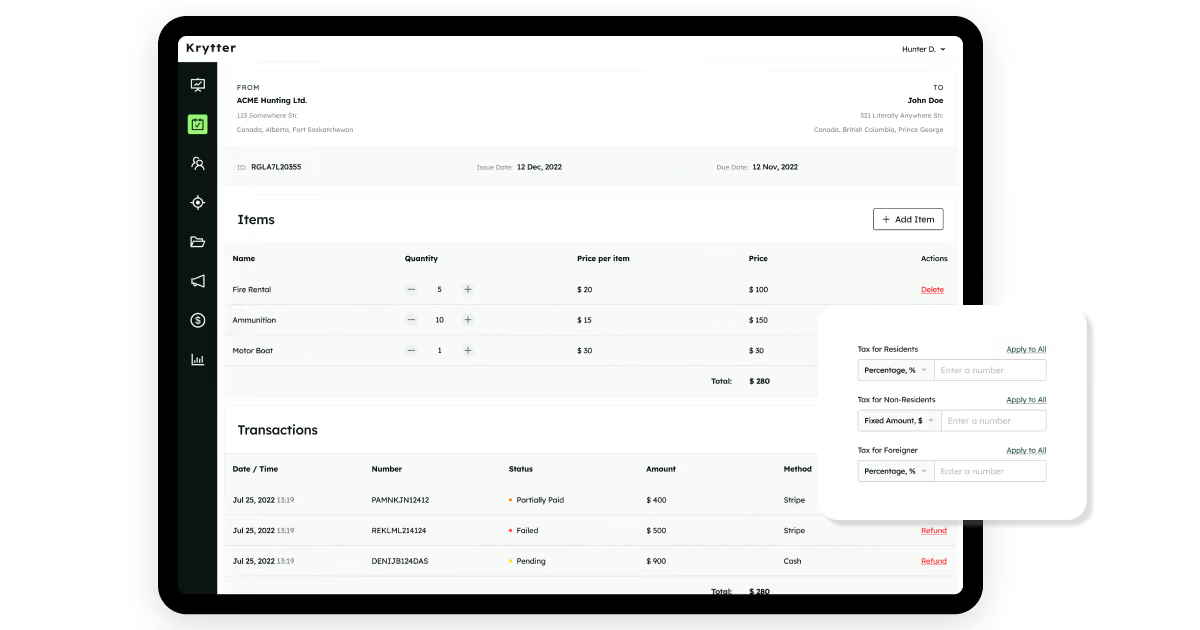
Our partnership with Krytter proved exactly this. They needed a reservation platform. The thing is, outfitter bookings don't operate like standard, immediate hotel check-ins. Instead, these wilderness bookings often span years in advance and demand installment-based payment tracking. They also require complex tax compliance rules across multiple jurisdictions.
Before our engineers could build a stable interface, we had to normalize a multi-layered financial module. It had to be capable of processing split invoices across cash, bank transfers, and wire services. Skipping this architectural mapping phase leads to broken ledgers. So we designed the core database rules first. This allowed us to deliver an MVP that synchronized complex pricing and multi-party availability without degrading system performance.
Here's how to establish Travelport API access, depending on where you're starting.
If you're a new agency or developer, the process runs through four steps.
Submit your business inquiry via Travelport's Get Started form. Indicate whether you're an agency, developer, or supplier.
A sales representative contacts you with a proposal sized to your agency type and technical scope, whether that's Smartpoint access, Travelport API suite connectivity, or full integration for a custom platform.
Once you sign your agreement, onboarding specialists provision your PCC (Pseudo City Code) and connect you to the Travelport environment.
Complete your GDS training through Smartpoint and MyTravelport before touching any live content. Your PCC is not optional. It's how every Travelport API call identifies your platform to the GDS. No valid PCC means no usable content returns, even with correct authentication.
If you're joining an existing agency, the path is shorter but still gated.
Ask your agency's MyTravelport administrator to provision your login. If self-registration is enabled, navigate to MyTravelport Sign Up and complete your details.
Your administrator approves the registration. Once approved, you receive a welcome email with a one-time passcode to set your password and activate your workspace. This step matters for teams inheriting an existing integration.
Confirm that all active developer accounts are tied to the correct agency PCC before adding new environment access.
Two practical notes before moving to the integration process. First, development credentials in the Copy (staging) environment are accessible before commercial activation. Use them. Run your full transaction sequence in Copy before Production access is live. Second, the Travelport API onboarding and the developer API access are separate tracks. Your commercial agreement governs content access. Your developer account governs API credentials. Both have to be in place before a production transaction completes cleanly.
With access established and your PCC confirmed, the integration build starts. Here's how that process runs in practice.
Travelport API integration process
Skipping a single phase in your integration process creates a compounding failure down the line. For instance, if you rush through your environment setup without locking down your credentials, your session handling will break under production loads.
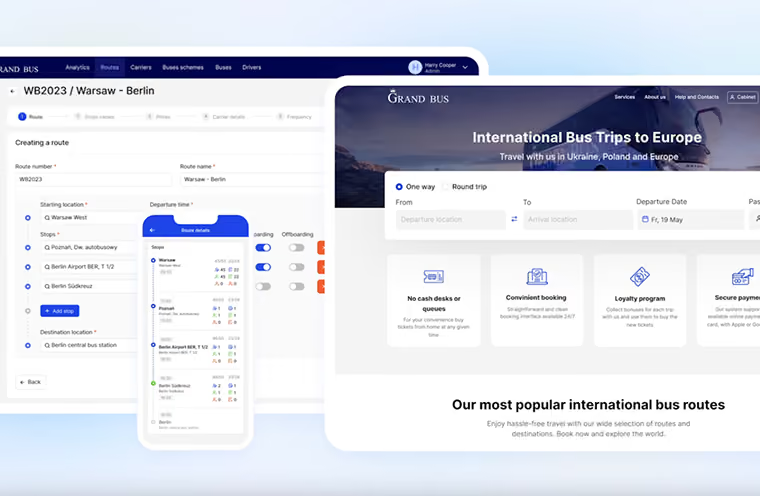
We ran into this reality when building the GrandBus platform. International transport networks require complex, multi-stop route configurations, real-time location streaming via SSE, and zero-error ticketing reporting. Logically, any shortcut during the initial phase would have crippled our driver-sync and reporting modules later on. To build an architecture capable of saving €30,000 annually by eliminating third-party fees, you must execute each step in sequence.
Phase 1: Environment setup and credential validation.
Download the latest Universal API WSDLs from the Travelport developer portal. Select endpoints by service domain and by environment. Copy environment endpoints differ from Production. Confirm your POS identifier is correctly configured for each service domain you intend to call. Air, hotel, and vehicle are separate configurations. Test a basic availability search in Copy before building any booking logic. If the availability search returns no results, the issue is almost always POS configuration, not code.
One tip from our team. Document your endpoint URLs and schema version numbers on day one. Travelport API documentation covers this, but teams working across time zones lose this context fast. A single configuration file shared across the team prevents the "which endpoint are we hitting?" question at 11:00 PM before a deadline.
Phase 2: Schema selection and normalization layer.
Choose your schema version and commit to it. The Travelport JSON API is your primary interface for modern REST-based builds. Legacy SOAP/XML builds use the Universal API WSDL structure. If you're building from scratch, JSON is the faster path. If you're extending an existing integration, match the schema version in production before adding new endpoints.
Build your normalization layer before your front-end. Every supplier returns data in a slightly different format. Your normalization layer converts raw GDS and NDC responses into a consistent internal schema. Arrival's Nezasa integration required exactly this. Hotels, flights, activities, and car rentals each had distinct data models. The normalization work happened at the integration layer. That's the right place for it. Fix data shape problems at the source.
Phase 3: Session architecture.
The Travelport API is stateful for booking flows. Design your session management before writing transaction logic. A session handles one transaction chain. It’s search, price, workbench creation, traveler attachment, reservation commit, and ticket issuance. Each step depends on the previous one completing without error. Design your session recovery logic first. What happens when a session times out at step four of six? What does your platform show the user?
Road&Rally faced this exact problem. Their app had to maintain synced navigation across 25+ devices, with a fallback when cellular dropped mid-route. Our team designed the offline degradation path before the happy path. Routes cached before departure. Location polling adjusted to velocity. Apply the same principle to session architecture: design for the interrupted state, not just the successful one.
Phase 4: Error handling and supplier response parsing.
The Travelport API documentation separates system errors from supplier warnings. Build your error handling to distinguish between them from the start. A system error means the transaction failed and must be retried. A supplier warning means the transaction was completed under a constraint. For instance, a fare is no longer available at the quoted price. Treating them identically produces booking failures that surface as network errors. They're not. They're data errors, and they need different handling logic.
One practical tip. Log every error code with its transaction context, not just the code itself. The error code tells you what failed. The transaction context tells you why. Lo:live's Metabase analytics layer was built on this principle. Every booking event, search query, and session error flows into the reporting layer with full context attached. When something breaks, the team knows where in the funnel it happened.
Phase 5: NDC integration.
If your content scope includes NDC offers, your normalization layer must handle NDC and EDIFACT responses in the same search result. NDC responses have a richer structure than EDIFACT-based fares. They carry branded fare attributes, ancillary options, and seat maps inline. Your front-end render needs to handle both formats without silently dropping one. Test this explicitly. A search UI that returns NDC results correctly in Copy but drops them in Production has a normalization gap, not a rendering bug.
Phase 6: Full transaction cycle testing in Copy.
Before requesting Production access, run the complete transaction sequence for every content type in your scope. Air: search, price, workbench, traveler, reservation, ticket. Hotel: search, rate, rules, booking. Vehicle: search, details, booking. Cancellation and modification flows for each. Confirm Universal Records link correctly across content types. Confirm error codes are logged and routed. Confirm session recovery works as designed.
Phase 7: Production go-live and schema maintenance.
Move to Production only after the full Copy cycle is clean. After go-live, schedule a quarterly integration audit. Travelport API schema versions change. A vendor update can deprecate a field your normalization layer depends on. Quarterly audits catch schema drift before it becomes a production incident. The documentation publishes release notes for every schema update. Subscribe to developer advisory notifications through MyTravelport. That subscription is the difference between planned upgrades and emergency patches.
The Travelport API integration scope above covers the technical sequence. What it doesn't cover is the scoping work. This determines which content domains you actually need, which booking flows match your business model, and where your architecture introduces constraints.
That scoping work is where most integrations succeed or fail. The right technical sequence applied to the wrong content scope produces a working integration that doesn't solve the business problem. At COAX, third-party integration services start with your supplier mix, your booking volume, and your existing systems before any endpoint is touched. Our team is 90% mid-and-senior engineers. This means no junior handoff between discovery and development.
What challenges can you face while integrating Travelport API?
Travelport API integration lies at the intersection of supplier logic, session architecture, and live booking data. Every layer introduces its own failure mode. The teams that succeed treat these challenges as design inputs, not surprises. Below are the ones that matter most, drawn from what we've seen across travel, logistics, and transport projects.
Technical complexity
Lo:live sustained approximately 97,000 searches per year across 2024 and 2025. That volume didn't arrive gradually. It arrived in spikes, campaign launches, trending locations, and seasonal surges. The search-to-booking flow had to hold under that load without degrading availability data or breaking session state mid-transaction.
Travelport API integration introduces the same class of problem at the supplier layer. Your platform isn't querying a single database. It's coordinating real-time requests across airline host systems, hotel inventory feeds, and vehicle availability databases. Each system has its own response time, schema version, and error contract. Under normal load, this is manageable. Under traffic spikes, it exposes every weak point in your session architecture.
The specific failure modes to design for:
Session timeouts during high-concurrency booking windows.
Fare expiry between the price step and the workbench commit
Supplier response latency that pushes your front-end timeout before a result returns.
Lo:live's approach was instructive. Modular development and phased releases and testing with real users before scaling each feature. The same principle applies here. Don't load-test your Travelport APIs against synthetic traffic. Test it against the real booking pattern your platform will see at launch, including the spike.
Data consistency
At 4:47 AM, a dispatcher was looking at ETAs that didn't match. GPS pings from three telematics providers were coming in with different timestamp formats. DriveIQ's predictive engine was producing noise instead of predictions because the data layer hadn't been normalized. Every model built on top of that layer was producing confident-looking numbers that were structurally wrong.
Travelport APIs introduce the same risk. Traditional GDS fares arrive in EDIFACT format. NDC offers arrive in a richer JSON structure with branded fare attributes and ancillary data inline. Hotel rates from different property management systems carry different cancellation policy schemas. Car rental availability returns vary by supplier configuration. If your normalization layer doesn't handle all of these formats consistently, your search results silently drop content, display stale prices, or return policies that no longer apply.
We solved it for DriveIQ by treating data normalization as a prerequisite. Our team cleaned and standardized the data layer before building any predictive model on top of it. Until the timestamps matched across all GPS sources, analytics produced noise. Apply the same sequencing to your APIs builds. Get your normalization layer clean and tested before building booking logic on top of it. Data shape problems at the source are ten times cheaper to fix than data shape problems at the render layer.
Practical checkpoint: before moving to staging, run a comparison query that returnsGDS and NDC results for the same route. Confirm your normalization layer produces an identical internal schema for both. If the two formats produce different internal objects, your front-end will behave differently for each. That inconsistency compounds at scale.
Maintenance and long-term support
The SyncMatix telematics platform grew to 500 customers through third-party partners. That growth didn't happen because the initial build was perfect. It happened because our team maintained the integration layer consistently as vendor APIs changed. It maintained it when schema versions updated, and new hardware manufacturers introduced different data formats. Support tickets fell 45% after the platform consolidated its data surfaces. That consolidation required ongoing support.
Travelport company schema versions are supported for up to three years. After that window, transactions on retired schemas may fail. The January 2025 pause on schema retirement gives existing integrations temporary protection. It doesn't eliminate schema debt. A Travelport hotel API documentation update that deprecates a cancellation policy field can silently break your booking confirmation flow if your normalization layer isn't updated to match.
The maintenance requirements that most teams underestimate:
Quarterly API version audits
WSDL update cycles
NDC content schema changes from individual airline suppliers
Webhook reliability checks for downstream CRM and analytics integrations.
Arrival's HubSpot webhook layer required exactly this kind of ongoing attention. Booking data flowing to HubSpot via webhooks supported automated marketing campaigns and helpdesk workflows. A broken webhook doesn't error loudly. It just stops delivering data. By the time someone notices, the CRM has two weeks of gaps.
Integration scope creep
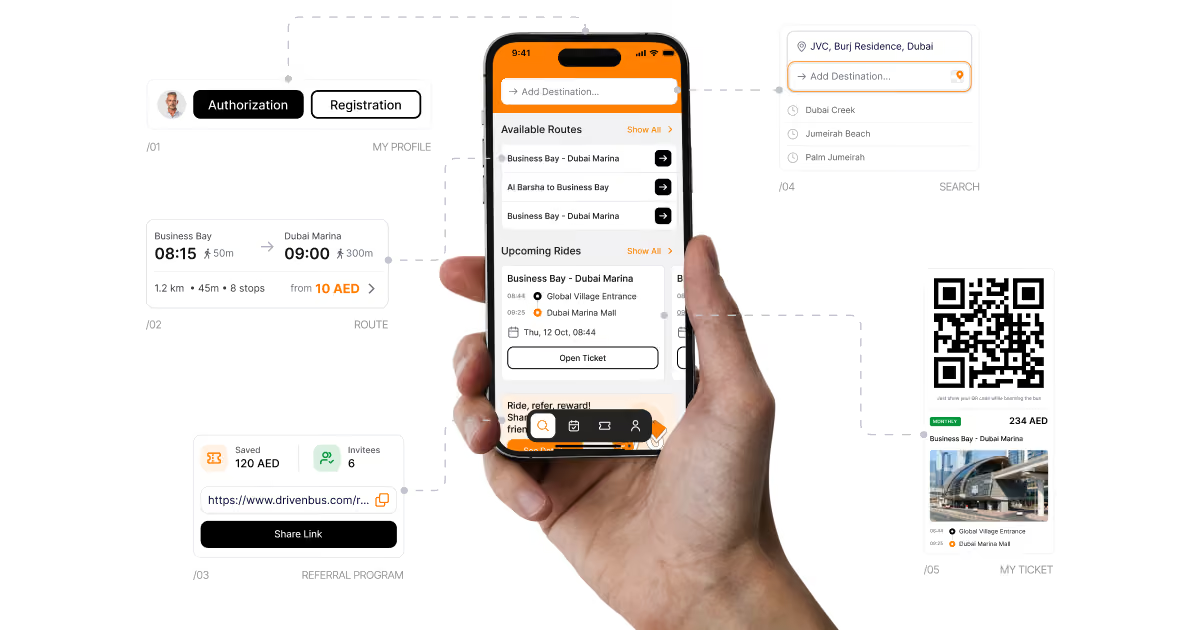
Our client’s DrivenBus platform required Google Maps, Stripe, Firebase, and a QR validation layer. Each with its own data contract, each touching the core booking flow. The integration scope was defined upfront. That clarity is what kept the build on track. Scope creep in integration work doesn't look like new features. It looks like "while we're in there, can we also connect..."
Travelport API integration scope has a natural expansion pressure. Air is working, so let's add a hotel. The hotel is working, so let's add NDC. NDC is working, so let's add ancillaries. Each addition is reasonable. Together, without a defined scope boundary, they extend the build timeline and fragment the testing coverage. Define your content domains before development starts. Add new domains in planned phases, not mid-sprint.
Security
Data transactions demand absolute perimeter security. Vulnerable financial modules leak critical traveler data instantly. For instance, during our Krytter project, we mapped strict multi-jurisdiction compliance logic. We secured tax computations across split payment methods flawlessly.
Travelport APIs handle raw payment tokens and sensitive personal records. Follow a precise workflow:
Isolate your financial module.
Encrypt data payloads before transmission.
Audit role permissions quarterly to prevent unauthorized account access.
A loose validation layer exposes your platform to massive liability.
These challenges aren't reasons to avoid Travelport API integration. They're the map of where builds stall, and where the right partner makes the difference between a six-month project and a twelve-month one.
At COAX, we've built across travel, logistics, transport, and telematics long enough to have seen every one of these failure modes in production. From managing complex GDS session states to integrating a modern airline booking API, we cover each distinct domain. Within each, we can also keep your architecture secure and scalable.
FAQ
What is Travelport’s difference from Amadeus or Sabre?
This is one of the most common questions we hear from founders evaluating GDS options. The core difference is market positioning. Travelport skews toward agency and OTA use cases, with stronger API modernization through Travelport+. Amadeus leads in airline-side distribution. Sabre dominates North American corporate travel. Your supplier relationships and target market should drive the choice, not brand recognition.
Can I integrate Travelport API into an existing booking platform, or does it require a rebuild?
Travelport API integration into an existing platform is standard. It doesn't require a rebuild unless your current architecture has no normalization layer and your booking flow is tightly coupled to a single data source. The realistic scope is adding a new integration layer, mapping Travelport's response schema to your internal data model, and extending your session management logic. Arrival's platform we build took exactly this approach. It extended an existing front-end rather than replacing it.
How does Travelport API pricing work, and what should I budget?
Travelport API pricing isn't published as a flat rate. It's structured around your agency type, transaction volume, and content scope, negotiated through a commercial agreement with a Travelport sales representative. Most founders underestimate two costs. The first one is the integration labor to normalize GDS and NDC responses into one internal schema. The second one is the ongoing maintenance as schema versions update. Budget for both before your first line of code.
How long does a full Travelport API integration take?
A complete integration covering air, hotel, and vehicle typically runs three to five months for a team that hasn't built on the platform before. The timeline depends on your existing architecture, your normalization layer complexity, and how much of your booking flow is custom versus standard. From our builds at COAX, the phase that consistently surprises teams is session state testing. Happy path testing takes days. Edge case and recovery testing takes weeks.
What is the difference between Travelport JSON API and the Universal API?
Travelport API documentation covers both. The Universal API is the legacy SOAP/XML interface, stateful, schema-heavy, and widely deployed across existing integrations. The JSON API is the modern REST alternative, faster to integrate and better suited to NDC content. New builds should default to the JSON API. Teams inheriting older integrations are often on Universal API and face a migration decision. Both interfaces access the same underlying GDS content. The difference is speed, schema complexity, and long-term maintenance cost.









































































































.avif)




%20for%20hotels.avif)


.avif)
.avif)


.avif)




.avif)
.avif)




.avif)


.avif)

We are interested in your opinion