Modern travelers demand a fast, contactless, automated, and easy booking experience, and it goes with railway ticket reservation just as much. However, in many cases, they still face outdated systems, complex ticket return procedures, and timetable mistakes. However, a modern railway reservation system turns the demand into confirmed bookings without friction.
Real-time inventory control tracks every seat across every train, every channel, simultaneously.
Dynamic pricing adjusts fares automatically based on demand, booking window, and class availability.
Booking engine speed processes search, hold, payment, and PNR generation in under two seconds.
Multi-channel distribution sells through your own platform, agents, and GDS connections from one inventory.
Passenger data management stores profiles, travel history, and preferences to personalize every journey.
Custom development fits the system to your network structure, legacy infrastructure, and operational rules.
In this article, we outline the technical basics and key features of railway booking software and rail booking engines specifically. We also break down the key options you can choose from, explore the systems used by major train operators, and share some insider implementation tips.
What is a railway reservation system?
A railway reservation system is a digital platform that lets passengers search for trains, book tickets, and manage travel. At the same time, it gives railway operators full control over scheduling, capacity, and revenue.
As Promoth R. describes it in his research, the core function is to handle "enquiry about the trains available based on source and destination, booking and cancellation of tickets, and enquiry about the status of the booked ticket."
In short, it is the operational background connecting what passengers need with what operators can offer.
Railway booking software market
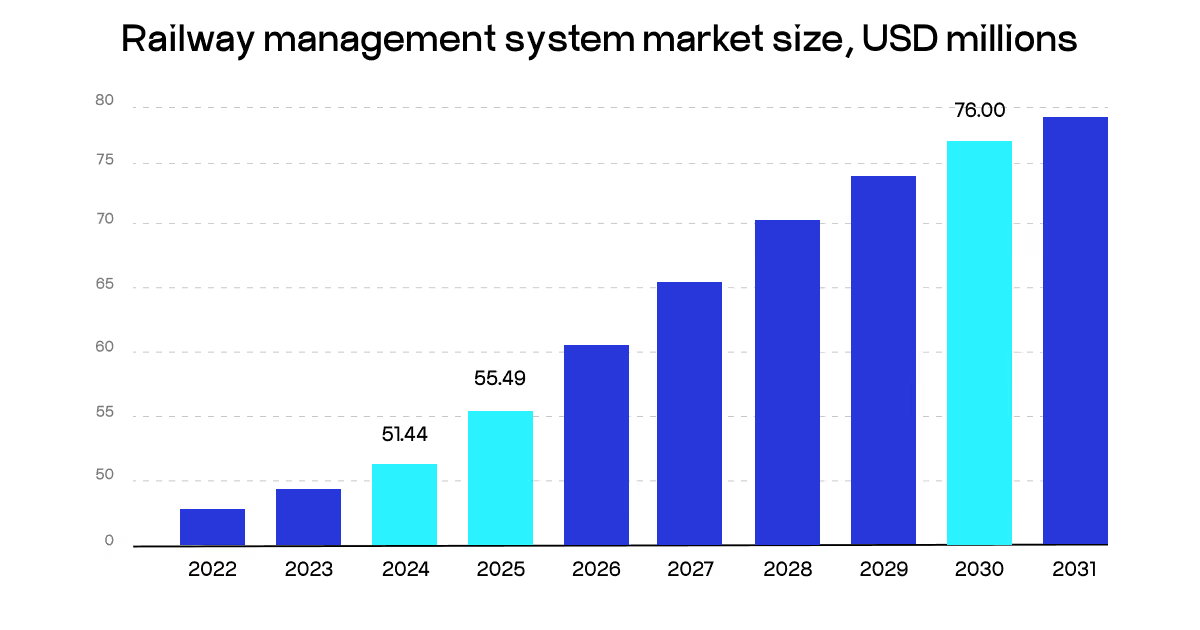
The railway management system market was worth USD 55,493.2 million in 2025 and is projected to reach USD 76,001.3 million by 2030, growing at a CAGR of 6.5%. Europe alone holds a 26.3% revenue share of that market.
Those numbers make sense when you look at usage: EU rail passenger transport hit a record 443 billion passenger-kilometres in 2024, up 5.8% from 2023 and 10.7% above pre-pandemic 2019 levels.
More passengers mean more bookings, more routes, and more pressure on the reservation infrastructure to perform. This explains why the demand for rail reservation booking platforms is growing fast.
Now, let’s outline how these systems keep everything in track for rail travel businesses.
How it manages seat inventory, schedules, and ticket pricing
A railway booking software platform does not just store information. It processes it in real time, across thousands of simultaneous requests, and translates raw operational data into the booking experience you see on screen. Here is how that actually works for each core function.
Seat inventory.
Every seat on every train exists as a record in a central database. When you open a search, the system queries that database and returns only what is genuinely available at that moment. The moment someone selects a seat, it gets a temporary hold, usually for 10 to 15 minutes. If the booking is completed, the seat is marked sold. If the session times out, it is released back into available inventory.
This all happens through a process called real-time inventory locking. Without it, two passengers in different cities could buy the same seat on the same train. The rail reservation system prevents that by processing each request sequentially against the same inventory pool, not a cached copy of it.
When trains fill up, the system may also trigger waitlist logic, automatically queuing passengers and notifying them if a cancellation frees up a seat.
Schedules.
Schedule data is maintained in a structured timetable layer that sits behind every search result. When a passenger queries a route, the system does not just return a flat list of trains. It calculates connections, layover times, and total journey duration, then filters results by departure window.
What makes this complex is that timetables are not static. Disruptions happen. An operator delays a service, cancels a stop, or adds capacity on a busy route. The railway management system propagates those changes across the platform in real time, so a passenger searching five minutes after a delay is announced already sees the updated departure time, not the original schedule.
For multi-leg journeys, the system also checks that connection windows are realistic, accounting for minimum transfer times at each station.
Ticket pricing.
Pricing in a rail reservation system is not a fixed number. It is the output of a pricing engine that recalculates fares based on several variables every time a search runs.
The core variables are how far in advance you are booking, which travel class you selected, how many seats at each fare tier are still available, and what the demand curve looks like for that route on that date. As the cheapest fare tier sells out, the engine automatically moves remaining availability to the next tier up.
This is where travel booking engines for rail differ from simple ticketing tools. A booking engine connects your front-end purchase experience to live backend data, recalculating availability and price with every search. According to T&E's ranking of 27 European rail operators, ticket price is the top factor passengers consider when choosing rail, cited by 49% of European consumers. That makes dynamic pricing not just a technical feature but a competitive necessity.
How a railway reservation system works
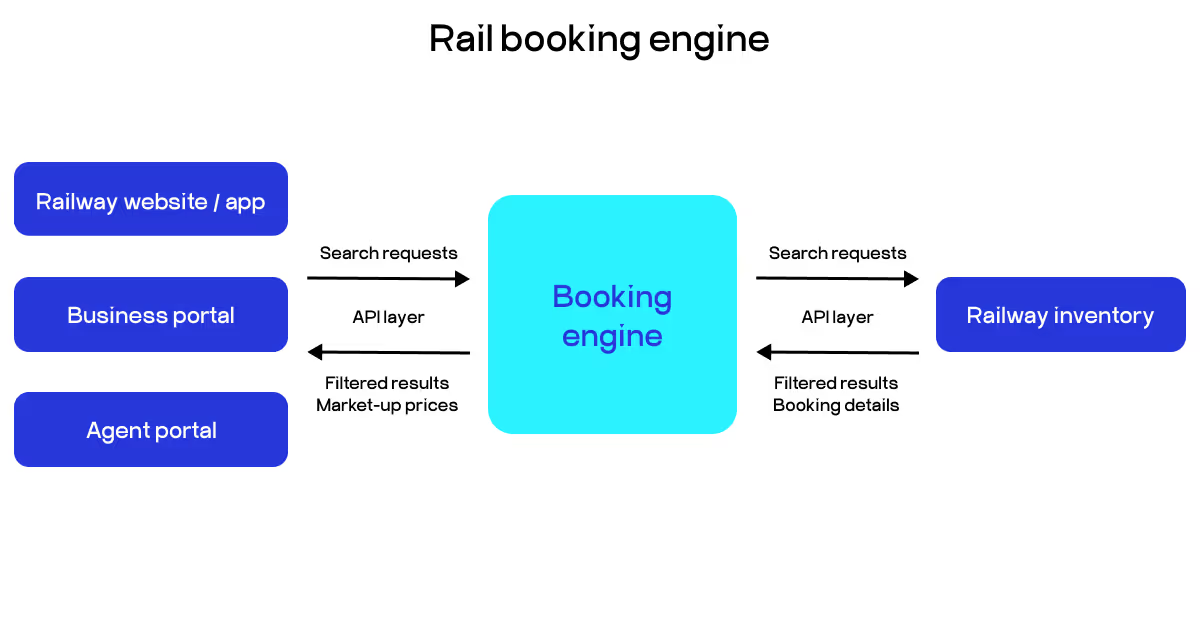
Generally speaking, an online railway reservation system is a two-sided pipeline. On one end you have passengers searching for trains. On the other end, you have live railway inventory. Everything in between, the logic that matches a search to an available seat at a real price, is the reservation system doing its job.
The workflow moves in one direction: request in, confirmation out. Here is what happens at each step.
You open a railway website, mobile app, or business portal and enter your origin, destination, and travel date. That input becomes a search request. The request travels through a rail booking API layer into the booking engine, which is the processing core of the system. The booking engine does not guess. It queries the railway inventory directly, pulling live data on which trains run that route, which seats are still available, and what the current fare is for each available option.
The engine filters those results and returns them to your screen, often with prices already adjusted based on demand and booking window. You pick a train, select a seat, and enter payment. At that moment, the system places a temporary hold on the seat, preventing anyone else from booking it while your transaction processes. Once payment clears, the hold converts to a confirmed booking, the seat record updates in the central inventory database, and you receive a ticket.
If payment fails or you abandon the session, the hold expires, and the seat returns to available inventory automatically, usually within 10 to 15 minutes.
As Pélerin and Lombard describe it, distribution is a strategic asset for railway operators, not just a technical function. The direct link between the system and the passenger is what enables real-time travel updates, proper application of passenger rights, and accessibility support throughout the journey. That direct link runs through railway booking software, and how well that software is built determines how smooth or broken that experience feels on both ends.
Interaction between passengers, railway operators, and third-party booking platforms
Three parties are always involved in a reservation railway ticket booking, and each one interacts with the system differently.
Passengers interact through the front end: the operator's own website or app, a third-party travel platform, or a travel agent portal. It looks like a simple search and checkout flow. Behind it, two other parties are doing the real work.
Railway operators control the inventory. They set schedules, define fare tiers, manage capacity, and decide how much inventory gets shared externally. How pricing data flows through the system is a direct business decision, not just a technical one.
Third-party platforms, including GDS systems, are in the middle. A GDS connects to railway operators through standardized data feeds, making multi-operator itineraries possible without separate integrations for each carrier. These platforms access inventory through a rail booking API under commercial agreements that govern data access, display rules, and fees. As Pélerin and Lombard state, those fees need to stay proportional to the value intermediaries actually add, because higher distribution costs land on passengers through higher ticket prices.
The result is a three-layer system where railway booking systems have to serve all three parties at once: accurate availability for passengers, inventory control for operators, and structured data access for platforms without handing over the kind of leverage that has hurt margins in the hotel industry.
Technical architecture of a railway reservation system
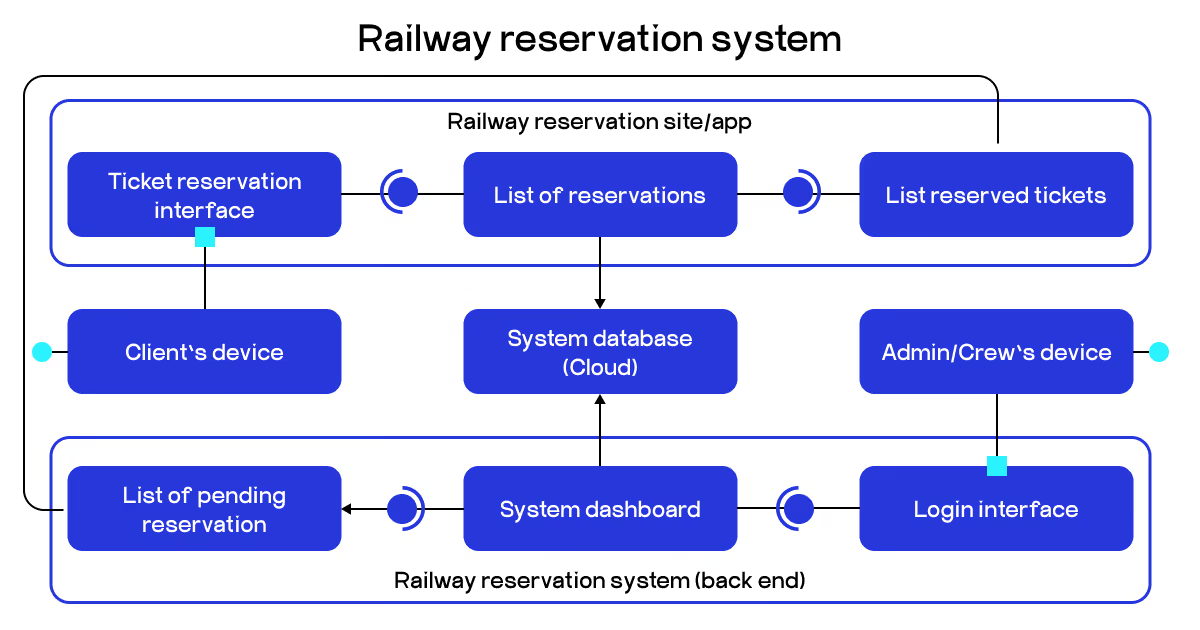
Let’s start with a component diagram for a railway reservation system architecture: the passenger-facing site or app sits on top, handling ticket reservations, reservation lists, and reserved ticket views.
It connects through a cloud database to the back-end layer, where an admin dashboard manages login, pending reservations, and operational controls. That two-layer structure, front-end for passengers, back-end for operators, is exactly how production rail ticket booking software is built.
Here is what powers each layer.
The app server handles all business logic: search queries, seat allocation, fare calculation, and cancellation rules. Python with Django or Flask, Node.js, and Go are common choices because they handle concurrent requests well. Large-scale deployments use a microservices architecture, splitting user management, ticketing, scheduling, and payments into independent services that can be scaled or updated.
Between the front end and these backend services sits an API gateway. It routes requests, enforces rate limits, and handles authentication. For international rail, this layer also connects to GDSs like Amadeus or Sabre via SOAP or REST APIs, giving the system access to live inventory across multiple networks.
Database management is where correctness is a must. Railway reservation systems rely on relational databases, most commonly MySQL, PostgreSQL, or Oracle for enterprise deployments, because they support ACID transactions. ACID stands for Atomicity, Consistency, Isolation, and Durability. In plain terms, it means that if two passengers try to book the same seat at the same millisecond, the database resolves the conflict cleanly and only one booking succeeds. No duplicates, no data loss.
The core database entities in any railway management system are trains and schedules (train numbers, routes, departure and arrival times), stations (location codes and names), bookings and tickets (PNR number, passenger ID, seat numbers, fare), and user profiles (registration and authentication data).
A real example is the open-source Railway Management System by MonicaDara on GitHub, which uses MySQL as the backend database. The system stores train details in CSV, including train number, station codes, arrival and departure times, destination stations, and distance. The railway reservation app code is organized into modules for data validation, data insertion, and user functions covering booking, cancellation, fare checking, and schedule viewing.
To avoid hammering the database on every search, a caching layer using Redis stores frequently queried schedule and availability data in memory. The database only gets hit when something changes, like a seat being booked or a schedule update being pushed.
Integration with payment gateways and authentication services
A railway reservation booking is only complete when two things happen: payment is confirmed, and the passenger's identity is verified. These are not features bolted on at the end. They are core integrations that have to be woven into the transaction flow from the start.
Payment gateway integration connects the railway reservation system to external processors such as Stripe, PayPal, Razorpay, or national banking APIs. When a passenger reaches checkout, the booking engine places a temporary hold on the selected seat and simultaneously initiates a payment session with the gateway. The gateway handles card validation, fraud checks, and authorization entirely on its side, returning a success or failure signal to the reservation system. If payment succeeds, the hold converts to a confirmed booking. If it fails, the hold releases, and the seat goes back into available inventory.
All sensitive payment information flows directly between the passenger's browser and the payment gateway through tokenization, meaning the gateway replaces card details with a one-time token that the reservation system uses to reference the transaction without storing anything sensitive. This is what PCI DSS compliance requires, and any production railway booking system has to meet it.
Authentication is on the other side of the same transaction. Before a passenger can complete a railway reservation booking, the system needs to confirm who they are. Most modern implementations use OAuth 2.0 for social login (Google, Apple) and JSON Web Tokens (JWTs) for session management.
After login, the server issues a signed JWT that the client sends with every subsequent request. The server validates the token without needing to query the user database each time, which keeps authentication fast under load.
For higher-security use cases like account changes or ticket refunds, multi-factor authentication (MFA) adds a second verification step via SMS or an authenticator app. Enterprise deployments connecting to national rail networks may also implement Single Sign-On (SSO) so that railway staff accessing internal booking tools authenticate once through a central identity provider rather than managing separate credentials for each system.
Security and data protection
Security in a railway reservation system project covers two distinct threat surfaces: the booking platform itself and the operational railway infrastructure behind it.
According to ENISA, booking management systems face specific real-world attack scenarios. In 2017, Rail Europe North America suffered a three-month data breach exposing customer booking data. In 2019, China Railway's official booking platform was breached, and passenger data was sold on the dark web. DDoS attacks targeting ticket-purchase infrastructure are also documented, flooding booking servers until passengers cannot complete transactions.
The primary security requirements for any railway booking software are:
Access control and authentication (unique accounts, role-based permissions, regular access reviews).
Network segmentation to isolate booking systems from operational rail infrastructure.
Data encryption at rest and in transit.
Traffic filtering to block unauthorized flows between system components.
For data protection, GDPR compliance is a must for any system operating in the EU. Passenger data, names, payment details, and travel history must be stored with a defined retention period, accessible only to authorized roles, and deletable on request. Privacy by design means these rules are built into the data model from the start.
What is a rail booking engine?
A rail booking engine is the processing core that lies between what a passenger sees and what the railway actually holds. It receives a search request, retrieves live data from railway inventory, applies pricing logic, and returns bookable results, all in real time.
As Zongjiang describes, the goal is to solve the core problem of railway ticketing through electronic commerce, improving both service quality and access for passengers at scale. In practical terms, the rail booking engine is what makes that possible. It handles the query, the seat hold, the payment handoff, and the ticket generation without any of those steps being visible to the person booking.
How it connects front-end booking platforms with railway systems
The connection starts with APIs. When you search for a train on a website or app, the front end sends that query to the rail booking engine via an API call. The engine translates that request into the format the railway database understands, either XML for legacy systems or JSON for modern ones, retrieves live schedule and availability data, and sends it back.
The harder problem is legacy infrastructure. Most national railway databases were not built with modern interfaces in mind. Middleware bridges that gap, sitting between the booking engine and the railway's backend to translate between old and new data formats. This is what makes it possible to build a clean, modern rail travel booking interface on top of a railway system that has been running the same database architecture for decades.
Once a passenger selects a train and confirms, the engine shifts from read to write. It locks the seat in the backend system, hands off to the payment gateway, and on successful payment, generates a PNR and an electronic ticket. The same availability update propagates instantly across every channel connected to that inventory, so the seat disappears from B2C websites, B2B portals, and agent platforms simultaneously.
A practical example of a lightweight front-end implementation is the system built by MD Affan Asghar, a responsive web application using HTML, CSS, and JavaScript. Users navigate a booking form, fill in travel details, and confirm a booking to receive reservation details. The project the core user flow that a real railway reservation system connects to actual inventory: route selection, form submission, and booking confirmation.
Step
What happens
Technology involved
Search
User queries routes, the engine retrieves live schedules and fares
REST or SOAP API for railway inventory
Seat hold
Engine temporarily locks the selected seat
Concurrency control in backend database
Payment
Transaction processed via secure gateway
Payment API with tokenization
Confirmation
PNR generated, ticket issued, inventory updated
Booking database write, email or app notification
API integrations
The railway ticket reservation market runs on a small number of API providers that aggregate inventory from railways worldwide. Here is how the main players actually differ from each other.
Amadeus connects to over 90 railways globally through SOAP APIs. Its main advantage is depth: rail content sits inside the Amadeus PNR alongside flights, which makes it the default choice for full-service travel agencies that handle combined air-rail itineraries. However, SOAP APIs require more integration work than REST.
Sabre’s REST APIs cover nine major European and North American rail networks, including France, Italy, and Germany. Fewer networks, but a simpler integration path and better suited to platforms that want European rail, rather than global coverage.
Travelport's Universal API focuses on intermodal bookings, giving access to US, Canadian, and European operators through a single connection. The use case for railway reservation system integration here is specifically combined air-rail ticketing, where a passenger books a flight and a connecting train in one transaction.
For platforms that only care about ground transport, specialized aggregators like Distribusion skip the airline overhead. They offer JSON APIs with broad European rail coverage and faster integration timelines, which makes them the practical choice for regional booking platforms, travel apps, or any product where rail is the primary product and not just an add-on to flights.
The decision about which API to integrate determines which routes you can sell, which markets you can serve, and what your booking flow looks like for passengers completing a railway ticket reservation on your platform.
The main features of railway booking software
When we review the functionality of a production-grade railway reservation system, we notice that they fall into the six core feature categories. Each one solves a specific operational problem. Here is what each actually does.
Automated ticketing is the feature passengers interact with directly. This feature handles the full ticket lifecycle without manual intervention: search, seat selection, booking confirmation, PNR generation, and ticket delivery by email or app. As Reddy and team describe, ticket generation and validation are core functions that modern systems are extending further with smart technologies, including biometric verification through systems like India's UIDAI. Automation removes the queue, reduces human error, and makes the process available 24 hours a day.
Real-time updates. A railway reservation system that shows stale data is worse than no system at all. Real-time updates cover seat availability, schedule changes, platform assignments, delays, and cancellations. Every change in the backend goes instantly to every channel (the operator's own app, third-party platforms, and agent portals). This is what prevents overbooking and ensures that the right price and seat count are met.
User-friendly interfaces. The front end has to work for everyone, from frequent business travelers to first-time bookers. That means clean search forms, readable fare breakdowns, accessible seat maps, and a simple checkout flow. Responsive design is now standard: the same railway ticket booking software interface needs to work equally well on desktop, tablet, and mobile.
Multi-platform accessibility. A modern rail reservation system serves passengers across multiple entry points, like the operator's website, a mobile app, third-party travel platforms, GDS-connected travel agents, and sometimes physical kiosk terminals. All of these channels pull from the same live inventory. Multi-platform accessibility means that a seat booked through an agent portal and a seat booked through the consumer app are updating the same database record in real time, with no channel seeing stale availability.
Payment gateway integration. Your system needs to accept credit and debit cards, digital wallets, bank transfers, and increasingly, buy-now-pay-later options, depending on the market. Payment gateway integration handles tokenization of card data, fraud detection, currency conversion for international travelers, and refund processing for cancellations. The booking is not confirmed until payment clears, and the seat hold expires automatically if the payment window times out.
Security and compliance. Passenger data, payment credentials, and booking records are high-value targets. As the ENISA Railway Cybersecurity report documents, booking management systems have been directly targeted in real breaches, including the Rail Europe North America data breach. Security features in a production railway booking software tool include role-based access control, encrypted data storage and transmission, network segmentation, DDoS protection on booking-facing infrastructure, and GDPR-compliant data handling for systems operating in Europe.
Now that we’ve defined the key functionality that your system might have, let’s meet the options of solutions you can choose from.
Best railway reservation systems
To choose the perfect tool for your use case, you need to start with your use case. The right rail ticket booking software depends on whether you are a national operator managing millions of seats, a travel agency selling multi-country itineraries, or a startup building a consumer-facing app. Here are some of the most widely used and powerful picks.
Platform
Best for
Coverage
Integration type
Amadeus
Full-service travel agencies, combined air-rail
90+ railways worldwide
SOAP API
Sabre
European and North American rail, simpler integration
9 major networks
9 major networks
Travelport
Intermodal air-rail bookings
US, Canada, Europe
Universal API
Rail Europe
Consumer and agency pan-European booking
35 countries, 230+ operators
Web platform and API
Evolvi
UK rail specialists, TMCs, international businesses entering UK market
UK only
EvolviWS API
Railbookers
Luxury and independent multi-country rail travel
Global
Platform
Rail Studio
Heritage, regional, luxury operators
Regional
Platform
Travelfusion tfRail
Developers wanting cross-border rail via single API
North America and Europe
Single API
Anchor
Operators selling direct and through agents
Configurable
Platform
GDS platforms (like Amadeus, Sabre, and Travelport) are the backbone of corporate and agency rail travel booking sales.
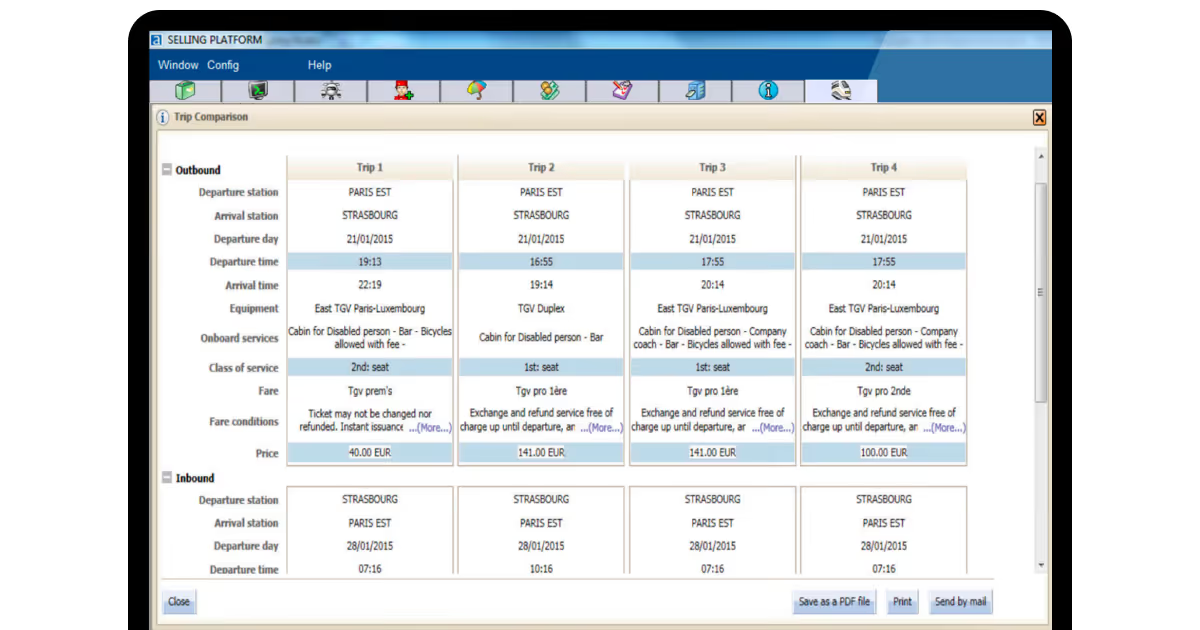
Amadeus connects to over 90 railways worldwide and sits inside the same PNR as flights, which makes it the default for full-service agencies handling combined itineraries. Sabre covers nine major European and North American networks via REST APIs, with a simpler integration path. Travelport's Universal API focuses on intermodal bookings, combining rail with air in a single transaction. All three are built for volume and for businesses that already operate within GDS infrastructure.
Amadeus rail display
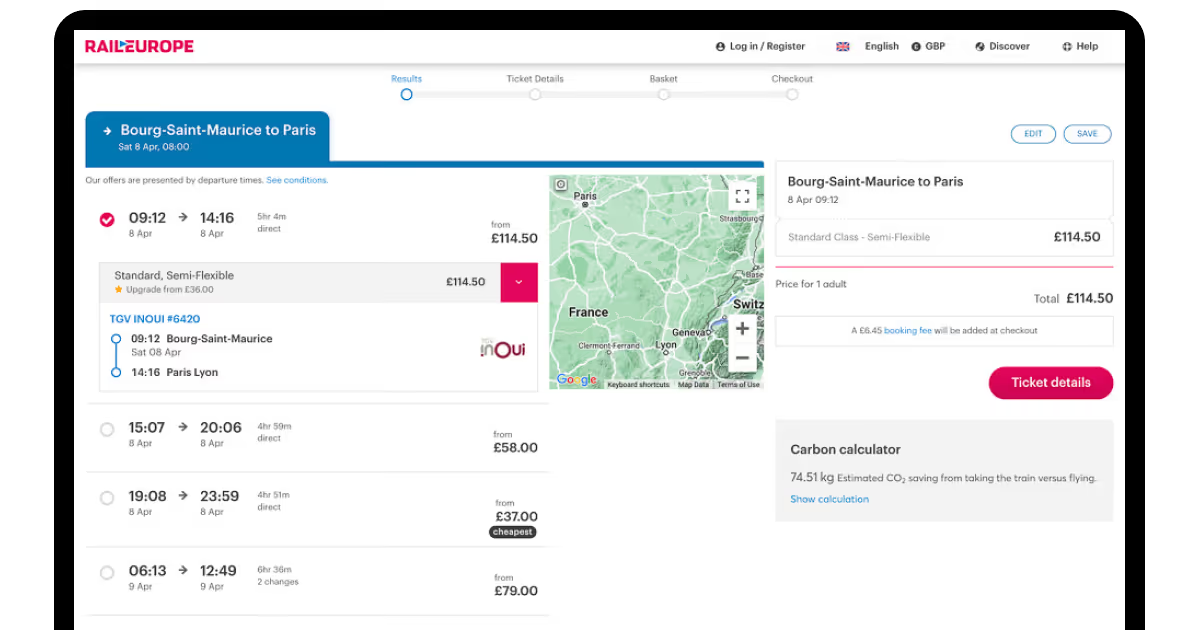
Rail Europe serves as an aggregator for 230+ European rail operators and serves individual travelers and travel agencies.
It covers 25,000+ destinations across 35 countries, supports booking in USD, EUR, GBP, AUD, and CAD, and holds official partner status with operators in the UK, France, Spain, Italy, Germany, Belgium, Austria, Switzerland, Luxembourg, and the Netherlands. For a travel business wanting pan-European rail travel booking capability without building individual operator connections, Rail Europe provides the broadest consumer-facing coverage available.
Rail Europe
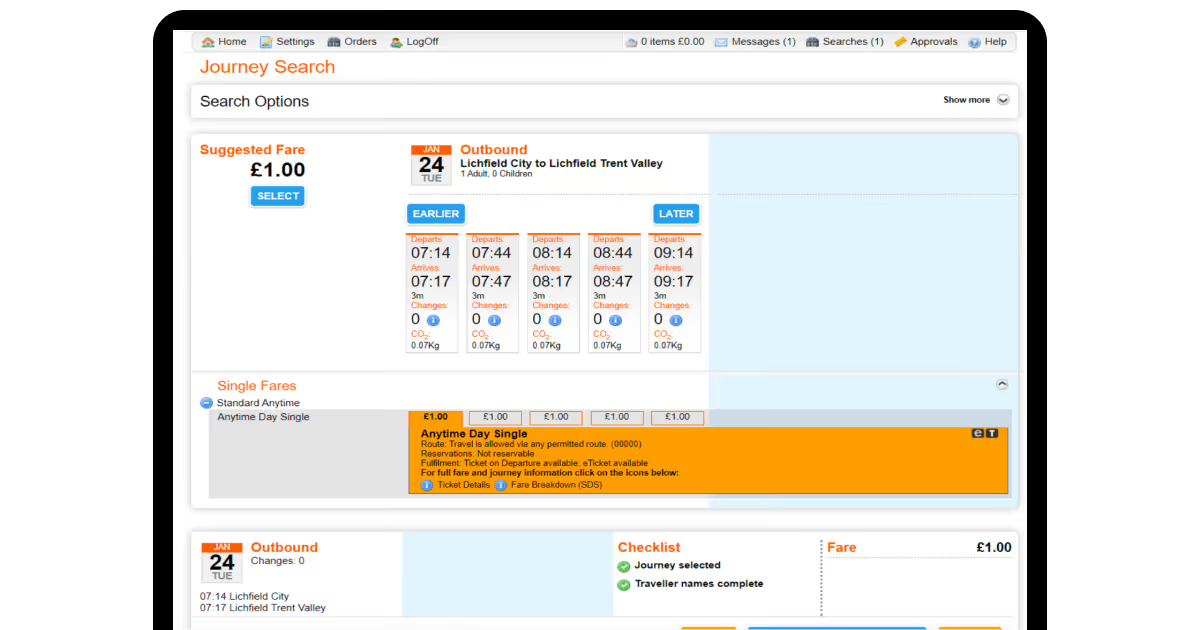
Evolvi Rail Systems takes a narrower but deeper approach, covering UK rail content only.
Its EvolviWS API has generated over 8.4 million tickets for partners and accounts for 16% of split-ticketing usage in the market, delivering over £26.2M in savings for customers. EvolviNG serves the UK travel management company market as a self-booking tool. For any business that needs to sell UK rail tickets accurately and at competitive fares, including international travel companies entering the UK market, Evolvi is the specialist choice.
Evolvi Rail Systems
Specialized platforms serve niches that GDS systems do not cover well.
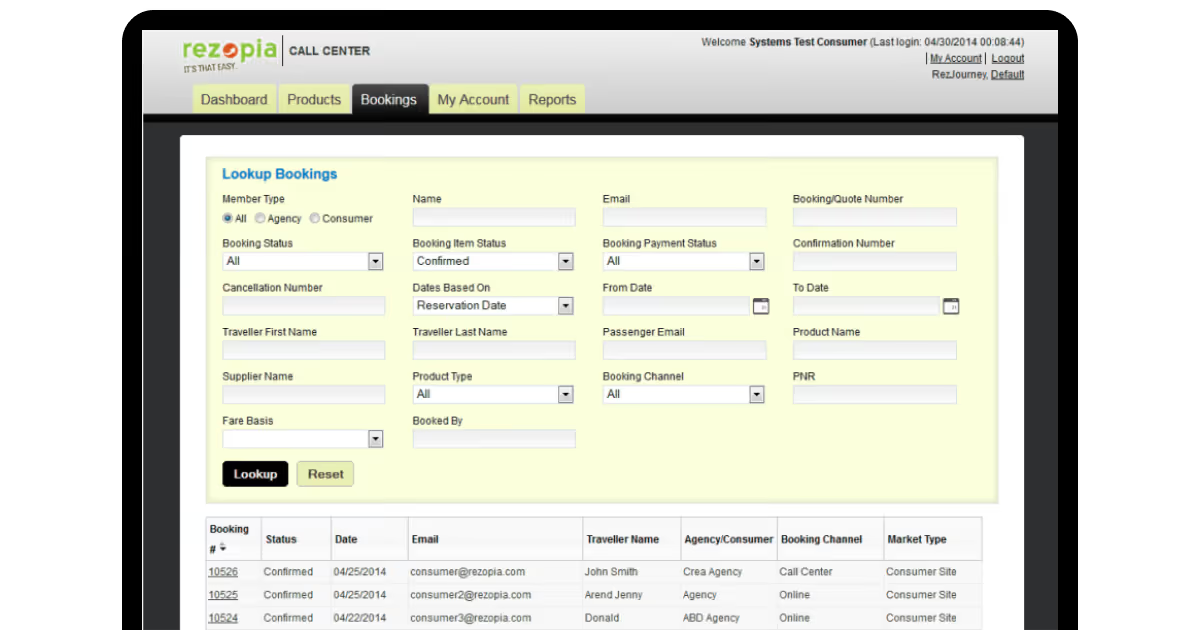
Railbookers focuses on independent and luxury multi-country train vacations. Meanwhile, Rail Studio is built for heritage, regional, and luxury railways, managing complex itineraries. Rezopia handles rail inventory, fares, and distribution from a cloud-based railway reservation system built for operators rather than resellers. Anchor offers scheduling, ticket management, and direct and agent-facing sales tools in one platform. As another option, Travelfusion (tfRail) has its own category: an API connecting North American and European train companies, designed for developers who want clean, standardized access to cross-border rail content.
Rezopia
Systems used by national railway operators
National operators typically don’t use off-the-shelf railway booking software designed for travel agencies. They run purpose-built or heavily customized inventory and reservation platforms that handle seat allocation, dynamic pricing, waitlists, and cross-border connections at a scale that commercial products cannot match.
S3 Passenger by Sqills is the most widely adopted platform among major European operators. SNCF in France runs on it. S3 handles inventory management, dynamic pricing, and booking in a flexible architecture that operators can configure without rebuilding the core system. Its adoption by large national operators is a sign that the industry is moving away from fully bespoke legacy builds toward configurable platforms.
RARS (Rail Availability and Reservation Service) is the UK's national system, operated by the Rail Delivery Group. It replaced the national reservation infrastructure and is now at the center of UK rail ticket reservation across all train companies. Any retailer selling UK rail tickets, including Evolvi, connects through this system.
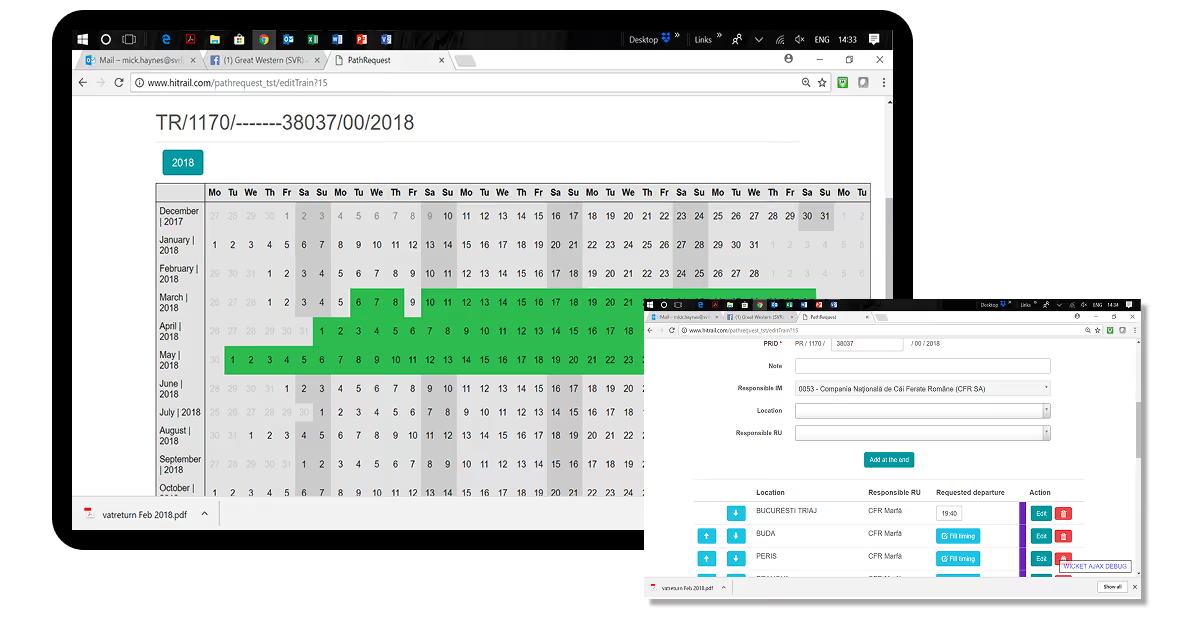
Hit Rail’sHermes Application 01, defined under UIC Leaflet 918-1, is the data-transfer network used by over 13 major European railway companies for cross-border seat, couchette, and berth reservations. It is the interoperability layer that makes it possible to book a through journey across multiple national networks, with seat reservations confirmed on each operator's system by a standardized protocol.
HIT Rail
T&E's December 2024 ranking of European operators found that SBB (Swiss Federal Railways), ÖBB (Austrian Federal Railways), and Flixtrain deliver the best booking experience for consumers, graded across six criteria: booking horizon, cancellation policy, modification policy, third-party availability, language support, and mobile app ratings. The gap between the leaders and the laggards is not primarily about the underlying railway management system but about the policies operators choose to implement on top of it. SBB and ÖBB allow flexible modifications and broad third-party distribution.
Other national operators worth noting for their software maturity:
NS in the Netherlands operates one of Europe's most developed rail networks with a strong digital booking product.
DSB in Denmark and SJ in Sweden both provide clean, multi-language booking experiences.
Cross-border services, including Eurostar, TGV Lyria, and Italo in Italy, each run their own reservation infrastructure, some connected to GDS systems for international distribution and some keeping distribution more tightly controlled.
The railway management system at this level is mission-critical infrastructure, this is why there’s a division between these users and other companies in terms of the solutions they implement.
Benefits of a custom railway reservation solution
Off-the-shelf platforms make sense up to a point. But operators and travel businesses with specific route structures, pricing models, or passenger service requirements consistently run into the limits of configurable products. That is where a custom railway reservation app built by an experienced travel software development company changes the outcome.
A custom system gives you full control over your pricing logic. Dynamic pricing rules in commercial platforms follow the assumptions baked into those platforms. A custom build lets you define your own fare tiers, demand curves, promotional pricing, and group booking rules without working around someone else's architecture. The same applies to your booking flow, your data model, and your integration points.
Rail booking API design is another area where custom development pays off. Operators connecting to GDS systems, payment gateways, loyalty programs, and third-party distributors each have different requirements. A custom API layer can handle all of those connections cleanly, with exactly the data transformations your system needs, rather than forcing your operations into the data model a commercial product supports.
Scalability works differently in a custom build. You are not subject to the pricing or performance limits. Your infrastructure scales with your demand, and you own the architecture decisions that determine how it behaves under peak load.
COAX has built complex, data-intensive platforms in the travel sector. That means the development team understands what a railway reservation system truly requires, from the features to the specific regulatory requirements. It’s a specialized build, and the experience of a company that has delivered similar systems is the difference between a product that performs at launch and one that runs into fundamental architectural limits.
Implementing a railway reservation system
Building a railway ticket reservation system is a sequence of decisions, each one constraining the next. Getting the order right matters more than getting any individual step perfect.
Step 1: Define scope and user roles.
You need a clear picture of who uses the system and what they need to do. A passenger-facing online rail ticket booking product has different requirements than an operator's admin tool. Most production systems serve three distinct user types: the passenger (search, book, cancel, check PNR status), the administrator (manage trains, routes, fares, seat inventory, refund rules), and potentially a third-party agent or API consumer. The OmkarMetri Railway Reservation System on GitHub is an illustration of this structure: passengers get a view-level account with access to reservations, cancellations, and train enquiries, while the railway administrator operates with elevated access to modify the core database, add train routes, and manage user records.
Step 2: Design the data model.
The database is the foundation on which everything else rests. There are several core entities a well-structured railway booking software requires:
Train details (train code, name, start and end stations, schedule frequency)
Seat availability (train code, class, number of seats)
Passenger information (ID, name, age, PNR)
Ticket reservation records (PNR, origin, destination, travel date, train code)
Payment records (payment ID, mode, amount, date)
Class definitions
Station and zone data
Refund rules.
The relationships between these entities determine how your system handles everything from multi-passenger bookings to partial cancellations. Get the data model wrong, and you rebuild it under production load.
Step 3: Build the core booking engine.
The booking engine needs to handle concurrent requests without overbooking, which means ACID-compliant database transactions and seat-hold logic with a timeout. The standard flow documented by Wang Zongjiang in his research on online railway booking system design covers the essential sequence: customer authenticates, searches by train number or route, system returns available trains with seat counts and prices, customer selects and books, system generates PNR and updates availability. That flow sounds simple. Making it reliable at scale, with multiple users hitting the same train simultaneously, is the engineering challenge.
Step 4: Integrate payment and authentication
Payment gateway integration connects the booking engine to external processors (Stripe, Razorpay, national banking APIs, depending on market) and handles tokenization, fraud checks, and refund flows. Authentication covers passenger login, session management via JWTs, and admin access controls. These are not optional features to add later. They are prerequisites for any live rail travel booking system.
Step 5: Build admin and operations tooling.
The admin interface is what keeps the system running. Train scheduling, route management, fare updates, seat inventory controls, cancellation processing, and refund management all require a functional admin layer. In the OmkarMetri system, the administrator accesses a master-password-protected panel to add and update trains, stations, and routes, and to manage users and passenger records. In production systems, this layer also includes reporting, audit logs, and role-based access so different operations staff have appropriate permissions.
Step 6: Test for concurrency and edge cases.
A railway booking software that works under light load and fails during a holiday booking rush is not a working system. Load testing, concurrency testing for simultaneous seat requests, and end-to-end testing of the cancellation and refund flow are all required before go-live. Edge cases to test include:
Two users are booking the last seat on a train simultaneously.
Payment failure mid-booking.
Session timeout during checkout.
Invalid PNR lookups.
Step 7: Deploy, monitor, and iterate.
Production deployment is the start of the operational lifecycle, not the end of the project. Monitoring covers system uptime, booking success rates, payment failure rates, and API response times. The first weeks after launch typically surface integration issues and UX friction that testing did not catch, so plan for rapid iteration.
Key challenges of implementing rail reservation systems
Every team building a railway management system faces more or less the same set of hard problems. Knowing them in advance does not make them easy, but it does prevent surprises.
Legacy system integration is the most common obstacle. National railway databases were not designed to be API-friendly. Jayasuriya and team describe what happens when infrastructure is not modernized: manual processes, no self-service seat reservation, limited stations with reservation capability, and passengers unable to see seat formats before booking. The gap between what passengers expect and what legacy systems can deliver is the core integration challenge. Travel API integration services bridge that gap with middleware layers, but the middleware has to be maintained.
Concurrency and inventory accuracy are linked. Every booking request is a race against other requests for the same seat. Without transaction isolation, overbooking happens. Managing this at scale, across multiple booking channels, updating the same inventory simultaneously, requires careful database design and caching strategy.
Dynamic pricing complexity increases with network size. A simple flat-fare system is easy to implement. A system with multiple fare classes, advance booking discounts, demand-based price adjustments, and promotional fares across hundreds of routes becomes a significant engineering problem. The pricing engine has to recalculate on every search without introducing latency that degrades the booking experience.
Cancellations trigger refund logic, so the full use case for the railway reservation system implementation isn’t just about booking. Passengers need automatic seat allocation when cancellations occur. Group bookings require different handling than individual tickets. Cross-border journeys involve multiple operator systems. Each of these scenarios adds complexity to both the data model and the business logic.
Regulatory and compliance requirements vary by market and add non-negotiable constraints. GDPR applies to passenger data in European deployments. PCI DSS governs payment data handling everywhere. These requirements affect interface design.
Security is a live concern. The ENISA Railway Cybersecurity report confirms that railway management system infrastructure is actively targeted. Authentication, data encryption, network segmentation, and penetration testing are operational requirements.
These challenges are complex and multifaceted. However, expertise-based travel booking software development services remove this complexity and risks. With 15+ years in the travel niche, knows how to build data-intensive platforms in this sector. For a railway reservation system project, that means full-cycle delivery: from requirements analysis and architecture design through development, integration, testing, and post-launch support.
We handle specialized integrations with payment gateways, GDS connections, third-party booking APIs, authentication services, and legacy railway database middleware. Additionally, our experts build AI capabilities into booking platforms where they add real value: demand forecasting for dynamic pricing, anomaly detection for fraud prevention, and personalization logic that improves conversion without adding friction to the booking flow.
Support does not end at launch. The team provides ongoing maintenance, performance monitoring, and iterative development as passenger volumes grow and requirements evolve.
FAQ
What are the latest tech trends in railway reservation booking?
IoT-enabled smart ticketing, AI-driven dynamic pricing, and mobile-first booking are reshaping the sector. Research identifies cloud computing, Big Data Analytics, and Mobility as a Service as core drivers. Contactless Be-in/Be-out ticketing, real-time PNR tracking, and API-based multi-operator distribution are now standard expectations in modern railway reservation booking platforms.
How do travel agents connect to railway booking software?
Agents connect through GDS platforms (Amadeus, Sabre, Travelport) or direct railway booking software APIs using XML or REST protocols. These provide live inventory, pricing, and seat availability. B2B portals with agent-specific dashboards allow markup management, group bookings, and commission tracking. Middleware handles legacy railway database translation, ensuring accurate real-time data across all agent touchpoints.
Do reservation railway ticket booking tools for regional companies fit smaller businesses?
Yes. Platforms like Rail Studio and Anchor are built specifically for regional and heritage operators with configurable inventory, dynamic pricing, and multi-channel distribution at a manageable cost. As Jayasuriya show in their Sri Lankan railway research, even basic reservation railway ticket booking features eliminate manual errors, reduce queues, and improve passenger experience significantly, regardless of network size.
How does COAX develop secure and efficient railway reservation systems?
COAX is a travel software development company that builds railway reservation systems following ISO/IEC 27001:2022 certified security practices covering risk assessment, access control, and continuous monitoring, alongside ISO 9001 certified quality processes. Development includes ACID-compliant databases, encrypted payment flows, penetration testing, and GDPR-compliant data handling, ensuring production-ready systems that perform reliably at scale from day one.















































































.avif)




%20for%20hotels.avif)

.avif)
.avif)


.avif)




.avif)
.avif)



.avif)


.avif)

We are interested in your opinion