A finance team loses 12 to 34 hours monthly to manual expense reconciliation. It’s even more nuanced in travel, as we’ve seen from COAX Software’s 16 years of building travel and transport platforms. Solving these challenges for our clients gave us the lens we used to evaluate the top 10 travel and expense management systems.
Based on our evaluation, the best travel and expense management software list tops with platforms that handle most organizational profiles at scale. Navan and Ramp lead for unified T&E and spend reduction. Also, Spendesk and Pleo dominate European VAT compliance.
Beyond those four, we identified six more platforms that work well for specific profiles. Each solves a distinct problem. To understand which option fits your needs, read on. After the evaluation, we answer the most common questions. At the end, we help you choose the right travel expense management tool for your business and decide if you need one in the first place.
How did we choose the best travel and expense management software?
Most travel and expense management software evaluations fail because they test happy paths. We evaluated these platforms the way we build them: against the scenarios that break production systems. We asked some tough questions.
What breaks at scale?
What causes adoption to collapse six months after rollout?
What data problems does the tool create downstream?
Our team at COAX Software has spent 16+ years building logistics, transportation, and travel platforms. This includes multi-operator coach booking systems and AI-powered fleet management for carriers operating more than 500 vehicles. That context shapes how we evaluate software. As a result, we're assessing whether a tool would survive contact with real dispatchers, finance teams, and travelers operating under pressure.
Our criteria and methodology
Our evaluation framework covers seven dimensions. Each was weighted by what drives outcomes in practice:
Policy enforcement architecture. Pre-approval controls matter more than post-hoc reporting. We evaluate whether the tool enforces policy at the moment of booking or swipe, not just flags violations during month-end review. This distinction is the difference between compliance and cleanup.
Adoption mechanics. We evaluate mobile UX, receipt capture speed, and booking interface quality — because a platform nobody uses is pure overhead. In every platform we've built, the features that drive retention are the ones that make the person's immediate task faster, not the dashboard their CFO reviews quarterly.
Scalability and multi-entity support. Companies grow. Platforms that require rearchitecting when you add a subsidiary or cross a currency boundary cost far more than their licensing fee suggests.
Data integrity and integration depth. We look past "integrates with QuickBooks" to ask: Does the sync run in real time or in batch? What happens when a transaction fails to match? In our logistics and fleet work, fragmented data is the primary reason visibility tools fail to deliver ROI. The same dynamic applies here. A travel and expense management tool that creates reconciliation debt is worse than a spreadsheet because it creates false confidence.
Analytics quality. We assess whether the reporting layer surfaces actionable signals. These can be budget burns by department, vendor concentration risk, policy exception patterns, or just product exports that someone has to process manually. Real travel analytics should reduce the questions a finance team has to answer manually, not generate more of them.
Total cost of ownership. Per-user pricing is the starting point, not the answer. We factor in implementation time, integration professional services, and the operational cost of working around the tool's limitations.
Vendor stability and support quality. In the platforms we've built, unreliable third-party dependencies are a recurring source of production incidents. We apply the same skepticism here.
"We always ask one question before recommending any tool. It is. What happens when the edge case hits? The differences show up when an employee is at an airport at 11 p.m., a receipt doesn't scan, and the approval workflow is broken. Build for that scenario, not the happy path", says Orest Falchuk, Head of Engineering at COAX Software.
Best travel and expense management software
The tools below are ranked from strongest to most limited based on our criteria above. No single platform is optimal for every business. Logically, we've noted where each fits best and where it doesn't. What follows is a best travel and expense management software evaluation grounded in how these tools behave under real operational conditions.
Platform
Best for
Cards
Travel booking
Policy enforcement
Multi-entity
ERP integration
Pricing model
Navan
Mid-market & enterprise
Virtual + physical
Native
At booking/swipe
Yes
NetSuite, Sage, QB, Xero
Custom / per-seat
Ramp
Cost-conscious teams
Virtual + physical
Via integrations
At swipe
Yes
QB, Sage, Xero
Free / $15 per user
Spendesk
European mid-market
Virtual + physical
Limited
Pre-approval
Yes
NetSuite, Xero, Sage
Custom
Pleo
European SMB/mid-market
Virtual + physical
Limited
Real-time
Yes
Xero, NetSuite
Per user
Payhawk
Multi-entity businesses
Virtual + physical
Via integrations
At swipe
Strong
NetSuite, Oracle
Custom
Airbase
AP + expense unified
Virtual + physical
No
Pre-approval
Yes
NetSuite, Sage
Custom
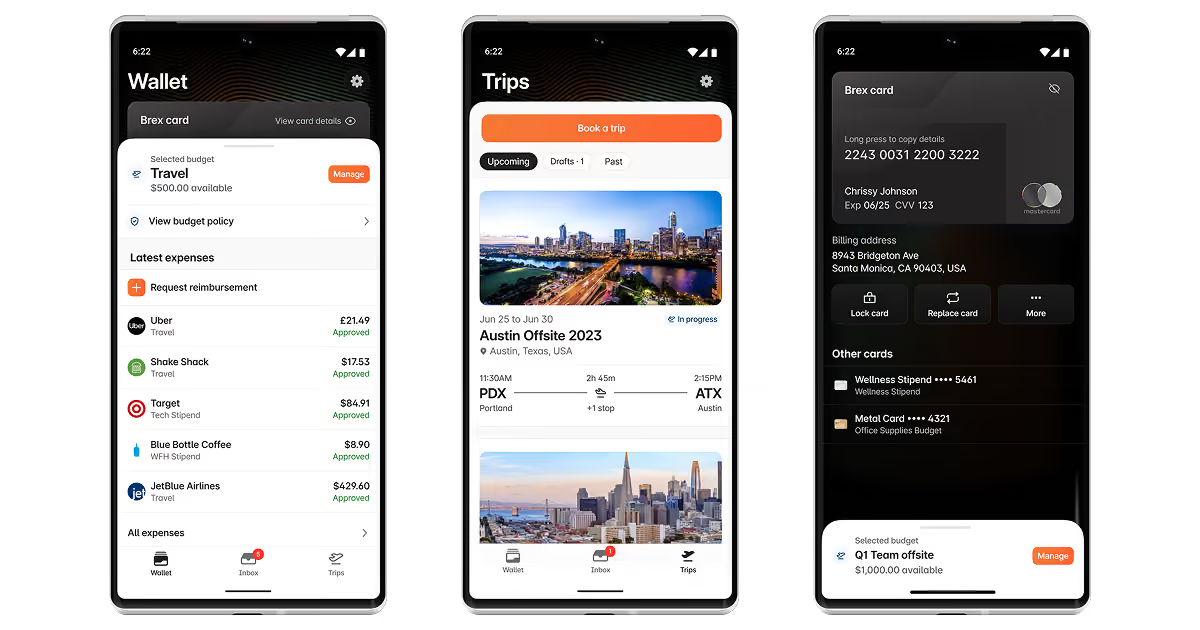
Brex
Startups & VC-backed
Virtual + physical
Via BrexPay/Navan
At swipe
Limited
QB, NetSuite
Free / custom
SAP Concur
Large enterprise / SAP shops
Partner cards
Native (Concur Travel)
Strong
Strong
SAP, Oracle
Per report + per user
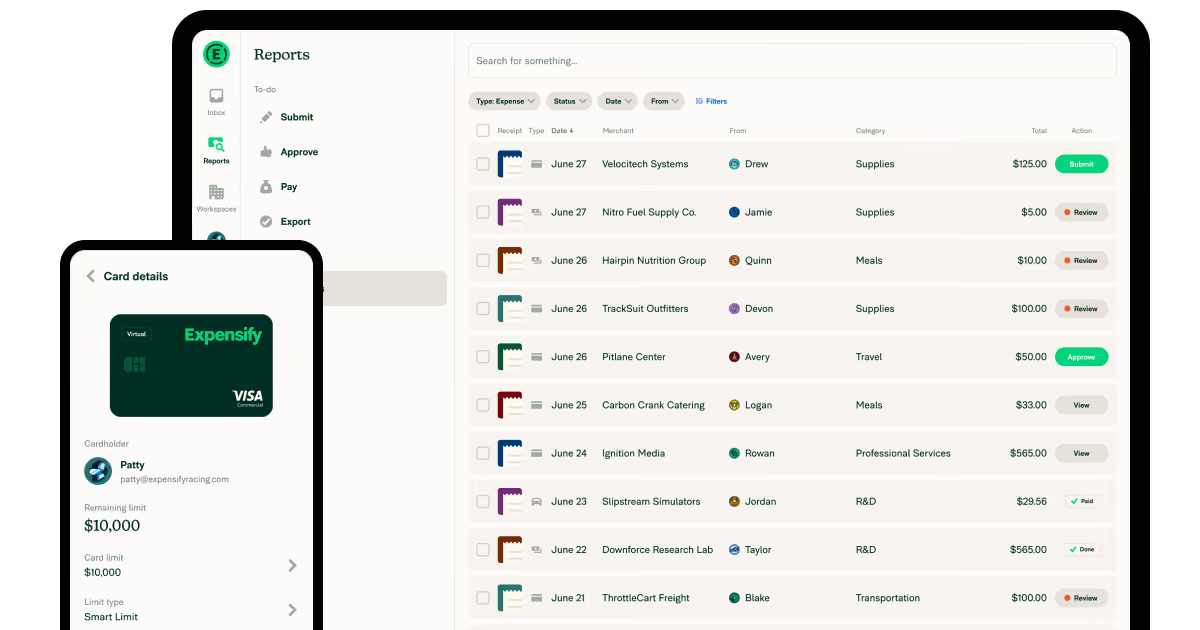
Expensify
Small teams, simple needs
Physical
Limited
Post-submission
Limited
QB, Xero
Free / per user
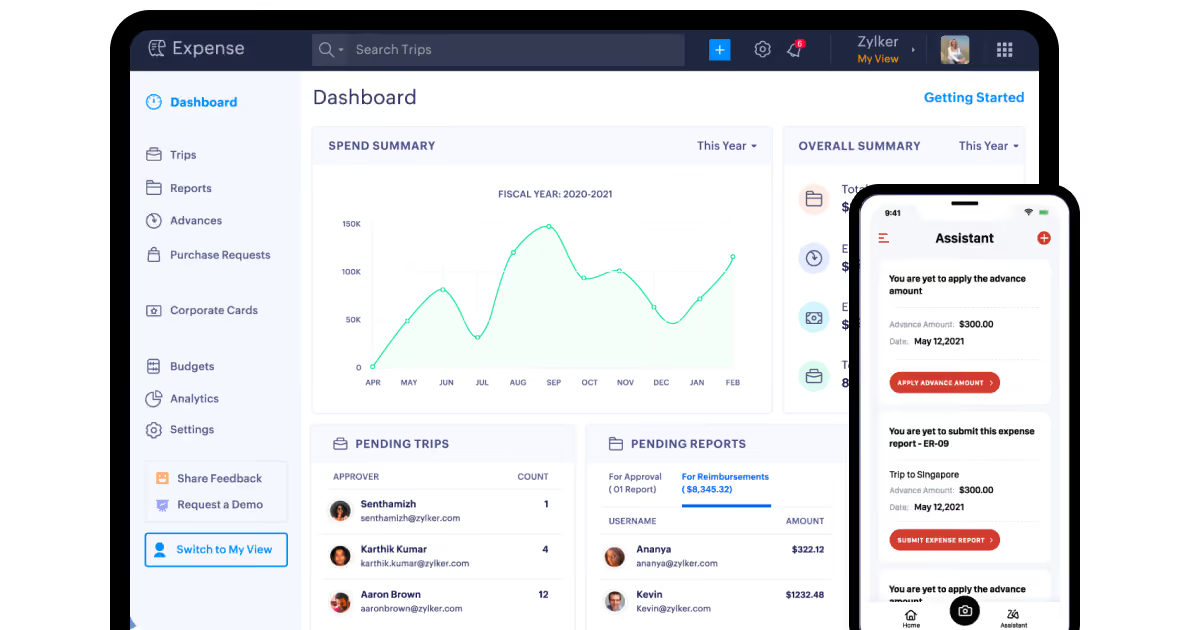
Zoho Expense
Zoho ecosystem SMBs
No
No
Approval-based
Limited
Zoho Books, QB
Per user / free tier
We also have a shortcut for you. If you're mid-market with SAP infrastructure, skip the first six rows and start at Concur. If you're a European SMB, start at Spendesk or Pleo.
1. Navan: best overall travel and expense management platform
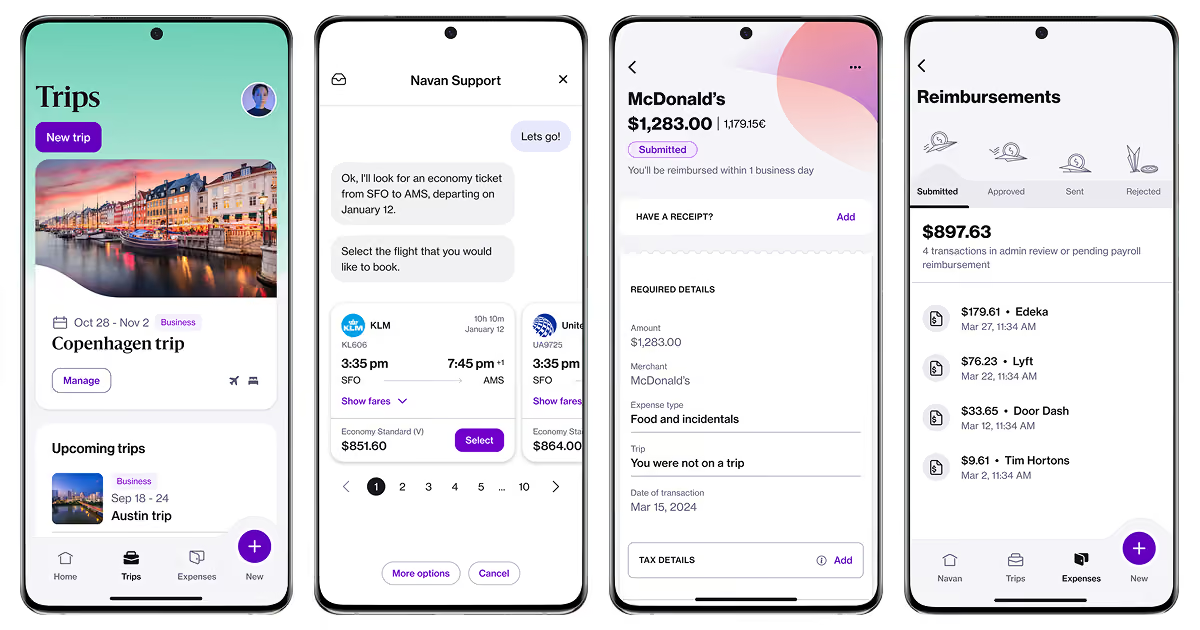
Navan is the only travel and expense management solution that unifies travel booking, expense management, and corporate cards without integrations between separate products. This cuts the need to stitch together a travel tool, an expense tool, and a card program. Also, the platform's policy enforcement runs at the moment of booking. When a traveler searches for a flight, policy-compliant options surface first.
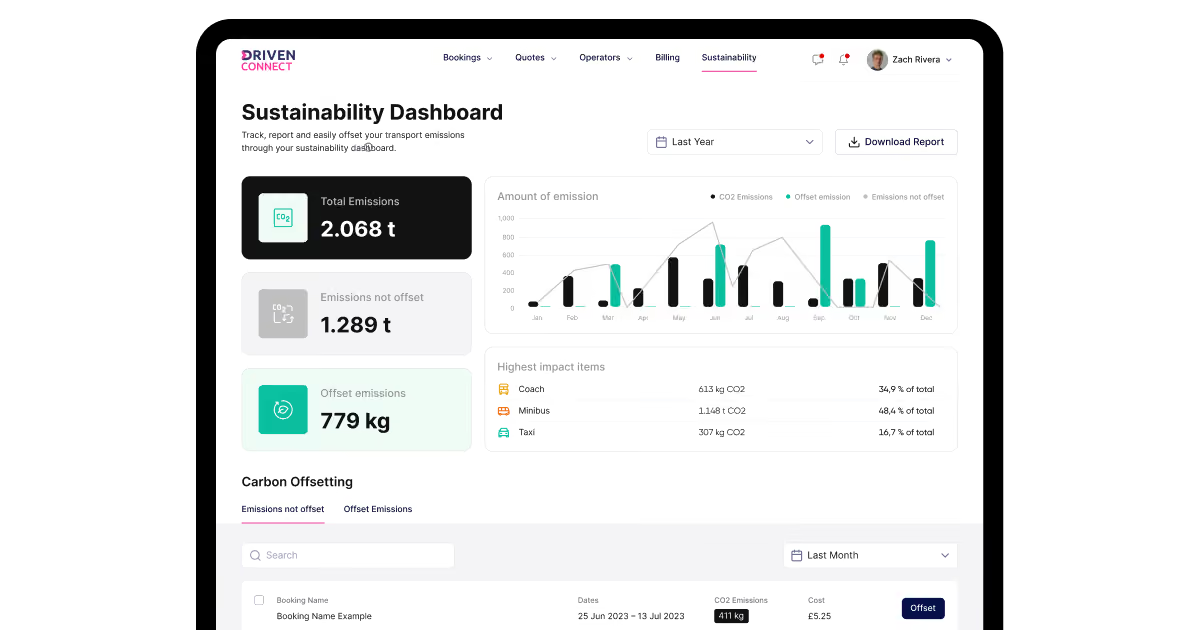
This is the same design philosophy we applied when building the Driven Connect platform for a UK coach and minibus operator. The system should make the correct choice the easiest choice, not add friction after a decision is already made.
Navan's AI-powered travel agent, Ava, handles booking changes and manages disruptions, routing complex situations to human agents with full context already loaded. For logistics operations or companies with frequent travelers, this reduces the support overhead that kills T&E program ROI.
Where it falls short: Navan is priced and architected for mid-market and enterprise. Small teams under 50 people are paying for capability they won't use, and the implementation timeline reflects that complexity.
Best for: Mid-market and enterprise organizations wanting a single platform across all T&E spend, with real finance-team controls rather than just reporting.
2. Ramp: best travel expense management software for cost control
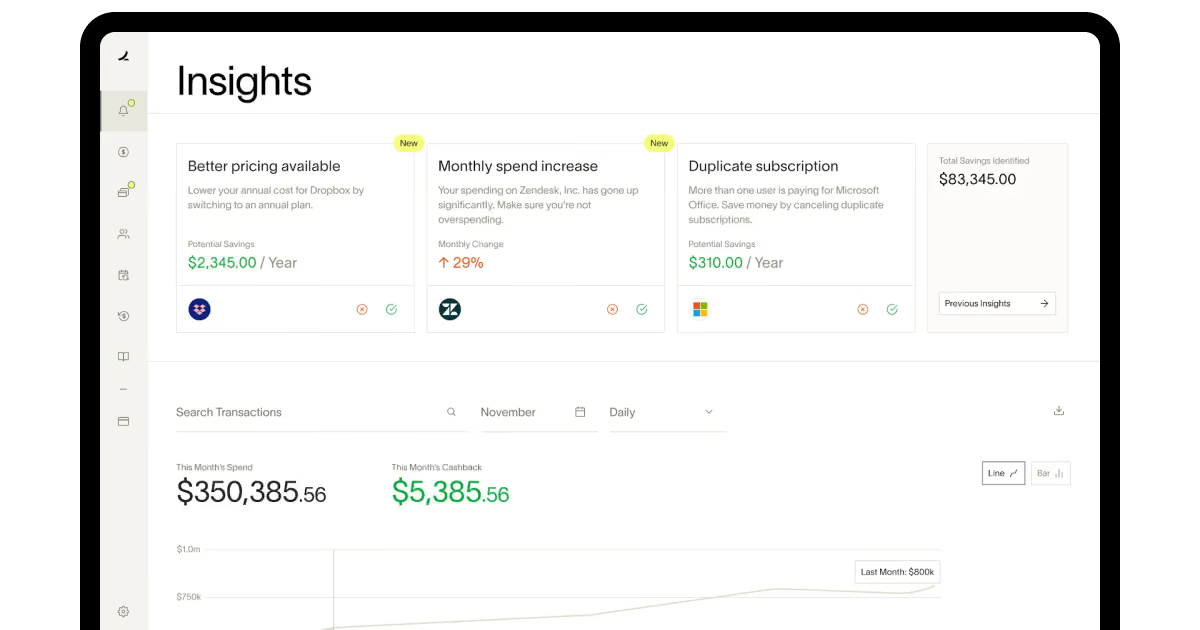
Ramp is the only platform that treats spending reduction as a core product function. While most tools show you what you spent, Ramp surfaces what you could have avoided spending. Real-time dashboards flag duplicate subscriptions, identify vendor consolidation opportunities, and surface category anomalies before they compound.
The corporate card architecture is tight. Every transaction flows directly into the expense system. This cuts the receipt submission step for card purchases and removes the most common point of adoption failure in any T&E program. When we evaluated how operators on Driven Connect managed fleet expenses and fuel receipts, the same principle held: the more manual a step is, the more it gets skipped under operational pressure.
Ramp's real-time transaction feeds eliminate receipt collection for card purchases. Also, automated spend management capabilities enforce policy at the transaction point.
Based on our testing, travel booking is the platform's clearest limitation. Ramp handles it via external integrations rather than natively, which means companies with significant travel volume will either tolerate the data fragmentation or connect Ramp to a dedicated travel tool.
Best for: Cost-conscious companies prioritizing spend reduction intelligence over travel booking integration. Particularly strong for startups and fast-growth businesses wanting to consolidate card programs with expense controls.
3. Spendesk: strongest all-in-one travel and expense management tool for European companies
Spendesk bundles expense claims, corporate cards, invoices, and budgeting. It has a focus on policy adoption as a workflow outcome rather than a compliance checkbox. Pre-approval architecture enforces policy before money leaves, so it’s not flagged after the fact.
Spendesk's approach to policy enforcement means automated enforcement rather than manual review, with Apple Pay and Google Pay support making mobile payments straightforward for employees.
For European mid-market companies, Spendesk's VAT recovery tooling and GDPR-compliant data architecture are differentiating. We saw analogous complexity when building Krytter’s financial and tax compliance module. There, handling multi-jurisdictional laws and diverse payment types had to be baked directly into the core business logic. You simply cannot bolt nuanced tax and licensing compliance onto a system that wasn't designed for it from day one.
The travel booking layer of this travel expense management software is limited compared to Navan. Spendesk is an expense and spend management platform that handles travel incidentally. Companies with heavy travel programs will feel that gap.
Best for: European mid-market companies wanting strong spend controls and VAT recovery without the complexity of an enterprise platform.
4. Pleo: top tool for real-time spend visibility for SMBs
Pleo built its reputation on making company card management feel like a consumer product. It has quick onboarding, intuitive receipt matching, and a mobile experience that employees don't resist. Its real-time spending visibility means finance teams see transactions as they happen.
The 2025 acquisition of Yokoy (now rebranded as Perk) added travel expense management depth and corporate card capabilities under one roof. That consolidation matters for buyers who were previously evaluating the two separately.
Pleo's NetSuite integration requires a third-party connector and doesn't run in real time. For finance teams closing monthly books, that lag creates reconciliation exposure.
Best for: European SMBs wanting consumer-grade UX for company cards with solid real-time visibility.
5. Payhawk: best for multi-entity international operations
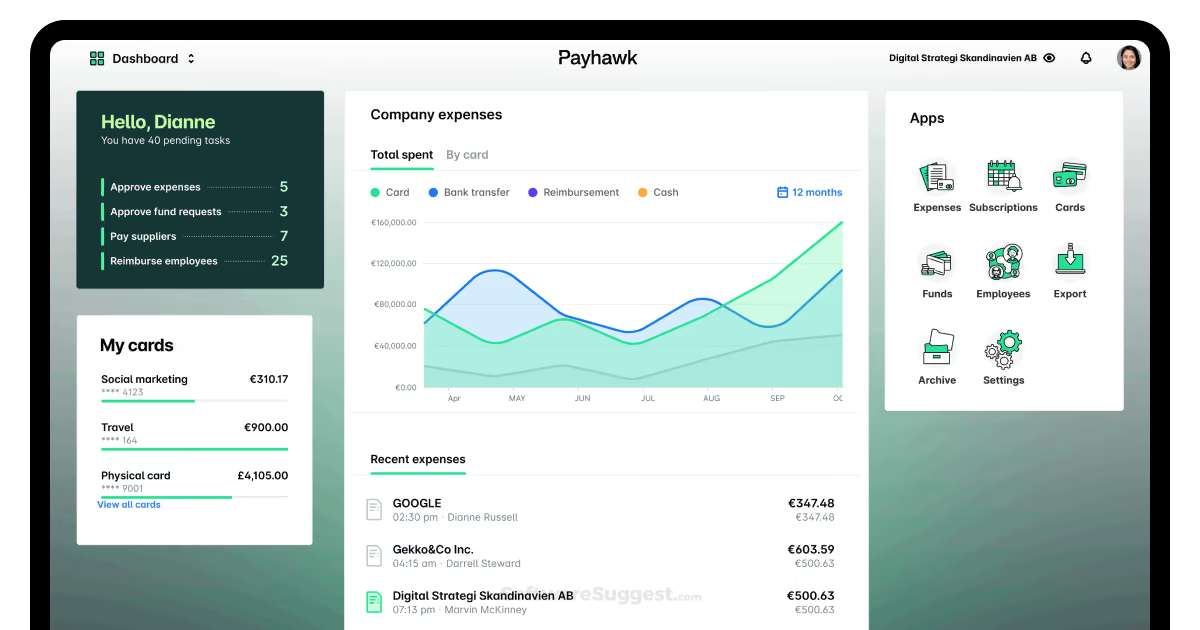
Payhawk's core differentiator for corporate travel and expense management is its multi-entity architecture. It’s great for companies managing subsidiaries across currencies and jurisdictions(a category that includes a significant portion of COAX's logistics and transportation clients). Expense tools that flatten all entities into a single ledger create downstream reconciliation problems that only surface at audit time.
Payhawk combines cards, payments, and expense tracking with strong multi-entity support, handling different currencies and subsidiaries well for international operations.
The integration with NetSuite and Oracle is direct and maintained, which matters for organizations where the ERP is the system of record. We've seen what happens when expense data flows into an ERP via unreliable connectors. The finance team ends up maintaining a parallel spreadsheet, which defeats the purpose of the tool entirely.
However, in Payhawk, travel booking is handled through integrations rather than natively. For frequent travelers or companies managing complex itineraries, it's a large gap.
Best for: Multi-entity businesses with international operations and Oracle/NetSuite environments that need strong currency handling and consolidated reporting across subsidiaries.
6. Airbase: best for combining AP automation with expense management
Airbase is the only platform in this list that handles accounts payable automation and employee expense management without a third-party connector between them. In a travel and expense management system, this matters a lot. COAX teams saw the value of this consolidation when building MICRM. Within this solution, unifying disjointed systems into a single custom dashboard simplified complex analytics. This opened the doors for the precise, at-once tracking of sales, taxes, and financial metrics.
Airbase includes accounts payable automation alongside expense management, with automated categorization, audit-ready documentation, and policy enforcement. The OCR-based receipt processing uses generative AI to assign a purpose automatically after a receipt photo is captured. From a product design standpoint, removing the "what category is this?" step is the right instinct. The system should have enough context to make that decision itself.
The weakest point of this tool is that travel booking is absent. Airbase is an expense and AP platform. So, companies with significant travel volume will need a separate travel tool.
Best for: Mid-market companies wanting to consolidate vendor payments and employee expenses into a single platform with strong AP automation.
7. Brex: smart travel expense management for VC-backed startups
Brex's primary value proposition is its underwriting model. Specifically, it’s about credit lines based on company financials rather than personal guarantees. This plays a role for venture-backed companies without the credit history that traditional card programs require.
Brex provides corporate cards and spend management. Travel management is handled via integrations: BrexPay lets you connect Brex cards with Navan to get proactive spend controls.
The rewards structure is weighted toward software and SaaS spending. This very much reflects the actual spend patterns of its target customer. For a Series A company where a significant portion of expenses are SaaS subscriptions, AWS, and occasional travel, Brex's model fits. For a company with heavy field operations or frequent travel, the gap is a more significant issue.
Multi-entity support is limited relative to Payhawk or Spendesk. As startup clients scale and add international operations, this is the most common point at which they outgrow the platform.
Best for: Venture-backed startups and technology companies in the early scaling phase where card underwriting and software-category rewards outweigh the need for deep T&E integration.
8. SAP Concur: enterprise-grade business travel expense management software
SAP Concur’stravel and expense management is the oldest product in this category. Most large enterprises have already evaluated SAP Concur. The case for it is real:
Deep SAP ERP integration
Comprehensive audit trails
Multi-entity global support
Travel booking layer (Concur Travel) that handles complex multi-leg itineraries.
At the same time, from COAX’s experience, the platform was built for a different era. Implementation timelines run months rather than weeks. Additionally, the UX creates adoption friction that shows up in how frequently employees book outside the system.
We observed a similar adoption dynamic when developing DriveIQ AI, where converting skeptical users into habitual ones required designing critical workflows around reducing decision friction. We managed to do it right. Now, users naturally choose to trust the system rather than override or circumvent it. It’s often different with SAP products.
Best for: Large enterprises already running SAP infrastructure, where deep back-end integration outweighs UX and adoption concerns.
9. Expensify: a travel expense management tool with the simplest entry point
Expensify's value is clarity of purpose. It does receipt scanning and expense report automation well, at a price point accessible to small teams. SmartScan OCR is genuinely fast, the free tier exists, and the learning curve is minimal.
Expensify focuses on expense report automation with mobile-first receipt capture. It also offers SmartScan technology, extracting data from receipts and automating expense report generation. Per diem and mileage tracking and configurable approval workflows are also available.
The limitation is the one you'd expect: Expensify is an expense report tool, not a travel and expense management platform. There's no native travel booking, no corporate card with real-time feeds, no multi-entity architecture, and limited ERP integration depth. Policy enforcement is post-submission rather than at the point of transaction. For a team that's growing, each of those gaps becomes a migration project within 18 months.
Best for: Small teams or early-stage companies that need basic expense reporting at minimal cost and aren't yet dealing with travel program complexity.
10. Zoho Expense: top pick for businesses in the Zoho ecosystem
Zoho Expense tells you what you spent. It can't tell you what you're about to spend, or stop you from spending it wrong. The native integrations within the Zoho ecosystem are tight.
Zoho Expense travel expense management tools works best for businesses already using Zoho products, with multi-level approvals and mileage tracking that work well for growing teams.
Outside the Zoho ecosystem, the value proposition weakens. There are no corporate cards, no native travel booking, and limited multi-entity support. Integrations with non-Zoho systems require more configuration effort than the alternatives. Travel analytics are basic. It’s sufficient for reporting what happened, but not enough for managing what's about to happen.
Best for: SMBs already invested in the Zoho product suite that want expense management without adding a new vendor.
How to choose the best travel and expense management software?
The wrong data architecture creates reconciliation debt that compounds for years. The wrong integration layer breaks silently in production. Both failures are common. Here's how to avoid them.
Audit your actual failure points first
Don't evaluate online travel expense management solutions against a generic feature checklist. Map where your current workflow breaks under load. Ask questions like:
Is month-end close taking weeks because finance is chasing receipts?
Are violations only surfacing after money has left the account?
Are staff manually re-entering data between systems?
Each of those symptoms points to a different root cause. Slow close usually means a data-capture problem. Policy violations after payment mean enforcement is reactive, not proactive. Manual re-entry means your integration layer is either absent or unreliable.
We ran this diagnostic when building the MICRM platform. Before writing a line of code, we mapped every handoff in their existing workflow. What looked like a booking problem was actually a data synchronization problem. Three systems were publishing conflicting states.
"The most expensive thing we see in client codebases is a data model built around how the old system worked. The integration layer inherits all of those assumptions. You end up maintaining not just a system, but a history of workarounds", says Myroslav Stelmashchuk, Backend Engineer at COAX Software.
Choose the right enforcement architecture
Business travel and expense management platforms split into two distinct models. Understanding the difference is the most important technical decision in your evaluation.
Retroactive software collects expenses after they happen. Employees submit receipts, managers approve, and violations are flagged during review. Policy lives in a PDF handbook somewhere. Enforcement depends entirely on human attention.
Proactive, card-linked platforms embed policy directly into the payment token. Rules execute at the transaction level. A purchase that violates policy is declined before the money moves. There's no review step because there's no violation to review.
For most organizations at scale, retroactive architecture is a liability. The policy enforcement problem doesn't get solved. It gets documented after the damage.
The architecture choice also determines your data quality. Card-linked systems produce clean, structured transaction data automatically. Retroactive systems produce whatever employees type into a form under time pressure, which is inconsistent by design.
Validate integration depth, not just integration claims
Every vendor claims ERP integration. That claim covers a wide range of realities. Ask some questions:
Is the sync bidirectional or one-directional?
Does it run in real time or on a scheduled batch? What happens when a transaction fails to match? Does it fail silently or surface an error?
Can it map to your custom chart of accounts?
Does it require you to restructure your GL to fit the tool?
We've worked extensively with NetSuite, QuickBooks, and Xero environments across our logistics and travel clients. In every case, the integration quality determined whether the platform reduced reconciliation work or added a new reconciliation layer on top of the old one.
Key integrations to verify before signing a contract:
ERP/accounting: bidirectional, real-time API, not CSV export
HRIS: automatic policy and access updates on employee lifecycle events
Approval routing: configurable by amount, category, department, and entity
GL coding: maps to your existing chart of accounts without restructuring
For corporate expense management travel at scale, also validate HRIS sync. When an employee changes departments, changes roles, or leaves the company, travel policies and card access should update automatically, not through a manual admin process. We handled similar real-time user state changes on DriveIQ AI. There, the system automated driver access, compliance tracking, and bonus criteria updates instantly based on fleet manager configuration.
Evaluate receipt capture where adoption actually happens
OCR and receipt scanning quality vary more than vendors admit. The failure mode isn't inaccurate data. It's a slow, friction-heavy capture that causes employees to defer submission until the end of the month.
Test the mobile app specifically: how many taps to submit a receipt from the camera to the submitted state? Does it work offline? Does it handle non-standard receipt formats — handwritten invoices, foreign-language documents, receipts without itemized lines?
For travel expense management solutions with global teams, multi-currency OCR matters too. A platform that handles US receipts cleanly but struggles with EU VAT breakdowns or Asian receipt formats will create a two-tier process by geography.
Assess global capabilities against your actual footprint
Hotel revenue optimization, multi-currency settlement, and VAT/GST handling are where many platforms' global claims fall apart in practice.
Ask vendors for specifics:
Which currencies can employees hold and spend natively?
Which currencies require conversion at what rate?
Can the platform handle jurisdiction-specific tax codes automatically
Does someone on your finance team need to configure and maintain those rules?
For the Driven Connect platform, we built an emissions tracking module that had to handle UK Carbon Emissions Tax payments automatically. The compliance logic was jurisdiction-specific and couldn't be bolted on after the fact. It had to be part of the core data model. The same principle applies to VAT recovery and multi-currency settlement in expense tools.
If your business operates across borders, the travel and expense management systems to evaluate seriously are Payhawk (strong multi-entity and currency architecture), Spendesk (built for European VAT compliance), and Navan (broadest global infrastructure overall).
Calculate the true total cost of ownership
SAP Concur's per-report pricing model adds approximately $12–18 per expense report at enterprise scale. For a company processing 2,000 reports monthly, that's $24,000–$36,000 per year in fees that don't appear in the headline per-seat price. Factor in:
Implementation timeline (days for modern tools, months for SAP Concur)
Integration professional services, as some platforms charge separately for ERP connectors
Per-report pricing models that penalize scale (Concur does this)
Operational cost of workarounds when the tool can't handle edge cases
Per-user SaaS models are predictable but penalize growth. Platform/interchange models fund themselves through card transaction fees, keeping software costs near zero. The right model depends on your card spend volume and team size trajectory.
The investments are often justified by the ROI. Our logistics client caught a vendor concentration risk three weeks before it would have appeared on the monthly close report. It happened thanks to real-time analytics. The result was just enough time to renegotiate a contract rather than absorb the cost.
Test security posture before procurement
Business travel and expense management software sits directly in the path of your payment infrastructure. It has access to employee data, vendor data, card credentials, and general ledger mappings. Security due diligence here is non-negotiable.
Verify SOC 2 Type II certification.
Verify PCI-DSS Level 1 compliance for any platform issuing or processing card transactions. Confirm SSO support for alignment with your identity infrastructure.
Ask specifically about data residency. For European operations, where data is stored and processed matters for GDPR compliance.
At COAX, every platform we build, including our travel and logistics systems, is developed under ISO 9001 and ISO 27001 certification standards. We apply the same requirements when evaluating third-party tools for client environments. A vendor that can't produce current certifications doesn't make the shortlist.
COAX Software answers the key questions about travel and expense management software
We rounded up our top 10 platforms, but let’s be honest. Software is only as good as the architecture behind it. Now, let’s get into the actual theory you need to master before you can turn any tool into a successful, debt-free practice.
Modern travel expense management platforms transform corporate spending into a proactive financial intelligence asset. They achieve this by unifying booking, card controls, and automated policy enforcement into a single data model.
What is travel and expense management software?
Travel and expense management software is a platform that handles the full lifecycle of corporate spending on travel and employee expenses. That lifecycle runs from booking a flight to reconciling the transaction in your general ledger. The best systems do this without manual intervention at any step.
At the narrow end, some tools are just expense report automation. Employees submit receipts, managers approve, and finance exports to accounting. At the broader end, a true travel and expense management app combines travel booking, corporate card issuance, policy enforcement, receipt capture, approval routing, ERP sync, and reporting in a unified data model.
The architectural difference matters more than the feature list. A system built as one is fundamentally different from three tools patched together with weak connectors. When data has to move between a travel booking system, an expense tool, and your accounting platform via scheduled exports, you get version-control problems and reconciliation gaps. We see this when clients bring us legacy systems to modernize. The integration layer is where the debt lives.
Travel and expense management tools also extend into adjacent categories. Hotel accounting software, for example, handles property-level revenue tracking, night audit reconciliation, and folio management. All of this needs to connect to the broader expense layer if a hotel group is managing both internal T&E and property financials. When building platforms in this space, the data model has to account for both flows from day one.
What are the benefits of travel and expense management software?
The core benefits of a well-implemented travel and expense management system fall into four categories. Most organizations see operational, financial, compliance, and workforce benefits. It's in that order of visibility, though not necessarily in that order of value.
Operational speed. Month-end close shrinks dramatically when receipts are captured at the point of purchase, policy is enforced automatically, and transactions sync to your ERP in real time. Finance teams using modern platforms report cutting reconciliation time by 30–50%. The manual work that remains is exception handling, not data entry.
Cost control and visibility. Real-time spend data changes what finance teams can do. You stop discovering budget overruns on a credit card statement three weeks after the fact. You start seeing anomalies as they emerge. Travel and expense management automation enables the kind of proactive intervention. This goes through flagging a vendor concentration risk, catching a duplicate subscription, identifying a department running 40% over budget mid-month.
Policy compliance, structurally enforced. This is where the architecture choice from earlier comes back. Retroactive tools report violations after money has left the account. Card-linked platforms block out-of-policy purchases at the transaction level. The compliance rate is not even close. In every platform we've built where payment flows are involved, from the Driven Connect quote-and-booking system to the Krytter trip booking platform, the principle is similar. Enforce rules at the decision point, not in the audit log.
Workforce stability and adoption. Slow reimbursement is a retention problem. Research consistently shows that reimbursement delays rank among the top reasons employees consider leaving. A travel and expense management app that reimburses within days and that doesn't require 15 minutes of manual data entry per receipt removes this friction.
The less-discussed benefit is data quality compounding over time. Every clean transaction that flows through a well-structured system makes your cost modeling more accurate, your vendor negotiations more informed, and your forecasting more reliable. The organizations that manage T&E well are building a financial intelligence asset.
Our work on the ARRIVAL travel platform shows this directly. By connecting booking data to HubSpot via webhooks from day one, the client had a centralized hub for sales, revenue, and customer activity from launch. No manual order tracking. No data cleanup sprint before the first report. The architecture decision made at the start paid dividends every week after.
What are the key features of travel and expense management software?
These are the features that differentiate production-grade platforms from tools that look complete in a demo and break under real operating conditions.
End-to-end booking with policy applied at checkout. The platform should aggregate flights, hotels, and car rentals while applying your travel policies automatically. Not flagging violations after booking. Compliant options surface first. Out-of-policy choices require justification at the point of selection. This is the enforcement architecture that actually changes behavior.
OCR and AI receipt capture. Good OCR means an employee photographs a receipt and the system extracts the merchant name, date, amount, tax breakdowns, and category. The test is whether it works on a handwritten invoice, a foreign-language document, or a receipt with non-standard formatting. For global teams running travel & expense management software, multi-language and multi-currency OCR is a must.
Corporate card issuance with hard-coded spend controls. Modern platforms issue virtual and physical cards with policy encoded directly into the payment token. A card provisioned for a specific vendor category can be blocked from all other transaction types. This eliminates the approval-after-the-fact model for card spend.
Bidirectional ERP and HRIS integration. ERP integration must be real-time and bidirectional. The system needs to map to your existing chart of accounts, not require you to restructure your GL to fit the tool. HRIS integration ensures that employee data, department assignments, and policy mappings stay current automatically when people join, move, or leave.
Travel analytics with actionable granularity. Basic reporting shows what was spent. Real travel analytics show spend by vendor concentration, policy exception patterns, department budget burn rate versus forecast, and emerging anomalies before they compound. The reporting layer should surface decisions, not just data.
Global capabilities built into the data model. Multi-currency settlement, VAT/GST tracking, jurisdiction-specific tax code handling, and multi-entity support must be architectural decisions. In corporate travel expense management, when the data model doesn't account for currency and jurisdiction complexity from the start, every international edge case becomes a manual exception.
"The features teams ask for in a demo are rarely the ones that break in production. What breaks is when a traveler's receipt is in a currency that the system silently defaults to USD. Or the approval workflow that loops infinitely because an employee changed departments mid-trip. Build for those cases first," advises Max Gurak, React.js Developer at COAX Software.
How to implement travel and expense management software?
We’ll be honest. Implementation of a travel and expense management system follows a sequence that many companies compress too aggressively. Then, they end up spending months recovering from it. The phases below reflect best practices for travel expense management implementation. Each is based on what we've seen succeed.
Phase 1: Data model and integration mapping.
Before selecting a tool, map your existing data architecture. Start with these questions:
Which systems are the sources of truth for employee data, vendor data, and financial records?
What does your chart of accounts look like?
Where do transactions currently touch your GL?
This work determines which platforms can integrate with your environment and which will require you to adapt your environment to fit the tool. Skipping this phase means discovering incompatibilities too late.
Phase 2: Policy definition, not policy migration.
Don't migrate your existing expense policy into the new system. Use implementation as the forcing function to rewrite policy in terms the system can actually enforce. In practice, that means translating "employees should exercise good judgment on meal expenses" into specific transaction-level rules. They are typically a maximum per-meal amount by city tier, blocked merchant categories, and pre-approval required above a defined threshold.
Phase 3: Integration testing under realistic load.
The integration between your expense platform and ERP must be tested with real transaction volumes and real edge cases.
What happens when a transaction fails to match a GL code?
What happens when an employee's department changes mid-approval cycle?
What happens when a multi-currency transaction hits a currency the system hasn't been configured for?
These have been the first three support tickets after every go-live we've seen.
When we built our vacation rental management platform for Ukrainian property owners, we learned this the hard way in a different domain. We assumed the primary pain point was booking organization. Three months into development, user interviews revealed that the real issue was commission dependency and mobile-first management. We had to restart with a corrected data model. The lesson: validate your assumptions about what the system needs to handle before building the integration layer, not after.
Travel and expense management automation implementation requires validating that automated flows hold up when the happy path breaks. These can be approval routing, GL sync, receipt matching, or policy enforcement. An advice from the COAX QA team: test the automation against exceptions.
Phase 4: Phased rollout with a pilot cohort.
Start with a department or team whose expense patterns are representative but whose volume is low enough to catch problems before they propagate. Run the new system in parallel with your old process for the first month. Compare outputs. Identify gaps between what the system produces and what your GL expects. Fix those gaps before expanding.
On one client deployment, parallel running for 30 days caught 14 GL mapping errors that would have required manual correction across 3 months of historical data if discovered at audit. That's the cost of skipping this phase.
Phase 5: Adoption engineering.
This is where most implementations underinvest. A technically correct system with low adoption is worse than a spreadsheet. The reason is simple. It just creates false confidence in data completeness.
Adoption engineering means:
Mobile-first design so submission happens at point of purchase, not at month-end
Training that's specific to the role and workflow rather than generic platform walkthroughs
Removing the ability to submit through old channels once the new system is live.
Final note here: if the old process still works, people will use it. So make sure you move to a new one completely and show its benefits at every step.
We applied this same principle when ARRIVAL launched. The content team needed to publish trip listings at the pace of their social media operation. We built an admin system that made the new workflow faster than any workaround could be. The adoption rate was 100% from week one. That's the bar for T&E implementation too.
When to consider travel and expense software for your business?
The quick answer from our team is this. If your finance team spends more time chasing data than analyzing it, you need a travel and expense management solution now. The signal is always the operational drag. A 30-person company with international contractors and multi-currency spend has more to gain from automation. A 200-person domestic operation with simple reimbursement flows has less.
The practical triggers are concrete.
Month-end close takes longer than three days.
Policy violations surface after money has already moved.
Employees book outside your system because it's faster.
Your ERP reconciliation requires manual intervention every cycle.
Any one of these is enough. All four together means your current process is actively costing you.
"We see the same pattern way too often. A company waits until the pain is obvious before evaluating tools. By then, they've accumulated 18 months of bad data and a finance team that has built an entire shadow process in spreadsheets alongside the official one. The earlier you instrument your flows correctly, the less you pay to fix them later", shares Orest Falchuk, Head of Engineering at COAX Software.
Travel and expense management companies that operate across multiple entities, currencies, or geographies should evaluate earlier than they think necessary. The multi-entity data model is the hardest thing to retrofit. Building it well at once costs less than migrating under pressure.
Corporate travel expense management software fits most organizations above a certain complexity threshold. Below that threshold (for small teams, single currency, simple reimbursement flows), a well-configured accounting tool and a corporate card program may genuinely be sufficient.
For custom booking flows, proprietary logistics data, or domain-specific compliance requirements, off-the-shelf tools rarely suffice. When your existing systems won't integrate with an outside vendor, custom travel software development is the more durable path. We've built in both directions for clients - integrating ready-made tools and building solutions from scratch. The cases where custom wins are more common than vendors want you to believe.
Aspect
Off-the-shelf Platform
Custom-built System
Best when
Standard workflows. Common ERP (NetSuite, QuickBooks, Xero). No proprietary booking logic.
Domain-specific compliance, legacy integrations, or booking flows no vendor supports cleanly.
Time to live
Days to weeks for modern platforms. Months for SAP Concur or enterprise deployments.
3–6 months for MVP scope. Longer for full platform with custom analytics and integrations.
Cost model
Ongoing SaaS fees per user or per report. Costs scale with headcount and transaction volume.
Higher upfront. You own the architecture, data model, and integration layer outright.
Integration depth
Pre-built connectors for common systems. Edge cases and custom schemas require workarounds.
Built to your exact data environment. Real-time, bidirectional, mapped to your GL from day one.
Policy enforcement
Configurable within the vendor's ruleset. Complex or jurisdiction-specific logic often hits hard limits.
Any rule your business needs can be encoded, including carbon tax, multi-jurisdiction VAT, fleet-specific logic.
Roadmap control
The vendor decides what gets built. Edge cases that affect a small user segment go unresolved.
You define every feature's priority. Operational edge cases that matter to you get fixed.
Switching cost
Grows over time as data accumulates in a proprietary schema. Migration is expensive later.
You own the data model. Portability is built in by design if the architecture is sound.
Who it fits
Mid-market companies with standard T&E flows needing fast time-to-value.
Organizations with domain-specific compliance, proprietary booking flows, or legacy systems no vendor integrates well.
If custom is the right call for you, the scope typically involves travel mobile app development, complex third-party integrations, AI-driven analytics, and domain-specific compliance logic. These are the conditions where off-the-shelf tools hit their ceilings fastest.
COAX Software’s work spans the full delivery cycle. We cover product discovery, architecture, development, QA, and post-launch iteration. When a client needs business travel expense management built into a broader operational platform, that's where the investment in custom engineering pays back quickly.
Our portfolio proves that custom features bring real results. Neither the Driven Connect emissions tracking and payment module nor the Krytter installment-based payment system could use off-the-shelf tools. In both cases, standard software simply couldn't cover the full scope. Each required a data model designed specifically for the operational model of clients.
If you're evaluating whether your situation warrants custom work, the clearest signal is whether your operational requirements keep hitting the edges of every vendor demo you've seen. If every platform you evaluate requires you to change your process to fit the tool, that's the signal. Talk to the COAX team, and we'll tell you which direction makes sense before offering any services.
FAQ
What is travel and expense management, and how is it different from basic accounting?
Basic accounting records what happened. Travel and expense management shapes what happens before money moves. Travel and expense management software handles the full lifecycle of corporate spending. It rom booking a flight to reconciling the transaction in your general ledger. The best systems do this without manual steps at any point in the chain.
How large is the travel and expense management software market right now?
The travel and expense management software market was valued at USD 4.08 billion in 2025 and is projected to reach USD 12.98 billion by 2034. Cloud deployment holds 65% of the current share. From our work with transport and hospitality clients, the growth reflects real operational pressure. Companies aren't adopting T&E software voluntarily. Disruption is forcing the decision.
When does a travel expense management system actually pay for itself?
A travel expense management system typically recoups costs through three channels:
Reduced processing time
Lower violation rates
Faster close cycles.
Most mid-market companies see measurable ROI within two quarters. In our experience building financial workflows for travel platforms, the calculation shifts when implementation is poor. A badly configured system adds overhead rather than removing it.
What should I look for in a travel expense management app for a distributed team?
The non-negotiables in a travel expense management app for distributed teams are:
Offline receipt capture
Multi-currency OCR
Policy enforcement at the transaction point.
We've built mobile-first booking flows for platforms like Driven Connect. UX determines adoption more than any feature list. If submitting a receipt takes more than three taps, compliance drops and finance absorbs the difference.
Are travel and expense management solutions suitable for small businesses, or only enterprise?
Modern travel and expense management solutions serve SMBs well. The segment holds 61.56% of current market share. The relevant threshold is operational complexity. When we built Hosty for property owners, a 10-person operation with multi-property bookings and seasonal pricing needed real automation. Company size was irrelevant. Transaction complexity was everything.
What is the biggest implementation risk with a travel expense management system?
The most common failure is adoption. A correct travel expense management system that employees route around produces incomplete data and false confidence in finance reporting. We learned this building Hosty. After three months of development, user interviews revealed we'd solved the wrong problem entirely. Validate workflows with real users before building the integration layer, not after.


















































































































.avif)




%20for%20hotels.avif)


.avif)
.avif)



.avif)





.avif)

.avif)





.avif)


.avif)

We are interested in your opinion