When you run an airline, you have to keep track of hundreds of moving parts at once. Planes, routes, gates, and cargo - those are challenging things, but generally, just things. If you ask an operations director what keeps them up at night, the answer is usually crew. Human factors bring in unique challenges. Expired certificates, fatigue, and planning conflicts eat up time and cause disruptions. Luckily, airline crew management systems automate this process.
Pairing optimization covers every flight with the smallest possible crew pool, at the lowest cost.
Automated compliance blocks illegal duty assignments before they reach the roster.
Fatigue modeling scores alertness across full rosters, not just single duty periods.
Training integration keeps qualifications current and pulls no one from service by surprise.
Disruption recovery rebuilds broken schedules in minutes, not hours.
Mobile access puts live rosters, swap requests, and alerts in crew members ' hands anywhere.
Analytics turn scheduling from a reactive scramble into a planned cost lever.
Custom development handles rule sets, legacy infrastructure, and network complexity that packaged tools can't.
In this article, we break down the key processes, features, and integrations of good airline crew management software. Then, we give you the top ten off-the-shelf options you can get today, with their functionality and best use cases. Finally, we will compare them to tailored development so you can make an informed decision once and for all.
What is airline crew management?
Airline crew management is the process of organizing and overseeing the people who operate flights, from pilots and co-pilots to cabin crew. This job is about putting the right person on the right flight at the right time, every single day, across a network that never stops.
What’s the complexity of this process?
Every scheduling decision has to account for who is available, what licenses and qualifications they hold, how many hours they have worked, what the regulations allow, what the contract requires, and what the crew member themselves prefers. Then comes the logistics: hotels, transfers, positioning flights for crew who need to be somewhere before their actual shift starts.
Ye and team describe the core problem this way: scheduling must balance available human resources, professional qualifications, network requirements, legal constraints, and economic targets, all while managing fatigue through balanced layovers and accounting for individual preferences to keep duty distribution fair.
When you get it right, passengers board on time and crew go home on schedule. When you get it wrong, flights are canceled, crews go illegal on rest, and costs spike fast.
Crew management market in air flights
With the global flights becoming more and more numerous each year, so is the need for efficient digital solutions. The business of crew management software is growing because the problem it solves is getting harder.
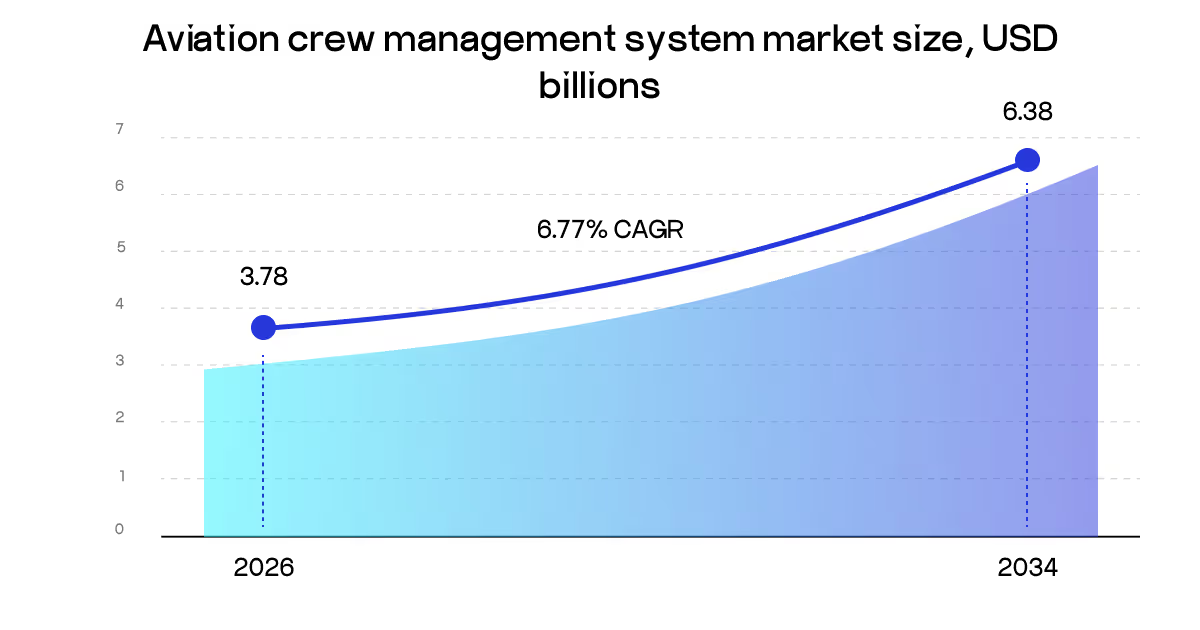
According to Fortune Business Insights, the global aviation crew management system market was valued at USD 3.41 billion in 2025 and is projected to reach USD 6.38 billion by 2034. North America currently holds the largest share at 36.45%, driven by high adoption of AI tools and major contract activity from carriers and vendors like NAVBLUE and CAE.
Asia Pacific is the fastest-growing region, pushed by rapid aviation infrastructure expansion and increasing adoption of cloud platforms. The services segment leads by solution type, holding 43.46% of the market in 2026, which reflects rising regulatory pressure and the ongoing demand for real-time crew tracking and compliance support.
Two forces are accelerating this growth.
First, airlines are hiring more crew to meet rising passenger demand, and larger crews mean more complex scheduling.
Second, airlines are under growing pressure to manage crew mental health and fatigue, not just as a safety obligation but as a factor in retention and operational stability.
Systems that monitor rest compliance, detect absenteeism patterns, and flag fatigue risk are no longer optional extras. They’re now an absolute necessity to have in the airline industry.
The complexity of crew management in aviation
Crew scheduling is one of the most computationally demanding problems in the industry. Researchers classify it as an NP-hard problem, meaning the number of possible combinations grows so fast that no computer can evaluate every option, even for a mid-sized airline.
The overall workflow of crew management splits into two sequential phases: pairing and rostering.
Pairing comes first. A pairing, sometimes called a trip or crew rotation, is a sequence of flights that starts and ends at the same crew base. It typically spans one to five days. Schedulers build thousands of these pairings to cover an entire monthly flight program, with the goal of covering every flight using the smallest possible crew resource pool.
Rostering comes second. Once pairings exist, they get assigned to actual crew members based on qualifications, vacation entitlements, training schedules, rest requirements, and a range of contract conditions. This is where things get personal.
Crew can request specific destinations, days off, reserve periods, and trip lengths, and the system builds rosters around those preferences. The problem is that seniority governs conflicts. Senior crew gets priority.
Most current airline crew management systems still treat fatigue as a compliance issue rather than a dynamic variable, and the assumption of crew homogeneity, treating all crew members as interchangeable, leads to assignment quality problems in practice.
Additionally, each crew member carries between five and one hundred certificates and licenses, each with its own expiration date. A roster that looks valid today can become illegal tomorrow if a recurrency training date is missed. Add in hotel costs, ground transfers, flight delays, sick calls, and last-minute aircraft swaps, and the scope is even more daunting.
The broader airline calendar adds another layer.McKinsey research shows that European airlines scheduled 65% more seats in August than in February in 2023. That gap means crew headcounts, training cycles, and rostering systems all have to flex across the year.
Crew costs are the second largest, or sometimes, the largest operating expense for airlines after fuel, and they are largely fixed in the short term. That is why even a small improvement in scheduling efficiency translates directly to the bottom line.
What is the crew management workflow in airlines?
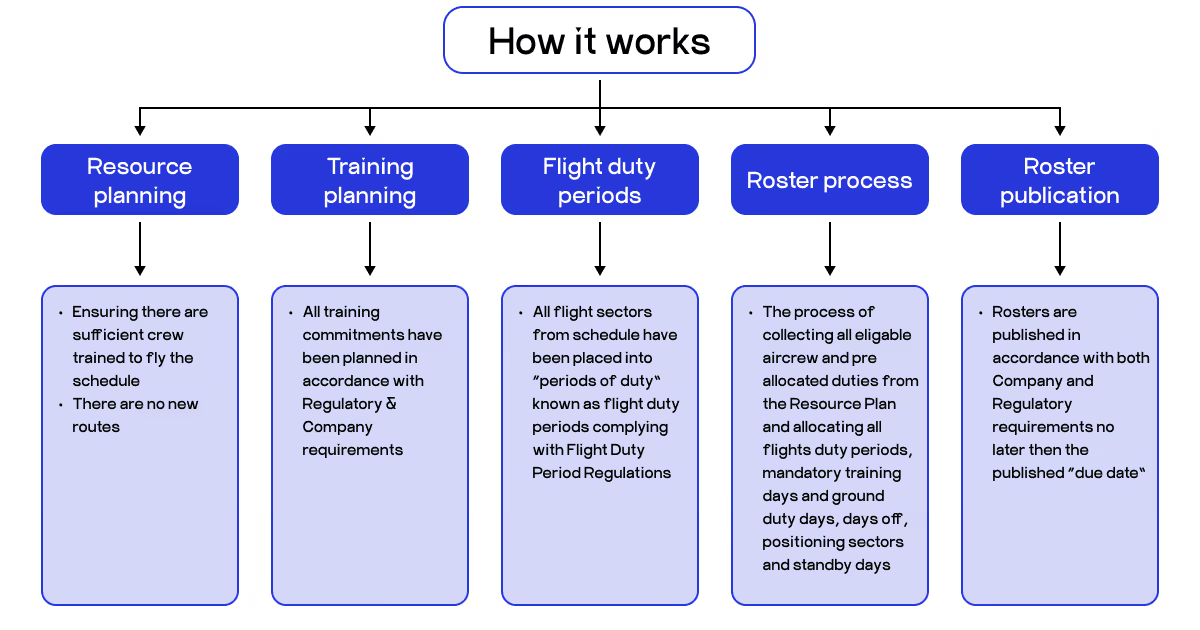
Crew management follows a structured sequence that starts months before a single flight departs. The goal at each stage is the same: make sure a qualified, rested, legally compliant crew member is ready for every flight, every day.
Resource planning comes first. Schedulers forecast how many crew members are needed per base, per aircraft type, and per route category to cover the upcoming schedule. They confirm that existing crew numbers are sufficient and that no new routes or fleet changes require additional hiring or training before the schedule goes live.
Training planning runs in parallel with the airline crew management process. Every training commitment, recurrency check, simulator session, and certification renewal gets slotted into the calendar in line with regulatory deadlines and company requirements. Training days block out availability early, so they do not collide with operational flying later.
Flight duty periods come next. Every flight leg from the published schedule gets organized into legal blocks of work called flight duty periods. These must comply with duty time regulations set by authorities like EASA, FAA, or CAAC, covering maximum duty hours, minimum rest between duties, and limits on consecutive flying days.
The roster process follows. This is where all the pieces come together. Schedulers collect every eligible crew member, their pre-allocated duties from the resource plan, all flight duty periods, mandatory training days, ground duties, days off, positioning sectors, and standby days, and build individual rosters from that material.
Roster publication closes the cycle. Completed rosters go out to crew members no later than the published deadline, in compliance with both company policy and regulatory requirements. From that point, the operations team monitors the live roster for disruptions and manages changes as they arise.
This five-stage flow, described by crew planning practitioners as the standard framework for scheduled operations, keeps the process manageable even as fleet sizes and network complexity grow.
Crew planning vs crew scheduling
These two terms describe different stages of the same process, and mixing them up causes real confusion when you are trying to understand how airlines organize their people.
Factor
Crew planning
Crew scheduling
Also known as
Crew pairing
Rostering / bidding
Timing
Months in advance
After pairings are built
Key question
What trips need to exist?
Who flies each trip?
Output
Anonymous pairings
Named individual rosters
Considers
Network, costs, legality
Qualifications, rest, seniority
Crew planning happens months in advance, before individual names are ever attached to flights. The job at this stage is to figure out what resources the airline needs and how to package the flying into efficient, legal trip sequences called pairings. A pairing is an anonymous block of flights that starts and ends at the same base, typically spanning one to five days. The goal is to cover every flight on the monthly schedule using the smallest possible crew pool, at the lowest possible cost. The people working at this level think in terms of networks, fleet types, base requirements, and regulatory limits, not any specific pilot or flight attendant yet.
Crew scheduling, or rostering, takes over from there. Now the pairings exist, and the job shifts to assigning them to real people. That means checking who is qualified for which aircraft, how much rest each person has had, what vacation days are blocked, what training is already scheduled, and what the crew member actually wants.
The two stages of this crew management airline workflow are sequential and interdependent. Planning creates the anonymous building blocks, and scheduling populates them with real people. Neither works without the other.
The practical difference comes down to this: planning answers the question of what trips need to exist and how to build them efficiently. Scheduling answers the question of who flies them and whether that assignment is fair, legal, and workable for the person doing the job.
In North America, scheduling systems generate optimized pairings, and then crew members bid for them based on seniority. In Europe, airlines more often use personalized rostering where individual preferences shape the final assignment directly.
Role of crew management software
Manual crew scheduling stopped being viable a long time ago. A mid-sized airline might have thousands of crew members, hundreds of daily flights, dozens of aircraft types, and regulatory rules that vary by route, authority, and union agreement. You can’t handle that all with paper documents and spreadsheets. Airline crew management software automates the heavy computation and keep everything connected in one place.
On the planning side, the software runs algorithms that generate compliant pairings covering the full monthly schedule while minimizing costs. It evaluates millions of combinations, something no team could do manually in any reasonable timeframe.
On the rostering side, it assigns pairings to named crew members. It checks qualifications, rest requirements, seniority rules, and personal preferences. Airlines using optimized rostering systems see crew cost reductions of 15 to 20% through better pairing construction, fewer unnecessary overnight stays, and reduced deadheading.
Modern airline crew management platforms incorporate regulatory rule engines that flag violations before a roster is published. Fatigue risk modules, using biomathematical models like SAFE for pilots and CARE for cabin crew, assess alertness levels across full rosters rather than checking individual duty periods in isolation.
When disruptions hit, the software responds in minutes. It scans available crew, checks legality, and generates recovery options that would take a human scheduler hours to calculate. That speed matters: flight disruptions cost the U.S. economy up to 34 billion dollars annually, and every hour of delay compounds.
The software also connects crew data to the broader operations ecosystem, linking with maintenance, flight operations, and passenger services so that decisions made in one area account for constraints in another.
Key features of crew management software
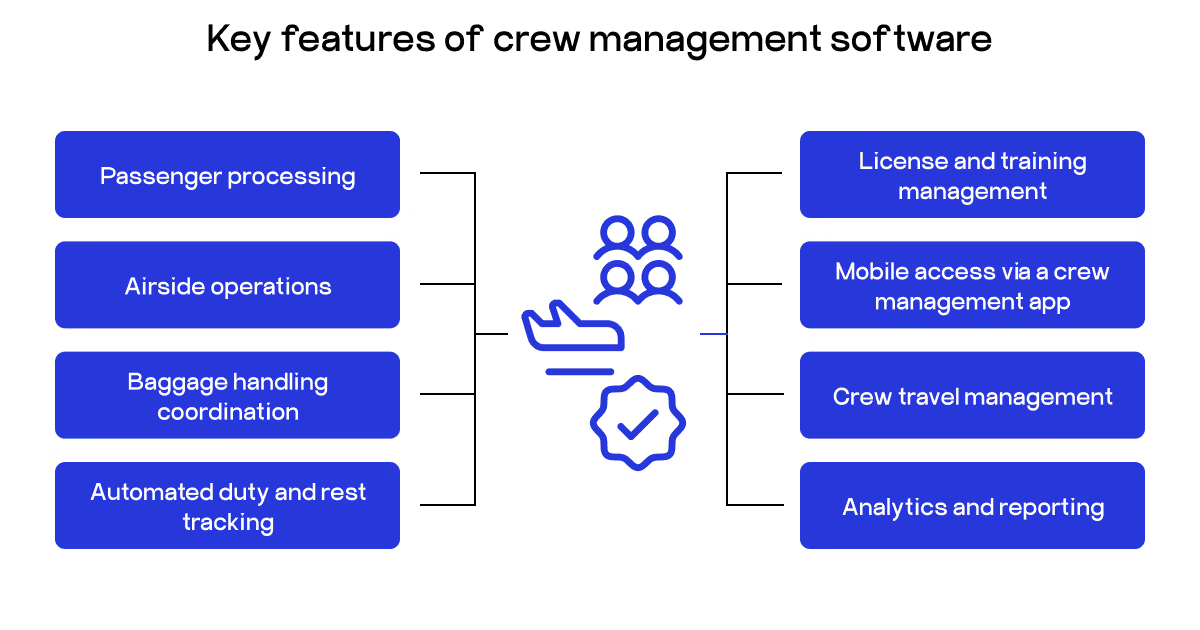
Crew management solutions rarely just comprise a single tool but a set of interconnected functions that solve specific operational problems. Here is what a well-built system covers.
Passenger processing
Cabin crew is the front line of the passenger experience from boarding to landing. Crew management software supports this by giving crew members access to passenger data before and during the flight. Through integration with the passenger service system, crew can see special service requests, accessibility needs, unaccompanied minors, and premium passenger details in advance. This preparation directly affects service quality.
During boarding, the system helps manage headcounts, flag irregularities, and support gate staff with accurate manifest data. When delays or rebookings arise, crew have visibility into what happens to passenger connections, so they communicate accurately rather than guessing.
Airside operations
Your crew management system software works in connection to what happens on the ground between flights. Airside, crew members interact with turnaround processes that have tight constraints. The software tracks crew positioning across the airport, monitors inbound flight arrivals to confirm crew is available for their next assignment, and flags situations where a late arrival threatens a legal connection to the next duty.
Integration with ground operations means schedulers can see turnaround status in real time and make reassignment decisions before a situation becomes a delay. Stand-by crew deployment is also on this layer, with the system setting the closest qualified person when a gap opens up.
Baggage handling coordination
Crew management connects to baggage handling operations through load and dispatch data. Cabin crew responsibilities include confirming that cargo loading complies with weight and balance requirements and that dangerous goods documentation is in order before departure.
The software surfaces this information through integration with load control and departure control systems, so crew members receive accurate pre-departure briefing data. For airlines where cabin crew have a formal role in baggage irregularity handling, the system also tracks crew assignments against the specific flights where baggage events occur.
Automated duty and rest tracking
This is the non-negotiable foundation. The crew planning software calculates cumulative flight hours, duty periods, and mandatory rest intervals in real time, across multiple regulatory frameworks simultaneously. Whether your operation falls under EASA, FAA, CAAC, or a mix of rules, depending on route and crew base, the system applies the right rule set automatically. It flags violations before they happen, not after a crew member has already gone illegal.
License and training management
Every crew member carries a stack of certificates, medical approvals, type ratings, and recurrency requirements, each with its own expiration date. The software maintains a full record per person and sends automated alerts before anything lapses. Some platforms also connect directly with training providers so that completed sessions update crew records without manual entry. This matters because an expired qualification can pull a crew member from service.
Mobile access via a crew management app
Crew members are rarely at a desk. A crew management app lets pilots and cabin crew view their schedules, accept or swap assignments, submit availability updates, and upload documents directly from their phones.
This reduces the back-and-forth between crew and scheduling teams, speeds up responses during disruptions, and gives crew members a level of control over their work that directly affects satisfaction. Research by Lee and team found that work flexibility, including the ability to participate in scheduling decisions, has a statistically significant positive effect on both job satisfaction and mental health among cabin crew.
Crew travel management
Crew members regularly travel as passengers to position themselves for the start of a pairing. Managing these positioning trips, often called deadheads, alongside hotel bookings, ground transfers, and meal allowances requires a dedicated layer of crew travel management built into or connected with the platform.
Travel CRM software functionality within crew systems tracks accommodation preferences, supplier relationships, and cost history, allowing airlines to negotiate better rates and reduce unnecessary layover expenses. Hitit's Crane Crew system, for example, covers hotel reservations, transfer arrangements, and financial reporting as part of a single workflow.
Analytics and reporting
Day-to-day rostering is only part of the picture. Good software also surfaces patterns: which crew members are approaching overtime thresholds, where training bottlenecks are forming, which routes generate the highest layover costs, and how crew utilization compares across bases. These reports give operations managers the data they need to make improvements. Over time, this analytical layer is where a lot of the cost savings actually come from, because it turns scheduling from a reactive task into a planned one.
Core integrations of airline crew management software
Crew management software only works as well as it links many moving parts together. The value it delivers depends heavily on how cleanly it connects to the other systems.
Flight operations system. Your crew planning software needs a live feed from the flight operations system to function accurately. Flight schedule changes, aircraft swaps, and delay updates must flow into crew management instantly, so roster decisions always reflect what is actually happening rather than what was planned yesterday.
Passenger service system. When crew management connects to the passenger service system, cabin crew get passenger manifests, special service requests, and load data before departure. This connection also means that rebookings and gate changes are visible to schedulers in real time, allowing fast crew reassignment during disruptions.
Aircraft maintenance system. Aircraft availability directly affects which crew assignments are valid on any given day. Integration with maintenance planning ensures that when an aircraft is pulled for an unscheduled check, the crew system knows and can trigger reassignment workflows before the gap becomes a delay.
HR and payroll systems. Crew records, employment status, contract type, and salary data are all in HR. Connecting this to crew resource management eliminates duplicate entries, keeps qualifications synced, and ensures that overtime calculations and allowance payments flow directly into payroll without manual reconciliation.
Training management system. Training schedules and qualification records must stay current. Integration between crew management and the training system means completed sessions update availability records, expiration alerts, and schedulers never accidentally assign someone to a flight they are no longer certified to operate.
Fatigue risk management system. Biomathematical fatigue models like SAFE for pilots and CARE for cabin crew assess alertness levels across full rosters. When these tools connect directly to your crew management platform, roster data transfers automatically and fatigue scores feed back into scheduling decisions before the roster is published.
AI in aviation platforms. AI in aviation is increasingly embedded into crew management through predictive disruption engines, demand forecasting tools, and preference learning algorithms. These systems analyze historical data to anticipate where crew shortages will occur, recommend proactive positioning decisions, and personalize roster generation based on individual crew patterns over time.
Ground operations and airport systems. Connecting crew management to airport systems gives schedulers visibility into turnaround progress, stand status, and airside crew positioning in real time. This allows stand-by deployment to happen in minutes.
Communication and mobile platforms. A crew management system app that connects to scheduling, document management, and messaging in one place closes the loop between the back office and the crew member standing in a terminal. Real-time push notifications for schedule changes, assignment updates, and compliance alerts mean crew members are never working from outdated information.
Now that we have the main functionality of such solutions figured out, let’s move to the best options available. Also, we’ll go through a lit of things to consider when choosing one.
Best airline crew management software
The market for crew management systems is really diverse. It covers massive enterprise suites used by the world's largest carriers to lean, focused tools built for charter operators and regional airlines. Here are ten of the leading picks that we compiled for you to choose from.
Solution
Best for
Standout feature
Pricing
AIMS
Mid–large airlines
Full ops in one platform
Custom quote
Jeppesen
Large network carriers
Optimization at scale
6-fig+ annually
LH Systems NetLine
Mid–large, single vendor
Integrated crew + flight ops
Custom quote
Sabre AirCentre
Sabre PSS users
Crew + reservations unified
$100k+ annually
IBS iFlight Crew
Mid–large commercial
Crew + revenue + MRO
$500k–$2M+ annually
Leon Software
Charter, bizav, regional
Fast deploy, easy UI
From ~$1k/yr subscription
CAE Crew Mgmt
Training-heavy airlines
Scheduling + sim records
Custom quote
WinOps
Small–mid, regional
Real-time compliance view
Custom quote
PDC FlightCrew
Small–mid, Europe
Integrated suite, low cost
Custom quote
Ramco Aviation
Mid–large, MRO-focused
Crew + maintenance + mobile
$500k+ annually
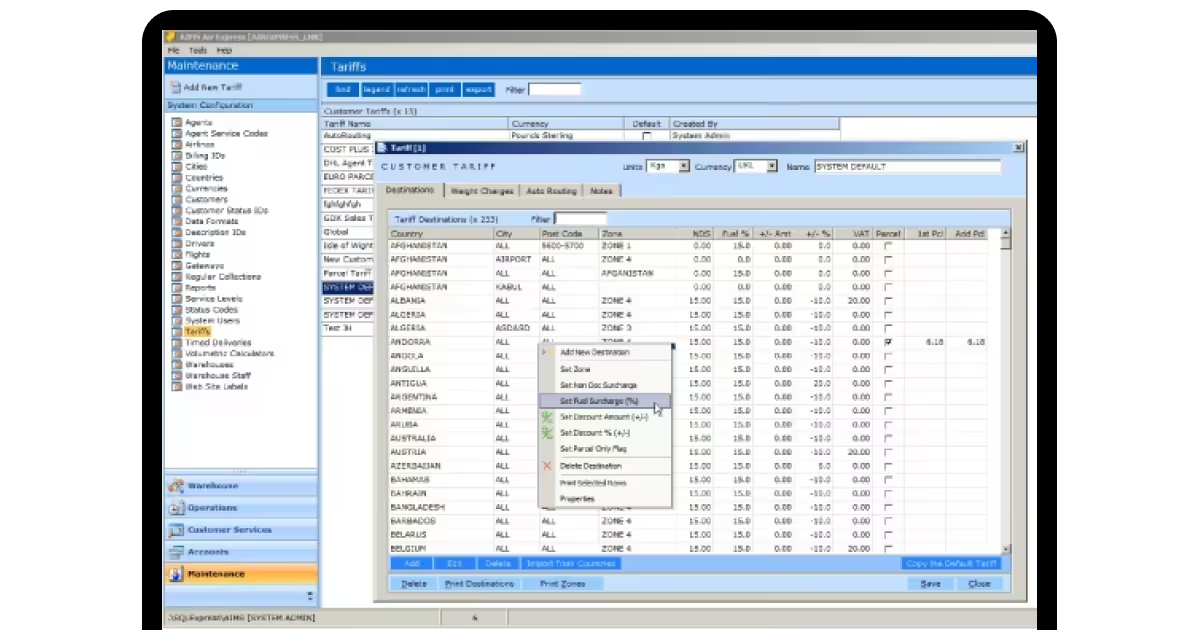
Used by over 200 airlines worldwide, AIMS Airline Software is one of the most widely deployed airline crew management systems. It covers crew planning and rostering, real-time operations control, training and qualification tracking, fatigue monitoring, and airport and ground operations. The tool connects with major payroll platforms and airport operations systems. Open API supports custom integrations. It’s best for mid to large airlines needing a flexible platform with strong compliance.
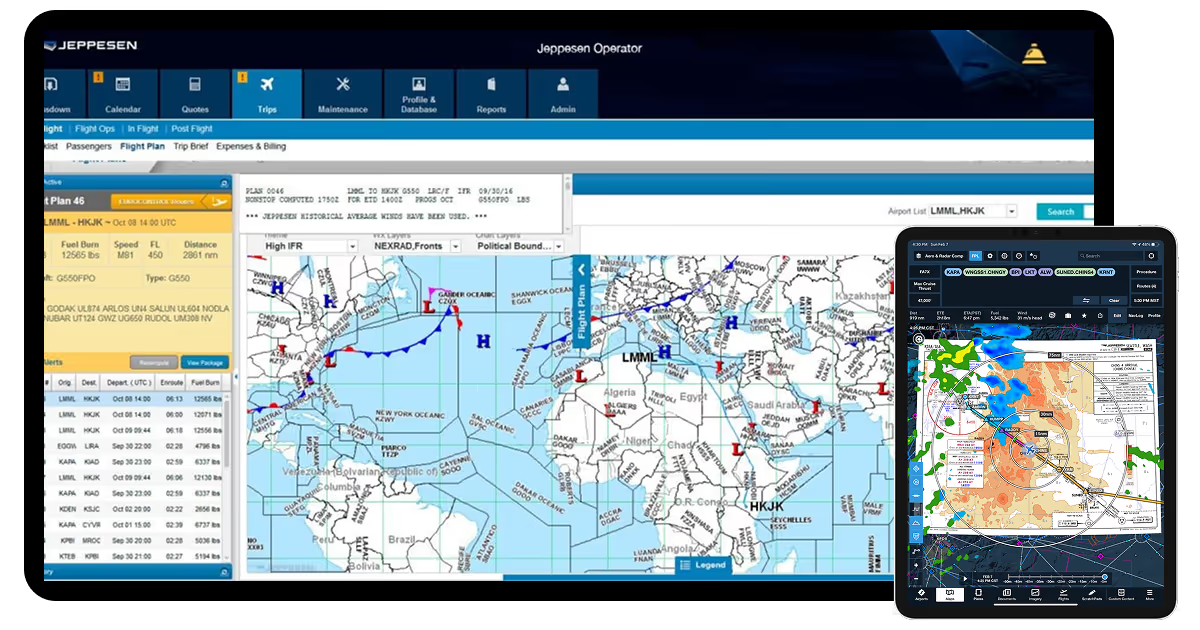
Jeppesen, now part of Boeing, offers one of the most comprehensive cloud crew management software platforms available. Its strength is optimization at scale: complex global networks, large fleets, and tight regulatory environments. The tool offers crew pairing and rostering optimization, fatigue risk management, crew tracking, disruption recovery, and regulatory compliance tools. It has a deep integration with Boeing flight operations tools, third-party EFBs, and airline operational control centers. The platform will fit network carriers and cargo operators running operations with complex crew rules.
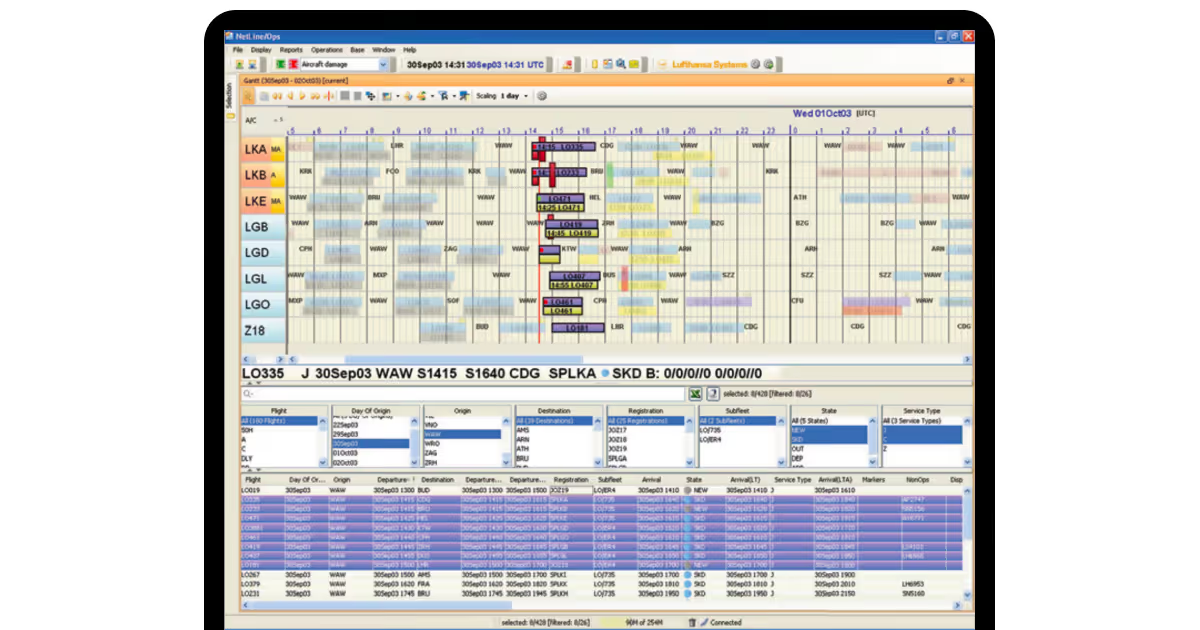
Lufthansa Systems NetLine is an enterprise-grade solution built for large network carriers. Launched as a renewed platform with its pairing optimizer in 2025, it represents a new generation of crew platforms. It offers crew pairing with advanced optimization, rostering, vacation planning, training and qualification management, fatigue monitoring, and parallel scenario evaluation. The tool works within the broader NetLine suite (flight planning, operations control) and payroll systems. It’s a pick for large and mid-sized airlines that want a tightly integrated crew management.
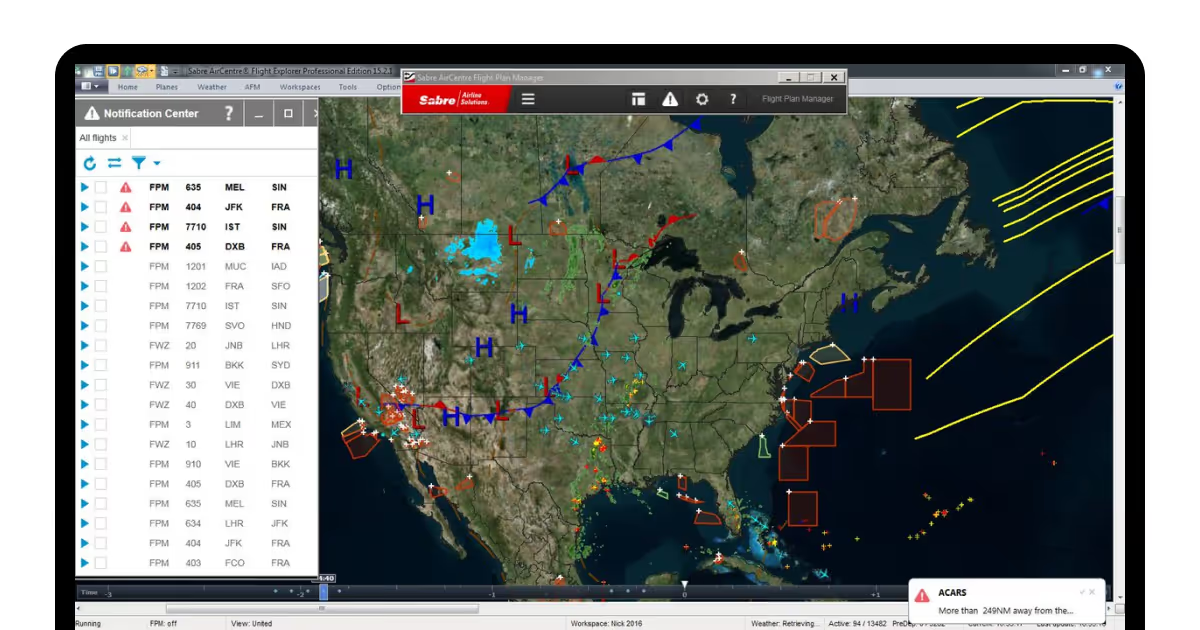
Sabre AirCentre is the crew management solutions arm of Sabre's airline operations suite. Its main advantage is how tightly it connects crew data with reservations and flight scheduling. The tool provides crew rostering, real-time crew tracking, bidding and preferential bidding, disruption recovery, compliance tracking, and crew communication tools. It also has native integration with Sabre's PSS and revenue management. This option is great for airlines running Sabre's suite who want unified data across reservations and crew operations.
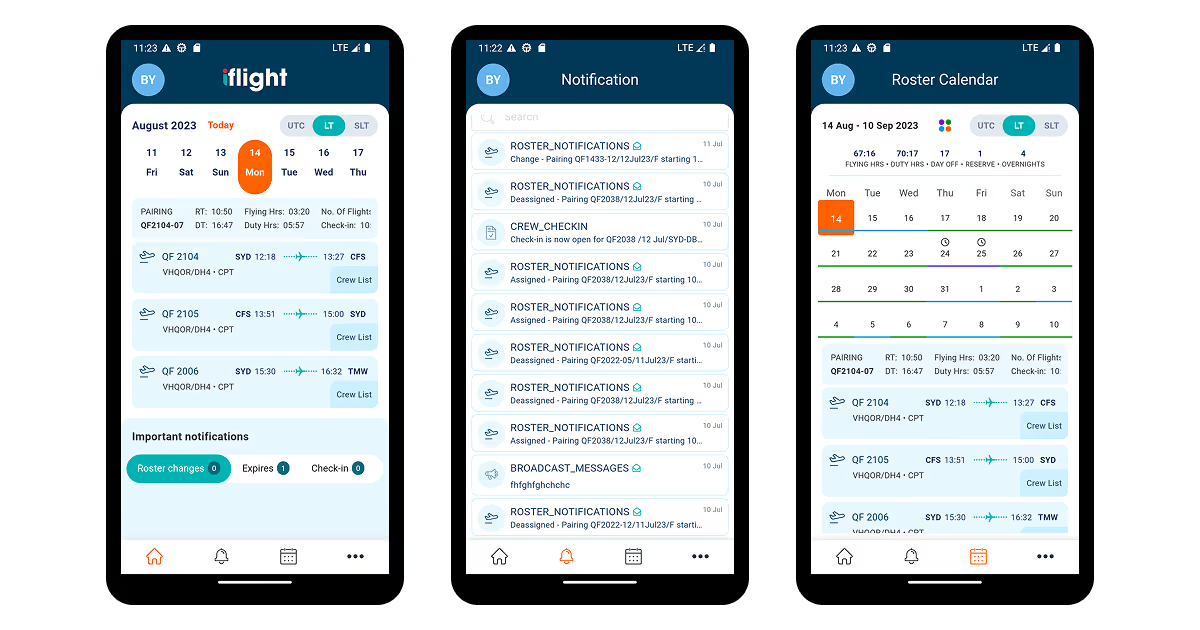
IBS Software's iFlight Crew module is part of a larger aviation operations platform for flight operations, MRO, and revenue management. The crew management component is built for scalability and regulatory compliance. Apart from crew rostering and scheduling, it offers fatigue risk management, training tracking, disruption management, and compliance monitoring for EASA and FAA. The tool’s best for mid to large commercial airlines that want crew management connected to wider operations.
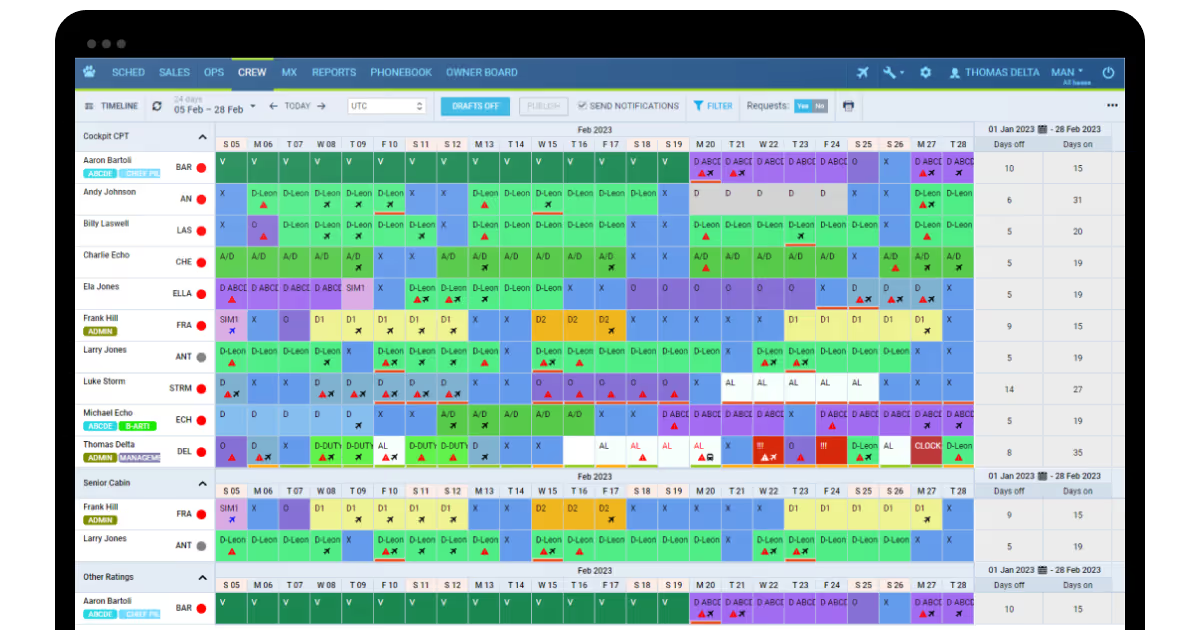
Leon Software has grown from a charter tool into a capable platform for smaller airlines, regional carriers, and business aviation operators. Its interface is more approachable than most enterprise systems. Still, it offers crew duty planning, rostering, fatigue and FTL compliance, document management, flight logging, and mobile access for crew. The tool connects with flight planning tools like Foreflight and Rocket Route, along with maintenance tracking and fuel management systems. This pick is great for charter operators, regional airlines, and business aviation departments.
CAE Crew Management is best known for flight simulators and pilot training, and its crew management software reflects that background. It ties scheduling directly to training records and offers crew scheduling, training record management, qualification tracking, fatigue monitoring, compliance reporting, and integration with CAE training centers. It’s a useful platform for airlines with heavy training requirements or those already using CAE's simulator and training infrastructure.
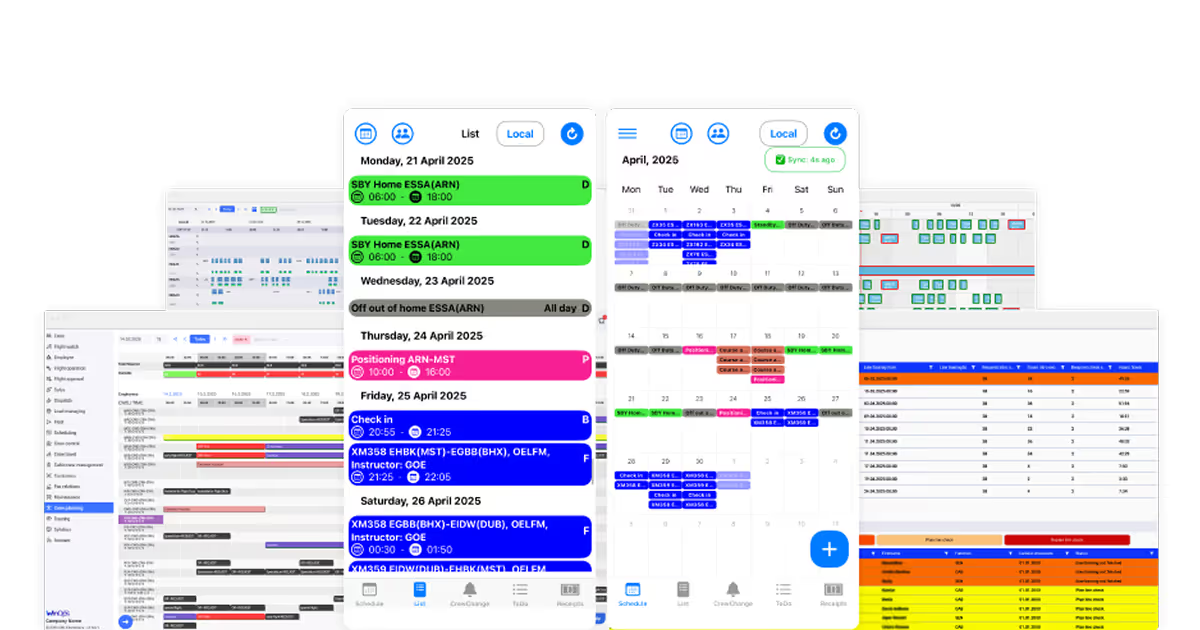
WinOps is a cloud-native aviation management platform built around crew scheduling, fatigue management, and compliance tracking. It offers a clean interface and focuses on making compliance visible in real time. The platform connects with flight scheduling modules within the WinOps suite, plus external payroll and HR systems. This platform is best for small to mid-sized airlines and regional operators who want modern airline crew management software with low implementation overhead.
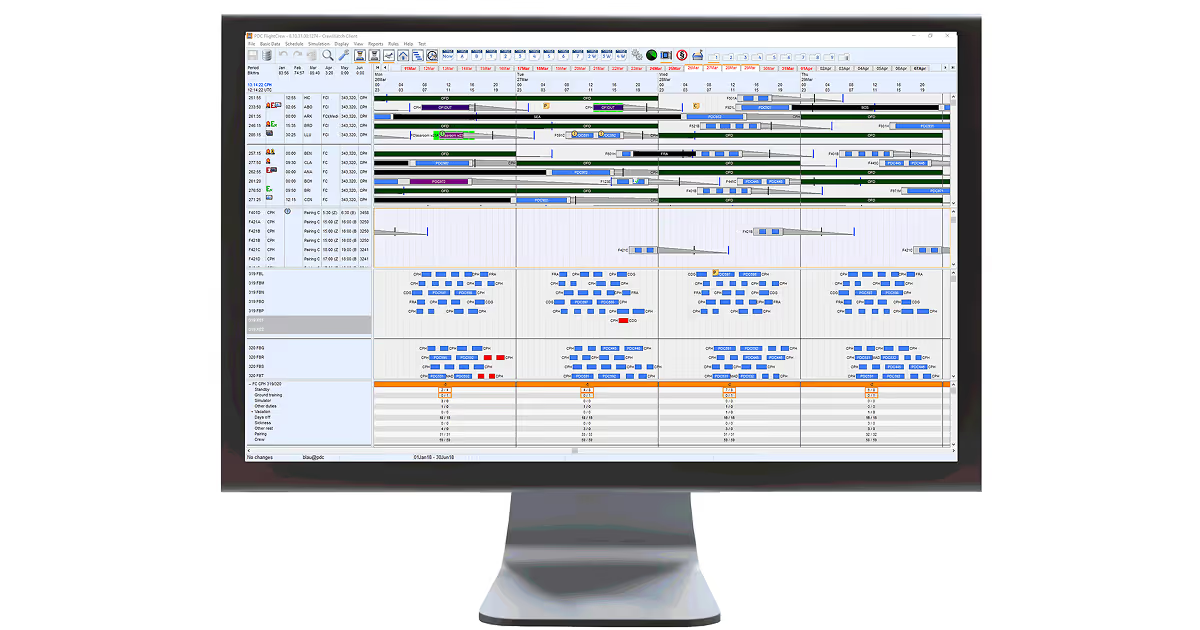
PDC FlightCrew includes a cabin and cockpit crew scheduling module that covers pairing, rostering, tracking, and crew records. Atlantic Airways and other European carriers use it as their airline crew management system. It also covers training and qualification management, FTL rule sets, and payroll data export. It integrates well with PDC's flight scheduling (FlightTime) and operations control (FlightOps) modules. This solution fits small and mid-sized airlines, particularly in European markets.
Ramco Aviation is a cloud-native platform covering flight operations, MRO, and crew management in one system. Its mobility features stand out: pilots and crew can access schedules, documents, and updates through apps that work offline. Some other standout features include dispatch tools, regulatory compliance, and AI decision support. It has a native integration with Ramco's MRO and supply chain modules, plus common PSS and HR platforms. This is a good platform for mid to large airlines that want crew management tightly coupled with maintenance and supply chain operations.
This list is quite long and covers diverse options suited for varied companies. How do you choose the right one? Let’s figure it out.
How to choose the right crew management software?
Picking a platform for managing airline crews is a responsible decision. This solution should cover multiple departments, should integrate with other systems well, and let’s be honest, costs significantly more than some generic CRM would. We compiled a list of important aspects to consider to get this decision right.
Start with your regulatory environment. If you operate under EASA, confirm that the airline crew management system has FTL rule sets out of the box, not just "configurable" ones. The same goes for the FAA. Ask vendors for live references in your jurisdiction. Then look at your PSS. Your passenger service system is the heart of your operation. If you run Sabre, a crew system that integrates natively with Sabre means disruptions flow through automatically. A system that requires manual data transfer between PSS and crew will create delays at the worst possible moment.
Size matters a lot. Enterprise platforms like Jeppesen and AIMS are built for complexity. If you run 20 aircraft, you will spend years implementing a system built for 200. Look at Leon, WinOps, or PDC FlightCrew if your operation is under 30 aircraft. They deploy faster, cost less, and your team will actually use them.
Training integration is underrated. Airlines that track crew training in a separate system from scheduling almost always run into qualification conflicts. CAE and AIMS handle this well. If training compliance is a pain point for you, weigh this feature heavily.
Ask about disruption recovery. Schedules fall apart. What matters is how fast the system helps you rebuild them. Ask vendors to show you their disruption recovery workflow with a real scenario, not a demo with clean data.
Cloud vs on-premise. If you need offline access for remote bases or mobile crews, Ramco and WinOps cloud crew management software handle this well. Most modern platforms are cloud-first, but confirm what happens during an outage.
Implementation time is your real cost. The license fee is only part of what you pay. A system that takes 18 months to implement carries a hidden cost in productivity, training, and change management. Ask vendors for average go-live timelines from signed contract to live production, and talk to their references about it.
This list of factors should help you choose between off-the-shelf systems. However, they don’t always suffice. Often, you need to go custom to truly benefit.
When do you need a custom solution?
Ready-made airline crew management software covers most of the typical cases. But squeezing your unique business into the words “most” and “typical” is often a losing game.
There are situations where buying a packaged system costs you more than building one.
Here are some cases when it’s exactly about your company.
Your operation doesn’t fit standard crew rule models. Most platforms are built around the EASA and FAA frameworks. If you run a hybrid operation, a wet lease model, or regional rules that differ from those standards, you will spend months configuring workarounds. A custom system models your actual rules from day one.
Your disruption logic is really complex. Generic platforms handle common disruption scenarios. If your network involves codeshares, multi-base operations, or crew-sharing agreements with other carriers, the recovery logic gets too specific for a standard tool without heavy customization that the vendor controls (and you pay for every upgrade).
You are building a product, not just running an operation. Some airlines and aviation groups want to offer services to third parties, white-label tools, or build proprietary workflows as an advantage. Packaged software does not let you own that.
You need deep integration with legacy infrastructure. Older airlines often run reservation systems, HR platforms, and maintenance tools built decades ago. Off-the-shelf crew management services assume modern APIs. If your core systems don’t have them, every integration becomes a costly custom project anyway.
You have grown past what your current system was designed for. A platform that worked on 15 aircraft starts showing cracks at 60. Scaling enterprise systems means licensing more seats, adding modules, and negotiating with vendors on your timeline. A custom-built airline digital solution scales on your terms.
Data ownership is a concern. With SaaS platforms, your data is fully on the vendor's infrastructure. For airlines with strict data sovereignty requirements or those building internal analytics capabilities, that’s a structural problem no contract clause fully solves.
The conclusion is clear. Off-the-shelf works when your operation is close to standard, your integrations are modern, and you are not trying to differentiate through your software. The moment any of those conditions breaks down, you are already doing custom development.
So let’s do it the right way.
COAX brings 16 years of work in the travel and transportation industry, specifically in providing custom software development for travel companies that need more than packaged tools offer. We cover the full cycle: from discovery and technical research through architecture, build, testing, and post-launch maintenance. Nothing gets handed off to a third party and forgotten.
On the security side, COAX applies practices built for regulated industries, with role-based access, encrypted data in transit and at rest, audit logging, and compliant infrastructure. Crew resource management in aviation is too operationally sensitive to trust to a vendor who doesn’t understand the industry. COAX does.
Airline crew management system implementation
Most rollouts for airline crew management systems fail because the preparation isn’t adequate. Here is what works in 2026 and will most likely keep working.
Document your FTL rules before selecting a vendor. Every gap between your operating rules and the vendor's configuration is a customization cost. If you operate under FAA Part 121, EASA FTL, or both, set your concrete limits: max flight duty periods by start time and sector count, consecutive night duty restrictions, weekly rest requirements, and FRMS provisions. IATA's Global Prescriptive Fatigue Management Regulations is a useful reference, covering 13 regulatory frameworks, including FAA, EASA, Transport Canada, CASA, and ANAC Brazil. Use it to cross-check your needs.
Run a data audit before touching the system. Crew qualification records in three formats, training expiry dates in an orphaned spreadsheet, and base assignments that do not match HR. Bad data does not get cleaned by a new system. Assign one person to own data quality before go-live.
Start with one base or fleet type. Companies that attempt a full-fleet cutover to a new crew management airline tool in one go almost always roll back. Get one region working correctly, then expand.
Test your five most common disruption scenarios before launch. Aircraft swap, sick call, weather delay causing a rest violation, and late inbound affecting the next duty period. If the system cannot handle them cleanly in a test environment, it will not handle them under pressure in live operations. EASA's cabin crew regulatory framework requires operators to demonstrate procedures for reduced crew and unforeseen circumstances, so your system needs to reflect that, not just your schedulers.
Train your team on the rules, not just the interface. If schedulers understand why the system flags a rest violation per EASA FTL or FAA Part 121 Subpart Q, they can override intelligently. If they only know how to click past the warning, you have a compliance risk.
List every integration before anyone writes code. PSS, payroll, HR, maintenance control, flight planning. For each connection, confirm whether it is a certified integration, a custom API build, or a manual export. Surprises here are expensive.
Freeze scope 30 days before launch. New requests go into a post-launch backlog. Without a freeze, implementation timelines collapse.
COAX has worked through most of these failure modes across many years of experience in travel and transportation. The crew management solutions that land on time share a pattern: clean data, phased rollout, and integrations designed before they are built.
When the work goes beyond standard deployment, which it often does, whether that means custom fatigue rule engines validated against IATA's FRMS guidance, travel data analytics pipelines feeding crew utilization dashboards, AI-driven scheduling optimization, accessibility-compliant crew mobile apps, or cloud architecture with strict data residency requirements, the decisions made in the first few weeks define the rest of the project.
COAX covers the whole workflow from technical research through post-launch maintenance, with no handoff gap between the team that designs the crew management application and the team that supports it after go-live.
FAQ
What is a crew management system’s value for smaller airline companies?
For smaller carriers, a crew management system removes the need for a large back-office team while delivering the same scheduling sophistication.
Mobile access lets crew view rosters, swap shifts, and get real-time updates, improving retention.
Enables fast disruption recovery without a dedicated operations control team.
What is crew management in terms of specific daily workflows?
Crew management runs on four overlapping daily processes. As Klabjan and others describe in their research on airline crew management software, the core workflow moves from pairing construction through rostering, then into real-time operations control, and finally, post-flight reporting. Practically: schedulers build legal pairings from the flight schedule, assign them to individual crew members against qualification and rest rules, monitor live operations for disruptions, and close out duty records for payroll and compliance.
What is crew resource management in aviation, and why is it so difficult to maintain?
Crew resource management in aviation is the training discipline that turns technical skill into coordinated team performance: communication, situational awareness, decision-making, and workload distribution in the cockpit. It is difficult to maintain because it requires consistent behavioral change, not just knowledge. Idowu and team found that CRM reduced commercial aviation accidents measurably from 2000 to 2019, yet its equivalent for single pilots produced far weaker results, directly linked to inconsistent and unmonitored human factors training.
What are the challenges of implementing crew management airline tools?
Fragmented data across flight ops, maintenance, and scheduling blocks planning.
Merger scenarios surface API and data structure incompatibilities in many cases.
Scheduling must satisfy hard regulatory constraints and soft union contract rules simultaneously.
Staff resistance and poor mobile UI design undermine adoption.
Crew pairing is computationally intensive, requiring advanced optimization methods.
Regulatory frameworks change across jurisdictions, demanding continuous updates.
How does COAX develop a secure and efficient crew management system software?
Crew management solutions handle compliance data, crew records, and real-time operational decisions. COAX is ISO/IEC 27001:2022 and ISO 9001 certified, meaning security and quality are built into the architecture. With 90% mid-to-senior developers, your budget covers experience, not learning curves. Strategy, design, backend, QA, and DevOps work as one team across the full build lifecycle. We are rated 4.9/5 on Clutch, so our clients choose us, stay with us, and trust us with their projects consistently.









































































































.avif)




%20for%20hotels.avif)


.avif)
.avif)



.avif)





.avif)

.avif)




.avif)


.avif)

We are interested in your opinion