Two wedding couples. One ballroom. Same Saturday night. Oops.
Your front desk booked both by hand, three weeks apart, on two different spreadsheets. Nobody caught the overlap until the flowers showed up. Now you're refunding a $12,000 deposit and explaining yourself to a furious mother of the bride.
That's what happens without proper venue management software.
Every double-booking costs real money: refunds, lost referrals, staff hours spent apologizing. Every dark Tuesday nobody sold costs you too, quietly, month after month. A spreadsheet can't tell you your ballroom sat empty for eleven days last quarter. A venue management system can.
We've spent 15+ years building booking, scheduling, and reservation engines at COAX Software. And one very successful event venue marketplace, as well. Based on our real project, we tested the platforms ourselves. Two clear leaders emerged, with real gaps between them and the rest of the options.
In this guide, you'll find all ten platforms we evaluated, the tradeoffs behind each, and which one fits your specific venue. You'll also get the core modules a real system needs, the features worth paying for, and a practical rollout plan for getting ROI once you've picked one.
What is venue management software?
Venue management software runs the business side of renting out space. It handles bookings, calendars, contracts, and payments in one place. Multi-venue operators layer on floor plans, staffing, and vendor coordination too.
This layer lays between a booking request and a fully staffed event. Without it, someone's managing three calendars by hand. They're guessing at overlaps, catering headcounts, and which rooms are actually free. That guesswork is mostly what causes double-bookings.
The narrower term here is venue booking software. It covers the reservation piece alone: calendar, availability, checkout. A venue management system is the wider umbrella. It adds staffing, invoicing, reporting, and floor diagrams on top. Every booking tool sits inside a management system. Not every management system is only a booking tool.
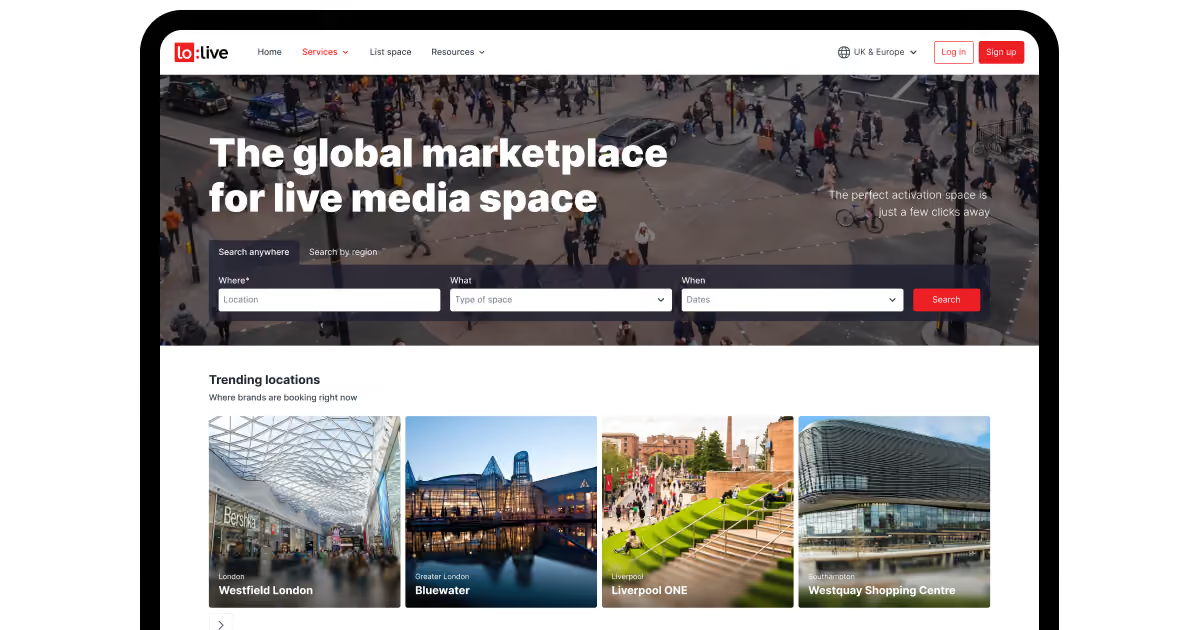
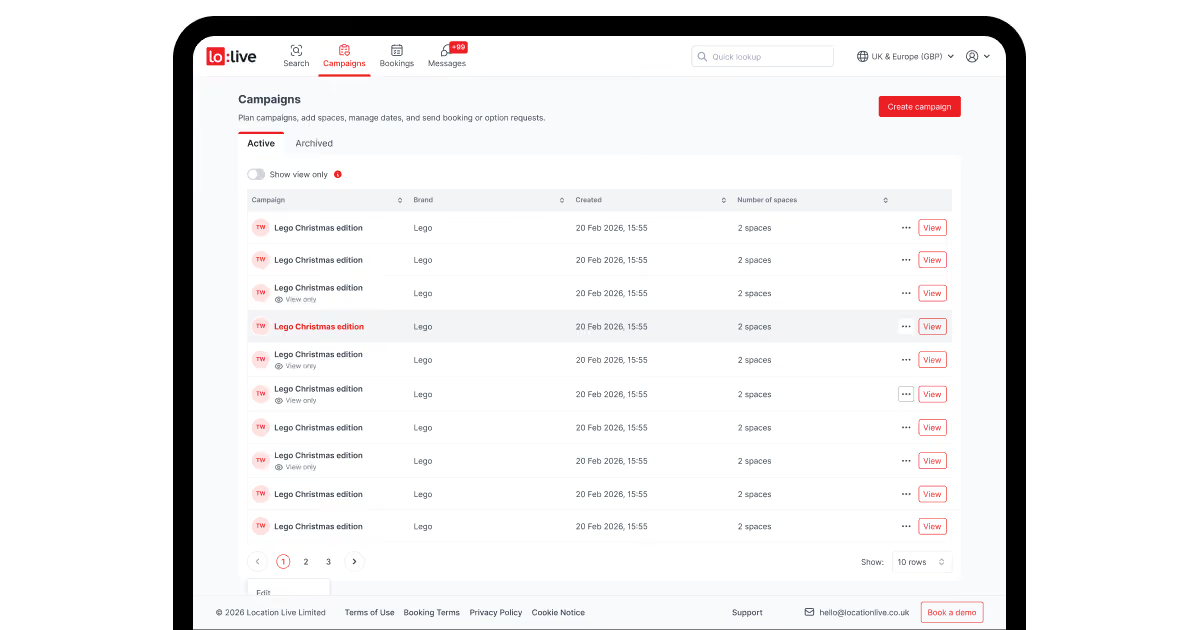
We'll break down the specific modules in the next section. For now, here's the short version: COAX has built this exact category of two-sided booking logic before, on the lo:live marketplace for event venues.
The market backs up what we've seen during the creation of this solution. By 2025, the global market for venue management tools reached a base of $7,219.6 million. Forecasts put it at $16,992.4 million by 2033, growing at 11.293% per year between 2026 and 2033.
Translation: empty rooms and double-bookings are getting expensive enough that spreadsheets don't cut it anymore. The market's answer is a flat, unambiguous yes.
Who uses venue management systems?
Venue management software serves everyone who touches a space, from the owner setting prices to the caterer counting plates. On lo:live, COAX built exactly this kind of two-sided system. Hirers search thousands of live media spaces and book them directly. Landlords upload their own listings, manage leads, and accept reservations. One platform, two different daily workflows, wired to talk to each other.
That two-sided pattern shows up everywhere, not just on lo:live. A boutique hotel owner runs the same core logic as a 20,000-seat arena, just at a different scale. Here's how it typically breaks down, by role and by venue.
Venue managers and owners handle pricing, availability, and overall business health.
Event coordinators manage the client-facing chaos: contracts, layouts, shifting schedules.
Operations teams track equipment and set up crews nobody notices until something's missing.
Catering and vendor staff coordinate dietary lists, prep timing, and outside suppliers.
The venues themselves range just as widely. Hotels, restaurants, and wedding spaces run on event venue booking flows built for social events. Stadiums and convention centers need enterprise-grade capacity and multi-team coordination. Theaters and live music spaces layer in technical scheduling most other venue management solutions never touch.
Same core system, wildly different daily reality. Here's how those pieces actually come together:
User role
Primary tasks
Typical venue type
Venue manager or owner
Pricing, availability, revenue reporting
Hotels, arenas, event halls
Event coordinator
Contracts, floor layouts, client communication
Wedding venues, convention centers
Operations and production staff
Equipment tracking, setup logistics
Stadiums, theaters, arenas
Catering and vendor staff
Dietary coordination, supplier timelines
Hotels, restaurants, corporate venues
That range of users is exactly why generic scheduling tools fall short. Next, we'll get into why you actually need dedicated software, and when the cost of skipping it starts to bite.
Why do you need venue management software?
Every venue owner recognizes at least one of these moments. Margins tighten, guests complain, double-bookings blow up your calendar, or your team drowns in follow-up emails. Below are the scenarios where venue management software stops being optional and starts paying for itself, with the specific mechanism behind each fix.
When your margins are thin
Thin margins mean every empty room costs you. Venue operations management without real-time visibility hides which days are underbooked. You find out too late to discount them.
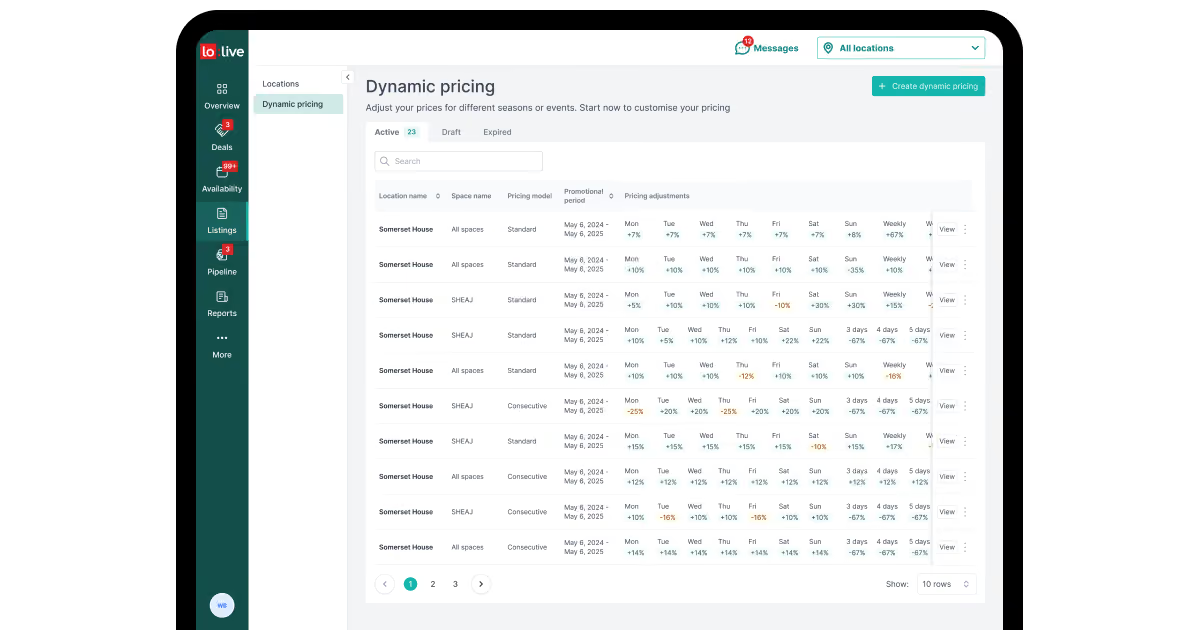
Dynamic pricing tools inside modern platforms adjust rates based on demand automatically. Weekend premiums, off-peak discounts, and consecutive-day incentives all run without manual spreadsheet work. On lo:live, COAX built exactly this: landlords set custom weekend definitions and multi-day discount rules directly in the platform.
Upselling matters too. A venue management tool that surfaces add-ons at checkout, catering, AV equipment, extra hours, turns a single booking into a bigger one. That's revenue you're currently leaving on the table.
When double-bookings keep happening
Two events, one room, same night. That's the fastest way to lose a client and a deposit. A real venue management system locks availability the moment a booking's confirmed, so nobody double-sells the same slot.
This isn't the same problem travel booking engines solve. Airlines and hotels sell identical, interchangeable inventory. Venues sell one-of-a-kind spaces with layouts, staffing, and equipment tied to each booking. Generic scheduling tools miss that complexity entirely.
On lo:live, real-time availability synced across 2,000-plus spaces kept hirers from booking a space someone else already held. That single feature protects both your calendar and your reputation.
When your guests are unhappy
Slow replies lose bookings before you even get to negotiate. Eighty-two percent of customers expect a response within ten minutes. Miss that window, and they've likely already messaged your competitor.
Event venue management platforms fix this with built-in messaging and automated confirmations. Every inquiry, contract update, and thank-you note goes out on time, without someone manually tracking who's waiting on what.
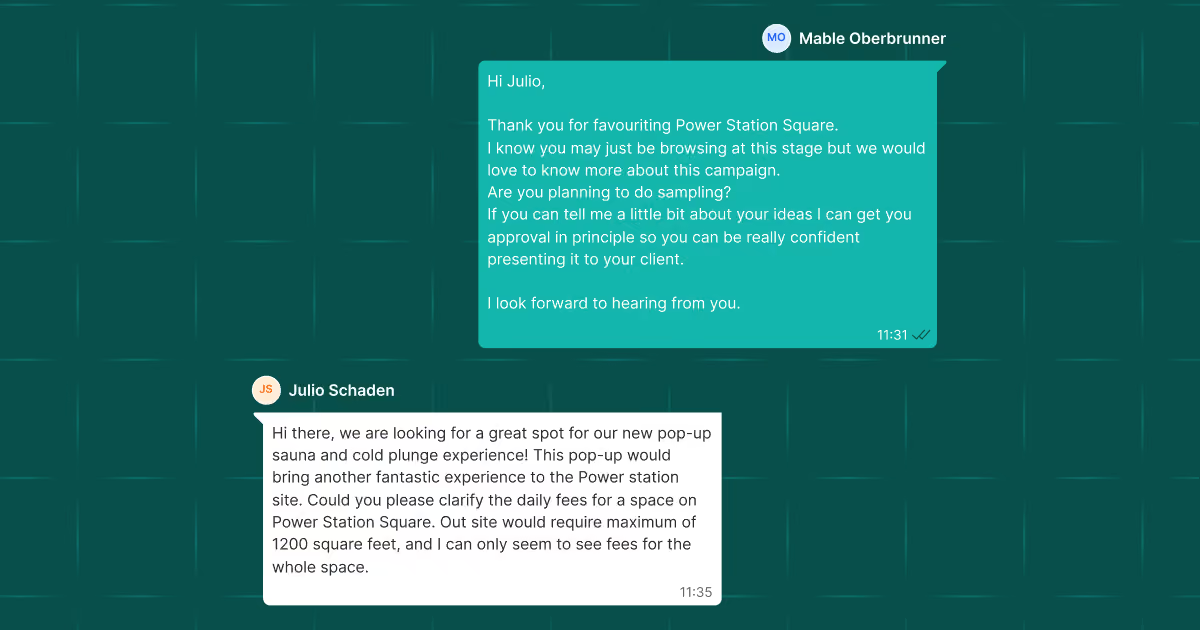
COAX built an integrated messaging hub into lo:live for exactly this reason. Hirers and landlords negotiate directly inside the platform, with full context attached to every conversation. Nobody's digging through old email threads to find what a client actually asked for.
When your team drowns in admin
Manual data entry eats hours your team could spend selling. Contracts, invoices, and event orders pile up across spreadsheets and inboxes. Nobody has time to chase down what's overdue.
Venue booking software with task automation removes that grind. Digital contracts, e-signatures, and automated payment reminders cut the back-and-forth to minutes, not days. Faster paperwork means faster conversions, since a customer who's still waiting on a contract is a customer still comparing you to someone else.
Real-time collaboration also matters here. When staff can see updates the moment they happen, nobody duplicates work or misses a last-minute change.
When you're scaling to multiple venues or listings
One venue is manageable by memory. Ten venues, or hundreds of bookable spaces, aren't. Growth is exactly when spreadsheets and phone calls stop working.
Venue management platforms built for scale handle multi-location inventory, role-based permissions, and centralized reporting without adding headcount. On lo:live, campaign tool adoption grew 140% between 2022 and 2025, and the platform still sustained roughly 97,000 searches a year across the same period.
That kind of volume needs infrastructure, not manual coordination. If you're already feeling that strain, the software isn't a nice-to-have. It's the thing standing between you and your next growth stage.
What are the core modules of a venue management system?
A real system isn't one tool. It's several modules working together: booking, scheduling, client records, floor plans, payments, and reporting. Miss one, and the gaps show up as double-bookings or unpaid invoices. Here's what each module actually does.
Booking and reservations
This module is the engine room of venue booking. It holds your calendar, locks availability, and confirms space the moment a client commits. Everything else in the system builds on top of it.
Good booking modules handle more than a single yes-or-no confirmation. They support:
Preliminary holds that reserve a space without locking in the full contract yet.
Full bookings that trigger invoicing, contracts, and confirmation emails automatically.
Multi-space reservations for events that span several rooms or areas at once.
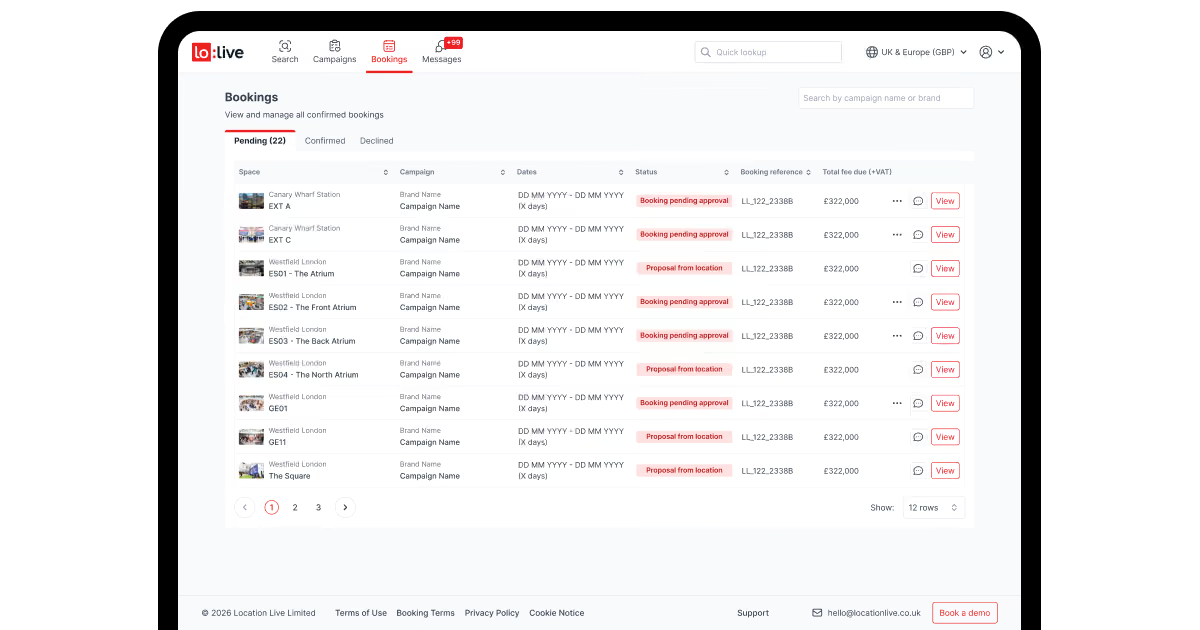
On lo:live, COAX built exactly this layered structure. Hirers move from an initial hold to a confirmed booking through clear, step-by-step stages, with no dead ends along the way.
Event planning and scheduling
Scheduling is where a confirmed booking turns into an actual event plan. This module tracks setup windows, staffing shifts, vendor arrival times, and teardown, all tied to one calendar.
Venue event management breaks down without this layer. A room booked correctly still fails if catering shows up two hours early or the AV crew never got the memo. Scheduling tools coordinate every moving piece against the same timeline.
Multi-event operators need something extra: the ability to shift bookings between dates without starting over. COAX built that flexibility into lo:live's campaign structure, letting hirers move spaces across timelines as plans change. That's a different problem than travel booking platforms solve, since flights don't need floor plans, staffing shifts, or vendor coordination.
CRM and client management
Every repeat client is worth more than a first-time one, but only if you remember their preferences. A CRM module stores contact history, past events, and communication threads in one place.
Onboarding matters here too. New users, whether they're first-time hirers or landlords listing a space, need guidance without a support call. lo:live's getting-started system walks new landlords through listings, pricing, and booking workflows step by step.
That kind of structured onboarding directly supports adoption. It's part of why venue management software succeeds where a shared spreadsheet never could: new users get moving without waiting on a training session.
Floor plans and space management
This module tracks what you're actually selling: physical space, its size, layout, and capacity. Without it, sales teams quote availability that doesn't match what a room can hold.
Flexible listing models matter for operators with varied inventory. lo:live gives landlords three options: full pricing transparency, pricing-only visibility, or price-on-application for premium spaces. Filters for size, footfall, and environment let hirers narrow results fast, down to exact square meters and budget range.
That granularity separates a mature venue management tool from a basic listings page. Buyers see precisely what fits their event before they ever ask a question.
Payments and invoicing
Late payments and manual invoicing drain hours your team could spend selling. This module automates contracts, payment collection, and reminders, so nothing slips through email.
Automated reminders alone change your cash flow. Task automation cuts the manual work behind spreadsheets, billing, and invoice tracking substantially. Add e-signatures on top, and contracts that used to take days close in hours.
Faster paperwork isn't just convenience. It's the difference between a client who signs today and one who's still comparing you to a competitor tomorrow.
Reporting and analytics
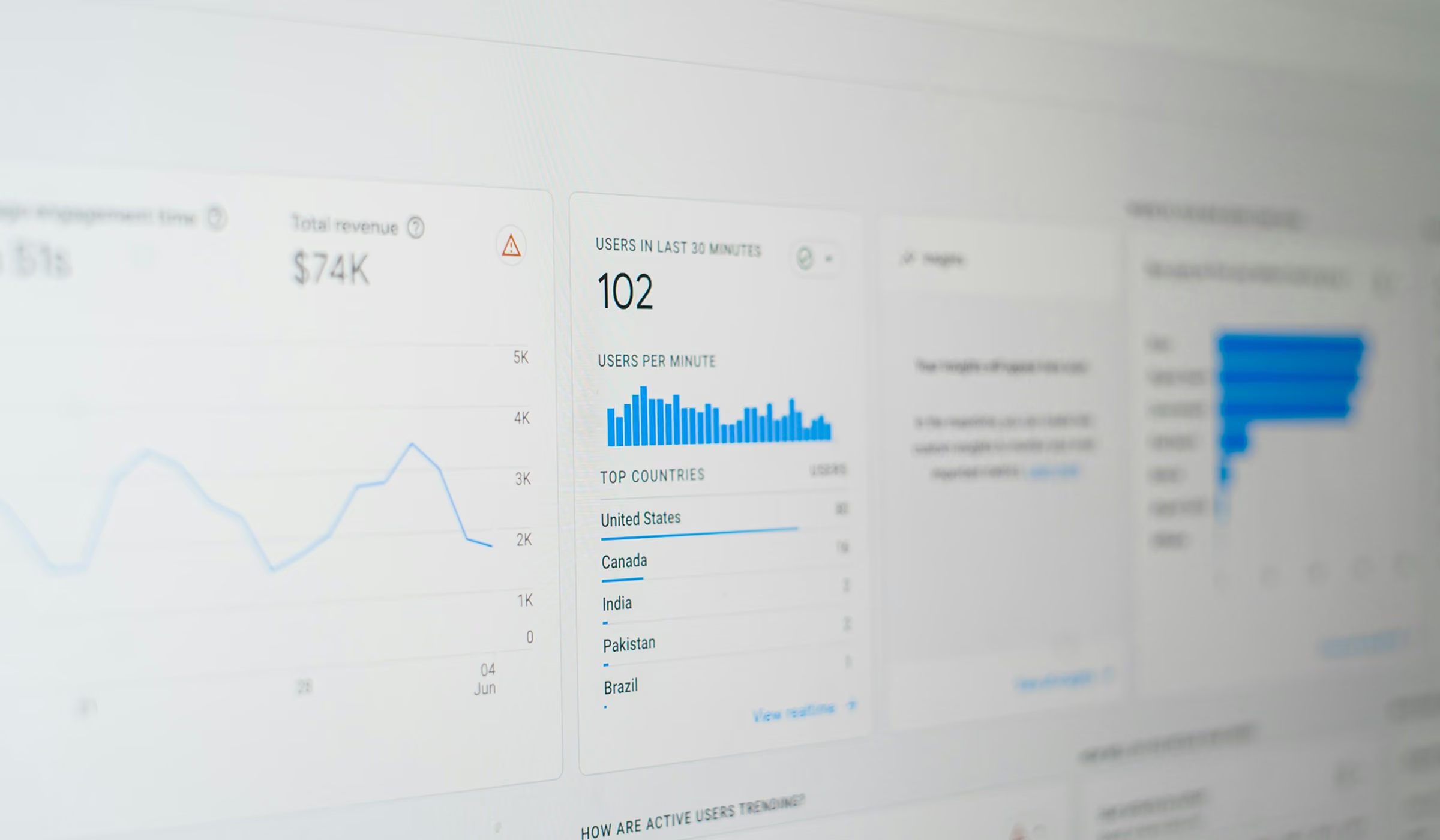
Numbers you can't see are decisions you can't make. This module turns raw booking activity into dashboards: revenue trends, occupancy rates, response times, and outstanding requests.
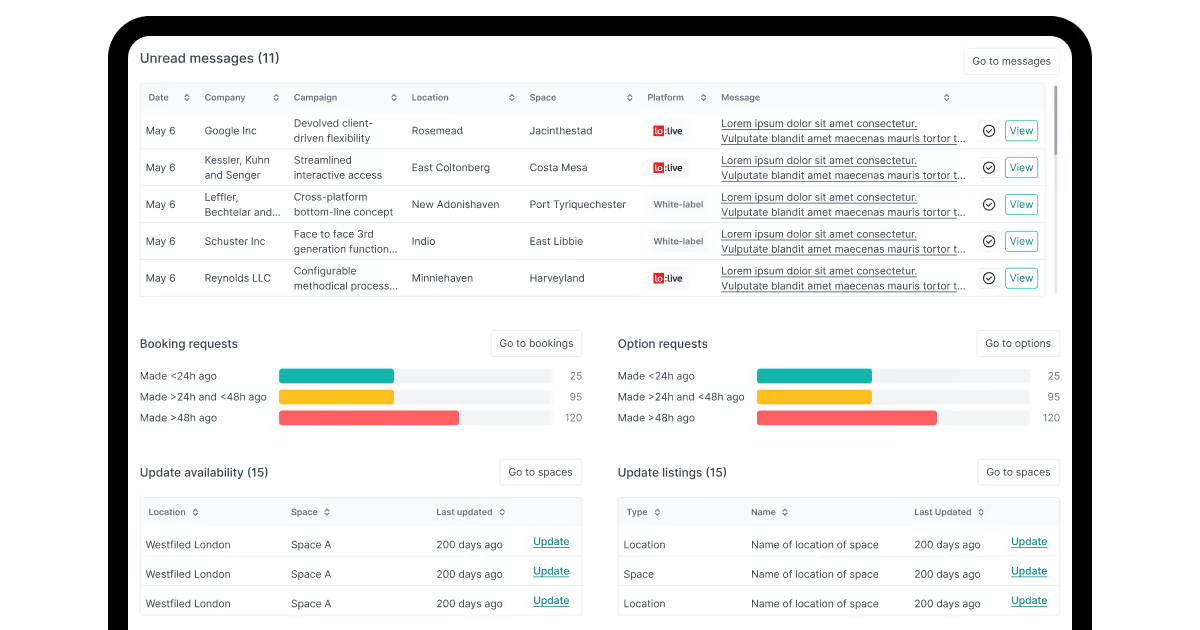
lo:live's LO:OPs panel gives internal teams exactly this view. It tracks unread messages, pending bookings, and how long requests sit unanswered, all in one screen. That kind of visibility catches a stalled deal before it turns into a lost client.
Metabase-powered reporting layered on top adds drill-down analysis by region, signup trend, and account activity. Operators managing multiple properties need that depth. A single dashboard replaces hours of manual spreadsheet reconciliation every week.
Plenty of vendors will sell you a booking calendar. Fewer can adapt it to your specific listing model, your pricing complexity, and the client workflow your team already runs on. Real venue booking software development takes engineers who've built two-sided marketplaces before, not just read a features list.
At COAX, our median engineering tenure runs 6.5 years, well above the 3.1-year industry median. That gap matters: the expertise stays in-house, not scattered across a rotating team.
Clients get years of accumulated booking-platform knowledge, not developers learning your business from scratch. ISO 9001 and ISO 27001 certification is standard on every project, not an add-on we pitch later. Security gets documented from day one, not bolted on after launch.
Which features to look for in venue management software?
Not every platform needs the same feature set, but some capabilities separate a working system from a glorified calendar. Here's what actually matters, and why.
"We've watched clients pick a venue management system with fifty features and use six of them. The right question isn't 'what's included?' It's 'what does my team actually touch every day?'", says Orest Falchuk, Head of Engineering at COAX Software.
Good event venue booking management software groups its features around four real jobs: booking, running the event, getting paid, and knowing your clients. Here's each cluster in detail.
1. Booking and calendar control comes first, since a missed date costs you the whole deal.
A centralized function diary tracks tentative, quoted, and confirmed bookings in one live view.
Live availability widgets let clients check open dates without calling.
Multi-space allocation keeps sub-rooms and outdoor areas from double-booking each other.
2. Event execution tools turn a signed contract into a run sheet.
Digital event orders map out setup, catering, and staffing timelines for your team.
Floor plan builders let you drag and drop tables, seating, and equipment visually.
Resource logs track which vendor, AV crew, or catering package belongs to which booking.
3. Finance and paperwork keep cash moving and contracts binding.
Automated invoicing and secure payment processing cut collection time drastically.
Digital signature templates make contracts legally binding within minutes, not days.
Direct accounting sync removes the manual re-entry between your booking system and your books.
4. Client intelligence is what separates a venue management company with repeat business from one starting over each time.
A built-in CRM remembers past events, preferences, and every message exchanged.
Self-service client portals let customers view details, pay balances, and sign forms without a phone call.
Occupancy dashboards and conversion metrics show which leads actually turn into revenue.
None of that comes from a template. It comes from nearly two decades focused on travel, transportation, and mobility technology that COAX Software has developed. We did it by building booking platforms, reservation systems, marketplaces, concierge tools, payments infrastructure, and revenue optimization systems along the way.
That focus shows up in delivery speed, too. Because we've solved variations of these problems before, our teams don't start from zero. Domain expertise, proven architecture patterns, and reusable accelerators let us skip the guesswork generalist firms repeat on every project. Delivery typically runs 50 to 60 percent faster as a result, and the event venue management software you end up with fits your actual workflow, not a generic checklist.
Integrations you need for successful venue management
A system that doesn't talk to your other tools just creates a second spreadsheet. The integrations below determine whether your venue booking software fits into your existing stack or fights it.
Financial syncing matters most for cash flow accuracy. Invoices, payments, and expenses should flow directly into Xero or QuickBooks, no manual re-entry required. Secure payment processing through Stripe or a comparable gateway handles deposits and balances without extra steps.
Marketing and scheduling connections keep leads and calendars current. CRM and email integrations push new event inquiries straight into your marketing pipeline. Calendar sync with Google, Outlook, or Apple Calendar keeps your whole team looking at the same dates.
Operational connections round it out. Floor plan tools and task management apps should link directly to your booking data, so a layout change updates everywhere at once.
Some venues need something more ambitious: a venue booking website that aggregates listings from multiple providers under one brand. That's a different integration problem entirely, closer to building a system than adding a payment gateway.
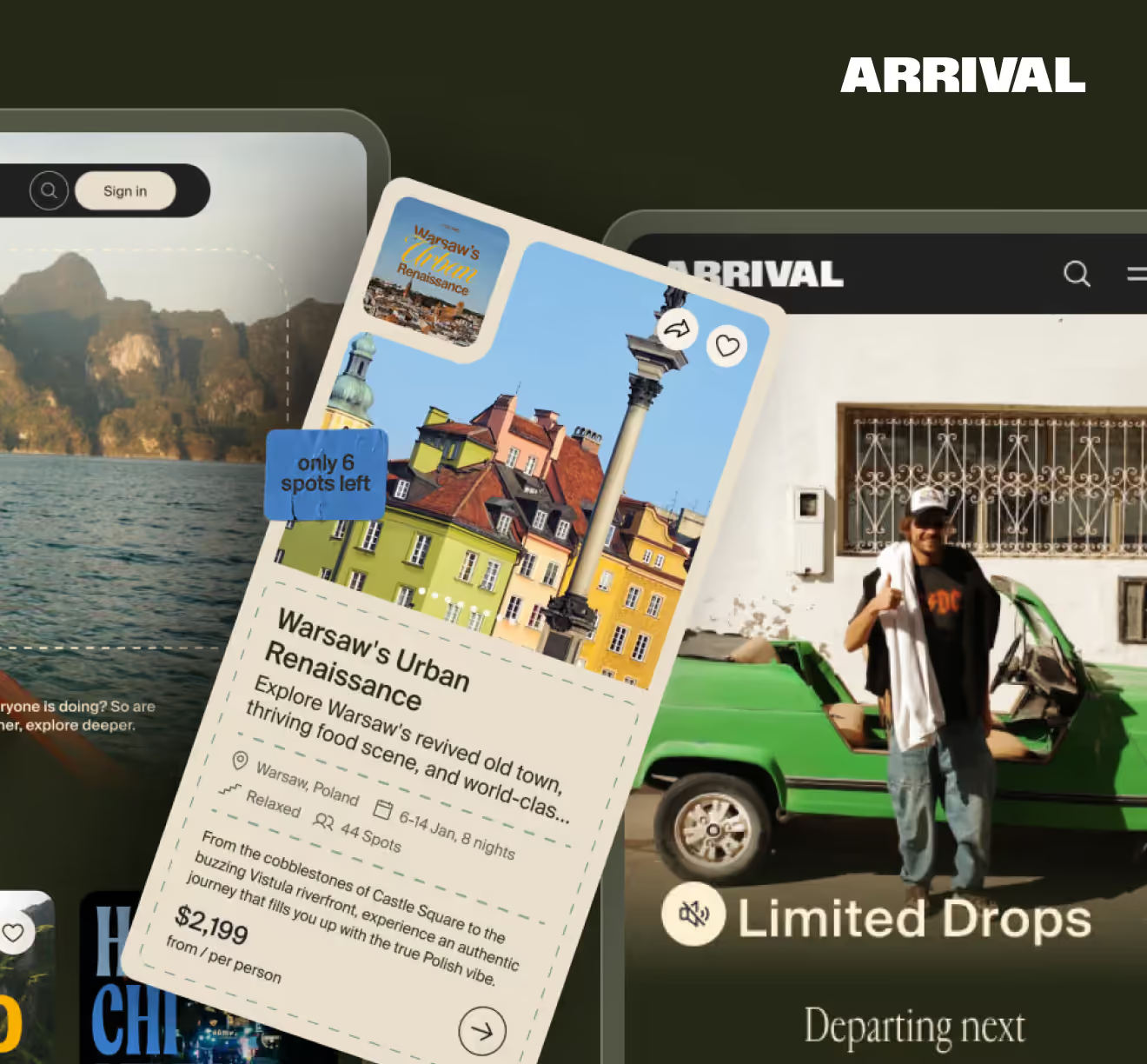
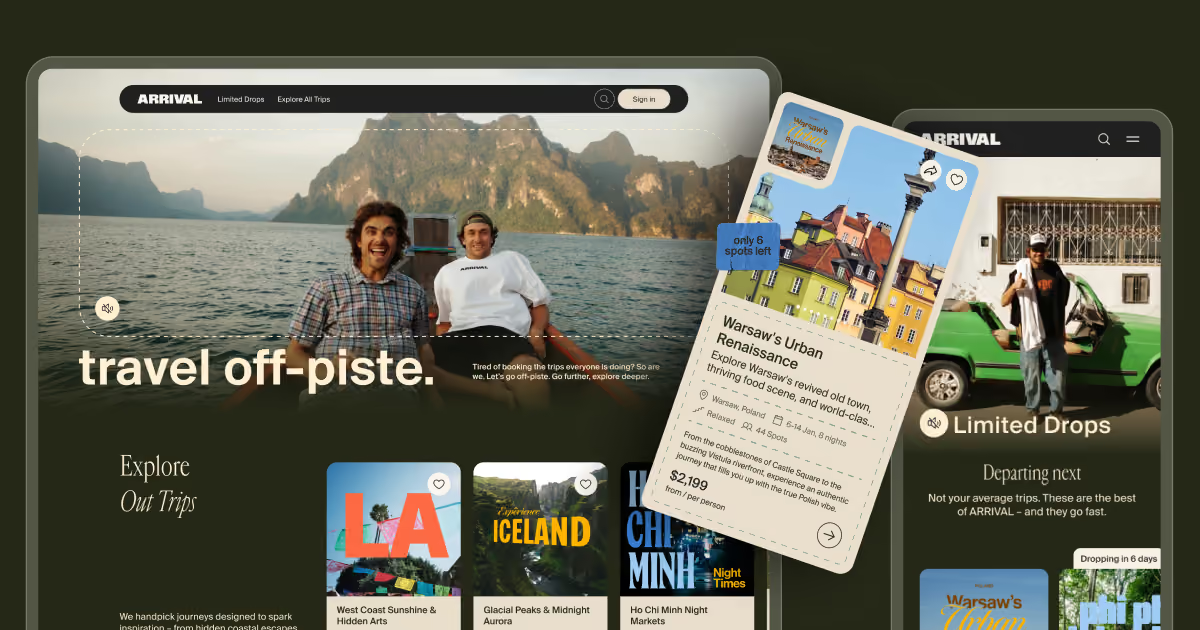
COAX hit exactly this challenge on ARRIVAL, an Australian travel platform built by two of the country's most-followed content creators. Their trip catalog runs through Nezasa, a B2B platform aggregating hotels, flights, and activities across dozens of providers. Nezasa runs on its own data model, with constraints our engineers had to master from scratch.
The lesson translates directly to venues building event venue marketplaces. If you're aggregating listings from multiple operators or building a white-label booking layer on top of several suppliers, that's not a plug-and-play integration. It's closer to what we built for ARRIVAL: a system that reconciles different providers' logic into one consistent booking flow, without the guesswork falling on your team.
10 best venue management software picks
We tested every platform against real booking friction, not marketing pages. Our criteria came from projects where a missed date cost a client money.
On lo:live, COAX built a two-sided marketplace connecting hirers and landlords across thousands of spaces. One early routing issue stood out fast: two campaigns claiming the same space on the same day, because availability updates lagged behind actual bookings. That gap taught us exactly what to test for in a venue booking system.
We check double-booking resistance first. Does availability lock the instant someone confirms, or does it sync on a delay? A venue booking software platform that syncs every few minutes still leaves a window wide enough for two sales teams to sell the same Saturday.
We also watch what happens after an inquiry lands, not just whether it gets logged. A platform can capture a lead perfectly and still lose the booking if nobody follows up in time. Response speed matters as much as capture.
From there, we built five specific tests every platform had to pass:
Double-booking resistance: does availability lock instantly across multiple spaces and sub-rooms?
Response speed simulation: how fast does an inquiry route to the right person?
Event-day depth: can it handle BEOs and floor plans, not just the initial booking?
Integration cost: how many weeks to connect existing CRM, payment, and accounting tools?
Client-facing polish: does the self-service portal actually cut down email volume?
Every platform below cleared those five tests to some degree. The ranking reflects how well, not just whether.
Platform
Best for
Standout feature
Pricing model
BoomPop
Corporate planners sourcing venues
AI-driven venue discovery and automated RFPs
Custom
Cvent
Enterprise, high-volume sourcing
300,000+ venue supplier network
Custom
Tripleseat
Restaurants and hotels running private events
BEO generation and lead pipeline
Quote-based
Perfect Venue
Independent restaurants and bars
Tripleseat-level tools at a lower cost
Tiered
Momentus
Stadiums and large multi-space venues
Enterprise portfolio management
Custom
Event Temple
Hotels focused on lead conversion
Revenue-first booking workflow
Custom
Planning Pod
Caterers and F&B-heavy venues
Forty-plus integrated event tools
Tiered
Skedda
Shared spaces and coworking venues
Fully customizable booking rules
From $99/month
HoneyBook
Freelance planners and small studios
Client management plus automated invoicing
From $11.20/month
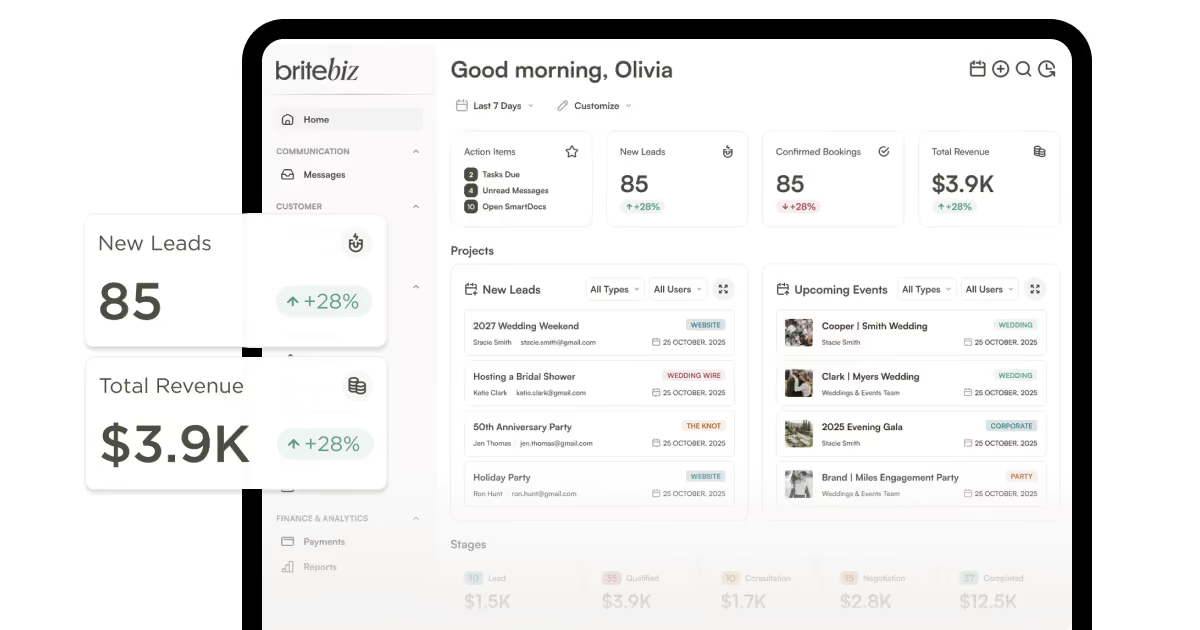
BriteBiz
Wedding and event venues
Fast contract-to-payment workflow
Quote-based
This is a broad mix on purpose. Some of these tools count as a full venue management system; others solve one narrow slice of the workflow well. Below, we break down where each one actually earns its spot.
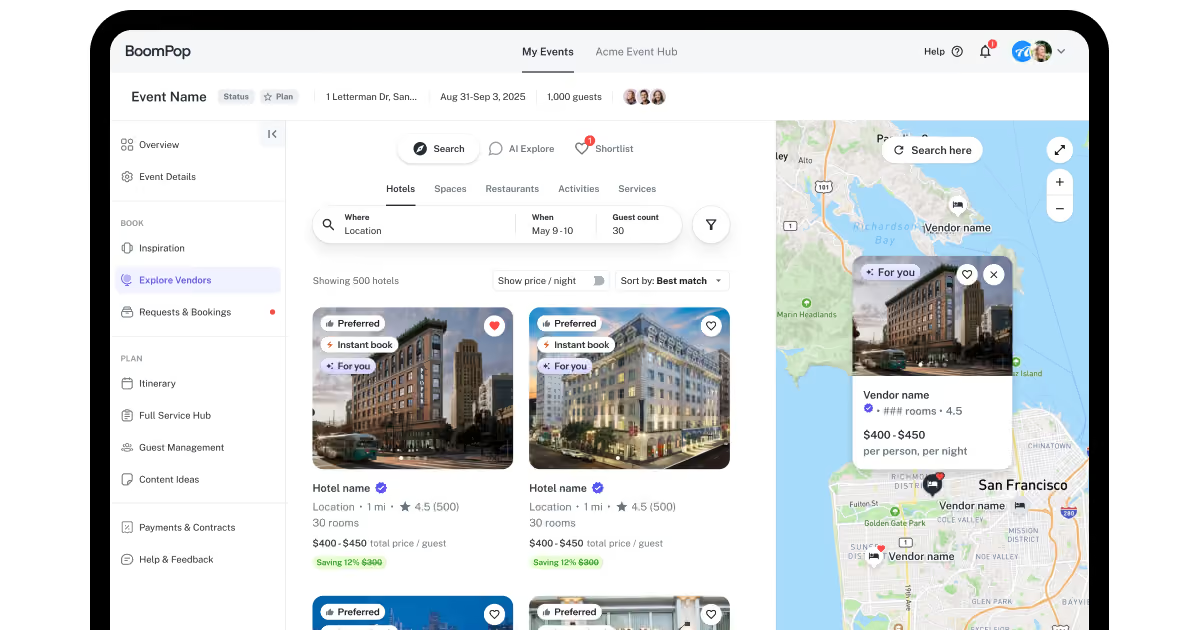
BoomPop targets corporate planners, not venue operators. It uses AI to match plain-language event briefs against a network of over one million vetted venues. RFPs go out automatically, and BoomPop's team chases venues that go quiet. Clients report cost savings between 25 and 40 percent per event. Skip it if you run a venue yourself; this tool sources space, it doesn't manage your own bookings.
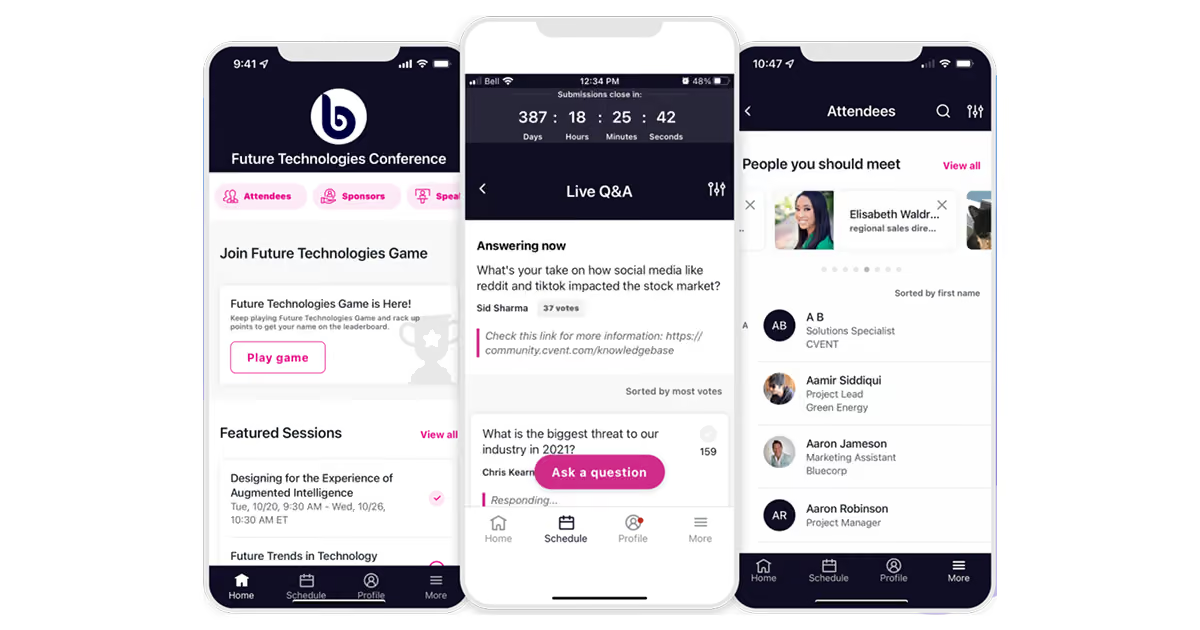
Cvent is the largest sourcing database in this category, covering over 300,000 hotels and venues. It fits enterprises running dozens of events a year through a dedicated procurement team. The tradeoff is real: implementation takes training, and pricing reflects enterprise scale. Smaller teams sourcing venues occasionally will find the overhead heavier than the payoff.
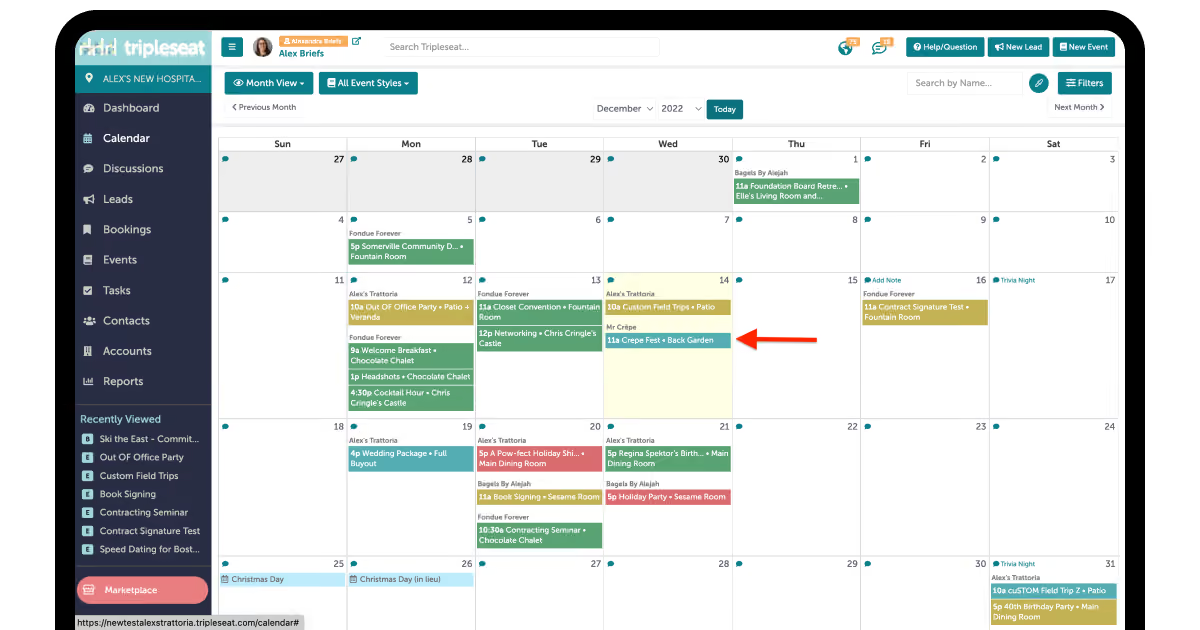
Tripleseat runs the operational side for restaurants, hotels, and unique venues. Over 19,000 venues use it to manage private event bookings, BEOs, and client proposals in one pipeline. Reviewers flag two recurring issues: proposal emails landing in spam, and a mobile app that lags behind desktop. It's still the most adopted event venue booking system in hospitality for a reason.
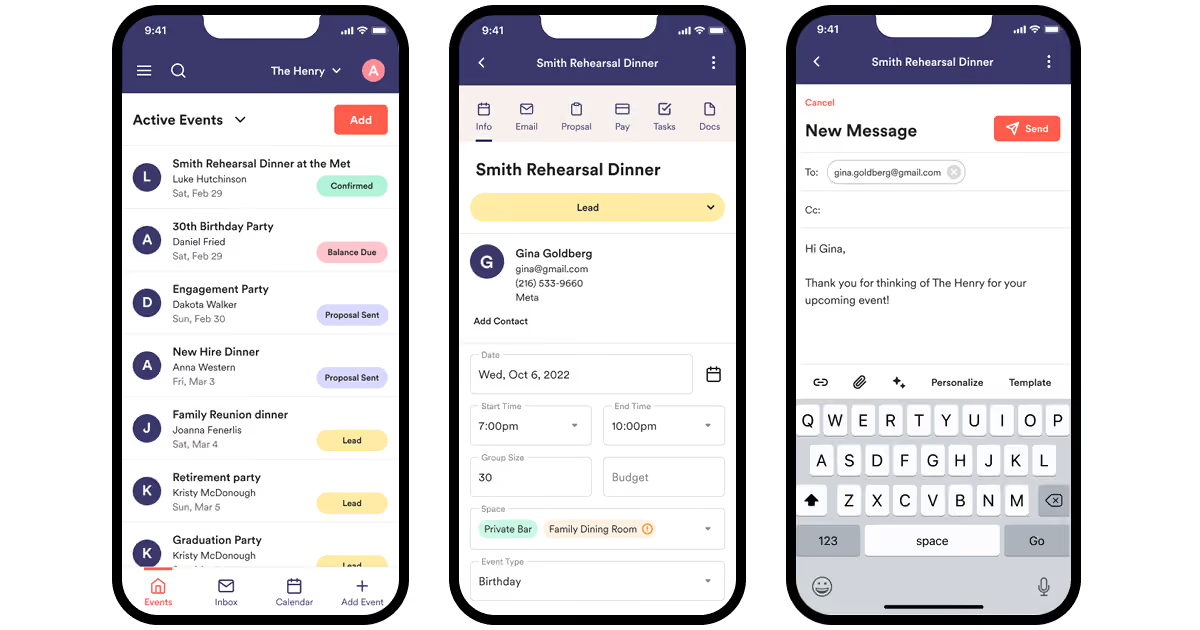
Perfect Venue covers the same ground as Tripleseat, at a lower price and with a simpler interface. It handles lead management, proposals, and calendars well, but skips Tripleseat's deeper BEO tools. Independent venues without complex multi-space needs get most of the value without the learning curve.
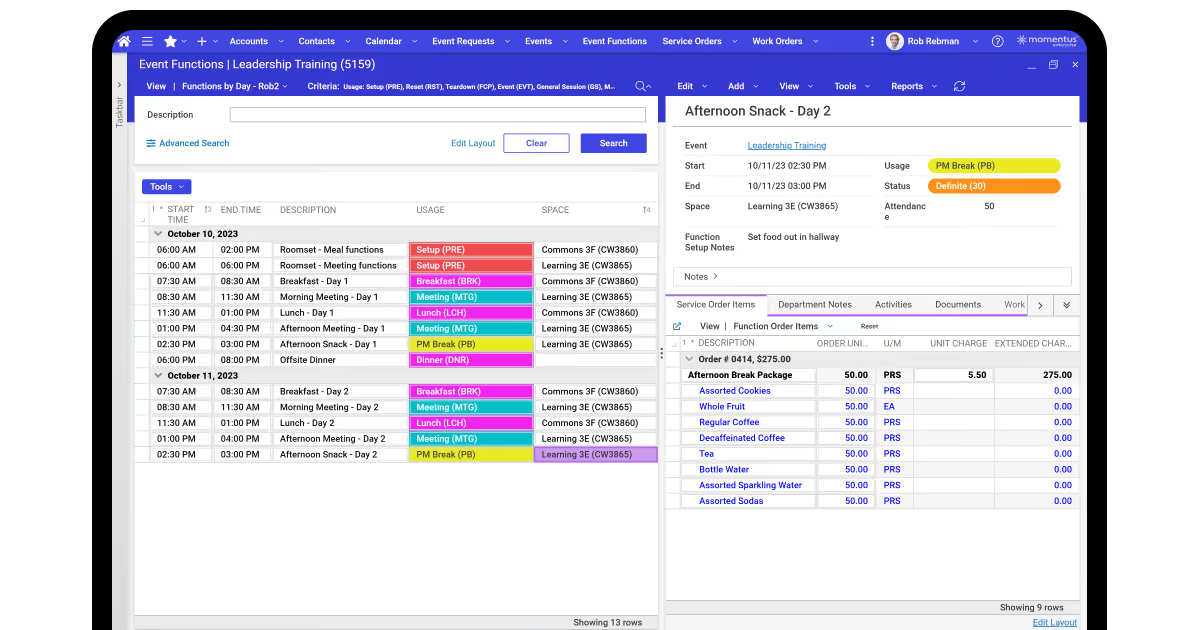
Momentus has run venue operations for over 35 years, and it shows in its enterprise depth. Stadiums, convention centers, and universities use it to manage multi-space portfolios, staffing, and equipment across a million-plus events annually. Implementation runs months, not days. This isn't a fast rollout, and it's not built for a single-room venue either.
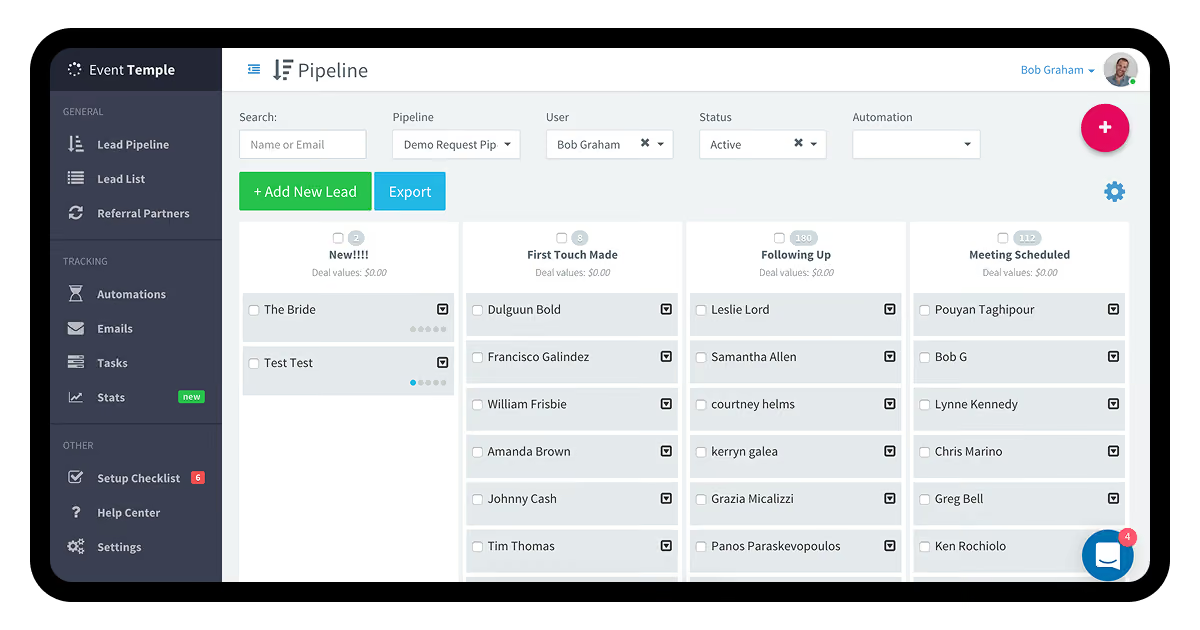
Event Temple leans into revenue growth over raw operational depth. Its clean interface and PMS integrations suit hotels chasing faster lead response and stronger conversion rates. It's lighter on BEO functionality than Tripleseat, so venues built around complex catering logistics may outgrow it fast.
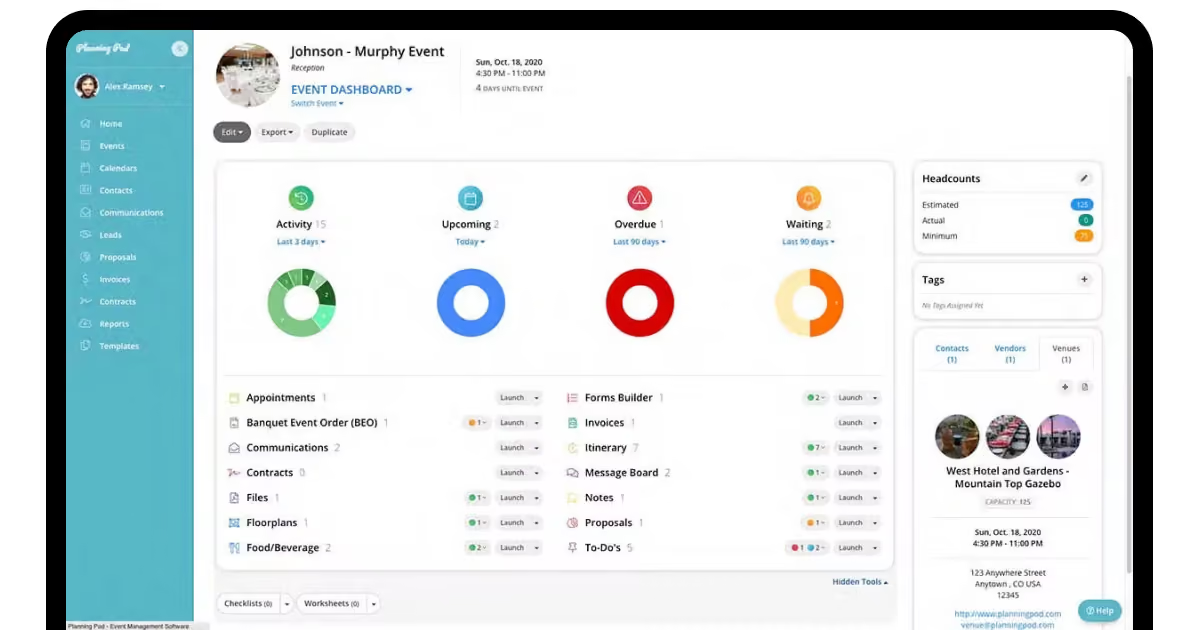
Planning Pod bundles over 40 tools, with its deepest strength in food and beverage management. Menu planning, dietary tracking, and staff coordination all live in one system. That breadth cuts both ways: teams using the full platform save real time, while teams needing only a slice sometimes find navigation slower than a focused tool.
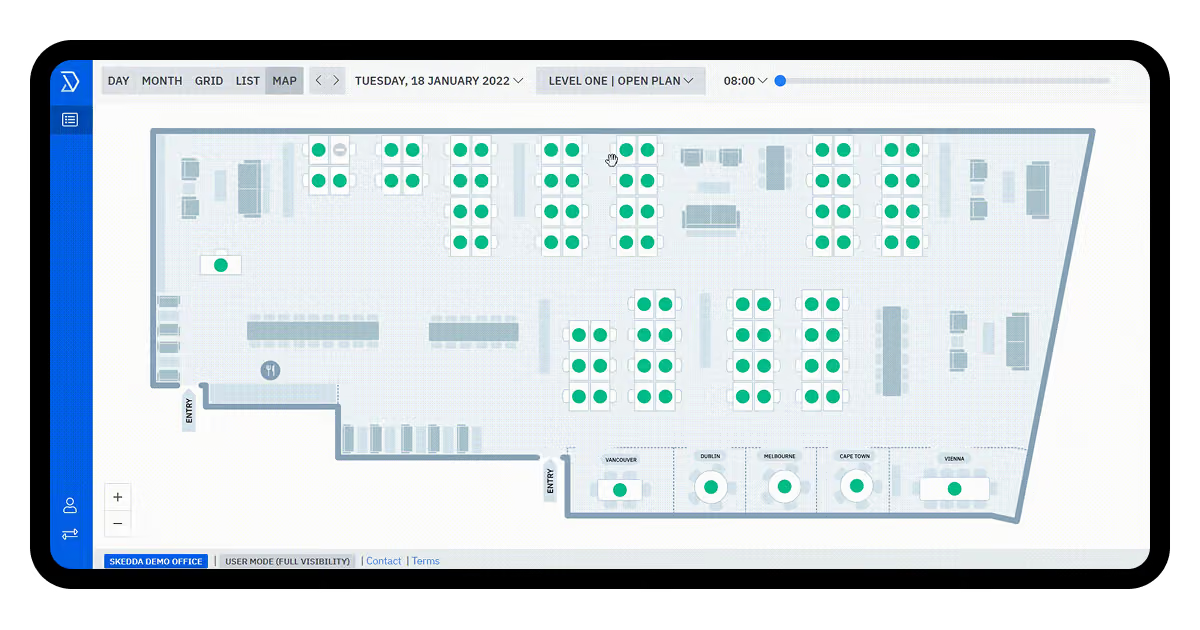
Skedda started as space-scheduling software, and it still shows in its flexibility. Coworking spaces, studios, and shared facilities use it to automate complex booking rules without manual double-checking. It's less suited to full event operations, since floor plans and BEOs aren't part of its core.
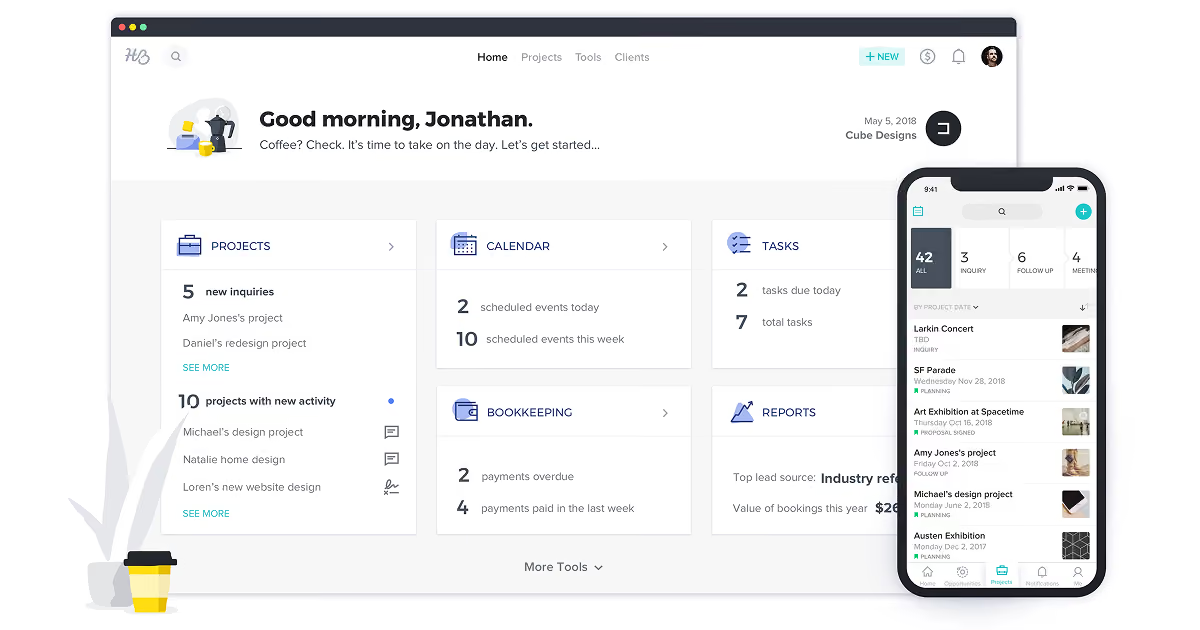
HoneyBook targets freelancers and small creative businesses. Client management, project tracking, and payments run through one online venue booking software interface. It lacks venue-specific BEOs or floor plan tools entirely, though. Pick HoneyBook if you're a small operator who needs client management more than event logistics.
BriteBiz focuses tightly on weddings and event venues, cutting admin time from days to minutes. Contract management, reservations, and cost tracking cover the essentials without extra bloat. It's a solid pick for a single-venue operator who wants speed over depth.
Ready-made platforms cover a lot of ground, but they weren't built around your listing model, your pricing tiers, or the marketplace you're trying to run. A venue management app that's 80 percent right still forces your team into daily workarounds.
We've built exactly this kind of two-sided booking infrastructure before, real-time availability across thousands of listings, dynamic pricing, integrated messaging, all synced without lag. Whether you need a white-label booking layer connecting multiple providers or a custom system built around how your venues actually operate, we're ready to build it. If an off-the-shelf option above fits, though, that's the smarter place to start.
How to choose the right venue management software?
Most buying guides push you toward price and feature counts. Those matter less than whether the tool survives your actual Tuesday. Here's what we test instead, built from years of shipping booking platforms ourselves.
The double-booking test. A venue management system that lets two coordinators reserve the same room fails on day one. Check whether availability locks the second a booking's confirmed, not the moment someone remembers to refresh.
The onboarding speed check. New landlords or venue partners shouldn't need a training call to list a space. On lo:live, an interactive progress bar walked new users through setup step by step, no support ticket required.
The pricing flexibility test. Not every venue wants the same pricing model exposed to buyers. Look for platforms that let you toggle full transparency, pricing-only visibility, or price-on-application, the way lo:live's three listing types do.
The personalization depth check. Generic listings convert worse than curated ones. Ask if the venue booking app can surface options based on user preference, so you can route users toward relevant venues instead of a flat list.
The messaging friction test. Slow replies lose bookings before negotiation even starts. Test whether hirers and venues can message directly inside the platform, with context attached, instead of hunting through email threads.
The integration cost question. Every vendor claims seamless connections to your CRM and accounting stack. Ask exactly how many weeks of custom middleware that "seamless" actually requires.
The scale-down test. A platform built for a 2,000-space marketplace can feel bloated for a single boutique venue. Check whether cost and complexity actually shrink for smaller operators, not just the marketing copy.
Run any shortlisted event venue booking software through these seven filters before signing anything. The platform that survives double-bookings, slow onboarding, and rigid pricing wins. Everything else is a demo that looked good in a sales call.
Even a solid off-the-shelf platform won't match your exact listing model or pricing logic out of the box. COAX has built this kind of travel booking software development work directly, two-sided marketplaces, dynamic pricing engines, persona-driven discovery. If your current stack is close but not quite right, we can bridge it, extend it, or build the missing piece. Tell us what's not working, and we'll tell you honestly whether it's a fix or a rebuild.
How to implement venue management software to get ROI?
"The venues that get real ROI don't just switch tools. They switch what they measure, and that shift matters more than the software itself," says Orest Falchuk, Head of Engineering at COAX Software.
Rolling out new software badly costs more than staying on spreadsheets. Here's what actually moves the needle, based on projects we've shipped.
Start with your busiest calendar, not your simplest one. Pilot the new system on your highest-volume space first. That's where double-bookings actually happen, and where the software proves its worth fastest. A quiet, low-traffic room tells you nothing about real-world pressure.
Migrate pricing logic before you migrate bookings. Get your rate structures, weekend premiums, and package deals into the new system first. On lo:live, landlords configure custom weekend definitions and multi-day discounts directly. Skipping this step means reverting to manual pricing mid-rollout, which defeats the whole point.
Keep messaging inside the platform from the start. Don't let staff default back to email once the new system's live. Venue management companies that centralize communication early avoid the scattered-thread problem that made the old process painful in the first place.
Train your team on exceptions, not the happy path. Anyone can confirm a clean booking. The real test is a client asking for a date change three days before the event. Walk your staff through cancellations, disputes, and partial payments before launch day, not after the first one happens live.
Build personalization in from day one, not as a later upgrade. Generic listings convert worse than curated ones. ARRIVAL's persona quiz routes travelers toward relevant trips the moment they register, shifting discovery from "where" to "how you want to experience it." That same logic applies to matching event spaces to the right buyer instead of showing everyone the same catalog.
Those five habits separate venue booking websites that pay for themselves fast from ones that stall mid-rollout. The software matters less than whether your team actually adopts the new workflow.
Measuring the ROI of venue booking software
Knowing whether your software actually paid off comes down to one formula. Time saved, plus cost reductions, minus what you spent on the platform.
Here's where the savings actually show up in a real venue management implementation:
Faster replies turn inquiries into signed contracts before a client moves on to your competitor.
Less busywork means automated invoicing and e-signatures free up hours your team used to spend on paperwork.
Fewer mistakes happen once a centralized calendar makes double-booking structurally impossible, not just unlikely.
AI-assisted drafting cuts time spent writing event descriptions, proposal copy, and follow-up emails from scratch.
Say your team saves fifteen hours per event, earns $40 an hour, and runs two events monthly. That's $14,400 a year in recovered labor alone, before counting a single new booking closed faster.
Lo:live shows what compounding growth on top of that foundation looks like. Campaigns created grew 140 percent between 2022 and 2025. Active engaged users surged 789 percent over the same window. New hirer accounts grew more than sixteen-fold across five years, and landlord registrations more than doubled from 2023 to 2025.
None of that came from one feature. It came from the infrastructure that got faster, cleaner, and more trusted with every release. A venue event management software platform earns its cost this way: not with one big win, but with dozens of small frictions removed, month after month.
FAQ
What is venue management, exactly, and how is it different from event planning?
Venue management covers the physical space: bookings, calendars, pricing, and facility upkeep. Event planning covers what happens once that space is booked: guest lists, catering, and run-of-show timing. Venue event management software often blends both, since booking a room and running the event share a calendar. On lo:live, we kept the booking layer separate from execution details, letting each side scale independently.
How much does venue management software actually cost per month?
Pricing spreads wide across this category. Lightweight tools like Skedda start around $99 monthly for basic scheduling. Full-service platforms with BEOs and CRM run into quote-based enterprise pricing, often $300 to $1,000-plus monthly. Venue booking software built custom for a specific listing model costs more upfront but avoids per-feature markup fees vendors add over time. Ask for a full cost breakdown before signing anything.
Can I migrate years of booking history into a new venue management system?
Yes, in most cases. Migration difficulty depends on your current system's export format and how clean your historical data actually is. Spreadsheet-based records need heavier cleanup than data pulled from another platform's API. On lo:live, we handled ongoing data migration across a five-year partnership without disrupting live bookings. Budget extra time for data cleanup separately from the platform switch itself.
Is it legal to require a security deposit through venue management software?
Yes, generally, though rules vary by country and contract type. Most platforms process deposits the same way they handle full payments, through Stripe or a comparable gateway. Contract terms need to state deposit conditions clearly: refund timelines, cancellation windows, and forfeiture rules. We'd still recommend a quick legal review of your contract templates before rolling out automated venue event management deposit collection at scale.
How long does it realistically take to implement a new venue booking platform?
Timelines depend on scope. Simple scheduling tools go live within days. Full-service platforms with CRM, payments, and custom pricing logic typically take four to eight weeks. Migrating years of booking history adds time on top of that. On lo:live, phased rollouts let the client test modules with real users before each new feature went fully live, avoiding a single risky launch day.





































































































.avif)




%20for%20hotels.avif)


.avif)
.avif)


.avif)





.avif)

.avif)





.avif)


.avif)

We are interested in your opinion