








































































































Generative AI development for Fleet Management
Your dispatchers spend their day reading alerts, digging through screens for the reason a load is late, and typing the same apology to customers again and again. The data already holds the answers, but nobody has time to ask it. COAX Software provides generative AI development for fleet operators that turns that data into plain-language answers, ready-to-send messages, and clear next steps. On DriveIQ, our LLM drafts more than 200 proactive customer notifications every week.
Industry leaders we work with



What our generative AI for fleet management covers
An assistant that answers questions about your fleet
Dispatchers and managers ask things like “which loads are at risk this afternoon?” and get answers drawn from live telematics, TMS, and delivery records. Our fleet management chatbot development connects the assistant to your data with the right permissions for each role.
Delay and ETA messages drafted automatically
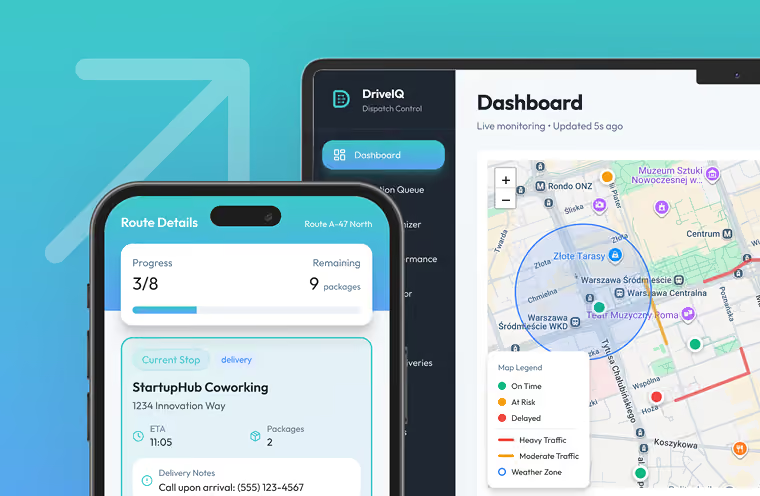
When a delivery slips, the system writes the customer update, the revised ETA, and a service recovery offer from templates you’ve approved. On DriveIQ, these drafts run on Azure OpenAI GPT-4, and dispatchers approve them before they go out.
Exception summaries dispatchers can read in seconds
Instead of opening five screens to find out why a load is late, dispatchers get a short explanation of the cause, its impact, and the options available.
Recovery options explained in plain language
Route and reassignment suggestions come with a clear reason and trade-off, so dispatchers can decide quickly and confidently.
Natural-language prompts for drivers
Coaching tips, hazard warnings, and schedule changes become short spoken or written messages that drivers understand at a glance, without distracting them on the road.
Reading delivery and inspection documents
Proof of delivery notes, bills of lading, and inspection photos are read and turned into structured records, so office teams stop retyping paperwork.
Answers for customers in their portal
Shippers checking their deliveries get clear status explanations and documents without calling your team, building on the customer portal approach we delivered on DriveIQ.
Guardrails around every model
Approved templates, role permissions, human approval for sensitive messages, and rules engines for hours, distances, and routing keep the AI accurate and accountable.
Choose the jobs worth automating
Dispatchers, managers, and support staff describe their most repetitive work.
Use cases are ranked by time saved and risk.
Two or three starting points are agreed.
Deliverable: prioritized use case list
Connect the data you already have
Telematics, TMS, customer, and document sources are mapped.
Access is set up without replacing existing systems.
Sensitive fields and permissions are defined.
Deliverable: data and access map
Design the guardrails
Templates, tone, and approval steps are agreed with your team.
Calculations stay in rules engines, not in the language model.
Hosting and privacy choices are confirmed.
Deliverable: guardrail and architecture plan
Prototype with real records
Assistants and message drafts are tested on your historical data.
Answers are checked against what actually happened.
Weak outputs are fixed before anyone relies on them.
Deliverable: working prototype and quality report
Pilot with dispatchers
A small team uses the tools in daily work, approving every output.
Feedback shapes prompts, templates, and screens.
Results are measured against the baseline.
Deliverable: pilot results and refined tools
Roll out and keep it sharp
Tools expand across teams and hubs.
Quality, cost, and response times are monitored.
New use cases are added as trust grows.
Deliverable: live features and monitoring dashboard
DriveIQ results that show generative AI in fleet management at work
2 million
GPS events processed per day by the platform
200+
Proactive customer notifications drafted every week
4,000+
Coaching alerts delivered to drivers
18% → 7%
Share of late stops after predictive alerts went live
31%
More daily routes per dispatcher, with no new hires










Safeguards around your fleet data and AI outputs
Why fleets choose COAX Software for generative AI development for fleet operators
Generative AI already working in a real fleet
DriveIQ’s LLM drafts delay notices, ETA revisions, and recovery offers for a 500-vehicle carrier, producing more than 200 proactive notifications a week.
Built on top of the systems you run
We connect to your telematics, TMS, and customer data rather than replacing them. Your teams keep familiar tools and gain new answers inside them.
Guardrails designed in from day one
Approved templates, permissions, and human approval steps are part of the first design, not an afterthought once something goes wrong.
Tools dispatchers and drivers actually use
Fleet software often gets ignored by the people it’s meant to help. DriveIQ was shaped around driver and dispatcher experience, which is why it’s used every day.
Frequently asked questions and answers
COAX Software provides generative AI development for fleet operators, including fleet data assistants, automated customer messages, exception summaries, and document reading. On DriveIQ, our LLM-powered messaging drafts more than 200 proactive notifications a week for a 500-vehicle carrier.
Look for a team with generative AI already running in a live fleet, a clear approach to guardrails, and experience connecting to telematics and TMS data. COAX Software brings all three through DriveIQ and is rated 4.9/5 on Clutch.
COAX can. We build assistants that answer operational questions, summaries that explain exceptions, and drafts that dispatchers approve with one click. On DriveIQ, dispatchers review AI-generated recovery options and approve customer notifications from a single dashboard.
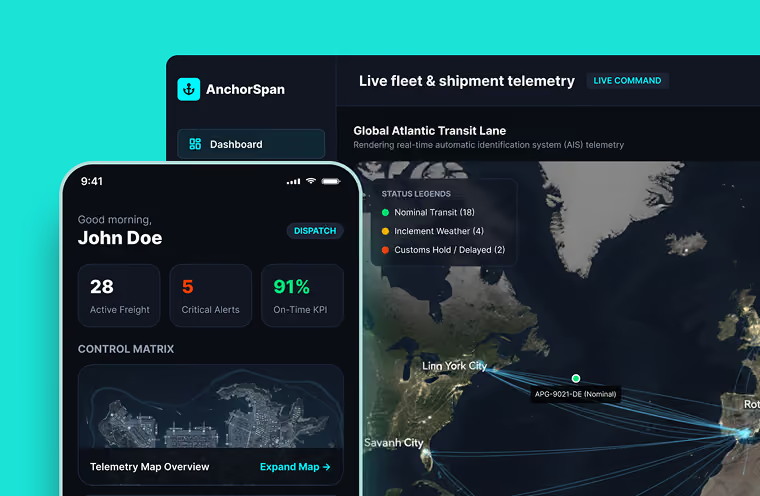
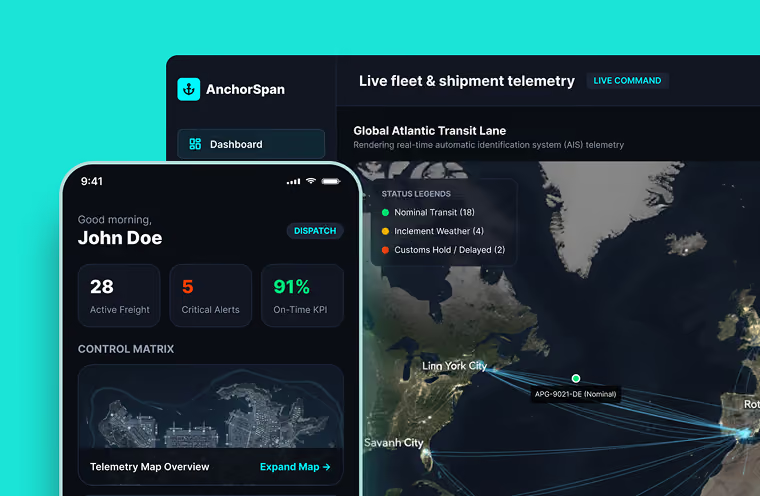
COAX Software can. The assistant retrieves facts from your telematics, TMS, and delivery records, runs calculations in tested code, and explains the results in plain language with links to the source. Our data work on platforms like AnchorSpan, which combines vehicle, vessel, and scan events into one stream, helps make those answers reliable.
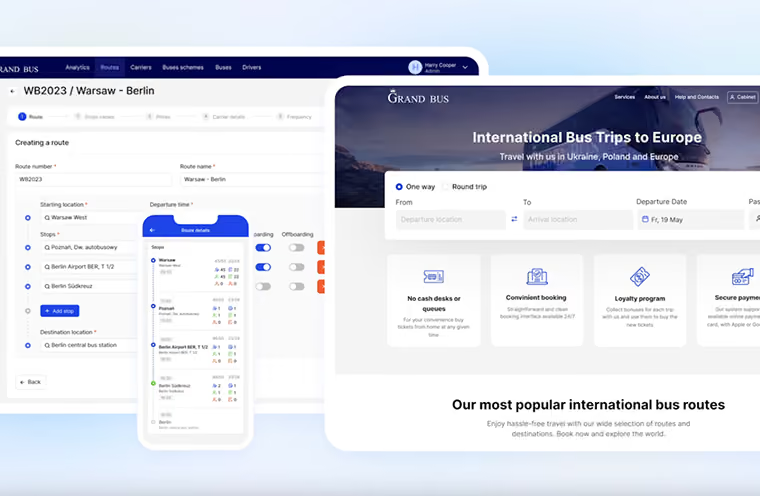
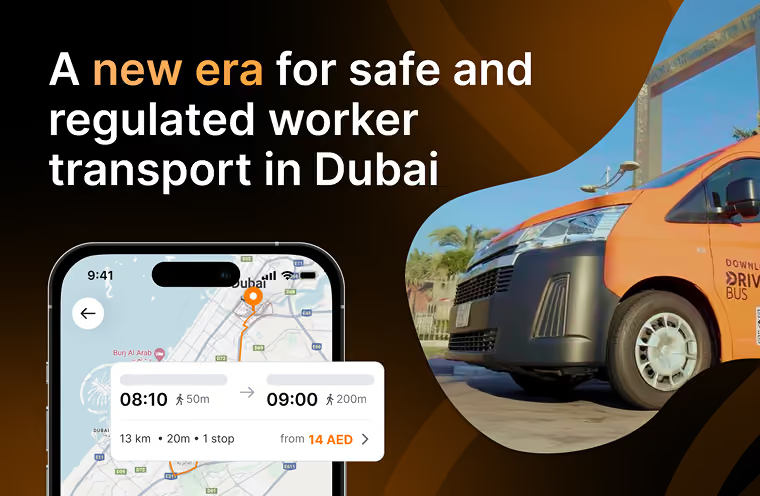
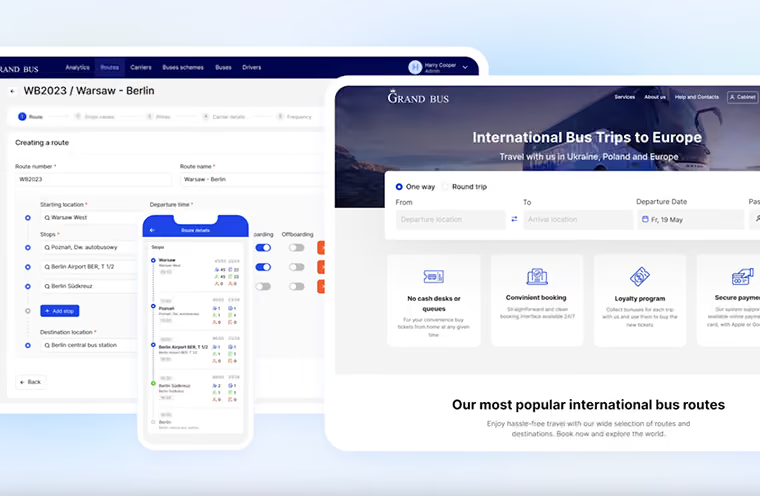
COAX Software has built transport and logistics software for 16 years, and generative AI is now part of that work. Alongside DriveIQ, our fleet and transport experience includes AnchorSpan for logistics visibility, GrandBus for route tracking, and DrivenBus for driver apps.
COAX Software does. The published DriveIQ case shows the platform processing 2 million GPS events a day, drafting more than 200 proactive notifications a week, and delivering over 4,000 coaching alerts. It also cut late deliveries from 18% to 7% and let dispatchers handle 31% more routes.
Not if it’s designed properly. Answers should come from retrieved records, calculations should run in code, and sensitive messages should pass human review. Our generative AI development for fleet operators applies all three, so the model explains your data instead of inventing it.
Yes. Models can be deployed in private cloud environments, such as Azure OpenAI inside your own tenant, with strict access controls and no training on your data. DriveIQ’s messaging runs on Azure OpenAI GPT-4, and we choose the setup that fits your security and compliance requirements.











What’s Next?
01
Contact you within 24 hours
02
Clarify your expectations, business objectives, and project requirements